• Home
  • indulge
  • new poetry
    • About Luna Luna
    • resources
    • search
  • editor
  • dark hour
  • submit
Menu

luna luna magazine

  • Home
  • indulge
  • new poetry
  • About
    • About Luna Luna
    • resources
    • search
  • editor
  • dark hour
  • submit
delicious new poetry
'the doors of the night open' — poetry by Juan Armando Rojas (translated by Paula J. Lambert)
Nov 29, 2025
'the doors of the night open' — poetry by Juan Armando Rojas (translated by Paula J. Lambert)
Nov 29, 2025
Nov 29, 2025
'we can be forlorn women' — poetry by Stevie Belchak
Nov 29, 2025
'we can be forlorn women' — poetry by Stevie Belchak
Nov 29, 2025
Nov 29, 2025
'I do whatever the light tells me to' — poetry by Catherine Bai
Nov 29, 2025
'I do whatever the light tells me to' — poetry by Catherine Bai
Nov 29, 2025
Nov 29, 2025
‘to kill bodice and give sacrament’ — poetry By Kale Hensley
Nov 29, 2025
‘to kill bodice and give sacrament’ — poetry By Kale Hensley
Nov 29, 2025
Nov 29, 2025
'Venetian draped in goatskin' — poetry by Natalie Mariko
Nov 29, 2025
'Venetian draped in goatskin' — poetry by Natalie Mariko
Nov 29, 2025
Nov 29, 2025
'the long sorrow of the color red' — centos by Patrice Boyer Claeys
Nov 28, 2025
'the long sorrow of the color red' — centos by Patrice Boyer Claeys
Nov 28, 2025
Nov 28, 2025
'Flowers are the offspring of longing' — poetry by Ellen Kombiyil
Nov 28, 2025
'Flowers are the offspring of longing' — poetry by Ellen Kombiyil
Nov 28, 2025
Nov 28, 2025
'punish or repent' — poetry by Chris McCreary
Nov 28, 2025
'punish or repent' — poetry by Chris McCreary
Nov 28, 2025
Nov 28, 2025
'long, dangerous grasses' — poetry by Jessica Purdy
Nov 28, 2025
'long, dangerous grasses' — poetry by Jessica Purdy
Nov 28, 2025
Nov 28, 2025
'gifting nighttime honey' — poetry by Nathan Hassall
Nov 28, 2025
'gifting nighttime honey' — poetry by Nathan Hassall
Nov 28, 2025
Nov 28, 2025
'A theory of pauses' — poetry by Jeanne Morel and Anthony Warnke
Nov 28, 2025
'A theory of pauses' — poetry by Jeanne Morel and Anthony Warnke
Nov 28, 2025
Nov 28, 2025
'into the voluminous abyss' — poetry by D.J. Huppatz
Nov 28, 2025
'into the voluminous abyss' — poetry by D.J. Huppatz
Nov 28, 2025
Nov 28, 2025
'an animal within an animal' — a poem by Carolee Bennett
Nov 28, 2025
'an animal within an animal' — a poem by Carolee Bennett
Nov 28, 2025
Nov 28, 2025
‘in the glitter-open black' — poetry by Fox Henry Frazier
Oct 31, 2025
‘in the glitter-open black' — poetry by Fox Henry Frazier
Oct 31, 2025
Oct 31, 2025
'poet as tarantula,  poem as waste' — poetry by  Ewen Glass
Oct 31, 2025
'poet as tarantula, poem as waste' — poetry by Ewen Glass
Oct 31, 2025
Oct 31, 2025
'my god wearing a body' — poetry by Tom Nutting
Oct 31, 2025
'my god wearing a body' — poetry by Tom Nutting
Oct 31, 2025
Oct 31, 2025
'Hours rot away in regalia' — poetry by Stephanie Chang
Oct 31, 2025
'Hours rot away in regalia' — poetry by Stephanie Chang
Oct 31, 2025
Oct 31, 2025
'down down down the hall of mirrors' — poetry by Ronnie K. Stephens
Oct 31, 2025
'down down down the hall of mirrors' — poetry by Ronnie K. Stephens
Oct 31, 2025
Oct 31, 2025
'Grew appendages, clawed towards light' — poetry by Lucie Brooks
Oct 31, 2025
'Grew appendages, clawed towards light' — poetry by Lucie Brooks
Oct 31, 2025
Oct 31, 2025
'do not be afraid' — poetry by Maia Decker
Oct 31, 2025
'do not be afraid' — poetry by Maia Decker
Oct 31, 2025
Oct 31, 2025
'The darkened bedroom' — poetry by Jessica Purdy
Oct 31, 2025
'The darkened bedroom' — poetry by Jessica Purdy
Oct 31, 2025
Oct 31, 2025
'I am the body that I am under' — poetry by Jennifer MacBain-Stephens
Oct 31, 2025
'I am the body that I am under' — poetry by Jennifer MacBain-Stephens
Oct 31, 2025
Oct 31, 2025
goddess energy.jpg
Oct 26, 2025
'Hotter than gluttony' — poetry by Anne-Adele Wight
Oct 26, 2025
Oct 26, 2025
'As though from Babel' — poetry by Fox Henry Frazier
Oct 26, 2025
'As though from Babel' — poetry by Fox Henry Frazier
Oct 26, 2025
Oct 26, 2025
'See my wants' — poetry by Aaliyah Anderson
Oct 26, 2025
'See my wants' — poetry by Aaliyah Anderson
Oct 26, 2025
Oct 26, 2025
'black viper dangling a golden fruit' — poetry by Nova Glyn
Oct 26, 2025
'black viper dangling a golden fruit' — poetry by Nova Glyn
Oct 26, 2025
Oct 26, 2025
'It would be unfair to touch you' — poetry by grace (ge) gilbert
Oct 26, 2025
'It would be unfair to touch you' — poetry by grace (ge) gilbert
Oct 26, 2025
Oct 26, 2025
'Praying in retrograde' — poetry by Courtney Leigh
Oct 26, 2025
'Praying in retrograde' — poetry by Courtney Leigh
Oct 26, 2025
Oct 26, 2025
'To not want is death' — poetry by Letitia Trent
Oct 26, 2025
'To not want is death' — poetry by Letitia Trent
Oct 26, 2025
Oct 26, 2025
'Our wildness the eternal now' — poetry by Hannah Levy
Oct 26, 2025
'Our wildness the eternal now' — poetry by Hannah Levy
Oct 26, 2025
Oct 26, 2025
Screen Shot 2020-06-28 at 10.10.35 PM.png

What if the earth is asking us to be still?

June 29, 2020

BY LISA MARIE BASILE

Tune in with me.

I think about the people who will populate our future, and I ask the sky what they will see, what they will be told — through our actions and words and hunger. Will we become their ancient gods, whose lessons are bleak and hellish? Will they see how hard many of us tried and how we hoped?

Will our mythos be of hyper-consumerism, racism, lovers who are not allowed to love, bodies put into categories, plastic, the poisoned fruit, the unbearable dullness of constant performance, the addiction to the avatar, the plutocracy, the oceans crying into themselves, the sound of the air cracking against the ozone? Will all of our wounds still be present?

When I think of the people of the ancient worlds — and their gods and their cultures and their arts — I wonder what they would have wanted us to know?

Did they hope to impart a message of beauty, art, and nature? Of storytelling and culture?

Did they think we would destroy one another and the earth they danced upon in worship?

What happens to everything when we sit in the sea? Do we become a primal beautiful thing?
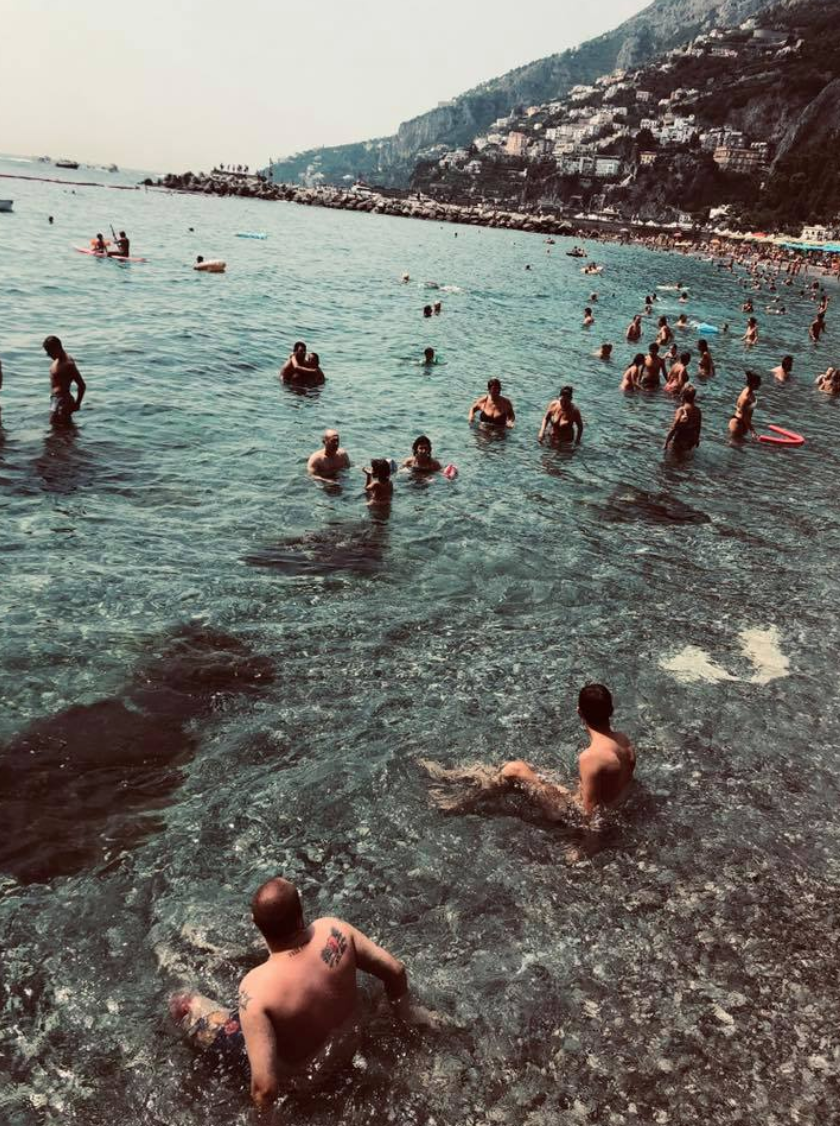
Screen Shot 2020-06-28 at 9.35.02 PM.png

There is a presence that is being asked of us. Do we hear its sound? Are we the people who tolerate abuse? Are we the zombies of decadence, the digital void that consumes and hungers through screens? What if we were embodied for a day? Would we hear the great chambers of our heart, and the hearts of strangers, and the vines and sea beings we came from?
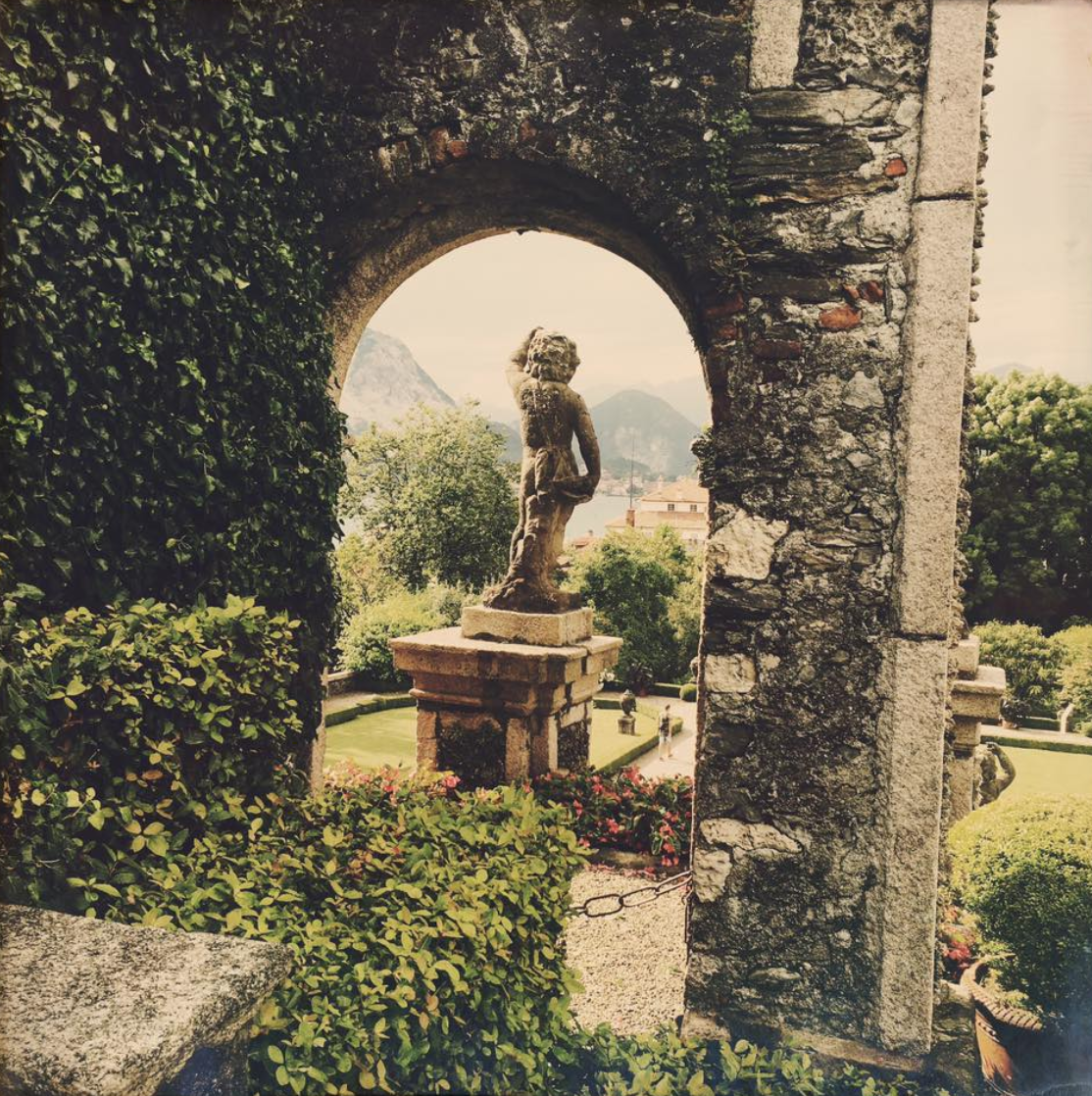
Screen Shot 2020-06-28 at 9.57.42 PM.png

There is a constant scrolling and feeding. And it’s because we are hurting. We are disconnected. We are oppressed. We are poor. We are sick. We are not seen by society. We feel lonely, a loneliness perpetuated by hyper-connection.

How else do we live without turning to the void, which provides us beautiful and loud things to buy and be and shape ourselves into?

How do we live without abusing our neighbor, without stomping on their chest?

What if we could remember ourselves? How miraculous we are? Would we remember to be generous, to heal, to say hello? What would it look like if we all stopped pushing for a moment? What if we let the wind move us?

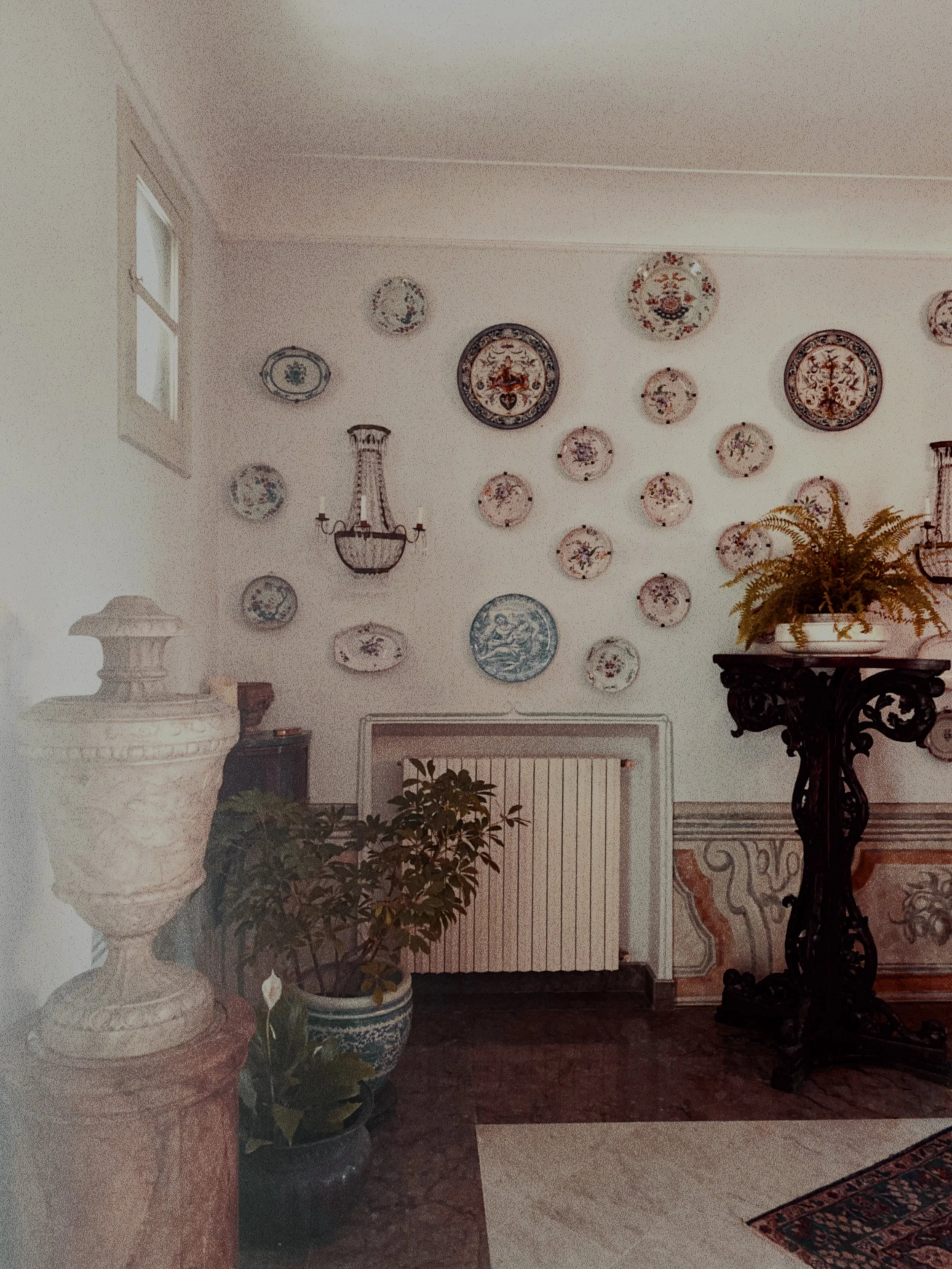
Positano

Positano

I feel sometimes I am a ghost. Liminal, floating through the world, eating the world around me — media and fashion and ideas that are not my own, not aligned with my values or my traumas or my soul.

I am out of time with my own soul. I am in 2020, but my heart is in the ocean eternal. I want wind and shorelines. I want fairness and justice. I want to experience beauty without the billboards looming. I want to read a book in the sunlight, and see my neighbor have the same opportunity.

But my neighbors — and your neighbors — are dying, are being murdered, and our ecosystems are gasping in our wake.
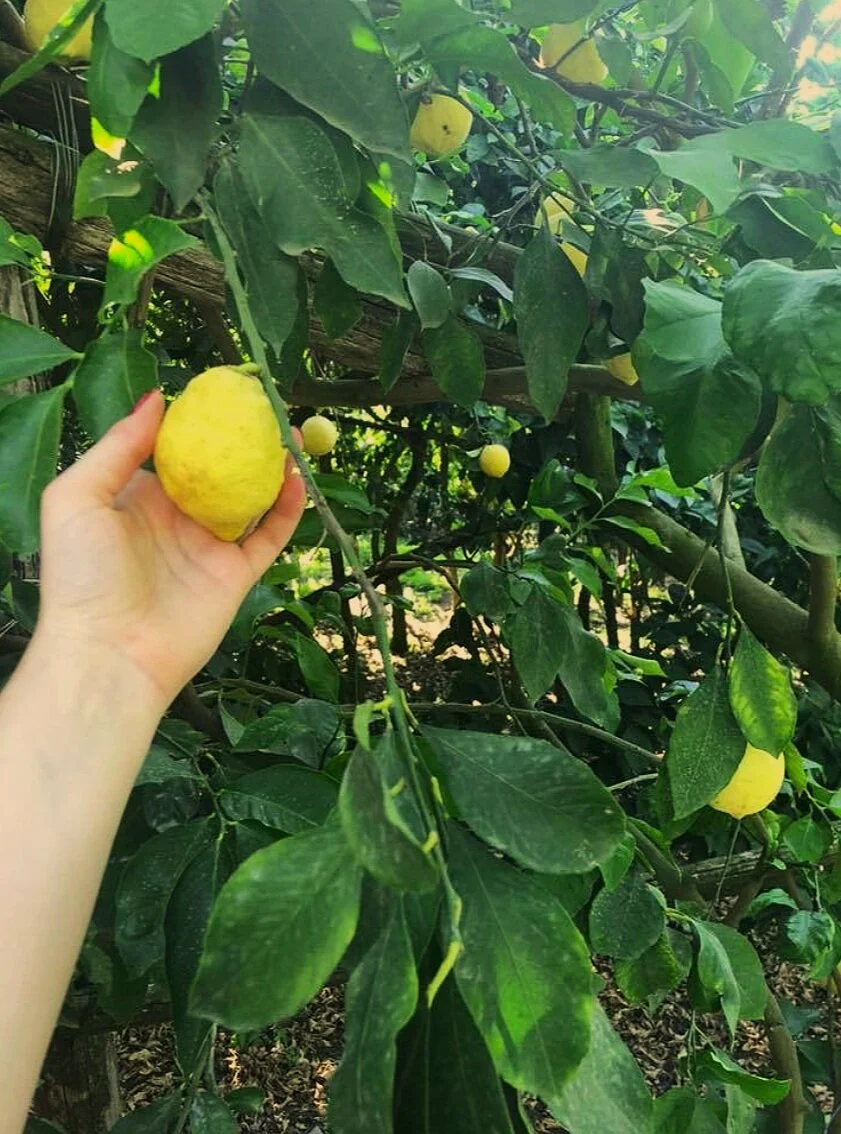
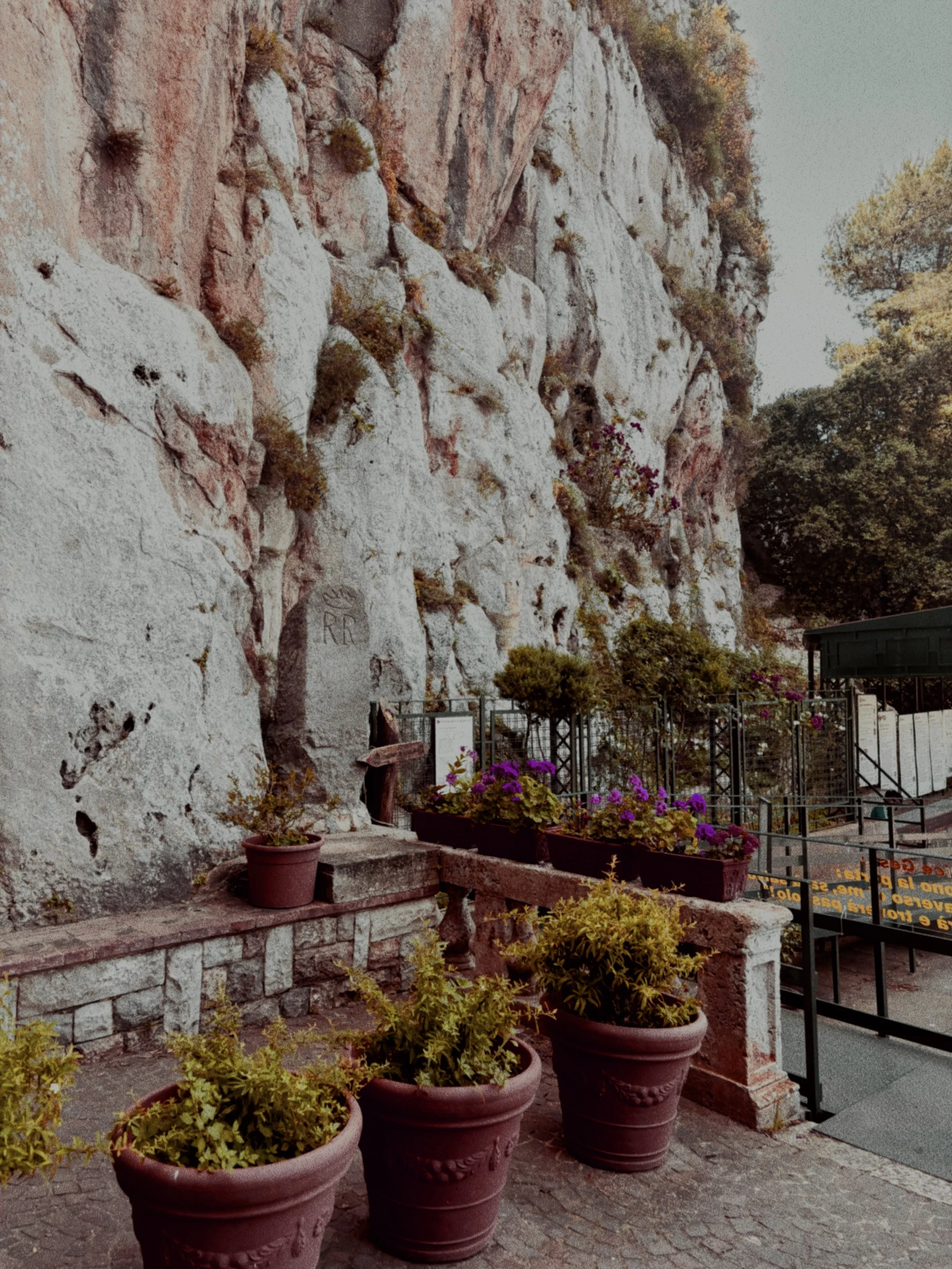
La Masseria Farm Experience

La Masseria Farm Experience

There are days that are so beautiful, so soft and real, that I have hope. These are holy days.

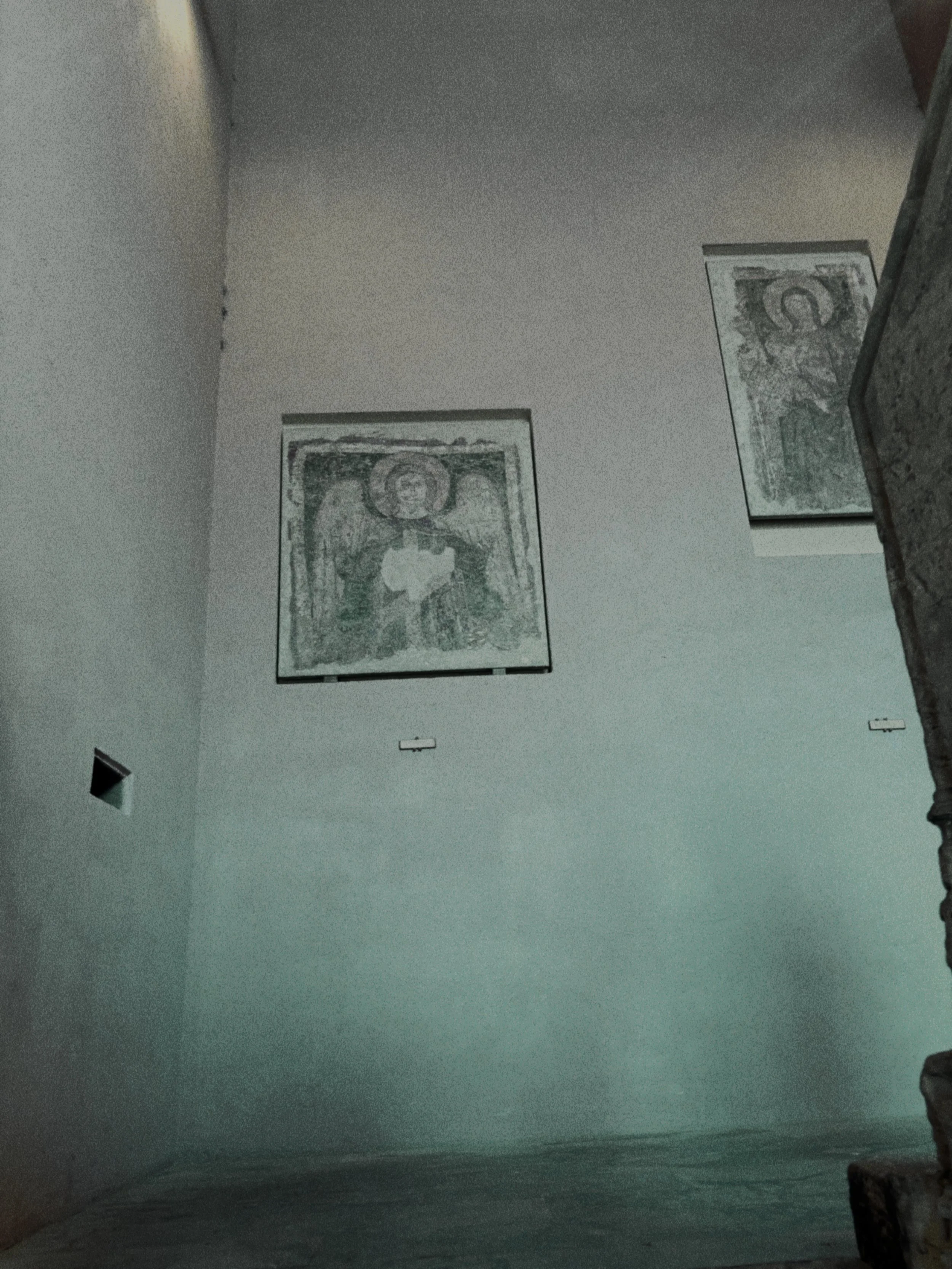
In Campania Italy, I have a holy day. I sit in a small stone pool. I think of the drive through the mountains from Napoli, where Pompeii stands, its breath held, looming over its land. How it preserved the stories of its people. I think always of what is preserved, what is lost.

But in the little pool, I am alone. The bed and breakfast is quiet. Tourists are out at Capri or Amalfi, the staff are napping during siesta, making pesto, somewhere else paying bills, talking on phones. I hear the hum of a generator, street dogs barking, the starlings that fly over me back and forth, definitely flirting.
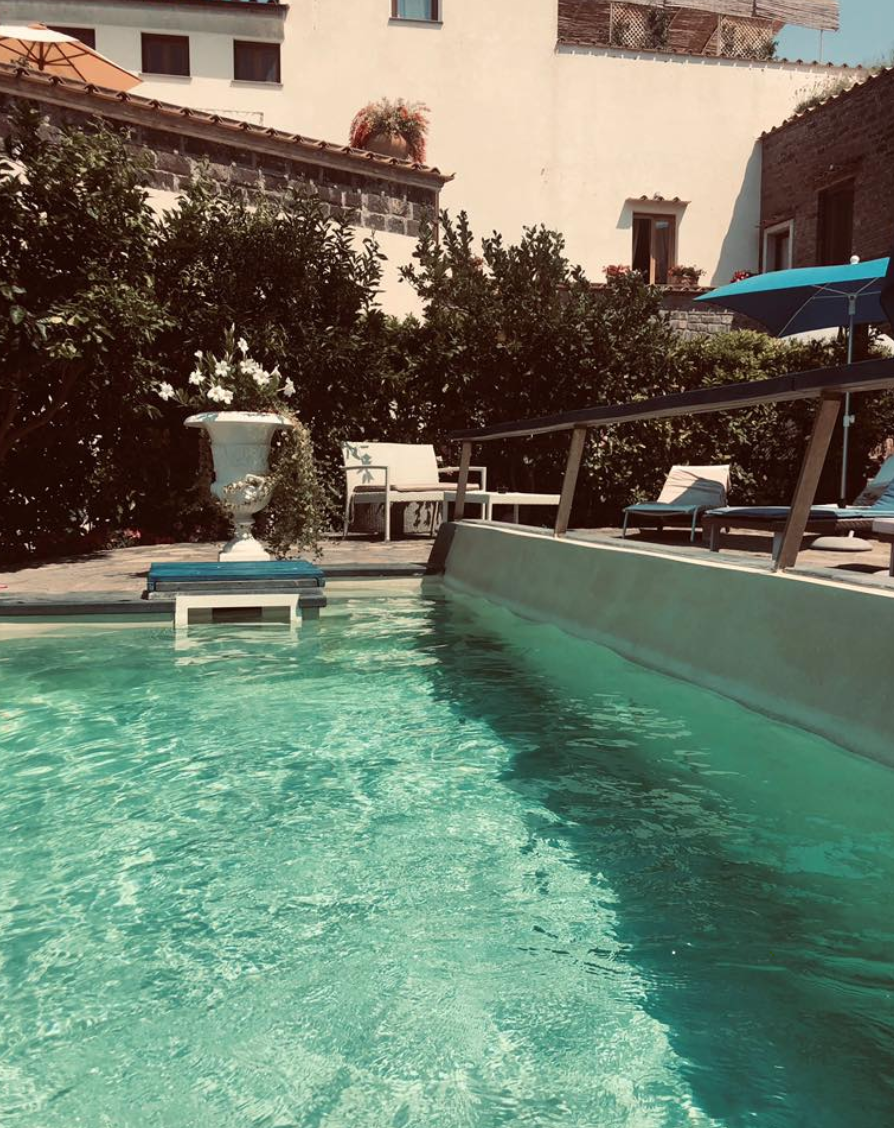
Screen Shot 2020-06-28 at 8.44.54 PM.png

I whistle and they zip over my head. We are in conversation, I know it. The earth wants me to know it sees me, wants me to see it. I am here and nowhere else. I am completely alive. I am made for this moment; we all are.

And after the late dinners of fried fish, I walk back to my room, alone. I am greeted again by the tiny birds who flutter in and out of the domed entrance, cherubs painted across the ceiling. I think of time and nature, and its concurrent obliviousness and suffering. I think of my privilege, and what I can do to preserve these stunning things.

I think of my body withstanding 100-degree heat. How I talk to the creatures in some liminal language of love. I think of how we could all be good to one another, so good that we could all have holy days.

I think of my flesh as the wine of this land. I feel the Mediterranean and the Tyrrhenian Seas in the palms of my hands. I am so alive and grateful and awake at the altar of these moments I cry for the nostalgia that hasn’t come yet, that I know I will feel. That I do feel. I am both past and present. But mostly, I am now.

I walk up the road to a farm and am greeted by a family whose hands have nurtured and translated the earth for centuries. They climb the trees, show us the olives falling. We see the farm cats idle in their sunlight, their fur dotted in soil. They are languid in pleasure and warmth.

I lose myself in the lemon trees, smell their peels; I am blessed. I step into the cool room where they keep the jugs of Montepulciano and cured meats. A cry in ecstasy is somewhere within me.

After a long day of pasta made by hand and more wine and strangers inviting me to their table and then limoncello, I walk home to my room. I am drunk on the connection. I film the walk, then stop. I do not want to capture everything; some things just exist between me and the earth. I won’t share.
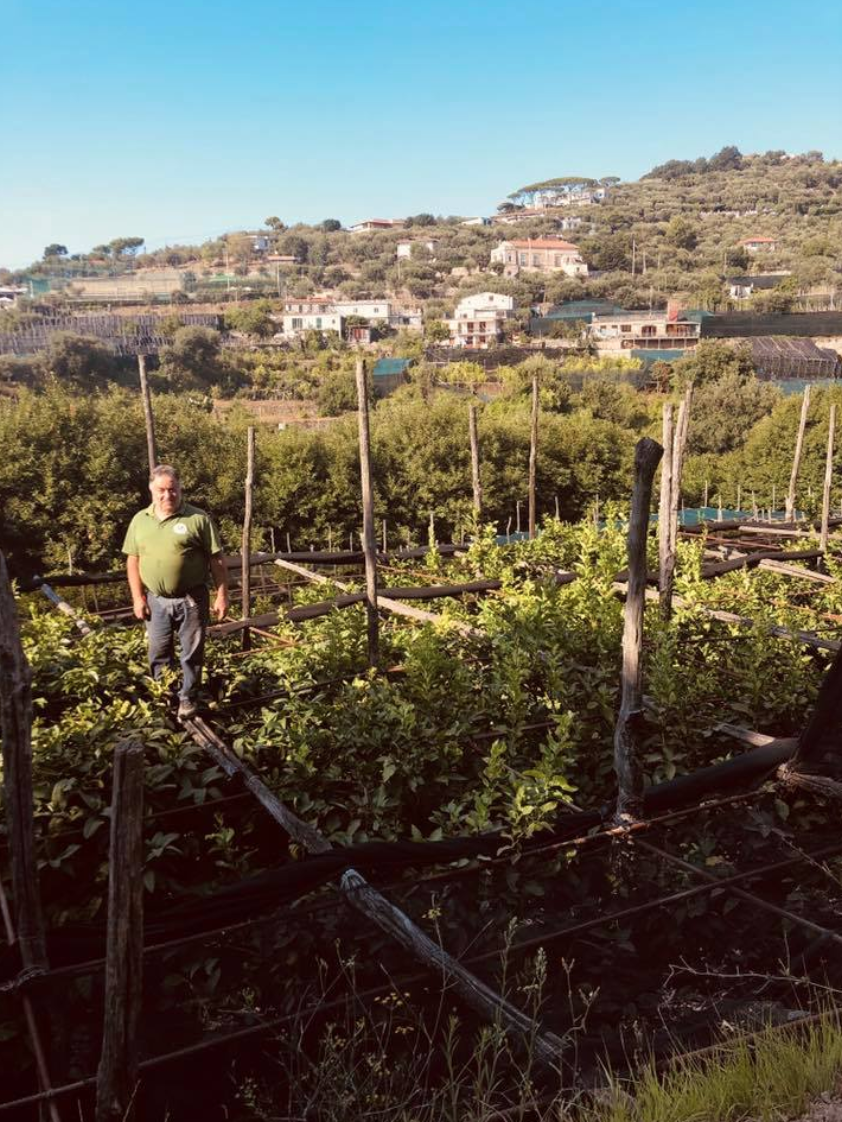
La Masseria Farm Experience

La Masseria Farm Experience

My room is called Parthenope. It is etched into the wooden door. When I open the door, that is the threshold, the portal. Parthenope is a siren who lives on the coast of Naples. I imagine her body clinging to the continental shelf, her hair entwined in shell. They say she threw herself into the sea when she couldn’t please Odysseus with her siren song. Or maybe a centaur fell in love with Parthenope, only to enrage Jupiter, who turned her into Naples. The centaur became Vesuvius, and now they are forever linked — by both love and rage. Is that not humanity?

She became Naples. She became forever. Her essence is water, is earth, is the mythology of what happens when people are cruel and jealous and oppressive. Is this the message the sirens are singing? To be tolerant? To normalize cruelty? To fill the void with empty media, with images without stories?
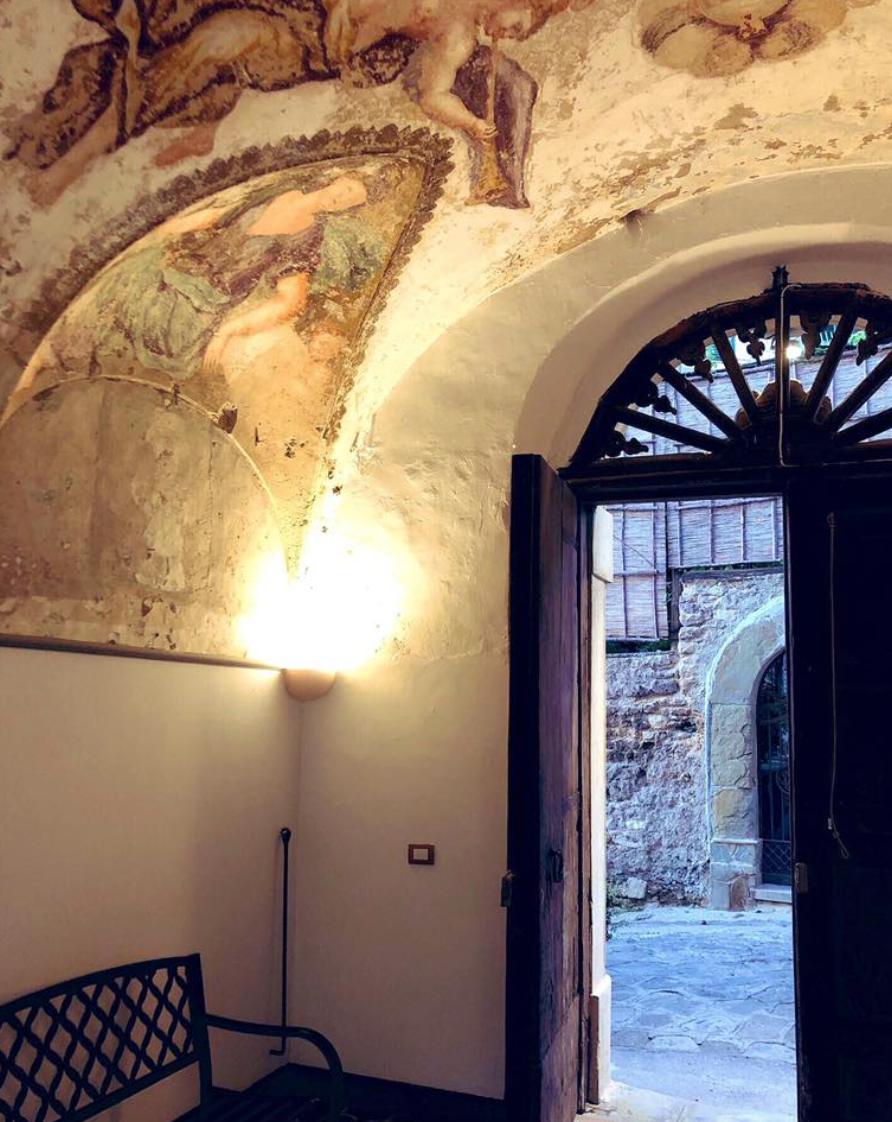
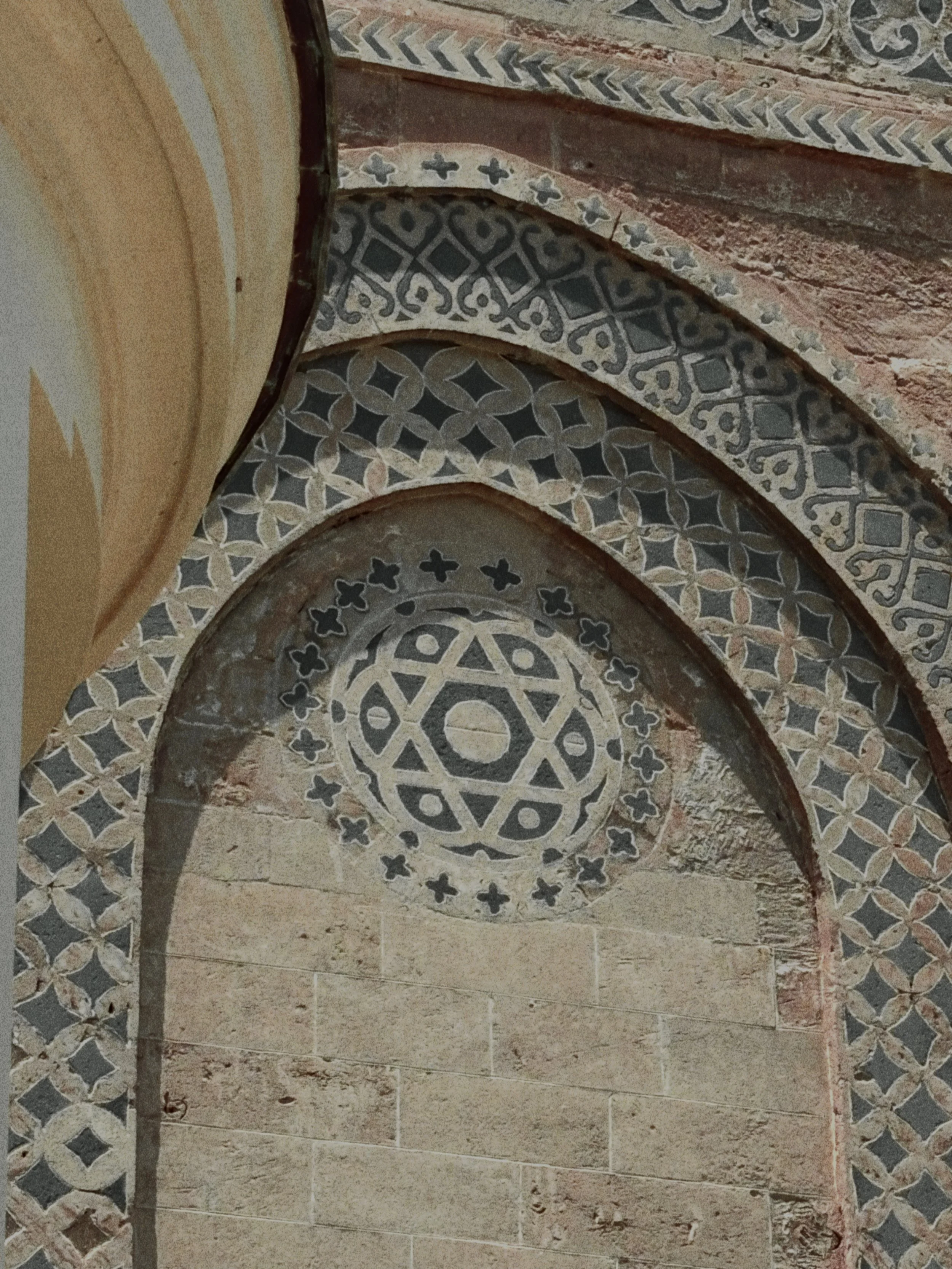
Lubra Casa

Lubra Casa

There is always something that could destroy us, could rid us of this existence. A virus, a volcano, our own hands.

We are temporary, so quick and light and flimsy. We are but a stitch of fabric. A dream within a dream of that fabric. And yet. Here we are, becoming the ancients, carving out a way toward the future. We visit volcanos. We mythologize the earth. We drink wine and capture beauty. But then we turn our backs — on the proverbial garden, on one another, on our own bodies.

What if the earth is asking us to be better? To be still? What pose would we hold? What shape could let all the light in?

LISA MARIE BASILE is the founding creative director of Luna Luna Magazine, a popular magazine & digital community focused on literature, magical living, and identity. She is the author of several books of poetry, as well as Light Magic for Dark Times, a modern collection of inspired rituals and daily practices, as well as The Magical Writing Grimoire: Use the Word as Your Wand for Magic, Manifestation & Ritual. She's written for or been featured in The New York Times, Refinery 29, Self, Chakrubs, Marie Claire, Narratively, Catapult, Sabat Magazine, Bust, HelloGiggles, Best American Experimental Writing, Best American Poetry, Grimoire Magazine, and more. She's an editor at the poetry site Little Infinite as well as the co-host of Astrolushes, a podcast that conversationally explores astrology, ritual, pop culture, and literature. Lisa Marie has taught writing and ritual workshops at HausWitch in Salem, MA, Manhattanville College, and Pace University. She is also a chronic illness advocate, keeping columns at several chronic illness patient websites. She earned a Masters's degree in Writing from The New School and studied literature and psychology as an undergraduate at Pace University. You can follow her at @lisamariebasile and @Ritual_Poetica.
In Art, Beauty, Wellness, Social Issues, Poetry & Prose, Place, Personal Essay Tags italy, lisa marie basile, social media, being present, earth, love, humanitarian issues, global warming
Comment
garden

Dark Paradise

May 6, 2020

BY DENISE JARROTT


I am 18 when I fall hard. 

After only a couple of months on these blue pills—one half robin’s egg, the other half periwinkle—the pills which are supposed to help me forget, I know I have it bad, maybe even worse than before. They are powerless to pry me away from my beloved. I have a couple of boyfriends, one even breaks my heart, but none compare to the all-consuming love I have for sadness.

I pray at the temple of the sadness, lighting candles of self-pity with single minded devotion, just like my religion taught me to do. Catholicism wasn’t made for those with a naturally sunny disposition. I was raised on a steady diet of shame and fatalism. I was raised on bloody, ecstatic saints and white robes and cadences that entered my mind and stayed there. I was raised on fire and spiked wheels. Even now, I think in trinities and I write in litanies. I still think all water, not just that which is blessed, is holy. There are some habits that are impossible to break.

Or, I suppose, you could blame my love affair with sadness to being born under the sign of death and rebirth—my being in love with sadness is only part of the natural, cyclical nature of life itself. It’s the same sign as Sylvia Plath, who for me never really died. At 18, she seemed as real to me as any living person I knew, maybe more, because everything she said felt truer than anything I’d ever heard anyone say out loud. At 18, my swan song was performing “Daddy” to a room full of my peers. It was my vehicle. I let anger and sadness and desire possess me when I read that poem aloud, and it impressed and terrified everyone who saw me read it. I was in a fugue state when I read it, and I let the storm consume me. A week previous, I’d taken a handful of those blue pills in my closet, threw them up with the help of liquid charcoal given to me in a Styrofoam cup, spent two days in the hospital, and somehow kept it a secret from the majority of my classmates. Resurrected from the local behavioral health ward, I put on my black dress and performed that poem at the statewide speech competition. I didn’t have to memorize it, but by then it was part of my blood.

John Keats, another poet born under this sign of life and death, who also died young, wrote “for many a time/I have been half in love with easeful death/Call’d him soft names in many a mused rhyme...” If I treated anyone with tenderness, it was sadness, but I still wonder whether I was sad or just so painfully bored that I wanted to feel something, anything, and if it was sadness then that’s what I’d devote my life to. That’s who I’d choose to love.

To be fair, I think all the girls I knew were, in some way, in love with sadness, or at least the wise ones maintained a flirtation with it. I think all of us stole our father's pocket knives or mother's razors and locked ourselves in the bathroom. Self-destruction is one of the few things that makes itself available to teenage girls. It happened so often that it became ubiquitous. I'm sure there were girls who went on a long run or prayed, but we were not those girls.

Now that we are older, I wonder what it was we were seeking. How did we learn to press the blade horizontally across the wrist, or do it in an area that could easily be covered by clothing or a strategically placed cuff bracelet? We listened to boys with eyeliner scream into microphones, boys who wore our jeans and couldn't grow facial hair. They were so much like girls, so much like us. Conor Oberst girlishly whining his poetry from nearby Omaha could have been Lana Del Rey in boy drag, but she hadn’t arrived yet. This was 2005 in the Midwest, and we all had a crush on sadness. We all had our reasons why. 

*

“Dark Paradise” is a song that is naked in its love for sadness. Gone is the Lolita personality, at least temporarily. This one is the voice of a woman who has long ago lost her innocence, a harbinger to the “deadly nightshade” of Ultraviolence. Lana appears in a cloud of smoke. Lana asks the spiritualist to intercede, to speak to the dead on her behalf. We do not know if the lover in question is far away or dead, but they are obviously gone. There is no pretending to be the lonely starlet waiting to be ravished. No one is coming.

Lana laments before every chorus “But I wish I was dead” It would be easy to write it all off as melodrama, and many have. It’s a common narrative of love lost and the one left behind, unable to move forward, haunted like a sea captain’s wife yearning for her beloved across the world: “All my friends ask me why I stay strong/Tell ‘em when you find true love it lives on...” This lover has a hold on Lana. He is like God, and his absence leaves her utterly bereft.

Maybe her lover is God. “After one has seen God, what is the remedy?” Sylvia Plath asks in “Mystic”—a line that, even if it was not a refrain, would still reverberate for me years after reading it. After one has loved, lost, or simply sat in a high school gymnasium with a stack of books and no concept of a future, what is the remedy? This song could be about a lost love—and even if it is, why can’t it be that?—or is it about touching the bottom of something and wondering if you’ll surface?

“Dark Paradise” doesn’t apologize for its own self-indulgence. It languishes in its grief. It contains all the things I love about Lana Del Rey’s music—theatricality, sweeping strings, deep, dark vocals like a split pomegranate. There’ also something in it that speaks to that 18 year old girl in love with sadness and to woman I am now, who is beginning to lose her infatuation with it in favor of something unknown, something even closer to the truth. But there’s a tenderness within me for the girl I was and the girls I knew. There must be a girl there now, who wants to love and be loved, someone who wants to give her pain and confusion a name in order for it to really exist. If you learn the name for something, you can call it forth. You can banish it, too.


DENISE JARROTT  is the author of NYMPH (Vegetarian Alcoholic Press, 2018). She is also the author of two chapbooks, Nine Elegies (Dancing Girl Press) and Herbarium (Sorority Mansion Press). Her poems and essays have appeared in jubilat, Black Warrior Review, Zone 3, Burnside Review and elsewhere. She grew up in Iowa and currently lives in Brooklyn.

In Art, Poetry & Prose, Personal Essay Tags denise jarrott, Lana Del Rey, lana del rey
Comment
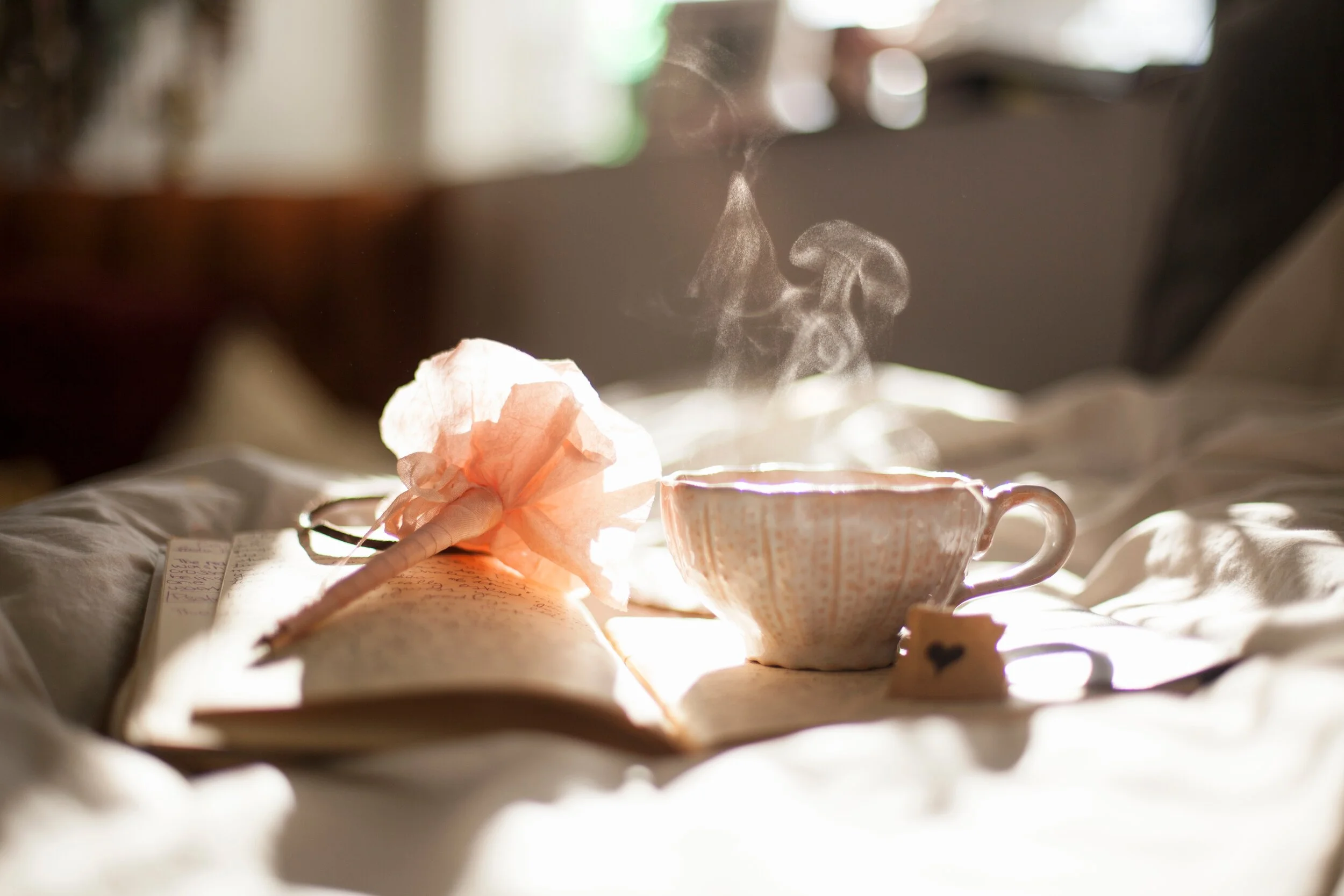
writing-tea-flower-diary-journal-notepad-244-pxhere.com.jpg

Here Are Some Writing Prompts Inspired by Botanical Gardens

April 13, 2020

BY MONIQUE QUINTANA

In any season, the garden as space is a constant source of creative inspiration. Some gardens are rocky and monochromatic, some subdued, and some bright. In each garden is a cyclic narrative, containers of our vast memories and dreamscapes. Here are a few writing prompts inspired by botanical things.

  •  Agave

 Write a revelation that happens in the time it takes the character to sew a tiny garment.

  •  Blue Hibiscus

 Write about a quarreling household that is preparing for an unprecedented season of frost. How do they find a moment of peace and grace?

  •  Manzanita

 Write a character that discovers a strange shape when they cut open a piece of fruit.

  •  Wormwood

 Write a trail of childhood objects on a rocky footpath for a beloved to find.

  •  Mugwort

 Write about a talisman that has protected your character’s family from a particular creature. What happens when the talisman doesn’t work for your character?

  •  Summer Snapdragon

 Write a character that notices a drastic and mysterious change in the landscape outside their window. What do they learn from the mystery?


Monique Quintana is a contributor at Luna Luna Magazine and her novella, Cenote City, was released from Clash Books in 2019. Her short works has been nominated for Best of the Net, Best Microfiction, and the Pushcart Prize. She has been awarded artist residencies to Yaddo, The Mineral School, and Sundress Academy of the Arts. She has also received fellowships to the Squaw Valley Community of Writers, the Open Mouth Poetry Retreat, and she was the inaugural winner of Amplify’s Megaphone Fellowship for a Writer of Color. She blogs about Latinx Literature at her site, Blood Moon and lives in the sleepy little town of Fresno, CA. You can find her at moniquequintana.com

In Art, Lifestyle, Poetry & Prose, Wellness Tags Writing, Botany, Wellness
Comment
tiko-giorgadze-uc6uKmUnGsg-unsplash.jpg

Questions For Lovers At The End Of The Day

April 6, 2020

BY RAY LEVY-UYEDA

Last summer I flew to Italy to meet up with a woman I had dated briefly, and casually, a year prior. We spent a week there, eating and fucking and doing the things that people to in Europe. When she went home I took a night bus to Paris, and that first day there, I carted my backpack around the city, ending my day, sweaty and hungry, at the Musee d’Orsay. Tracey Emin had produced a show for them, a series of drawings called The Fear of Loving, which I felt appropriate because I had just fallen in love with the woman I had spent a full week with. I also happened to love Tracey Emin, having discovered her work a few years prior at a time when I needed to see demonstrations of messy, heartbreaking, soul-defining love. I got a neon piece of her’s tattooed on my left forearm. I preached Tracey’s goodness to anyone who would listen. She became, in my mind, a kind of hero whose work I would know only through the internet, given that I lived in the United States and her work was mostly shown in England.

I found Tracey’s work that day to be some of the most moving pieces I had ever encountered. Perhaps I was particularly primed to take in drawings about love and lovers, given that I had just recently learned what it meant to love and have a lover. I tried to write about the art many times, but found the words stalling, failing to translate feelings incited by visual art, abstractions of loneliness and sex and longing. Then I found this piece by Leslie Jamison, who, just a few years earlier, had experienced this same dilemma. I found it instructive and thought that I might offer myself the same questions, just to see what would happen. For Jamison, the piece took on the form of the catechism, but for me, a Jew, and a woman who loves women, I felt that this form mirrored a kind of different call and response.

After making love, when you’re laying next to your lover, sometimes, often, questions are asked in a whisper. These questions feel intimate and revealing, as vulnerable as two women partnered in public, and in private. Even in that sense, the public and the private, there is an exchange, a tension, of what can be asked and what can be answered.

what is a circle?

A kind of poetry. The sun. A love note. Elementary aged children learning dimensions for the first time; a circle is not a sphere; something you can touch is different than something you can hold. A paintbrush dunked in blue and passed along the paper. Something that starts over and over and over again, something that is both endings and beginnings.

what else never ends?

The weighing feeling in my body after my lover left me, back in August. That was not so long ago, my body still remembers what it was like to be held. I did not know what I wanted then. Loving is more about desire than want. I want August, but I desire her. Then, every feeling that passed through my body felt like an eternal emotion, wheels of elation followed by deep despair. Turning all around me was the beauty of Milan, and later, Paris. And all I could think about was her. You must know this feeling. Do it now, picture your lover, picture their face, hair blowing in the wind behind them, like a cape. Picture the sun setting, picture the day starting over.

does the body hold time?

Of course it does. People go to sleep, regenerate cells, old ones die and the dead ones leave. Those who have periods know many answers to a matter of “whens.” A lover’s body holds a lover. Together, these bodies hold love, created. Hold’s the time, made. Holds knowing, uncovered. This is what we call making love. Which is to say, the body that loves is a body that tells time. Other parts too: a foot holds the places it has walked. The stomach knows every meal. Extremities remember adrenaline, anxiety. Or, the pause, and sensation of sitting so close to someone you’re able to touch them. What a gift it is to touch them.

how long does it take to get over someone?

As long as it takes, or you never do. One is a line and one is a circle; one is a line with an ending you cannot see and one is a line with an ending that does not exist. Or, by crying VIOLENTLY and PERSISTENTLY, calling out their name while you sleep. Dreaming of their name while you sleep. Drawing their body, jagged marks on thin pieces of paper, a halo atop her head, something glowing, like a light or a promise.

where do tears come from?

The heart. The mind. The head. The stomach. The ocean. The stars. Dust. The Big Bang. Yes, tears come from the Big Bang. Each tear is a star exploding. The act of crying is the art of a galaxy being born. Let it come to life. Build.

That week I cried every day, all in front of her except for one night, when I turned the other way and silently weeped. I hoped that she would hear me. I hoped that she wouldn’t. I wanted to be held without being seen, but a lover is physically incapable of doing that. Touching is a kind of seeing. Watching you lover cry, a kind of hearing. In that way that loving distorts the senses. In that way that loving has nothing to do with senses. It’s all electricity.

an ocean behind our eyes?

Maybe not an ocean, just all of the things we don’t want others to see. I almost drowned in the ocean one time. I was 19, visiting family, and my sister and I went with a girl. She was about 25, which seemed old to me at the time, and all of us young adults hiked the coast, a cliff up against the water’s edge. I told her that I was a strong swimmer. I wasn’t. I’m still not. I jumped in. As I got closer to the beach the waves came in, scooped me up and spun me around. I’m sure it looked violent from the outside, but for the first time everything was still. Nothing but water, no concept of an outer world, no thought, no sight, no breathing. Perfect. Like falling asleep, like sinking back into my own body after a long time away. Like a lover, arriving.

what is holy about aloneness?

Learning yourself. Approaching knowing yourself. The pursuit of inwardness in a world that demands money and extroversion and attraction and performance. But aloneness after a lover leaves is violent, makes you think that you deserve it. Makes room for all of the beasts. Makes space for angry things like self-deception and isolation and depression and depravity.

Good aloneness has nothing to do with how many people are around you. Aloneness is where art is made. Art is always holy, what is more holy than expression, reflection, creative communion.

do you remember who told you what love was?

My ex lover. My first lover. The first woman I went on a date with. I cooked for her and we drank wine. I was 19, she was 32. It felt dangerous, I liked it. There was still so much I didn’t know. Like how to give yourself to someone. How, after you give yourself, you don’t get yourself back. You just remake what you think you lost, or make something new, rediscover who you are.

It didn’t last, of course it didn’t. But she attended to me, offered her life as a kind of map. One day, I could be open and lesbian and have my own home filled with my own art. And one day, I would be happy. One day I would keep red wine on the counter. Have a backyard where I would host pride parties. Have friends who loved me. Have love.

what did they say?

That there is a woman waiting, alone, for someone to come and hold her. Waiting for someone to watch her cry. From afar, tears look like rain. This time, the circle looks like the moon. She is holding her body up. She pushes away from the earth. There is no falling, in love. Love is a binary, it is or it isn’t. A week with my first lover, the first person I could feel my body giving itself to, I waited a week before I told her that I loved her. I cried the whole time. I couldn’t look at her. She held me, told me with her body that I was safe. I tried to listen.

what did they do to you?

She made me safe. She told me with her hands and her torso that she loved me. We contorted our bodies into crouched positions. We prayed to the center of the earth. We made love to each other. We. Made. Love. When I first saw my lover after we separated I could not wait to touch her, to have her touch me, but still, I was nervous. I was worried that she would recoil at the feeling of my palm on her chest. My hand guiding hers. I feared that touching her would cause a chain reaction of natural disasters. Touching her would rise the waters. Touching her would shake the earth. Touching her might remove me from my body.

how did they touch you?

With everything and everywhere.


when did you learn about pleasure?

Then, I thought that standing face to face with her, any kind of her, was safe. Now, the fear is that someone can make me feel good. It’s the absence of a thing that hurts more than anything. I learned about pleasure when I was too young to be afraid of it, though I am still young. I am still learning. Such a particular and peculiar thing for all of us queer kids to grow up. Growing up gay and not realizing I was gay, pleasure was a gnawing feeling, localized adrenaline, a tingly sensation in my right arm. Pleasure was an animal I hid, this animal wanted. How horrifying to me that I could not fulfill these wants. Intuitively, I understood that someone else could want with me. I learned that pleasure was not done to someone, pleasure is created with someone.


and the pain of loving someone up close?

There is no loving another in proximity without pain. All relationship is proximity.


is your lover a mirror?

Not many months into our relationship I said something to my lover, to which she responded, not as a question but as a statement, I wonder how you see me. Which I took as, I wonder if you see me. I’m not sure I did. Loving someone up close reveals all the parts of them that you do not understand, or cannot be understood. Still, I loved her without understanding her. Maybe that is all love: loving without understanding. Just wanting to be with someone. Love is a pull. Love is not a thought.


what do you see?

Blue and black and fading lines. A drawing made by a paint brush, and a brush moved by a woman. I see time and water and light. Ink, made into a story. A story in picture form across a single canvass. I see all of my memories of the past week. She is in all of them, she is all of them.


what is the most intimate thing you can think of?

Her.

do you dream of intimacy?

I dream of being open with her, or someone else. I dream of someone who will want to see me open. I dream of sitting in the sunlight with my lover and we are not speaking. We are outside and it is spring. The air, the flowers, the trees, the sun, are all anew. We are anew. I dream of looking at her and her, me, witnessing each other’s beginnings. The other in circle.

where do your hands go at night?

Under my head, to catch my tears.

how much does the emotion of your water weigh? (how much did you cry?)

Only when it hurts, which is to say, only when I am aware of the hurt, when I let myself feel.

what does G-d have to do with heartbreak?

In my time of heartbreak I turned to G-d.

Ray Levy-Uyeda is a Bay Area-based freelance writer who focuses on gender, politics and activism. You can find her work elsewhere at Teen Vogue, Fortune and Vice. Find her on Twitter @raylevyuyeda.

In Art, Poetry & Prose Tags Creative Non Fiction, RAY LEVY-UYEDA
Comment
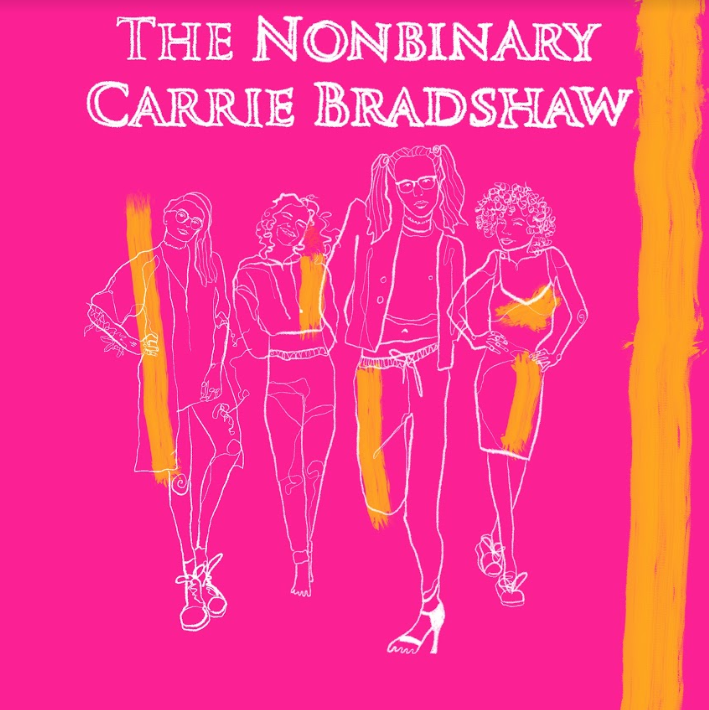
carrie.PNG

Get Ready for the Non-Binary Carrie Bradshaw

March 30, 2020

Joanna C. Valente is a human who lives in Brooklyn, New York. They are the author of several books, including Marys of the Sea, #Survivor (2020, The Operating System), and Killer Bob: A Love Story (2021, Vegetarian Alcoholic Press). They are the editor of A Shadow Map: Writing by Survivors of Sexual Assault and received their MFA in writing at Sarah Lawrence College. Joanna is the founder of Yes Poetry and the senior managing editor for Luna Luna Magazine. Some of their writing has appeared in The Rumpus, Them, Brooklyn Magazine, BUST, and elsewhere. Joanna also leads workshops at Brooklyn Poets. joannavalente.com / Twitter: @joannasaid / IG: joannacvalente / FB: joannacvalente

Read More
In NYC, Politics, Pop Culture, Social Issues, Art Tags joshua byron, non-binary carrie bradshaw, queer, non-binary, podcast, Anna Feldmann, Myrrh Crow, and Alana Ruiz, alana ruiz
Comment
tracy queen

Support Tracy Queen: A Weird, Wild, Sex-Positive Graphic Novel

March 9, 2020

LISA MARIE BASILE IN CONVERSATION WITH LYNSEY GRISWOLD

“Tracy Queen is a lot like those, in that it celebrates the s*x-positive* values and the labor of s*x** workers...Except it's weirder. It’s about a woman who makes adult entertainment for a living, loves her life...and is BFFs with a raccoon! And also creates a race of cyborg-clone warriors to protect her from the forces of mainstream p0rn and her own criminal past…You know. Normal stuff.”

 —LYNSEY G.,VIA KICKSTARTER

Can you tell us a little bit about Tracy and her story? What was Volume 1 about?

Tracy is a love warrior. I'm using a term I first heard from Madison Young—an adult performer, director, and producer who's also an author, performance artist, coach, and overall amazing human being. Madison described herself that way, and requested that the cameo appearance she'll be making in Tracy Queen's later volumes be called that as well. I realized that "love warrior" is exactly the right description for Tracy herself.

Tracy Queen is a character that I originally based on someone I knew in my own life, and who deepened and became bigger and more real as I wrote her story. She starts Volume 1 of her 8-volumes journey having lived her whole life under direction from other people. She's always been told what to do. And, unfortunately, that's brought her a life mired in violence. In Volume 1, she realizes that she no longer wants to hurt people. At the behest of her new best friend—a talking raccoon who's her new roommate—she breaks free of her violent past and sets off to make a future that's more focused on pleasure. She discovers adult webcamming as a means of income, but also as a liberating and empowering experience.

In Volume 2, "Dangerous Experiments," which we're Kickstarting now, she continues down her path toward freedom and sexual enlightenment when she decides to start filming sex scenes with partners. It's her response to having a face-to-face encounter with a very ugly truth that some people think women's bodies and sexuality can be owned by anyone but the women themselves. It's also her way of deepening her commitment to showing the world that empowered women can have sex, enjoy it, and own the footage.

There's a lot more to come, including lots more sexual discovery, higher stakes in the struggle against the forces of darkness, cameos from a bunch of fantastic adult performers, and eventually a climactic battle between Tracy's own cyborg-clone fighting force and an army of porn stars brainwashed against her by an evil porn kingpin... But that all comes later.

Who is your dream reader? Or, who would fall in love with this series?

Folks with a penchant for weird, pulpy, sci-fi could enjoy this series, because there is a lot of bizarre, over-the-top junk science that's a total delight! But Tracy's story goes really deep into the ways in which internalized misogyny can keep women living as lesser-than when they're capable of so much more. And sometimes that "more" is being open about their sexuality, even profiting on it. So I think anyone with an interest in the intersection of feminism and sex work will find a lot to enjoy...as long as they're into some truly weird shit, also.

“Folks with a penchant for weird, pulpy, sci-fi could enjoy this series, because there is a lot of bizarre, over-the-top junk science that's a total delight! But Tracy's story goes really deep into the ways in which internalized misogyny can keep women living as lesser-than when they're capable of so much more. And sometimes that "more" is being open about their sexuality, even profiting on it. “


Where are you coming from, as a creator, with these stories? Can you tell us a little bit about yours and Jayel's background?

I've been writing about the intersection of feminism and sex work, with a focus on pornography, for well over a decade. I started as a reviewer for adult films, then moved into criticism, interviews, journalism, curation, even documentary filmmaking on these topics. I've written an award-winning memoir—Watching Porn—about everything I've from about the adult entertainment industry, and I've stacked up some pretty impressive bylines with mainstream magazines. I even won a Feminist Porn Award for my one of my films! Tracy Queen is really, in many ways, my opus on all I've learned and seen, particularly on the ways that consumers interact with sex work and porn. Although Tracy's journey is deadly serious and deeply nuanced, it's shadowed by unbelievable, gonzo weirdness that feels necessary in order to lure mainstream readers into a deep conversation around sexuality's place in our culture.

My partner in this venture, Jayel Draco, is a lifelong, brilliant visual artist who had primarily worked in visual effects, animation, and fantasy art before we met. When I started telling him about Tracy Queen, however, he knew he needed to be a part of it. It was a stretch for him to approach illustrating a comic that would require him to draw a woman being sexual—repeatedly—without overtly objectifying her. And, I've got to say, I've been stunned at the work he's put out. Tracy is so alive in his illustrations! He started out working with a live model so that he could be sure he was getting the proportions right from the beginning. He didn't want to do what so many comics artists do—accentuate all the "sexy" parts of a woman's body instead of showing what a real person looks like. Once he'd established how Tracy looked from about a zillion different angles and in every position imaginable (sexy ones included), he was able to bring her personality and a feeling of realness to every panel he's created. It's been a huge pleasure to work with him on this!

How can people support your art?

Right now through March 20, we're Kickstarting Tracy Queen, Volume 2: Dangerous Experiments. It's the second of what will eventually be eight volumes in this series. We successfully Kickstarted Volume 1 in late 2018, and we've noticed a big difference in the online climate between then and now: It's a lot harder to get our links to the Kickstarter campaign seen on social media! If anyone here has read about the passage of FOSTA/SESTA at the federal level, they'll know that the past year has seen a chilling effect on discussions about sexuality online, because websites are now being held responsible for their users' content. That means that, if people are talking about sexuality in a way that's illegal (e.g. sex trafficking), the website that hosted their conversation is liable. Which is ridiculous! Talking about sexuality, pleasure positivity, consensual sex work, and so on is not the same as talking about sex trafficking. The differences between these topics are vast, and it's harmful to people on both sides of that divide to treat those conversations the same way.

But I digress. The upshot is that, since our campaign links to and necessarily uses terms like "sex" and "pornography", we are being deep-sixed by social media platforms and search results. We're technically allowed to post the content, but social media platforms and search engines then conveniently "forget" to show the content to anyone. We haven't even been able to pay to have our posts seen my more people! It's massively frustrating.

So, the best way that people can support Tracy Queen right now, aside from backing the Kickstarter (and getting sweet rewards!) is by helping us to get the word out! Every link share, every blog post, every podcast shout-out, every awkward mention at a fancy dinner party...it all helps us get closer to our goal and spreading the idea that sex shouldn't be shameful!

SUPPORT THIS PROJECT HERE.

In Poetry & Prose, Art, Social Issues Tags tracy queen, graphic novel, jayel draco, lynsey griswold, lynsey g, feminism, sexuality
Comment

3 Films to Watch When You’re in the Mood for Something Strange

February 26, 2020

Kailey Tedesco is the author of These Ghosts of Mine, Siamese (Dancing Girl Press) and the full-length collection, She Used to be on a Milk Carton (April Gloaming Publications). She is the co-founding editor-in-chief of Rag Queen Periodical and a member of the Poetry Brothel. She received her MFA in creative writing from Arcadia University, and she now teaches literature at several local colleges. Her poetry has been nominated for the Pushcart Prize. You can find her work in Prelude, Bellevue Literary Review, Sugar House Review, Poetry Quarterly, Hello Giggles, UltraCulture, and more. For more information, please visit kaileytedesco.com.

Read More
In Art Tags movies, horror, film
Comment
Unsplash

Unsplash

An Ethereal, Dreamy Pisces Season Playlist

February 25, 2020

BY LISA MARIE BASILE

This is a playlist for foggy mornings, for pre-sleep dream rituals, for long baths, for crying therapy, for the long, winding trip down the river Lethe. It’s music for the flowers, it’s music for the lakeside, it’s music for poetry writing and love letters. It’s music for the gauzy soft sorrowful threshold. It’s music for gilded gold and doves. It’s music for disorientation and sweetness.

We and our partners use cookies to personalize your experience, to show you ads based on your interests, and for measurement and analytics purposes. By using our website and our services, you agree to our use of cookies as described in our Cookie Policy.

Lisa Marie Basile is the founding creative director of Luna Luna Magazine, a popular magazine & digital community focused on literature, magical living, and identity. She is the author of several books of poetry, as well as Light Magic for Dark Times, a modern collection of inspired rituals and daily practices, as well as The Magical Writing Grimoire: Use the Word as Your Wand for Magic, Manifestation & Ritual. Her work focuses heavily on trauma recovery, writing as a healing tool, chronic illness, everyday magic, and poetry. She's written for or been featured in The New York Times, Refinery 29, Self, Chakrubs, Marie Claire, Narratively, Catapult, Sabat Magazine, Bust, HelloGiggles, Best American Experimental Writing, Best American Poetry, Grimoire Magazine, and more. She's an editor at the poetry site Little Infinite as well as the co-host of Astrolushes, a podcast that conversationally explores astrology, ritual, pop culture, and literature. Lisa Marie has taught writing and ritual workshops at HausWitch in Salem, MA, Manhattanville College, and Pace University. She is also a chronic illness advocate, keeping columns at several chronic illness patient websites. She earned a Masters's degree in Writing from The New School and studied literature and psychology as an undergraduate at Pace University. You can follow her at @lisamariebasile and @Ritual_Poetica.


In Art, Music, Magic Tags pisces season, pisces, zodiac, astrology, pisces playlist, playlist, sad music
Comment
tiffany lin

Tiffany Lin In Conversation With Vi Khi Nao

February 17, 2020

TIFFANY LIN IN CONVERSATION WITH VI KHI NAO

VI KHI NAO: In your video presentation, you said at 3:33 that “as artists you have to come from an authentic place.” How do you define authentic here, Tiffany? And, what is an example of inauthenticity in an artist? When I think of authentic, I think of sincerity, meaning it arrives or derived from the heart.

TIFFANY LIN: I define authentic as something derived from a lived experience. Every creative endeavor should be produced from a place of honesty. Creating any type of cultural artifact should be done in earnest. The world is already too cluttered with lies manufactured by disingenuous and profit-driven motivations. Keeping your creative space true is an exercise in freedom.

Photo by Jeff Barnett-Winsby

Photo by Jeff Barnett-Winsby

In this particular video, the question was asked specifically in reference to the Illustration courses I am teaching this semester. Illustration is often spoken about as an entirely separate discipline from contemporary art. Maybe this happens because it’s perceived as being too commercial or a willing player in the capitalist machine. Or perhaps its subject matter deemed too trivial and visual execution frivolous and decorative. But if that is what speaks to the artist in question, and it offers an avenue for creative release, my role as an educator is to support and steer them through that independent journey. When I say inauthentic, a broad example is a creative brief from an art director that deadens your soul. It is something to be executed - a means to an end - and serves the client, but may not necessarily challenge the artist or consumer. There are those who are content with this relationship, but it does not align with my personal ideas of what it means to be an artist. In successful commercial projects, the artist has found positive symbiosis with the larger vision that matches their visual language.

On a personal note, I’ve taken on a few projects I didn’t care about or were misaligned with my moral values; it was very apparent in the outcome. I’m now in a position where I have more agency in the projects I choose to take on. And I understand that in itself is a type of privilege, to be able to perform outwardly in an “authentic” fashion as opposed to taking on a voice that is not my own.

(I don’t know if that made any sense).

VKN: (It does make sense) What were those projects, Tiffany? Could you describe them? What have you learned from that misalignment? And, could it have been prevented? If one were to arrive from a place devoid of necessary privilege? Could you foresee an artist be both capitalistic and authentic? Or are they paradoxical and oxymoronic?

TL: I worked on a few fashion-related projects where I was told to respond to explicit “target audiences” / “demographics” that were determined by the art director. Everything was based on market trends. At one point, I was told I drew “too much like a man” and that this would not do well in women’s apparel. I found this creative direction troubling as it suggested that women had a “natural” tendency toward a particular aesthetic, one of frills, curves, and maximalism. I find this view repulsive. Common sense should lead us to conclude that none of this is innate or specific to gender, rather companies have found ways to profit off of antiquated views of gender with bogus “for her” branding. Have you ever been frustrated by gendered marketing “for her,” where functional objects are embellished with extraneous accents because they think they’ll sell better? And that a young woman, seeing the male-counterpart-item, streamlined and plain, comes to understand her place in the world as an accessory. I take no issue with people who prefer this, but it should not be bound to gender.

This attitude can be prevented if we have art directors and creative people who can push beyond gender normativity and dare to think beyond profit margins. Yes, I think an artist can be both capitalistic and authentic, though I probably would probably keep them at arm’s length. Artists face the most difficult Faustian bargains. For some it does not sit well and completely disrupts their creative process. For others, the financial success outweighs the optics of “selling-out” and from a practical level, may allow them to live more comfortably and provide form themselves/their progeny in a better way. For others, fame, glory, and attainment of wealth is all they ever wanted.

Screen Shot 2020-02-17 at 5.31.28 PM.png Screen Shot 2020-02-17 at 5.31.34 PM.png Screen Shot 2020-02-17 at 5.31.39 PM.png Screen Shot 2020-02-17 at 5.31.44 PM.png Screen Shot 2020-02-17 at 5.31.49 PM.png Screen Shot 2020-02-17 at 5.31.54 PM.png Screen Shot 2020-02-17 at 5.32.09 PM.png


VKN: In your bio, it’s written that “through drawing, writing, and performance, her [Tiffany Lin] work investigates the nebulous distinction between want, need, and desire in context of political and capitalist spectacles. What have you discovered, so far, about want, need, and desire? Has your investigation surprised you? Redefine your aesthetics? Or has it ever misguided you? What kind of growth do you imagine for a consumer of your work to experience through your investigation? Do you wish that they de-consume? Or overconsume?

TL: I’ve discovered that one of the unifying themes between want, need, and desire is hurt. Or a sense of loss, emptiness. Whether it is for want of food, water, shelter to the more surface desires such as luxury goods, there is a sense that without said object that the subject is lacking and incomplete. I specify political/capitalist spectacle because I think it’s important to contextualize my practice in the 21st century where the amount of advertising we consume is unfathomable. Codes are created to predict our behavior. The market wants to be our psychiatrist. They know are deepest insecurities and a greatest wish; if they don’t, they’ll try to manufacture it in the deepest recesses of your mind. These psychological operations are not new, but they have reached new levels of saturation with advances in technology and communication.

My investigation has surprised me but not in ways I anticipated. Many of my works are derived from formal/informal interviews with leading questions, and the impact of Donald Trump’s election in 2016 was palpable in people’s responses to what they “wanted” out of a President, or what they “needed” to happen to fulfill their lives. These conversations often turned ugly because there is a thread within the American psyche that suggests all good things come to those who work for it. Though that dream has proven to be a fallacy over and over again, I find that the working class (like my parents, who fully believe in the Dream) do not ever discredit the state or larger systems. An easier psychological solution to pivot their anger and resentment toward their fellow man. My initial response was to balk and grow angry, but I learned from this logic that our narratives of want are rooted in so much more than consumer goods and quality of life, but rather notions of agency that allows the ideal “American citizen” to fully self actualize. What is a citizen anyway?

I have been misguided for sure, mostly in that the conversations were almost always emotional in having to contend with heavy realities - drug addiction, food and housing insecurity - what could an artist truly offer to resolve these problems? Can a work of art feed the hungry? There are days where I think art is useless. Other days I think it is the only thing that will save and outlive us.

My hope is that people view my artwork and feel greater empathy toward others. That somehow, through the reinterpretation of public vs. private sector vernacular, people question their relationship to consumerism and nation. Yes, generic beauty pageant response but I believe in WORLD PEACE. Once people develop more genuine connections with one another they may ultimately “de-consume” material objects as interpersonal relations take priority, but that is not my explicit goal.

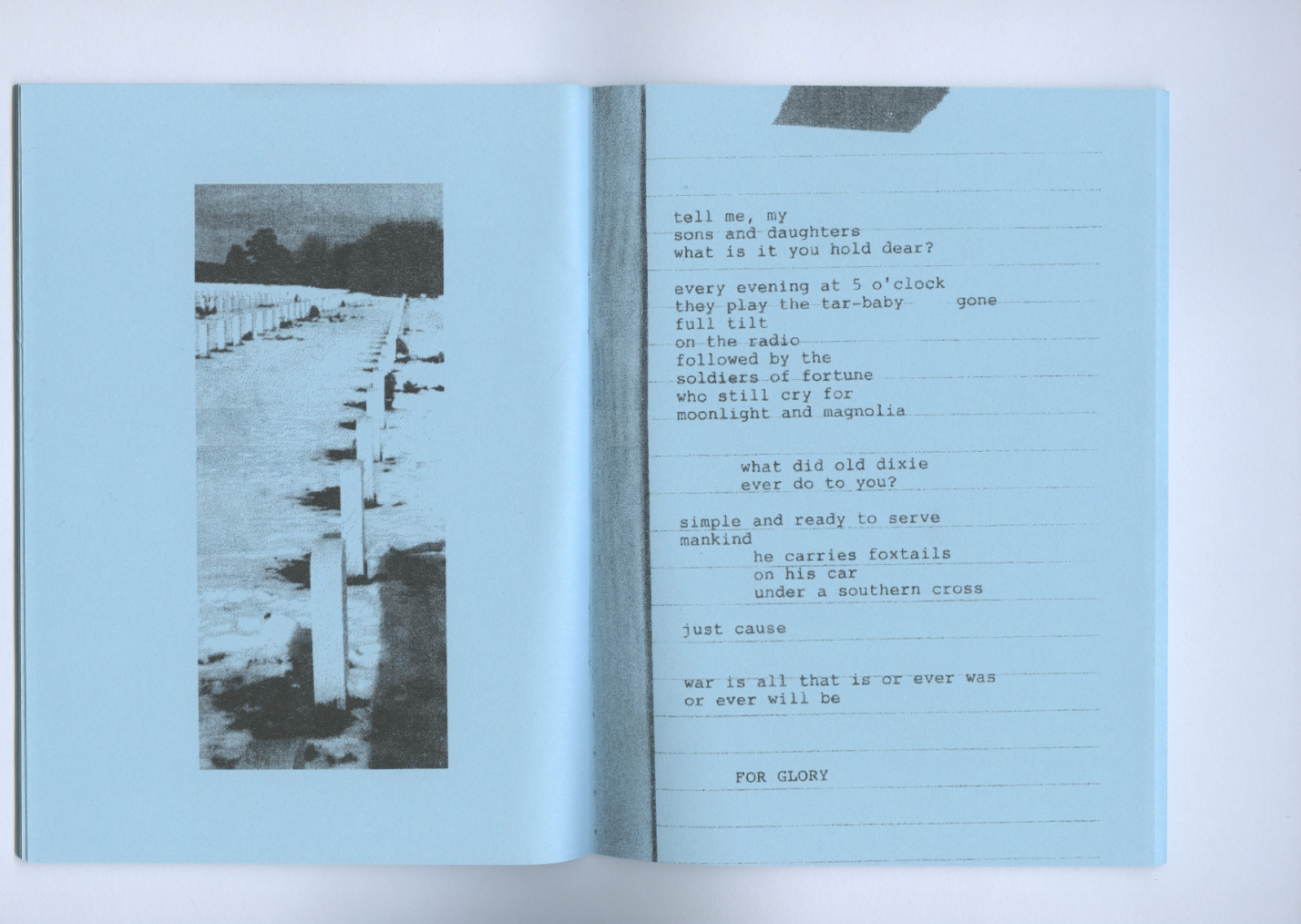
VKN: Your visually performative, “patriotic” chaplet “A Manual by Codes” is both tender and technical, visually ascetic and sharp, didactic and irreverent, and exhibits many shades of political and personal inquiries and it (possibly rhetorically) asks, “tell me, my sons and daughters what is it you hold dear? So if I may ask the book to ask you: tell me, Tiffany Lin, what is it you hold dear?”

TL: I hold dear the elements to which I belong. I like to remember we’re carbon made - my found family, blood family, strangers. When making the chaplet, I wanted to rethink justifications surrounding war and violence. When is sacrifice acceptable? What loss hurts the most and why? The book is a reminder that at the end of the day, you, like me, like her, like him, like they, like it - shit, piss, bleed, and will die. Mortality anchors the work.

Screen Shot 2020-02-17 at 5.35.42 PM.png

VKN: Can you talk about this illustration? Can you talk to us about your process of creativity? From the seed of conception to its end product? What is the one thing that you have learned from the process? Or what would empower you to refrain? Or do you tackle all of your visual works with some impulsion and immediacy?

TL: This editorial work was created as a response to a Lifestyle Illustration assignment in graduate school. I chose to work with Hermes’ Resort 2017 line (here). Each work (illustration, performance, writing) starts with drawing as a meditative and experimental practice. In this case, since I was responding to a prompt, I was more cognizant of color palettes and visual ambiance that would not distract from the clothing and elevate it in a playful and appetizing way.

I first work in analogue media and scan each component for more creative flexibility when I transfer it to a digital platform. Especially when working with a client that may change their mind quickly about placement, colors, or nitpick angles and stray hairs, it’s nice to be able to edit the piece quickly without tearing your hair out about having to redo an entire painting from scratch.

Impulse and immediacy are words that resonate with me. There is something critical in that first mark - conviction and confidence become lost the more you belabor the form. My media of choice is ink, crayon, charcoal, and gouache. Textures are often done by hand and retain a feeling of a living, breathing image to an otherwise dead mark rendered soulless by digital software. However, integrating digital tools into illustration has allowed me to continue working in this manner while still being efficient in the way things are moved around. Think of it as constant digital collage.

VKN: You work in a variety of mediums (lithography, drawing, painting, performance, a census collector), which one could you live without? Meaning, which medium or medium of expression would make the engine of existence worthy of adding more fuel, spare parts, or appetite for posterity. I used to think art is dead, but when I sit with your work, I have arrived to a small conclusion that art doesn’t always have to be overarching or dramatic - that it could speak or excel in the language of subtlety. An excellent example of this is your chaplet/chapbook titled “BECOMING, a letter” - it’s very poetic, compassionate with an element of un-enslaved detachment, and massively encouraging in the sense, place, and its time of acceptance. Can you talk about this book? Can you talk about the design of the cover? Two circles in ochre(?) and two smaller circles connected by one line? Does it reflect or is it in conversation with this linguistic line, “Two necessary shifts in orbit.” And, could you talk more about the significance of this tenderness, “Darling, There are no lies between us, only nervous hesitation toward an awakening.”

TL: I can’t live without drawing - it is the foundation of everything I do. I’m a big fan of sketchbook experimentation. It is how I think out loud.

In terms of what is more has fallen out of use, I have not worked as a true printmaker (as in working collaboratively with another artist) in a few years. I realize I am better suited to executing my own projects. However, lithography taught me important life lessons about patience, process, consistency, and the art of failure.

The book is probably my most emotional and intimate work to date. I wrote the initial text in 2015 when my partner (at the time) was at a major psychological low in grappling with his gender dysphoria. I wrote the essay as a way to acknowledge his desire to transition from female to male, to live his life as a man. I remember him telling me that transitioning is an imperfect solution to one’s material reality.

The cover is a diagram of binary stars, meaning two stars that orbit around a central mass. Our universe is dominated by multiple star systems, meaning the stars are bound together by gravitational force, even after they die. From our vantage point, they appear as one star but are actually two (or more) in constant rotation. I think it is an apt metaphor for me and my ex-partner’s relationship. We still remain very close to this day.

It’s a relationship I have difficulty defining, especially in conventional (see: BASIC) predominantly heterosexual/straight spaces. How to describe a love that is so completely and utterly unconditional? To me it speaks of the power of queer love that transcends bodily reality. Yes, the diagram is in conversation with that line as the orbits never truly “shift” but they may grow further apart or closer together over time, sometimes transferring mass to the other.

That last line is about intuition and knowing. We separated in Philadelphia in the summer of 2016 and he left behind a letter apologizing for “lying” to me about his desire to transition. But I do not see it as a lie. I see him for who he is, who he desires to be. We both knew something was amiss but neither of us had the language or resources at the time to articulate what he needed to “awaken” and arrive at his true expression of self. We grew up together. He is my best friend. He is a much more joyous person following his transition and that has been an amazing experience to see.

VKN: If I may extract some practical wisdom from you, what is the best way to deal with economic hardship, Tiffany? If you could advise from an artist to another?

TL: I don’t have a good answer to this one. The best thing I can advise is to stay honest with yourself, surround yourself with good people (and I mean ACTUALLY GOOD PEOPLE - it will take time to intuit), keep creating work and follow what feels right. Your confidence will waver from time to time, that’s ok. Acknowledge that the path of an artist is difficult; it is not linear and therefore infinite in possibility. It is possibly the most overwhelming industry to be in. Yes, you’ll have to hustle. Know that some days you will have to compromise but always take care of yourself. Too much top ramen will destroy you. Couch surfing will eventually wear you down. When I was working five (stupid) jobs in San Francisco, a mentor kept telling me that “The sword is forged in the fire.” If I were to get really nitty gritty, I would say find a job that can get you by but never lose focus. Wait tables, gut the gig economy for whatever it's worth, pawn your jewelry, roll the dice - but remember to nourish and feed your creative process. Persist!!

VKN: If Andy Warhol kept your most brilliant art piece and then informed you later that he lost it when in fact he didn’t, would you shoot him with a pistol like Valerie Solanas? What would you do to him for betraying you or leading you on? In other words, what is the best enactment of (nonchalant) revenge on another? Another artist? If there is such a thing as a casual, nonchalant venom.

TL: Yes, I would shoot him. But maybe that would be too easy.

Perhaps it would be more poetic to concoct a more elaborate plot, a long term defamation campaign.

But in more seriousness, I’d probably let it go. Revenge and bitterness take up too much mental energy. I’d rather redirect my energy into happier things. But therein lies the nonchalant revenge you speak of - achieving success despite the setbacks and thievery!

VKN: Which one would you choose? A door a window? In other words, what is your ideal romantic love? TL: Door. Clear entrance and exit strategy.

Two people coming together and understanding the terms of engagement.

Secure infrastructure.

VKN: Do you don’t think the window has the same clear exit strategy?

TL: It involves too much glass shattering.

VKN: What is your favorite kind of sofa? Or what is the sexist art object you have ever laid eyes on? In your eyes, what is the best Asian artist working on any medium today? This is non-sequitur, but I was preparing for this interview and I accidentally studied this other woman’s art/design (http://www.tiflindesign.com) who shared the same first and last name with you (lol), and I did wonder for a second if you have ever reached out to other Tiffany Lins in the world and ask if they are willing to collaborate with you on an artistic feat/project?

TL: [ UPDATE! ] Since conducting this interview, I caved and bought a sofa off of craigslist. It’s very modern and has shaker furniture elements. It is not very practical for sleeping on but is firm and keeps me alert while I read.

Sexist art object… is everywhere… I can’t decide. Am I supposed to sit on it?

Haha, yes, down the line I would like to create a video series around “common” names, mostly among 1st and 2nd generation Americans - popular combinations like Tiffany Lin or Christine Lee, Grace Kim, Maria Rodriguez, Andrea Gutierrez, etc. I would have them face the camera and say “My name is [INSERT NAME HERE] and I am a public menace.” My twin is named Tiffany Lin, she is 5 days older than me and grew up in the same neighborhood. She currently works as a nurse. Our parents are derived from the same practical Taiwanese stock, giving us names that were easy to pronounce and would allow us to assimilate more easily into American society.

Best Asian artist… Mel Chin is a pretty cool dude.


Tiffany Lin is an interdisciplinary artist, educator, and wordsmith. Her projects investigate nebulous distinctions between want, need, and desire in context of capitalist spectacle and corporeal intimacy. She holds an MFA from the Maryland Institute College of Art in Illustration Practice and a BA in Gender & Women’s Studies and Psychology from the University of California, Berkeley. Lin currently lives and works in Las Vegas, NV where she joins the Department of Art at the University of Nevada, Las Vegas.

VI KHI NAO is the author of Sheep Machine (Black Sun Lit, 2018) and Umbilical Hospital (Press 1913, 2017), and of the short stories collection, A Brief Alphabet of Torture, which won FC2’s Ronald Sukenick Innovative Fiction Prize in 2016, the novel, Fish in Exile (Coffee House Press, 2016), and the poetry collection, The Old Philosopher, which won the Nightboat Books Prize for Poetry in 2014.  Her work includes poetry, fiction, film and cross-genre collaboration. Her stories, poems, and drawings have appeared in NOON, Ploughshares, Black Warrior Review and BOMB, among others. She holds an MFA in fiction from Brown University, where she received the John Hawkes and Feldman Prizes in fiction and the Kim Ann Arstark Memorial Award in poetry. 


In Art, Interviews Tags Vi Khi Nao, Tiffany Lin, art
Comment

A Review of Kristin Garth's 'Shut Your Eyes, Succubi'

January 23, 2020

BY MONIQUE QUINTANA

Kristin Garth’s chapbook, shut your eyes, succubi ( Maverick Duck Press, 2019) , is both delightful and frightening, a conjuring of girlhood with a form inclined to romance-- the sonnet. A prolific sonneteer in a digital age, Garth understands that while some memories seem as distant as old TV sets and radio fuzz, certain characters are bright and alive and fun in our psyche and they turn up in the most opportune places.

This was the first time I read poetry with handwritten annotations, which added a poignant whimsy to the experience. As I moved further and further into the poems, each character seemed to be linked together by the same dark energy. In “Eat Me”, objects, fashion, and delicacies push each line to a sexual moment. There is no meek girl Alice of yesteryear, rather a woman who has autonomy in a scene. Stripped of masquerade, she dominates and commands as a true queen of hearts.

Two other standout sonnets are “ Claudia” and “Veruca Wants”. Both pieces reckon with the image and the sentiments of the brat girl, a girl decked with material things, who is much too grown-up for the world that she lives in. “Claudia” tells of Interview with the Vampire’s doomed enfant, a character who remains elusive in both Rice’s novel and the cinematic dreamscape of Neil Jordan’s 1994 take: “ Resolve to keep her safe at hand, but she / is something you don’t understand .”

The poem seems to acknowledge that we, the grand audience, both love and detest Claudia because she’s an unlikable girl, but also our beloved. Like “Claudia”, “Veruca Wants” made me take pause and look back at my girlhood. When I was small and I asked for material things or complained about things that were making me unhappy, my grandmother called me “Veruca” and waited for the sweet and stoic parts of me to return. Garth’s sonnet carries the want for decadence over to womanhood: “ Men / who’ll jump before she screams.” The sonnet plays with the idea that we create the very decadence that we need. It’s not the reaching for rich things, but when we’re compelled to articulate desire to the point of screaming.


Monique Quintana is the author of Cenote City (Clash Books, 2019) and holds an MFA in Creative Writing from CSU Fresno. Her work has appeared in Winter Tangerine, Queen Mobs Tea House and Acentos Review, among other publications. She is a Senior Editor at Luna Luna Magazine, Fiction Editor at Five 2 One Magazine, and writes about Latinx literature at her blog, Blood Moon. You can find her at moniquequintana.com

In Art, Poetry & Prose Tags Poetry, Book Review, Feminism, female sexuality
Comment

4 Horror Films to Keep You Up at Night

December 3, 2019

Kailey Tedesco's books These Ghosts of Mine, Siamese (Dancing Girl Press) and She Used to be on a Milk Carton (April Gloaming Publications) are both forthcoming. She is the editor-in-chief of Rag Queen Periodical and a performing member of the Poetry Brothel. Her work has been nominated for the Pushcart. You can find her work in Bellevue Literary Review, Hello Giggles, UltraCulture, Poetry Quarterly, and more. For more, please visit kaileytedesco.com.

Read More
In Art Tags movies
Comment
pink beach

Poetry by Sarah Stockton

November 26, 2019

BY SARAH STOCKTON

A note from the author: The artist Melissa McCanna made an ekphrastic painting (see below) after the below poem "Salt and Other Spells.” It was exhibited at a gallery in Washington.

Melissa McCanna

Melissa McCanna

Salt and Other Spells

We were water once

cyclical, transforming

salt and sediment into scales

anadromous/


moving from sea into sweet water

catadromous/

fresh to salt

to spawn/ traveling


in deep sea channels

transitioning/

from silvery blue

to darker, going home


as we, floundering at water’s edge

turn in four directions/

three visions/ seven cycles

scrying into water

Spells of Desperation

Ablating

the effluvia clogging my heart, cauterizing

rusty swords blackberry thorns


Ripping

apart whole decades, reams of

photographs prayer books

Shrinking

into a shape un-recognizable

binding cloths barbed wire cloaks


Rolling

jade stones over my face

chemical peels tuning forks


Throwing

myself on the mercy of the court

strip teases plea bargains

Writing

love letters to my maker

confessions devotions


Sarah Stockton, MA. After several years working in urban universities as staff and adjunct, Sarah now lives in the rural Pacific Northwest where she practices the spiritual arts, serves as a freelance writer and editor, and writes poems.

In Poetry & Prose, Art Tags Sarah Stockton
Comment

Trance Writing & Using the Self as a Guide

November 4, 2019

Kailey Tedesco's books These Ghosts of Mine, Siamese (Dancing Girl Press) and She Used to be on a Milk Carton (April Gloaming Publications) are both forthcoming. She is the editor-in-chief of Rag Queen Periodical and a performing member of the Poetry Brothel. Her work has been nominated for the Pushcart. You can find her work in Bellevue Literary Review, Hello Giggles, UltraCulture, Poetry Quarterly, and more. For more, please visit kaileytedesco.com.


Read More
In Art, Poetry & Prose Tags writing, occult
Comment
maxresdefault.jpg

4 Midsommar-Inspired Beauty Tips

July 25, 2019

Stephanie Valente lives in Brooklyn, New York, and works as an editor. One day, she would like to be a silent film star. She is the author of Hotel Ghost (Bottlecap Press, 2015) and Waiting for the End of the World (Bottlecap Press, 2017).  Her work has appeared in  dotdotdash, Nano Fiction, LIES/ISLE, and Uphook Press. She can be found at her website.


Read More
In Beauty, Art, Lifestyle Tags midsommar, movies, film, Makeup
Comment
midsommar

MIDSOMMAR’S Hårgalåten and the Ritual of Dance

July 23, 2019

BY MARY KAY MCBRAYER

*SPOILERS*


I have to confess something about Ari Aster’s new movie Midsommar: I did not identify with or even like Dani until she chose to set her boyfriend on fire. Before you judge me as a vindictive arsonist/murderer, hear me out. Most of my re-alignment with the protagonist is because of the ritual of dance.

via GIPHY

I have been a dancer for all of my life—one of my earliest memories is being in a pink leotard at three years old and hearing my instructor say, “If you ever lose your place, just listen to the music. It will tell you where you are.” She meant that we should listen to the counts to situate ourselves in the choreography, but I didn’t take it that way, not even then. There’s something really special about being able to lose yourself in a piece of music, especially when the music is live. It shuts off the rest of your brain and makes you live in your body, and you kind of forget everything that is happening if it isn’t the dance. And when you finish dancing, everything falls in its place.

I remember at one convention I went to, the keynote speaker (Donna Mejia) asked the crowd, “How many of you feel like you are wasting time when you’re dancing? That you should be doing something else?” Nearly everyone raised her hand. “Now, how many of you are only truly happy when you’re dancing?” I did not see a single hand go down.

Sure, it sounds like a lot of existential gibberish if you haven’t experienced it—but let me ask this, more relatable question: have you ever been drunk and lost yourself on the dance floor of the club? (Look at me in the face and tell me you have never suddenly heard the end of a Prince song and realized you were grinding on a stranger in the corner. LOOK ME IN THE EYE. And tell me that.) My point is, when we hear someone is a dancer, we think they are a performer, but that is not necessarily the purpose of dance, not spiritually, and not in Midsommar.

via GIPHY

Another confession: most of my dance training is in Middle Eastern dance, which is very different from Swedish dance, but the folk music and dance, and the purposes of it, are not necessarily THAT different. For example, belly dancing originated with women dancing for and with other women. There was no one watching. There was no audience. Everyone danced. It was a form of community. It’s the same community you feel dancing in the kitchen in your pajamas with a couple of close friends. That feeling, the one of being among your friends and doing your hoeish-est dance with a spatula in one hand is the BEST, and it’s what we see in Midsommar with the Hårgalåten. In my experience, that’s when you really start dancing, when you forget that people are watching, listen to the music, and express it in your physicality.

When women dance like that, we don’t care what we look like because no one is supposed to be watching. If they are watching, they don’t stop dancing to do it. And that’s powerful. No one is watching me. Everyone is dancing with me. I am dancing with everyone. No one is watching me, and I don’t care what I look like. (Great performers are the ones who harness this and utilize it onstage, even though there ARE people watching.) You can see the moment that Dani realizes the happiness that come with the May Day dance in Midsommar. It is the first time she smiles in the whole film.

So many of us, too, think that dancing is about the viewer, but it just isn’t. Not on a fundamental level. Sure, dance can be a performance, but that, to me, is not its purpose, and it’s definitely not the purpose of the movie Midsommar’s dance sequence. To me, the purpose of the whole May Day/May Queen dance around the May Pole is to show Dani her true family.

via GIPHY

These women embrace her, they let her be a part of their dance community, and that’s so powerful—I’ll never forget the first time a dancer pulled me into the circle of a folk dance. It was magic. I, like Dani, glanced away a couple times to see if anyone was watching.

She wants Christian to be watching, but he isn’t. It seems like she EXPECTS to be sad that he is not paying attention, but then her dancing becomes even more joyful, more spiritual. (You can see this emotional fortitude, though not joy specifically, in spiritual dance rituals around the world, from the Whirling Dervishes in Turkey to the Moribayasa dance in Guinea to the May Day Hårgalåten celebration in the movie Midsommar.)

In the Hårgalåten, the women ARE having fun, though. Though it’s a competition, they are not really competing. Or at least they are not competing with each other. 

In the folktale of Hårgalåten, the devil disguised himself as a fiddler and played a tune so compelling that all the women in Hårga danced until they died. In the version that Midsommar tells, the dance ritual is a reenactment of that myth. The women knock each other down because they’re shrooming so hard they run into each other when the music changes. They aren’t mad, though, when they fall. They tumble down, laughing, and roll out of the path of the remaining dancers. The last one standing, one of the villagers says to Dani, is the May Queen.

The May Queen, in the context of the film, has some pretty dark and ominous foreshadowing around her. I assumed, at the first appearance of that archetype, that the May Queen would be sacrificed, and I think that is what the film wants us to assume. That is not, however, what happens, and I was glad of it. (So much of this film is not what I expected it to be, and that is a delight among formulaic horror movies.) 

via GIPHY


Even the song of the Hårga is told from the first person plural, the “we” of the dancers. They are all invested in the ritual. If one of them wins, they all win. When Dani is the last dancer standing, her new family celebrates with her. They are there for her when she grieves her boyfriend, too.

I love the ending of Midsommar because I feel like Dani really comes into her own; it’s the first time she’s had agency or presented with a choice, in my opinion, throughout the film. As you know, the May Queen is not sacrificed as many of us likely intuited: instead, she’s lifted on a platform and carried to her flower throne. She follows the sounds of another ritual though her now-sisters advise her against it. They go with her anyway. She sees her boyfriend having sex with someone else. She hyperventilates. Her new family is there, with her, breathing with her and comforting her in an empathy so physical it’s uncomfortable to the viewer.

Then, Dani discovers that the May Queen gets to choose the final sacrifice, from between Christian and a member of her new family. She chooses her boyfriend.

Here’s the thing, though: I don’t think she chooses him because he’s “cheating” on her. That ritual, to me, is absolutely a rape, for one. That Christian has a terrible time at the festival is a gross understatement, but the thing to remember is that Christian was shitty way before they came to Sweden, and Dani, like so many women complacent in their relationships, women clinging to a dysfunctional relationship because the rest of their world has crashed, women set adrift from the world, clings to him like a life raft, even though he will not keep her afloat. 

During the dance, Dani finds support, love, joy, and that is (in my interpretation of the competition) why she wins. It’s not until she finds that community in Hårga, specifically in the dance with the other women, that she can release the last tether to her unhappiness and set him on fire. 


mary-kay-mcbrayer

Mary Kay McBrayer is a belly-dancer, horror enthusiast, sideshow lover, and literature professor from south of Atlanta. Her book about America’s first female serial killer is forthcoming from Mango Publishing, and you can hear her analysis (and jokes) about scary movies on her blog and the podcast she co-founded, Everything Trying to Kill You.

She can be reached at mary.kay.mcbrayer@gmail.com.

In Pop Culture, Art, Magic Tags Hårgalåten, midsommar, witch, witchcraft, ritual, dance, Ritual, ari aster
2 Comments
← Newer Posts Older Posts →
Featured
‘in the glitter-open black' — poetry by Fox Henry Frazier
'poet as tarantula,  poem as waste' — poetry by  Ewen Glass
'poet as tarantula, poem as waste' — poetry by Ewen Glass
'Hours rot away in regalia' — poetry by Stephanie Chang
'down down down the hall of mirrors' — poetry by Ronnie K. Stephens
'Grew appendages, clawed towards light' — poetry by Lucie Brooks
'do not be afraid' — poetry by Maia Decker
'The darkened bedroom' — poetry by Jessica Purdy
'I am the body that I am under' — poetry by Jennifer MacBain-Stephens
instagram

COPYRIGHT LUNA LUNA MAGAZINE 2025