• Home
  • indulge
  • new poetry
    • About Luna Luna
    • resources
    • search
  • editor
  • dark hour
  • submit
Menu

luna luna magazine

  • Home
  • indulge
  • new poetry
  • About
    • About Luna Luna
    • resources
    • search
  • editor
  • dark hour
  • submit
delicious new poetry
'the doors of the night open' — poetry by Juan Armando Rojas (translated by Paula J. Lambert)
Nov 29, 2025
'the doors of the night open' — poetry by Juan Armando Rojas (translated by Paula J. Lambert)
Nov 29, 2025
Nov 29, 2025
'we can be forlorn women' — poetry by Stevie Belchak
Nov 29, 2025
'we can be forlorn women' — poetry by Stevie Belchak
Nov 29, 2025
Nov 29, 2025
'I do whatever the light tells me to' — poetry by Catherine Bai
Nov 29, 2025
'I do whatever the light tells me to' — poetry by Catherine Bai
Nov 29, 2025
Nov 29, 2025
‘to kill bodice and give sacrament’ — poetry By Kale Hensley
Nov 29, 2025
‘to kill bodice and give sacrament’ — poetry By Kale Hensley
Nov 29, 2025
Nov 29, 2025
'Venetian draped in goatskin' — poetry by Natalie Mariko
Nov 29, 2025
'Venetian draped in goatskin' — poetry by Natalie Mariko
Nov 29, 2025
Nov 29, 2025
'the long sorrow of the color red' — centos by Patrice Boyer Claeys
Nov 28, 2025
'the long sorrow of the color red' — centos by Patrice Boyer Claeys
Nov 28, 2025
Nov 28, 2025
'Flowers are the offspring of longing' — poetry by Ellen Kombiyil
Nov 28, 2025
'Flowers are the offspring of longing' — poetry by Ellen Kombiyil
Nov 28, 2025
Nov 28, 2025
'punish or repent' — poetry by Chris McCreary
Nov 28, 2025
'punish or repent' — poetry by Chris McCreary
Nov 28, 2025
Nov 28, 2025
'long, dangerous grasses' — poetry by Jessica Purdy
Nov 28, 2025
'long, dangerous grasses' — poetry by Jessica Purdy
Nov 28, 2025
Nov 28, 2025
'gifting nighttime honey' — poetry by Nathan Hassall
Nov 28, 2025
'gifting nighttime honey' — poetry by Nathan Hassall
Nov 28, 2025
Nov 28, 2025
'A theory of pauses' — poetry by Jeanne Morel and Anthony Warnke
Nov 28, 2025
'A theory of pauses' — poetry by Jeanne Morel and Anthony Warnke
Nov 28, 2025
Nov 28, 2025
'into the voluminous abyss' — poetry by D.J. Huppatz
Nov 28, 2025
'into the voluminous abyss' — poetry by D.J. Huppatz
Nov 28, 2025
Nov 28, 2025
'an animal within an animal' — a poem by Carolee Bennett
Nov 28, 2025
'an animal within an animal' — a poem by Carolee Bennett
Nov 28, 2025
Nov 28, 2025
‘in the glitter-open black' — poetry by Fox Henry Frazier
Oct 31, 2025
‘in the glitter-open black' — poetry by Fox Henry Frazier
Oct 31, 2025
Oct 31, 2025
'poet as tarantula,  poem as waste' — poetry by  Ewen Glass
Oct 31, 2025
'poet as tarantula, poem as waste' — poetry by Ewen Glass
Oct 31, 2025
Oct 31, 2025
'my god wearing a body' — poetry by Tom Nutting
Oct 31, 2025
'my god wearing a body' — poetry by Tom Nutting
Oct 31, 2025
Oct 31, 2025
'Hours rot away in regalia' — poetry by Stephanie Chang
Oct 31, 2025
'Hours rot away in regalia' — poetry by Stephanie Chang
Oct 31, 2025
Oct 31, 2025
'down down down the hall of mirrors' — poetry by Ronnie K. Stephens
Oct 31, 2025
'down down down the hall of mirrors' — poetry by Ronnie K. Stephens
Oct 31, 2025
Oct 31, 2025
'Grew appendages, clawed towards light' — poetry by Lucie Brooks
Oct 31, 2025
'Grew appendages, clawed towards light' — poetry by Lucie Brooks
Oct 31, 2025
Oct 31, 2025
'do not be afraid' — poetry by Maia Decker
Oct 31, 2025
'do not be afraid' — poetry by Maia Decker
Oct 31, 2025
Oct 31, 2025
'The darkened bedroom' — poetry by Jessica Purdy
Oct 31, 2025
'The darkened bedroom' — poetry by Jessica Purdy
Oct 31, 2025
Oct 31, 2025
'I am the body that I am under' — poetry by Jennifer MacBain-Stephens
Oct 31, 2025
'I am the body that I am under' — poetry by Jennifer MacBain-Stephens
Oct 31, 2025
Oct 31, 2025
goddess energy.jpg
Oct 26, 2025
'Hotter than gluttony' — poetry by Anne-Adele Wight
Oct 26, 2025
Oct 26, 2025
'As though from Babel' — poetry by Fox Henry Frazier
Oct 26, 2025
'As though from Babel' — poetry by Fox Henry Frazier
Oct 26, 2025
Oct 26, 2025
'See my wants' — poetry by Aaliyah Anderson
Oct 26, 2025
'See my wants' — poetry by Aaliyah Anderson
Oct 26, 2025
Oct 26, 2025
'black viper dangling a golden fruit' — poetry by Nova Glyn
Oct 26, 2025
'black viper dangling a golden fruit' — poetry by Nova Glyn
Oct 26, 2025
Oct 26, 2025
'It would be unfair to touch you' — poetry by grace (ge) gilbert
Oct 26, 2025
'It would be unfair to touch you' — poetry by grace (ge) gilbert
Oct 26, 2025
Oct 26, 2025
'Praying in retrograde' — poetry by Courtney Leigh
Oct 26, 2025
'Praying in retrograde' — poetry by Courtney Leigh
Oct 26, 2025
Oct 26, 2025
'To not want is death' — poetry by Letitia Trent
Oct 26, 2025
'To not want is death' — poetry by Letitia Trent
Oct 26, 2025
Oct 26, 2025
'Our wildness the eternal now' — poetry by Hannah Levy
Oct 26, 2025
'Our wildness the eternal now' — poetry by Hannah Levy
Oct 26, 2025
Oct 26, 2025
ankhesenamun-PDtJt8Cp-4Q-unsplash.jpeg

We Love Witch Craft Magazine's Seventh Issue

June 2, 2021

BY MONIQUE QUINTANA

Founded in 2015 by Catch Business and Elle Nash, the seventh issue of Witch Craft Magazine is filled with nerve-wracking fun and the lush grotesque, all while reflecting on the social complexities of the current pandemic. Colleen Barnett's wrap-around cover art is a cool-toned photograph of gnashing teeth gushing with blood. With the interior book design by Joel Amat Güell, the pocket-sized volume is full of poetry, fiction, nonfiction, and interviews, many of the pieces blurring the lines of form and genres.

The written work was accompanied by a fine curation of black and white images by many artists such as Ro, Ikosidio, Dian Liang, Claire Ma, and Alejandra López Camarillo. This was my first time reading the magazine. The brevity of the pieces and the formatting helped me read at a feverish pace in a single sitting.

I look forward to reading future installments of this radical, sexy, and dangerous publication.

Standouts from this issue include:

  • Nikolai Garcia's " Noche Buena ": " Her smile is a wink, and I let my sad guard down. I tell myself I don't have much, but I have her attention. I lie and say I like the vegan tamales. "

  • Felicia Rosemary Urso's " Compulsion ": " Spring did come, and I tried to pull our taffy body into two. A tug of war between my self-will and my gut, my actions refused to line with my desire. I was a gecko and you were my tail. You'd fall off, just to grow back. "

  • David Joez Villaverde, " As Below, So Above ": " Being here on the physical plane means we exercise corporeal power and the response to the ailments of this world is not to pour energy and will out into the ether but to wield our focus and control to change the things around us, to carry our intention in our words and deeds that we might transform the fabric of this corruption into harmony. "

  • Tex Gresham in " Interview with V. Ruiz": " Ancestors who have been quiet are waking up in new ways and guiding their lineage to make drastic shifts. "


Monique Quintana is from Fresno, CA, and the author of Cenote City (Clash Books, 2019). She has been awarded fellowships to Yaddo, The Mineral School, the Sundress Academy of the Arts, the Community of Writers, and the Open Mouth Poetry Retreat. You can find her @quintanagothic and moniquequintana.com.

In Poetry & Prose, Art Tags magazine, Poetry, art, prose, witchcraft
Comment
wilhelm-gunkel-ZIQb1OkI7Ss-unsplash.jpg

Spoonie Witch Magic and Wordcraft

March 2, 2021

BY LISA MARIE BASILE

I spend a lot of time thinking about disability and accessibility in our sacred or creative practices, and how our lives are affected by, informed by, or intersected by our bodies and our wellness. A few examples: Do places of worship offer a wheelchair ramp? Can we modify more meditation classes for folks who can’t sit down at all or for long periods (me!)? Do we feel encouraged to create altar spaces that are tiny, portable, and simple...so we can take it to bed during flare-ups? Do poetry conferences or literary reading spaces make accessibility a priority?

View this post on Instagram

A post shared by 🗝 ritual poetica 🗝 (@ritual_poetica)

I believe that we should all feel encouraged and inspired to practice, pray, or tap into sacredness in a way that works for our minds and bodies — and to use our body/pain/individual experiences as a strength or energy source?

These Spoonie Witch ideas, insights, and prompts are intended to get you thinking about your magic and your power — in ways that work for you. They are designed to help you send love to yourself and reclaim your narrative. Whatever that is, and wherever you may be in the process.

PS: I live with ankylosing spondylitis, a degenerative spinal disease that affects pretty much everything, from my heart to my gut. I can’t POSSIBLY speak to everyone’s experience, but this comes from my own.

My next book, City Witchery, is coming out later this year — and deals largely with finding accessible ways to tap into sacredness in a city environment, and inside of an apartment/shared space/small space.

finding empowerment

Where there are perceived or real limitations, there are also opportunities for growth. Pain often gives us empathy. Loneliness can make us creative. Frustration can drive real social change. Using that big, potent energy in your own magical practice can create change and push toward transformation. Isn't that the goal? To change, to grow? To lean into the power? Don’t be afraid to transmute those big feelings — frustration at broken systems, social isolation due to chronic flare-ups — into your magic.

Sometimes, when the feelings are overwhelming, I work with candle magic — pushing all those ideas into the flame, watching them dance and flicker and turn into something stronger.

tuning into the body

Spending so much time tuned in to your body — and tending to its needs — can be exhausting. But it also means that you are damn good at tapping into your body more readily. Where do you feel energy, anxiety, power, or sensuality? Where do you feel anger or empathy? Pull from that source and use it in your spells or visualizations.

finding what works for you

What form of magic feels right to you? Some of us can't move/perform/concentrate, etc like others. That is okay. Make a list of what feels right to you. Is It breathwork, sex magic, visualization, concentration, writing? Embrace the notion that YOU can adapt rituals or practices to your strengths. You have the right to choose.

creating accessible altars

The idea that we need certain tools or fancy objects or an immaculate, rose-adorned space to perform our sacred practice is outdated. Not everything is Instagrammable; that’s just not realistic. Make a small box or bag and fill it with a few power Items (a candle, tarot, salts, or stones). Keep your journal or grimoire with it. Keep it at your bedside for flare days. That's more than magical enough. Shout out to Ryn’s Ramblings for their awesome ideas around magic and chronic illness (and Altoid box altars!).

shadow working pain

We all hate pain and discomfort. What if we listened to it, gave it compassion, and gave it attention (rather than seeking distraction)? This is a form of shadow work. The pain is not separate from you. It Is a part of you. This gives you the ability to notice it, transmute it, use it, and find strength in it. Pain can be an energy source; you get to choose when and how.

body poetics

Write a poem to your body, to your brain fog, to your Insomnia, to your limited mobility, to your grief, to your reflection, to your bruised arms, your shaking legs, your scars, your distracted mind. What would a love poem to yourself look like? What would a rage poem sound like? How would an ode to your beautiful neurodiversity read? What does it sound like when we write the narrative, and when we reclaim our story?

Read it aloud and feel the power in your words. 

Need some inspiration? Be sure to work through these chronic illness journaling prompts I’ve created right here.

A note on magic and wellness

While ritual can help us center ourselves and find empowerment, autonomy, and magic, it is not a cure for chronic illness. Reach out for professional help. Seek medication. Know that social and political oppression can directly affect you in ways that spells or prayers can’t vanquish. Take care of your body. Seek community. And know that you’re not alone.


—

Lisa Marie Basile (she/her) is a poet, essayist, editor, and chronic illness awareness advocate living in New York City. She's the founder and creative director of Luna Luna Magazine and its online community, and the creator of Ritual Poetica, a curiosity project dedicated to exploring the intersection of writing, creativity, healing, & sacredness.

She is the author of THE MAGICAL WRITING GRIMOIRE, LIGHT MAGIC FOR DARK TIMES, and a few poetry collections, including the recent NYMPHOLEPSY, which is excerpted in Best American Experimental Writing 2020. Her essays and other work can be found in The New York Times, Narratively, Sabat Magazine, We Are Grimoire, Witch Craft Magazine, Refinery 29, Self, Healthline, Entropy, On Loan From The Cosmos, Chakrubs, Catapult, Bust, Bustle, and more. She is also a chronic illness advocate, keeping columns at several chronic illness patient websites. She earned a Masters's degree in Writing from The New School and studied literature and psychology as an undergraduate at Pace University. You can follow her at lisamariebasile.
In Wellness, Magic Tags spoonie witch, spoonie, chronic illness, ankylosing spondylitis, chronic pain, witchcraft, sick witch
Comment

What My Research Project Taught Me About Witches

May 13, 2020

Camaryn Wheeler is an English and French student at Moravian College in Pennsylvania, where she works as a Writing Fellow and Writing Tutor, an editor for the Moravian Manuscript, and the treasurer for Moravian's American Association of University Women, and runs for the Track & Field Team. She writes realistic fiction, poetry, and creative nonfiction, has published a children’s book at 12 years old, and has a published book review in Rag Queen Periodical.

Read More
In Personal Essay Tags Camaryn Wheeler, witchcraft, witches
Comment
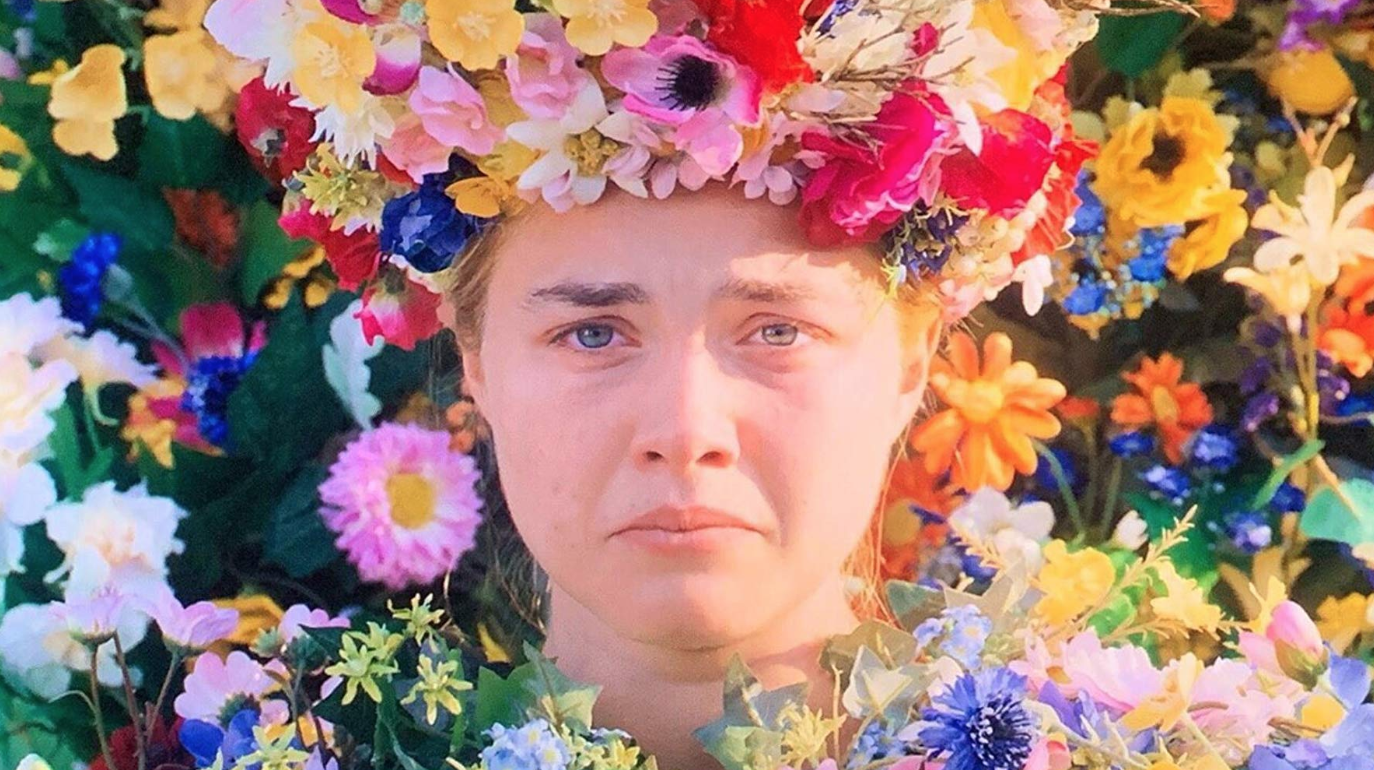
midsommar

MIDSOMMAR’S Hårgalåten and the Ritual of Dance

July 23, 2019

BY MARY KAY MCBRAYER

*SPOILERS*


I have to confess something about Ari Aster’s new movie Midsommar: I did not identify with or even like Dani until she chose to set her boyfriend on fire. Before you judge me as a vindictive arsonist/murderer, hear me out. Most of my re-alignment with the protagonist is because of the ritual of dance.

via GIPHY

I have been a dancer for all of my life—one of my earliest memories is being in a pink leotard at three years old and hearing my instructor say, “If you ever lose your place, just listen to the music. It will tell you where you are.” She meant that we should listen to the counts to situate ourselves in the choreography, but I didn’t take it that way, not even then. There’s something really special about being able to lose yourself in a piece of music, especially when the music is live. It shuts off the rest of your brain and makes you live in your body, and you kind of forget everything that is happening if it isn’t the dance. And when you finish dancing, everything falls in its place.

I remember at one convention I went to, the keynote speaker (Donna Mejia) asked the crowd, “How many of you feel like you are wasting time when you’re dancing? That you should be doing something else?” Nearly everyone raised her hand. “Now, how many of you are only truly happy when you’re dancing?” I did not see a single hand go down.

Sure, it sounds like a lot of existential gibberish if you haven’t experienced it—but let me ask this, more relatable question: have you ever been drunk and lost yourself on the dance floor of the club? (Look at me in the face and tell me you have never suddenly heard the end of a Prince song and realized you were grinding on a stranger in the corner. LOOK ME IN THE EYE. And tell me that.) My point is, when we hear someone is a dancer, we think they are a performer, but that is not necessarily the purpose of dance, not spiritually, and not in Midsommar.

via GIPHY

Another confession: most of my dance training is in Middle Eastern dance, which is very different from Swedish dance, but the folk music and dance, and the purposes of it, are not necessarily THAT different. For example, belly dancing originated with women dancing for and with other women. There was no one watching. There was no audience. Everyone danced. It was a form of community. It’s the same community you feel dancing in the kitchen in your pajamas with a couple of close friends. That feeling, the one of being among your friends and doing your hoeish-est dance with a spatula in one hand is the BEST, and it’s what we see in Midsommar with the Hårgalåten. In my experience, that’s when you really start dancing, when you forget that people are watching, listen to the music, and express it in your physicality.

When women dance like that, we don’t care what we look like because no one is supposed to be watching. If they are watching, they don’t stop dancing to do it. And that’s powerful. No one is watching me. Everyone is dancing with me. I am dancing with everyone. No one is watching me, and I don’t care what I look like. (Great performers are the ones who harness this and utilize it onstage, even though there ARE people watching.) You can see the moment that Dani realizes the happiness that come with the May Day dance in Midsommar. It is the first time she smiles in the whole film.

So many of us, too, think that dancing is about the viewer, but it just isn’t. Not on a fundamental level. Sure, dance can be a performance, but that, to me, is not its purpose, and it’s definitely not the purpose of the movie Midsommar’s dance sequence. To me, the purpose of the whole May Day/May Queen dance around the May Pole is to show Dani her true family.

via GIPHY

These women embrace her, they let her be a part of their dance community, and that’s so powerful—I’ll never forget the first time a dancer pulled me into the circle of a folk dance. It was magic. I, like Dani, glanced away a couple times to see if anyone was watching.

She wants Christian to be watching, but he isn’t. It seems like she EXPECTS to be sad that he is not paying attention, but then her dancing becomes even more joyful, more spiritual. (You can see this emotional fortitude, though not joy specifically, in spiritual dance rituals around the world, from the Whirling Dervishes in Turkey to the Moribayasa dance in Guinea to the May Day Hårgalåten celebration in the movie Midsommar.)

In the Hårgalåten, the women ARE having fun, though. Though it’s a competition, they are not really competing. Or at least they are not competing with each other. 

In the folktale of Hårgalåten, the devil disguised himself as a fiddler and played a tune so compelling that all the women in Hårga danced until they died. In the version that Midsommar tells, the dance ritual is a reenactment of that myth. The women knock each other down because they’re shrooming so hard they run into each other when the music changes. They aren’t mad, though, when they fall. They tumble down, laughing, and roll out of the path of the remaining dancers. The last one standing, one of the villagers says to Dani, is the May Queen.

The May Queen, in the context of the film, has some pretty dark and ominous foreshadowing around her. I assumed, at the first appearance of that archetype, that the May Queen would be sacrificed, and I think that is what the film wants us to assume. That is not, however, what happens, and I was glad of it. (So much of this film is not what I expected it to be, and that is a delight among formulaic horror movies.) 

via GIPHY


Even the song of the Hårga is told from the first person plural, the “we” of the dancers. They are all invested in the ritual. If one of them wins, they all win. When Dani is the last dancer standing, her new family celebrates with her. They are there for her when she grieves her boyfriend, too.

I love the ending of Midsommar because I feel like Dani really comes into her own; it’s the first time she’s had agency or presented with a choice, in my opinion, throughout the film. As you know, the May Queen is not sacrificed as many of us likely intuited: instead, she’s lifted on a platform and carried to her flower throne. She follows the sounds of another ritual though her now-sisters advise her against it. They go with her anyway. She sees her boyfriend having sex with someone else. She hyperventilates. Her new family is there, with her, breathing with her and comforting her in an empathy so physical it’s uncomfortable to the viewer.

Then, Dani discovers that the May Queen gets to choose the final sacrifice, from between Christian and a member of her new family. She chooses her boyfriend.

Here’s the thing, though: I don’t think she chooses him because he’s “cheating” on her. That ritual, to me, is absolutely a rape, for one. That Christian has a terrible time at the festival is a gross understatement, but the thing to remember is that Christian was shitty way before they came to Sweden, and Dani, like so many women complacent in their relationships, women clinging to a dysfunctional relationship because the rest of their world has crashed, women set adrift from the world, clings to him like a life raft, even though he will not keep her afloat. 

During the dance, Dani finds support, love, joy, and that is (in my interpretation of the competition) why she wins. It’s not until she finds that community in Hårga, specifically in the dance with the other women, that she can release the last tether to her unhappiness and set him on fire. 


mary-kay-mcbrayer

Mary Kay McBrayer is a belly-dancer, horror enthusiast, sideshow lover, and literature professor from south of Atlanta. Her book about America’s first female serial killer is forthcoming from Mango Publishing, and you can hear her analysis (and jokes) about scary movies on her blog and the podcast she co-founded, Everything Trying to Kill You.

She can be reached at mary.kay.mcbrayer@gmail.com.

In Pop Culture, Art, Magic Tags Hårgalåten, midsommar, witch, witchcraft, ritual, dance, Ritual, ari aster
2 Comments
Screen Shot 2017-09-08 at 4.16.58 PM.png

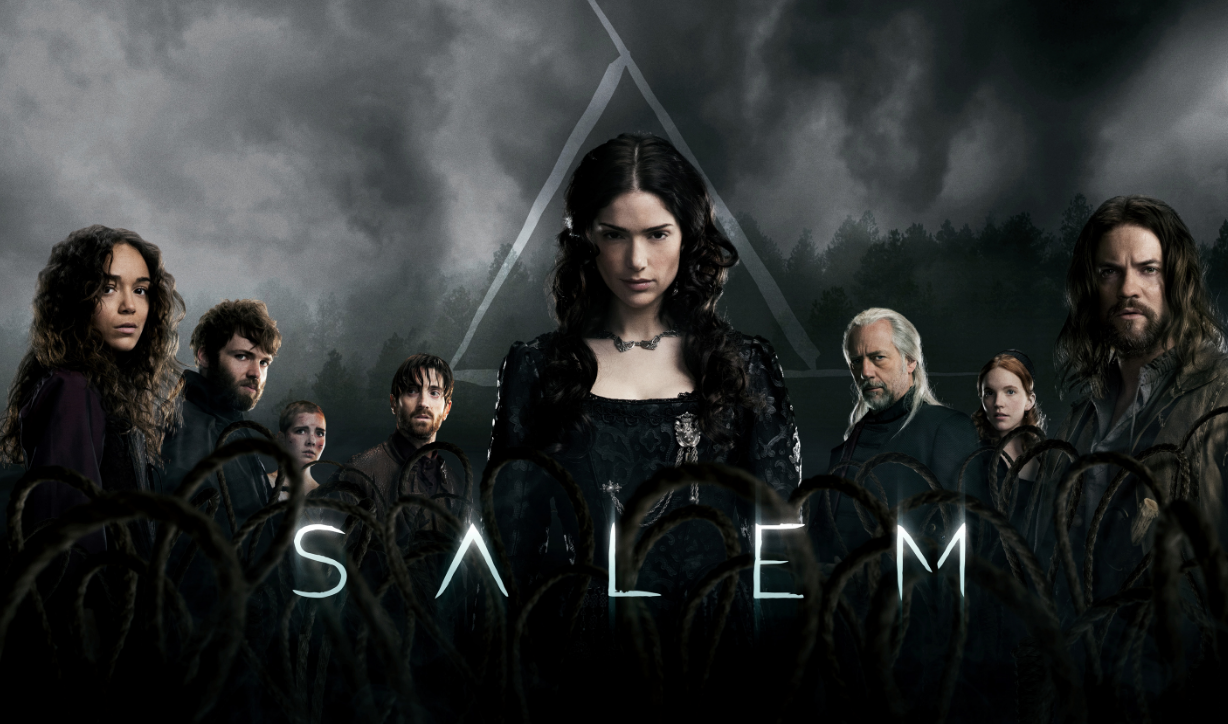
'Salem' Is the Bad Netflix Show You Need to Watch

September 11, 2017

A lot of people don't like to admit the "bad" art or music or movies or TV shows they enjoy. I personally don't care (because entertainment is entertainment and we all need to take a break sometimes). One of mine is the Netflix show "Salem," a show that was cancelled after three seasons, airing its last episode in January 2017 after starting in 2014. 

Read More
In Pop Culture Tags tv, Television, witchcraft
Comment
yaoqi-lai-19621.jpg

Starting from the Center: Magickal Approaches to Protecting Boundaries

February 21, 2017

For adult survivors of child abuse, boundaries are a lifelong struggle. We are taught early that chaos reigns and that anything can and will happen at any time. We alternate between hypervigilance and radical openness, and our wires are so tangled that we often cannot figure out which of these responses is appropriate in the moment. We spend our lives letting the wrong people in, and lashing out at the right ones, until we become conscious of the pattern and begin working to rewire our own brains.

Read More
In Lifestyle Tags boundaries, psychology, trauma, magick, witchcraft, spells, child abuse, ptsd
Comment

The Love Witch is the Kitschy, Hedonistic, Feminist Film You Need to See

December 15, 2016

BY KAILEY TEDESCO

*Please note that there are some scene descriptions here, which may constitute a spoiler for some. 

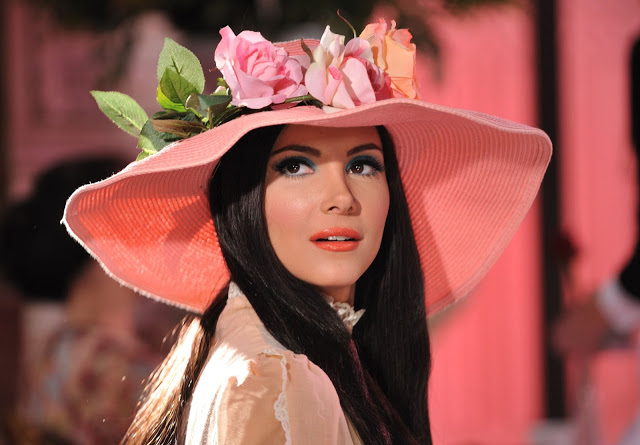
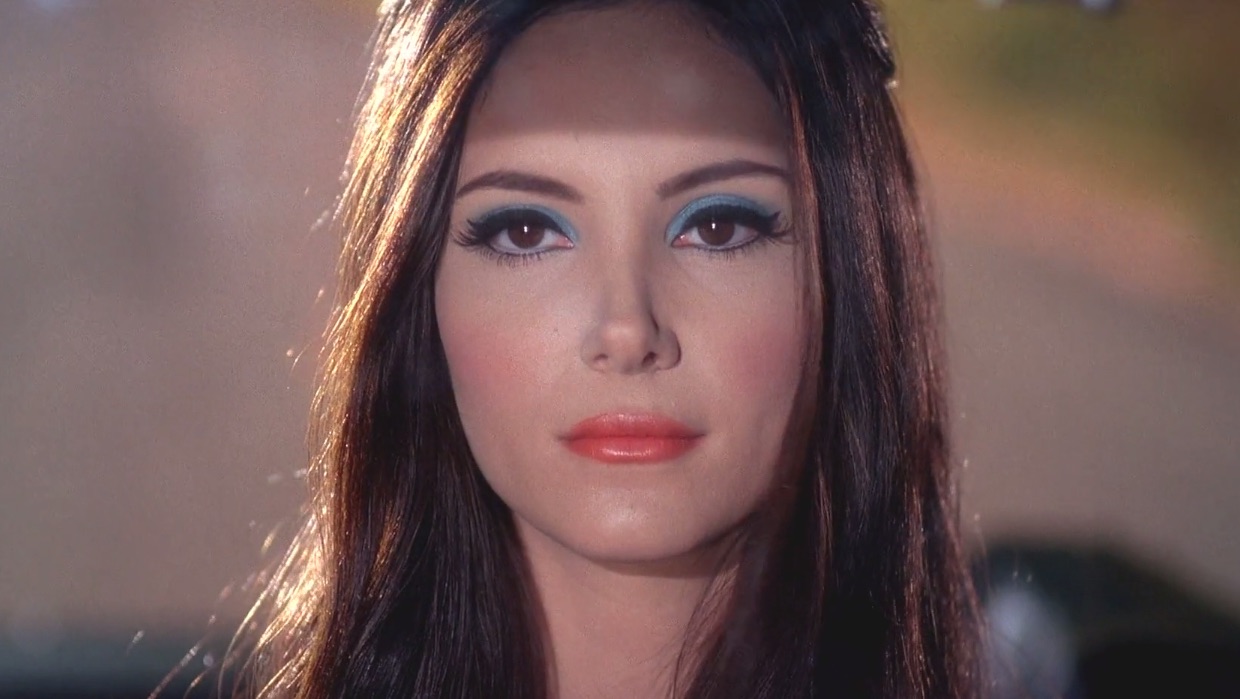
I found out about The Love Witch nearly a year ago. It all started with a still of Elaine Parks’ heavily shadowed eyelids and a tea dress with ruffles too glorious for words. The still became a fascination which led me to interviews with the film’s feminist auteur, Anna Biller, which eventually led me to a trailer, then back to some interviews, and so on for about nine months. It took until just yesterday for the movie to come to one of my city’s indie theaters. Usually, and in my personal experiences, a build-up of anticipation that long often results in disappointment. I remember thinking several times that this 1960’s B-Horror pastiche could not possibly live up to the hype which I, myself, have ascribed to it. 

Well, dear readers, let me tell you it was worth every moment of the wait. 

The film follows Elaine Parks (Samantha Robinson), a newly inducted yet gifted, member of a Wiccan coven who is quixotically obsessed (or, in her own words, “addicted) to love. After suffering years of gaslighting and emotional abuse in a previous marriage, Elaine is quickly scouted by a coven while dancing in a burlesque nightclub. From there, she quickly learns to transmogrify “sex magic” into “love magic,” but ultimately leaves each of her dalliances for dead.

Starring: Elle Evans, Samantha Robinson, Jeffrey Vincent Parise The Love Witch Official Trailer 1 (2016) - Horror Comedy A modern-day witch uses spells and magic to get men to fall in love with her, in a tribute to 1960s pulp novels and Technicolor melodramas.

The Love Witch is an open allegory with a feminist agenda. While the film’s aesthetic and score set the viewer up for the typical supernatural tropes of 1960’s technicolor horror, we are instead greeted with a more realistic sense of witches which somehow opposes and aligns with our own world’s cultural conceptions. This is because the “witch” is ostensibly equated to a sexually liberated woman, and the townspeople treat Elaine and her coven members as such. In a scene where Elaine meets up with her friend and coven member Barbara at a Burlesque show, men can be heard having discussions about how witches used to hide, but now they seem ubiquitous in society. The attitude towards witches and Wicca is mostly one of bigoted tolerance — as though witches have been publicly granted rights that the anti-intellectualist bar-dwellers can’t override, despite their disdain (sounds familiar, right?)

And the allegory grows stronger. 

Elaine herself, after losing weight and gaining empowerment after her husband “leaves,” willingly codifies herself according to the male-fantasy. In the beginning of the film, she sits down to tea with Trish, a self-proclaimed feminist who has been married for ten years. After hearing that Trish will often refuse her husband of some of his fantasies, Elaine scolds that women should always give men what they want. And this is exactly what she does… or so it would seem. 


Throughout the film, Elaine creates a world for herself that is heavily influenced by male-perpetuated ideas of femininity, ultimately masking herself in layers of Bardot-esque eyeliner and Audrey Hepburn LBDs. She is often cooking decadent cakes or donning renaissance gowns while riding horseback. She speaks politely and is never seen without make-up. When it comes time for intimacy, she seduces her lovers with elaborate dances in intricate lingerie. She makes herself, essentially, the embodiment of male fantasy. However, she is not quite the Stepford Wife that one might think. 

She uses her beauty and sexuality as a bait for men who describe themselves as libertines or unhappily married, aka sexists. From the start of the film, she can be seen batting her eyes in what one initially assumes might be a call-back to the Bewitched nose-wrinkle. Yet, these two are largely dissimilar as Elaine is not using magic at all, simply her own sexual prowess. The men she baits are already ignobly piqued by her as they often catcall and grope. She invites herself into their lives, feeds them a philter, and suddenly they become madly (in every sense of the word) in love. What begins as a dalliance quickly turns into a literal sickness that causes these men to become hysterical with love to the point of death.

The hysterics are played for laughs and ultimately reminiscent of the ways in which women have been misogynistically portrayed in film for the past century. Elaine has none of it, immediately becoming disinterested in her own subjects and proclaiming “what a pussy.” She buries the body of one lover ritualistically, yet ultimately remains un-phased. To top it off, she places a witch bottle containing her own urine and a used tampon over the shallow grave. Her Kardashian dead-pan narration asks viewers to consider that most men have never even seen a used tampon. What she calls an addiction to love is evidently an addiction to power. Elaine exemplifies the culturally normative ideas of masculine aloofness while patronizing her dying lovers in her ruffled mini-dresses.

Anna Biller flips the typified romantic narrative while also giving the protagonist her cake and letting her eat it, too (quite literally). Elaine hedonistically enjoys all of the pleasures associated with sexist romanticism without letting the male stick around long enough for her to suffer the consequences. She flits from man to man like this in perfectly polished composure while her own paintings of liberated goddesses cutting the heart out of a man line the walls of her bedroom a la Dorian Gray. She has polarity and unity of her being, and all of her empowerment lies in her willingness to appear submissive. 

Biller constructs this narrative through a carefully cultivated 60’s lens that sometimes alludes to even older Hollywood, yet the inclusion of a smart-phone at the end grounds the viewer in a phantasmagorical contemporary. The film is a world that already exists. Kubrick and Ashby and Argento are all carefully woven into it. Yet, it is not their world. Nor is it Tate’s or Hepburn’s. It is all Biller’s – a world which re-writes over a century of misogyny with one unapologetically empowered witch. 

And it is fantastic. Please see it for yourself. 


Kailey Tedesco is a recent Pushcart Prize nominee and the editor-in-chief of Rag Queen Periodical. She received her MFA in creative writing from Arcadia University. She’s a dreamer who believes in ghosts and mermaids. You can find her work in FLAPPERHOUSE, Menacing Hedge, Crack the Spine, and more. For more information, visit kaileytedesco.com.

In Art, Social Issues Tags anna biller, the love witch, 1960s, vintage, film, feminism, kubrick, dario argento, kitsch, hollywood, witch, witchcraft, sex, magic, cinema
Comment

Photograph by Donnie Valdez: follow him on Instagram @esspressoslayer

Meet Wanderer, a Boutique & Apothecary in Taos, New Mexico

November 25, 2016

Ashley Arabian is the owner of Wanderer, a boutique and apothecary in Taos, New Mexico. She describes the typical Wanderer customer as "the woman who immerses herself in nature, embraces the open road, and nurtures her creative spirit." In addition to clothing and accessories, Arabian's Wandering Apothecary features beauty and self-care products for the witchy woman who likes to keep her toiletries rooted in nature.

Read More
In Interviews Tags fashion, beauty, taos, new mexico, desert, self-care, witchcraft, herbalism, jewelry
Comment
Featured
‘in the glitter-open black' — poetry by Fox Henry Frazier
'poet as tarantula,  poem as waste' — poetry by  Ewen Glass
'poet as tarantula, poem as waste' — poetry by Ewen Glass
'Hours rot away in regalia' — poetry by Stephanie Chang
'down down down the hall of mirrors' — poetry by Ronnie K. Stephens
'Grew appendages, clawed towards light' — poetry by Lucie Brooks
'do not be afraid' — poetry by Maia Decker
'The darkened bedroom' — poetry by Jessica Purdy
'I am the body that I am under' — poetry by Jennifer MacBain-Stephens
instagram

COPYRIGHT LUNA LUNA MAGAZINE 2025