• Home
  • indulge
  • new poetry
    • About Luna Luna
    • resources
    • search
  • editor
  • dark hour
  • submit
Menu

luna luna magazine

  • Home
  • indulge
  • new poetry
  • About
    • About Luna Luna
    • resources
    • search
  • editor
  • dark hour
  • submit
delicious new poetry
'the doors of the night open' — poetry by Juan Armando Rojas (translated by Paula J. Lambert)
Nov 29, 2025
'the doors of the night open' — poetry by Juan Armando Rojas (translated by Paula J. Lambert)
Nov 29, 2025
Nov 29, 2025
'we can be forlorn women' — poetry by Stevie Belchak
Nov 29, 2025
'we can be forlorn women' — poetry by Stevie Belchak
Nov 29, 2025
Nov 29, 2025
'I do whatever the light tells me to' — poetry by Catherine Bai
Nov 29, 2025
'I do whatever the light tells me to' — poetry by Catherine Bai
Nov 29, 2025
Nov 29, 2025
‘to kill bodice and give sacrament’ — poetry By Kale Hensley
Nov 29, 2025
‘to kill bodice and give sacrament’ — poetry By Kale Hensley
Nov 29, 2025
Nov 29, 2025
'Venetian draped in goatskin' — poetry by Natalie Mariko
Nov 29, 2025
'Venetian draped in goatskin' — poetry by Natalie Mariko
Nov 29, 2025
Nov 29, 2025
'the long sorrow of the color red' — centos by Patrice Boyer Claeys
Nov 28, 2025
'the long sorrow of the color red' — centos by Patrice Boyer Claeys
Nov 28, 2025
Nov 28, 2025
'Flowers are the offspring of longing' — poetry by Ellen Kombiyil
Nov 28, 2025
'Flowers are the offspring of longing' — poetry by Ellen Kombiyil
Nov 28, 2025
Nov 28, 2025
'punish or repent' — poetry by Chris McCreary
Nov 28, 2025
'punish or repent' — poetry by Chris McCreary
Nov 28, 2025
Nov 28, 2025
'long, dangerous grasses' — poetry by Jessica Purdy
Nov 28, 2025
'long, dangerous grasses' — poetry by Jessica Purdy
Nov 28, 2025
Nov 28, 2025
'gifting nighttime honey' — poetry by Nathan Hassall
Nov 28, 2025
'gifting nighttime honey' — poetry by Nathan Hassall
Nov 28, 2025
Nov 28, 2025
'A theory of pauses' — poetry by Jeanne Morel and Anthony Warnke
Nov 28, 2025
'A theory of pauses' — poetry by Jeanne Morel and Anthony Warnke
Nov 28, 2025
Nov 28, 2025
'into the voluminous abyss' — poetry by D.J. Huppatz
Nov 28, 2025
'into the voluminous abyss' — poetry by D.J. Huppatz
Nov 28, 2025
Nov 28, 2025
'an animal within an animal' — a poem by Carolee Bennett
Nov 28, 2025
'an animal within an animal' — a poem by Carolee Bennett
Nov 28, 2025
Nov 28, 2025
‘in the glitter-open black' — poetry by Fox Henry Frazier
Oct 31, 2025
‘in the glitter-open black' — poetry by Fox Henry Frazier
Oct 31, 2025
Oct 31, 2025
'poet as tarantula,  poem as waste' — poetry by  Ewen Glass
Oct 31, 2025
'poet as tarantula, poem as waste' — poetry by Ewen Glass
Oct 31, 2025
Oct 31, 2025
'my god wearing a body' — poetry by Tom Nutting
Oct 31, 2025
'my god wearing a body' — poetry by Tom Nutting
Oct 31, 2025
Oct 31, 2025
'Hours rot away in regalia' — poetry by Stephanie Chang
Oct 31, 2025
'Hours rot away in regalia' — poetry by Stephanie Chang
Oct 31, 2025
Oct 31, 2025
'down down down the hall of mirrors' — poetry by Ronnie K. Stephens
Oct 31, 2025
'down down down the hall of mirrors' — poetry by Ronnie K. Stephens
Oct 31, 2025
Oct 31, 2025
'Grew appendages, clawed towards light' — poetry by Lucie Brooks
Oct 31, 2025
'Grew appendages, clawed towards light' — poetry by Lucie Brooks
Oct 31, 2025
Oct 31, 2025
'do not be afraid' — poetry by Maia Decker
Oct 31, 2025
'do not be afraid' — poetry by Maia Decker
Oct 31, 2025
Oct 31, 2025
'The darkened bedroom' — poetry by Jessica Purdy
Oct 31, 2025
'The darkened bedroom' — poetry by Jessica Purdy
Oct 31, 2025
Oct 31, 2025
'I am the body that I am under' — poetry by Jennifer MacBain-Stephens
Oct 31, 2025
'I am the body that I am under' — poetry by Jennifer MacBain-Stephens
Oct 31, 2025
Oct 31, 2025
goddess energy.jpg
Oct 26, 2025
'Hotter than gluttony' — poetry by Anne-Adele Wight
Oct 26, 2025
Oct 26, 2025
'As though from Babel' — poetry by Fox Henry Frazier
Oct 26, 2025
'As though from Babel' — poetry by Fox Henry Frazier
Oct 26, 2025
Oct 26, 2025
'See my wants' — poetry by Aaliyah Anderson
Oct 26, 2025
'See my wants' — poetry by Aaliyah Anderson
Oct 26, 2025
Oct 26, 2025
'black viper dangling a golden fruit' — poetry by Nova Glyn
Oct 26, 2025
'black viper dangling a golden fruit' — poetry by Nova Glyn
Oct 26, 2025
Oct 26, 2025
'It would be unfair to touch you' — poetry by grace (ge) gilbert
Oct 26, 2025
'It would be unfair to touch you' — poetry by grace (ge) gilbert
Oct 26, 2025
Oct 26, 2025
'Praying in retrograde' — poetry by Courtney Leigh
Oct 26, 2025
'Praying in retrograde' — poetry by Courtney Leigh
Oct 26, 2025
Oct 26, 2025
'To not want is death' — poetry by Letitia Trent
Oct 26, 2025
'To not want is death' — poetry by Letitia Trent
Oct 26, 2025
Oct 26, 2025
'Our wildness the eternal now' — poetry by Hannah Levy
Oct 26, 2025
'Our wildness the eternal now' — poetry by Hannah Levy
Oct 26, 2025
Oct 26, 2025
ankhesenamun-PDtJt8Cp-4Q-unsplash.jpeg

We Love Witch Craft Magazine's Seventh Issue

June 2, 2021

BY MONIQUE QUINTANA

Founded in 2015 by Catch Business and Elle Nash, the seventh issue of Witch Craft Magazine is filled with nerve-wracking fun and the lush grotesque, all while reflecting on the social complexities of the current pandemic. Colleen Barnett's wrap-around cover art is a cool-toned photograph of gnashing teeth gushing with blood. With the interior book design by Joel Amat Güell, the pocket-sized volume is full of poetry, fiction, nonfiction, and interviews, many of the pieces blurring the lines of form and genres.

The written work was accompanied by a fine curation of black and white images by many artists such as Ro, Ikosidio, Dian Liang, Claire Ma, and Alejandra López Camarillo. This was my first time reading the magazine. The brevity of the pieces and the formatting helped me read at a feverish pace in a single sitting.

I look forward to reading future installments of this radical, sexy, and dangerous publication.

Standouts from this issue include:

  • Nikolai Garcia's " Noche Buena ": " Her smile is a wink, and I let my sad guard down. I tell myself I don't have much, but I have her attention. I lie and say I like the vegan tamales. "

  • Felicia Rosemary Urso's " Compulsion ": " Spring did come, and I tried to pull our taffy body into two. A tug of war between my self-will and my gut, my actions refused to line with my desire. I was a gecko and you were my tail. You'd fall off, just to grow back. "

  • David Joez Villaverde, " As Below, So Above ": " Being here on the physical plane means we exercise corporeal power and the response to the ailments of this world is not to pour energy and will out into the ether but to wield our focus and control to change the things around us, to carry our intention in our words and deeds that we might transform the fabric of this corruption into harmony. "

  • Tex Gresham in " Interview with V. Ruiz": " Ancestors who have been quiet are waking up in new ways and guiding their lineage to make drastic shifts. "


Monique Quintana is from Fresno, CA, and the author of Cenote City (Clash Books, 2019). She has been awarded fellowships to Yaddo, The Mineral School, the Sundress Academy of the Arts, the Community of Writers, and the Open Mouth Poetry Retreat. You can find her @quintanagothic and moniquequintana.com.

In Poetry & Prose, Art Tags magazine, Poetry, art, prose, witchcraft
Comment
cosmos-3711474_1280 (1).jpg

Dolls and Meadows: An Interview with Poet Kristin Garth

October 29, 2020

BY MONIQUE QUINTANA, IN INTERVIEW WITH KRISTIN GARTH

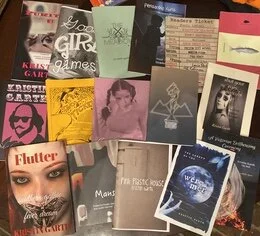
Poet and editor Kristin Garth has created a career that plays with technology, new school pastels, and old Hollywood glamour. All of her literary endeavors are empathetically experimental, provocative, and nurture sex-positivity. I reviewed Garth's chapbook, Shut Your Eyes, Succubi last winter, and wanted to inquire more about her lyrical inclinations and what's coming for her next.

Kristin Garth

Kristin Garth

Monique Quintana: I love how you advocate for sex-positivity in literature. What was your journey towards sex positivity, and how is that reflected in the Pink Plastic House's architecture?

Kristin Garth: Thank you so much for this compliment. Sex positivity and sexual honesty are two qualities I find essential in a healthy psychology. I came from an abusive, extremely religious home, a home where people feared the body and sexuality — but also were obsessed with these things. As a young girl, I developed physically early, and I was also sexually abused early in my life.  

In this way, sexuality has been a part of my life as long as I can remember. It wasn't a choice to learn about it, but you can't unknow it.

I have spoken to many other survivors of childhood sexual assault over the years in group therapy settings and just through friendships. I know for many survivors, sexuality becomes, post the trauma of childhood sexual abuse, a dark and intolerable, of barely tolerable, event. 

Others, including me, comfort themselves with sexuality or attempt to — I certainly did. I would lock myself in the bathroom in elementary school, and touch myself, feel a sense of triumph and autonomy in these moments that my body was still mine. Fantasized about a future where I wouldn't have to hide or lie — where I wouldn't rage with my sex like my abuser. I would just be who I was and speak what I needed. 

Pink Plastic House a tiny journal, represents this kind of complex, whole person I wanted to be. A house, when I was young, felt simply unsafe. It was people by adults who took what they wanted and deprived you of privacy/dignity and expected you to present a lie of purity to the world — a "purity" of which they deprived you.

The Pink Plastic House is safe and also complex in the way that honest worlds are — they have basements where people's darker urges manifest in consensual, communicative ways with adults. They have tea parties and slumber parties, too, because the Pink Plastic House's architecture is designed by a womanchild who is kinky and innocent, adult and emotionally still a little stunted and forever a child in the way that some survivors of sexual abuse are.  

I place poems in Pink Plastic House a tiny journal into the rooms I feel they belong. It grows all the time with new elements emerging just like the honest and open human soul does. It's also developed a neighborhood of associated journals that deal with erotica and kink (Poke) and horror (The Haunted Dollhouse). These two journals both emerged out of a lack, I felt, of space for horror and sex writing in the post-pandemic world. Many journals began restricting their submissions to prohibit these categories. 

I felt an urgent need to keep the lit world complex and give people like me a chance to voice their kink and horror because I know that doing that brings me peace. To feel restricted in my voice, I feel like I'm back with the Puritans again. I never want anyone to feel like that. 

It t's ironic that Pink Plastic House a tiny journal came from the title of my first chapbook Pink Plastic House. The title poem of that chapbook is about me as a stripper playing with and populating a Barbie dreamhouse after work. 

IMG_8054.jpeg

I stripped in pigtails and braids and schoolgirl uniforms for five years to establish my financial autonomy from my abusers. At that time, I think the house represented my loneliness and the normalcy that I craved so much. Writing about that lonely Barbie house and creating a journal in its name has connected me to countless people decades after that lonely schoolgirl stripper took off her clothes to be free. The Pink Plastic House represents community and wholeness to me now, and that's the power of writing — how it can transform your life. 

MQ: Not only are you prolific in your writing ventures, but you have edited numerous projects. Anthologies are especially challenging to put together. What are a few pieces of advice you could give writers who want to pursue publishing an anthology?

KG: I have edited four anthologies, three with a partner and one alone. Justin Karcher was my first editorial partner. We worked together on Mansion, a Slenderman anthology, and These Poems Are Not What They Seem, a Twin Peaks anthology (in which you had a fantastic poem!). I had the idea for Mansion and shared it with Justin long before I had the Pink Plastic House journal or any editorial experience. He said we should do this and I felt empowered because he had the editorial experience I lacked.  

I definitely think that is a great way to gain editorial experience is to work with a more experienced editor. If you have an idea for an anthology and feel lacking in the skills to execute, find yourself a more experienced partner. I'm a very hard-working human, and I love learning. I just needed someone who knew more than me about tech and editing. 

Even on my newest anthology that it is my first solo project and the first publication of Pink Plastic Press, Pinkprint (the first of many. I hope, anthologies of work from Pink Plastic House journals), I hired Jeremy Gaulke of APEP, who has published me (and published the Twin Peaks anthology) before to print and design a cover. It was another way to ask for and receive a second pair of experienced eyes on this manuscript. Collaboration with people who know more than you is always good, I feel.  

MQ: You often use video to share and promote your work on Instagram and Twitter. What do you specifically appreciate about each platform? If a writer could only use one of those platforms, which would you recommend and why?

KG: Wow. This is such a hard question, which is ironic because, for years, I said I'd never join Instagram. It was a statement completely informed by my ignorance of the platform. 

People were always telling me I was a natural to be on Instagram because I make so many videos and post my selfies and socks.  

I have been in the Twitter literary scene since 2017, and I am beyond grateful to Twitter to give me the space to finally be myself. I write a lot and publish a lot, and it was marvelous to have a place to share that. 

I'm an introvert, stay-at-home girl in a small southern town. I don't have a local poetry scene I'm affiliated with — Twitter became that. By doing the videos, I felt like I was reading for my friends and people got to experience that as if we are in the same hometown.

It's sort of amazing that I'm known for my poetry readings being a poet who has never read in public "in real life." I had an engagement to teach a Delta State workshop at the Southern Literary Festival that was cancelled by the pandemic. After the pandemic, I began to feel that maybe I'd only be an online poetry reader, and maybe that's okay. 

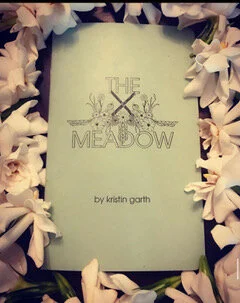
Poetry Twitter gave me a voice, and I spent so much time there that I did not believe I had time for another platform. To be honest, the only reason I joined Instagram is that in the middle of doing editing on The Meadow, a very vulnerable book I wrote about my experiences in BDSM as a young woman, my publisher at APEP left Twitter to focus on one social media platform. Since we communicated a lot during the writing of this book, a lot in messages, he told me I could talk to him there. So I got myself together and did what people had encouraged me to do — have an Instagram to archive my socks and sonnets and videos.  

Twitter is very fulfilling to me for the friendships I've made and the opportunities present in the literary community. All my books came to pass through Twitter conversations and my would-be speaking engagement. I have a weekly sonnet podcast with Gadget G Radio called Kristin Whispers Sonnets that I was invited to do because of Twitter. Though I have come to love Instagram better in its actual layout and the archiving of video, for example, I could never betray Twitter, which has given me so much.  

Though Pink Plastic House has a vacation Instagram house that has become a much a part of the journal as my website, so if you asked the house, she might have a different answer.

MQ: I love the film aesthetics of Anna Biller, Dario Argento, and Alejandro Jodorowsky and literary aesthetics as different as Edgar Allan Poe and Marguerite Duras and Guillermo Gomez-Peña. Your aesthetic is literary and cinematic. What are some artistic aesthetics that resonate with you that people would be surprised to hear? Whose aesthetic dollhouse would you like to spend a day?

KG: Thank you so much for calling my poetry cinematic. That means a lot as I primarily write Shakespearean sonnets, and it's always been important to me to try to create a world in 14 lines. I love films and how they engage all your senses and transport you places.  

Obviously, I am a huge David Lynch fan, with my favorites by him being Mulholland Drive and the Twin Peaks film and series. That really wouldn't surprise many, though, as I've written many poems about Twin Peaks, and I've published the anthology about it.  

I am so influenced by many other filmmakers, though from Whit Stillman, whose movies like Metropolitan taught me about dialogue and it's importance to the bravery of a filmmaker like Catherine Hardwicke in making the film Thirteen with its honest portrayals of troubled adolescence — to which I very much relate.

It's hard to speak about the raw truths of an abused child in a public way. I feel such a debt to films I watched, and books like We Were The Mulvaneys and Beasts by Joyce Carol Oates, as an example, that deal with sexual trauma, societal dynamics, and power imbalances. Reading books like these made it feel doable in an engaging, artistic way and my voice worthy of being heard. 

I would love to be invited into anyone's dollhouse. I have three myself — an old wooden one that has been through a lot and became the logo of the literary journal. I also have a Barbie dreamhouse and a Disney Cinderella castle replica. I have an ongoing feature of poets who have dollhouses that has featured Kolleen Carney and Kailey Tedesco so far. I feel like it's my chance to virtually commune with other poet dollhouse lovers. That's a subset of people I just adore, so if you are one of them, feel free to reach out because I'd love to know you and for you to be in The Real Dollhouse Poets of The Pink Plastic Plasticity. 

IMG_8063.jpeg

MQ: In your APEP Publications chapbook, The Meadow, the speaker takes a journey through hurt while at the same time recognizing intricate beauty and the body politics of BDSM. The speaker has autonomy through a memoir. What is a future "meadow" you envision walking down?

KG: That's such a lovely description of The Meadow, thank you.  The Meadow is a book I've been wanting to write for twenty years. In fact, there is a poem inside of it called "Homecoming," which was my first and only publication until I was 43 and became who I was supposed to be.  

The story of the publication of the sonnet "Homecoming" in No Other Tribute: Erotic Tales of Women in Submission, edited by Laura Antoniou, tells a lot about me at this time of my life. I wrote this sonnet and gave it to my first dom when I was just discovering the BDSM scene in my early 20's. I received a partial scholarship to graduate school in creative writing because of my sonnets, many of which were sexual and kinky as characterize many of my sonnets, but I would end up dropping out of graduate school to strip to have the financial autonomy to live my life away from abuse. 

Even though I was in school studying writing, I didn't submit my poetry anywhere. Didn't have the strength yet to even contemplate that kind of rejection after the tortures of my childhood. I submitted, though sexually, and I gave this poem to my much older dom, who was also a writer. He didn't tell me, but he submitted it to Laura Antoniou's anthology, where it was accepted. At that point, of course, he told me to gain my consent to move forward with the publication, and I was shocked but delighted. 

It was published under my scene name as pseudonym (Scarlet), and it was the only poem accepted in a collection of prose. The editor wrote the kindest introduction about me, how she couldn't help but publish this poem. It was that magical kind of publication experience that can change your life.

Of course, for me, it would take almost twenty years before I worked up the courage to submit myself in writing. But I always knew I eventually would because of the way this experience had made me feel seen in a world in which I was still invisible.  

I had published it under a pseudonym, which made me very sad at the time because I feared my parents would find out. I still lived at home. I hated not being able to own my experiences due to abuse and the threat of more. I swore one day I would write whatever I felt with my name and be known for that name. Almost 700 publications later, I know my younger self would be so proud of the Kristin Garth I have become. 

I am my meadow now. I feel I had to undergo the catharsis of hurt to discover myself — and sometimes I find myself in its thorns again. But I also ache for the petals and the dew of the meadow. I am learning to nourish and cultivate myself better and make roots, and value rest and replenishment. I don't leave myself open to predators and the elements the way I did in the desperation of my wandering youth. There is an architect in the meadow now. I am building a cottage. I am learning to shelter.


Kristin Garth is a Pushcart, Best of the Net & Rhysling nominated sonnet stalker. Her sonnets have stalked journals like Glass, Yes, Five:2: One, Luna Luna, and more. She is the author of seventeen books of poetry including Pink Plastic House  (Maverick Duck Press), Crow Carriage (The Hedgehog Poetry Press), Flutter: Southern Gothic Fever Dream (TwistiT Press), The Meadow (APEP Publications), and Golden Ticket from Roaring Junior Press.  She is the founder of Pink Plastic House a tiny journal and co-founder of Performance Anxiety, an online poetry reading series. Follow her on Twitter and her website.

Monique Quintana is a Xicana from Fresno, CA, and the author of the novella Cenote City (Clash Books, 2019). Her short works have been nominated for Best of the Net, Best Microfiction, and the Pushcart Prize. She has also been awarded artist residencies to Yaddo, The Mineral School, and Sundress Academy of the Arts. She has also received fellowships to the Community of Writers, the Open Mouth Poetry Retreat, and she was the inaugural winner of Amplify’s Megaphone Fellowship for a Writer of Color. You can find her @quintanagothic and moniquequintana.com.
In Poetry & Prose Tags Poetry, Interview, Feminsim
Comment
Photo by Brighton Galvan

Photo by Brighton Galvan

An Interview with 'Bareback Nightfall' Author Joshua Escobar

October 28, 2020

…like learning how to drink water after the world has turned upside-down…

Read More
In Poetry & Prose, Politics, Art Tags Poetry, Interview, Latinx
Comment
Orange+Flowers+on+Blue+.jpg

ritual in marisol baca's ' sarcophagi in glass houses '

October 5, 2020

Monique Quintana is a Xicana from Fresno, CA, and the author of the novella Cenote City (Clash Books, 2019). Her short works have been nominated for Best of the Net, Best Microfiction, and the Pushcart Prize. She has also been awarded artist residencies to Yaddo, The Mineral School, and Sundress Academy of the Arts. She has also received fellowships to the Community of Writers, the Open Mouth Poetry Retreat, and she was the inaugural winner of Amplify’s Megaphone Fellowship for a Writer of Color. You can find her @quintanagothic and [moniquequintana.com]

Read More
In Poetry & Prose, Art Tags Poetry, Literature, Ritual, latinx
Comment
david-clarke-vzK60_f8avQ-unsplash.jpg

Poetry by Lauren Davis

September 28, 2020

BY LAUREN DAVIS

Little Bean

The doctor tells me he found—

in my brain—something. Nothing

to do, but give it a name. Little bean.

Sparrow’s eye. Lost pearl. It is mine.

I made it. Appleseed, my pale bead.

When I am still enough, it sings.

Brain Growth Undiagnosed in the Month of July


Aberration, you will either be

my everything or my nothing.

Once a man I loved raised his fist to me.

He stood close enough I could

smell him. In that moment I felt

a thing close to unknown.

If you grow, my sweet pea,

you will cut the stream.

Or you might disappear like

dew. I could love you either way.

Today, men set off fireworks

because when this country left

its mother, we were happy.

I think you are maybe a gift,

like when noon creeps in

where there’s been always

winter light. I see everything

now. I see the missed moment

I might have held my palms

to the grass. They call

this prayer. Even in the day

I hear a pop like gunshots

but it’s just children playing

with fire. Some say it’s wasteful

to burn sparklers in the sun

but this is not the type of person

I keep in my life. I keep in my life

you—visitor long overdue.

Little wick, lit.

Lauren Davis is the author of Home Beneath the Church, forthcoming from Fernwood Press, and the chapbook Each Wild Thing’s Consent, published by Poetry Wolf Press. She holds an MFA from the Bennington College Writing Seminars, and she teaches at The Writers’ Workshoppe and Imprint Books. She is a former Editor in Residence at The Puritan’s Town Crier and has been awarded a residency at Hypatia-in-the-Woods. Her work has appeared in over fifty literary publications and anthologies including Prairie Schooner, Spillway, Poet Lore, Ibbetson Street, Ninth Letter and elsewhere.

In Poetry & Prose Tags Poetry, Lauren Davis
Comment
Image via Octavio Quintanilla

Image via Octavio Quintanilla

' Frontera and Texto ' : An Interview with Writer Octavio Quintanilla

July 1, 2020

…Frontextos has become ritual, meditation, prayer.  Action is the mantra.

Read More
In Interviews, Poetry & Prose, Art, Social Issues Tags Art, Poetry, Literature, Language
Comment
pink-clouds

Poetry by Lauren Saxon

June 26, 2020

BY LAUREN SAXON

22

after Fatima Asghar’s Partition

I am 22 & have not been hugged in a long time.

I am considering the English language—

how it gave us both the word hug & the word embrace. 

do not mistake them for one.

            I love her. I love her.

                    I will always be this way.

my mother, I fear, will not attend my wedding.

my father is selling the house—

it was to be kept for legitimate grandchildren only.

I am no stranger to my parent’s arms.

I still call my father’s cologne, home.

I am proud to have my mother’s smile.

still 

       my parents hug 

       only the parts of me that they can embrace.

I am certain my body would feel differently.

I am 22 & have not been hugged in a long time.

I watch my parents greet me from a distance.

it is clear that they have missed me. 

when my mother wraps her arms around me,

I cannot feel them.

I am standing behind myself,

     keeping two white gowns from touching the ground.

when my father wraps his arms around me,

he does so on borrowed land.

it is possible to be hugged & not embraced.


the proof is right here in my breath.


I will always be this way.

SUPPORT LAUREN SAXON BY DONATING VIA VENMO: @Lsax_235

Lauren Saxon is a 22 year old poet and mechanical engineer from Cincinnati Ohio. She attends Vanderbilt University, and relies on poetry when elections, church shootings, and police brutality leaves her speechless. Lauren's work is featured or forthcoming in Flypaper Magazine, Empty Mirror, Homology Lit, Nimrod International Journal and more. She is on staff at Gigantic Sequins, Assistant Editor of Glass: A Journal of Poetry and spends way too much time on twitter (@Lsax_235).

In Poetry & Prose Tags Poetry, Lauren Saxon
Comment
RED DARK LIGHT FLOWER

Poetry by A. Martine

June 23, 2020

BY A. MARTINE

grapevine gossip

from time to time i look up a man i almost

dated to test my intuition’s mettle

the addendums i append to my search

varying only in their extremity

firstlast + jail

+ serial killer

+ murder

can’t help but probe, set stiff set stiff

for the soft spot in my duodenum where

my foresight rests, and try to prove

it wrong, and my other senses too

that my bloodhound ears didn’t register

what they think they registered while he

was threading me metal spools of sparkling

ovations, so sharp they gashed when handled

all that talk of redemption, all that

tell me what scares you, for i am scared too

trifectas the two-pronged truth, my beast

recognizes in him a wholly deeper beast

softspot screams the very first song i, newborn

woman, heard offered me: runrunrun for the hills

can’t help but silence it, set stiff set stiff

or maybe it’s admission to that club i’m

rescinding, the one that standardizes

ambidextrous horror — we’ve all dated a creep —

until it, too, internalized, feels like a dinky

pinch, duodenum subdued to ruination

from time to time i google a man i almost dated

and am stunned to learn he hasn’t killed anyone

yet

and though i am momentarily comforted, assurance in

others’ inner workings set stiff set stiff

my softspot-foresight promises, wasn't all in your head, you just wait, you just wait.

Hecate's Wheel

Convinced it tasted of soot and salt,

time and again I tried to bite off

the ink-blot stain on my tongue,

responsible, surely, for tinging

everything I drank with its essence.

That is, until I understood. In Senegal:

we inkblot tongues are soothsayers.

Anything we say comes supposably true,

contrapasso dispelled indiscriminately.

Should a wordsmith like me be thirsting for

that kind of omnipotence? I hope

to be one of the good, really good ones;

but buzzing bees in my elastic throat, I

know I go both way with words, have

only mouthfuls of cursepells to offer.

To blazes with intent: I thought I wanted love

to feel like something belonged to me.

Why did I say: i know when my flaming

lifeblood hits the floor and bursts

outward like ember petals, I’ll be

incandescent, the epicenter of disaster,

too fierce for love, too good for love.

When said love deserted me, I spent a violent

year supine on the coal floor beseeching

Take it back, I take it back I take it back.

I think I am one of the good, really good souls,

but it never occurs to me to say good, and to

wish for good. I cannot plagiarize what I’ve

never known. At the suggestion of pandemonium,

my inkblot tongue comes alive.

I could kill this liar with a prayer.

Even when my malice maimed the cruelest

boy I knew, omnipotence like the

resounding crack of a whip—

Again!

Again!

I was Doubting Thomas, if he were a woman who’d been

taught and taught to disbelieve. A maelstrom

thrashed in my palms, and I still underestimated

how fearsome, how formidable

I could be.

SUPPORT A. MARTINE BY DONATING: paypal.me/martinathiam

A. Martine is a trilingual writer, musician and artist of color who goes where the waves take her. She might have been a kraken in a past life. She's an Assistant Editor at Reckoning Press and a co-Editor-in-Chief and Producer of The Nasiona. Her collection AT SEA was shortlisted for the 2019 Kingdoms in the Wild Poetry Prize. Some words found or forthcoming in: Déraciné, The Rumpus, Moonchild Magazine, Marias at Sampaguitas, Bright Wall/Dark Room, Pussy Magic, South Broadway Ghost Society, Gone Lawn, Boston Accent Lit, Anti-Heroin Chic, Figure 1, Tenderness Lit. @Maelllstrom/www.amartine.com.  is a trilingual writer, musician and artist of color who goes where the waves take her. She might have been a kraken in a past life. She's an Assistant Editor at Reckoning Press and a co-Editor-in-Chief and Producer of The Nasiona. Her collection AT SEA was shortlisted for the 2019 Kingdoms in the Wild Poetry Prize. Some words found or forthcoming in: Déraciné, The Rumpus, Moonchild Magazine, Marias at Sampaguitas, Bright Wall/Dark Room, Pussy Magic, South Broadway Ghost Society, Gone Lawn, Boston Accent Lit, Anti-Heroin Chic, Figure 1, Tenderness Lit. @Maelllstrom/www.amartine.com. 

In Poetry & Prose Tags Poetry, Aïcha Martine Thiam, a. martine
Comment

A Review of Kristin Garth's 'Shut Your Eyes, Succubi'

January 23, 2020

BY MONIQUE QUINTANA

Kristin Garth’s chapbook, shut your eyes, succubi ( Maverick Duck Press, 2019) , is both delightful and frightening, a conjuring of girlhood with a form inclined to romance-- the sonnet. A prolific sonneteer in a digital age, Garth understands that while some memories seem as distant as old TV sets and radio fuzz, certain characters are bright and alive and fun in our psyche and they turn up in the most opportune places.

This was the first time I read poetry with handwritten annotations, which added a poignant whimsy to the experience. As I moved further and further into the poems, each character seemed to be linked together by the same dark energy. In “Eat Me”, objects, fashion, and delicacies push each line to a sexual moment. There is no meek girl Alice of yesteryear, rather a woman who has autonomy in a scene. Stripped of masquerade, she dominates and commands as a true queen of hearts.

Two other standout sonnets are “ Claudia” and “Veruca Wants”. Both pieces reckon with the image and the sentiments of the brat girl, a girl decked with material things, who is much too grown-up for the world that she lives in. “Claudia” tells of Interview with the Vampire’s doomed enfant, a character who remains elusive in both Rice’s novel and the cinematic dreamscape of Neil Jordan’s 1994 take: “ Resolve to keep her safe at hand, but she / is something you don’t understand .”

The poem seems to acknowledge that we, the grand audience, both love and detest Claudia because she’s an unlikable girl, but also our beloved. Like “Claudia”, “Veruca Wants” made me take pause and look back at my girlhood. When I was small and I asked for material things or complained about things that were making me unhappy, my grandmother called me “Veruca” and waited for the sweet and stoic parts of me to return. Garth’s sonnet carries the want for decadence over to womanhood: “ Men / who’ll jump before she screams.” The sonnet plays with the idea that we create the very decadence that we need. It’s not the reaching for rich things, but when we’re compelled to articulate desire to the point of screaming.


Monique Quintana is the author of Cenote City (Clash Books, 2019) and holds an MFA in Creative Writing from CSU Fresno. Her work has appeared in Winter Tangerine, Queen Mobs Tea House and Acentos Review, among other publications. She is a Senior Editor at Luna Luna Magazine, Fiction Editor at Five 2 One Magazine, and writes about Latinx literature at her blog, Blood Moon. You can find her at moniquequintana.com

In Art, Poetry & Prose Tags Poetry, Book Review, Feminism, female sexuality
Comment
Screen Shot 2019-10-14 at 1.16.14 PM.png

3 Poems by I.S. Jones

October 14, 2019

BY I.S. JONES

EVE

I know Death
is the undulating snake below the Great Tree.
Before Truth opened my eyes
I could do nothing but feel—
even the veil that blocked my sight
could never make me ignorant of desire.
I knew of my nakedness—
the snake’s tongue throbbing
for the meat of my thighs.
I am a feral thing; my mouth
a greedy canvas of ripened consequence.
In the garden, I pick fruit & masturbate—
worship myself in the absence of prayer.
The blackberry’s sweet nectar
indistinguishable from my own.
Fingers: blackened        Pussy: blackened
Lips the color of shadows.
All day, I dance like a rich woman
let mango drip from my chin.
You don’t know hunger,
a throat relieved of its own drought,
until your teeth tear open the wet heart of the sun
& chew through its shining meat.
I don’t know if I could have broken the snake’s spell—
or rather if I wanted to.
I followed it—sliding & sliding—
through the quiet bend
where stood God’s second head.
I pulled God’s heart down from the branches.
I sunk my teeth through salvation
& climaxed like never before.
I wept & then all the lights of heaven pierced my skull
like a dagger’s epiphany.
I know Death:
it met me at the edge of myself
gave me a new name,
then sent me back.
I woke up naked & wailing in a forest;
the faint caw of life at midday,
flies rest lazily on leaves
as shelter from the coming rain.


OYINBO

I am a spell of six letters.
I have a name that begins & ends two countries.

I am ‘Itiola’: ‘Iti’: ‘the foundation’, ‘the root’.
Ola: ‘cradle of wealth’. English is a meager language.

There is no threshold that can translate me.
No one trusts a name they can’t pronounce.

Call me ‘Stephanie’ because that’s easier.
It’s more American, meaning ‘white’.

I am so articulate; I sound like generational wealth:
the ‘burbs two cars in the driveway

manicured lawns private schools.
Like any good American, I get to complain in English.

Say: American-born Nigerian. Say: Child of Empire.
No one can make sense of what I am:

Yankee. Foreigner. Exotic fruit of the West.
I am the most foreign when I talk about Nigeria

[you don’t get to weep for a country that isn’t yours, selfish American]
I am most White when I talk about America.

I love my country though I’ve seen its hideous face:
When my parents speak in Yoruba & sound like a threat,

when Americans hear my mother’s accent & question her intelligence.
I’m used to this one-sided love, how any Empire too close to the sun

can burn.


ABEL

Baba gave me dominion over all cloven & two-legged animals.
I lift my hands & all living creatures bow.
I stir shadows & creatures plunge headfirst to salvation.
Some of us pick flowers, dream in blue & green,
others do the real work to bring home a heavy feast.
All year long, my people eat like kings.
Look at me, Cain: Baba’s most prized creation.
He made life, but I undress the light
& a village doesn’t go hungry
of the way I put my humanity on a nightstand
to do the vain, hideous things,
what sister, do you know about blood & the way it speaks…?
I remember each upon each—the knuckling, the wordless pleas,
the clean deliverance of blade upon a beast’s neck.
Flesh into flesh.
Every nation under my tending feasts until marrow
until tendon
until muscle
until blood is savior over body.
Let each column of teeth
know its guillotine weight.
Let each hungry mouth know itself to be a brief church.
O sister, praise me for the pity I have shown you
& know when life gives you poverty be grateful life gives you
anything at all.

after Phillip B. Williams


I.S. Jones is a queer American / Nigerian poet and music journalist. She is a Graduate Fellow with The Watering Hole and holds fellowships from Callaloo, BOAAT Writer's Retreat, and Brooklyn Poets. She is the 2018 winner of the Brittle Paper Award in Poetry. She is a Book Editor with Indolent Books, Editor at Voicemail Poems, freelances for Complex, Earmilk, NBC News Think, and elsewhere. Her works have appeared or are forthcoming in Guernica, Kweli Journal, The Rumpus, The Offing, The Shade Journal, and elsewhere. Alongside Nome Patrick Emeka, is she the co-editor of the Young African Poets Anthology. She is a Kemper K. Knapp University Fellowship and an MFA candidate in Poetry at UW-Madison.

In Poetry & Prose Tags Itiola S. Jones, Poetry
Comment
marble pink gold

Poetry by Laura Paul

July 23, 2019

BY LAURA PAUL

LAURA PAUL POEM
Screen Shot 2019-07-23 at 4.16.11 PM.png

Laura Paul is a writer living in Los Angeles. Previously, her work has been published by the Brooklyn Rail, Coffin Bell Journal, Entropy Magazine, FIVE:2:ONE, Shirley Magazine, Soft Cartel, Touring Bird, and featured at the West Hollywood Book Fair and Los Angeles Zine Fair. She is the author of Entropy's monthly astrology column, Stars to Stories, and since June 2018 she's been filming a weekly video series of her poetry at poemvideo.com. She was raised in Sacramento, earned her B.A. from the University of Washington, Seattle, and her Master's from UCLA where she was the recipient of the 2011 Gilbert Cates Fellowship. She can be found on Twitter and Instagram as @laura_n_paul.

In Poetry & Prose Tags Poetry, Laura Paul
Comment
Image by Ignacio Martinez Egea

Image by Ignacio Martinez Egea

A Short Monster-Themed Reading List

May 22, 2019

**Monique Quintana** is the author of Cenote City(Clash Books, 2019), Associate Editor at Luna Luna Magazine, and Fiction Editor at Five 2 One Magazine. She holds an MFA in Creative Writing from CSU Fresno and is an alumna of Sundress Academy for the Arts and the Community of Writers at Squaw Valley. Her work has appeared in Queen Mobs Teahouse, Winter Tangerine, Dream Pop, Grimoire, and the Acentos Review, among other publications. You can find her at [moniquequintana.com][1]

Read More
In Art, Poetry & Prose, Pop Culture, Politics Tags fairy tales, Monsters, Supernatural, literature, Poetry, Fiction, feminism
Comment
Water for the Cactus Woman .jpg

Review of Christine Stoddard's 'Water for the Cactus Woman'

January 22, 2019

Christine Stoddard’s poetry collection, Water for the Cactus Woman (Spuytenduyvil, 2018) is a meditation on family, the body, and navigating a bi-cultural map of memories. The most looming figure in the poems is the speaker’s dead grandmother, who appears in the most mundane of places, bringing dread to the speaker. In “The Cactus Centerpiece”, the ghost provokes jealousy and a cactus shapeshifts from protective shield to a portal for the dead, “We never named the cactus/ or the petite panther, / even though we named/everything, good or bad.”

Read More
In Poetry & Prose, Art Tags Poetry, Latinx, insectional feminism
Comment
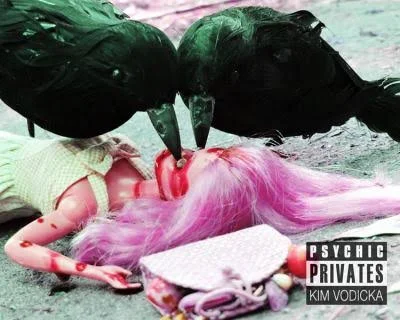
Psychic Privates Book Cover.jpeg

You Will Simply Devour Psychic Privates by Kim Vodicka

August 1, 2018

Kailey Tedesco's books She Used to be on a Milk Carton (April Gloaming Publications) and These Ghosts of Mine, Siamese (Dancing Girl Press) are both forthcoming. She is the editor-in-chief of a Rag Queen Periodical and a performing member of the NYC Poetry Brothel. Her work has been nominated for the Pushcart Prize. You can find her poetry featured or forthcoming in Prelude, Prick of the Spindle, Bellevue Literary Review, Vanilla Sex Magazine, and more. For more information, please visit kaileytedesco.com. 

Read More
In Poetry & Prose Tags kim vodicka, books, Poetry
Comment
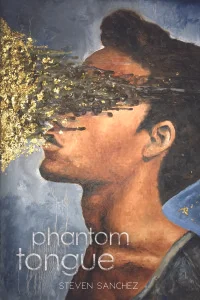
Cover Art by Guadalupe Ramirez. Image via Sundress Publications. 

Cover Art by Guadalupe Ramirez. Image via Sundress Publications. 

Interview with 'Phantom Tongue' Author, Steven Sanchez

June 19, 2018

marginalized writers are not monolithic and our own relationship to writing will continue evolving…

Read More
In Interviews, Art Tags Poetry, Latinx, Chicanx, Queer, literature, Writing Community
Comment
Older Posts →
Featured
‘in the glitter-open black' — poetry by Fox Henry Frazier
'poet as tarantula,  poem as waste' — poetry by  Ewen Glass
'poet as tarantula, poem as waste' — poetry by Ewen Glass
'Hours rot away in regalia' — poetry by Stephanie Chang
'down down down the hall of mirrors' — poetry by Ronnie K. Stephens
'Grew appendages, clawed towards light' — poetry by Lucie Brooks
'do not be afraid' — poetry by Maia Decker
'The darkened bedroom' — poetry by Jessica Purdy
'I am the body that I am under' — poetry by Jennifer MacBain-Stephens
instagram

COPYRIGHT LUNA LUNA MAGAZINE 2025