• Home
  • indulge
  • new poetry
    • About Luna Luna
    • resources
    • search
  • editor
  • dark hour
  • submit
Menu

luna luna magazine

  • Home
  • indulge
  • new poetry
  • About
    • About Luna Luna
    • resources
    • search
  • editor
  • dark hour
  • submit
delicious new poetry
'the doors of the night open' — poetry by Juan Armando Rojas (translated by Paula J. Lambert)
Nov 29, 2025
'the doors of the night open' — poetry by Juan Armando Rojas (translated by Paula J. Lambert)
Nov 29, 2025
Nov 29, 2025
'we can be forlorn women' — poetry by Stevie Belchak
Nov 29, 2025
'we can be forlorn women' — poetry by Stevie Belchak
Nov 29, 2025
Nov 29, 2025
'I do whatever the light tells me to' — poetry by Catherine Bai
Nov 29, 2025
'I do whatever the light tells me to' — poetry by Catherine Bai
Nov 29, 2025
Nov 29, 2025
‘to kill bodice and give sacrament’ — poetry By Kale Hensley
Nov 29, 2025
‘to kill bodice and give sacrament’ — poetry By Kale Hensley
Nov 29, 2025
Nov 29, 2025
'Venetian draped in goatskin' — poetry by Natalie Mariko
Nov 29, 2025
'Venetian draped in goatskin' — poetry by Natalie Mariko
Nov 29, 2025
Nov 29, 2025
'the long sorrow of the color red' — centos by Patrice Boyer Claeys
Nov 28, 2025
'the long sorrow of the color red' — centos by Patrice Boyer Claeys
Nov 28, 2025
Nov 28, 2025
'Flowers are the offspring of longing' — poetry by Ellen Kombiyil
Nov 28, 2025
'Flowers are the offspring of longing' — poetry by Ellen Kombiyil
Nov 28, 2025
Nov 28, 2025
'punish or repent' — poetry by Chris McCreary
Nov 28, 2025
'punish or repent' — poetry by Chris McCreary
Nov 28, 2025
Nov 28, 2025
'long, dangerous grasses' — poetry by Jessica Purdy
Nov 28, 2025
'long, dangerous grasses' — poetry by Jessica Purdy
Nov 28, 2025
Nov 28, 2025
'gifting nighttime honey' — poetry by Nathan Hassall
Nov 28, 2025
'gifting nighttime honey' — poetry by Nathan Hassall
Nov 28, 2025
Nov 28, 2025
'A theory of pauses' — poetry by Jeanne Morel and Anthony Warnke
Nov 28, 2025
'A theory of pauses' — poetry by Jeanne Morel and Anthony Warnke
Nov 28, 2025
Nov 28, 2025
'into the voluminous abyss' — poetry by D.J. Huppatz
Nov 28, 2025
'into the voluminous abyss' — poetry by D.J. Huppatz
Nov 28, 2025
Nov 28, 2025
'an animal within an animal' — a poem by Carolee Bennett
Nov 28, 2025
'an animal within an animal' — a poem by Carolee Bennett
Nov 28, 2025
Nov 28, 2025
‘in the glitter-open black' — poetry by Fox Henry Frazier
Oct 31, 2025
‘in the glitter-open black' — poetry by Fox Henry Frazier
Oct 31, 2025
Oct 31, 2025
'poet as tarantula,  poem as waste' — poetry by  Ewen Glass
Oct 31, 2025
'poet as tarantula, poem as waste' — poetry by Ewen Glass
Oct 31, 2025
Oct 31, 2025
'my god wearing a body' — poetry by Tom Nutting
Oct 31, 2025
'my god wearing a body' — poetry by Tom Nutting
Oct 31, 2025
Oct 31, 2025
'Hours rot away in regalia' — poetry by Stephanie Chang
Oct 31, 2025
'Hours rot away in regalia' — poetry by Stephanie Chang
Oct 31, 2025
Oct 31, 2025
'down down down the hall of mirrors' — poetry by Ronnie K. Stephens
Oct 31, 2025
'down down down the hall of mirrors' — poetry by Ronnie K. Stephens
Oct 31, 2025
Oct 31, 2025
'Grew appendages, clawed towards light' — poetry by Lucie Brooks
Oct 31, 2025
'Grew appendages, clawed towards light' — poetry by Lucie Brooks
Oct 31, 2025
Oct 31, 2025
'do not be afraid' — poetry by Maia Decker
Oct 31, 2025
'do not be afraid' — poetry by Maia Decker
Oct 31, 2025
Oct 31, 2025
'The darkened bedroom' — poetry by Jessica Purdy
Oct 31, 2025
'The darkened bedroom' — poetry by Jessica Purdy
Oct 31, 2025
Oct 31, 2025
'I am the body that I am under' — poetry by Jennifer MacBain-Stephens
Oct 31, 2025
'I am the body that I am under' — poetry by Jennifer MacBain-Stephens
Oct 31, 2025
Oct 31, 2025
goddess energy.jpg
Oct 26, 2025
'Hotter than gluttony' — poetry by Anne-Adele Wight
Oct 26, 2025
Oct 26, 2025
'As though from Babel' — poetry by Fox Henry Frazier
Oct 26, 2025
'As though from Babel' — poetry by Fox Henry Frazier
Oct 26, 2025
Oct 26, 2025
'See my wants' — poetry by Aaliyah Anderson
Oct 26, 2025
'See my wants' — poetry by Aaliyah Anderson
Oct 26, 2025
Oct 26, 2025
'black viper dangling a golden fruit' — poetry by Nova Glyn
Oct 26, 2025
'black viper dangling a golden fruit' — poetry by Nova Glyn
Oct 26, 2025
Oct 26, 2025
'It would be unfair to touch you' — poetry by grace (ge) gilbert
Oct 26, 2025
'It would be unfair to touch you' — poetry by grace (ge) gilbert
Oct 26, 2025
Oct 26, 2025
'Praying in retrograde' — poetry by Courtney Leigh
Oct 26, 2025
'Praying in retrograde' — poetry by Courtney Leigh
Oct 26, 2025
Oct 26, 2025
'To not want is death' — poetry by Letitia Trent
Oct 26, 2025
'To not want is death' — poetry by Letitia Trent
Oct 26, 2025
Oct 26, 2025
'Our wildness the eternal now' — poetry by Hannah Levy
Oct 26, 2025
'Our wildness the eternal now' — poetry by Hannah Levy
Oct 26, 2025
Oct 26, 2025
Blue Water Color Ornament Blog Banner.png

A Writing Workshop For Nurturing Writers

January 22, 2021

BY LISA MARIE BASILE

The new year often brings with it a need to deeply replenish our stores, to crack open the surface of the winter-frozen lake of self, and peer in our at our watery reflection.

Who is in there this year? What ideas, shifts, transformations, and creations await birth?

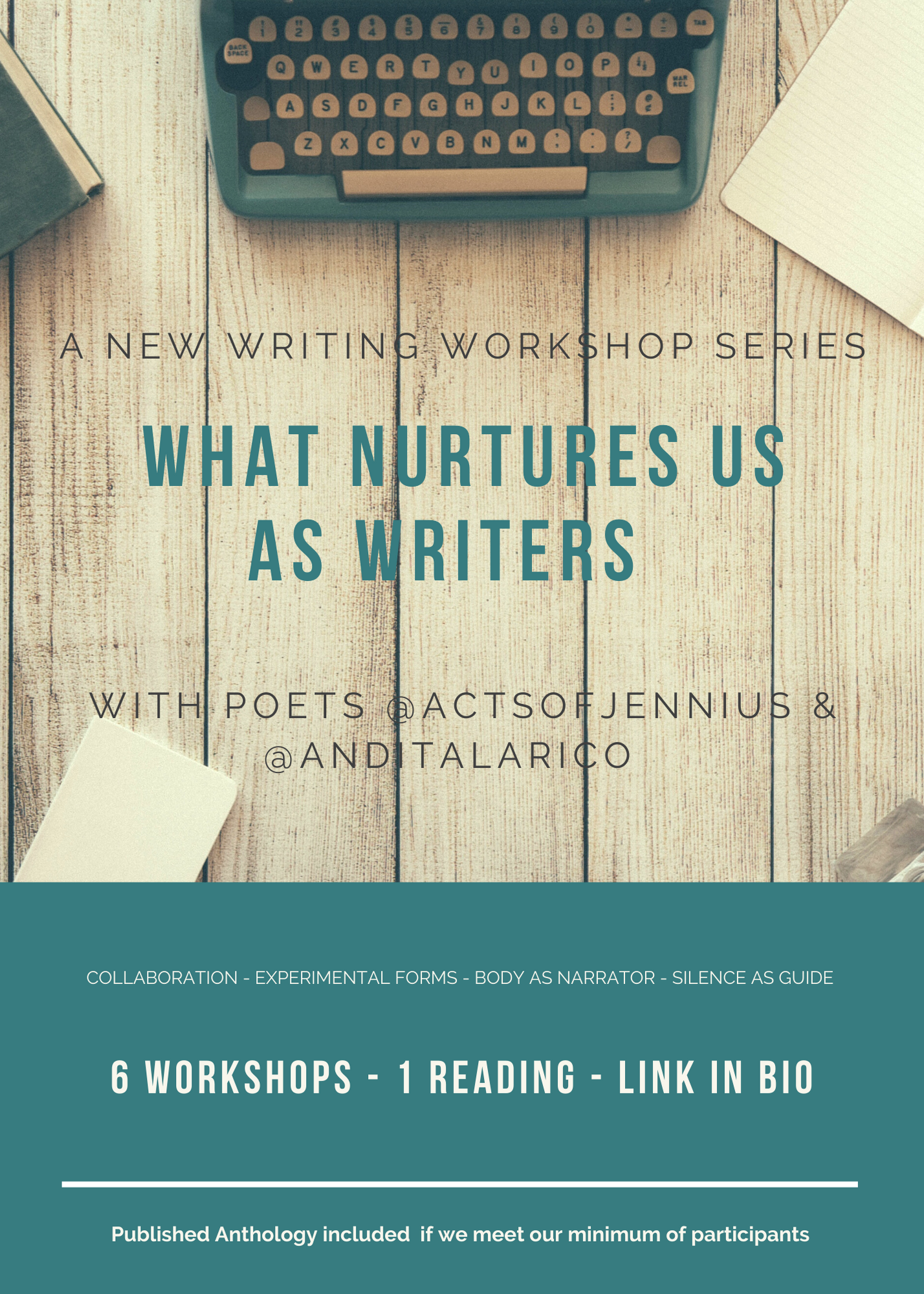
A brand new SIX-MONTH writing workshop (one class per month) — WHAT NURTURES US AS WRITERS — is tapping into that creativity and curiosity by pulling back the proverbial curtains. I chatted with the workshop guides Andi Talarico (AT) and Jenny Hill (JH) about the class, writing, inspiration, and the beauty of feeling alive again through unknowing, play, and magic. (And for anyone interested in their astrological big three, scroll down!).

The workshop runs Jan 23-June, and each session is 2 hours. It’s $150.00 for the whole workshop. Register now.

What inspired you to create this workshop? From what place, as a writer or creator, did this idea emerge?
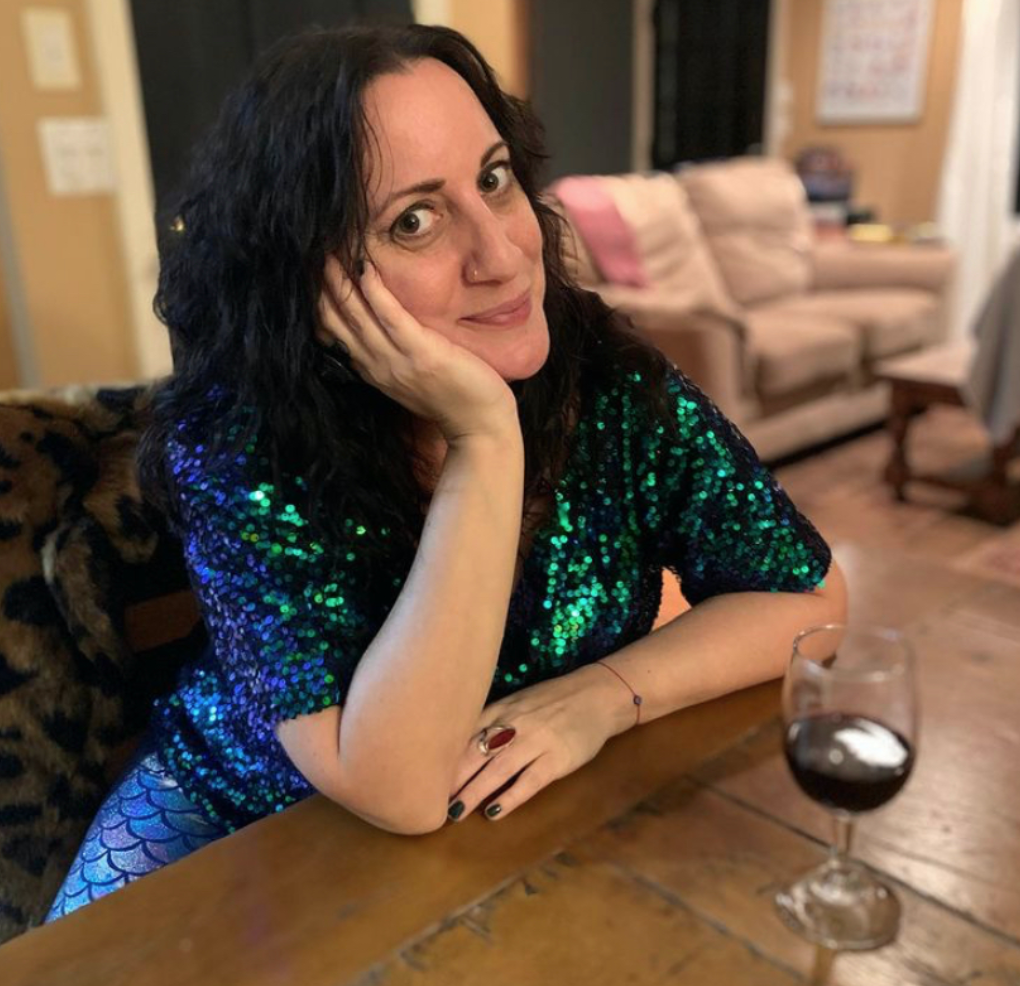
Workshop co-guide Andi Talarico

Workshop co-guide Andi Talarico

AT: Jenny approached me with the idea of running a workshop series. We both come from a background of hosting reading series, attending and teaching workshops, writing groups, of being community-based writers, really. We've both owned and operated indie bookstores in the past that we used as dedicated spaces for writers and artists to make and show their work.

The Coronavirus has taken so much from us, including, I think, a true sense of community. I know when Jenny approached me with her ideas for the workshop it was with the idea of growing something together, hence the longer form 6-month workshop series, long enough to grow and learn and change and perhaps even write or polish a manuscript. Writing is a solitary endeavor for the most part, but this year has been about keeping us apart. The workshop series is hopefully a way for writers to feel re-engaged and part of something larger.

JH: A desire to collaborate with the collective, imaginative world, and to share some of the experiences that have helped shaped my writing with others. I see it as an esteemed responsibility to share what I've learned. Otherwise, I'm hoarding all the good stuff for myself, and not honoring the mentors who gave of themselves so generously. I'm a circus artist, poet, playwright, arts educator, and have had many incredible teachers in my lifetime. I'm a very fortunate human, who has had opportunities to share, and to learn.

Co-creating a workshop with Andi was something I knew would make me feel alive, and there's hope in that spark of co-creation lighting fires in others. I've known her for 22 years (gasp!). She's a metaphoric reader of the world and a person of deep vision. Even at 17 her poems intimidated me. I remember thinking, "Who IS this kid? How did she get this voice? Where did she come from?" Who wouldn't want to work with someone like that?

What are some of the things (poems, approaches, personal goals and motivations, the spiritual or emotional) that inspire each of you most as poets and writers, collaborators and workshop guides?

AT: One of the biggest lessons that I've taken away from this past year is to honor my body, by being present in it, by using it to exercise, walk, do yoga, stretch, rest, all of it. As a writer, I have a habit of shutting off communication from my body so I can focus on capturing the words rattling around in my skull, but you need all systems working in order to create, or at least I do. Poets are pleasure-lovers, sensualists, ooh- and aah'ers. So part of what we're doing in these classes is to evoke the sensation that makes us feel alive again; a squeeze of lemon, a breathing exercise—they're all working toward the same place, which for me, I like to call a small or gentle epiphany. Part of the work here is to seek that.
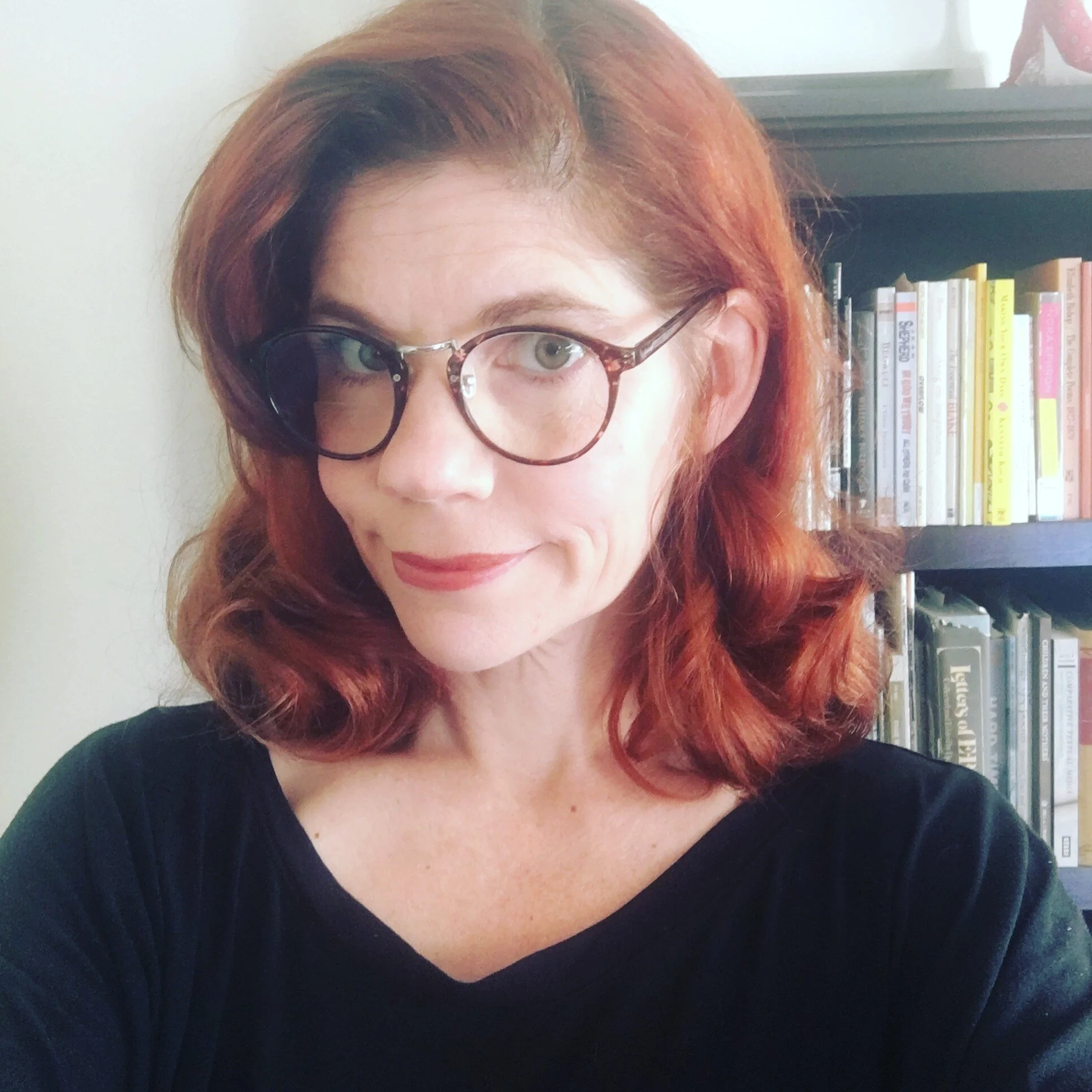
Workshop co-guide Jenny Hill

Workshop co-guide Jenny Hill

JH: Hearing and honoring the stories of others, dream logic, appreciation for minutiae, a sense of curiosity of path in creation, the interconnectedness of life, being changed by words, movement and how the body is a voice, the hope that exists inside you when you watch a snail, all the people who created before me and inspired me to create, the deep map of human emotion, play, play, and more play until you forget who you are and there is just the moment. Questions. Lots of questions. The place of not knowing.

How can participants come into the workshop space with little writing experience? And what about poets with experience (who may be stuck or working through new ideas or shifts?)

AT: You can come to this space with a project that you're trying to work through or you can come to this space new to writing and looking for ideas to get started. We'll all be doing the same work of writing. The exercises we'll be practicing are generative and open as we're hoping to create a space of trust and sharing.
What Nurtures IG Story.png

JH: In each session we play, which can release inhibitions a person might have about having little writing experience. I can say from my place of a beginner in many areas in life that it is a delicious mindset to be in, because it is a very open place. The field is vast, the sky is open (not a cloud in sight!), and what's that on the horizon? Ah, look! Possibility. Woo hoo! Let's run toward it!

I think the same idea is true for those who have experience with writing, and are working through new ideas, finding themselves in a transitional phase with their writing, or just feeling stuck. The "le jeu" in the workshop sessions is there to shake us up, and make us see things from a fresh perspective. And to laugh! Goodness, we take ourselves way too seriously.

With the new year (and all of the change) ahead of us, why is this a great time to take this workshop?

AT: I know I needed a creative reset after 2020. Maybe some of you do, too. It's a new year, and now, a new era of American history to step into, and it's one of progress, compassion, and building back. You saw Amanda Gorman at the inauguration, right? The best speaker of the day, hands down. The speeches were excellent and important, don't get me wrong, but the speaker that stayed with you was Amanda. Her work moved people and THAT'S what poetry has the power to do. There are moments in our life so profound, so big, that they defy regular speech - they need something more potent, distilled, powerful: poetry.

JH: It's a good time to add some beauty to the world, to meet new people, and to share your ideas, hopes, dreams, visions. The light is early in the day, and sticking around later and later, and that is an opening. The curtain is lifting! It's your stage, and there's your cue. Get out there. You have something to say that is worthwhile and others need to hear it.

What are your favorite poems, books, or stories (oral or written or folkloric) that inspire YOU?

AT: Maggie Nelson, Ocean Vuong, Anne Carson, Dorianna Laux, Sharon Olds, Tracy K. Smith, Danez Smith, Diane Ackerman, Morgan Parker, Layli Long Soldier, Ilya Kaminsky, Kahlil GIbran, Rebecca Solnit, Frank O'Hara, to name a few. Folk tales, magical realism, mysticism, tarot. I love when poets write essays, that might be my favorite genre in existence, haha. Who else but a poet's description could do?

JH: Ack! So many, and always changing, but currently and off the top of my morning head are: In Pieces: An Anthology of Fragmentary Writing, Pablo Neruda's Book of Questions, Serious Play by Louise Peacock, Twyla Tharp: The Creative Habit, The Brewer's Dictionary of Phrase and Fable, A Book of Luminous Things, 3 Sections by Vijay Seshadri, the music of Yann Tiersen, Little Red Riding Hood, Thurber, EB White, William Steig's The Lonely Ones, all of the dreams I have while sleeping, Talking to my Body by Anna Swir, and all of the little typewriter visual poems my grandfather created. I think he instilled the idea in me that letters are malleable, machines are meant for tinkering, and the value of "little" entertainments.

Bonus: Tell us about your big three (Sun, Moon, Rising sign)! How does astrology play into your creative/writing life?

AT: I'm a very emotional mix, with my Cancer Sun, Pisces Moon, and Sagittarius Rising placements. Cancer and Pisces are water signs, two of the most sensitive in the zodiac, known for intuitive and empathetic skills, while Sag is the fiery philosopher, life student, and explorer. Each one of those aspects helps feed my writing life, the Big Feelings as well as the constant need to keep learning. I like to think that poets need to be both archeologists and astronaut, trafficking in the past as well as the future.

JH: Sun in Aries, Rising Gemini, Moon in Leo. I wake up every morning, write, move, then ask myself over and over again throughout the day, "Who am I?" "What can I do?"
REGISTER HERE.

In Poetry & Prose Tags andi talarico, jenny hill, workshops, writing, 2021
Comment
Photo: Joanna C. Valente

Photo: Joanna C. Valente

What Is Sacred Self-Care?

September 21, 2020

Stephanie Athena Valente lives in Brooklyn, NY. Her published works include Hotel Ghost, waiting for the end of the world, and Little Fang (Bottlecap Press, 2015-2019). She has work included in Witch Craft Magazine, Maudlin House, and Cosmonauts Avenue. She is the associate editor at Yes, Poetry. Sometimes, she feels human. stephanievalente.com

Read More
In Wellness Tags magic, writing, ritual, self care
Comment
Screen Shot 2020-01-03 at 3.38.05 PM.png

A Guide For Witches and Writers: "The Magical Writing Grimoire"

January 3, 2020

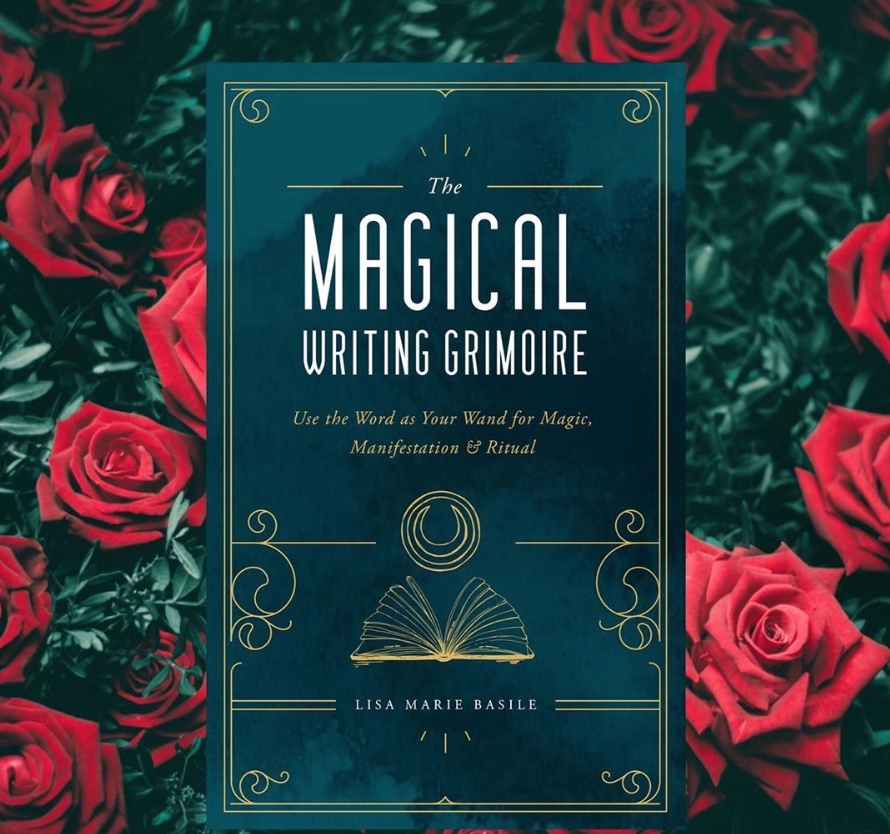
What Is The Magical Writing Grimoire? Is it for witches or writers — or both?

The Magical Writing Grimoire is a book of inclusive and accessible rituals and writing prompts for anyone who feels called to using words as a source of healing, empowerment, joy, generativity, and self-exploration. It is designed to integrate ritualistic living and to incorporate sacredness into our lives in meaningful and easy ways.

It’s for witches and non-witches (including people with secular beliefs, like myself), although of course it’s heavily based off the archetype of the witch: The witch, to me, is strong, rebellious, empowered, empathic, and bold as fuck. The witch is also conscious — of the self and others and the earth. So, it works heavily with archetypes and symbols, but it invites people who have specific beliefs to incorporate their beliefs into the work.

Really, the book is about tapping into and using your own power, your own voice, your own ideas.

It’s for writers and non-writers — anyone who is interested in the sacred, beautiful power of poetry or journaling or letter-writing, or timing writing practices to nature’s ebb and flow.

It also focuses heavily on shadow work — or unearthing the silenced, dark, shadowy parts of the self.

What will readers find within its pages?

View this post on Instagram

A post shared by ritual poetica (@ritual_poetica) on Nov 23, 2019 at 11:09am PST

Lots of rituals, lots of writing prompts, meditations, quotes from the most inspirational and wonderful people and writers, poems I wrote myself, glimpses into my personal life, and so much more. Plus, it’s really beautifully illustrated.

What is the inspiration behind The Magical Writing Grimoire?

The book was gestating in my mind for several years, but I didn’t know what its shape until the past year or so; I knew I wanted to write a writing guide — one that balanced the ritualistic with the pragmatic and every day, one that used writing as a form of magic. More than using the occult in order to generate writing, it’s about using writing to make your life more magical.

It starts with the word and ends with the word.

It’s deeply rooted in recovering from pain and trauma. When I was younger, the number one thing that got me through times of extreme trauma (family separation, foster care, CPTSD, financial instability, chronic illness) was writing. Writing gave me my voice back. It was a tool for reclamation. But more so, it was a tool for joy, creativity, and empowerment.

The ability to write is a privilege for many of us, but it’s also a free tool that can help save us. I’ve seen writing help women in domestic shelters, college students move through self-esteem issues, and incarcerated individuals tell their story. It is something sacred in itself because with our words we are taking nothing and making it into something.

So I wanted to design a gentle but effective book that people — especially any marginalized community — could use to tap into their truth and self, in a way that felt right for them. It’s guided, but it allows space for reinterpretation and individuality so that anyone can tap in.

Is it similar to Light Magic for Dark Times?

It is, and it’s not. Like Light Magic for Dark Times, it is grounded in accessibility and inclusivity. It also offers different (but looser) chapter focuses, like manifestation, mindfulness, healing, conjuring your voice, creating a grimoire, and more.

Unlike Light Magic for Dark Times, it provides a much deeper dive in terms of the rituals and the writing prompts, and it’s filled with poetry and quotes to meditate on. It’s also much more about the process of long-term self-exploration (and excavation!) than about quick, one-off rituals for different purposes. I think the two actually pair super well together!

What are your beliefs?

I’m secular (for lack of a better, more nuanced word), so I don’t work with or believe in gods, goddesses, angles or other deities. However, I work closely with the natural world (especially the power and energy of water), shadow work, energy, archetypes, and symbols. For example, I see the elements as powerful tools, offering lessons and glimpses of the purity of aliveness — and I see the astrological signs as symbols of the human condition.

When does the book come out?

It’s born on April 21, so it’s a Taurus! But let’s be honest — it was finalized and sent to the printer during Scorpio season. It’s very much a Scorpio book — it’s dark, intense, powerful, and transformative. But, like a Taurus, it wants to find beauty, comfort, and artistry. And because it comes out in the Spring, it’s a great way to kick off the new year with energy, creation, and rebirth.

People are already saying some really kind things about it, and it’s included in a few Most Anticipated lists, like in Cunning Folk and over at Patheos by Mat Auryn.

PREORDER THE MAGICAL WRITING GRIMOIRE NOW!

If you do, send preorder proof of purchase to magicalwriting@quarto.com and you’ll receive downloadable prompts and magical poetry to power up your magic.

PS: Follow the book’s journey on Instagram at @Ritual_Poetica.

In Magic, Poetry & Prose, Wellness Tags The Magical Writing Grimoire, journaling, poetry, writing, lisa marie basile
1 Comment

Trance Writing & Using the Self as a Guide

November 4, 2019

Kailey Tedesco's books These Ghosts of Mine, Siamese (Dancing Girl Press) and She Used to be on a Milk Carton (April Gloaming Publications) are both forthcoming. She is the editor-in-chief of Rag Queen Periodical and a performing member of the Poetry Brothel. Her work has been nominated for the Pushcart. You can find her work in Bellevue Literary Review, Hello Giggles, UltraCulture, Poetry Quarterly, and more. For more, please visit kaileytedesco.com.


Read More
In Art, Poetry & Prose Tags writing, occult
Comment
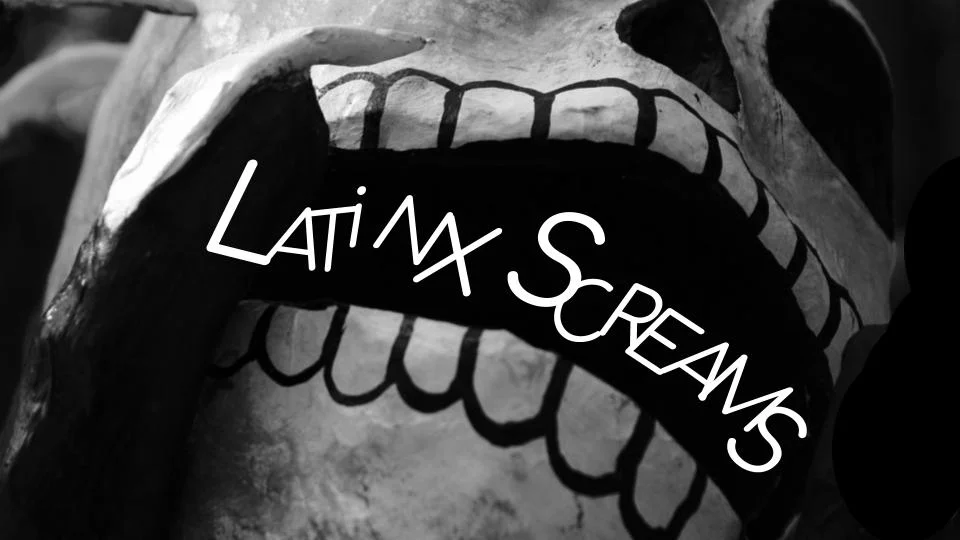
Latinx Screams5.jpg

Author V. Castro Talks About Latinx Screams Anthology

July 29, 2019

Monique Quintana is a Xicana writer and the author of the novella, Cenote City (Clash Books, 2019). She is an Associate Editor at Luna Luna Magazine, Fiction Editor at Five 2 One Magazine, and a pop culture contributor at Clash Books. She has received fellowships from the Community of Writers at Squaw Valley, the Sundress Academy of the Arts, and has been nominated for Best of the Net. Her work has appeared in Queen Mob's Tea House, Winter Tangerine, Grimoire, Dream Pop, Bordersenses, and Acentos Review, among other publications. You can find her at moniquequintana.com and on Twitter @quintanagothic.

Read More
In Poetry & Prose, Politics, Pop Culture Tags Latinx, writing, Fiction
Comment

Body Ritual: Journal Prompts for Chronic Illness Exploration

April 11, 2019

BY LISA MARIE BASILE

Body Ritual is Lisa Marie Basile's column about wellness, chronic illness and finding healing and autonomy in ritual. You can follow her
on Instagram for more on this topic.

If you live with a chronic illness, or if you love someone who has one, you know the delicate balancing act it requires. Living on that liminal precipice, between doing just enough and doing too much, requires an almost spiritual focus. And it’s tiring. I know, as I have ankylosing spondylitis, a degenerative, incurable spinal disease.

Who we feel we are within our minds is not always what our bodies reflect. And sometimes, that very lack of reconciliation rewires us. We start to believe we cannot, are not, will not.

We can, we are, and we will embrace the wholeness of our limitations and our magic. It doesn’t matter if people want us to stay quiet, go away, or stop complaining. We have a right to explore what it means to experience life as we do.

Stigma, lack of education, and fear make it hard to exist in a body that exists on the margins. Sometimes all the noise and suffering keeps us at a distance from ourselves. We often are so tired from the pain or insomnia or anxiety that we smile and pretend everything is okay. We sometimes allow ourselves to be taken advantage of just so we can seem “normal.” We push the limits of our bodies and lose grip on our boundaries. Sometimes, we get through the day, and that’s it. Sometimes it’s hard to feel empowered, to feel enough, to feel that we can and are and will.

The deep and important work that goes into healing the trauma of illness is often ignored. Instead, we focus on the day to day needs. We keep our heads above the water — but the secret is that we must become the sea.

I remember one of the first days many years ago when I realized that my body wasn't working the way it was supposed to. I was doing something simple, something that should've been innate. . Climbing on a bike, I thought that my hips were off, almost as if I was completely out of alignment. The best example I can give is when your car's axle is off and it continuously steers toward the left or to the right. There was no center, no feeling of steadiness, almost as if I could split in half or split into thirds and each part of me would fall to pieces in different directions. . My #AnkylosingSpondylitis (an #autoimmune or immune-mediated, incurable, degenerative spinal disease) deeply affects my hips, which is pretty ironic because I spent many years hating them for being so wide. Because society. Because magazines. Sometimes I wonder if I poured all of my negative energy into my body, making myself sick, as if I casted a spell - but I *know* that that is not the case. . Regardless, I try to treat my body with love and respect these days - I love my hips -and I try to see those situations in which I cannot do something or cannot do something comfortably, with compassion. I am always in the pool, where I feel I am larger than life, able to move fluidly with the lower impact, made stronger by water's sneaky resistance. But there are days when I want to crawl into bed and hide forever. Sometimes I win, sometimes it does. It's a process. It is my process. . Movement is integral to my life, it is ritual. It is a song. It is the ONLY thing keeping my spine from fusing; I am literally running for my life. But it can also be painful. . So sometimes I use devices and tools to make my life a little bit easier, and I wrote all about that for @healthline - check it out in my bio. https://bit.ly/2Hw5O2q

134 Likes, 8 Comments - lisa marie basile (@lisamariebasile) on Instagram: "I remember one of the first days many years ago when I realized that my body wasn't working the way..."

Recently I decided to go inward and empower myself to make time and space for my voice and needs as someone with chronic illness. Instead of trying to blend in or assure everyone that, “I’m fine, really,” I stared down into visit the abyss. I decided to take my time, for no reason but my own needs, and look my chronic illness in its eyes.

I cut through the noise and the stigma and the denial. My body, alight and in focus.

To do this, I made a list of chronic illness journal prompts and chose a beautiful journal strictly for these questions (or you may want to type these out or dictate your answers).

So, I wrote down several questions in my journal, and attempted to answer them. At times I answered one a day. Sometimes I answered several in one go. The important thing is that you take the time to be honest with yourself.

What I learned from answering the below questions astonished me; I was able to advocate better for my needs, recognize and make space for joy and gratitude, and find the parts of myself, like glass shards, I thought I’d lost. I didn’t lose them, it turns out. They simply changed form.

Chronic Illness Journal Prompts

  • Who am I without my chronic illness?

  • Who am I with my chronic illness?

  • How did I change when I was diagnosed?

  • How did I not change when diagnosed?

  • How is my pain level today? How is my fatigue?

  • Are my basic needs met? How can I facilitate this?

  • What positive thing have I learned about myself while actively experiencing symptoms or side effects?

  • What negative thing have I learned about myself while actively experiencing symptoms or side effects?

  • What do I do during periods of remission?

  • What do I do or feel when I’m in a flare-up?

  • Are there any ways at all to bridge the gap between feeling good and not feeling good?

  • How do others make me feel about my chronic illness?

  • Who understands my illness and supports me in my experience of it?

  • How can I help others understand my illness?

  • What do I not feel comfortable explaining about my illness?

  • Where are my boundaries?

  • Where can I be more receptive or open? Is it in receiving love? Is it in talking about my needs?

  • How do my finances play into my illness?

  • Are there areas in which I am privileged and thus, have gratitude?

  • Are there community resources or other resources I can tap into for help?

  • How does my race, gender, or educational background impact my experience of chronic illness?

  • How does my illness impact my job?

  • How does my illness impact my social and/or sex life?

  • Are there other intersecting issues that impact my chronic illness?

  • What do I love about my body?

  • What do I need to feel happy on a day to day basis?

  • What do I need to feel sustainably happy in the long term?

  • Among the things I need, which do I have?

  • What are three things I am thankful for right now, in this very instance?

  • If I am not happy, what is in my power to change that?

  • What work — no matter how seemingly ‘small’ — can I do to advocate for or contribute the wellness of others who may be suffering? Would this feel gratifying?

  • What gives me hope?


Also read:

BODY RITUAL: 12 VERY REAL THINGS I LEARNED ABOUT CHRONIC ILLNESS

BODY RITUAL: GRATITUDE MAGIC

AT THE INTERSECTION OF CHRONIC ILLNESS & RITUAL


Lisa Marie Basile is a poet, essayist and editor living in New York City. She's the founding editor of Luna Luna Magazine, an editor at Ingram’s Little Infinite, and co-host for the podcast, AstroLushes. Most recently, she is the author of LIGHT MAGIC FOR DARK TIMES (Quarto Publishing/Fair Winds Press), a collection of practices and rituals for intentional and magical living, as well as a poetry collection, NYMPHOLEPSY . Her second book of nonfiction, WORDCRAFT, will be published by Quarto/Fair Winds Press in April 2020. It explores the use of writing as ritual and catharsis. Her essays and other work can be found in The New York Times, Chakrubs, Catapult, Narratively, Sabat Magazine, Refinery 29, Healthline, Entropy, Bust, Bustle, The Establishment, Hello Giggles, Ravishly, and more. She studied English and psychology as an undergraduate at Pace University, and received a Masters in writing from NYC’s The New School. Want to learn more? She’s been featured at Amy Poehler’s Smart Girls, HelloGiggles, The Cools, and more.

In Wellness, Social Issues, Lifestyle Tags chronic illness, Chronic pain, Chronic Illness, ankylosing spondylitis, journaling, Journal Writing, writing, therapy, wellness, body ritual
Comment
Photo: Joanna C. Valente

Photo: Joanna C. Valente

Writing Letters in the Age of Loneliness & Violence

April 5, 2019

Joanna C. Valente is a human who lives in Brooklyn, New York. They are the author of Sirs & Madams, The Gods Are Dead, Marys of the Sea, Sexting Ghosts, Xenos, No(body) (forthcoming, Madhouse Press, 2019), and is the editor of A Shadow Map: Writing by Survivors of Sexual Assault. They received their MFA in writing at Sarah Lawrence College. Joanna is the founder of Yes Poetry and the senior managing editor for Luna Luna Magazine. Some of their writing has appeared in The Rumpus, Them, Brooklyn Magazine, BUST, and elsewhere. Joanna also leads workshops at Brooklyn Poets. joannavalente.com / Twitter: @joannasaid / IG: joannacvalente / FB: joannacvalente


Read More
In Lifestyle, Art Tags writing
Comment
11021083_10152619539465780_593450620446021116_n.jpg

Hillary Leftwich on Happiness & Why It's Important to Love Childhood Films

January 7, 2019

Hillary Leftwich is the author of the forthcoming collection Ghosts Are Just Strangers Who Know How To Knock from Civil Coping Mechanisms (CCM) Press in 2019. She earned her MFA in fiction and poetry from the Mile High MFA at Regis University. She is the poetry and prose editor for Heavy Feather Review and curator/host for At the Inkwell Denver, a monthly reading series. In her day jobs she has worked as a private investigator, maid, repo agent, and pinup model. Currently, she freelances as a writer, editor, writing workshop instructor, and guest instructor for Kathy Fish’s Fast Flash Workshop. Her writing can be found or is forthcoming in print and online in such journals as Entropy, The Missouri Review, The Review Review, Hobart, SmokeLong Quarterly, Matter Press, Literary Orphans, Sundog Lit, NANO Fiction, Occulum, Jellyfish Review, and others.

Read More
In Interviews Tags Interview, hillary leftwich, writing
Comment
Screen Shot 2018-02-06 at 11.23.32 AM.png

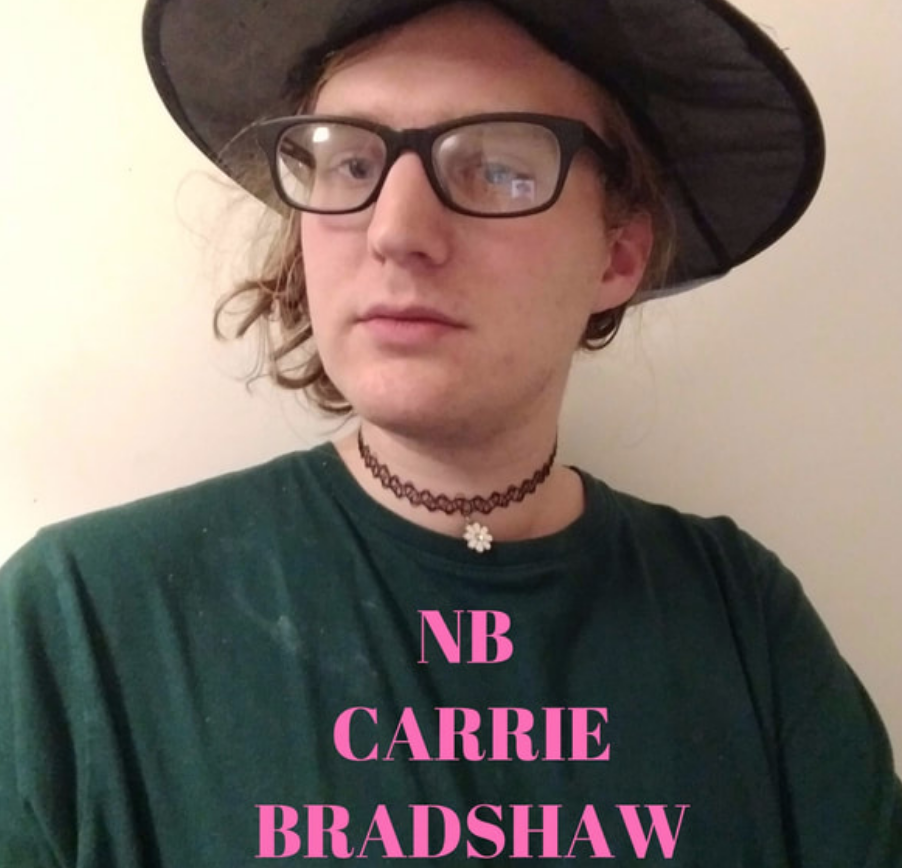
Writer & Artist Joshua Byron on Being Nonbinary & Navigating the Dating World

February 6, 2018

Joanna C. Valente is a ghost who lives in Brooklyn, New York, and is the author of Sirs & Madams (Aldrich Press, 2014), The Gods Are Dead (Deadly Chaps Press, 2015), Marys of the Sea (The Operating System, 2017), Xenos (Agape Editions, 2016), and Sexting Ghosts (Unknown Press, 2018). They are the editor of A Shadow Map: An Anthology by Survivors of Sexual Assault (CCM, 2017), and received a MFA in writing at Sarah Lawrence College. Joanna is also the founder of Yes, Poetry, a managing editor for Luna Luna Magazine and CCM, as well as an instructor at Brooklyn Poets. Some of their writing has appeared in Brooklyn Magazine, BUST, Them, Prelude, Apogee, Spork, The Feminist Wire, and elsewhere. 

Read More
In Interviews Tags joshua byron, LGBTQIA, non-binary, books, writing, dating
Comment
PUSHCART

Every Single Reason You Should Brag Your Pushcart Nominations

December 3, 2017

All the petty energies expended on downtalking the nominations or defending your own excitement is better spent, I promise. Like on resistance. Or supporting people. Or writing more

Read More
In Social Issues, Poetry & Prose, Personal Essay Tags pushcart prize, literary community, pushcart nomination, writing
6 Comments
annie-spratt-197448.jpg

How to Not Sound Like a Narcissist in Your Memoir

September 21, 2017

Norma Watkins is the author of That Woman From Mississippi, out this month from Nautilus Publishing alongside a paperback reprint of her first memoir, The Last Resort: Taking the Mississippi Cure. She teaches creative writing at Mendocino College in Fort Bragg, California.    

Read More
In Poetry & Prose Tags memoir, writing
1 Comment
dayne-topkin-309506.jpg

In Order To Write Poetry, Don't Treat It Like Poetry

August 29, 2017

Poetry isn’t a grand mystery. It can be, and there are certainly moments where you want ambiguity, but it doesn’t have to be confusing, for either the writer or reader. Writing poetry, like fiction (and really, making any kind of art), is about utilizing all aspects of your brain, your body, your craft. I regularly teach poetry workshops (and I used to be a high school English teacher), so I'm constantly thinking of new ways to challenge myself and others—and finding ways to keep pushing myself to explore the nuances of poetry.

Read More
In Poetry & Prose Tags poetry, writing
Comment
Alvaro Serrano

Alvaro Serrano

Debunking the Writer’s Block Myth: Create Content Every Day

February 24, 2017

The biggest secret to writing well is that there aren’t any secrets. Maintaining a blog or writing a book takes the same type of skill, and that’s organization. That means, creating a schedule, an environment, and taking the time to research. When we talk about writer’s block, we are really talking about disorganization and waiting for those “idea” moments to happen. Like lightning, inspiration does strike—just not often and fades before our very eyes.

Read More
In Lifestyle, Poetry & Prose Tags writing, advice
Comment

A Look Back at AWP 2016 Through Caramel-Colored Glasses

October 20, 2016

BY MIGUEL PICHARDO

Outrage is exhausting. Three-day conferences in a different time zone are just as taxing. With plenty of collective outrage leading up to the 2016 AWP (Association of Writers and Writing Programs) Conference in Los Angeles, I had to conserve my energy. 

I understand that there was plenty to rail against—culturally-deficient committees, poor accessibility, the tactless exploitation by Vanessa Place made worse by Kate Gale’s ranting—but I didn’t travel across the country to be swept up in polemics. When holding a conference in such melting pot of a city whose history has been marred by racial tumult, the Association could no longer afford to ignore the groups they’ve alienated in past years. And I couldn’t bring myself to knock the Association for trying. So, I loosened my brown fist into an open hand, tucked my soapbox under the table at my lit mag’s exhibit, and prepared to make the most of a conference where, for once, I felt welcome.

If you’ve ever been to an AWP Conference, you know that there are so many panels and events going on at the same time that you might wonder how far human cloning technology has come in recent years. Had I a team of extra Miguels, I would’ve attended everything on the schedule that spoke to me as Latino writer of poetry and fiction—maybe. Here’s some of what one Miguel managed to catch at the 2016 AWP Conference:

Panel Discussion: “Creating Opportunities for Writers of Color: A Continued Urgency”

Seated at the head of a hotel conference room were Reginald Flood, Diem Jones, Elmaz Abinader, Angie Chuang, and Angela Narciso. All of these authors have in one way or another dedicated their writing lives to circumvent “the perils of publishing in white institutions.” Abinader and Jones are two of the four founders behind VONA Voices, the only writing conference/workshop in the US that focuses on multi-genre work produced by writers of color. As of last summer, VONA left San Francisco and has made Miami its new home. Flood, Chuang, and Narciso have been involved with Willow Books, an independent press that strives to promote diversity in publishing by recognizing outstanding writers of color.

The panelists asserted that, as a community, writers of color can work towards creating an “alternate canon” worthy of inclusion in national and literary discourse. The aim then is not “diversity”—a word the panelists agreed is white, politically correct code for racism—but “equity,” as put forth by Narciso. Chuang then spoke on how writers of color should avoid becoming monoliths, self-absorbed loners who have forgotten that art can build bridges between communities. 

When Jones pointed out that traditional pedagogy sometimes doesn’t work for writers of color, I realized that instead of writing for just anyone who will read our work, we should be writing for readers of color instead. Before I penned my first poem, I was an English major who couldn’t stomach the Bard and whose aspirations were forever changed after reading Junot Diaz’s Drown. I didn’t find this collection in any classroom; it switched hands between me and some of my Dominican friends at St. John’s University. I then passed it on to a group of high school students I was mentoring at the time. Re-education is not only possible; it’s necessary if we wish to turn the status quo on its head.  

Before fielding questions from the audience, Abinader urged the writers of color in the room to fill in the “hollowness of diversity’’ by nurturing their individual voices and to always “make them [white people] uncomfortable.” 

Will do, Elmaz. After all, change is hardly change unless it’s uncomfortable.

Reading: “Throwback Thursday: Four Forms of Performance from the Early 90s Nuyorican Poets Café”  

Four years ago, when I still lived in New York, I’d often check out a reading or a slam contest at the hallowed literary hub that is the Nuyorican Poets Café. I’d sometimes take my high school students along as a field trip. More than once, they left the café so inspired that they’d recite their own poems on the R train back to Queens. The panel at this year’s AWP showed me that the Nuyorican still has that same impact on young poets.

An institution of Manhattan’s Lower East Side, the Nuyorican has been home to a community of poets since 1975. The AWP readers—Xavier Cavazos, Ava Chin, Crystal Williams, and Regie Cabico—represented a living snapshot of the Nuyorican’s 90s heyday. Since then, they’ve earned fellowships and PhDs, won national slam competitions, appeared on HBO’s Def Poetry Slam and NPR’s Snap Judgment, and of course, published multiple books. However, they all agreed that none of their achievements would’ve been possible without the Nuyorican, their “first MFA.” 

Each poet recited a piece and followed it with some recollection of what the Nuyorican did for them as budding artists. Cabico, a queer Filipino American slam poet, said that without the Nuyorican he would have been a massage therapist or a lawyer. Chin credited the Nuyorican with giving her the space to explore language as a first generation Chinese American. Williams broke down the three lessons she learned about slam at the Nuyorican:

1. If you’re going to read a poem, then read a poem. Make sure that it has all the craft and technical considerations that go into creating poetry that is meant to be read aloud. 
2. Slam with the intention to connect with your audience. 
3. Come original. Be your full-throated self. 

Last, and most memorable, was Cavazo’s reading. Taking a cue from Williams’ lessons, he launched into a hilarious poem titled “Motherfuckers” without the delay of unnecessary preamble. The piece was a tirade against Miami Marlins’ former manager, Ozzie Guillen. No matter where I go, the 305 follows. But his poem is not what stuck with me. Recalling his days as an addict, Cavazo said he owes his life and his sobriety to the friends he made within the Nuyorican’s brick walls, his fellow panelists. Teary-eyed, he reminded us that, “Slam is not an aesthetic; it’s a community. Keep it whole. Keep it beautiful.” 

A Q&A followed, unlike any I’d ever seen. A Japanese American teen from Orange County raised his hand not to ask a question, but to make a request. He had a slam competition coming up, and was wondering if he could practice his piece for the audience. The panelists could not have been happier to oblige and invited him on-stage. As he read, I was reminded of my students back in New York. It was a relief to see, to hear that the oral tradition of slam poetry is alive and well from coast to coast, as relevant today as it was in the 90s.

The Latino Caucus

This year, the Association’s efforts to be more inclusive were apparent without coming off as pandering. Special accommodations were made for disabled attendees and panel titles were rife with acronyms like WOC and LGBTQ. The most apparent reforms could be seen in this year’s caucuses. At the end of the conference’s first two days, caucuses were held where groups of writers communed to discuss the challenges and opportunities their demographics face in the current publishing landscape. Caucus groups included writers in low residency MFA programs, Indigenous American writers, Asian American writers, and writers in recovery. One caveat about these caucuses was that many were held simultaneously. So someone who identified as say, a queer woman who teaches high school, would’ve had to prioritize one of these identities as her way into a larger community of writers.   

I attended the Latino caucus where each panelist represented a different facet of the literary world. Emma Trelles, an alumna of FIU’s MFA program, spoke for the journalistic obligations a community of Latinx writers has in order to foster an atmosphere of good literary citizenship. She urged us to query editors for reviews on books by Latinx authors, and to cover each other’s events. Francisco Aragon, director of Letras Latinas at Notre Dame, suggested ways we can foster relationships with existing institutions in order to create literary programming and events focused on works by Latinx authors.  Co-founder of the poetry workshop CantoMundo, Deborah Paredez invited us to “self-interrogate” in our work as a means of surveying the isolation we experience inside and outside of institutions. Moreover, she reminded us that “we are not exceptional Latinos; we’re representative of them.” 

Lorenzo Herrera y Lozano, editor of several Latinx anthologies, posed the important question: “What would it take to publish ourselves into being?” The answer was provided by the following panelist, Ruben Quesada. Representing the literary magazine world, Quezada has held decision-making positions for publications like Codex Journal and the Cossack Review. Whenever he noticed a lack of Latinx representation in literary magazines, he either started his own or changed a predominately white one from the inside through what he called “deliberate editing.” 

Quezada’s talk resonated with me especially. As the Latino editor of a literary magazine, I’d love to edit deliberately, but we simply don’t receive too many submissions from Latinx writers. During the Q&A, I made this known to a room full of strangers who looked like me, who spoke my first language. Before the Latino Caucus was over, my magazine’s Facebook page saw a surge in likes and the inbox was hit with questions about submission guidelines and book review queries. 

If that’s not community, I don’t know what is. 

Despite the overwhelming kinship and empowerment I felt in that room, I knew this could be the first and last Latino Caucus to ever be held at an AWP Conference. Sure, Latinx authors are as visible as ever, but being visible and being sustainable are two different feats. Before this caucus becomes an annual event, the Association asks that we jump through a series of hoops. For one, there must be panelists to preside over future Caucuses, each of whom have to have attended the last three consecutive AWP conferences as paying members. Also, the Association wasn’t concerned with how many people attended the Caucus; they just wanted the minutes when it was over. Only after the third Latino Caucus, to be held in 2018, does it become a permanent panel on the conference schedule. 

Regardless of the shaky foundation the Latino Caucus stood upon, I still felt that I’d found my literary tribe, one I never knew could be available to me. 

Off-site Event: The Bash hosted by The Conversation

This event could not be found on any official AWP listing. Invite only. I came as a dear colleague’s plus one. After enduring a lame, ill-planned reading, we called an Uber to take us to Ladera Heights, AKA the Black Beverly Hills. Live drums and saxophones could be heard as we pulled into the driveway of one of the nicest houses I’d ever been invited to. We were greeted at the door by our co-host’s father, Mr. Barnes. Inside, the rooms were adorned with paintings and wall-to-wall bookshelves brimming with knowledge. I imagined that this must’ve been such a nurturing environment for a poet like Aziza Barnes to call home.

I leaned over to my colleague and whispered, “I wish Mr. Barnes was my dad.”

Mr. Barnes gave us the lay of the land: where to find the booze, the coffee, the snacks, and the pièce de résistance, the taco bar. The hospitality was on one hundred thousand; I was exactly where I needed to be. 

The band played Motown classics as I made trip after trip to the taco bar. I spoke with young black, white, and Latinx poets from all over the country. I even reunited with a poet from Mississippi I met during the 2015 conference.  We agreed that the Association had taken the hint since last year in Minneapolis, where the melanin-deficient panels and attendees made us seriously question what we were doing there in the first place. 

I struck up another conversation with a black poet and PhD candidate from Flint, Michigan. Maybe it was the festivities, but like me, he was overjoyed to see so many writers of color sharing such a memorable night.  He told me about Claudia Rankine’s moving keynote address, which I’d missed the night before. We exchanged email addresses and poems. The band played their last notes and then we heard the announcement, “They’re going to read.”

An unveiling was upon was, the reason why we’d all come together. Nabila Lovelace and Aziza Barnes had organized The Bash as the joyful inauguration of a new literary institution they’d founded and dubbed “The Conversation.” The organization’s mission is to “carve out a space for Black Americans to contend with their Blackness and its infinite permutations in the South.” Lovelace and Barnes wanted to turn the literary conference model on its head, and by throwing The Bash, they had done so beautifully, in a manner no POC I know could resist: the house party.

Our hosts stood silently in front of their mic stands, commanding us with their presence before either of them spoke. Lovelace’s head was wrapped in a soft cloth and Barnes wore a plaid blazer, dreads draped over her shoulder. Barnes thanked all of us for attending and stressed the importance of coming together outside of the Association’s confines. She went on to read a poignant piece about being harassed by LAPD outside of the very house we were gathered in—the house she grew up in. 

After the reading, the band packed up their equipment. Yet, the party was far from over. A DJ set up his gear and turned the Barnes living room into one of those basement parties from my high school days. The lights were low, the floor was shaking, and bodies moved to anthems like Montell Jordan’s “This Is How We Do It” and Juvenile’s “Back That Azz Up.” When Dark Noise Collective poets Danez Smith and Nate Marshall busted out a flawless “Kid ‘n Play” in the middle of the dance floor, the crowd lost it. 

I swayed to the music, getting by on my two left feet and reveling in the ruckus we were busy making. Amid a conference that was anything but silent, the noise of change had been a low hum since I arrived in Los Angeles. Here, at The Bash, it reached its crescendo.

The DJ threw on Kendrick Lamar’s “Alright,” and played it loud. All of us chanted the chorus together, “We gon’ be alright/ Do you hear me, do you feel me? We gon’ be alright.” 

I couldn’t agree more.

Like this article? You should try: Breaking the Cultural Ties That Bind Us


Miguel Pichardo is a Dominican/Ecuadorian writer out of Miami. His poetry has appeared in Duende and Literary Orphans. He is currently an MFA candidate at Florida International University and the editor of Fjords Review. 

In Poetry & Prose Tags awp, diversity, writing, latino caucus, race, the conversation, Latinx, nuyorican, slam poetry
Comment
Carli Jeen

Carli Jeen

What I Didn’t Learn In Writing Workshops

August 5, 2016

I loved going to graduate school and being immersed in writing. Having the opportunity to study with my mentors and peers was one of the most rewarding experiences of my life—and I learned a lot during the two years it took for me to get my degree. But there was something auspiciously missing from most of our discussions— how to create diverse characters.

Read More
In Poetry & Prose Tags writing, workshops, diversity, race
Comment
Older Posts →
Featured
‘in the glitter-open black' — poetry by Fox Henry Frazier
'poet as tarantula,  poem as waste' — poetry by  Ewen Glass
'poet as tarantula, poem as waste' — poetry by Ewen Glass
'Hours rot away in regalia' — poetry by Stephanie Chang
'down down down the hall of mirrors' — poetry by Ronnie K. Stephens
'Grew appendages, clawed towards light' — poetry by Lucie Brooks
'do not be afraid' — poetry by Maia Decker
'The darkened bedroom' — poetry by Jessica Purdy
'I am the body that I am under' — poetry by Jennifer MacBain-Stephens
instagram

COPYRIGHT LUNA LUNA MAGAZINE 2025