• Home
  • indulge
  • new poetry
    • About Luna Luna
    • resources
    • search
  • editor
  • dark hour
  • submit
Menu

luna luna magazine

  • Home
  • indulge
  • new poetry
  • About
    • About Luna Luna
    • resources
    • search
  • editor
  • dark hour
  • submit
delicious new poetry
'the doors of the night open' — poetry by Juan Armando Rojas (translated by Paula J. Lambert)
Nov 29, 2025
'the doors of the night open' — poetry by Juan Armando Rojas (translated by Paula J. Lambert)
Nov 29, 2025
Nov 29, 2025
'we can be forlorn women' — poetry by Stevie Belchak
Nov 29, 2025
'we can be forlorn women' — poetry by Stevie Belchak
Nov 29, 2025
Nov 29, 2025
'I do whatever the light tells me to' — poetry by Catherine Bai
Nov 29, 2025
'I do whatever the light tells me to' — poetry by Catherine Bai
Nov 29, 2025
Nov 29, 2025
‘to kill bodice and give sacrament’ — poetry By Kale Hensley
Nov 29, 2025
‘to kill bodice and give sacrament’ — poetry By Kale Hensley
Nov 29, 2025
Nov 29, 2025
'Venetian draped in goatskin' — poetry by Natalie Mariko
Nov 29, 2025
'Venetian draped in goatskin' — poetry by Natalie Mariko
Nov 29, 2025
Nov 29, 2025
'the long sorrow of the color red' — centos by Patrice Boyer Claeys
Nov 28, 2025
'the long sorrow of the color red' — centos by Patrice Boyer Claeys
Nov 28, 2025
Nov 28, 2025
'Flowers are the offspring of longing' — poetry by Ellen Kombiyil
Nov 28, 2025
'Flowers are the offspring of longing' — poetry by Ellen Kombiyil
Nov 28, 2025
Nov 28, 2025
'punish or repent' — poetry by Chris McCreary
Nov 28, 2025
'punish or repent' — poetry by Chris McCreary
Nov 28, 2025
Nov 28, 2025
'long, dangerous grasses' — poetry by Jessica Purdy
Nov 28, 2025
'long, dangerous grasses' — poetry by Jessica Purdy
Nov 28, 2025
Nov 28, 2025
'gifting nighttime honey' — poetry by Nathan Hassall
Nov 28, 2025
'gifting nighttime honey' — poetry by Nathan Hassall
Nov 28, 2025
Nov 28, 2025
'A theory of pauses' — poetry by Jeanne Morel and Anthony Warnke
Nov 28, 2025
'A theory of pauses' — poetry by Jeanne Morel and Anthony Warnke
Nov 28, 2025
Nov 28, 2025
'into the voluminous abyss' — poetry by D.J. Huppatz
Nov 28, 2025
'into the voluminous abyss' — poetry by D.J. Huppatz
Nov 28, 2025
Nov 28, 2025
'an animal within an animal' — a poem by Carolee Bennett
Nov 28, 2025
'an animal within an animal' — a poem by Carolee Bennett
Nov 28, 2025
Nov 28, 2025
‘in the glitter-open black' — poetry by Fox Henry Frazier
Oct 31, 2025
‘in the glitter-open black' — poetry by Fox Henry Frazier
Oct 31, 2025
Oct 31, 2025
'poet as tarantula,  poem as waste' — poetry by  Ewen Glass
Oct 31, 2025
'poet as tarantula, poem as waste' — poetry by Ewen Glass
Oct 31, 2025
Oct 31, 2025
'my god wearing a body' — poetry by Tom Nutting
Oct 31, 2025
'my god wearing a body' — poetry by Tom Nutting
Oct 31, 2025
Oct 31, 2025
'Hours rot away in regalia' — poetry by Stephanie Chang
Oct 31, 2025
'Hours rot away in regalia' — poetry by Stephanie Chang
Oct 31, 2025
Oct 31, 2025
'down down down the hall of mirrors' — poetry by Ronnie K. Stephens
Oct 31, 2025
'down down down the hall of mirrors' — poetry by Ronnie K. Stephens
Oct 31, 2025
Oct 31, 2025
'Grew appendages, clawed towards light' — poetry by Lucie Brooks
Oct 31, 2025
'Grew appendages, clawed towards light' — poetry by Lucie Brooks
Oct 31, 2025
Oct 31, 2025
'do not be afraid' — poetry by Maia Decker
Oct 31, 2025
'do not be afraid' — poetry by Maia Decker
Oct 31, 2025
Oct 31, 2025
'The darkened bedroom' — poetry by Jessica Purdy
Oct 31, 2025
'The darkened bedroom' — poetry by Jessica Purdy
Oct 31, 2025
Oct 31, 2025
'I am the body that I am under' — poetry by Jennifer MacBain-Stephens
Oct 31, 2025
'I am the body that I am under' — poetry by Jennifer MacBain-Stephens
Oct 31, 2025
Oct 31, 2025
goddess energy.jpg
Oct 26, 2025
'Hotter than gluttony' — poetry by Anne-Adele Wight
Oct 26, 2025
Oct 26, 2025
'As though from Babel' — poetry by Fox Henry Frazier
Oct 26, 2025
'As though from Babel' — poetry by Fox Henry Frazier
Oct 26, 2025
Oct 26, 2025
'See my wants' — poetry by Aaliyah Anderson
Oct 26, 2025
'See my wants' — poetry by Aaliyah Anderson
Oct 26, 2025
Oct 26, 2025
'black viper dangling a golden fruit' — poetry by Nova Glyn
Oct 26, 2025
'black viper dangling a golden fruit' — poetry by Nova Glyn
Oct 26, 2025
Oct 26, 2025
'It would be unfair to touch you' — poetry by grace (ge) gilbert
Oct 26, 2025
'It would be unfair to touch you' — poetry by grace (ge) gilbert
Oct 26, 2025
Oct 26, 2025
'Praying in retrograde' — poetry by Courtney Leigh
Oct 26, 2025
'Praying in retrograde' — poetry by Courtney Leigh
Oct 26, 2025
Oct 26, 2025
'To not want is death' — poetry by Letitia Trent
Oct 26, 2025
'To not want is death' — poetry by Letitia Trent
Oct 26, 2025
Oct 26, 2025
'Our wildness the eternal now' — poetry by Hannah Levy
Oct 26, 2025
'Our wildness the eternal now' — poetry by Hannah Levy
Oct 26, 2025
Oct 26, 2025

The Dark Lull by Melissa Pleckham

November 13, 2022

By Melissa Pleckham

The Dark Lull


Nothing’s ever completely dead.

In the 1971 film Let’s Scare Jessica to Death — a film so slow, so subtle that one hesitates to call it a horror film, let alone a vampire film, although that’s exactly what it is — this line is uttered by the pale, red-haired woman whom the titular Jessica is surprised to find squatting in the farmhouse she’s recently acquired with her husband and friend. The trio have just crossed the fog-veiled Connecticut countryside in a black hearse with the word “LOVE” scrawled in crimson on its door; Jessica, fragile as fine china after a mental health episode only vaguely alluded to, demands the hearse stop at a weed-choked cemetery for grave rubbings. She hangs the headstone-sized tissue paper trophies around her bed, runs her fingers across them delicately. This, we are shown, is a woman for whom death is a part of life in a very tangible way.

So when the red-haired woman suggests a seance one night after dinner, and responds to Jessica’s friend’s skepticism with this line that calls into question the very existence of death itself, or at least death as any sort of permanent or all-encompassing state, Jessica seems to smile in agreement, readily playing the part of medium when beseeched. There are no Victorian parlor theatrics in this film, but the scene — and the line — have stayed with me just the same. It’s a film that I like to revisit as the heat and chaos of late summer begin to melt imperceptibly into the dark lull of autumn. But this year, the line resonated with me more than ever. I kept it in my mind, I ran my fingers over it like Jessica with her grave rubbings.

Is it true that death is a myth? A fairy tale? Does anything, anyone, ever die completely?

The last October before the world stopped, I spent Halloween in the labyrinth of bones beneath the city of Paris. It was my first visit to the city, and my first Halloween spent out of the country. My husband and I wanted to do something special, unforgettable.

We walked to the catacombs from our hotel in the 6th arrondissement. It had been raining but that morning was cool and cloudy, the air sweet and sharp. The day before we’d visited Père Lachaise, the trees lining the stone paths of the cemetery crowned with gold and orange. Jim Morrison’s grave was surrounded by a fence, the ground nearby strewn with gifts, offerings. On the way out we passed a mausoleum with its door partially ajar; in the dark, we could see cigarette butts, an empty liquor bottle, and, stretched stark white against the stark white marble, a large bone that looked like a femur. Shocked, we looked away. “Someone’s been partying here,” I said. “Some French kids.” 

But who can say who threw that party? Who can say who was invited, who attended? Nothing’s ever completely dead.

At the catacombs that Halloween morning, we could be certain more bones awaited us in that dank darkness beneath the city of light, down that endlessly spiraling staircase, through that electric torch-lit tunnel, on the other side of the archway that demarcates the start of that self-proclaimed Empire of Death. The catacombs sprawl like veins beneath the skin of the city, a second Paris that is far less lively but no less full of lives, or at least the earthly remains of those who once lived them.

I had never been in an ossuary before, and once I adjusted to the darkness, to the feeling of being so far underground, what struck me most was how peaceful it was. How quiet. How the skulls stacked almost to the ceiling felt both very relatable, very human — alas, poor Yorick! — but also so far removed from the one on my own shoulders, atop my own spine, that held the organ that made all of my hopes and dreams and loves and fears and observances and sensory perceptions possible. Every skull in those catacombs had once held a brain like a precious jewel, every bone signified a human soul that had walked the streets above us, the streets where we were so charmed and beguiled by the romance and mystery of Paris.

Are the catacombs scary? Of course not, although I wouldn’t want to be trapped down there alone. So I suppose I might concede that the tunnels, the darkness, have the capacity to frighten. But the bones? Those are beautiful.

Are the catacombs scary? Of course not. Nothing’s ever completely dead.

Autumn’s lull would take on a different meaning for me the following year, and the one after that: The pandemic forced a different kind of pause, a different kind of reflection, a different kind of encounter with death than I’d ever experienced before. I remembered our Halloween in the catacombs often that October, sometimes with sadness as I wondered if I would ever have the opportunity to travel internationally again, but always with gratitude for the experience we’d shared.

This year, at the tail end of a summer that so far refuses to end, refuses to concede its loss to the looming autumn, my heart again wanders back to those cool dark halls coiled beneath Paris. I walk there in my mind like a meditation, relishing the mystery, wondering at my own mortality. No matter how strong we may feel, fall is a time of year where the crunch of a leaf, the singe of burning pumpkin, the thrill or sadness of a sunset that comes sooner than we were expecting, reminds us that to live is to know that our hearts are limned with lines like a cracked teacup, that the veil between worlds is tissue-thin, spread soft against stone, could tear at any time.

And it reminds us: Do not fear. 

Do not fear. Nothing is ever completely dead.


Melissa Pleckham
is a Los Angeles-based writer, actor, and musician. Her work has been featured in numerous publications, including Flame Tree Fiction, Luna Luna, Hello Horror, Under the Bed Magazine, and FunDead Publications’ Entombed in Verse poetry collection. She is a member of the Horror Writers Association. Her short screenplay "Moon-Sick" was awarded Best Werewolf Short Script at the 2020 Hollywood Horrorfest and was a Finalist at the 2021 Shriekfest Horror Film Festival. She also plays bass and sings for the garage-goth duo Black Lullabies. You can find her online at melissapleckham.com and on social media at @mpleckham.
In Personal Essay, Place, Poetry & Prose, Magic Tags Melissa Pleckham
Comment

Gustavo Barahona-Lopez: On Poetry, Masculinity, and Heritage

August 11, 2022

An interview with Gustavo Barahona-Lopez
by Lisa Marie Basile

This interview is part of our new Creator Series, a series of Q&As designed to help you get to know people who are writing, making, and doing beautiful things.

Gustavo Barahona-López is a writer and educator from Richmond, California. He is the author of the poetry chapbook, "Loss and Other Rivers That Devour,” and in 2023 his debut full-length collection will be published by FlowerSong Press. I wanted to chat with him about his work and influences.

Lisa Marie Basile: Tell us a bit about what you’ve written — and what we can expect from you going ahead.

My chapbook, “Loss and Other Rivers that Devour” centers on my mourning my father’s death and how my identity and sense of self shifted along with the process of grieving. I wanted to write about the complexity of our relationship and my grief. Just as there is love so too is there hurt and actively pulling away from my father’s example.

I never felt that I fit my father’s narrow view of masculinity and part of my journey of grieving included forging my own sense of manhood.

In 2023 I will also publish my debut full-length collection with FlowerSong Press. It centers on themes of language, heritage, colonial erasures, trauma, and some speculative imaginings of the future.

Lisa Marie Basile: Can you tell us a little more about how identity or culture plays into your work?

I am the son of Mexican immigrants to the United States and that has a huge influence on my writing. This is in terms of language (in my case Spanish), cultural references, and experiences. Growing up as part of this community has also inspired me to write about the many abuses perpetrated against migrants to the United States.

For instance, I wrote a microchap centered on migrant children dying on the U.S.-Mexico border. Additionally, I write a lot about masculinity and how I have sought to undo a lot of the gendered socialization that my parents impacted upon me.

Lisa Marie Basile: Looking back to your point about gendered socialization, you said, "I never felt that I fit my father’s narrow view of masculinity, and part of my journey of grieving included forging my own sense of manhood."

I'm wondering, as a poet, does writing about the complexity of family, grief, and gender (re)open these wounds, or does it help you confront, synthesize, or articulate the nuances of it all? I know some poets find writing about traumatic issues cathartic while others find it tricky — a sort of Pandora's box, if you will.

It’s a mixture of both for me. Writing poetry has been key for me to process my feelings around my father’s death and my relationship to his teachings on gender. Since part of my socialization was to repress my feelings to the point that I have trouble recognizing them, expressing myself in my poetry led me to realizations about my own emotions.

While in some ways it is cathartic to write about past trauma there have been multiple times where I have cried after writing a line or a poem because I touched a particularly tender part of my past.

“Since part of my socialization was to repress my feelings to the point that I have trouble recognizing them, expressing myself in my poetry led me to realizations about my own emotions. ”
— Gustavo Barahona-Lopez


Lisa Marie Basile: Are there other authors who you enjoy and who also handle masculinity in a way that resonates with you?

The author that comes to mind when thinking about complicating masculinity is the work of Tomas Moniz and his book “Big Familia.”

Lisa Marie Basile: And what does your writing process look like? I’m always curious to hear how other writers tend to their craft.

I write best when I have an extended period of time to myself. Preferably this would be outside of my home like a local coffee shop. Since my wife and I’d baby, Issa, was born a year ago though time to myself has been scarce so I usually write late night after the kids have gone to bed these days.

Lisa Marie Basile: Can you share some of your general inspirations and influences with us?

My literary influences include Martin Esparza, Tomas Rivera, Sandra Cisneros, Eduardo Corral, Vanessa Angelica Villarreal, Jose Olivares, Marcelo Castillo Hernandez, Alan Chazaro, Muriel Leung, Lupe Mendez, Pablo Neruda, Federico Garcia Lorca, and Gloria Anzaldua.

Lisa Marie Basile: And who are some contemporary creators, writers, or peers that you look up to on the regular?

Muriel Leung, Alan Chazaro, and Gustavo Hernandez.

Gustavo Barahona-López is a writer and educator from Richmond, California. In his writing, Barahona-López draws from his experience growing up as the son of Mexican immigrants. His poetry chapbook, "Loss and Other Rivers That Devour," was published by Nomadic Press in February 2022. Barahona-López was a finalist for the 2021 Quarterly West poetry prize and was awarded a Sundress Academy for the Arts (SAFTA) residency fellowship. A member of the Writer's Grotto and a VONA alum, Barahona-López's work can be found or is forthcoming in Quarterly West, Iron Horse Literary Review, Puerto del Sol, The Acentos Review, Apogee Journal, Hayden’s Ferry Review, among other publications.

Lisa Marie Basile is the founding editor of Luna Luna Magazine. She’s also the author of a few books of poetry and nonfiction, including Light Magic for Dark Times, The Magical Writing Grimoire, Nympholepsy, Andalucía, and more. She’s a health journalist and chronic illness advocate by day. By night, she’s working on an autofictional novella for Clash Books.

Her work has been nominated for several Pushcart Prizes and has appeared in Best Small Fictions, Best American Poetry, and Best American Experimental Writing. Her work can be found in The New York Times, Atlas Review, Spork, Entropy, Narratively, and more. She has an MFA from The New School.


In Interviews, Poetry & Prose, Place Tags Gustavo Barahona-Lopez, mexico, masculinity, poetry
Comment
elia-pellegrini-yclBziyeytI-unsplash.jpg

If I Am Tired, I Will Rest

November 12, 2020

The kingdom of heaven — whatever that place is to you — does not care about how many books you have published nor how many emails you have answered.

Just imagine dying without truly understanding just how many shades of blue the sky contains?

Read More
In Wellness, Poetry & Prose, Place, Personal Essay Tags personal essay, lisa marie basile, quarantine, covid-19, pandemic, capitalism, productivity, work, working from home
Comment
Screen Shot 2020-06-28 at 10.10.35 PM.png

What if the earth is asking us to be still?

June 29, 2020

BY LISA MARIE BASILE

Tune in with me.

I think about the people who will populate our future, and I ask the sky what they will see, what they will be told — through our actions and words and hunger. Will we become their ancient gods, whose lessons are bleak and hellish? Will they see how hard many of us tried and how we hoped?

Will our mythos be of hyper-consumerism, racism, lovers who are not allowed to love, bodies put into categories, plastic, the poisoned fruit, the unbearable dullness of constant performance, the addiction to the avatar, the plutocracy, the oceans crying into themselves, the sound of the air cracking against the ozone? Will all of our wounds still be present?

When I think of the people of the ancient worlds — and their gods and their cultures and their arts — I wonder what they would have wanted us to know?

Did they hope to impart a message of beauty, art, and nature? Of storytelling and culture?

Did they think we would destroy one another and the earth they danced upon in worship?

What happens to everything when we sit in the sea? Do we become a primal beautiful thing?

Screen Shot 2020-06-28 at 9.35.02 PM.png

There is a presence that is being asked of us. Do we hear its sound? Are we the people who tolerate abuse? Are we the zombies of decadence, the digital void that consumes and hungers through screens? What if we were embodied for a day? Would we hear the great chambers of our heart, and the hearts of strangers, and the vines and sea beings we came from?

Screen Shot 2020-06-28 at 9.57.42 PM.png

There is a constant scrolling and feeding. And it’s because we are hurting. We are disconnected. We are oppressed. We are poor. We are sick. We are not seen by society. We feel lonely, a loneliness perpetuated by hyper-connection.

How else do we live without turning to the void, which provides us beautiful and loud things to buy and be and shape ourselves into?

How do we live without abusing our neighbor, without stomping on their chest?

What if we could remember ourselves? How miraculous we are? Would we remember to be generous, to heal, to say hello? What would it look like if we all stopped pushing for a moment? What if we let the wind move us?

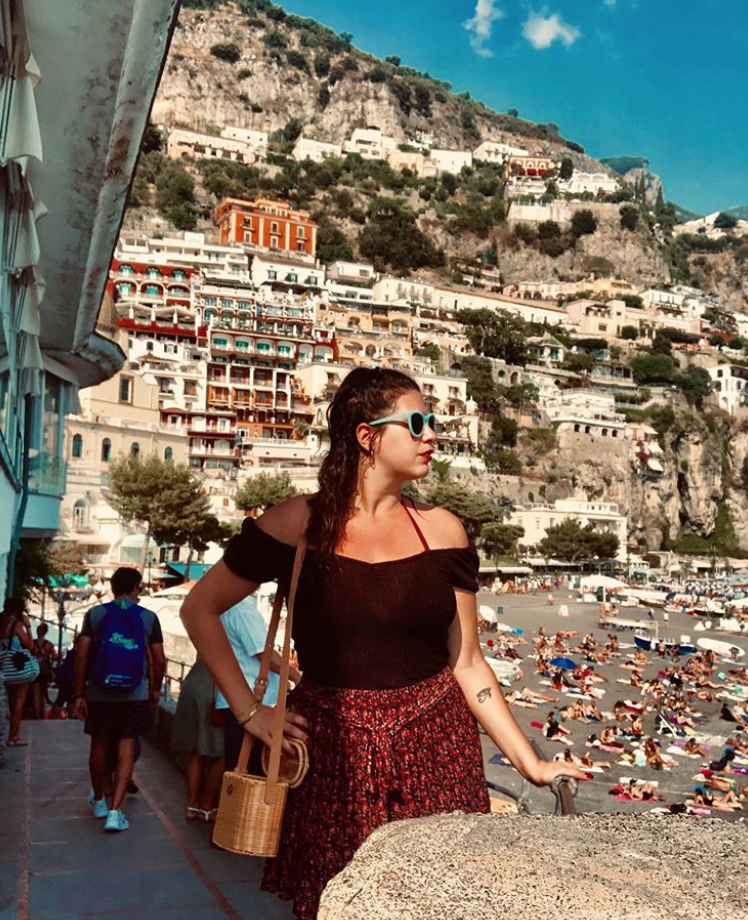
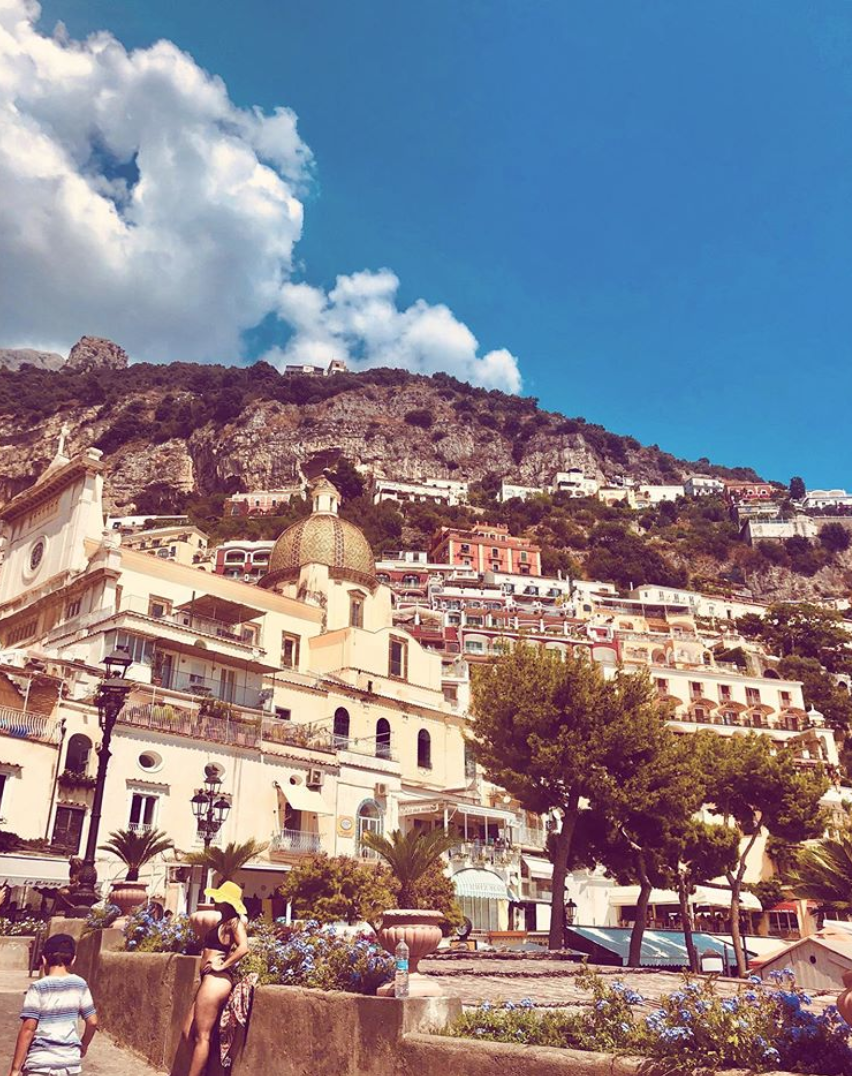
Positano

Positano

I feel sometimes I am a ghost. Liminal, floating through the world, eating the world around me — media and fashion and ideas that are not my own, not aligned with my values or my traumas or my soul.

I am out of time with my own soul. I am in 2020, but my heart is in the ocean eternal. I want wind and shorelines. I want fairness and justice. I want to experience beauty without the billboards looming. I want to read a book in the sunlight, and see my neighbor have the same opportunity.

But my neighbors — and your neighbors — are dying, are being murdered, and our ecosystems are gasping in our wake.

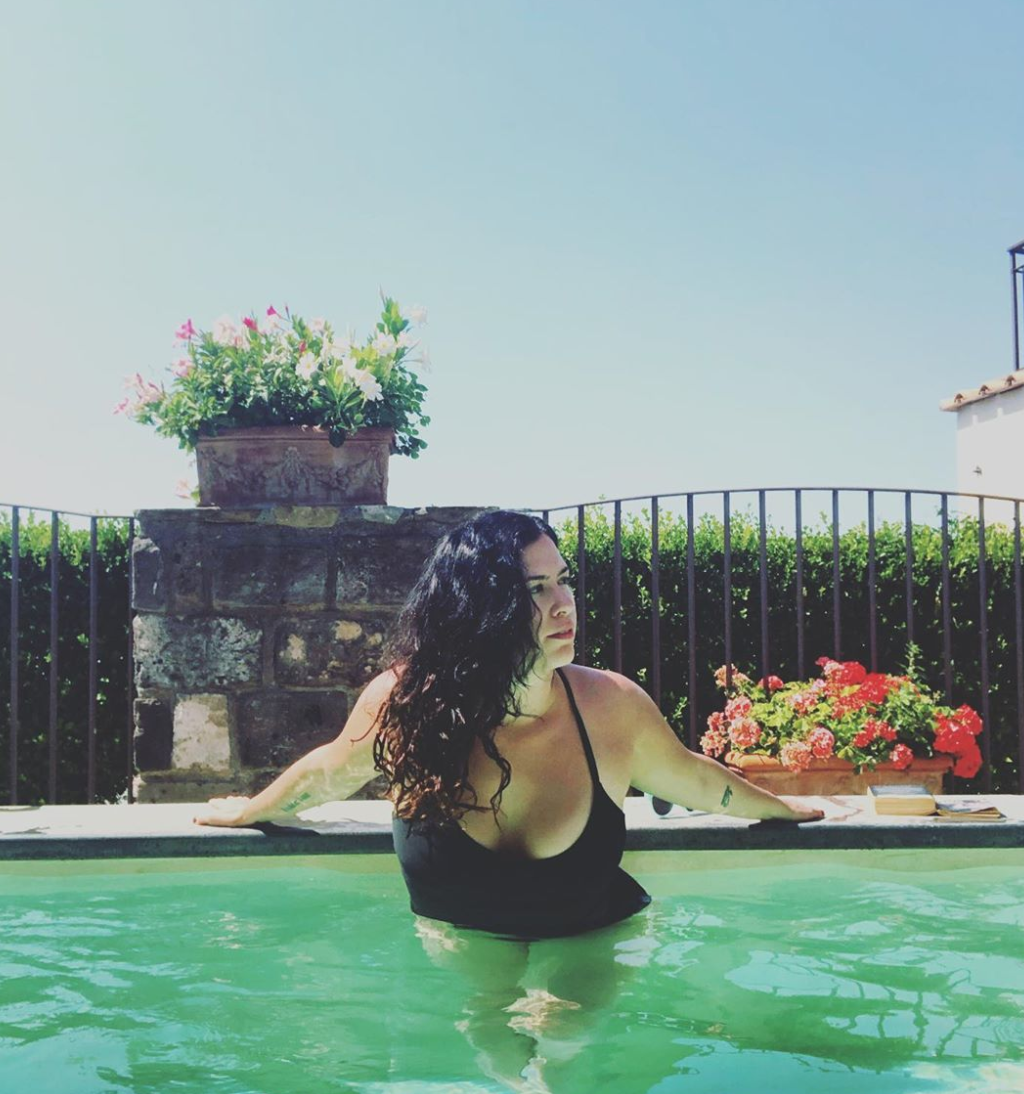
La Masseria Farm Experience

La Masseria Farm Experience

There are days that are so beautiful, so soft and real, that I have hope. These are holy days.

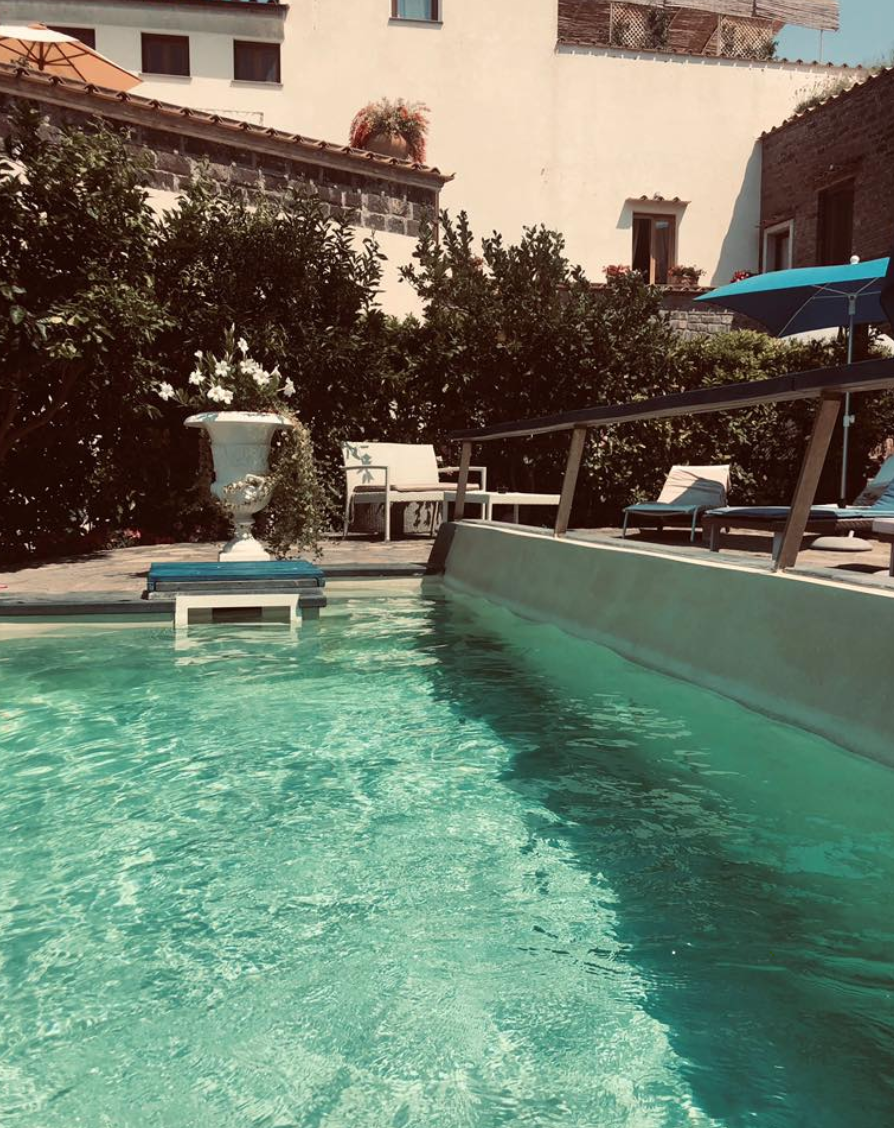
In Campania Italy, I have a holy day. I sit in a small stone pool. I think of the drive through the mountains from Napoli, where Pompeii stands, its breath held, looming over its land. How it preserved the stories of its people. I think always of what is preserved, what is lost.

But in the little pool, I am alone. The bed and breakfast is quiet. Tourists are out at Capri or Amalfi, the staff are napping during siesta, making pesto, somewhere else paying bills, talking on phones. I hear the hum of a generator, street dogs barking, the starlings that fly over me back and forth, definitely flirting.

Screen Shot 2020-06-28 at 8.44.54 PM.png

I whistle and they zip over my head. We are in conversation, I know it. The earth wants me to know it sees me, wants me to see it. I am here and nowhere else. I am completely alive. I am made for this moment; we all are.

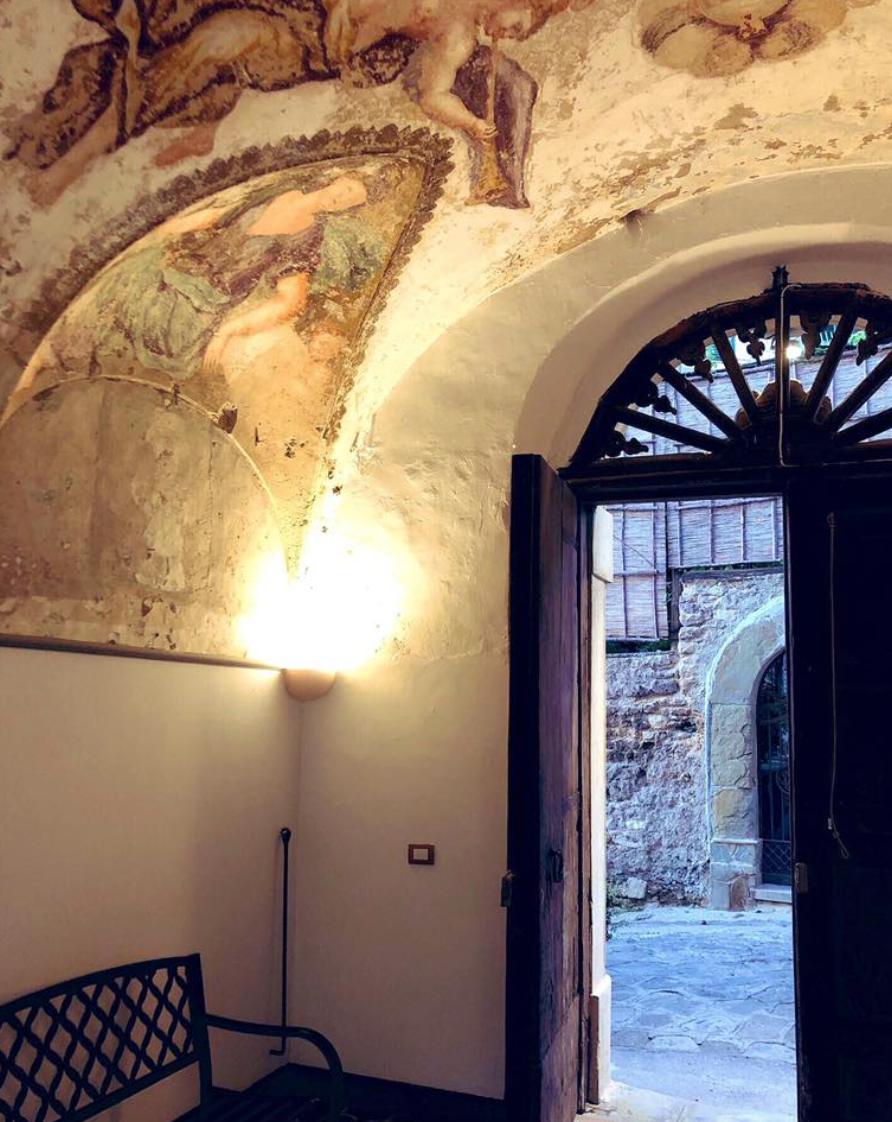
And after the late dinners of fried fish, I walk back to my room, alone. I am greeted again by the tiny birds who flutter in and out of the domed entrance, cherubs painted across the ceiling. I think of time and nature, and its concurrent obliviousness and suffering. I think of my privilege, and what I can do to preserve these stunning things.

I think of my body withstanding 100-degree heat. How I talk to the creatures in some liminal language of love. I think of how we could all be good to one another, so good that we could all have holy days.

I think of my flesh as the wine of this land. I feel the Mediterranean and the Tyrrhenian Seas in the palms of my hands. I am so alive and grateful and awake at the altar of these moments I cry for the nostalgia that hasn’t come yet, that I know I will feel. That I do feel. I am both past and present. But mostly, I am now.

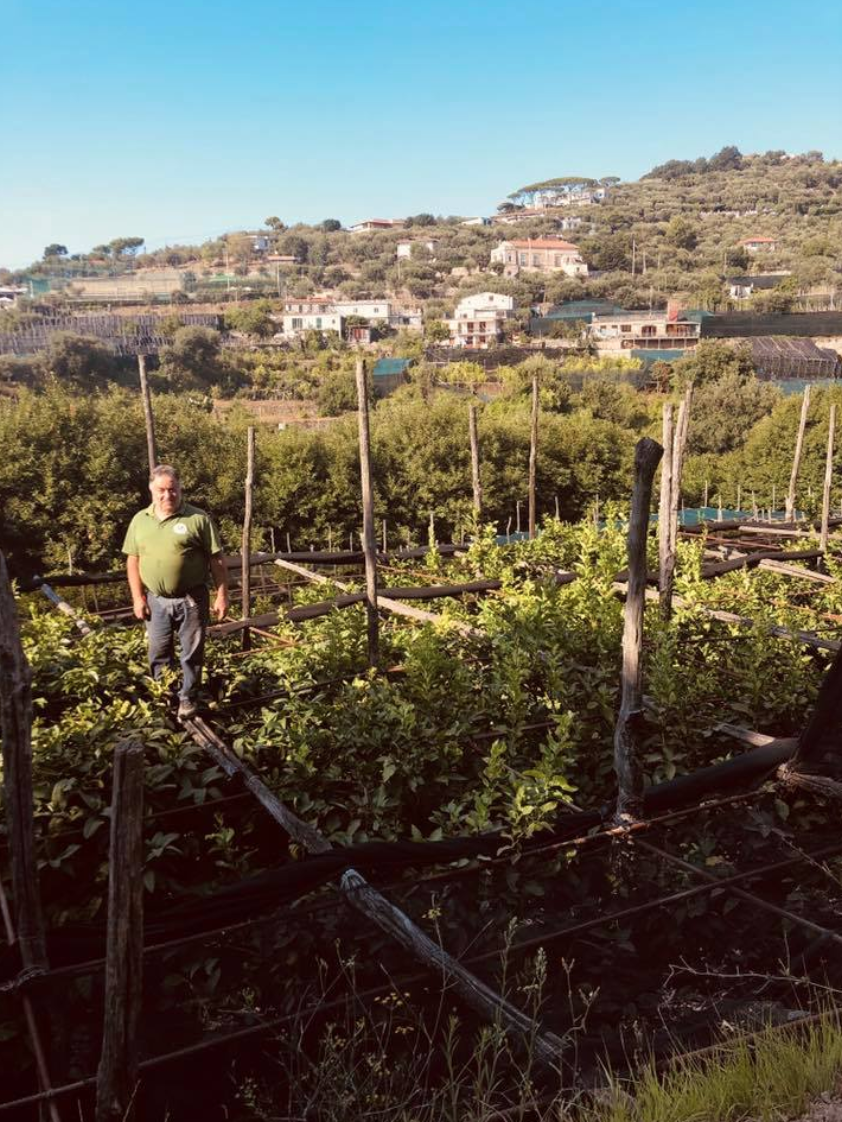
I walk up the road to a farm and am greeted by a family whose hands have nurtured and translated the earth for centuries. They climb the trees, show us the olives falling. We see the farm cats idle in their sunlight, their fur dotted in soil. They are languid in pleasure and warmth.

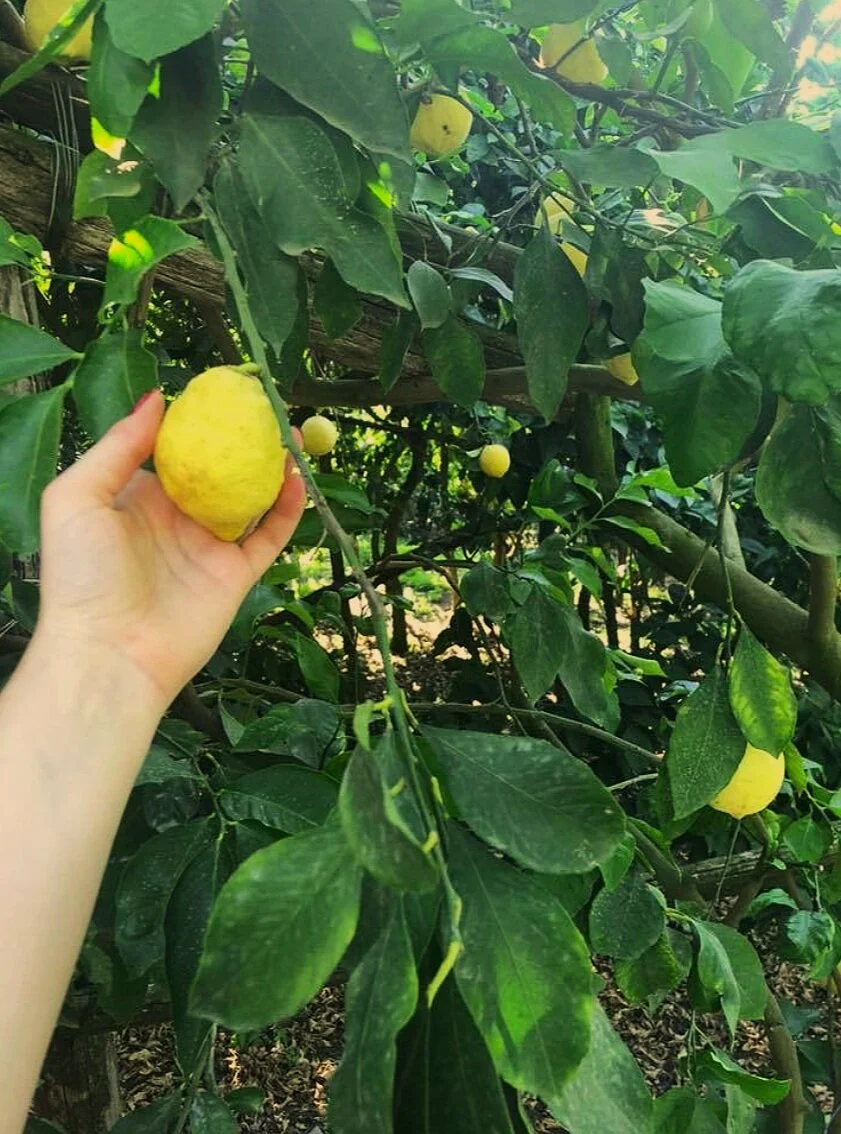
I lose myself in the lemon trees, smell their peels; I am blessed. I step into the cool room where they keep the jugs of Montepulciano and cured meats. A cry in ecstasy is somewhere within me.

After a long day of pasta made by hand and more wine and strangers inviting me to their table and then limoncello, I walk home to my room. I am drunk on the connection. I film the walk, then stop. I do not want to capture everything; some things just exist between me and the earth. I won’t share.

La Masseria Farm Experience

La Masseria Farm Experience

My room is called Parthenope. It is etched into the wooden door. When I open the door, that is the threshold, the portal. Parthenope is a siren who lives on the coast of Naples. I imagine her body clinging to the continental shelf, her hair entwined in shell. They say she threw herself into the sea when she couldn’t please Odysseus with her siren song. Or maybe a centaur fell in love with Parthenope, only to enrage Jupiter, who turned her into Naples. The centaur became Vesuvius, and now they are forever linked — by both love and rage. Is that not humanity?

She became Naples. She became forever. Her essence is water, is earth, is the mythology of what happens when people are cruel and jealous and oppressive. Is this the message the sirens are singing? To be tolerant? To normalize cruelty? To fill the void with empty media, with images without stories?

Lubra Casa

Lubra Casa

There is always something that could destroy us, could rid us of this existence. A virus, a volcano, our own hands.

We are temporary, so quick and light and flimsy. We are but a stitch of fabric. A dream within a dream of that fabric. And yet. Here we are, becoming the ancients, carving out a way toward the future. We visit volcanos. We mythologize the earth. We drink wine and capture beauty. But then we turn our backs — on the proverbial garden, on one another, on our own bodies.

What if the earth is asking us to be better? To be still? What pose would we hold? What shape could let all the light in?

LISA MARIE BASILE is the founding creative director of Luna Luna Magazine, a popular magazine & digital community focused on literature, magical living, and identity. She is the author of several books of poetry, as well as Light Magic for Dark Times, a modern collection of inspired rituals and daily practices, as well as The Magical Writing Grimoire: Use the Word as Your Wand for Magic, Manifestation & Ritual. She's written for or been featured in The New York Times, Refinery 29, Self, Chakrubs, Marie Claire, Narratively, Catapult, Sabat Magazine, Bust, HelloGiggles, Best American Experimental Writing, Best American Poetry, Grimoire Magazine, and more. She's an editor at the poetry site Little Infinite as well as the co-host of Astrolushes, a podcast that conversationally explores astrology, ritual, pop culture, and literature. Lisa Marie has taught writing and ritual workshops at HausWitch in Salem, MA, Manhattanville College, and Pace University. She is also a chronic illness advocate, keeping columns at several chronic illness patient websites. She earned a Masters's degree in Writing from The New School and studied literature and psychology as an undergraduate at Pace University. You can follow her at @lisamariebasile and @Ritual_Poetica.

In Art, Beauty, Wellness, Social Issues, Poetry & Prose, Place, Personal Essay Tags italy, lisa marie basile, social media, being present, earth, love, humanitarian issues, global warming
Comment
pumpkin-2912588_1280.jpg

On Trick-or-Treating with My Brother

October 23, 2019

Monique Quintana is a Xicana writer and the author of the novella, Cenote City (Clash Books, 2019). She is an Associate Editor at Luna Luna Magazine and Fiction Editor at Five 2 One Magazine. She has received fellowships from The Community of Writers at Squaw Valley, The Sundress Academy of the Arts,and Amplify. She has also been nominated for Best of the Net and Best Micofiction 2020. Her work has appeared in Queen Mob’s Tea House, Winter Tangerine, Grimoire, Dream Pop, Bordersenses, and Acentos Review, among others. You can find her at [www.moniquequintana.com]

Read More
In Personal Essay, Place, Poetry & Prose Tags Halloween, Personal Essay, Latinx
Comment
amalfi coast

Traveling Solo: Tips for Embracing Beauty & Smart Planning

September 16, 2019

BY LISA MARIE BASILE

I wanted to write this after I’d returned from solo travel — not right after, and certainly not during — because I wanted to make sure the insights I’m providing aren’t either totally obvious (“Google the location first!”) or incorrect.

Last month, I spent a little over two weeks in Europe alone. It wasn’t the longest trip I’d taken abroad, but it was the most notable in terms of personal transformation. In the past, I’d gone to Mexico on my own for a while as part of a volunteer group (no, not a missionary group!) with a group of global volunteers. I was alone — and the only American — but I was surrounded by people, so there was no sitting in my thoughts. I’d bunked with two young women from Seoul and one from Quebec, and we’d stay up all night chatting and laughing. I remember experiencing overwhelming pangs of loneliness then, but I was so young and so concerned with ‘fun’ that I let the night and my new friends whirlwind me away from my inner thoughts.

But traveling alone is so worth it, so empowering, so revealing. It goes without saying that solo travel is a journey in more ways than one. It’s a sojourn of place and self.

On this past trip, I spent a few days in a little green village just outside Windsor, England and then I took myself to Sorrento. I flew into Naples (where some of my family is from) and then drove the hour and a half into the mountains, up to what felt like the very top of a mountain in Sorrento, to a tiny bed and breakfast (converted from a 7th century church) in a silent commune. Where I stayed had just a chapel, a tiny market — where I’d by water, mortadella and lemon beer — and two small restaurants. If you closed your eyes where I stayed, you’d hear a few birds, a barking dog, and the chatter of a few people down the road. No bars, no centro, nothing.

Looking out, you could see only blue — never knowing where the sea stopped and the sky began. Only knowing that out there loomed Vesuvius, and if she exploded you’d never escape. There was one single road down the mountain and into Naples — much of it through mountains. Let’s just say it makes you think. And that was the entire point.

But onto what I learned during my solo travels…

View this post on Instagram

Cannot believe it was just a week ago I was in this fantasyland ~ that actually exists ~. I confess it; despite the beauty and magic, my Italian trip was not easy; I was alone and I fell into the well in my mind. I became weak and vulnerable. I witnessed my shadow in full force. I was unable to get out of my head, mostly at night, alone. But I’m grateful for when the daylight hit, when I watched the birds and swam; by day, everything shifted and I fell in love with every street and shoreline and untouched alleyway. I essentially wrote an entire book while there (my @clashbooks novella), rewriting huge parts of it — which take place in the exact place I visited in Italy. So, despite the cruel summery slog through my deepest and darkest thoughts and anxieties while traveling alone (we don’t give enough credit to solo fucking travelers), it was everything and more—transformative and illuminating and generative. Even if I dragged myself through long nights. My forthcoming @clashbooks novella is the product of my being holed up in an Italian room high up in the mountains, all alone. Did you expect anything less dramatic from me? . #travel #wanderlust #travelphotography #positano #amalficoast #solotravel #solotravelling #solotravelgirl @solofemaletravel @solotravelblazing @travel__etc @sorrentoitalia @sorrentovibes @amalficoast_italy #travelblogger #travelgram #wanderful_places #naturephotography #italy #italia #campania #writing #writingcommunity #bookstagram

A post shared by lisa marie basile (@lisamariebasile) on Sep 4, 2019 at 9:42am PDT

Cover the logistical basics first and never, ever make assumptions about anything

Before I get into what I personally learned, here are some foreign travel basics. If you’re traveling to any location — even popular tourist destinations — you’ll want to ensure that you understand cultural basics and prepare for logistical issues. You can still be spontaneous (like me) and impulsive and do your due diligence.

Accessibility

Are there accessible routes, travel options or places where you’re going? If you’re a wheelchair user, how friendly is the area? If walking is difficult for you, are there many steep hills or roads? Is everything cobblestone? Are the restaurants and churches all up steps?

Here are some useful resources for people who want to learn more about accessibility-friendly cities and countries for travelers: Curb Free With Cory Lee (here’s his list of most accessible beaches in the world, for example) Nomadic Matt, and Wheelchair Travel.

Diversity

Important for women, people of color and non-binary or trans individuals: How does the culture treat marginalized identities? Is it safe for you travel in the area, and if not, what steps can you take to ensure safety? This a good starting point and website regarding this all-important issue.

Getting around

Learn a little bit of the language. This helps immensely. Just get a translation app on your phone and don’t be a afraid of using it.

Register your trip with your embassy before you go. If you are American, you can do this here.

Do this location have Uber or Lyft? If not, can you catch a train or bus — and do the buses come regularly and show up at the spot they say they will? This came up a lot for me, so be prepared ahead of time. I recommended googling specific questions. I got most of this useful information ahead of my trip via forums like TripAdvisor and Rick Steves forums (most of the time you can simply Google the question, find the forum link and read it versus signing up for the forum). You’d be surprised what you’ll find when you do a little Googling. Someone somewhere took the very bus you think you need or traveled the same itinerary as you plan to.

if you have connecting flights, where do you connect? Is the terminal huge and are there usually short connections? If so, can you learn a little bit about how that specific airport works? Many airports are equipped to handle short connections, but some are notorious for causing passengers to miss flights.

If you’re going swimming, for example, can you find free or public beaches ahead of time? Most beach or coastal tourist areas will peddle pricier beach tickets. Is the free beach unsafe? (Usually, I’ve found that they’re not).

Are the footpaths near your bed & breakfast or where you’re traveling safe?

Health

Can you drink the water from the tap or in fountains?

Is there a nearby hospital? Do pharmacies offer medication (in Europe, for example, most people go to a pharmacy). Is there a service that sends doctors to your hotel or bed and breakfast?

If you use a special kind of medication — like a biologic that needs to be kept refridgerated, or, say, insulin — are there special pharamacies where you can get medication? This is especially important for longer-term travel.

Money

What kind of money does the country take? Where can you get it without getting charged an arm and a leg? One rule of thumb is that you’ll usually get the worst exchange rate when you convert money at your bank or at one of those airport money changers. Only convert smaller amounts if you’re going to. I usually use my debit or credit card to get a better exchange rate — so be sure to ask your bank about a card that doesn’t come with a wild foreign transaction fee. Some of these cards actually reimburse foreign ATM fees, otherwise you could be paying a good amount every time you withdrawal money. I’d really suggest googling this sort of thing ahead of where you’re traveling.

Oh, and be sure to let your bank know when and where you’re traveling. Being hit with a freeze while abroad is no fun.

Look into tipping etiquette for the country you’re visiting. It differs place to place and according to each service (car drivers, hotel staff, waiters, bartenders).

Cultural etiquette

This goes a long and includes issues of diversity, race, and gender — but it goes beyond that. What are some general customs that must be remembered where you’re going? What’s considered impolite or left-field? How do people see tourists from different countries? What sort of local behavior might you consider “rude” even though it’s perfectly normal? Knowing this sort of thing is helpful because we have to de-center ourselves when we travel. We can’t enter every country or culture with a myopic us-centered lens. Not only will it sully you’re experience, it’ll keep you from personal expansion.

An example: Although this wasn’t a major issue, I was made to cover my shoulders in many churches throughout Italy and Spain. Say what you will about modesty, shame, religion and all of the other stuff bubbling under that boiling surface, but knowing this before I arrived was helpful. It’s a custom that I had to understand and accept if I wanted to see the churches. Period.

View this post on Instagram

On the way to Amalfi and Positano we pass Li Galli, also known as The Sirenusas — an archipelago of little islands surrounded by cerulean water. This is where Ulysses’s sailors were sought out by the sirens, thought to be named Parthenope, Leucosia, and Ligeia. They played the flute, the lyre, and of course, they sang. Their story goes back to the 1st century, sang, and another played the flute. They are mentioned in the 1st century by the Greeks. I imagine them as women-mermaids, although the sirens were also depicted as having a bird body with human heads. . In my bed and breakfast I stayed in the Parthenope room, decorated in light blue, gold, and ivory, and of course, as a water sign — Scorpio — this was initiatory, a blood welcoming. A ritual of water and lineage. I am a siren, a descendent of Parthenope, perhaps? 🌊🧜🏽‍♀️ Parthenope sadly was said to throw herself into the sea when she couldn’t please Odysseus with her siren song. Her body was found on the shore of Naples, where my grandfather comes from. Other stories say that a centaur fell in love with Parthenope, but Jupiter couldn’t have this — and so he turned her into the city of Naples, while the centaur became Vesuvius. And when Vesuvius couldn’t have her love, he would erupt. . Virgil wrote that Parthenope nurtured him. 💧

A post shared by lisa marie basile (@lisamariebasile) on Aug 26, 2019 at 1:31am PDT

Connect with the local mythology & poetry

In Sorrento, I visited the Costa Amalfitana, and it was a land of mythology and story — and researching it helped me connect to the sky, the sea, the land, and the people. In my piece on my personal travel experience, I wrote that I stayed in a room called Parthenope, one of the sirens that sung to weary sailors (and to Odysseus, who was said to not love her voice). After that, she was said to cast herself into the sea and whose body would become the city of Naples.

This watery mythology carried me through my trip (especially as a water sign), also giving me pause to reflect on the rich history of place and the magic of the sea where I swam and daydreamed and played.

Connecting with the local mythology not only lets you experience the space on a more profound and deeper level, it can clue you into cultural behaviors and beliefs.

And please — find a book by a poetry from the region you’re visiting. I may be biased but I believe that poetry speaks the language of the people. It expresses the nuance of the land, the heart of its people. Poetry also shares what the textbooks, headlines, and tourist industries sometimes don’t. Poetry is war and sex and food and god and soil and the grittiest of truths.

Read more: Traveling To Italy Alone: On Ancestral Work, Fear, and Solitude.

Keep a journal of your experiences

There are feelings, moods, realizations and reckonings that can’t be captured on camera. There are things you won’t want to share on Instagram. There are late-at-night ideas and feelings you’ll want to better understand later. Often time, as I say, a place slices a piece of you and keeps it for itself long after you leave. That shedding happens without us noticing it, but we get glimpses of it from time to time — and all of that is worth writing down. That moment of sorrow or loneliness or fear or exhilaration or pure and total elation? All worth capturing in your own words. A place sometimes becomes more and more real after we leave it; your notes and written memories may help you decide what that place really meant when you were too stuck within the eye of the storm to really decipher it.

Be open to chatting with the locals and other tourists, but know the difference between loneliness and being alone

One of the things I learned while traveling is that i frequently thought I felt “lonely.” I was alone, yes, but I wasn’t truly lonely. I think of the generous Italian family who made me pasta and invited me to sit with them at their family table when I arrived to my bed and breakfast during siesta — without any food and no place to go to eat. I think of the Irish family who had me sit with them during a visit to a local farm at which we were plied with pasta and wine after the tour. I think of the English tourists who gave told me the best spots to see in Capri as we jumped into the sea during our boat tour. I think of the sweet young women who waited on me every night at one of the two restaurants on our little hill — who, by night three, practiced their English with me and let me speak to them in Italian. I think of the time we broke down on the mountain side coming back from Positano. I was with a group of Spanish tourists who cracked a few beers and chatted with me about global politics (and then offered to buy my book!) as we waited for a new car to pick us up.

How beautiful. Talk. Ask questions. Introduce yourself. Be open and receptive. The world is an empathic and naturally generous place if you show some vulnerability.

Be present

Listen to the birds. To the wind. To the sea. To the traffic. To the dialects. Listen to your own heart beating. Try and take a few moments each day not to experience everything and collect as many tourist stops as possible, but to be inhabited by and inhabit the spirit of the location. Let it seep into your blood and change you. Breath into the country and keep it there. All the spreadsheets and photos and Instagram poses won’t matter years from now. What will matter is how you remember the light, how the wine ran through you, how the birds seemed to follow you wherever you went.

Set an intention for your trip

Even if your intention is open-ended — to learn something new about yourself — an intention can turn your trip into a ritual itself. Acts of exploration, waking up, talking to new people, traversing new roads, trying new wines or foods all become sacred, parts of a pathway toward your intention. My intention for my last trip was to write — to get into a space where I was fully inhabited by peace and free time and my purest sense of self. And write I did — I finished my Clash Books novella. Somehow. Travel is magic.

In Place, Lifestyle Tags travel, solo travel, italy, sorrento, lubra casa relax, costa amalfitana, positano, amalfi coast, traveling, world travel, travel tips
Comment
lisa marie basile italy

Magical Water, Ancestry, & Shadow Work In Italy

August 26, 2019

BY LISA MARIE BASILE

I came to Sorrento in Campania, Italy for eight days, alone. Actually, I’m writing this from the balcony off of my room during the golden hour, when the pink and white flowers and the ivy vines are drenched in a soft honey-colored light. God’s filter. The cosmos’ generous reminder that Earth is perfect without us. But the Italian people surely make a strong argument; they are one of the world’s maestros of splendor and creation. From their frescoes to the delicate placement of flowers wherever and anywhere flowers can grow, the Italians understand the holiness of not only aesthetics but intentional living. 

So, in the land of the sirens, as the Sorrento coast is known, it is no surprise that I — without a true understanding of what I would embark on — fell well into the depths. Perhaps you can blame it on my elemental nature; I’m a scorpio whose language is cthonic. I crave the long hours of confession and exploration and transformation. 

Before Italy, I’d been in London alone — in quaint Datchet, a village just outside London, technically —  for three days. So for 11 days, I’d been in relative solitude, save for ordering a pint or cobbling enough Italian together to purchase a boat ticket. 

View this post on Instagram

A post shared by lisa marie basile (@lisamariebasile) on Aug 26, 2019 at 1:31am PDT

As a gift to myself for finishing my forthcoming book, The Magical Writing Grimoire (2020), I booked a holiday to Italy, on my own — to write, to dream, to swim in the cerulean sea, to see where my blood comes from.

But as I would learn — when night fell here in Italy, it fell hard, and without a soul to speak to on my own (in this six-room church-turned-bed and breakfast tucked high into the mountains) I felt a transformation take place.

Into the depths 

For some, eleven days of solitude is doable, desirable even. But for many, it’s not. It is a sentencing. It isn’t that I crave silence. On the contrary; I fear it — especially coming from New York City. It’s that I needed it. There’s a difference. 

If I could not quiet my mind, if I could not disappear from my life, how could I truly know what it meant? What could I learn from the other side of my life, where my own body is my only anchor?

As creators — writers, leaders, artists — and as humans, we rely on a kind of sustenance. You pick the poison. We need to drink it, inhale it, dive into it. For me, that bread and wine is light and space, solitude, apart-ness. A certain relinquishing of comfort. I needed to be challenged, far away from the myself and the places I knew. I felt a restlessness growing in me that demanded a sequestering. 

For the longest time, however, my weaknesses have found the form of a fear of abandonment, the need for (but fear of) quiet, and lack of control. It comes from trauma and it comes from knowing that around any corner I might fall into the abyss of self. Thinking too much. Add a little wine, and I’m fucking gone.

But in being alone, I have faced my demons. I have named them. Here in Italy I’ve abandoned what I knew to be comfortable and safe. I felt, in some moments, far into the mountains in this isolated commune high above the more populated Sorrento coastline, that I abandoned myself. What were you thinking, I asked myself at least once, coming here alone, for all this time, without anywhere to go on your own? There are two restaurants down the road, a market that closes for siesta, and winding streets of farmland that cannot be traversed by foot.

I’d abandoned a sense of control. First of all — traveling abroad is not like going to the cinema alone or sitting awkwardly, fidgeting during a solo dinner. The end point is not soon. The awkwardness is replaced by a small village curiosity, a light that shines on you and is hot and is real. You begin to see yourself as the subject. But you realize the ego is a type of demon you must drag out to the little square and send off on its way.

But more than noticing my aloneness, control issues threw me into the sea. I could not control the inevitable surprises, which came in the form of car breakdowns, missing boat rides, nearly fainting in 90-degree heat. Walking up hundreds of steps, on a cliff, just to get to some semblance of where other people are. 

And of course, the quiet. The heavy quiet that pools in like a ghost, under the door and through the shutters, at night. The quiet that tells you how far you are from everything, how many hours you have until sleep finally settles in. What of the anxieties and rogue feelings of sadness? They are there, a chaotic circus of them all, prodding you, reminding you how far up the mountain you are — without a car nor a means of leaving. When you look out the window, you see Vesuvius. 

You think of your body as ash. 

But isn’t this what you came for you, I asked myself. Isn’t this what we all want? In life, we are forced to move through our traumas — things that have happened to us, things that have been done to us. We carry our wounds as an albatross, even if we aren’t aware of it. And life has dealt us all a heavy hand. 

In my day, I’ve seen, either in myself or in my family, foster care addiction. I’ve seen chronic illness and death. I’ve seen poverty and I’ve seen prison. What are your wounds?

Why would I willingly stoke the flame after survival? Why I let myself be lured by sirens?

In some sense, choosing to be uncomfortable and choosing to work through the quiet is the lesson. It is a pain that I didn’t quite expect in coming alone to a faraway country without a friend or anyone to speak to. But it wasn’t the pain of place. It was the pain I brought with me.

I was the hurt. I brought my fear. I brought my anxiety. Italy didn’t do this to me. There’s a certain shock in realizing that. And a definite freedom.

li galli islands

Solitude & loneliness are not the same

I felt so alone on so many nights, an aloneness that was less about not being near people or places and more about my individual decision to fly 4,000 miles from home. How the gift of autonomy comes with a solitude that must be understood and appreciated, rather than feared.

How we are, ultimately, alone.

But being alone is not the same as loneliness. The people in the market, the people in the farms plucking lemons, the people who make me limoncello, the people who steer our boats from island to island, the people who direct me to the nearest whatever it is, the tourists who see me sitting alone and ask me to dine with them — there are people everywhere, and that is a treasure. Those small slivers of conversations are a reminder that we are alone, but we don’t have to be lonely.

The earth sees you. It wants you to be here.

One night, I texted my father for help. The loneliness followed me up the little hill when I walked back from dinner. My father, Italian as they come, served many years in prison — and weeks in solitary. I felt silly asking him for him, but I knew he’d understand what solitude could do, and he said:

Always realize today is just one day. And tomorrow is a new beginning. A new opportunity to feel differently or experience different things. Don’t let your mind control your feelings. Think how lucky you are —being able to travel. And having people in your life that love you and care about you. You are never detached or isolated. The world is much too small for that anymore. Everyone is connected. I love you.

In silence, we grow. It reminds us that not only can we and do we survive, we are self-resilient when we willingly put ourselves in uncomfortable situations, when we decide to settle in and let the silence fill us with every thought and memory imaginable.

There is no way down the mountain. There is nothing but your own mind — and no matter how luxurious or beautiful the country or place you are in, we are all alone, bodies full of chemicals and traumas that demand we look them in the eye. 

Ancestral work is healing

My father’s family is Italian and Sicilian — at least his parents and great grandparents were. We have Spanish and West Asian ancestors as well.

I was raised in New Jersey with my Italian/Sicilian grandparents. My nonna, from Palermo. My grandfather, part Napolitano. I only saw Naples from the car, its hundreds of homes — colorful, scattered, boxy, so much laundry hanging you could see it from space. Many of its people are living in poverty, under the stronghold of a mafia, the Camorra. They say Naples is the realest city in Italian, a place that doesn’t afford any of the luxuries or predictable splendor of other cities. It’s hard and gritty and I have that in my blood.

My grandfather, Sabatino, whose family hails from this city — what must his family have done to get to America? What drove them out? What sort of assimilation problems did they have when Italians were considered dirt?

italy amalfi

My grandmother Concetta Maria came by boat — you can see her name on a ship’s manifest, along with her sisters, one of which fell so ill she had to be taken to the hospital upon arrival in the port of the United States. She told me once about the blackshirts, Benito Mussolini's men, wandering around as she sat under lemon trees.

She spoke Sicilian, my grandfather spoke an Italian dialect. They made fun of one another’s language. When they came here, they didn’t teach any of their seven children Italian or Sicilian. They forced assimilation in the household, as many immigrants do.

In any sort of ancestral work, you aim to understand your bloodline. In my case, my grandparents were relentlessly catholic, deeply disappointed in many of their non-catholic grandchildren — me — and generally chose favorites. Some were favored, coddled, loved. Near the end of my grandmother’s life, well into her 90s, she made me cake, presented me with a rosary, made a sort of apology. 

I’ll never forget it. She pulled a long lock of black hair from a box and wielded it over the dinner table. She kept her hair, as if to keep her youth, her vitality.

To this day, my black hair reminds me of her. I care for my hair — wavy and coarse and wild — because it is Italian hair. It is my own. 

And on this trip, when I boated from Sorrento to Capri, I thought of them, of their struggles, of how hard they worked to make a life for themselves. Where they failed and how they loved. How they made my father, the artist and musician and poet, and how he made me.

I dove from the small passenger boat into the deep emerald-green water. I was submerged quickly, lungs full of salt water so thick and fast that I gagged. I swam back to the boat’s ladder, frightened, and out of control. But I caught my bearings and swam again. The sea wanted me to know her.

This was baptismal. Swimming in the waters of my blood, my body fully cradled by the earth’s watery womb. Towering island rocks loomed over my head. I was being tugged on by the ancient ghosts of time, my ancestors saying hello, my ancestral land showing me its gusto and bravado. And its softness. In the water a sense of home came over me, no matter how scared or foreign I felt.

I was there because two people, at some point, made love. And they lived here, and they fished in these very waters, and then their children had children. And someone, some girl, me, came back — in search for something.

There is a photograph of my grandfather standing at the water’s edge, birds flocking all around, his black jacket strewn over his shoulder all casual, as he looks back at the camera from afar. It is so blurry you couldn’t make it out entirely, but it is on the prayer card from his funeral, so we know it’s him. You could make him out anyway — his deep golden skin, his firm stance. 

He was a fisherman, and my father is a fisherman. They spoke the language of water. They understood and understand water in their very nature.

 And now I speak it too. Born of a water sign, obsessed by the depths, I am called to the sea by sirens.

positano

Parthenope, the siren of Naples

At my bed & breakfast, my door is labeled in gold: Parthenope. I only remotely knew of this siren, that she was one of the many who lived on the coast of Sorrento. But I was not expected to know her so well.

On the way to Amalfi and Positano one day, we pass Li Galli, an archipelago of little islands — Gallo Lungo, La Castelluccia, and La Rotonda— surrounded by cerulean water. These islands are also known as Le Sirenuse, where Ulysses’s sailors were sought out by the sirens, thought to be named Parthenope, Leucosia, and Ligeia. Of course, sailors would crash in wild waters against these jutting rocks, only to blame the voice of women for their misfortune.

The sirens, aside from singing, played the flute and the lyre, instruments which glide on the wind with a sort of frenzied beauty. The siren stories goes back to the 1st century, when Greeks told their tales. I imagine them as mermaids, although they are also commonly depicted as having a bird body with human heads.
.
My room, the is Parthenope room, is decorated in light blue, gold, and ivory. Of course, this was initiatory, a blood welcoming. Upon first entering, I fell into a deep rejuvenating sleep, lulled by some song, some sustenance from ancient times.

My dreams were of water and lineage.

When I awoke, I felt I’d become a siren, a descendent of Parthenope, perhaps, someone who understood the sea. And, while we’re at it, can bring sailors to their deaths.

The legends — and there are many — say that Parthenope was said to throw herself into the sea when she couldn’t please Odysseus with her siren song. Her body was found on the shore of Naples, where my grandfather comes from. Other stories say that a centaur fell in love with Parthenope, but Jupiter couldn’t have this — and so he turned her into the city of Naples, while the centaur became Vesuvius. And when Vesuvius couldn’t have her love, he would erupt.

Parthenope taught me something — that even in beauty there is darkness. It is up to you find the light. You can find it on islands, and you can find it in yourself.

But there is so much I don’t know. There is so much I’ll never know. For many, the mystery of lineage is a wound. A forced removal of information. A wound of colonialism and genocide. A nothingness. An end of the line. 

For me, it’s the fact that my ancestors were disappointed that I wasn’t more Catholic, that my parents hadn’t stayed together. That they didn’t pass on their language.

My ancestral work, I’ve realized, is accepting that I can still come from a place, still be of a thing, still call upon the past, still devote my life to exploring my blood — even if my family wasn’t perfect, even if I wasn’t catholic enough in the eyes of my grandparents. Because ancestral work is so much bigger than everything we understand.

My ancestors tell me to find gratitude in being alive, to look out and see the sky and sea, to find magic in the city and the thousands of doorways and street signs — and to keep looking for Synchronicity. To always keep your eyes and ears open. Messages find their way.

How many of the ones of who made me plucked lemons? How many of them swam in the shore? How many of them drove through the city streets of Naples, or down the mountains in Sorrento? How many of them stopped and prayed at the very churches I photographed? How many of them built cities with their own hands and brought culture to America when they came? How many of them stayed in Italia?

The sheer fact that life moves onward, rolling as water, a siren song that continues — and how lucky it is that I get to breath in this existence? That is my ancestral work. 

What have you learned on your travels? It doesn’t need to be far to be meaningful.

positano

A place always reveals itself long after you leave


Tonight, my last night, the air feels quieter. The dark feels more expansive. The room feels emptier. As if the fullness of my adventure has come to a close, and I am just waiting departure. As if my body has left already, but some essence of me stays. Sometimes this cutting off hurts. You can’t place why, but it does. The places we go, especially those we were meant to see, feel the vibration of our leaving as much as we feel them fade into the distance. That’s the cord.

Of course, once I leave, this place will become more real to me — more beautiful, somehow — than it was when I was there. The greens will be the most green. The curtains will always be swaying in my mind.

What I will remember isn’t the long nights or anxieties, the running from terminal to terminal or the breakdowns in language. I’ll remember the way the sun melted into the ocean. I’ll remember how the Italians are late even to toll their own bells. I’ll remember the way the skipper looked when I thanked him. His golden body sweating from long days carrying bodies to and from the coast lines. I’ll remember the long siestas and the open windows and the dogs in the street.

I’ll remember how quickly my room filled with light when I opened the shutter even a little. How much the light wants to get in. How we must let it. How we owe it to our lives, our fears, our wounds, and our ancestors.


Lisa Marie Basile is the founding editor of Luna Luna Magazine, an editor at Ingram’s Little Infinite, and co-host for the podcast, AstroLushes, which intersects astrology, literature, wellness, and culture. She regularly creates dialogue and writes about intentionality and ritual, creativity, poetry, foster care, addiction, family trauma, and chronic illness—particularly Ankylosing Spondylitis, a disease with which she lives. Most recently, she is the author of LIGHT MAGIC FOR DARK TIMES (Quarto Publishing/Fair Winds Press), a collection of practices and rituals for intentional and magical living, as well as a poetry collection, NYMPHOLEPSY (co-authored by Alyssa Morhardt-Goldstein). Her second book of nonfiction, The Magical Writing Grimoir, will be published by Quarto/Fair Winds Press in April 2020. It explores the use of writing as ritual and catharsis. Her essays and other work can be found in The New York Times, Chakrubs, Catapult, Narratively, Sabat Magazine, Refinery 29, Healthline, Entropy, Narratively, Catapult, Best American Experimental Writing. She studied English and psychology as an undergraduate at Pace University, and received a Masters in writing from NYC’s The New School. FOLLOW HER ON INSTAGRAM HERE.

In Place, Wellness, Magic Tags ancestral work, italy, sorrento, campania, travel, world travel, tourism, li galli, sirens, siren songs, solitude, Traveling, italia, naples, mafia, ancestors, magic
Comment
James Bostick

James Bostick

A Place of Atonement, Secrets, and Magic: Your Guide to Salem, MA

October 10, 2017

It’s a strange city filled with a mix of kitsch and magic. It’s also a pilgrimage spot or mecca for every single person who feels that they don’t "fit" within any societal molds. It’s a city of tourist-pandering exploitation with "witch city" cabs donning small decals of hook-nosed women flying past on brooms. This is off-putting to some. I see this as the bait to bring the common American to sacred ground, to look upon what we, as a country, have done to innocent people, what we still continue to do to innocent people, and force us to reevaluate the size of our hearts, to think about how we can better care for others. It’s a place of atonement and transparency. It’s working to love everyone better, and when you’re there, you’re forced to work on this too.

Read More
In Place Tags Salem, Magick, Witchy, Kitsch, Travel, Traveling, Tourism
Comment
Photograph by Mary Ann ThomasDescription: On one flight in the spring, I visited Denver for only a few days.

Photograph by Mary Ann Thomas
Description: On one flight in the spring, I visited Denver for only a few days.

Non Fiction By Mary Ann Thomas: Today, I Fly

August 8, 2017

I started to hate flying. It took me a few years to say those words out loud, but when I did, I started to believe them. I hate flying, I thought, and I became someone who hated flying. The girl in me who always took the window seat and who gazed outwards at cloud textures and Lego cities, who loved the pull of her body against the seat back on take-off, and who always talked to the stranger next to her, was gone. In her place was a woman who said, I hate flying, and couldn’t explain why.

Read More
In Place, Personal Essay Tags Mary Ann Thomas, Traveling, Travel, Anxiety, Creative Prose, Non Fiction
Comment

Waking Up — Live from Standing Rock, a Nexus For Global Change

December 5, 2016

“The prophecy said we would unite the people of the world . . . Look around,” Jamie continues, desperate with hope.

Read More
In Politics, Place Tags DAPL, Dakota Access Pipeline, NODAPL, North Dakota, Donald Trump, Oceti Sakowin, Oahe Dam, Sioux, The First Treaty of Fort Laramie, Indigenous peoples, Lakota, Black Snake, Black Elk, colonization, Activism, Police Brutality, Standing Rock
Comment

Don't Call Me Privileged Because I Travel A lot — And Let's Talk About "Mindset"

August 24, 2016

BY LISA MARIE BASILE

About a week ago, I was one of a handful of people on a ferry heading to a 16th-century palace on an island on Lake Maggiore in the Italian Alps. The next day I headed to Switzerland on a panoramic train-ride through the Alps. From there, I headed to The Gore, an opulent, infamous hotel in London right off Kensington Gardens. Life was dizzying, dream-like, and...on budget. 

If you would have told me years ago that I would see Spain, Italy, England France, Brazil, Switzerland and Mexico — sans anyone's help — I would have wept and told you that you were a liar. That you were expecting too much from little old me. 

For one, poverty raised me and poverty haunts me. It sticks, heavy and hard. It is palpable; it has a heartbeat and a texture, and it lingers like too much nighttime cigarette smoke in the morning. I came from food stamps and mattresses on the floor. I came from foster care, too-poor-for-yearbook-photos and taking "dollar cabs" with strangers to get to school on winter mornings. College wasn't any easier. I may have gotten in, sure, but I paid for it myself — same with graduate school — by going into immense, irrevocable debt. I am not alone in that decision. In any hard decision. And still, there are people like me, people who travel, being judged for their privilege. I can't count the number of times people have said, "Wow, you must be making great money." It's a passive dig. It's a commentary. 

The truth is that we, the well traveled, are privileged. It is a privilege and an honor to travel. Having extra money to travel — or to do anything — with is a privilege. Oneika, a travel blogger, wrote, "The truth is, those of us who travel extensively are blessed by life circumstances, not just a can-do attitude or 'positive mindset.' So when some of us proclaim how easy it is to traverse the world (and then go on to admonish those who don’t do the same because they 'aren’t trying hard enough'), we neglect to realize that our wandering is more due to luck than hard work and desire." And she's right. There are plenty of circumstances that get in the way. 

Still, the recipients of the privilege witch hunt are not always deserving. There's existential privilege (I am so lucky to have this opportunity) and there's plain-as-day Privilege (Everyone goes to Paris for the summer, right?) There's probably a lot of in-between there, too. But a line needs to be drawn between the person who saves up all their money to travel and the adult woman who flies to Europe on her parents' dime time and again.

There is a hugely disregarded grey area. An in-between that happens to be where most people I know exist. Most people I know work hard to travel. They save and they travel when they have enough. They use budget airlines. They have to take a hit. Sometimes it's not easy to bounce back from. 

It's no secret that I've had a "mindset" issue. A poverty mindset. Because poverty can be institutional as well as internal. Humans are burdened with self-doubt, crippling fear and self-sabotage — whether that results in never finishing college or over-compensating with clothes you can't afford or not asking for a raise. And those are all real issues — especially with regards to women and marginalized communities. And whether you started off poor or you're just slow to catch up as an adult, thoughts like I don't deserve this or I need to keep saving for the apocalypse are real. And they can be limiting. 

A friend of mine who never travels recently said, "I've just got to take the plunge and spend the money instead of assuming I will have enough one day." Because most people won't really have enough. 

In no way is a meditating over one's mindset magically going to score you a passport or a ticket to Laos, but for ordinary people, knowing that you deserve it and reframing the grandiosity of it goes a long way. 

As travel blogger Nomadic Matt says, "Years on the road have shown me that for many of us, our inability to travel is part a mindset issue (since we believe travel is expensive, we don’t look for ways to make it cheaper) and part a spending issue (we spend money on things we don’t need)." 

The idea of travel is also completely warped. It's not unlike most expenses — but for some reason, it's seen as extra cosmetic or frivolous. If you're comparing modern medicine to travel, sure; travel isn't nearly as important. But many other people consider travel a personal priority, just like others consider fitness upkeep or education — free or paid-for — a priority. There is, at times, misdirected blame when it comes to thinking about privilege. What we need to remember is that people aren't This or That. There is an individual story. We don't know what got them on that plane. 

In my mid-20s, I worked full-time through grad school while dealing with a chronic illness. I was downright poor, selling books for near-minimum wage at McNally Jackson by day while I studied at night. I also wrote really weird eHow.com articles for rent (hello "how to decorate a garden with wrought iron"). I didn't believe I could get a 'real job.' I didn't have a fall-back plan, nor did I have family to come to my rescue. I had no one but me. I was an actual trope. 

I worked very hard and climbed the ladder. I did this when I couldn't make ends meet, when I kept failing to pay my rent. I didn't want the struggle. But this isn't a pity party. This is just fact.

But not everyone has the opportunity to find a job — any job, really — and I recognize that. Mental illness, racism, chronic illness, disability and having kids can and do build a bridge between people and their potential. It's systemic, it's oppressive and it's a sickness that needs a solution. That is not lost on me. 

And a lot of people don't get to just work hard and have what they want. Some people work hard and can barely afford lunch. I know this because this is my family, and this is how I grew up. But I was fortunate enough to see my hard work pay off in some ways. I had to choose the ways. I couldn't have — and can't have — all the ways. Travel is one of my ways. 

I have struggled with privilege guilt. I have walked into my apartment and felt that dark, disassociative wave. This is not mine. It may be that I feel I don't deserve my successes. It may also be that it looks like abundance but actually isn't. It's a building in fancy dress, a building I don't really think I keep my things inside. It's a life that came with great sacrifice. 

And when you ask me how I afford to travel, I won't usually tell you that I don't have great savings, that I don't have a "plan," that I am my only keeper. I won't tell you that I don't prioritize saving for a home or buying the best health insurance. I do not prioritize clothing or concerts. I do not prioritize literary conferences or applying to prizes or residencies. 

When you see a photo of me lounging in a bed of flowers in Spain or drinking honey cachaca in Brazil, know that there are sacrifices. And when you see others on their travels, know that they have a backstory, too. 

But I won't be made to feel bad or apologize. These are my wins and I am proud of myself for rising above and working hard and overcoming self-doubt.

I am proud I put the beauty I envision first — not only because it feeds my creative work but because it is what my mother has always wanted for me. To be a part of the world she could never have been a part of. When I show pictures to her, when I promise to take her (and I will), that means something to me. She is my mother. I am her child. She wants all the beauty in the world for me.

It's a disservice to the many stories of sacrifice, hard-work, self-care and history to quickly assume everyone's travel experience is one of ignorant privilege or extreme abundance.  

To anyone who worked hard to see the sky or the stars abroad — and to anyone who is still working to make that happen, know that you deserve it. 

And for anyone who takes for granted their abundance and lucky circumstance, give back. You can't change your plentitude, but you can control how you behave because of it. 


Lisa Marie Basile is a NYC-based poet, editor, and writer. She’s the founding editor-in-chief of Luna Luna Magazine, and her work has appeared in The Establishment, Bust, Bustle, Hello Giggles, The Gloss, Marie Claire, xoJane, Good Housekeeping, Redbook, and The Huffington Post, among other sites. She is the author of Apocryphal (Noctuary Press, Uni of Buffalo) and a few chapbooks. Her work as a poet and editor have been featured in Amy Poehler’s Smart Girls, The New York Daily News, Best American Poetry, and The Rumpus, and PANK, among others. Follow her on Twitter@lisamariebasile.

In Place Tags money, travel, priviledge, career, guilt
1 Comment

A Vagabond's Notes: Italy, Singapore, India & Malaysia

November 30, 2015

BY SUPRIYA KAUR DHALIWAL

McLeodganj, India

I unhook my bra. No, I am not being nasty, nor I am getting ready to go to bed by getting off that elastic strap that claims to keep my pride upright. I am rather gearing up to retreat my pen to a sojourn that will lead it to some other sojourn and so on. Sojourns are important. They encapsulate the remains of my life and bury them into their unrevealed corners.


Like a good child, I sit on the passenger seat, introspecting, with my daddy behind the wheel. We drive through a maze of winding roads, shunted by moody rafts of a well acquainted river flowing underneath the gravel and on its sides. The car is sliding on an aisle skirted on a two dimensional model by pine trees. As the altitude rises, the forest that skirts the road starts to get thicker and the vegetation appears spookier on the sight of the dense spread of sky kissing tall deodar trees. After a few minutes, we reach at a town they call “Mini Lhasa”. We park our car. Its tires screech like my nails do when I rub them against the coins in my pocket. We walk to our favourite café and order our coffees. Double shot Americano and Latte. I watch two men sitting against the Dhauladhars, facing each other, staring into the nothingness surrounding each other’s face. I wonder if all their unspoken words diffuse in their mouths into that white thing that arose from their coffee mugs, which they try to swallow with their coffees. The pristine haranguing of the monks clad in maroon robes seeps in. “Om Mani Padme Hum” and other mantras, the syntax of which I fail to decipher. Infinite tourists have flocked up this part of the Himalayas to watch the summer die. They play with the prayer wheels. They don’t know what else to do. I buy a plate of thaipo and start walking towards my favourite bookshop to buy an Italian dictionary (which I will need badly in the coming days) and a book of poems by Rilke. Those tourists laugh at me. They think what I am eating is disgusting. They don’t believe how steam can cook this layer of bleached wheat flour. They perhaps need tandoors (clay ovens) on the streets too. I make a rhyme out of their giggling. I try to fit my words into it. Because I know I was going to find a new rhyme now, I let it escape me. I rather create space for a new rattling.

Salerno, Italy

“Buongiorno!”
“Ciao!”
“una tazza di caffé”
“Cafone!”
“Grazie!”

I didn’t keep a record of the number of times the hands of my wristwatch have moved in circles. Their position is still set on the Gulf Time Zone. There’s no vacant seat in this café I have walked in. The agitated Kosovan owner who speaks perfect Italian joins her hands, says “Namaste” and escorts me to seat near the sink where her husband sits and plays cello almost every evening. She knows I am an Indian. She read that on the conference tag hanging on my neck. I hear the espresso mugs crinkling in the sink. That’s the sound of Italy. I eat a slice of pizza with French fries licking the cheese on its top. I drink three cups of espresso. Ten euros. I pay the bill. “Come again!” she says in her broken English. I smile and nod.


I am amazed to see how these Alfonso Gatto poems painted on the walls of Salerno have become a part of me in just a few days. “La brezza del mio cielo“, I hum this verse like a six-year old who has just crammed Gayatri Mantra. It is my last night here. Limoncello has driven me sloshy. I walk on the lungomare. The path is straight. My mind has become linear too after walking on this straight line for a while. I buy a mint flavoured gelato. I find a bench. I sit facing the Mediterranean. I recall a couple of conversations from the day.

“Why are you not eating something?”
“I can’t write with a full stomach.”

“What do you do in your free time?”
“I eat ice-cream.”

I look for gelato cups and cones in the water.


Amalfi, Italy

The hills and the sea were so in harmony with each other that I couldn't refrain myself from taking back such scenes which would later remind you of the poetic sillage in the air. Not just that, those scenes will later echo the silent guffaw of this majestic panorama in my senses, known to me as something called saudade.


Pompeii, Italy

Only if roses could grow in my throat, I'd have let you water them and let them grow. Their thorns would have pricked my fattest vein, and the hardest yet translucent sheath of skin that let the sunlight in. Bouts of blood would have splattered, one after another and I'd have used that debris as fodder for my quill, to fill these sleepless nights with a few bloody words.

Your memory would have set those bloody words on fire. Bloody words dipped in gin ablaze with the burning memory of you. Nothing would have finished. Only the life would have been sucked out of everything as Mount Vesuvius evacuated life out of this land I am standing on, where roses refused to grow, proving that a temporary bout of light is nothing more than a jinx.


I often wish that travelling in two different trains at the same time was as easy as listening to two different songs simultaneously. The hissing of the engine and the rattling of the wheels against the track wouldn't differ much from each other, but the destinations would be unconnected and I could magically switch my final terminus. At times, the hassled mingling of two tunes or journeys is better than the ruckus of ruthless rigmaroles and all that palaver.

Destinations stopped fascinating me long ago.


Dear List(s), you've no clue how much I adore you! Numbered chores scribbled on a piece of crumpled paper- this is how I make a list. The serial numbers indicated against the to-do and already done activities; and the paper on which they get sequenced randomly get acquainted to each other in no time. I feel as if a supple power gets enclosed between them and every time I start reading out the things that I had written, that power starts unveiling itself and bounces back on me. This way, even the most gruesome things to-do get blessed and I'm actually able to do them. I've been making a lot of lists lately. If I had to make a list to introduce the kind of lists that I make daily, I'd need a scroll as long as the distance between the earth and the sky.

*makes another list*
*let’s hop back to Asia*


Damansara, Kuala Lumpur, Malaysia

Only if the Petronas Twin Towers could reflect some sunlight all the way into the empty spaces of the Batu Caves, only then I’d have been able to see some Gods inside. As I enter this poetry pub, I feel heady in the presence of so many travellers and artists and also by that pint of Guinness I just had. Dim lights. Red and black walls. Poetry. Poets. Books. Music. Records. I think I could shoot my own Dead Poets Society here. We step out. Tonight’s show just got over. The air has a whiff of goodbyes now. I know I won’t come here again until I have written the script for my version of Dead Poets Society. A Chindian poet is standing next to me. He is smoking what would be his third cigarette. I don’t smoke. He thinks I do because I have a trace of longing on my face. He thinks this is a longing to smoke a cigarette. But this is a sensation of starving for squids, roasting on an array of coal, producing a different kind of smoke.


Singapore

If the asphalt of these geometrical roads had ears, then Singapore would have had roads with elongated ears like those of some fairy tale goblin, stretched long enough to turn these roads into symmetrical alleys. The skyscrapers appear to stoop over the grey of this gravel and seem to erase all the freckles that would've otherwise continued to exist if there were no tall buildings to suck them all. There seem to be no freckles here. They're nowhere in sight. Not on the roads, not on the sky, not on the posters or sign boards whose language I fail to decipher. Days and nights seem to have created their own vicious circle because days are days and nights are nights, there's no swapping taking place between them. The heat and the haze are in harmony. They sprint hand in hand and hinder the panorama of this geometry savvy land. The tone of mixed dialects being hummed in the streets has a language of its own, the Singaporean slang perhaps, which has a room for Sanskrit, Chinese, English, Hindi and what not. The heights of these tall skyscrapers are fighting a battle, constantly trying to withstand the strength of the roots of their opponents. This place carries just a tinge of the memory of its past because it's always ready to knit and re-knit its future while it has kept its present garnished with every possible delicacy; just like we have smeared our bodies with so many varieties of dust, yet we pretend to have gotten rid of the dirt which accumulated previously and always look forward to cling to a newer, fresher kind of dirt.


Shimla, India    

It perhaps gets agitating when you're walking in the street of an Indian small town, enjoying the rain, legs drenched from feet to knees in ice cold freshly poured water and suddenly you spot a shameless man peeing in a puddle in which you were about to jump, just for the sake of having some fun. I guess I'll think twice before jumping into a puddle now.


The scarce light of setting sun gets filtered through the deodars, smears my head, highlights its dome of hair which gets browner by setting light's weightless patting, but this light refuses to touch my toes, hidden inside the layered mesh of my walking shoes. Sometimes you just can't get the best of anything.


While walking from my rented niche to my college this morning, I passed by a mother carrying a child like a gunny sack on her back, his legs couched on the sides of her shoulder like a scarf draped in a modest free-flowing way. I didn't look at them. My eyes were drawn somewhere else but my ears were plunged into their direction, the only source of sound in the pollen-ridden locale. The child was a pre-schooler, I think. He sounded like he was licking a lollipop when he over-enthusiastically asked his mother, "Mumma, ye din hai ya raat hai?" ("Mumma, is this day or night?") This made me ask myself too, if I was just culling out the dark from an unknown source, letting it hinder my light, putting it into my day, only to make my day, just another night.


If the entire world lit diyas together someday just like Indians do on Deepavali in India then I'm sure the aerial view of earth would be something like the night view of Shimla. It's such a delight- to stand on the topmost point in the city and look at the entire territory! It's as if these Lego houses have borrowed that incandescent luminous feature of the fireflies. I can make the outline of an entirely new map in this panorama of which this majestic Christ Church is the headquarter. You just can't miss this sight. It's even more alluring than the aerial view of Rome!


I am not a nyctophilic critter. I love lights. I love the blinding sun and the blazing fire. I even prefer to sleep with my lights on. But there are days when I tend to like the darkness more, not because the sun forgot to light the facets of my inner being or someone mushed my bruises with a dagger. Perhaps, I tend to like the darkness more because sometimes even the stars are enough to lighten my being. Sometimes, even a single glance of the moon peeping through the deodars can make me smile through my eyes. Sometimes, even a long walk in the night on a Shimla street can feed that dreamy realm of my mind.

"Pat! Pat! Pat!" My shoes rub the gravel underneath as I try to synchronize the sprinting thoughts that stab me with my turtle-like steps. My head turns right and I wonder how many dozens make infinite? Is there a word to name that unit? There should be, because that word would be synonymous to the amount of houses that my vision spots. Most of these houses keep their lights turned on throughout the night. Are they guiding that church which has occupied the tallest position? Are they reminiscent of that power or shakti which Lord Hanuman releases from his vault every night by standing upright in front of them? A tikki-wala is shallow frying a round potato galette in hot and whirling oil. Its aroma refuses to diffuse in the air. It rather knocks my nostrils and shoos away the cold that had settled there. "Choon! Choon!" The monkeys haven't gone home yet.

They have settled themselves on the branches which are adjacent to the road and are ready to gobble anything that the person walking by is unwilling to offer. I reach at a point where three roads diverge. The cars rush heavily from one of them. I know my destination for the day and hence I have to walk on it. A toddler is wobbling in front of me. His arms are waving wildly and his feet, refusing to nudge the ground. His small finger is locked carefully in the fist of an elder. The child's palm, thumb and other four fingers still hang unprotected. I wonder why his guardian has refrained from guiding them. A car coming from the front probably makes the two of them crinkle their eyes with the high intensity of beaming headlights. But wait! This creates a gradient of dark and light and a scintillating silhouette gets designed in front of me as if an artist has added a monochrome and cross process effect and has pasted that toddler and his guardian on the canvas of my eyes. I wonder if the person walking behind me gets allured by my silhouette. He will surely get allured only if he is capable enough of witnessing magic that vanishes even before you blink your eye. After all, not everyone attempts to see a rainbow in the night!

"Pat! Pat! Pat!" My shoes long to walk more but a dog barks from a terrace only to tell me that I am home. I wish this walk was longer. If this walk would have been longer then my dear reader, this small piece of mid-night scribbling would too, have been longer.


Supriya Kaur Dhaliwal is twenty, and currently pursuing her Bachelor of Arts in English Literature from St. Bede's College, Shimla. Born and brought up in the tea capital of Northern India- Palampur, she published her debut poetry anthology "The Myriad" when she was only sixteen years old. Her recent book poems, "Musings of Miss Yellow" was published by Authorspress Publications, New Delhi. She has spent maximum of life so far in the lap of snow clad mountains and green arenas and thus believes that it's the nature, the countryside that provides her the fodder for her pen and poems. Just like her thoughts, her poems have no genre. Movement is her muse and she has not stayed in a city for more than two months since she was sixteen. She loves reading and writing prose that reads like poetry. She's tired of people asking her what she wants to be when she grows up. She doesn't know what growing up means to them. She just knows she wants to spend her life writing and being a wayfarer. 

In Place Tags Travel, India, Malaysia, Italy, Amalfi Coast, Singapore
Comment
Featured
‘in the glitter-open black' — poetry by Fox Henry Frazier
'poet as tarantula,  poem as waste' — poetry by  Ewen Glass
'poet as tarantula, poem as waste' — poetry by Ewen Glass
'Hours rot away in regalia' — poetry by Stephanie Chang
'down down down the hall of mirrors' — poetry by Ronnie K. Stephens
'Grew appendages, clawed towards light' — poetry by Lucie Brooks
'do not be afraid' — poetry by Maia Decker
'The darkened bedroom' — poetry by Jessica Purdy
'I am the body that I am under' — poetry by Jennifer MacBain-Stephens
instagram

COPYRIGHT LUNA LUNA MAGAZINE 2025