• Home
  • indulge
  • new poetry
    • About Luna Luna
    • resources
    • search
  • editor
  • dark hour
  • submit
Menu

luna luna magazine

  • Home
  • indulge
  • new poetry
  • About
    • About Luna Luna
    • resources
    • search
  • editor
  • dark hour
  • submit
delicious new poetry
'the doors of the night open' — poetry by Juan Armando Rojas (translated by Paula J. Lambert)
Nov 29, 2025
'the doors of the night open' — poetry by Juan Armando Rojas (translated by Paula J. Lambert)
Nov 29, 2025
Nov 29, 2025
'we can be forlorn women' — poetry by Stevie Belchak
Nov 29, 2025
'we can be forlorn women' — poetry by Stevie Belchak
Nov 29, 2025
Nov 29, 2025
'I do whatever the light tells me to' — poetry by Catherine Bai
Nov 29, 2025
'I do whatever the light tells me to' — poetry by Catherine Bai
Nov 29, 2025
Nov 29, 2025
‘to kill bodice and give sacrament’ — poetry By Kale Hensley
Nov 29, 2025
‘to kill bodice and give sacrament’ — poetry By Kale Hensley
Nov 29, 2025
Nov 29, 2025
'Venetian draped in goatskin' — poetry by Natalie Mariko
Nov 29, 2025
'Venetian draped in goatskin' — poetry by Natalie Mariko
Nov 29, 2025
Nov 29, 2025
'the long sorrow of the color red' — centos by Patrice Boyer Claeys
Nov 28, 2025
'the long sorrow of the color red' — centos by Patrice Boyer Claeys
Nov 28, 2025
Nov 28, 2025
'Flowers are the offspring of longing' — poetry by Ellen Kombiyil
Nov 28, 2025
'Flowers are the offspring of longing' — poetry by Ellen Kombiyil
Nov 28, 2025
Nov 28, 2025
'punish or repent' — poetry by Chris McCreary
Nov 28, 2025
'punish or repent' — poetry by Chris McCreary
Nov 28, 2025
Nov 28, 2025
'long, dangerous grasses' — poetry by Jessica Purdy
Nov 28, 2025
'long, dangerous grasses' — poetry by Jessica Purdy
Nov 28, 2025
Nov 28, 2025
'gifting nighttime honey' — poetry by Nathan Hassall
Nov 28, 2025
'gifting nighttime honey' — poetry by Nathan Hassall
Nov 28, 2025
Nov 28, 2025
'A theory of pauses' — poetry by Jeanne Morel and Anthony Warnke
Nov 28, 2025
'A theory of pauses' — poetry by Jeanne Morel and Anthony Warnke
Nov 28, 2025
Nov 28, 2025
'into the voluminous abyss' — poetry by D.J. Huppatz
Nov 28, 2025
'into the voluminous abyss' — poetry by D.J. Huppatz
Nov 28, 2025
Nov 28, 2025
'an animal within an animal' — a poem by Carolee Bennett
Nov 28, 2025
'an animal within an animal' — a poem by Carolee Bennett
Nov 28, 2025
Nov 28, 2025
‘in the glitter-open black' — poetry by Fox Henry Frazier
Oct 31, 2025
‘in the glitter-open black' — poetry by Fox Henry Frazier
Oct 31, 2025
Oct 31, 2025
'poet as tarantula,  poem as waste' — poetry by  Ewen Glass
Oct 31, 2025
'poet as tarantula, poem as waste' — poetry by Ewen Glass
Oct 31, 2025
Oct 31, 2025
'my god wearing a body' — poetry by Tom Nutting
Oct 31, 2025
'my god wearing a body' — poetry by Tom Nutting
Oct 31, 2025
Oct 31, 2025
'Hours rot away in regalia' — poetry by Stephanie Chang
Oct 31, 2025
'Hours rot away in regalia' — poetry by Stephanie Chang
Oct 31, 2025
Oct 31, 2025
'down down down the hall of mirrors' — poetry by Ronnie K. Stephens
Oct 31, 2025
'down down down the hall of mirrors' — poetry by Ronnie K. Stephens
Oct 31, 2025
Oct 31, 2025
'Grew appendages, clawed towards light' — poetry by Lucie Brooks
Oct 31, 2025
'Grew appendages, clawed towards light' — poetry by Lucie Brooks
Oct 31, 2025
Oct 31, 2025
'do not be afraid' — poetry by Maia Decker
Oct 31, 2025
'do not be afraid' — poetry by Maia Decker
Oct 31, 2025
Oct 31, 2025
'The darkened bedroom' — poetry by Jessica Purdy
Oct 31, 2025
'The darkened bedroom' — poetry by Jessica Purdy
Oct 31, 2025
Oct 31, 2025
'I am the body that I am under' — poetry by Jennifer MacBain-Stephens
Oct 31, 2025
'I am the body that I am under' — poetry by Jennifer MacBain-Stephens
Oct 31, 2025
Oct 31, 2025
goddess energy.jpg
Oct 26, 2025
'Hotter than gluttony' — poetry by Anne-Adele Wight
Oct 26, 2025
Oct 26, 2025
'As though from Babel' — poetry by Fox Henry Frazier
Oct 26, 2025
'As though from Babel' — poetry by Fox Henry Frazier
Oct 26, 2025
Oct 26, 2025
'See my wants' — poetry by Aaliyah Anderson
Oct 26, 2025
'See my wants' — poetry by Aaliyah Anderson
Oct 26, 2025
Oct 26, 2025
'black viper dangling a golden fruit' — poetry by Nova Glyn
Oct 26, 2025
'black viper dangling a golden fruit' — poetry by Nova Glyn
Oct 26, 2025
Oct 26, 2025
'It would be unfair to touch you' — poetry by grace (ge) gilbert
Oct 26, 2025
'It would be unfair to touch you' — poetry by grace (ge) gilbert
Oct 26, 2025
Oct 26, 2025
'Praying in retrograde' — poetry by Courtney Leigh
Oct 26, 2025
'Praying in retrograde' — poetry by Courtney Leigh
Oct 26, 2025
Oct 26, 2025
'To not want is death' — poetry by Letitia Trent
Oct 26, 2025
'To not want is death' — poetry by Letitia Trent
Oct 26, 2025
Oct 26, 2025
'Our wildness the eternal now' — poetry by Hannah Levy
Oct 26, 2025
'Our wildness the eternal now' — poetry by Hannah Levy
Oct 26, 2025
Oct 26, 2025

The Hanged One Season, by Meg Wall Jones

October 6, 2022

BY MEG JONES WALL

The Hanged One Season


I don’t understand sleep: how it works, where people go, how anyone learned to travel in this manner. The closing of eyes, the quieting of mind and body, the ability to sink into that strange unknown world of mystery and memory, weaving souvenirs from our consciousness into tangled webs of sense and nonsense — it’s a skill I lack, a capacity for release that I have never been able to master. 
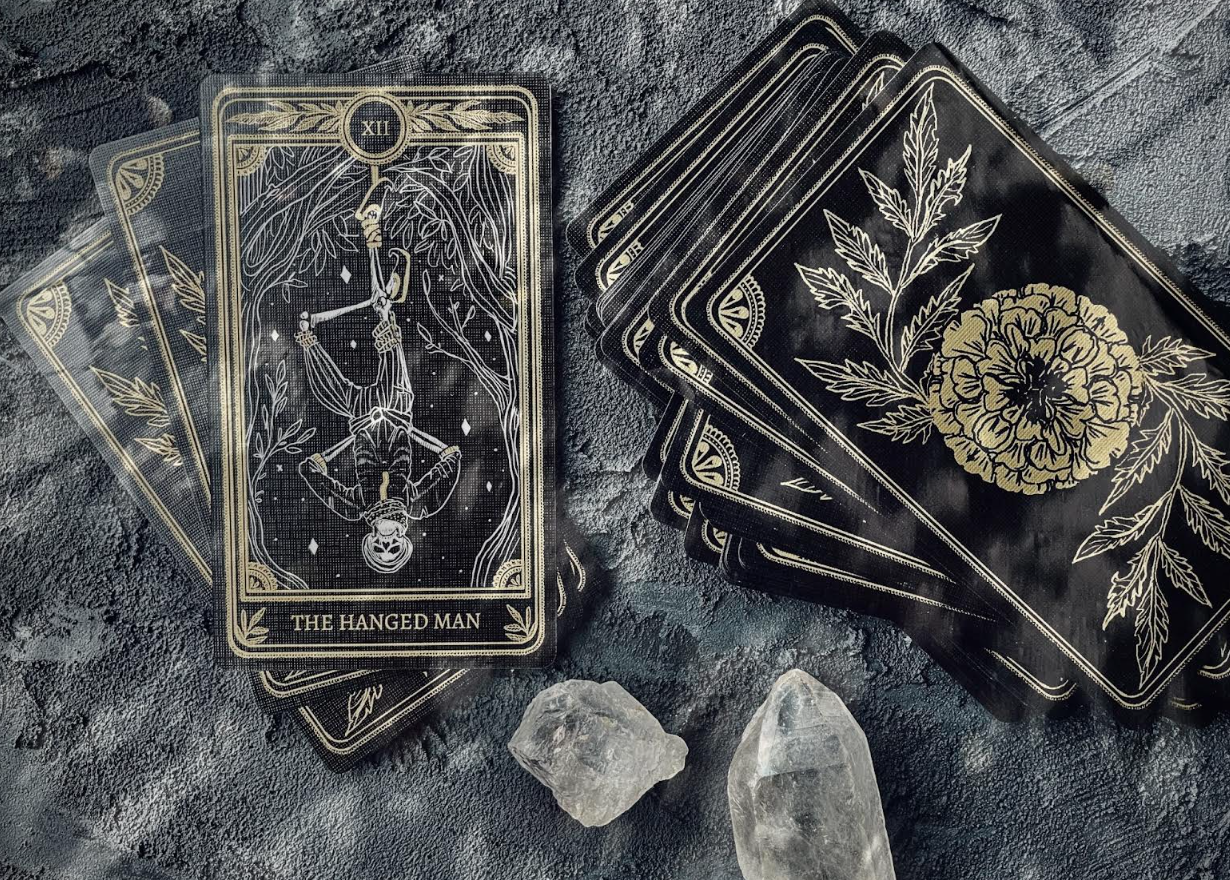
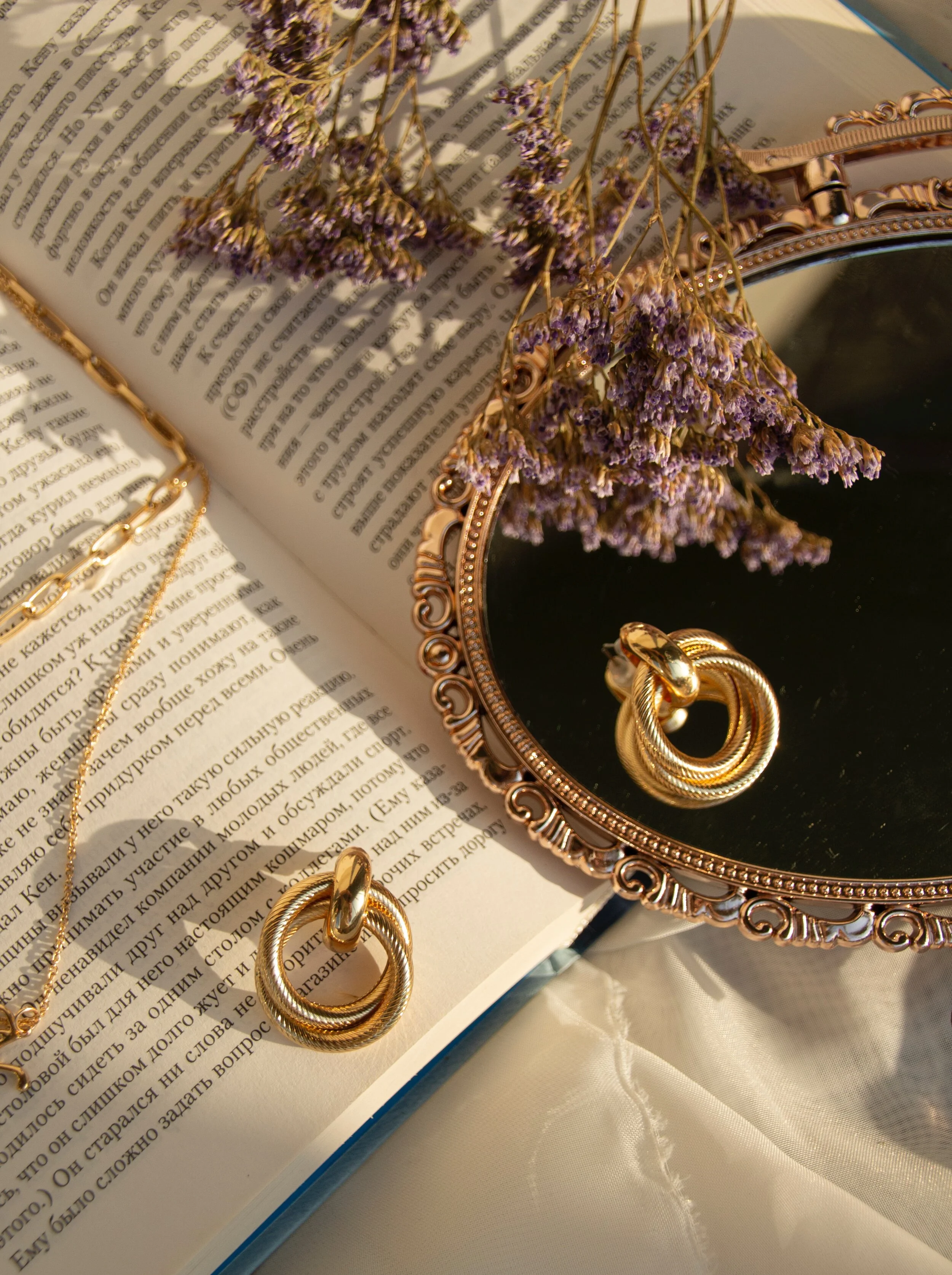
Photo by Meg Wall Jones

Sleep is a forced pause, a time of stillness and surrender. It’s a liminal space that still manages to feel commonplace for most; a regular part of daily cycles that provides comfort, recovery, clarity. Every night is an opportunity to slip into darkness, to find a gentle temporary death, to embrace liminality and adventure to far-off, unknown spaces within the self.

But most nights, I lie awake, alone, listening to sirens and alarms, the stirrings of the city outside my window, the side effects of so many people living in such a relatively small space. Most nights, I watch the stars come and go, the moon rise and fall, wait patiently for the sun to break the horizon and usher in a new morning. Most nights, I fail to find that strange, mysterious place, unable to reach the beckoning grasp of slumber and make my way into those shadowed lands.

Sleep doesn’t make sense to me. There’s no map to reference, no hand to hold, no path to follow. It’s just me and my insomnia against the eternal night, the twinkling stars and city lights, watching one another, uncertain of what to do next. Sometimes days go by before I find rest, before my body is so exhausted that it drags me under, before I stumble into that unfamiliar place and hope that eventually I’ll be able to claw my way out again.
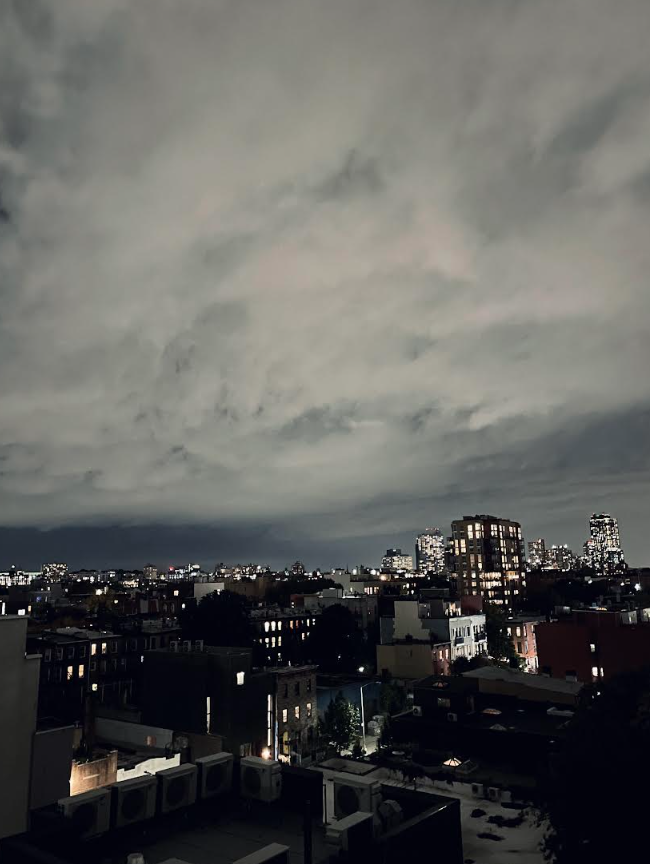
Photo by Meg Wall Jones

In autumn, when the veil is thin, when the shadows have lengthened, when the nights slowly gobble up the hours and greedily swell with excess, sleeplessness becomes seasonal. The heaviness and humidity of the air slipping into crisp coolness, leaves slowly rotting into spectacular decay, shadows thickening and loosening. It feels correct to bear witness to the longer nights, to consciously wander through thoughts and ideas rather than getting swept up into memory. The world feels restless and I can explore my own mysteries, can make my own liminal space, can serve as a guide for those who haven’t been to this particular crossroads before. We all hover at the veil together, contemplating how and when we will pass through. 

It’s Hanged One season, autumn: a time of sacrifice and release, an opportunity to let something wither in the most beautiful way so that new growth can eventually emerge. The Hanged One is a necessary, inevitable clearing; the pause before winter’s Death, the moment when expansion ceases, when we observe what happens when our movement halts and our effort stills. It’s the deep breath before hibernation, the slackening of muscles, the willingness to take brittle air into our lungs and let it simultaneously soothe us and wake us up. What have we been doing, building, becoming? What have we been working towards, and where does this pause land in our own personal cycle? Who did we used to be? Where are we being called to let go of a dream, a pursuit, a version of self? And what happens if we don’t give that thing up easily, if we refuse to surrender?

Autumn is for harvest, for celebration – but it’s also for slowing down, releasing, honoring. Winter may be the full stop, the recovery, but autumn hints at the bend in the road, gives us daily reminders to contemplate the slow rot and decay that surrounds us. All that blooms eventually returns to the earth, dust to dust, year after year. Whether we cling desperately to summer or welcome winter with open arms, we have no control over the cycle, the seasons, the change. Either way, we become the Hanged One, powerless and patient, silent, observing: waiting for whatever comes next, even if we already know what is ending.
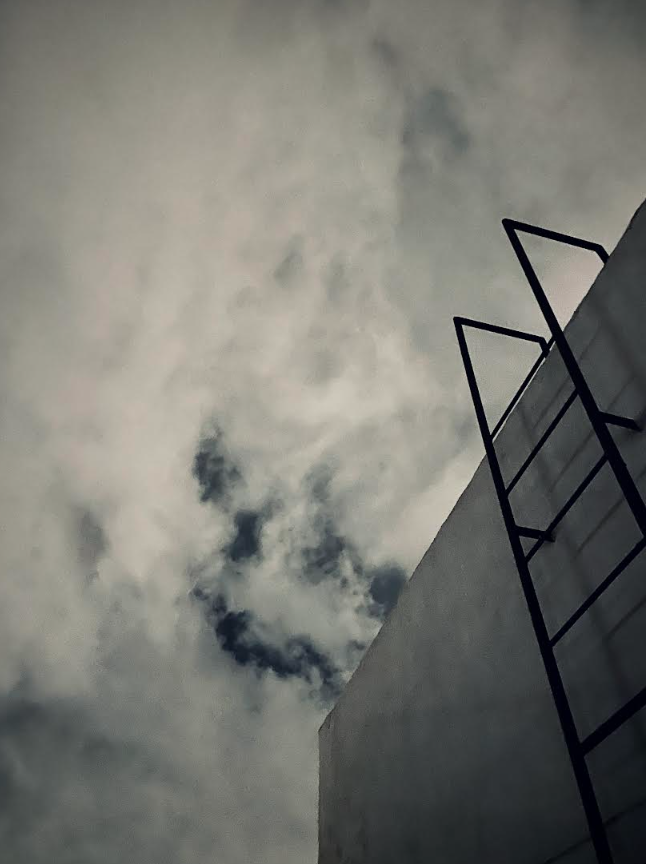
Photo by Meg Wall Jones

It’s strange but beautiful, not unlike all of those orderly, sleepy little deaths. Autumn isn’t bothered by our feelings or desires, our fears or uncertainties, and neither is sleep. It simply comes when it’s time, holds us in our waiting, lets us feel whatever we need to feel. Autumn lets us stand quietly, in awe of its power and grace, whether we’re ready to slow down or not.

Sleep, seasons, stillness, all feel out of my grasp these days. This strangeness that I feel every night when I crawl into bed, lying still, hoping that slumber won’t notice me creeping around the edges and trying to slip in silently, stealing a few hours of temporary death: it’s uncomfortable, difficult to define or describe. My mind and body, fighting a battle I don’t understand, unwilling to accept the reality of the Hanged One, wishing somehow to overcome exhaustion and live beyond cycles, beyond sleep.

Autumn reminds me that rebirth is always around the corner, that an awakening beyond the physical can happen at any part of the cycle, that giving up control can be a necessary breaking point rather than something to fear. 

Every morning, and every night, is a new chance to surrender. And perhaps this year, autumn’s shadows will help clear out my own.

In Poetry & Prose, Personal Essay, Magic Tags magic, tarot
Comment

Speaking con su Sombra: The Magic of La Poesia

November 2, 2021

Adrian Ernesto Cepeda is the author of Speaking con su Sombra published in 2021 by Alegría Publishing, La Belle Ajar, a collection of cento poems inspired by Sylvia Plath's 1963 novel, published in 2020 by CLASH Books, Between the Spine a collection of erotic love poems published with Picture Show Press, the full-length poetry collection Flashes & Verses...Becoming Attractions from Unsolicited Press and the poetry chapbook So Many Flowers, So Little Time from Red Mare Press. And, CLASH Books is publishing the much-anticipated poetry collection, We Are the Ones Possessed, in 2022.

Read More
In Personal Essay Tags Adrian Ernesto Cepeda, essay, magic, poetry
Comment

Slow Alchemy: 6 Ways To Live Magically

May 10, 2021

BY LISA MARIE BASILE

Welcome to SLOW ALCHEMY — a column for creatives, magic-makers, and dreamers. A space dedicated entirely to the pleasurable, soft, & intentional things we savor. For in-between moments and small breaks.

This is a space of joy. A space of pause. This is a space for process over urgency. For music and bread and memory. This is a space where creativity is divine and chiseled with care. A space where we watch the particles floating in the afternoon light — together. Take your time.

Magic is in and of everything; it’s the buttery afternoon light, the way the trees sway in a rainstorm, Saint-Saens playing from one room in your home, a shell sitting atop your mantle.

If spells are crafted with intention and action, how can we make our lives a living spell?

We live our lives swimming in movement: Long hours, families, ill bodies, work, chores, supporting community, creativity (if we’re lucky). We are expected to live both our physical lives and as avatars — calling toward the masses, trying to make meaning, trying to connect. On one hand, the magic is in the connection; on the other, the magic can be drained quieted, and harder to access through all the noise.

I’ve found — through immense trial and error — that magic is already in, of, and around us; sometimes it’s a matter of clearing away the proverbial, or energetic, dust to see it. Of course, life demands a lot of us. I realized, over the past year in lockdown, that my body was in Go-Mode at all times. I was always exhausted, guilty for being exhausted, and deprioritizing my magic and wellbeing in ways I hadn’t noticed until I made some time to return to them.

The reality is, we can’t live intentionally and magically every day, all day — but we can try to infuse our days with slow alchemy in small, sustainable ways.

It’s all bout going slower, going deeper, and tuning in.

Watch the moon move through the zodiac and write a poem about it.

The Moon is the palace of feelings and memories and emotions. It’s the dark mansion whose doors are often kept shut, but whose rooms hold a place of truth and power. Tuning into where the moon is at — the moon changes zodiac signs every 2-3 days — gives us a chance to feel certain feelings and tune into our emotional world through the lens of each sign. What does the Moon in the sign of Cancer make you feel? What about Taurus?

Writing a poem specifically channeled by meditating on the moon sign helps us establish routine and emotional connectivity — and it deepens our relationship to the celestial. No need to publish or perfect these poems; they are for you. They are your heart language.

Create a sacred space for creativity

Screen Shot 2021-05-09 at 7.50.33 PM.png

Although I’ve been writing professionally for more than a decade, I’ve not had a real writing desk. This may seem bizarre, but living in NYC means small or shared spaces — and desks just weren’t a priority for many years. Now that I have a bit more space in my new home, I’ve set up a desk for myself. It is for writing. It is adorned with candles and crystals and jewelry and neroli perfume and plantlife and mirrors and photographs and books of poetry. It is the space where I channel, translate, dream, feel, and heal.

I recommend creating a space for yourself that feels beautiful, that isn’t cramped, and that lets you breathe. Simply be in the space. Teach yourself — and the space — that you are a collaborative force, and that one of the Great Works you can do together is…to do nothing. Sit there. Love your belongings: dust them off, tend to them, arrange them often. Notice the energy and tend to it. This is a workspace, but it also a joy space. The spell is cast when you let yourself turn a space of generativity and work into a space of safety and softness, long quiet moments, and slow magic.

Cultivate one new creative hobby without the intent to perfect or sell it.

Screen Shot 2021-05-09 at 7.50.18 PM.png

As writers or artists, our passions become our work. We sell our offerings. We blur the line between creativity for healing and creativity for consumption — and that’s complicated, but for many of us, it’s also ok! In fact, it may even be your dream. But having a creative hobby that isn’t about being perfect or famous or making money calls back to childhood pleasures, when we just wanted and did and felt and made without purpose. We simply did it because we wanted to. A private, personal hobby is a way to unapologetically explore, play, and mess up — and to call on the energy of art and invention.

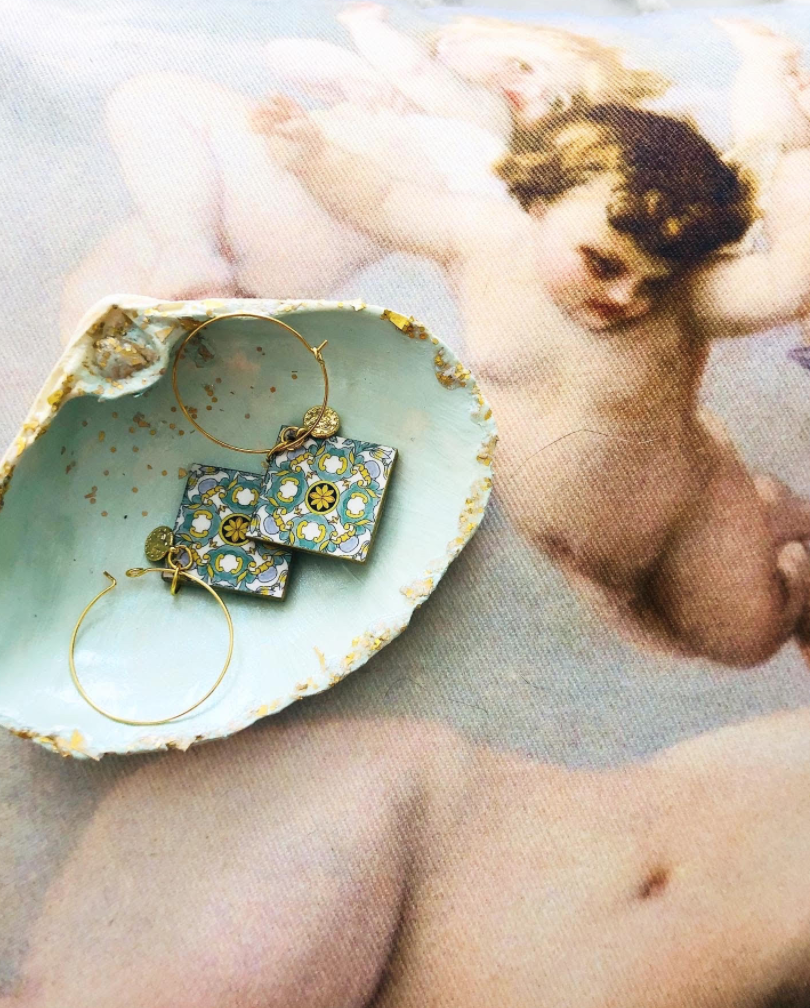
I’ve been making candles and decoupaging shells to make into jewelry dishes. They’re probably a bit horrible looking but they're mine — and they’re keeping an imaginative, curious part of my mind alive. By learning, envisioning, intending, and doing, I am casting a spell. I am present and I am full of the moment. I am embodied by my own creativity, and honoring it because pleasure is magic. It takes time to learn a new skill, so go slow. Mess up. Watch videos. Read books about it. And make the journey about nothing more than The Doing. You have nothing to prove.

Speak the language of flowers.

Screen Shot 2021-05-09 at 7.50.24 PM.png

In The Language of Flowers, Vanessa Diffenbaugh writes, “Anyone can grow into something beautiful.” I think flowers can teach us that. They tell us that from seedlings, we each have an opportunity to bloom. Perhaps you are yellow. Maybe I am blue. And that is perfect.

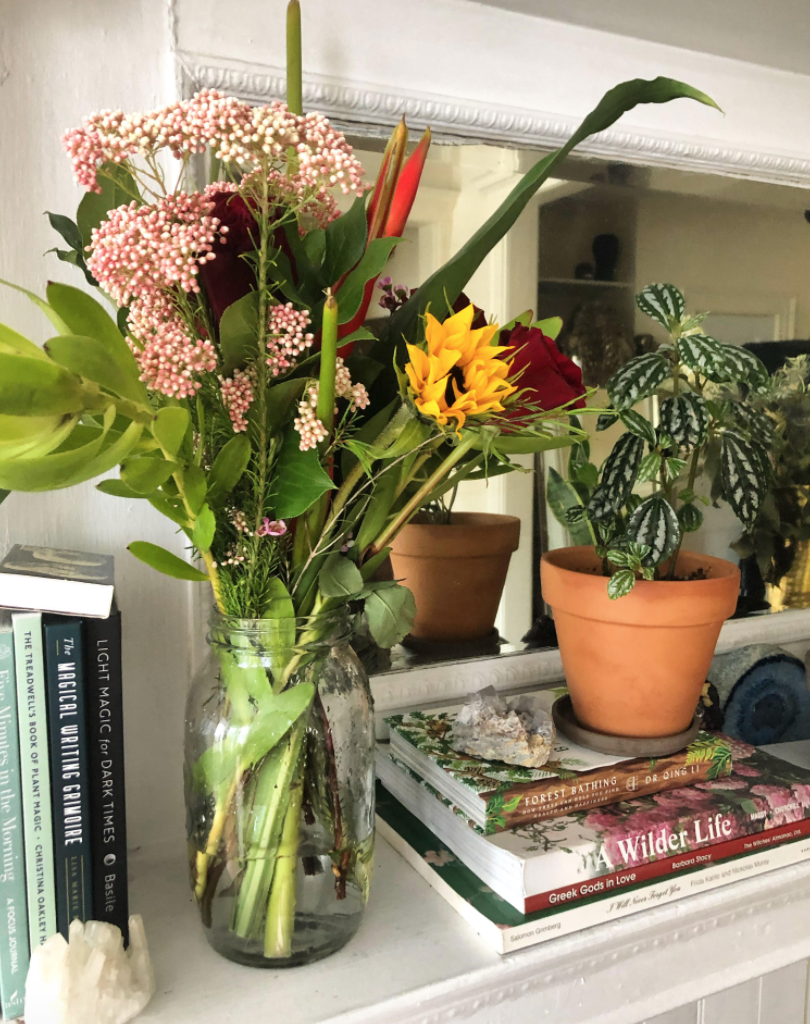
Flowers teach us about color magic. They teach us about local botany. They teach us about making a house into a home. They teach us about death, decay, and preservation. They teach us about living things. They teach us to fill a space with intention.

If you have access to flowers — even a single flower — rotate them in and out of your space. Take note of which colors inspire you, how they make you feel, and what the flowers are whispering to you from across the room.

Embrace a monthlong lunar practice for self-understanding

lmdt-lmb-grimoire.jpg

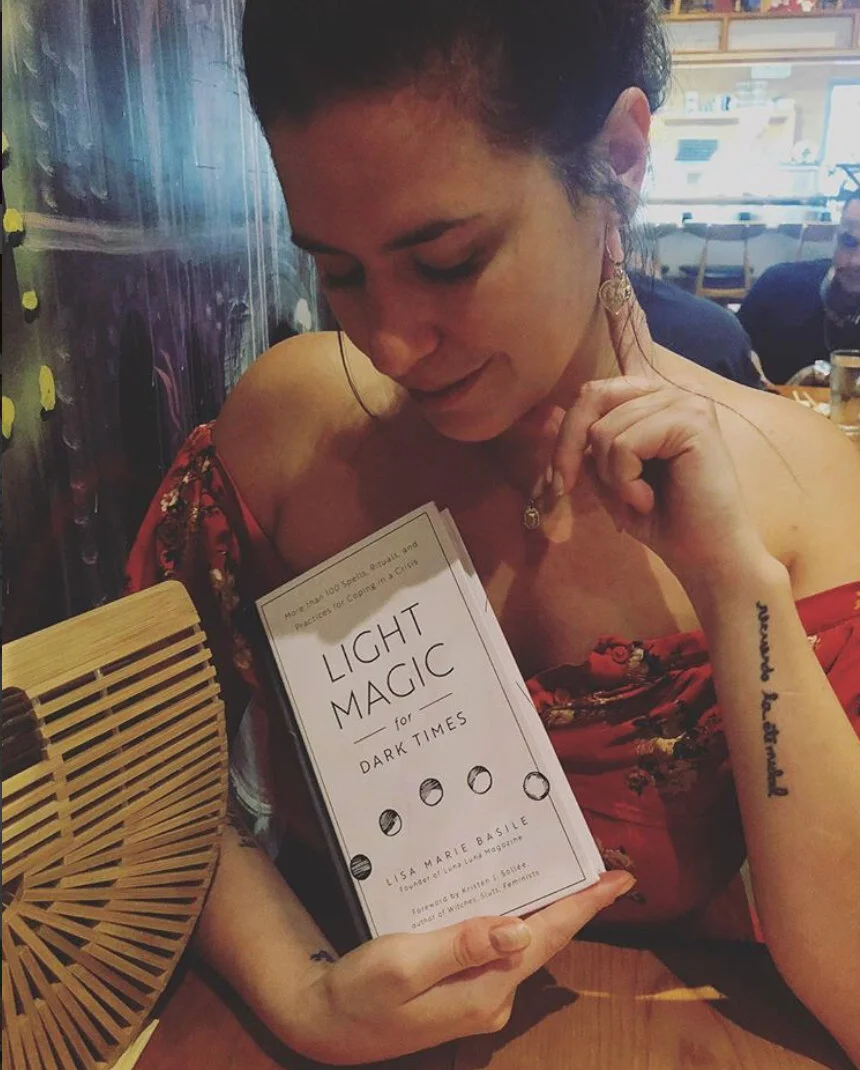
For those of you who love to work with the moon, this practice is the ultimate slow magic practice. It will help you track your mood, better understand yourself, determine which areas of your life need extra love or support, and find ways to increase joy. The point is to not go for instant gratification but to develop a practice that you turn to again and again for a few moments each day. The magic is in the process, the unfolding, and in the returning-to. This is from my book, Light Magic for Dark Times.

Materials

  • Paper

  • Something to write with

  • A mason jar

  • Optional: Decorations (e.g., crystals, flowers, shells, or other small decorative items)

Start this practice at the new moon. At the end of each day, write on a single piece of paper your daily mood and the day’s lesson: What did you learn? What did you realize? What do you need to focus on? You may also track specific things (e.g., creativity, self-esteem, health, energy levels). On the back of the paper write down the moon phase.

Place this in a mason jar (which you can beautify by filling it with crystals or flowers or shells) and keep this at the window under the moonlight—your goal here is to really connect with Luna. 

At the end of the entire moon cycle (by the time the moon reaches its new phase again, moving from waxing to full to waning to new), you’ll have tracked an entire cycle’s worth of self. 

Empty your mason jar. Lay out each piece of paper and write, in your grimoire, what you learned. You may see patterns emerge, so start connecting the dots with how your feel and the phases of the moon. Are you more imaginative during the full moon? Integrating the moon’s cycles into your life may help you get in tune with yourself and nature. 

—

Follow me on INSTAGRAM and TWITTER.

LISA MARIE BASILE (she/her) is a poet, essayist, editor, and chronic illness awareness advocate living in New York City. She's the founder and creative director of Luna Luna Magazine.

She is the author of THE MAGICAL WRITING GRIMOIRE, LIGHT MAGIC FOR DARK TIMES, and a few poetry collections, including the recent NYMPHOLEPSY, which is excerpted in Best American Experimental Writing 2020. Her essays and other work can be found in The New York Times, Narratively, Sabat Magazine, We Are Grimoire, Witch Craft Magazine, Refinery 29, Self, Healthline, Entropy, On Loan From The Cosmos, Chakrubs, Catapult, Bust, Bustle, and more. She is also a chronic illness advocate, keeping columns at several chronic illness patient websites. She earned a Masters's degree in Writing from The New School and studied literature and psychology as an undergraduate at Pace University.

In Slow Alchemy Tags magic, spellwork, slow magic
Comment

Ritual for Transforming Your Space in the New Year

January 4, 2021

Kailey Tedesco is the author of These Ghosts of Mine, Siamese (Dancing Girl Press) and the forthcoming full-length collection, She Used to be on a Milk Carton (April Gloaming Publications). She is the co-founding editor-in-chief of Rag Queen Periodical and a member of the Poetry Brothel. She received her MFA in creative writing from Arcadia University, and she now teaches literature at several local colleges. Her poetry has been nominated for the Pushcart Prize. You can find her work in Prelude, Bellevue Literary Review, Sugar House Review, Poetry Quarterly, Hello Giggles, UltraCulture, and more. For more information, please visit kaileytedesco.com.

Read More
In Magic Tags ritual, magic
Comment
Photo: Joanna C. Valente

Photo: Joanna C. Valente

Poetry Candle Magic: A Way to Pause, Reflect and Find Joy

November 13, 2020

Joanna C. Valente is a human who lives in Brooklyn, New York. They are the author of Sirs & Madams, The Gods Are Dead, Marys of the Sea, Sexting Ghosts, Xenos, No(body), #Survivor: A Photo Series (forthcoming), and A Love Story (Vegetarian Alcoholic Press, 2021). They are the editor of A Shadow Map: Writing by Survivors of Sexual Assault and the illustrator of Dead Tongue (Yes Poetry, 2020). They received their MFA in writing at Sarah Lawrence College, and Joanna is the founder of Yes Poetry and the senior managing editor for Luna Luna Magazine.

Read More
In Wellness, Art, Poetry & Prose Tags poetry, candle, magic
Comment
Photo: Joanna C. Valente

Photo: Joanna C. Valente

Channeling Word Magic: Journal Writing, Affirmations, and More

October 1, 2020

Stephanie Athena Valente lives in Brooklyn, NY. Her published works include Hotel Ghost, waiting for the end of the world, and Little Fang (Bottlecap Press, 2015-2019). She has work included in Witch Craft Magazine, Maudlin House, and Cosmonauts Avenue. She is the associate editor at Yes, Poetry. Sometimes, she feels human. stephanievalente.com

Read More
In Wellness Tags magic, wellness, self care, Journal Writing
Comment
Photo: Joanna C. Valente

Photo: Joanna C. Valente

What Is Sacred Self-Care?

September 21, 2020

Stephanie Athena Valente lives in Brooklyn, NY. Her published works include Hotel Ghost, waiting for the end of the world, and Little Fang (Bottlecap Press, 2015-2019). She has work included in Witch Craft Magazine, Maudlin House, and Cosmonauts Avenue. She is the associate editor at Yes, Poetry. Sometimes, she feels human. stephanievalente.com

Read More
In Wellness Tags magic, writing, ritual, self care
Comment
Photo: Joanna C. Valente

Photo: Joanna C. Valente

Writing, Magic & Tarot: Pairing the Major Arcana to Poetry

August 19, 2020

Joanna C. Valente is a human who lives in Brooklyn, New York. They are the author of several collections, including Marys of the Sea, #Survivor, (2020, The Operating System), Killer Bob: A Love Story (2021, Vegetarian Alcoholic Press), and is the editor of A Shadow Map: Writing by Survivors of Sexual Assault. Joanna is the founder of Yes Poetry and the senior managing editor for Luna Luna Magazine. Some of their writing has appeared in The Rumpus, Them, Brooklyn Magazine, BUST, and elsewhere. joannavalente.com / Twitter: @joannasaid / IG: joannacvalente / FB: joannacvalente

Read More
In Poetry & Prose, Magic Tags tarot, poetry, magic
Comment

On Being Told I Am Haunted

October 2, 2019

Kailey Tedesco is the author of These Ghosts of Mine, Siamese (Dancing Girl Press) and the forthcoming full-length collection, She Used to be on a Milk Carton (April Gloaming Publications). She is the co-founding editor-in-chief of Rag Queen Periodical and a member of the Poetry Brothel. She received her MFA in creative writing from Arcadia University, and she now teaches literature at several local colleges. Her poetry has been nominated for the Pushcart Prize. You can find her work in Prelude, Bellevue Literary Review, Sugar House Review, Poetry Quarterly, Hello Giggles, UltraCulture, and more. For more information, please visit kaileytedesco.com. 

Read More
In Personal Essay Tags spooky, magic
Comment
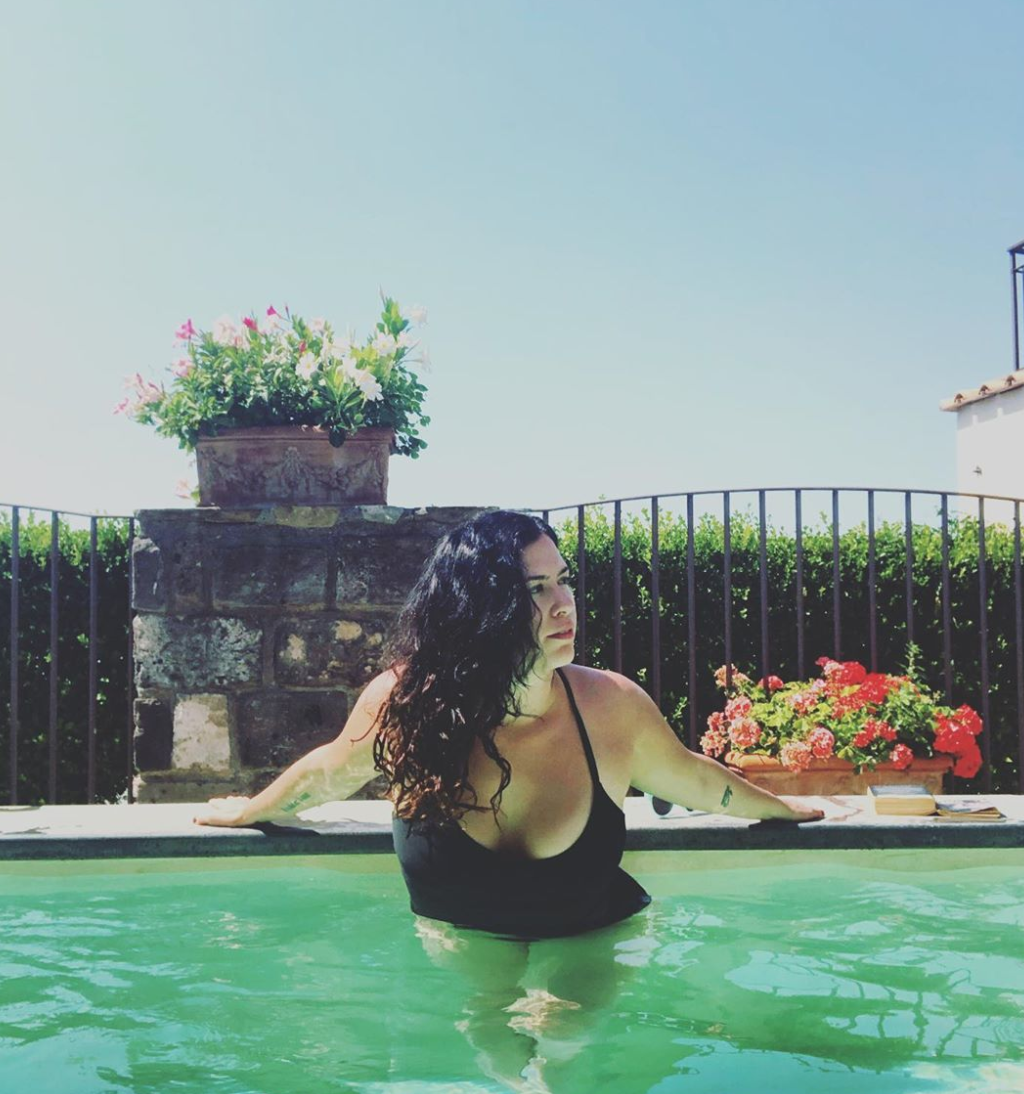
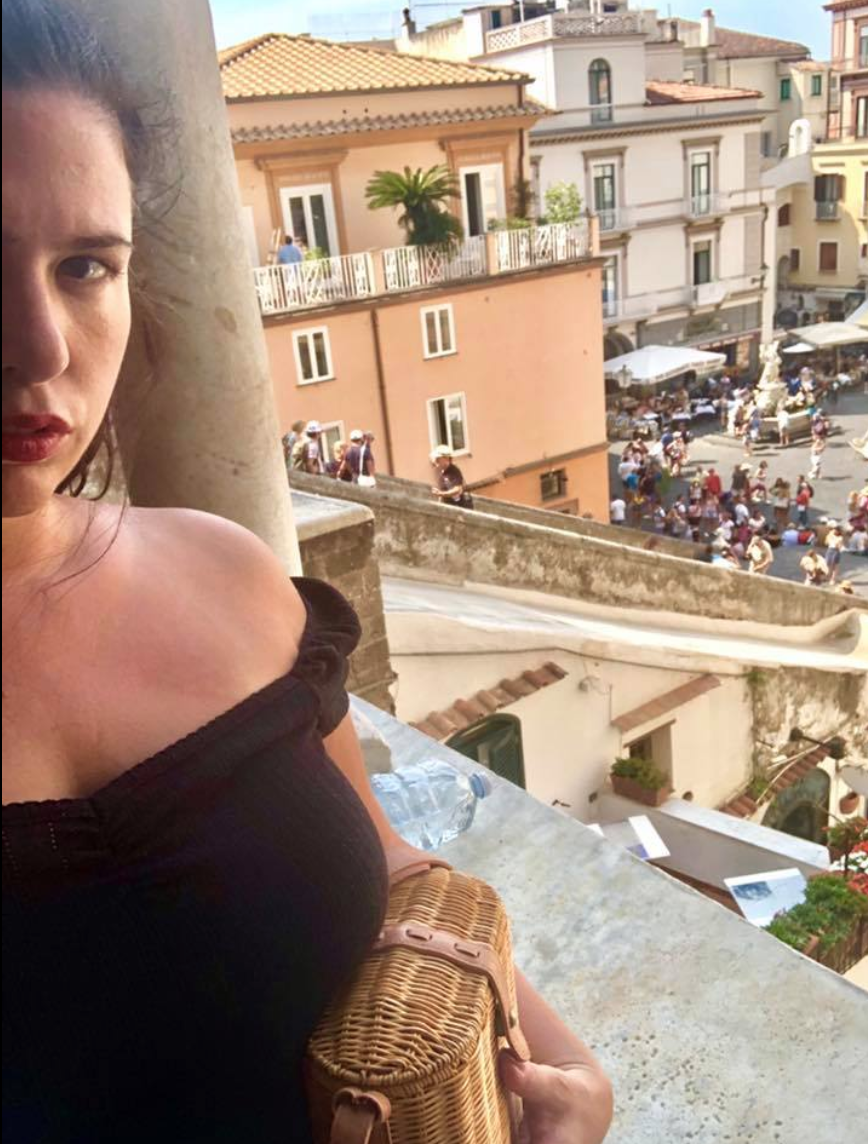
lisa marie basile italy

Magical Water, Ancestry, & Shadow Work In Italy

August 26, 2019

BY LISA MARIE BASILE

I came to Sorrento in Campania, Italy for eight days, alone. Actually, I’m writing this from the balcony off of my room during the golden hour, when the pink and white flowers and the ivy vines are drenched in a soft honey-colored light. God’s filter. The cosmos’ generous reminder that Earth is perfect without us. But the Italian people surely make a strong argument; they are one of the world’s maestros of splendor and creation. From their frescoes to the delicate placement of flowers wherever and anywhere flowers can grow, the Italians understand the holiness of not only aesthetics but intentional living. 

So, in the land of the sirens, as the Sorrento coast is known, it is no surprise that I — without a true understanding of what I would embark on — fell well into the depths. Perhaps you can blame it on my elemental nature; I’m a scorpio whose language is cthonic. I crave the long hours of confession and exploration and transformation. 

Before Italy, I’d been in London alone — in quaint Datchet, a village just outside London, technically —  for three days. So for 11 days, I’d been in relative solitude, save for ordering a pint or cobbling enough Italian together to purchase a boat ticket. 

View this post on Instagram

A post shared by lisa marie basile (@lisamariebasile) on Aug 26, 2019 at 1:31am PDT

As a gift to myself for finishing my forthcoming book, The Magical Writing Grimoire (2020), I booked a holiday to Italy, on my own — to write, to dream, to swim in the cerulean sea, to see where my blood comes from.

But as I would learn — when night fell here in Italy, it fell hard, and without a soul to speak to on my own (in this six-room church-turned-bed and breakfast tucked high into the mountains) I felt a transformation take place.

Into the depths 

For some, eleven days of solitude is doable, desirable even. But for many, it’s not. It is a sentencing. It isn’t that I crave silence. On the contrary; I fear it — especially coming from New York City. It’s that I needed it. There’s a difference. 

If I could not quiet my mind, if I could not disappear from my life, how could I truly know what it meant? What could I learn from the other side of my life, where my own body is my only anchor?

As creators — writers, leaders, artists — and as humans, we rely on a kind of sustenance. You pick the poison. We need to drink it, inhale it, dive into it. For me, that bread and wine is light and space, solitude, apart-ness. A certain relinquishing of comfort. I needed to be challenged, far away from the myself and the places I knew. I felt a restlessness growing in me that demanded a sequestering. 

For the longest time, however, my weaknesses have found the form of a fear of abandonment, the need for (but fear of) quiet, and lack of control. It comes from trauma and it comes from knowing that around any corner I might fall into the abyss of self. Thinking too much. Add a little wine, and I’m fucking gone.

But in being alone, I have faced my demons. I have named them. Here in Italy I’ve abandoned what I knew to be comfortable and safe. I felt, in some moments, far into the mountains in this isolated commune high above the more populated Sorrento coastline, that I abandoned myself. What were you thinking, I asked myself at least once, coming here alone, for all this time, without anywhere to go on your own? There are two restaurants down the road, a market that closes for siesta, and winding streets of farmland that cannot be traversed by foot.

I’d abandoned a sense of control. First of all — traveling abroad is not like going to the cinema alone or sitting awkwardly, fidgeting during a solo dinner. The end point is not soon. The awkwardness is replaced by a small village curiosity, a light that shines on you and is hot and is real. You begin to see yourself as the subject. But you realize the ego is a type of demon you must drag out to the little square and send off on its way.

But more than noticing my aloneness, control issues threw me into the sea. I could not control the inevitable surprises, which came in the form of car breakdowns, missing boat rides, nearly fainting in 90-degree heat. Walking up hundreds of steps, on a cliff, just to get to some semblance of where other people are. 

And of course, the quiet. The heavy quiet that pools in like a ghost, under the door and through the shutters, at night. The quiet that tells you how far you are from everything, how many hours you have until sleep finally settles in. What of the anxieties and rogue feelings of sadness? They are there, a chaotic circus of them all, prodding you, reminding you how far up the mountain you are — without a car nor a means of leaving. When you look out the window, you see Vesuvius. 

You think of your body as ash. 

But isn’t this what you came for you, I asked myself. Isn’t this what we all want? In life, we are forced to move through our traumas — things that have happened to us, things that have been done to us. We carry our wounds as an albatross, even if we aren’t aware of it. And life has dealt us all a heavy hand. 

In my day, I’ve seen, either in myself or in my family, foster care addiction. I’ve seen chronic illness and death. I’ve seen poverty and I’ve seen prison. What are your wounds?

Why would I willingly stoke the flame after survival? Why I let myself be lured by sirens?

In some sense, choosing to be uncomfortable and choosing to work through the quiet is the lesson. It is a pain that I didn’t quite expect in coming alone to a faraway country without a friend or anyone to speak to. But it wasn’t the pain of place. It was the pain I brought with me.

I was the hurt. I brought my fear. I brought my anxiety. Italy didn’t do this to me. There’s a certain shock in realizing that. And a definite freedom.

li galli islands

Solitude & loneliness are not the same

I felt so alone on so many nights, an aloneness that was less about not being near people or places and more about my individual decision to fly 4,000 miles from home. How the gift of autonomy comes with a solitude that must be understood and appreciated, rather than feared.

How we are, ultimately, alone.

But being alone is not the same as loneliness. The people in the market, the people in the farms plucking lemons, the people who make me limoncello, the people who steer our boats from island to island, the people who direct me to the nearest whatever it is, the tourists who see me sitting alone and ask me to dine with them — there are people everywhere, and that is a treasure. Those small slivers of conversations are a reminder that we are alone, but we don’t have to be lonely.

The earth sees you. It wants you to be here.

One night, I texted my father for help. The loneliness followed me up the little hill when I walked back from dinner. My father, Italian as they come, served many years in prison — and weeks in solitary. I felt silly asking him for him, but I knew he’d understand what solitude could do, and he said:

Always realize today is just one day. And tomorrow is a new beginning. A new opportunity to feel differently or experience different things. Don’t let your mind control your feelings. Think how lucky you are —being able to travel. And having people in your life that love you and care about you. You are never detached or isolated. The world is much too small for that anymore. Everyone is connected. I love you.

In silence, we grow. It reminds us that not only can we and do we survive, we are self-resilient when we willingly put ourselves in uncomfortable situations, when we decide to settle in and let the silence fill us with every thought and memory imaginable.

There is no way down the mountain. There is nothing but your own mind — and no matter how luxurious or beautiful the country or place you are in, we are all alone, bodies full of chemicals and traumas that demand we look them in the eye. 

Ancestral work is healing

My father’s family is Italian and Sicilian — at least his parents and great grandparents were. We have Spanish and West Asian ancestors as well.

I was raised in New Jersey with my Italian/Sicilian grandparents. My nonna, from Palermo. My grandfather, part Napolitano. I only saw Naples from the car, its hundreds of homes — colorful, scattered, boxy, so much laundry hanging you could see it from space. Many of its people are living in poverty, under the stronghold of a mafia, the Camorra. They say Naples is the realest city in Italian, a place that doesn’t afford any of the luxuries or predictable splendor of other cities. It’s hard and gritty and I have that in my blood.

My grandfather, Sabatino, whose family hails from this city — what must his family have done to get to America? What drove them out? What sort of assimilation problems did they have when Italians were considered dirt?

italy amalfi

My grandmother Concetta Maria came by boat — you can see her name on a ship’s manifest, along with her sisters, one of which fell so ill she had to be taken to the hospital upon arrival in the port of the United States. She told me once about the blackshirts, Benito Mussolini's men, wandering around as she sat under lemon trees.

She spoke Sicilian, my grandfather spoke an Italian dialect. They made fun of one another’s language. When they came here, they didn’t teach any of their seven children Italian or Sicilian. They forced assimilation in the household, as many immigrants do.

In any sort of ancestral work, you aim to understand your bloodline. In my case, my grandparents were relentlessly catholic, deeply disappointed in many of their non-catholic grandchildren — me — and generally chose favorites. Some were favored, coddled, loved. Near the end of my grandmother’s life, well into her 90s, she made me cake, presented me with a rosary, made a sort of apology. 

I’ll never forget it. She pulled a long lock of black hair from a box and wielded it over the dinner table. She kept her hair, as if to keep her youth, her vitality.

To this day, my black hair reminds me of her. I care for my hair — wavy and coarse and wild — because it is Italian hair. It is my own. 

And on this trip, when I boated from Sorrento to Capri, I thought of them, of their struggles, of how hard they worked to make a life for themselves. Where they failed and how they loved. How they made my father, the artist and musician and poet, and how he made me.

I dove from the small passenger boat into the deep emerald-green water. I was submerged quickly, lungs full of salt water so thick and fast that I gagged. I swam back to the boat’s ladder, frightened, and out of control. But I caught my bearings and swam again. The sea wanted me to know her.

This was baptismal. Swimming in the waters of my blood, my body fully cradled by the earth’s watery womb. Towering island rocks loomed over my head. I was being tugged on by the ancient ghosts of time, my ancestors saying hello, my ancestral land showing me its gusto and bravado. And its softness. In the water a sense of home came over me, no matter how scared or foreign I felt.

I was there because two people, at some point, made love. And they lived here, and they fished in these very waters, and then their children had children. And someone, some girl, me, came back — in search for something.

There is a photograph of my grandfather standing at the water’s edge, birds flocking all around, his black jacket strewn over his shoulder all casual, as he looks back at the camera from afar. It is so blurry you couldn’t make it out entirely, but it is on the prayer card from his funeral, so we know it’s him. You could make him out anyway — his deep golden skin, his firm stance. 

He was a fisherman, and my father is a fisherman. They spoke the language of water. They understood and understand water in their very nature.

 And now I speak it too. Born of a water sign, obsessed by the depths, I am called to the sea by sirens.

positano

Parthenope, the siren of Naples

At my bed & breakfast, my door is labeled in gold: Parthenope. I only remotely knew of this siren, that she was one of the many who lived on the coast of Sorrento. But I was not expected to know her so well.

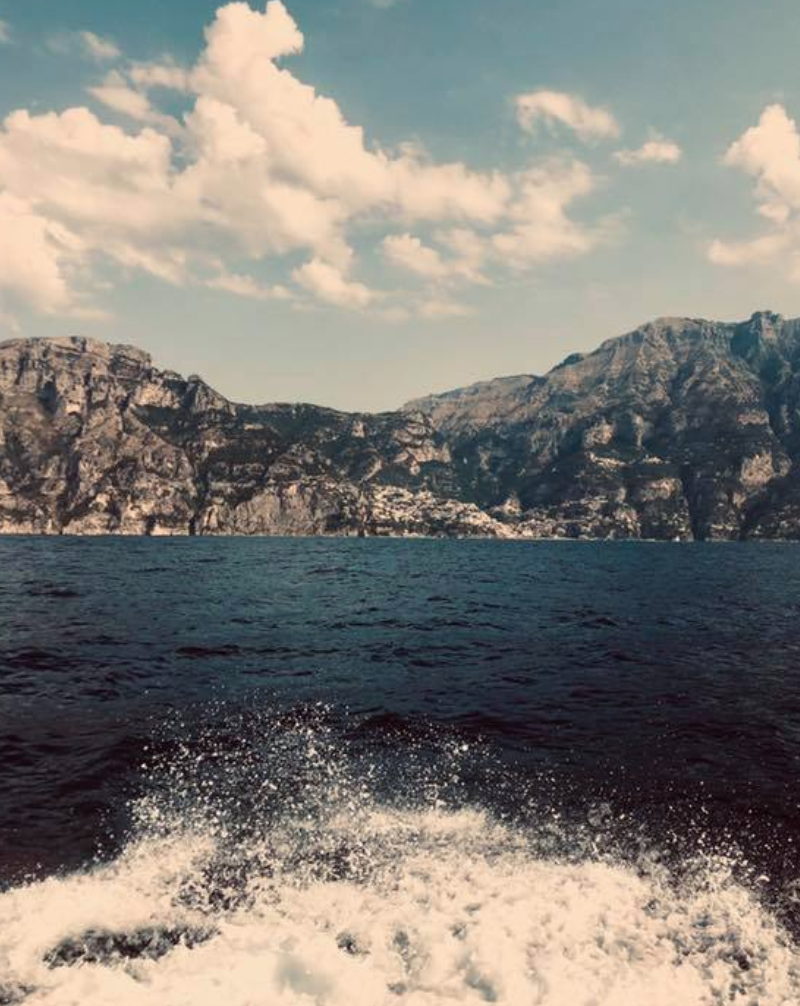
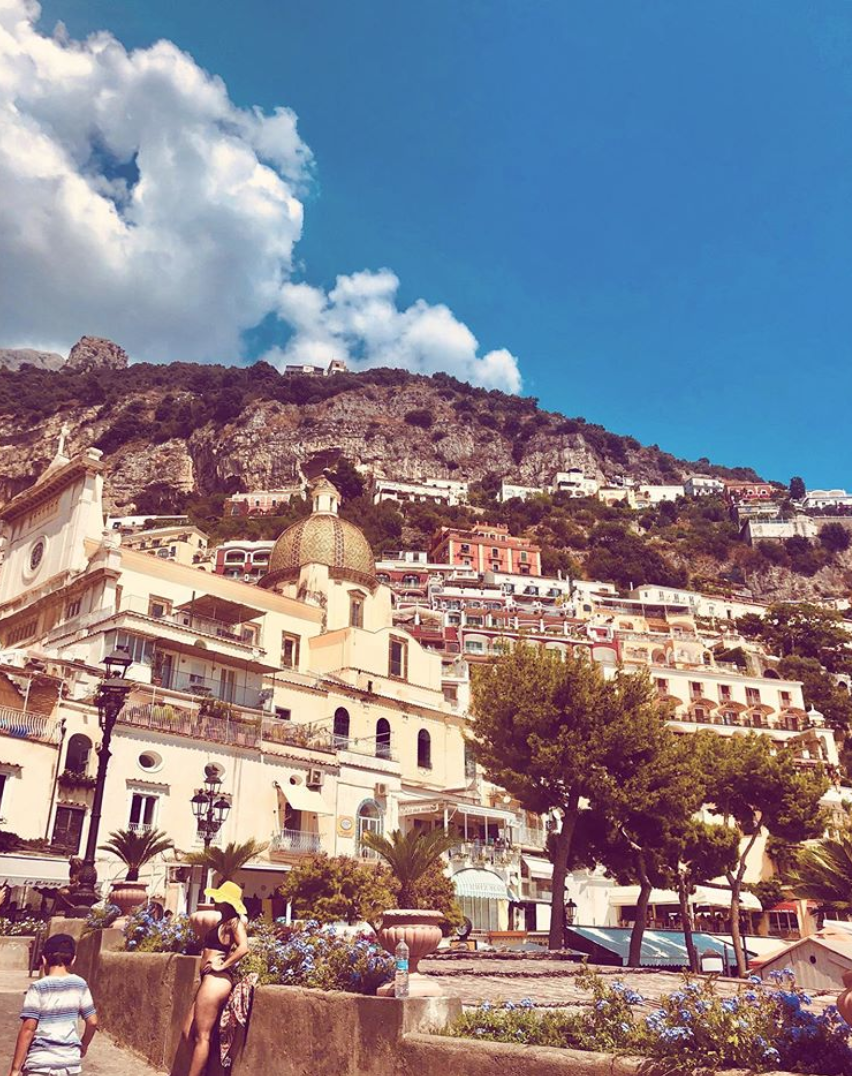
On the way to Amalfi and Positano one day, we pass Li Galli, an archipelago of little islands — Gallo Lungo, La Castelluccia, and La Rotonda— surrounded by cerulean water. These islands are also known as Le Sirenuse, where Ulysses’s sailors were sought out by the sirens, thought to be named Parthenope, Leucosia, and Ligeia. Of course, sailors would crash in wild waters against these jutting rocks, only to blame the voice of women for their misfortune.

The sirens, aside from singing, played the flute and the lyre, instruments which glide on the wind with a sort of frenzied beauty. The siren stories goes back to the 1st century, when Greeks told their tales. I imagine them as mermaids, although they are also commonly depicted as having a bird body with human heads.
.
My room, the is Parthenope room, is decorated in light blue, gold, and ivory. Of course, this was initiatory, a blood welcoming. Upon first entering, I fell into a deep rejuvenating sleep, lulled by some song, some sustenance from ancient times.

My dreams were of water and lineage.

When I awoke, I felt I’d become a siren, a descendent of Parthenope, perhaps, someone who understood the sea. And, while we’re at it, can bring sailors to their deaths.

The legends — and there are many — say that Parthenope was said to throw herself into the sea when she couldn’t please Odysseus with her siren song. Her body was found on the shore of Naples, where my grandfather comes from. Other stories say that a centaur fell in love with Parthenope, but Jupiter couldn’t have this — and so he turned her into the city of Naples, while the centaur became Vesuvius. And when Vesuvius couldn’t have her love, he would erupt.

Parthenope taught me something — that even in beauty there is darkness. It is up to you find the light. You can find it on islands, and you can find it in yourself.

But there is so much I don’t know. There is so much I’ll never know. For many, the mystery of lineage is a wound. A forced removal of information. A wound of colonialism and genocide. A nothingness. An end of the line. 

For me, it’s the fact that my ancestors were disappointed that I wasn’t more Catholic, that my parents hadn’t stayed together. That they didn’t pass on their language.

My ancestral work, I’ve realized, is accepting that I can still come from a place, still be of a thing, still call upon the past, still devote my life to exploring my blood — even if my family wasn’t perfect, even if I wasn’t catholic enough in the eyes of my grandparents. Because ancestral work is so much bigger than everything we understand.

My ancestors tell me to find gratitude in being alive, to look out and see the sky and sea, to find magic in the city and the thousands of doorways and street signs — and to keep looking for Synchronicity. To always keep your eyes and ears open. Messages find their way.

How many of the ones of who made me plucked lemons? How many of them swam in the shore? How many of them drove through the city streets of Naples, or down the mountains in Sorrento? How many of them stopped and prayed at the very churches I photographed? How many of them built cities with their own hands and brought culture to America when they came? How many of them stayed in Italia?

The sheer fact that life moves onward, rolling as water, a siren song that continues — and how lucky it is that I get to breath in this existence? That is my ancestral work. 

What have you learned on your travels? It doesn’t need to be far to be meaningful.

positano

A place always reveals itself long after you leave


Tonight, my last night, the air feels quieter. The dark feels more expansive. The room feels emptier. As if the fullness of my adventure has come to a close, and I am just waiting departure. As if my body has left already, but some essence of me stays. Sometimes this cutting off hurts. You can’t place why, but it does. The places we go, especially those we were meant to see, feel the vibration of our leaving as much as we feel them fade into the distance. That’s the cord.

Of course, once I leave, this place will become more real to me — more beautiful, somehow — than it was when I was there. The greens will be the most green. The curtains will always be swaying in my mind.

What I will remember isn’t the long nights or anxieties, the running from terminal to terminal or the breakdowns in language. I’ll remember the way the sun melted into the ocean. I’ll remember how the Italians are late even to toll their own bells. I’ll remember the way the skipper looked when I thanked him. His golden body sweating from long days carrying bodies to and from the coast lines. I’ll remember the long siestas and the open windows and the dogs in the street.

I’ll remember how quickly my room filled with light when I opened the shutter even a little. How much the light wants to get in. How we must let it. How we owe it to our lives, our fears, our wounds, and our ancestors.


Lisa Marie Basile is the founding editor of Luna Luna Magazine, an editor at Ingram’s Little Infinite, and co-host for the podcast, AstroLushes, which intersects astrology, literature, wellness, and culture. She regularly creates dialogue and writes about intentionality and ritual, creativity, poetry, foster care, addiction, family trauma, and chronic illness—particularly Ankylosing Spondylitis, a disease with which she lives. Most recently, she is the author of LIGHT MAGIC FOR DARK TIMES (Quarto Publishing/Fair Winds Press), a collection of practices and rituals for intentional and magical living, as well as a poetry collection, NYMPHOLEPSY (co-authored by Alyssa Morhardt-Goldstein). Her second book of nonfiction, The Magical Writing Grimoir, will be published by Quarto/Fair Winds Press in April 2020. It explores the use of writing as ritual and catharsis. Her essays and other work can be found in The New York Times, Chakrubs, Catapult, Narratively, Sabat Magazine, Refinery 29, Healthline, Entropy, Narratively, Catapult, Best American Experimental Writing. She studied English and psychology as an undergraduate at Pace University, and received a Masters in writing from NYC’s The New School. FOLLOW HER ON INSTAGRAM HERE.

In Place, Wellness, Magic Tags ancestral work, italy, sorrento, campania, travel, world travel, tourism, li galli, sirens, siren songs, solitude, Traveling, italia, naples, mafia, ancestors, magic
Comment

Powerful Mantras for Badass Witches

July 23, 2019

Stephanie Valente lives in Brooklyn, New York, and works as an editor. One day, she would like to be a silent film star. She is the author of Hotel Ghost (Bottlecap Press, 2015) and Waiting for the End of the World (Bottlecap Press, 2017).  Her work has appeared in  dotdotdash, Nano Fiction, LIES/ISLE, and Uphook Press. She can be found at her website.

Read More
In Wellness, Lifestyle Tags magic, astrology
Comment

Weekend Ritual: Grounding & Visualizing with Vinyl Records

March 1, 2019

Stephanie Valente lives in Brooklyn, NY. She has published Hotel Ghost (Bottlecap Press, 2015) and waiting for the end of the world (Bottlecap Press, 2017) and has work included in Susan, TL;DR, and Cosmonauts Avenue. Sometimes, she feels human. http://stephanievalente.com

Read More
In Wellness, Lifestyle Tags magic, rituals, music
Comment

20 Free and Magical Ways to Engage in Self-Care

February 15, 2019

Stephanie Valente lives in Brooklyn, NY. She has published Hotel Ghost (Bottlecap Press, 2015) and waiting for the end of the world (Bottlecap Press, 2017) and has work included in Susan, TL;DR, and Cosmonauts Avenue. Sometimes, she feels human. http://stephanievalente.com

Read More
In Lifestyle Tags magic
Comment
jimmy-chang-410491-unsplash.jpg

Why Freaking Out Is a Sure-Fire Sign That Your Magic Is Working

October 8, 2018

Demelza Fox is a modern day mermaid, international dancer, Venusian Devotee and a Priestess of Morgan le Fey. By day, she runs Rockstar Priestess, a priestess- and goddess spirituality website and community for wild witches and mystic mermaids, and by night she lights up stages across the land as a magnetic dancer and award winning burlesque seductress. Demelza runs the Morgan le Fey Mystery School, dedicated to teaching the ways and secrets of Morgan le Fey through online courses, priestess trainings and retreats in the heart of the landscape of Avalon in Glastonbury UK. www.priestesstraining.com

Read More
In Lifestyle Tags magic, occult
Comment
=

=

At The Intersection of Chronic Illness & Ritual

July 11, 2018

BY LISA MARIE BASILE

Long before I knew I had a chronic, degenerative illness (Ankylosing Spondylitis, a disease that fuses your vertebrae and joints together), I lived with fatigue and widespread pain and chronic eye inflammation (which, of course, led to reduced vision on top of cataracts from steroid treatment).  

It took a decade (with on and off insurance) to convince doctors that I wasn't inventing an illness, that my eyes weren't red from "contact irritation," that my pain wasn't from getting older, that my tiredness wasn't from binge-drinking or staying out late dancing. (To be fair, I did all of those things, but the heaviness in my bones was its own strange animal, an animal that I lugged along with me while all of my friends bounced back after a night out). 

Many people with chronic illness (especially with autoimmune diseases) have ventured down the same winding path--medical neglect or disbelief, lack of resources, lack of knowledge in the medical community, lack of diagnoses, and a lack of support. 

If you are the only person you know with an autoimmune disease or a chronic illness (or, really, any type of lasting body trauma), you know how isolating and fear-inducing it can be. Do you really know your body if your body is betraying you? Do you have a handle on your own future? Are you somehow no longer the same? Can you get the help you need? 

My body was two people. A young girl, and a bag of blood, going on a bender, following no directions, attacking herself. I was lost to my selves.

When I finally convinced doctors to test me (for HLA-B27 antigen, plus an MRI to detect fusion), the diagnosis was an existential blow. I suspected the disease, of course--as my father has it--but knowing that I'd never, ever be cured felt like a sentence to me. For a year, I wallowed. I felt self-pity, I felt out of control, and I was on the edge of constant sadness. I felt lame. I felt silly. Here I was in my early thirties being told I might be fused together later on, my body a prison, my body no longer mine, but a shackle keeping some version of me tucked down deep inside. 

I had always turned to ritual throughout life, especially when times got rough. Ritual is there for these times. It establishes a sense of order, it makes space specifically for the self, and it encourages focus, intention, and growth. 

I used ritual to help me escape those constant thoughts of worry, anxiety, self-doubt, exhaustion, and fear. I used ritual to establish routine and self-care and self-empowerment. Through lighting candles each week night as a way to make rest time to decorating an altar in honor of myself and my body, I became an advocate for myself. There were many: bathing in lavender to intentionally create a sense of fluidity, journaling nightly through pain (using that painful energy to focus and transmit change and manifestation). If it all sounds woo-woo, consider this: anything you do for yourself is a ritual already. Anything you put your mind to is more likely to happen. Any time you carve out for yourself is sacred. It's an act of warfare against chaos and self-loss. It's a reclamation, a creation, a magical hour. 

Ritual helped me back to myself: I felt stronger, more determined to make time for myself, more connected to the simple things that made life fulfilling and beautiful (rest, a walk in nature, time to write, creativity). The disease no longer controlled me; instead, it was a part of me, as a sad friend in need of love and time and cooperation. I was a vessel for opportunity, not despair. 

A year after my diagnosis, I also went on to write a book, Light Magic for Dark Times--which is a collection of rituals and practices for hard times. I even included a portion on body and identity, and chronic illness. 

I will be leading a workshop on chronic illness and ritual at MNDFL Meditation in NYC on July 21. I hope you will come, as it will be an open, safe space. We will discuss chronic illness, meditate, and map strategies for self-care and self-empowerment. All are welcome!

You can RSVP here. 


About the event

Welcome to Strong Women Project's first women's wellness workshop! 

We're connecting with MNDFL in the West Village to provide free workshops to focus on our wellness. Our first workshop is led by Lisa Marie Basile. Darley Stewart, SWP Founder and Curator, will also speak about chronic illness in the context of recent findings. We'll also do some light meditation and stretching to kick off the workshop.

Lisa Marie Basile will discuss what it means to establish ritual as a way of encountering one's chronic illness or other body-mind related traumas. Ritual might mean bookending one's day with someone positive and encouraging but it can also mean going deep and dark and peering into the abyss of self to confront the pain/shame/etc of chronic illness. You can expect to feel like you are part of a loving community and to come away with a set of tools that can help you when you feel overwhelmed or lost, or are just looking to transmorph your experience into art or inspiration. It's a balance of light and dark. Lisa Marie Basile is the author of
 "Light Magic for Dark Times," a modern guide of rituals and daily practices for inspired living. 

We also have a meet-up page! 

RSVP
In Wellness Tags self-care, chronic illness, ritual, magic, ankylosing spondylitis, autoimmune disease, Chronic Illness
Comment
Older Posts →
Featured
‘in the glitter-open black' — poetry by Fox Henry Frazier
'poet as tarantula,  poem as waste' — poetry by  Ewen Glass
'poet as tarantula, poem as waste' — poetry by Ewen Glass
'Hours rot away in regalia' — poetry by Stephanie Chang
'down down down the hall of mirrors' — poetry by Ronnie K. Stephens
'Grew appendages, clawed towards light' — poetry by Lucie Brooks
'do not be afraid' — poetry by Maia Decker
'The darkened bedroom' — poetry by Jessica Purdy
'I am the body that I am under' — poetry by Jennifer MacBain-Stephens
instagram

COPYRIGHT LUNA LUNA MAGAZINE 2025