
• Home
  • indulge
  • new poetry
    • About Luna Luna
    • resources
    • search
  • editor
  • dark hour
  • submit
Menu

luna luna magazine

  • Home
  • indulge
  • new poetry
  • About
    • About Luna Luna
    • resources
    • search
  • editor
  • dark hour
  • submit
delicious new poetry
'the doors of the night open' — poetry by Juan Armando Rojas (translated by Paula J. Lambert)
Nov 29, 2025
'the doors of the night open' — poetry by Juan Armando Rojas (translated by Paula J. Lambert)
Nov 29, 2025
Nov 29, 2025
'we can be forlorn women' — poetry by Stevie Belchak
Nov 29, 2025
'we can be forlorn women' — poetry by Stevie Belchak
Nov 29, 2025
Nov 29, 2025
'I do whatever the light tells me to' — poetry by Catherine Bai
Nov 29, 2025
'I do whatever the light tells me to' — poetry by Catherine Bai
Nov 29, 2025
Nov 29, 2025
‘to kill bodice and give sacrament’ — poetry By Kale Hensley
Nov 29, 2025
‘to kill bodice and give sacrament’ — poetry By Kale Hensley
Nov 29, 2025
Nov 29, 2025
'Venetian draped in goatskin' — poetry by Natalie Mariko
Nov 29, 2025
'Venetian draped in goatskin' — poetry by Natalie Mariko
Nov 29, 2025
Nov 29, 2025
'the long sorrow of the color red' — centos by Patrice Boyer Claeys
Nov 28, 2025
'the long sorrow of the color red' — centos by Patrice Boyer Claeys
Nov 28, 2025
Nov 28, 2025
'Flowers are the offspring of longing' — poetry by Ellen Kombiyil
Nov 28, 2025
'Flowers are the offspring of longing' — poetry by Ellen Kombiyil
Nov 28, 2025
Nov 28, 2025
'punish or repent' — poetry by Chris McCreary
Nov 28, 2025
'punish or repent' — poetry by Chris McCreary
Nov 28, 2025
Nov 28, 2025
'long, dangerous grasses' — poetry by Jessica Purdy
Nov 28, 2025
'long, dangerous grasses' — poetry by Jessica Purdy
Nov 28, 2025
Nov 28, 2025
'gifting nighttime honey' — poetry by Nathan Hassall
Nov 28, 2025
'gifting nighttime honey' — poetry by Nathan Hassall
Nov 28, 2025
Nov 28, 2025
'A theory of pauses' — poetry by Jeanne Morel and Anthony Warnke
Nov 28, 2025
'A theory of pauses' — poetry by Jeanne Morel and Anthony Warnke
Nov 28, 2025
Nov 28, 2025
'into the voluminous abyss' — poetry by D.J. Huppatz
Nov 28, 2025
'into the voluminous abyss' — poetry by D.J. Huppatz
Nov 28, 2025
Nov 28, 2025
'an animal within an animal' — a poem by Carolee Bennett
Nov 28, 2025
'an animal within an animal' — a poem by Carolee Bennett
Nov 28, 2025
Nov 28, 2025
‘in the glitter-open black' — poetry by Fox Henry Frazier
Oct 31, 2025
‘in the glitter-open black' — poetry by Fox Henry Frazier
Oct 31, 2025
Oct 31, 2025
'poet as tarantula,  poem as waste' — poetry by  Ewen Glass
Oct 31, 2025
'poet as tarantula, poem as waste' — poetry by Ewen Glass
Oct 31, 2025
Oct 31, 2025
'my god wearing a body' — poetry by Tom Nutting
Oct 31, 2025
'my god wearing a body' — poetry by Tom Nutting
Oct 31, 2025
Oct 31, 2025
'Hours rot away in regalia' — poetry by Stephanie Chang
Oct 31, 2025
'Hours rot away in regalia' — poetry by Stephanie Chang
Oct 31, 2025
Oct 31, 2025
'down down down the hall of mirrors' — poetry by Ronnie K. Stephens
Oct 31, 2025
'down down down the hall of mirrors' — poetry by Ronnie K. Stephens
Oct 31, 2025
Oct 31, 2025
'Grew appendages, clawed towards light' — poetry by Lucie Brooks
Oct 31, 2025
'Grew appendages, clawed towards light' — poetry by Lucie Brooks
Oct 31, 2025
Oct 31, 2025
'do not be afraid' — poetry by Maia Decker
Oct 31, 2025
'do not be afraid' — poetry by Maia Decker
Oct 31, 2025
Oct 31, 2025
'The darkened bedroom' — poetry by Jessica Purdy
Oct 31, 2025
'The darkened bedroom' — poetry by Jessica Purdy
Oct 31, 2025
Oct 31, 2025
'I am the body that I am under' — poetry by Jennifer MacBain-Stephens
Oct 31, 2025
'I am the body that I am under' — poetry by Jennifer MacBain-Stephens
Oct 31, 2025
Oct 31, 2025
goddess energy.jpg
Oct 26, 2025
'Hotter than gluttony' — poetry by Anne-Adele Wight
Oct 26, 2025
Oct 26, 2025
'As though from Babel' — poetry by Fox Henry Frazier
Oct 26, 2025
'As though from Babel' — poetry by Fox Henry Frazier
Oct 26, 2025
Oct 26, 2025
'See my wants' — poetry by Aaliyah Anderson
Oct 26, 2025
'See my wants' — poetry by Aaliyah Anderson
Oct 26, 2025
Oct 26, 2025
'black viper dangling a golden fruit' — poetry by Nova Glyn
Oct 26, 2025
'black viper dangling a golden fruit' — poetry by Nova Glyn
Oct 26, 2025
Oct 26, 2025
'It would be unfair to touch you' — poetry by grace (ge) gilbert
Oct 26, 2025
'It would be unfair to touch you' — poetry by grace (ge) gilbert
Oct 26, 2025
Oct 26, 2025
'Praying in retrograde' — poetry by Courtney Leigh
Oct 26, 2025
'Praying in retrograde' — poetry by Courtney Leigh
Oct 26, 2025
Oct 26, 2025
'To not want is death' — poetry by Letitia Trent
Oct 26, 2025
'To not want is death' — poetry by Letitia Trent
Oct 26, 2025
Oct 26, 2025
'Our wildness the eternal now' — poetry by Hannah Levy
Oct 26, 2025
'Our wildness the eternal now' — poetry by Hannah Levy
Oct 26, 2025
Oct 26, 2025

Interview with The Love Witch's Anna Biller: "I like to construct an alternate reality with cinema"

April 27, 2017

BY LISA MARIE BASILE

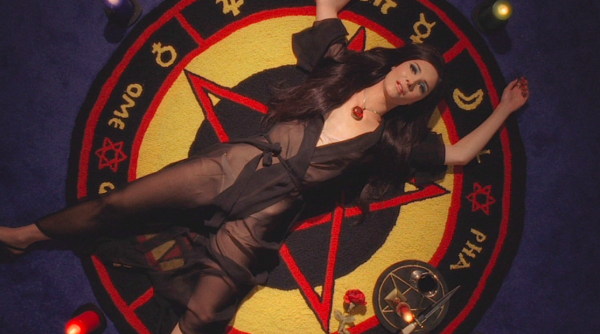
When I watched The Love Witch for the first time, I was fucking floored. Here was this aesthetically gorgeous, feminist, totally nuanced, witchcraft-focused, super kitschy, sexual, glamorous, dark piece of cinema — directed by a woman.

Before I watched it, I realized most people buzzing about it on social media had nothing but absolute praise for it. It's not like any film I've ever seen — and it requires a viewer to let go and just fall into its beauty and the binaries it presents around feminism and patriarchal brainwash. I also felt it was high-time a movie deal with witchcraft in a way that didn't involve overtly goth dress and changing hair colors for fun (looking at you, The Craft), wiggling noses, or inaccurate mixups with Satanist ideologies.

I also know that the director Anna Biller (who is also the production designer, editor, producer, composer, and costume designer), took her time to study witchcraft, which makes it so delicious. I was honored to be able to speak with Anna Biller — about how much I love her work and the nuances found in it. And please read Luna Luna's review of the film here.


Lisa Marie Basile: What drew me to The Love Witch was the fact that it was about a witch, of course, but also the fact that you so unapologetically used glamor and aesthetic as its own character. How do you think its unique look enhances the way the viewer emotionally reacts to the film? 

Audiences respond to cinematic images very strongly, no matter what those images are. What’s strange about many movies today is how hard they try to seem unmediated — undesigned, unlit, as if the actors are just “there” and it’s all real, like makeup that takes an hour to put on to make it look as though you’re not wearing any makeup. But these are all choices. Deciding not to have glamour in your movie, not to have aesthetics look like aesthetics – that’s a choice too. I love glamour, so I use it. It’s a personal choice. It’s what I like to see on the screen. But in the kind of lighting I like, it’s not only people that are glamorous. Objects are glamorous too — chairs, mirrors, stairways, gardens. Beautiful lighting and design does produce heightened emotions. It also enhances the story because the audience is being told what to focus on through what is treated with the best shots and lighting.

Lisa Marie Basile: The Love Witch is interesting in that it can be (I think, very wrongfully) passed off as anti-feminist when viewed under the wrong lens. Obviously, this film is all about subversion. With so many people talking about the Bechdel test (which this film passes!) for film, how do you feel about it?

Anna Biller: If think if people are seeing the film as anti-feminist, then they’re either confused about what feminism is or they’re not seeing the film at all. The entire content of the film is about a woman’s life being destroyed by being made into a sex object within a patriarchal system. 

Lisa Marie Basile: I know you asked people to stop saying the acting is 'wooden' and you asked people not to assume it takes place in the 1960s. Can you tell me a little about the way you approached the film and why you made these choices? 

Anna Biller: I made the choices I made for the same reason anyone makes choices for their film: because they fit the story I was trying to tell, and because of my own sense of aesthetics. As for the acting, it’s good acting done by trained classical actors.

Lisa Marie Basile: What do you think of people who criticize the film for being filled with beautiful girls for the most part? From feminists I know who loved and saw the film, a few (of course, not all) said that was one element that did bug them.

I'm wondering if that was more than a typical silver
screen-casting call — and more an explicit attempt at capturing some of that narcissism and female sexual power you're exploring? 

What’s wrong with beautiful girls? What’s antifeminist about that, unless feminists actually buy into a sexist stereotype that only unattractive women can be feminists? That’s really shocking to me. I love to look at beautiful women on the screen. It has nothing to do with catering to what men like and want to see. Also, a very high proportion of working actresses are attractive. Many directors don’t have their beautiful actresses wear a lot of makeup or dress in cute clothes. Does that make those directors more feminist-friendly?

Shouldn’t people look at the text, and not at what the actresses look like and what they are wearing? What kinds of messages are women sending when they become obsessed about the appearance of women on the screen rather than focusing on the complex characters they are portraying? Also, what do these objectors think of the character of Trish? She is Elaine’s foil, a woman who does not base her value on her looks. And Elaine, the one who is obsessed with her looks, ends up being the one whose values are questioned in the movie. That’s why I say that if people think the film is anti-feminist, they’re not following the narrative.

But as I said earlier, I do love glamour, and I’m not going to apologize for that. I am deliberately trying to bring back dignity and pleasure to glamour, which is something that used to give women a great deal of pleasure before they started having to feel guilty about it. It’s actually a political stance. It’s about not being ashamed of being a woman and looking feminine, and about not privileging a male or genderless mode of self-presentation as being better. It’s not better or worse, it’s just another choice. If we are truly liberated, we should be able to take pleasure in any mode of self-presentation we choose, and we should absolutely not have to apologize or feel ashamed for being born with a good bone structure!

But as I said earlier, I do love glamour, and I’m not going to apologize for that. I am deliberately trying to bring back dignity and pleasure to glamour, which is something that used to give women a great deal of pleasure before they started having to feel guilty about it.
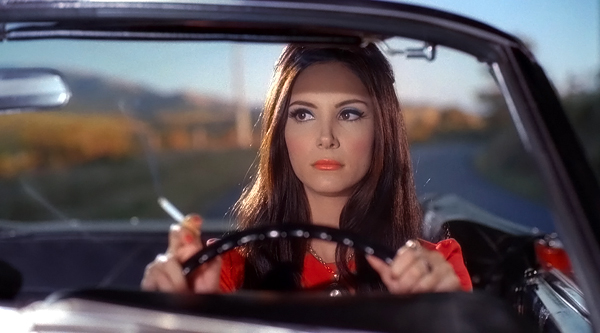
Lisa Marie Basile: I recently wrote an article about witchcraft as self-care — and part of that reasoning is that people are finally coming to understand that it's not just hocus-pocus, that it's not only real, but that there can be a feminist, empowering element to it. Your film explores both ends of the spectrum. The magic and feminism — the tampon soaked in urine and the body as power, but also the desperate need for male approval and love through the Craft. How did you approach that binary, and why was it important to you to explore both? 

Elaine’s need for respect and love is a primary human need, especially for people who were raised without love. What I have found is that women often turn to witchcraft to find personal power, which is how Elaine came to it. But she also came to it out of desperation, which is always a bad way to approach any kind of religion.

Lisa Marie Basile: I felt that The Love Witch had this Lynchian quality — there were plenty of scenes that had an eerie, uncomfortable undertone. A disconnect from reality, perhaps? It slowly creeps under your skin. I'd love to hear your thoughts on Lynch and your filmmaking inspirations in general. 

I’m actually interested in reality much more than I’m interested in disconnecting from it, although I like to construct an alternate reality with cinema. I’ve often been compared to Lynch, but I think he is trying to point out the weird in the everyday, and I am more trying to point out the mythic in the everyday. But I do agree that my work can be eerie.

I think the eeriness comes from the mix of strong, sincere emotions and heightened visuals, along with a slight sense of detachment from the whole thing. When I’m making a film I almost feel as if I am dead, I am that much in a trance. So I am looking down at the whole thing from a great height as if it has nothing to do with me, and I am just a spirit medium teasing the film out of the ether, but it’s based on all the things that happened to me in life and mediated magically through the media of script, acting, lighting, film, and editing. 

Elaine’s need for respect and love is a primary human need, especially for people who were raised without love.

Lisa Marie Basile: I respect so much that your film explains witchcraft as a way to manifest intent. I know you studied witchcraft when making this film. Have you thought that previous films showcased witchcraft incorrectly, as something different?

Witchcraft as a way of manifesting intent comes from modern Wicca and from Aleister Crowley. It’s how real practicing witches think of witchcraft. I’ve rarely seen any film that deals with witchcraft the way it’s actually practiced, except maybe the original version of The Wicker Man.

Lisa Marie Basile: [READERS BEWARE: SPOILER ALERT]

When Elaine kills Griff (and when Wayne dies), it is unclear to me how Elaine feels. I struggle with this a lot — and I've watched it a few times. Maybe that's because Elaine herself is both dark and light ("you have two selves," says Wayne). Is she capable of feeling loss? Is she mourning these men's imperfections and rejections?

I think that when Wayne dies, she is very sad. But it’s not the type of sad one usually feels when mourning a death; it’s more the type of sad when you’ve broken your new toy, and now you are bored because you have nothing to play with. So it’s “narcissistic sad.” When Griff dies she’s not sad — she’s more relieved. Now she’s done away with the obstacle of the real man who argues with her and refuses to tell her he loves her, and she instead has the imaginary man, who says he loves her, marries her, and carries her away on a white unicorn. So at this point she has completely lost touch with reality.

Lisa Marie Basile: I've heard a lot of comparisons between Elaine and Lana Del Rey, which is interesting (I LOVE them both) — and between The Love Witch and Lana Del Rey's sensibilities. What do you think?

I don’t know. They’re both pretty girls with long brown hair who dress ‘60s. It’s a pretty superficial comparison. I like Lana’s look and aesthetic a lot, though. 

BUY/WATCH THE LOVE WITCH ON AMAZON OR HERE.
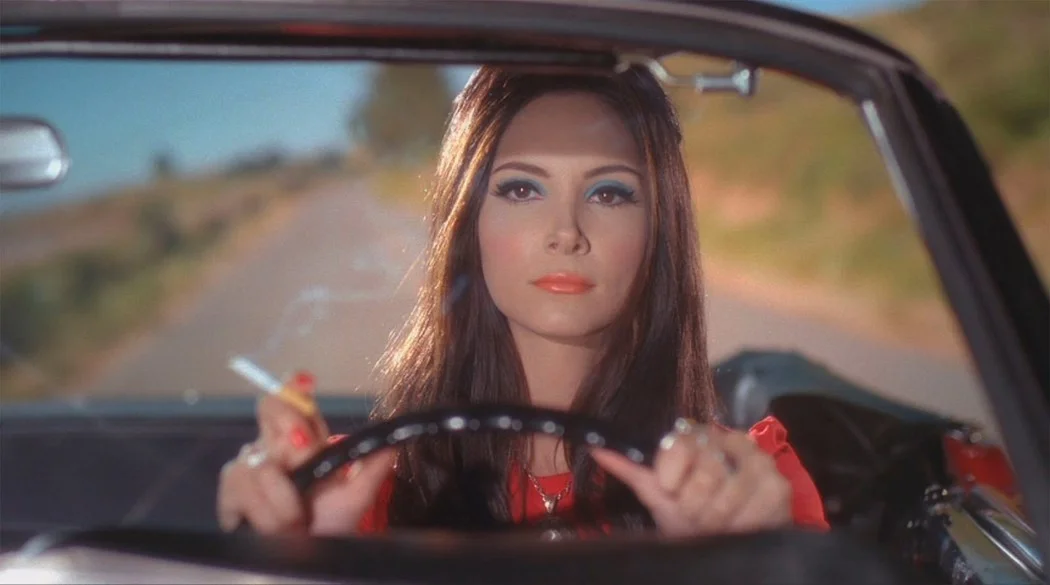
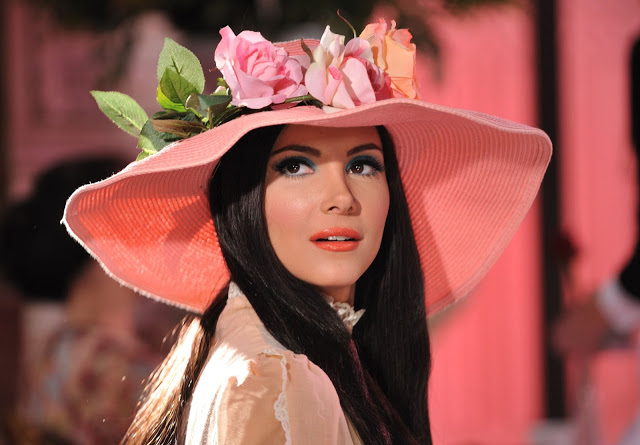
Elaine, a beautiful young witch, is determined to find a man to love her. In her gothic Victorian apartment she makes spells and potions, and then picks up men and seduces them.

In Interviews, Social Issues Tags the love witch, anna biller
Comment

The Love Witch is the Kitschy, Hedonistic, Feminist Film You Need to See

December 15, 2016

BY KAILEY TEDESCO

*Please note that there are some scene descriptions here, which may constitute a spoiler for some. 

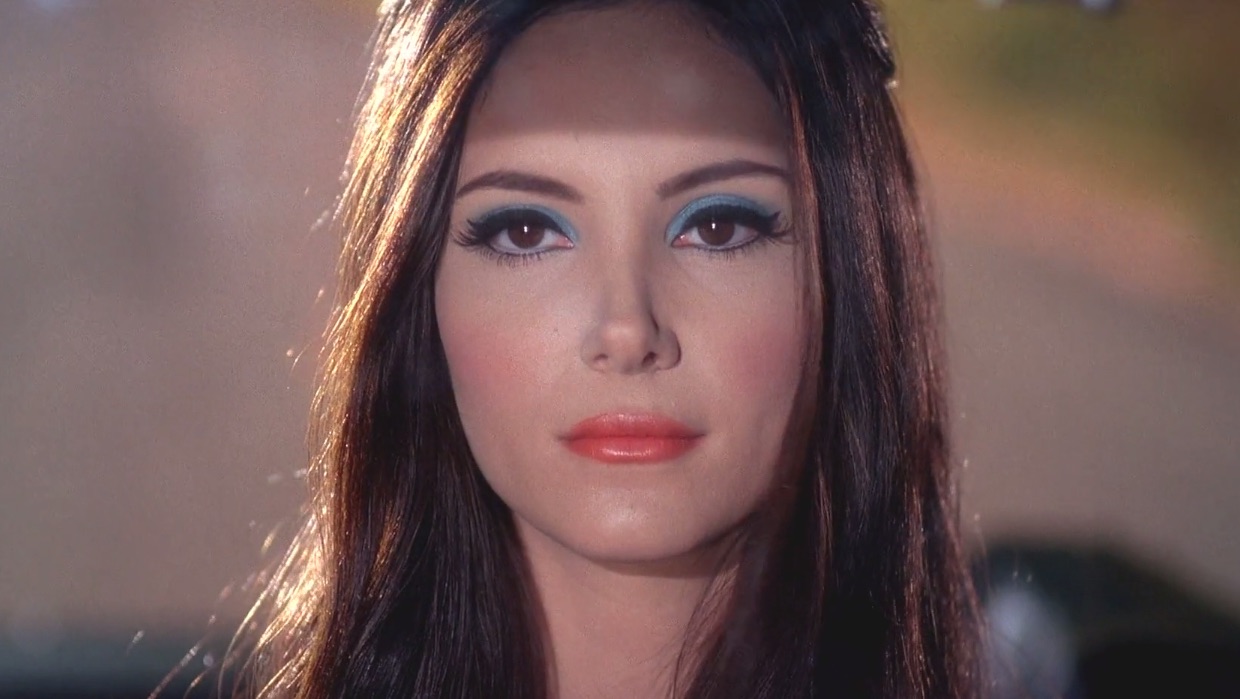
I found out about The Love Witch nearly a year ago. It all started with a still of Elaine Parks’ heavily shadowed eyelids and a tea dress with ruffles too glorious for words. The still became a fascination which led me to interviews with the film’s feminist auteur, Anna Biller, which eventually led me to a trailer, then back to some interviews, and so on for about nine months. It took until just yesterday for the movie to come to one of my city’s indie theaters. Usually, and in my personal experiences, a build-up of anticipation that long often results in disappointment. I remember thinking several times that this 1960’s B-Horror pastiche could not possibly live up to the hype which I, myself, have ascribed to it. 

Well, dear readers, let me tell you it was worth every moment of the wait. 

The film follows Elaine Parks (Samantha Robinson), a newly inducted yet gifted, member of a Wiccan coven who is quixotically obsessed (or, in her own words, “addicted) to love. After suffering years of gaslighting and emotional abuse in a previous marriage, Elaine is quickly scouted by a coven while dancing in a burlesque nightclub. From there, she quickly learns to transmogrify “sex magic” into “love magic,” but ultimately leaves each of her dalliances for dead.

Starring: Elle Evans, Samantha Robinson, Jeffrey Vincent Parise The Love Witch Official Trailer 1 (2016) - Horror Comedy A modern-day witch uses spells and magic to get men to fall in love with her, in a tribute to 1960s pulp novels and Technicolor melodramas.

The Love Witch is an open allegory with a feminist agenda. While the film’s aesthetic and score set the viewer up for the typical supernatural tropes of 1960’s technicolor horror, we are instead greeted with a more realistic sense of witches which somehow opposes and aligns with our own world’s cultural conceptions. This is because the “witch” is ostensibly equated to a sexually liberated woman, and the townspeople treat Elaine and her coven members as such. In a scene where Elaine meets up with her friend and coven member Barbara at a Burlesque show, men can be heard having discussions about how witches used to hide, but now they seem ubiquitous in society. The attitude towards witches and Wicca is mostly one of bigoted tolerance — as though witches have been publicly granted rights that the anti-intellectualist bar-dwellers can’t override, despite their disdain (sounds familiar, right?)

And the allegory grows stronger. 

Elaine herself, after losing weight and gaining empowerment after her husband “leaves,” willingly codifies herself according to the male-fantasy. In the beginning of the film, she sits down to tea with Trish, a self-proclaimed feminist who has been married for ten years. After hearing that Trish will often refuse her husband of some of his fantasies, Elaine scolds that women should always give men what they want. And this is exactly what she does… or so it would seem. 


Throughout the film, Elaine creates a world for herself that is heavily influenced by male-perpetuated ideas of femininity, ultimately masking herself in layers of Bardot-esque eyeliner and Audrey Hepburn LBDs. She is often cooking decadent cakes or donning renaissance gowns while riding horseback. She speaks politely and is never seen without make-up. When it comes time for intimacy, she seduces her lovers with elaborate dances in intricate lingerie. She makes herself, essentially, the embodiment of male fantasy. However, she is not quite the Stepford Wife that one might think. 

She uses her beauty and sexuality as a bait for men who describe themselves as libertines or unhappily married, aka sexists. From the start of the film, she can be seen batting her eyes in what one initially assumes might be a call-back to the Bewitched nose-wrinkle. Yet, these two are largely dissimilar as Elaine is not using magic at all, simply her own sexual prowess. The men she baits are already ignobly piqued by her as they often catcall and grope. She invites herself into their lives, feeds them a philter, and suddenly they become madly (in every sense of the word) in love. What begins as a dalliance quickly turns into a literal sickness that causes these men to become hysterical with love to the point of death.

The hysterics are played for laughs and ultimately reminiscent of the ways in which women have been misogynistically portrayed in film for the past century. Elaine has none of it, immediately becoming disinterested in her own subjects and proclaiming “what a pussy.” She buries the body of one lover ritualistically, yet ultimately remains un-phased. To top it off, she places a witch bottle containing her own urine and a used tampon over the shallow grave. Her Kardashian dead-pan narration asks viewers to consider that most men have never even seen a used tampon. What she calls an addiction to love is evidently an addiction to power. Elaine exemplifies the culturally normative ideas of masculine aloofness while patronizing her dying lovers in her ruffled mini-dresses.

Anna Biller flips the typified romantic narrative while also giving the protagonist her cake and letting her eat it, too (quite literally). Elaine hedonistically enjoys all of the pleasures associated with sexist romanticism without letting the male stick around long enough for her to suffer the consequences. She flits from man to man like this in perfectly polished composure while her own paintings of liberated goddesses cutting the heart out of a man line the walls of her bedroom a la Dorian Gray. She has polarity and unity of her being, and all of her empowerment lies in her willingness to appear submissive. 

Biller constructs this narrative through a carefully cultivated 60’s lens that sometimes alludes to even older Hollywood, yet the inclusion of a smart-phone at the end grounds the viewer in a phantasmagorical contemporary. The film is a world that already exists. Kubrick and Ashby and Argento are all carefully woven into it. Yet, it is not their world. Nor is it Tate’s or Hepburn’s. It is all Biller’s – a world which re-writes over a century of misogyny with one unapologetically empowered witch. 

And it is fantastic. Please see it for yourself. 


Kailey Tedesco is a recent Pushcart Prize nominee and the editor-in-chief of Rag Queen Periodical. She received her MFA in creative writing from Arcadia University. She’s a dreamer who believes in ghosts and mermaids. You can find her work in FLAPPERHOUSE, Menacing Hedge, Crack the Spine, and more. For more information, visit kaileytedesco.com.

In Art, Social Issues Tags anna biller, the love witch, 1960s, vintage, film, feminism, kubrick, dario argento, kitsch, hollywood, witch, witchcraft, sex, magic, cinema
Comment
Featured
‘in the glitter-open black' — poetry by Fox Henry Frazier
'poet as tarantula,  poem as waste' — poetry by  Ewen Glass
'poet as tarantula, poem as waste' — poetry by Ewen Glass
'Hours rot away in regalia' — poetry by Stephanie Chang
'down down down the hall of mirrors' — poetry by Ronnie K. Stephens
'Grew appendages, clawed towards light' — poetry by Lucie Brooks
'do not be afraid' — poetry by Maia Decker
'The darkened bedroom' — poetry by Jessica Purdy
'I am the body that I am under' — poetry by Jennifer MacBain-Stephens
instagram

COPYRIGHT LUNA LUNA MAGAZINE 2025