• Home
  • indulge
  • new poetry
    • About Luna Luna
    • resources
    • search
  • editor
  • dark hour
  • submit
Menu

luna luna magazine

  • Home
  • indulge
  • new poetry
  • About
    • About Luna Luna
    • resources
    • search
  • editor
  • dark hour
  • submit
delicious new poetry
'the doors of the night open' — poetry by Juan Armando Rojas (translated by Paula J. Lambert)
Nov 29, 2025
'the doors of the night open' — poetry by Juan Armando Rojas (translated by Paula J. Lambert)
Nov 29, 2025
Nov 29, 2025
'we can be forlorn women' — poetry by Stevie Belchak
Nov 29, 2025
'we can be forlorn women' — poetry by Stevie Belchak
Nov 29, 2025
Nov 29, 2025
'I do whatever the light tells me to' — poetry by Catherine Bai
Nov 29, 2025
'I do whatever the light tells me to' — poetry by Catherine Bai
Nov 29, 2025
Nov 29, 2025
‘to kill bodice and give sacrament’ — poetry By Kale Hensley
Nov 29, 2025
‘to kill bodice and give sacrament’ — poetry By Kale Hensley
Nov 29, 2025
Nov 29, 2025
'Venetian draped in goatskin' — poetry by Natalie Mariko
Nov 29, 2025
'Venetian draped in goatskin' — poetry by Natalie Mariko
Nov 29, 2025
Nov 29, 2025
'the long sorrow of the color red' — centos by Patrice Boyer Claeys
Nov 28, 2025
'the long sorrow of the color red' — centos by Patrice Boyer Claeys
Nov 28, 2025
Nov 28, 2025
'Flowers are the offspring of longing' — poetry by Ellen Kombiyil
Nov 28, 2025
'Flowers are the offspring of longing' — poetry by Ellen Kombiyil
Nov 28, 2025
Nov 28, 2025
'punish or repent' — poetry by Chris McCreary
Nov 28, 2025
'punish or repent' — poetry by Chris McCreary
Nov 28, 2025
Nov 28, 2025
'long, dangerous grasses' — poetry by Jessica Purdy
Nov 28, 2025
'long, dangerous grasses' — poetry by Jessica Purdy
Nov 28, 2025
Nov 28, 2025
'gifting nighttime honey' — poetry by Nathan Hassall
Nov 28, 2025
'gifting nighttime honey' — poetry by Nathan Hassall
Nov 28, 2025
Nov 28, 2025
'A theory of pauses' — poetry by Jeanne Morel and Anthony Warnke
Nov 28, 2025
'A theory of pauses' — poetry by Jeanne Morel and Anthony Warnke
Nov 28, 2025
Nov 28, 2025
'into the voluminous abyss' — poetry by D.J. Huppatz
Nov 28, 2025
'into the voluminous abyss' — poetry by D.J. Huppatz
Nov 28, 2025
Nov 28, 2025
'an animal within an animal' — a poem by Carolee Bennett
Nov 28, 2025
'an animal within an animal' — a poem by Carolee Bennett
Nov 28, 2025
Nov 28, 2025
‘in the glitter-open black' — poetry by Fox Henry Frazier
Oct 31, 2025
‘in the glitter-open black' — poetry by Fox Henry Frazier
Oct 31, 2025
Oct 31, 2025
'poet as tarantula,  poem as waste' — poetry by  Ewen Glass
Oct 31, 2025
'poet as tarantula, poem as waste' — poetry by Ewen Glass
Oct 31, 2025
Oct 31, 2025
'my god wearing a body' — poetry by Tom Nutting
Oct 31, 2025
'my god wearing a body' — poetry by Tom Nutting
Oct 31, 2025
Oct 31, 2025
'Hours rot away in regalia' — poetry by Stephanie Chang
Oct 31, 2025
'Hours rot away in regalia' — poetry by Stephanie Chang
Oct 31, 2025
Oct 31, 2025
'down down down the hall of mirrors' — poetry by Ronnie K. Stephens
Oct 31, 2025
'down down down the hall of mirrors' — poetry by Ronnie K. Stephens
Oct 31, 2025
Oct 31, 2025
'Grew appendages, clawed towards light' — poetry by Lucie Brooks
Oct 31, 2025
'Grew appendages, clawed towards light' — poetry by Lucie Brooks
Oct 31, 2025
Oct 31, 2025
'do not be afraid' — poetry by Maia Decker
Oct 31, 2025
'do not be afraid' — poetry by Maia Decker
Oct 31, 2025
Oct 31, 2025
'The darkened bedroom' — poetry by Jessica Purdy
Oct 31, 2025
'The darkened bedroom' — poetry by Jessica Purdy
Oct 31, 2025
Oct 31, 2025
'I am the body that I am under' — poetry by Jennifer MacBain-Stephens
Oct 31, 2025
'I am the body that I am under' — poetry by Jennifer MacBain-Stephens
Oct 31, 2025
Oct 31, 2025
goddess energy.jpg
Oct 26, 2025
'Hotter than gluttony' — poetry by Anne-Adele Wight
Oct 26, 2025
Oct 26, 2025
'As though from Babel' — poetry by Fox Henry Frazier
Oct 26, 2025
'As though from Babel' — poetry by Fox Henry Frazier
Oct 26, 2025
Oct 26, 2025
'See my wants' — poetry by Aaliyah Anderson
Oct 26, 2025
'See my wants' — poetry by Aaliyah Anderson
Oct 26, 2025
Oct 26, 2025
'black viper dangling a golden fruit' — poetry by Nova Glyn
Oct 26, 2025
'black viper dangling a golden fruit' — poetry by Nova Glyn
Oct 26, 2025
Oct 26, 2025
'It would be unfair to touch you' — poetry by grace (ge) gilbert
Oct 26, 2025
'It would be unfair to touch you' — poetry by grace (ge) gilbert
Oct 26, 2025
Oct 26, 2025
'Praying in retrograde' — poetry by Courtney Leigh
Oct 26, 2025
'Praying in retrograde' — poetry by Courtney Leigh
Oct 26, 2025
Oct 26, 2025
'To not want is death' — poetry by Letitia Trent
Oct 26, 2025
'To not want is death' — poetry by Letitia Trent
Oct 26, 2025
Oct 26, 2025
'Our wildness the eternal now' — poetry by Hannah Levy
Oct 26, 2025
'Our wildness the eternal now' — poetry by Hannah Levy
Oct 26, 2025
Oct 26, 2025
Screen Shot 2017-09-08 at 4.16.58 PM.png

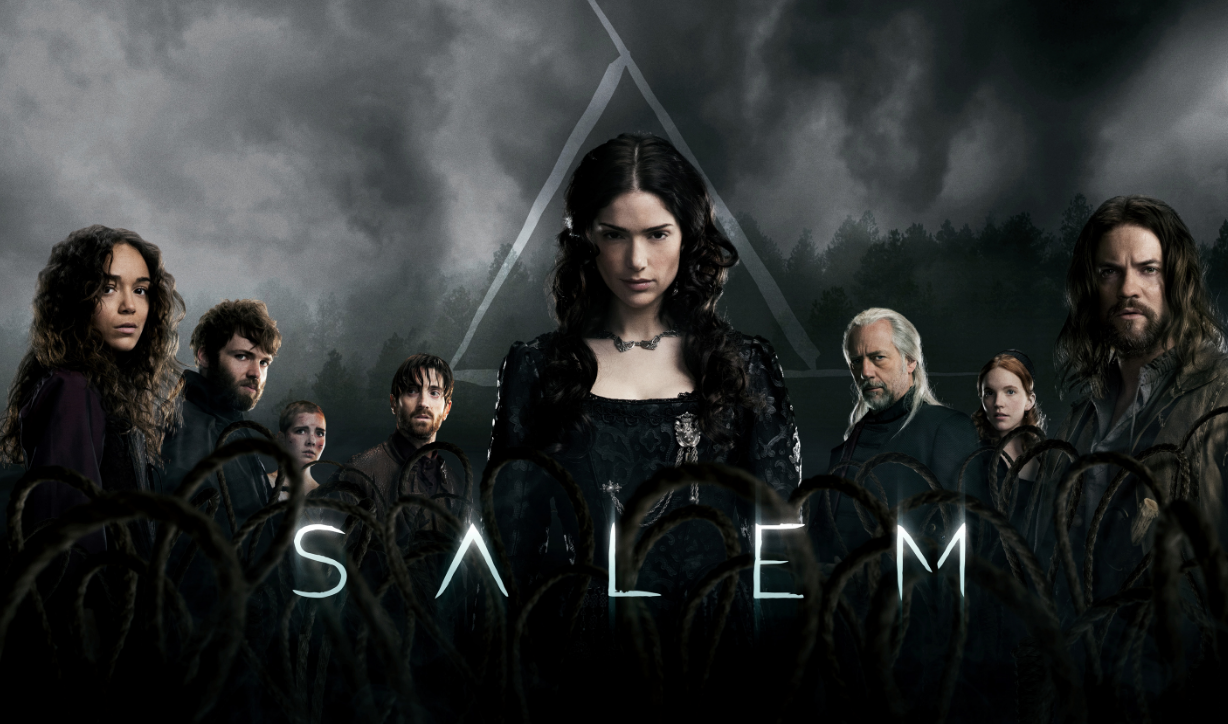
'Salem' Is the Bad Netflix Show You Need to Watch

September 11, 2017

BY JOANNA C. VALENTE

A lot of people don't like to admit the "bad" art or music or movies or TV shows they enjoy. I personally don't care (because entertainment is entertainment and we all need to take a break sometimes). One of mine is the Netflix show "Salem," a show that was cancelled after three seasons, airing its last episode in January 2017 after starting in 2014. 

While it's not altogether surprising that I would want to check out a show about witches, particularly a fictionalized version of the Salem witch trials, I continued to watch it, despite the fact that it was definitely cheesy more often than not. 

So, why? Well, it explored racism and sexism in a way that surprised me, and in a more sophisticated way than many horror shows usually do. American Horror Story, for instance, has been hit and miss for me (there were some things to love about the "Coven" season when it came to feminism, and some necessary transgender/LGBTQ themes during "Hotel," but there's also been a lot of failures, too). 

The show, for instance, is deeply centered around women, particularly, how women had very little choice, a truth the show openly talks about. Mary Sibley, for instance, becomes pregnant while the baby's father goes off to war, leaving her with little choice but to get rid of the child via witchcraft. Mary ends up becoming so powerful, she controls Salem (through her witchcraft and pragmatic marriage to a rich older dude who is a huge jerk). Sure, she could have had the baby, but single moms with no income were essentially pitted to an alienating life forever, not to mention one of eternal struggle.

In this way, she's the anti-heroine who is selfish and manipulative, an easy person to dislike, but it's hard not to empathize even a little, considering she has been forced to make terrible choices, because women didn't have many choices. If at all, in the grand scheme.

It's not just about Mary though. Anne Hane, Mercy Lewis, and Tituba are the three other female characters the show explores the themes of racism, sexism, power, and choice through. All the characters have choices, even if they are limited - but within a confining context.

While it could be argued that Mary, for instance, didn't have much of a choice but to manipulate and antagonize the other women in Salem in order to retain her power and control, she does. She abuses Mercy and Tituba, using them as her puppets and minions. In this way, she is as much of an abuser as the men in Salem are, unable to understand how to truly liberate her fellow women.

In this way, it's not surprising when Mercy follows Mary's steps, taking over the brothel as a safe haven for girls, which is truly at once a safe haven, helping the girls in Salem who are abused by their fathers and husbands, or otherwise abandoned. 

RELATED: The 20 Best TV Intros of All Time

However, of course, she does this for a price (aka, blood). Like Mary. Anne, who is initially innocent at the start of the show, does the same when she discovers her powers, and finds way to overpower everyone, including Mary. Anne's complete control is both surprising, but also a gratifying end, proving that women don't need to be saved. Or want to be. 

The show illustrates what oppression really does to people, to good people who normally would not choose the lesser, more selfish path. What happens to those trapped in the middle and at the bottom? 

It's really Tituba who is the most compelling character in the series (also based on a real person, one of the first women to be accused of witchcraft during the hysteria of 1692), however, because she's a woman of color, who was stolen and forced into slavery. The show even went so far as to include the scene where she is tortured and questioned (because, historically, this is how you figured out if someone was a witch...), and the scene was horrifying and terrifying. What was done to her was gruesome - as is still the reality for women of color.

Was the gratuity needed (and really, is it ever)? Probably not. In some way, though, it does seem as if the show wanted to emphasize the pain Tituba felt her entire life, being sold into slavery by white men, seeing her family members raped, being raped by white men herself. And Mather, the man torturing her, is just further evidence of the hands of oppression. 

While this isn't exactly news, most mainstream TV shows never seem to include the plight, persecution, oppression, and isolation of women of color, especially in the past. For many viewers, Tituba's storyline makes the show worth watching, as do all the women, even if the historical accuracy isn't exactly what I would have wanted (there were so many angles the show could have taken that it didn't, many missed opportunities for sure). 


Joanna C. Valente is a human who lives in Brooklyn, New York, and is the author of Sirs & Madams (Aldrich Press, 2014), The Gods Are Dead (Deadly Chaps Press, 2015), Marys of the Sea (The Operating System, 2017), Xenos (Agape Editions, 2016) and the editor of A Shadow Map: An Anthology by Survivors of Sexual Assault (CCM, 2017). Joanna received a MFA in writing at Sarah Lawrence College, and is also the founder of Yes, Poetry, a managing editor for Luna Luna Magazine and CCM, as well as an instructor at Brooklyn Poets. Some of their writing has appeared, or is forthcoming, in Brooklyn Magazine, Prelude, Apogee, Spork, The Feminist Wire, BUST, and elsewhere. 

In Pop Culture Tags tv, Television, witchcraft
← Poetry by Monica RicoIs It OK To Make Fun Of Instagram Poets? →
Featured
‘in the glitter-open black' — poetry by Fox Henry Frazier
'poet as tarantula,  poem as waste' — poetry by  Ewen Glass
'poet as tarantula, poem as waste' — poetry by Ewen Glass
'Hours rot away in regalia' — poetry by Stephanie Chang
'down down down the hall of mirrors' — poetry by Ronnie K. Stephens
'Grew appendages, clawed towards light' — poetry by Lucie Brooks
'do not be afraid' — poetry by Maia Decker
'The darkened bedroom' — poetry by Jessica Purdy
'I am the body that I am under' — poetry by Jennifer MacBain-Stephens
instagram

COPYRIGHT LUNA LUNA MAGAZINE 2025