• Home
  • indulge
  • new poetry
    • About Luna Luna
    • resources
    • search
  • editor
  • dark hour
  • submit
Menu

luna luna magazine

  • Home
  • indulge
  • new poetry
  • About
    • About Luna Luna
    • resources
    • search
  • editor
  • dark hour
  • submit
delicious new poetry
'the doors of the night open' — poetry by Juan Armando Rojas (translated by Paula J. Lambert)
Nov 29, 2025
'the doors of the night open' — poetry by Juan Armando Rojas (translated by Paula J. Lambert)
Nov 29, 2025
Nov 29, 2025
'we can be forlorn women' — poetry by Stevie Belchak
Nov 29, 2025
'we can be forlorn women' — poetry by Stevie Belchak
Nov 29, 2025
Nov 29, 2025
'I do whatever the light tells me to' — poetry by Catherine Bai
Nov 29, 2025
'I do whatever the light tells me to' — poetry by Catherine Bai
Nov 29, 2025
Nov 29, 2025
‘to kill bodice and give sacrament’ — poetry By Kale Hensley
Nov 29, 2025
‘to kill bodice and give sacrament’ — poetry By Kale Hensley
Nov 29, 2025
Nov 29, 2025
'Venetian draped in goatskin' — poetry by Natalie Mariko
Nov 29, 2025
'Venetian draped in goatskin' — poetry by Natalie Mariko
Nov 29, 2025
Nov 29, 2025
'the long sorrow of the color red' — centos by Patrice Boyer Claeys
Nov 28, 2025
'the long sorrow of the color red' — centos by Patrice Boyer Claeys
Nov 28, 2025
Nov 28, 2025
'Flowers are the offspring of longing' — poetry by Ellen Kombiyil
Nov 28, 2025
'Flowers are the offspring of longing' — poetry by Ellen Kombiyil
Nov 28, 2025
Nov 28, 2025
'punish or repent' — poetry by Chris McCreary
Nov 28, 2025
'punish or repent' — poetry by Chris McCreary
Nov 28, 2025
Nov 28, 2025
'long, dangerous grasses' — poetry by Jessica Purdy
Nov 28, 2025
'long, dangerous grasses' — poetry by Jessica Purdy
Nov 28, 2025
Nov 28, 2025
'gifting nighttime honey' — poetry by Nathan Hassall
Nov 28, 2025
'gifting nighttime honey' — poetry by Nathan Hassall
Nov 28, 2025
Nov 28, 2025
'A theory of pauses' — poetry by Jeanne Morel and Anthony Warnke
Nov 28, 2025
'A theory of pauses' — poetry by Jeanne Morel and Anthony Warnke
Nov 28, 2025
Nov 28, 2025
'into the voluminous abyss' — poetry by D.J. Huppatz
Nov 28, 2025
'into the voluminous abyss' — poetry by D.J. Huppatz
Nov 28, 2025
Nov 28, 2025
'an animal within an animal' — a poem by Carolee Bennett
Nov 28, 2025
'an animal within an animal' — a poem by Carolee Bennett
Nov 28, 2025
Nov 28, 2025
‘in the glitter-open black' — poetry by Fox Henry Frazier
Oct 31, 2025
‘in the glitter-open black' — poetry by Fox Henry Frazier
Oct 31, 2025
Oct 31, 2025
'poet as tarantula,  poem as waste' — poetry by  Ewen Glass
Oct 31, 2025
'poet as tarantula, poem as waste' — poetry by Ewen Glass
Oct 31, 2025
Oct 31, 2025
'my god wearing a body' — poetry by Tom Nutting
Oct 31, 2025
'my god wearing a body' — poetry by Tom Nutting
Oct 31, 2025
Oct 31, 2025
'Hours rot away in regalia' — poetry by Stephanie Chang
Oct 31, 2025
'Hours rot away in regalia' — poetry by Stephanie Chang
Oct 31, 2025
Oct 31, 2025
'down down down the hall of mirrors' — poetry by Ronnie K. Stephens
Oct 31, 2025
'down down down the hall of mirrors' — poetry by Ronnie K. Stephens
Oct 31, 2025
Oct 31, 2025
'Grew appendages, clawed towards light' — poetry by Lucie Brooks
Oct 31, 2025
'Grew appendages, clawed towards light' — poetry by Lucie Brooks
Oct 31, 2025
Oct 31, 2025
'do not be afraid' — poetry by Maia Decker
Oct 31, 2025
'do not be afraid' — poetry by Maia Decker
Oct 31, 2025
Oct 31, 2025
'The darkened bedroom' — poetry by Jessica Purdy
Oct 31, 2025
'The darkened bedroom' — poetry by Jessica Purdy
Oct 31, 2025
Oct 31, 2025
'I am the body that I am under' — poetry by Jennifer MacBain-Stephens
Oct 31, 2025
'I am the body that I am under' — poetry by Jennifer MacBain-Stephens
Oct 31, 2025
Oct 31, 2025
goddess energy.jpg
Oct 26, 2025
'Hotter than gluttony' — poetry by Anne-Adele Wight
Oct 26, 2025
Oct 26, 2025
'As though from Babel' — poetry by Fox Henry Frazier
Oct 26, 2025
'As though from Babel' — poetry by Fox Henry Frazier
Oct 26, 2025
Oct 26, 2025
'See my wants' — poetry by Aaliyah Anderson
Oct 26, 2025
'See my wants' — poetry by Aaliyah Anderson
Oct 26, 2025
Oct 26, 2025
'black viper dangling a golden fruit' — poetry by Nova Glyn
Oct 26, 2025
'black viper dangling a golden fruit' — poetry by Nova Glyn
Oct 26, 2025
Oct 26, 2025
'It would be unfair to touch you' — poetry by grace (ge) gilbert
Oct 26, 2025
'It would be unfair to touch you' — poetry by grace (ge) gilbert
Oct 26, 2025
Oct 26, 2025
'Praying in retrograde' — poetry by Courtney Leigh
Oct 26, 2025
'Praying in retrograde' — poetry by Courtney Leigh
Oct 26, 2025
Oct 26, 2025
'To not want is death' — poetry by Letitia Trent
Oct 26, 2025
'To not want is death' — poetry by Letitia Trent
Oct 26, 2025
Oct 26, 2025
'Our wildness the eternal now' — poetry by Hannah Levy
Oct 26, 2025
'Our wildness the eternal now' — poetry by Hannah Levy
Oct 26, 2025
Oct 26, 2025
wilhelm-gunkel-ZIQb1OkI7Ss-unsplash.jpg

Spoonie Witch Magic and Wordcraft

March 2, 2021

BY LISA MARIE BASILE

I spend a lot of time thinking about disability and accessibility in our sacred or creative practices, and how our lives are affected by, informed by, or intersected by our bodies and our wellness. A few examples: Do places of worship offer a wheelchair ramp? Can we modify more meditation classes for folks who can’t sit down at all or for long periods (me!)? Do we feel encouraged to create altar spaces that are tiny, portable, and simple...so we can take it to bed during flare-ups? Do poetry conferences or literary reading spaces make accessibility a priority?

View this post on Instagram

A post shared by 🗝 ritual poetica 🗝 (@ritual_poetica)

I believe that we should all feel encouraged and inspired to practice, pray, or tap into sacredness in a way that works for our minds and bodies — and to use our body/pain/individual experiences as a strength or energy source?

These Spoonie Witch ideas, insights, and prompts are intended to get you thinking about your magic and your power — in ways that work for you. They are designed to help you send love to yourself and reclaim your narrative. Whatever that is, and wherever you may be in the process.

PS: I live with ankylosing spondylitis, a degenerative spinal disease that affects pretty much everything, from my heart to my gut. I can’t POSSIBLY speak to everyone’s experience, but this comes from my own.

My next book, City Witchery, is coming out later this year — and deals largely with finding accessible ways to tap into sacredness in a city environment, and inside of an apartment/shared space/small space.

finding empowerment

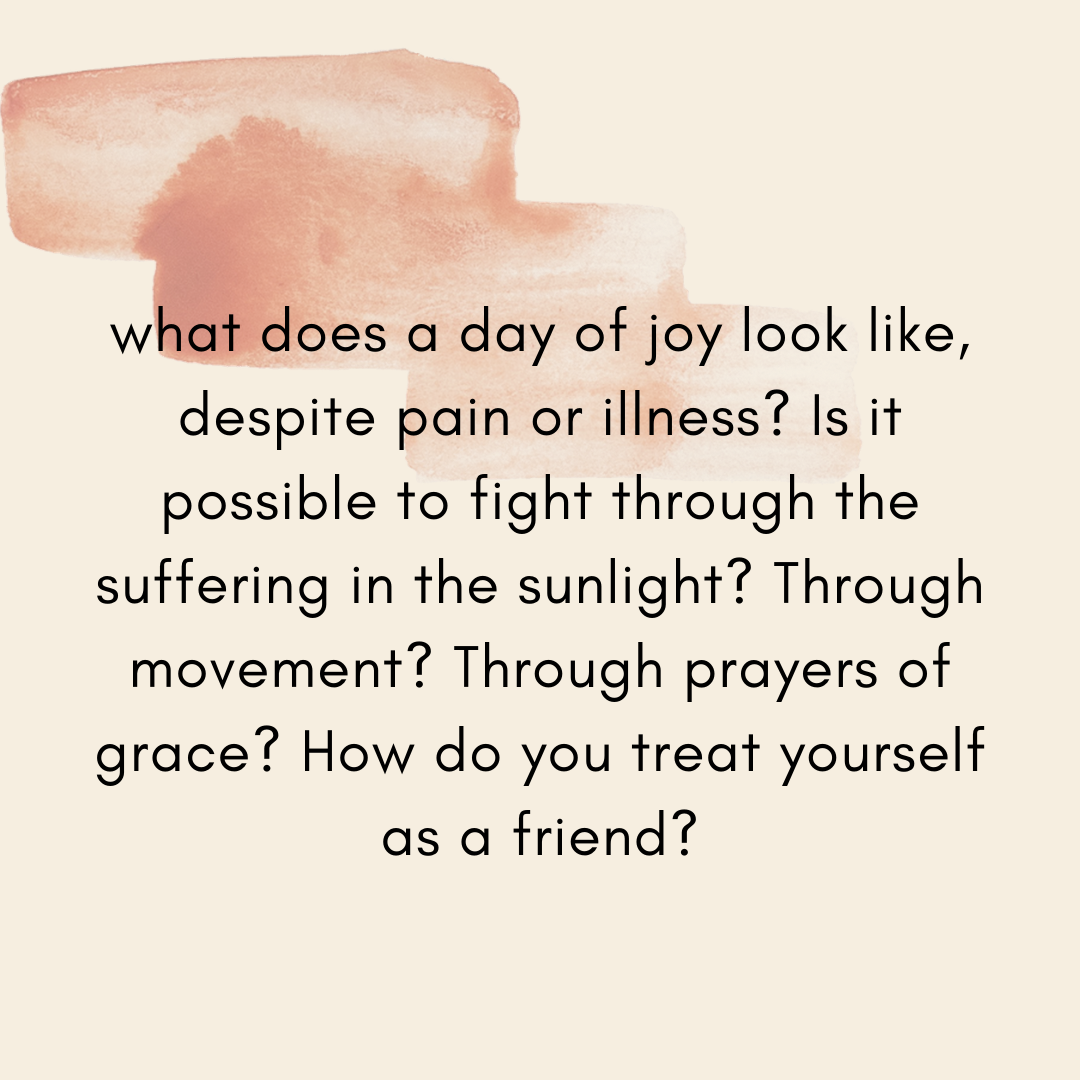
Where there are perceived or real limitations, there are also opportunities for growth. Pain often gives us empathy. Loneliness can make us creative. Frustration can drive real social change. Using that big, potent energy in your own magical practice can create change and push toward transformation. Isn't that the goal? To change, to grow? To lean into the power? Don’t be afraid to transmute those big feelings — frustration at broken systems, social isolation due to chronic flare-ups — into your magic.

Sometimes, when the feelings are overwhelming, I work with candle magic — pushing all those ideas into the flame, watching them dance and flicker and turn into something stronger.

tuning into the body

Spending so much time tuned in to your body — and tending to its needs — can be exhausting. But it also means that you are damn good at tapping into your body more readily. Where do you feel energy, anxiety, power, or sensuality? Where do you feel anger or empathy? Pull from that source and use it in your spells or visualizations.

finding what works for you

What form of magic feels right to you? Some of us can't move/perform/concentrate, etc like others. That is okay. Make a list of what feels right to you. Is It breathwork, sex magic, visualization, concentration, writing? Embrace the notion that YOU can adapt rituals or practices to your strengths. You have the right to choose.

creating accessible altars

The idea that we need certain tools or fancy objects or an immaculate, rose-adorned space to perform our sacred practice is outdated. Not everything is Instagrammable; that’s just not realistic. Make a small box or bag and fill it with a few power Items (a candle, tarot, salts, or stones). Keep your journal or grimoire with it. Keep it at your bedside for flare days. That's more than magical enough. Shout out to Ryn’s Ramblings for their awesome ideas around magic and chronic illness (and Altoid box altars!).

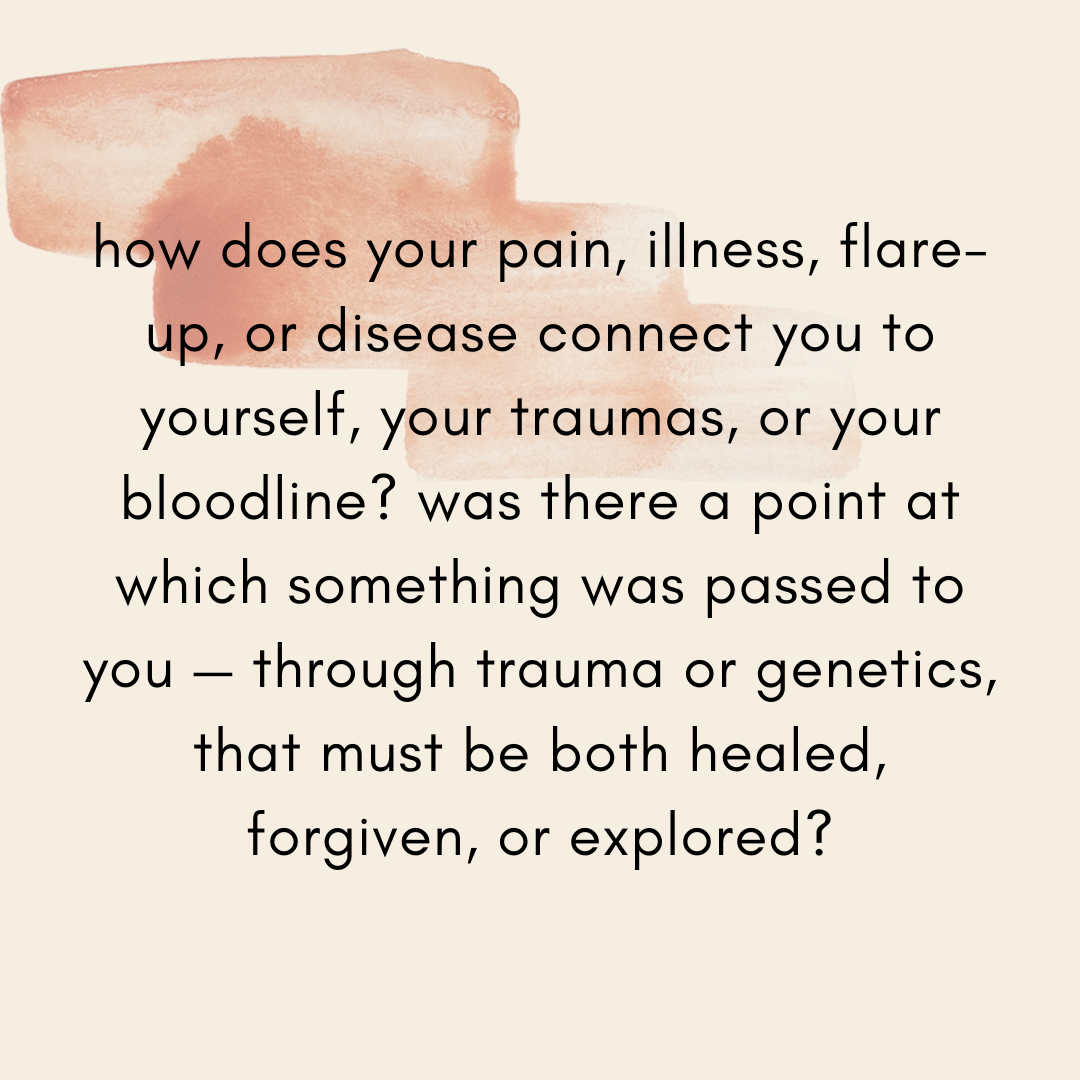
shadow working pain

We all hate pain and discomfort. What if we listened to it, gave it compassion, and gave it attention (rather than seeking distraction)? This is a form of shadow work. The pain is not separate from you. It Is a part of you. This gives you the ability to notice it, transmute it, use it, and find strength in it. Pain can be an energy source; you get to choose when and how.

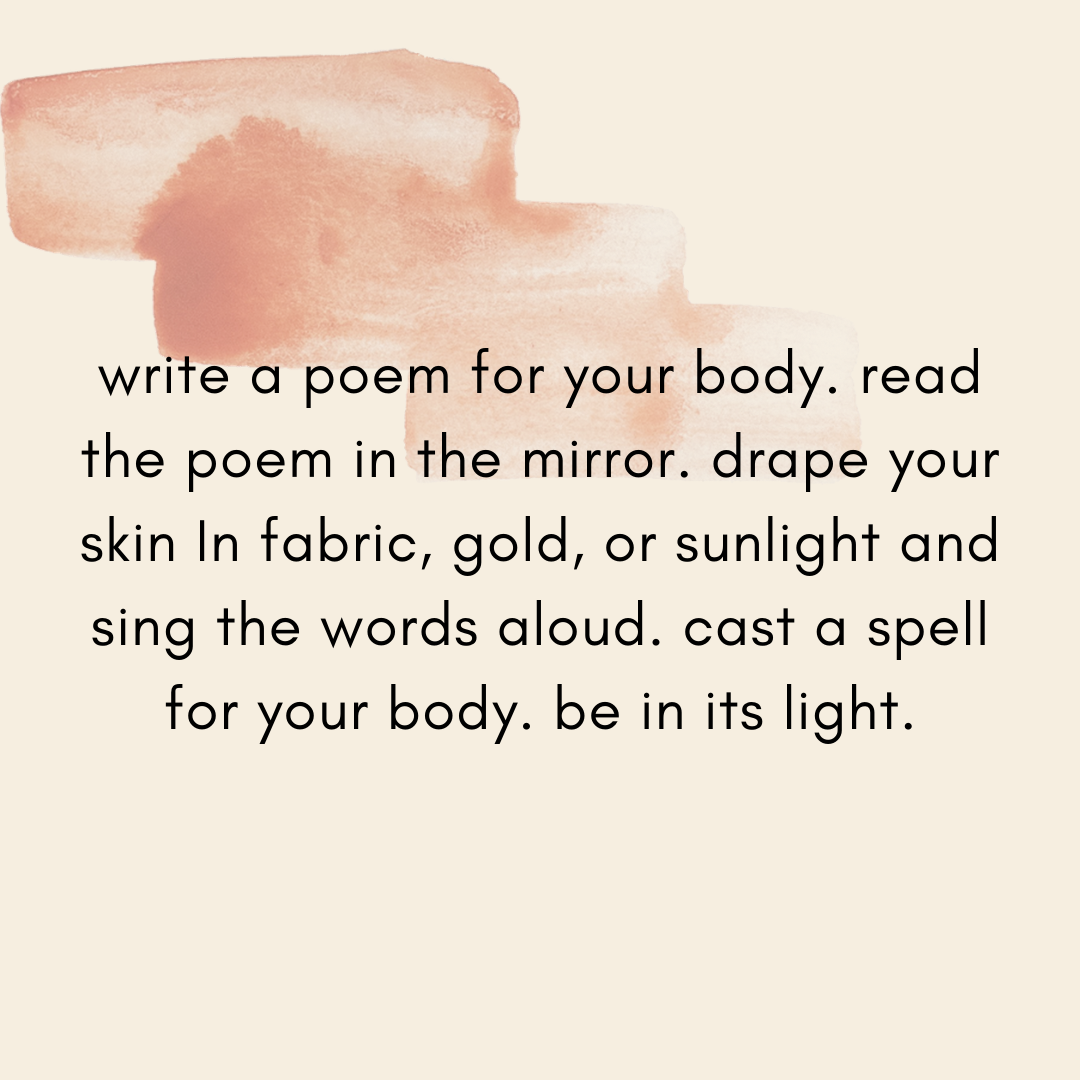
body poetics

Write a poem to your body, to your brain fog, to your Insomnia, to your limited mobility, to your grief, to your reflection, to your bruised arms, your shaking legs, your scars, your distracted mind. What would a love poem to yourself look like? What would a rage poem sound like? How would an ode to your beautiful neurodiversity read? What does it sound like when we write the narrative, and when we reclaim our story?

Read it aloud and feel the power in your words. 

Need some inspiration? Be sure to work through these chronic illness journaling prompts I’ve created right here.

A note on magic and wellness

While ritual can help us center ourselves and find empowerment, autonomy, and magic, it is not a cure for chronic illness. Reach out for professional help. Seek medication. Know that social and political oppression can directly affect you in ways that spells or prayers can’t vanquish. Take care of your body. Seek community. And know that you’re not alone.


—

Lisa Marie Basile (she/her) is a poet, essayist, editor, and chronic illness awareness advocate living in New York City. She's the founder and creative director of Luna Luna Magazine and its online community, and the creator of Ritual Poetica, a curiosity project dedicated to exploring the intersection of writing, creativity, healing, & sacredness.

She is the author of THE MAGICAL WRITING GRIMOIRE, LIGHT MAGIC FOR DARK TIMES, and a few poetry collections, including the recent NYMPHOLEPSY, which is excerpted in Best American Experimental Writing 2020. Her essays and other work can be found in The New York Times, Narratively, Sabat Magazine, We Are Grimoire, Witch Craft Magazine, Refinery 29, Self, Healthline, Entropy, On Loan From The Cosmos, Chakrubs, Catapult, Bust, Bustle, and more. She is also a chronic illness advocate, keeping columns at several chronic illness patient websites. She earned a Masters's degree in Writing from The New School and studied literature and psychology as an undergraduate at Pace University. You can follow her at lisamariebasile.
In Wellness, Magic Tags spoonie witch, spoonie, chronic illness, ankylosing spondylitis, chronic pain, witchcraft, sick witch
Comment
karly-jones-TbP5ezB2-og-unsplash.jpg

Managing Creativity With Chronic Illness

March 1, 2021

How can we tap into our creative energies when we are battling chronic fatigue, chronic pain, inflammatory issues, brain fog, & the mental health issues that come from managing illness?

Read More
In Body Ritual, Lifestyle, Poetry & Prose, Wellness Tags chronic illness, Chronic pain, Creativity, Creative Accountability, self love, Self care
Comment
elia-pellegrini-TKI53qncsXc-unsplash.jpg

Magical Thinking: Finding a Way Back to the Body

November 12, 2020

BY JENNIFER BROUGH

“To tell the truth is to become beautiful, to begin to love yourself, value yourself. And that's political, in its most profound way.”

Autumn arrives, at last, in explosions of red, orange, and yellow. Night creeps in sooner and small crackles of change electrify the air. Leaves fall echoing circular motions of death and, soon enough, gentle rebirth. In a year so fractured with continual threats to life, through health and politically corrupt structures worldwide, the seasonal shift and recently passed samhain provide much-needed anchors in times that are easy to feel adrift in.

Realising that the year is almost over, I am - as I imagine others will be - still trying to find footing against a backdrop of low-level anxiety, violence on a global scale, and fears of what the future will unveil. As the natural world is entering its cycle of decay, I feel a growing sense of invigoration. In addition to enjoying my favourite season and kindling flames of inspiration from the work of activists, artists, and writers, I am now fully recovered from a long-awaited operation for endometriosis. As my body is expanding in its range of capabilities, I feel not a sense of return to myself, but a new series of openings slowly unfolding.

Dissociation

Many chronic illness sufferers will be familiar with Susan Sontag’s Illness as Metaphor, and the “kingdom of the well and the kingdom of the sick”. The former is all around us, institutionalised in gyms, doctors’ surgeries, stores, and diet plans. The wellness industrial complex has extended its tendrils into every area of consumable content, promising continual health - or the idea of it - in exchange for clean eating, charcoal, burpees, and multiple other methods. This kingdom feels even larger when you stand outside its drawbridge, and my ushering into the other, bleaker realm was not a gentle one.

Six years ago, I woke in blistering pain. I showered, vomited, and, bent double, phoned the National Health Service helpline for advice. A suspected ruptured appendix later became a twisted fallopian tube cutting off the blood supply to my right ovary. An uncommon, deeply uncomfortable event. That night in the hospital bed, as I swam in a tramadol haze, the pain suddenly stopped. The surgery was the following morning, but by then the ovary had ‘died’, as the surgeon told me post-op. She explained that, “a normal ovary is white, like a golf ball, but yours…” then showed me a photograph of a purple apple-sized mass. “Oh, right,” I replied, mentally adrift. “You can still have children,” she assured me, but it was hard to accept this token of relief. I asked what they did with the ovary, wondering if it had already been burned away or was floating in a jar somewhere. I don’t remember her exact answer, but the word disposed bubbles up.

Since that incident something internal had shifted and, a year later, the pain resumed. The officious surgeon I sat across from mentioned the possibility of endometriosis and scheduled another operation. She was right. The endometriosis was mild, ablated away, and I was stitched up and sent home. I remember taking the bus back from the hospital feeling that familiar separation. After another physical removal of infected tissue, I felt a mental removal from myself. I tried not to dwell in that darkening space.

The problem with endometriosis, however, is that it can grow back at any time - even if managed with hormones. I, like many other people living with it, have become a minor expert in this condition, advocating for bodily autonomy and the best course of treatment. The process is disheartening and tiring, and can make the body feel like an uncooperative machine. In living with endometriosis, alongside fibromyalgia, my body became a source of blame. It was the reason my social life suffered, intimacy became strained, and it acted as a brake on any form of spontaneity. Only recently, after much therapy, I realised the need to reclaim my body, to learn to live in it, as well as with it, anew.

Division

After my most recent laparoscopy, suspended between waking and dreaming, I saw two dark green frogs sat on my chest. Their glassy eyes looked up unblinking. When I came around properly, I searched for what the appearance of frogs in dreams mean - transformation and renewal. Sometimes metaphors write themselves.

Despite the chronic nature of this illness, transforming my thinking beyond a binary approach to wellness has been necessary to keep going. Pain and its management are seldom either/or states. Instead pain is shades of a spectrum; some days are manageable and I am active, others are better suited to staying in bed. I initially resisted identifying myself as ‘disabled’, believing I was unworthy of the designation. Part of this emerges from a need to categorise phenomena in our search for meaning - to define something as this or that - but also a lifelong struggle with being ‘enough’. Redefining how I see and accept myself is overdue, an act that won’t be completed quickly. 

Part of this redefinition extends outside of self-care to how I’ve come to define the concept of care as a collective verb. Feminist movements have been historically predicated on group efforts, in which each person has a role and is supported by others. As the pandemic presses on the most vulnerable in our society, mutual aid groups have organised food parcels, rent strikes, and fundraising in the absence of meaningful action from governments. The patient/doctor experience also operates on a similar top-down structure, and I have been bolstered by finding virtual communities and friends through online spaces of care. We’ve exchanged tips and tricks when in those medical offices, signed each other’s petitions, and created art centred around disability. The latter especially has been particularly restorative. Not only do these projects offer artistic and experiential solidarity, but give us the room to indicate towards the worlds we desire, a vague map of how we write them into existence. 

The three division mark scars I bear on my pelvis serve as a reminder of the necessity to collapse separation between several areas; be it the medical either/or of the kingdoms of the well and the sick; the dissociation between acknowledging and responding to the needs of my body; or the experience of sickness as an individual, instead of a part of a shared group.

Deep Diving

Outside of these groups and creative practices, two friends and I have formed a coven. A place where we mostly watch horror films, discuss tarot, and share memes and art. On the day of the most recent new moon, my friend led a ritual of letting go and rebirth. Over Whatsapp, we spent half an hour meditating, writing down what we hoped for, and what we wanted to purge ourselves of. After folding our papers up tightly, we burned each piece. I felt my body move as I breathed, where pain niggled and how it sat in relation to the rest of my being. Something shifted.   

Perhaps not as intense as The Craft, but our coven’s ritual proved deeply emotional nonetheless. Not just because of the things we ablated, but the act of carving out time for oneself and others frees the subconscious to become unstuck. Allowing oneself to take time and reveal desires to ourselves forfeits certainty. More so, it allows vulnerability. To feel what it means to really inhabit the bodies we are in. In these small sacred acts, there is room for the chaotic, the uncontrolled, and this is deeply liberating.

A few days after the ritual, I came across a line from the poet June Jordan:

“To tell the truth is to become beautiful, to begin to love yourself, value yourself. And that's political, in its most profound way.”

I interpret telling the truth as a continual, reflective act, a mode of being to carry in each place we occupy - alone or as part of a group. Telling the truth about how the world is, and how you are within it, allows the lines of stability and categoriSation to blur. Telling the truth is, as Jordan says, a process of becoming. For me, it has been recognising that while I have muted these inner feelings of loss or disappointment, they always catch up. In leaning into the darker parts through meditative moments and online spaces, I can feel the raw nerve endings of bodily acceptance pulsing, and possibility glitters. 

Jennifer Brough is a writer and editor living in London. Her work has most recently appeared in perhappened, Artsy, and Barren Magazine. She curates creative submissions for Sisters of Frida, an experimental collective of disabled women. You can find her on Twitter @jennifer_brough or jenniferlbrough.com.

In Body Ritual, Wellness, Personal Essay, Magic Tags endometriosis, ritual, chronic illness
Comment
by Lisa Marie Basile / ritual poetica

by Lisa Marie Basile / ritual poetica

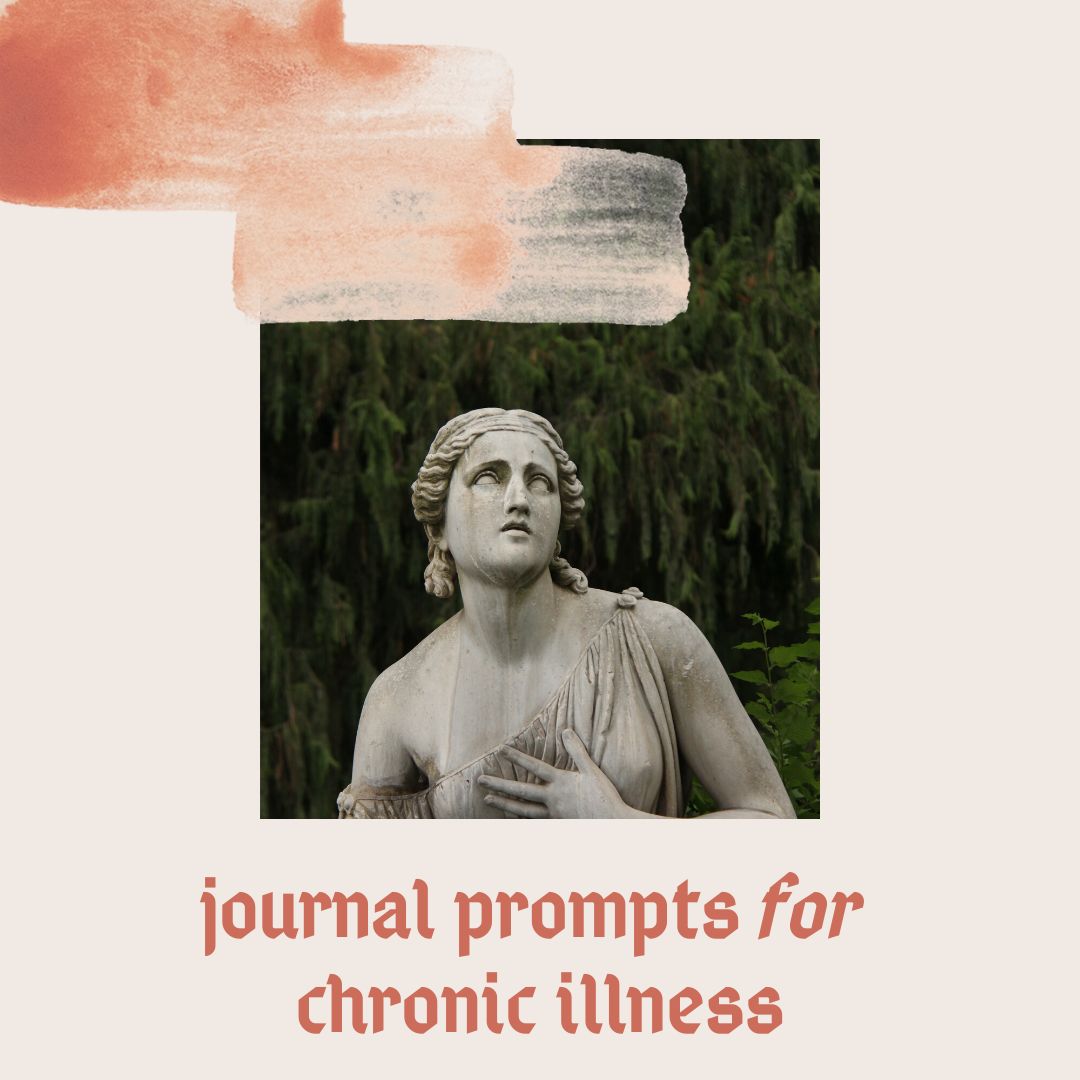
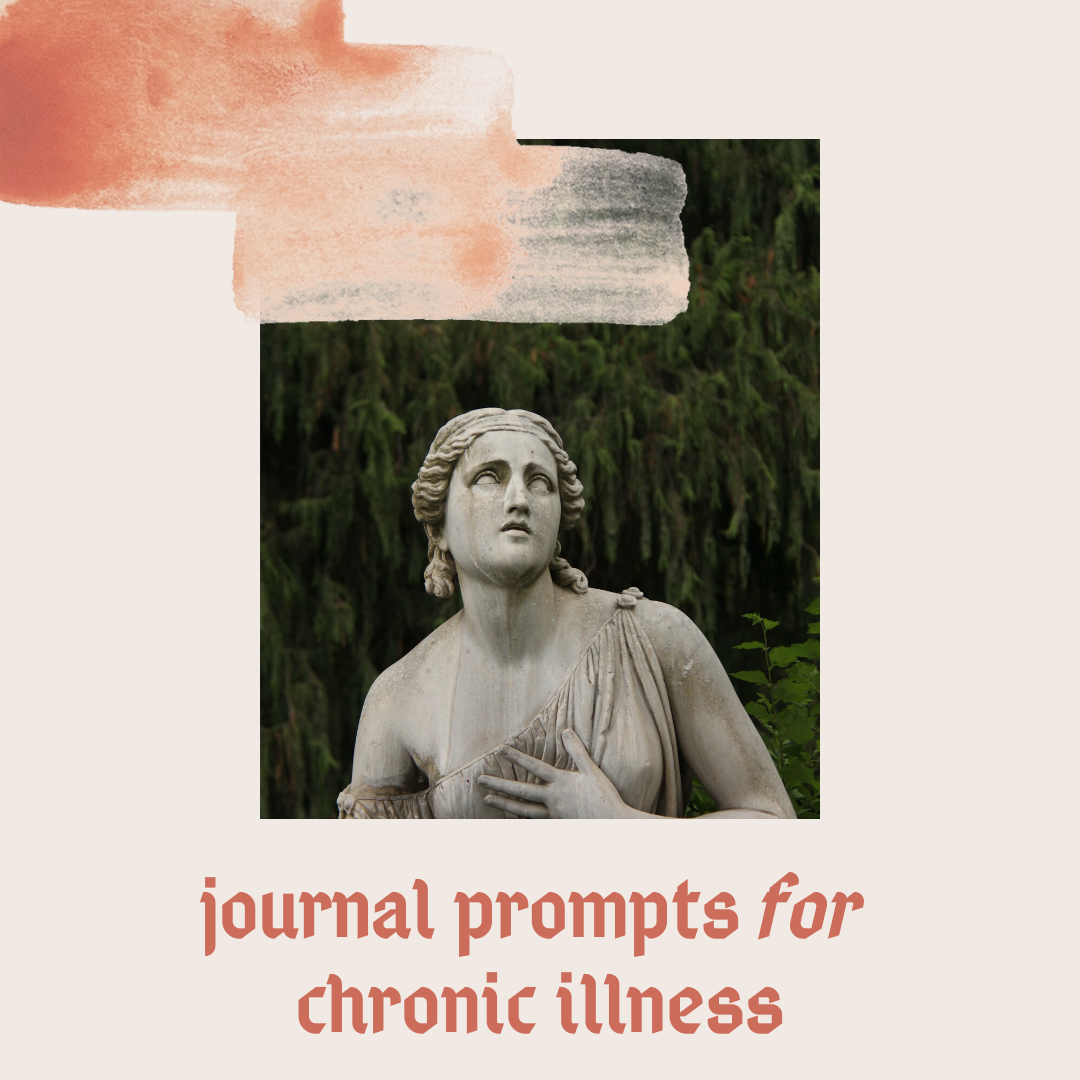
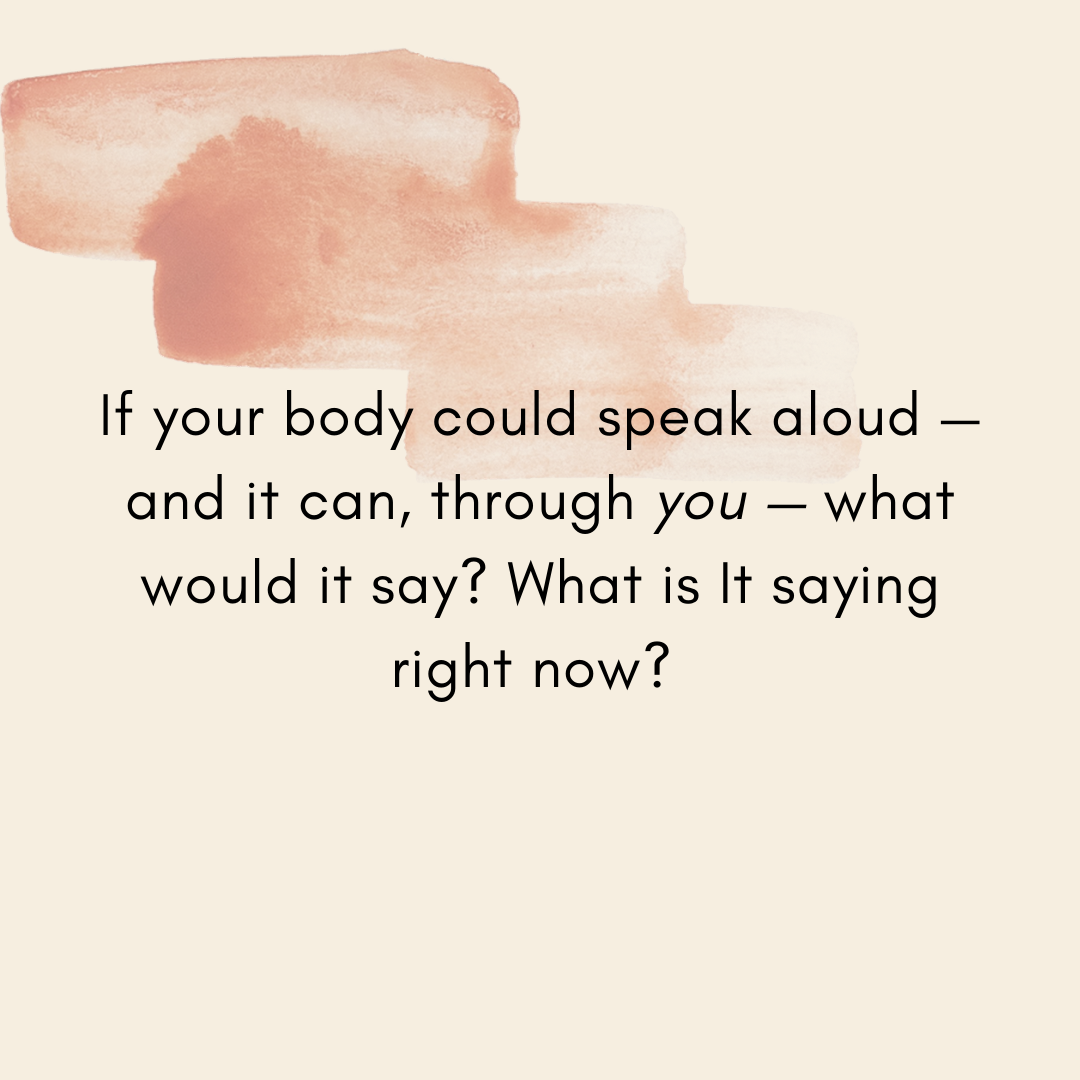
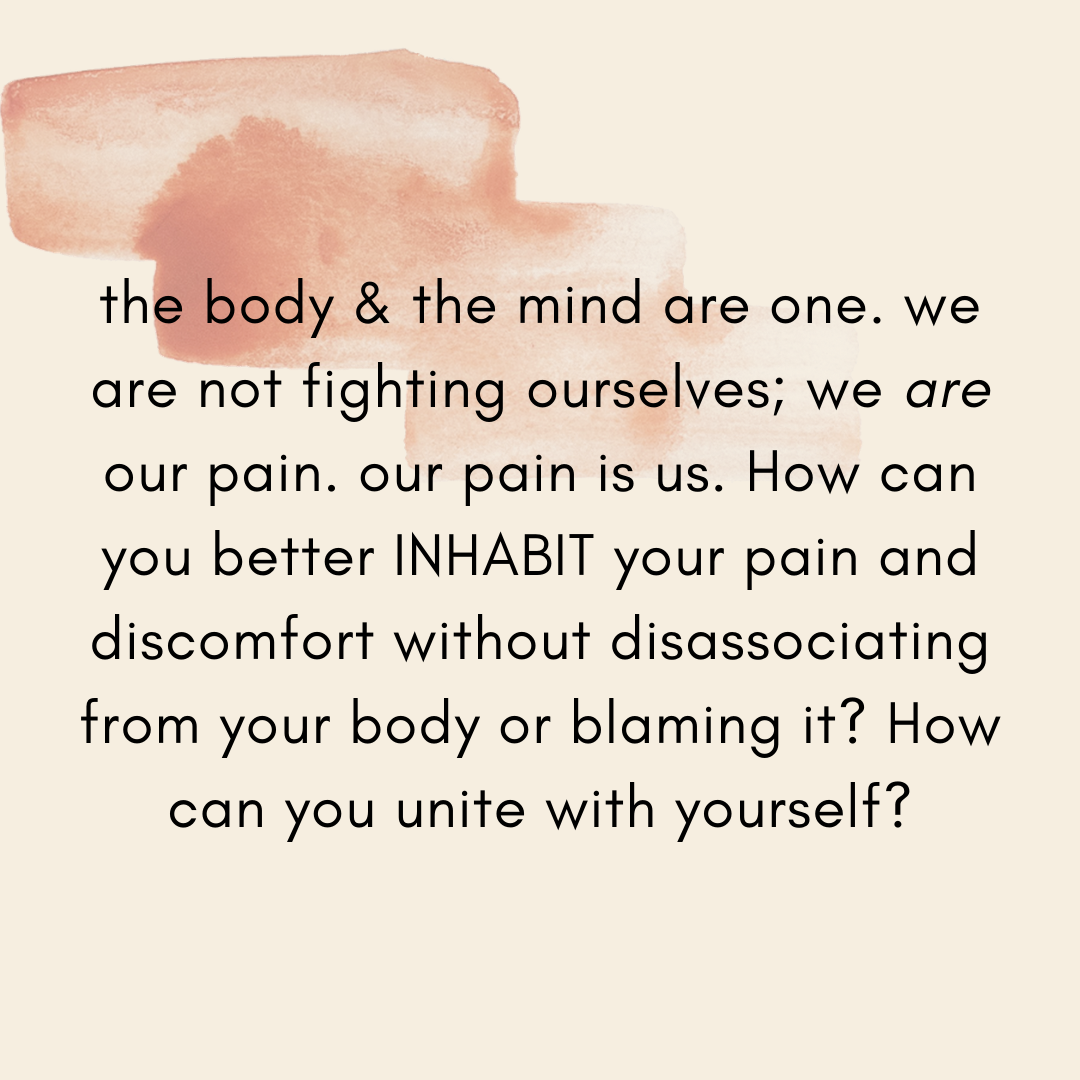
Journaling The Body: Prompts for Chronic Illness

July 28, 2020

BY LISA MARIE BASILE

I live with #ankylosingspondylitis, so I live with daily pain and immobility. I’m also a patient advocate, so I realize how much of an emotional toll managing chronic illness — including dynamic disabilities, inflammatory diseases, or mental health issues — can take. Here are some of the journal prompts based I’ve been using in my journaling practice. I want you to know that you’re not alone.

There are SO many studies in clinical journals proving the beneficial psychological and even physiological effects of expressive writing. I’ve known writing has the capacity to change us since…forever, but science does offer some explanation. Our bodies change when we make space for our feelings.

When we hold our feelings in, it can devastate our bodies (cortisol build-up, for one, is a real issue) and our psyches. It is especially isolating to live with a chronic illness; suffering day to day without people truly understanding can take a toll on you. This can cause greater anxiety and stress which cyclically leads back into pain and worsening health. Your journal is a place for your truth. Take advantage of it. Let the shadows out and embrace joy, as well. It is not a solution nor a cure, but it is its own type of medicine.

Think of writing as one powerful tool in your self-care arsenal. It’s not a quick fix. It’s not a miracle — but it holds a mirror up to who we are, and can help us find autonomy in the experience. Follow my transformative writing page at RITUAL POETICA.

Beige and Brown Delicate Photo Instagram Post.png
Beige and Brown Delicate Photo Instagram Post (5).png
Beige and Brown Delicate Photo Instagram Post (1).png
Beige and Brown Delicate Photo Instagram Post (2).png
Beige and Brown Delicate Photo Instagram Post (3).png
Beige and Brown Delicate Photo Instagram Post (4).png
Beige and Brown Delicate Photo Instagram Post (6).png
In Wellness, Body Ritual, Social Issues Tags chronic illness, healing, ptsd, Mental Health, journaling, Prompts
Comment
annie-spratt-cUlFt_jZXtE-unsplash.jpg

On Hope, Creativity, Spiritual Self-Care & Chronic Illness

December 28, 2019

BY NICOLETTE CLARA ILES

Throughout my adolescent and adult life, I have not known ‘wellness.’ In fact, mentally and physically I live with what would be described as ‘chronic illness’. Like the woodland hag who only knows the forest or the sea nymph who knows the depths of the sea only too well, I know illness. I also know joy in its fleetingness — the power of singing a favorite song from the top of your lungs — and what I often say has been a great addition to my coping toolbox: Creativity. 

Living with various diagnoses, their forms changing and taking on new names with fresh manifestations quite often, the reality of living with them is grasping for hope.  

Hope, by definition, could be seen as ‘wanting something else to happen’, but for those of us with chronic illness, we know that ‘something else’ is unlikely within our lifetimes. But there is such a thing as hope. For me, it is in creating.

Utilising my creativity has meant taking this gift, however it’s looked at, and turning it into something manageable. When there is little to ‘manage’ in a daily life of illness, something stirs within all that pain and suffering; call it magic, call it art, call it hope — or whichever name it goes by — but it is potent.

Within that potency, a vision. It can be what you hold onto during a flare up or an episode. Some call this self-care. While I view self-care as something instrumental for ourselves, there is that looming demon of capitalism, the industry of self-care or wellness — which doesn’t always find ways to include those of us whose way of being is not or can’t be, well.  

So what can we do, as chronically ill people, to shine our light? It certainly is a hurdle to have your voice heard, when at times it can be near-impossible to speak it. That is why I speak the language of images and storytelling. With creative self-care, one can imagine whole worlds they wish to reside in, even if it’s from bed.

Amongst the various ways to approach creativity as a chronically ill person, I would advise to play around with that which works for you. In order to discover this creativity within, playful exploration is a key. 

If you have a day where all you can do is very little, see what that little amount could entail — without pushing yourself beyond your limits. On days like this, I like to write not whole poems, but fragments. See how writing small passages of words looks upon paper, and how it feels to “get out” those words, no matter how short they may be. 

It could be painting with the element of water by your bedside, or expressing how you’re feeling with the fire in your belly speaking out, but whatever it is, it is worthwhile. 

In the most recent years of my illnesses, I have learnt some self-care strategies that don’t just include objects you need to buy. Sometimes, in the worst pain, we may already have some of the tools we need. 

Panic attacks taught me about the power of the breath, and how breathwork has the potential to be a free factor in self-caring for this painful body. The spirituality that arose from curiosity taught me that without factoring in the Mind, Body & Soul, these three main parts of ourselves can become out of balance. Physical pain teaches me not to push the boundaries of this body, and within that, how to be more compassionate. 

A helpful breathing technique could be one that you create, or one that exists. I like to focus on the out-breath as it flows out. Time can stretch so much when we have so much of it to our hands, and focusing on the breath that exhales out of us can calm the nerves of the next inhale. Feel free to re-create your own version of this.

Visualisation, a type of magic to me, is also a meditative exercise I find useful. Visualise yourself being surrounded — if you feel called and safe to — by a peaceful light. As this “light” holds you in safety, visualise it calming all the tension of your soul and body. While we may not be able to “rid” ourselves of pain and illness, we can, if only for a moment, imagine these tense feelings washing away in that space. 

Self-care, to me, comes from listening — to the body, the mind, and what rumbles within the soul. Ask yourself:

What do I need right now?
What have I needed?
Can I find that from where I am currently?

When you can listen to yourself, or feel listened to, it can be a soulful way of soothing all the ways we haven’t been listened to as people living with chronic illness. We owe it to ourselves to listen to our minds and bodies, in order to care for what we may need them to receive and feel.  

Some of us may have less privilege or resources than others may. However, we do have the power of gifting ourselves our deepest desires in that which lifts us up. Find a story that resonates with you, and you are already the hero of that story, because you are fighting each day. You are listening to your own body, even if it’s screaming to be heard more than you’d like. That story holdS the archetype, the joining thread that guides you into caring truly for the self. The gift of being gentle to a chronically ill mind or body is one that will serve as the power we need to go forth in these lives. 

Nicolette Clara Iles is a British-Jamaican photographic artist, witch, storyteller and lives with Schizoaffective Bipolar Disorder and Fibromyalgia. You can find their work via nicoletteclara.co.uk or @nicoletteclara on socials. 

You can also support them via: Paypal.me/farmwitch 

In Magic, Personal Essay, Wellness Tags Nicolette Clara Iles, self-care, chronic illness, disability, spirituality
1 Comment

Body Ritual: Journal Prompts for Chronic Illness Exploration

April 11, 2019

BY LISA MARIE BASILE

Body Ritual is Lisa Marie Basile's column about wellness, chronic illness and finding healing and autonomy in ritual. You can follow her
on Instagram for more on this topic.

If you live with a chronic illness, or if you love someone who has one, you know the delicate balancing act it requires. Living on that liminal precipice, between doing just enough and doing too much, requires an almost spiritual focus. And it’s tiring. I know, as I have ankylosing spondylitis, a degenerative, incurable spinal disease.

Who we feel we are within our minds is not always what our bodies reflect. And sometimes, that very lack of reconciliation rewires us. We start to believe we cannot, are not, will not.

We can, we are, and we will embrace the wholeness of our limitations and our magic. It doesn’t matter if people want us to stay quiet, go away, or stop complaining. We have a right to explore what it means to experience life as we do.

Stigma, lack of education, and fear make it hard to exist in a body that exists on the margins. Sometimes all the noise and suffering keeps us at a distance from ourselves. We often are so tired from the pain or insomnia or anxiety that we smile and pretend everything is okay. We sometimes allow ourselves to be taken advantage of just so we can seem “normal.” We push the limits of our bodies and lose grip on our boundaries. Sometimes, we get through the day, and that’s it. Sometimes it’s hard to feel empowered, to feel enough, to feel that we can and are and will.

The deep and important work that goes into healing the trauma of illness is often ignored. Instead, we focus on the day to day needs. We keep our heads above the water — but the secret is that we must become the sea.

I remember one of the first days many years ago when I realized that my body wasn't working the way it was supposed to. I was doing something simple, something that should've been innate. . Climbing on a bike, I thought that my hips were off, almost as if I was completely out of alignment. The best example I can give is when your car's axle is off and it continuously steers toward the left or to the right. There was no center, no feeling of steadiness, almost as if I could split in half or split into thirds and each part of me would fall to pieces in different directions. . My #AnkylosingSpondylitis (an #autoimmune or immune-mediated, incurable, degenerative spinal disease) deeply affects my hips, which is pretty ironic because I spent many years hating them for being so wide. Because society. Because magazines. Sometimes I wonder if I poured all of my negative energy into my body, making myself sick, as if I casted a spell - but I *know* that that is not the case. . Regardless, I try to treat my body with love and respect these days - I love my hips -and I try to see those situations in which I cannot do something or cannot do something comfortably, with compassion. I am always in the pool, where I feel I am larger than life, able to move fluidly with the lower impact, made stronger by water's sneaky resistance. But there are days when I want to crawl into bed and hide forever. Sometimes I win, sometimes it does. It's a process. It is my process. . Movement is integral to my life, it is ritual. It is a song. It is the ONLY thing keeping my spine from fusing; I am literally running for my life. But it can also be painful. . So sometimes I use devices and tools to make my life a little bit easier, and I wrote all about that for @healthline - check it out in my bio. https://bit.ly/2Hw5O2q

134 Likes, 8 Comments - lisa marie basile (@lisamariebasile) on Instagram: "I remember one of the first days many years ago when I realized that my body wasn't working the way..."

Recently I decided to go inward and empower myself to make time and space for my voice and needs as someone with chronic illness. Instead of trying to blend in or assure everyone that, “I’m fine, really,” I stared down into visit the abyss. I decided to take my time, for no reason but my own needs, and look my chronic illness in its eyes.

I cut through the noise and the stigma and the denial. My body, alight and in focus.

To do this, I made a list of chronic illness journal prompts and chose a beautiful journal strictly for these questions (or you may want to type these out or dictate your answers).

So, I wrote down several questions in my journal, and attempted to answer them. At times I answered one a day. Sometimes I answered several in one go. The important thing is that you take the time to be honest with yourself.

What I learned from answering the below questions astonished me; I was able to advocate better for my needs, recognize and make space for joy and gratitude, and find the parts of myself, like glass shards, I thought I’d lost. I didn’t lose them, it turns out. They simply changed form.

Chronic Illness Journal Prompts

  • Who am I without my chronic illness?

  • Who am I with my chronic illness?

  • How did I change when I was diagnosed?

  • How did I not change when diagnosed?

  • How is my pain level today? How is my fatigue?

  • Are my basic needs met? How can I facilitate this?

  • What positive thing have I learned about myself while actively experiencing symptoms or side effects?

  • What negative thing have I learned about myself while actively experiencing symptoms or side effects?

  • What do I do during periods of remission?

  • What do I do or feel when I’m in a flare-up?

  • Are there any ways at all to bridge the gap between feeling good and not feeling good?

  • How do others make me feel about my chronic illness?

  • Who understands my illness and supports me in my experience of it?

  • How can I help others understand my illness?

  • What do I not feel comfortable explaining about my illness?

  • Where are my boundaries?

  • Where can I be more receptive or open? Is it in receiving love? Is it in talking about my needs?

  • How do my finances play into my illness?

  • Are there areas in which I am privileged and thus, have gratitude?

  • Are there community resources or other resources I can tap into for help?

  • How does my race, gender, or educational background impact my experience of chronic illness?

  • How does my illness impact my job?

  • How does my illness impact my social and/or sex life?

  • Are there other intersecting issues that impact my chronic illness?

  • What do I love about my body?

  • What do I need to feel happy on a day to day basis?

  • What do I need to feel sustainably happy in the long term?

  • Among the things I need, which do I have?

  • What are three things I am thankful for right now, in this very instance?

  • If I am not happy, what is in my power to change that?

  • What work — no matter how seemingly ‘small’ — can I do to advocate for or contribute the wellness of others who may be suffering? Would this feel gratifying?

  • What gives me hope?


Also read:

BODY RITUAL: 12 VERY REAL THINGS I LEARNED ABOUT CHRONIC ILLNESS

BODY RITUAL: GRATITUDE MAGIC

AT THE INTERSECTION OF CHRONIC ILLNESS & RITUAL


Lisa Marie Basile is a poet, essayist and editor living in New York City. She's the founding editor of Luna Luna Magazine, an editor at Ingram’s Little Infinite, and co-host for the podcast, AstroLushes. Most recently, she is the author of LIGHT MAGIC FOR DARK TIMES (Quarto Publishing/Fair Winds Press), a collection of practices and rituals for intentional and magical living, as well as a poetry collection, NYMPHOLEPSY . Her second book of nonfiction, WORDCRAFT, will be published by Quarto/Fair Winds Press in April 2020. It explores the use of writing as ritual and catharsis. Her essays and other work can be found in The New York Times, Chakrubs, Catapult, Narratively, Sabat Magazine, Refinery 29, Healthline, Entropy, Bust, Bustle, The Establishment, Hello Giggles, Ravishly, and more. She studied English and psychology as an undergraduate at Pace University, and received a Masters in writing from NYC’s The New School. Want to learn more? She’s been featured at Amy Poehler’s Smart Girls, HelloGiggles, The Cools, and more.

In Wellness, Social Issues, Lifestyle Tags chronic illness, Chronic pain, Chronic Illness, ankylosing spondylitis, journaling, Journal Writing, writing, therapy, wellness, body ritual
Comment
=

=

At The Intersection of Chronic Illness & Ritual

July 11, 2018

BY LISA MARIE BASILE

Long before I knew I had a chronic, degenerative illness (Ankylosing Spondylitis, a disease that fuses your vertebrae and joints together), I lived with fatigue and widespread pain and chronic eye inflammation (which, of course, led to reduced vision on top of cataracts from steroid treatment).  

It took a decade (with on and off insurance) to convince doctors that I wasn't inventing an illness, that my eyes weren't red from "contact irritation," that my pain wasn't from getting older, that my tiredness wasn't from binge-drinking or staying out late dancing. (To be fair, I did all of those things, but the heaviness in my bones was its own strange animal, an animal that I lugged along with me while all of my friends bounced back after a night out). 

Many people with chronic illness (especially with autoimmune diseases) have ventured down the same winding path--medical neglect or disbelief, lack of resources, lack of knowledge in the medical community, lack of diagnoses, and a lack of support. 

If you are the only person you know with an autoimmune disease or a chronic illness (or, really, any type of lasting body trauma), you know how isolating and fear-inducing it can be. Do you really know your body if your body is betraying you? Do you have a handle on your own future? Are you somehow no longer the same? Can you get the help you need? 

My body was two people. A young girl, and a bag of blood, going on a bender, following no directions, attacking herself. I was lost to my selves.

When I finally convinced doctors to test me (for HLA-B27 antigen, plus an MRI to detect fusion), the diagnosis was an existential blow. I suspected the disease, of course--as my father has it--but knowing that I'd never, ever be cured felt like a sentence to me. For a year, I wallowed. I felt self-pity, I felt out of control, and I was on the edge of constant sadness. I felt lame. I felt silly. Here I was in my early thirties being told I might be fused together later on, my body a prison, my body no longer mine, but a shackle keeping some version of me tucked down deep inside. 

I had always turned to ritual throughout life, especially when times got rough. Ritual is there for these times. It establishes a sense of order, it makes space specifically for the self, and it encourages focus, intention, and growth. 

I used ritual to help me escape those constant thoughts of worry, anxiety, self-doubt, exhaustion, and fear. I used ritual to establish routine and self-care and self-empowerment. Through lighting candles each week night as a way to make rest time to decorating an altar in honor of myself and my body, I became an advocate for myself. There were many: bathing in lavender to intentionally create a sense of fluidity, journaling nightly through pain (using that painful energy to focus and transmit change and manifestation). If it all sounds woo-woo, consider this: anything you do for yourself is a ritual already. Anything you put your mind to is more likely to happen. Any time you carve out for yourself is sacred. It's an act of warfare against chaos and self-loss. It's a reclamation, a creation, a magical hour. 

Ritual helped me back to myself: I felt stronger, more determined to make time for myself, more connected to the simple things that made life fulfilling and beautiful (rest, a walk in nature, time to write, creativity). The disease no longer controlled me; instead, it was a part of me, as a sad friend in need of love and time and cooperation. I was a vessel for opportunity, not despair. 

A year after my diagnosis, I also went on to write a book, Light Magic for Dark Times--which is a collection of rituals and practices for hard times. I even included a portion on body and identity, and chronic illness. 

I will be leading a workshop on chronic illness and ritual at MNDFL Meditation in NYC on July 21. I hope you will come, as it will be an open, safe space. We will discuss chronic illness, meditate, and map strategies for self-care and self-empowerment. All are welcome!

You can RSVP here. 


About the event

Welcome to Strong Women Project's first women's wellness workshop! 

We're connecting with MNDFL in the West Village to provide free workshops to focus on our wellness. Our first workshop is led by Lisa Marie Basile. Darley Stewart, SWP Founder and Curator, will also speak about chronic illness in the context of recent findings. We'll also do some light meditation and stretching to kick off the workshop.

Lisa Marie Basile will discuss what it means to establish ritual as a way of encountering one's chronic illness or other body-mind related traumas. Ritual might mean bookending one's day with someone positive and encouraging but it can also mean going deep and dark and peering into the abyss of self to confront the pain/shame/etc of chronic illness. You can expect to feel like you are part of a loving community and to come away with a set of tools that can help you when you feel overwhelmed or lost, or are just looking to transmorph your experience into art or inspiration. It's a balance of light and dark. Lisa Marie Basile is the author of
 "Light Magic for Dark Times," a modern guide of rituals and daily practices for inspired living. 

We also have a meet-up page! 

RSVP
In Wellness Tags self-care, chronic illness, ritual, magic, ankylosing spondylitis, autoimmune disease, Chronic Illness
Comment
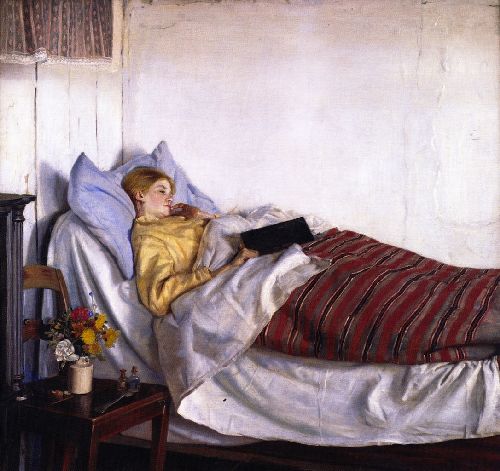
Michael Peter Ancher, The Sick Girl 

Michael Peter Ancher, The Sick Girl 

Editor's Letter: Our Special Health Issue

August 22, 2016

You can read everything in our Health Issue here.

Almost a decade ago, I woke up in extreme pain--my eye was bloodshot and I was experiencing extreme photophobia. When I say my heart was breaking from pain, I mean it. For nights, I sat in the bathtub in the dark. I could barely attend my grad school classes without taking a break outside the room, breathing deeply in and out--trying to convince myself that I wasn't losing my mind. I wasn't going to just die from pain.

Doctors kept telling me I was experiencing contact irritation, but that wasn't the case. How many people does it really take before a sick person can be believed? It took nearly a year to get any clarity at all, actually--I had to keep speaking up, keep saying that I didn't feel normal. That it wasn't OK. At first, I was diagnosed with Uveitis, which is an inflammation of the middle layer of the eye that happens to make Pink Eye look like a fucking unicorn and rainbows dream come true. It later came to be, after years of joint pain and inflammation, that I had Ankylosing Spondylitis, inflammatory arthritis that affects the large joints and the spine. And this is what caused the Uveitis, which is chronic, and which I will suffer from again. 

YOU CAN READ EVERYTHING IN OUR HEALTH ISSUE HERE.

It's hard to be a healthy-looking 20-something while having an invisible illness. It's hard to say, "I can't meet up tonight, my knee is killing me." I mean, I'm not 70. My knee?! But the pain continues, and the future is unclear. It makes me lethargic, and it makes me grumpy. Because having arthritis just sounds ridiculous to other people. It also sounds less real, somehow. After all, it's not cancer. I am not dying. That much is true, and I am grateful for that.

I don't think that needs to be the marker, though. I don't think we need to be on death's door to openly discuss the pain of being alive. And with that idea in mind, this issue is for and by everyone with an invisible illness, a mental health issue, a chronic illness or a disability. We'll be publishing content through Friday and you will see a variety of forms--poetry, fiction, essay, comic, photography. We're so honored to have so many beautiful pieces of work, and we're touched that our writers were so vulnerable, so honest, so compassionate.

We had hundreds and hundreds of submissions. It wasn't easy to decline work. It wasn't easy to say no to such heart. Everyone who submitted to this Issue matters to us, and we appreciate everyone who will read, share and create dialogue around this Issue.

I am so thankful for the editorial team here. Extra special thanks to Joanna Valente--who oversaw a lot of the production and edited the majority of this massive issue--and Alaina Leary for spearheading the initial creation of this issue. Huge thanks goes to Nadia Gerrassimenko, who is a fantastic editorial support--from helping with logistics to drafting content to promoting our writers on social media to having a big hand in the aesthetics. We couldn't do it without you. 

I can't wait to hear your thoughts on our writers' work. Thank you!

- Lisa Marie Basile

YOU CAN READ EVERYTHING IN OUR HEALTH ISSUE HERE.

Tags mental health, chronic illness, uveitis
Comment
Featured
‘in the glitter-open black' — poetry by Fox Henry Frazier
'poet as tarantula,  poem as waste' — poetry by  Ewen Glass
'poet as tarantula, poem as waste' — poetry by Ewen Glass
'Hours rot away in regalia' — poetry by Stephanie Chang
'down down down the hall of mirrors' — poetry by Ronnie K. Stephens
'Grew appendages, clawed towards light' — poetry by Lucie Brooks
'do not be afraid' — poetry by Maia Decker
'The darkened bedroom' — poetry by Jessica Purdy
'I am the body that I am under' — poetry by Jennifer MacBain-Stephens
instagram

COPYRIGHT LUNA LUNA MAGAZINE 2025