• Home
  • indulge
  • new poetry
    • About Luna Luna
    • resources
    • search
  • editor
  • dark hour
  • submit
Menu

luna luna magazine

  • Home
  • indulge
  • new poetry
  • About
    • About Luna Luna
    • resources
    • search
  • editor
  • dark hour
  • submit
delicious new poetry
'the doors of the night open' — poetry by Juan Armando Rojas (translated by Paula J. Lambert)
Nov 29, 2025
'the doors of the night open' — poetry by Juan Armando Rojas (translated by Paula J. Lambert)
Nov 29, 2025
Nov 29, 2025
'we can be forlorn women' — poetry by Stevie Belchak
Nov 29, 2025
'we can be forlorn women' — poetry by Stevie Belchak
Nov 29, 2025
Nov 29, 2025
'I do whatever the light tells me to' — poetry by Catherine Bai
Nov 29, 2025
'I do whatever the light tells me to' — poetry by Catherine Bai
Nov 29, 2025
Nov 29, 2025
‘to kill bodice and give sacrament’ — poetry By Kale Hensley
Nov 29, 2025
‘to kill bodice and give sacrament’ — poetry By Kale Hensley
Nov 29, 2025
Nov 29, 2025
'Venetian draped in goatskin' — poetry by Natalie Mariko
Nov 29, 2025
'Venetian draped in goatskin' — poetry by Natalie Mariko
Nov 29, 2025
Nov 29, 2025
'the long sorrow of the color red' — centos by Patrice Boyer Claeys
Nov 28, 2025
'the long sorrow of the color red' — centos by Patrice Boyer Claeys
Nov 28, 2025
Nov 28, 2025
'Flowers are the offspring of longing' — poetry by Ellen Kombiyil
Nov 28, 2025
'Flowers are the offspring of longing' — poetry by Ellen Kombiyil
Nov 28, 2025
Nov 28, 2025
'punish or repent' — poetry by Chris McCreary
Nov 28, 2025
'punish or repent' — poetry by Chris McCreary
Nov 28, 2025
Nov 28, 2025
'long, dangerous grasses' — poetry by Jessica Purdy
Nov 28, 2025
'long, dangerous grasses' — poetry by Jessica Purdy
Nov 28, 2025
Nov 28, 2025
'gifting nighttime honey' — poetry by Nathan Hassall
Nov 28, 2025
'gifting nighttime honey' — poetry by Nathan Hassall
Nov 28, 2025
Nov 28, 2025
'A theory of pauses' — poetry by Jeanne Morel and Anthony Warnke
Nov 28, 2025
'A theory of pauses' — poetry by Jeanne Morel and Anthony Warnke
Nov 28, 2025
Nov 28, 2025
'into the voluminous abyss' — poetry by D.J. Huppatz
Nov 28, 2025
'into the voluminous abyss' — poetry by D.J. Huppatz
Nov 28, 2025
Nov 28, 2025
'an animal within an animal' — a poem by Carolee Bennett
Nov 28, 2025
'an animal within an animal' — a poem by Carolee Bennett
Nov 28, 2025
Nov 28, 2025
‘in the glitter-open black' — poetry by Fox Henry Frazier
Oct 31, 2025
‘in the glitter-open black' — poetry by Fox Henry Frazier
Oct 31, 2025
Oct 31, 2025
'poet as tarantula,  poem as waste' — poetry by  Ewen Glass
Oct 31, 2025
'poet as tarantula, poem as waste' — poetry by Ewen Glass
Oct 31, 2025
Oct 31, 2025
'my god wearing a body' — poetry by Tom Nutting
Oct 31, 2025
'my god wearing a body' — poetry by Tom Nutting
Oct 31, 2025
Oct 31, 2025
'Hours rot away in regalia' — poetry by Stephanie Chang
Oct 31, 2025
'Hours rot away in regalia' — poetry by Stephanie Chang
Oct 31, 2025
Oct 31, 2025
'down down down the hall of mirrors' — poetry by Ronnie K. Stephens
Oct 31, 2025
'down down down the hall of mirrors' — poetry by Ronnie K. Stephens
Oct 31, 2025
Oct 31, 2025
'Grew appendages, clawed towards light' — poetry by Lucie Brooks
Oct 31, 2025
'Grew appendages, clawed towards light' — poetry by Lucie Brooks
Oct 31, 2025
Oct 31, 2025
'do not be afraid' — poetry by Maia Decker
Oct 31, 2025
'do not be afraid' — poetry by Maia Decker
Oct 31, 2025
Oct 31, 2025
'The darkened bedroom' — poetry by Jessica Purdy
Oct 31, 2025
'The darkened bedroom' — poetry by Jessica Purdy
Oct 31, 2025
Oct 31, 2025
'I am the body that I am under' — poetry by Jennifer MacBain-Stephens
Oct 31, 2025
'I am the body that I am under' — poetry by Jennifer MacBain-Stephens
Oct 31, 2025
Oct 31, 2025
goddess energy.jpg
Oct 26, 2025
'Hotter than gluttony' — poetry by Anne-Adele Wight
Oct 26, 2025
Oct 26, 2025
'As though from Babel' — poetry by Fox Henry Frazier
Oct 26, 2025
'As though from Babel' — poetry by Fox Henry Frazier
Oct 26, 2025
Oct 26, 2025
'See my wants' — poetry by Aaliyah Anderson
Oct 26, 2025
'See my wants' — poetry by Aaliyah Anderson
Oct 26, 2025
Oct 26, 2025
'black viper dangling a golden fruit' — poetry by Nova Glyn
Oct 26, 2025
'black viper dangling a golden fruit' — poetry by Nova Glyn
Oct 26, 2025
Oct 26, 2025
'It would be unfair to touch you' — poetry by grace (ge) gilbert
Oct 26, 2025
'It would be unfair to touch you' — poetry by grace (ge) gilbert
Oct 26, 2025
Oct 26, 2025
'Praying in retrograde' — poetry by Courtney Leigh
Oct 26, 2025
'Praying in retrograde' — poetry by Courtney Leigh
Oct 26, 2025
Oct 26, 2025
'To not want is death' — poetry by Letitia Trent
Oct 26, 2025
'To not want is death' — poetry by Letitia Trent
Oct 26, 2025
Oct 26, 2025
'Our wildness the eternal now' — poetry by Hannah Levy
Oct 26, 2025
'Our wildness the eternal now' — poetry by Hannah Levy
Oct 26, 2025
Oct 26, 2025

Bára Hladík on 'New Infinity,' Disability, & Folklore

September 2, 2022

AN INTERVIEW WITH BÁRA HLADÍK
BY LISA MARIE BASILE

Your newest book, New Infinity, so deeply speaks to me — not just as a reader and writer (and human!) but also as someone with Ankylosing Spondylitis. It’s so rare to see the very thing that’s changed one’s life come to shape in a literary setting — and done so beautifully. Can you tell us all about it?

My latest book is a hybrid experimental novella about a woman living with Ankylosing Spondylitis, a disease that I also live with. It is an ode to the existential experience of degenerative disease and a philosophical reckoning of a woman in pain. It chronicles moments of her life as she tries and fails to connect, have relationships and make ends meet. It ponders the meaning of existence, life, and failure as she gathers notes from medical literature and self-help books to understand her existence.
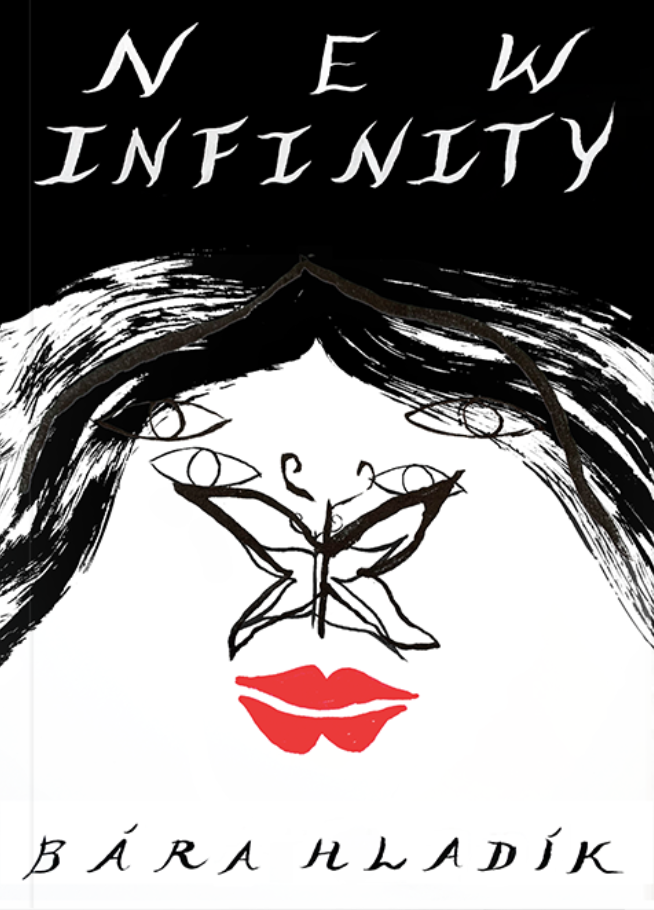
The book is inspired by ten years of living with the disease myself, and although fictionalized, the story draws from my own experiences. I created a nameless woman as a way to revisit myself, as well as observe her from a distance. The book blends surrealist stories with poems created from found medical literature, self-help books, books about the cosmos, and journals.

I was inspired to create a literary work that centred the woman in pain as philosophically and existentially significant. I wanted to take her out of the attic, and out of the trope of 'hypochondriac woman' so common in the history of literature, and create a literary work that not only expressed her experience accurately, but portrayed it as a radical experience that challenges the very structures of our society and philosophies.

I can't tell you how affirming it is to speak to another writer with Ankylosing spondylitis — and your writing about it is so potent! 

I've personally found the disease really hard to write about. At first, I thought "this is too specific to really share; no one will 'get' it." Over the years, though, I've realized how the disease had filled in so many of the cracks of my life....and it was nearly impossible to avoid writing about. 

This disease feels like it wants to trap you, physically and emotionally, and that is something that I have felt drawn to exploring in a literary sort of way. But it's been a long journey in figuring out how. What's the lesson? What's underneath the desire? How did you come to write about AS and pain and women, specifically, and was it hard for you to share something so intimate and challenging with the world? 

It means so much to me to hear that, thank you! Seeing your work about AS encouraged me to write more specifically about the disease and share publicly. It is definitely a challenge to write about the realities of Ankylosing Spondylitis. Most of the time I don't want to even share with the closest people in my life, so writing publically about it is hard.

But as you said, it is nearly impossible not to write about it. There are so many silencing and isolating aspects of living with this disease that in some ways I have a need to express a primordial scream of this unrelenting physical and emotional pain. Just as birds who made it through another night of darkness call out to each other in the morning, writing is a way to express existence. 

I turned to reading more and more as my illness took hold and I found I was reading a lot of philosophy. At the same time, most of the stories I encountered about illness, women were framed as 'hysterical' or 'hypochondriacs.' I wanted to challenge this narrative and write a story that centered the sick woman as a philosopher. A story where the experience of sickness was in fact a philosophical act that gives insight into the very meaning of existence. So while the disease is specific, the questions about existence are universal. 

Do you ever feel like disability gives you a new lens, a sort of expanded eye, through which to see the world anew? While illness may bind us (and others) in many ways, it also sort of necessarily stretches how we approach creativity and expansion.

For me, yes. I often feel that although my illness is difficult and painful, it also forces me to stop and deeply consider my place on this earth and in the cosmos pretty regularly. If it wasn't for the fact that at times I have to spend a lot of time recovering from basic tasks, I would be a pretty different person. I have become wiser, resilient, and in some ways more at peace with the chaos of the world.

It forces me to find transformation in the most minute of movements or motions, such as creativity or dreaming or simply breathing. Because I can't 'go for a run' to clear my head, I have to find other ways to move through emotions. This is the source of much of where my creativity is born. It is often in moments of pain in which I can only express existing.

Who or what are some of your recent influences?

This book is heavily influence by Slavic writers - Franz Kafka, Karel Čapek, Jana Benova, as well as surrealist/magic realist writers such as Jorge Luis Borges and Gabriel Garcia Marquez. My linguistic style definitely draws from the fact that Czech is my first language, and the way we play with structure, sarcasm and storytelling is much for fluid and malleable than english. I grew up reading Czech folk stories that blended magic and realism, and Czech new wave films that masterfully played with nihilism, sarcasm and surrealism. These influences all bleed into my work.

I love to learn about how culture or identity shapes a writer’s creative approach and work. I’d love to hear more.

My parents fled occupied Czechoslovakia shortly before I was born. Growing up in rural so-called Canada, my culture was often misunderstood as scary. I learned to walk through several co-existing worlds, always turning back and searching for where I came from. I grew up watching and reading Czechoslovakian books and movies, which are so creative, dark, mystical and wise. My parents are creative and resilient people, and I am constantly inspired by them. There is a saying, that Czechoslovakians have 'golden hands', in that we can create something out of nothing. This is from where I create, creating something out of nothing so that we may learn where we came from and where we are going.

What are some of the Czech folk stories that stayed/stays with you, and perhaps influences you as of late?

There are so many! Czechs are truly folklore encyclopedias. One of my favourites is the Vodník, who is a mythical slavic water spirit. He is a toad-like man, usually dressed in a tweed suit, who sits by the edge of a pond waiting for children to wander by so he can capture their spirits in tiny porcelain pots at the bottom of the pond. There are many great Czechoslovakian films about Vodník and his family, with shots of water people appearing out of sinks and toilets in tailored suits perfectly dry.
Do you turn to any sort of writing rituals or practices? I’m always so interested in how people approach their work and what that process looks like, especially when the writer creates across genres.

Much of this work was written in my head. With my illness, I am often bound by the limits of my body and must spend large amounts of time recovering. This means I am unable to move much for several days. So in these moments, I dream and write in my head. I imagine stories, themes, images. Often, the story is very formed once I hit the paper. I jot down notes of themes or ideas I want to weave throughout and then I sit down and write it start to finish. I then leave it be as I think through problems, and then I ruthlessly edit. Poetry is different. For me it is more of a ritual or practice. Many of the poems in my book were created by physically cutting up books that I found at the thrift store for under 5$.

I found medical books, self-help books, stories and beyond, then cut out individual words or sections of words. I did this all with meditation or images in mind. Then I would mix them into a special wine glass, and draw the cut words into a divinatory reading, similar to drawing playing cards or tarot cards. This practice is very specific and personal to my artistic work so this is all I will share here, but eventually, a poem would come to life.

Was there an certain ‘a-ha’ moment that led you to writing or creating? Was there an experience that reaffirmed what you do and why?

A babysitter once told me that I told her I was going to be a novelist when I was 7 years old. In grade 5, I was writing a story and every week the class would ask me to read the new chapter. It was a story about a family of six women surviving world war 3. Following these years I had a lot of doubt and anxiety as to where I was going or what I was doing, but thinking back to these moments always reminds me that this is part of me whether I resist it or not.

Who are some of the people you look up to or admire?

Thank you to disabled writers @leahlakshmiwrites @bighedva @pchza.

I’d love to hear one piece of writing advice that you think is essential for other writers.

Focus in on your work, your voice, your style. As much as we can learn from others, stay true to your vision. Be confident that what you are creating is important, even if you don't quite see how, yet. Do it for yourself. You're own satisfaction, sanity, passion, whatever. Do it for you.

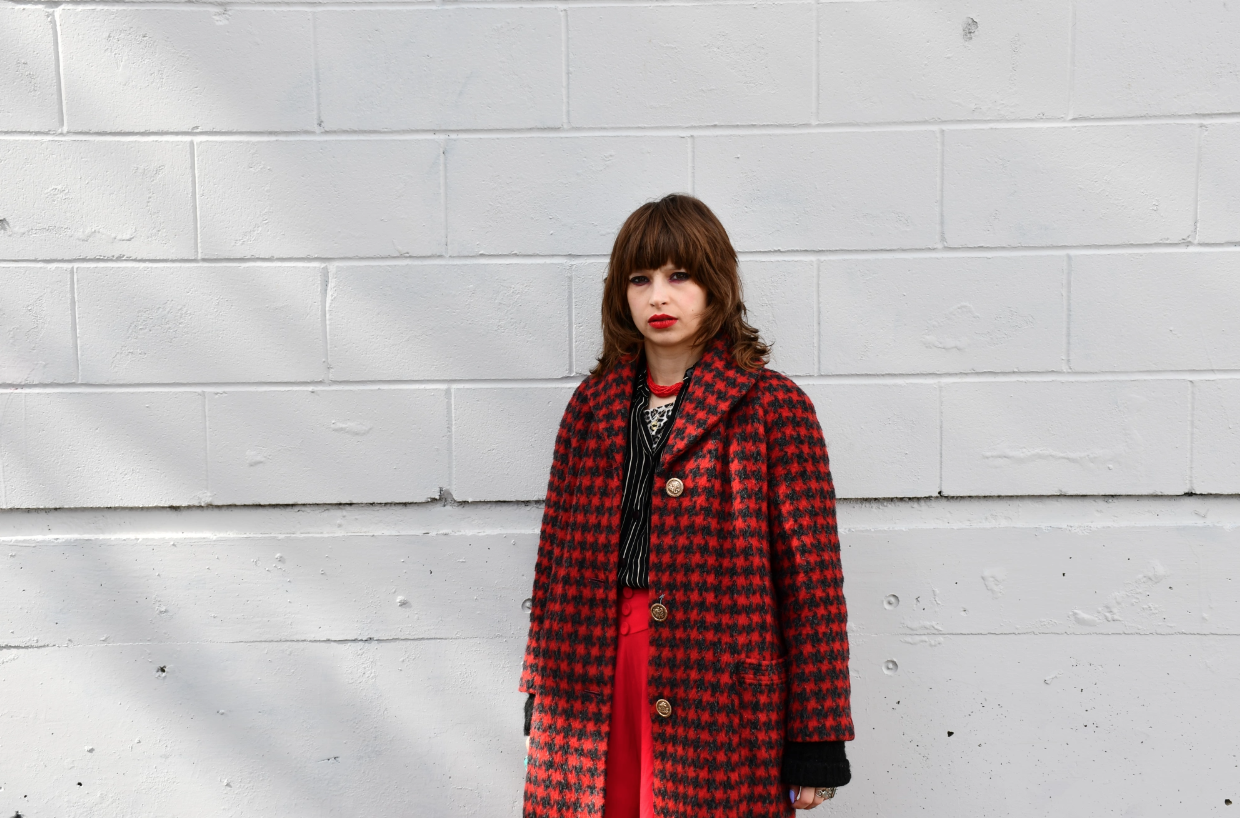
Bára Hladík is a Czech-Canadian author, artist and facilitator.

Lisa Marie Basile is the founding editor of Luna Luna Magazine. She’s also the author of a few books of poetry and nonfiction, including Light Magic for Dark Times, The Magical Writing Grimoire, Nympholepsy, Andalucia, and more. She’s a health journalist and chronic illness advocate by day. By night, she’s working on an autofictional novella for Clash Books.

Her work has been nominated for several Pushcart Prizes and has appeared in Best Small Fictions, Best American Poetry, and Best American Experimental Writing. Her work can be found in The New York Times, Atlas Review, Spork, Entropy, Narratively, and more. She has an MFA from The New School.
In Poetry & Prose, Interviews Tags Bára Hladík, disability, ankylosing spondylitis, disability poetics, novella, new infinity
Comment
wilhelm-gunkel-ZIQb1OkI7Ss-unsplash.jpg

Spoonie Witch Magic and Wordcraft

March 2, 2021

BY LISA MARIE BASILE

I spend a lot of time thinking about disability and accessibility in our sacred or creative practices, and how our lives are affected by, informed by, or intersected by our bodies and our wellness. A few examples: Do places of worship offer a wheelchair ramp? Can we modify more meditation classes for folks who can’t sit down at all or for long periods (me!)? Do we feel encouraged to create altar spaces that are tiny, portable, and simple...so we can take it to bed during flare-ups? Do poetry conferences or literary reading spaces make accessibility a priority?

View this post on Instagram

A post shared by 🗝 ritual poetica 🗝 (@ritual_poetica)

I believe that we should all feel encouraged and inspired to practice, pray, or tap into sacredness in a way that works for our minds and bodies — and to use our body/pain/individual experiences as a strength or energy source?

These Spoonie Witch ideas, insights, and prompts are intended to get you thinking about your magic and your power — in ways that work for you. They are designed to help you send love to yourself and reclaim your narrative. Whatever that is, and wherever you may be in the process.

PS: I live with ankylosing spondylitis, a degenerative spinal disease that affects pretty much everything, from my heart to my gut. I can’t POSSIBLY speak to everyone’s experience, but this comes from my own.

My next book, City Witchery, is coming out later this year — and deals largely with finding accessible ways to tap into sacredness in a city environment, and inside of an apartment/shared space/small space.

finding empowerment

Where there are perceived or real limitations, there are also opportunities for growth. Pain often gives us empathy. Loneliness can make us creative. Frustration can drive real social change. Using that big, potent energy in your own magical practice can create change and push toward transformation. Isn't that the goal? To change, to grow? To lean into the power? Don’t be afraid to transmute those big feelings — frustration at broken systems, social isolation due to chronic flare-ups — into your magic.

Sometimes, when the feelings are overwhelming, I work with candle magic — pushing all those ideas into the flame, watching them dance and flicker and turn into something stronger.

tuning into the body

Spending so much time tuned in to your body — and tending to its needs — can be exhausting. But it also means that you are damn good at tapping into your body more readily. Where do you feel energy, anxiety, power, or sensuality? Where do you feel anger or empathy? Pull from that source and use it in your spells or visualizations.

finding what works for you

What form of magic feels right to you? Some of us can't move/perform/concentrate, etc like others. That is okay. Make a list of what feels right to you. Is It breathwork, sex magic, visualization, concentration, writing? Embrace the notion that YOU can adapt rituals or practices to your strengths. You have the right to choose.

creating accessible altars

The idea that we need certain tools or fancy objects or an immaculate, rose-adorned space to perform our sacred practice is outdated. Not everything is Instagrammable; that’s just not realistic. Make a small box or bag and fill it with a few power Items (a candle, tarot, salts, or stones). Keep your journal or grimoire with it. Keep it at your bedside for flare days. That's more than magical enough. Shout out to Ryn’s Ramblings for their awesome ideas around magic and chronic illness (and Altoid box altars!).

shadow working pain

We all hate pain and discomfort. What if we listened to it, gave it compassion, and gave it attention (rather than seeking distraction)? This is a form of shadow work. The pain is not separate from you. It Is a part of you. This gives you the ability to notice it, transmute it, use it, and find strength in it. Pain can be an energy source; you get to choose when and how.

body poetics

Write a poem to your body, to your brain fog, to your Insomnia, to your limited mobility, to your grief, to your reflection, to your bruised arms, your shaking legs, your scars, your distracted mind. What would a love poem to yourself look like? What would a rage poem sound like? How would an ode to your beautiful neurodiversity read? What does it sound like when we write the narrative, and when we reclaim our story?

Read it aloud and feel the power in your words. 

Need some inspiration? Be sure to work through these chronic illness journaling prompts I’ve created right here.

A note on magic and wellness

While ritual can help us center ourselves and find empowerment, autonomy, and magic, it is not a cure for chronic illness. Reach out for professional help. Seek medication. Know that social and political oppression can directly affect you in ways that spells or prayers can’t vanquish. Take care of your body. Seek community. And know that you’re not alone.


—

Lisa Marie Basile (she/her) is a poet, essayist, editor, and chronic illness awareness advocate living in New York City. She's the founder and creative director of Luna Luna Magazine and its online community, and the creator of Ritual Poetica, a curiosity project dedicated to exploring the intersection of writing, creativity, healing, & sacredness.

She is the author of THE MAGICAL WRITING GRIMOIRE, LIGHT MAGIC FOR DARK TIMES, and a few poetry collections, including the recent NYMPHOLEPSY, which is excerpted in Best American Experimental Writing 2020. Her essays and other work can be found in The New York Times, Narratively, Sabat Magazine, We Are Grimoire, Witch Craft Magazine, Refinery 29, Self, Healthline, Entropy, On Loan From The Cosmos, Chakrubs, Catapult, Bust, Bustle, and more. She is also a chronic illness advocate, keeping columns at several chronic illness patient websites. She earned a Masters's degree in Writing from The New School and studied literature and psychology as an undergraduate at Pace University. You can follow her at lisamariebasile.

In Wellness, Magic Tags spoonie witch, spoonie, chronic illness, ankylosing spondylitis, chronic pain, witchcraft, sick witch
Comment

Body Ritual: Journal Prompts for Chronic Illness Exploration

April 11, 2019

BY LISA MARIE BASILE

Body Ritual is Lisa Marie Basile's column about wellness, chronic illness and finding healing and autonomy in ritual. You can follow her
on Instagram for more on this topic.

If you live with a chronic illness, or if you love someone who has one, you know the delicate balancing act it requires. Living on that liminal precipice, between doing just enough and doing too much, requires an almost spiritual focus. And it’s tiring. I know, as I have ankylosing spondylitis, a degenerative, incurable spinal disease.

Who we feel we are within our minds is not always what our bodies reflect. And sometimes, that very lack of reconciliation rewires us. We start to believe we cannot, are not, will not.

We can, we are, and we will embrace the wholeness of our limitations and our magic. It doesn’t matter if people want us to stay quiet, go away, or stop complaining. We have a right to explore what it means to experience life as we do.

Stigma, lack of education, and fear make it hard to exist in a body that exists on the margins. Sometimes all the noise and suffering keeps us at a distance from ourselves. We often are so tired from the pain or insomnia or anxiety that we smile and pretend everything is okay. We sometimes allow ourselves to be taken advantage of just so we can seem “normal.” We push the limits of our bodies and lose grip on our boundaries. Sometimes, we get through the day, and that’s it. Sometimes it’s hard to feel empowered, to feel enough, to feel that we can and are and will.

The deep and important work that goes into healing the trauma of illness is often ignored. Instead, we focus on the day to day needs. We keep our heads above the water — but the secret is that we must become the sea.

I remember one of the first days many years ago when I realized that my body wasn't working the way it was supposed to. I was doing something simple, something that should've been innate. . Climbing on a bike, I thought that my hips were off, almost as if I was completely out of alignment. The best example I can give is when your car's axle is off and it continuously steers toward the left or to the right. There was no center, no feeling of steadiness, almost as if I could split in half or split into thirds and each part of me would fall to pieces in different directions. . My #AnkylosingSpondylitis (an #autoimmune or immune-mediated, incurable, degenerative spinal disease) deeply affects my hips, which is pretty ironic because I spent many years hating them for being so wide. Because society. Because magazines. Sometimes I wonder if I poured all of my negative energy into my body, making myself sick, as if I casted a spell - but I *know* that that is not the case. . Regardless, I try to treat my body with love and respect these days - I love my hips -and I try to see those situations in which I cannot do something or cannot do something comfortably, with compassion. I am always in the pool, where I feel I am larger than life, able to move fluidly with the lower impact, made stronger by water's sneaky resistance. But there are days when I want to crawl into bed and hide forever. Sometimes I win, sometimes it does. It's a process. It is my process. . Movement is integral to my life, it is ritual. It is a song. It is the ONLY thing keeping my spine from fusing; I am literally running for my life. But it can also be painful. . So sometimes I use devices and tools to make my life a little bit easier, and I wrote all about that for @healthline - check it out in my bio. https://bit.ly/2Hw5O2q

134 Likes, 8 Comments - lisa marie basile (@lisamariebasile) on Instagram: "I remember one of the first days many years ago when I realized that my body wasn't working the way..."

Recently I decided to go inward and empower myself to make time and space for my voice and needs as someone with chronic illness. Instead of trying to blend in or assure everyone that, “I’m fine, really,” I stared down into visit the abyss. I decided to take my time, for no reason but my own needs, and look my chronic illness in its eyes.

I cut through the noise and the stigma and the denial. My body, alight and in focus.

To do this, I made a list of chronic illness journal prompts and chose a beautiful journal strictly for these questions (or you may want to type these out or dictate your answers).

So, I wrote down several questions in my journal, and attempted to answer them. At times I answered one a day. Sometimes I answered several in one go. The important thing is that you take the time to be honest with yourself.

What I learned from answering the below questions astonished me; I was able to advocate better for my needs, recognize and make space for joy and gratitude, and find the parts of myself, like glass shards, I thought I’d lost. I didn’t lose them, it turns out. They simply changed form.

Chronic Illness Journal Prompts

  • Who am I without my chronic illness?

  • Who am I with my chronic illness?

  • How did I change when I was diagnosed?

  • How did I not change when diagnosed?

  • How is my pain level today? How is my fatigue?

  • Are my basic needs met? How can I facilitate this?

  • What positive thing have I learned about myself while actively experiencing symptoms or side effects?

  • What negative thing have I learned about myself while actively experiencing symptoms or side effects?

  • What do I do during periods of remission?

  • What do I do or feel when I’m in a flare-up?

  • Are there any ways at all to bridge the gap between feeling good and not feeling good?

  • How do others make me feel about my chronic illness?

  • Who understands my illness and supports me in my experience of it?

  • How can I help others understand my illness?

  • What do I not feel comfortable explaining about my illness?

  • Where are my boundaries?

  • Where can I be more receptive or open? Is it in receiving love? Is it in talking about my needs?

  • How do my finances play into my illness?

  • Are there areas in which I am privileged and thus, have gratitude?

  • Are there community resources or other resources I can tap into for help?

  • How does my race, gender, or educational background impact my experience of chronic illness?

  • How does my illness impact my job?

  • How does my illness impact my social and/or sex life?

  • Are there other intersecting issues that impact my chronic illness?

  • What do I love about my body?

  • What do I need to feel happy on a day to day basis?

  • What do I need to feel sustainably happy in the long term?

  • Among the things I need, which do I have?

  • What are three things I am thankful for right now, in this very instance?

  • If I am not happy, what is in my power to change that?

  • What work — no matter how seemingly ‘small’ — can I do to advocate for or contribute the wellness of others who may be suffering? Would this feel gratifying?

  • What gives me hope?


Also read:

BODY RITUAL: 12 VERY REAL THINGS I LEARNED ABOUT CHRONIC ILLNESS

BODY RITUAL: GRATITUDE MAGIC

AT THE INTERSECTION OF CHRONIC ILLNESS & RITUAL


Lisa Marie Basile is a poet, essayist and editor living in New York City. She's the founding editor of Luna Luna Magazine, an editor at Ingram’s Little Infinite, and co-host for the podcast, AstroLushes. Most recently, she is the author of LIGHT MAGIC FOR DARK TIMES (Quarto Publishing/Fair Winds Press), a collection of practices and rituals for intentional and magical living, as well as a poetry collection, NYMPHOLEPSY . Her second book of nonfiction, WORDCRAFT, will be published by Quarto/Fair Winds Press in April 2020. It explores the use of writing as ritual and catharsis. Her essays and other work can be found in The New York Times, Chakrubs, Catapult, Narratively, Sabat Magazine, Refinery 29, Healthline, Entropy, Bust, Bustle, The Establishment, Hello Giggles, Ravishly, and more. She studied English and psychology as an undergraduate at Pace University, and received a Masters in writing from NYC’s The New School. Want to learn more? She’s been featured at Amy Poehler’s Smart Girls, HelloGiggles, The Cools, and more.

In Wellness, Social Issues, Lifestyle Tags chronic illness, Chronic pain, Chronic Illness, ankylosing spondylitis, journaling, Journal Writing, writing, therapy, wellness, body ritual
Comment
=

=

At The Intersection of Chronic Illness & Ritual

July 11, 2018

BY LISA MARIE BASILE

Long before I knew I had a chronic, degenerative illness (Ankylosing Spondylitis, a disease that fuses your vertebrae and joints together), I lived with fatigue and widespread pain and chronic eye inflammation (which, of course, led to reduced vision on top of cataracts from steroid treatment).  

It took a decade (with on and off insurance) to convince doctors that I wasn't inventing an illness, that my eyes weren't red from "contact irritation," that my pain wasn't from getting older, that my tiredness wasn't from binge-drinking or staying out late dancing. (To be fair, I did all of those things, but the heaviness in my bones was its own strange animal, an animal that I lugged along with me while all of my friends bounced back after a night out). 

Many people with chronic illness (especially with autoimmune diseases) have ventured down the same winding path--medical neglect or disbelief, lack of resources, lack of knowledge in the medical community, lack of diagnoses, and a lack of support. 

If you are the only person you know with an autoimmune disease or a chronic illness (or, really, any type of lasting body trauma), you know how isolating and fear-inducing it can be. Do you really know your body if your body is betraying you? Do you have a handle on your own future? Are you somehow no longer the same? Can you get the help you need? 

My body was two people. A young girl, and a bag of blood, going on a bender, following no directions, attacking herself. I was lost to my selves.

When I finally convinced doctors to test me (for HLA-B27 antigen, plus an MRI to detect fusion), the diagnosis was an existential blow. I suspected the disease, of course--as my father has it--but knowing that I'd never, ever be cured felt like a sentence to me. For a year, I wallowed. I felt self-pity, I felt out of control, and I was on the edge of constant sadness. I felt lame. I felt silly. Here I was in my early thirties being told I might be fused together later on, my body a prison, my body no longer mine, but a shackle keeping some version of me tucked down deep inside. 

I had always turned to ritual throughout life, especially when times got rough. Ritual is there for these times. It establishes a sense of order, it makes space specifically for the self, and it encourages focus, intention, and growth. 

I used ritual to help me escape those constant thoughts of worry, anxiety, self-doubt, exhaustion, and fear. I used ritual to establish routine and self-care and self-empowerment. Through lighting candles each week night as a way to make rest time to decorating an altar in honor of myself and my body, I became an advocate for myself. There were many: bathing in lavender to intentionally create a sense of fluidity, journaling nightly through pain (using that painful energy to focus and transmit change and manifestation). If it all sounds woo-woo, consider this: anything you do for yourself is a ritual already. Anything you put your mind to is more likely to happen. Any time you carve out for yourself is sacred. It's an act of warfare against chaos and self-loss. It's a reclamation, a creation, a magical hour. 

Ritual helped me back to myself: I felt stronger, more determined to make time for myself, more connected to the simple things that made life fulfilling and beautiful (rest, a walk in nature, time to write, creativity). The disease no longer controlled me; instead, it was a part of me, as a sad friend in need of love and time and cooperation. I was a vessel for opportunity, not despair. 

A year after my diagnosis, I also went on to write a book, Light Magic for Dark Times--which is a collection of rituals and practices for hard times. I even included a portion on body and identity, and chronic illness. 

I will be leading a workshop on chronic illness and ritual at MNDFL Meditation in NYC on July 21. I hope you will come, as it will be an open, safe space. We will discuss chronic illness, meditate, and map strategies for self-care and self-empowerment. All are welcome!

You can RSVP here. 


About the event

Welcome to Strong Women Project's first women's wellness workshop! 

We're connecting with MNDFL in the West Village to provide free workshops to focus on our wellness. Our first workshop is led by Lisa Marie Basile. Darley Stewart, SWP Founder and Curator, will also speak about chronic illness in the context of recent findings. We'll also do some light meditation and stretching to kick off the workshop.

Lisa Marie Basile will discuss what it means to establish ritual as a way of encountering one's chronic illness or other body-mind related traumas. Ritual might mean bookending one's day with someone positive and encouraging but it can also mean going deep and dark and peering into the abyss of self to confront the pain/shame/etc of chronic illness. You can expect to feel like you are part of a loving community and to come away with a set of tools that can help you when you feel overwhelmed or lost, or are just looking to transmorph your experience into art or inspiration. It's a balance of light and dark. Lisa Marie Basile is the author of
 "Light Magic for Dark Times," a modern guide of rituals and daily practices for inspired living. 

We also have a meet-up page! 

RSVP
In Wellness Tags self-care, chronic illness, ritual, magic, ankylosing spondylitis, autoimmune disease, Chronic Illness
Comment
Featured
‘in the glitter-open black' — poetry by Fox Henry Frazier
'poet as tarantula,  poem as waste' — poetry by  Ewen Glass
'poet as tarantula, poem as waste' — poetry by Ewen Glass
'Hours rot away in regalia' — poetry by Stephanie Chang
'down down down the hall of mirrors' — poetry by Ronnie K. Stephens
'Grew appendages, clawed towards light' — poetry by Lucie Brooks
'do not be afraid' — poetry by Maia Decker
'The darkened bedroom' — poetry by Jessica Purdy
'I am the body that I am under' — poetry by Jennifer MacBain-Stephens
instagram

COPYRIGHT LUNA LUNA MAGAZINE 2025