



Kailey Tedesco is the author of These Ghosts of Mine, Siamese (Dancing Girl Press) and the full-length collection, She Used to be on a Milk Carton (April Gloaming Publications). She is the co-founding editor-in-chief of Rag Queen Periodical and a member of the Poetry Brothel. She received her MFA in creative writing from Arcadia University, and she now teaches literature at several local colleges. Her poetry has been nominated for the Pushcart Prize. You can find her work in Prelude, Bellevue Literary Review, Sugar House Review, Poetry Quarterly, Hello Giggles, UltraCulture, and more. For more information, please visit kaileytedesco.com.
Read More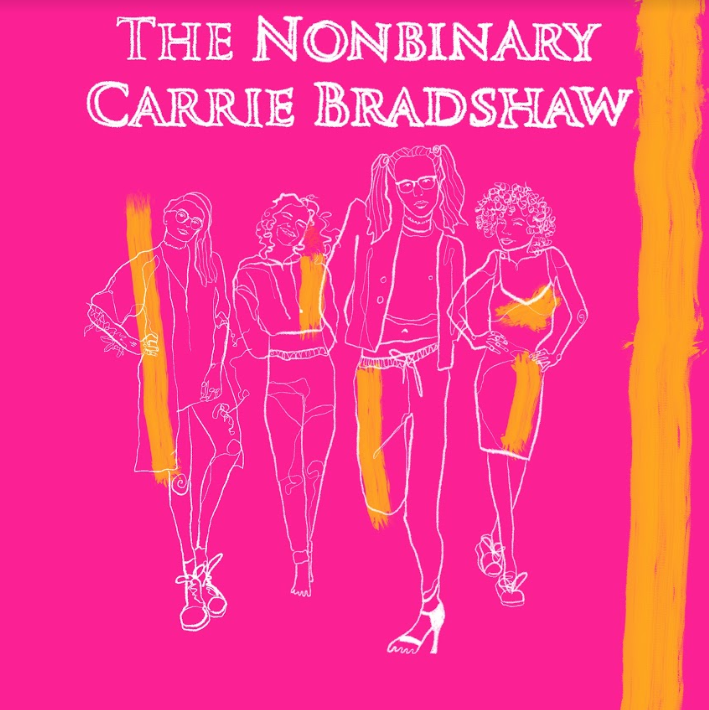
Get Ready for the Non-Binary Carrie Bradshaw
Joanna C. Valente is a human who lives in Brooklyn, New York. They are the author of several books, including Marys of the Sea, #Survivor (2020, The Operating System), and Killer Bob: A Love Story (2021, Vegetarian Alcoholic Press). They are the editor of A Shadow Map: Writing by Survivors of Sexual Assault and received their MFA in writing at Sarah Lawrence College. Joanna is the founder of Yes Poetry and the senior managing editor for Luna Luna Magazine. Some of their writing has appeared in The Rumpus, Them, Brooklyn Magazine, BUST, and elsewhere. Joanna also leads workshops at Brooklyn Poets. joannavalente.com / Twitter: @joannasaid / IG: joannacvalente / FB: joannacvalente
Read More
Make Your WFH Status Absolutely Magical
Stephanie Valente lives in Brooklyn, NY. She is a Young Adult novelist, short fiction writer, poet, editor, content & social media strategist. In short, she wears many hats. Especially if they have feathers. She is the Assistant Editor at Yes, Poetry and a writer at Luna Luna Magazine. Some of her writing has appeared in Bust Magazine, Electric Cereal, Prick of the Spindle, The 22 Magazine, Danse Macabre, Uphook Press, Literary Orphans, Nano Fiction, and more. She has provided content strategy, copy, blogging, editing, & social media for per’fekt cosmetics, Anna Sui, Agent Provocateur, Patricia Field, Hue, Montagne Jeunesse, Bust Magazine, Kensie, Web100, Oasap, Quiz, Popsugar, among others.
Read More
Poetry by Emily Wallis Hughes
Emily Wallis Hughes grew up in Agua Caliente, California. Her first book of poems, Sugar Factory, containing a series of paintings by Sarah Riggs in conversation with Emily's poems, was published by Spuyten Duyvil in 2019. Her poems have been published in the Berkeley Poetry Review, Cordella, Elderly, Gigantic Magazine, Painted Bride Quarterly, Prelude, ZAUM, and other magazines. She edits Elecment at Fence and teaches creative writing as an adjunct at Rutgers-New Brunswick.
Read More
An Interview with Writer Christina Rosso on Her Book 'She Is a Beast'
Joanna C. Valente is a human who lives in Brooklyn, New York. They are the author of several books, including Marys of the Sea, #Survivor (2020, The Operating System), and Killer Bob: A Love Story (2021, Vegetarian Alcoholic Press). They are the editor of A Shadow Map: Writing by Survivors of Sexual Assault and received their MFA in writing at Sarah Lawrence College. Joanna is the founder of Yes Poetry and the senior managing editor for Luna Luna Magazine. Some of their writing has appeared in The Rumpus, Them, Brooklyn Magazine, BUST, and elsewhere. Joanna also leads workshops at Brooklyn Poets. joannavalente.com / Twitter: @joannasaid / IG: joannacvalente / FB: joannacvalente
Read More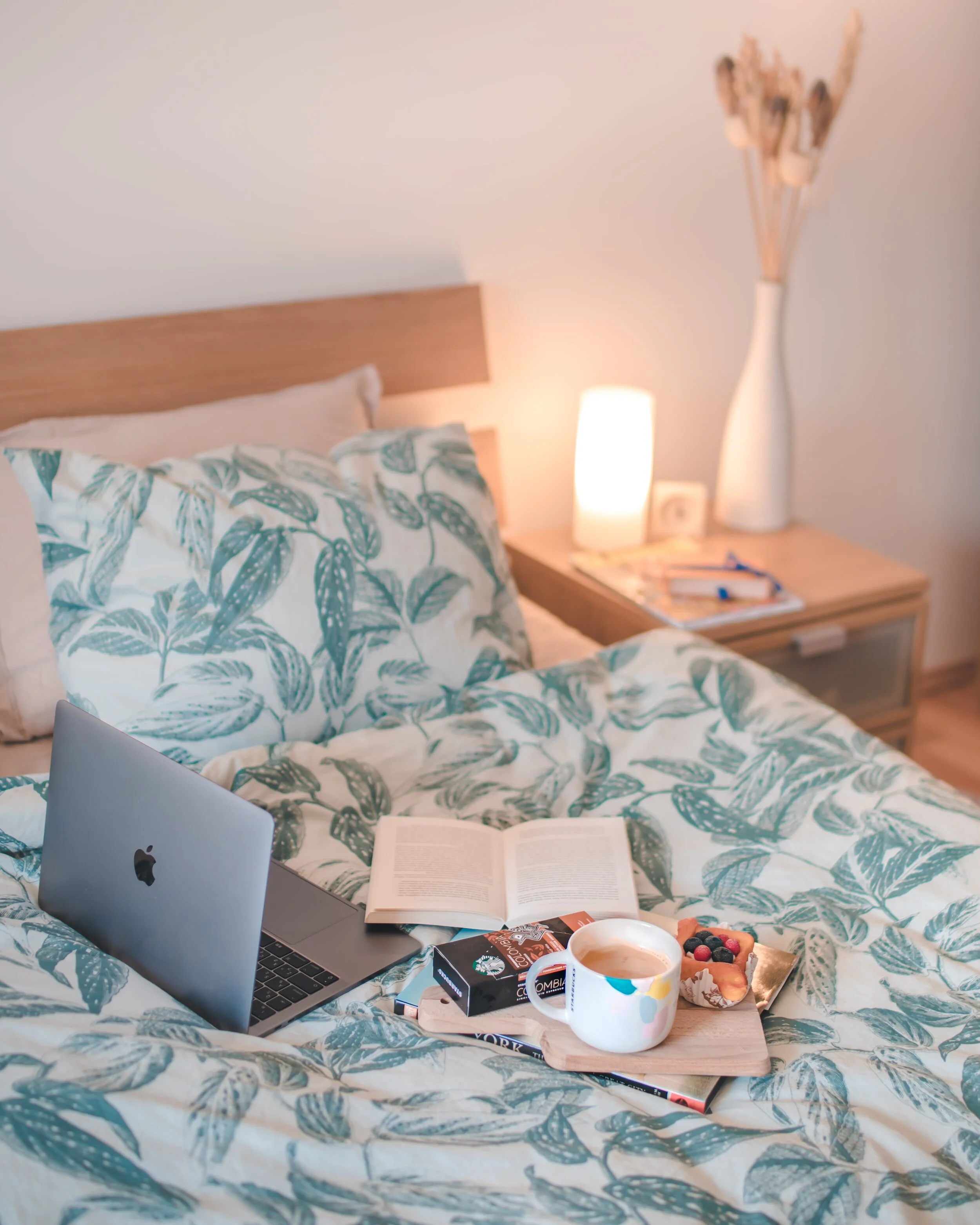
5 Gentle Work From Home Tips When Times Are Tough
BY LISA MARIE BASILE
Working from home, especially due to the Coronavirus quarantine, asks us to come up with gentle work and focus strategies that integrate rest, creativity, socialization, and self-kindness.
I’ve been a full-time, work from home freelancer for the past two years — a reality that has its beautiful ups, lonely downs, immense privileges (freedom, the ability to care for my chronic illness) and intense drawbacks (health insurance issues, pay cycle problems). I have learned what works and what doesn’t, and have felt everything from the sting of isolation to the beauty of taking a yoga-with-my-cat break.
First, let’s address the stigma around working from home. People sometimes think work-from-home employees are lazy, aren’t actually working or can sleep all day and take two-hour lunches. That we aren’t stressed or concerned for money (?!). In short, it’s true that there is great privilege in working from home, but work is work. And the best freelancers know that it’s not a free-for-all nor an opportunity to slack off. It requires delicate balance and recalibration, just as any job does.
Now that so many of us are working from home due to COVID-19, I’m hearing people say that it’s not as easy as it seems — that they feel frustrated, cooped up, adrift, unable to focus, at a loss for routine, undisciplined, lonely, and [insert adjective]. But more than that, everyone is trying to focus as a deluge of frightening news reports roll in.
In response, here are some ways to holistically and gently integrate work, life, and today’s changing reality.
Adapt to change mindfully.
How do we adjust to all of this rapid change? In one week, we’re dining out and seeing friends. The next, we’re losing our jobs, in our houses all day every day, and stocking up on food. It’s a lot. We have to mindfully navigate these changes. Now’s the time to take stock of what’s important to you day to day (talking to friends? Eating healthfully?). You’ll also want to keep (or adapt) routines that feel healthy and comforting (eating a healthy breakfast? Doing yoga each day for one hour?) and make your house the safe space you need in order to comfort you through anxious, dark, and isolating moments. Keep what feels good to you, and build from there, integrating your workspace tools and job duties into your home-life. Some ideas:
Create one specific space where you work. This creates a healthy separation between work and life. Make it as similar as you can to your office space.
Prioritize daily tasks. Besides work, what else matters? What do you do ‘normally?’ Try to adapt those same behaviors. For example, I swim once per day, usually in the morning. I can’t in quarantine, so instead, I plan to do a workout at that same hour. For those of you who take a break at the office around 12, try to replicate that at home. Creating mirrored actions helps us make sense of rapid change, and you can always switch them out if you find something else you like to do better!
If you feel like you’re missing out on a post-work routine (a local pub, hanging with a friend, walking around the park before heading home), try to create a similar-ish routine you can do when you close the computer — and do close the computer. Working from home is not an invite to work all night, even if it seems tempting.
Building a morning ritual to soothe the nervous system.
Because you don’t have a built-in routine — up at 7, on the train by 8, at the desk by 9, for example — you have to create your own routine. This is where discipline comes in. If you don’t want to work all damn day and night, or you want to leave time for projects and pleasures, you’ll need to work from your set hours. Sure, you might snag an extra 45 minutes of sleep, but being at your computer in the morning (if that’s what’s expected of you or not) can help create a sense of responsibility.
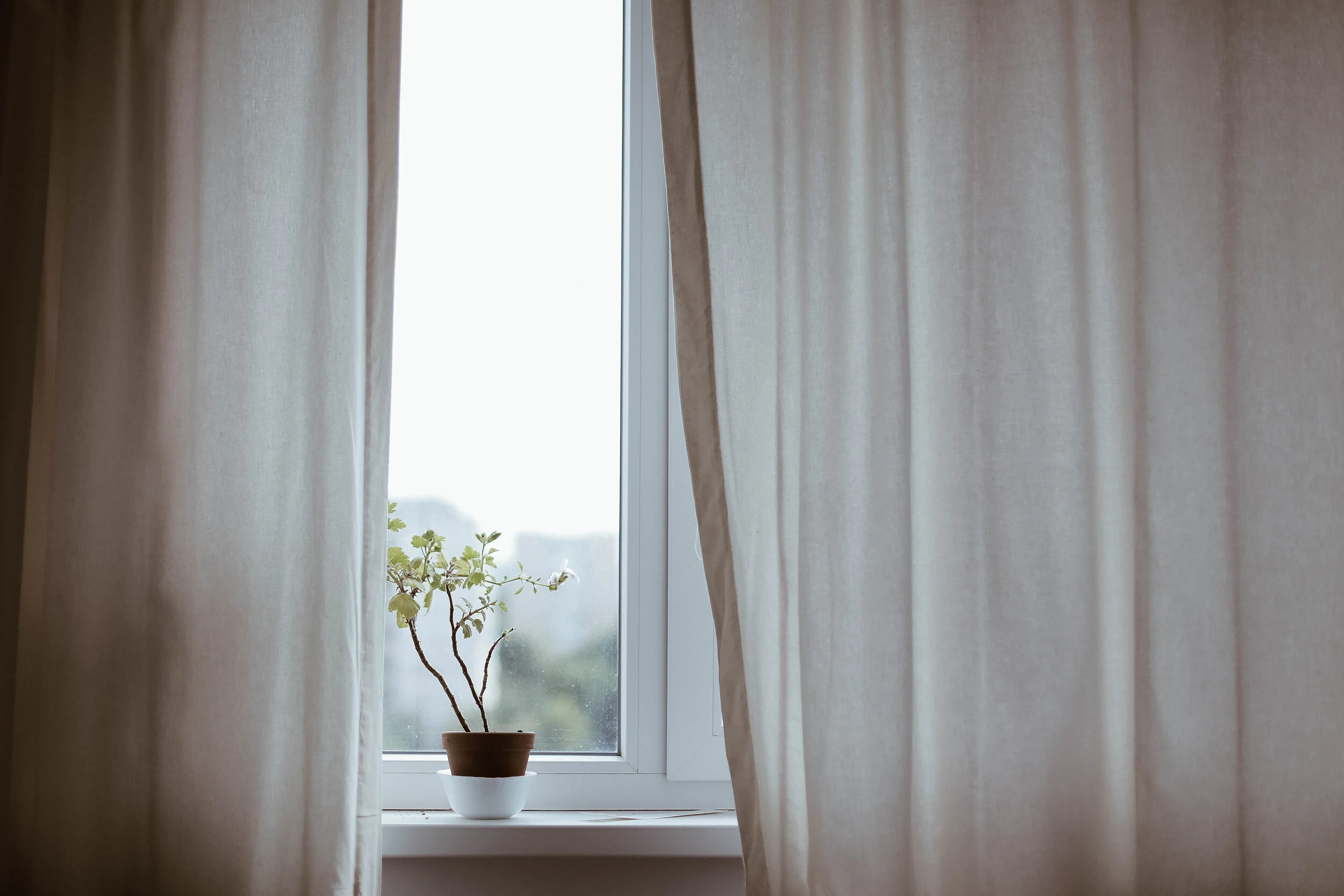
Start your morning with a ritual: stretching, pulling a tarot card, meditating, making a cup of coffee, listening to some music as you shower, standing at the window or porch and absorbing the light, and slowly logging on. Go inward. Wake up your senses. Be deliberate and soothing. It’s especially important now to be a little slower, be a little more intentional. Your parasympathetic nervous system may already be shot, so it’s important to show your body that the morning can be soft and calm. You want to set your day’s tone with self-kindness.
Rest when you need to. Seriously.
One of the benefits of working from home is the ability to simply lay down for 15 — vertically, at a window, wherever. You don’t have to hide-nap in a stall at the office. Even though we have bills to pay (those of us who are privileged to keep our jobs right now, of course), now is the time to balance our ability to do more with resting.
In a sense, the earth is asking us a serious question. The earth is asking us to slow down, to listen, to be more in-tune, to stop pushing so hard — our bodies, the planet, our factories, our workers, our minds. To just be. To just be. Because we are not infallible. We are not eternal. We are natural things that have become selfish enough to think we are omnipotent. We are not. We, like trees, need water and light and time to grow. We bend toward others. We have a language. We bloom. We rot. We are bearing witness, as witness trees do, to the doom that can happen when we don’t listen or care for others.
Working from home, especially during a quarantine time when you’d ordinarily be out or meeting friends or at business meetings, may feel like an invitation to finally do and be everything. To finally learn Spanish. To finally finish that novel. And while these things may comfort you in the dark moments, capitalism’s greedy hands ought not make us feel we’re not being or doing enough.
Do what you can to survive. But rest. Heed the earth and sleep if you need to — especially if you’re sick. Take the time to breathe. To be alive. To watch your animals gaze up at the sunlight through a window.
Build focus by integrating movement, art, and breath into your day.
You’re working from home. You’re trying to focus. You’re reading the news, crying, and then trying to Slack your boss in some sort of legible manner. They are probably home trying to be a good boss, trying to stop the kids from crying, trying to do their best, too. The Pomodoro technique is one I’ve been using since forever because it’s doable, forgiving, and realistic. I used to do it in the office, but now I do it even more at home, where distractions are abundant.
The Pomodoro technique allows us 25 minutes of focus, and then a short break. After that, I will do something soothing. I’ll do a few minutes of yoga, watch a few minutes of ASMR, doodle carelessly into a journal, or do a breathing practice (breath in for 4 seconds, hold the breath for 7 seconds, and exhale for 8 seconds). I also created a sacred writing prompt journey (for free!) here, if you prefer to write.
While this may seem pandering or ridiculous (after all, humans need to work!), the reality is this: We won’t do our best if we can’t focus, if we’re chaotically stressed, if we’re giving our all to a job and not taking care of ourselves — especially in a time of crisis.
Create time for socializing.
For people in offices, endless meetings can take a toll. They can usually be summed up in an email, anyway, right? At WeWorks, we duck into telephone booths as if any human interaction will cause us to explode. We’re over-saturated. But in quarantine, we’re suddenly forced to listen to our own footsteps, missing the human interaction of a normal workaday. Even when we’re not working, the missing becomes extra real. We are social creatures. Here’s what you can do:
Organize a FaceTime chat with a friend or friends
Start a group text with friends to share funny pictures or memes
Send videos versus texts with friends. Seeing faces helps our brains feel more connected.
Write a long letter or email to a friend
Watch YouTube vlogs; even having a voice in the background is helpful psychologically
Do a poetry readings or Q&A session on Instagram
Schedule a phone call with someone special once or twice a week
Start a Facebook group for a specific community
Dive into the land of podcasts
Lisa Marie Basile is the founding creative director of Luna Luna Magazine, a popular magazine & digital community focused on literature, magical living, and identity. She is the author of several books of poetry, as well as Light Magic for Dark Times, a modern collection of inspired rituals and daily practices, as well as The Magical Writing Grimoire: Use the Word as Your Wand for Magic, Manifestation & Ritual. Her work focuses heavily on trauma recovery, writing as a healing tool, chronic illness, everyday magic, and poetry. She's written for or been featured in The New York Times, Refinery 29, Self, Chakrubs, Marie Claire, Narratively, Catapult, Sabat Magazine, Bust, HelloGiggles, Best American Experimental Writing, Best American Poetry, Grimoire Magazine, and more. She's an editor at the poetry site Little Infinite as well as the co-host of Astrolushes, a podcast that conversationally explores astrology, ritual, pop culture, and literature. Lisa Marie has taught writing and ritual workshops at HausWitch in Salem, MA, Manhattanville College, and Pace University. She is also a chronic illness advocate, keeping columns at several chronic illness patient websites. She earned a Masters's degree in Writing from The New School and studied literature and psychology as an undergraduate at Pace University. You can follow her at @lisamariebasile and @Ritual_Poetica.
The Age of Coronavirus—And What This Means for Us
Joanna C. Valente is a human who lives in Brooklyn, New York. They are the author of several books, including Marys of the Sea, #Survivor (2020, The Operating System), and Killer Bob: A Love Story (2021, Vegetarian Alcoholic Press). They are the editor of A Shadow Map: Writing by Survivors of Sexual Assault and received their MFA in writing at Sarah Lawrence College. Joanna is the founder of Yes Poetry and the senior managing editor for Luna Luna Magazine. Some of their writing has appeared in The Rumpus, Them, Brooklyn Magazine, BUST, and elsewhere. Joanna also leads workshops at Brooklyn Poets. joannavalente.com / Twitter: @joannasaid / IG: joannacvalente / FB: joannacvalente
Read More
Coronavirus Anxiety and The Practice Of Sitting In Uncertainty
BY LISA MARIE BASILE
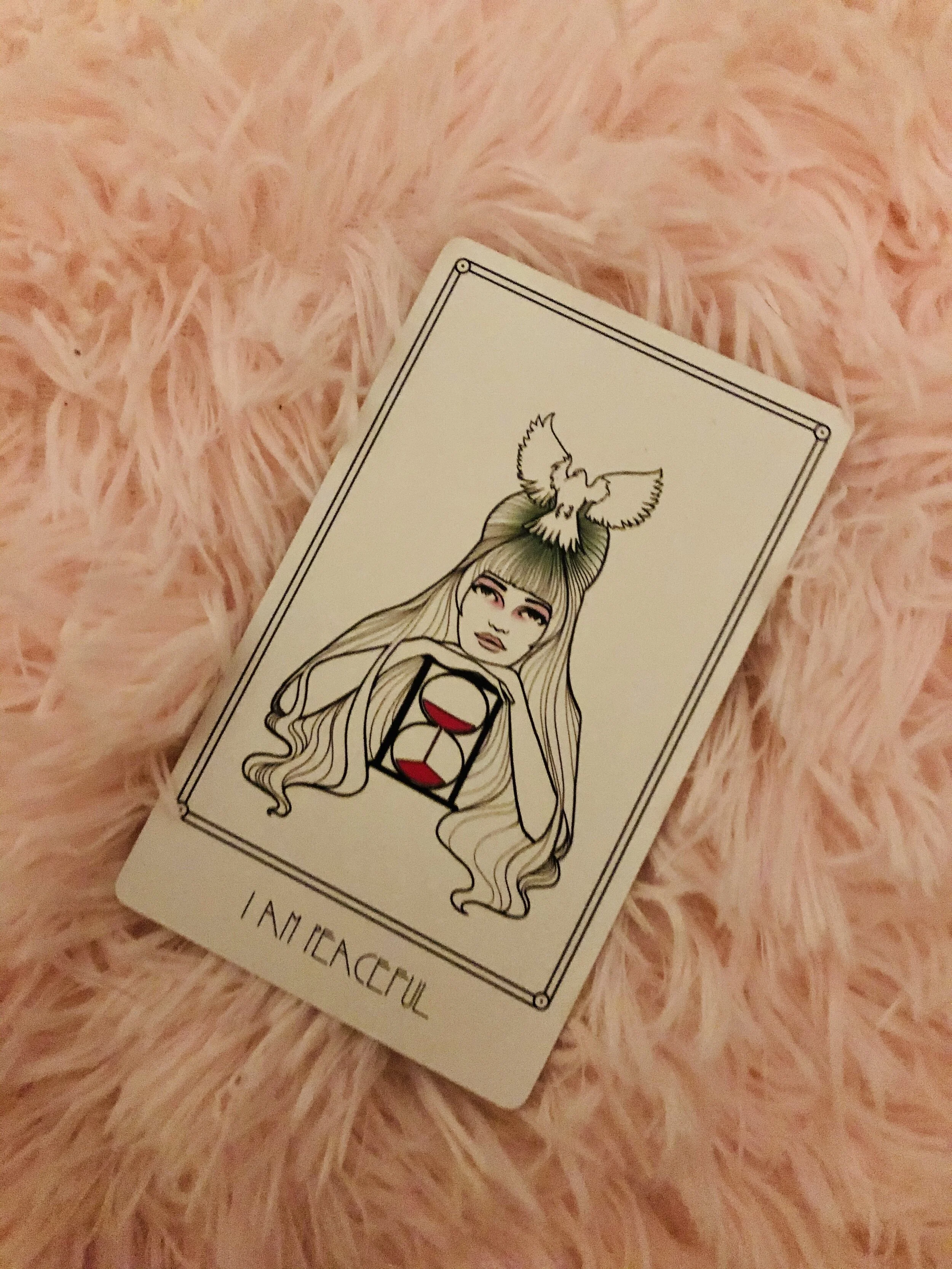
In my Amenti Oracle Deck, I pull the card for I am peaceful. I asked the deck, of course, what I was supposed to take away from this experience in quarantine. I’m just human. I don’t know. I don’t even know if I’m ready to learn a lesson. I do know that, as a writer, I am compelled to write it all down. To take notes through this thing. To keep a diary of what I’ve seen. I have a feeling this will shape us. Maybe I want to be present for it.
I know that for all of us, it’s been hours and hours of dread through insomnia-filled nights perusing the web, guzzling every wave of new information, letting the anxiety take over. I know that in our private Luna Luna community group, there’s a lot of worry. Everyone, the globe over, is panicking, and you can feel it. From space, I wonder if you can feel a buzzing strange energy emanating through our atmosphere. I wonder if you can feel it through all sorts of tragedies.
I am currently experiencing all the symptoms — perhaps it’s the flu or bronchitis. Perhaps worry leads me to be sicker than I should be. I sit in bed or wander my apartment, wondering how best to handle this new normal. Looking outside at New York City, its streets empty and silent (but it’s pubs still full at night, people’s faces inches from one another, before the city finally closed itself down), I wonder what the earth is trying to tell us.
I wonder why we are so resistant and stubborn. I wonder why we think ourselves invincible. Is the fear of death itself so big and so deep that we run toward it?
If you live with an immunocompromised body as I do, at some point you stop clutching illusions of infallibility. You have learned some time ago that your body is an engine running on wayward wheels. You have learned to avoid the subway poles and handshakes. You have learned that each day is a new preciousness. And if you’re anyone else, you probably have a friend or a lover or a parent or grandparent who is at high risk of getting very sick if they do contract a virus, or this virus.
The body is a fragile ephemeral thing, and it must bend toward the pew of nature. And yet, we resist, making it hard to survive.
My point is that we have to lean into this new situation. We have to or else we disappear. We literally have to because there is no other choice. We have to face that this is dark and hard and there will be (and is) global grief at the end of it all.
We’ve seen the memes about our grandparents going to war, which are somehow supposed to shame us into feeling comfortable during quarantine? I think it’s a false correlation. We can honor and respect history and the tragedies that have occurred while being uncomfortable with the things that befall our societies today. It isn’t just about quarantine or being bored inside the house or watching Netflix or reading books. It’s about watching how society reacts to chaos, how politicians act too late or use xenophobic language during an outbreak, about the power of contagion and how ignorance and selfishness lead to community spread. It’s about infrastructure, school children not going to school, poor people not being able to buy food, homeless people having no shelter-in-place, shelves being completely empty, people who have lack of accessibility, elderly people without family. It’s about not being sure. It’s about uncertainty. It’s about death. And it’s about grief, which we haven’t, as a global community, even dealt with yet.
There is so much validity in being fearful and anxious during this time.
If you are out there wondering what will happen, wondering how we got to this point, you’re not alone. If you are watching videos of beautiful Chinese or Italian people singing out of their windows or on their balconies into empty streets, their voices echoing through the night in act of communal conjuring, you are not alone.
What the Amenti Oracle card told me about being peaceful was this:
Finding peace and stillness in the midst of chaos is a challenge, but it’s one that we must meet. We can choose to spend the entire day in worry — and it would not be invalid if we did. Our finances, our health, and our stability are at risk. But we can also choose to take back a few minutes for ourselves, to sit in silence, to just be alive, to just surround ourselves with the things that bring us pleasure and joy.
Mine are books and plants. My cat. Blankets. I like to sit at the window and just look out, even if I just see another building. I like to write little notes. I like to set up an altar. I like to clean my space and give it love. I like to make tea and watch the heat dance above the liquid. I like to listen to the birds in the morning. I like to wonder what they’re thinking about all this free space.
I like to pretend that I am a stone in the sea. I am smooth and I am turned over and over and over again as I am moved by the waves. I have no choice but to be a creature of the sea. And that great dark mother, with all her mystery and all her might, pushes me about. But I am eternal and I am still whole. I can worry about the waves, or I can let them take me. There is value in both. There is value in anxiety — because it helps us grow and it helps us become empathic toward others. And there is value in stillness and acceptance and learning to fill the time alone or isolated, with nothingness. It’s not meant to be comfortable. It’s meant to be what it is, which is a breath, a pause, a being. An opportunity to just be — in between the shadows.
Maybe I don’t need to write it all down or understand it or provide thoughts or hope to others. Maybe I shouldn’t be writing this post. Maybe I just need to be, to lean into the unknowing and the mystery and uncertainty.
Lisa Marie Basile is the founding creative director of Luna Luna Magazine, a popular magazine & digital community focused on literature, magical living, and identity. She is the author of several books of poetry, as well as Light Magic for Dark Times, a modern collection of inspired rituals and daily practices, as well as The Magical Writing Grimoire: Use the Word as Your Wand for Magic, Manifestation & Ritual. Her work focuses heavily on trauma recovery, writing as a healing tool, chronic illness, everyday magic, and poetry. She's written for or been featured in The New York Times, Refinery 29, Self, Chakrubs, Marie Claire, Narratively, Catapult, Sabat Magazine, Bust, HelloGiggles, Best American Experimental Writing, Best American Poetry, Grimoire Magazine, and more. She's an editor at the poetry site Little Infinite as well as the co-host of Astrolushes, a podcast that conversationally explores astrology, ritual, pop culture, and literature. Lisa Marie has taught writing and ritual workshops at HausWitch in Salem, MA, Manhattanville College, and Pace University. She is also a chronic illness advocate, keeping columns at several chronic illness patient websites. She earned a Masters's degree in Writing from The New School and studied literature and psychology as an undergraduate at Pace University. You can follow her at @lisamariebasile and @Ritual_Poetica.
A Playlist to Keep You Company
Joanna C. Valente is a human who lives in Brooklyn, New York. They are the author of several books, including Marys of the Sea, #Survivor (2020, The Operating System), and Killer Bob: A Love Story (2021, Vegetarian Alcoholic Press). They are the editor of A Shadow Map: Writing by Survivors of Sexual Assault and received their MFA in writing at Sarah Lawrence College. Joanna is the founder of Yes Poetry and the senior managing editor for Luna Luna Magazine. Some of their writing has appeared in The Rumpus, Them, Brooklyn Magazine, BUST, and elsewhere. Joanna also leads workshops at Brooklyn Poets.
joannavalente.com / Twitter: @joannasaid / IG: joannacvalente / FB: joannacvalente
Support Tracy Queen: A Weird, Wild, Sex-Positive Graphic Novel
LISA MARIE BASILE IN CONVERSATION WITH LYNSEY GRISWOLD
“Tracy Queen is a lot like those, in that it celebrates the s*x-positive* values and the labor of s*x** workers...Except it's weirder. It’s about a woman who makes adult entertainment for a living, loves her life...and is BFFs with a raccoon! And also creates a race of cyborg-clone warriors to protect her from the forces of mainstream p0rn and her own criminal past…You know. Normal stuff.”
Can you tell us a little bit about Tracy and her story? What was Volume 1 about?
Tracy is a love warrior. I'm using a term I first heard from Madison Young—an adult performer, director, and producer who's also an author, performance artist, coach, and overall amazing human being. Madison described herself that way, and requested that the cameo appearance she'll be making in Tracy Queen's later volumes be called that as well. I realized that "love warrior" is exactly the right description for Tracy herself.
Tracy Queen is a character that I originally based on someone I knew in my own life, and who deepened and became bigger and more real as I wrote her story. She starts Volume 1 of her 8-volumes journey having lived her whole life under direction from other people. She's always been told what to do. And, unfortunately, that's brought her a life mired in violence. In Volume 1, she realizes that she no longer wants to hurt people. At the behest of her new best friend—a talking raccoon who's her new roommate—she breaks free of her violent past and sets off to make a future that's more focused on pleasure. She discovers adult webcamming as a means of income, but also as a liberating and empowering experience.
In Volume 2, "Dangerous Experiments," which we're Kickstarting now, she continues down her path toward freedom and sexual enlightenment when she decides to start filming sex scenes with partners. It's her response to having a face-to-face encounter with a very ugly truth that some people think women's bodies and sexuality can be owned by anyone but the women themselves. It's also her way of deepening her commitment to showing the world that empowered women can have sex, enjoy it, and own the footage.
There's a lot more to come, including lots more sexual discovery, higher stakes in the struggle against the forces of darkness, cameos from a bunch of fantastic adult performers, and eventually a climactic battle between Tracy's own cyborg-clone fighting force and an army of porn stars brainwashed against her by an evil porn kingpin... But that all comes later.
Who is your dream reader? Or, who would fall in love with this series?
Folks with a penchant for weird, pulpy, sci-fi could enjoy this series, because there is a lot of bizarre, over-the-top junk science that's a total delight! But Tracy's story goes really deep into the ways in which internalized misogyny can keep women living as lesser-than when they're capable of so much more. And sometimes that "more" is being open about their sexuality, even profiting on it. So I think anyone with an interest in the intersection of feminism and sex work will find a lot to enjoy...as long as they're into some truly weird shit, also.
“Folks with a penchant for weird, pulpy, sci-fi could enjoy this series, because there is a lot of bizarre, over-the-top junk science that's a total delight! But Tracy's story goes really deep into the ways in which internalized misogyny can keep women living as lesser-than when they're capable of so much more. And sometimes that "more" is being open about their sexuality, even profiting on it. “
Where are you coming from, as a creator, with these stories? Can you tell us a little bit about yours and Jayel's background?
I've been writing about the intersection of feminism and sex work, with a focus on pornography, for well over a decade. I started as a reviewer for adult films, then moved into criticism, interviews, journalism, curation, even documentary filmmaking on these topics. I've written an award-winning memoir—Watching Porn—about everything I've from about the adult entertainment industry, and I've stacked up some pretty impressive bylines with mainstream magazines. I even won a Feminist Porn Award for my one of my films! Tracy Queen is really, in many ways, my opus on all I've learned and seen, particularly on the ways that consumers interact with sex work and porn. Although Tracy's journey is deadly serious and deeply nuanced, it's shadowed by unbelievable, gonzo weirdness that feels necessary in order to lure mainstream readers into a deep conversation around sexuality's place in our culture.
My partner in this venture, Jayel Draco, is a lifelong, brilliant visual artist who had primarily worked in visual effects, animation, and fantasy art before we met. When I started telling him about Tracy Queen, however, he knew he needed to be a part of it. It was a stretch for him to approach illustrating a comic that would require him to draw a woman being sexual—repeatedly—without overtly objectifying her. And, I've got to say, I've been stunned at the work he's put out. Tracy is so alive in his illustrations! He started out working with a live model so that he could be sure he was getting the proportions right from the beginning. He didn't want to do what so many comics artists do—accentuate all the "sexy" parts of a woman's body instead of showing what a real person looks like. Once he'd established how Tracy looked from about a zillion different angles and in every position imaginable (sexy ones included), he was able to bring her personality and a feeling of realness to every panel he's created. It's been a huge pleasure to work with him on this!
How can people support your art?
Right now through March 20, we're Kickstarting Tracy Queen, Volume 2: Dangerous Experiments. It's the second of what will eventually be eight volumes in this series. We successfully Kickstarted Volume 1 in late 2018, and we've noticed a big difference in the online climate between then and now: It's a lot harder to get our links to the Kickstarter campaign seen on social media! If anyone here has read about the passage of FOSTA/SESTA at the federal level, they'll know that the past year has seen a chilling effect on discussions about sexuality online, because websites are now being held responsible for their users' content. That means that, if people are talking about sexuality in a way that's illegal (e.g. sex trafficking), the website that hosted their conversation is liable. Which is ridiculous! Talking about sexuality, pleasure positivity, consensual sex work, and so on is not the same as talking about sex trafficking. The differences between these topics are vast, and it's harmful to people on both sides of that divide to treat those conversations the same way.
But I digress. The upshot is that, since our campaign links to and necessarily uses terms like "sex" and "pornography", we are being deep-sixed by social media platforms and search results. We're technically allowed to post the content, but social media platforms and search engines then conveniently "forget" to show the content to anyone. We haven't even been able to pay to have our posts seen my more people! It's massively frustrating.
So, the best way that people can support Tracy Queen right now, aside from backing the Kickstarter (and getting sweet rewards!) is by helping us to get the word out! Every link share, every blog post, every podcast shout-out, every awkward mention at a fancy dinner party...it all helps us get closer to our goal and spreading the idea that sex shouldn't be shameful!
SUPPORT THIS PROJECT HERE.
6 Books to Read This Year
Joanna C. Valente is a human who lives in Brooklyn, New York. They are the author of several books, including Marys of the Sea, #Survivor (2020, The Operating System), and Killer Bob: A Love Story (2021, Vegetarian Alcoholic Press). They are the editor of A Shadow Map: Writing by Survivors of Sexual Assault and received their MFA in writing at Sarah Lawrence College. Joanna is the founder of Yes Poetry and the senior managing editor for Luna Luna Magazine. Some of their writing has appeared in The Rumpus, Them, Brooklyn Magazine, BUST, and elsewhere. Joanna also leads workshops at Brooklyn Poets. joannavalente.com / Twitter: @joannasaid / IG: joannacvalente / FB: joannacvalente
Read More
For Protection, A Poem by Arielle Hebert
BY ARIELLE HEBERT
For Protection
Because you are not what loves you
or what you waste your love on;
protect yourself from the lies you believed,
each time she claimed she was clean.
Go to the ocean, gather a cat’s paw shell, pine
needles, a body thrashing in water. Bottle it up.
Let this brine sit for as long as you can.
Hold your breath. This tonic is not
for forgetting (never forget: the tattoo
you share, an apple, hers mottled,
bruised from tying off). This is a shield
made from the need to move on.
Before you drink, picture her
hands, empty of you.
Arielle Hebert Is a poet based in Durham, NC, with roots in Florida and Louisiana. She holds an M.F.A in poetry from North Carolina State University. Her work has appeared or is forthcoming in Nimrod Journal, Willow Springs, Grist, Crab Orchard Review, and Redivider, among others. She won the 2019 North Carolina State University Poetry Contest selected by judge Ada Limón. She was nominated for Best New Poets Anthology in 2017. She was a finalist for New Letters 2017 Literary Awards and a semi-finalist for the 2016 Pablo Neruda Prize for Poetry hosted by Nimrod Journal. She is the director of operations and helps books come to life at Blair, a nonprofit publisher focused on emerging and underrepresented voices. Arielle believes in ghosts and magic.
3 Films to Watch When You’re in the Mood for Something Strange
Kailey Tedesco is the author of These Ghosts of Mine, Siamese (Dancing Girl Press) and the full-length collection, She Used to be on a Milk Carton (April Gloaming Publications). She is the co-founding editor-in-chief of Rag Queen Periodical and a member of the Poetry Brothel. She received her MFA in creative writing from Arcadia University, and she now teaches literature at several local colleges. Her poetry has been nominated for the Pushcart Prize. You can find her work in Prelude, Bellevue Literary Review, Sugar House Review, Poetry Quarterly, Hello Giggles, UltraCulture, and more. For more information, please visit kaileytedesco.com.
Read More
Unsplash
An Ethereal, Dreamy Pisces Season Playlist
BY LISA MARIE BASILE
This is a playlist for foggy mornings, for pre-sleep dream rituals, for long baths, for crying therapy, for the long, winding trip down the river Lethe. It’s music for the flowers, it’s music for the lakeside, it’s music for poetry writing and love letters. It’s music for the gauzy soft sorrowful threshold. It’s music for gilded gold and doves. It’s music for disorientation and sweetness.
Lisa Marie Basile is the founding creative director of Luna Luna Magazine, a popular magazine & digital community focused on literature, magical living, and identity. She is the author of several books of poetry, as well as Light Magic for Dark Times, a modern collection of inspired rituals and daily practices, as well as The Magical Writing Grimoire: Use the Word as Your Wand for Magic, Manifestation & Ritual. Her work focuses heavily on trauma recovery, writing as a healing tool, chronic illness, everyday magic, and poetry. She's written for or been featured in The New York Times, Refinery 29, Self, Chakrubs, Marie Claire, Narratively, Catapult, Sabat Magazine, Bust, HelloGiggles, Best American Experimental Writing, Best American Poetry, Grimoire Magazine, and more. She's an editor at the poetry site Little Infinite as well as the co-host of Astrolushes, a podcast that conversationally explores astrology, ritual, pop culture, and literature. Lisa Marie has taught writing and ritual workshops at HausWitch in Salem, MA, Manhattanville College, and Pace University. She is also a chronic illness advocate, keeping columns at several chronic illness patient websites. She earned a Masters's degree in Writing from The New School and studied literature and psychology as an undergraduate at Pace University. You can follow her at @lisamariebasile and @Ritual_Poetica.
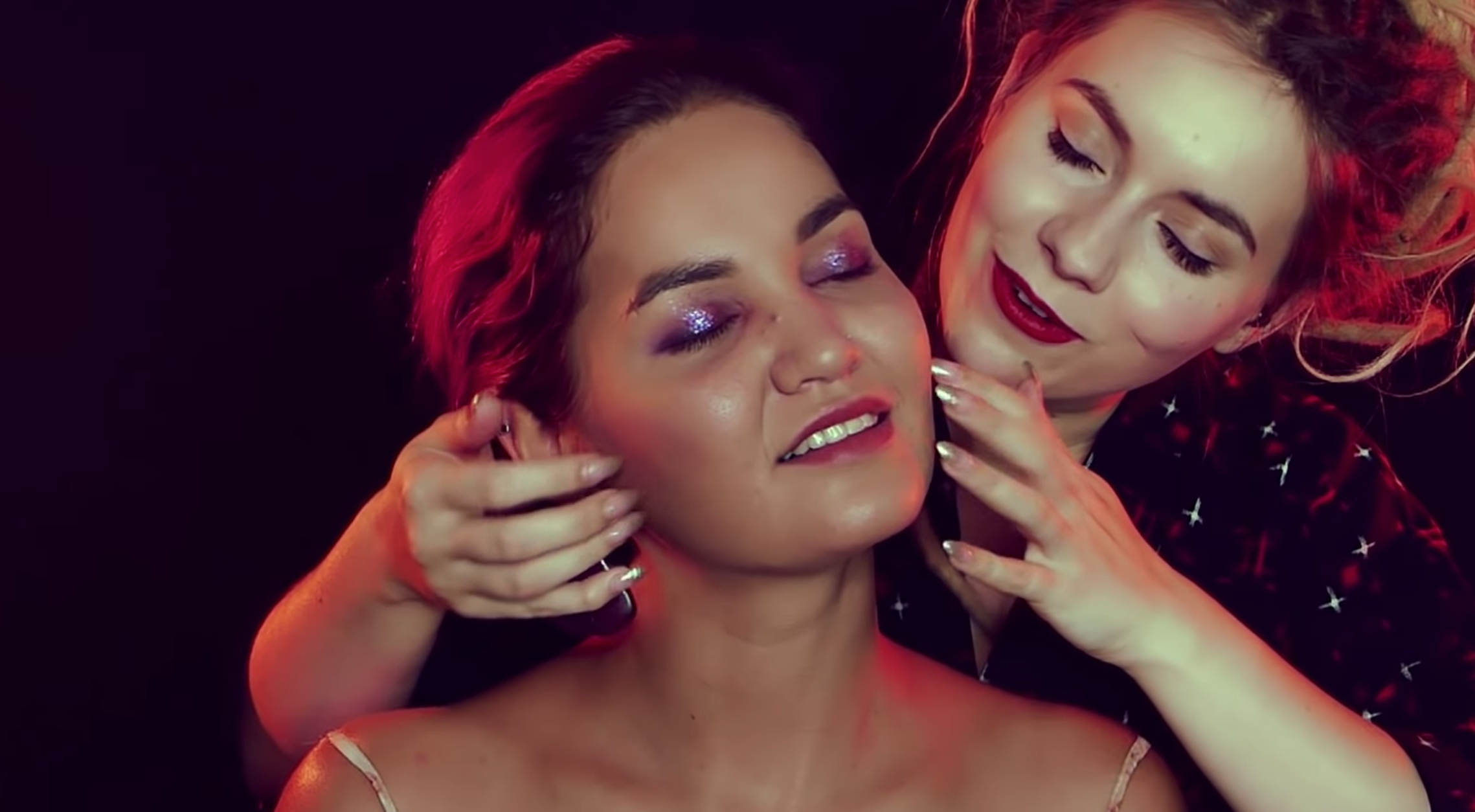
An ASMR Starter Pack For Mental Health, Magic and Relaxation
BY LISA MARIE BASILE
I’ve been turning to ASMR (it stands for autonomous sensory meridian response) for years now. At first, I felt it was bizarre, if not downright creepy. Who are these people whispering into a camera, playing pretend, talking to no one, in love with small sounds?
But as time went on, I realized that I loved it. Needed it. And benefited from it. I felt the warm, gushy, sparkling “tingles” that it induces, as though someone were kissing my neck, brushing my hair in bed, or telling me a secret, their almost-almost touching. It’s not sexual. It’s intimate. It’s not horny, it’s sensual. There is a beautiful difference, where one confronts and inhabits emotional honesty and comfort.
And as someone with a chronic illness that attacks various parts of my body, the need for slow living, intentional activity, and stress management became ever clear to me. And with the long workdays, commutes, family issues, and other draining experiences my community experiences, I know that we all need time to ourselves (that said, not everyone will experience ASMR or like it!).
At times, downtime can feel lonely. Books and music help, of course, but there’s medicine in connection. This is why humans are drawn toward group ritual, poetry readings, covens, church groups, comedy shows, libraries, even social media — we are social creatures. We want to experience the fullness of being alive, but sometimes we just need others around us. We crave their energy, their being, the comfort of knowing someone is there. Intimacy — the right kind of intimacy and connectedness — is healing. There are certain situations where the solace of other people can be accessed and managed in a perfect environment: ASMR. This is especially true for introverts or highly sensitive people, who empathically crave the energy of others but are over-stimulated or exhausted at the thought of having to perform.
With ASMR, we get to watch a video — a certain near-ness to people that we can control — while taking some time for ourselves. It’s a closeness, an almost-embarrassing intimacy, a lulling quiet.
There is an abundance of anecdotal and some clinical research around ASMR’s benefits (including an ASMR ‘University’ devoted to normalizing and understanding the art and science of ASMR), many pointing to a decrease in cortisol, reduction in heart rate, and a reduction in feelings of sadness. It offers many of the same benefits of meditation and mindfulness — and when watching it I often feel I’m in a woozy, soft womb, sonically massaged into a gentle hypnotic state.
I always see comments under ASMR YouTube videos from people experiencing anxiety, stress, or PTSD — the chronically ill, veterans, the grieving, students, overworked employees, tired parents. These people form a community of insomnia-laden, solace-seeking souls who simply want to feel comforted and seen by another human being. How is that weird? It’s bizarre not to want comfort.
ASMR, after all, is not just about the whispers. It’s about that one-on-one personal attention. At the end of it all, we’re all little children in some way, yearning for love and calm. ASMR provides a temporary stasis — and a FREE tool that can be accessed anytime.
My favorite ASMR artist — often called the “mother of ASMR” is Emma WhispersRed. Her book, Unwind Your Mind: Harness the power of ASMR to sleep, relax and ease anxiety, explores the magic of ASMR — a read I highly recommend (you can learn more about the book below. Emma is a generous, kind spirit whose ASMR spans everything from elaborate role-plays to simple makeup videos. Her words are a balm to us all, and I think her book is not just a book about ASMR, but necessary addition to the conversation on mental health, wellness, and the human condition.