BY JOANNA C. VALENTE
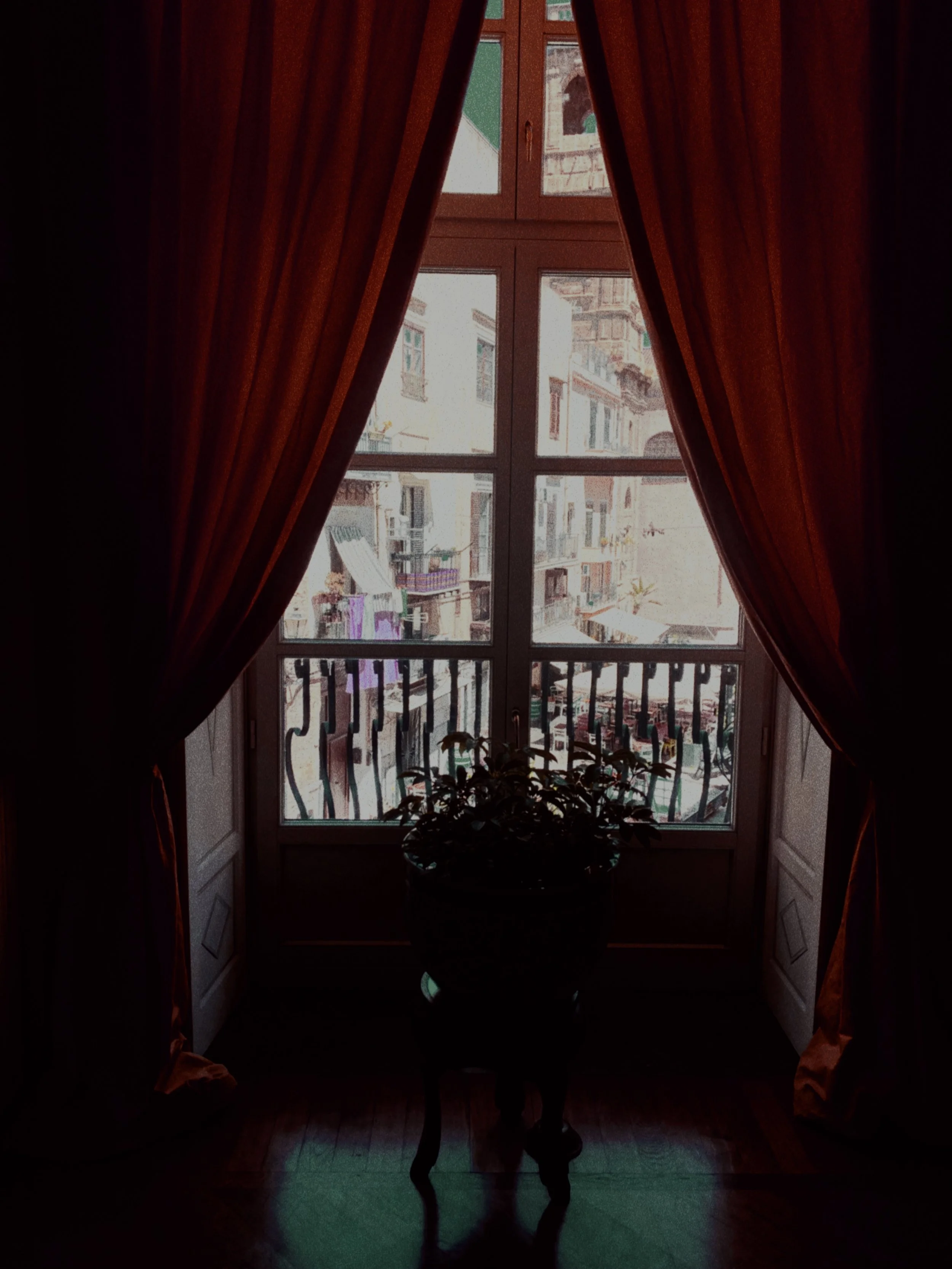
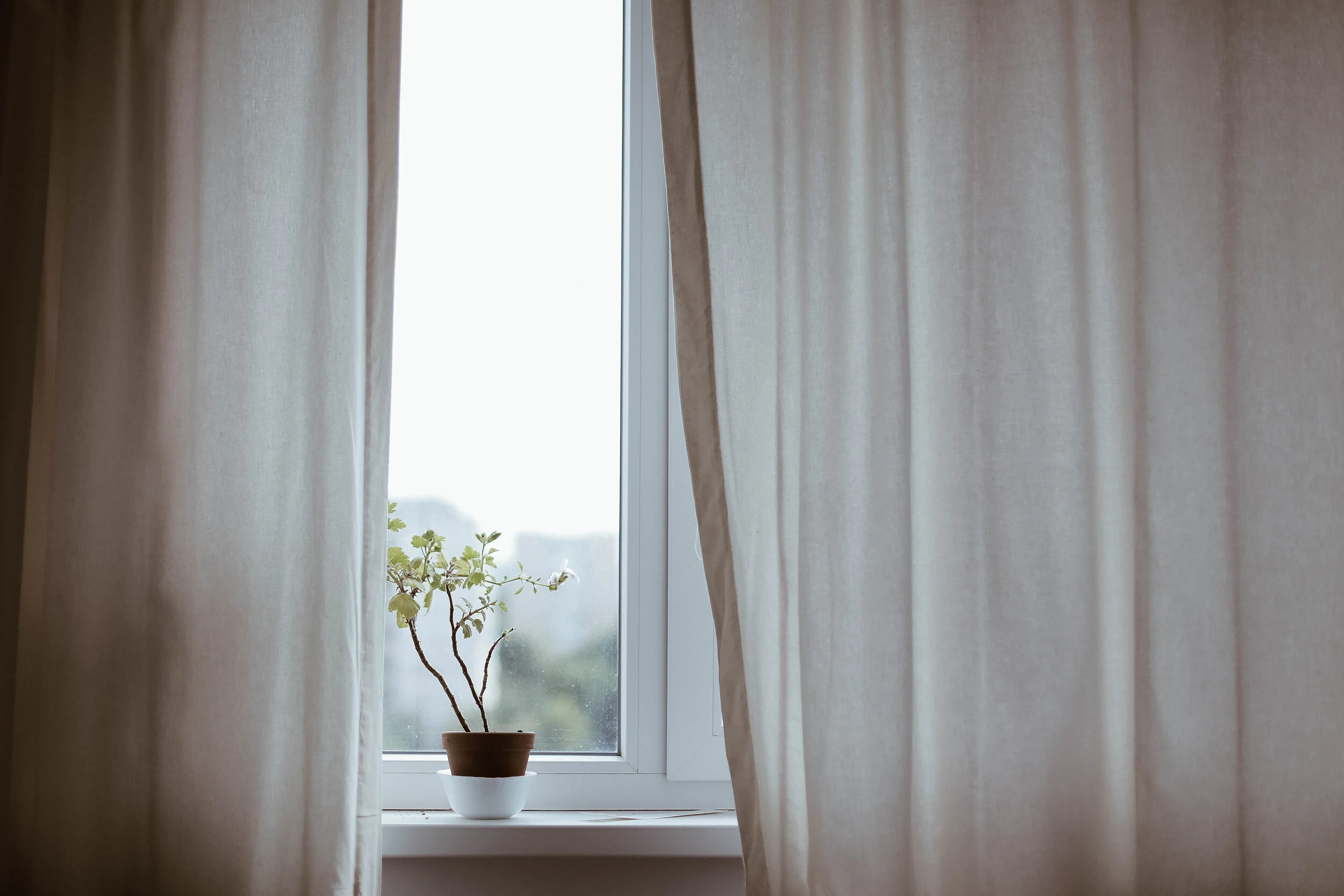
There are birds chirping outside, sunlight sparkling into my apartment, gleaming onto the leaves of my plants. The rumble of trucks can be heard below from the fourth floor. You can’t tell from above, at first, but the streets are emptier than usual.
When I go outside, for my daily walk each afternoon after my tasks for work are done, I see people with their dogs walk to the park—and other people like me, venturing out for fresh air, some semblance of normalcy—or what we consider normalcy, and some sense of freedom with what a new reality brought upon us. There was no choice here.
So much is beyond our control, so much uncertainty. This is nothing new, this is what most of our lives are thrust around. Now it’s just more obvious. Clarity can be scary, especially when it reveals what’s been there all along—a lack of control, eroded support systems, unequal distribution of wealth and access.
I throw out my trash and sort through my recycling. These are things I control. I do what I can control.
*
Each morning, I post new work by writers on Yes Poetry, a literary-arts lifestyle magazine and press I founded 10 years ago. This is especially important to me now. Since Monday, I’ve logged onto my work email and apps; my job, like many other office jobs, has let us work remotely for the time being. Before that, I was commuting from Brooklyn to midtown Manhattan every day, the G to the 7, in the wake of coronavirus.
The weeks before working remotely was possible, especially last week, I was angry, scared, and felt alone—like many others. I was not alone in my aloneness. What were we expected to risk just to show up and sit at a desk? Our lives? Others’ lives?
I enjoy my job and my colleagues, but it felt strange riding the subway, a grim, unsettled reality with people who definitely didn’t want to be there, and show up to work where we all talked about the fact that we shouldn’t be there. Business was trying to be on, as usual, but there is nothing usual about a pandemic.
Denial is strong. I can’t blame anyone for initially refusing to face the truth. But when people do that when in positions of power, it’s dangerous. It’s unsafe. At this point, many businesses and companies, big and small, have begun to roll out new policies, shuttered their doors, and opted for remote work when possible—all necessary precautions of social distancing and quarantining.
Right now, I’m lucky enough to be able to work remotely. It provides certainty and structure to my days at home; my partner, who lives in Philadelphia, was able to come to the city this past weekend and work with me remotely as well. The thing is, everyone should be protected during a pandemic. The problem is, not everyone is. And of course, not all jobs allow that to be the case (like caretakers, doctors, delivery personnel, etc)—or workers whose jobs have now shut down and whose main support is potential unemployment.
That dichotomy, that truth, is scary and hard to accept. How do we, as people, find ways to navigate? How do we, as safely and humanely as possible, move into the present, into our future? Those are the only questions that matter now.
I drew the ace of pentacles from the thoth deck for today - which can be intrepreted as using our current situation to find happiness, find new ways to find meaning and love, as well as new ways to work. Perhaps this clearly signifies a huge change in how we live - pic.twitter.com/13LESkHIFX
— Joanna C. Valente (@joannasaid) March 16, 2020
*
Pandemics have always been scary—and have always uprooted people from their routines, whether the 1918 influenza pandemic or polio epidemic in more recent history, for instance. As creatures of habit, this can be traumatic. As someone who lived through 9/11 in New York, as a preteen, this isn’t the first time I’ve seen a public catastrophe at home. But, it’s the first time, for me as an adult, the crisis lingers unseen and invisible—and can’t be linked to one day or time—and doesn’t necessarily have an end in sight.
It’s a different kind of disaster. It’s unfair to compare the two, and I don’t believe in comparing pain or trauma, but COVID-19, and how various governments have reacted (like the U.S.) to the issue, has already proven to be the nightmares we’ve concocted in literature and film for years—particularly sci-fi dystopian dramas as we live in an ever-connected technological environment, ranging from Dark City, The Matrix, Contagion, 28 Days Later, 1984, The Walking Dead, The Thing, The Handmaid’s Tale, Blade Runner, Pan’s Labyrinth, The Terminator, Mad Max, and so on. The list really goes on—and varies from political and social dystopias to health-centric scares to technological nightmares.
Our use of technology at once soothes and connects us, and scares us. In some ways, technology just provides a different face for the setting and emotions of the time we happen to live—a fear of the known, of uncertainty. In the past, and in some radically religious environments, illness and catastrophes were/are seen as the wrath of God, punishment for bad behavior, or even evidence as a coming “end time.”
Our obsession with dystopian fiction and films stem from our obsession with the apocalypse, which I can’t help but see coming from our deep shame, fear, and anxiety over consequences—and our lack of control as humans. At first it was God, now it’s AI. One fear morphs over time.

Instead of thinking of a disease as punishment from God, many now think disease as punishment for advancements—and climate change. And in some way, that might not be entirely wrong (especially when it comes to the consequences and effects from climate change, food harvesting, and the overuse of antibiotics, for instance).
At work, I am writing a piece on data and technology, and accidentally type “Satan & Technology.” I laugh because it’s not untrue. Maybe Satan isn’t an invisible demon lurking in the corner trying to prove God wrong, trying to tempt us, but Satan is all the ways our identities are being used as data without our consent, all the ways that we don’t even understand the technology around us right now, the mystery uncertainty.
Technology isn’t to blame so much as the people who yield it, who program it, who control it. What’s the point of it when it doesn’t make our lives better and more humane? AI and other devices are merely what we program them to be. Technology, and the use of it, is just as good as we make it.
So are our working conditions, which at this point, in a globalized, tech-centric world, are interlocked—for better or worse. Dystopian text has predicted this for ages; religious texts, fairy tales, and folklore have all taught us what happens when human interest gets in the way of human good.
The way we structure society and the technologies we invent and adopt are all forms of our connection to the universe, consciously spiritual or not, and in a way, a new kind of fairy tale, a new warning sign, a new equalizer, and destroyer.
Like the film, The Thing, we don’t understand or even see the virus as threat in its true form, but in the form it takes within people itself. Perhaps that’s the scariest part of it, its facelessness—as “the thing-in-itself” which Kant describes as “though we know not this thing as it is in itself, but only know its appearances, viz., the way in which our senses are affected by this unknown something.”
The thing as uncertainty, our fear of the unknown, goes beyond viruses and aliens, but what we name as fears to begin with, and the shape they take within us.
We construct and deconstruct our own worlds all the time. We always have, through art and chosen family and various modes of survival—different deaths and rebirths.
People love to measure moments in time—phases, eras, ages—like convenient packages—because it’s a construct we understand, because it structures us. I cheekily named this essay “The Age of Coronavirus,” not to scare, but to show how it’s already changed our habits, thoughts, and routines—and that will trickle down in other ways, like other moments in time have, much like the summer of love, the Cold War, the Neolithic age, the Enlightenment, the age of Aquarius (who doesn’t love this song, by the way?), and on and on and on.
*
Everything has consequences. The world has been beckoned into a new phase, a new reality, whether we like it or not. Everything evolves, even viruses do. The way we have operated is no longer a reality. Maybe one day it will be again, but even if our daily routines go “back” to a semblance of what they were before, we know better.
In a turbulent time that is economically unstable (and will likely become more so), emotionally raw, and dangerous for our health, finding new routines and coping mechanisms, and ways to socialize, are so necessary to our literal existence.
For some communities, this has already been the case (those with chronic illnesses, mental illnesses, and disabilities, for example) as online communities have become a refuge. However, for others, such as the sober communities that rely on physical meetings, this will be a challenging time to readjust to a more virtual world made possible via video meetings. Many artists and writers, who have long-used the internet as a source of community, are doing this now, through virtual readings and support.
. @OrchidTierney organized this beautiful virtual poetry reading in light of COVID-19, and I'm so glad to be part of this community-building and creative space. I'm a nervous reader and hate the sound of my voice, but this is for whomever needs it right now: https://t.co/9fSSGS9NTv
— Travis Chi Wing Lau (@travisclau) March 18, 2020
Even so, the game has changed for everyone—and this virus has at once equalized our perception of fragility and humanity, as well as revealed the cracks and inequalities within the system that is our government and economy.
We’ve been woken up, not unlike Sleeping Beauty—except there’s no prince to save us, but we must save ourselves, through unity.
*
As someone who lives in New York City, I can’t quite express the grim surreality of it all—taking panic-stricken subways to work, finding empty shelves in the grocery store, afraid to be separated from loved ones. My partner’s main residence is in Philadelphia, so for me, as someone who lives alone when we aren’t together, that fear of separation was all too real in the last few weeks. My mental health, at times, declined to moments I felt ashamed to admit to others.
In my worst moments, I imagined one of us getting sick and not being able to be there for each other. What if one of us died? What if we never saw each other again? What if I got sick, alone in my apartment? What about my parents, who are now in their seventies? My friends, my newly married sister?
The frenzied thoughts, of course, became louder at night, like an ugly siren blaring so loud I couldn’t unhear it. City life is gorgeously full of life, so enticing and highly glamorized in art and films, a Patti Smith reality that hasn’t existed for years.
But it’s also full of germs and overcrowdedness and expensive rents no matter where you live, with more likelihood of catching and passing something like a virus along. Its very expensiveness, and nonstop frenzy, makes any disaster feel immediately dire.
However, of course, that doesn’t mean people in suburban and rural communities have it easy either. In cities, access to care is faster and easier; there are endless bodegas to go to when grocery stores are packed. In less crowded environments, there’s less options for medical care and supplies. There is no haven or alternate reality.
I’ve seen friends scatter out of the city for a haven in the woods, or try to explain how leaving the city would be better. Besides not spreading the disease farther unknowingly, nothing is that simple. All communities have struggles. They just look different.
The real issue is: How do we respond? How do we react? Our reactions are what we can control and will define our personal and collective narratives. Will we, collectively as a people, become more empathetic and prioritize worker protections and universal healthcare? Or will those in power only become more destructive and greedy? And if they do, will a movement unite to combat that?
Living in a city can provide both overstimulation and isolation. I’ve felt alone around millions of people. Like others in a city, I’ve found myself dreaming of forests and farms and space—a different kind of isolation. We romanticize what we don’t have in the moment; and when we get what we want, we want the other again.
The human condition is flawed; we crave contradictions, what we don’t have; we continuously see the grass being greener on the other side. And sometimes it is, but rather than take that greenery for ourselves, greedily, I hope learn and become more accustomed to sharing it.
Like any fairy tale, perhaps the lesson here is to learn how to be human again—the kind of human who looks after each other, who prioritizes love, tenderness, kindness, and empathy, rather than self-serving greed and apathy.
My life, like yours, is on a threshold right now, a liminal state of past, present, and future—and the difference is between looking out the window and being outside in the sun.
Joanna C. Valente is a human who lives in Brooklyn, New York. They are the author of Sirs & Madams, The Gods Are Dead, Marys of the Sea, Sexting Ghosts, Xenos, No(body), #Survivor: A Photo Series (forthcoming), and A Love Story (Vegetarian Alcoholic Press, 2021). They are the editor of A Shadow Map: Writing by Survivors of Sexual Assault and the illustrator of Dead Tongue (Yes Poetry, 2020). They received their MFA in writing at Sarah Lawrence College, and Joanna is the founder of Yes Poetry and the senior managing editor for Luna Luna Magazine.