



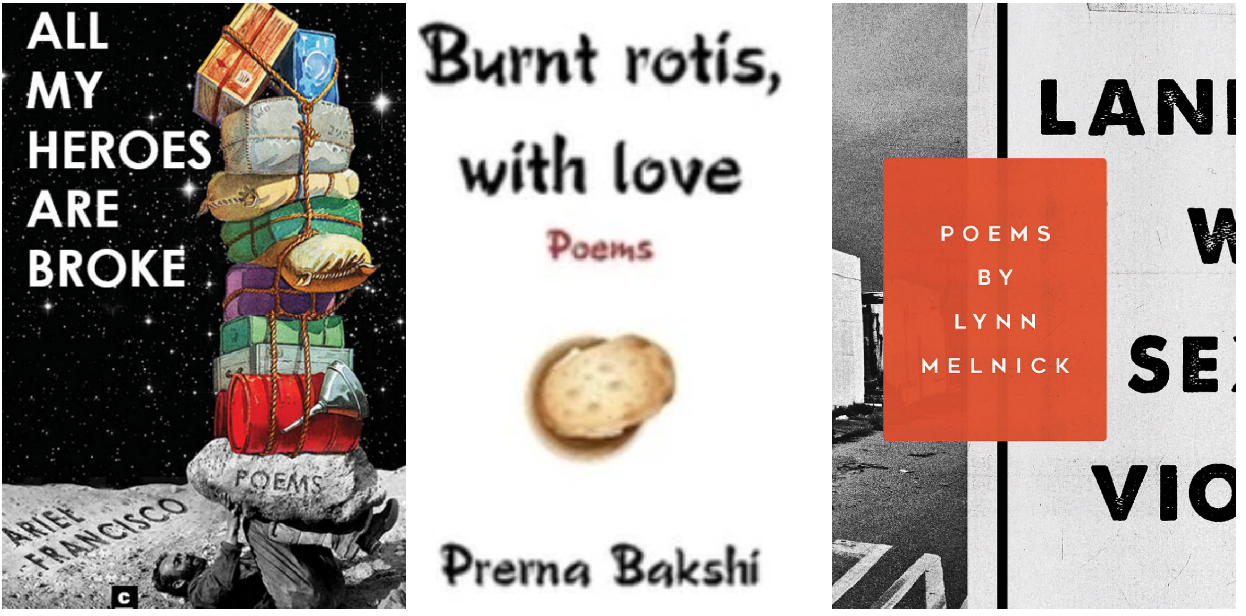
Here are some books that stole my heart and mind recently (and still haven't given them back):
Read More
A Look Back at AWP 2016 Through Caramel-Colored Glasses
BY MIGUEL PICHARDO
Outrage is exhausting. Three-day conferences in a different time zone are just as taxing. With plenty of collective outrage leading up to the 2016 AWP (Association of Writers and Writing Programs) Conference in Los Angeles, I had to conserve my energy.
I understand that there was plenty to rail against—culturally-deficient committees, poor accessibility, the tactless exploitation by Vanessa Place made worse by Kate Gale’s ranting—but I didn’t travel across the country to be swept up in polemics. When holding a conference in such melting pot of a city whose history has been marred by racial tumult, the Association could no longer afford to ignore the groups they’ve alienated in past years. And I couldn’t bring myself to knock the Association for trying. So, I loosened my brown fist into an open hand, tucked my soapbox under the table at my lit mag’s exhibit, and prepared to make the most of a conference where, for once, I felt welcome.
If you’ve ever been to an AWP Conference, you know that there are so many panels and events going on at the same time that you might wonder how far human cloning technology has come in recent years. Had I a team of extra Miguels, I would’ve attended everything on the schedule that spoke to me as Latino writer of poetry and fiction—maybe. Here’s some of what one Miguel managed to catch at the 2016 AWP Conference:
Panel Discussion: “Creating Opportunities for Writers of Color: A Continued Urgency”
Seated at the head of a hotel conference room were Reginald Flood, Diem Jones, Elmaz Abinader, Angie Chuang, and Angela Narciso. All of these authors have in one way or another dedicated their writing lives to circumvent “the perils of publishing in white institutions.” Abinader and Jones are two of the four founders behind VONA Voices, the only writing conference/workshop in the US that focuses on multi-genre work produced by writers of color. As of last summer, VONA left San Francisco and has made Miami its new home. Flood, Chuang, and Narciso have been involved with Willow Books, an independent press that strives to promote diversity in publishing by recognizing outstanding writers of color.
The panelists asserted that, as a community, writers of color can work towards creating an “alternate canon” worthy of inclusion in national and literary discourse. The aim then is not “diversity”—a word the panelists agreed is white, politically correct code for racism—but “equity,” as put forth by Narciso. Chuang then spoke on how writers of color should avoid becoming monoliths, self-absorbed loners who have forgotten that art can build bridges between communities.
When Jones pointed out that traditional pedagogy sometimes doesn’t work for writers of color, I realized that instead of writing for just anyone who will read our work, we should be writing for readers of color instead. Before I penned my first poem, I was an English major who couldn’t stomach the Bard and whose aspirations were forever changed after reading Junot Diaz’s Drown. I didn’t find this collection in any classroom; it switched hands between me and some of my Dominican friends at St. John’s University. I then passed it on to a group of high school students I was mentoring at the time. Re-education is not only possible; it’s necessary if we wish to turn the status quo on its head.
Before fielding questions from the audience, Abinader urged the writers of color in the room to fill in the “hollowness of diversity’’ by nurturing their individual voices and to always “make them [white people] uncomfortable.”
Will do, Elmaz. After all, change is hardly change unless it’s uncomfortable.
Reading: “Throwback Thursday: Four Forms of Performance from the Early 90s Nuyorican Poets Café”
Four years ago, when I still lived in New York, I’d often check out a reading or a slam contest at the hallowed literary hub that is the Nuyorican Poets Café. I’d sometimes take my high school students along as a field trip. More than once, they left the café so inspired that they’d recite their own poems on the R train back to Queens. The panel at this year’s AWP showed me that the Nuyorican still has that same impact on young poets.
An institution of Manhattan’s Lower East Side, the Nuyorican has been home to a community of poets since 1975. The AWP readers—Xavier Cavazos, Ava Chin, Crystal Williams, and Regie Cabico—represented a living snapshot of the Nuyorican’s 90s heyday. Since then, they’ve earned fellowships and PhDs, won national slam competitions, appeared on HBO’s Def Poetry Slam and NPR’s Snap Judgment, and of course, published multiple books. However, they all agreed that none of their achievements would’ve been possible without the Nuyorican, their “first MFA.”
Each poet recited a piece and followed it with some recollection of what the Nuyorican did for them as budding artists. Cabico, a queer Filipino American slam poet, said that without the Nuyorican he would have been a massage therapist or a lawyer. Chin credited the Nuyorican with giving her the space to explore language as a first generation Chinese American. Williams broke down the three lessons she learned about slam at the Nuyorican:
1. If you’re going to read a poem, then read a poem. Make sure that it has all the craft and technical considerations that go into creating poetry that is meant to be read aloud.
2. Slam with the intention to connect with your audience.
3. Come original. Be your full-throated self.
Last, and most memorable, was Cavazo’s reading. Taking a cue from Williams’ lessons, he launched into a hilarious poem titled “Motherfuckers” without the delay of unnecessary preamble. The piece was a tirade against Miami Marlins’ former manager, Ozzie Guillen. No matter where I go, the 305 follows. But his poem is not what stuck with me. Recalling his days as an addict, Cavazo said he owes his life and his sobriety to the friends he made within the Nuyorican’s brick walls, his fellow panelists. Teary-eyed, he reminded us that, “Slam is not an aesthetic; it’s a community. Keep it whole. Keep it beautiful.”
A Q&A followed, unlike any I’d ever seen. A Japanese American teen from Orange County raised his hand not to ask a question, but to make a request. He had a slam competition coming up, and was wondering if he could practice his piece for the audience. The panelists could not have been happier to oblige and invited him on-stage. As he read, I was reminded of my students back in New York. It was a relief to see, to hear that the oral tradition of slam poetry is alive and well from coast to coast, as relevant today as it was in the 90s.
The Latino Caucus
This year, the Association’s efforts to be more inclusive were apparent without coming off as pandering. Special accommodations were made for disabled attendees and panel titles were rife with acronyms like WOC and LGBTQ. The most apparent reforms could be seen in this year’s caucuses. At the end of the conference’s first two days, caucuses were held where groups of writers communed to discuss the challenges and opportunities their demographics face in the current publishing landscape. Caucus groups included writers in low residency MFA programs, Indigenous American writers, Asian American writers, and writers in recovery. One caveat about these caucuses was that many were held simultaneously. So someone who identified as say, a queer woman who teaches high school, would’ve had to prioritize one of these identities as her way into a larger community of writers.
I attended the Latino caucus where each panelist represented a different facet of the literary world. Emma Trelles, an alumna of FIU’s MFA program, spoke for the journalistic obligations a community of Latinx writers has in order to foster an atmosphere of good literary citizenship. She urged us to query editors for reviews on books by Latinx authors, and to cover each other’s events. Francisco Aragon, director of Letras Latinas at Notre Dame, suggested ways we can foster relationships with existing institutions in order to create literary programming and events focused on works by Latinx authors. Co-founder of the poetry workshop CantoMundo, Deborah Paredez invited us to “self-interrogate” in our work as a means of surveying the isolation we experience inside and outside of institutions. Moreover, she reminded us that “we are not exceptional Latinos; we’re representative of them.”
Lorenzo Herrera y Lozano, editor of several Latinx anthologies, posed the important question: “What would it take to publish ourselves into being?” The answer was provided by the following panelist, Ruben Quesada. Representing the literary magazine world, Quezada has held decision-making positions for publications like Codex Journal and the Cossack Review. Whenever he noticed a lack of Latinx representation in literary magazines, he either started his own or changed a predominately white one from the inside through what he called “deliberate editing.”
Quezada’s talk resonated with me especially. As the Latino editor of a literary magazine, I’d love to edit deliberately, but we simply don’t receive too many submissions from Latinx writers. During the Q&A, I made this known to a room full of strangers who looked like me, who spoke my first language. Before the Latino Caucus was over, my magazine’s Facebook page saw a surge in likes and the inbox was hit with questions about submission guidelines and book review queries.
If that’s not community, I don’t know what is.
Despite the overwhelming kinship and empowerment I felt in that room, I knew this could be the first and last Latino Caucus to ever be held at an AWP Conference. Sure, Latinx authors are as visible as ever, but being visible and being sustainable are two different feats. Before this caucus becomes an annual event, the Association asks that we jump through a series of hoops. For one, there must be panelists to preside over future Caucuses, each of whom have to have attended the last three consecutive AWP conferences as paying members. Also, the Association wasn’t concerned with how many people attended the Caucus; they just wanted the minutes when it was over. Only after the third Latino Caucus, to be held in 2018, does it become a permanent panel on the conference schedule.
Regardless of the shaky foundation the Latino Caucus stood upon, I still felt that I’d found my literary tribe, one I never knew could be available to me.
Off-site Event: The Bash hosted by The Conversation
This event could not be found on any official AWP listing. Invite only. I came as a dear colleague’s plus one. After enduring a lame, ill-planned reading, we called an Uber to take us to Ladera Heights, AKA the Black Beverly Hills. Live drums and saxophones could be heard as we pulled into the driveway of one of the nicest houses I’d ever been invited to. We were greeted at the door by our co-host’s father, Mr. Barnes. Inside, the rooms were adorned with paintings and wall-to-wall bookshelves brimming with knowledge. I imagined that this must’ve been such a nurturing environment for a poet like Aziza Barnes to call home.
I leaned over to my colleague and whispered, “I wish Mr. Barnes was my dad.”
Mr. Barnes gave us the lay of the land: where to find the booze, the coffee, the snacks, and the pièce de résistance, the taco bar. The hospitality was on one hundred thousand; I was exactly where I needed to be.
The band played Motown classics as I made trip after trip to the taco bar. I spoke with young black, white, and Latinx poets from all over the country. I even reunited with a poet from Mississippi I met during the 2015 conference. We agreed that the Association had taken the hint since last year in Minneapolis, where the melanin-deficient panels and attendees made us seriously question what we were doing there in the first place.
I struck up another conversation with a black poet and PhD candidate from Flint, Michigan. Maybe it was the festivities, but like me, he was overjoyed to see so many writers of color sharing such a memorable night. He told me about Claudia Rankine’s moving keynote address, which I’d missed the night before. We exchanged email addresses and poems. The band played their last notes and then we heard the announcement, “They’re going to read.”
An unveiling was upon was, the reason why we’d all come together. Nabila Lovelace and Aziza Barnes had organized The Bash as the joyful inauguration of a new literary institution they’d founded and dubbed “The Conversation.” The organization’s mission is to “carve out a space for Black Americans to contend with their Blackness and its infinite permutations in the South.” Lovelace and Barnes wanted to turn the literary conference model on its head, and by throwing The Bash, they had done so beautifully, in a manner no POC I know could resist: the house party.
Our hosts stood silently in front of their mic stands, commanding us with their presence before either of them spoke. Lovelace’s head was wrapped in a soft cloth and Barnes wore a plaid blazer, dreads draped over her shoulder. Barnes thanked all of us for attending and stressed the importance of coming together outside of the Association’s confines. She went on to read a poignant piece about being harassed by LAPD outside of the very house we were gathered in—the house she grew up in.
After the reading, the band packed up their equipment. Yet, the party was far from over. A DJ set up his gear and turned the Barnes living room into one of those basement parties from my high school days. The lights were low, the floor was shaking, and bodies moved to anthems like Montell Jordan’s “This Is How We Do It” and Juvenile’s “Back That Azz Up.” When Dark Noise Collective poets Danez Smith and Nate Marshall busted out a flawless “Kid ‘n Play” in the middle of the dance floor, the crowd lost it.
I swayed to the music, getting by on my two left feet and reveling in the ruckus we were busy making. Amid a conference that was anything but silent, the noise of change had been a low hum since I arrived in Los Angeles. Here, at The Bash, it reached its crescendo.
The DJ threw on Kendrick Lamar’s “Alright,” and played it loud. All of us chanted the chorus together, “We gon’ be alright/ Do you hear me, do you feel me? We gon’ be alright.”
I couldn’t agree more.
Like this article? You should try: Breaking the Cultural Ties That Bind Us
Miguel Pichardo is a Dominican/Ecuadorian writer out of Miami. His poetry has appeared in Duende and Literary Orphans. He is currently an MFA candidate at Florida International University and the editor of Fjords Review.
Carli Jeen
What I Didn’t Learn In Writing Workshops
I loved going to graduate school and being immersed in writing. Having the opportunity to study with my mentors and peers was one of the most rewarding experiences of my life—and I learned a lot during the two years it took for me to get my degree. But there was something auspiciously missing from most of our discussions— how to create diverse characters.
Read More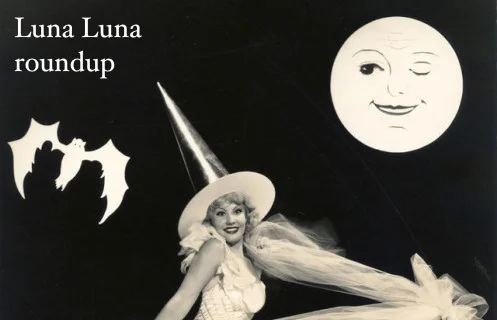
Witchy World Roundup: June 2016
BY JOANNA C. VALENTE
From Lindy West to Casey Rocheteau, we've got it all:
'Beyond the “girl power” anthem: Beyoncé, Lana Del Rey and pop’s radical embrace of female vulnerability' by Arielle Bernstein on Salon:
"The most interesting female artists today are pushing away from “girl power” for something more interesting—vulnerability. For the past few years, two of the most interesting and different artists, Beyoncé and Lana Del Rey, have released albums that unabashedly reclaim the love story as a fertile ground for asking existential questions, not just about what it means to be a woman in the world, but also what it means to be a person."
Lindy West on why you should silence your trolls on Buzzfeed:
"Just blocking and ignoring never felt satisfying to me. It just felt so passive and it felt unfair that we were supposed to not talk about this thing that is just pervasive in our professional lives. And the justification was like, if you give them attention then they’ll keep doing it. Well, they’re not stopping anyway! They’re going to hate me no matter what I do. So either I have this sort of unsatisfying, wet-blanket, powerless feeling, or I take control of the conversation. And I’m a professional writer. I’m better at writing than them. It’s really easy to win an argument with an internet troll if you’re good with language and you’re smart.
I started doing it and I don’t know that it made a difference either way, but it was at least privileging my feelings over the troll’s feelings. Why should I not do this because it might make some dude happy? I don’t care if he’s happy or not happy. I care about myself and my mental health. And something always sat wrong with me about hundreds of people screaming at me trying to make me go away, trying to drive me out of my job and silence me. Silence never felt like the right response to that."
Mary Gaitskill was interviewed at Guernica, and she's pretty badass:
"But at a very core level, people still think that a woman who doesn’t have children or doesn’t want children is really lacking in something. I’ve seen this over and over again in my life. I’ve had this thinking used against me repeatedly. I remember I had a therapist once, and I brought this up, and she said, “Well, I think women who don’t have children feel very self-critical. They feel bad, so they think other people are critical in that way.”
Bridget Minamore on ‘Racism and misogyny explains why there are so few black women in politics' on The Pool:
"For the black female politician in the West, racism and sexism (or, as feminist scholar Moya Bailey called it, misogynoir) is a part of life. Like all women, the way we look is often disparaged, but brown skin takes any sexist mocking or criticism and adds a grimy layer of racism to it – like the icing on a particularly shitty cake."
Mallika Rao talks ‘From Nina to Lemonade, Why We’re Still So Bad at Talking About Colorism' on Slate:
"Yet even as terms like yellowface and whitewash sink into our cultural vocabulary, there remains confusion on basic matters of colorism. In a 1983 essay, the writer Alice Walker coined the word to explain “prejudicial or preferential treatment of same-race people based solely on their color.” Simply: Lighter is better. “Light blacks,” as Walker called them, fare better in white society than “black blacks,” and their skin is prized in black communities. Colorism endures because both black and white people perpetuate it."
Ella Wilks-Harper on ‘There’s a Fine Line Between Tokenism and Diversity‘ on Gal-Dem:
"Diversity and tokenism also comes when organisations employ people to enhance diversity, but then assume the skills and competencies of the individual are trapped within their identity. It becomes a problem when their identities are assumed to not be compatible with the mainstream. Within journalism, they are then only asked to write about black issues or Muslim issues, as opposed to being allowed to explore their careers and abilities in any area they feel interested in."
Joanna Sing explores race in ‘What I Have Learnt from Being (Occasionally) White-Passing‘ on Gal-Dem:
"However, this is not to say that being white-passing does not come with its own unique experiences and issues. For instance, you have the privilege of being considered “one of our own” by white people, and are treated as such, but this does also mean white people sometimes feel comfortable enough around you to air their racist beliefs. Sometimes about one of the ethnic groups you associate with; such as that of your mother."
Casey Rocheteau challenged the way the lit community is run in her amazing piece ‘Literary Juneteenth (or Why I Left The Offing)‘ on The Offing:
"In other words, despite her having the best intentions and excellent experience, I nonetheless began to ask ‘how is this magazine truly an agent for change if it seems to exploit the very population it seeks to serve?"
Love & Nappiness: On Hair, Race & Self-Worth
A lot of people of other races wonder, why the hell does hair matter so much to the black community? Well, it’s wrapped around a history of oppression and prejudice, and a whole bunch of stuff that would take another essay, extensive research and a PhD to thoroughly explain
Read More
via YouTube
Mike Brown, Tamir Rice, And Contorting the Narrative
Minutes after the fatal shooting of 12-year-old Tamir Rice by two officers of the Cleveland Police Department, the narrative was tweaked in favor of the assailants. According to the LA Times, one of the officers told the dispatcher that Tamir was not a child, but believed to be “possibly 20 years old.” How can a person mistake an adolescent boy, a seventh grader, for a nearly full-grown adult?
Read More

The Oscars Ought To Look In The Mirror
If the Oscars looked in the mirror--and the Oscars really, really need to--the Oscars would see white men. Haven't they learned anything from last year's diversity gap (and that's putting it nicely)?
This year, the committee pulled the same nonsense.
While the racial breakdowns are SCARY problematic, here's a tiny, tiny glimpse into just how bad it is: Creed (written AND directed by a black man) and Straight Outta Compton (starring black actors) were recognized. But it was the white men in the mix that were nominated. The white men.
This is not a test.
It's hard to understand the bias against people of color and women that the Academy of Motion Picture Arts & Sciences has--considering all of the amazing art being made--but one thing is certain: they're not too concerned with changing it.
In 2015, the Academy welcomed 322 new members to counter its diversity problem (overwhelmingly made up white males over the age of 50; in 2013, it was 93% male.)
Are these new members making a dent?
The problem is with all of Hollywood and all of America; it's sexist. When it comes to women, the numbers are awful: 22% of the Academy are made up of women--women who are underpaid and undervalued (props to J-Law for speaking up). The Academy is blind to the fact that people of color need to be represented more (watch this excellent Hollywood Reporter roundtable with Amy Schumer, Gina Roridguez, Tracee Ellis-Ross, and more) and too propped up by its own systemic privilege to make change. So when you're looking at what happens on the outside (like the Oscars whitewash) it's a good indicator that the problem is from the inside.
When are we going to stop letting people in positions of power make the wrong decisions? We've got another #OscarsSoWhite situation. Keep speaking up.
Kavan the Kid
You Write What You Read
I didn’t consciously make my protagonists white when I began to write fiction. There were times I swore I didn’t think about my characters’ races. But really, they were. Even when I claimed they were utter inventions of my imagination, removed from a context of race, I re-read my stories and see how they really weren’t of anything else. They were all cut from the same cloth.
Read More
Beauty & Acceptance Through The Eyes of Children
Last week, I was babysitting this group of 7 year olds. This is entirely ridiculous since I usually dislike children and they usually despise me. Anyway, there were three little girls and one boy. We were sitting on the hardwood floor of their house, having a mini discussion about the super exciting life of a seven year old. Somehow we got onto the topic of beauty, which is apparently dangerous territory around a bunch of seven year olds.
Read More