• Home
  • indulge
  • new poetry
    • About Luna Luna
    • resources
    • search
  • editor
  • dark hour
  • submit
Menu

luna luna magazine

  • Home
  • indulge
  • new poetry
  • About
    • About Luna Luna
    • resources
    • search
  • editor
  • dark hour
  • submit
delicious new poetry
'the doors of the night open' — poetry by Juan Armando Rojas (translated by Paula J. Lambert)
Nov 29, 2025
'the doors of the night open' — poetry by Juan Armando Rojas (translated by Paula J. Lambert)
Nov 29, 2025
Nov 29, 2025
'we can be forlorn women' — poetry by Stevie Belchak
Nov 29, 2025
'we can be forlorn women' — poetry by Stevie Belchak
Nov 29, 2025
Nov 29, 2025
'I do whatever the light tells me to' — poetry by Catherine Bai
Nov 29, 2025
'I do whatever the light tells me to' — poetry by Catherine Bai
Nov 29, 2025
Nov 29, 2025
‘to kill bodice and give sacrament’ — poetry By Kale Hensley
Nov 29, 2025
‘to kill bodice and give sacrament’ — poetry By Kale Hensley
Nov 29, 2025
Nov 29, 2025
'Venetian draped in goatskin' — poetry by Natalie Mariko
Nov 29, 2025
'Venetian draped in goatskin' — poetry by Natalie Mariko
Nov 29, 2025
Nov 29, 2025
'the long sorrow of the color red' — centos by Patrice Boyer Claeys
Nov 28, 2025
'the long sorrow of the color red' — centos by Patrice Boyer Claeys
Nov 28, 2025
Nov 28, 2025
'Flowers are the offspring of longing' — poetry by Ellen Kombiyil
Nov 28, 2025
'Flowers are the offspring of longing' — poetry by Ellen Kombiyil
Nov 28, 2025
Nov 28, 2025
'punish or repent' — poetry by Chris McCreary
Nov 28, 2025
'punish or repent' — poetry by Chris McCreary
Nov 28, 2025
Nov 28, 2025
'long, dangerous grasses' — poetry by Jessica Purdy
Nov 28, 2025
'long, dangerous grasses' — poetry by Jessica Purdy
Nov 28, 2025
Nov 28, 2025
'gifting nighttime honey' — poetry by Nathan Hassall
Nov 28, 2025
'gifting nighttime honey' — poetry by Nathan Hassall
Nov 28, 2025
Nov 28, 2025
'A theory of pauses' — poetry by Jeanne Morel and Anthony Warnke
Nov 28, 2025
'A theory of pauses' — poetry by Jeanne Morel and Anthony Warnke
Nov 28, 2025
Nov 28, 2025
'into the voluminous abyss' — poetry by D.J. Huppatz
Nov 28, 2025
'into the voluminous abyss' — poetry by D.J. Huppatz
Nov 28, 2025
Nov 28, 2025
'an animal within an animal' — a poem by Carolee Bennett
Nov 28, 2025
'an animal within an animal' — a poem by Carolee Bennett
Nov 28, 2025
Nov 28, 2025
‘in the glitter-open black' — poetry by Fox Henry Frazier
Oct 31, 2025
‘in the glitter-open black' — poetry by Fox Henry Frazier
Oct 31, 2025
Oct 31, 2025
'poet as tarantula,  poem as waste' — poetry by  Ewen Glass
Oct 31, 2025
'poet as tarantula, poem as waste' — poetry by Ewen Glass
Oct 31, 2025
Oct 31, 2025
'my god wearing a body' — poetry by Tom Nutting
Oct 31, 2025
'my god wearing a body' — poetry by Tom Nutting
Oct 31, 2025
Oct 31, 2025
'Hours rot away in regalia' — poetry by Stephanie Chang
Oct 31, 2025
'Hours rot away in regalia' — poetry by Stephanie Chang
Oct 31, 2025
Oct 31, 2025
'down down down the hall of mirrors' — poetry by Ronnie K. Stephens
Oct 31, 2025
'down down down the hall of mirrors' — poetry by Ronnie K. Stephens
Oct 31, 2025
Oct 31, 2025
'Grew appendages, clawed towards light' — poetry by Lucie Brooks
Oct 31, 2025
'Grew appendages, clawed towards light' — poetry by Lucie Brooks
Oct 31, 2025
Oct 31, 2025
'do not be afraid' — poetry by Maia Decker
Oct 31, 2025
'do not be afraid' — poetry by Maia Decker
Oct 31, 2025
Oct 31, 2025
'The darkened bedroom' — poetry by Jessica Purdy
Oct 31, 2025
'The darkened bedroom' — poetry by Jessica Purdy
Oct 31, 2025
Oct 31, 2025
'I am the body that I am under' — poetry by Jennifer MacBain-Stephens
Oct 31, 2025
'I am the body that I am under' — poetry by Jennifer MacBain-Stephens
Oct 31, 2025
Oct 31, 2025
goddess energy.jpg
Oct 26, 2025
'Hotter than gluttony' — poetry by Anne-Adele Wight
Oct 26, 2025
Oct 26, 2025
'As though from Babel' — poetry by Fox Henry Frazier
Oct 26, 2025
'As though from Babel' — poetry by Fox Henry Frazier
Oct 26, 2025
Oct 26, 2025
'See my wants' — poetry by Aaliyah Anderson
Oct 26, 2025
'See my wants' — poetry by Aaliyah Anderson
Oct 26, 2025
Oct 26, 2025
'black viper dangling a golden fruit' — poetry by Nova Glyn
Oct 26, 2025
'black viper dangling a golden fruit' — poetry by Nova Glyn
Oct 26, 2025
Oct 26, 2025
'It would be unfair to touch you' — poetry by grace (ge) gilbert
Oct 26, 2025
'It would be unfair to touch you' — poetry by grace (ge) gilbert
Oct 26, 2025
Oct 26, 2025
'Praying in retrograde' — poetry by Courtney Leigh
Oct 26, 2025
'Praying in retrograde' — poetry by Courtney Leigh
Oct 26, 2025
Oct 26, 2025
'To not want is death' — poetry by Letitia Trent
Oct 26, 2025
'To not want is death' — poetry by Letitia Trent
Oct 26, 2025
Oct 26, 2025
'Our wildness the eternal now' — poetry by Hannah Levy
Oct 26, 2025
'Our wildness the eternal now' — poetry by Hannah Levy
Oct 26, 2025
Oct 26, 2025

Bára Hladík on 'New Infinity,' Disability, & Folklore

September 2, 2022

AN INTERVIEW WITH BÁRA HLADÍK
BY LISA MARIE BASILE

Your newest book, New Infinity, so deeply speaks to me — not just as a reader and writer (and human!) but also as someone with Ankylosing Spondylitis. It’s so rare to see the very thing that’s changed one’s life come to shape in a literary setting — and done so beautifully. Can you tell us all about it?

My latest book is a hybrid experimental novella about a woman living with Ankylosing Spondylitis, a disease that I also live with. It is an ode to the existential experience of degenerative disease and a philosophical reckoning of a woman in pain. It chronicles moments of her life as she tries and fails to connect, have relationships and make ends meet. It ponders the meaning of existence, life, and failure as she gathers notes from medical literature and self-help books to understand her existence.
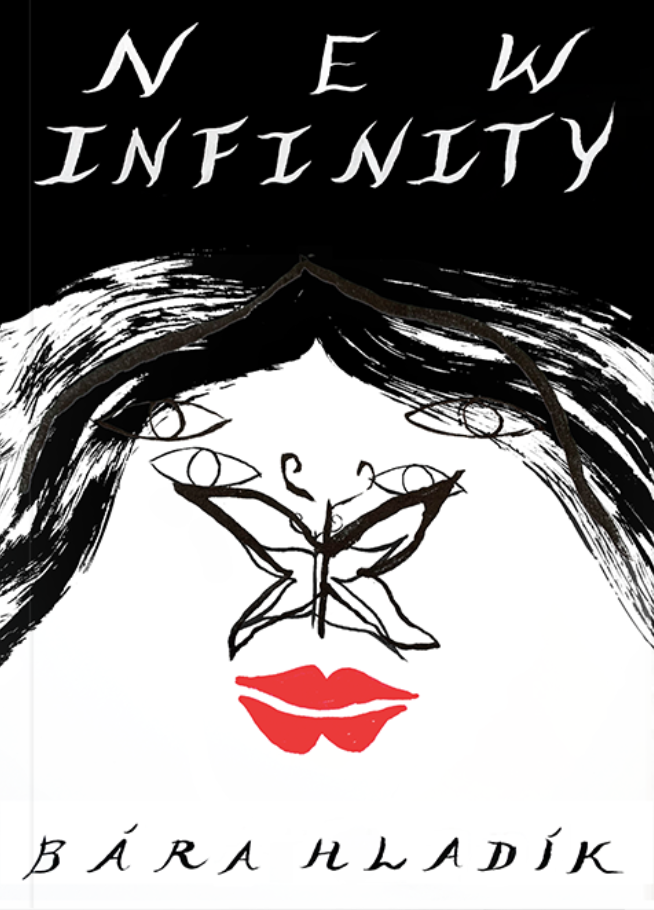
The book is inspired by ten years of living with the disease myself, and although fictionalized, the story draws from my own experiences. I created a nameless woman as a way to revisit myself, as well as observe her from a distance. The book blends surrealist stories with poems created from found medical literature, self-help books, books about the cosmos, and journals.

I was inspired to create a literary work that centred the woman in pain as philosophically and existentially significant. I wanted to take her out of the attic, and out of the trope of 'hypochondriac woman' so common in the history of literature, and create a literary work that not only expressed her experience accurately, but portrayed it as a radical experience that challenges the very structures of our society and philosophies.

I can't tell you how affirming it is to speak to another writer with Ankylosing spondylitis — and your writing about it is so potent! 

I've personally found the disease really hard to write about. At first, I thought "this is too specific to really share; no one will 'get' it." Over the years, though, I've realized how the disease had filled in so many of the cracks of my life....and it was nearly impossible to avoid writing about. 

This disease feels like it wants to trap you, physically and emotionally, and that is something that I have felt drawn to exploring in a literary sort of way. But it's been a long journey in figuring out how. What's the lesson? What's underneath the desire? How did you come to write about AS and pain and women, specifically, and was it hard for you to share something so intimate and challenging with the world? 

It means so much to me to hear that, thank you! Seeing your work about AS encouraged me to write more specifically about the disease and share publicly. It is definitely a challenge to write about the realities of Ankylosing Spondylitis. Most of the time I don't want to even share with the closest people in my life, so writing publically about it is hard.

But as you said, it is nearly impossible not to write about it. There are so many silencing and isolating aspects of living with this disease that in some ways I have a need to express a primordial scream of this unrelenting physical and emotional pain. Just as birds who made it through another night of darkness call out to each other in the morning, writing is a way to express existence. 

I turned to reading more and more as my illness took hold and I found I was reading a lot of philosophy. At the same time, most of the stories I encountered about illness, women were framed as 'hysterical' or 'hypochondriacs.' I wanted to challenge this narrative and write a story that centered the sick woman as a philosopher. A story where the experience of sickness was in fact a philosophical act that gives insight into the very meaning of existence. So while the disease is specific, the questions about existence are universal. 

Do you ever feel like disability gives you a new lens, a sort of expanded eye, through which to see the world anew? While illness may bind us (and others) in many ways, it also sort of necessarily stretches how we approach creativity and expansion.

For me, yes. I often feel that although my illness is difficult and painful, it also forces me to stop and deeply consider my place on this earth and in the cosmos pretty regularly. If it wasn't for the fact that at times I have to spend a lot of time recovering from basic tasks, I would be a pretty different person. I have become wiser, resilient, and in some ways more at peace with the chaos of the world.

It forces me to find transformation in the most minute of movements or motions, such as creativity or dreaming or simply breathing. Because I can't 'go for a run' to clear my head, I have to find other ways to move through emotions. This is the source of much of where my creativity is born. It is often in moments of pain in which I can only express existing.

Who or what are some of your recent influences?

This book is heavily influence by Slavic writers - Franz Kafka, Karel Čapek, Jana Benova, as well as surrealist/magic realist writers such as Jorge Luis Borges and Gabriel Garcia Marquez. My linguistic style definitely draws from the fact that Czech is my first language, and the way we play with structure, sarcasm and storytelling is much for fluid and malleable than english. I grew up reading Czech folk stories that blended magic and realism, and Czech new wave films that masterfully played with nihilism, sarcasm and surrealism. These influences all bleed into my work.

I love to learn about how culture or identity shapes a writer’s creative approach and work. I’d love to hear more.

My parents fled occupied Czechoslovakia shortly before I was born. Growing up in rural so-called Canada, my culture was often misunderstood as scary. I learned to walk through several co-existing worlds, always turning back and searching for where I came from. I grew up watching and reading Czechoslovakian books and movies, which are so creative, dark, mystical and wise. My parents are creative and resilient people, and I am constantly inspired by them. There is a saying, that Czechoslovakians have 'golden hands', in that we can create something out of nothing. This is from where I create, creating something out of nothing so that we may learn where we came from and where we are going.

What are some of the Czech folk stories that stayed/stays with you, and perhaps influences you as of late?

There are so many! Czechs are truly folklore encyclopedias. One of my favourites is the Vodník, who is a mythical slavic water spirit. He is a toad-like man, usually dressed in a tweed suit, who sits by the edge of a pond waiting for children to wander by so he can capture their spirits in tiny porcelain pots at the bottom of the pond. There are many great Czechoslovakian films about Vodník and his family, with shots of water people appearing out of sinks and toilets in tailored suits perfectly dry.
Do you turn to any sort of writing rituals or practices? I’m always so interested in how people approach their work and what that process looks like, especially when the writer creates across genres.

Much of this work was written in my head. With my illness, I am often bound by the limits of my body and must spend large amounts of time recovering. This means I am unable to move much for several days. So in these moments, I dream and write in my head. I imagine stories, themes, images. Often, the story is very formed once I hit the paper. I jot down notes of themes or ideas I want to weave throughout and then I sit down and write it start to finish. I then leave it be as I think through problems, and then I ruthlessly edit. Poetry is different. For me it is more of a ritual or practice. Many of the poems in my book were created by physically cutting up books that I found at the thrift store for under 5$.

I found medical books, self-help books, stories and beyond, then cut out individual words or sections of words. I did this all with meditation or images in mind. Then I would mix them into a special wine glass, and draw the cut words into a divinatory reading, similar to drawing playing cards or tarot cards. This practice is very specific and personal to my artistic work so this is all I will share here, but eventually, a poem would come to life.

Was there an certain ‘a-ha’ moment that led you to writing or creating? Was there an experience that reaffirmed what you do and why?

A babysitter once told me that I told her I was going to be a novelist when I was 7 years old. In grade 5, I was writing a story and every week the class would ask me to read the new chapter. It was a story about a family of six women surviving world war 3. Following these years I had a lot of doubt and anxiety as to where I was going or what I was doing, but thinking back to these moments always reminds me that this is part of me whether I resist it or not.

Who are some of the people you look up to or admire?

Thank you to disabled writers @leahlakshmiwrites @bighedva @pchza.

I’d love to hear one piece of writing advice that you think is essential for other writers.

Focus in on your work, your voice, your style. As much as we can learn from others, stay true to your vision. Be confident that what you are creating is important, even if you don't quite see how, yet. Do it for yourself. You're own satisfaction, sanity, passion, whatever. Do it for you.

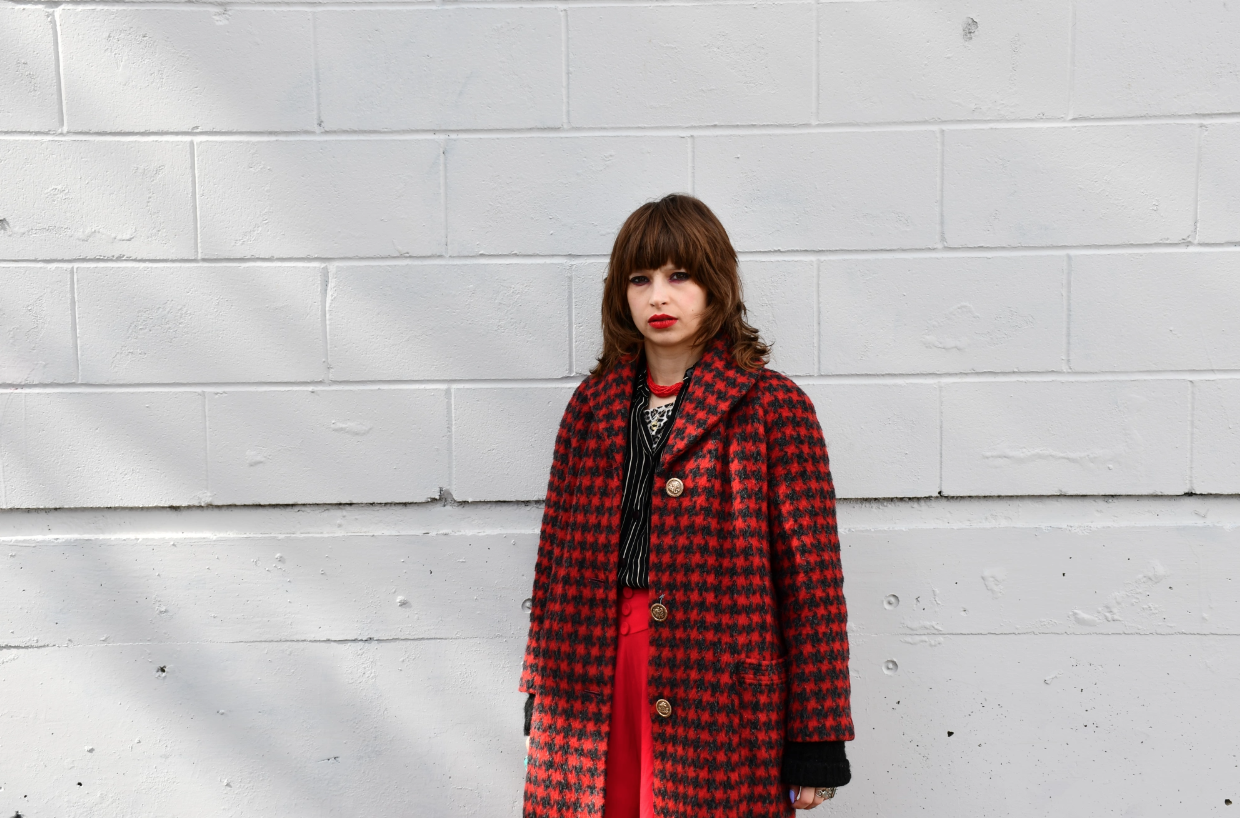
Bára Hladík is a Czech-Canadian author, artist and facilitator.

Lisa Marie Basile is the founding editor of Luna Luna Magazine. She’s also the author of a few books of poetry and nonfiction, including Light Magic for Dark Times, The Magical Writing Grimoire, Nympholepsy, Andalucia, and more. She’s a health journalist and chronic illness advocate by day. By night, she’s working on an autofictional novella for Clash Books.

Her work has been nominated for several Pushcart Prizes and has appeared in Best Small Fictions, Best American Poetry, and Best American Experimental Writing. Her work can be found in The New York Times, Atlas Review, Spork, Entropy, Narratively, and more. She has an MFA from The New School.
In Poetry & Prose, Interviews Tags Bára Hladík, disability, ankylosing spondylitis, disability poetics, novella, new infinity
Comment
annie-spratt-cUlFt_jZXtE-unsplash.jpg

On Hope, Creativity, Spiritual Self-Care & Chronic Illness

December 28, 2019

BY NICOLETTE CLARA ILES

Throughout my adolescent and adult life, I have not known ‘wellness.’ In fact, mentally and physically I live with what would be described as ‘chronic illness’. Like the woodland hag who only knows the forest or the sea nymph who knows the depths of the sea only too well, I know illness. I also know joy in its fleetingness — the power of singing a favorite song from the top of your lungs — and what I often say has been a great addition to my coping toolbox: Creativity. 

Living with various diagnoses, their forms changing and taking on new names with fresh manifestations quite often, the reality of living with them is grasping for hope.  

Hope, by definition, could be seen as ‘wanting something else to happen’, but for those of us with chronic illness, we know that ‘something else’ is unlikely within our lifetimes. But there is such a thing as hope. For me, it is in creating.

Utilising my creativity has meant taking this gift, however it’s looked at, and turning it into something manageable. When there is little to ‘manage’ in a daily life of illness, something stirs within all that pain and suffering; call it magic, call it art, call it hope — or whichever name it goes by — but it is potent.

Within that potency, a vision. It can be what you hold onto during a flare up or an episode. Some call this self-care. While I view self-care as something instrumental for ourselves, there is that looming demon of capitalism, the industry of self-care or wellness — which doesn’t always find ways to include those of us whose way of being is not or can’t be, well.  

So what can we do, as chronically ill people, to shine our light? It certainly is a hurdle to have your voice heard, when at times it can be near-impossible to speak it. That is why I speak the language of images and storytelling. With creative self-care, one can imagine whole worlds they wish to reside in, even if it’s from bed.

Amongst the various ways to approach creativity as a chronically ill person, I would advise to play around with that which works for you. In order to discover this creativity within, playful exploration is a key. 

If you have a day where all you can do is very little, see what that little amount could entail — without pushing yourself beyond your limits. On days like this, I like to write not whole poems, but fragments. See how writing small passages of words looks upon paper, and how it feels to “get out” those words, no matter how short they may be. 

It could be painting with the element of water by your bedside, or expressing how you’re feeling with the fire in your belly speaking out, but whatever it is, it is worthwhile. 

In the most recent years of my illnesses, I have learnt some self-care strategies that don’t just include objects you need to buy. Sometimes, in the worst pain, we may already have some of the tools we need. 

Panic attacks taught me about the power of the breath, and how breathwork has the potential to be a free factor in self-caring for this painful body. The spirituality that arose from curiosity taught me that without factoring in the Mind, Body & Soul, these three main parts of ourselves can become out of balance. Physical pain teaches me not to push the boundaries of this body, and within that, how to be more compassionate. 

A helpful breathing technique could be one that you create, or one that exists. I like to focus on the out-breath as it flows out. Time can stretch so much when we have so much of it to our hands, and focusing on the breath that exhales out of us can calm the nerves of the next inhale. Feel free to re-create your own version of this.

Visualisation, a type of magic to me, is also a meditative exercise I find useful. Visualise yourself being surrounded — if you feel called and safe to — by a peaceful light. As this “light” holds you in safety, visualise it calming all the tension of your soul and body. While we may not be able to “rid” ourselves of pain and illness, we can, if only for a moment, imagine these tense feelings washing away in that space. 

Self-care, to me, comes from listening — to the body, the mind, and what rumbles within the soul. Ask yourself:

What do I need right now?
What have I needed?
Can I find that from where I am currently?

When you can listen to yourself, or feel listened to, it can be a soulful way of soothing all the ways we haven’t been listened to as people living with chronic illness. We owe it to ourselves to listen to our minds and bodies, in order to care for what we may need them to receive and feel.  

Some of us may have less privilege or resources than others may. However, we do have the power of gifting ourselves our deepest desires in that which lifts us up. Find a story that resonates with you, and you are already the hero of that story, because you are fighting each day. You are listening to your own body, even if it’s screaming to be heard more than you’d like. That story holdS the archetype, the joining thread that guides you into caring truly for the self. The gift of being gentle to a chronically ill mind or body is one that will serve as the power we need to go forth in these lives. 

Nicolette Clara Iles is a British-Jamaican photographic artist, witch, storyteller and lives with Schizoaffective Bipolar Disorder and Fibromyalgia. You can find their work via nicoletteclara.co.uk or @nicoletteclara on socials. 

You can also support them via: Paypal.me/farmwitch 

In Magic, Personal Essay, Wellness Tags Nicolette Clara Iles, self-care, chronic illness, disability, spirituality
1 Comment
Featured
‘in the glitter-open black' — poetry by Fox Henry Frazier
'poet as tarantula,  poem as waste' — poetry by  Ewen Glass
'poet as tarantula, poem as waste' — poetry by Ewen Glass
'Hours rot away in regalia' — poetry by Stephanie Chang
'down down down the hall of mirrors' — poetry by Ronnie K. Stephens
'Grew appendages, clawed towards light' — poetry by Lucie Brooks
'do not be afraid' — poetry by Maia Decker
'The darkened bedroom' — poetry by Jessica Purdy
'I am the body that I am under' — poetry by Jennifer MacBain-Stephens
instagram

COPYRIGHT LUNA LUNA MAGAZINE 2025