• Home
  • indulge
  • new poetry
    • About Luna Luna
    • resources
    • search
  • editor
  • dark hour
  • submit
Menu

luna luna magazine

  • Home
  • indulge
  • new poetry
  • About
    • About Luna Luna
    • resources
    • search
  • editor
  • dark hour
  • submit
delicious new poetry
'the doors of the night open' — poetry by Juan Armando Rojas (translated by Paula J. Lambert)
Nov 29, 2025
'the doors of the night open' — poetry by Juan Armando Rojas (translated by Paula J. Lambert)
Nov 29, 2025
Nov 29, 2025
'we can be forlorn women' — poetry by Stevie Belchak
Nov 29, 2025
'we can be forlorn women' — poetry by Stevie Belchak
Nov 29, 2025
Nov 29, 2025
'I do whatever the light tells me to' — poetry by Catherine Bai
Nov 29, 2025
'I do whatever the light tells me to' — poetry by Catherine Bai
Nov 29, 2025
Nov 29, 2025
‘to kill bodice and give sacrament’ — poetry By Kale Hensley
Nov 29, 2025
‘to kill bodice and give sacrament’ — poetry By Kale Hensley
Nov 29, 2025
Nov 29, 2025
'Venetian draped in goatskin' — poetry by Natalie Mariko
Nov 29, 2025
'Venetian draped in goatskin' — poetry by Natalie Mariko
Nov 29, 2025
Nov 29, 2025
'the long sorrow of the color red' — centos by Patrice Boyer Claeys
Nov 28, 2025
'the long sorrow of the color red' — centos by Patrice Boyer Claeys
Nov 28, 2025
Nov 28, 2025
'Flowers are the offspring of longing' — poetry by Ellen Kombiyil
Nov 28, 2025
'Flowers are the offspring of longing' — poetry by Ellen Kombiyil
Nov 28, 2025
Nov 28, 2025
'punish or repent' — poetry by Chris McCreary
Nov 28, 2025
'punish or repent' — poetry by Chris McCreary
Nov 28, 2025
Nov 28, 2025
'long, dangerous grasses' — poetry by Jessica Purdy
Nov 28, 2025
'long, dangerous grasses' — poetry by Jessica Purdy
Nov 28, 2025
Nov 28, 2025
'gifting nighttime honey' — poetry by Nathan Hassall
Nov 28, 2025
'gifting nighttime honey' — poetry by Nathan Hassall
Nov 28, 2025
Nov 28, 2025
'A theory of pauses' — poetry by Jeanne Morel and Anthony Warnke
Nov 28, 2025
'A theory of pauses' — poetry by Jeanne Morel and Anthony Warnke
Nov 28, 2025
Nov 28, 2025
'into the voluminous abyss' — poetry by D.J. Huppatz
Nov 28, 2025
'into the voluminous abyss' — poetry by D.J. Huppatz
Nov 28, 2025
Nov 28, 2025
'an animal within an animal' — a poem by Carolee Bennett
Nov 28, 2025
'an animal within an animal' — a poem by Carolee Bennett
Nov 28, 2025
Nov 28, 2025
‘in the glitter-open black' — poetry by Fox Henry Frazier
Oct 31, 2025
‘in the glitter-open black' — poetry by Fox Henry Frazier
Oct 31, 2025
Oct 31, 2025
'poet as tarantula,  poem as waste' — poetry by  Ewen Glass
Oct 31, 2025
'poet as tarantula, poem as waste' — poetry by Ewen Glass
Oct 31, 2025
Oct 31, 2025
'my god wearing a body' — poetry by Tom Nutting
Oct 31, 2025
'my god wearing a body' — poetry by Tom Nutting
Oct 31, 2025
Oct 31, 2025
'Hours rot away in regalia' — poetry by Stephanie Chang
Oct 31, 2025
'Hours rot away in regalia' — poetry by Stephanie Chang
Oct 31, 2025
Oct 31, 2025
'down down down the hall of mirrors' — poetry by Ronnie K. Stephens
Oct 31, 2025
'down down down the hall of mirrors' — poetry by Ronnie K. Stephens
Oct 31, 2025
Oct 31, 2025
'Grew appendages, clawed towards light' — poetry by Lucie Brooks
Oct 31, 2025
'Grew appendages, clawed towards light' — poetry by Lucie Brooks
Oct 31, 2025
Oct 31, 2025
'do not be afraid' — poetry by Maia Decker
Oct 31, 2025
'do not be afraid' — poetry by Maia Decker
Oct 31, 2025
Oct 31, 2025
'The darkened bedroom' — poetry by Jessica Purdy
Oct 31, 2025
'The darkened bedroom' — poetry by Jessica Purdy
Oct 31, 2025
Oct 31, 2025
'I am the body that I am under' — poetry by Jennifer MacBain-Stephens
Oct 31, 2025
'I am the body that I am under' — poetry by Jennifer MacBain-Stephens
Oct 31, 2025
Oct 31, 2025
goddess energy.jpg
Oct 26, 2025
'Hotter than gluttony' — poetry by Anne-Adele Wight
Oct 26, 2025
Oct 26, 2025
'As though from Babel' — poetry by Fox Henry Frazier
Oct 26, 2025
'As though from Babel' — poetry by Fox Henry Frazier
Oct 26, 2025
Oct 26, 2025
'See my wants' — poetry by Aaliyah Anderson
Oct 26, 2025
'See my wants' — poetry by Aaliyah Anderson
Oct 26, 2025
Oct 26, 2025
'black viper dangling a golden fruit' — poetry by Nova Glyn
Oct 26, 2025
'black viper dangling a golden fruit' — poetry by Nova Glyn
Oct 26, 2025
Oct 26, 2025
'It would be unfair to touch you' — poetry by grace (ge) gilbert
Oct 26, 2025
'It would be unfair to touch you' — poetry by grace (ge) gilbert
Oct 26, 2025
Oct 26, 2025
'Praying in retrograde' — poetry by Courtney Leigh
Oct 26, 2025
'Praying in retrograde' — poetry by Courtney Leigh
Oct 26, 2025
Oct 26, 2025
'To not want is death' — poetry by Letitia Trent
Oct 26, 2025
'To not want is death' — poetry by Letitia Trent
Oct 26, 2025
Oct 26, 2025
'Our wildness the eternal now' — poetry by Hannah Levy
Oct 26, 2025
'Our wildness the eternal now' — poetry by Hannah Levy
Oct 26, 2025
Oct 26, 2025
elia-pellegrini-TKI53qncsXc-unsplash.jpg

Magical Thinking: Finding a Way Back to the Body

November 12, 2020

BY JENNIFER BROUGH

“To tell the truth is to become beautiful, to begin to love yourself, value yourself. And that's political, in its most profound way.”

Autumn arrives, at last, in explosions of red, orange, and yellow. Night creeps in sooner and small crackles of change electrify the air. Leaves fall echoing circular motions of death and, soon enough, gentle rebirth. In a year so fractured with continual threats to life, through health and politically corrupt structures worldwide, the seasonal shift and recently passed samhain provide much-needed anchors in times that are easy to feel adrift in.

Realising that the year is almost over, I am - as I imagine others will be - still trying to find footing against a backdrop of low-level anxiety, violence on a global scale, and fears of what the future will unveil. As the natural world is entering its cycle of decay, I feel a growing sense of invigoration. In addition to enjoying my favourite season and kindling flames of inspiration from the work of activists, artists, and writers, I am now fully recovered from a long-awaited operation for endometriosis. As my body is expanding in its range of capabilities, I feel not a sense of return to myself, but a new series of openings slowly unfolding.

Dissociation

Many chronic illness sufferers will be familiar with Susan Sontag’s Illness as Metaphor, and the “kingdom of the well and the kingdom of the sick”. The former is all around us, institutionalised in gyms, doctors’ surgeries, stores, and diet plans. The wellness industrial complex has extended its tendrils into every area of consumable content, promising continual health - or the idea of it - in exchange for clean eating, charcoal, burpees, and multiple other methods. This kingdom feels even larger when you stand outside its drawbridge, and my ushering into the other, bleaker realm was not a gentle one.

Six years ago, I woke in blistering pain. I showered, vomited, and, bent double, phoned the National Health Service helpline for advice. A suspected ruptured appendix later became a twisted fallopian tube cutting off the blood supply to my right ovary. An uncommon, deeply uncomfortable event. That night in the hospital bed, as I swam in a tramadol haze, the pain suddenly stopped. The surgery was the following morning, but by then the ovary had ‘died’, as the surgeon told me post-op. She explained that, “a normal ovary is white, like a golf ball, but yours…” then showed me a photograph of a purple apple-sized mass. “Oh, right,” I replied, mentally adrift. “You can still have children,” she assured me, but it was hard to accept this token of relief. I asked what they did with the ovary, wondering if it had already been burned away or was floating in a jar somewhere. I don’t remember her exact answer, but the word disposed bubbles up.

Since that incident something internal had shifted and, a year later, the pain resumed. The officious surgeon I sat across from mentioned the possibility of endometriosis and scheduled another operation. She was right. The endometriosis was mild, ablated away, and I was stitched up and sent home. I remember taking the bus back from the hospital feeling that familiar separation. After another physical removal of infected tissue, I felt a mental removal from myself. I tried not to dwell in that darkening space.

The problem with endometriosis, however, is that it can grow back at any time - even if managed with hormones. I, like many other people living with it, have become a minor expert in this condition, advocating for bodily autonomy and the best course of treatment. The process is disheartening and tiring, and can make the body feel like an uncooperative machine. In living with endometriosis, alongside fibromyalgia, my body became a source of blame. It was the reason my social life suffered, intimacy became strained, and it acted as a brake on any form of spontaneity. Only recently, after much therapy, I realised the need to reclaim my body, to learn to live in it, as well as with it, anew.

Division

After my most recent laparoscopy, suspended between waking and dreaming, I saw two dark green frogs sat on my chest. Their glassy eyes looked up unblinking. When I came around properly, I searched for what the appearance of frogs in dreams mean - transformation and renewal. Sometimes metaphors write themselves.

Despite the chronic nature of this illness, transforming my thinking beyond a binary approach to wellness has been necessary to keep going. Pain and its management are seldom either/or states. Instead pain is shades of a spectrum; some days are manageable and I am active, others are better suited to staying in bed. I initially resisted identifying myself as ‘disabled’, believing I was unworthy of the designation. Part of this emerges from a need to categorise phenomena in our search for meaning - to define something as this or that - but also a lifelong struggle with being ‘enough’. Redefining how I see and accept myself is overdue, an act that won’t be completed quickly. 

Part of this redefinition extends outside of self-care to how I’ve come to define the concept of care as a collective verb. Feminist movements have been historically predicated on group efforts, in which each person has a role and is supported by others. As the pandemic presses on the most vulnerable in our society, mutual aid groups have organised food parcels, rent strikes, and fundraising in the absence of meaningful action from governments. The patient/doctor experience also operates on a similar top-down structure, and I have been bolstered by finding virtual communities and friends through online spaces of care. We’ve exchanged tips and tricks when in those medical offices, signed each other’s petitions, and created art centred around disability. The latter especially has been particularly restorative. Not only do these projects offer artistic and experiential solidarity, but give us the room to indicate towards the worlds we desire, a vague map of how we write them into existence. 

The three division mark scars I bear on my pelvis serve as a reminder of the necessity to collapse separation between several areas; be it the medical either/or of the kingdoms of the well and the sick; the dissociation between acknowledging and responding to the needs of my body; or the experience of sickness as an individual, instead of a part of a shared group.

Deep Diving

Outside of these groups and creative practices, two friends and I have formed a coven. A place where we mostly watch horror films, discuss tarot, and share memes and art. On the day of the most recent new moon, my friend led a ritual of letting go and rebirth. Over Whatsapp, we spent half an hour meditating, writing down what we hoped for, and what we wanted to purge ourselves of. After folding our papers up tightly, we burned each piece. I felt my body move as I breathed, where pain niggled and how it sat in relation to the rest of my being. Something shifted.   

Perhaps not as intense as The Craft, but our coven’s ritual proved deeply emotional nonetheless. Not just because of the things we ablated, but the act of carving out time for oneself and others frees the subconscious to become unstuck. Allowing oneself to take time and reveal desires to ourselves forfeits certainty. More so, it allows vulnerability. To feel what it means to really inhabit the bodies we are in. In these small sacred acts, there is room for the chaotic, the uncontrolled, and this is deeply liberating.

A few days after the ritual, I came across a line from the poet June Jordan:

“To tell the truth is to become beautiful, to begin to love yourself, value yourself. And that's political, in its most profound way.”

I interpret telling the truth as a continual, reflective act, a mode of being to carry in each place we occupy - alone or as part of a group. Telling the truth about how the world is, and how you are within it, allows the lines of stability and categoriSation to blur. Telling the truth is, as Jordan says, a process of becoming. For me, it has been recognising that while I have muted these inner feelings of loss or disappointment, they always catch up. In leaning into the darker parts through meditative moments and online spaces, I can feel the raw nerve endings of bodily acceptance pulsing, and possibility glitters. 

Jennifer Brough is a writer and editor living in London. Her work has most recently appeared in perhappened, Artsy, and Barren Magazine. She curates creative submissions for Sisters of Frida, an experimental collective of disabled women. You can find her on Twitter @jennifer_brough or jenniferlbrough.com.
In Body Ritual, Wellness, Personal Essay, Magic Tags endometriosis, ritual, chronic illness
Comment
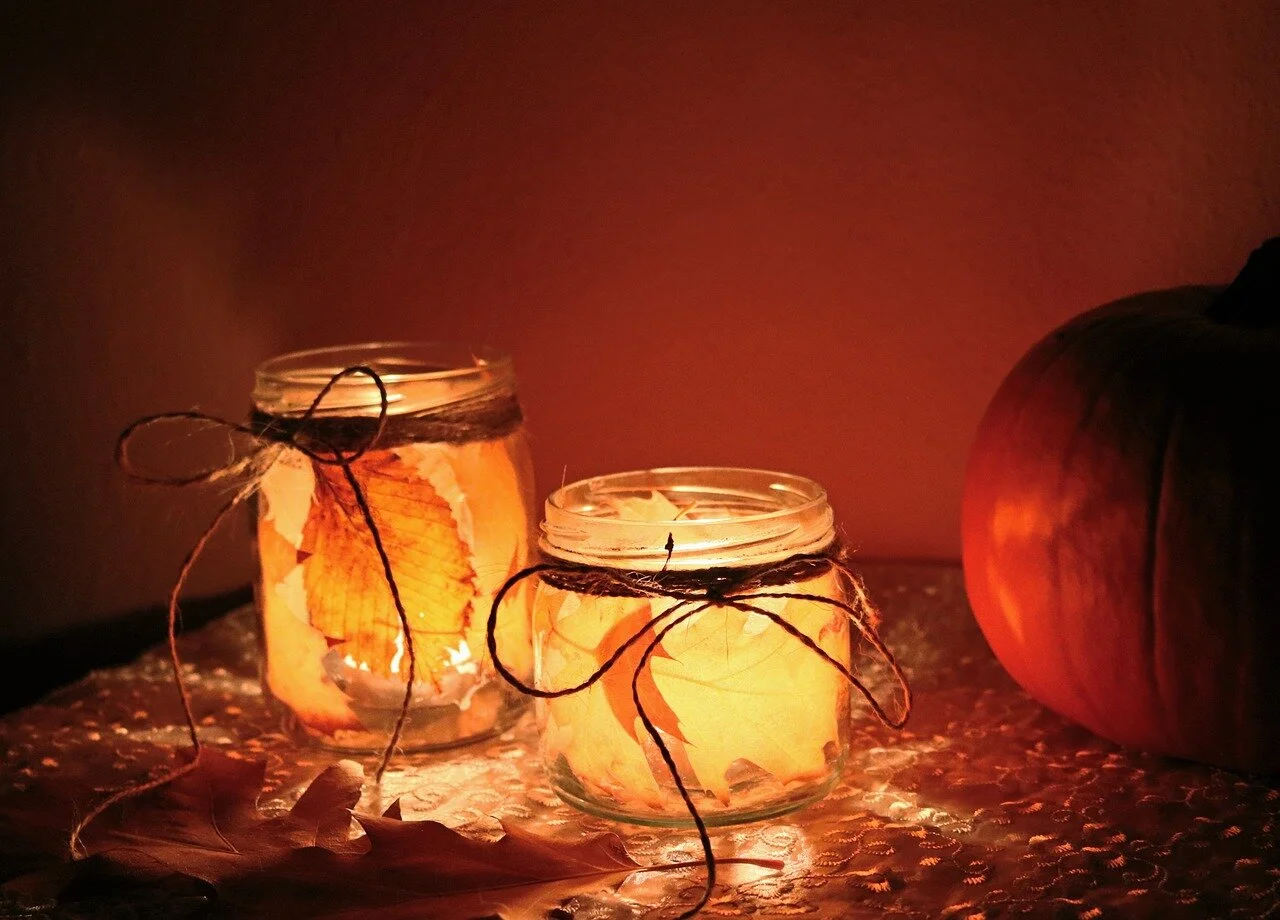
candles on windowsill

First Comes the Egg

October 20, 2020

Burning just the tip of a newspaper in an ear to relieve pain. Burying tiny sculptures of santos in the front yard to ward off evil spirits. Limpias from a shaman when hope is finite. I no longer live where I grew up—there’s no neighborhood curandera to visit me.

Read More
In Poetry & Prose, Personal Essay, Magic Tags Victoria Buitron
Comment
Photo: Joanna C. Valente

Photo: Joanna C. Valente

Grief Before Grief

October 19, 2020

Joanna C. Valente is a human who lives in Brooklyn, New York. They are the author of Sirs & Madams, The Gods Are Dead, Marys of the Sea, Sexting Ghosts, Xenos, No(body), #Survivor (The Operating System, 2020), and Killer Bob: A Love Story (Vegetarian Alcoholic Press, 2021). They are the editor of A Shadow Map: Writing by Survivors of Sexual Assault and the illustrator of Dead Tongue (Yes Poetry, 2020). They received their MFA in writing at Sarah Lawrence College, and Joanna is the founder of Yes Poetry and the senior managing editor for Luna Luna Magazine.

Read More
In Personal Essay, Poetry & Prose Tags essay, Personal Essay
Comment

Casting Elpida: On Hope & Haunting in Autumn

October 9, 2020

In this moment, with yellow and brown leaves, with fall’s whisper, I feel like anything could happen. I could be anything.

Read More
In Personal Essay, Poetry & Prose Tags stephanie valente
Comment

Our Home Isn’t a Fantasy Suite, But That’s OK

July 31, 2020

Kailey Tedesco lives in the Lehigh Valley with her husband and many pets. She is the author of She Used to be on a Milk Carton (April Gloaming Publishing), Lizzie, Speak (White Stag Publishing), and These Ghosts of Mine, Siamese (Dancing Girl Press). She is a senior editor for Luna Luna Magazine and a co-curator for Philly's A Witch's Craft reading series. Currently, she teaches courses on literature and writing at Moravian College and Northampton Community College. For further information, please follow @kaileytedesco.

Read More
In Personal Essay Tags Personal Essay, pandemic, Relationships, love
Comment
Photo: Joanna C. Valente

Photo: Joanna C. Valente

The Queering of Time and Bodies through AI

July 2, 2020

Joanna C. Valente is a human who lives in Brooklyn, New York. They are the author of several collections, including Marys of the Sea, #Survivor, (2020, The Operating System), Killer Bob: A Love Story (2021, Vegetarian Alcoholic Press), and is the editor of A Shadow Map: Writing by Survivors of Sexual Assault. Joanna is the founder of Yes Poetry and the senior managing editor for Luna Luna Magazine. Some of their writing has appeared in The Rumpus, Them, Brooklyn Magazine, BUST, and elsewhere. joannavalente.com / Twitter: @joannasaid / IG: joannacvalente / FB: joannacvalente

Read More
In Social Issues, Poetry & Prose, Personal Essay Tags LGBTQIA, lgbtq, technology, ai, Lyrical essay, essay, art, Photography
Comment
Screen Shot 2020-06-28 at 10.10.35 PM.png

What if the earth is asking us to be still?

June 29, 2020

BY LISA MARIE BASILE

Tune in with me.

I think about the people who will populate our future, and I ask the sky what they will see, what they will be told — through our actions and words and hunger. Will we become their ancient gods, whose lessons are bleak and hellish? Will they see how hard many of us tried and how we hoped?

Will our mythos be of hyper-consumerism, racism, lovers who are not allowed to love, bodies put into categories, plastic, the poisoned fruit, the unbearable dullness of constant performance, the addiction to the avatar, the plutocracy, the oceans crying into themselves, the sound of the air cracking against the ozone? Will all of our wounds still be present?

When I think of the people of the ancient worlds — and their gods and their cultures and their arts — I wonder what they would have wanted us to know?

Did they hope to impart a message of beauty, art, and nature? Of storytelling and culture?

Did they think we would destroy one another and the earth they danced upon in worship?

What happens to everything when we sit in the sea? Do we become a primal beautiful thing?

Screen Shot 2020-06-28 at 9.35.02 PM.png

There is a presence that is being asked of us. Do we hear its sound? Are we the people who tolerate abuse? Are we the zombies of decadence, the digital void that consumes and hungers through screens? What if we were embodied for a day? Would we hear the great chambers of our heart, and the hearts of strangers, and the vines and sea beings we came from?

Screen Shot 2020-06-28 at 9.57.42 PM.png

There is a constant scrolling and feeding. And it’s because we are hurting. We are disconnected. We are oppressed. We are poor. We are sick. We are not seen by society. We feel lonely, a loneliness perpetuated by hyper-connection.

How else do we live without turning to the void, which provides us beautiful and loud things to buy and be and shape ourselves into?

How do we live without abusing our neighbor, without stomping on their chest?

What if we could remember ourselves? How miraculous we are? Would we remember to be generous, to heal, to say hello? What would it look like if we all stopped pushing for a moment? What if we let the wind move us?

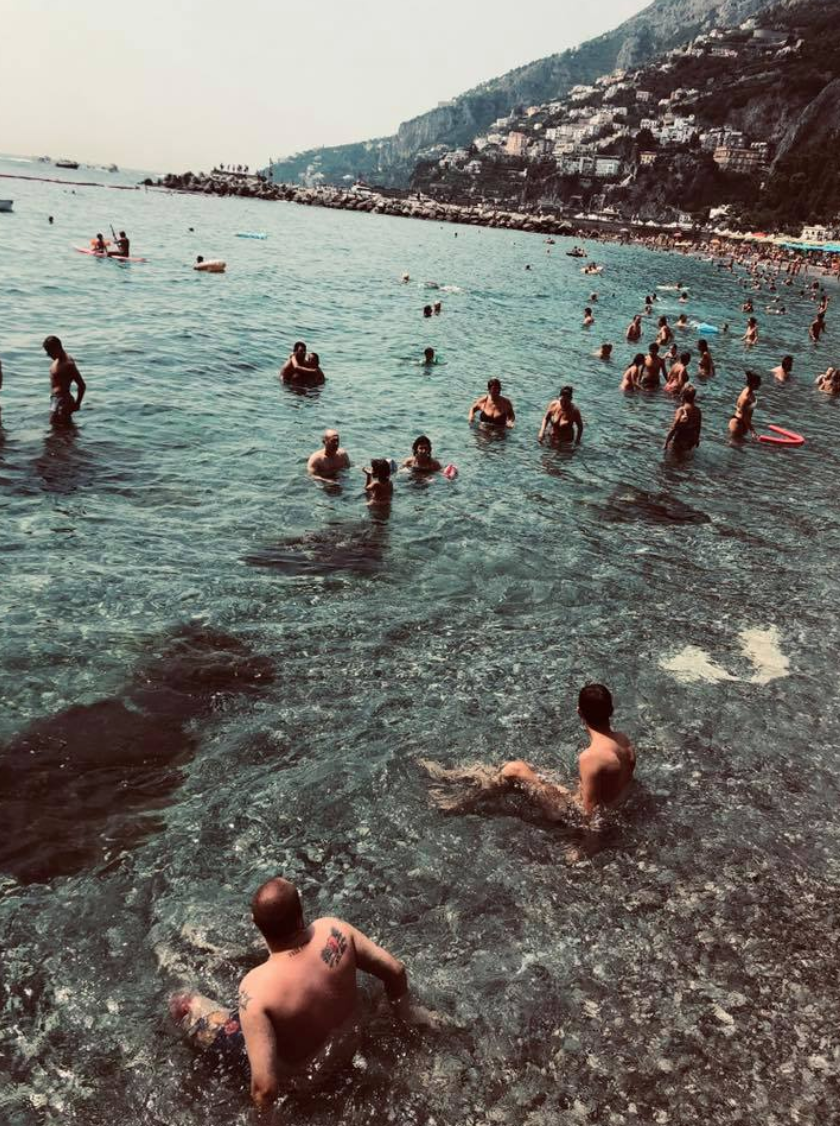
Positano

Positano

I feel sometimes I am a ghost. Liminal, floating through the world, eating the world around me — media and fashion and ideas that are not my own, not aligned with my values or my traumas or my soul.

I am out of time with my own soul. I am in 2020, but my heart is in the ocean eternal. I want wind and shorelines. I want fairness and justice. I want to experience beauty without the billboards looming. I want to read a book in the sunlight, and see my neighbor have the same opportunity.

But my neighbors — and your neighbors — are dying, are being murdered, and our ecosystems are gasping in our wake.

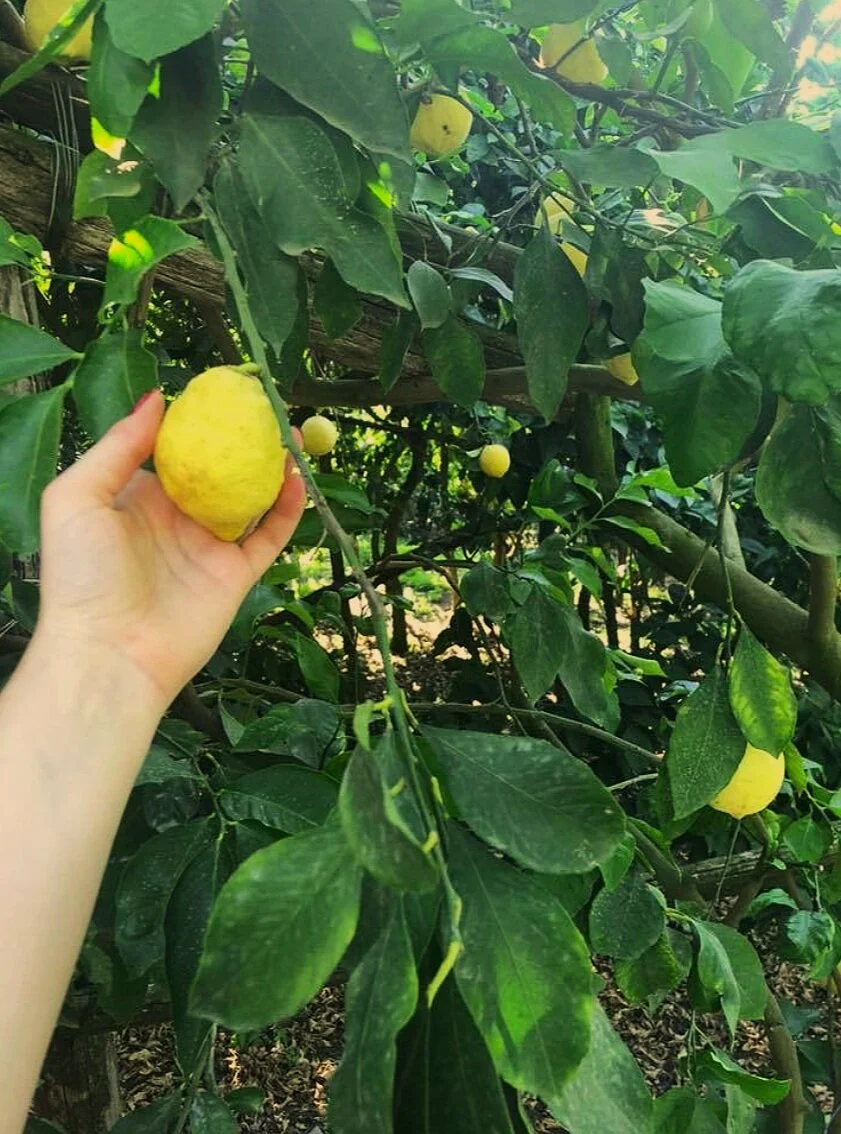
La Masseria Farm Experience

La Masseria Farm Experience

There are days that are so beautiful, so soft and real, that I have hope. These are holy days.

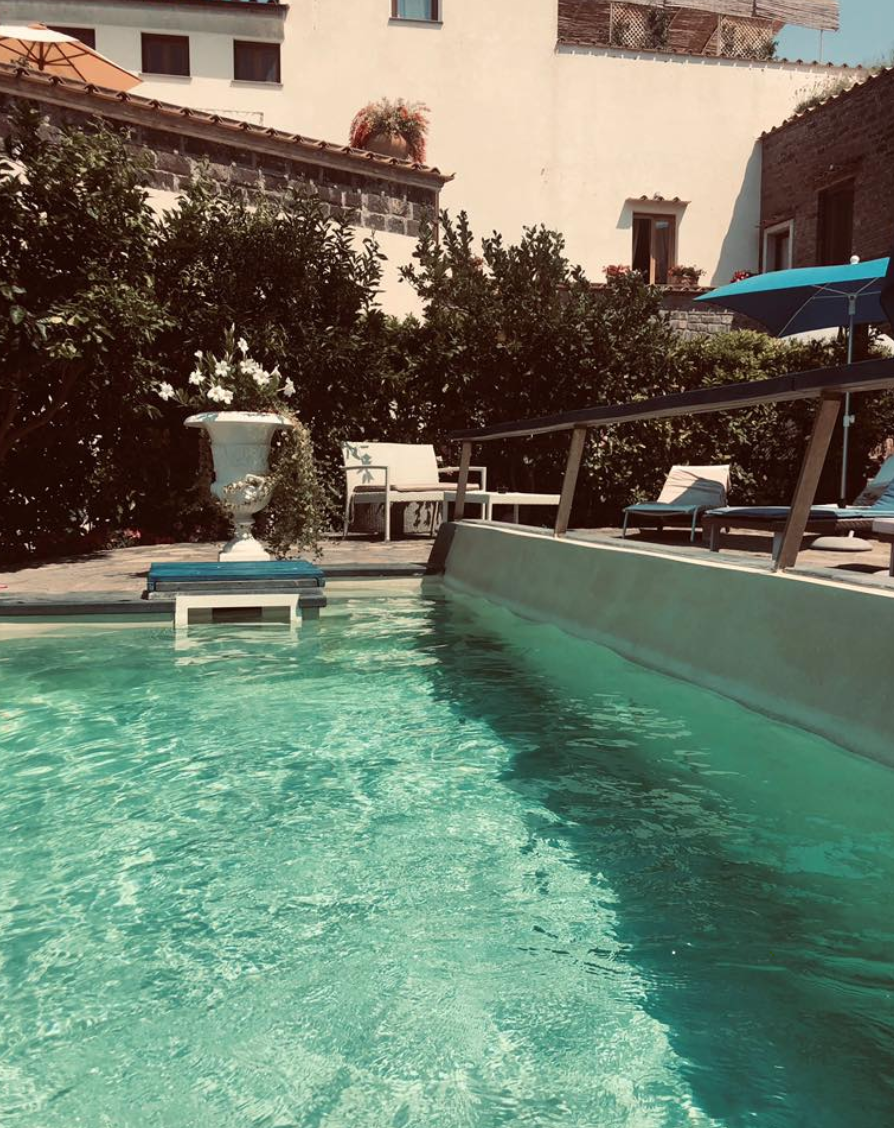
In Campania Italy, I have a holy day. I sit in a small stone pool. I think of the drive through the mountains from Napoli, where Pompeii stands, its breath held, looming over its land. How it preserved the stories of its people. I think always of what is preserved, what is lost.

But in the little pool, I am alone. The bed and breakfast is quiet. Tourists are out at Capri or Amalfi, the staff are napping during siesta, making pesto, somewhere else paying bills, talking on phones. I hear the hum of a generator, street dogs barking, the starlings that fly over me back and forth, definitely flirting.

Screen Shot 2020-06-28 at 8.44.54 PM.png

I whistle and they zip over my head. We are in conversation, I know it. The earth wants me to know it sees me, wants me to see it. I am here and nowhere else. I am completely alive. I am made for this moment; we all are.

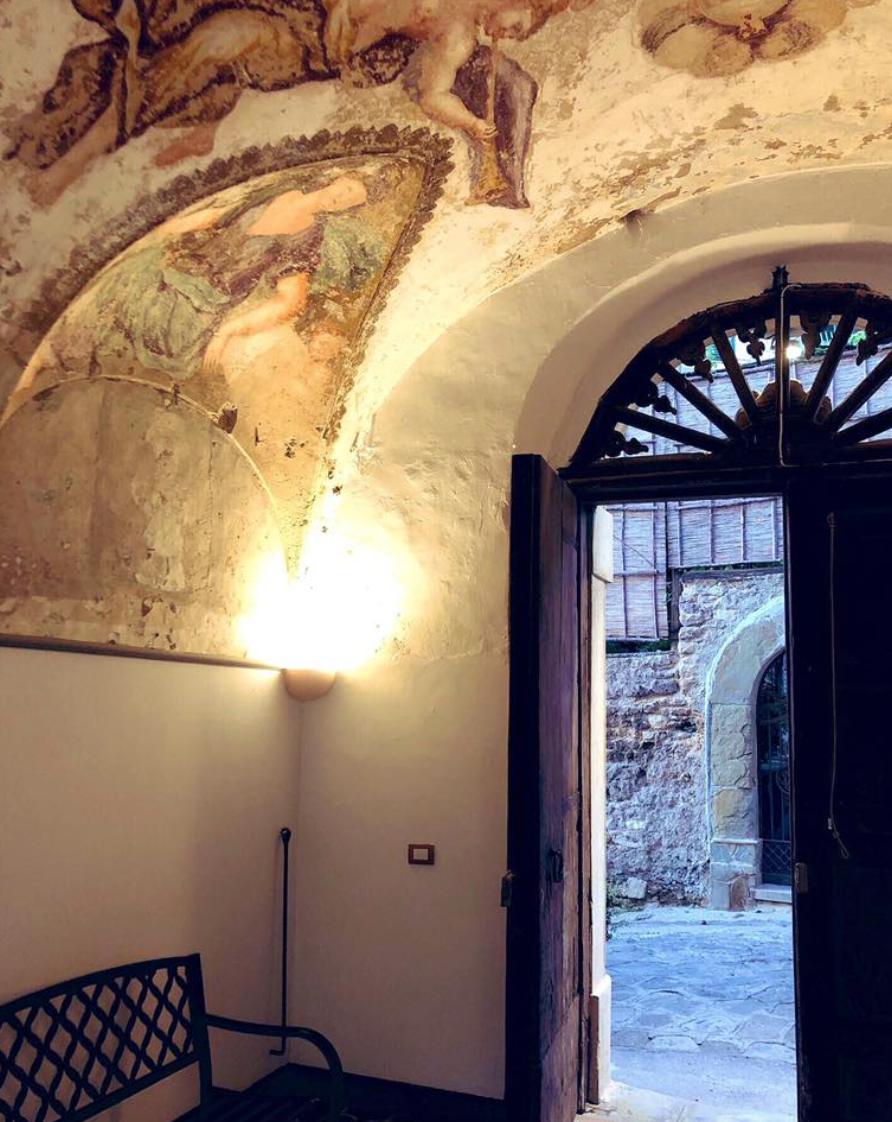
And after the late dinners of fried fish, I walk back to my room, alone. I am greeted again by the tiny birds who flutter in and out of the domed entrance, cherubs painted across the ceiling. I think of time and nature, and its concurrent obliviousness and suffering. I think of my privilege, and what I can do to preserve these stunning things.

I think of my body withstanding 100-degree heat. How I talk to the creatures in some liminal language of love. I think of how we could all be good to one another, so good that we could all have holy days.

I think of my flesh as the wine of this land. I feel the Mediterranean and the Tyrrhenian Seas in the palms of my hands. I am so alive and grateful and awake at the altar of these moments I cry for the nostalgia that hasn’t come yet, that I know I will feel. That I do feel. I am both past and present. But mostly, I am now.

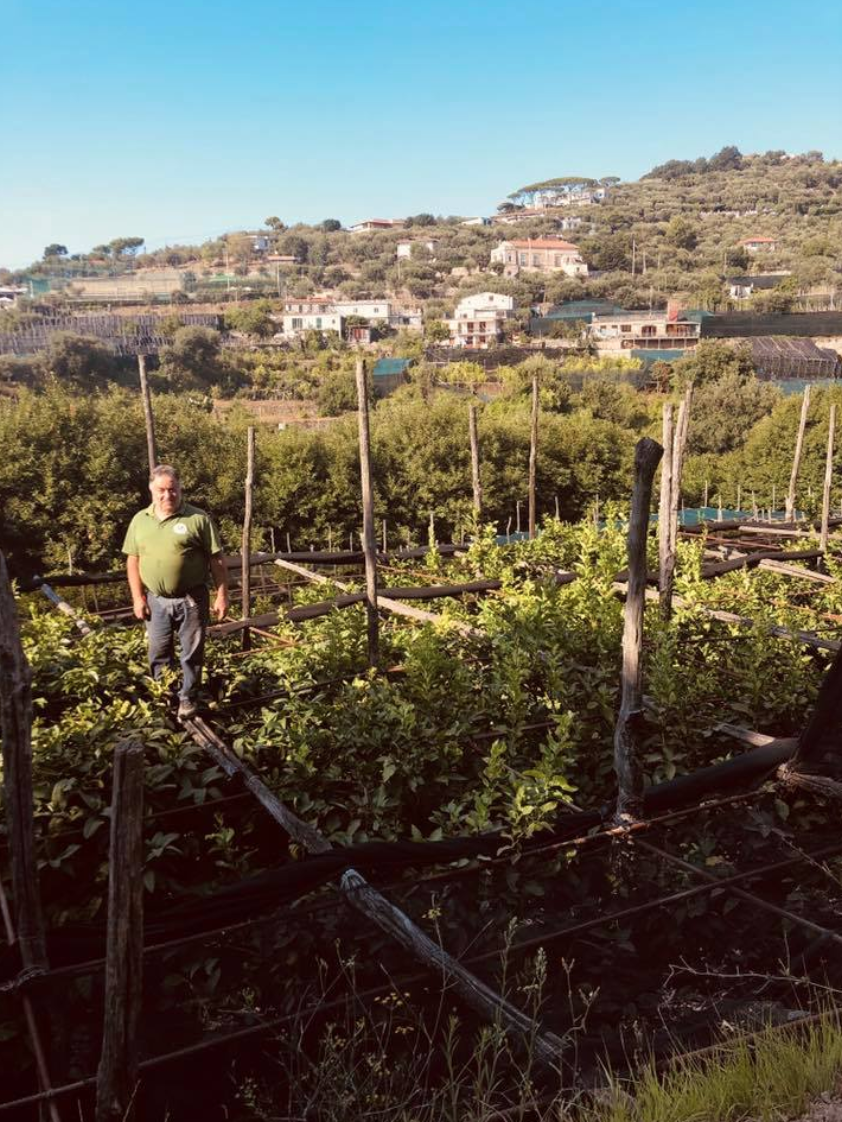
I walk up the road to a farm and am greeted by a family whose hands have nurtured and translated the earth for centuries. They climb the trees, show us the olives falling. We see the farm cats idle in their sunlight, their fur dotted in soil. They are languid in pleasure and warmth.

I lose myself in the lemon trees, smell their peels; I am blessed. I step into the cool room where they keep the jugs of Montepulciano and cured meats. A cry in ecstasy is somewhere within me.

After a long day of pasta made by hand and more wine and strangers inviting me to their table and then limoncello, I walk home to my room. I am drunk on the connection. I film the walk, then stop. I do not want to capture everything; some things just exist between me and the earth. I won’t share.

La Masseria Farm Experience

La Masseria Farm Experience

My room is called Parthenope. It is etched into the wooden door. When I open the door, that is the threshold, the portal. Parthenope is a siren who lives on the coast of Naples. I imagine her body clinging to the continental shelf, her hair entwined in shell. They say she threw herself into the sea when she couldn’t please Odysseus with her siren song. Or maybe a centaur fell in love with Parthenope, only to enrage Jupiter, who turned her into Naples. The centaur became Vesuvius, and now they are forever linked — by both love and rage. Is that not humanity?

She became Naples. She became forever. Her essence is water, is earth, is the mythology of what happens when people are cruel and jealous and oppressive. Is this the message the sirens are singing? To be tolerant? To normalize cruelty? To fill the void with empty media, with images without stories?

Lubra Casa

Lubra Casa

There is always something that could destroy us, could rid us of this existence. A virus, a volcano, our own hands.

We are temporary, so quick and light and flimsy. We are but a stitch of fabric. A dream within a dream of that fabric. And yet. Here we are, becoming the ancients, carving out a way toward the future. We visit volcanos. We mythologize the earth. We drink wine and capture beauty. But then we turn our backs — on the proverbial garden, on one another, on our own bodies.

What if the earth is asking us to be better? To be still? What pose would we hold? What shape could let all the light in?

LISA MARIE BASILE is the founding creative director of Luna Luna Magazine, a popular magazine & digital community focused on literature, magical living, and identity. She is the author of several books of poetry, as well as Light Magic for Dark Times, a modern collection of inspired rituals and daily practices, as well as The Magical Writing Grimoire: Use the Word as Your Wand for Magic, Manifestation & Ritual. She's written for or been featured in The New York Times, Refinery 29, Self, Chakrubs, Marie Claire, Narratively, Catapult, Sabat Magazine, Bust, HelloGiggles, Best American Experimental Writing, Best American Poetry, Grimoire Magazine, and more. She's an editor at the poetry site Little Infinite as well as the co-host of Astrolushes, a podcast that conversationally explores astrology, ritual, pop culture, and literature. Lisa Marie has taught writing and ritual workshops at HausWitch in Salem, MA, Manhattanville College, and Pace University. She is also a chronic illness advocate, keeping columns at several chronic illness patient websites. She earned a Masters's degree in Writing from The New School and studied literature and psychology as an undergraduate at Pace University. You can follow her at @lisamariebasile and @Ritual_Poetica.

In Art, Beauty, Wellness, Social Issues, Poetry & Prose, Place, Personal Essay Tags italy, lisa marie basile, social media, being present, earth, love, humanitarian issues, global warming
Comment
isco-7OeiQTVXvnQ-unsplash.jpg

Body on Pause: Miscarrying During A Pandemic

June 28, 2020

BY PATRICIA GRISAFI

I decide Fiona Apple’s Fetch the Bolt Cutters will be the soundtrack to this miscarriage. As I get my things together—mask, extra mask, gloves, bottle of hand sanitizer, plastic baggie stuffed with wipes—I wonder if my album choice is cliché. Almost every critic has loved Fetch the Bolt Cutters, gushing about how it feels made for a quarantine.

The procedure to remove the dead fetus from my body is supposed to be about ten minutes long. I get on the M15 bus after a fifteen-minute walk and survey the passengers sitting quiet and masked in their seats like a de Chirico painting. Then I make a playlist called “Miscarriage.” The songs are “Newspaper,” “Under the Table,” and “For Her,” all songs about patriarchal abuse and trauma.

This is my fourth miscarriage—sixth if you count chemical pregnancies, which the doctors do—but I’ve never had a vacuum aspiration before. All my procedures have been D&Cs under sedation. However, with New York City hospitals full of COVID-19 patients, my best bet is an in-office procedure. I am disappointed I won’t be knocked out.

In the waiting room, three heavily pregnant women fuss with their phones. I think of my two-year-old son at home, getting ready for nap-time. My husband sends me updates on the situation: “he’s chattering too much,” “oh, he’s quiet now.” I miss my husband’s presence in that room, thinking of past surgeries when I emerged from sedation with a newly hollowed uterus to his embrace. But he’s not allowed to be here—patients must come alone. No husband and toddler in tow during quarantine.

I miss so many things, frivolous things. Sharing a morning muffin with my son at the dog park. Sipping margaritas with a chili salt rim on an outside patio. Wandering into Rite Aid for no reason. Perusing the shelves at the local bookstore with a cup of coffee. Family walks that don’t feel limned with disquiet.

The procedure will happen while I am laying down, my feet in the stirrups. Later, a lab will test the “materials of conception” from this pregnancy for chromosomal abnormalities. I won’t have to see what comes out of me—not like there will be much at eight weeks. “Embryonic demise” probably occurred at around week six or seven after the grim ultrasound when the doctor reported a feeble heartbeat and a too-tiny fetal measurement. I’ve been fixating on the fetus slowly dying inside me and then on my body as harbor for its corpse.

How can you not think about death during a pandemic? Since the day our family began sheltering in place, I had been carrying the small hope of that baby. On March 7th, I was inseminated in one of the anonymous rooms at Weil Cornell, my husband holding my hand as they threaded the catheter in. Afterwards, he played a heavy metal version of “Toss a Coin to Your Witcher” on his phone, and we laughed.

My first son was conceived this way—with the help of science after infertility flooded my body with doubt about my ability to have children. I dutifully went every other day to have my blood taken and my vagina probed. Between my first struggle to keep a pregnancy viable and all the subsequent losses, I found myself thinking about my uselessness as a woman in a world without medical intervention.

“In ancient Sicily, they’d have thrown me in the prickly pear bushes, maybe burned me. Maybe I’d be the village witch, like Strega Nona—except hated,” I had said, thinking about how much family meant to my genealogical constitution. A woman who couldn’t have children was a problem. A curse. She had done something to deserve infertility. Send her away.

My paternal grandmother did not want biological children, so deep was her fear of dying during childbirth. She even found a child to adopt in New Paltz, where my grandfather and she had a one room cabin for summers. My grandfather wanted his own child, and I imagine him saying no to the adoption and then forcing himself inside her and making my father.

This is not history, not fact. It’s my brain winding around the possible ways my family made a family. My grandmother didn’t have her only child until after eleven years of marriage—unusual for Italian Catholics during the 1930s. My mother tried to get pregnant for eleven years, submitting to every experimental procedure in the ‘70s and ‘80s until I was born—also an only child.

When my mother and I fight now, I think about what she put her body through for the slim chance of a child. Is reproductive trauma something the women in my family share, a story they’ve only been able to tell through their live births, a story otherwise hidden in the deepest parts of their selves? What kind of woman volunteers her body for this kind of repeat torture?

I’m ushered into the procedure room. The doctor gives me a Motrin. I’ve brought my own Klonopin because I’ve been on them forever. I wonder if I should take two instead of one. I take one.

The moment my feet hit the stirrups, I press “play.”

“Are you okay,” the doctor asks me.

“Yes,” I say, because I am a good patient but also because I know this must happen.

The doctor and her assistant try to shove metal accoutrements into my vagina with delicacy. It’s never pleasant, the speculum. Then there are the tubes. Then there is the anesthetic, which makes me feel high and chatty for about three minutes. I want to babble on and on about my child, to remind them I’m a mother and not a collection of losses.

Fiona Apple’s frenetic warble pierces me as they start the procedure. I try to focus on that voice, a voice that arches and peaks and trembles and breaks. A voice that is fragile but strong.

As the pain begins, so does “For Her,” and I think about the man who pinned me down and came on my face while I screamed and cried. I can’t help it. This asshole hops onto my nerves at unexpected times. I dig my nails into the fleshy cradle of my hands as Fiona sings, “Good morning, good morning, you raped me in the same bed your daughter was born in.”

The doctor finishes up. She’s been telling me all along how good I am doing.

“Rest for as long as you want,” she says as the last instrument is removed.

I haven’t shut off the playlist. Liz Phair’s “Fuck and Run” randomly comes on, and I feel like laughing and crying at the same time.

It takes twenty minutes to hail a cab. Finally, one stops. It is a van with a plexiglass barrier window, and I feel grateful. I open the window with my gloved hand. They’re garden gloves, the kind I use to repot the easy plants I keep killing in my apartment. I hear the whipping of wind on the FDR, the thrum of pavement under the wheels.

My son is asleep when I quietly step into the apartment. My husband holds me tightly.

“I’m so tired,” I tell him, like a child who wants to be taken care of. “Can you tuck me into bed?”  

Whenever I have a miscarriage, I feel like a failure. The eggs too old? The lining of my uterus not thick enough? The questions are endless. The disappointment hangs like a heavy curtain.

During a pandemic, it’s worse. There’s an irritating urgency and a paralyzing fear about when we can start to try and expand our family again. The fertility clinic will eventually reopen, but when will the world? When will it be safe to travel for blood-taking and hormone-monitoring? For poached eggs and harissa? For play dates and bang trims?

In the meantime, I make cocktails with lemon and whiskey. I draw owls for my son. I shave my armpits but not my legs. I stare out the window. When my husband and I begin work, I put on Peppa Pig and plop my child into his high chair.

But my professional life suffers for the love of being around my son. I stop to pet him, fetch more goldfish crackers, kiss his head. And then I want to sleep, like the protagonist of Ottessa Moshfegh’s My Year of Rest and Relaxation. Sleep right through the plague, sleep through the fear, sleep through future fertility treatments. Wake up like Giambattista’s Basile’s Italian Sleeping Beauty, a surprise baby suckling at her breast. Forget that Prince Charming raped and impregnated her while she was unconscious.

Pregnancy destabilizes your sense of self. It changes you. In some cases, fetal DNA remains in our bodies long after a child is born. This phenomenon is called microchimerism after the mythological creature composed of many parts, usually depicted as a lion with the head of a goat and a tail trailing off to a snake’s head. If a pregnant woman is not a chimera, I don’t know what is.

When I was younger and learned about viruses for the first time in science class, I was terrified. There is still something about a virus that frightens me. I’ve had the chicken pox, I’ve had the flu. The first time I had a wart on my finger, I cried for days. The idea that viruses never really leave, that they exist inside of us in various states of dormancy or activity forever, made me afraid of my body’s uncontrollability.

I think about bodies constantly now—permeable, malleable, capable at times and utterly useless at others. Sacks heaving in and out. A contemptible, fickle uterus. Contracting or relaxing the pelvis as fetal tissue is aspirated. Mouths releasing clouds of germs. The touch of my child’s hand as I guide him on makeshift Pikler triangle made from the side of his crib propped up against the couch because we can’t go to the playground anymore.

“Mommy, hold hand, please,” he says extending his chubby little paw, attempting to make his way down the ladder.

“I’ve got you,” I say.

We soldier on.

The last song on Fetch the Bolt Cutters is called “On I Go.” With its repetitive lyrics about repetition set against atonal cacophony, it feels like a woman scraping at the walls of her mind, her body, the apartment she’s trapped in while a pandemic rages outside.

"On I go, not toward or away

Up until now it was day, next day

Up until now in a rush to prove

But now I only move to move.”

It’s not a pleasant listen. Maybe it feels too sharp right now, prodding at a wound. But I understand what’s at stake, the overwhelming desperation to have agency over life only to find the attempt futile and give up. Or perhaps it’s a kind of triumph—reclaiming the conditions of one’s journey.

The day after my procedure, I walk gingerly between the bedroom to lay down in silence and the living room to lay down in chaos. This is the choice I can make. There is no real movement, no escape except for short, nerve-wracking walks on the East River that are actually practices in weaving and swerving. Time feels suspended—our family on pause. My body on pause. My life on pause.

Right now, I only move to move.

Patricia Grisafi, Ph.D., is a freelance writer and editor. She writes about mental health, popular culture, film and literature, gender, and parenting. Her work has been featured in The Guardian, LARB, Salon, VICE, Bustle, Catapult, Narratively, The Rumpus, Bitch, SELF, Ravishly, Luna Luna, and elsewhere. She lives in New York City with her husband, son, and two rescued pit bulls. She is passionate about horror movies and animal rescue.

In Personal Essay, Poetry & Prose, Social Issues, Wellness Tags miscarriage, Patricia Grisafi, trish grisafi, body
Comment

What My Research Project Taught Me About Witches

May 13, 2020

Camaryn Wheeler is an English and French student at Moravian College in Pennsylvania, where she works as a Writing Fellow and Writing Tutor, an editor for the Moravian Manuscript, and the treasurer for Moravian's American Association of University Women, and runs for the Track & Field Team. She writes realistic fiction, poetry, and creative nonfiction, has published a children’s book at 12 years old, and has a published book review in Rag Queen Periodical.

Read More
In Personal Essay Tags Camaryn Wheeler, witchcraft, witches
Comment
garden

Dark Paradise

May 6, 2020

BY DENISE JARROTT


I am 18 when I fall hard. 

After only a couple of months on these blue pills—one half robin’s egg, the other half periwinkle—the pills which are supposed to help me forget, I know I have it bad, maybe even worse than before. They are powerless to pry me away from my beloved. I have a couple of boyfriends, one even breaks my heart, but none compare to the all-consuming love I have for sadness.

I pray at the temple of the sadness, lighting candles of self-pity with single minded devotion, just like my religion taught me to do. Catholicism wasn’t made for those with a naturally sunny disposition. I was raised on a steady diet of shame and fatalism. I was raised on bloody, ecstatic saints and white robes and cadences that entered my mind and stayed there. I was raised on fire and spiked wheels. Even now, I think in trinities and I write in litanies. I still think all water, not just that which is blessed, is holy. There are some habits that are impossible to break.

Or, I suppose, you could blame my love affair with sadness to being born under the sign of death and rebirth—my being in love with sadness is only part of the natural, cyclical nature of life itself. It’s the same sign as Sylvia Plath, who for me never really died. At 18, she seemed as real to me as any living person I knew, maybe more, because everything she said felt truer than anything I’d ever heard anyone say out loud. At 18, my swan song was performing “Daddy” to a room full of my peers. It was my vehicle. I let anger and sadness and desire possess me when I read that poem aloud, and it impressed and terrified everyone who saw me read it. I was in a fugue state when I read it, and I let the storm consume me. A week previous, I’d taken a handful of those blue pills in my closet, threw them up with the help of liquid charcoal given to me in a Styrofoam cup, spent two days in the hospital, and somehow kept it a secret from the majority of my classmates. Resurrected from the local behavioral health ward, I put on my black dress and performed that poem at the statewide speech competition. I didn’t have to memorize it, but by then it was part of my blood.

John Keats, another poet born under this sign of life and death, who also died young, wrote “for many a time/I have been half in love with easeful death/Call’d him soft names in many a mused rhyme...” If I treated anyone with tenderness, it was sadness, but I still wonder whether I was sad or just so painfully bored that I wanted to feel something, anything, and if it was sadness then that’s what I’d devote my life to. That’s who I’d choose to love.

To be fair, I think all the girls I knew were, in some way, in love with sadness, or at least the wise ones maintained a flirtation with it. I think all of us stole our father's pocket knives or mother's razors and locked ourselves in the bathroom. Self-destruction is one of the few things that makes itself available to teenage girls. It happened so often that it became ubiquitous. I'm sure there were girls who went on a long run or prayed, but we were not those girls.

Now that we are older, I wonder what it was we were seeking. How did we learn to press the blade horizontally across the wrist, or do it in an area that could easily be covered by clothing or a strategically placed cuff bracelet? We listened to boys with eyeliner scream into microphones, boys who wore our jeans and couldn't grow facial hair. They were so much like girls, so much like us. Conor Oberst girlishly whining his poetry from nearby Omaha could have been Lana Del Rey in boy drag, but she hadn’t arrived yet. This was 2005 in the Midwest, and we all had a crush on sadness. We all had our reasons why. 

*

“Dark Paradise” is a song that is naked in its love for sadness. Gone is the Lolita personality, at least temporarily. This one is the voice of a woman who has long ago lost her innocence, a harbinger to the “deadly nightshade” of Ultraviolence. Lana appears in a cloud of smoke. Lana asks the spiritualist to intercede, to speak to the dead on her behalf. We do not know if the lover in question is far away or dead, but they are obviously gone. There is no pretending to be the lonely starlet waiting to be ravished. No one is coming.

Lana laments before every chorus “But I wish I was dead” It would be easy to write it all off as melodrama, and many have. It’s a common narrative of love lost and the one left behind, unable to move forward, haunted like a sea captain’s wife yearning for her beloved across the world: “All my friends ask me why I stay strong/Tell ‘em when you find true love it lives on...” This lover has a hold on Lana. He is like God, and his absence leaves her utterly bereft.

Maybe her lover is God. “After one has seen God, what is the remedy?” Sylvia Plath asks in “Mystic”—a line that, even if it was not a refrain, would still reverberate for me years after reading it. After one has loved, lost, or simply sat in a high school gymnasium with a stack of books and no concept of a future, what is the remedy? This song could be about a lost love—and even if it is, why can’t it be that?—or is it about touching the bottom of something and wondering if you’ll surface?

“Dark Paradise” doesn’t apologize for its own self-indulgence. It languishes in its grief. It contains all the things I love about Lana Del Rey’s music—theatricality, sweeping strings, deep, dark vocals like a split pomegranate. There’ also something in it that speaks to that 18 year old girl in love with sadness and to woman I am now, who is beginning to lose her infatuation with it in favor of something unknown, something even closer to the truth. But there’s a tenderness within me for the girl I was and the girls I knew. There must be a girl there now, who wants to love and be loved, someone who wants to give her pain and confusion a name in order for it to really exist. If you learn the name for something, you can call it forth. You can banish it, too.


DENISE JARROTT  is the author of NYMPH (Vegetarian Alcoholic Press, 2018). She is also the author of two chapbooks, Nine Elegies (Dancing Girl Press) and Herbarium (Sorority Mansion Press). Her poems and essays have appeared in jubilat, Black Warrior Review, Zone 3, Burnside Review and elsewhere. She grew up in Iowa and currently lives in Brooklyn.

In Art, Poetry & Prose, Personal Essay Tags denise jarrott, Lana Del Rey, lana del rey
Comment

The Age of Coronavirus—And What This Means for Us

March 18, 2020

Joanna C. Valente is a human who lives in Brooklyn, New York. They are the author of several books, including Marys of the Sea, #Survivor (2020, The Operating System), and Killer Bob: A Love Story (2021, Vegetarian Alcoholic Press). They are the editor of A Shadow Map: Writing by Survivors of Sexual Assault and received their MFA in writing at Sarah Lawrence College. Joanna is the founder of Yes Poetry and the senior managing editor for Luna Luna Magazine. Some of their writing has appeared in The Rumpus, Them, Brooklyn Magazine, BUST, and elsewhere. Joanna also leads workshops at Brooklyn Poets. joannavalente.com / Twitter: @joannasaid / IG: joannacvalente / FB: joannacvalente

Read More
In Personal Essay Tags essay
Comment
annie-spratt-cUlFt_jZXtE-unsplash.jpg

On Hope, Creativity, Spiritual Self-Care & Chronic Illness

December 28, 2019

BY NICOLETTE CLARA ILES

Throughout my adolescent and adult life, I have not known ‘wellness.’ In fact, mentally and physically I live with what would be described as ‘chronic illness’. Like the woodland hag who only knows the forest or the sea nymph who knows the depths of the sea only too well, I know illness. I also know joy in its fleetingness — the power of singing a favorite song from the top of your lungs — and what I often say has been a great addition to my coping toolbox: Creativity. 

Living with various diagnoses, their forms changing and taking on new names with fresh manifestations quite often, the reality of living with them is grasping for hope.  

Hope, by definition, could be seen as ‘wanting something else to happen’, but for those of us with chronic illness, we know that ‘something else’ is unlikely within our lifetimes. But there is such a thing as hope. For me, it is in creating.

Utilising my creativity has meant taking this gift, however it’s looked at, and turning it into something manageable. When there is little to ‘manage’ in a daily life of illness, something stirs within all that pain and suffering; call it magic, call it art, call it hope — or whichever name it goes by — but it is potent.

Within that potency, a vision. It can be what you hold onto during a flare up or an episode. Some call this self-care. While I view self-care as something instrumental for ourselves, there is that looming demon of capitalism, the industry of self-care or wellness — which doesn’t always find ways to include those of us whose way of being is not or can’t be, well.  

So what can we do, as chronically ill people, to shine our light? It certainly is a hurdle to have your voice heard, when at times it can be near-impossible to speak it. That is why I speak the language of images and storytelling. With creative self-care, one can imagine whole worlds they wish to reside in, even if it’s from bed.

Amongst the various ways to approach creativity as a chronically ill person, I would advise to play around with that which works for you. In order to discover this creativity within, playful exploration is a key. 

If you have a day where all you can do is very little, see what that little amount could entail — without pushing yourself beyond your limits. On days like this, I like to write not whole poems, but fragments. See how writing small passages of words looks upon paper, and how it feels to “get out” those words, no matter how short they may be. 

It could be painting with the element of water by your bedside, or expressing how you’re feeling with the fire in your belly speaking out, but whatever it is, it is worthwhile. 

In the most recent years of my illnesses, I have learnt some self-care strategies that don’t just include objects you need to buy. Sometimes, in the worst pain, we may already have some of the tools we need. 

Panic attacks taught me about the power of the breath, and how breathwork has the potential to be a free factor in self-caring for this painful body. The spirituality that arose from curiosity taught me that without factoring in the Mind, Body & Soul, these three main parts of ourselves can become out of balance. Physical pain teaches me not to push the boundaries of this body, and within that, how to be more compassionate. 

A helpful breathing technique could be one that you create, or one that exists. I like to focus on the out-breath as it flows out. Time can stretch so much when we have so much of it to our hands, and focusing on the breath that exhales out of us can calm the nerves of the next inhale. Feel free to re-create your own version of this.

Visualisation, a type of magic to me, is also a meditative exercise I find useful. Visualise yourself being surrounded — if you feel called and safe to — by a peaceful light. As this “light” holds you in safety, visualise it calming all the tension of your soul and body. While we may not be able to “rid” ourselves of pain and illness, we can, if only for a moment, imagine these tense feelings washing away in that space. 

Self-care, to me, comes from listening — to the body, the mind, and what rumbles within the soul. Ask yourself:

What do I need right now?
What have I needed?
Can I find that from where I am currently?

When you can listen to yourself, or feel listened to, it can be a soulful way of soothing all the ways we haven’t been listened to as people living with chronic illness. We owe it to ourselves to listen to our minds and bodies, in order to care for what we may need them to receive and feel.  

Some of us may have less privilege or resources than others may. However, we do have the power of gifting ourselves our deepest desires in that which lifts us up. Find a story that resonates with you, and you are already the hero of that story, because you are fighting each day. You are listening to your own body, even if it’s screaming to be heard more than you’d like. That story holdS the archetype, the joining thread that guides you into caring truly for the self. The gift of being gentle to a chronically ill mind or body is one that will serve as the power we need to go forth in these lives. 

Nicolette Clara Iles is a British-Jamaican photographic artist, witch, storyteller and lives with Schizoaffective Bipolar Disorder and Fibromyalgia. You can find their work via nicoletteclara.co.uk or @nicoletteclara on socials. 

You can also support them via: Paypal.me/farmwitch 

In Magic, Personal Essay, Wellness Tags Nicolette Clara Iles, self-care, chronic illness, disability, spirituality
1 Comment

The Albatross of Success: Performance, Exhaustion and Gratitude

November 27, 2019

BY LISA MARIE BASILE

I wrote this post because I felt I owed the truth to myself and my community — and maybe some of you will recognize yourself in my experiences.

I also wrote this post because I am grateful for the platforms I have and want to sustainably nourish them rather than quit.

Despite feeling gratitude for the fact that I am able to write, I am suffering burn-out. I am exhausted from being “on.” I struggle with reality versus the Internet. And it all stems from my relationship with success, social media, and the pressure to “keep up.” Some of this is my fault. So I’m here to be accountable, and to question why, when we achieve the things we want to achieve, we feel so…lost.

‘Success’ is supposed to look and feel happy, right?

Over the past year, I’ve acknowledged and written about living a slightly more ‘visible’ life and the pitfalls of success and social media — mostly in captions on Facebook or Instagram. I’ve come to realize, with gem-like clarity, that a) I can no longer go on thinking about it without taking action, b) others are going through this, too and c) it means I have an opportunity to rewrite my life. In short, am a volcano waiting to explode and quit if I don’t get a handle on it.

Maybe you write books or articles or create products or edit a magazine or lead a community. Whatever success you have had (not talking strictly about money or fame), I’m talking to the parts of that success that feel complex and too dirty to say aloud. The parts where you have to show up, all the time, literally and figuratively. Because you asked for it.

This isn’t going to be a poetic, profound, or beautiful piece of writing. It’s just going to be me, Lisa Marie Basile, a poet, and author, and the editor-in-chief of Luna Luna, talking to you.

See what happened there? I have gotten so used to saying that I am a poet, an author, an editor — that sometimes, just sometimes, I forget I’m also Lisa. I’m just a human.

But I’m also a dancer. I’m also a Trekkie. I am also someone who will try (and probably enjoy) literally any other food. I am also someone who works out. I am also someone who loves to study languages. I am also a goofball — a huge goofball. I like to wear PJs most of the time. I don’t always dress glamorously, although Instagram may tell you otherwise. I am in a long-term relationship that is very sweet and good. I struggle with anxiety that gets worse every year. I struggle with imposter syndrome. I live with a degenerative disease called Ankylosing Spondylitis (and much of my true joy comes from being a moderator and advocate for health organizations). I have friends from all walks of life, many who aren’t writers. I like everything magical. I like books, even airport thrillers. I am a former foster youth. I am passionate about people being compassionate and generous toward marginalized communities. I have experienced the effects of poverty, addiction, the criminal justice system, and grief.

How do I encapsulate myself?

How can we each bring our fullness to the stage — when we want to?

We focus so closely on our brand & being “on” that we make ourselves smaller.

To the world, I am not many of the things I describe above. To the world, I’m a full-time writer. I’ve written several books of poetry and have two books of nonfiction, both of which you can buy across the globe. So, I’m also an avatar — a digital representation of me. And that fucks with me. A lot.

Much of my time is spent online (which is great because the Internet allows me to earn money and pay my rent and bills). I run Luna Luna (which I lovingly started in 2013) and promote my books and lead discussions in digital communities. I also spend way too much fucking time curating Instagram accounts and being careful with my branding and strategy. I love being a visible person and a writer, but the constant pressure (some imagined, some very real) to be available, to provide insight, to be moral, or to be wise can be daunting. What is in my books is what I have to offer, but I don’t know everything.

Many of us offer services, ideas, works, and creations, but at what point do you become oversaturated with what you do, versus who you are?

When people write to me about needing emotional help or wanting to publish a book because I’ve inspired them, it deeply touches me and it feels like success. Other writers tell me these are the messages that literally keep them going — and it’s true! The issue is, I can’t help everyone. I don’t have the time or energy. I have had to find ways to respond respectfully (but disengage) because I value this aspect of my life.

So what happens when you cannot physically live up to your own ideas of success?

What happens when you and your avatar fail to present the perfect image?

What happens when you can’t reflect your own curation?

We force ourselves to live as multiple avatars — and that can make us feel disconnected

The thing is, our passion and creative projects often grow bigger than us. Many of us feel immense pressure to build them and scale them quickly or to grow their presence via social media — and at a wild rate. This can be exciting, validating, and fun — but we do have to question why we believe we need to make more, do more, be more, grow more, compete for more. Because we live in a digital age, many of us are parsing ourselves out (like Horcruxes!), cutting slivers off for Twitter and Instagram and Facebook and LinkedIn and email and website management and promotional stuff.

What happens to the real person on the other end of the computer? What happens to us when we are so busy being a different version of ourselves everywhere? Do we lose in-real-life connections or a sense of intimacy? Has it become so second nature that we don’t even think about it?

Well, I do think about it and I think it might be making me feel a little lost.

Were we all supposed to be this many things, to this many people, all the time?

Are we supposed to be on the other end of a phone all day?

What happens when we slow down? Does our brand die? Do we risk our success — and is it worth it In the end?

We feel what we make or do or create cannot be really real without all of the ‘stuff’ that comes with something being a ‘success.’ Like social proof. Or connecting with the right people. Or being engaged X amount of times per day or week.

One popular writer I spoke to the other day said to me, “I have to post the right pictures with the right people, to show my popularity or success. And then everything else just sort of sits on my phone, unseen. I feel like I’m not being real.”

And so we get caught up more in the production than the creation. In the facade. And it happens to so many of us. We forget the little things, the mundane stuff.

When I write a book, the book’s life inevitably changes. Its soul changes. My publishers own a piece of the book, and so the book becomes more about its digital presence and its sales than it does the blood and meat of the text — or at least that what it can feel like. As a writer, you know this going into the contract. But that doesn’t mean you don’t experience the weirdness of your creation becoming a commodity.

Like many writers, influencers, leaders, or creators, I spend so much time promoting, connecting the dots, and doing the admin work that an advance or royalties couldn’t begin to cover (and yes, us writers are undervalued and underpaid — if we are paid at all, which is not the fault of most publishers or magazines, but inherent issues of capitalist society).

I spend so much time being on, being sensitive to people’s needs to the point of self-silencing, or repeating, “sorry it took me a while to respond” that I forget to be off. What it feels like to do nothing. To simply breath. To not have 38 emails that must be answered at all times.

I forgot that I am, on most occasions, not always being paid for the extra work that I do as a “literary citizen” and that I have relationships, debts, and chronic illness to manage. I forget that I am allowed to step away and take a break. I think more of us need to find a way to step away when we need to without the endless grief and shame and guilt that has been pounded into us by capitalism. I know this because I’ve talked to other editors who feel they will let everyone down if they take time to care for themselves. Where are we getting these ideas? What is the root?

It has worn me down. I used to write for Luna Luna all the time, for example. Now, it’s a few times a month. And I have decided to be okay with that.

We have to draw critical boundaries — even with the things we love. The performative self is an uncanny valley.

I am — we all are — valuable simply by being alive. The amount of emails, tweets, and posts you send in one day does not determine your intrinsic value.

I have realized that I am allowed to mourn for a loss of simplicity, even though it means getting to do what I love — write.

I have realized that gratitude can exist alongside tiredness.

I have realized that being in love with the creative process of making a book or running a site or spearheading a public project does NOT negate or erase or preclude or make exempt your exhaustion or loneliness or lostness — both in general and to do with the project.

One example: I have talked to so many others writers who have a book and spend all their time pushing it; they then realize that despite the glory of sharing one’s work, there is a darker side: the performance. Catching a glimpse of yourself in the performative space of branding and sales can make you feel empty, soulless and tired. It is the uncanny valley.

But when we have contracts and promises, we have a duty to share our creations and engage with others, which means we each, as individuals, must gauge where the line of authenticity and gratitude and joy becomes performance and resentment and chore. We have to know when our success is holding us back.

Someone recently said to me, “Success made me timid. Once I realized people liked me and trusted me and expected things from me, I started going inward and getting quieter, choosing my words, cutting out parts of myself that I’d share publicly because I didn’t want to run the risk of people not liking me.”

That made me feel sad. Like, stone-in-the-fucking-chest sad. I felt sad because I recognized myself in it. Being a writer or creator means taking on a certain responsibility — to yourself, your community, your platform. It requires care, nourishment, and respect. That cannot be neglected. But sometimes, when you do have the pressure of engagement, you don’t know what will work for or speak to or help everyone. So you freeze. You question yourself. You wonder why you’re there at all.

We have to reevaluate what’s working and what isn’t about our success, our availability, and our day-to-day lives as creators AND humans.

When we have the chance to share our voices, to speak out, to do something beyond ourselves, to make community spaces, to publish a fucking book that people read — we are doing something magical, magnificent, and life-altering. I should know this. I am the first person in my family to go to college — straight out of foster care. I took out thousands of dollars in loans and got a Master’s degree because I thought it’d give me a leg up (it gave me some big opportunities — along with massive debt). I fought CPTSD and extreme trauma to get where I am, so how dare I question it?

Because we each get to reevaluate what is working and what isn’t. When we don’t assess what makes us feel good and true and right, we can never grow or be okay in our own skin.

I have talked to so, so, so many people whose success became a sort of albatross — precisely because it is not always in alignment with what feels right. You can have and lack something at the same time.

I feel like on my way “up,” I forgot to shed some necessary skin. But then I realized that my sense of success is more internal. It’s more about how I feel about myself than, say, follower count.

In the end, I have decided to make a list of things that I personally can do to alleviate some of those pressures and fears:

  1. Find gratitude and start from there. It is a privilege to be in the position of questioning what success looks like.

  2. Stop letting social media dictate my “brand.” Instead, share more of myself, without fear of it being “off-brand.” If I lose followers, oh well.

  3. Nurture hobbies outside of my career path.

  4. Stop trying to make everyone like you. Stop worrying you’ll offend someone. Just try your best at being kind — and if it doesn’t cut it, fuck it.

  5. Realize that “success” is determined by how you feel about yourself or what you can do for others, not by what you have.

  6. There is such thing as too much of a good thing. Realize that rest, silence, and time away is necessary.

This is my confession. I hope it resonates.

In Personal Essay, Wellness Tags confession, success
Comment
Photo: Joanna C. Valente

Photo: Joanna C. Valente

We Often Don't See Verbal Manipulation as Abuse But We Should

October 29, 2019

Joanna C. Valente is a human who lives in Brooklyn, New York. They are the author of Sirs & Madams, The Gods Are Dead, Marys of the Sea, Sexting Ghosts, Xenos, No(body), #Survivor, (forthcoming, The Operating System), and is the editor of A Shadow Map: Writing by Survivors of Sexual Assault. They received their MFA in writing at Sarah Lawrence College. Joanna is the founder of Yes Poetry and the senior managing editor for Luna Luna Magazine. Some of their writing has appeared in The Rumpus, Them, Brooklyn Magazine, BUST, and elsewhere. Joanna also leads workshops at Brooklyn Poets. joannavalente.com / Twitter: @joannasaid / IG: joannacvalente / FB: joannacvalente

Read More
In Social Issues, Personal Essay Tags essay, abuse, domestic abuse, verbal abuse
Comment
pumpkin-2912588_1280.jpg

On Trick-or-Treating with My Brother

October 23, 2019

Monique Quintana is a Xicana writer and the author of the novella, Cenote City (Clash Books, 2019). She is an Associate Editor at Luna Luna Magazine and Fiction Editor at Five 2 One Magazine. She has received fellowships from The Community of Writers at Squaw Valley, The Sundress Academy of the Arts,and Amplify. She has also been nominated for Best of the Net and Best Micofiction 2020. Her work has appeared in Queen Mob’s Tea House, Winter Tangerine, Grimoire, Dream Pop, Bordersenses, and Acentos Review, among others. You can find her at [www.moniquequintana.com]

Read More
In Personal Essay, Place, Poetry & Prose Tags Halloween, Personal Essay, Latinx
Comment
← Newer Posts Older Posts →
Featured
‘in the glitter-open black' — poetry by Fox Henry Frazier
'poet as tarantula,  poem as waste' — poetry by  Ewen Glass
'poet as tarantula, poem as waste' — poetry by Ewen Glass
'Hours rot away in regalia' — poetry by Stephanie Chang
'down down down the hall of mirrors' — poetry by Ronnie K. Stephens
'Grew appendages, clawed towards light' — poetry by Lucie Brooks
'do not be afraid' — poetry by Maia Decker
'The darkened bedroom' — poetry by Jessica Purdy
'I am the body that I am under' — poetry by Jennifer MacBain-Stephens
instagram

COPYRIGHT LUNA LUNA MAGAZINE 2025