• Home
  • indulge
  • new poetry
    • About Luna Luna
    • resources
    • search
  • editor
  • dark hour
  • submit
Menu

luna luna magazine

  • Home
  • indulge
  • new poetry
  • About
    • About Luna Luna
    • resources
    • search
  • editor
  • dark hour
  • submit
delicious new poetry
'the doors of the night open' — poetry by Juan Armando Rojas (translated by Paula J. Lambert)
Nov 29, 2025
'the doors of the night open' — poetry by Juan Armando Rojas (translated by Paula J. Lambert)
Nov 29, 2025
Nov 29, 2025
'we can be forlorn women' — poetry by Stevie Belchak
Nov 29, 2025
'we can be forlorn women' — poetry by Stevie Belchak
Nov 29, 2025
Nov 29, 2025
'I do whatever the light tells me to' — poetry by Catherine Bai
Nov 29, 2025
'I do whatever the light tells me to' — poetry by Catherine Bai
Nov 29, 2025
Nov 29, 2025
‘to kill bodice and give sacrament’ — poetry By Kale Hensley
Nov 29, 2025
‘to kill bodice and give sacrament’ — poetry By Kale Hensley
Nov 29, 2025
Nov 29, 2025
'Venetian draped in goatskin' — poetry by Natalie Mariko
Nov 29, 2025
'Venetian draped in goatskin' — poetry by Natalie Mariko
Nov 29, 2025
Nov 29, 2025
'the long sorrow of the color red' — centos by Patrice Boyer Claeys
Nov 28, 2025
'the long sorrow of the color red' — centos by Patrice Boyer Claeys
Nov 28, 2025
Nov 28, 2025
'Flowers are the offspring of longing' — poetry by Ellen Kombiyil
Nov 28, 2025
'Flowers are the offspring of longing' — poetry by Ellen Kombiyil
Nov 28, 2025
Nov 28, 2025
'punish or repent' — poetry by Chris McCreary
Nov 28, 2025
'punish or repent' — poetry by Chris McCreary
Nov 28, 2025
Nov 28, 2025
'long, dangerous grasses' — poetry by Jessica Purdy
Nov 28, 2025
'long, dangerous grasses' — poetry by Jessica Purdy
Nov 28, 2025
Nov 28, 2025
'gifting nighttime honey' — poetry by Nathan Hassall
Nov 28, 2025
'gifting nighttime honey' — poetry by Nathan Hassall
Nov 28, 2025
Nov 28, 2025
'A theory of pauses' — poetry by Jeanne Morel and Anthony Warnke
Nov 28, 2025
'A theory of pauses' — poetry by Jeanne Morel and Anthony Warnke
Nov 28, 2025
Nov 28, 2025
'into the voluminous abyss' — poetry by D.J. Huppatz
Nov 28, 2025
'into the voluminous abyss' — poetry by D.J. Huppatz
Nov 28, 2025
Nov 28, 2025
'an animal within an animal' — a poem by Carolee Bennett
Nov 28, 2025
'an animal within an animal' — a poem by Carolee Bennett
Nov 28, 2025
Nov 28, 2025
‘in the glitter-open black' — poetry by Fox Henry Frazier
Oct 31, 2025
‘in the glitter-open black' — poetry by Fox Henry Frazier
Oct 31, 2025
Oct 31, 2025
'poet as tarantula,  poem as waste' — poetry by  Ewen Glass
Oct 31, 2025
'poet as tarantula, poem as waste' — poetry by Ewen Glass
Oct 31, 2025
Oct 31, 2025
'my god wearing a body' — poetry by Tom Nutting
Oct 31, 2025
'my god wearing a body' — poetry by Tom Nutting
Oct 31, 2025
Oct 31, 2025
'Hours rot away in regalia' — poetry by Stephanie Chang
Oct 31, 2025
'Hours rot away in regalia' — poetry by Stephanie Chang
Oct 31, 2025
Oct 31, 2025
'down down down the hall of mirrors' — poetry by Ronnie K. Stephens
Oct 31, 2025
'down down down the hall of mirrors' — poetry by Ronnie K. Stephens
Oct 31, 2025
Oct 31, 2025
'Grew appendages, clawed towards light' — poetry by Lucie Brooks
Oct 31, 2025
'Grew appendages, clawed towards light' — poetry by Lucie Brooks
Oct 31, 2025
Oct 31, 2025
'do not be afraid' — poetry by Maia Decker
Oct 31, 2025
'do not be afraid' — poetry by Maia Decker
Oct 31, 2025
Oct 31, 2025
'The darkened bedroom' — poetry by Jessica Purdy
Oct 31, 2025
'The darkened bedroom' — poetry by Jessica Purdy
Oct 31, 2025
Oct 31, 2025
'I am the body that I am under' — poetry by Jennifer MacBain-Stephens
Oct 31, 2025
'I am the body that I am under' — poetry by Jennifer MacBain-Stephens
Oct 31, 2025
Oct 31, 2025
goddess energy.jpg
Oct 26, 2025
'Hotter than gluttony' — poetry by Anne-Adele Wight
Oct 26, 2025
Oct 26, 2025
'As though from Babel' — poetry by Fox Henry Frazier
Oct 26, 2025
'As though from Babel' — poetry by Fox Henry Frazier
Oct 26, 2025
Oct 26, 2025
'See my wants' — poetry by Aaliyah Anderson
Oct 26, 2025
'See my wants' — poetry by Aaliyah Anderson
Oct 26, 2025
Oct 26, 2025
'black viper dangling a golden fruit' — poetry by Nova Glyn
Oct 26, 2025
'black viper dangling a golden fruit' — poetry by Nova Glyn
Oct 26, 2025
Oct 26, 2025
'It would be unfair to touch you' — poetry by grace (ge) gilbert
Oct 26, 2025
'It would be unfair to touch you' — poetry by grace (ge) gilbert
Oct 26, 2025
Oct 26, 2025
'Praying in retrograde' — poetry by Courtney Leigh
Oct 26, 2025
'Praying in retrograde' — poetry by Courtney Leigh
Oct 26, 2025
Oct 26, 2025
'To not want is death' — poetry by Letitia Trent
Oct 26, 2025
'To not want is death' — poetry by Letitia Trent
Oct 26, 2025
Oct 26, 2025
'Our wildness the eternal now' — poetry by Hannah Levy
Oct 26, 2025
'Our wildness the eternal now' — poetry by Hannah Levy
Oct 26, 2025
Oct 26, 2025
isco-7OeiQTVXvnQ-unsplash.jpg

Body on Pause: Miscarrying During A Pandemic

June 28, 2020

BY PATRICIA GRISAFI

I decide Fiona Apple’s Fetch the Bolt Cutters will be the soundtrack to this miscarriage. As I get my things together—mask, extra mask, gloves, bottle of hand sanitizer, plastic baggie stuffed with wipes—I wonder if my album choice is cliché. Almost every critic has loved Fetch the Bolt Cutters, gushing about how it feels made for a quarantine.

The procedure to remove the dead fetus from my body is supposed to be about ten minutes long. I get on the M15 bus after a fifteen-minute walk and survey the passengers sitting quiet and masked in their seats like a de Chirico painting. Then I make a playlist called “Miscarriage.” The songs are “Newspaper,” “Under the Table,” and “For Her,” all songs about patriarchal abuse and trauma.

This is my fourth miscarriage—sixth if you count chemical pregnancies, which the doctors do—but I’ve never had a vacuum aspiration before. All my procedures have been D&Cs under sedation. However, with New York City hospitals full of COVID-19 patients, my best bet is an in-office procedure. I am disappointed I won’t be knocked out.

In the waiting room, three heavily pregnant women fuss with their phones. I think of my two-year-old son at home, getting ready for nap-time. My husband sends me updates on the situation: “he’s chattering too much,” “oh, he’s quiet now.” I miss my husband’s presence in that room, thinking of past surgeries when I emerged from sedation with a newly hollowed uterus to his embrace. But he’s not allowed to be here—patients must come alone. No husband and toddler in tow during quarantine.

I miss so many things, frivolous things. Sharing a morning muffin with my son at the dog park. Sipping margaritas with a chili salt rim on an outside patio. Wandering into Rite Aid for no reason. Perusing the shelves at the local bookstore with a cup of coffee. Family walks that don’t feel limned with disquiet.

The procedure will happen while I am laying down, my feet in the stirrups. Later, a lab will test the “materials of conception” from this pregnancy for chromosomal abnormalities. I won’t have to see what comes out of me—not like there will be much at eight weeks. “Embryonic demise” probably occurred at around week six or seven after the grim ultrasound when the doctor reported a feeble heartbeat and a too-tiny fetal measurement. I’ve been fixating on the fetus slowly dying inside me and then on my body as harbor for its corpse.

How can you not think about death during a pandemic? Since the day our family began sheltering in place, I had been carrying the small hope of that baby. On March 7th, I was inseminated in one of the anonymous rooms at Weil Cornell, my husband holding my hand as they threaded the catheter in. Afterwards, he played a heavy metal version of “Toss a Coin to Your Witcher” on his phone, and we laughed.

My first son was conceived this way—with the help of science after infertility flooded my body with doubt about my ability to have children. I dutifully went every other day to have my blood taken and my vagina probed. Between my first struggle to keep a pregnancy viable and all the subsequent losses, I found myself thinking about my uselessness as a woman in a world without medical intervention.

“In ancient Sicily, they’d have thrown me in the prickly pear bushes, maybe burned me. Maybe I’d be the village witch, like Strega Nona—except hated,” I had said, thinking about how much family meant to my genealogical constitution. A woman who couldn’t have children was a problem. A curse. She had done something to deserve infertility. Send her away.

My paternal grandmother did not want biological children, so deep was her fear of dying during childbirth. She even found a child to adopt in New Paltz, where my grandfather and she had a one room cabin for summers. My grandfather wanted his own child, and I imagine him saying no to the adoption and then forcing himself inside her and making my father.

This is not history, not fact. It’s my brain winding around the possible ways my family made a family. My grandmother didn’t have her only child until after eleven years of marriage—unusual for Italian Catholics during the 1930s. My mother tried to get pregnant for eleven years, submitting to every experimental procedure in the ‘70s and ‘80s until I was born—also an only child.

When my mother and I fight now, I think about what she put her body through for the slim chance of a child. Is reproductive trauma something the women in my family share, a story they’ve only been able to tell through their live births, a story otherwise hidden in the deepest parts of their selves? What kind of woman volunteers her body for this kind of repeat torture?

I’m ushered into the procedure room. The doctor gives me a Motrin. I’ve brought my own Klonopin because I’ve been on them forever. I wonder if I should take two instead of one. I take one.

The moment my feet hit the stirrups, I press “play.”

“Are you okay,” the doctor asks me.

“Yes,” I say, because I am a good patient but also because I know this must happen.

The doctor and her assistant try to shove metal accoutrements into my vagina with delicacy. It’s never pleasant, the speculum. Then there are the tubes. Then there is the anesthetic, which makes me feel high and chatty for about three minutes. I want to babble on and on about my child, to remind them I’m a mother and not a collection of losses.

Fiona Apple’s frenetic warble pierces me as they start the procedure. I try to focus on that voice, a voice that arches and peaks and trembles and breaks. A voice that is fragile but strong.

As the pain begins, so does “For Her,” and I think about the man who pinned me down and came on my face while I screamed and cried. I can’t help it. This asshole hops onto my nerves at unexpected times. I dig my nails into the fleshy cradle of my hands as Fiona sings, “Good morning, good morning, you raped me in the same bed your daughter was born in.”

The doctor finishes up. She’s been telling me all along how good I am doing.

“Rest for as long as you want,” she says as the last instrument is removed.

I haven’t shut off the playlist. Liz Phair’s “Fuck and Run” randomly comes on, and I feel like laughing and crying at the same time.

It takes twenty minutes to hail a cab. Finally, one stops. It is a van with a plexiglass barrier window, and I feel grateful. I open the window with my gloved hand. They’re garden gloves, the kind I use to repot the easy plants I keep killing in my apartment. I hear the whipping of wind on the FDR, the thrum of pavement under the wheels.

My son is asleep when I quietly step into the apartment. My husband holds me tightly.

“I’m so tired,” I tell him, like a child who wants to be taken care of. “Can you tuck me into bed?”  

Whenever I have a miscarriage, I feel like a failure. The eggs too old? The lining of my uterus not thick enough? The questions are endless. The disappointment hangs like a heavy curtain.

During a pandemic, it’s worse. There’s an irritating urgency and a paralyzing fear about when we can start to try and expand our family again. The fertility clinic will eventually reopen, but when will the world? When will it be safe to travel for blood-taking and hormone-monitoring? For poached eggs and harissa? For play dates and bang trims?

In the meantime, I make cocktails with lemon and whiskey. I draw owls for my son. I shave my armpits but not my legs. I stare out the window. When my husband and I begin work, I put on Peppa Pig and plop my child into his high chair.

But my professional life suffers for the love of being around my son. I stop to pet him, fetch more goldfish crackers, kiss his head. And then I want to sleep, like the protagonist of Ottessa Moshfegh’s My Year of Rest and Relaxation. Sleep right through the plague, sleep through the fear, sleep through future fertility treatments. Wake up like Giambattista’s Basile’s Italian Sleeping Beauty, a surprise baby suckling at her breast. Forget that Prince Charming raped and impregnated her while she was unconscious.

Pregnancy destabilizes your sense of self. It changes you. In some cases, fetal DNA remains in our bodies long after a child is born. This phenomenon is called microchimerism after the mythological creature composed of many parts, usually depicted as a lion with the head of a goat and a tail trailing off to a snake’s head. If a pregnant woman is not a chimera, I don’t know what is.

When I was younger and learned about viruses for the first time in science class, I was terrified. There is still something about a virus that frightens me. I’ve had the chicken pox, I’ve had the flu. The first time I had a wart on my finger, I cried for days. The idea that viruses never really leave, that they exist inside of us in various states of dormancy or activity forever, made me afraid of my body’s uncontrollability.

I think about bodies constantly now—permeable, malleable, capable at times and utterly useless at others. Sacks heaving in and out. A contemptible, fickle uterus. Contracting or relaxing the pelvis as fetal tissue is aspirated. Mouths releasing clouds of germs. The touch of my child’s hand as I guide him on makeshift Pikler triangle made from the side of his crib propped up against the couch because we can’t go to the playground anymore.

“Mommy, hold hand, please,” he says extending his chubby little paw, attempting to make his way down the ladder.

“I’ve got you,” I say.

We soldier on.

The last song on Fetch the Bolt Cutters is called “On I Go.” With its repetitive lyrics about repetition set against atonal cacophony, it feels like a woman scraping at the walls of her mind, her body, the apartment she’s trapped in while a pandemic rages outside.

"On I go, not toward or away

Up until now it was day, next day

Up until now in a rush to prove

But now I only move to move.”

It’s not a pleasant listen. Maybe it feels too sharp right now, prodding at a wound. But I understand what’s at stake, the overwhelming desperation to have agency over life only to find the attempt futile and give up. Or perhaps it’s a kind of triumph—reclaiming the conditions of one’s journey.

The day after my procedure, I walk gingerly between the bedroom to lay down in silence and the living room to lay down in chaos. This is the choice I can make. There is no real movement, no escape except for short, nerve-wracking walks on the East River that are actually practices in weaving and swerving. Time feels suspended—our family on pause. My body on pause. My life on pause.

Right now, I only move to move.

Patricia Grisafi, Ph.D., is a freelance writer and editor. She writes about mental health, popular culture, film and literature, gender, and parenting. Her work has been featured in The Guardian, LARB, Salon, VICE, Bustle, Catapult, Narratively, The Rumpus, Bitch, SELF, Ravishly, Luna Luna, and elsewhere. She lives in New York City with her husband, son, and two rescued pit bulls. She is passionate about horror movies and animal rescue.
In Personal Essay, Poetry & Prose, Social Issues, Wellness Tags miscarriage, Patricia Grisafi, trish grisafi, body
Comment
Screen Shot 2017-11-15 at 1.33.22 PM.png

How To Make Our Bodies Of Open Space

November 16, 2017

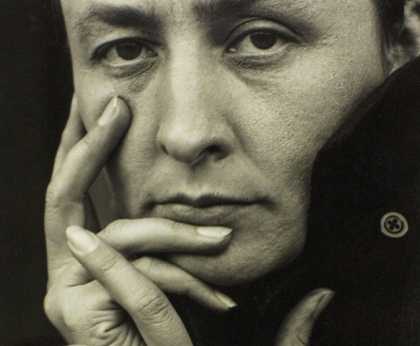
There’s a photograph of Georgia O’Keeffe, her face hung like a moon and her hair pulled in a dark crescent, that has always haunted me. The image pulses with power, attacking the contemporary moment with the timelessness of an icon or a specter.

Read More
In Art Tags georgia o'keefe, Art, body, Sexuality
Comment
Art by Emma Dajska

Art by Emma Dajska

The Handshake by Becca Shaw Glaser

June 30, 2016

BY BECCA SHAW GLASER

Up close, he wasn’t as cute. He was older and plumper, and anyway, it all just felt so weird. When I first saw his profile earlier in the day I thought, Ooh, he seems like someone who wants a relationship. I was absolutely specifically not looking for a hookup, but as soon as we started typing, it became clear that’s what he was up for. His place turned out to be a bank converted to a condo by the Dean of Architecture. Everything was huge and austere, almost entirely white, with cathedral ceilings. Perfect, I thought.

Oct 5, 6:41pm
How do you feel
driving to meet a stranger,
naked under your skirt
knowing that you may be
seduced and taken and

fucked.

Conveniently he’d forgotten that I’d told him I would be arriving hungry and could he please feed me. After I reminded him he tossed canned clams and hasty pasta together, smashing garlic cloves with the side of a silver chef’s knife. I hung awkwardly by the granite island.

He had wanted me to wear heels but I didn’t own any. Boots? Yeah, I had tall black boots. He’d asked me to wear something that showed cleavage, and no panties, so I did. While I waited on the hard-backed chair, legs firmly closed, he plied white wine. I said No thanks. I knew I was supposed to uncross my legs so he could get a glimpse, but I didn’t even want to take off my long black coat, keeping it tightly buttoned.

Oct 5, 6:41pm
Wet with anticipation?

When the food was ready we sat at one end of the stark maple table. Half-chewed worms poured from our mouths as we discussed the economy of desire, the poststructuralist concept of sexual exchange—really it’s a handshake, we agreed, a Marxist solidarity. He said In those days they used to think women so lusty the husbands made them wear metal plates when they were away to stop them from fucking half the village. And I hate it now—for men it’s like supposed to be a conquest and the woman’s supposed to be pushing away, keeping her number low. I was impressed by his awareness of gender and sexuality, but I still felt so timid that even sitting next to him on the couch felt scary. Our voices were tinny, floating around under the white cathedral ceilings and getting lost.

When he took off his clothes in the bedroom he was glazed in ginger fir, pale skin flecked with large pink freckles, each candied with a hair, long strands piercing out of his pubis, and I realized I was repulsed. How unfair and fucked up of me, I thought, to be so political in my preferences. He devoured my vulva, he was good at it, it’s a skill, I shut off the top of my head. Looked out the enormous arched window. Can anyone see?

Oct 5, 6:43pm
Nervous. Also,
I’m kind of lost.

He told me his favorite was to be with female CEOS, older women who were used to being in charge, he loved when they became submissive with him, let themselves go. And he loved being the odd-male out with a male-female couple. He liked going to truck rest-stops and having his dick sucked by another dude, most straight-identifying, of course, or sucking other guys’ dicks through those glory holes. I loved hearing the stories. I loved thinking there are younger guys out there who get off on giving older women pleasure, because, I’m getting older. I wished for a world where I could feel safe being so sexually adventurous, not terrified of rape, disease, or being considered a slut.

Oct 5, 6:44pm
Oh. We don’t
have to do this,

you know.

He stuck his fist partly in, and I was opening on his cool white sheets under his white down comforter against his vanilla-stained Ikea headboard in his white marble flat but I didn’t want to suck his small pink dick or even kiss his lips which I felt bad about and thankfully he didn’t pressure me at all but I think it was pretty obvious and then when it was clear I couldn’t or wouldn’t cum, Want to watch me? he slid his hand over his penis moving silently until white spurted out. I tried to at least touch him a bit while he was touching himself but the truth is I didn’t really want to.

After the shirt got tucked back into the jeans, after the zipper on the black dress was zipped up again, my still-wet vulva bristling between my thighs, my curly hair tangled, my breasts pulsing with the sensation of stranger-touch, after I shut the door to his white world firmly with a thud behind me, the first thing I wanted to do was see my lover, the lover who can’t be in a real relationship, the lover who gave me permission to try to find one. Not even in my car yet, I dialed, and surprisingly he picked up, said Sure, come over—and it was almost like coming home, to his soft gorgeous body, the body I’m bonded to, he was stretched out on his tiny bed, books and clothes chaotically strewn everywhere, small piles of trash that for some reason he sweeps into a corner and then leaves for weeks, he was watching Baron Munchausen, being uncharacteristically silly. He knew where I’d been. It didn’t bother him. In fact he liked the look of the dress, too, the way it clung to my breasts, pushing them together. I dropped my black shoulder bag and pressed my mouth to his.


Becca Shaw Glaser is the co-editor and author of “Mindful Occupation: Rising Up Without Burning Out.” Her writing has also appeared in Mad in America, Black Clock, H.O.W., Two Serious Ladies, Birdfeast, The Laurel Review, Quaint, and Lemon Hound, among other publications. 

In Poetry & Prose Tags sex, love, desire, body
Comment
Featured
‘in the glitter-open black' — poetry by Fox Henry Frazier
'poet as tarantula,  poem as waste' — poetry by  Ewen Glass
'poet as tarantula, poem as waste' — poetry by Ewen Glass
'Hours rot away in regalia' — poetry by Stephanie Chang
'down down down the hall of mirrors' — poetry by Ronnie K. Stephens
'Grew appendages, clawed towards light' — poetry by Lucie Brooks
'do not be afraid' — poetry by Maia Decker
'The darkened bedroom' — poetry by Jessica Purdy
'I am the body that I am under' — poetry by Jennifer MacBain-Stephens
instagram

COPYRIGHT LUNA LUNA MAGAZINE 2025