• Home
  • indulge
  • new poetry
    • About Luna Luna
    • resources
    • search
  • editor
  • dark hour
  • submit
Menu

luna luna magazine

  • Home
  • indulge
  • new poetry
  • About
    • About Luna Luna
    • resources
    • search
  • editor
  • dark hour
  • submit
shadow
A Writing Spell: Honoring Your Many Selves
Mar 1, 2021
A Writing Spell: Honoring Your Many Selves
Mar 1, 2021
Mar 1, 2021
An 11-Line Poetry Spell For Healing
Mar 1, 2021
An 11-Line Poetry Spell For Healing
Mar 1, 2021
Mar 1, 2021
How To Write Powerful Poetry Spells
Feb 28, 2021
How To Write Powerful Poetry Spells
Feb 28, 2021
Feb 28, 2021
Here Is Your Scorpio Homework This Season
Oct 25, 2020
Here Is Your Scorpio Homework This Season
Oct 25, 2020
Oct 25, 2020
3 Transformative Life Lessons Scorpio Teaches Us
Oct 25, 2020
3 Transformative Life Lessons Scorpio Teaches Us
Oct 25, 2020
Oct 25, 2020
Restorative Grief: Letters To The Dead
Oct 23, 2020
Restorative Grief: Letters To The Dead
Oct 23, 2020
Oct 23, 2020
A Santa Muerte Rebirth Ritual + A Tarot Writing Practice
Oct 6, 2020
A Santa Muerte Rebirth Ritual + A Tarot Writing Practice
Oct 6, 2020
Oct 6, 2020
Witches, Here Are The New Books You Need
Nov 14, 2019
Witches, Here Are The New Books You Need
Nov 14, 2019
Nov 14, 2019
3 Dream Magic Rituals And Practices
Nov 12, 2019
3 Dream Magic Rituals And Practices
Nov 12, 2019
Nov 12, 2019
How To Use Tarot Cards for Self-Care
Nov 11, 2019
How To Use Tarot Cards for Self-Care
Nov 11, 2019
Nov 11, 2019
A Review of Caitlin Doughty's 'Will My Cat Eat My Eyeballs?'
Oct 25, 2019
A Review of Caitlin Doughty's 'Will My Cat Eat My Eyeballs?'
Oct 25, 2019
Oct 25, 2019
Nimue, The Deity, Came To Me In A Dream
Sep 17, 2019
Nimue, The Deity, Came To Me In A Dream
Sep 17, 2019
Sep 17, 2019
Astrological Shadow Work: Healing Writing Prompts
Sep 9, 2019
Astrological Shadow Work: Healing Writing Prompts
Sep 9, 2019
Sep 9, 2019
The Witches of Bushwick:  On Cult Party, Connection, and Magic
Jul 23, 2019
The Witches of Bushwick: On Cult Party, Connection, and Magic
Jul 23, 2019
Jul 23, 2019
7 Magical & Inclusive New Books Witches Must Read
May 15, 2019
7 Magical & Inclusive New Books Witches Must Read
May 15, 2019
May 15, 2019
Working Out As Magic & Ritual: A Witch's Comprehensive Guide
May 14, 2019
Working Out As Magic & Ritual: A Witch's Comprehensive Guide
May 14, 2019
May 14, 2019
Letters to the Dead: Shadow Writing for Grief & Release
Feb 8, 2019
Letters to the Dead: Shadow Writing for Grief & Release
Feb 8, 2019
Feb 8, 2019
How to Add Magic to Your Every Day Wellness Routine
Feb 5, 2019
How to Add Magic to Your Every Day Wellness Routine
Feb 5, 2019
Feb 5, 2019
Ritual: Writing Letters To Your Self — On Anais Nin, Journaling, and Healing
Jan 31, 2019
Ritual: Writing Letters To Your Self — On Anais Nin, Journaling, and Healing
Jan 31, 2019
Jan 31, 2019
How Rituals Can Help You Gain Confidence
Jan 17, 2019
How Rituals Can Help You Gain Confidence
Jan 17, 2019
Jan 17, 2019
Hearthcraft & the Magic of Everyday Objects: Reading Arin Murphy-Hiscock's 'House Witch'
Jan 14, 2019
Hearthcraft & the Magic of Everyday Objects: Reading Arin Murphy-Hiscock's 'House Witch'
Jan 14, 2019
Jan 14, 2019
True to The Earth: Cooper Wilhelm Interviews Kadmus
Nov 26, 2018
True to The Earth: Cooper Wilhelm Interviews Kadmus
Nov 26, 2018
Nov 26, 2018
Between The Veil: Letter from the Editor
Oct 31, 2018
Between The Veil: Letter from the Editor
Oct 31, 2018
Oct 31, 2018
Shadow Work with Light Magic for Dark Times
Oct 31, 2018
Shadow Work with Light Magic for Dark Times
Oct 31, 2018
Oct 31, 2018
2 Poems by Stephanie Valente
Oct 31, 2018
2 Poems by Stephanie Valente
Oct 31, 2018
Oct 31, 2018
A Poem in Photographs by Kailey Tedesco
Oct 31, 2018
A Poem in Photographs by Kailey Tedesco
Oct 31, 2018
Oct 31, 2018
Photography by Alice Teeple
Oct 31, 2018
Photography by Alice Teeple
Oct 31, 2018
Oct 31, 2018
A Simple Spell to Summon and Protect Your Personal Power
Oct 31, 2018
A Simple Spell to Summon and Protect Your Personal Power
Oct 31, 2018
Oct 31, 2018
November and Her Lovelier Sister
Oct 31, 2018
November and Her Lovelier Sister
Oct 31, 2018
Oct 31, 2018
A Spooky Story by Lydia A. Cyrus
Oct 31, 2018
A Spooky Story by Lydia A. Cyrus
Oct 31, 2018
Oct 31, 2018
WITCH BOOKS

Witches, Here Are The New Books You Need

November 14, 2019

BY LISA MARIE BASILE

I am fortunate to receive tons of wonderful books on a wide range of topics, but some of my favorites include those by talented witches and magical beings whose books approach magic in accessible, inclusive, radical, and fresh ways.

I am always on the lookout for books which a) present an updated look at magic and witchcraft to a modern audience, b) frame witchcraft in a way that is inclusive and holistic — meaning it addresses systemic issues in society, and c) blend and blur genres — books of narrative non-fiction alongside research, poetry entwined with spellcraft, or divination techniques alongside storytelling.

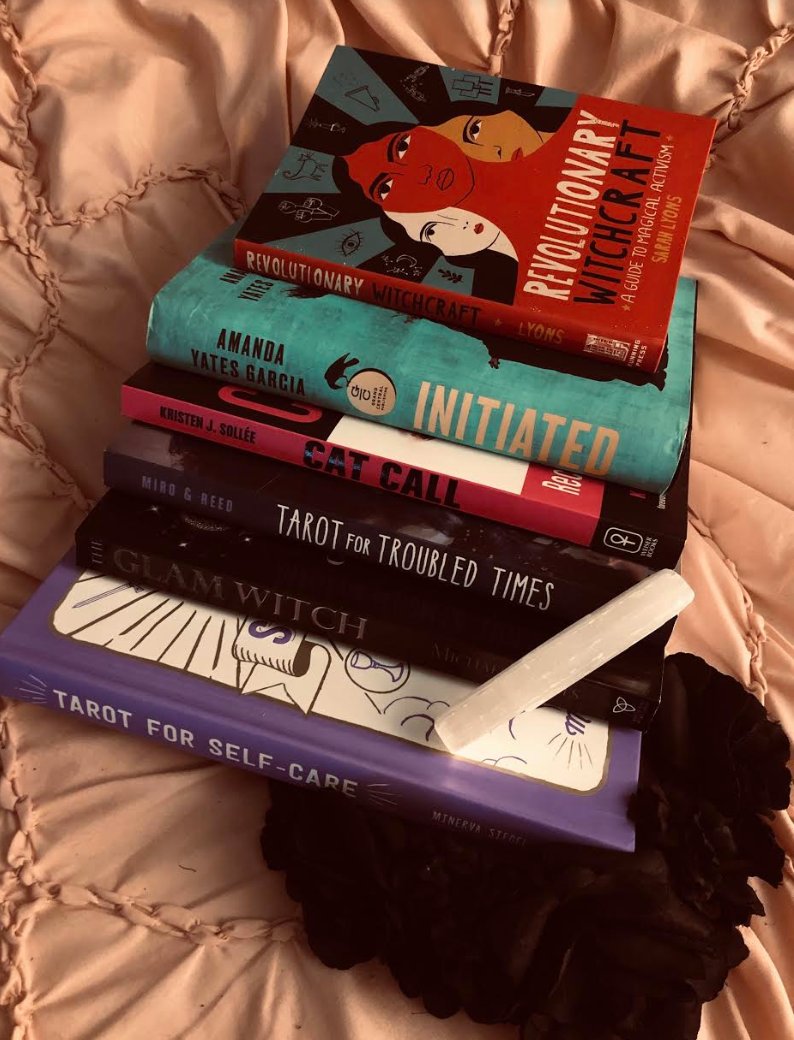
Personally, I love books that can be read through an open-ended and intuitive lense, and approaches that permit those of us from even an eclectic or secular background to take part. I think all of the below books make space for the witch, the feminist, the curious, and anyone in between. So, for witches and non-witches alike, these are the books I’ve been reading as of late:

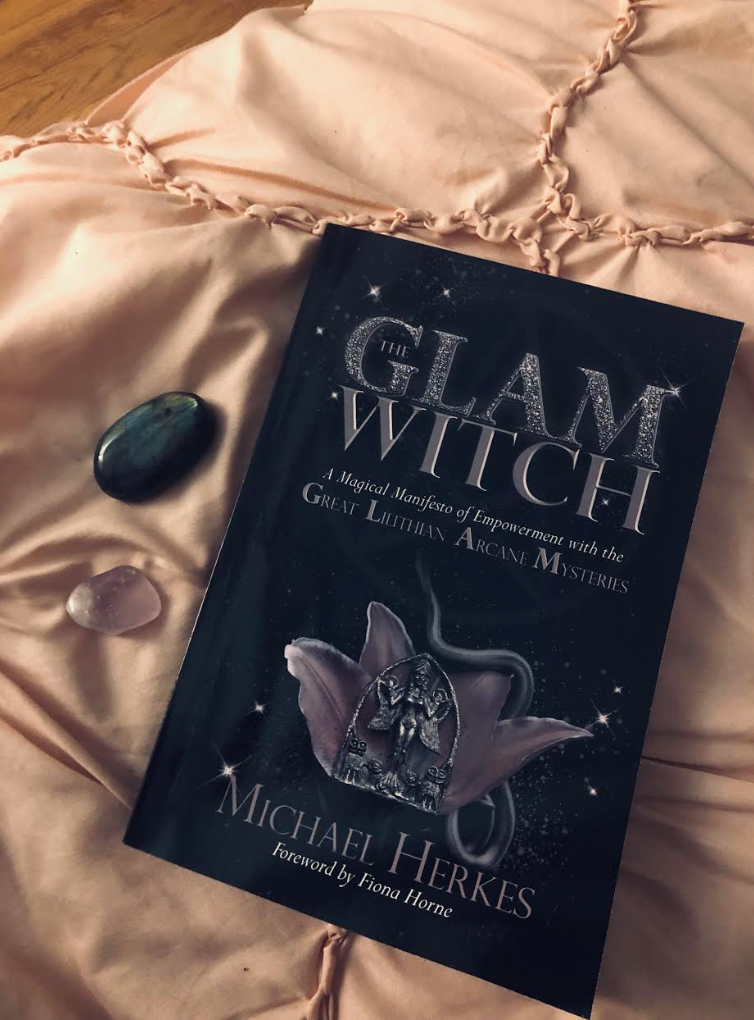
THE GLAM WITCH

I LOVE this book. Michael Herkes’ voice is a dream. His passion is palpable, lifting out of the pages and into your hands and heart. It looks at how the goddess/archetype Lilith has for so long been worshipped and feared, and walks readers through how they can create a relationship with Lilith, as well. In fact, it’s called The GLAM Witch because Herkes explores the Great Lilithian Arcane Mysteries (GLAM). Through luminous text, you’ll find astrology, ritual, and a magic that is steeped in power.

Screen Shot 2019-11-13 at 8.20.46 PM.png

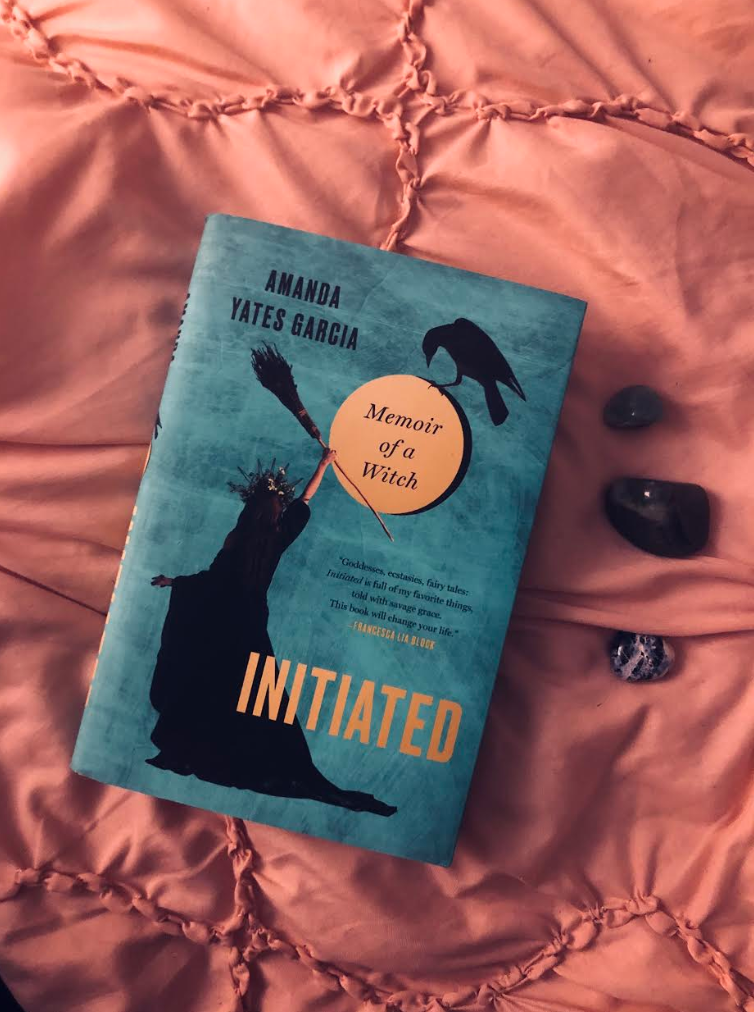
INITIATED: Memoir of a witch

Amanda Yates Garcia — known as the Oracle of LA — writes a potent story of becoming and reclamation in Initiated, which shows how she became a High Priestess, and how she tapped into her inner power. With her shedding light on feminism, culture, earth, sex work and poverty, the underlying message here is one that matters most in today’s world.

Also read: 7 magical & inclusive new books witches must read

Screen Shot 2019-11-13 at 8.20.53 PM.png

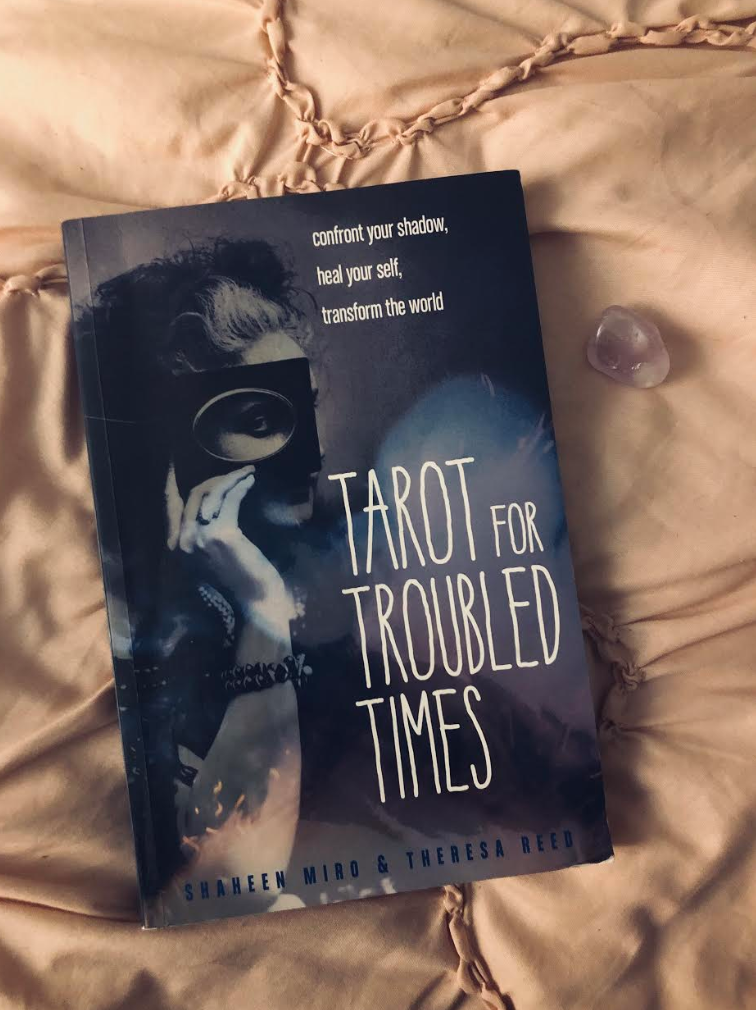
TAROT FOR TROUBLED TIMES: CONFRONT YOUR SHADOW, HEAL YOURSELF, TRANSFORM THE WORLD

In Theresa Reed and Shaheen Miro’s Tarot for Troubled Times, we see a radical and transformational text that uses shadow work (a throughline of the book), archetypes, reflections, and prompts to reframe the power of tarot. I can’t get enough of this one. And I’ve had the pleasure of knowing Theresa (The Tarot Lady) for quite some time. Her generosity, support, wisdom, and love for magic is a continual inspiration to me.

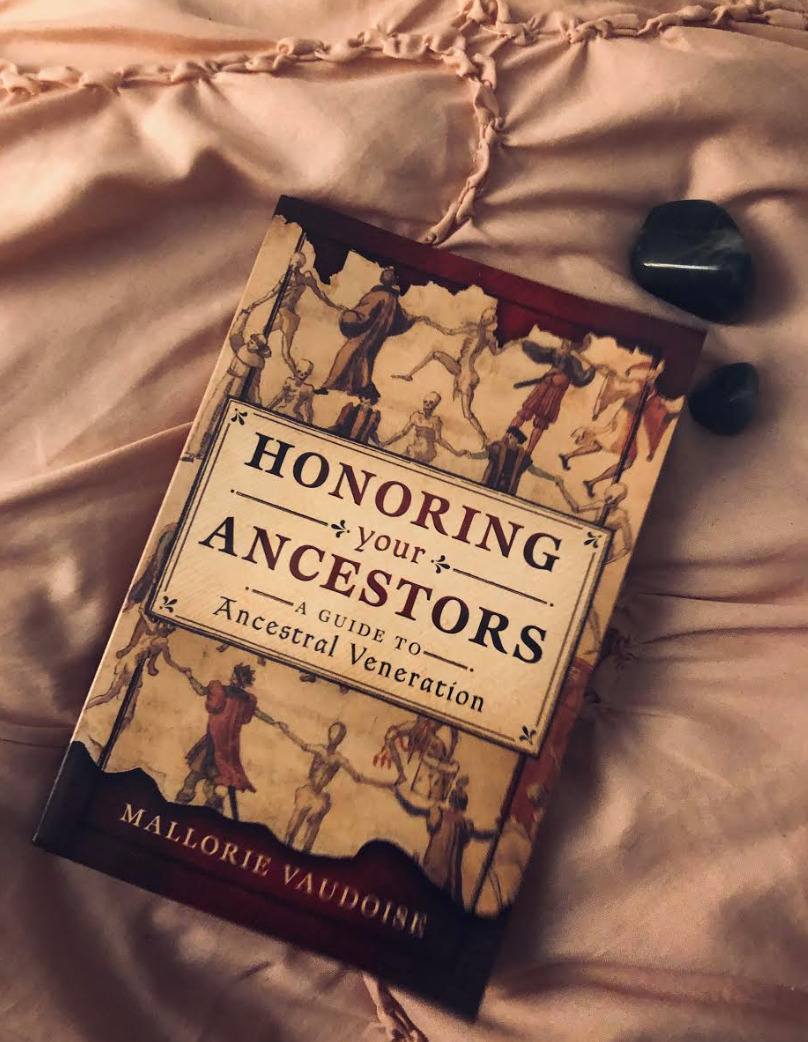
HONORING YOUR ANCESTORS: A Guide to Ancestral Veneration

As someone who has always been interested in ancestor veneration in a specific sense — more in my writing practices than anything else — I have not read a book on the topic that has so deeply and beautifully spoken to my needs. Mallorie Vaudoise’s book does not go into the topic lightly, addressing plenty of the big issues — like not knowing who your ancestors are, for one. The book explores everything from making ancestral altars and spell-work to mediumship. It’s splendid and healing.

Read also: 4 witchy podcasts you need in your life

Screen Shot 2019-11-13 at 8.21.22 PM.png

REVOLUTIONARY WITCHCRAFT: A GUIDE TO MAGICAL ACTIVISM

In Sara Lyon’s work, we find a potent and necessary look at how we can make magic in a world that is too often broken by hatred, fear. It is a world that needs transformation, and witches have that very power. I have always thought that the witch was a political figure, whether or not one intends or feels that way. Witches have long stood for the marginalized, the forgotten, the invisible. And power, as Lyons says, is political. With topics ranging from history, magic (ancestral magic, sigil creation, and spells), ally-ship and the natural world, this book is a must-have for today’s practicing witch. I also love its inclusion of the Trans Right of Ancestor Elevation, which is a ritual for trans and GNC witches to honor their ancestors of spirit killed by murder.

revolutionary witchcraft

CAT CALL: RECLAIMING THE FERAL FEMININE

I have long been a fan of Kristen Sollée’s work (and her person) and I am indebted to her for the knowledge and support she has given me, and the magic she has brought to my life (and all of ours!) through her words. As an intersectional feminist and a witch, her books (do yourself a favor and also read Witches, Sluts Feminists) speak power into my world. In Cat Call, she brings the histories, superstitions, stories, and mythos of the feline to life, and weaves all of that into how we understand (and can better understand) sex and femininity and taboo. Fuck yes.

Screen Shot 2019-11-13 at 8.21.32 PM.png

TAROT FOR SELF CARE: HOW TO USE TAROT TO MANIFEST YOUR BEST SELF

I love Minerva Siegel’s book for its simplicity and care. It walks readers through the tarot with care and ease, feels inclusive and avoids culturally appropriative terms, and addresses some of the big obstacles to our self-care practices. It frames the book so that it covers mental, physical and spiritual self-care, while walking you through each card and its magic.

Screen Shot 2019-11-13 at 8.20.40 PM.png

OTHER BOOKS I’VE BEEN READING OR LOOKING FORWARD TO READING:

Pam Grossman’s Waking The Witch, Theresa Reed’s Astrology for Real Life, Astrea Taylor’s Intuitive Witchcraft, Apocalyptic Witchcraft by Peter Grey, Gabriela Herstik’s Bewitching The Elements, Juliet Diaz’ Witchery, Working Conjure by Hoodoo Sen Moise, The Door to Witchcraft by Tonya A Brown, The Astrology of Sex & Love by Anabel Gat, Weaving The Liminal by Laura Tempest Zakroff,

IAlso recommended: Catland Book’s Monthly Reader’s Coven (which I subscribe to, and which delivers gorgeous books to my door, monthly).


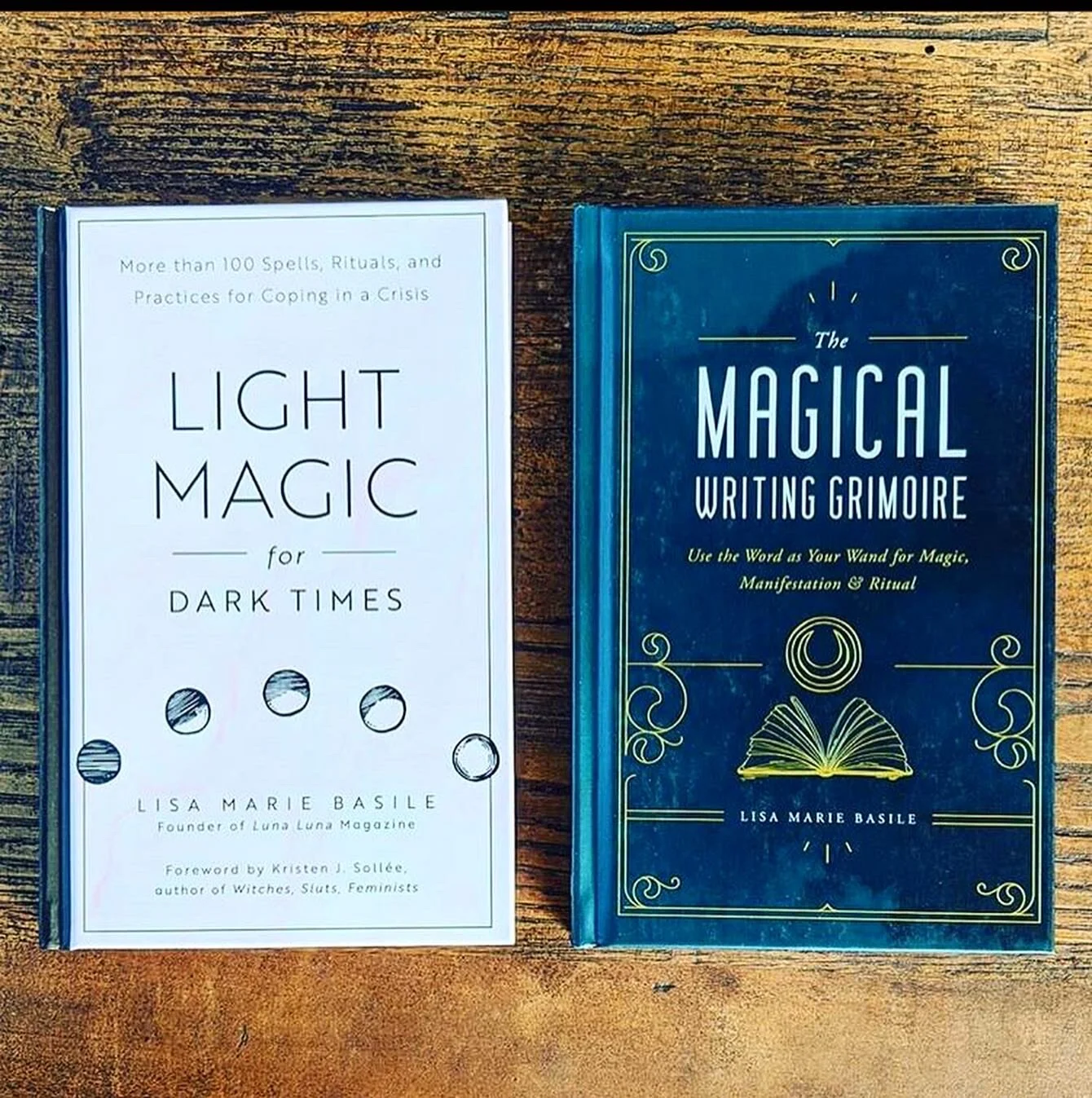
Lisa Marie Basile is the founding creative director of Luna Luna Magazine--a popular magazine focused on literature, magical living, and identity. She is the author of "Light Magic for Dark Times," a modern collection of inspired rituals and daily practices, as well as "The Magical Writing Grimoire: Use the Word as Your Wand for Magic, Manifestation & Ritual." She can be found writing about trauma recovery, writing as a healing tool, chronic illness, everyday magic, and poetry. She's written for The New York Times, Refinery 29, Self, Chakrubs, Marie Claire, Narratively, Catapult, Sabat Magazine, Healthline, Bust, Hello Giggles, Grimoire Magazine, and more. Lisa Marie has taught writing and ritual workshops at HausWitch in Salem, MA, Manhattanville College, and Pace University. She earned a Masters's degree in Writing from The New School and studied literature and psychology as an undergraduate at Pace University.

In Occult, Books, Astrology, Sex Tags Witchcraft, witchcraft, witch, books, witchy books
Comment
milos-tonchevski-D0WEUa0YFew-unsplash.jpg

3 Dream Magic Rituals And Practices

November 12, 2019

BY LISA MARIE BASILE

"In sleep, I become a garden of roses blooming in the dark."

Sleep is a kind of medicine. It rejuvenates the body, but it also expands our minds, lets us play in other realms, and invites us to listen in on our subconscious. In dreaming, we receive messages and insights — which we can question and reflect on. We are our own oracles, in a sense.

The ancient Greeks believed that pre-sleeping rituals — bathing or refraining from eating fish or meat — would lead to specific kinds of dreams. Hypnos, the Greek god of sleep (the actual personification of sleep) was the son of darkness (Erebus) and night (Nyx). Hypnos lived in the underworld, full of poppies and plants capable of lulling you into a soft, dark slumber. 

Through the underworld ran the river Lethe (which means 'forgetfulness,’ ‘oblivion,’ ‘concealment’, ‘unmindfulness’), an interesting intersection invoking that liminal state between awake and asleep, where we store our intuitions and risk forever forgetting what we’d just dreamt or learned. But more so, it’s easy to forget that which is and is not real, that which sinks into the depths of otherworldy waters, swept into a current that leads away from our waking state. And I find that so beautiful.

Keeping A Dream Diary

So, when we journal our dreams, we call on that place, that river, those memories. And we train our minds to live not only here — in the waking state — but down under, where messages and ancestors and our Selves live. Doing this can also help us begin to lucid dream, although that is a story another time!

Upon waking, immediately write down or record your dreams or dream fragments, noticing:

    • colors

    • weather, foliage, atmospheres & cosmos

    • themes (rushing, being lost, exploring, abandonment, dancing)

    • moods and senses

    • rooms or places, unknown spaces

    • emotions within the dream

    • people, archetypes or obscure or out-of-picture figures

    • dreams within dreams or memories, or the collapsing of reality and dream-space

    • powers or lack thereof

    • how you feel upon waking up

    • magical influences and abilities

    • desires, vices, hunger, needs

    • recurrent dreams (are they the same, or slightly different?)

    • words (spoken or read or even felt) that recur or that stand out

    • time in which the dream occurred (night, day, during a moon phase or when the moon is a certain sign or during an astrological season)

Creating A Pre-Slumber Ritual

When we take part in ritual, we are celebrating, honoring, and calling on the richness of being alive. In ritual, we make choices, cast intentions, connect with our bodies, archetypes, and power objects, and we recognize our one-ness with the great unknown. We build a sacredness into our lives.

Whether we are taking a secular approach, or calling on ancestors, angels, or gods, we are tapping into big magic. How beautiful, how autonomous, how sacred — to visualize and conjure and cast, to create a space and fill it with energy and light and shadow?

And in a sense, sleep rituals allow us to bookend our days with magic. But they also can help us get some control over our sleep problems, like sleep paralysis (which I have, and which is often triggered by poor sleeping patterns and extreme stress), nightmares and terrors, or insomnia. If these are bad enough, we may begin to dread sleep or the sleeping environment. I know because I’ve been there!

To create a sleep ritual, one of poetry and beauty, of intentional and safety, follow these steps:

    • First, create a space that feels soft, comfortable and safe for yourself. Use color magic to invoke sleep: Blue has been shown to reduce heart rates and blood pressure, while purples and silvers call on a liminal, otherworldly place. This should be your bedroom, but perhaps it’s a space you go before sleep – a nook, a little loft space, a room with a fireplace or a window looking toward the moon.

    • Create an air spritz to use before bed — perhaps it's moon-water (water charged by the moon) with rose petals or lavender. Perhaps you charged water with an amethyst? The purpose is to set a tone, to prepare the space for sleep. You want to associate this spritz with positivity, safety, and softness. Create a sigil (a magical symbol made up of words and letters) that you can tape or draw onto the bottle that represents joyous and nourishing sleep.

    • You might choose to bathe, stretch, dance for a few moments to get your body loose and soft, or simply listen to music while you quiet your mind. No bright lights or electronics. Dab a bit of valerian root oil onto the back of your neck or the bottom of your feet.

    • Light a single candle and stare into its flame, asking to be lulled into a gentle sleep. Decide that you will remember and learn from your dreams. Simply opening your mind to this desire opens the gates.

    • Write a pre-sleep poem that invokes Hypnos or any other images or ideas or messages that you are seeking. Maybe it invokes a night of sleep without nightmares or distractions? Training yourself to call on these guides or images will help your mind remember that you intentionally entering the sleep state. That you have the control.


Shadow Work & Nightmares

Healing your shadow self requires as much a commitment to self-care (sleep, nutrition, movement, kind self-thoughts) as it does mining the abyss (asking the hard questions, doing the hard work of paying attention to your real desires and fears, and excavating childhood trauma). The dark well within us is a keeper of our pain, but it is also the space where we bloom.

When we take proper care of ourselves (which can be hard when we feel undeserving or exhausted), we can peer into our guilt and shame or fear and trauma — without losing ourselves to it. We can learn from it and learn to better manage it.  Paying attention to our nightmares is a huge part of shadow work — but we must be willing to take notice of what we’re feeling, seeing, and remembering.

Use the prompts above to examine the facets of your nightmare after your wake — but use your intuition to question your dreams' core meaning. Journaling, stream-of-conscious, without questioning, editing, or censorship, usually helps us get down all of the details, even the weird ones. Don’t worry if it makes sense. Your slumber language, a sort of nightmare dialect, will begin forming in time.

What about the nightmare made you feel empty, scared, jarred, and just plain off. It’s probably best to keep a separate journal just for nightmares, as these dark dreams are ripe with very specific information and ideas about ourselves and the uncomfortable, toxic, or dark influences in our lives.

When you dream of running through a dark alleyway, who and what are you running from?

When you dream of forever missing the train, why are you missing it? 

What is the dream about on the surface? But what is it really about?

Are your dreams telling you something you’re not willing to hear?

When we settle in and get ready for truth — however harsh, cold, or intense it may be — we give ourselves a chance to get the truth out, to stop hiding from it, to start learning to manage it.

But it’s important to journal through these feelings while maintaining proper self-care. It is all a heavy process — imperfect, challenging and often lonely — that yields healing over time and with patience and self-compassion. And it doesn’t have to be done overnight.


Lisa Marie Basile is the founding creative director of Luna Luna Magazine--a popular magazine focused on literature, magical living, and identity. She is the author of "Light Magic for Dark Times," a modern collection of inspired rituals and daily practices, as well as "The Magical Writing Grimoire: Use the Word as Your Wand for Magic, Manifestation & Ritual." She can be found writing about trauma recovery, writing as a healing tool, chronic illness, everyday magic, and poetry. She's written for The New York Times, Refinery 29, Self, Chakrubs, Marie Claire, Narratively, Catapult, Sabat Magazine, Healthline, Bust, Hello Giggles, Grimoire Magazine, and more. Lisa Marie has taught writing and ritual workshops at HausWitch in Salem, MA, Manhattanville College, and Pace University. She earned a Masters's degree in Writing from The New School and studied literature and psychology as an undergraduate at Pace University.

In Occult Tags dreams, dream magic, sleep, sleep paralysis, sleep magic, dream ritual, dream witch
Comment
the magical writing grimoire by lisa marie basile

How To Use Tarot Cards for Self-Care

November 11, 2019

BY LISA MARIE BASILE

I've always been intrigued by tarot cards, especially as they relate to tarot for self-care and introspection. In fact, some of my favorite books are approaching tarot as a healing tool — like the new Tarot for Self Care by Minerva Siegel and Tarot for Troubled Times by Theresa Reed and Shaheen Miro. And if you’re looking for an inclusive, healing deck, here are some excellent resources for the tarot enthusiast or the curious. Also, please make sure you check out The Hoodwitch. Also be sure to read all of our tarot content, including Joanna C. Valente’s tarot horoscopes.

For the longest time, I've turned to tarot cards — usually read by someone else for me — to seek wisdom. I was recently invited to The Witches Almanac Witches Masquerade Ball in Massachusetts (alongside Laura Tempest Zakroff, Christopher Penczak, and Harold Roth), where I received two tarot readings that essentially amounted to one lesson I’d been putting off learning: Stop only identifying with and relying so heavily on the dark; you forget to let the light in. And it’s true.

I don't personally believe that the tarot cards are in communication with some divine force, deity, ancestor or Spirit (although many people do, and that's awesome), but I do believe that pulling a card randomly generates a message or lesson on which I can reflect. In either case, it's divinatory in some sense.

In fact, writer, Strega, tarot reader (and my Astrolushes podcast co-host!) Andi Talarico put it beautifully:

Do I use tarot as divination or reflection? The short answer is both, for sure, though I'm less concerned with fortune-telling than I am with assessing the circumstances that brought us to this moment in time — hence the reflection. I do not believe that our fates are entirely pre-scripted or set in stone or that we are solely at the mercy of the heaven's transits but I DO think there are ways in which we can use tarot to arm ourselves for future issues that present themselves. When tarot is practiced on a regular and continuing basis, you start to see recurring themes and patterns and messages and thus you start to notice obstacles as well as strengths, and therein lie our answers, I believe.

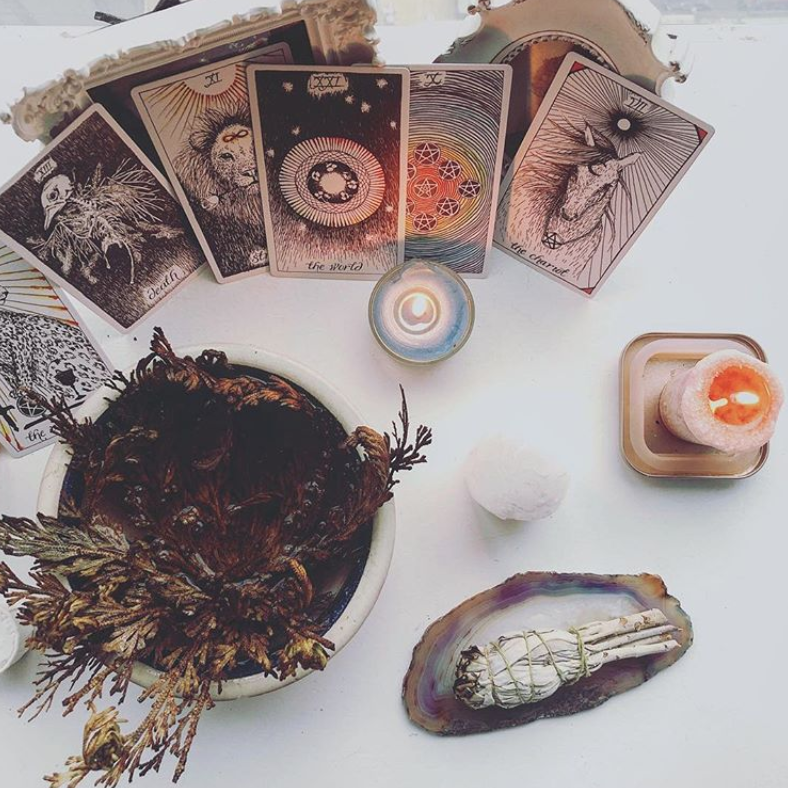
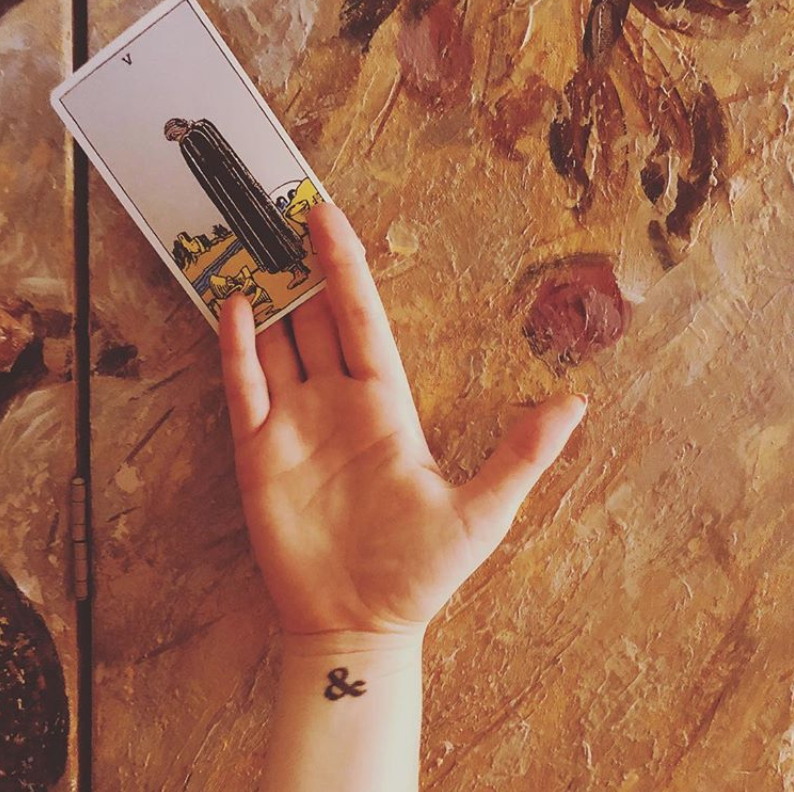
If I'm alone, I'll pull a single tarot card with a specific focus on themes like, say, expansion, transformation, or healing (#Scorpio here). The tarot card meanings that come with each individual deck are certainly something I'll take into account (I personally work with The Wild Unknown, as the animal and natural spirit of the deck speaks to me more than human figures do), too.

I usually pull a card for myself before bed or right when I wake up, depending on my need for clarity. I’ll read the deck’s guidebooks, but I also use my intuition and knowledge of symbols when interpreting the cards. How do the images make me feel? What is the lesson that I find myself falling into after pulling a tarot card or cards? What do the colors say to me? Are there recurring themes?

What is the history of tarot?

People have turned to tarot for hundreds of years, which comforts me; I love that something can remain so sacred throughout time. The cards were said to have originated around the early to mid-1400s in Northern Italy. They have their roots in something called Il Trionfos, or Triumph cards. There is also some research that suggests the playing cards belonged to the Islamic soldiers who made their way into Italy.

But were they always divinatory in nature? I’m not entirely sure, but according to a Mary K Greer, a tarot scholar, “While there are rare indications early on that both playing cards and tarot were used for divination and character delineations (in poems called Tarocchi Appropriati), true “reading” practices were not widely known until the late 18th century.”

Cartomancy, which refers to the use of playing cards in divination, has a pretty fascinating history. It suggests that cards are more than just fun and games. I certainly don’t see it that way.

Tarot cards present ways for us to connect to our deep truths, feelings, fears, and desires.

As Shaheen Miro and Theresa Reed write in Tarot for Troubled Times, "Tarot holds a mirror up to our selves, and when we engage with the insights we find there, we can take a significant step in healing ourselves and healing the world."

lisa marie basile

But more importantly, tarot asks us to trust our gut…and look inward.

And that's integral to proper self-care. As Cassandra Eason writes in the book Little Bit of Tarot, "Tarot reading is a matter of trusting yourself and what you feel as opposed to what you think or try to deduce from the cards."

Even if this self-reflection is uncomfortable, it's necessary. It makes self-care possible. Moreover, the major and minor cards that help with this contain a specific image with symbology. And many of the cards contain archetypes.

The Lover, the High Priestess, and the Tower are just a few of the archetypes the cards depict, depending on the deck.

Depending on the deck (again, there are hundreds of iterations), each card offers us a glimpse at ourselves. Do you associate with a specific archetype? Or maybe the better question is, How can you find yourself in each and every archetype within the Tarot? When you can look into the mirror through the lens of each card, you meet yourself.

So, how are you supposed to use tarot cards for self-care?

Studying the tarot can help you find what works best. In general, though, there's no right or wrong way to use a deck. So go with your gut! According to Biddy Tarot, "Tarot is simply a tool, and as with all kinds of tools, how you use it is completely up to you."

I personally tend to follow two ‘rules’: When using a tarot deck, remember that your intuition is key. Always be willing to listen to the voice within. If something jumps out to you, pay attention. Oh, and be prepared to get deep. If something in your tarot practice is uncomfortable, ask yourself why. If a card brings up a specific feeling, don't run from it. Jump into the abyss and learn from it.

So, I asked lots of witchy, magical folks about their use of tarot cards for self-care (you can see the whole thread here), so I'll be including their tips (and my own) below. Remember that you can amend or adjust these ideas as necessary!

Pull a card each morning. Then reflect on its message throughout the day.

Pull a card and let it sit with you as you drink your coffee and get ready for work. Feel free to check out its meaning in your guidebook and then combine that with your own interpretations. If you pull a card, it's great to keep its lesson in your mind throughout the day. Often, it gets clearer as the day goes on.

Pull a series of cards every morning and reflect on them while journaling.

Gaby Herstik, the author of Inner Witch, pulls four cards every single morning and then journals about their message. A good idea is to get a journal specifically for tarot reflection. Journaling can help us drill down into our true feelings — and give them a name.

As I discuss in my book, The Magical Writing Grimoire (which you preorder now!), writing can help us find truth and autonomy in our feelings. That's because our words have inherent power and magic.

When we write, we create something out of nothing. The physical act of writing also forces us to be intentional with how we express ourselves (although you're more than welcome to use a computer or voice recorder when journaling, too).

lisa marie basile

Here are some tarot journaling prompts:

What do these cards mean to me?
What do these cards remind me of?
How do these cards inspire me?
Where in my body am I feeling these cards and their message?
What emotions are they bringing up?
What can I learn from these cards?
How I can make a change to my behavior or thought patterns today?
Why am I resistant to the lessons in these cards?
Am I forcing myself to pull new cards because I don't like their message? 

Use the tarot to disrupt your stagnant and negative thoughts.

We all fall into patterns of thinking that may be limiting or self-deprecating. Maybe we think we're not good enough.

We may fill our minds with thoughts that we'll always be too frightened to take the next step. Or maybe we're too negative toward others. The tarot can ask us to disrupt those ways of thinking.

When you pull a card, pay attention to how it challenges you.

How does a card resonate with you? Does it force you to think outside the box? If so, lean into that. Don't worry if it makes you uncomfortable. Just be sure to reward or soothe yourself for the time you took to peer inward. Draw a bath, dance, or listen to something beautiful.

Pull a card and then practice automatic writing.

Automatic writing, simply put, is a method of writing that asks us to enter a different mental state in order to generate words or channel ideas. 

Simply pull a card and write with censorship. Let the messages stream through you. The point here is to meditate yourself into a trance-like space where you feel receptive. Simply begin writing after pulling a card. Whatever words, phrases or ideas pour out is what you should write. Afterward, meditate on the results. How do they make you feel? What can you learn from them?

Use the tarot when you’re experiencing anxiety.

Obviously, tarot is NO replacement for medical care, so just remember that. But one of the replies on my Twitter thread said, “I use it for grounding when I‘m triggered! I carry my deck in my backpack and when I’m having a meltdown/crying in a coffee shop bathroom I can pull a card to find the medicine in that moment."

Simply pull a card when you feel overwhelmed and let it ground you. Pay attention to its feeling in your hand. Its colors. Its message. Its mood and tone. Perhaps you will want to pick a card you associate with positive feelings.

Use the tarot to connect with friends on a deeper level.

Self-care isn't always just about the self. It's about receiving and giving love. It's about creating a life that feels authentic, sustainable, safe, and beautiful. And it's about cultivating inspired and deep friendships. To start, pull a card with a friend and discuss it together with an open mind. How do you both react to the card? What feelings does it bring up? How can you both relate and learn from one another, based on the card?

Create an altar with a tarot card each week.

This altar can simply be made up a few flowers or crystals — anything that feels right — along with a tarot card of your choice. It should be a card (or an archetype) that speaks to you.

Prop the tarot card upon your altar. Surround it with things you love, things that bring it power, and pull its magic into your everyday life. Consider it as you pass the altar each day. What is its message? What does it stand for?

Pull a card during the new moon.

The new moon is a time for fresh beginnings, rerouting ideas, starting new ventures, and putting energy to good use. Pull a card on each new moon and let it guide you. Think about this for the next few weeks.

Make this ritual with each new moon. This way, you'll always have something to think about and reflect on. This allows us to check in with nature (always good!) and find healthy ways to reframe our thinking.

View this post on Instagram

Journal prompt & tarot magic: . I’m no tarot expert, but I do find a deeply replenishing and clarifying therapy and magic in tarot. I don’t read tarot for others, but I have slowly been learning it and connecting to it in a deep and personal way. It has become less about the guide book and more about my intuition. The archetypes have become friends who wander in and out of my life asking to be seen. What do they want to tell me?

A post shared by ritual poetica (@ritual_poetica) on Nov 5, 2019 at 9:23am PST

Pull three cards to find clarity under duress.

Sometimes when we're totally overwhelmed, we get lost in obsessive thoughts. Sometimes we just need to slow down and ask ourselves the big questions. It can help us parse through what is real and what isn't. According to Tarot mentor Sarah M. Chappell, she asks three questions, "What do I think is going on? What is actually going on? What, if anything, should I do about it?" Think about it — these are pretty useful.

Tarot readings in ASMR videos are soothing, too.

If you haven't checked out ASMR, you should. ASMR stands for autonomous sensory meridian response. It's a fancy way of saying, "sounds and movements give you a tingly, pleasurable feeling." There are plenty of oracl and tarot reading ASMR videos out there. And in those videos, people tend to do a little whispering. The intention? To get listeners to relax. Not only will the whispering tone lull you into a slumber, but you'll also learn more about the tarot.

Just make sure you find a deck that speaks to you. 

Find a deck that speaks to you and soothes you so that you can turn to it anytime. I love The Wild Unknown and The Amenti Oracle (which isn't exactly a Tarot deck, though) for this purpose.

In the end, tarot is about taking the time to check-in with yourself.

According to Jodie Layne at Bust, "Whether you take the tarot super seriously or just enjoy the time you get to spend with yourself, checking in with the cards is really about checking in with you."

If you check in with yourself, even for a few minutes each day, that's beneficial. When we disconnect from the phone, computer, and constant deluge of information — we give ourselves a chance to be quiet, contemplative, and honest. Tarot provides that respite.


Lisa Marie Basile
is the founding creative director of Luna Luna Magazine--a popular magazine focused on literature, magical living, and identity. She is the author of "Light Magic for Dark Times," a modern collection of inspired rituals and daily practices, as well as "The Magical Writing Grimoire: Use the Word as Your Wand for Magic, Manifestation & Ritual." She can be found writing about trauma recovery, writing as a healing tool, chronic illness, everyday magic, and poetry. She's written for The New York Times, Refinery 29, Self, Chakrubs, Marie Claire, Narratively, Catapult, Sabat Magazine, Healthline, Bust, Hello Giggles, Grimoire Magazine, and more. Lisa Marie has taught writing and ritual workshops at HausWitch in Salem, MA, Manhattanville College, and Pace University. She earned a Masters's degree in Writing from The New School and studied literature and psychology as an undergraduate at Pace University.

Tags tarot, Tarot, Tarot Reading, Tarot Deck, theresa reed, gaby herstik, shaheen miro, tarot for self care, minerva siegel, tarot for troubled times, light magic for dark times, the magical writing grimoire
Comment
IMG_1196.jpg

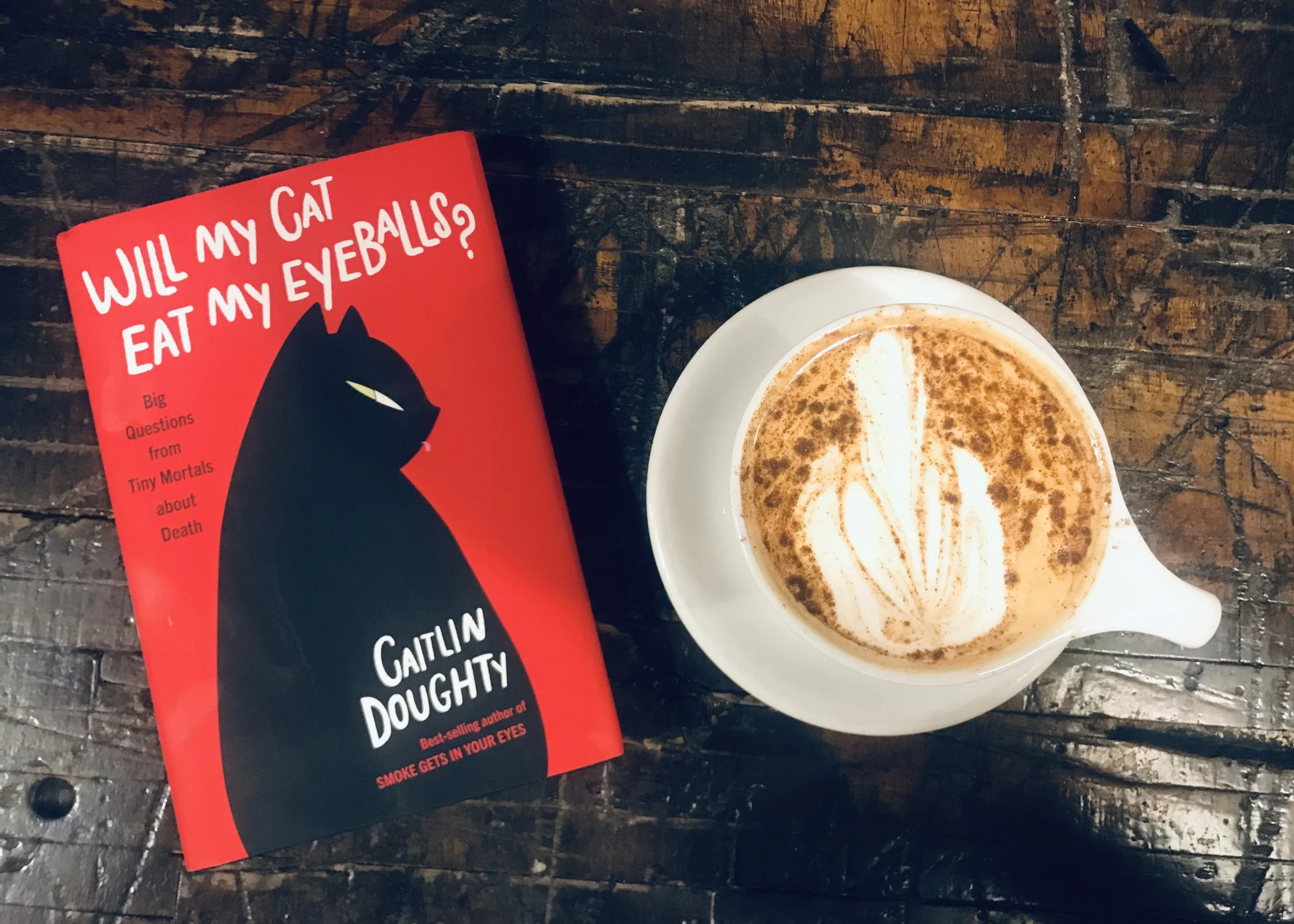
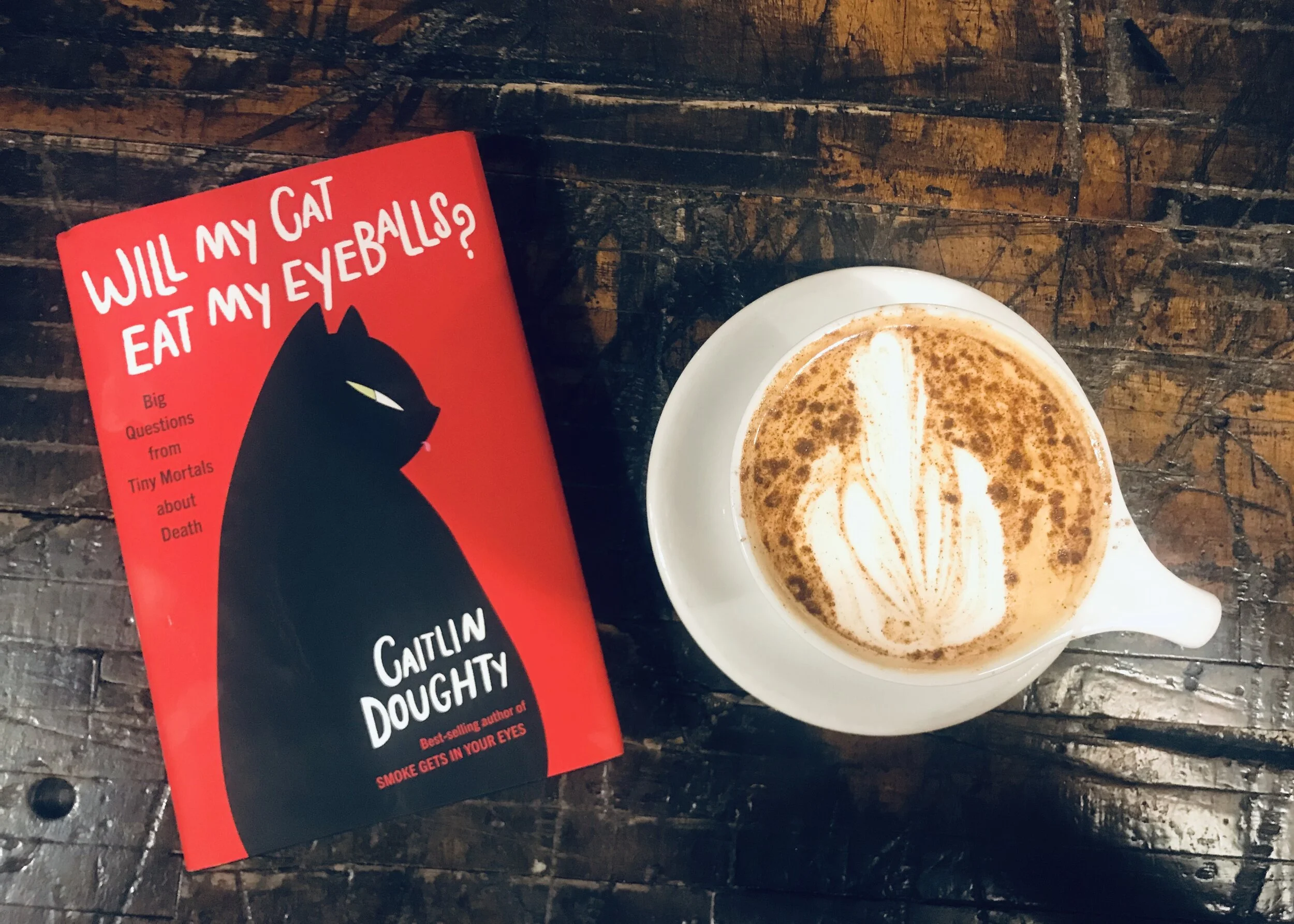
A Review of Caitlin Doughty's 'Will My Cat Eat My Eyeballs?'

October 25, 2019

Over the past several years as Doughty, has continued to travel the world to give talks and educate folks on the wonders of death, she found that her favorite part of these talks came in the Q&A portion. It was not just the opportunity to get to hear what she calls “people’s deep fascination with decaying bodies, head wounds, bones, embalming, funeral pyres—the works”—that the most direct and provocative questions about death came from young children. 

Read More
In Books Tags death positive, Trista Edwards, caitlin doughty
Comment
Screen Shot 2019-09-17 at 2.42.00 PM.png

Nimue, The Deity, Came To Me In A Dream

September 17, 2019

BY BERE PARRA

It might be surprising given the fact that I am a witch but let me begin with a confession: I am not a spiritual person. Not in the traditional way, at least. My brain is a perpetual motion machine. The closest thing I can do to meditating is journaling. Elaborate ceremonial rituals? I get so caught up in the details that it’s impossible for me to settle down and focus on the intentions. My conversations with Satan take the shape of inner dialogs and monologs, and I address him as a close relative or friend, and only rarely with the solemnity described in countless volumes of dark ceremonial literature. Standing still is a nearly impossible feat. And so on.

For me to be able to engage into a relationship or dialog with a deity or a spirit, I must enter a long creative process. My hands must be able to get a feel of it, whether it’s through the typing of the keys, or crocheting or knitting a piece of thread as I visualize a specific goal, or planting flower seeds in a pot. Magick and witchcraft are thus made tangible to me in a way that is more immediate and, in my personal experience, more powerful.

Imagine the shock when a deity entered my life unsummoned and without any effort on my part. I had not been reading about her or thinking about petitioning her at all. I didn’t even know her. Not consciously, at least.

She came to me in a dream. I didn’t know who she was at first, this huge, beautiful being, her body similar to that of a snail or a slug but devoid of many of the traits that make these creatures repulsive in the eyes of so many. Her skin was translucent, its shade a musty yellow. She had no visible extremities, but she had this gorgeous, benevolent face. Her green, almond-shaped eyes reminded me of those of a friend I haven’t seen in over a decade. Her mere hint of a smile put me at ease. She didn’t speak to me, she communicated only through energy. Once I woke up I couldn’t remember what she had ‘said’ to me. Only vague sketches of what I had witnessed, and the feeling of absolute bliss and comfort, remained in mind, along with one single word: Nimue. I kept whispering it like a mantra, again and again, afraid that if I didn’t preserve it through spoken language it would vanish, as most of the dream had by then. The name felt familiar, like I had heard it or said it before, only many years ago.

As it often happens with old deities, Nimue has had several names and representations throughout the centuries: the Lady of the Lake, Vivien(ne), Niman(ne), etc. She’s even been linked to the Welsh mythical figure of Rhiannon. Her most culturally impactful appearance is in the Matter of Britain (that corpus of legends of which the most outstanding and popular one is the Arthurian cycle). As I was reading all this, I remembered when I had first heard the name: “Merlin”, the 1998 NBC miniseries. However, none of the stories featuring these names, myths, and legends coincided with the gentle, immense being that had appeared in my dream. In all the manufactured literature and imagery of Nimue, she is either a sorceress, or some type of water fairy. Her temper seems rather changeable, or she’s downright evil.

She also seemed to have a relevance only depending on her role in the Arthurian legends: in many cases she is said to have been the keeper of Excalibur, the powerful sword that decided so many fates of heroes and villains alike; whereas in other versions of the stories she is either an apprentice-turned-enemy of Merlin, or Merlin’s lover/life companion. I couldn’t find any rituals, prayers, or ceremonies in honor of Nimue, either. The lack of conclusiveness of my research endeavors frustrated me and I decided to let the topic rest for a couple of days. Maybe something would come up.

For a few years now, in a most random and not at all frequent manner, I have dreamed of unnatural bodies of water: think of huge fountains with pillars and statues, shallow enough for you to be able to see the tiles at the bottom; located in the center of a thick forest, all clouded in green. The water looked a bit yellow here and there. Sometimes they look almost haunted and yet I have never felt fear when I have dreamed these places. On another occasion I dreamt about a huge bathroom-house located beneath a huge tree.

It looked like a combination of the bath house in Hayao Miyazaki’s “Spirited Away” and the prefects’ bathroom in Harry Potter, with the aura of “The wind in the willows”. Several small rooms, some of them with beautiful glasswork windows, through which I could see the light cascade in. The water smelled of candy and roses, herbs and fruits, all fresh and clean and alive. When Nimue visited my dreams, it happened in one of these wilderness fountains. There seemed to be a group of them, one after another, all connected by what looked like tunnels.

The morning right after I dreamed of Nimue I tweeted about it, explaining some of my initial impressions about Nimue: her appearance, her energy, and so on. I shared the results of my first online research, feeling excited at my discoveries and trying to understand why she had chosen to appear. What was her message? Why didn’t I remember it? Did she even have any message at all? Maybe she was just trying to introduce herself and my later research on her had been the message. And then, I remembered my complicated story with water.

When I was five we went on vacation to Cancún. Even though my mother kept a watchful eye on me, I managed to sneak out of the kids’ pool and jumped into another one not far off, where there were several people, mostly adults, swimming. It was one of those rectangular pools that gets deeper as you approach one of the sides and I didn’t realize this until was too late. The little lifesaver I was wearing wasn’t enough. I started panicking and flapping up and down and I had this certainty that I was going to die. At one point I sank to the bottom of the pool…I still remember how it felt to be swallowed by the depth of the water. Then, bam: somebody grabbed my arms and pulled me up. I don’t remember exactly what happened after that, I think it was some man who fished me out and he said something to me.

Even though sunlight was blinding my sight, I can still experience the huge relief it was to be out of the water. Maybe I cried a little, I don’t know. I think I walked back to where my mother was and told her about what had happened, but all those memories have almost faded by now. The only clear memory of that experience is that feeling of drowning, sinking, and then being pulled up. My relationship with the water element has been complex ever since; even though my sun and rising signs are both water and I love to look at the sea, and to take long relaxing baths whenever there’s a bathtub in sight, I’ve never felt at ease in water: there’s an intense attraction but also an impending and haunting sense of danger. I took swimming lessons as a child, a few years after that incident, but I was too afraid and dropped out after a couple of weeks.

The day after I had the dream I grabbed my magick journal and wrote a few lines about my dream encounter with Nimue. I also did a little drawing of her which came out better than I expected. As I was coloring it I kept asking her: “What is it that you want or need me to do? Are you inviting me to get re-acquainted with water?” Oddly enough, and despite my fear, the only physical activity that has ever appealed to me is swimming – mainly because sweat isn’t a factor when you’re immersed in water. But my trauma has always pulled me back, kept me away from trying again. “Maybe you’re just telling me I need to drink more water,” I told her.

To this moment, I keep wondering.

My mother has told me the story of my birth hundreds of times and I always enjoy it the same way: it always feels thrilling and new. Part of the reason why it’s so exciting is that I was one of those babies who moved a lot when I was in the womb, which caused my umbilical cord to get tangled around my neck. From my mother’s recollection of events, the interns who were assisting during my delivery hadn’t noticed this issue until it was almost too late.

There was quite a great deal of obstetric violence involved, of which I’ll spare you the details, but let’s just say I am rather fortunate to be alive and typing this. The reason I bring this up is because when we’re in the womb we’re essentially enveloped by water. It’s our crib, our safe space, our first home. A few years ago, during my time managing a holistic center, a couple of practitioners offered something called ‘rebirth therapy’. I didn’t trust those practitioners enough to undergo such a delicate process, but I did read the literature and, indeed, it sounded a lot like something I should consider: the facilitators create a safe, sacred, and intimate space within or near a body of water, which can be natural or artificial, and then they lead the participant(s) through a

recreation of the moment of their birth. Rebirth therapy borrows from Jodorowsky’s psychomagic theory, and it also incorporates shamanic approaches and Jungian undertones. You can understand now why I didn’t feel comfortable doing this with people I hardly knew.

Before reading about rebirth therapy I’d never considered myself a trauma survivor but, coming to think of it, birth is trauma.

As we grow up, that experience gets buried under hundreds of layers, aided by memory, experience, societal conventions, and many other distractions. Those fortunate enough to have been born naturally and without complications might not need therapy or any other form of healing as they grow up, but for many of us the trauma will always sit there, unacknowledged and untreated, in the depths of our consciousness. We may even find its echoes in later experiences we go through.

Who hasn’t had the feeling that there is ‘something’ not quite in place, not quite alright, in the back of our minds? I have the privilege and fortune of having a close relationship with my mother, with whom I get to have conversations every day. We talk about these things: words are tools to fish for trauma in the depths of our subconscious: talk to your parents and grandparents if you’re able to. If they’re not around, become the detective of your past and research your own life as much as possible. The depths of the past can be scary, but I promise you that you will find the answers to many questions, and you will then be able to know what hurts and how to heal it.

After several years sitting with this knowledge in my mind, it has dawned on me that any type of reinvention or renaissance we consciously go through in adult life, which are in fact different types of rebirth, is often triggered or preceded by some form of crisis or trauma. When Nimue appeared to me in my dream, surrounded by bodies of water, her skin glistening with moisture, her face radiating kindness and peace, it made me engage in a cycle of self-analysis. I started asking myself questions I didn’t even know I had before dreaming of the Lady of the Lake:

What is missing from my life now?

What hurts?

Is there something in my past I wished I could ‘go back and fix’?

How can I reprise and heal my relationship with water?

Water: that was the key for me. Tears I’ve shed throughout the last decade or so, product of disappointments, betrayals, and bad experiences. A pain that dwells in the empty places in my heart. Acceptance and gratitude for the past, even if it brought me pain. Most of all: I concluded I need to make peace with my element (I am a Pisces sun with Scorpio rising, no less). Even biology backs me up on this:

our bodies are mostly made of water. At my age, my head hurts when I start to get dehydrated. About a year before Nimue came to me in dreams, I began to long for a vacation at sea level, which is odd because I’ve always felt more at ease in cold, urban settings. All signs pointed to a reconciliation: I need water in my life. I need to be more like water: relentless, shapeshifting, powerful, flow with ease, cleanse everything in my way, allow myself to adapt and to constantly transform. This was Nimue’s message to me: “Befriend me, come back, return to the water from which you came, realize it has always been your safe space…”.

I moved to Guanajuato City a little over a year ago. It has been one of the best decisions I’ve made. There is a state-of-the-art public pool nearby, it would take me a 10-minute bus ride to get there, and the admission fee is extremely accessible. I can’t wait to see it for myself, and who knows? Maybe I will enroll for swimming lessons or aqua-aerobics. I don’t care if I only waddle in it or if I stay behind when they do laps, I don’t even mind if I don’t learn to do laps at all. I just want to say hello to an old friend, to make amends for taking so long to get back in touch. I want to feel myself float, and to recognize Nimue’s skin in water’s surface.

No doubt her skin will look bluer than in my dream, but I know she will be there. She is already waiting for me.
Bere Parra is a Mexican theistic satanic witch residing in Guanajuato, Mexico. She majored in Hispanic Literature and has had many occupations: teacher, executive assistant, holistic center manager, translator, and social media pro. She has innate strong connection and interest in the occult practices, which led to her 'coming out of the broom closet' in 2018. She mainly works with Satan, whom she considers her father figure and main guiding light, but she often works with the ad and blessing of Lilith and the lady Moon. Her life mission is to shine a light on the 'uncomfortable' truths most people like to ignore. The shadows are her second home and greatest teachers. Website. Twitter. Instagram.

In Occult Tags bere parra, nimue, water, water element, water healing, deities, witchcraft, satanism, satan, theism, mexico, Lilith, Magic, magick
1 Comment

Astrological Shadow Work: Healing Writing Prompts

September 9, 2019

BY LISA MARIE BASILE

Astrology helps us look at the many luminous (and perhaps limiting) narratives that impact and define humanity. Hanging above us in the stars in an illustrated fabric of what it means to be human: To want, to hurt, to self-destruct, to transform, to find justice, to intuit, to survive. You don’t need to ‘believe’ in astrology, though (although of course, if you’re here, you probably do turn to it from time to time).

Like tarot, these narratives offer a system by which to reflect. And let’s be honest — it’s fascinating.

And because each and every sign offers lessons and ideas on our potential (and perhaps our limitations), you can use these prompts in several ways: You can work with them for your sun, moon, or rising signs, or you can use every single one, as the moon enters each sign almost every two and a half days. 

An example: If you don’t have any Scorpio in your chart, for example, you can still use its prompt; just wait for the moon to enter Scorpio. Use the Scorpio energy to reflect on its prompt. Each sign offers valuable lessons and insights.

Below, prompts around the deeper, heavier, murkier aspects of the sun signs. Want more like this? The Magical Writing Grimoire (it’s out in 2020 and the cover/title isn’t finalized, but any of you witchy writers you can add it to your list!) includes magical and ritual writing prompts, practices and guided meditations.

Aries

What, in your triumphant, hard blaze, are you hiding from? Is there a softness you can grant yourself? What would it look like if you could undress in the light of flexibility? Does it pay to hold tight and remain stoic, or are you limiting yourself? 

Taurus

What happens when ugliness seeps in? What will you do to honor it without losing yourself? Can you handle the lack? What happens when there’s nothing around to beautify the void? What can you bring out of yourself, organically?

Gemini

When you silence or suppress one part of yourself, how does it feel? How can you worship at the feet of your multitudes? How can you become a chameleon without losing yourself? What does your foundation look like?

Cancer

When you are unsafe, can you find an anchor? If the sea keeps rocking, how can you find your strength without capsizing? How can you learn to let nostalgia bloom without its vines suffocating you? What does safety feel like inside your body?

Leo

Sometimes, you are so busy roaring you don’t hear the small sounds of morning and night. Meditate on this. What’s in front of you? What happens when the radiance machine stops working? Can there be power in the darkness? How can you be proud of yourself even when your crown falls off?

Virgo

In the chaos, there is a song. What does it sound like? Outside of the lines, you find yourself. When you are shapeless, what are you free to become? Can you find worth in the wildness, or hold space for the imperfect self? What happens when you dismantle the cliché?

Libra

What can you learn about yourself when you feel imbalanced? Is there authenticity to be found when you’re not busy balancing and performing seeking and connecting? What is found beneath the robe — and then beneath even that? Who are you when everyone goes home?

Scorpio

You feel the hum of power in the dark, but are you the architect of your own misery? Do you stay guarded in the shadows because it’s safer than letting the light in? Part the curtains. What can grow when you learn to differentiate the well from the water? What happens when you stop being jealous of the sky? 

Sagittarius

How can you learn what it feels like stay — with others, with yourself — when you always want to keep moving? Are you running?  What happens when the ideas and the wanderlust leave you empty? What happens when you stop wearing the mask? Who are you when you take the wings off and stand still?

Capricorn

Imagine the wild, wide desert. You are lost. You are thirsty. You are rescued. What happens when you learn to drink from someone else’s palm? Can you find peace in needing someone or something other than yourself? Can you lean into the softness, the slowness? Who are you when you aren’t in control?

Aquarius

Can you operate deep underground? Can you burrow into the murky waters of fear and love and want? What happens when you get naked and sit in the garden of your dark? When you don’t have a bird’s-eye view, when you comeinrealcloselikethis can you feel the granules? What do they feel like?

Pisces

What does it look like when you step out of the dream world? Can you remain here, and now, when fantasy and reality fail to merge? Can you intuit yourself? Are you able to hold space for your hopes — without crumbling under their impossible beauty? When you look your self-destruction in the face, what do you say to it? 


Lisa Marie Basile is the founding creative director of Luna Luna Magazine--a digital diary of literature, magical living and idea. She is the author of "Light Magic for Dark Times," a modern collection of inspired rituals and daily practices and the forthcoming "The Magical Writing Grimoire: Use The Word As Your Wand for Ritual, Magic, and Manifesation." She's also the author of a few poetry collections, including 2018's "Nympholepsy." Her work encounters the intersection of ritual, wellness, chronic illness, overcoming trauma, and creativity, and she has written for The New York Times, Chakrubs, Narratively, Catapult, Sabat Magazine, Healthline, The Establishment, Refinery 29, Bust, Hello Giggles, and more. Her work can be seen in Best Small Fictions, Best American Experimental Writing, and several other anthologies. Lisa Marie earned a Masters degree in Writing from The New School and studied literature and psychology as an undergraduate at Pace University.

In Occult, Astrology Tags Astrology, astrology, grimoire, writing prompts, zodiac, shadow work, magic, witchcraft, the magical writing grimoire
Comment
marks-of-mana-_NFEftQar-I-unsplash.jpg

The Witches of Bushwick: On Cult Party, Connection, and Magic

July 23, 2019

BY CALLIE HITCHCOCK        

Every time I walk into Cult Party, an all women-run intersectional feminist witch shop in Bushwick which opened in 2017, there are new magical objects bursting from each fold and corner. Every item is held in a delicate, seemingly impossible, possibly magical, balance. They have dangle earrings depicting Venus of Willendorf — the plump, breasty figure who dots the pages of every anthropology and art history textbook ever printed, and is a symbol of fertility said to date back to 25,000 BCE; a gold plastic trophy plated with “Raging Pansexual” at the bottom; dragon’s blood artisan incense; spell candles; a vest with a print of the tarot card queen of cups; energy crystals; and honey laced with CBD, a chemical found in marijuana that is legal to sell.

These are a few of the things I notice when I attend Cult Party’s reading for Kristen Sollée’s Witches, Sluts, Feminists : Conjuring The Sex Positive, where other writers read from their work as well. The air in this small corridor space is heavily perfumed and the murmur of women conversing feels hypnotic, warm, ancient.

View this post on Instagram

Come say hi to our colorful lil spot today🌈✨🌈open till 8! #yestodaysatan

A post shared by Cult Party (@cultpartynyc) on Jul 11, 2019 at 9:34am PDT

I have no extensive experience with witchcraft, but I do have a previous interest in astrology and tarot cards. My nature has always been inclined toward narrativization, introspection, analyzation, pinning things down. As a neurotic, organizing my experiences, fears, and hopes with astrology and tarot was always a relaxing and practical illusion. 

Kristen Sollée stands at the front as she hugs Jacqueline Frances, a woman in a black latex catsuit who I recognize as the admin for a popular Instagram account called Jaq the Stripper which chronicles their life as a stripper and works to create solidarity for sex-workers. Kristen is wearing a long hot pink jacket and matching lipstick with pink glitter. Something feels odd about her but I can’t tell what– until I realize she has no eyebrows.

Kristen begins to speak. The crowd quiets down, without her having to ask. Kristen knows her stuff — her articles on witches are published widely and she is co-founder of the Occult Humanities Conference, a lecturer at The New School, and founding editor of Slutist, a sex positive feminist website. She commands the room, with the breadth of knowledge and immersion into witch culture, while maintaining an open, approachable mien. From her book she reads about the mythos of women as witches throughout history and what the female witch represents:

“The witch is a shapeshifter. She transforms from vixen to hag, healer to hellion, adversary to advocate based on who seeks her,” she says. It reminds me of Kali Ma, the Hindu goddess of birth and destruction and of the enormous power that human society has long seemed to both worship and fear in women. The burning of witches is a manifestation of this contradiction and it is the same contradiction that informs why women are shamed and policed for their sexuality today. That women have reclaimed the image of the witch as a symbol of autonomy, comes as no surprise. 

When the last reader of the night says, “The power and the energy in the room with everyone reading was tangible to me,” I agree with her. I feel lighter, on a higher plane of solace and joy with all the women in the room and the readers who shared their stories. I walk to the back to buy some CBD oil and I meet Cult Party’s owner Debbie Allen. As Debbie rings up my receipt, I chat with her about the space and she tells me that she is so happy that she has been able to create a store dedicated to “holding space for women.” I’m happy too.

~~

Cult Party demonstrates an increased cultural interest in the occult over the past few years. Today, witchcraft maintains an emphasis on ritual, community, spirituality, and healing, while focusing on feminist undertones and eschewing dogmatic religious ties. 

View this post on Instagram

🔥Welcum to Hell 🔥

A post shared by Kristen J. Sollée (@kristenkorvette) on Jun 28, 2019 at 11:04am PDT

In her book, Sollée writes that she was drawn to the character of Maleficent in Sleeping Beauty because “she was the witch I wanted to be: a woman in control… like many millennial women, I see a reclamation of female power in the witch, slut, and feminist identities.”

Witch practice is experiencing new vogue among millennials. Laurie Penny, a journalist and self-described “former spooky girl” muses that “a general sense of powerlessness in a chaotic and competitive society, along with a revived interest in forms of feminism that don’t care who they frighten, may explain the growing appeal of hedge magic as a cultural aesthetic as much as a practice.” Witchcraft transverses many axes — female empowerment, community, belonging, and a system of beliefs and values. 

The competition and chaos Penny describes also correlates with the increasing reliance on the growing gig economy of contract or freelance work. Many millennials are left without health insurance, a salary, or retirement benefits.

The workplace has become decentralized, and a large chunk of interpersonal interactions have been siloed into social media. An isolation forged from aimlessness, and lack of structure have taken the place of older forms of social belonging. Millennials are all looking for a way to scrape up some softness and humanity where they can.

~~

Back at Cult Party, the source of the magic, I see the owner Debbie Allen carrying a glass from home with iced coffee in it. It is a sunny afternoon and she’s holding the leash of a hearty squish of a dog that she is looking after for a friend. His name is Lear. “I call him a chicken nugget. If he was left in the wild he would be a snack,” says Debbie as we huddle together in the back by the register and the wall with a rainbow painted on it.

Debbie is in her thirties, has long brown hair and bangs that softly curve around her face. Her kind smile and unhurried gait match the warm spring day and she seems so relaxed and happy that my imagination will keep reconfiguring this memory of her as also barefoot on the pavement. Lear whines constantly, possibly from being away from his true momma, and giving him attention doesn’t salve his unsoothable pout for long. I feel an uncomfortable kinship with Lear in this but choose to focus on the task at hand. 

Cult Party, Debbie tells me, started as a seven person collective in July of 2017 and the remaining members are Debbie and Al Benkin, a short-haired blonde artist, also in her thirties, who joins Debbie and I. Now the store runs as a co-op where vendors rent space to sell their wares and take turns manning the shop. Debbie and Al met while vending around town. Debbie was selling her brand of clothes, pins, stickers and patches called Hissy Fit, and Al was selling her art. The conversation moves towards the occult and Debbie tells me about her first inklings of her witch identity.

“I was always the kid playing with ouija boards, trances, seances, always getting in trouble at Christian camp,” she says, recalling that as she got older she would take her friends to the roof of her house to write down intentions and burn them. I ask Al if she identifies as a witch and she says, “I'm not against witchy things, I do believe we have more energy in the matter. I think different stones carry different energy but I'm not super woo-y about it. I'm a lot more science based than anything.”

We chew on the merits of a witchcraft practice for a few moments before Al suggests why feminism and witchcraft have historically gone hand in hand. “People manifest their own reality in their beliefs and people want to feel like they have some power in their decisions.” Witchcraft fosters a sense of power of self-determination, and feminism aims to create self-determination against perennial sexism and misogyny.

“I think it really helps people set the course for their quality of life in some way. It gives them a moral code and standards to abide by that makes them feel like they're being a good person and I don't think theres anything wrong with that,” continues Al. Moral code, ritual, symbolism — the touchstones of any meaningful religious practice. 

View this post on Instagram

Come in and peruse all this cute shit✨🕯🖤🕯✨open everyday except Monday 12-8⚡️

A post shared by Cult Party (@cultpartynyc) on Jun 20, 2019 at 1:26pm PDT

Debbie adds: “When I dropped Christianity I went through a phase where I wasn't into anything.” She’s not alone.

According to a 2017 study by Pew Research center, 27 percent of millennials ages 18-29 attend religious services weekly compared to 38 percent of baby boomers and 51 percent of the parents of baby boomers. With a lack of trust in old belief systems, and a lack of trust in political leaders (Donald Trump only got 37% of the millennial vote), where do the non-religious go to find guidance?

Without social trust of politicians or structured belief systems, it can be hard to know where to look for a system of values or a narrative to turn to for meaning. Debbie explains that she started practicing witchcraft more heavily when she had been in her T-shirt company job for ten years and credits witchcraft with helping her set a new course for her life. She started to do more witch ceremonies with her friends to set intentions like she did on her roof as a teenager. 

“I don't know how much of the magic part of it I believe, but I do see when I put things out there, they come back. So in a real world way if you put out there what you want, you'll start to see opportunities present themselves,” says Debbie.  

“You have to tell the universe what you want,” Al concurs.   

For Debbie, rituals served as a kind of therapy — a way to check in with herself and set personal goals. A witch ceremony is a way to really immerse herself in paying attention to what her inner self wants to say. “When you're living your authentic life, instead of hiding or lying to yourself, things start appearing. Since I started, things just start happening weirdly. Synchronicity. Things start fitting into place.” 

Al’s face has been slowly illuminating. 

“You know what, I'll try that. I'm not anti, I will try it.” 

Debbie’s calm yet vital aura is infectious. When she talks about witchcraft as a place of healing and ceremony, something in the core of my humanity lights up– a need basking in its articulation.

I decide to attend my first full moon ceremony at the shop.

~~

Callie Hitchcock

Callie Hitchcock

On a dark March evening I bike to the little Bushwick store, unaware of the impending rainstorm. Debbie, the house witch Staci Ivori, two other ladies, Lear the dog, and I huddle into the cold little shop.

A few of us shuffle our feet and awkwardly try to find a space to sit or stand that is out of the way of Staci readying the altar. I start talking to Alayna, who has come in from Long Island. She wears a pink dress with a moon scene on it and sparkly square toed boots. Within minutes we are already discussing bad boyfriends. An old boyfriend of hers didn’t like her witch dealings or aesthetic, and wanted her to cut her hair.

We laugh and exchange more stories of personal feminist heroics and rebellions. The inimitable female intimacy of the encounter warms up my bones; I revel in the ease with which I can connect with most women so quickly and deeply. No shame, no one-upmanship, no hiding. 

Debbie had told me about the purpose of full moon circles: “It's really important to have a safe place where you can speak and not feel judged or shut down.” A full moon circle is meant to be a space where women get a reprieve from quotidian interruptions, disrespect, or feeling like their ideas and interiority are ignored because of their gender. 

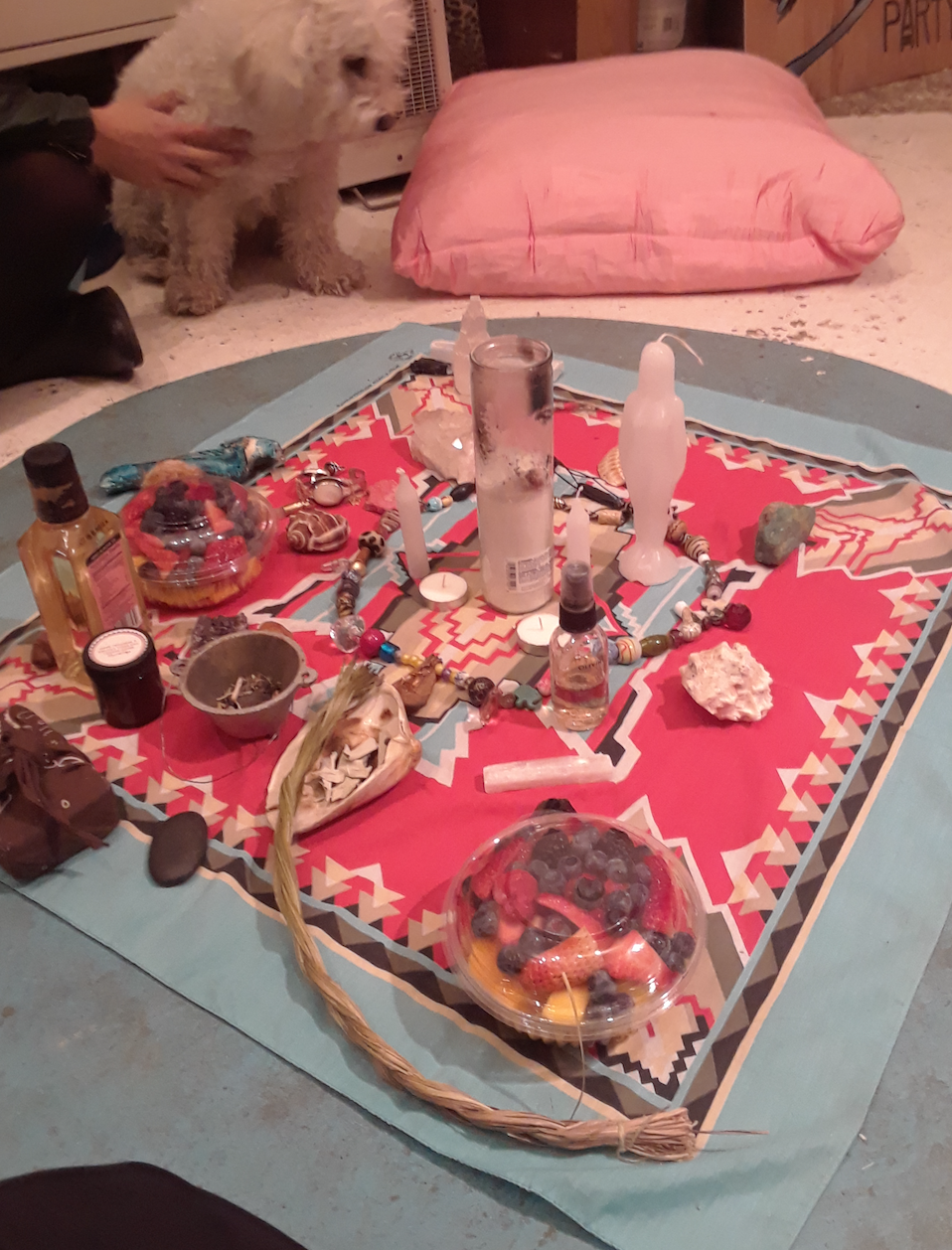
To begin the full moon ceremony we sit down in a circle around a square bandana with a blue and red geometric pattern. This is our altar — the bandana is decorated with crystals, geodes, sage, candles, a beaded necklace, and seashells. We are instructed by Staci to put on the altar an object that we want to be charged. Some women have brought their own crystals, some put in their jewelry, and I put in my pen for lack of an object, but feel chuffed realizing that it has symbolic significance for my nascent writing career. My pen needs all the energy it can get. 

After making salutations to the north, west, east, south, sky and ground, we go around the circle and each woman gets a chance to do an emotional check-in on our head and our heart. We each go around and say what’s on our minds in life right now and how we are feeling emotionally. I share about writing projects I’m worried about and how I’m feeling about a new guy I’m dating.

As the night wears on, I slowly steep in the warm sharing energy of the group. Everyone is open, honest, and taking great care to foster a kind of sacred space opening up between all the women in the circle. Later on we do a self breast massage which might have initially seemed silly, but by that point in the evening I am in a relaxed meditative state and it all makes sense. We have to release negative energy and demonstrate physical care toward ourselves among other women.

At the end Staci asks us to write down some introspective questions. What are some areas in life that have meaning to me? What makes me feel nurtured? We share our answers and make promises to ourselves in the form of a mantra. Mine is, “remember my power.” Afterward, I feel closer to these women and everyone seems relaxed, happy, and caring. Everyone is very concerned about me riding home in the rain but I roll away into the night, the glow of the little shop fading behind me. 
~~

The next time I’m at Cult Party, they are hosting a clothing drive for a women’s shelter. As I walk into the store I hear someone say “I wish I could live here,” as they study some of the colorful bits and bobs of the shop. I see Debbie, and we talk with her friend about the full moon ceremony Debbie and I attended. Lear is puttering around the shop, still without his mom but remarkably less whiny and more relaxed with his surroundings this time around.

I am eventually drawn to the tarot card reader in the corner. Her name is Claire. She looks like a young Professor Trelawney– long blonde hair, big stone earrings, matching necklace, and large wire rim glasses. I put ten dollars in her donation jar and we begin. She starts by holding my hand while I hold the tarot card deck in the other. I moved to New York a few months ago and haven’t had much physical human contact, so her hand holding mine is a little startling but really nice. As I tell her about my question for the cards and we begin to pull them, I get this spine tingling feeling in my lower back.

This happens every time I get my cards read or when I’m being “seen” somehow by the divine– coffee ground readers in Istanbul, palm readers at a fair. It’s not the same as the excited, but mostly depthless feeling of astrology– where it is fun to find characteristic matches like, say, a crossword puzzle, but it never calls up my core. The tingly feeling is a manifestation of a few things — having someone dedicate such directed care and energy toward me, plus a sense that with our interpretation of the cards we are channeling something higher, sacred, divine. For a brief moment we are calling up something written in this shared moment of curiosity and discovery– the humanity in a desire to learn the truth. 

And in the end it is an act of care. Getting my tarot cards read feels like when someone unexpectedly gives me a shoulder massage. I hold very still, in an effort to not spook them, and so that it might continue forever. But the feeling of wanting it to last as long as possible clouds the pure goodness of the feeling. It nags me out of the moment– always keeping one eye on the inevitable end while wishing it away instead of enjoying and appreciating the moment of care. 

A 2017 study in the American Journal of Preventive Medicine showed that for people aged 19-32, hours of internet and social media usage heavily correlates with feelings of isolation and loneliness. That this is the same age group of women taking up witchcraft, does not feel like a mistake.

Alex Mar, author of Witches of America, wrote after her long investigation of witch groups across America that “We don’t need a consensus on what does or does not have meaning.” We merely need “strategies for staying alive.” She concluded, “When you have that feeling, of an encounter with something greater than yourself– however subtle, whatever form it takes, trust it. It is evidence enough.”

Rolling away from Cult Party on my bike again I think she’s right. Something like religion is really just a way to feel a solace of the human spirit with others. Reaching out for a cosmology, a social space, and a sense of power over our own destinies– this can take any form. 

The last two cards I pulled with Claire were Temperance, signifying a balance and two forces coming together to change each other; and Six of Pentacles, signifying an exchange between two people for a give and take. The cards have spoken. 


Callie Hitchcock is a journalism Master's student at NYU in the Cultural Reporting and Criticism program. Callie has written on gender, sexuality, and culture for Slate, LA Review of Books, Slutever, Bust Magazine, and The Believer.

In Occult Tags witchcraft, brooklyn, cult party, callie hitchcock, magic, feminism
Comment
book magical

7 Magical & Inclusive New Books Witches Must Read

May 15, 2019

BY LISA MARIE BASILE

I’m swimming in magic right now — thanks to a few beautiful books I’m either reading or anxiously waiting to read. It is safe to say that the Witch is having a moment — but she’s always been here. She may look different culture to culture, and perhaps the language we use when we discuss her is different (magic is personal, after all), but her mainstream popularity doesn’t erase the fact that the witch, as archetype and practitioner, has always been a force for autonomy, growth, wisdom and wildness.

I’m so glad we get to live in a time when more and more of us are connecting with the otherness, wildness, and power of the witch. Luna Luna has been exploring the witch since we were born in 2013, and it’s a beautiful thing to see conversations, books, podcasts, movies, and general culture remain captivated by witchery.

And while there is a lot to be done to promote a deeper understanding of witchcraft and magical practices in general (you know, like speaking out against the co-opting capitalist agendas that reduce magic to a tee-shirt or a thoughtless starter witch kit) — there are SO many books adding to the conversation by bringing inclusivity and context and accessibility to the craft. Here are a few I’m reading or looking the fuck forward to:

Pam Grossman’s Waking the Witch: Reflections on Women, Magic, and Power

View this post on Instagram

Exciting news! Pam’s book WAKING THE WITCH is coming out from @gallerybooks on June 4, 2019. It’s available for pre-order now at all the usual places. Link in our Stories. ⚡️📚🌙🔺

A post shared by The Witch Wave (@witchwavepod) on Oct 15, 2018 at 8:01am PDT

If you’ve been following me or Luna Luna for anytime, you know I’m a huge fan of Pam Grossman and her incredible work toward unpacking and exploring the witch. Whether it’s through her own writing or via her not-to-be-missed podcast, The Witch Wave, Pam (and her guests) explores the story of the rich fabric of magic both ancient and modern. I’m looking forward to reading her book’s examination of the witch as an enduring figure in culture, while learning more about how Pam came to the practice. Yes, please. Preorder here.


Shewolfe and Beatrix Gravesguard The Astrological Grimoire: Timeless Horoscopes, Modern Rituals, and Creative Altars for Self-Discovery

View this post on Instagram

our book, THE ASTROLOGICAL GRIMOIRE, is officially entering the world next Tuesday, April 9 🔮📖✨ to celebrate, we will be doing a special pub day broadcast on @bffdotfm, and we are giving away pairs of copies for you and your witchy bestie 👯‍♀️✨👯‍♂️ TO ENTER: comment with a question about the #astrogrimoire you’d like answered on air next week, and tag a witchy pal who would love a grimoire too 🌬✨

A post shared by Astral Projection Radio Hour (@witchradio) on Apr 4, 2019 at 11:52am PDT

I got my hands on this gorgeous book a few weeks ago and I’m totally in love with it. Instead of tackling astrology by describing only the sun signs, this book (by the creators of Witch Radio!) explores the intersection of one’s whole chart, along with providing altar decoration ideas, moon phase meditations, and affirmations for each sign. I’ve been using the book as a way to connect with my Big 3 (sun, moon, and rising signs) during particular moon phases, in addition to deepening my relationship with my Scorpio sun. It’s accessible, beautifully designed, and refreshing. Order it here.


Colin Bedell’s Queer Cosmos: The Astrology of Queer Identities & Relationships

View this post on Instagram

I’m thrilled to share my book “Queer Cosmos: The Astrology of Queer Identities & Relationships” by Cleis Press debuts this November 12th!✨ Marianne Williamson is writing the foreword on Pluto in Scorpio. Reflecting on spirituality’s role in the AIDS Crisis to situate the reader in a legacy of spiritual seeking in queer activist spaces. ⚡️ Responding to loneliness as a public health crisis, I wrote “Queer Cosmos” to operationalize Astrology as an antidote for shame and tool for authenticity in queer lives. Since our level of self-acceptance qualifies our relationship health. For compatibility, I summarized key findings on learnable skill-based romantic proficiency and outlined all 144 sign combinations as 144 invitations for relational success. ✨ I’m no soloist so I’ve interviewed Astrologers and enthusiasts across the identity spectrum who will share how Astrology informs their intersectional self-inquiry and relationships for both visibility and representation. ⚡️ So the book begins with history from my (she)ro. I wrote why the queer zodiac is loved inspired by the people I fell in love with. And it concludes with the courage of those I admire deeply. “Queer Cosmos” is my life’s work and with love on every page, it’s my hope that it could be more than a resource but medicine for loneliness as it explores the giving and receiving of love. You can preorder in my bio link! 🏳️‍🌈

A post shared by ♅ QUEER ASTROLOGY ♅ (@queercosmos) on Apr 3, 2019 at 5:36am PDT

I’m no expert on astrology by any stretch. Rather, I am a dedicated enthusiast who places a lot of importance on the important lessons the archetypes of the zodiac can teach us about ourselves. For this reason, I’ve been a big fan of Colin Bedell.

His Instagram account, @queercosmos, is a true treasure, as he shares beautiful, empowering, and inclusive insights around the cosmos and astrology. (He’s also hilarious). I found his book, A Little Bit of Astrology, a necessarily updated look at the zodiac. Instead of leaning into tropes and reductions around the zodiac, he reframes astrology in ways that make you think about your worth and self and truth. I can’t wait for Queer Cosmos: The Astrology of Queer Identities & Relationships, not only because we need more texts that approach the queer identity as it relates to magic and the cosmos, but because Bedell brings Midas’ touch to everything. Preorder here.


Theresa Reed and Shaheen Miro’s Tarot for Troubled Times: Confront Your Shadow, Heal Your Self & Transform the World

View this post on Instagram

Super pumped about my upcoming book with coauthor @shaheenthedream !!! #Repost @shaheenthedream with @get_repost ・・・ New Book Alert! . @thetarotlady and I have a new book coming out called: Tarot for Troubled Times. We’re excited to share this amazing guide to Confront Your Shadow, Heal Yourself and Transform the World with Tarot!! . You can check out a preview of the book by following the link in my bio. And, preorder the book at your favorite bookseller.

A post shared by The Tarot Lady (@thetarotlady) on Feb 16, 2019 at 4:40pm PST

I literally can’t say just how excited I am about this book. I’ve been a long-time fan of Theresa Reed and use her Tarot Coloring Book a lot as a way to reflect and enter a meditative state. This book, which you can preorder, approaches the tarot in a new light: It approaches tarot as a tool for meditation on illness, depression, addiction and oppression — real issues that we must confront. I believe that anything that gets us to safely confront our shadow selves is a useful tool in our wellness arsenals, allowing us to have more autonomy over our healing — especially in a world where that autonomy is stripped from us on the regular. Preorder here.


Amanda Yates Garcia’s Initiated: Memoir of a Witch

View this post on Instagram

INITIATED IS NOW AVAILABLE FOR PRE-SALE. . INITIATED is a love letter, a magical incantation dedicated to the wild people of the world. . I wrote it for the witches, the weirdos and wanderers. . I wrote it for those who are lost in the underworld and those who’ve returned still licking their wounds. . I wrote this book for anyone who wants to rise up in collective action to re-enchant the world. . To each of you, I offer this book in love. . Pre-order sales make a huge difference to first time authors. Sometimes it means the difference between being able to publish another book or not. . If you like my work and want to support it, pre-ordering is the way to go. Grab your own copy via the lynk en byo. Xo ❤️❤️❤️ . #firsttimeauthor #bookstagram #memoir #witchcraft #magic

A post shared by Amanda Yates Garcia (@oracleofla) on Mar 28, 2019 at 9:39am PDT

I haven’t finished this book yet, but I am so enjoying it as I read it. This feels like a crucially important work, as the book reflects on not only the deep and personal experience of initiation, but also on sex work, ancestry, poverty, and the body reclaimed. Its message is clear: “Initiated is both memoir and manifesto calling the magical people of the world to take up their wands: stand up, be brave, describe the world they want, then create it like a witch.” I’m loving the language in this book, the message it conveys, and the fact that a book like this is being shared with the world at this time. Preorder here.
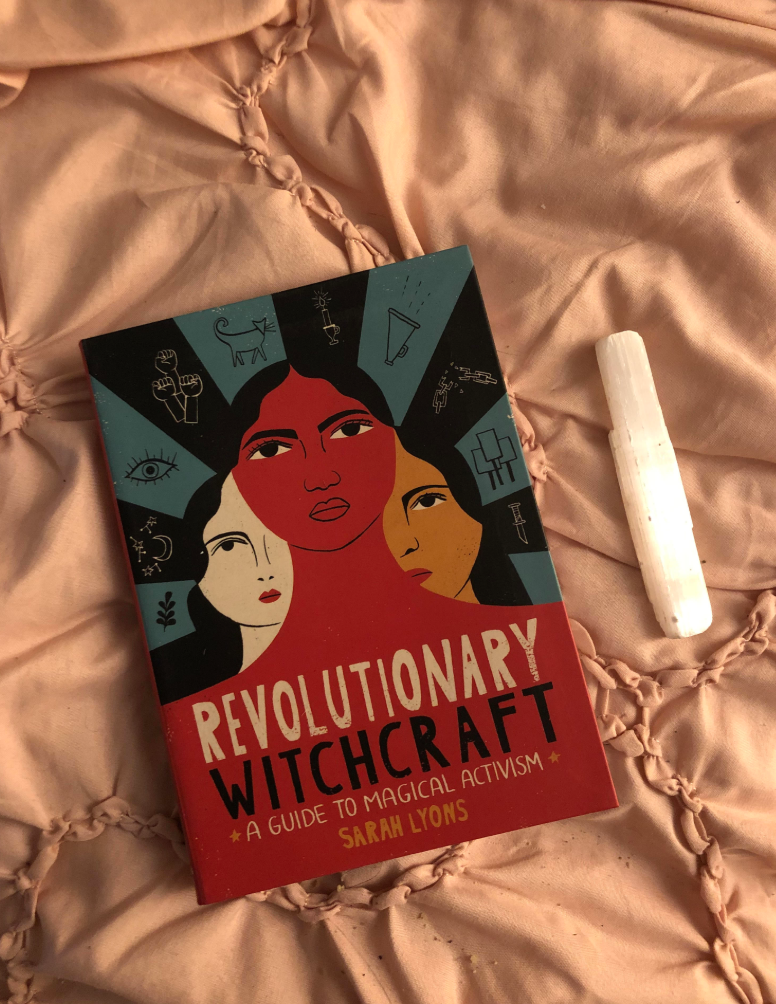
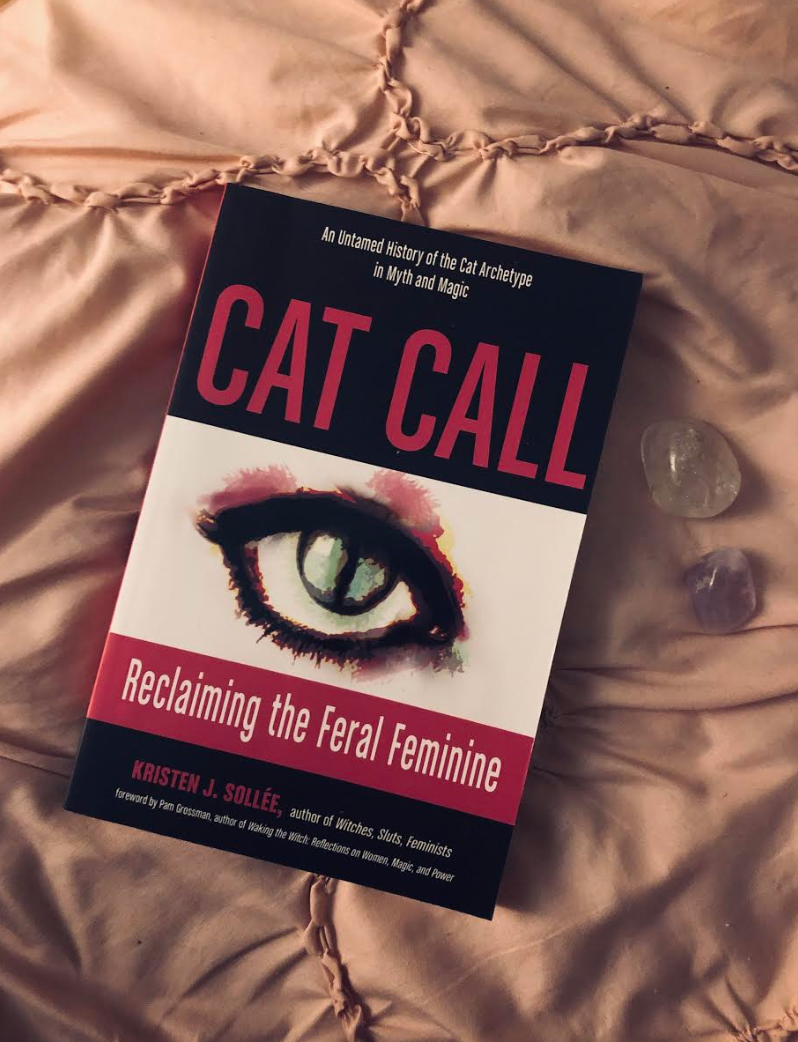

Mya Spalter’s Enchantments: A Modern Witch's Guide to Self-Possession 

View this post on Instagram

@grrrrlafraid asked me some truly excellent questions in this EXCLUSIVE interview. Check us out! Link in bio 🔗 #nerddreamscometrue #magic #witchesofinstagram ・・・ This spooky season has us counting down to Halloween 🎃. The first book on our #HalloweenCountdown reading list is Mya Spalter’s ENCHANTMENTS. . “Written with wisdom, humor, and compassion, Spalter’s book is the perfect companion for those seeking ‘meaning, peace, and self-possession.’” ✨🔮 . Check out the link in our bio for an exclusive interview with Mya! • • • • • #bookstagram #booklover #bookworm #bookrec #instabook #amreading #lovereading #halloween #spookyseason #enchantments #spells #nonfiction #witchy #octoberreads
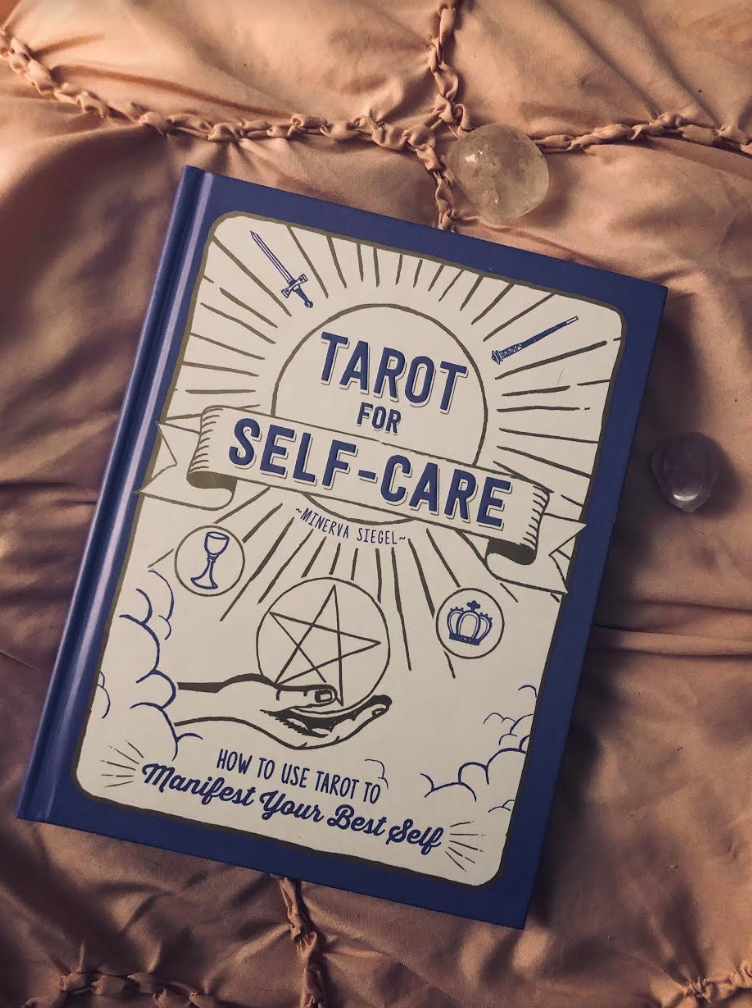
A post shared by Mya Spalter (@mya.spalter) on Oct 24, 2018 at 4:55pm PDT

I think what I loved the most about this gem of a book is that Mya’s voice is so welcoming, colorful, and lively. Of course, I’m a bit biased here. As a New Yorker, I’ve shopped at Enchantments, where Mya has worked for years selling occult goods. This book is a modern overview of magic, but it makes space for the reader to get involved. Not every book makes room for one’s personal magical style, but this book does. This book is full of magic, introductory and advanced knowledge, personality, poetry, and empowerment. Order here.


Kristen Sollée’s Cat Call: Reclaiming the Feral Feminine (An Untamed History of the Cat Archetype in Myth and Magic)

View this post on Instagram

Hey sluts, I’m back on my book-promoting bullshit! And by that I mean: MEET MY NEW BB! She delves into all the eldritch corners of history, from feline goddesses and early modern familiars to cats, kink & #kittenplay, posthuman ethics, Catwoman, queer cat ladies, sex workers and cats in art, wildcat prints in fashion, cat iconography in political action, ailuromancy...and all the ways the feline and the feminine intersect in myth, magic, and pop culture...Amazon pre-orders make a *huge* difference in the life of a book so consider clicking that link in my bio if you dug #witchesslutsfeminists or anything I ever wrote or maybe just feel like being a sweetheart to this April Fool. (This is not a joke tho, in case you’re wondering.) #catcallbook is officially out SEPTEMBER 1st on @weiserbooks!!! 📖✨ #bookslut #catsofinstagram #catbook #sexpositive #witchesofinstagram #meowmotherfucker🐱💋

A post shared by kristenkorvette (@kristenkorvette) on Apr 1, 2019 at 6:16am PDT

If you read Sollée’s Witches, Sluts, Feminists: Conjuring The Sex Positive, chances are you’re gearing up for her newest, Cat Call: Reclaiming the Feral Feminine (An Untamed History of the Cat Archetype in Myth and Magic). I sure am. Now, there’s a long-standing connection between the cat and the witch — don’t we all have a familiar of our own? — and it’s about time someone dedicates a closer look to the enduring power of the cat. I’m such a fan of everything Kristen does — and I know you will be too, if you haven’t read her important, inclusive, and thoughtful work. Preorder here.


Lisa Marie Basile is the author of Light Magic for Dark Times, Wordcraft Witchery (forthcoming, 2020) and a recent poetry collection, Nympholepsy. Her work encounters self-care, trauma recovery, ritualized living and the arts. More of her writing can be found in The New York Times, Refinery 29, The Fix, Catapult, Narratively, Good Housekeeping, Bustle, Sabat Magazine and more. She is the editor-in-chief of Luna Luna Magazine. Find her @lisamariebasile.


In Occult, Books Tags mya spalter, pam grossman, witch wave, enchantments, theresa reed, tarot coloring book, queer cosmos, colin bedell, amanda yates garcia, astrological grimoire, zodiac, Shewolfe and Beatrix Gravesguard, kristen sollée
Comment

Working Out As Magic & Ritual: A Witch's Comprehensive Guide

May 14, 2019

BY MAGDA KNIGHT

I never used to go to the gym. Now, somehow, I do. I’m happy to call myself a health-goth, but as I’ve eased into what the gym means to me, I’ve discovered great joy in seeing it as a blend of physical and deeply internal progression… and I’ve incorporated so much magical practice into my physical self-training, too. 

Physical activity (in whatever way your body can accomplish, given that we all have different mobilities and abilities and some of us manage a disability or chronic illness) is a celebration. When we carry out magical acts, don’t we do it to flourish — rather than to shrink and feel small? We can pour ritual into how we use our bodies, and we can use our bodies to add a deeply physical element to connect us with our spirit, too. 

Going to the gym can be a way for magic positivity and body positivity to dance together to a shared rhythm. I’m not going to the gym in order to watch numbers on a scale go down, but to acknowledge and love the body I’m in — and to work it in the same way that I work my spirit when I carry out any magical practice. 

In this piece I’m going to look at ways in which some elements of going to the gym might be incorporated into magical work. And I have to share a revelation that’s very dear and important to me – that I’m not alone in this thinking (nor am I an expert).

I’m on a journey, as are we all.

When I first mentioned I wanted to write something like this, a sort of love letter to physical exercise and magic, I was amazed and gratified to discover how many people had already made the connection. So many people related, and they shared their own wonderful perspectives on how they flow magic into their physical activity. So this piece is a celebration of all the transformational ways in which physical and magical work can be made as one, and a testament to all the wonderful people who are finding their own paths to make it work. Some of what’s written here may echo with you, but there is so much more to say and discover, and your own personal journey is so, so important. 

My personal journey is only important to me. As it should be. 

Dear heart, if you are reading this, do it your way. Your personal journey is everything.

Ritual attire

When does the ritual begin? When going to the gym (or using some household items while watching a YouTube fitness video, for example), you don’t need to set out your magical space. That’s already done for you. You’re perhaps more likely to start getting your magic on when you don your ritual attire. 

Clothes that make you feel comfortable in your body and like you don’t have to think about them? Check. 

Anything else you need to wear for ritual purposes?

No.

Unless you wish it.

Gym-wear can be viewed as ritual attire because it may be something you don’t wear on a regular basis. You wear it for the gym. If desired, you can select clothes that match or enhance your gym persona. I feel good about myself and my physical practice if I wear specific colours to the gym – black and red are the colours I’m drawn to. You may feel like light, bright colours inspire you more. Colours and designs are important if you think they are. If you don’t, they’re not. 

melody-jacob-647491-unsplash.jpg

At the moment, the gym is the one place where I feel safe wearing tight clothes. It’s almost as if I’m naked, fully in my own aspect, with nothing to hide. Regardless of my physical appearance and what normative society might think about that, in my tight clothes in the gym I feel empowered to walk tall. And this is just my own deeply personal viewpoint – the only truly important thing about your ritual gym attire is that it makes you feel right in yourself!

As you progress in your personal development, you may choose to add to your ritual kit. I’ve recently added sportswear gloves for lifting weights, to avoid blisters. When I put those gloves on, I’m ready to go. But I didn’t get them straight away. And I still don’t wear any special sportswear on my feet – just some average sneakers that do the job and feel fine to wear. Another practitioner might feel that specific gym footwear is essential. They may feel they need the swoosh emblem of Nike, winged goddess of victory, or they may feel that sportswear earbuds mean business and the use of sound helps them immerse themselves more deeply in their practice.

As I write this, it is cooooold outside. Winter weather. So, to negate the metaphorical demon of inertia sitting on my shoulder, I put on my gym attire every morning beneath my clothes. That way I’m already halfway there, and can go to the gym as an impulse, with even fewer barriers to stop me. The clothes still feel magically infused because I don’t think about them with other clothes on top. They only become ritual attire when I strip down to attend a session and they’re all I’m wearing.

Choosing and putting on your attire can make you feel like you’re energised and ready to begin the work. Your attire might be gym kit, or a swimsuit, or anything else. It’s charged with energy, and each time you engage in physical practice, it’s charged even further.

Pre-gym ritual preparation

One thing you’re very likely to bring to the gym is water. You may drink more than one bottle, but your first bottle can be charged before you leave the house. I love to cup the water, surround myself with golden light that builds with my breath, and pour energy and gratitude and intent into the water.

I give thanks to the water that will nourish me later, and each sweet sip will taste like nectar.

Entering and leaving the sacred space

In my gym, you have to walk through pods controlled by a key fob or access code if you wish to enter or leave. The door slides open, you enter the pod, then wait for the next door to slide open again to enter the centre proper. In my heart these doors represent the opening and closing of the ritual. The action that defines the transition between the mundane and sacred space. The signal that magical practice is about to take place, and the definitive moment when it ceases.

With the aid of these pods one enters the gym activated, and leaves the gym grounded.

Not all gyms have such obvious portals or gates for magical working. Entering and leaving through a simple door (or designing a space for working out in, say, your living room) can also open and close a sacred space, when done with intent. 

I don’t use changing rooms myself, but a practitioner can incorporate elements like changing or showering to begin and end their magical working in the gym.

Magic or mindfulness?

karly-santiago-450179-unsplash.jpg

Is going to the gym a sweetly internal and holistic act of mindfulness, or a powerful magical rite? Perhaps it comes down to your practice and preference. Mindfulness certainly plays a key part in attaining a magic state in the gym. There might be a moment where you’re flooded with reverence for your body as you explore the liminal space within or just outside your comfortable limits, feeling the effects of air and blood move around your system, considering whether to spread sensation around your body to relieve a tired area, or pour your focus into those parts of the body which are working the hardest. 

You may have a million thoughts, or none, yet physical activity helps a person connect to the moment and respect how mind, spirit and body are all part of a whole.

Ritual practice

There are numerous ways to explore the gym as a magical working, too. You can use the endeavour as an offering: “I will do this next rep, or this session, as a gift or sacrifice.” One friend, Genevieve, tucks a cloth into her bra as she trains, with the intention of using that cloth in a later specific working. I love this. As she incorporates running into her practice, while running she also internally repeats a mantra aligned with the working for which she will use her cloth. You can imbue paper with your effort in this way too, and use it later for statements of intention or other written magical work. If you don’t wear a bra, you can stuff cloth or paper into your sock or footwear.

If you’re in a wheelchair or doing seated work, you may wish to place personal items like paper, cloth or threads beneath you as you sit. Some might see this as somehow disrespectful of your work, since you’re placing it beneath your area of elimination. Me, I’m always minded how Cloacina, beloved Roman goddess of the sewers, was acknowledged as the goddess of transformation and purification.

If I’m wearing my stalwart gym gloves for a whole session, I can slip a sigil in there. It’s being activated, charged and released through doing the gym session. I can seed it with intention then forget about it, because I can’t feel it in my glove. And if it gets sweaty or smudged? Well, that’s wonderful! Its outer form is becoming increasingly distanced from the conscious effort of creating it, working its way even further into the subconscious. Physical activity is such an aid in getting that balance between intent and no-mind, helping the conscious and subconscious work together.

I’ve been known to paint sigils on my body where they won’t be seen and let the physical activity sweat them out. Charge and release.

I also use thin-coloured ribbons in many of my workings, so there are times when I might charge a length of ribbon by wearing it wrapped round my ankle out of sight, or in my hair if it’s tied up.

If you work with entities or the Tarot, you can use reps or time on a treadmill to focus on a cherished entity or card in your mind, considering it from new angles. I am personally of the feeling that gym work creates space for new thoughts to flow, along with the increase in oxygen and blood movement. New thoughts may arise during the work itself, or — if your mind doesn’t work that way — you can zone out with the repetition of movement and create space for creativity and new ideas to flow into afterwards.

Meditation, contemplation, visualization and path-working

semih-aydin-32382-unsplash.jpg

Meditation is a means to increase awareness of your body and still the monkey-mind, often using your breathing or your body. To me, any form of physical activity can get close to being a movement-based meditation. I’d be more likely to find a private gym bathroom cubicle on a non-busy day to meditate in a sitting position. I love using the rowing machine as a meditation tool because you’re nicely and safely strapped in with no chance of falling over, and no-one’s going to care if you close your eyes while you do it.

Pathworking is your chance to go on a journey through an inner landscape. I find the treadmills and rowing machines quite conducive to this. With a treadmill, you already have the forward movement, either walking or running. You have the chase, the hunt. You have yourself as a protagonist on an inner journey. It’s amazing what the mind can throw up when you seek to explore internal terrains while on the move.

Sometimes I use the treadmill and my timings on it (“for x seconds/minutes I’ll walk, or run, or rest” as an exploration of Tarot or the Tree of Life. Placing a focus on first one destination on the path, then the next. Allowing free reign to what comes up. Allowing the body to take charge, and the subconscious to seep into conscious workings.

Contemplation is ideal for the gym, as so much of the practice enables you to focus on specific images, qualities or deities. On the treadmill I might focus on the face of a cherished entity, holding it, loving it, exploring it, conversing with it, offering my thoughts to it, sometimes watching it shimmer with disco sparks in time to the tinny universal music (unless I’ve brought my own music along, which can take things to the next level. Diamanda Galas, anyone?)

Visualisation is my absolute favourite activity for the rowing machine. Maybe the ‘rowing’ nature of it leads my thoughts to water, but more than anything else, I love to strap in, set no timer, close my eyes and just row, row, row. Slipping into the stream of things. Heading with Charon down the river Styx, or swimming with mermaids in the Mariana trench, or letting the thoughts and images flow. Such release! And what comes to the fore can surprise me, or, be used at a later time in my creative work, or remind me that the divine is just around the corner, waiting for us to reach out and welcome it.

Building witch energy

Most importantly, I think physical training of any kind is such a concrete way of acknowledging and building intent, discipline and work. I see intent and discipline as being like muscles. To intend to go to the gym, then to indeed go to the gym, then to exert effort in line with your true will… each time you do this, you’re building witch energy. 

“I can do this. I will do this. I am doing this. I did this.” 

That’s so powerful, loves. 

And if we’re talking about results magic, you get rewarded for your effort at the end of every session. A delicious feeling in your body that’s one part endorphins, two parts sense of personal achievement. Immediate rewards from magical practice is such a boon when it comes to placing a focus on connecting with your will and your environment, mundane or otherwise.

Another friend, Katrin, puts it like this:

“Back when I had a weekly yoga class to attend, this was a big motivator for me - just proving to myself that I could get through this hour+ of forced concentration on nothing but my physical activity. I'd tell myself at the beginning of every session that I was going to be a Good Witch. That is, a witch who is reliable, keeps promises, does what she says she'll do. It did help my mindset in general - I'd kept my promise to do the exercise, so I'd proved to myself that I could be reliable in other ways too. And to me that's always been a huge part of what magic is about - the commitment and self-discipline and consistency.”

And what about grounding in a ritual? The minute you stop and your body thanks you is, to me, a moving and grounding experience. The drink of water, the quick towel-down. Taking that moment to connect my feet to the earth, the floor of the gym, the world. And then heading back through the gym portals to fully close the sacred space.

Ritual and symbolism

yayan-sopian-776565-unsplash.jpg

Perhaps everyone who goes to the gym has their own versions of symbolism and ritual, whether or not they choose to view it in these terms. As mentioned earlier, the doors to a gym can gain ritual significance. The opening and closing of a padlock on a gym locker can act as a charged seal. If one works with the magical meaning of numbers, one can incorporate this into personal practice, with reference to equipment settings and time spent on them. Or one can go round the equipment widdershins. When you go to the gym, you can seek and find your own symbolism, your own magical moments.

A friend I was discussing this with mentioned how Ramsey Dukes/Lionel Snell turned washing a car or washing dishes into a magical act by breaking it down into tiny magical moments (turn on the tap, sense how the water feels on your hands, consider how it feels when washing up liquid is added, and when the dishes are place in the sink).

To break one large activity down into tiny magical acts gives intent and full participation to each moment. It both activates the soul to the magic of the ritual, and shuts consciousness down so that the subconscious can get to work on the overall intent.

Your time at the gym is filled with tiny magical moments; time and activity broken down into small acts of meaning and beauty. “Just another ten seconds,” you say as you hold a plank, or work a treadmill. “Just four more reps.” It’s just you and the moment, and the pact you have made with yourself to do the work.

Grimoires and books of shadows are free to all

There are so many articles on the internet. So many how-to videos and shared conversations. Navigating the wealth of information and opinion to find something that helps rather than hinders your personal work can be a challenge, but it is there. 

As there is an increasing degree of diversity among people going to the gym, more diverse forms of support and encouragement are seeping onto the internet, and our online Akashic records are heaving with information from people offering the kind of support they wish they’d had access to themselves when they were first starting out. Workouts for trans women and femmes. Wheelchair exercises. Body positivity at the gym. The support available is so much more broad, deep and inclusive than it used to be.

Self-initiation and initiation by others.

What I most love about going to the gym is how personal it is. How true-to-thee-and-thee-alone your goals are. How internal your journey to growth is. There is, perhaps, a sense of initiation and levels of achievement through dedicated practice (and, dear one, you are obviously the only one who can define what ‘dedication’ will look like in your personal practice. No-one else has the right).

So much of gym practice relates in my mind to self-initiation. When you turn up, you do the work. There is no-one who can tell you otherwise. When you achieve personal goals, whether they are beautiful yet tiny in-the-moment goals like “I will do this for another 30 seconds” or greater goals that made you state your intent to go to the gym in the first place (like “I will go caving this year”), it is possible to view such achievements as levels of initiation.

You have your own internal gym compass. You know in your heart when you’re acting in such a way that it’s pointing north, and you know deep within when you’ve reached a destination on your journey.

There is also, potentially, the idea of being initiated by another. That’s where personal trainers come in. You’ll see a number of them in the gym, all initiates who are ready and willing to share their knowledge with the community. Their ritual insignia is the branded T-shirt. They have done the work. They are there for you.

I take the path of the solo practitioner, but I have a statement of intent (“I will get strong enough to go caving”) and to achieve that goal I may save up money so that I can pay for an initiate’s guidance on practice and personal development. Any path is valid if you feel like it is the right path for you.

A sacred space must be a safe space. Not an easy space, for there is work to be done. But a safe space.

When you conduct a magical working in a sacred space, it’s your time to channel your intention in a positive way. You’ve got no time or need or desire for negative thoughts pulling your spirit in directions it doesn’t want to go.

My thoughts on the gym as a safe sacred space are deeply subjective. They are limited by my personal experience as an abled cis white woman conducting physical activity in public. My only areas of potential concern are my lack of physical practice, and my age (I’m in my mid-forties, which has its own challenges, but woohoo to being past my Saturn Return). However, I want to take a moment to talk about other initiates in the gym, and my own highly subjective view of the gym as, yes, ultimately a safe space.

I know others will have deep and valid concerns about being judged by others in the gym. I cannot and must not disregard that. I can only share my own perception of doing my own personal practice surrounded by extremely regular and well-practised gym-goers. In my heart, these initiates - who are doing their own work and not there to mentor me - hold no threat. In fact, they come across as utterly neutral towards anyone but themselves (as it should be) and I also see it as a generous gift that they are carrying out their practice in public so that I can learn from it. If someone cannot afford a personal trainer, they can look to the practice of those who are more experienced, or those who can and do utilise a personal trainer, and learn from their techniques in things like floorwork or free weights. 

Again, it is so subjective. But when I walk into the gym, I feel such a powerful sense of neutrality. The space feels clean. A blank slate to write on. Initiates have no time to judge me – they’ve got their own business to attend to. They are doing their own work; all their intent is going into that. If anything, I tell myself that they already see me as a ‘winner’, regardless of my physical aspect and how I present myself, because I have shown up. And showing up is, I believe, something they understand and respect, having been through those early days of beginner self-initiation themselves. 

Of course, it shouldn’t matter if they respect me or not. I’m not there to win the respect of other gym-goers or anyone else. In going to the gym I’ve made a personal pact with myself, and I have my own business to get on with. And yet… if there is fear in going to a gym, it may be useful to explore ways to negate that fear, if it is stopping you from doing something you really want.

If I ask an initiate for brief advice (for I do not wish to unnecessarily interrupt their work), I see very little judgement in their eyes. If anything, they are informative and supportive, recognising I wish to learn and improve. One of us, I imagine them saying. One of us, one of us…

All around me, I am surrounded by people of all shapes and sizes and backgrounds and ages. We are people. We are humanity. To go to the gym may require privilege in certain areas including ability, time and money. But there are no definites. Someone who is struggling with poverty may be considered by society to be ‘too poor to afford the gym’, or ‘too poor to afford the added expense of a pet’, or ‘too poor to afford visits to the nail bar’. But every time society deems something a ‘luxury’, an actual breathing person – not a number or statistic, a person – may consider that ‘luxury’ to be essential to functioning on an everyday basis. They may equate gym or pet companions or getting their nails done with feeling truly like themselves in tough times. There’s no room for judgement in the gym. When I walk in, I feel like everyone is there. And like I have just as much right as anyone else to enter.  And we have one thing in common: we have a personal intent, and we are doing our best to realise it.

Coming back to my friend Genevieve again, she mentioned once reading an article about viewing the gym as a liminal space where you do not need to conduct physical practice. You might find it easier to view the gym as a space where you can shower, read, check your phone, meditate… and not feel obliged to do any physical activity at all. This wouldn’t suit my own practice as defining the gym as ‘a place to get physical’ helps to shape and build my ritual work.

However, someone else might breathe a sigh of relief in hearing that ‘going to the gym’ could be treated quite loosely if desired. Perhaps those who have chronic pain or find lengthy focus on one activity a challenge might love the idea that they can go to the gym and do what they want there. In a nice big gym, you’ll see people doing the most random things anyway. You won’t stand out. There are people already looking at their mobile phones, perhaps checking their fitness app or looking for health advice or video exercises. There are people chatting to their friends. There are people staring into space, either considering their practice or having a rest and not thinking anything at all, especially with the rise of interval training where you do a bit of activity then stop.

If you want to go to a gym and just chill, I don’t think anyone will stare at you. They’ll be too busy staring into themselves.

But: If you have had negative experiences in the gym, I am so sorry. It is vital that gyms must evolve as safe spaces, as awareness of body and identity positivity grows. It’s important.

Drawing out the toxicity of gym culture

I honestly didn’t know where best to discuss this. First or last? Wherever it’s placed, it matters.

If you’re planning to use the gym or any other physical activity for any self-healing, the last thing you need is toxicity. That poison needs to be addressed. To this day, medical practice has the wand of Caduceus as its symbol – two snakes coiled around the winged staff of Hermes. Without getting too deeply into snake mythology, so many of us think of the snake as a symbol of transformation and healing, its venom used as medical treatment. The snake can also be viewed as responsibility. The snake represents freedom and choice, and with that comes the responsibility to own your choices. Just as the medical profession owns its responsibility to take care of others.

When you work magic, you have such freedom. And you are making a choice. And you are taking responsibility for your practice.  And there need be no toxicity with any physical exercise you conduct on your own, whether it’s swimming or going to the gym or walking in the woods or streets.

My friend Ken has, in his own practice, recently been exploring how the Homeric tradition of competition was toxic at its core, as someone had to lose in order for another to be declared the winner.

When you exercise on your own, there is no-one to vanquish. You are already winning. But negative thoughts can creep in, and how can they best be dissipated? I don’t like to think of it as vanquishing negative thoughts – the very word ‘vanquish’ suggests there is a battle involved, and someone might lose. My subjective approach is to avoid self-talk of vanquishing or banishing negative thoughts around my practice – like, say, punishing myself mentally because I didn’t go to the gym when you said I would, or not going because I didn’t want to be ‘seen’ in a public space, then feeling ‘ashamed’ of ‘letting negative thoughts get the better of me’. 

Wow. Look at all this self-punishment. 

This talk of losing.

This pain. 

The kind that doesn’t make me stronger. 

When I think like this, I stop. Listen. I consider how I’m using language and doubt to retreat into the idea of treating exercise as punishment, not celebration. I’m putting myself in the frame of mind where the gym is a battle and I could lose.

Screen Shot 2019-05-14 at 2.14.47 PM.png

Naturally, ‘winning’ is by no means the only form of toxicity that can seep through gym culture. Sexism, sizeism, ableism, homophobia, transphobia, racism… it’s all a potential issue, and a valid concern. Yes, increased gym attendance means there’s far more diversity in gym-goers, which can help. But the way in which culture views physical exercises and is prone to judging people who do it is still far from ideal. 

Whatever you fear most… please know that you are not alone. There are others out there that feel the same way you do. However, there is a chance you are more likely to find people in the gym you can immediately relate to, who make you feel safe and part of a greater whole. And you can find information online written by people who share your experience, and can offer support that relates directly to your concerns and needs.

You are not alone. Together, people are working to draw the poison out.

It’s going to take time. And energy. And courage. And if you choose not to go to the gym, because you need to feel safe, that is important. You need to feel safe.

Perhaps there are other forms of physical practice you can explore. Give yourself the right to seek ways to freely and safely love your body and do the work.

Attaining a magical state of mind.

What a magical state means to you is such a personal thing. You may be seeking a release from the burdens of the world, or a connection with your body and all the elements of the beautiful creature that is you. You may be seeking a moment to charge and release and intention, or a conversation with the divine. You may be seeking a specific goal, that defined line between not being able to do a pull-up or half marathon, then one day being able to do one.

There is no set rule as to whether you have or haven’t achieved a magical state when you go to the gym. But you know what? When you feel it, you feel it. You might feel it for a moment, or it might carry you for days. All those magical moments add up. They remind you that your work and your intentions are important, and that you can work towards them, and that you can achieve a state where you and your intentions are one, not separate things held apart by doubt.

Ritual physical activity doesn’t need to occur in a gym.

Pool sessions, caressed by water. Chair-based exercises, acknowledging what your body needs to be safe as well as worked. Whatever your practice, you can choose to perceive and shape it as a magical act. The gym can be a sacred space, but it’s just one option for ritualising your physical activity. 

If you attend hula hoop classes, grasping that hoop is a magical act, as you feel the energy coursing through you – you’ve put some of your soul into that hoop, so that when you grasp it, it gives you soul energy right back. 

When you climb into the familiar saddle of your beloved bike, the one you love so much you may have named it, you know it’s your steed, your companion, helping you progress to where you want to go.

You have your body. You have your spirit. Your body and spirit have such great beauty. They are the very embodiment of raw and nuanced power.

Physical/magical work is an opportunity to acknowledge your body and seek to make it an extension of your spirit. It is a beautiful act, filled with love. And all acts of beauty hold magic at their core.

If you can move, you can explore a way to exercise. 

If you can feel your spirit, you can work magic.

If any part of this made you think “yes, this is useful to me”, I am so glad. If it didn’t, I have much to learn. We must never cease to learn, try, test, explore. 

You have your own, valuable, truth and perspective.

In the absolutely fucking immortal words of Wesley Snipes in Blade Trinity…

“Use it.”


@MagdaKnight is the Co-Founding Editor of Mookychick. Her YA fiction and other writings for adults, children and changelings have been published in anthologies and in 2000AD. She thinks you're great.

In Occult Tags witch, ritual, working out, health, wellness, magic
Comment
Image via Lisa Marie Basile

Image via Lisa Marie Basile

Letters to the Dead: Shadow Writing for Grief & Release

February 8, 2019


BY LISA MARIE BASILE

In the book, The Art of Death: Writing The Final Story, Edwidge Danticat writes with profound openness about her mother’s death. The book explores writing on death, in some effort to explain how to write it, and it get rights to the heart of the matter. Danticat mentions Mary Gordon’s memoir, Circling My Mother, in which Gordon states that writing was the only way that she could mourn her mother.

It was described as an active grief. That made sense to me; some grief is inert. Some grief is an engine. Sometimes actively participating in grief, I’ve learned, is one small way we can learn to escape its riptide.

In a way, when we mourn and when we write, we are weaving an indelible memory. We can do something with the grief.

Two years ago, I lost two people who were close to me. The grief was tidal, and I was at sea. Nights were underscored by anxiety around what I could have or should have done, obsession on mortality and meaning, and nostalgia like a drunken swirl. My days were hazy, weary, long. At work, I was distracted. At home, I was restless. I was caught between trying to live and trying to let go.

Grief if a sickness that grows without cure. It affects more than the body, more than the mind. It affects the essence of us, our starstuff, our souls, our hearts, our energy. It metastasizes over a lifetime, and with each new death it takes a new organ. I’m only 33. I’ve got a way to go. You may be further.

My aunt, just before she died, asked me over the phone what I’d be doing that night. Her voice was so small, so sick, so tired, but I could tell she was trying to sound enthusiastic. She was one of those rare beings who emanated an effortless and natural light; she was full of the beauty of this life, and you couldn’t help but feel it. I wish I spent more time with her when she was alive. I wish she knew that.

“I’m going out to listen to some music,” I told her. I was going to see a symphony. 

View this post on Instagram

🕯🖤 Although it may be “morbid” to spend your time in a cemetery—which, whatever!!— I think there’s something beautiful about spending your day in a place of silence, connection, and reflection, which is untouched by the masses and completely sacred, filled with relics and memories and ghosts of times gone bye and today. It is a place that allows you to think on what it means to be alive right now in this moment, lets you understand just how small you are in the vast story of everything. I have never been shy about graveyards or cemeteries, & I think it’s because I’ve always had 1 foot in and 1 foot out, splayed over the veil. I would like to do this more often, spend more time here. Living in New York City, I could spend my time at jam packed Central Park, or I could spend my time in a sprawling and powerful place — of many acres, and of many stories. 🖤🕯Thank you @historicgreenwood for creating an inclusive and friendly and beautiful environment #deathpositive

A post shared by Lisa Marie Basile (@lisamariebasile) on Nov 18, 2018 at 5:30pm PST

“Well, dance...for me, honey!” she said in her thick Virginia accent. My aunt loved to dance. She danced every week until she couldn’t. In that way, she worked her way into my DNA.

“I will, Aunt Ruthy, I promise,” I told her. I couldn’t bring myself to tell her it was a symphony; I wouldn’t be dancing. The point is, I would dance for her. And I would remember to dance forever.

After she died I swung between regret and anger. Why did she have to suffer? Why do bodies simply expire after living and giving birth and making art and making love? How could that be the end for each of us? I regretted not dancing more. I regretted not calling her more before she passed.

And so when she died, I took to the journal to write a letter. Journaling was one of the only things that made sense; I was able to say everything out loud, rather than keep it boxed up, throat-less. Without shame, and without censorship. 

When I finished the letter, I placed it in a wooden bowl and burned it. You may want to burn it, bury it, or store it in a box. There is magic in transforming your memories into words and then your words into foreverness by casting it out. No matter your religion or belief, you’ll be pulling the wound out of your body and onto paper. 

The very act of embracing your feelings around death, summoning the memories of your dead, and inviting them into your space through the page is powerful'; it is a conjuring on many levels. And it is a great way to embrace the death positive philosophy, which encourages people to speak openly about death, dying, and corpses. While no philosophy can remove the eternal sting of death’s pain, this philosophy helps to lessen the shame, fear, confusion, and stigma attached to death and grief.

The Ritual: Writing Letters to Your Dead

Choose who you’ll write to, and what you want to say. Your letter can be written on paper or electronically. You may speak it into a audio recorder, type it out, or write it by hand. What feels right?

Do you have a photograph of them? If so, place it before you. Light a candle and look into the flame. Think of this flame as illuminating a way for them to come home, to you, to your room, to your side.

Sit here for a bit. 

What was it about them that stood out to you? What was it you never said? What do you wish you knew about them? What was it you wish you did with them? What are their quirks? What fabric did they love? What perfume? How did they look when they entered the room? What did they sing to themselves? What’s your loveliest memory of them? If they did anything to inspire you, what was it? What did they love? Children? Plants? Books? Art? Travel? Poetry? What mark did they leave when they left this earth? 

Some grief is extra complex. Perhaps the person who passed away was someone who hurt you but whom you still mourn. If so, acknowledge this. What did they do to hurt you? What have they done that has never been resolved? How has it hurt you? Can you forgive them? Can you work on forgiveness? There is no shame in not reaching forgiveness; this is a personal act. 

Open the letter, “Dear [NAME],” and then go as naturally as you’d like. You can remain in the positive, or tell them everything you miss about them. You may want to tell them the hard truth; you may to let the rage out of its tiny, silenced box. Or, maybe you want to tell them it’s okay to go. Perhaps they felt they had to stay? Perhaps they suffered? Maybe you simply want to know what it’s like to be dead. The letter can be structured or wild. This is up to you.

The important thing is that you’re honest and that you say everything you want to say, no holds barred. 

When you are finished, you may want to put the letter away, or let it go. You may want to leave it near their grave. You may want to burn it. Or, you may want to keep it. 

You may do this whenever you feel the urge rising up. Maybe you make it a point to do write to them with each new moon, or on their birthday.

Whatever feels right to you is what is right for you.

An ending note: If you are afraid of the darkness (this is shadow work) involved here, keep your environment comfortable and comforting. Have objects of happiness and light around you. Make sure you have a support system on speed dial. Be sure to take care of yourself afterward. Part of diving into the abyss is knowing your way out.


View this post on Instagram

💕 This glorious photo was taken by @slavwitch, and it’s accompanied by a detailing of why objects—the things we choose to surround ourselves with— can be so powerful. As @slavwitch says, it’s not about *having stuff* but about painting our lives with the energy and power that the objects hold. Really lovely to see @lightmagic_darktimes as part of someone’s magical space. Thank you! 💕

A post shared by Lisa Marie Basile (@lisamariebasile) on Jan 10, 2019 at 12:24pm PST

Lisa Marie Basile is the founding creative director of Luna Luna Magazine—a digital diary of literature, magical living and idea. She is the author of "Light Magic for Dark Times," a modern collection of inspired rituals and daily practices. She's also the author of a few poetry collections, including 2018's "Nympholepsy." Her work encounters the intersection of ritual, wellness, chronic illness, overcoming trauma, and creativity, and she has written for The New York Times, Narratively, Sabat Magazine, Healthline, The Establishment, Refinery 29, Bust, Hello Giggles, and more. Her work can be seen in Best Small Fictions, Best American Experimental Writing, and several other anthologies. Lisa Marie earned a Masters degree in Writing from The New School and studied literature and psychology as an undergraduate at Pace University.

In Confession, Occult Tags ritual, grief, letter writing, writing, Confessions
1 Comment

How to Add Magic to Your Every Day Wellness Routine

February 5, 2019

Stephanie Valente lives in Brooklyn, NY. She has published Hotel Ghost (Bottlecap Press, 2015) and waiting for the end of the world (Bottlecap Press, 2017) and has work included in Susan, TL;DR, and Cosmonauts Avenue. Sometimes, she feels human. http://stephanievalente.com

Read More
In Occult Tags fitness, rituals
Comment
Photo by Estée Janssens

Ritual: Writing Letters To Your Self — On Anais Nin, Journaling, and Healing

January 31, 2019

BY LISA MARIE BASILE

During my mid-20s, I first delved deeply into the work of the writer Anaïs Nin. Before then, I’d read bits and pieces of her work—always knowing that I would, when ready, return to it. As it is with most of the great works of our lives, she found me when the time was right, when I could incubate her emotion and resuscitate myself through her abundance. I was always too guarded, too busy, too scattered to sit down and let the velvety intensity of her work move through me.

This is because Nin’s work is audaciously honest. It is at once shadowy and nude. Erotic. Wild. Feverishly introspective. Showy. Always vulnerable.

You may have read her diaries or her letters to Henry Miller. Within these works lives a whole entire world of expression and bravery (and ego and mania and trauma and desire and more). In the 1940s, she was writing explicitly about topics such as sexual desire and abortion—words that were kept silent, for they were unthinkable, punishable. She was widely mocked, often deplored by critics for both her personal life (she—gasp!—had two husbands) and her literary works—and yet she has earned her place as the literary patron saint we adore now. (She would be so pleased). Over time (and largely posthumously), as time is wont to do, she has become both a feminist icon and a literary muse. She’s certainly my literary witch archetype.

Anais Nin writes to Henry Miller in A Literate Passion: Letters of Anaïs Nin Henry Miller, 1932-1953,

“It is true that I create over and over again the same difficulties for myself in order to struggle over and over again to master them [but] to continually struggle against the same problem and to continually fail to dominate it brings a feeling of frustration and a kind of paralysis. What is necessary to life, to livingness, is to move on, in other words to move from one kind of problem to another.”


Reading her works, I have always wondered: How did writing her feelings and desires and fears in letter or diary form change her relationship to those feelings? Without writing all of this down, would she have realized her tendencies toward creating difficulties for herself?

View this post on Instagram

🖤 I talked with the wonderful @ragqueenperiodical + @kaileytedesco about how light and darkness is the throughline in all of my work, including my forthcoming book and my poetry and other work: “The grimoire is concerned with the same things as my work as a poet and essayist: death, forgiveness, the self as something to be worshipped, sex, creating beauty and honoring the shadow.” LINK IN BIO.🖤 #LightMagicDarkTimes

A post shared by Lisa Marie Basile (@lisamariebasile) on May 19, 2018 at 10:20am PDT

Is there a certain quality to letter writing or diary keeping that inspires the confessional? I believe so. Our words are our magic. Once the words are thought, intent exists.

Once the words are spoken, they become an incantation. And once the words are written down, the spell is cast.

The truth is staring back at you—asking you to make a change or bury it or let it go. Whatever it is, the garden has begun to grow, and it must be tended to in some way or other.

That’s the silent promise you make to the page and to yourself; when you write, your mind floods and you become a vessel for the truth (or whatever version of the truth needs to exist at that moment).

The mind is the translator, the page is the vehicle, and something more intangible — something divine, the self everlasting, perhaps the soul — is the ultimate recipient. That something changes you and upends your reality.

When we write specifically for the page, or for one reader, we wield a massive responsibility to uphold a deep truth.

We stop writing for success or Instagram likes or money. We start to write for ourselves, or for the intimacy between ourselves and the reader. This is the case even if the letter will never be delivered (that’s not to say Nin wasn’t ecstatic when her personal journals became a best seller de rigeuer).

Only after reading your own words do you discover patterns and themes that perhaps you would have missed in your everyday life. In letter writing, there is a vulnerability that takes place necessarily; why write a letter if you won’t show up for it?

Why express anything at all—in such a delicate, deliberate, and painstaking manner? After all, a letter is not a passing thought or a forgettable text message; it’s a statement, a declaration, a confession. It’s a storm.

Ritualizing your words

For this ritual and writing prompt, you will be examining the inherent power of letter writing—as a tool for reconciliation, healing, closure, acceptance, and honor. But you can also write letters to express rage, jealousy, and fear.

It can feel as though we’ve lived many lifetimes. To prep, think on your childhood, your teen years, and who you are now. What was lost? What remains? Who we are now has changed so much from who we were. At the same time, there are things that having a lasting impact, good and bad. Ghosts linger. Sometimes that ghost is you.

Our traumas, our growth, our pain, our losses, our loves, our whimsies, our accomplishments—these are the things we’ll be writing to in this practice.

I have written letters to the girl I was at 15. She was so lost, so sad. She moved from homeless shelter to shelter, to a foster home and then another — always looking for an anchor. Within her heart lived thousand hopes and goals. She was excited to write, to study, to live—and yet always felt held back by a need to survive her trauma. She couldn’t simply be, as she was struggling. In her, a darkness grew.

That darkness was her fuel, but it also hurt her. She had self-esteem issues, felt alone often, felt unworthy. In my letters to her, I tell her what she’s accomplished—what her steadfast determination did for her. I tell her what her pain gave her—art! Empathy! A softness. An ability to adapt. A leaning-into the malleable, the liminal. Through her pain she found magic and ritual and poetry, and all of this carved a life she’d love today.

Writing these letters to her allowed me to heal her, and as a ripple in space-time, I largely healed myself today. I am not perfect, but I am better.

The Ritual: writing a letter to your younger self

View this post on Instagram

🌻I included a few peeks inside my book Light Magic for Dark Times over at @lunalunamag - lunalunamagazine.com. It’s full of rituals, practices and writing exercises and it’s all about resilience, self-care, trauma recovery, accountability and magic. 🌻

A post shared by Lisa Marie Basile (@lisamariebasile) on Jan 29, 2019 at 1:22pm PST

Light a candle. Look into the flame and take note of what thoughts arise when you think upon your younger self.

As you look at the flame, conjure the person you were. Quietly welcome them into the room; sit with them. What are they wearing? What are they feeling?

Choose a memory or a era in your life and write a letter to yourself. What’s the goal? Is it to remind your younger self of the love they have but never felt? Is it to congratulate them on their resilience? Is it to say that their weakness and struggles were beautiful? Perhaps you will pull a tarot card to find illumination or specificity in this process. Perhaps you will think on how your birth chart influenced the person you were.

Life goes by so quickly. We are so busy existing in the middle of it that we rarely look back and study what happened:

What went right?

What went wrong?

What just was?

What would you tell your younger self?

What does the room look like?

What were you wearing?

What do you want them to know?

What do you want them to let go of?

Write all of this down.

Honor it.

Keep it in a place where you can let it go, or return to it.

If you want to work more with journaling magic, I include lots of it in my book, Light Magic for Dark Times. & follow me on Instagram for more prompts and literary goodness.


Lisa Marie Basile is the founding creative director of Luna Luna Magazine—a digital diary of literature, magical living and idea. She is the author of "Light Magic for Dark Times," a modern collection of inspired rituals and daily practices. She's also the author of a few poetry collections, including 2018's "Nympholepsy." Her work encounters the intersection of ritual, wellness, chronic illness, overcoming trauma, and creativity, and she has written for The New York Times, Narratively, Sabat Magazine, Healthline, The Establishment, Refinery 29, Bust, Hello Giggles, and more. Her work can be seen in Best Small Fictions, Best American Experimental Writing, and several other anthologies. Lisa Marie earned a Masters degree in Writing from The New School and studied literature and psychology as an undergraduate at Pace University.

In Occult, Books Tags Anais Nin, Journaling, Healing, Writing, Diary, Henry Miller, Ritual
1 Comment

How Rituals Can Help You Gain Confidence

January 17, 2019

BY STEPHANIE VALENTE

Rituals are especially important in our lives. Rituals are a marvelous tool for the self, for spell work, and best of all, for boosting confidence. Whether you know it or not, you can increase your self-love and confidence by making a few simple teaks and instilling some daily rituals to ground yourself and your magical life.

Here at 4 tips on gaining confidence with rituals. Don't just get satisfied, get satiated.

1. Establish a sacred morning routine. Every morning, you should have a practice that builds magic and confidence for you. This doesn't mean you have to get sky clad, light a bunch of candles, and embark on a multi-step, complicated process. Perhaps you pull a tarot card while making your tea, write a few morning pages, recite an affirmation, scream to death metal for a few moments, perform a thank-you spell, or meditate for five minutes. 

Whatever morning rituals you embark on, do what works for you. There are no rules. What's best of all is that you test out a few rituals, keep what works, and shed what doesn't.

2. Do ritual self-care in spare minutes or moments. You should treat yourself to self-care several times a day. My favorite rituals are small and sacred moments, like taking a ten minute walk in my neighborhood, cleaning my skin and applying moisturizer every morning, playing with my dog before bedtime, reading one short story or poem a day, stretching at your lunch break for five minutes. 

In fact, I believe that the smaller or more actionable the ritual, the easier it is to do every day or more than once a day, like say, checking in with two friends every day for a 10 minute call each. If you can do a ritual in two minutes or less, why not make it a part of your everyday routine?

Agent Cooper from Twin Peaks said it best: "I'm going to let you in on a little secret. Every day, once a day, give yourself a present. Don't plan it, don't wait for it, just let it happen. It could be a new shirt at the men's store, a catnap in your office chair or two cups of good hot black coffee."

Just let it happen.

3. Be honest with yourself. Keep a journal, log your rituals even, and of course, set boundaries. Rituals should be natural, fun, and inviting. Dropping your mail in the post office box can be a ritual, buying a newspaper before your work commute is a ritual, baking cookies every Tuesday night is a ritual, chatting with your elderly neighbor every night when you get home from work is ritual, volunteering your time once a week is a ritual. 

If a ritual feels stressful or obligatory, stop. Of course, we have to pay bills, go to work, talk to coworkers and relatives. But if something is stressful, look at the root. Is it how the event or task is performed? Adding a ritual to your boundaries or creating boundaries with rituals will make you feel more whole and confident.

4. Carry a special object or wear an essential oil that has meaning just for you. For me, I carry a small sliver of rose quartz in my bag to remind myself that I am loved and have love for the world and its inhabitants around me. The more love I feel and see, the more I give, and the more I look for. From this ritual, I see less negativity in me and the world around me.

I also carry a teeny tiny medallion of Mary in my coin purse because I felt so strongly about the object when I first saw it. I'm not sure what else it means yet, because it's a ritual I've slowly started working on since I found the object two months ago.

Piggybacking on this thinking, I often wear essential oils on my neck, clavicle, and wrists. The act of dabbing on the scented oil feels so glamorous to me (like a classic film!), but the scents also make me feel powerful. One of my personal favorite oils is Witch Queen from Catland. You can recreate this ritual with an oil you already have, a perfume you adore, or you can make your own.


Stephanie Valente lives in Brooklyn, NY. She is a Young Adult novelist, short fiction writer, poet, editor, content & social media strategist. In short, she wears many hats. Especially if they have feathers. Some of her writing has appeared in Bust Magazine, Electric Cereal, Prick of the Spindle, The 22 Magazine, Danse Macabre, Uphook Press, Literary Orphans, Nano Fiction, and more. She has provided content strategy, copy, blogging, editing, & social media for per’fekt cosmetics, Anna Sui, Agent Provocateur, Patricia Field, Hue, Montagne Jeunesse, Bust Magazine, Kensie, Web100, Oasap, Quiz, Popsugar, among others.


In Occult Tags rituals, magic
Comment
Photo Credit: YouTube

Photo Credit: YouTube

Hearthcraft & the Magic of Everyday Objects: Reading Arin Murphy-Hiscock's 'House Witch'

January 14, 2019

BY TRISTA EDWARDS

I was immediately hooked on Arin Murphy-Hiscock’s The House Witch: Your Complete Guide to Creating a Magical Space with Rituals and Spells for Hearth and Home in the first chapter when the author writes, “the home itself is an essential element within a nourishing, vibrant, ongoing spiritual practice.” 

She continues, “Honoring the hearth means honoring your origins, where you come from each day, and where you return each night.”

I read this one morning right after sitting down at my dining room table having just lit a candle, putting on a vinyl record, and ritualistically preparing my morning coffee. I took a long slurp from my cup and smiled. Oh, this is the book I’ve been hungry for.

Photo credit: Author

Photo credit: Author

I was already familiar with term and practice of hearthcraft (Chances are, even if you are not familiar, you already practice it to some degree or another.) but I had yet to find a book that spoke on it so directly. 

Hearthcraft, as Murphy-Hiscock explains it, is the “belief that the home is a place of beauty, power, and protection, a place where people are nurtured and nourished on a spiritual basis as well as a physical and emotional basis.” 

 It roots itself in practicality and, as the author stresses, with little ritualistic guidelines or necessary formality. Murphy-Hiscock asserts that hearthcraft functions on one very basic truth—

 Living your life is a spiritual act. 

How is this different, you may ask, from keeping a warm, nurturing house filled with loved ones or pets or material objects that provide you with joy, comfort, or relaxation? How is this different from opening up your home to host friends and family as a safe place to gather in times of celebration or even grief? 

 The answer in that lies, as so many things do, in performing domestic acts with mindfulness and intention. 

 BUT! 

Keep in mind, this is with daily tasks, rituals, or routines you are already performing. No need to feel overwhelmed with the call to add another activity or tool to your spiritual arsenal if you don’t want to. 

 I mean, I love a good crystal grid, tarot deck, and DIY potion as much as the next magickal seeker. I am not knocking these things. I get giddy at the sight of a new, beautifully illustrated deck and my home is chockfull of magickal crystals, stones, witches’ bottles, incense burning cauldrons, botanical curio, and the like. 

RELATED: Interview with Arin Murphy-Hiscock, Author of ‘Protection Spells’

 All I’m saying is I get it. Sometimes we can even get overwhelmed by the things we love. Sometimes I just want to scream—I can’t do another thing! Please, please, please don’t make me add another thing!—when a well-meaning friend suggests yoga for my anxiety or performing paced breathing exercises while taking a cold shower. 

 With hearthcraft, you are already doing it. 

 Now you just will think of it with more purposefully intention and mindfulness. Murphy-Hiscock’s book helps “recognize those things and lend awareness to them so that you can appreciate them all the more.” 

 The concept of hearthcraft always reminds me of the painting “The Light of Coincidences” by the surrealist artist René Magritte. In the painting, a single candle lit in a tall candlestick rests atop a table casting light on the sculpture of a nude, female torso. 

Photo Credit: Author

Photo Credit: Author

The candle throws shadows on the torso, highlighting its depth and dimensions which makes the torso appear to be a three-dimensional object displayed in a box. The sculpture, however, is a framed painting itself. The eye is tricked into seeing both the torso as flat painting and three-dimensional sculpture. The painting as a whole, represents everyday objects but undermines our commonly held perceptions of the everyday world—allowing us to see in a myriad of ways. 

 Hearthcraft is like that candle that lends awareness, new perspective, and appreciation to the everyday world, particularly the domestic sphere. 

 For me, I started becoming more aware of how I “wake up” my house every morning. I take the same path through the house every morning—From bed to the back door to let my two pups out. While they are outside, I circle around the house and open up all the blinds to let in the morning light. I refill the water in their dog bowls and scoop out their kibble. By this time, they both let out two sharp little barks at the backdoor saying they are ready to come back in. I set their bowls down on my way back to open the door. 

 Next, I begin the process of making coffee. I pull out a small electronic scale. Place a ceramic bowl on top and measure out some whole coffee beans. I toss them in the automated grinder and then get to work on filling the gooseneck kettle with water, lighting the stove, and placing the kettle, just so, on the burner. 

 While the water heats up, I grab my Chemex pot and a filter from the cupboard. I crease the filter just so and place it in the mouth of the pot. When the kettle shrieks that it is ready, I pour, with a swirling motion, a small amount of water over the paper filter, saturating it, and letting it trickle down into the belly of the pot to pre-heat the glass. I then pour this water into my chosen coffee mug to pre-heat that vessel as well.
I add my coffee grounds to the paper filter and the perform a series of small, measured circular pours, stopping periodically to watch the water and coffee perform the magic of science with their gaseous blooming of bubbles. When the brew is complete, I toss the hot water that was warming up my coffee mug, take cup and pot to the table, sit down, open up my computer, and light a candle to keep on the table beside me while I work. I pinch the corners of the filter together, lift it up from the mouth of the pot, and pour into my cup. 

Discover & share this Coffee GIF with everyone you know. GIPHY is how you search, share, discover, and create GIFs.

Yes, I understand that I may have a more extensive coffee routine than some, but I never fully thought of this whole process as a ceremony unto itself until I began to more fully involve hearthcraft into my life. 

 I would often sweep through this coffee making routine without much thought. Sometimes with the TV on in the background, sometimes mindlessly scrolling through my phone while sloppily pouring water or impatiently pulling it from the burner too soon. I would make a mess with the grounds, hurriedly mis-measuring the beans resulting in either too weak or too bitter of a brew. I found mornings where I skipped even a lackluster process of brewing coffee, I would miss this allotted time that was specifically for this purpose. 

 This ritual was intuitive ceremony, one that I put more and more conscious and mindful practice in. 

House Witch stresses that everyday things can be magical. 

RELATED: A Simple Spell to Summon and Protect Your Personal Power

Making coffee. Arranging your tea caddy. Wiping down your kitchen counters. Washing the dishes. Organizing your desk. As Murphy-Hiscock says, “It isn’t the addition of something that is necessary, so much as a recognition and acknowledgement of something that is already there.”

 How do you recognize the magic? 

The author breaks it down into—

 1.    Live in the moment. 

2.    Be aware of your intent.

3.    Direct your energy properly. 

4.    Focus on an action.  

Simplicity. Work with what you have. Build awareness and appreciation into the everyday actions of how you use your house and the everyday objects that fill it. 

 For more, The House Witch goes in depth to detail the kitchen as a scared space, magic in everyday objects, using a cauldron in hearthcraft, cleansing rituals, preparing food with awareness (accompanied with magical recipes), various activities in which you spend timegetting to know your physical house through traveling from room to room and journaling your emotional observations in each space. 

You can find more on the author and purchase The House Witch: Your Complete Guide to Creating a Magical Space with Rituals and Spells for Hearth and Home HERE.


Trista Edwards is an associate editor at Luna Luna Magazine. Her first full-length poetry collection, Spectral Evidence, is forthcoming from April Gloaming Press in 2019. She is also the curator and editor of the anthology, Till The Tide: An Anthology of Mermaid Poetry (Sundress Publications, 2015). You can read her poems at 32 Poems, Quail Bell Magazine, Moonchild Magazine, The Adroit Journal, The Boiler, Queen Mob's Tea House, Bad Pony, Occulum, and more. She creates magickal candles at her company, Marvel + Moon.


In Books Tags Hearthcraft, Witchcraft, BOOKS, Arin Murphy-Hiscock, Trista Edwards
1 Comment
Featured
‘in the glitter-open black' — poetry by Fox Henry Frazier
'poet as tarantula,  poem as waste' — poetry by  Ewen Glass
'poet as tarantula, poem as waste' — poetry by Ewen Glass
'Hours rot away in regalia' — poetry by Stephanie Chang
'down down down the hall of mirrors' — poetry by Ronnie K. Stephens
'Grew appendages, clawed towards light' — poetry by Lucie Brooks
'do not be afraid' — poetry by Maia Decker
'The darkened bedroom' — poetry by Jessica Purdy
'I am the body that I am under' — poetry by Jennifer MacBain-Stephens
instagram

COPYRIGHT LUNA LUNA MAGAZINE 2025