












• Home
  • indulge
  • new poetry
    • About Luna Luna
    • resources
    • search
  • editor
  • dark hour
  • submit
Menu

luna luna magazine

  • Home
  • indulge
  • new poetry
  • About
    • About Luna Luna
    • resources
    • search
  • editor
  • dark hour
  • submit
shadow
A Writing Spell: Honoring Your Many Selves
Mar 1, 2021
A Writing Spell: Honoring Your Many Selves
Mar 1, 2021
Mar 1, 2021
An 11-Line Poetry Spell For Healing
Mar 1, 2021
An 11-Line Poetry Spell For Healing
Mar 1, 2021
Mar 1, 2021
How To Write Powerful Poetry Spells
Feb 28, 2021
How To Write Powerful Poetry Spells
Feb 28, 2021
Feb 28, 2021
Here Is Your Scorpio Homework This Season
Oct 25, 2020
Here Is Your Scorpio Homework This Season
Oct 25, 2020
Oct 25, 2020
3 Transformative Life Lessons Scorpio Teaches Us
Oct 25, 2020
3 Transformative Life Lessons Scorpio Teaches Us
Oct 25, 2020
Oct 25, 2020
Restorative Grief: Letters To The Dead
Oct 23, 2020
Restorative Grief: Letters To The Dead
Oct 23, 2020
Oct 23, 2020
A Santa Muerte Rebirth Ritual + A Tarot Writing Practice
Oct 6, 2020
A Santa Muerte Rebirth Ritual + A Tarot Writing Practice
Oct 6, 2020
Oct 6, 2020
Witches, Here Are The New Books You Need
Nov 14, 2019
Witches, Here Are The New Books You Need
Nov 14, 2019
Nov 14, 2019
3 Dream Magic Rituals And Practices
Nov 12, 2019
3 Dream Magic Rituals And Practices
Nov 12, 2019
Nov 12, 2019
How To Use Tarot Cards for Self-Care
Nov 11, 2019
How To Use Tarot Cards for Self-Care
Nov 11, 2019
Nov 11, 2019
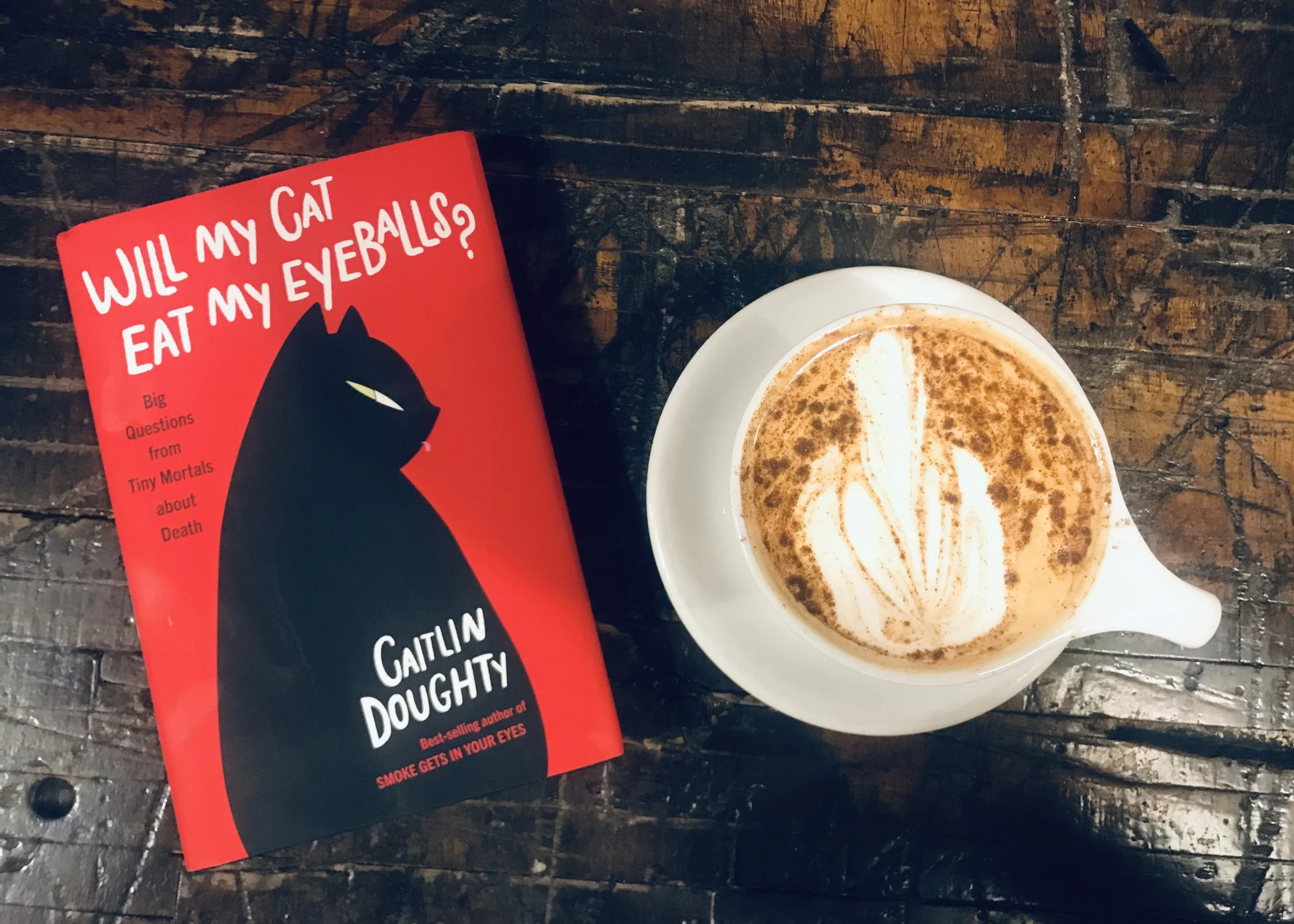
A Review of Caitlin Doughty's 'Will My Cat Eat My Eyeballs?'
Oct 25, 2019
A Review of Caitlin Doughty's 'Will My Cat Eat My Eyeballs?'
Oct 25, 2019
Oct 25, 2019
Nimue, The Deity, Came To Me In A Dream
Sep 17, 2019
Nimue, The Deity, Came To Me In A Dream
Sep 17, 2019
Sep 17, 2019
Astrological Shadow Work: Healing Writing Prompts
Sep 9, 2019
Astrological Shadow Work: Healing Writing Prompts
Sep 9, 2019
Sep 9, 2019
The Witches of Bushwick:  On Cult Party, Connection, and Magic
Jul 23, 2019
The Witches of Bushwick: On Cult Party, Connection, and Magic
Jul 23, 2019
Jul 23, 2019
7 Magical & Inclusive New Books Witches Must Read
May 15, 2019
7 Magical & Inclusive New Books Witches Must Read
May 15, 2019
May 15, 2019
Working Out As Magic & Ritual: A Witch's Comprehensive Guide
May 14, 2019
Working Out As Magic & Ritual: A Witch's Comprehensive Guide
May 14, 2019
May 14, 2019
Letters to the Dead: Shadow Writing for Grief & Release
Feb 8, 2019
Letters to the Dead: Shadow Writing for Grief & Release
Feb 8, 2019
Feb 8, 2019
How to Add Magic to Your Every Day Wellness Routine
Feb 5, 2019
How to Add Magic to Your Every Day Wellness Routine
Feb 5, 2019
Feb 5, 2019
Ritual: Writing Letters To Your Self — On Anais Nin, Journaling, and Healing
Jan 31, 2019
Ritual: Writing Letters To Your Self — On Anais Nin, Journaling, and Healing
Jan 31, 2019
Jan 31, 2019
How Rituals Can Help You Gain Confidence
Jan 17, 2019
How Rituals Can Help You Gain Confidence
Jan 17, 2019
Jan 17, 2019
Hearthcraft & the Magic of Everyday Objects: Reading Arin Murphy-Hiscock's 'House Witch'
Jan 14, 2019
Hearthcraft & the Magic of Everyday Objects: Reading Arin Murphy-Hiscock's 'House Witch'
Jan 14, 2019
Jan 14, 2019
True to The Earth: Cooper Wilhelm Interviews Kadmus
Nov 26, 2018
True to The Earth: Cooper Wilhelm Interviews Kadmus
Nov 26, 2018
Nov 26, 2018
Between The Veil: Letter from the Editor
Oct 31, 2018
Between The Veil: Letter from the Editor
Oct 31, 2018
Oct 31, 2018
Shadow Work with Light Magic for Dark Times
Oct 31, 2018
Shadow Work with Light Magic for Dark Times
Oct 31, 2018
Oct 31, 2018
2 Poems by Stephanie Valente
Oct 31, 2018
2 Poems by Stephanie Valente
Oct 31, 2018
Oct 31, 2018
A Poem in Photographs by Kailey Tedesco
Oct 31, 2018
A Poem in Photographs by Kailey Tedesco
Oct 31, 2018
Oct 31, 2018
Photography by Alice Teeple
Oct 31, 2018
Photography by Alice Teeple
Oct 31, 2018
Oct 31, 2018
A Simple Spell to Summon and Protect Your Personal Power
Oct 31, 2018
A Simple Spell to Summon and Protect Your Personal Power
Oct 31, 2018
Oct 31, 2018
November and Her Lovelier Sister
Oct 31, 2018
November and Her Lovelier Sister
Oct 31, 2018
Oct 31, 2018
A Spooky Story by Lydia A. Cyrus
Oct 31, 2018
A Spooky Story by Lydia A. Cyrus
Oct 31, 2018
Oct 31, 2018
antonia-felipe-Tg3IDFoJqos-unsplash.jpg

Restorative Grief: Letters To The Dead

October 23, 2020

BY LISA MARIE BASILE


I’ve been thinking about how we, as a species, are collectively and individually grieving for our fellow humans — perhaps they are strangers or maybe they are our family members or friends — during this COVID-19 crisis. In the midst of the terror, it’s hard to slow down and say goodbye, especially on the global, collective level. It is a prolonged state of waiting to grieve because the turmoil rolls on and on. For me, that’s very difficult. I feel an urge to mourn for those lost, even if I didn’t know them.

For many families, a proper goodbye wasn’t or won’t be possible. And for others, the heaviness of worldwide grief (and the chronic anticipatory loss) accumulates within our cells, changing us from the inside, as a species.

A friend of mine said she’d lost her beloved grandmother to COVID-19. It was sudden and horrifying. She hadn’t been able to process it and feels she didn’t have a way to say goodbye. I felt utterly helpless and told her so, but offered her my shoulder and my phone line for whenever she needed a friend.

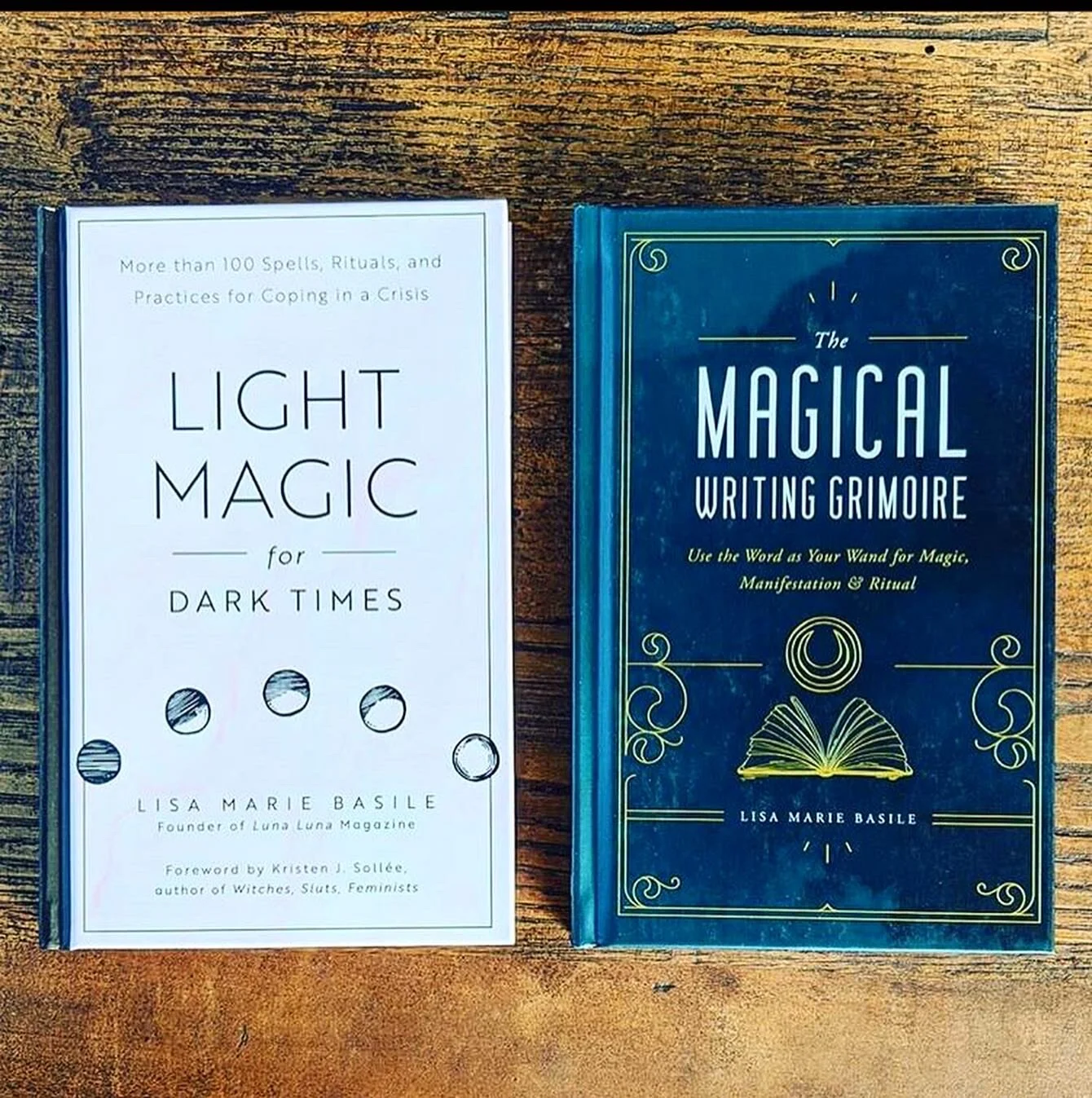
Prior to COVID-19, I’d been dealing with the aftershocks of a year of death (2017) that forever changed me. It pushed me to explore and meditate on grief and loss, and I’ve deeply integrated that into my writing. I still have fewer answers and more questions. I still hurt. In my poetry and in my nonfiction books, including Light Magic for Dark Times and The Magical Writing Grimoire, I offer grief rituals.

There is no way to skip over or lessen the impact of grief. Truly. The only way out is through, I believe now. More so, both ritual and journaling aren’t solutions or cures or magic elixirs for the sludge of grief. The sting of loss is part of the condition of being alive, and you may mourn hard for a lifetime. But there are small things we can do that can help us navigate our pain, find clarity, and work toward a semblance of closure or a space of finality — and science tells us that writing about grief works for many people (although it’s not a replacement for therapy).

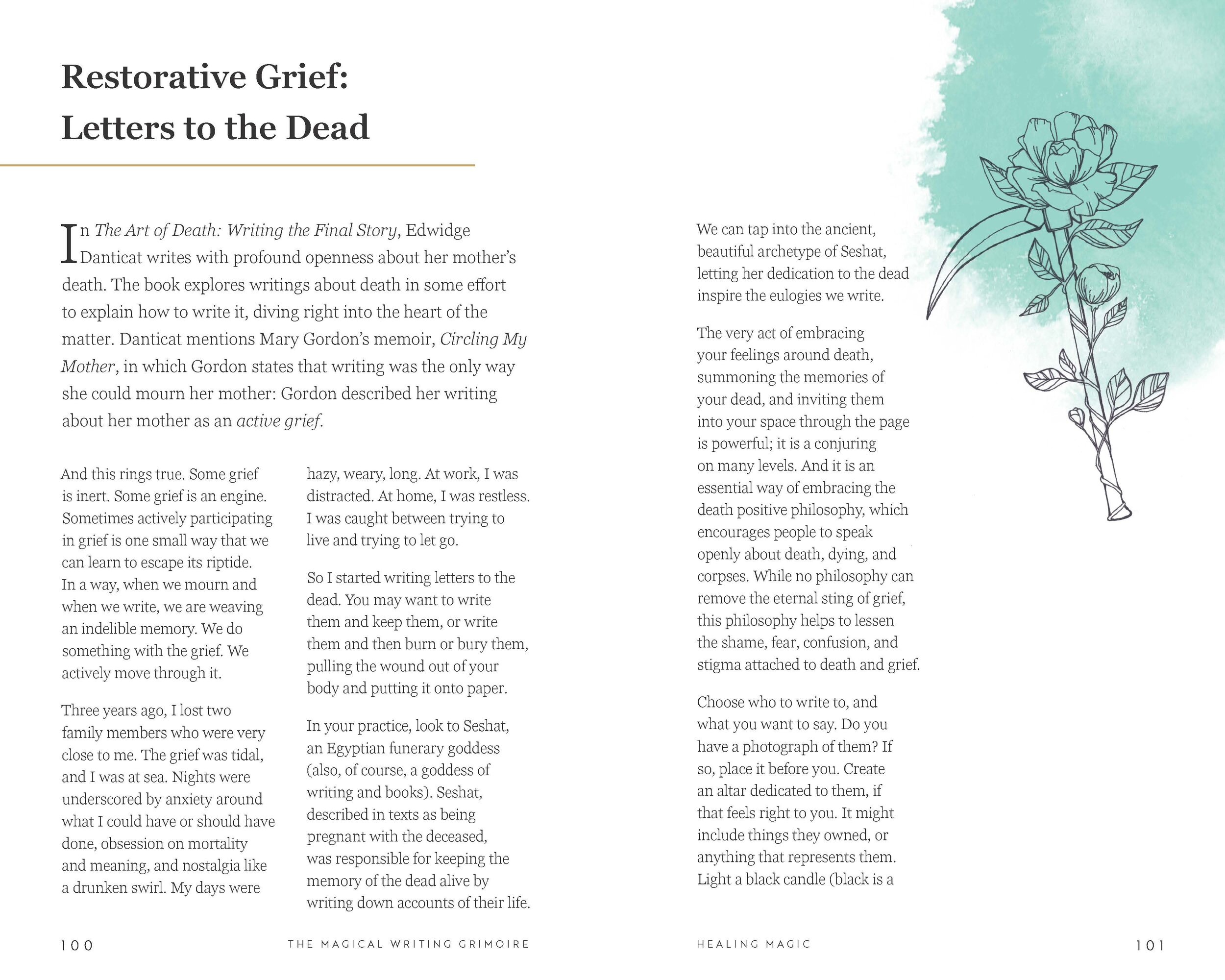
For this reason, I’ve included a ritual — Restorative Grief: Letters to the Dead — from my book, The Magical Writing Grimoire below. Maybe you’ll use it for someone you’ve lost in the past, or perhaps you’ll write a letter to the collective dead, to the many who have lost their lives in your city or community. Whatever you use it for, I hope it helps you find some stability and insight.

Below, I’ve included the original text for the ritual, along with the final pages from my book. Feel free to share and copy/download them.

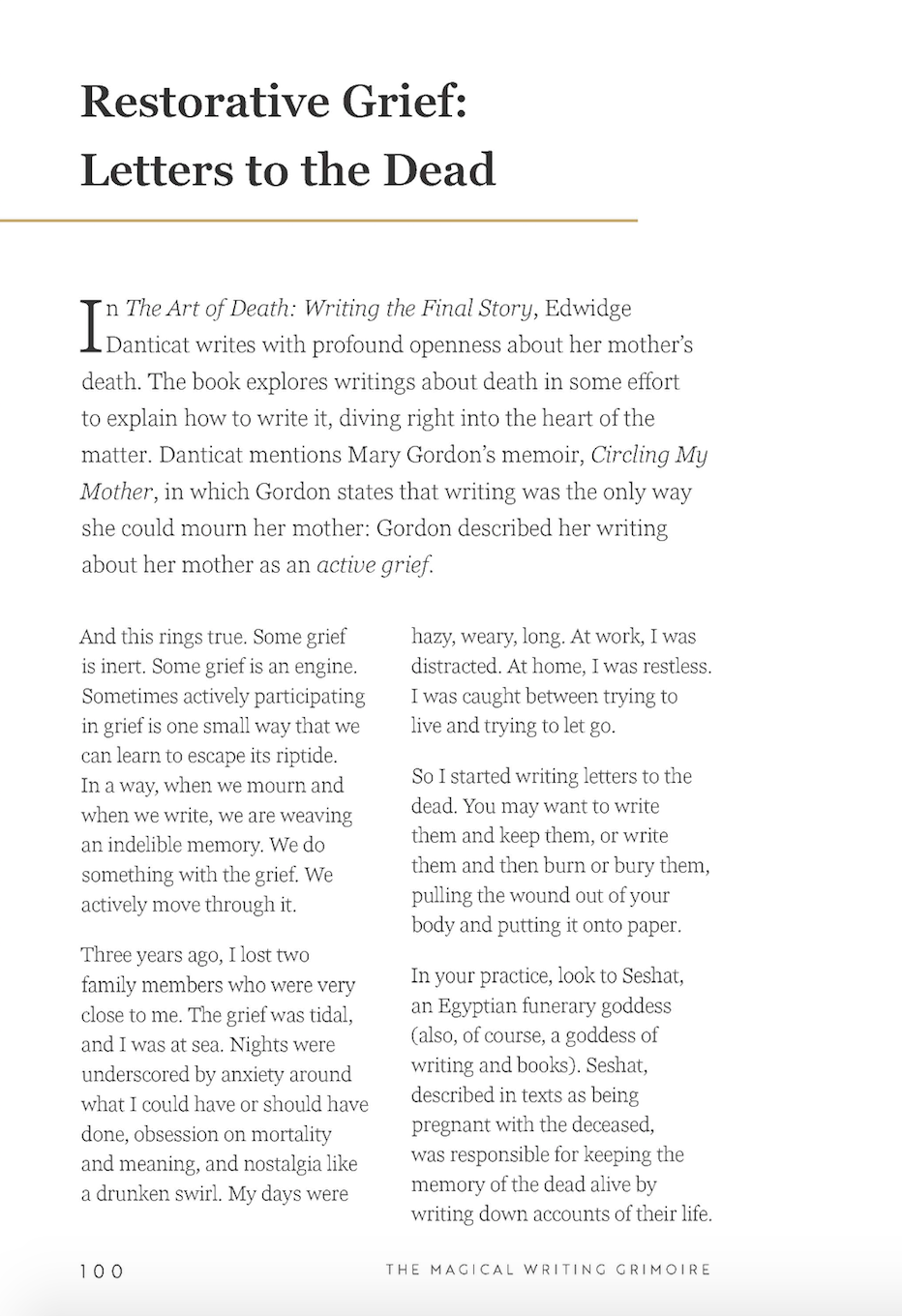
Restorative Grief: Letters to the Dead

InThe Art of Death: Writing the Final Story, Edwidge Danticat writes with profound openness about her mother’s death. The book explores writings about death in some effort to explain how to write it, diving right into the heart of the matter. Danticat mentions Mary Gordon’s memoir, Circling My Mother, in which Gordon states that writing was the only way she could mourn her mother. Gordon described her writing about her month as an active grief.

And this rings true. Some grief is inert. Some grief is an engine. Sometimes actively participating in grief is one small way that we can learn to escape its riptide. In a way, when we mourn and when we write, we are weaving an indelible memory. We do something with the grief. We actively move through it. 

Three years ago, I lost two family members who were very close to me. The grief was tidal, and I was at sea. Nights were underscored by anxiety around what I could have or should have done, obsession on mortality and meaning, and nostalgia like a drunken swirl. My days were hazy, weary, long. At work, I was distracted. At home, I was restless. I was caught between trying to live and trying to let go.

Grief is a sickness that grows without a cure. It affects more than the body, more than the mind. It affects the essence of us, our starstuff, our souls, our hearts, our energy. It metastasizes over a lifetime, and with each new death, it takes a new organ. 

So I started writing letters to the dead. You may want to write them and keep them or write them and then burn or bury them, be pulling the wound out of your body, and putting it onto paper.

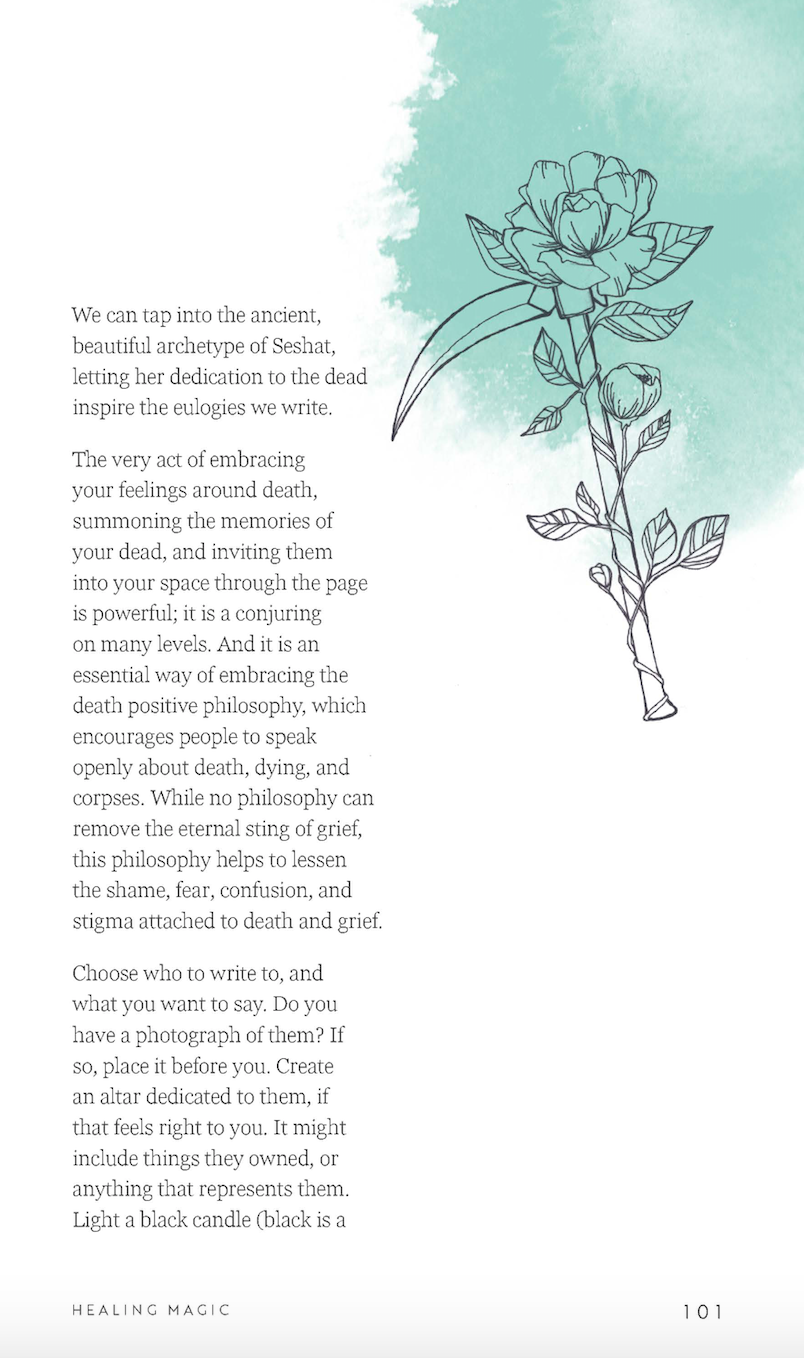
I like to look to Seshat, an Egyptian funerary goddess (also, of course, a goddess of writing and books). Seshat, described in texts as being pregnant with the deceased, was responsible for keeping the memory of the dead alive by writing down accounts of their life. We can tap into the ancient, beautiful archetype of Seshat, letting her dedication to the dead inspire the eulogies we write.

The very act of embracing your feelings around death, summoning the memories of your dead, and inviting them into your space through the page is powerful; it is a conjuring on many levels. And it is an essential way of embracing the death positive philosophy, which encourages people to speak openly about death, dying, and corpses. While no philosophy can remove the eternal sting of grief, this philosophy helps to lessen the shame, fear, confusion, and stigma attached to death and grief.

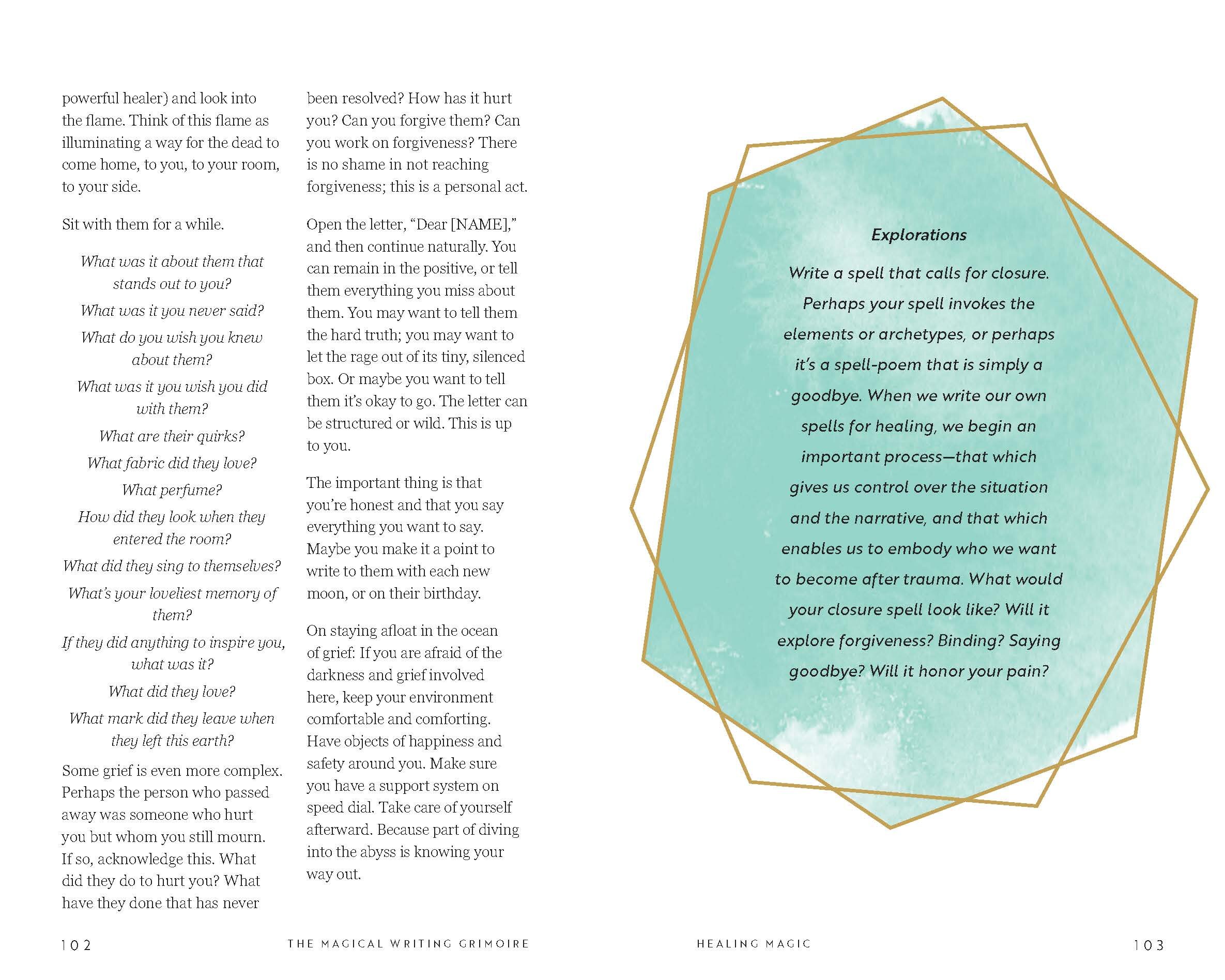
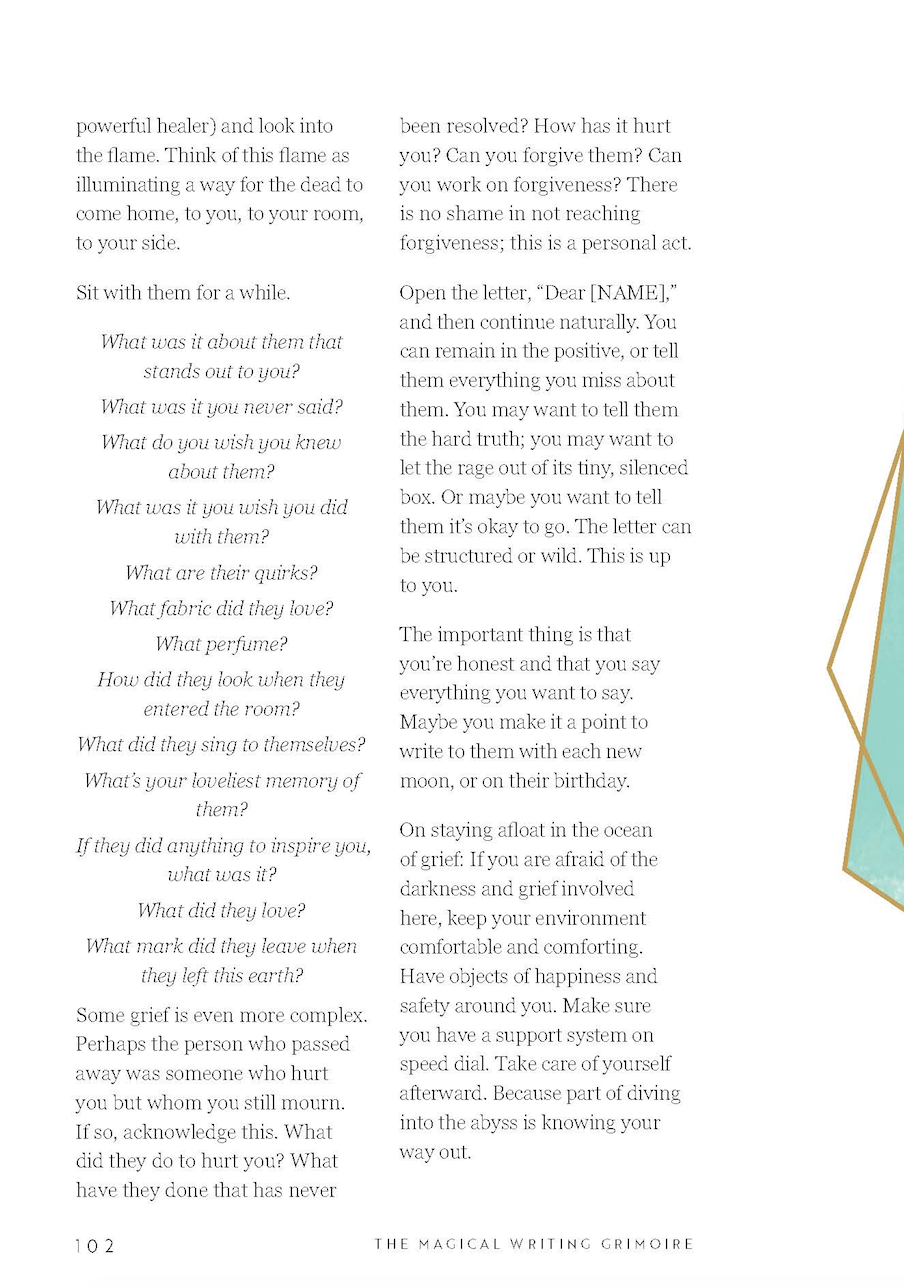
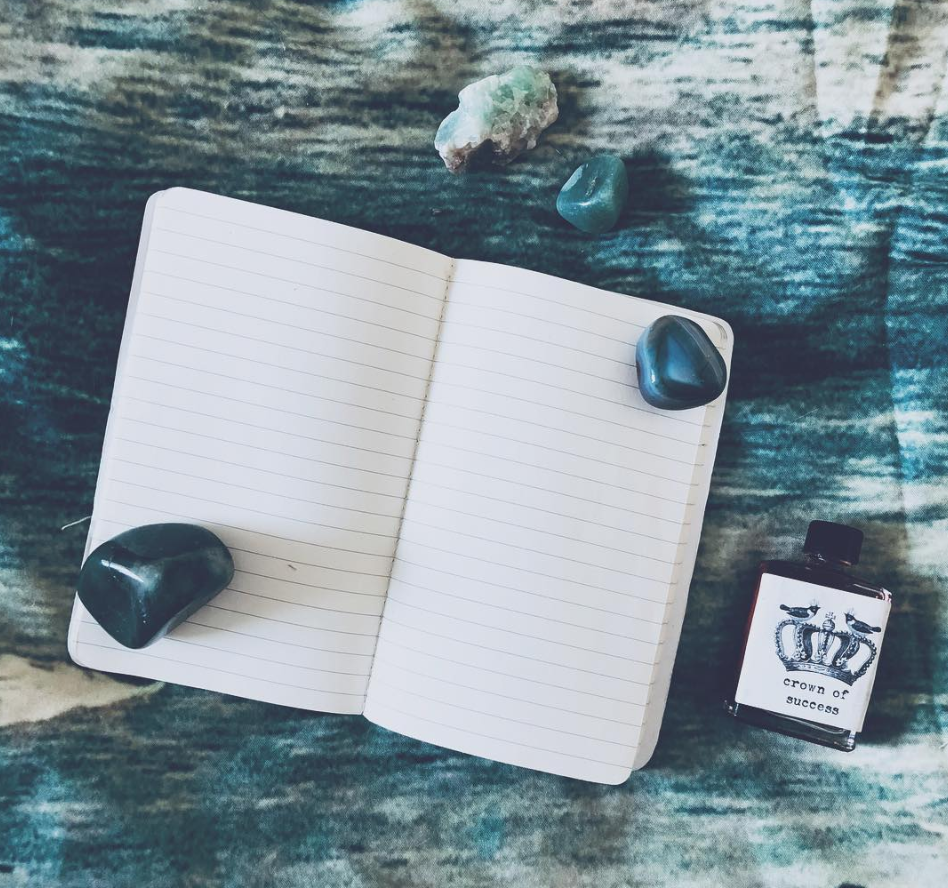
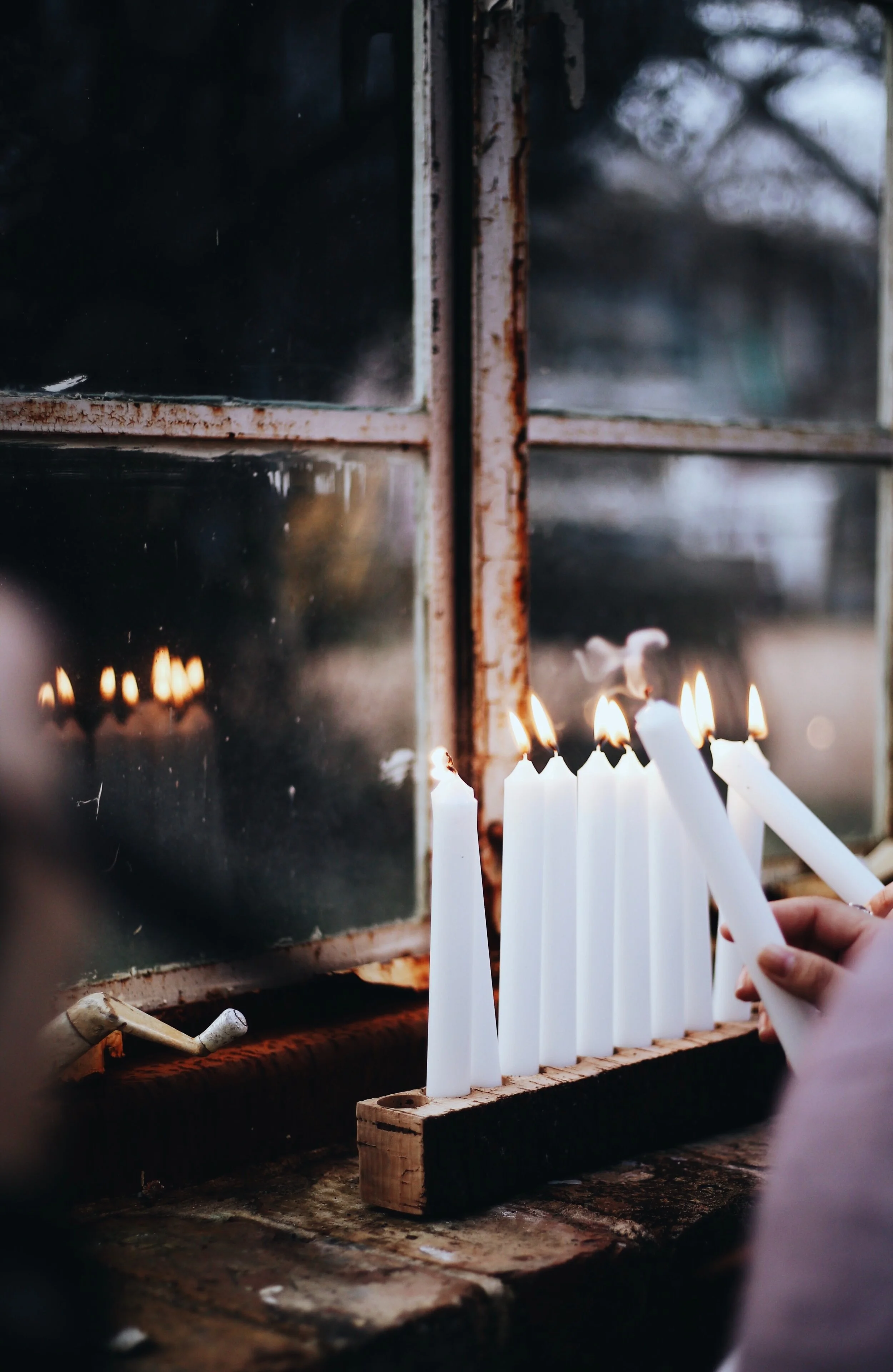
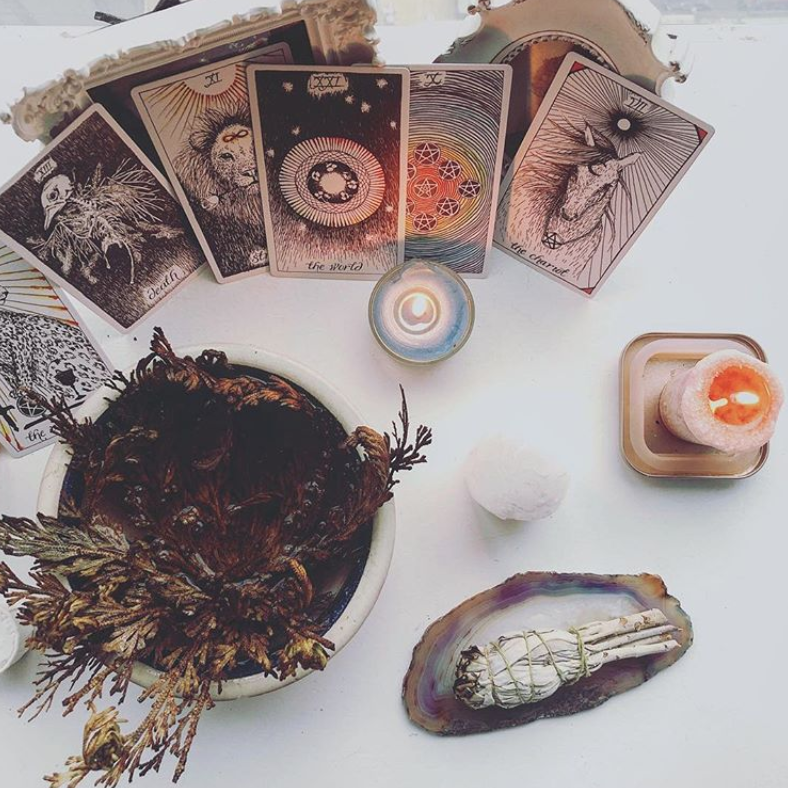
Choose who to write to, and what you want to say. Do you have a photograph of them? If so, place it before you. Create an altar dedicated to them, if that feels right to you. It might include things they owned, or anything that represents them. Light a black candle (black is a powerful healer) and look into the flame. Think of this flame as illuminating a way for the dead to come home, to you, to your room, to your side.

Sit with them for a while. 

What was it about them that stands out to you? What was it you never said? What do you wish you knew about them? What was it you wish you did with them? What are their quirks? What fabric did they love? What perfume? How did they look when they entered the room? What did they sing to themselves? What’s your loveliest memory of them? If they did anything to inspire you, what was it? What did they love? What mark did they leave when they left this earth? 

Some grief is even more complex. Perhaps the person who passed away was someone who hurt you but whom you still mourn. If so, acknowledge this. What did they do to hurt you? What have they done that has never been resolved? How has it hurt you? Can you forgive them? Can you work on forgiveness? There is no shame in not reaching forgiveness; this is a personal act. 

Open the letter, “Dear [NAME],” and then continue naturally. You can remain in the positive, or tell them everything you miss about them. You may want to tell them the hard truth; you may want to let the rage out of its tiny, silenced box. Or maybe you want to tell them it’s okay to go. Perhaps they felt they had to stay? Perhaps they suffered? Maybe you simply want to know what it’s like to be dead. The letter can be structured or wild. This is up to you.

The important thing is that you’re honest and that you say everything you want to say. Maybe you make it a point to write to them with each new moon, or on their birthday.

On staying afloat in the ocean of grief: If you are afraid of the darkness and grief involved here, keep your environment comfortable and comforting. Have objects of happiness and safety around you. Make sure you have a support system on speed dial. Take care of yourself afterward. Because part of diving into the abyss is knowing your way out.

A prompt

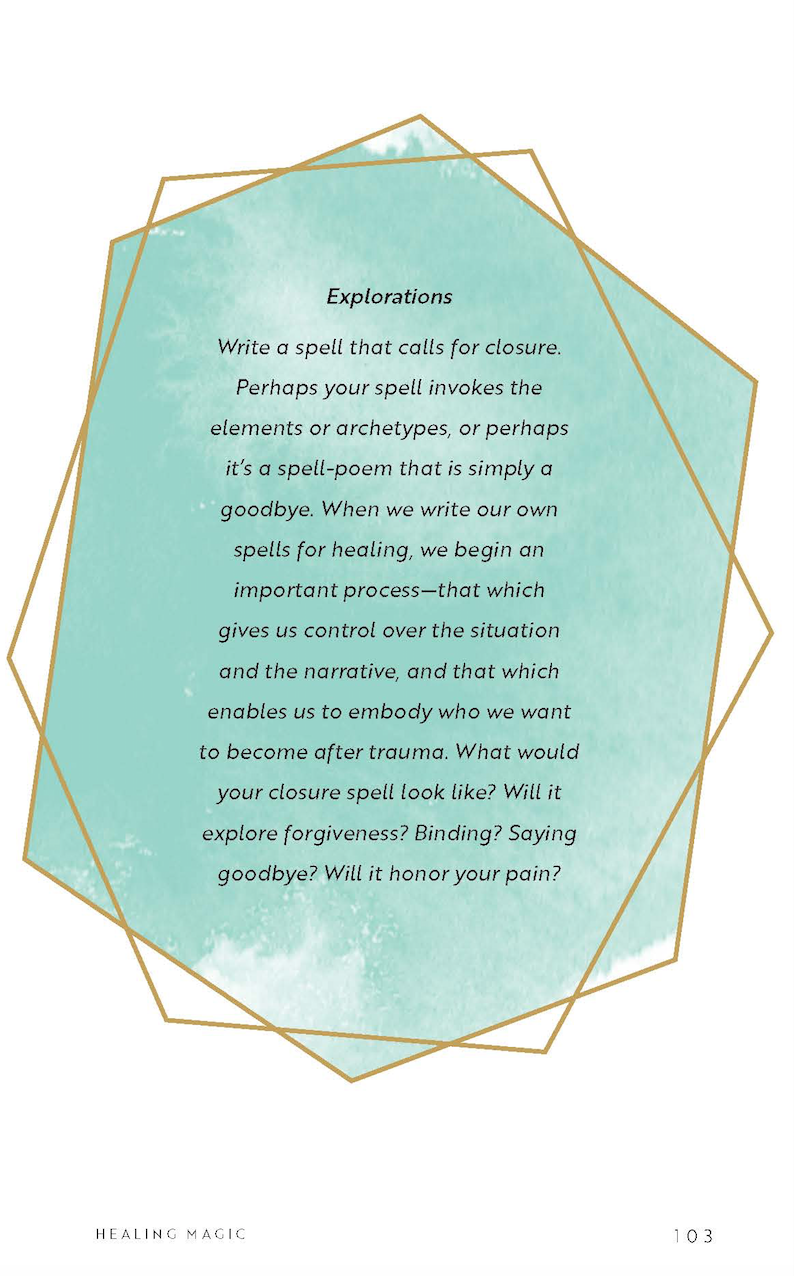
Write a spell that calls for closure. Perhaps your spell invokes the elements or archetypes, or perhaps it’s a spell-poem that is simply a goodbye. When we write our own spells for healing, we begin an important process—that which gives us control over the situation and the narrative, and that which enables us to embody who we want to become after trauma. What would your closure spell look like? Will it explore forgiveness? Binding? Saying goodbye? Will it honor your pain?

Feel free to download the keep the following pages:
Restorative Grief_Page_1.jpg
Restorative Grief_Page_2 (1).jpg
Screen Shot 2020-04-22 at 3.13.25 PM.png
Screen Shot 2020-04-22 at 3.13.33 PM.png
Screen Shot 2020-04-22 at 3.14.23 PM.png
Screen Shot 2020-04-22 at 3.14.33 PM.png
In Occult, Books Tags death, grief, Rituals, Ritual, the magical writing grimoire, light magic for dark times, lisa marie basile, grief rituals, healing, loss, covid-19, coronavirus
Comment
Image via Lisa Marie Basile

Image via Lisa Marie Basile

Letters to the Dead: Shadow Writing for Grief & Release

February 8, 2019


BY LISA MARIE BASILE

In the book, The Art of Death: Writing The Final Story, Edwidge Danticat writes with profound openness about her mother’s death. The book explores writing on death, in some effort to explain how to write it, and it get rights to the heart of the matter. Danticat mentions Mary Gordon’s memoir, Circling My Mother, in which Gordon states that writing was the only way that she could mourn her mother.

It was described as an active grief. That made sense to me; some grief is inert. Some grief is an engine. Sometimes actively participating in grief, I’ve learned, is one small way we can learn to escape its riptide.

In a way, when we mourn and when we write, we are weaving an indelible memory. We can do something with the grief.

Two years ago, I lost two people who were close to me. The grief was tidal, and I was at sea. Nights were underscored by anxiety around what I could have or should have done, obsession on mortality and meaning, and nostalgia like a drunken swirl. My days were hazy, weary, long. At work, I was distracted. At home, I was restless. I was caught between trying to live and trying to let go.

Grief if a sickness that grows without cure. It affects more than the body, more than the mind. It affects the essence of us, our starstuff, our souls, our hearts, our energy. It metastasizes over a lifetime, and with each new death it takes a new organ. I’m only 33. I’ve got a way to go. You may be further.

My aunt, just before she died, asked me over the phone what I’d be doing that night. Her voice was so small, so sick, so tired, but I could tell she was trying to sound enthusiastic. She was one of those rare beings who emanated an effortless and natural light; she was full of the beauty of this life, and you couldn’t help but feel it. I wish I spent more time with her when she was alive. I wish she knew that.

“I’m going out to listen to some music,” I told her. I was going to see a symphony. 

View this post on Instagram

🕯🖤 Although it may be “morbid” to spend your time in a cemetery—which, whatever!!— I think there’s something beautiful about spending your day in a place of silence, connection, and reflection, which is untouched by the masses and completely sacred, filled with relics and memories and ghosts of times gone bye and today. It is a place that allows you to think on what it means to be alive right now in this moment, lets you understand just how small you are in the vast story of everything. I have never been shy about graveyards or cemeteries, & I think it’s because I’ve always had 1 foot in and 1 foot out, splayed over the veil. I would like to do this more often, spend more time here. Living in New York City, I could spend my time at jam packed Central Park, or I could spend my time in a sprawling and powerful place — of many acres, and of many stories. 🖤🕯Thank you @historicgreenwood for creating an inclusive and friendly and beautiful environment #deathpositive

A post shared by Lisa Marie Basile (@lisamariebasile) on Nov 18, 2018 at 5:30pm PST

“Well, dance...for me, honey!” she said in her thick Virginia accent. My aunt loved to dance. She danced every week until she couldn’t. In that way, she worked her way into my DNA.

“I will, Aunt Ruthy, I promise,” I told her. I couldn’t bring myself to tell her it was a symphony; I wouldn’t be dancing. The point is, I would dance for her. And I would remember to dance forever.

After she died I swung between regret and anger. Why did she have to suffer? Why do bodies simply expire after living and giving birth and making art and making love? How could that be the end for each of us? I regretted not dancing more. I regretted not calling her more before she passed.

And so when she died, I took to the journal to write a letter. Journaling was one of the only things that made sense; I was able to say everything out loud, rather than keep it boxed up, throat-less. Without shame, and without censorship. 

When I finished the letter, I placed it in a wooden bowl and burned it. You may want to burn it, bury it, or store it in a box. There is magic in transforming your memories into words and then your words into foreverness by casting it out. No matter your religion or belief, you’ll be pulling the wound out of your body and onto paper. 

The very act of embracing your feelings around death, summoning the memories of your dead, and inviting them into your space through the page is powerful'; it is a conjuring on many levels. And it is a great way to embrace the death positive philosophy, which encourages people to speak openly about death, dying, and corpses. While no philosophy can remove the eternal sting of death’s pain, this philosophy helps to lessen the shame, fear, confusion, and stigma attached to death and grief.

The Ritual: Writing Letters to Your Dead

Choose who you’ll write to, and what you want to say. Your letter can be written on paper or electronically. You may speak it into a audio recorder, type it out, or write it by hand. What feels right?

Do you have a photograph of them? If so, place it before you. Light a candle and look into the flame. Think of this flame as illuminating a way for them to come home, to you, to your room, to your side.

Sit here for a bit. 

What was it about them that stood out to you? What was it you never said? What do you wish you knew about them? What was it you wish you did with them? What are their quirks? What fabric did they love? What perfume? How did they look when they entered the room? What did they sing to themselves? What’s your loveliest memory of them? If they did anything to inspire you, what was it? What did they love? Children? Plants? Books? Art? Travel? Poetry? What mark did they leave when they left this earth? 

Some grief is extra complex. Perhaps the person who passed away was someone who hurt you but whom you still mourn. If so, acknowledge this. What did they do to hurt you? What have they done that has never been resolved? How has it hurt you? Can you forgive them? Can you work on forgiveness? There is no shame in not reaching forgiveness; this is a personal act. 

Open the letter, “Dear [NAME],” and then go as naturally as you’d like. You can remain in the positive, or tell them everything you miss about them. You may want to tell them the hard truth; you may to let the rage out of its tiny, silenced box. Or, maybe you want to tell them it’s okay to go. Perhaps they felt they had to stay? Perhaps they suffered? Maybe you simply want to know what it’s like to be dead. The letter can be structured or wild. This is up to you.

The important thing is that you’re honest and that you say everything you want to say, no holds barred. 

When you are finished, you may want to put the letter away, or let it go. You may want to leave it near their grave. You may want to burn it. Or, you may want to keep it. 

You may do this whenever you feel the urge rising up. Maybe you make it a point to do write to them with each new moon, or on their birthday.

Whatever feels right to you is what is right for you.

An ending note: If you are afraid of the darkness (this is shadow work) involved here, keep your environment comfortable and comforting. Have objects of happiness and light around you. Make sure you have a support system on speed dial. Be sure to take care of yourself afterward. Part of diving into the abyss is knowing your way out.


View this post on Instagram

💕 This glorious photo was taken by @slavwitch, and it’s accompanied by a detailing of why objects—the things we choose to surround ourselves with— can be so powerful. As @slavwitch says, it’s not about *having stuff* but about painting our lives with the energy and power that the objects hold. Really lovely to see @lightmagic_darktimes as part of someone’s magical space. Thank you! 💕

A post shared by Lisa Marie Basile (@lisamariebasile) on Jan 10, 2019 at 12:24pm PST

Lisa Marie Basile is the founding creative director of Luna Luna Magazine—a digital diary of literature, magical living and idea. She is the author of "Light Magic for Dark Times," a modern collection of inspired rituals and daily practices. She's also the author of a few poetry collections, including 2018's "Nympholepsy." Her work encounters the intersection of ritual, wellness, chronic illness, overcoming trauma, and creativity, and she has written for The New York Times, Narratively, Sabat Magazine, Healthline, The Establishment, Refinery 29, Bust, Hello Giggles, and more. Her work can be seen in Best Small Fictions, Best American Experimental Writing, and several other anthologies. Lisa Marie earned a Masters degree in Writing from The New School and studied literature and psychology as an undergraduate at Pace University.

In Confession, Occult Tags ritual, grief, letter writing, writing, Confessions
1 Comment
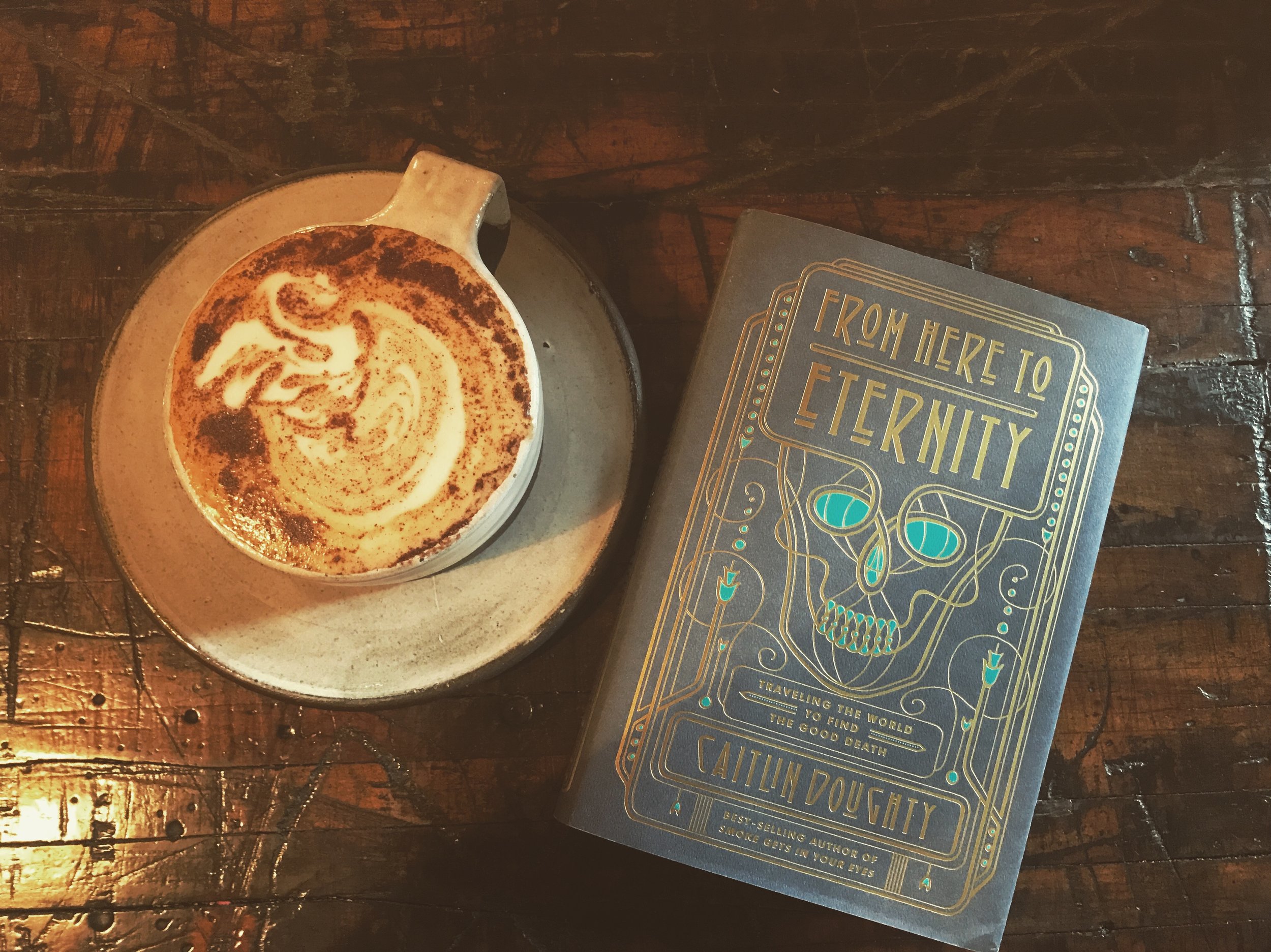
Can we talk about this GORGEOUS art deco dust jacket? 

Can we talk about this GORGEOUS art deco dust jacket? 

Interview with Author, Mortician, & Death Positive Activist Caitlin Doughty

October 4, 2017

Women’s bodies are so often under the purview of men, whether it’s our reproductive organs, our sexuality, our weight, our manner of dress. There is a freedom found in decomposition, a body rendered messy, chaotic, and wild. I relish the image when visualizing what will become of my future corpse.”

Read More
In Occult Tags Occult, Death, grief, Trista Edwards
Comment
VIA Instagram.com/lisamariebasile

VIA Instagram.com/lisamariebasile

A Water Ritual For Grief & Trauma

September 25, 2017

BY LISA MARIE BASILE

This sea witch took all the magic back with her to New York City.

51 Likes, 1 Comments - Lisa Marie Basile (@lisamariebasile) on Instagram: "This sea witch took all the magic back with her to New York City."

I lost someone this year. It was a big, complex, fucked up, messy, bloody, lonely loss. And it was a massive, long-time-coming, poisonous, wounded relationship that only in its last years healed. I am filled of guilt, sorrow, and confusion over it. Maybe you feel the same way about someone you lost. Maybe you didn't lose anybut but you're trying to process a traumatic event—in which case, this is for you, too.

This ritual is about trying to find some relief. It may sound selfish, but the relief I'm talking about here isn't just internal; I also want to send peace to our dead, if that is something you feel comfortable doing. 

First things first: There is so no one-size-fits-all or quick remedy for grief, trauma and PTSD—no potion, no prayer, no salve, no savior. Pain is a process we move through. Whatever your belief, whatever your disposition, there will always be a small black stone inside your chest, and it will always hold your suffering. I think of this stone as two palms, cupped, holding in the pain so that it doesn't poison the rest of the body. We must manage our little stone, because for many of us, it won't ever go away. It's an organ, it has a job. 

So, here are some of the ways I've encountered death and trauma and ritualized my grief. I believe it's important to do so because it can't be kept in the shadows—because when it's kept in the shadows, it ends up hurting even more. 

Grief Cleanse Ritual

Take a bath; quiet your mind. Become clean of all residue, psychic and physical. If you have a bath soak or an oil you like, use it. This is the time to be OK with the pain. Close the door, cry, remain still, be aware of the grief. Let it move through you; be naked with it. I like to use rose oil in my bath— to me, rose is a potent and balanced (it smells beautiful but it has thorns, like our emotional processes). 

SO much of grief is exercising strength—in public, on buses, in the street, with other family members, and with yourself during times when you need to sleep or eat or work. That is exhausting. In this ritual, you are allowing grief to run through you, while simultaneously cleansing yourself of it. Your tears will fill the bath, you will bathe in your sorrow, and you will also go back to the root self: nude, defenseless, alone. This may sound frightening—it is—but it's so good to say, "you are free to feel."

If you want to, speak to your dead. Pray. Invoke something. Think on that black stone in your chest and all the hurt it contains—all those memories and fears and all that suffering. In your mind, bathe it glittering white light. Sooth it, tell it that you're thankful for it storing all that darkness for you. Imagine it settling, closing, taking the pain with it—until the next time you need it. Imagine the rest of your body flooded with beautiful, clear light. Let yourself be an alter for good. Be at the alter of yourself.

I believe water is the most potent element. It is what we're made of. It is the ultimate destructive force, and yet it is also the most freeing. In the water, you are as connected to the earth as you could be. Grounding, the act of touching the natural elements, is a powerful tool—it returns us to our authentic selves, and it eliminates all the messiness of life and expectation. It is a dazzling, simple way to come home.

When you finally drain the tub, sit with it; do not get out. Talk to the sorrow—let it know that it's okay, let your dead know it's okay to linger sometimes, let your body know it's okay to feel. But then also ask that you have strength and resolve when you need it. Say whatever you need to say to yourself or something else. 

Send white glittering light to your dead, to those who are affected by sadness, and to anyone who hurt you (if you feel comfortable). This act is radical and generous, but it's not always something we feel compelled to do (and that's OK). 

The water draining symbolizes the switch; now you can go back to your life and not let the grief overtake you at all moments. You've created a place and time for it. Thank the water. It is always there for you; it's a friend, a deity, a comfort. It will always be there as an alter for your sadness—and your peace. 

*** If you're not in the throes of grief but find that that pain still haunts you, it could be a good idea to do this every new moon as a way of checking in with those feelings. Since you're not actively in pain every day, this may be a good way to say, "here is my time to confront you, death." I think this is a healthy way to tap into that spectrum of feelings; it may help you, as therapy, in a long-term way.


Write me; tell me what you thought. What sort of ritual do you need?
editor@lunalunamagazine.com
@lisamariebasile #lisamariebasile

Lisa Marie Basile is an editor, writer and poet living in NYC. She is the founding editor-in-chief of Luna Luna Magazine and the author of APOCRYPHAL (Noctuary Press, 2014), as well as a few chapbooks: Andalucia (Poetry Society of New York), War/Lock (Hyacinth Girl Press), and Triste (Dancing Girl Press). Her book NYMPHOLEPSY (co-authored with poet Alyssa Morhardt-Goldstein), was a finalist in the 2017 Tarpaulin Sky Book Awards. She is working on her first poetic fiction novella, to be released by Clash Books/Clash Media. Her poetry and other work can be or will be seen in PANK, Spork, The Atlas Review, Tarpaulin Sky, the Tin House blog, The Huffington Post, The Rumpus, Rogue Agent, Moonsick Magazine, Best American Poetry, Spoon River Poetry Review, PEN American Center and the Ampersand Review, among others.

Tags meditation, death, PTSD, water witch, grief, creative visualization, water magic, ritual, trauma
Comment

How to Help a Rape Survivor Cope

November 18, 2015

Wedge your arm into someone's intestines, place a bomb, and watch it explode; that is exactly how any survivor feels. All loss, no matter how trivial, is destructive; as Elizabeth Bishop gracefully yet ironically states in her villanelle One Art: "the art of losing isn’t hard to master." While it may become an art to become accustomed to loss (or rather, the art of desensitization) there is no art in grieving a lost identity, and consequently, having to discover it again. Sometimes, we never do discover it, we merely create a new one.

Read More
In Confession Tags rape, feminism, help, grief
Comment
Featured
‘in the glitter-open black' — poetry by Fox Henry Frazier
'poet as tarantula,  poem as waste' — poetry by  Ewen Glass
'poet as tarantula, poem as waste' — poetry by Ewen Glass
'Hours rot away in regalia' — poetry by Stephanie Chang
'down down down the hall of mirrors' — poetry by Ronnie K. Stephens
'Grew appendages, clawed towards light' — poetry by Lucie Brooks
'do not be afraid' — poetry by Maia Decker
'The darkened bedroom' — poetry by Jessica Purdy
'I am the body that I am under' — poetry by Jennifer MacBain-Stephens
instagram

COPYRIGHT LUNA LUNA MAGAZINE 2025