
• Home
  • indulge
  • new poetry
    • About Luna Luna
    • resources
    • search
  • editor
  • dark hour
  • submit
Menu

luna luna magazine

  • Home
  • indulge
  • new poetry
  • About
    • About Luna Luna
    • resources
    • search
  • editor
  • dark hour
  • submit
shadow
A Writing Spell: Honoring Your Many Selves
Mar 1, 2021
A Writing Spell: Honoring Your Many Selves
Mar 1, 2021
Mar 1, 2021
An 11-Line Poetry Spell For Healing
Mar 1, 2021
An 11-Line Poetry Spell For Healing
Mar 1, 2021
Mar 1, 2021
How To Write Powerful Poetry Spells
Feb 28, 2021
How To Write Powerful Poetry Spells
Feb 28, 2021
Feb 28, 2021
Here Is Your Scorpio Homework This Season
Oct 25, 2020
Here Is Your Scorpio Homework This Season
Oct 25, 2020
Oct 25, 2020
3 Transformative Life Lessons Scorpio Teaches Us
Oct 25, 2020
3 Transformative Life Lessons Scorpio Teaches Us
Oct 25, 2020
Oct 25, 2020
Restorative Grief: Letters To The Dead
Oct 23, 2020
Restorative Grief: Letters To The Dead
Oct 23, 2020
Oct 23, 2020
A Santa Muerte Rebirth Ritual + A Tarot Writing Practice
Oct 6, 2020
A Santa Muerte Rebirth Ritual + A Tarot Writing Practice
Oct 6, 2020
Oct 6, 2020
Witches, Here Are The New Books You Need
Nov 14, 2019
Witches, Here Are The New Books You Need
Nov 14, 2019
Nov 14, 2019
3 Dream Magic Rituals And Practices
Nov 12, 2019
3 Dream Magic Rituals And Practices
Nov 12, 2019
Nov 12, 2019
How To Use Tarot Cards for Self-Care
Nov 11, 2019
How To Use Tarot Cards for Self-Care
Nov 11, 2019
Nov 11, 2019
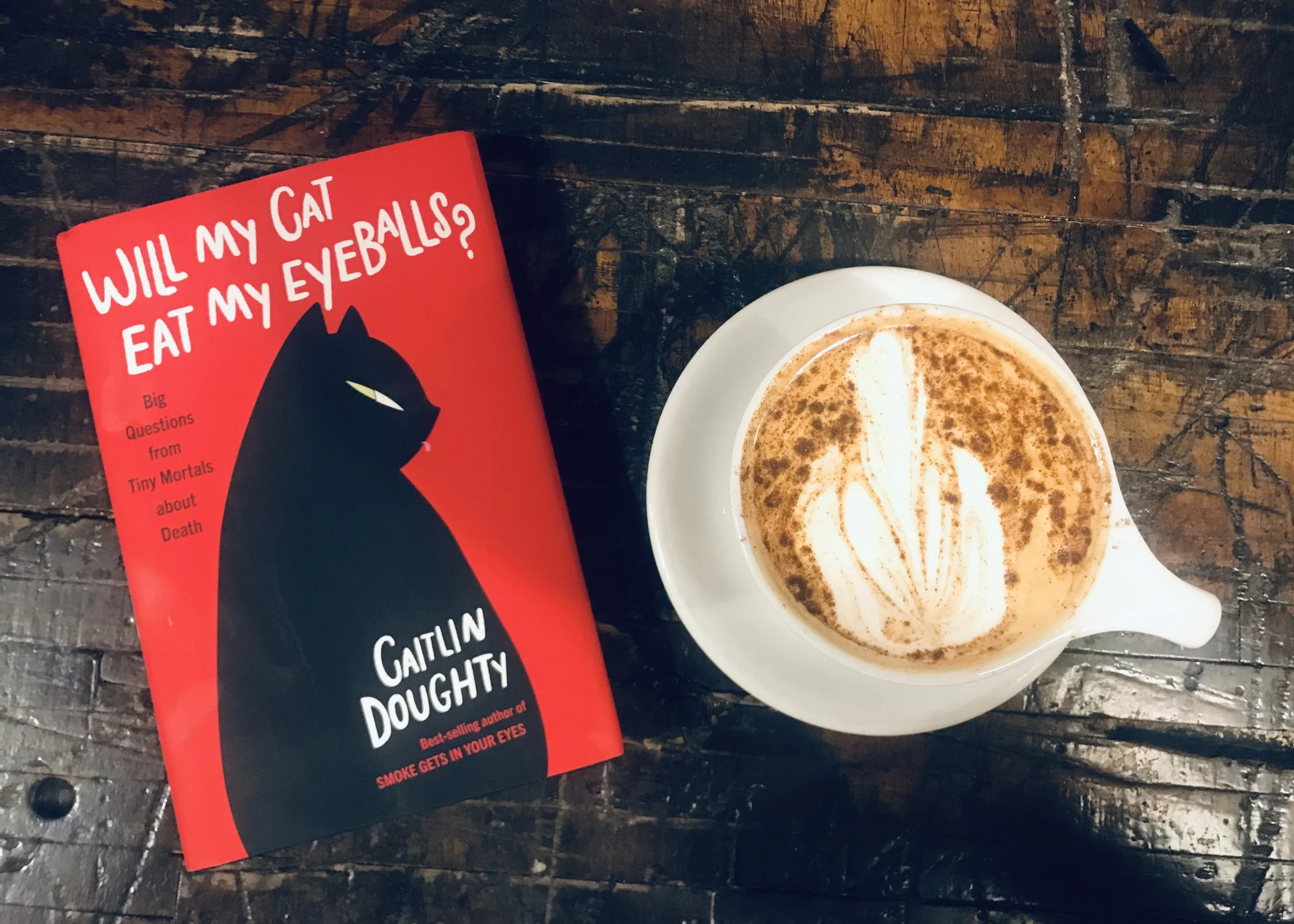
A Review of Caitlin Doughty's 'Will My Cat Eat My Eyeballs?'
Oct 25, 2019
A Review of Caitlin Doughty's 'Will My Cat Eat My Eyeballs?'
Oct 25, 2019
Oct 25, 2019
Nimue, The Deity, Came To Me In A Dream
Sep 17, 2019
Nimue, The Deity, Came To Me In A Dream
Sep 17, 2019
Sep 17, 2019
Astrological Shadow Work: Healing Writing Prompts
Sep 9, 2019
Astrological Shadow Work: Healing Writing Prompts
Sep 9, 2019
Sep 9, 2019
The Witches of Bushwick:  On Cult Party, Connection, and Magic
Jul 23, 2019
The Witches of Bushwick: On Cult Party, Connection, and Magic
Jul 23, 2019
Jul 23, 2019
7 Magical & Inclusive New Books Witches Must Read
May 15, 2019
7 Magical & Inclusive New Books Witches Must Read
May 15, 2019
May 15, 2019
Working Out As Magic & Ritual: A Witch's Comprehensive Guide
May 14, 2019
Working Out As Magic & Ritual: A Witch's Comprehensive Guide
May 14, 2019
May 14, 2019
Letters to the Dead: Shadow Writing for Grief & Release
Feb 8, 2019
Letters to the Dead: Shadow Writing for Grief & Release
Feb 8, 2019
Feb 8, 2019
How to Add Magic to Your Every Day Wellness Routine
Feb 5, 2019
How to Add Magic to Your Every Day Wellness Routine
Feb 5, 2019
Feb 5, 2019
Ritual: Writing Letters To Your Self — On Anais Nin, Journaling, and Healing
Jan 31, 2019
Ritual: Writing Letters To Your Self — On Anais Nin, Journaling, and Healing
Jan 31, 2019
Jan 31, 2019
How Rituals Can Help You Gain Confidence
Jan 17, 2019
How Rituals Can Help You Gain Confidence
Jan 17, 2019
Jan 17, 2019
Hearthcraft & the Magic of Everyday Objects: Reading Arin Murphy-Hiscock's 'House Witch'
Jan 14, 2019
Hearthcraft & the Magic of Everyday Objects: Reading Arin Murphy-Hiscock's 'House Witch'
Jan 14, 2019
Jan 14, 2019
True to The Earth: Cooper Wilhelm Interviews Kadmus
Nov 26, 2018
True to The Earth: Cooper Wilhelm Interviews Kadmus
Nov 26, 2018
Nov 26, 2018
Between The Veil: Letter from the Editor
Oct 31, 2018
Between The Veil: Letter from the Editor
Oct 31, 2018
Oct 31, 2018
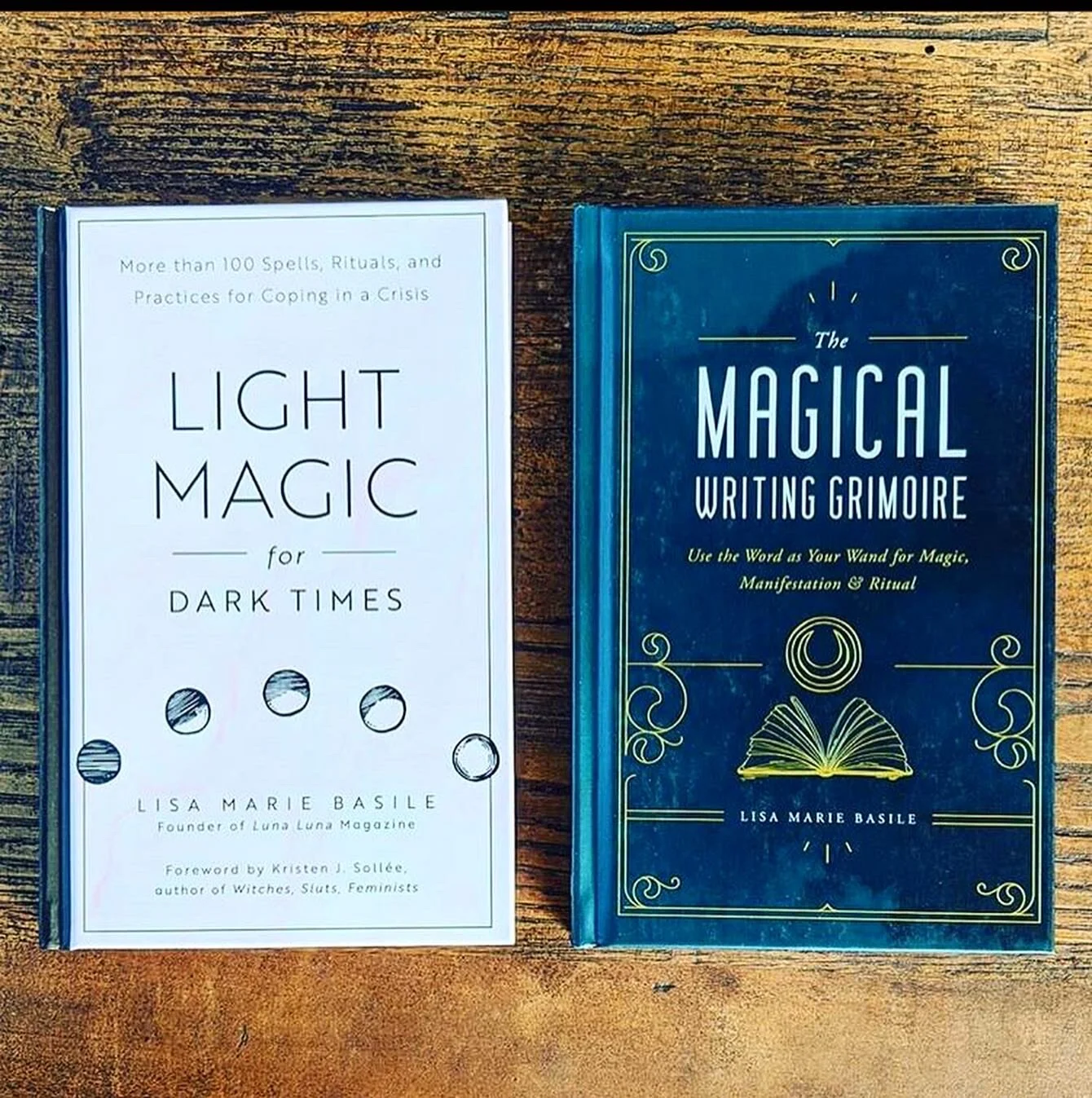
Shadow Work with Light Magic for Dark Times
Oct 31, 2018
Shadow Work with Light Magic for Dark Times
Oct 31, 2018
Oct 31, 2018
2 Poems by Stephanie Valente
Oct 31, 2018
2 Poems by Stephanie Valente
Oct 31, 2018
Oct 31, 2018
A Poem in Photographs by Kailey Tedesco
Oct 31, 2018
A Poem in Photographs by Kailey Tedesco
Oct 31, 2018
Oct 31, 2018
Photography by Alice Teeple
Oct 31, 2018
Photography by Alice Teeple
Oct 31, 2018
Oct 31, 2018
A Simple Spell to Summon and Protect Your Personal Power
Oct 31, 2018
A Simple Spell to Summon and Protect Your Personal Power
Oct 31, 2018
Oct 31, 2018
November and Her Lovelier Sister
Oct 31, 2018
November and Her Lovelier Sister
Oct 31, 2018
Oct 31, 2018
A Spooky Story by Lydia A. Cyrus
Oct 31, 2018
A Spooky Story by Lydia A. Cyrus
Oct 31, 2018
Oct 31, 2018
marks-of-mana-_NFEftQar-I-unsplash.jpg

The Witches of Bushwick: On Cult Party, Connection, and Magic

July 23, 2019

BY CALLIE HITCHCOCK        

Every time I walk into Cult Party, an all women-run intersectional feminist witch shop in Bushwick which opened in 2017, there are new magical objects bursting from each fold and corner. Every item is held in a delicate, seemingly impossible, possibly magical, balance. They have dangle earrings depicting Venus of Willendorf — the plump, breasty figure who dots the pages of every anthropology and art history textbook ever printed, and is a symbol of fertility said to date back to 25,000 BCE; a gold plastic trophy plated with “Raging Pansexual” at the bottom; dragon’s blood artisan incense; spell candles; a vest with a print of the tarot card queen of cups; energy crystals; and honey laced with CBD, a chemical found in marijuana that is legal to sell.

These are a few of the things I notice when I attend Cult Party’s reading for Kristen Sollée’s Witches, Sluts, Feminists : Conjuring The Sex Positive, where other writers read from their work as well. The air in this small corridor space is heavily perfumed and the murmur of women conversing feels hypnotic, warm, ancient.

View this post on Instagram

Come say hi to our colorful lil spot today🌈✨🌈open till 8! #yestodaysatan

A post shared by Cult Party (@cultpartynyc) on Jul 11, 2019 at 9:34am PDT

I have no extensive experience with witchcraft, but I do have a previous interest in astrology and tarot cards. My nature has always been inclined toward narrativization, introspection, analyzation, pinning things down. As a neurotic, organizing my experiences, fears, and hopes with astrology and tarot was always a relaxing and practical illusion. 

Kristen Sollée stands at the front as she hugs Jacqueline Frances, a woman in a black latex catsuit who I recognize as the admin for a popular Instagram account called Jaq the Stripper which chronicles their life as a stripper and works to create solidarity for sex-workers. Kristen is wearing a long hot pink jacket and matching lipstick with pink glitter. Something feels odd about her but I can’t tell what– until I realize she has no eyebrows.

Kristen begins to speak. The crowd quiets down, without her having to ask. Kristen knows her stuff — her articles on witches are published widely and she is co-founder of the Occult Humanities Conference, a lecturer at The New School, and founding editor of Slutist, a sex positive feminist website. She commands the room, with the breadth of knowledge and immersion into witch culture, while maintaining an open, approachable mien. From her book she reads about the mythos of women as witches throughout history and what the female witch represents:

“The witch is a shapeshifter. She transforms from vixen to hag, healer to hellion, adversary to advocate based on who seeks her,” she says. It reminds me of Kali Ma, the Hindu goddess of birth and destruction and of the enormous power that human society has long seemed to both worship and fear in women. The burning of witches is a manifestation of this contradiction and it is the same contradiction that informs why women are shamed and policed for their sexuality today. That women have reclaimed the image of the witch as a symbol of autonomy, comes as no surprise. 

When the last reader of the night says, “The power and the energy in the room with everyone reading was tangible to me,” I agree with her. I feel lighter, on a higher plane of solace and joy with all the women in the room and the readers who shared their stories. I walk to the back to buy some CBD oil and I meet Cult Party’s owner Debbie Allen. As Debbie rings up my receipt, I chat with her about the space and she tells me that she is so happy that she has been able to create a store dedicated to “holding space for women.” I’m happy too.

~~

Cult Party demonstrates an increased cultural interest in the occult over the past few years. Today, witchcraft maintains an emphasis on ritual, community, spirituality, and healing, while focusing on feminist undertones and eschewing dogmatic religious ties. 

View this post on Instagram

🔥Welcum to Hell 🔥

A post shared by Kristen J. Sollée (@kristenkorvette) on Jun 28, 2019 at 11:04am PDT

In her book, Sollée writes that she was drawn to the character of Maleficent in Sleeping Beauty because “she was the witch I wanted to be: a woman in control… like many millennial women, I see a reclamation of female power in the witch, slut, and feminist identities.”

Witch practice is experiencing new vogue among millennials. Laurie Penny, a journalist and self-described “former spooky girl” muses that “a general sense of powerlessness in a chaotic and competitive society, along with a revived interest in forms of feminism that don’t care who they frighten, may explain the growing appeal of hedge magic as a cultural aesthetic as much as a practice.” Witchcraft transverses many axes — female empowerment, community, belonging, and a system of beliefs and values. 

The competition and chaos Penny describes also correlates with the increasing reliance on the growing gig economy of contract or freelance work. Many millennials are left without health insurance, a salary, or retirement benefits.

The workplace has become decentralized, and a large chunk of interpersonal interactions have been siloed into social media. An isolation forged from aimlessness, and lack of structure have taken the place of older forms of social belonging. Millennials are all looking for a way to scrape up some softness and humanity where they can.

~~

Back at Cult Party, the source of the magic, I see the owner Debbie Allen carrying a glass from home with iced coffee in it. It is a sunny afternoon and she’s holding the leash of a hearty squish of a dog that she is looking after for a friend. His name is Lear. “I call him a chicken nugget. If he was left in the wild he would be a snack,” says Debbie as we huddle together in the back by the register and the wall with a rainbow painted on it.

Debbie is in her thirties, has long brown hair and bangs that softly curve around her face. Her kind smile and unhurried gait match the warm spring day and she seems so relaxed and happy that my imagination will keep reconfiguring this memory of her as also barefoot on the pavement. Lear whines constantly, possibly from being away from his true momma, and giving him attention doesn’t salve his unsoothable pout for long. I feel an uncomfortable kinship with Lear in this but choose to focus on the task at hand. 

Cult Party, Debbie tells me, started as a seven person collective in July of 2017 and the remaining members are Debbie and Al Benkin, a short-haired blonde artist, also in her thirties, who joins Debbie and I. Now the store runs as a co-op where vendors rent space to sell their wares and take turns manning the shop. Debbie and Al met while vending around town. Debbie was selling her brand of clothes, pins, stickers and patches called Hissy Fit, and Al was selling her art. The conversation moves towards the occult and Debbie tells me about her first inklings of her witch identity.

“I was always the kid playing with ouija boards, trances, seances, always getting in trouble at Christian camp,” she says, recalling that as she got older she would take her friends to the roof of her house to write down intentions and burn them. I ask Al if she identifies as a witch and she says, “I'm not against witchy things, I do believe we have more energy in the matter. I think different stones carry different energy but I'm not super woo-y about it. I'm a lot more science based than anything.”

We chew on the merits of a witchcraft practice for a few moments before Al suggests why feminism and witchcraft have historically gone hand in hand. “People manifest their own reality in their beliefs and people want to feel like they have some power in their decisions.” Witchcraft fosters a sense of power of self-determination, and feminism aims to create self-determination against perennial sexism and misogyny.

“I think it really helps people set the course for their quality of life in some way. It gives them a moral code and standards to abide by that makes them feel like they're being a good person and I don't think theres anything wrong with that,” continues Al. Moral code, ritual, symbolism — the touchstones of any meaningful religious practice. 

View this post on Instagram

Come in and peruse all this cute shit✨🕯🖤🕯✨open everyday except Monday 12-8⚡️

A post shared by Cult Party (@cultpartynyc) on Jun 20, 2019 at 1:26pm PDT

Debbie adds: “When I dropped Christianity I went through a phase where I wasn't into anything.” She’s not alone.

According to a 2017 study by Pew Research center, 27 percent of millennials ages 18-29 attend religious services weekly compared to 38 percent of baby boomers and 51 percent of the parents of baby boomers. With a lack of trust in old belief systems, and a lack of trust in political leaders (Donald Trump only got 37% of the millennial vote), where do the non-religious go to find guidance?

Without social trust of politicians or structured belief systems, it can be hard to know where to look for a system of values or a narrative to turn to for meaning. Debbie explains that she started practicing witchcraft more heavily when she had been in her T-shirt company job for ten years and credits witchcraft with helping her set a new course for her life. She started to do more witch ceremonies with her friends to set intentions like she did on her roof as a teenager. 

“I don't know how much of the magic part of it I believe, but I do see when I put things out there, they come back. So in a real world way if you put out there what you want, you'll start to see opportunities present themselves,” says Debbie.  

“You have to tell the universe what you want,” Al concurs.   

For Debbie, rituals served as a kind of therapy — a way to check in with herself and set personal goals. A witch ceremony is a way to really immerse herself in paying attention to what her inner self wants to say. “When you're living your authentic life, instead of hiding or lying to yourself, things start appearing. Since I started, things just start happening weirdly. Synchronicity. Things start fitting into place.” 

Al’s face has been slowly illuminating. 

“You know what, I'll try that. I'm not anti, I will try it.” 

Debbie’s calm yet vital aura is infectious. When she talks about witchcraft as a place of healing and ceremony, something in the core of my humanity lights up– a need basking in its articulation.

I decide to attend my first full moon ceremony at the shop.

~~
Callie Hitchcock

Callie Hitchcock

On a dark March evening I bike to the little Bushwick store, unaware of the impending rainstorm. Debbie, the house witch Staci Ivori, two other ladies, Lear the dog, and I huddle into the cold little shop.

A few of us shuffle our feet and awkwardly try to find a space to sit or stand that is out of the way of Staci readying the altar. I start talking to Alayna, who has come in from Long Island. She wears a pink dress with a moon scene on it and sparkly square toed boots. Within minutes we are already discussing bad boyfriends. An old boyfriend of hers didn’t like her witch dealings or aesthetic, and wanted her to cut her hair.

We laugh and exchange more stories of personal feminist heroics and rebellions. The inimitable female intimacy of the encounter warms up my bones; I revel in the ease with which I can connect with most women so quickly and deeply. No shame, no one-upmanship, no hiding. 

Debbie had told me about the purpose of full moon circles: “It's really important to have a safe place where you can speak and not feel judged or shut down.” A full moon circle is meant to be a space where women get a reprieve from quotidian interruptions, disrespect, or feeling like their ideas and interiority are ignored because of their gender. 

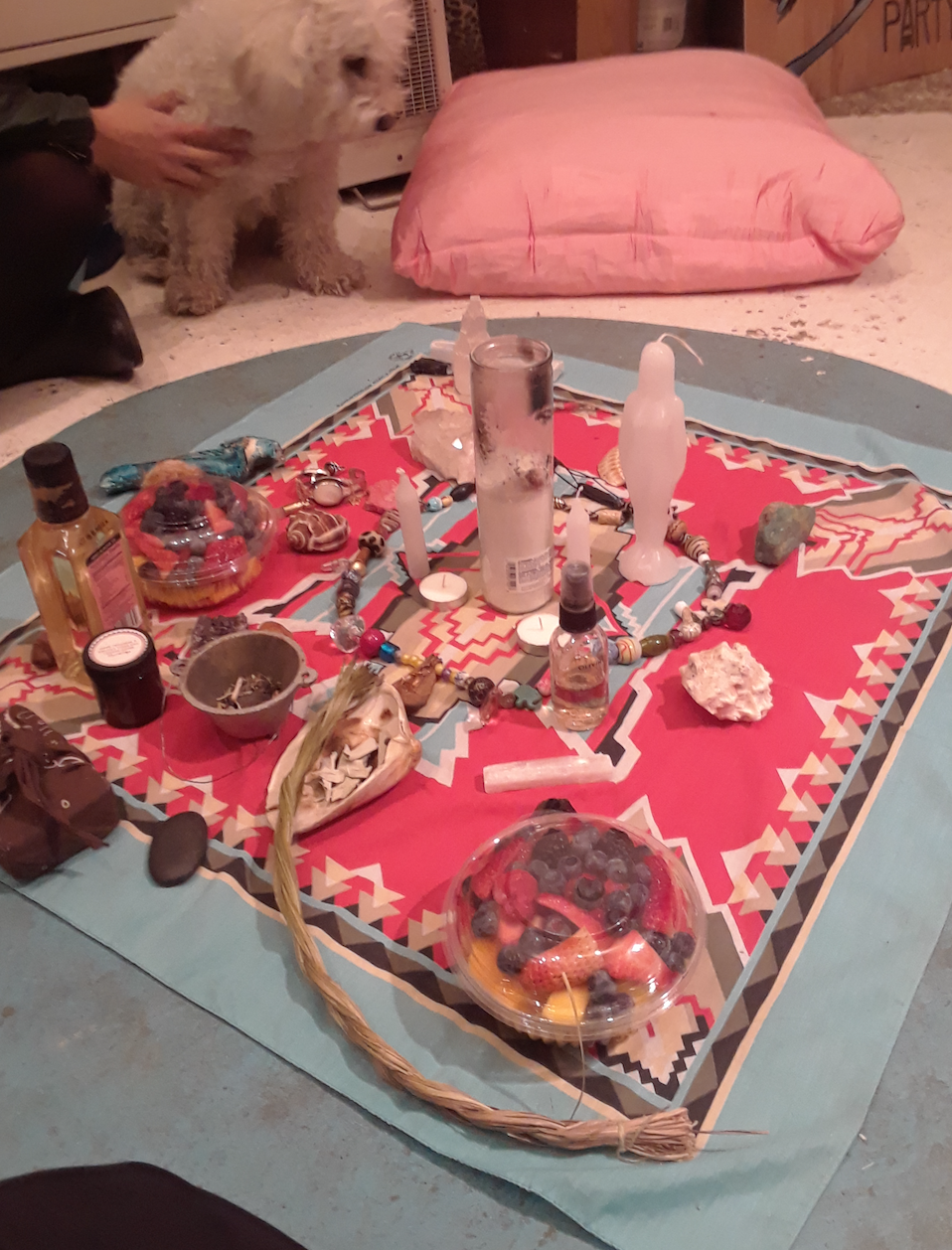
To begin the full moon ceremony we sit down in a circle around a square bandana with a blue and red geometric pattern. This is our altar — the bandana is decorated with crystals, geodes, sage, candles, a beaded necklace, and seashells. We are instructed by Staci to put on the altar an object that we want to be charged. Some women have brought their own crystals, some put in their jewelry, and I put in my pen for lack of an object, but feel chuffed realizing that it has symbolic significance for my nascent writing career. My pen needs all the energy it can get. 

After making salutations to the north, west, east, south, sky and ground, we go around the circle and each woman gets a chance to do an emotional check-in on our head and our heart. We each go around and say what’s on our minds in life right now and how we are feeling emotionally. I share about writing projects I’m worried about and how I’m feeling about a new guy I’m dating.

As the night wears on, I slowly steep in the warm sharing energy of the group. Everyone is open, honest, and taking great care to foster a kind of sacred space opening up between all the women in the circle. Later on we do a self breast massage which might have initially seemed silly, but by that point in the evening I am in a relaxed meditative state and it all makes sense. We have to release negative energy and demonstrate physical care toward ourselves among other women.

At the end Staci asks us to write down some introspective questions. What are some areas in life that have meaning to me? What makes me feel nurtured? We share our answers and make promises to ourselves in the form of a mantra. Mine is, “remember my power.” Afterward, I feel closer to these women and everyone seems relaxed, happy, and caring. Everyone is very concerned about me riding home in the rain but I roll away into the night, the glow of the little shop fading behind me. 

~~

The next time I’m at Cult Party, they are hosting a clothing drive for a women’s shelter. As I walk into the store I hear someone say “I wish I could live here,” as they study some of the colorful bits and bobs of the shop. I see Debbie, and we talk with her friend about the full moon ceremony Debbie and I attended. Lear is puttering around the shop, still without his mom but remarkably less whiny and more relaxed with his surroundings this time around.

I am eventually drawn to the tarot card reader in the corner. Her name is Claire. She looks like a young Professor Trelawney– long blonde hair, big stone earrings, matching necklace, and large wire rim glasses. I put ten dollars in her donation jar and we begin. She starts by holding my hand while I hold the tarot card deck in the other. I moved to New York a few months ago and haven’t had much physical human contact, so her hand holding mine is a little startling but really nice. As I tell her about my question for the cards and we begin to pull them, I get this spine tingling feeling in my lower back.

This happens every time I get my cards read or when I’m being “seen” somehow by the divine– coffee ground readers in Istanbul, palm readers at a fair. It’s not the same as the excited, but mostly depthless feeling of astrology– where it is fun to find characteristic matches like, say, a crossword puzzle, but it never calls up my core. The tingly feeling is a manifestation of a few things — having someone dedicate such directed care and energy toward me, plus a sense that with our interpretation of the cards we are channeling something higher, sacred, divine. For a brief moment we are calling up something written in this shared moment of curiosity and discovery– the humanity in a desire to learn the truth. 

And in the end it is an act of care. Getting my tarot cards read feels like when someone unexpectedly gives me a shoulder massage. I hold very still, in an effort to not spook them, and so that it might continue forever. But the feeling of wanting it to last as long as possible clouds the pure goodness of the feeling. It nags me out of the moment– always keeping one eye on the inevitable end while wishing it away instead of enjoying and appreciating the moment of care. 

A 2017 study in the American Journal of Preventive Medicine showed that for people aged 19-32, hours of internet and social media usage heavily correlates with feelings of isolation and loneliness. That this is the same age group of women taking up witchcraft, does not feel like a mistake.

Alex Mar, author of Witches of America, wrote after her long investigation of witch groups across America that “We don’t need a consensus on what does or does not have meaning.” We merely need “strategies for staying alive.” She concluded, “When you have that feeling, of an encounter with something greater than yourself– however subtle, whatever form it takes, trust it. It is evidence enough.”

Rolling away from Cult Party on my bike again I think she’s right. Something like religion is really just a way to feel a solace of the human spirit with others. Reaching out for a cosmology, a social space, and a sense of power over our own destinies– this can take any form. 

The last two cards I pulled with Claire were Temperance, signifying a balance and two forces coming together to change each other; and Six of Pentacles, signifying an exchange between two people for a give and take. The cards have spoken. 


Callie Hitchcock is a journalism Master's student at NYU in the Cultural Reporting and Criticism program. Callie has written on gender, sexuality, and culture for Slate, LA Review of Books, Slutever, Bust Magazine, and The Believer.
In Occult Tags witchcraft, brooklyn, cult party, callie hitchcock, magic, feminism
Comment

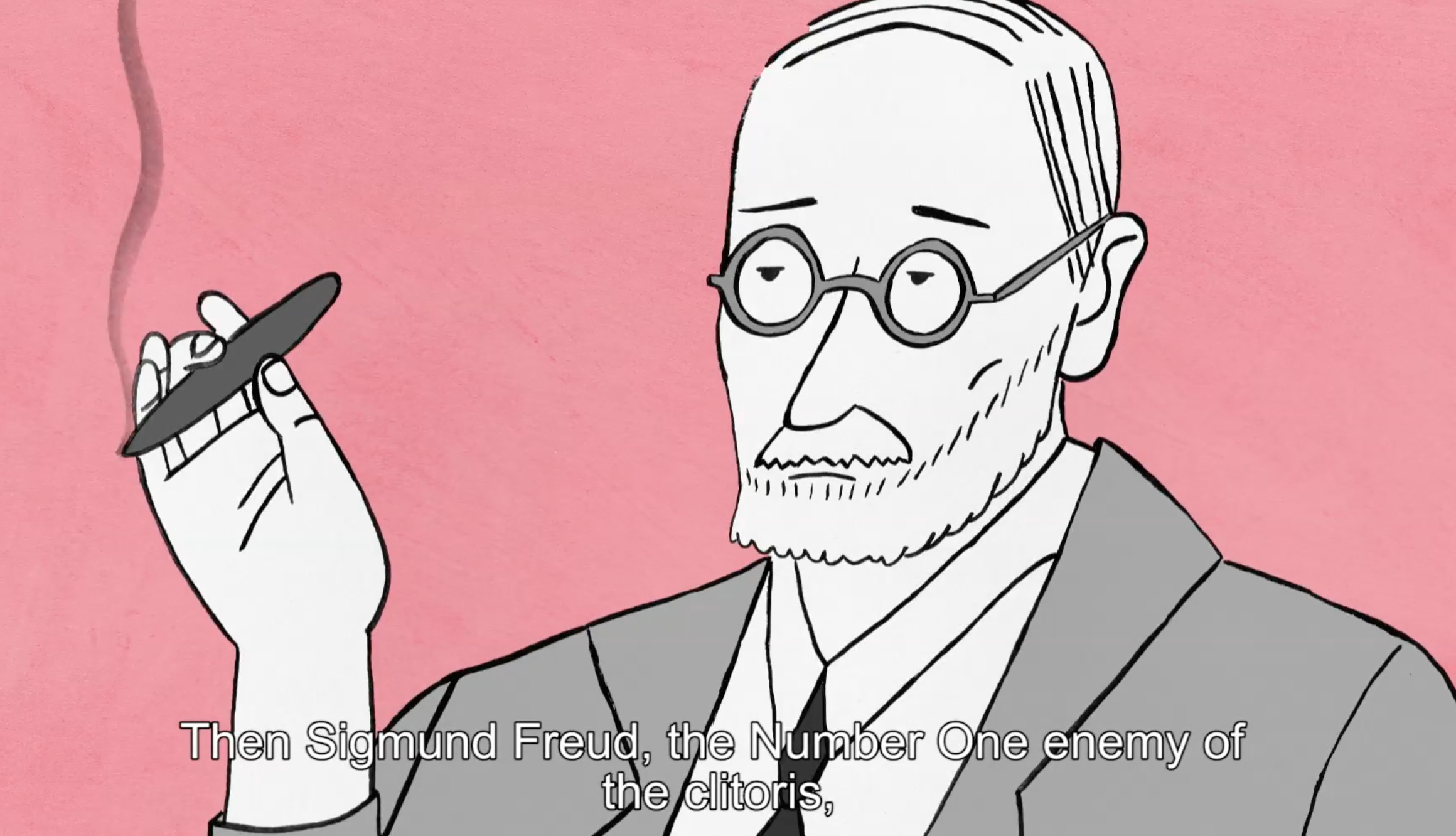
Watch This Animated Documentary to Learn About the Clitoris

June 21, 2017

It's pretty great and hardly needs an introduction. The film itself was created by Lori Malépart-Traversy in 2016, and won a myriad of awards. 

Read More
In Sex Tags feminism, sex, video
Comment
Anna Marcell

Anna Marcell

What I’ve Learned from Dating Women Who Have Been Raped

March 3, 2016

In the way you would tense your muscles to hold your bones as the train comes towards you, you tried to keep her inside the devout armor of you. But she had her own. You are just as woman and susceptible, anyway.

Read More
In Confession Tags rape, sexual assault, women, feminism
Comment
Samantha Sealy

Samantha Sealy

I Was Sexually Assaulted on Valentine's Day

February 11, 2016

It happened on a Saturday.

My assailant took one of my favorite childhood holidays from me. Valentine's Day: foil cards exchanged in class, reading Sweethearts before popping them in my mouth, getting an annual box of chocolates and a cheap locket from my mom. 

Read More
In Confession Tags sexaul assault, rape, Valentine's Day, consent, feminism, emotional abuse, Alaina Leary
Comment
Francesca Woodman

Francesca Woodman

On Embodiment, Body Shame & Feminism

February 8, 2016

BY AMANDA FEINMAN

I spend a lot of time distancing myself from my body. I do not like to be present here, in these bumps and curves, these long bones. I like to be elsewhere--in a book, a dim coffee shop, the arms of a friend. Wherever it’s warm, distracting, and easy.

I haven't loved my body in a long time. I haven't loved my body in almost as long as I can remember.

I am a good feminist. In my big brain, my quick tongue, and my early-onset frown lines, I am. I am the Articulate Explainer and the Worried Analyzer. I shout at the movies when women are silent (or fetishized, tortured, or altogether absent). I rage about choice, and the products meant to fix our tired faces. I say I love you to the beautiful women around me, for their creativity, their bravery, their loss.

My mother, who gave us the moon and the stars and a couple of space rocks, too, for good measure. My sister, bounding--strides bold and wide--after what she wants. My roommate, dancing across our tiny apartment, flexible limbs as strong as her will. The women writers and speakers and thinkers who, through their passion and articulation, have shaped me. 

Because of these women, and for their sake, I am a good feminist.

But in my limbs, in my belly, I don't always know that I am. I wonder if I can use that sacred label--"feminist:" its soft, welcoming vowels and staccato, muscular consonants, all working to shoulder the burden of a century. When I'm inside myself and want to leave, can I use it?

When it's well after midnight, I close my eyes against the loneliest sounds New York has to offer, and wish to have another body. I wish to trade mine; to transfigure mine; to sharpen mine; to fold mine into shapes it isn't. Or to not have a body at all--to realize, by some miracle, that I have developed the ability to separate my soul from my biology, and to float above myself, fleshless and free. When I sit at my desk and the rim of my jeans digs into my stomach, I dream of this. When I feel the languor of an oversized meal pressing in on me, I ache to float away. To graze the ceiling, look down at my own sleeping form, and breathe easy with weightlessness.

Can I claim "feminist," in all its absolute heft, when I fall into this pattern, again and again? When I look down at the soft creature of myself and whisper, "I do not want you, I never wanted you, I do not love you?" When I do not wish to embody myself?

The Beginning

I was a little girl like every little girl--mouth of crooked teeth, small head whirring. I was coarse and blunt as the trees and the sidewalk. I lived for cheese and bread and chocolate, all the things that still make me weak in the knees. I was so loud. I said "I want" and "I don’t want," meaning what I said. I stood naked in the changing room at camp, swapping stories with the other naked girls. We had to be reminded to get dressed, or we’d be late to our next activities. I was that absent-minded, un-preoccupied, kind of electric.

I changed. I grew tall--taller than all of the girls and most of the boys. I grew breasts that I was ashamed of, that I wished would shrivel back into my spine like raisins from grapes. The jagged boyish edges of my waist, stomach, and hips were gone, in a mess of softness that I loathed.

Things changed.

There was Alexa, in the gym locker room, who looked down at the small roll of flab on my belly and quietly commented. Gone, apparently, were the girlhood days of changing together, dutifully forgetting our nakedness. I can still conjure that moment--high-pitched chatter, sticky lip gloss around her sneer--in all of its gruesome clarity.

There were boys on the bus with opinions about my chest: full, abhorrent, and wasteful, totally inaccessible to them behind my insistent chastity. Wrong was I to be cursed with D cups; wrong was I not to share them.

There was television, there were ads, and the process of learning how to hate ourselves. There were men on the street with opinions to share. There was my mother's own quiet dieting, self-sidelining at family dinners. There was the sudden pressure to engage in self-negation: "I wish I had," and "I can’t have." Forlorn phrases, reverberating against our lockers.

This story is familiar to many women. This is the predestined paradigm shift. Somewhere between the homeroom bell and the eighth grade prom, you realize your hips are wide, or your ass is flat, or your legs are bony. You get called a name. You understand--wholly, devastatingly--that you are wrong in a significant way. You simply never noticed before.

It happens quite quickly that the whole world, once glossy with promise, grows oil-soaked.

When I (eventually, finally) lost my virginity, I was a tenant in a body that had misplaced its electricity. Mine was a deeply uncomfortable body, coursing with fearful self-doubt. It happened on a cold bathroom floor on a night when I should have been studying, with a boy who held and handled my body with fumbling eagerness, the kind that doesn’t ask questions. In the end, he didn't care enough about it.

How, in light of everything, could I?

The Hiatus

I drifted up the spine of the Hudson River, and found myself at a small college. I studied literature, I made theatre, I changed my wardrobe. I stumbled upon some new understanding.

That tiny haven of all things liberal and artsy and bookish was intoxicating. I fell in love with my classmates’ hip clothes and distant accents. I fell in love with a few of them for real. I idolized professors with booming voices, who thundered about racial identity and the construction of nationhood to hushed and rallied crowds. I adored the sleepy ones, too, who confused cultural references and could never get the projector to work, but whose sturdy murmured wisdom about Ophelia set me alight.

I became a feminist there--something that had always existed, prenatal, inside me, but which was finally given the tools to be. I read de Beauvoir and Alice Walker on Sunday afternoons, looking out across campus through stained-glass library windows. I went to protests and lectures, drank in performance art pieces. I fit comfortably into my shiny new consciousness, and my new oversized sweaters. They never put me in the college brochure, but they damn well should have. 

Out of me, yolk broken open, flowed all I could do: I could write! I could speak! I could lead a team of people with power tools! I explored, I volunteered, I made art. I connected with people who inspired me, and who wanted to hear what I had to say. People who read bell hooks and made soundscapes (who knew what a soundscape was in the first place!). These people, spread on the lawn in their multicolor, talking about taking up space. Demanding it. It was cool to be Big there; to be Present. The notion rocked me.

This, of course, is an overly idyllic picture of an earthly place. That campus was, in reality, full of imperfections and complications. My body shame quieted there--went on hiatus--but did not disappear. There were jealous glances at other girls’ waists, tiny in their light-wash jeans. There was shameful competition over boys--a crushingly un-feminist late night numbers game (shouldn't we have known better? Feminism, I have learned, doesn't always work like that.) There were evenings spent alone in fear--fear that this body wasn’t worthy of value, or remotely desirable.

And there were the boys who did spend the evening, but who occupied this body disrespectfully. There was allowing them to do so repeatedly, when my embodied feeling was one of self-disgust. There was the hulking drunk stranger who--on someone’s stained couch, in a roomful of people--grabbed me, hard, between the legs. There was saying nothing; getting up quietly, like I needed something from the kitchen. My body, shrinking further into itself.

But I was lucky. When I left college, I was sad to my very core. Without the nurturing squeeze of those collegiate spaces--in which I experienced the first true, enthusiastic affirmation of my own existence--I didn’t know what I wanted, what to be, or how.

When that campus was gone, my familiar monster slid easily, so easily, back into place. It had never been banished at all--it had merely been ushered into unwilling hibernation. It was postponed, but not quelled, in its hold over me. It waited patiently for the return of weakness, anticipating the moment when my confidence would lower and my self-worth would become just depleted, just translucent, enough. 

The Hunger Year

Graduation and my drop in weight came one upon the other so seamlessly, at first I barely noticed. I lost the campus I loved--worn brick paths, titanic trees, musty books, and my own sense of my feet on the ground. I lost the sense of purposeful waking, the conversation, the rallying cry to take up space. And I lost pounds.

My body shame--black virus of the mind, familiar monstrosity, discolorer of everything--awoke on a searing summer day. I had been staring into the face of The Real World and saw, to my horror, my own body shame staring back. It was gleeful, smirking with the knowledge that it was, once again, at the helm. The ubiquitous "who am I?" that comes with caps and gowns translated so easily into "I am purposeless, I am unworthy"--and then, into "I want a different body. I want no body at all."

The monster made a home for itself behind my eyes, stronger than ever before, and I stopped feeding my body for the better part of a year.

I started running, too. I ran in the mornings, right when I woke up--a shock to my muscles, like dousing my body in flame just as it roused. So awful and so great, to run until I was on fire. I ran until I broke a bone in my right foot.

I stopped drinking. No more happy hours with smiling college friends, half-off margaritas be damned.

I thought often, dimly, that I should know better. I was no longer the girl on the bus, or on the bathroom floor. I was equipped with feminist consciousness, and I understood firsthand the strength that it can offer. I should know better. I should not be succumbing to disordered thoughts about food. I should not be partaking in such unhealthy practices. I should be able to control this.

I couldn't, of course, and the thought only distressed me further. 

I lost count of the compliments. One of the most frightening things about that year, in hindsight, is how many young women expressed awe and envy at the changes my body underwent. I couldn’t truly hear them--they faded, one after the other, into meaningless haze. It wasn't about compliments. It was an instinctual reaction, deeply entwined with my sense of post-grad confusion and despair, and yet somehow predating it, too. Somehow, dating all the way back to Alexa, and the bus, and the television ads. Not eating enough--an irrational, alien thing for a human animal to consider--made so much sense to me, I didn’t think much about it at all.

And Now

I have emerged on the other side of that awful stretch of self-denial, and I know a few more things than I did before.

I know that disallowing my body was another way to distance myself from it. To make it smaller, less meaningful. To avoid inhabiting it.

I sought a way to make my anxieties about adulthood, my self-doubt, my renewed feelings of purposelessness, less manifest. Because of something deep in my marrow, something unconscious and sinister, I believed that reducing a physical reality--my breathing, flesh-and-bone self--could chip away at a colossal, metaphysical ache.

From the time we are girls, we are taught that to have less body is to have less trauma. To take up less space is to be a worthier female creature. That unhappiness can be cured by careful restraint, calculated self-whittling. For many women, an attempt to reduce pain and anxiety of any origin inspires a reduction of ourselves, quite literally. It didn't matter what I had learned in college, or how many thoughtful women had told me to demand to be Big; I believed this message on a much deeper, more instinctual level. These are the messages internalized and calcified young. For what other reason would a person choose to go to bed hungry?

It is not novel to comment that poor body image in Western women is a cultural phenomenon (men have their fair share of problems, too, which I would never deny. I can, however, only speak from what I have lived.) In my (cisgendered, white, heterosexual) female experience of the world, my female body has been the site of evaluation, appraisal, criticism, objectification, rejection, and many types of trauma--even spiritual trauma of the body, and even self-inflicted trauma of the body. Indeed, it was me who neglected to nourish it; it was me who allowed people to touch it without respect. It is me who often recoils from the warm, breathing truth of it, and me who disavows its significance.

I am also a feminist. To reconcile these two truths has taken careful effort. To answer the painful question, on those midnights alone with myself: am I allowed to claim the term, when I cannot display the body positivity I have seen, and read about, and envied? When I cannot fly the banner of self-love? I wonder, even as I crawl achingly toward a soft kind of acceptance, if there is a feminist way to struggle with body shame.

I have worked to find one. "Knowing better" alone does not always change reality. Reading Susan Bordo by late lamplight can give us clarity, but not necessarily cure. We grew up with our monsters, they are parts of us--perhaps dormant, hopefully withered, but present.

First, we must accept that feminists can, and do, internalize dangerous cultural ideas about bodies. Feminists are not immune, because none of us is immune. Feminists can, and do, embody these ideas, and live them. We cannot beat ourselves up for falling victim to a pervasive cultural disease. It does not have to undermine our feminism.

Accepting that I am the product of years of deeply ingrained ideology--years of ads, years of whispers--makes it easier to begin the process of unlearning. This is a daily practice that requires constantly checking, fighting against, and attempting to better, my interaction with the world in relation to my body. It takes the form of so many little things--you can see it, if you know what it looks like. 

It looks like correcting a wince under harsh dressing room light. It looks like having seconds sometimes. Or reveling in the beauty of a sweet potato, a slice of brie, a chocolate covered peanut. It looks like stopping a judgmental thought about another woman’s body in its tracks. It looks like theme parties with weird hats, and late nights, and too much Merlot. It looks like sneaking snacks into the movies in a huge purse. It looks like snoozing sometimes when the gym alarm goes off. It looks like kitchen-sweet smells, and the caring touch of others. It looks like self-forgiveness.

My body shame is not an unfeminist thing that I carry, but something that forces me to unlearn, every day. It forces me to wrestle, push back, think again. This is an integral part of my feminism. Having had body shame for years informs, and shapes, and deepens my feminism.

Unlearning what we were once taught about the female body can allow us to reclaim the narrative of body shame. This does not have to be a story of helplessness; it can be reframed as one of thoughtful struggle, of daily, deliberate transformation.

I must try to be present in this body, because it is my body. I must try not to detach from it, but instead to reestablish what it feels like to be inside it. My home, not my prison. Every time I want to float above my body, to be separate from my body, to have a different body, to not have a body at all, I must struggle--to sit in my limbs, and acknowledge them. To be present here. These are mine, this is mine. This is where I live. 

I do not want to do this work, much of the time. But I must try, all of the time.

Women who struggle with body shame can encourage each other to unlearn and to change. We can be each other’s first advocates. I think of them--a nation of women, haunted by a thing, living with it--whenever I stand in the open fridge door, eternally choosing wisely.

If we try to demand of the universe with our anatomies what we demand with our mouths and our brains, that is an act of feminism. So is embodying our bodies. So is daring to take up space.

I feel a duty to myself, to the women who have raised me, to the feminist champions I admire, to do this. I must try to look down at myself and say--if not "I love you" just yet--at least, "hello."


Amanda Feinman is a writer, theatre artist, and arts administrator based in New York City. In her work (and her life!), she is dedicated to exploring the socially transformative power of the arts, especially as they relate to social justice, feminism, education, and individual empowerment. Things that make her crazy happy include Shakespeare, Sondheim, large dogs, public parks, public radio, and the "witty comedies featuring a strong female lead" Netflix category. She holds a BA in English from Vassar College.

In Confession Tags body dysmorphia, body image, shame, feminism, self-love
Comment

I Had an Abortion 17 Years Ago, This Is My Story

December 1, 2015

I had an abortion some 16 ½ years ago. The climate was very different then: the anti-abortion movement was more fringe and radical, with less mainstream proselytizing, even here in Indiana. The protesters at the clinic numbered in the single digits, and they were confined to an area behind a chain-link fence that stood the entire building’s length from the patient parking lot and entrance. Their chant was audible, but not enough for me to make out the words.

Read More
In Confession Tags confession, abortion, feminism
Comment

How I Taught My Daughters About Their Vaginas

November 19, 2015

I fumbled my way through a long saga about ovaries and eggs and periods, with a brief cameo from semen and sperm.  I must have confused some details about fallopian tubes, because Ava left to fetch The Period Book so we could refer to its helpful diagram of female reproductive organs.  This led to Carmen examining the labeled drawing of the vagina and asking me where the pee came out. 

Read More
In Confession Tags kids, feminism, motherhood
2 Comments

How to Help a Rape Survivor Cope

November 18, 2015

Wedge your arm into someone's intestines, place a bomb, and watch it explode; that is exactly how any survivor feels. All loss, no matter how trivial, is destructive; as Elizabeth Bishop gracefully yet ironically states in her villanelle One Art: "the art of losing isn’t hard to master." While it may become an art to become accustomed to loss (or rather, the art of desensitization) there is no art in grieving a lost identity, and consequently, having to discover it again. Sometimes, we never do discover it, we merely create a new one.

Read More
In Confession Tags rape, feminism, help, grief
Comment

Witchy World Roundup - October 2015

October 31, 2015

Our monthly Witchy World Roundup is curated by Joanna C. Valente. Want to contact her? Email her here.

Hoodoo witches speak out about the appropriation of their magic:

"'Some people will just read one book on Hoodoo and start selling oils online to make a quick buck," he says. "To me, that's appropriation.'"

-Gabby Bess in Broadly.

Why coming out as bisexual shouldn't be an overshare:

"My current closet is a lesbian one. I am a ciswoman who is married to another ciswoman, and, wait for it, we have a child. I have experienced coming out as bisexual very differently from this set of life circumstances. People seem genuinely, if biphobically, concerned for my marriage and family. My bisexuality is a particularly harmful overshare for certain liberal straight people because it ruins their image of me as a respectable gay person who was making them more tolerant."

-Allegra Hirschman in Buzzfeed

Want to be a better poet, but don't have money? Don't worry:

"Take free and low-cost workshops and classes. Find the free ones. Find the low-cost ones. When I made the decision to start writing seriously, I researched on Google and took a number of free one-time sessions through places like the New York Public Library, Gotham Writers Workshop and the Women of Color Writers Community. I went on to take 5-week workshops offered by the Women of Color Writers Community, some of which I was able to take via bartering—a method I talk about later in this post—because they needed the organizational support at the time."

-House of Nadia

What about the spouses of transgender people?

"In the midst of this turmoil, wives are often left feeling like they can’t voice any disapproval without coming across as transphobic. “If you say, ‘Hey, what are the kids going to think?,’ is that transphobia?” asks Laura Jacobs, a transgender psychotherapist who specializes in work with gender nonconformity. “Or is that because you’re really concerned about the kids? Because you don’t know what else to say? Because the kids really are transphobic and you’re being protective of your spouse? The dynamics of that kind of a situation are so complex, but the struggles of the partners are invisible."

-Alex Morris in New York Mag

Because we all love facts about banned books:

"9. From 1990–1999, Judy Blume was one of the most challenged authors, with five books on the most frequently challenged list: Forever, Blubber, Deenie, Are You There, God? It’s Me, Margaret, and Tiger Eyes.

10. Maya Angelou’s I Know Why the Caged Bird Sings is one of the most challenged books of all time, citing “racism, homosexuality, sexually explicit, offensive language, unsuited to age group."

-Krystie Lee Yandoli on Buzzfeed

Why we need to listen to undocumented poets:

"'I’ve been growing up a brown, femme, queer woman of color. The idea of taking up space has always been challenging. You’re not even supposed to be here. You’re supposed to be quiet,” she said. “A lot of the space in my poetry has been intentional about taking up space … That’s just me saying, I’m going to do whatever I want with the page. That is a radical thing, for me.'"

-Corinna Segal for PBS

Because the safest place to bury a body is in another body:

"A Russian can’t write a book without nesting dolls;
burying ourselves in ourselves is in our blood, our mother’s blood.
We birth, we bury, we swallow tongues down the body
buried inside the body. Tongue is a delicacy
you can serve at a funeral. The safest place to bury a body
is at a funeral."

-Sonya Vatomsky in Glittermob

When white voices drown out those of color in the lit world (& the world in general):

"White supremacy tries to reduce people of color to our traumas. Resisting white supremacy means insisting that we are more than our traumas. One quick perusal through the shelves of world literature in any bookstore confirms just what the literary world wants to see from writers of color and writers from developing nations: trauma. Why, for example, is the English-speaking literary world mostly interested in fiction or poetry from China if the writer can be labeled as a “political dissident”? Even better if the writer has been tortured, imprisoned, or sentenced to hard labor by the Chinese government at one point. Surely there are amazing Chinese writers who don’t just identify as political dissidents just as there are many amazing white American writers who don’t identify, or rather, are not identified as one thing. Why are we so perversely interested in narratives of suffering when we read things by black and brown writers? Where are my carefree writers of color at? Seriously, where?"

-Jenny Zhang for Buzzfeed

Because listicles on 10 weird facts about the Salem Witch Trials makes the world more fun:

"Technically, England’s Witchcraft Act of 1735 was still official and on the books until 1951, when it was replaced with the Fraudulent Mediums Act. The language of the original Act wasn’t about persecuting witches per se, but rather made it illegal for people to claim that others were witches. Yet being legally convicted meant that you purported to have the powers of a witch—and in fact, a woman named Jane Rebecca Yorke was found guilty in 1944 under the law, though she was convicted mostly because she was defrauding people with bogus séances."

-Sean Hutchinson at Mental Floss

There needs to be a class on this mini-syllabus on marriage plots:

"Marriage plots are rarely associated with anything beyond supposedly frivolous, Jane Austen-esque “romances”, however our society’s fixation on matrimony continues to permeate art, politics, and literature. If Austen’s views on matrimony exposed economic instability, class restrictions, and patriarchal values, what does today’s culture reveal? Despite the high pedestal marriage is placed on, American media is inundated with rhetoric that does little but force discerning viewers to question the very “values” it supposedly represents. Divorce rates have never been higher, consumeristic wedding culture has never been more exorbitant, “The Bachelor” has just been renewed for its twentieth season—where does this leave us?"

-Meriwether Clarke on Entropy

In Occult Tags feminism, social justice, occult, hoodoo, voodoo
Comment
Featured
‘in the glitter-open black' — poetry by Fox Henry Frazier
'poet as tarantula,  poem as waste' — poetry by  Ewen Glass
'poet as tarantula, poem as waste' — poetry by Ewen Glass
'Hours rot away in regalia' — poetry by Stephanie Chang
'down down down the hall of mirrors' — poetry by Ronnie K. Stephens
'Grew appendages, clawed towards light' — poetry by Lucie Brooks
'do not be afraid' — poetry by Maia Decker
'The darkened bedroom' — poetry by Jessica Purdy
'I am the body that I am under' — poetry by Jennifer MacBain-Stephens
instagram

COPYRIGHT LUNA LUNA MAGAZINE 2025