• Home
  • indulge
  • new poetry
    • About Luna Luna
    • resources
    • search
  • editor
  • dark hour
  • submit
Menu

luna luna magazine

  • Home
  • indulge
  • new poetry
  • About
    • About Luna Luna
    • resources
    • search
  • editor
  • dark hour
  • submit
shadow
A Writing Spell: Honoring Your Many Selves
Mar 1, 2021
A Writing Spell: Honoring Your Many Selves
Mar 1, 2021
Mar 1, 2021
An 11-Line Poetry Spell For Healing
Mar 1, 2021
An 11-Line Poetry Spell For Healing
Mar 1, 2021
Mar 1, 2021
How To Write Powerful Poetry Spells
Feb 28, 2021
How To Write Powerful Poetry Spells
Feb 28, 2021
Feb 28, 2021
Here Is Your Scorpio Homework This Season
Oct 25, 2020
Here Is Your Scorpio Homework This Season
Oct 25, 2020
Oct 25, 2020
3 Transformative Life Lessons Scorpio Teaches Us
Oct 25, 2020
3 Transformative Life Lessons Scorpio Teaches Us
Oct 25, 2020
Oct 25, 2020
Restorative Grief: Letters To The Dead
Oct 23, 2020
Restorative Grief: Letters To The Dead
Oct 23, 2020
Oct 23, 2020
A Santa Muerte Rebirth Ritual + A Tarot Writing Practice
Oct 6, 2020
A Santa Muerte Rebirth Ritual + A Tarot Writing Practice
Oct 6, 2020
Oct 6, 2020
Witches, Here Are The New Books You Need
Nov 14, 2019
Witches, Here Are The New Books You Need
Nov 14, 2019
Nov 14, 2019
3 Dream Magic Rituals And Practices
Nov 12, 2019
3 Dream Magic Rituals And Practices
Nov 12, 2019
Nov 12, 2019
How To Use Tarot Cards for Self-Care
Nov 11, 2019
How To Use Tarot Cards for Self-Care
Nov 11, 2019
Nov 11, 2019
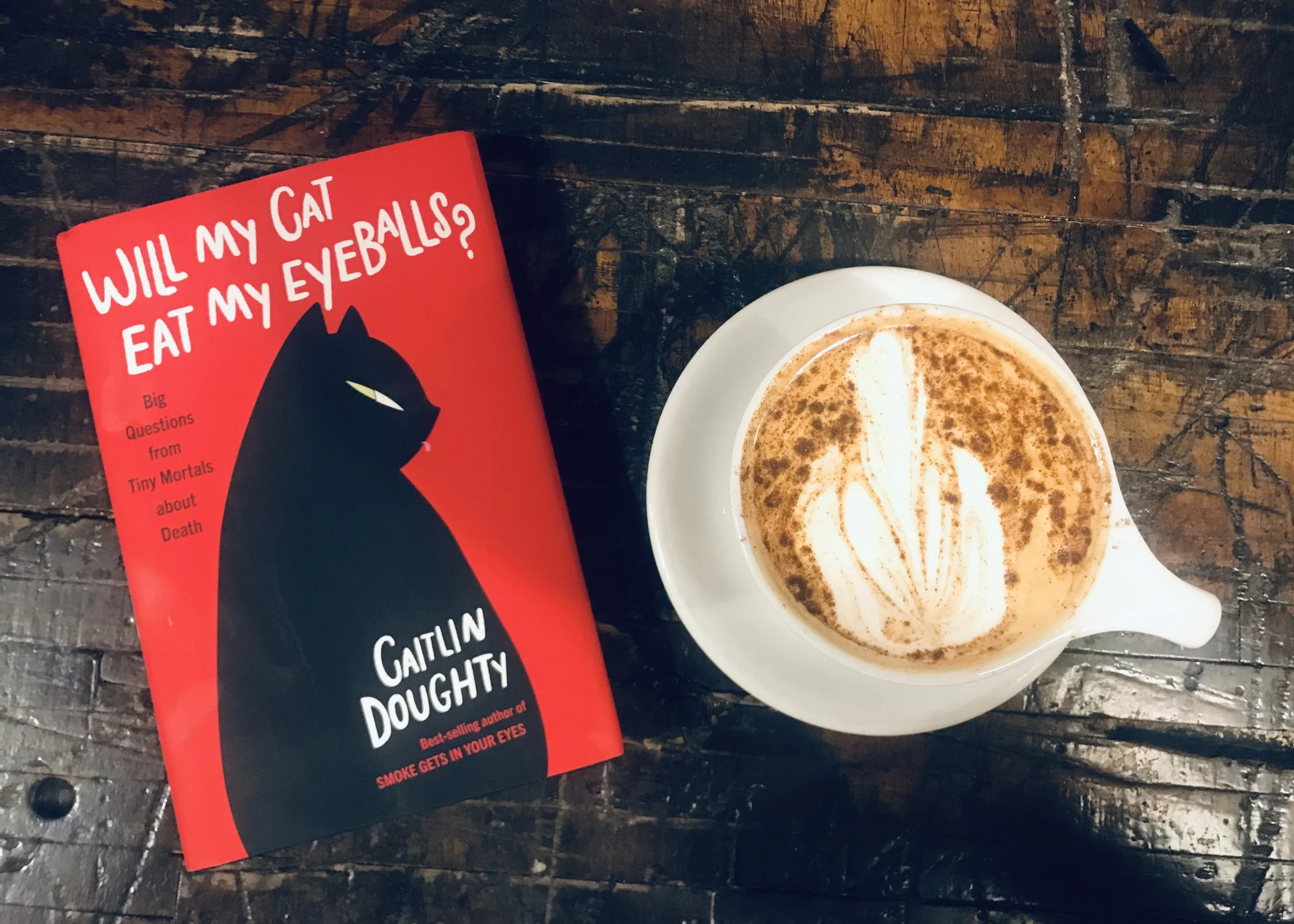
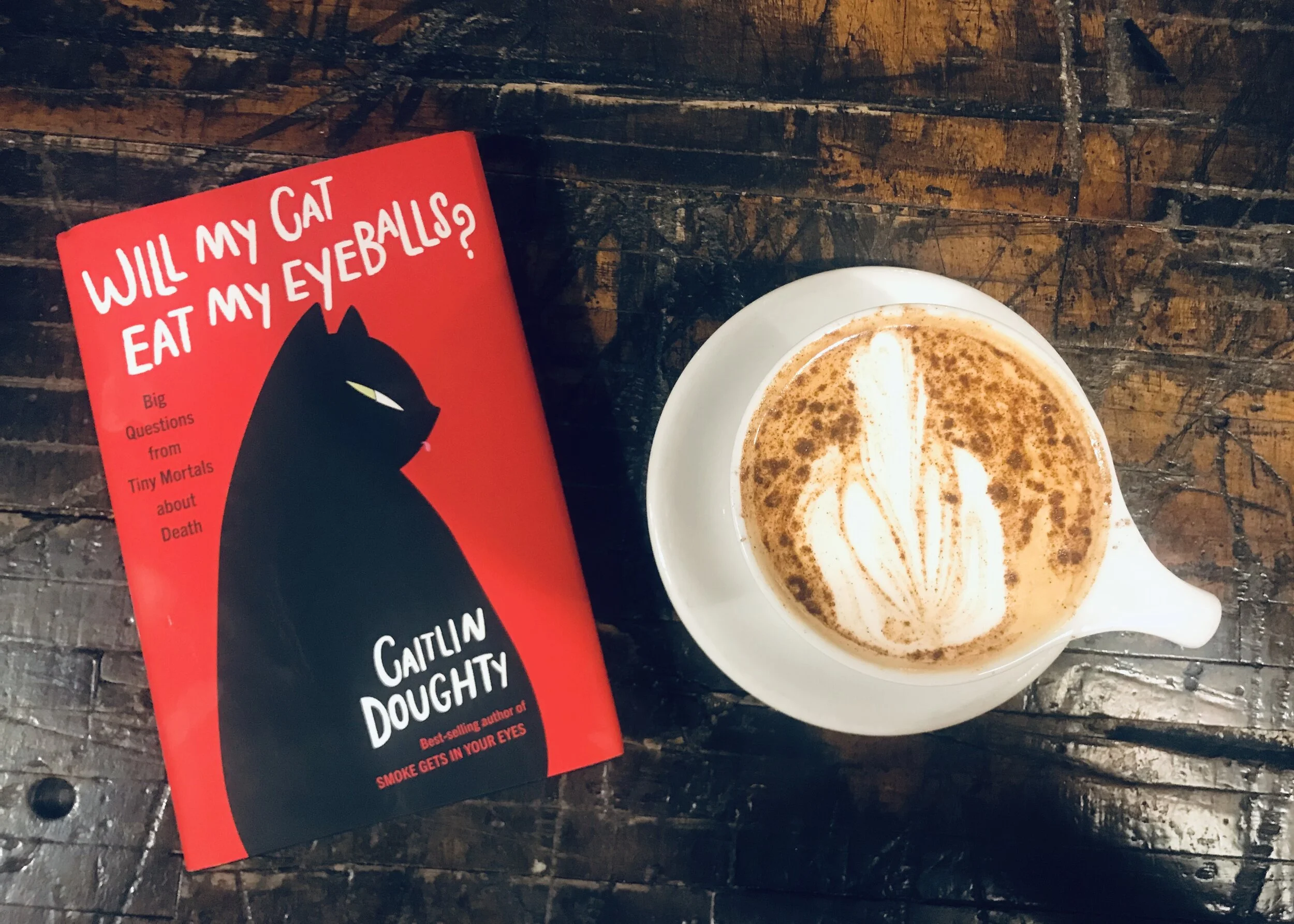
A Review of Caitlin Doughty's 'Will My Cat Eat My Eyeballs?'
Oct 25, 2019
A Review of Caitlin Doughty's 'Will My Cat Eat My Eyeballs?'
Oct 25, 2019
Oct 25, 2019
Nimue, The Deity, Came To Me In A Dream
Sep 17, 2019
Nimue, The Deity, Came To Me In A Dream
Sep 17, 2019
Sep 17, 2019
Astrological Shadow Work: Healing Writing Prompts
Sep 9, 2019
Astrological Shadow Work: Healing Writing Prompts
Sep 9, 2019
Sep 9, 2019
The Witches of Bushwick:  On Cult Party, Connection, and Magic
Jul 23, 2019
The Witches of Bushwick: On Cult Party, Connection, and Magic
Jul 23, 2019
Jul 23, 2019
7 Magical & Inclusive New Books Witches Must Read
May 15, 2019
7 Magical & Inclusive New Books Witches Must Read
May 15, 2019
May 15, 2019
Working Out As Magic & Ritual: A Witch's Comprehensive Guide
May 14, 2019
Working Out As Magic & Ritual: A Witch's Comprehensive Guide
May 14, 2019
May 14, 2019
Letters to the Dead: Shadow Writing for Grief & Release
Feb 8, 2019
Letters to the Dead: Shadow Writing for Grief & Release
Feb 8, 2019
Feb 8, 2019
How to Add Magic to Your Every Day Wellness Routine
Feb 5, 2019
How to Add Magic to Your Every Day Wellness Routine
Feb 5, 2019
Feb 5, 2019
Ritual: Writing Letters To Your Self — On Anais Nin, Journaling, and Healing
Jan 31, 2019
Ritual: Writing Letters To Your Self — On Anais Nin, Journaling, and Healing
Jan 31, 2019
Jan 31, 2019
How Rituals Can Help You Gain Confidence
Jan 17, 2019
How Rituals Can Help You Gain Confidence
Jan 17, 2019
Jan 17, 2019
Hearthcraft & the Magic of Everyday Objects: Reading Arin Murphy-Hiscock's 'House Witch'
Jan 14, 2019
Hearthcraft & the Magic of Everyday Objects: Reading Arin Murphy-Hiscock's 'House Witch'
Jan 14, 2019
Jan 14, 2019
True to The Earth: Cooper Wilhelm Interviews Kadmus
Nov 26, 2018
True to The Earth: Cooper Wilhelm Interviews Kadmus
Nov 26, 2018
Nov 26, 2018
Between The Veil: Letter from the Editor
Oct 31, 2018
Between The Veil: Letter from the Editor
Oct 31, 2018
Oct 31, 2018
Shadow Work with Light Magic for Dark Times
Oct 31, 2018
Shadow Work with Light Magic for Dark Times
Oct 31, 2018
Oct 31, 2018
2 Poems by Stephanie Valente
Oct 31, 2018
2 Poems by Stephanie Valente
Oct 31, 2018
Oct 31, 2018
A Poem in Photographs by Kailey Tedesco
Oct 31, 2018
A Poem in Photographs by Kailey Tedesco
Oct 31, 2018
Oct 31, 2018
Photography by Alice Teeple
Oct 31, 2018
Photography by Alice Teeple
Oct 31, 2018
Oct 31, 2018
A Simple Spell to Summon and Protect Your Personal Power
Oct 31, 2018
A Simple Spell to Summon and Protect Your Personal Power
Oct 31, 2018
Oct 31, 2018
November and Her Lovelier Sister
Oct 31, 2018
November and Her Lovelier Sister
Oct 31, 2018
Oct 31, 2018
A Spooky Story by Lydia A. Cyrus
Oct 31, 2018
A Spooky Story by Lydia A. Cyrus
Oct 31, 2018
Oct 31, 2018
antonia-felipe-Tg3IDFoJqos-unsplash.jpg

Restorative Grief: Letters To The Dead

October 23, 2020

BY LISA MARIE BASILE


I’ve been thinking about how we, as a species, are collectively and individually grieving for our fellow humans — perhaps they are strangers or maybe they are our family members or friends — during this COVID-19 crisis. In the midst of the terror, it’s hard to slow down and say goodbye, especially on the global, collective level. It is a prolonged state of waiting to grieve because the turmoil rolls on and on. For me, that’s very difficult. I feel an urge to mourn for those lost, even if I didn’t know them.

For many families, a proper goodbye wasn’t or won’t be possible. And for others, the heaviness of worldwide grief (and the chronic anticipatory loss) accumulates within our cells, changing us from the inside, as a species.

A friend of mine said she’d lost her beloved grandmother to COVID-19. It was sudden and horrifying. She hadn’t been able to process it and feels she didn’t have a way to say goodbye. I felt utterly helpless and told her so, but offered her my shoulder and my phone line for whenever she needed a friend.

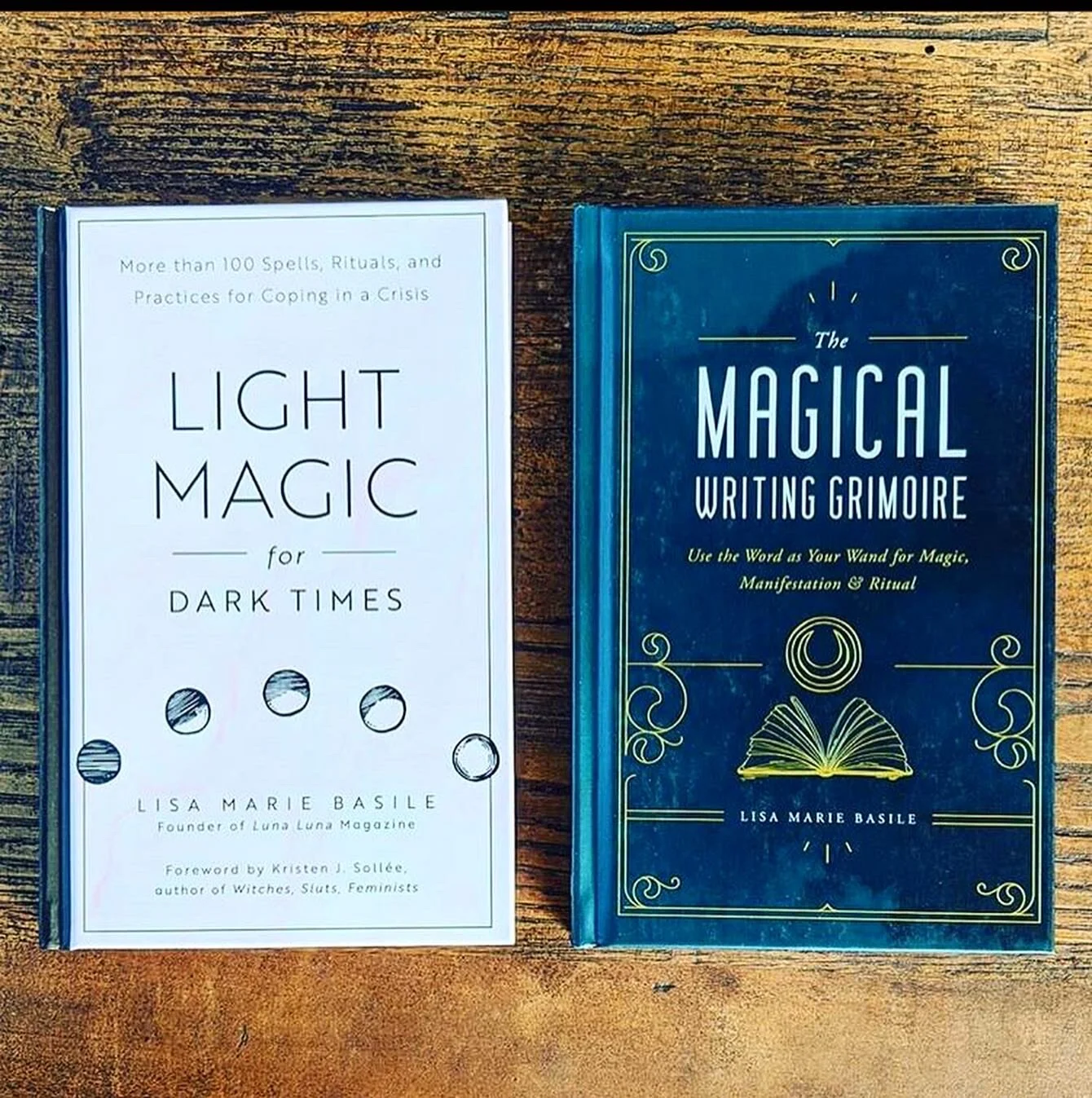
Prior to COVID-19, I’d been dealing with the aftershocks of a year of death (2017) that forever changed me. It pushed me to explore and meditate on grief and loss, and I’ve deeply integrated that into my writing. I still have fewer answers and more questions. I still hurt. In my poetry and in my nonfiction books, including Light Magic for Dark Times and The Magical Writing Grimoire, I offer grief rituals.

There is no way to skip over or lessen the impact of grief. Truly. The only way out is through, I believe now. More so, both ritual and journaling aren’t solutions or cures or magic elixirs for the sludge of grief. The sting of loss is part of the condition of being alive, and you may mourn hard for a lifetime. But there are small things we can do that can help us navigate our pain, find clarity, and work toward a semblance of closure or a space of finality — and science tells us that writing about grief works for many people (although it’s not a replacement for therapy).

For this reason, I’ve included a ritual — Restorative Grief: Letters to the Dead — from my book, The Magical Writing Grimoire below. Maybe you’ll use it for someone you’ve lost in the past, or perhaps you’ll write a letter to the collective dead, to the many who have lost their lives in your city or community. Whatever you use it for, I hope it helps you find some stability and insight.

Below, I’ve included the original text for the ritual, along with the final pages from my book. Feel free to share and copy/download them.

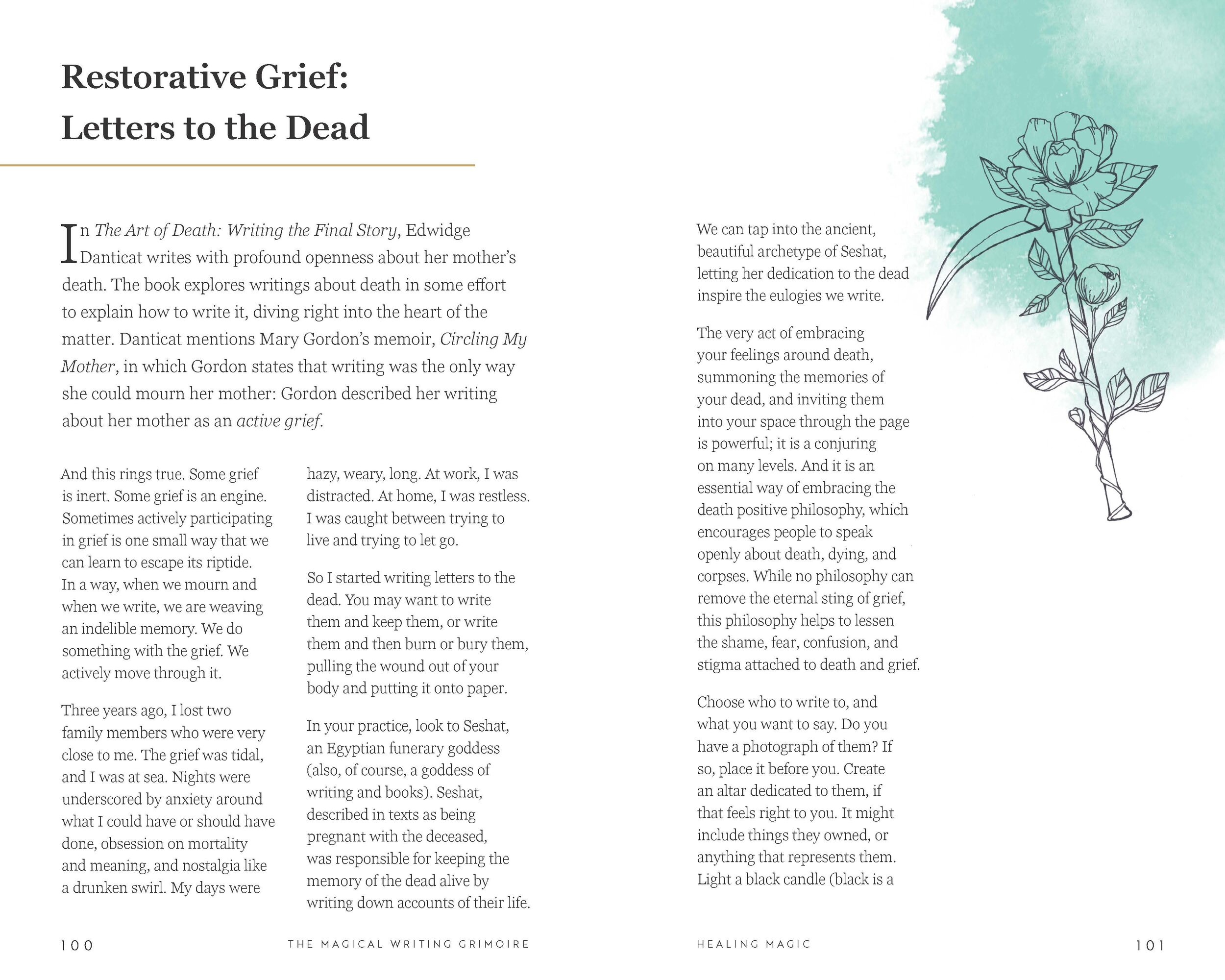
Restorative Grief: Letters to the Dead

InThe Art of Death: Writing the Final Story, Edwidge Danticat writes with profound openness about her mother’s death. The book explores writings about death in some effort to explain how to write it, diving right into the heart of the matter. Danticat mentions Mary Gordon’s memoir, Circling My Mother, in which Gordon states that writing was the only way she could mourn her mother. Gordon described her writing about her month as an active grief.

And this rings true. Some grief is inert. Some grief is an engine. Sometimes actively participating in grief is one small way that we can learn to escape its riptide. In a way, when we mourn and when we write, we are weaving an indelible memory. We do something with the grief. We actively move through it. 

Three years ago, I lost two family members who were very close to me. The grief was tidal, and I was at sea. Nights were underscored by anxiety around what I could have or should have done, obsession on mortality and meaning, and nostalgia like a drunken swirl. My days were hazy, weary, long. At work, I was distracted. At home, I was restless. I was caught between trying to live and trying to let go.

Grief is a sickness that grows without a cure. It affects more than the body, more than the mind. It affects the essence of us, our starstuff, our souls, our hearts, our energy. It metastasizes over a lifetime, and with each new death, it takes a new organ. 

So I started writing letters to the dead. You may want to write them and keep them or write them and then burn or bury them, be pulling the wound out of your body, and putting it onto paper.

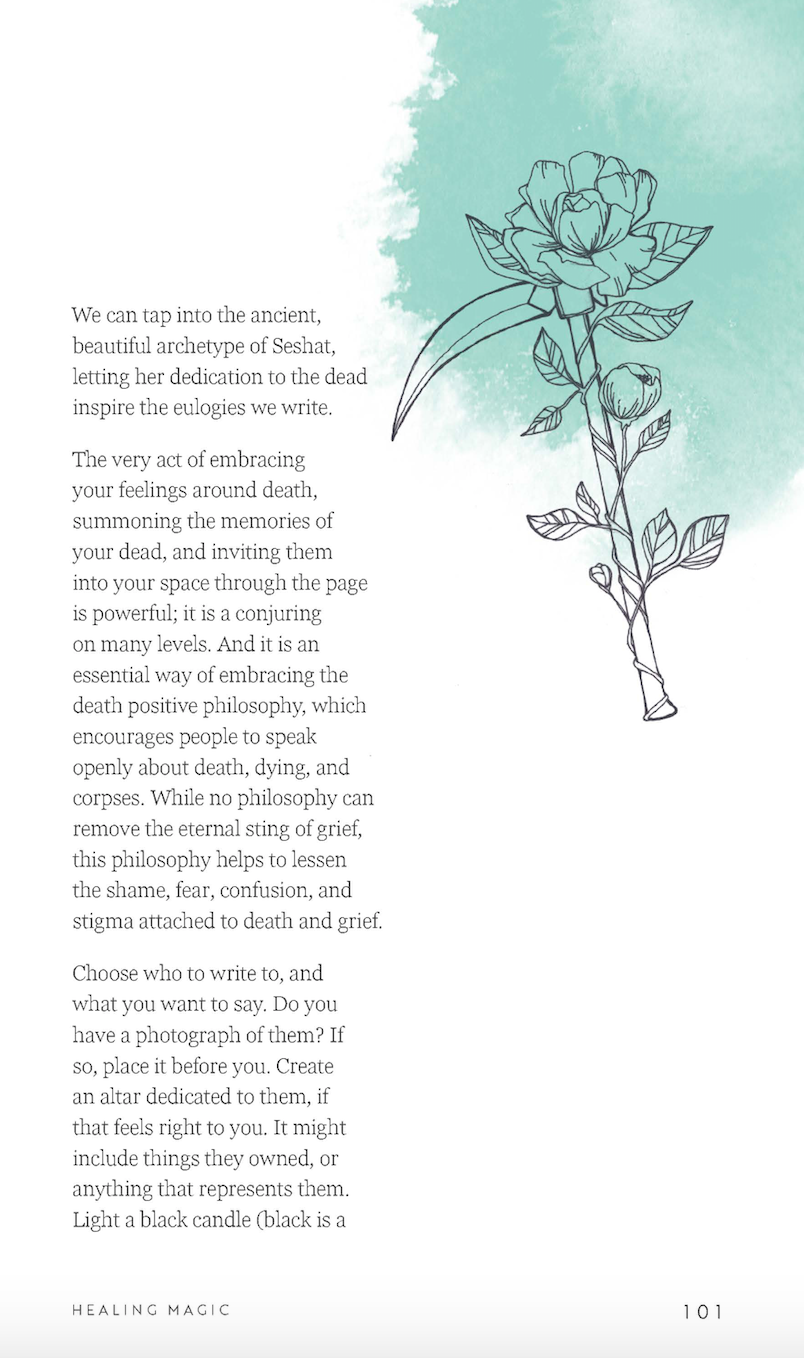
I like to look to Seshat, an Egyptian funerary goddess (also, of course, a goddess of writing and books). Seshat, described in texts as being pregnant with the deceased, was responsible for keeping the memory of the dead alive by writing down accounts of their life. We can tap into the ancient, beautiful archetype of Seshat, letting her dedication to the dead inspire the eulogies we write.

The very act of embracing your feelings around death, summoning the memories of your dead, and inviting them into your space through the page is powerful; it is a conjuring on many levels. And it is an essential way of embracing the death positive philosophy, which encourages people to speak openly about death, dying, and corpses. While no philosophy can remove the eternal sting of grief, this philosophy helps to lessen the shame, fear, confusion, and stigma attached to death and grief.

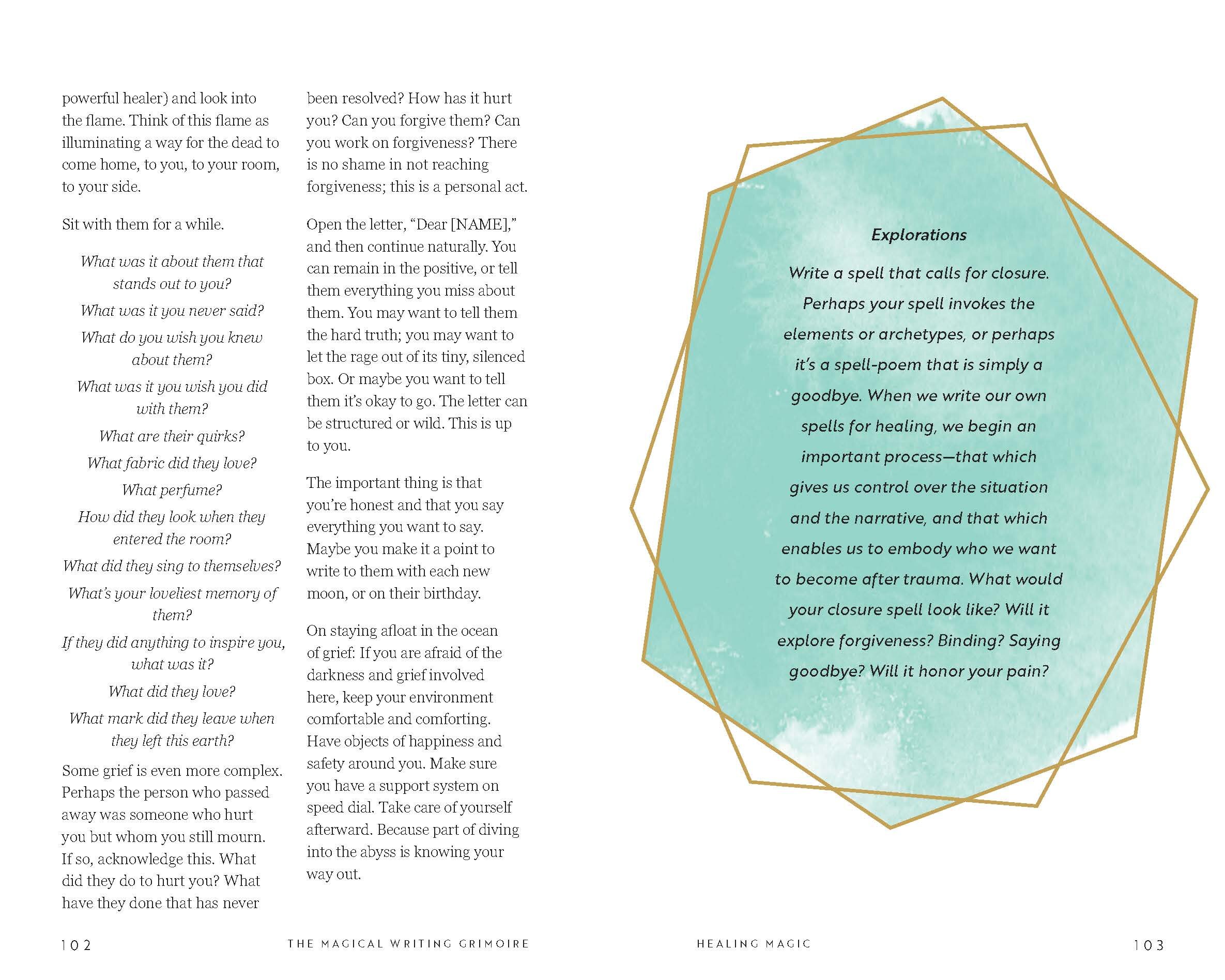
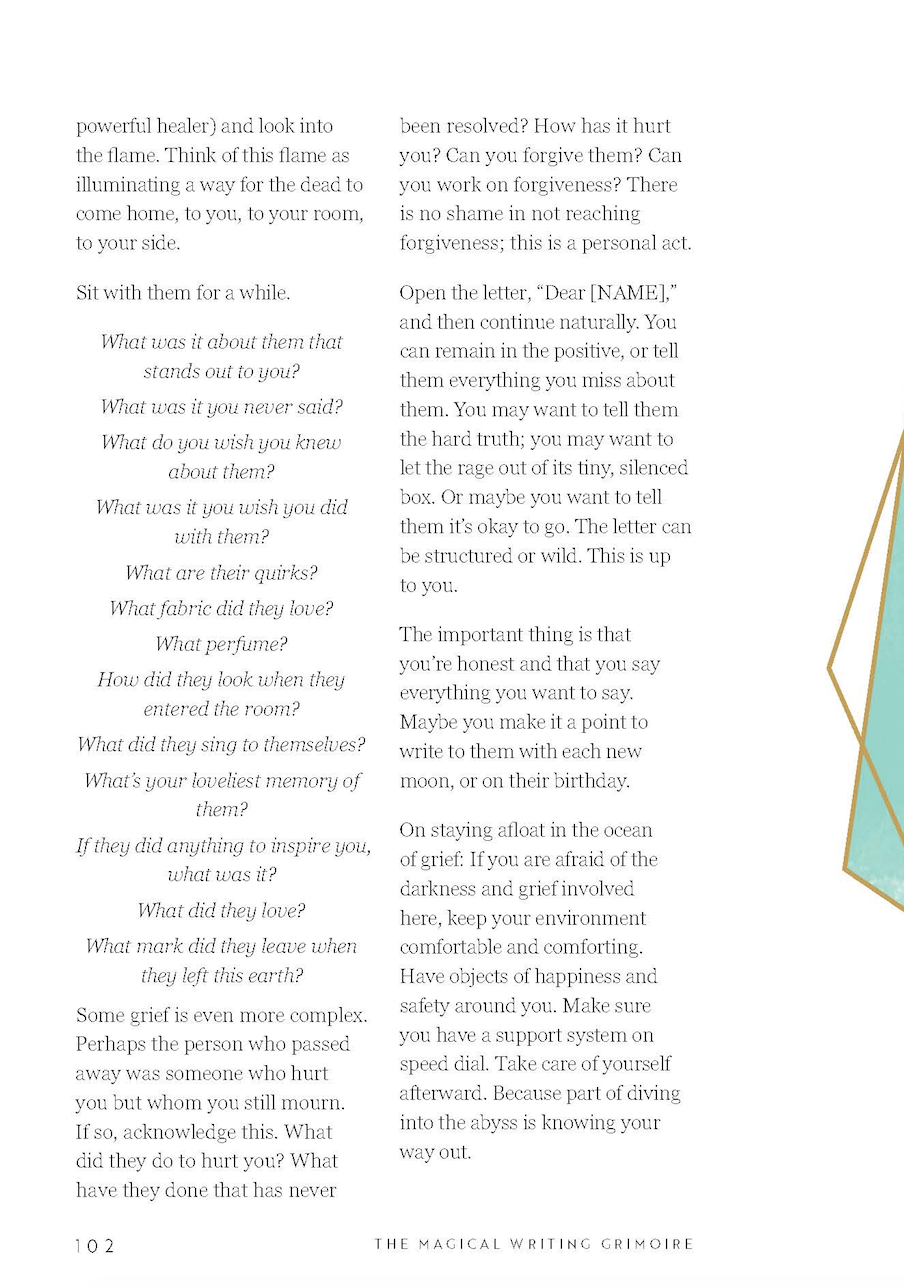
Choose who to write to, and what you want to say. Do you have a photograph of them? If so, place it before you. Create an altar dedicated to them, if that feels right to you. It might include things they owned, or anything that represents them. Light a black candle (black is a powerful healer) and look into the flame. Think of this flame as illuminating a way for the dead to come home, to you, to your room, to your side.

Sit with them for a while. 

What was it about them that stands out to you? What was it you never said? What do you wish you knew about them? What was it you wish you did with them? What are their quirks? What fabric did they love? What perfume? How did they look when they entered the room? What did they sing to themselves? What’s your loveliest memory of them? If they did anything to inspire you, what was it? What did they love? What mark did they leave when they left this earth? 

Some grief is even more complex. Perhaps the person who passed away was someone who hurt you but whom you still mourn. If so, acknowledge this. What did they do to hurt you? What have they done that has never been resolved? How has it hurt you? Can you forgive them? Can you work on forgiveness? There is no shame in not reaching forgiveness; this is a personal act. 

Open the letter, “Dear [NAME],” and then continue naturally. You can remain in the positive, or tell them everything you miss about them. You may want to tell them the hard truth; you may want to let the rage out of its tiny, silenced box. Or maybe you want to tell them it’s okay to go. Perhaps they felt they had to stay? Perhaps they suffered? Maybe you simply want to know what it’s like to be dead. The letter can be structured or wild. This is up to you.

The important thing is that you’re honest and that you say everything you want to say. Maybe you make it a point to write to them with each new moon, or on their birthday.

On staying afloat in the ocean of grief: If you are afraid of the darkness and grief involved here, keep your environment comfortable and comforting. Have objects of happiness and safety around you. Make sure you have a support system on speed dial. Take care of yourself afterward. Because part of diving into the abyss is knowing your way out.

A prompt

Write a spell that calls for closure. Perhaps your spell invokes the elements or archetypes, or perhaps it’s a spell-poem that is simply a goodbye. When we write our own spells for healing, we begin an important process—that which gives us control over the situation and the narrative, and that which enables us to embody who we want to become after trauma. What would your closure spell look like? Will it explore forgiveness? Binding? Saying goodbye? Will it honor your pain?

Feel free to download the keep the following pages:

Restorative Grief_Page_1.jpg
Restorative Grief_Page_2 (1).jpg
Screen Shot 2020-04-22 at 3.13.25 PM.png
Screen Shot 2020-04-22 at 3.13.33 PM.png
Screen Shot 2020-04-22 at 3.14.23 PM.png
Screen Shot 2020-04-22 at 3.14.33 PM.png
In Occult, Books Tags death, grief, Rituals, Ritual, the magical writing grimoire, light magic for dark times, lisa marie basile, grief rituals, healing, loss, covid-19, coronavirus
Comment
Photo by Portland Button Works

Photo by Portland Button Works

A Santa Muerte Rebirth Ritual + A Tarot Writing Practice

October 6, 2020

Looking for some October magic? Below I’ve included two rituals — one a Santa Muerte rebirth ritual dreamed up by Leza Cantoral (witch, author, and editor of Clash Books) and published in Light Magic for Dark Times and one a tarot writing practice from The Magical Writing Grimoire.

Read More
In Occult, Books Tags rituals
Comment
WITCH BOOKS

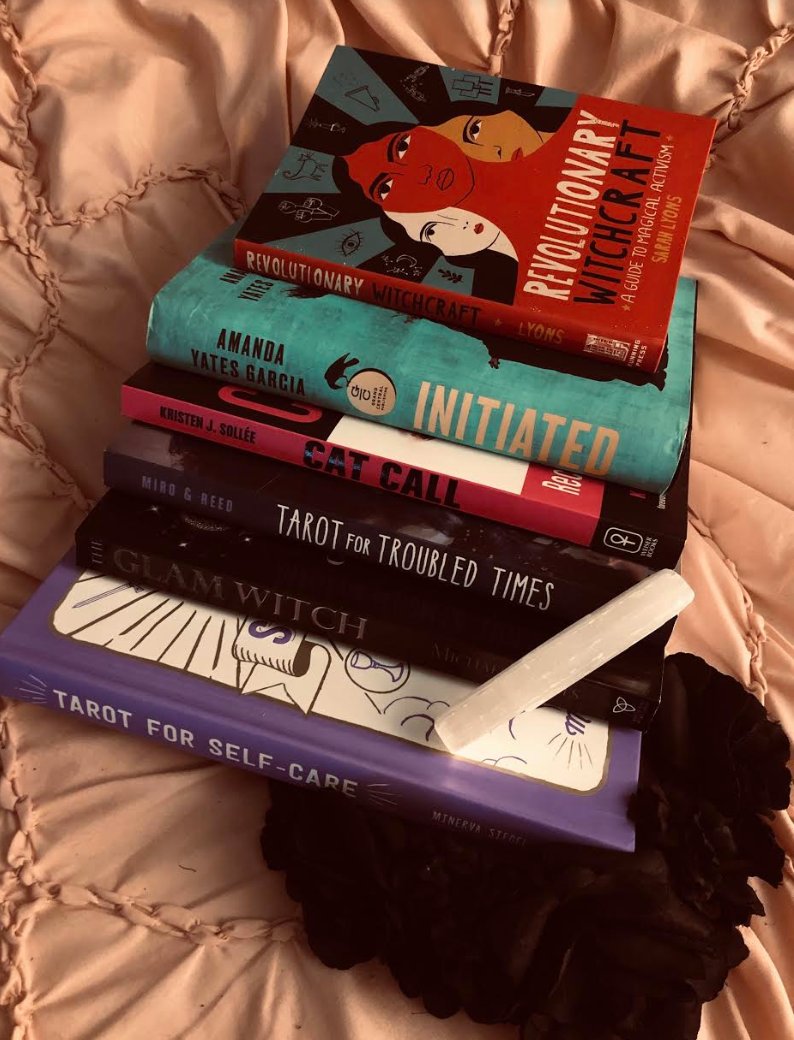
Witches, Here Are The New Books You Need

November 14, 2019

BY LISA MARIE BASILE

I am fortunate to receive tons of wonderful books on a wide range of topics, but some of my favorites include those by talented witches and magical beings whose books approach magic in accessible, inclusive, radical, and fresh ways.

I am always on the lookout for books which a) present an updated look at magic and witchcraft to a modern audience, b) frame witchcraft in a way that is inclusive and holistic — meaning it addresses systemic issues in society, and c) blend and blur genres — books of narrative non-fiction alongside research, poetry entwined with spellcraft, or divination techniques alongside storytelling.

Personally, I love books that can be read through an open-ended and intuitive lense, and approaches that permit those of us from even an eclectic or secular background to take part. I think all of the below books make space for the witch, the feminist, the curious, and anyone in between. So, for witches and non-witches alike, these are the books I’ve been reading as of late:

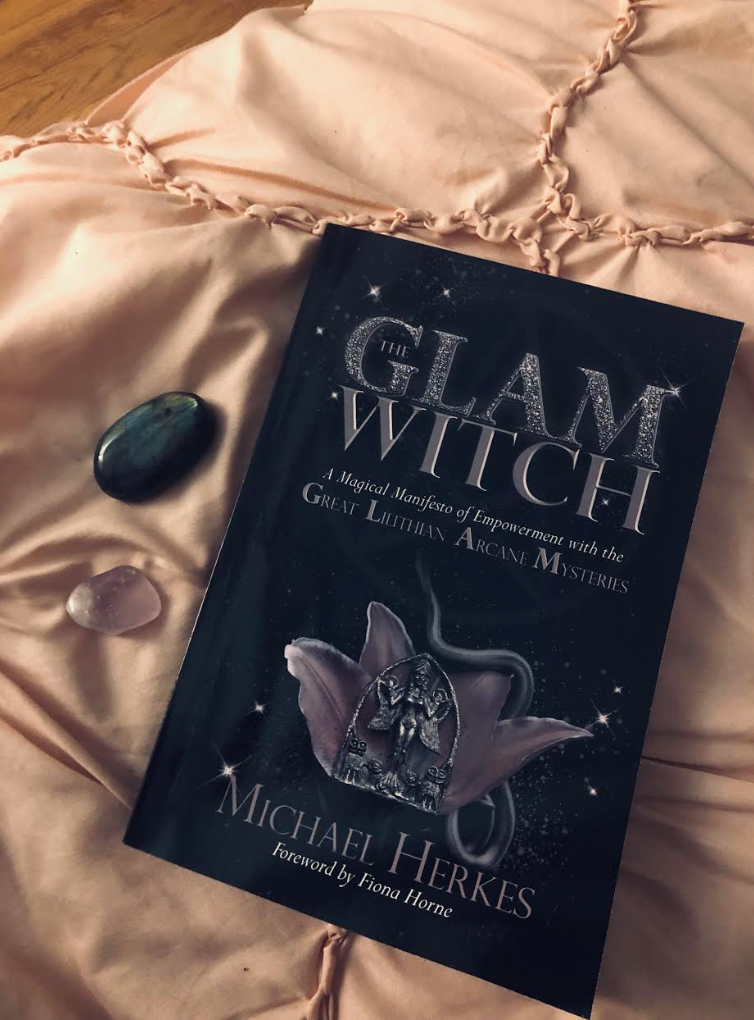
THE GLAM WITCH

I LOVE this book. Michael Herkes’ voice is a dream. His passion is palpable, lifting out of the pages and into your hands and heart. It looks at how the goddess/archetype Lilith has for so long been worshipped and feared, and walks readers through how they can create a relationship with Lilith, as well. In fact, it’s called The GLAM Witch because Herkes explores the Great Lilithian Arcane Mysteries (GLAM). Through luminous text, you’ll find astrology, ritual, and a magic that is steeped in power.

Screen Shot 2019-11-13 at 8.20.46 PM.png

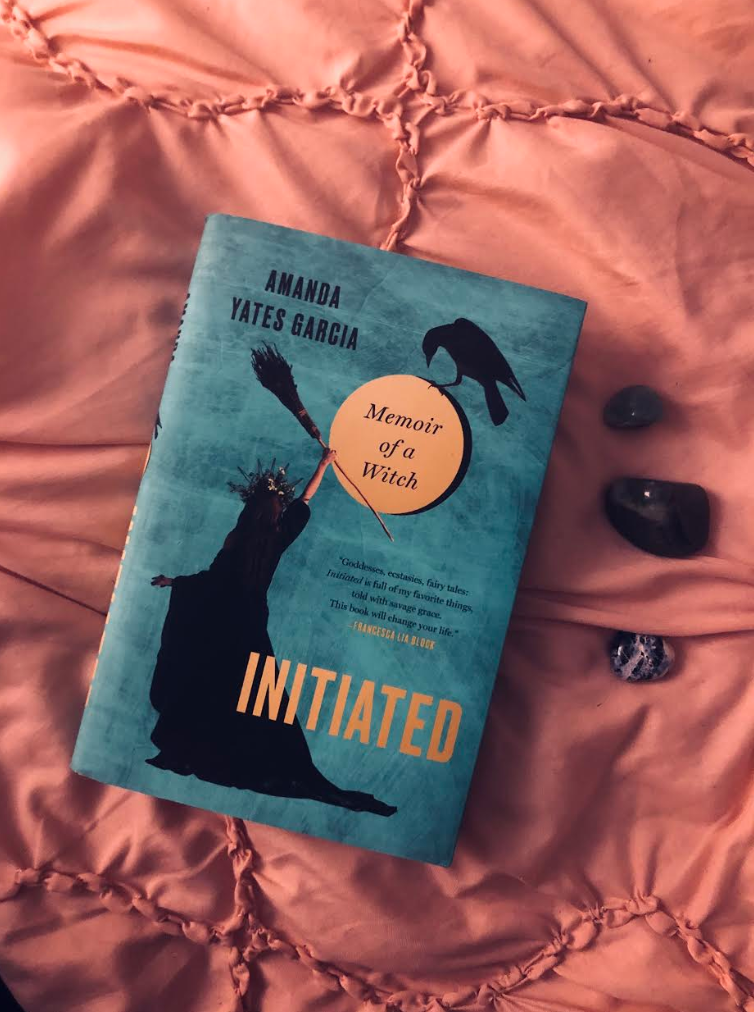
INITIATED: Memoir of a witch

Amanda Yates Garcia — known as the Oracle of LA — writes a potent story of becoming and reclamation in Initiated, which shows how she became a High Priestess, and how she tapped into her inner power. With her shedding light on feminism, culture, earth, sex work and poverty, the underlying message here is one that matters most in today’s world.

Also read: 7 magical & inclusive new books witches must read

Screen Shot 2019-11-13 at 8.20.53 PM.png

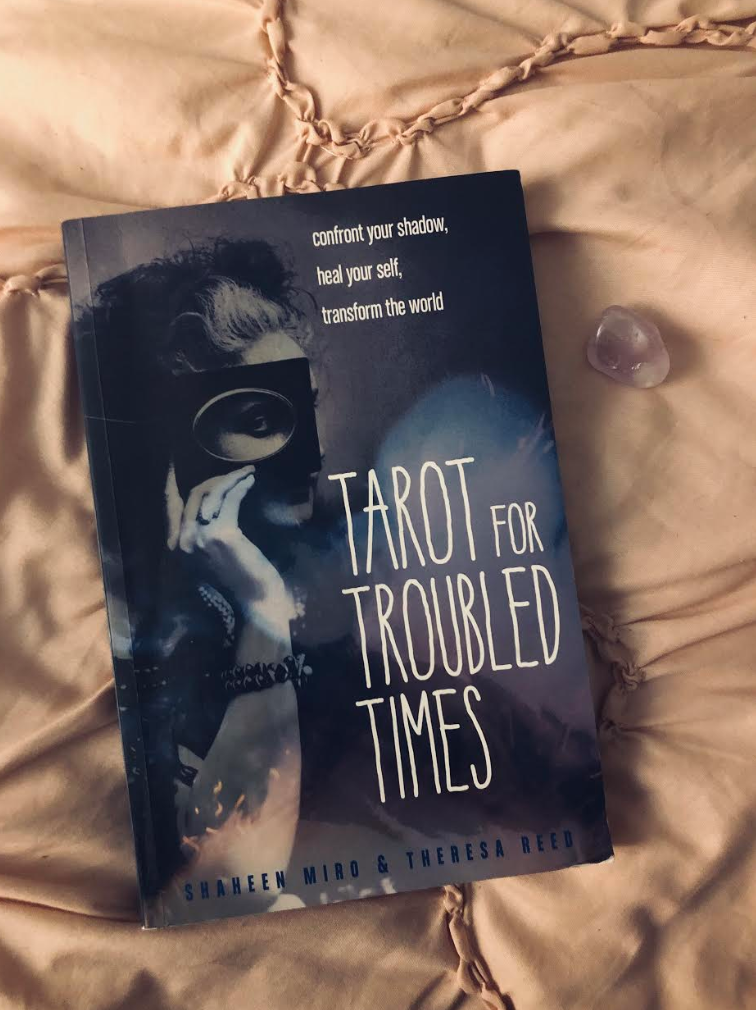
TAROT FOR TROUBLED TIMES: CONFRONT YOUR SHADOW, HEAL YOURSELF, TRANSFORM THE WORLD

In Theresa Reed and Shaheen Miro’s Tarot for Troubled Times, we see a radical and transformational text that uses shadow work (a throughline of the book), archetypes, reflections, and prompts to reframe the power of tarot. I can’t get enough of this one. And I’ve had the pleasure of knowing Theresa (The Tarot Lady) for quite some time. Her generosity, support, wisdom, and love for magic is a continual inspiration to me.

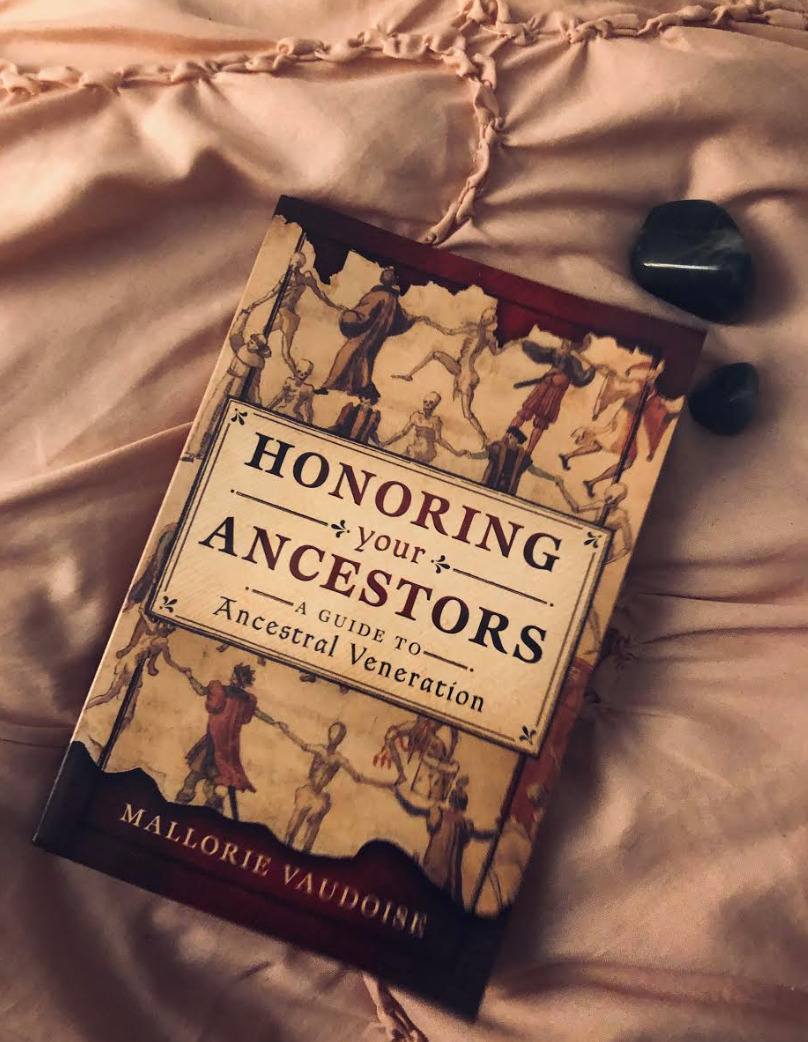
HONORING YOUR ANCESTORS: A Guide to Ancestral Veneration

As someone who has always been interested in ancestor veneration in a specific sense — more in my writing practices than anything else — I have not read a book on the topic that has so deeply and beautifully spoken to my needs. Mallorie Vaudoise’s book does not go into the topic lightly, addressing plenty of the big issues — like not knowing who your ancestors are, for one. The book explores everything from making ancestral altars and spell-work to mediumship. It’s splendid and healing.

Read also: 4 witchy podcasts you need in your life

Screen Shot 2019-11-13 at 8.21.22 PM.png

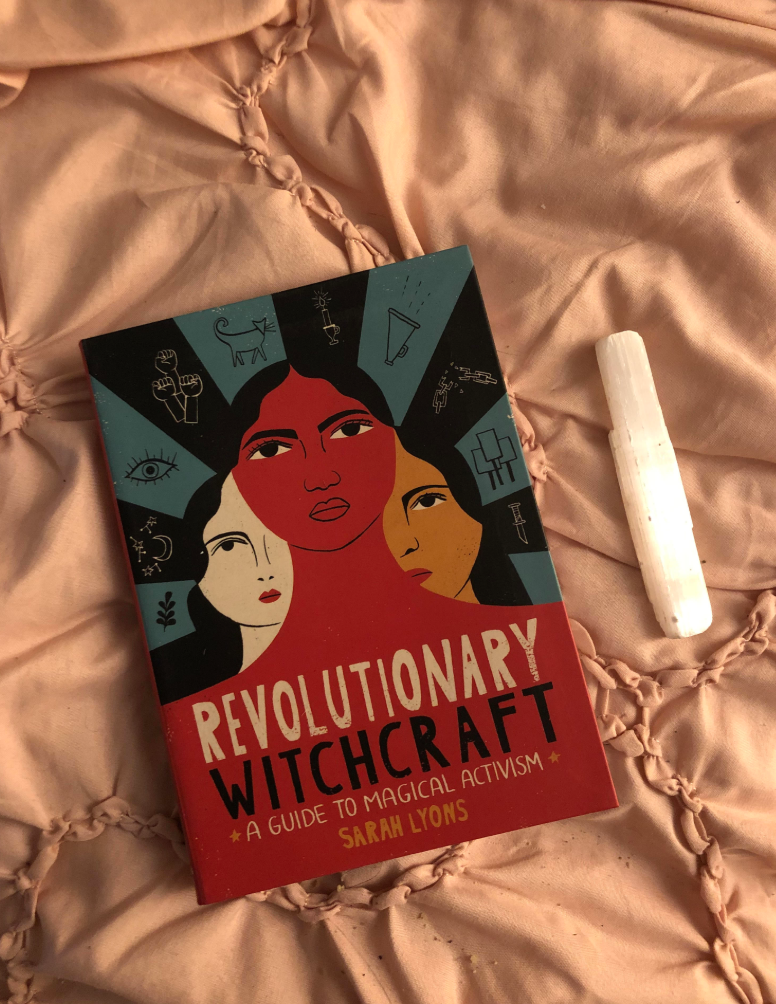
REVOLUTIONARY WITCHCRAFT: A GUIDE TO MAGICAL ACTIVISM

In Sara Lyon’s work, we find a potent and necessary look at how we can make magic in a world that is too often broken by hatred, fear. It is a world that needs transformation, and witches have that very power. I have always thought that the witch was a political figure, whether or not one intends or feels that way. Witches have long stood for the marginalized, the forgotten, the invisible. And power, as Lyons says, is political. With topics ranging from history, magic (ancestral magic, sigil creation, and spells), ally-ship and the natural world, this book is a must-have for today’s practicing witch. I also love its inclusion of the Trans Right of Ancestor Elevation, which is a ritual for trans and GNC witches to honor their ancestors of spirit killed by murder.

revolutionary witchcraft

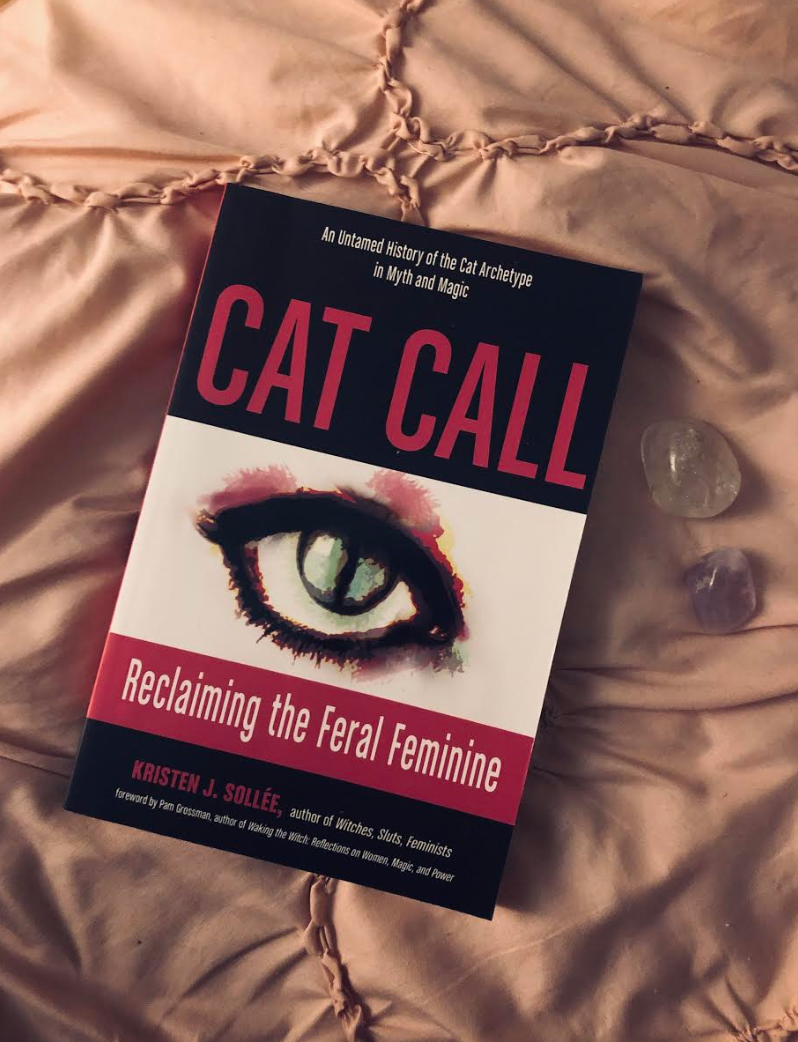
CAT CALL: RECLAIMING THE FERAL FEMININE

I have long been a fan of Kristen Sollée’s work (and her person) and I am indebted to her for the knowledge and support she has given me, and the magic she has brought to my life (and all of ours!) through her words. As an intersectional feminist and a witch, her books (do yourself a favor and also read Witches, Sluts Feminists) speak power into my world. In Cat Call, she brings the histories, superstitions, stories, and mythos of the feline to life, and weaves all of that into how we understand (and can better understand) sex and femininity and taboo. Fuck yes.

Screen Shot 2019-11-13 at 8.21.32 PM.png

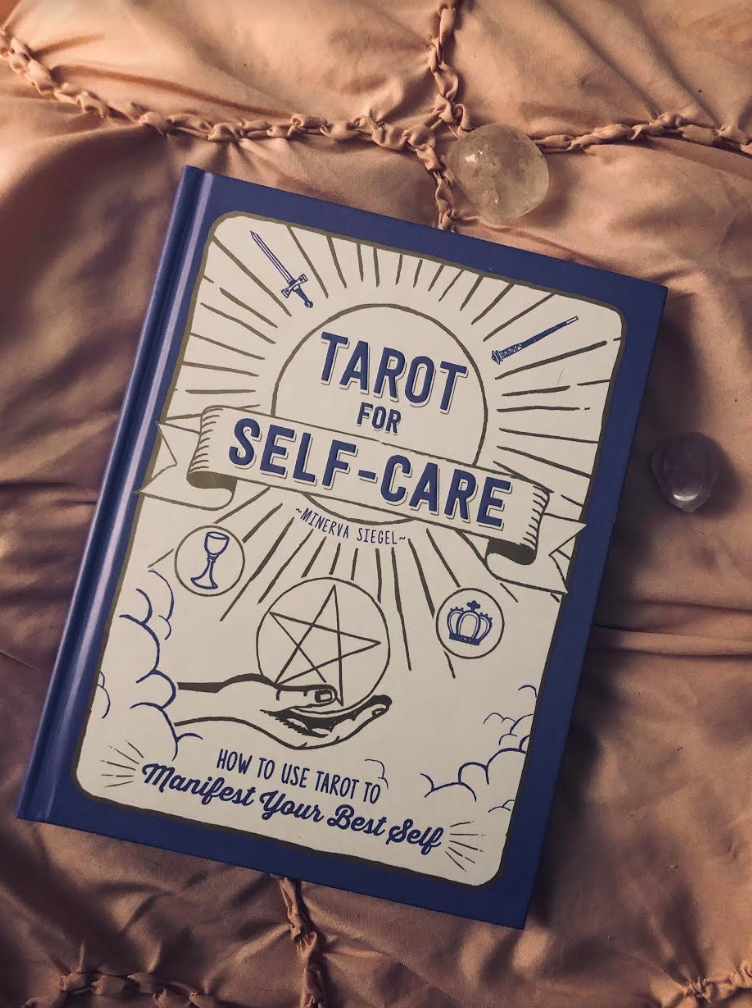
TAROT FOR SELF CARE: HOW TO USE TAROT TO MANIFEST YOUR BEST SELF

I love Minerva Siegel’s book for its simplicity and care. It walks readers through the tarot with care and ease, feels inclusive and avoids culturally appropriative terms, and addresses some of the big obstacles to our self-care practices. It frames the book so that it covers mental, physical and spiritual self-care, while walking you through each card and its magic.

Screen Shot 2019-11-13 at 8.20.40 PM.png

OTHER BOOKS I’VE BEEN READING OR LOOKING FORWARD TO READING:

Pam Grossman’s Waking The Witch, Theresa Reed’s Astrology for Real Life, Astrea Taylor’s Intuitive Witchcraft, Apocalyptic Witchcraft by Peter Grey, Gabriela Herstik’s Bewitching The Elements, Juliet Diaz’ Witchery, Working Conjure by Hoodoo Sen Moise, The Door to Witchcraft by Tonya A Brown, The Astrology of Sex & Love by Anabel Gat, Weaving The Liminal by Laura Tempest Zakroff,

IAlso recommended: Catland Book’s Monthly Reader’s Coven (which I subscribe to, and which delivers gorgeous books to my door, monthly).


Lisa Marie Basile is the founding creative director of Luna Luna Magazine--a popular magazine focused on literature, magical living, and identity. She is the author of "Light Magic for Dark Times," a modern collection of inspired rituals and daily practices, as well as "The Magical Writing Grimoire: Use the Word as Your Wand for Magic, Manifestation & Ritual." She can be found writing about trauma recovery, writing as a healing tool, chronic illness, everyday magic, and poetry. She's written for The New York Times, Refinery 29, Self, Chakrubs, Marie Claire, Narratively, Catapult, Sabat Magazine, Healthline, Bust, Hello Giggles, Grimoire Magazine, and more. Lisa Marie has taught writing and ritual workshops at HausWitch in Salem, MA, Manhattanville College, and Pace University. She earned a Masters's degree in Writing from The New School and studied literature and psychology as an undergraduate at Pace University.

In Occult, Books, Astrology, Sex Tags Witchcraft, witchcraft, witch, books, witchy books
Comment
IMG_1196.jpg

A Review of Caitlin Doughty's 'Will My Cat Eat My Eyeballs?'

October 25, 2019

Over the past several years as Doughty, has continued to travel the world to give talks and educate folks on the wonders of death, she found that her favorite part of these talks came in the Q&A portion. It was not just the opportunity to get to hear what she calls “people’s deep fascination with decaying bodies, head wounds, bones, embalming, funeral pyres—the works”—that the most direct and provocative questions about death came from young children. 

Read More
In Books Tags death positive, Trista Edwards, caitlin doughty
Comment
book magical

7 Magical & Inclusive New Books Witches Must Read

May 15, 2019

BY LISA MARIE BASILE

I’m swimming in magic right now — thanks to a few beautiful books I’m either reading or anxiously waiting to read. It is safe to say that the Witch is having a moment — but she’s always been here. She may look different culture to culture, and perhaps the language we use when we discuss her is different (magic is personal, after all), but her mainstream popularity doesn’t erase the fact that the witch, as archetype and practitioner, has always been a force for autonomy, growth, wisdom and wildness.

I’m so glad we get to live in a time when more and more of us are connecting with the otherness, wildness, and power of the witch. Luna Luna has been exploring the witch since we were born in 2013, and it’s a beautiful thing to see conversations, books, podcasts, movies, and general culture remain captivated by witchery.

And while there is a lot to be done to promote a deeper understanding of witchcraft and magical practices in general (you know, like speaking out against the co-opting capitalist agendas that reduce magic to a tee-shirt or a thoughtless starter witch kit) — there are SO many books adding to the conversation by bringing inclusivity and context and accessibility to the craft. Here are a few I’m reading or looking the fuck forward to:

Pam Grossman’s Waking the Witch: Reflections on Women, Magic, and Power

View this post on Instagram

Exciting news! Pam’s book WAKING THE WITCH is coming out from @gallerybooks on June 4, 2019. It’s available for pre-order now at all the usual places. Link in our Stories. ⚡️📚🌙🔺

A post shared by The Witch Wave (@witchwavepod) on Oct 15, 2018 at 8:01am PDT

If you’ve been following me or Luna Luna for anytime, you know I’m a huge fan of Pam Grossman and her incredible work toward unpacking and exploring the witch. Whether it’s through her own writing or via her not-to-be-missed podcast, The Witch Wave, Pam (and her guests) explores the story of the rich fabric of magic both ancient and modern. I’m looking forward to reading her book’s examination of the witch as an enduring figure in culture, while learning more about how Pam came to the practice. Yes, please. Preorder here.


Shewolfe and Beatrix Gravesguard The Astrological Grimoire: Timeless Horoscopes, Modern Rituals, and Creative Altars for Self-Discovery

View this post on Instagram

our book, THE ASTROLOGICAL GRIMOIRE, is officially entering the world next Tuesday, April 9 🔮📖✨ to celebrate, we will be doing a special pub day broadcast on @bffdotfm, and we are giving away pairs of copies for you and your witchy bestie 👯‍♀️✨👯‍♂️ TO ENTER: comment with a question about the #astrogrimoire you’d like answered on air next week, and tag a witchy pal who would love a grimoire too 🌬✨

A post shared by Astral Projection Radio Hour (@witchradio) on Apr 4, 2019 at 11:52am PDT

I got my hands on this gorgeous book a few weeks ago and I’m totally in love with it. Instead of tackling astrology by describing only the sun signs, this book (by the creators of Witch Radio!) explores the intersection of one’s whole chart, along with providing altar decoration ideas, moon phase meditations, and affirmations for each sign. I’ve been using the book as a way to connect with my Big 3 (sun, moon, and rising signs) during particular moon phases, in addition to deepening my relationship with my Scorpio sun. It’s accessible, beautifully designed, and refreshing. Order it here.


Colin Bedell’s Queer Cosmos: The Astrology of Queer Identities & Relationships

View this post on Instagram

I’m thrilled to share my book “Queer Cosmos: The Astrology of Queer Identities & Relationships” by Cleis Press debuts this November 12th!✨ Marianne Williamson is writing the foreword on Pluto in Scorpio. Reflecting on spirituality’s role in the AIDS Crisis to situate the reader in a legacy of spiritual seeking in queer activist spaces. ⚡️ Responding to loneliness as a public health crisis, I wrote “Queer Cosmos” to operationalize Astrology as an antidote for shame and tool for authenticity in queer lives. Since our level of self-acceptance qualifies our relationship health. For compatibility, I summarized key findings on learnable skill-based romantic proficiency and outlined all 144 sign combinations as 144 invitations for relational success. ✨ I’m no soloist so I’ve interviewed Astrologers and enthusiasts across the identity spectrum who will share how Astrology informs their intersectional self-inquiry and relationships for both visibility and representation. ⚡️ So the book begins with history from my (she)ro. I wrote why the queer zodiac is loved inspired by the people I fell in love with. And it concludes with the courage of those I admire deeply. “Queer Cosmos” is my life’s work and with love on every page, it’s my hope that it could be more than a resource but medicine for loneliness as it explores the giving and receiving of love. You can preorder in my bio link! 🏳️‍🌈

A post shared by ♅ QUEER ASTROLOGY ♅ (@queercosmos) on Apr 3, 2019 at 5:36am PDT

I’m no expert on astrology by any stretch. Rather, I am a dedicated enthusiast who places a lot of importance on the important lessons the archetypes of the zodiac can teach us about ourselves. For this reason, I’ve been a big fan of Colin Bedell.

His Instagram account, @queercosmos, is a true treasure, as he shares beautiful, empowering, and inclusive insights around the cosmos and astrology. (He’s also hilarious). I found his book, A Little Bit of Astrology, a necessarily updated look at the zodiac. Instead of leaning into tropes and reductions around the zodiac, he reframes astrology in ways that make you think about your worth and self and truth. I can’t wait for Queer Cosmos: The Astrology of Queer Identities & Relationships, not only because we need more texts that approach the queer identity as it relates to magic and the cosmos, but because Bedell brings Midas’ touch to everything. Preorder here.


Theresa Reed and Shaheen Miro’s Tarot for Troubled Times: Confront Your Shadow, Heal Your Self & Transform the World

View this post on Instagram

Super pumped about my upcoming book with coauthor @shaheenthedream !!! #Repost @shaheenthedream with @get_repost ・・・ New Book Alert! . @thetarotlady and I have a new book coming out called: Tarot for Troubled Times. We’re excited to share this amazing guide to Confront Your Shadow, Heal Yourself and Transform the World with Tarot!! . You can check out a preview of the book by following the link in my bio. And, preorder the book at your favorite bookseller.

A post shared by The Tarot Lady (@thetarotlady) on Feb 16, 2019 at 4:40pm PST

I literally can’t say just how excited I am about this book. I’ve been a long-time fan of Theresa Reed and use her Tarot Coloring Book a lot as a way to reflect and enter a meditative state. This book, which you can preorder, approaches the tarot in a new light: It approaches tarot as a tool for meditation on illness, depression, addiction and oppression — real issues that we must confront. I believe that anything that gets us to safely confront our shadow selves is a useful tool in our wellness arsenals, allowing us to have more autonomy over our healing — especially in a world where that autonomy is stripped from us on the regular. Preorder here.


Amanda Yates Garcia’s Initiated: Memoir of a Witch

View this post on Instagram

INITIATED IS NOW AVAILABLE FOR PRE-SALE. . INITIATED is a love letter, a magical incantation dedicated to the wild people of the world. . I wrote it for the witches, the weirdos and wanderers. . I wrote it for those who are lost in the underworld and those who’ve returned still licking their wounds. . I wrote this book for anyone who wants to rise up in collective action to re-enchant the world. . To each of you, I offer this book in love. . Pre-order sales make a huge difference to first time authors. Sometimes it means the difference between being able to publish another book or not. . If you like my work and want to support it, pre-ordering is the way to go. Grab your own copy via the lynk en byo. Xo ❤️❤️❤️ . #firsttimeauthor #bookstagram #memoir #witchcraft #magic

A post shared by Amanda Yates Garcia (@oracleofla) on Mar 28, 2019 at 9:39am PDT

I haven’t finished this book yet, but I am so enjoying it as I read it. This feels like a crucially important work, as the book reflects on not only the deep and personal experience of initiation, but also on sex work, ancestry, poverty, and the body reclaimed. Its message is clear: “Initiated is both memoir and manifesto calling the magical people of the world to take up their wands: stand up, be brave, describe the world they want, then create it like a witch.” I’m loving the language in this book, the message it conveys, and the fact that a book like this is being shared with the world at this time. Preorder here.


Mya Spalter’s Enchantments: A Modern Witch's Guide to Self-Possession 

View this post on Instagram

@grrrrlafraid asked me some truly excellent questions in this EXCLUSIVE interview. Check us out! Link in bio 🔗 #nerddreamscometrue #magic #witchesofinstagram ・・・ This spooky season has us counting down to Halloween 🎃. The first book on our #HalloweenCountdown reading list is Mya Spalter’s ENCHANTMENTS. . “Written with wisdom, humor, and compassion, Spalter’s book is the perfect companion for those seeking ‘meaning, peace, and self-possession.’” ✨🔮 . Check out the link in our bio for an exclusive interview with Mya! • • • • • #bookstagram #booklover #bookworm #bookrec #instabook #amreading #lovereading #halloween #spookyseason #enchantments #spells #nonfiction #witchy #octoberreads

A post shared by Mya Spalter (@mya.spalter) on Oct 24, 2018 at 4:55pm PDT

I think what I loved the most about this gem of a book is that Mya’s voice is so welcoming, colorful, and lively. Of course, I’m a bit biased here. As a New Yorker, I’ve shopped at Enchantments, where Mya has worked for years selling occult goods. This book is a modern overview of magic, but it makes space for the reader to get involved. Not every book makes room for one’s personal magical style, but this book does. This book is full of magic, introductory and advanced knowledge, personality, poetry, and empowerment. Order here.


Kristen Sollée’s Cat Call: Reclaiming the Feral Feminine (An Untamed History of the Cat Archetype in Myth and Magic)

View this post on Instagram

Hey sluts, I’m back on my book-promoting bullshit! And by that I mean: MEET MY NEW BB! She delves into all the eldritch corners of history, from feline goddesses and early modern familiars to cats, kink & #kittenplay, posthuman ethics, Catwoman, queer cat ladies, sex workers and cats in art, wildcat prints in fashion, cat iconography in political action, ailuromancy...and all the ways the feline and the feminine intersect in myth, magic, and pop culture...Amazon pre-orders make a *huge* difference in the life of a book so consider clicking that link in my bio if you dug #witchesslutsfeminists or anything I ever wrote or maybe just feel like being a sweetheart to this April Fool. (This is not a joke tho, in case you’re wondering.) #catcallbook is officially out SEPTEMBER 1st on @weiserbooks!!! 📖✨ #bookslut #catsofinstagram #catbook #sexpositive #witchesofinstagram #meowmotherfucker🐱💋

A post shared by kristenkorvette (@kristenkorvette) on Apr 1, 2019 at 6:16am PDT

If you read Sollée’s Witches, Sluts, Feminists: Conjuring The Sex Positive, chances are you’re gearing up for her newest, Cat Call: Reclaiming the Feral Feminine (An Untamed History of the Cat Archetype in Myth and Magic). I sure am. Now, there’s a long-standing connection between the cat and the witch — don’t we all have a familiar of our own? — and it’s about time someone dedicates a closer look to the enduring power of the cat. I’m such a fan of everything Kristen does — and I know you will be too, if you haven’t read her important, inclusive, and thoughtful work. Preorder here.


Lisa Marie Basile is the author of Light Magic for Dark Times, Wordcraft Witchery (forthcoming, 2020) and a recent poetry collection, Nympholepsy. Her work encounters self-care, trauma recovery, ritualized living and the arts. More of her writing can be found in The New York Times, Refinery 29, The Fix, Catapult, Narratively, Good Housekeeping, Bustle, Sabat Magazine and more. She is the editor-in-chief of Luna Luna Magazine. Find her @lisamariebasile.


In Occult, Books Tags mya spalter, pam grossman, witch wave, enchantments, theresa reed, tarot coloring book, queer cosmos, colin bedell, amanda yates garcia, astrological grimoire, zodiac, Shewolfe and Beatrix Gravesguard, kristen sollée
Comment
Photo by Estée Janssens

Ritual: Writing Letters To Your Self — On Anais Nin, Journaling, and Healing

January 31, 2019

BY LISA MARIE BASILE

During my mid-20s, I first delved deeply into the work of the writer Anaïs Nin. Before then, I’d read bits and pieces of her work—always knowing that I would, when ready, return to it. As it is with most of the great works of our lives, she found me when the time was right, when I could incubate her emotion and resuscitate myself through her abundance. I was always too guarded, too busy, too scattered to sit down and let the velvety intensity of her work move through me.

This is because Nin’s work is audaciously honest. It is at once shadowy and nude. Erotic. Wild. Feverishly introspective. Showy. Always vulnerable.

You may have read her diaries or her letters to Henry Miller. Within these works lives a whole entire world of expression and bravery (and ego and mania and trauma and desire and more). In the 1940s, she was writing explicitly about topics such as sexual desire and abortion—words that were kept silent, for they were unthinkable, punishable. She was widely mocked, often deplored by critics for both her personal life (she—gasp!—had two husbands) and her literary works—and yet she has earned her place as the literary patron saint we adore now. (She would be so pleased). Over time (and largely posthumously), as time is wont to do, she has become both a feminist icon and a literary muse. She’s certainly my literary witch archetype.

Anais Nin writes to Henry Miller in A Literate Passion: Letters of Anaïs Nin Henry Miller, 1932-1953,

“It is true that I create over and over again the same difficulties for myself in order to struggle over and over again to master them [but] to continually struggle against the same problem and to continually fail to dominate it brings a feeling of frustration and a kind of paralysis. What is necessary to life, to livingness, is to move on, in other words to move from one kind of problem to another.”


Reading her works, I have always wondered: How did writing her feelings and desires and fears in letter or diary form change her relationship to those feelings? Without writing all of this down, would she have realized her tendencies toward creating difficulties for herself?

View this post on Instagram

🖤 I talked with the wonderful @ragqueenperiodical + @kaileytedesco about how light and darkness is the throughline in all of my work, including my forthcoming book and my poetry and other work: “The grimoire is concerned with the same things as my work as a poet and essayist: death, forgiveness, the self as something to be worshipped, sex, creating beauty and honoring the shadow.” LINK IN BIO.🖤 #LightMagicDarkTimes

A post shared by Lisa Marie Basile (@lisamariebasile) on May 19, 2018 at 10:20am PDT

Is there a certain quality to letter writing or diary keeping that inspires the confessional? I believe so. Our words are our magic. Once the words are thought, intent exists.

Once the words are spoken, they become an incantation. And once the words are written down, the spell is cast.

The truth is staring back at you—asking you to make a change or bury it or let it go. Whatever it is, the garden has begun to grow, and it must be tended to in some way or other.

That’s the silent promise you make to the page and to yourself; when you write, your mind floods and you become a vessel for the truth (or whatever version of the truth needs to exist at that moment).

The mind is the translator, the page is the vehicle, and something more intangible — something divine, the self everlasting, perhaps the soul — is the ultimate recipient. That something changes you and upends your reality.

When we write specifically for the page, or for one reader, we wield a massive responsibility to uphold a deep truth.

We stop writing for success or Instagram likes or money. We start to write for ourselves, or for the intimacy between ourselves and the reader. This is the case even if the letter will never be delivered (that’s not to say Nin wasn’t ecstatic when her personal journals became a best seller de rigeuer).

Only after reading your own words do you discover patterns and themes that perhaps you would have missed in your everyday life. In letter writing, there is a vulnerability that takes place necessarily; why write a letter if you won’t show up for it?

Why express anything at all—in such a delicate, deliberate, and painstaking manner? After all, a letter is not a passing thought or a forgettable text message; it’s a statement, a declaration, a confession. It’s a storm.

Ritualizing your words

For this ritual and writing prompt, you will be examining the inherent power of letter writing—as a tool for reconciliation, healing, closure, acceptance, and honor. But you can also write letters to express rage, jealousy, and fear.

It can feel as though we’ve lived many lifetimes. To prep, think on your childhood, your teen years, and who you are now. What was lost? What remains? Who we are now has changed so much from who we were. At the same time, there are things that having a lasting impact, good and bad. Ghosts linger. Sometimes that ghost is you.

Our traumas, our growth, our pain, our losses, our loves, our whimsies, our accomplishments—these are the things we’ll be writing to in this practice.

I have written letters to the girl I was at 15. She was so lost, so sad. She moved from homeless shelter to shelter, to a foster home and then another — always looking for an anchor. Within her heart lived thousand hopes and goals. She was excited to write, to study, to live—and yet always felt held back by a need to survive her trauma. She couldn’t simply be, as she was struggling. In her, a darkness grew.

That darkness was her fuel, but it also hurt her. She had self-esteem issues, felt alone often, felt unworthy. In my letters to her, I tell her what she’s accomplished—what her steadfast determination did for her. I tell her what her pain gave her—art! Empathy! A softness. An ability to adapt. A leaning-into the malleable, the liminal. Through her pain she found magic and ritual and poetry, and all of this carved a life she’d love today.

Writing these letters to her allowed me to heal her, and as a ripple in space-time, I largely healed myself today. I am not perfect, but I am better.

The Ritual: writing a letter to your younger self

View this post on Instagram

🌻I included a few peeks inside my book Light Magic for Dark Times over at @lunalunamag - lunalunamagazine.com. It’s full of rituals, practices and writing exercises and it’s all about resilience, self-care, trauma recovery, accountability and magic. 🌻

A post shared by Lisa Marie Basile (@lisamariebasile) on Jan 29, 2019 at 1:22pm PST

Light a candle. Look into the flame and take note of what thoughts arise when you think upon your younger self.

As you look at the flame, conjure the person you were. Quietly welcome them into the room; sit with them. What are they wearing? What are they feeling?

Choose a memory or a era in your life and write a letter to yourself. What’s the goal? Is it to remind your younger self of the love they have but never felt? Is it to congratulate them on their resilience? Is it to say that their weakness and struggles were beautiful? Perhaps you will pull a tarot card to find illumination or specificity in this process. Perhaps you will think on how your birth chart influenced the person you were.

Life goes by so quickly. We are so busy existing in the middle of it that we rarely look back and study what happened:

What went right?

What went wrong?

What just was?

What would you tell your younger self?

What does the room look like?

What were you wearing?

What do you want them to know?

What do you want them to let go of?

Write all of this down.

Honor it.

Keep it in a place where you can let it go, or return to it.

If you want to work more with journaling magic, I include lots of it in my book, Light Magic for Dark Times. & follow me on Instagram for more prompts and literary goodness.


Lisa Marie Basile is the founding creative director of Luna Luna Magazine—a digital diary of literature, magical living and idea. She is the author of "Light Magic for Dark Times," a modern collection of inspired rituals and daily practices. She's also the author of a few poetry collections, including 2018's "Nympholepsy." Her work encounters the intersection of ritual, wellness, chronic illness, overcoming trauma, and creativity, and she has written for The New York Times, Narratively, Sabat Magazine, Healthline, The Establishment, Refinery 29, Bust, Hello Giggles, and more. Her work can be seen in Best Small Fictions, Best American Experimental Writing, and several other anthologies. Lisa Marie earned a Masters degree in Writing from The New School and studied literature and psychology as an undergraduate at Pace University.

In Occult, Books Tags Anais Nin, Journaling, Healing, Writing, Diary, Henry Miller, Ritual
1 Comment
Photo Credit: YouTube

Photo Credit: YouTube

Hearthcraft & the Magic of Everyday Objects: Reading Arin Murphy-Hiscock's 'House Witch'

January 14, 2019

BY TRISTA EDWARDS

I was immediately hooked on Arin Murphy-Hiscock’s The House Witch: Your Complete Guide to Creating a Magical Space with Rituals and Spells for Hearth and Home in the first chapter when the author writes, “the home itself is an essential element within a nourishing, vibrant, ongoing spiritual practice.” 

She continues, “Honoring the hearth means honoring your origins, where you come from each day, and where you return each night.”

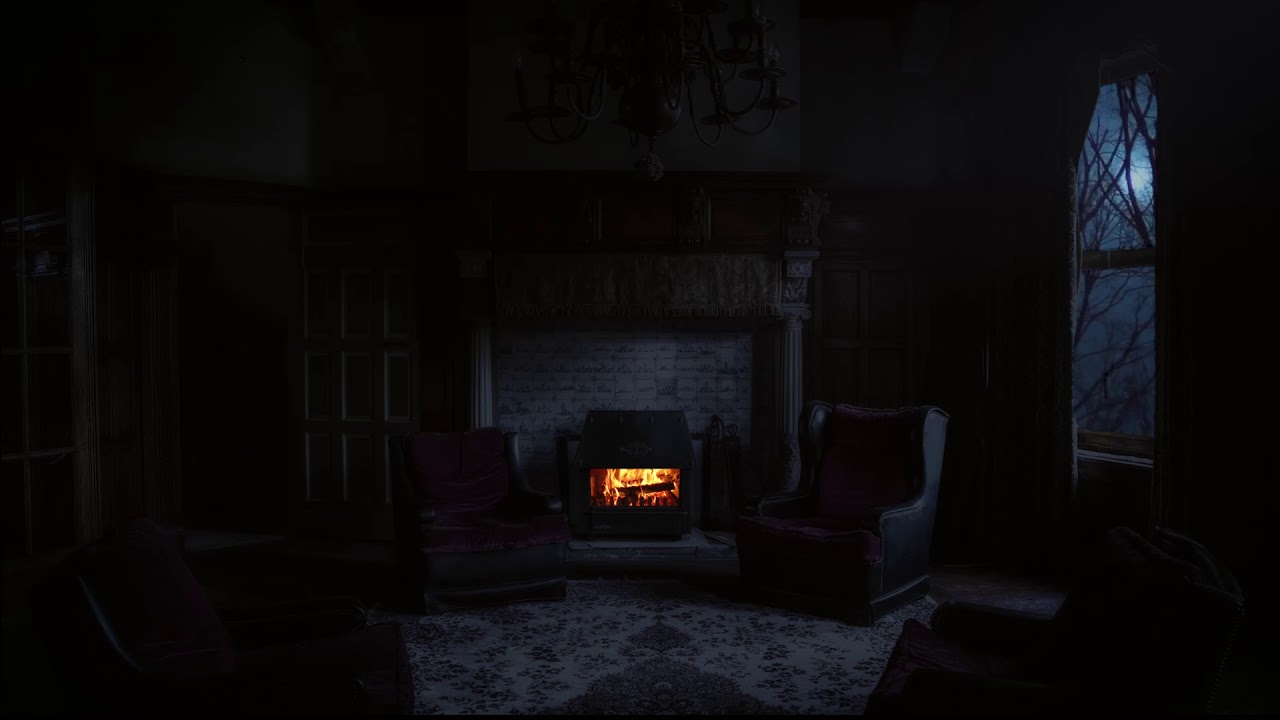
I read this one morning right after sitting down at my dining room table having just lit a candle, putting on a vinyl record, and ritualistically preparing my morning coffee. I took a long slurp from my cup and smiled. Oh, this is the book I’ve been hungry for.

Photo credit: Author

Photo credit: Author

I was already familiar with term and practice of hearthcraft (Chances are, even if you are not familiar, you already practice it to some degree or another.) but I had yet to find a book that spoke on it so directly. 

Hearthcraft, as Murphy-Hiscock explains it, is the “belief that the home is a place of beauty, power, and protection, a place where people are nurtured and nourished on a spiritual basis as well as a physical and emotional basis.” 

 It roots itself in practicality and, as the author stresses, with little ritualistic guidelines or necessary formality. Murphy-Hiscock asserts that hearthcraft functions on one very basic truth—

 Living your life is a spiritual act. 

How is this different, you may ask, from keeping a warm, nurturing house filled with loved ones or pets or material objects that provide you with joy, comfort, or relaxation? How is this different from opening up your home to host friends and family as a safe place to gather in times of celebration or even grief? 

 The answer in that lies, as so many things do, in performing domestic acts with mindfulness and intention. 

 BUT! 

Keep in mind, this is with daily tasks, rituals, or routines you are already performing. No need to feel overwhelmed with the call to add another activity or tool to your spiritual arsenal if you don’t want to. 

 I mean, I love a good crystal grid, tarot deck, and DIY potion as much as the next magickal seeker. I am not knocking these things. I get giddy at the sight of a new, beautifully illustrated deck and my home is chockfull of magickal crystals, stones, witches’ bottles, incense burning cauldrons, botanical curio, and the like. 

RELATED: Interview with Arin Murphy-Hiscock, Author of ‘Protection Spells’

 All I’m saying is I get it. Sometimes we can even get overwhelmed by the things we love. Sometimes I just want to scream—I can’t do another thing! Please, please, please don’t make me add another thing!—when a well-meaning friend suggests yoga for my anxiety or performing paced breathing exercises while taking a cold shower. 

 With hearthcraft, you are already doing it. 

 Now you just will think of it with more purposefully intention and mindfulness. Murphy-Hiscock’s book helps “recognize those things and lend awareness to them so that you can appreciate them all the more.” 

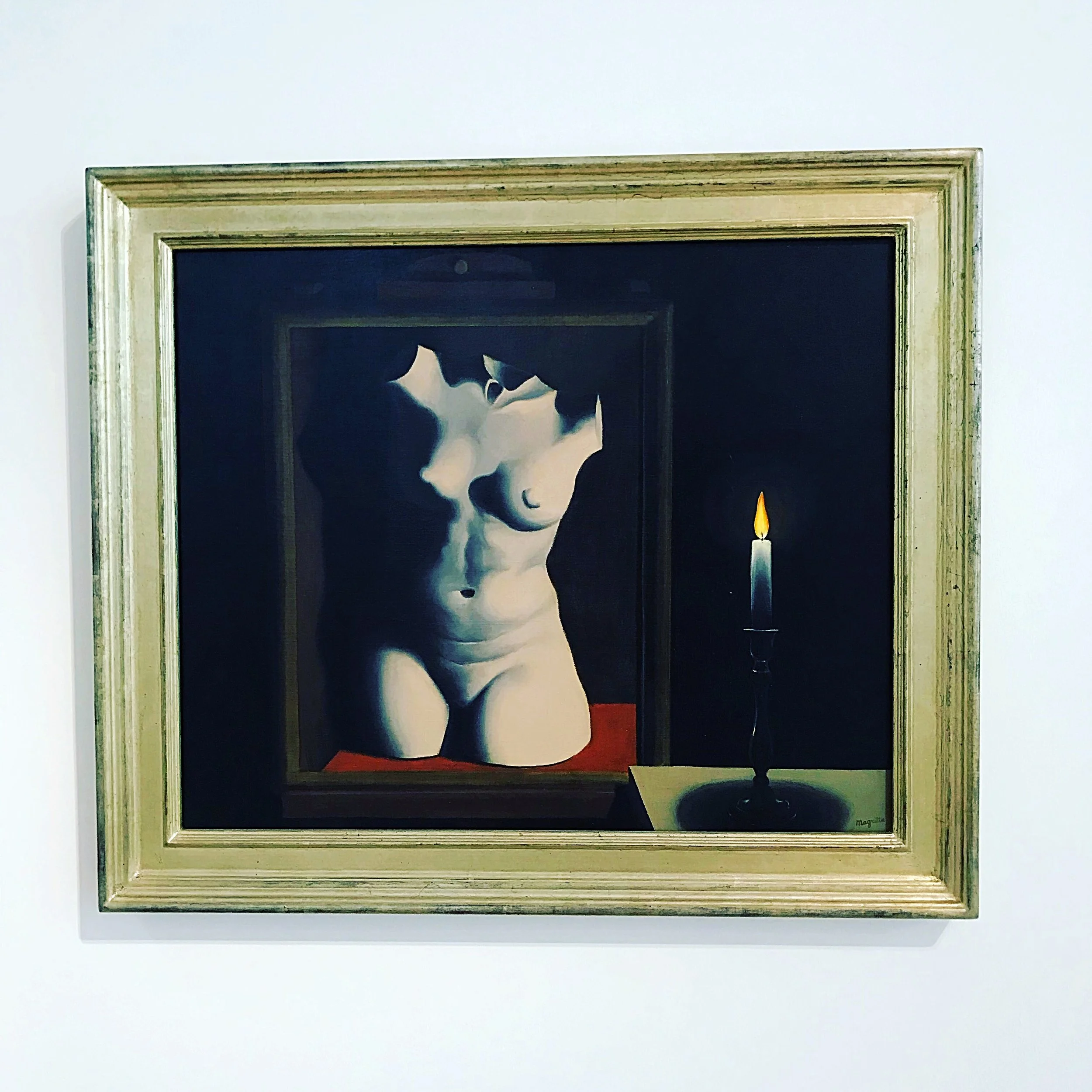
 The concept of hearthcraft always reminds me of the painting “The Light of Coincidences” by the surrealist artist René Magritte. In the painting, a single candle lit in a tall candlestick rests atop a table casting light on the sculpture of a nude, female torso. 

Photo Credit: Author

Photo Credit: Author

The candle throws shadows on the torso, highlighting its depth and dimensions which makes the torso appear to be a three-dimensional object displayed in a box. The sculpture, however, is a framed painting itself. The eye is tricked into seeing both the torso as flat painting and three-dimensional sculpture. The painting as a whole, represents everyday objects but undermines our commonly held perceptions of the everyday world—allowing us to see in a myriad of ways. 

 Hearthcraft is like that candle that lends awareness, new perspective, and appreciation to the everyday world, particularly the domestic sphere. 

 For me, I started becoming more aware of how I “wake up” my house every morning. I take the same path through the house every morning—From bed to the back door to let my two pups out. While they are outside, I circle around the house and open up all the blinds to let in the morning light. I refill the water in their dog bowls and scoop out their kibble. By this time, they both let out two sharp little barks at the backdoor saying they are ready to come back in. I set their bowls down on my way back to open the door. 

 Next, I begin the process of making coffee. I pull out a small electronic scale. Place a ceramic bowl on top and measure out some whole coffee beans. I toss them in the automated grinder and then get to work on filling the gooseneck kettle with water, lighting the stove, and placing the kettle, just so, on the burner. 

 While the water heats up, I grab my Chemex pot and a filter from the cupboard. I crease the filter just so and place it in the mouth of the pot. When the kettle shrieks that it is ready, I pour, with a swirling motion, a small amount of water over the paper filter, saturating it, and letting it trickle down into the belly of the pot to pre-heat the glass. I then pour this water into my chosen coffee mug to pre-heat that vessel as well.
I add my coffee grounds to the paper filter and the perform a series of small, measured circular pours, stopping periodically to watch the water and coffee perform the magic of science with their gaseous blooming of bubbles. When the brew is complete, I toss the hot water that was warming up my coffee mug, take cup and pot to the table, sit down, open up my computer, and light a candle to keep on the table beside me while I work. I pinch the corners of the filter together, lift it up from the mouth of the pot, and pour into my cup. 

Discover & share this Coffee GIF with everyone you know. GIPHY is how you search, share, discover, and create GIFs.

Yes, I understand that I may have a more extensive coffee routine than some, but I never fully thought of this whole process as a ceremony unto itself until I began to more fully involve hearthcraft into my life. 

 I would often sweep through this coffee making routine without much thought. Sometimes with the TV on in the background, sometimes mindlessly scrolling through my phone while sloppily pouring water or impatiently pulling it from the burner too soon. I would make a mess with the grounds, hurriedly mis-measuring the beans resulting in either too weak or too bitter of a brew. I found mornings where I skipped even a lackluster process of brewing coffee, I would miss this allotted time that was specifically for this purpose. 

 This ritual was intuitive ceremony, one that I put more and more conscious and mindful practice in. 

House Witch stresses that everyday things can be magical. 

RELATED: A Simple Spell to Summon and Protect Your Personal Power

Making coffee. Arranging your tea caddy. Wiping down your kitchen counters. Washing the dishes. Organizing your desk. As Murphy-Hiscock says, “It isn’t the addition of something that is necessary, so much as a recognition and acknowledgement of something that is already there.”

 How do you recognize the magic? 

The author breaks it down into—

 1.    Live in the moment. 

2.    Be aware of your intent.

3.    Direct your energy properly. 

4.    Focus on an action.  

Simplicity. Work with what you have. Build awareness and appreciation into the everyday actions of how you use your house and the everyday objects that fill it. 

 For more, The House Witch goes in depth to detail the kitchen as a scared space, magic in everyday objects, using a cauldron in hearthcraft, cleansing rituals, preparing food with awareness (accompanied with magical recipes), various activities in which you spend timegetting to know your physical house through traveling from room to room and journaling your emotional observations in each space. 

You can find more on the author and purchase The House Witch: Your Complete Guide to Creating a Magical Space with Rituals and Spells for Hearth and Home HERE.


Trista Edwards is an associate editor at Luna Luna Magazine. Her first full-length poetry collection, Spectral Evidence, is forthcoming from April Gloaming Press in 2019. She is also the curator and editor of the anthology, Till The Tide: An Anthology of Mermaid Poetry (Sundress Publications, 2015). You can read her poems at 32 Poems, Quail Bell Magazine, Moonchild Magazine, The Adroit Journal, The Boiler, Queen Mob's Tea House, Bad Pony, Occulum, and more. She creates magickal candles at her company, Marvel + Moon.


In Books Tags Hearthcraft, Witchcraft, BOOKS, Arin Murphy-Hiscock, Trista Edwards
1 Comment
Via

Via

True to The Earth: Cooper Wilhelm Interviews Kadmus

November 26, 2018

BY COOPER WILHELM

The times we’re in are bad. Climate change is looming; fascism is on the rise; income inequality is getting worse; rents are going up; drought, famine, antibiotic-resistant diseases, artificial intelligence...the roster of apocalypses has gotten crowded. More and more, people are wrestling with the conclusion that the road we’re on right now leads only to ruin. If we’re going to save ourselves, and save each other, things need to change in big ways, and fast. 

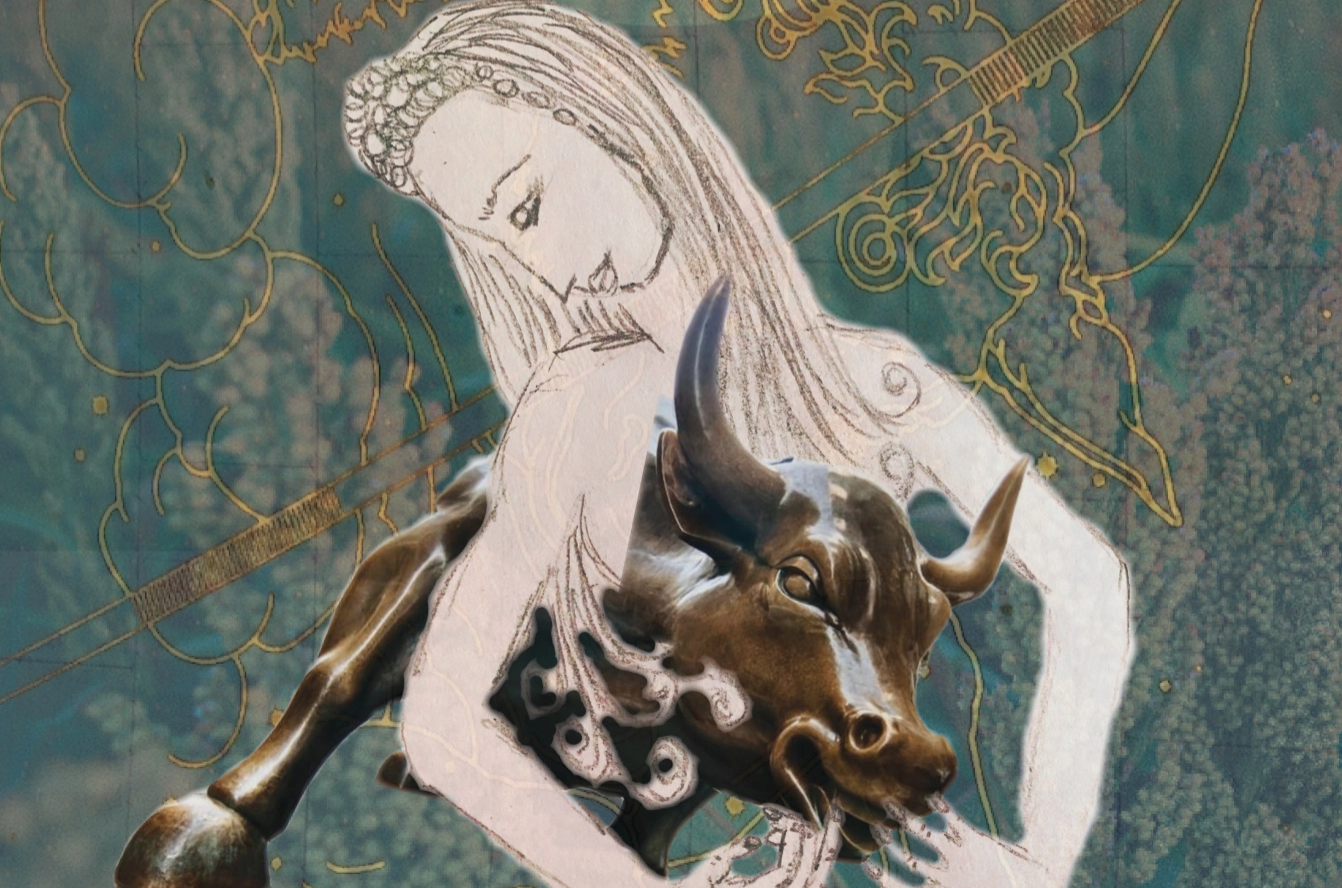
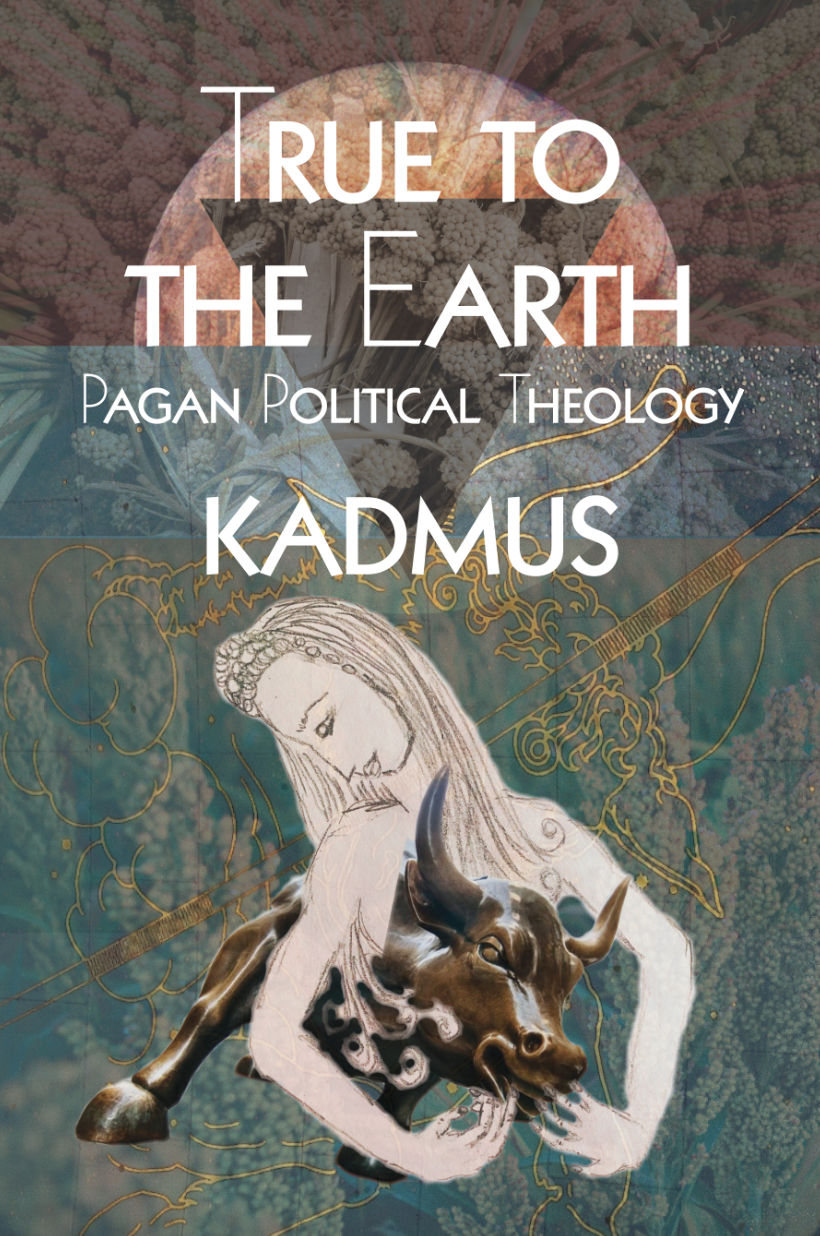
true to the earth

Enter True to the Earth: Pagan Political Theology, a new book which offers a bold solution to the troubles we’re in: a return to high-pagan ways of seeing the world and our place within it. The book’s author—a neopagan and practicing ceremonial magician (think summoning demons with a magic circle and the Order of the Golden Dawn, not Penn and Teller)—is quick to point out that the high paganism he advocates for is not Wiccanism or the paganism of a particular place at a particular time. Rather, he points to a number of what he calls “high pagan societies” and how their shared insights might give us the tools we need to remake the world and avert (more) catastrophe.

On a rainy day in Brooklyn, I sat down with the author, Kadmus, to talk about him, high paganism, magic, and his new book.

You wrote this book under a pseudonym. What prompted that?

I’ve had some people assume “oh are you worried you’ll get into trouble cause you’re criticizing capitalism” or something like that, and that’s not the motivation at all. The motivation is actually that I’m a professional academic in philosophy and the world of philosophy can be surprisingly dogmatic and surprisingly closed. I don’t have these statistics exactly right, but I wouldn’t be surprised if 80% of contemporary philosophers are naturalists. In other words, they’re committed to the idea that science has a monopoly on truth, and most questions worth asking can be answered by science. So if I was known in the world of philosophy as being a ceremonial magician, as being a committed pagan, there would have been consequences to my professional career that I wasn’t ready at the time to deal with. 

Did your practice as a ceremonial magician or as a pagan affect or influence this book?

I think so. There’s a few aspects to this. One is I am very much a practicing ceremonial magician, and by and large the tradition of ceremonial magic tends to have, especially these days, an experimental aspect to it. What this means is that throughout my own life and my own career, I’ve worked with spirits and gods from many different cultures, from many different traditions. And I think that this made me already very open to seeing that there are shared insights throughout pagan cultures globally. 

Not that they’re all the same—radically different; important differences—but when you really look at the orality of those societies, you see that there are shared metaphysical commitments.

And I think I was more open to that because, within my own life, I had already worked with spirits from several different cultures, from several different historical time periods. So I think that this informs the pluralistic approach of the book.

 Another part of it is that I’m not writing this purely as an academic or intellectual endeavor. I am to the best of my ability living this worldview, to the best of my ability living within it, and a lot of the spirits I talk about and the gods and goddess are ones who I have very close relationships with. 

Do you feel as though any of these spirits and gods had a say in this book? 

Yes. I found, just as a matter of fact (not that this was planned), that a lot of the Interludes were inspired by, suggested by, directed by different spirits and divinities that I was working with. 

What I would want to avoid saying is that anything in here would count as something like revelation. This isn’t dictated by them. But there’s support. There was support and encouragement and suggested insights. 

I say early on in the book that I’m very skeptical—and I think we should be—of claims to authority via revelation. And that’s not because revelation doesn’t exist, I’m not saying that those things aren’t there, but I don’t care who’s revealing stuff to you. I have to come at it from where I am, and engage with it critically. 

And I think that this comes from a more pagan view VS a monotheistic view—I’m not one for the acceptance of authority, especially on questions that we can think about, based on claiming divine dictate or something like this. Even if a god or goddess speaks to me, I’m going to critically engage with what they say. There’s not a spirit out there that I would accept what they say unquestioningly.

The gods are personalities, they have agency. And they’re up to stuff. They’re up to different stuff and they disagree. They’ve got agendas. Just like dealing with a group of people you have to think about what folks are up to and what parts of it seem to fit with what seems meaningful and of value to you.      

I was watching Rosemary’s Baby for the first time last night, and it made me think about your book because there’s that scene where Rosemary is doing all this research on witchcraft, and she gets to a point where she demands that her husband take off his shirt to see if he has a witch’s spot. And there’s this sense that if you’re a witch, you absolutely have to have one, that to be a witch you have to believe some particular thing. Which is something I think your book is against.

Yeah, so, there is a difference between offering alternative ultimate truths like this is some new ultimate truth that someone should adopt VS entering the view from which you can see that there is no ultimate truth, there’s a plurality of truths that are fundamental to the universe, and it’s an ever-growing, ever-differing and changing collection of truths. This second position is the one offered by the book.

This pagan way of looking at the world is one you ascribe in the book to “high paganism.” And when you say, “high paganism,” you’re talking about something specific. What is that as opposed to paganism in general? Like, Plato is not a part of this.

There’s a period everywhere on the planet, in every culture, that was oral, before there was writing. Writing causes some really fundamental changes in the way we think, in the way that we view reality, in the way that we experience reality, right down to the bedrock of our experience. What I began to realize was that what seemed to be truly pagan cultures, what seemed to be most committed to these ideas of pluralism and plurality of truth in reality itself, were all oral societies, were all pre-writing. 

So, high paganism is a period in any culture when the culture is oral, and that orality contributes to certain ways of seeing the world that I understood to be high pagan.

What are some of the biggest differences in how a high pagan society sees the world compared to a literate society?

The most basic difference is that oral societies are concrete and action-based, whereas in literate societies what writing allows us to do is have abstract nouns. You can talk about “goodness” all of a sudden as if it were a thing, rather than talking about how it’s good to act or what’s an example of good events in life.

We can give abstract definitions of a triangle and say that two sides of a right triangle have a relation to the other side and blah blah blah….If you were to do that in an oral society it would have to be a story. It would have to be some sort of story about the behavior of the sides or the triangle, so the one side stands firm and courageous and faces the other side in a certain way. It would have to be concrete. It would have to be about action.

This gets at something I really liked about this book—that one of the ways that high paganism can respond to and alleviate a certain amount of the alienation people feel in the current circumstances is with the way that high paganism understands how a body or a thing is defined. 

The high pagan understanding as I’m defining it tends to be relational. So a thing is what it is based on what it does, and the relationships it has with other things, and its context in the world around it. So rather than defining something in terms of, say, the base matter it’s made out of, or the purpose for which it is designed—designed either by an ultimate creator or designed by us or designed by nature—you instead understand it in terms of the way it behaves and the relationships it has with other things. 

A late-pagan thinker already is usually committed to what I call a monotheist metaphysics.  Aristotle, who’s what I call a late-pagan thinker, thinks the entire universe is unified, that everything has a purpose that is internal to that thing, and if you want to understand what a thing is you understand its purpose. We look at a fruit tree, and Aristotle is going to say What is the function of a fruit tree? What does a fruit tree do that is unique to a fruit tree? And it’s make fruit. So, a good fruit tree is going to make good fruit, a bad fruit tree is going to fail at making fruit, and that’s the ultimate essence of a fruit tree.

A high pagan view of a fruit tree is going to look instead at all the other connections and relationships. Obviously we care about fruit trees partially because they make fruit. They’re important to the animals they feed with the fruit as well. But there's all kinds of other relationships that tie in there, and some of those are going to be cultural relationships—the role of the fruit tree in a society that isn’t just about providing fruit but is instead about its mythic history, for example. Or something like the other relationships: the squirrel that lives in it, the shade that it gives, and so on and so forth. 

All of these relationships are going to be branching, and growing, and altering over time. So the nature of that fruit tree is going to be increasingly complex, increasingly pluralistic. The same can be said about us. We are the relationships we find ourselves within and tend. We are what we do in the world and how the world responds to us.

Do you feel that this sort of reductive purpose-driven or substance-driven view of the nature of things is widely applied to human beings right now?

Yeah absolutely! One way that we see this is that thinking that everything has an essence that pins down its purpose and is therefore the basis from which we can judge its goodness or badness shows up in society and shows up in our political approaches to society. That there is the right way to formulate a society, to structure it, the right political form; there is the right answer to how our society should be organized—we just have to figure that out and force anyone who disagrees into that structure in one way or another. This is the history of 20th-century politics and a lot else. This attempt for the “pure society” where you have some pre-set idea of what the purity is, what the purpose is, what the appropriate structure is, and you have to in some way destroy or heal or re-educate or fit in anything that doesn’t fit that perfect pure society. 

Because the bottom line is that once you know (or once you think you know) what a thing’s nature is, then you come up with a very simple view. And the view is that anything that is closest to that nature is good, and anything outside of it is bad. You have to oppose this badness. So diversity itself, pluralism itself, becomes a mark of impurity or disorder or chaos

Whereas high paganism embraces this diversity.

Embraces it both as fundamental to reality—it’s always going to be there, you’re never going to be able to do away with it—but also embraces it as the source of the most important things in life. 

For example, I talk a lot about the idea of council, and the Akan civilization talks about wisdom as something that can’t reside in any one person’s head. So if you want to be wise, you can’t do it, only a collective can. And the more diverse that collective is, the more pluralistic that grasp of reality, the wiser that council, that collection of viewpoints, is. 

So, it’s both an unavoidable aspect of reality—it’s pluralistic, it’s irreducibly pluralistic—and it’s also the source of strength, of fertility, of growth, and of wisdom. 

And this even goes to the level of the gods. You do an Interlude about the Greek Magical Papyri, and one of the points you make is that multiple gods from multiple cultures are brought up in a non-hierarchical framework. 

Yeah, there are some exceptions, but by and large what’s striking about the Papyri is this wild multiplicity of gods from totally different cultures and traditions all thrown in together without some overarching system that would organize them in terms of importance and power and who rules who. 

And this is actually an aspect of high pagan culture. We’re used to monotheistic religions that are hostile to alternative views. But it is a huge part of archaic or high pagan cultures, this curiosity, and even greed, for new gods and new traditions and new practices. So it’s both an openness to them, but it's also a hunger for them. Someone comes through Athens and says hey there's this weird tradition I picked up somewhere in Persia and they’re willing to give it a try. They’re willing to see what things look like from within that tradition.

Kwasi Wiredu, who’s an amazing philosopher who deals a lot with African philosophy and African culture, talks about the fact that the Akan society had what he calls an empirical or experimental attitude towards gods and spirits and religious practice, where if something is working, if you go to it for help—or if you go to it for healing, or for wisdom, or whatever you’re going to it for—and it’s useful for you, then it ends up increasing in value, and importance, and increasing in attention. 

On the other hand when those things fail, you begin to withdraw from them. So it’s not in line with the way that faith is thought about in a monotheistic context, where whether God “fails you” or not, you owe absolute obedience and devotion, and if it seems like you’re being failed, if it seems like your prayer hasn’t been answered, it’s a test, it’s a test of your obedience and devotion. 

In a pagan culture it’s not seen that way. The idea is that look, if these gods aren’t alive in my life, if these spirits aren’t alive in my life, if these practices aren’t meaningful in my life, if they're not doing something for me, if they're not intimately involved in the meaning of my world—I don’t owe them anything. There’s a sense that that idea of devotion to something that is precisely refusing to be present is a fool’s game. 

So, in this high pagan culture, the gods are very present. You describe how there can be a god of rivers generally, and there can be a god who is a particular river, the river itself rather than, say, a magic god-person floating above the river. 

And this isn’t an absolute distinction, gods aren't going to fall into the one category or the other constantly. But very often our modern perspective on pagan gods that are identified as gods of mountains, or the goddess of a river, or Gaia who is goddess of Earth, is that they are somehow the spirit of that thing: there’s the Earth and then there’s a conscious, intelligent spirit that is separate but maybe inhabits that thing. 

Gaia is clearly identified by the high pagan Greeks as the Earth. When you dig in the Earth, you’re digging in the body of Gaia. She is described as “broad-bosomed” meaning the mountains and the hills. And this isn’t symbolic. Oral societies are not symbolic, they do not use symbolism, they are concrete and literal. So when Gaia is the Earth, she is the Earth, a living entity with a body that is the Earth. 

We see a great example of this in the Iliad. There’s a scene where Achilles fights the river Scamander. And it’s not that some spirit steps out of the river, some, like, divine representative of the river.  No, it’s the river! The waves are crashing on him as if a horde were attacking him and he is struggling in the river. The river itself is the god and the god is the river. 

The gods were embodied, and many of them were directly understood to be the thing that was identified as divine. So, the Earth is divine, it is a goddess, it’s a living body—that is what Gaia is. 

Then you get distinctions. Poseidon is a god of the ocean. It’s probably wrong to say he is the ocean. If you think about an engagement with Poseidon, it’s usually going to be something like a fairly anthropomorphic manifestation of the ocean, which is how a lot of neopagans think about all the gods, missing the fact that that works for some, but it doesn’t work for all.  

Speaking of neo-paganism, because this ties in a bit to the political moment, there has been in recent years a connection between neopaganism and far-right politics, especially fascism. The Nazis used Norse sigils in their iconography, there’s the Soldiers of Odin, a far-right group that also uses Norse mythology…

You see this in Greece, too, a lot of far-right movements that identify with a return to Greek pagan religion.       

...But your depiction and conception of high paganism, and the sort of high paganism you advocate, would seem to be an antidote to this, or at the very least certainly not part of this.

I would hope so! Part of what motivated the book was trying to get clear in my own mind about the full extent of the mistake you make when you think that to be engaged with the old Norse gods you have to fit into some sort of racial profile or nationalistic commitments. 

Part of what I really try to stress is precisely the way in which purity, and the politics of purity, play such a key role in these fascist reinterpretations of paganism, and how foreign that would have been, how utterly opposed to the main insights of a pagan culture. The Norse gods were not pure, that were a mixing of various sorts, children of giants and so on and so forth. We also see the background of the Norse gods in the Æsir and the Vanir, who are two different families of gods. And there’s debates about which one is foreign, but it’s clear that at some point in time one of them was foreign and the other wasn’t. And the relationship between them wasn’t one of conquest and dominance, even though some people try to interpret it that way. It ends up being a compromise with exchanges of family, and this gives rise to some of the most distinct powers of the Norse gods. 

So, my point is that the cultures that gave rise to these religions were not themselves committed to racial purity, they weren't committed to nationalistic purity. But also that the theology within these religions is opposed to these concepts of purity, to these concepts of firm boundaries between peoples to begin with….or between anything. The type of purities that obsess fascism wouldn’t have made any sense to high pagan cultures. 

How else do you see the lessons of high paganism being applied in a contemporary context? How could someone apply these in their own life, maybe in a way that is anti-fascist, anti-capitalist, or anti-prejudice?

There’s a few things to say here. We can see that there are certain things that are very difficult for us to think and to experience and to see in the world that other cultures and other time periods could think and see much more easily. In and of itself that doesn’t convince us that we should adopt it, but it does allow us to begin to see the failures and the limitations of our own ways of seeing the world and the cost of them. So often nowadays what you find is that people want to use the very principles and very ways of seeing the world that got us into problems in the first place, that have led to disaster—they want to use those same ways of seeing the world to solve the problem. And it’s not going to work.  

For example, with global warming, very often the dream is that it’s just some new technological order we need, some new collection of inventions. And it’s not to say that those things might not be helpful. But what got us into this problem in the first place was seeing the world as an object for use, as a source of raw material, and if the answer is well we just have to manage our raw material better, you’re gonna fail. Seeing that we’re already making that assumption requires seeing that there’s another way to see the world.

This is just an argument for why the history matters, because it gives us access to different ways of understanding reality. Which might be better, might be worse. I argue that there are some specific ways that it’s better, and there are some limits and failures as well, so it has to be a critical endeavor.  

What’s the most direct way to apply this? There are a few things I can say.

One is that if you’re seeing the world in a pluralistic way, then you have to give up on the idea that what you think or what you understand is sufficient for solving any problem. And the same thing applies to this book. This book is insufficient for addressing the problem and for developing a full grasp of what a truly pagan worldview would be. It’s part of the process; it’s insufficient by itself. 

And I see this in my students all the time. I’ll have someone who’s very deeply religious, and who’s also committed to freedom of religion and freedom of speech, and it’s a good thing, but when you dig into what their thinking is, their thinking is Look, I know I’m right, I’m committed entirely to the fact that I am right, and I’m giving other people the chance to realize that they’re wrong. Freedom of opinion and freedom of religion is a chance for everyone else to come to see that I’m right. 

Now, there’s a fundamental failure there.  If you’re going to gather folks together to try to solve a problem, and each of them thinks they’re right, and is open to debate and discussion with the sole aim of getting everyone else to realize that they’re right, you’re not going to come up with a solution.  And you’re not going to be able to progress in that conversation. 

On the other hand, what I think pagan cultures teach us is that there’s a radically different view when you admit from the start, and everyone does just as part of the framework, that every single one of the views present, every single one of the grasps of reality present, is incomplete. And that we need each other and we need an increased complex grasp on the situation to address it. 

So an immediate, concrete, in-our-daily-life way to approach this is by accepting the limitations of our own position and accepting the vital necessity of the truths of others, the insight they have into reality.  

You make this really interesting point in the book that there is this connection between divinity and what happens when you lie, whether or not your lies can become reality.  Which is interesting, especially in the current climate where you have basically competing realities at play in the mainstream media.

That’s actually my favorite Interlude. There’s a whole Interlude about truth and lie and the role of lying and deception within a pagan worldview. And you see many examples of this, but when you lie to a god, if you do it well, it’s not always that you’re tricking the god—you’re able to, in some cases, trick divinities—but if you can lie to a god or a goddess and get them to accept the lie, that becomes a reality. At that point it's no longer you lying, it’s making a change.

A great example of this is Hermes and the Homeric Hymn to Hermes. Hermes just lies nonstop, and Zeus knows immediately he’s lying, and is really pleased and smiles to see how well Hermes is lying. And what that story ends up being about is that Hermes creates a space for himself on Olympus through telling these lies, and engaging in theft, and it makes space for him. And he ends up being a god.

We see this with Loki too, right, where you have someone who is not a god but essentially lies his way in.

Yeah. Another example that I love is the transformation that occurs of the Furies into the Eumenides. The Furies were these ancient goddesses that were very dangerous and their job was to enforce the oldest laws of the gods. And part of these laws were things like you don’t kill family members. So if you kill your mother or father, it’s the Furies that get to punish you. 

And all this leads to this climax where the Furies are trying to punish someone, and Athena and Apollo do not agree that the person should be punished (this is all in the Oresteia). And the way that peace is brought about is that the people of Athens start calling the Furies the “Eumenides,” which means the ones who bless, it’s the good-minded ones, and the good-spirited ones, and the ones who bring blessings and all of this. And these aren’t blessing spirits. 

It’s like when someone is being barked at by a big dog and they say, “Nice doggie!”

Yeah, exactly. And it works! 

The official mythology is that the Eumenides are the Eumenides in Athens, that they are friendly to Athens. And they bless marriages and they bless new births, and there's all of this new meaning that comes with their new title. And it comes from lying to them, saying oh, you’re beautiful, you’re a force of blessing. And they accept the lie and become a force of blessing. 

And one of the good things about this book is that there is a kind of despairing fatalism afoot these days—climate change seems inevitable, our politics don’t seem representative and aren’t terribly effective anymore—and one of the things that the book brings up is that you have access to all these tools: the lie that becomes reality, the fact that you can stand up to a god, you can fight that river and win.

Right, and we see these examples throughout cultures: times where the gods are defeated. Times where you can side with one god VS another. Rebellion is absolutely always a choice. And this is an important thing that we get from paganism—rebellion is always an option. There’s no value in absolute obedience.

In monotheism, rebellion is always foolish because the only source of existence is the one god. So there’s this sense in which there can be no victory against that force, so you simply have to obey, there’s no choice. This trickles down into politics, even in our contemporary world.

That’s not the pagan worldview. There, there are many sources of power. The sources of power rise and fall, and shift and change. So, if you’re in a tight spot, rebellion against the gods, some of the gods VS others, is always an option.

And that tied in with the idea of change becomes really important, because there’s this sense of fatalism. This comes from all different areas. Part of it you can see in certain types of Marxism, too, the idea that there’s a deterministic nature to history, things are going in a certain direction, and even if they change that change was determined by the structure of the universe, or something like this.

And what paganism as I understand it is committed to is the idea that the structure of the universe constantly changes. It’s been changing since whatever the start might be and it will go on changing, which means that no matter how determined something seems, the rule of reality is unexpected, unpredictable alteration. Which means that no matter how grim things be, tomorrow might be a world of difference.

Cooper Wilhelm is an occultist, researcher, and poet in NYC. He is the author of three books of poetry, including DUMBHEART/STUPIDFACE (Siren Songs/2017). More at CooperWilhelm.com and on twitter @CooperWilhelm

Kadmus is a published academic with a Ph.D. in philosophy teaching at the college level. He is also a practicing ceremonial magician with a long standing relationship to the ancient Celtic deities.

In Occult, Books Tags paganism, BOOKS, KADMUS, cooper wilhelm, NATURE, POLITICS
Comment
Screen Shot 2018-10-30 at 9.52.06 PM.png

An Interview With John Pivovarnick

October 31, 2018

BY ANDI TALARICO

John Pivovarnick’s novel-within-a-novel Tales from the Back of a Bus tells the story of a young author handling the aftermath of his book’s publication. Jake Maldemer, a young writer in 1980s Los Angeles, writes a series of tales featuring a protagonist named Jack Moses as well as an ethereal, spooky man named Kobold. But when Jake hits the road to promote his book, a man claiming to be Kobold finds him, and things only get weirder from there. It becomes almost impossible to separate fact from fiction as we’re guided through a Dantean LA landscape and later in the piece, New York. The work speaks to the confusion of identity, cognitive dissonance, shame-based fear, and PTSD. Fans of Vonnegut’s Slaughterhouse Five or the film Jacob’s Ladder will feel right at home in these pages. I spoke with author Pivovarnick about the work.

I understand that you wrote much of this book some time ago, in the early 80s. What brought you back to it? What was the editing process like as you finalized this edition for print?

The story is pretty much as described in the afterword, moving that big honking filing cabinet and wondering "WTF is in here?" then spelunking in the monstrous thing.

The clincher, as it were, was finding those rejection letters talked about, too. The "its sooo good, no one will publish it" comments. "Too challenging." Too whatever.

The hardest part of editing was keeping it accurate to the timeframe. I hired an editor and he was like, "Did Jiffy Mailers exist in 1979?" and my answer was always, "They must have, because that's when that part was written."

There were also some characters I had a hard time not editing to fit today's standards. I had to let them stand [while cringing] because they were accurate and honest for the time.

What made you decide to finally move forward with the book's publication? Was there a moment?

The moment was getting similar rejection letters for Beneath a Glass Triskellion which Dave and I are still hammering away at. The thought being, let's learn this process so we're ready to go with these books when we're ready. There's quite a learning curve, as you can imagine. Luckily, I have a unique set of skills...

The story takes place in a city that both is and is not Los Angeles, in that it takes place in the physical and spiritual planes. What about Los Angeles made it available to you as a magical or ethereal realm?

I ran away to Los Angeles when I was 19, and it was both a magical/ethereal realm, and the drudgery of two jobs to make rent and no time to write. I took that bus ride to get that job. I ate at Ships a lot. Just the difference between growing up in Scranton, PA and finding myself in Los Angeles at 19 was quite the journey of discovery.

The act of writing is magical in the same sense the cards are magical or ritual is magical.

Your story is a frame narrative, a classic story-within-a-story, but because you also discuss this work being autobiographical, it's a actually a meta story-within-a-story-within-a-story...within a story? Jack is Jake is YOU, John. How did you handle the psychological gymnastics required to get within two characters that are both based upon your experiences?

Who said I handled them? I have a radio interview coming up next month, and my mind is blown about that.

Also, as a queer kid in denial, your life is all about getting in the heads of two characters that are both based on your experience. That's the closet in a nutshell.
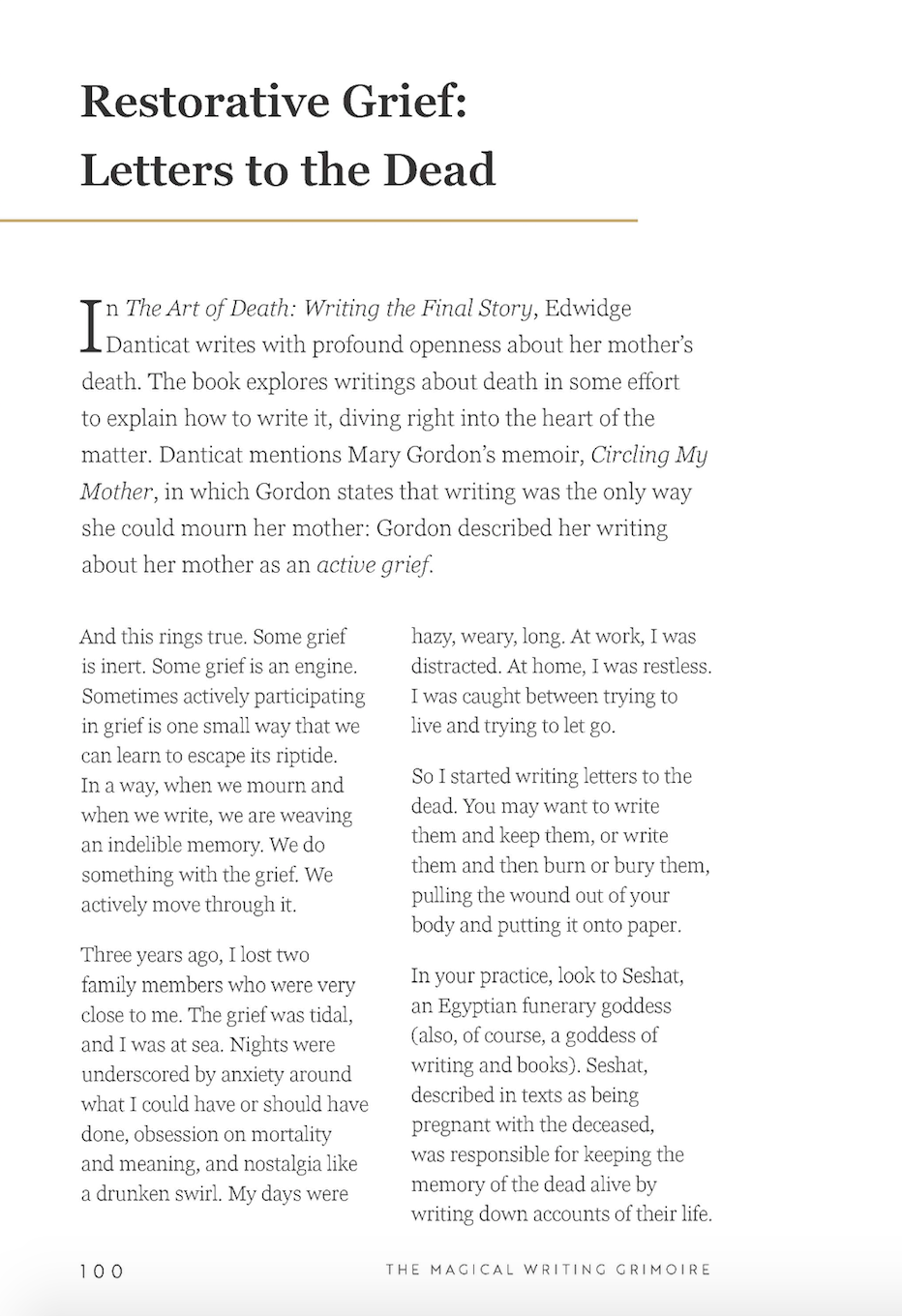
One of the most potent aspects of the work is the main character's struggle over defining and understanding his sexual identification. What was it like, looking back upon those ideas in 2018 from a time when that was still a struggle for you? Do you identity as an LGBTQ author?

I'm an author who is gay, and my life informs what I write, regardless of characters, genre, or whatever. I always strive for representation in what I write, all the way around. I administer the Bechdel test to myself.

Screen Shot 2018-10-30 at 9.51.53 PM.png

At Luna Luna, we're always interested in the cultural signifiers of witches and witchcraft. While Tales from the Back of a Bus doesn't deal directly with witchcraft, you've long been a tarot reader and witchy individual. Do you see a corollary between witchcraft and authorship in general? How does your craft or spiritual practice inform your work.

The act of writing is magical in the same sense the cards are magical or ritual is magical. They all bring about a state of mind that makes you open and receptive, to see. Ritual informs your being. The cards inform another person. Writing informs the readers. It's all the same process of seeing, understanding, and communicating. To me at least. My best writing happens when the characters take control and I'm reduced to just transcribing what they tell me--that's whether they're people, creatures, space aliens, or what not. That "divine madness" Plato was so hot about.
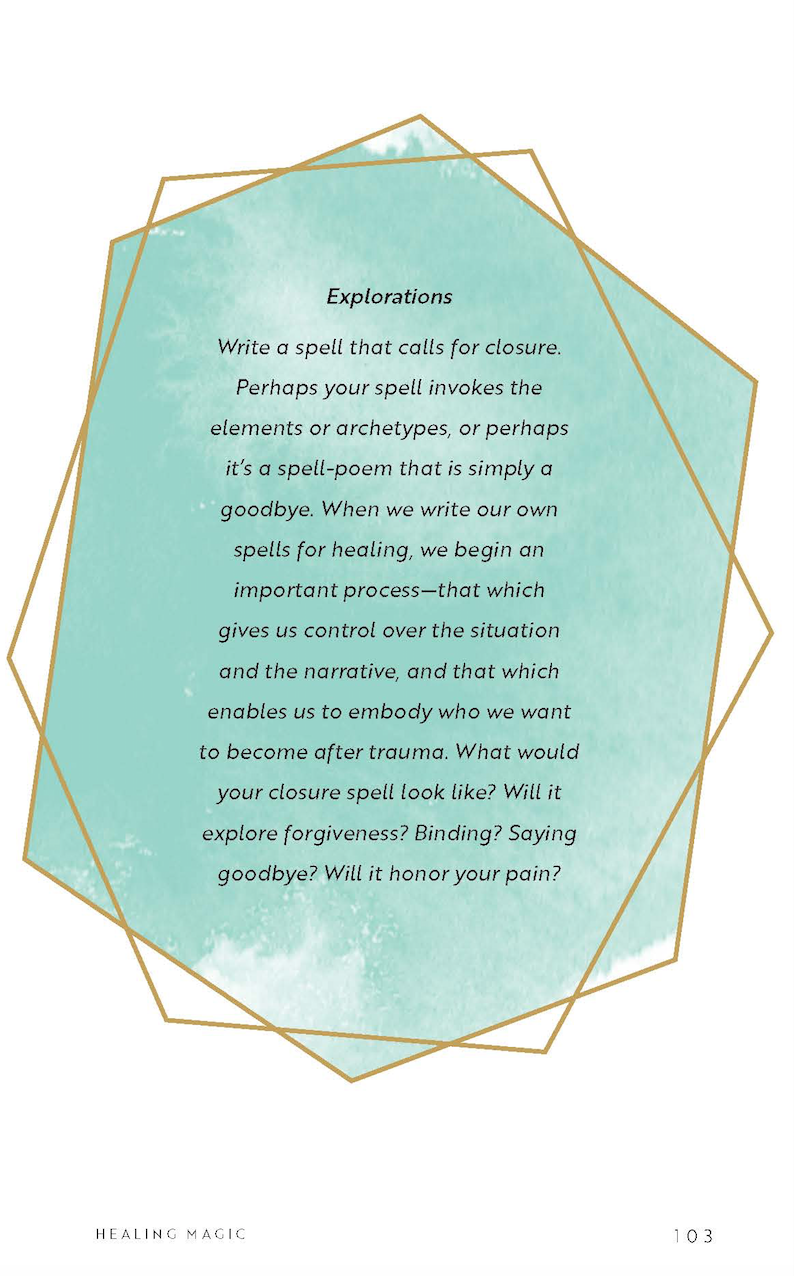
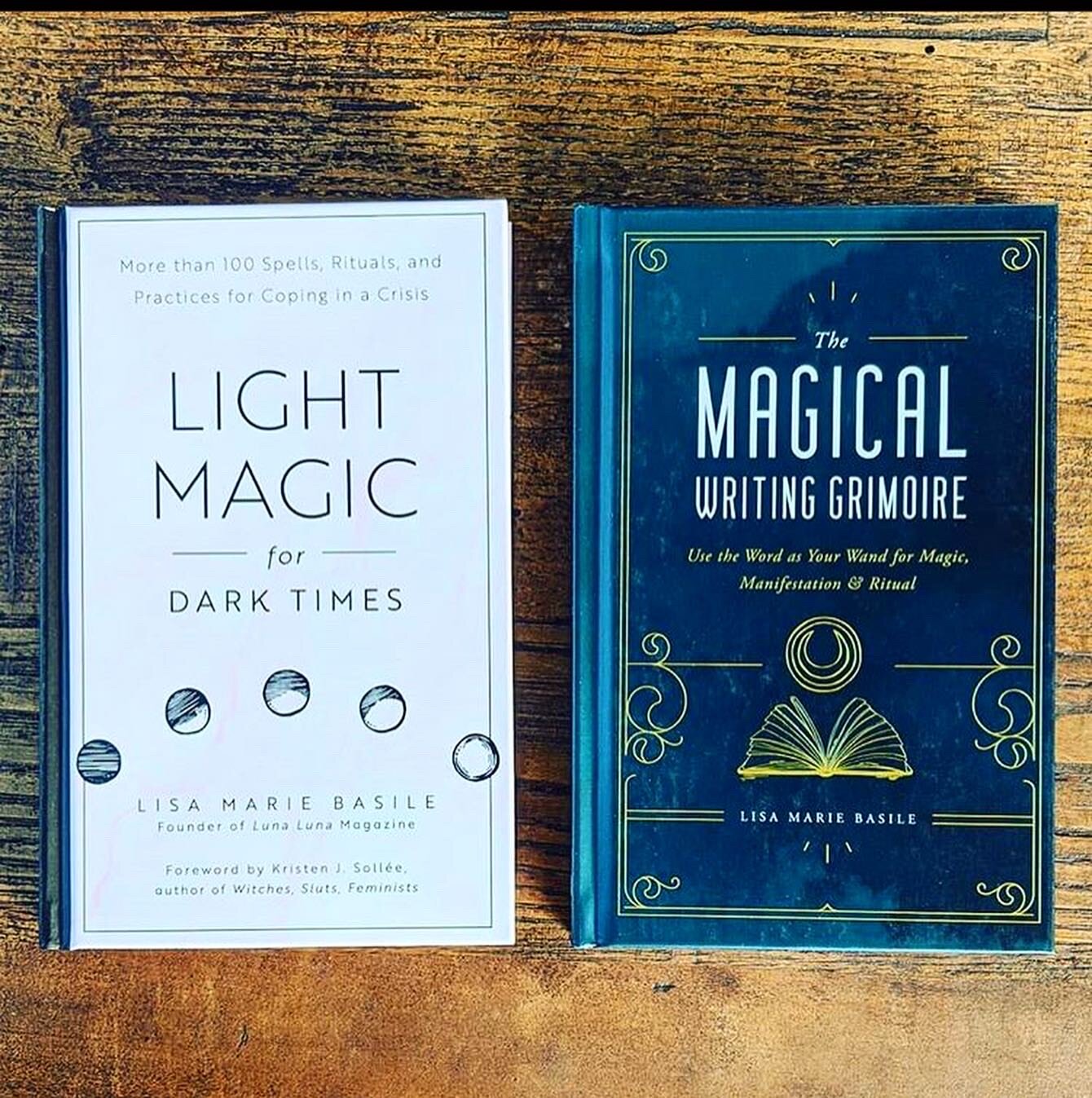
Anything else you’d like to let us know?

This is a weird, weird book. Even I'm astonished at how strange it is. But it's a pretty accurate representation of me and my mind and life process at the time, through a lot of transformative stuff--personal stuff, the Reagan era which was also the start of the AIDS crisis, coming out, shaking off my catholic school upbringing to embrace a wider mystical world. Mind blowing stuff that I was lucky to survive intact. Ish. Intactish.

More than any other element in it, I think it maps my transition from the childhood view that the world is safe and sensible to the more truthful world "red in tooth and claw" ready to chew up the unwary/unaware and spit them out. A simmering summary of this story, maybe, in which I come out transformed on the other side. My life is way stranger than the novelization of it.


Andi Talarico is Luna Luna’s book reviews editor, and a Brooklyn-based writer and reader. In 2003, Paperkite Press published her chapbook, Spinning with the Tornado, and Swandive Publishing included her in the 2014 anthology, Everyday Escape Poems.

She’s taught poetry in classrooms as a rostered artist and acted as both coach and judge for Poetry Out Loud. She also penned a literary arts column for Electric City magazine, and currently curates the NYC-branch of the international reading series, At the Inkwell. When she’s not working with stationery company Baron Fig, she can be found reading tarot cards, supporting independent bookstores, and searching for the best oyster Happy Hour in NYC.

In Books Tags books
Comment
Image via GOOP.

Image via GOOP.

Interview with Arin Murphy-Hiscock, Author of 'Protection Spells'

September 19, 2018

I recently had the chance to ask Arin a few questions about her most recent book, Protection Spells: Clear Negative Engery, Banish Unhealthy Influences, and Embrace Your Power, the necessary and active role in taking charge of your own magic, and some common misconceptions about spell-casting.

Read More
In Books Tags Spell, spellwork, Witchcraft, Trista Edwards
Comment
Featured
‘in the glitter-open black' — poetry by Fox Henry Frazier
'poet as tarantula,  poem as waste' — poetry by  Ewen Glass
'poet as tarantula, poem as waste' — poetry by Ewen Glass
'Hours rot away in regalia' — poetry by Stephanie Chang
'down down down the hall of mirrors' — poetry by Ronnie K. Stephens
'Grew appendages, clawed towards light' — poetry by Lucie Brooks
'do not be afraid' — poetry by Maia Decker
'The darkened bedroom' — poetry by Jessica Purdy
'I am the body that I am under' — poetry by Jennifer MacBain-Stephens
instagram

COPYRIGHT LUNA LUNA MAGAZINE 2025