





• Home
  • indulge
  • new poetry
    • About Luna Luna
    • resources
    • search
  • editor
  • dark hour
  • submit
Menu

luna luna magazine

  • Home
  • indulge
  • new poetry
  • About
    • About Luna Luna
    • resources
    • search
  • editor
  • dark hour
  • submit
shadow
A Writing Spell: Honoring Your Many Selves
Mar 1, 2021
A Writing Spell: Honoring Your Many Selves
Mar 1, 2021
Mar 1, 2021
An 11-Line Poetry Spell For Healing
Mar 1, 2021
An 11-Line Poetry Spell For Healing
Mar 1, 2021
Mar 1, 2021
How To Write Powerful Poetry Spells
Feb 28, 2021
How To Write Powerful Poetry Spells
Feb 28, 2021
Feb 28, 2021
Here Is Your Scorpio Homework This Season
Oct 25, 2020
Here Is Your Scorpio Homework This Season
Oct 25, 2020
Oct 25, 2020
3 Transformative Life Lessons Scorpio Teaches Us
Oct 25, 2020
3 Transformative Life Lessons Scorpio Teaches Us
Oct 25, 2020
Oct 25, 2020
Restorative Grief: Letters To The Dead
Oct 23, 2020
Restorative Grief: Letters To The Dead
Oct 23, 2020
Oct 23, 2020
A Santa Muerte Rebirth Ritual + A Tarot Writing Practice
Oct 6, 2020
A Santa Muerte Rebirth Ritual + A Tarot Writing Practice
Oct 6, 2020
Oct 6, 2020
Witches, Here Are The New Books You Need
Nov 14, 2019
Witches, Here Are The New Books You Need
Nov 14, 2019
Nov 14, 2019
3 Dream Magic Rituals And Practices
Nov 12, 2019
3 Dream Magic Rituals And Practices
Nov 12, 2019
Nov 12, 2019
How To Use Tarot Cards for Self-Care
Nov 11, 2019
How To Use Tarot Cards for Self-Care
Nov 11, 2019
Nov 11, 2019
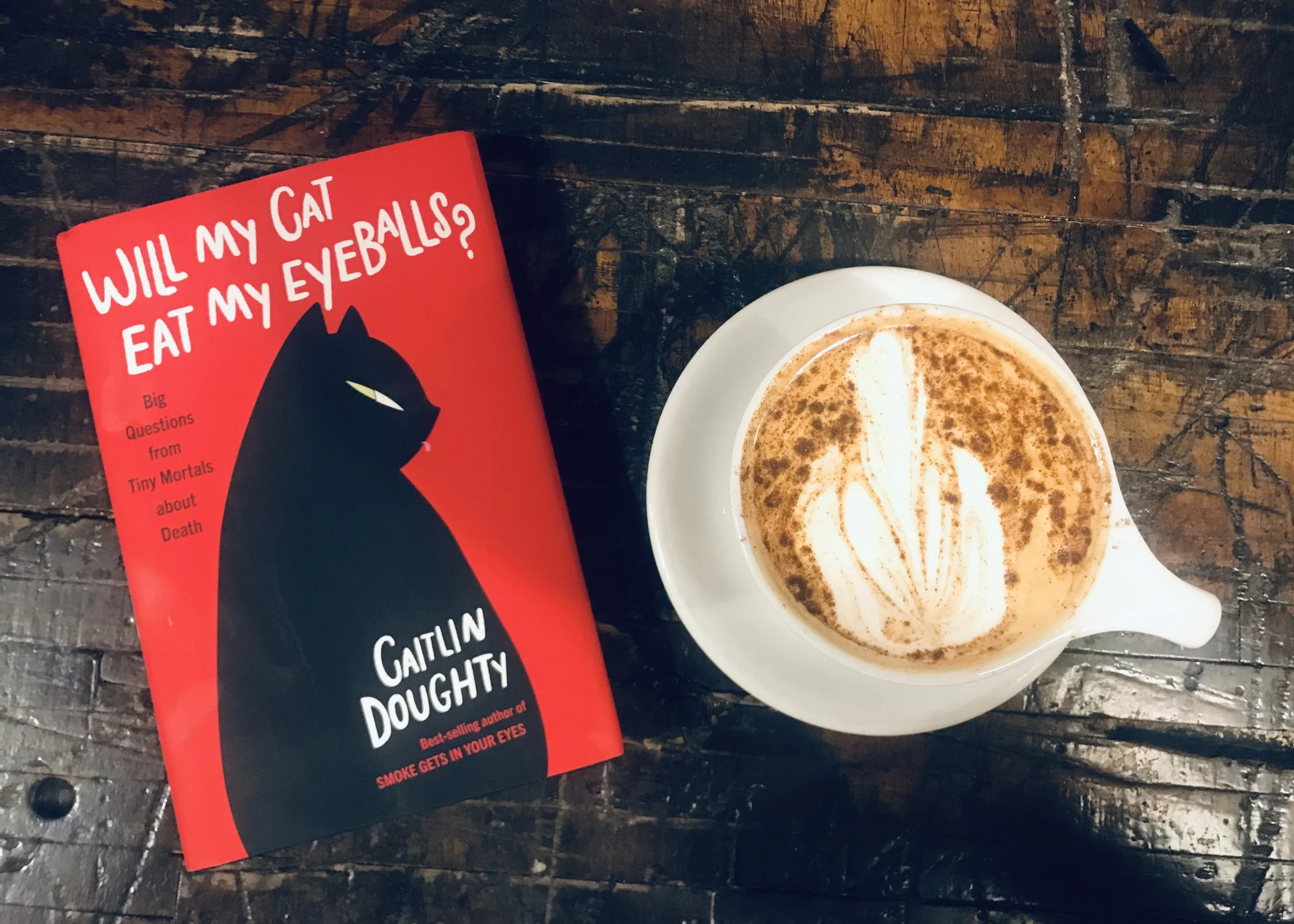
A Review of Caitlin Doughty's 'Will My Cat Eat My Eyeballs?'
Oct 25, 2019
A Review of Caitlin Doughty's 'Will My Cat Eat My Eyeballs?'
Oct 25, 2019
Oct 25, 2019
Nimue, The Deity, Came To Me In A Dream
Sep 17, 2019
Nimue, The Deity, Came To Me In A Dream
Sep 17, 2019
Sep 17, 2019
Astrological Shadow Work: Healing Writing Prompts
Sep 9, 2019
Astrological Shadow Work: Healing Writing Prompts
Sep 9, 2019
Sep 9, 2019
The Witches of Bushwick:  On Cult Party, Connection, and Magic
Jul 23, 2019
The Witches of Bushwick: On Cult Party, Connection, and Magic
Jul 23, 2019
Jul 23, 2019
7 Magical & Inclusive New Books Witches Must Read
May 15, 2019
7 Magical & Inclusive New Books Witches Must Read
May 15, 2019
May 15, 2019
Working Out As Magic & Ritual: A Witch's Comprehensive Guide
May 14, 2019
Working Out As Magic & Ritual: A Witch's Comprehensive Guide
May 14, 2019
May 14, 2019
Letters to the Dead: Shadow Writing for Grief & Release
Feb 8, 2019
Letters to the Dead: Shadow Writing for Grief & Release
Feb 8, 2019
Feb 8, 2019
How to Add Magic to Your Every Day Wellness Routine
Feb 5, 2019
How to Add Magic to Your Every Day Wellness Routine
Feb 5, 2019
Feb 5, 2019
Ritual: Writing Letters To Your Self — On Anais Nin, Journaling, and Healing
Jan 31, 2019
Ritual: Writing Letters To Your Self — On Anais Nin, Journaling, and Healing
Jan 31, 2019
Jan 31, 2019
How Rituals Can Help You Gain Confidence
Jan 17, 2019
How Rituals Can Help You Gain Confidence
Jan 17, 2019
Jan 17, 2019
Hearthcraft & the Magic of Everyday Objects: Reading Arin Murphy-Hiscock's 'House Witch'
Jan 14, 2019
Hearthcraft & the Magic of Everyday Objects: Reading Arin Murphy-Hiscock's 'House Witch'
Jan 14, 2019
Jan 14, 2019
True to The Earth: Cooper Wilhelm Interviews Kadmus
Nov 26, 2018
True to The Earth: Cooper Wilhelm Interviews Kadmus
Nov 26, 2018
Nov 26, 2018
Between The Veil: Letter from the Editor
Oct 31, 2018
Between The Veil: Letter from the Editor
Oct 31, 2018
Oct 31, 2018
Shadow Work with Light Magic for Dark Times
Oct 31, 2018
Shadow Work with Light Magic for Dark Times
Oct 31, 2018
Oct 31, 2018
2 Poems by Stephanie Valente
Oct 31, 2018
2 Poems by Stephanie Valente
Oct 31, 2018
Oct 31, 2018
A Poem in Photographs by Kailey Tedesco
Oct 31, 2018
A Poem in Photographs by Kailey Tedesco
Oct 31, 2018
Oct 31, 2018
Photography by Alice Teeple
Oct 31, 2018
Photography by Alice Teeple
Oct 31, 2018
Oct 31, 2018
A Simple Spell to Summon and Protect Your Personal Power
Oct 31, 2018
A Simple Spell to Summon and Protect Your Personal Power
Oct 31, 2018
Oct 31, 2018
November and Her Lovelier Sister
Oct 31, 2018
November and Her Lovelier Sister
Oct 31, 2018
Oct 31, 2018
A Spooky Story by Lydia A. Cyrus
Oct 31, 2018
A Spooky Story by Lydia A. Cyrus
Oct 31, 2018
Oct 31, 2018
the magical writing grimoire by lisa marie basile

How To Use Tarot Cards for Self-Care

November 11, 2019

BY LISA MARIE BASILE

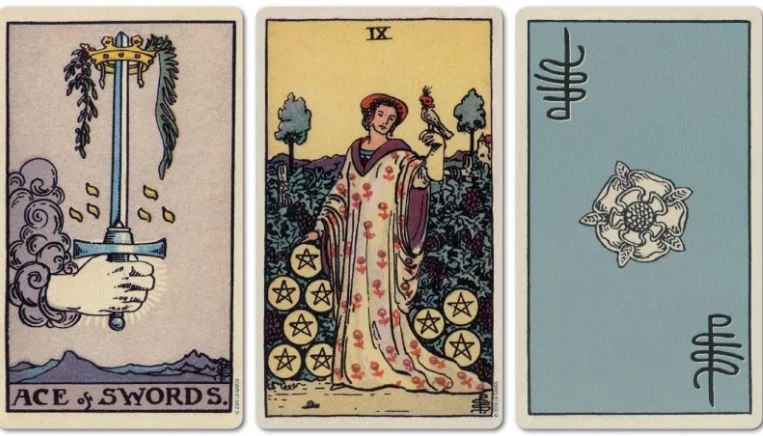
I've always been intrigued by tarot cards, especially as they relate to tarot for self-care and introspection. In fact, some of my favorite books are approaching tarot as a healing tool — like the new Tarot for Self Care by Minerva Siegel and Tarot for Troubled Times by Theresa Reed and Shaheen Miro. And if you’re looking for an inclusive, healing deck, here are some excellent resources for the tarot enthusiast or the curious. Also, please make sure you check out The Hoodwitch. Also be sure to read all of our tarot content, including Joanna C. Valente’s tarot horoscopes.

For the longest time, I've turned to tarot cards — usually read by someone else for me — to seek wisdom. I was recently invited to The Witches Almanac Witches Masquerade Ball in Massachusetts (alongside Laura Tempest Zakroff, Christopher Penczak, and Harold Roth), where I received two tarot readings that essentially amounted to one lesson I’d been putting off learning: Stop only identifying with and relying so heavily on the dark; you forget to let the light in. And it’s true.

I don't personally believe that the tarot cards are in communication with some divine force, deity, ancestor or Spirit (although many people do, and that's awesome), but I do believe that pulling a card randomly generates a message or lesson on which I can reflect. In either case, it's divinatory in some sense.

In fact, writer, Strega, tarot reader (and my Astrolushes podcast co-host!) Andi Talarico put it beautifully:

Do I use tarot as divination or reflection? The short answer is both, for sure, though I'm less concerned with fortune-telling than I am with assessing the circumstances that brought us to this moment in time — hence the reflection. I do not believe that our fates are entirely pre-scripted or set in stone or that we are solely at the mercy of the heaven's transits but I DO think there are ways in which we can use tarot to arm ourselves for future issues that present themselves. When tarot is practiced on a regular and continuing basis, you start to see recurring themes and patterns and messages and thus you start to notice obstacles as well as strengths, and therein lie our answers, I believe.

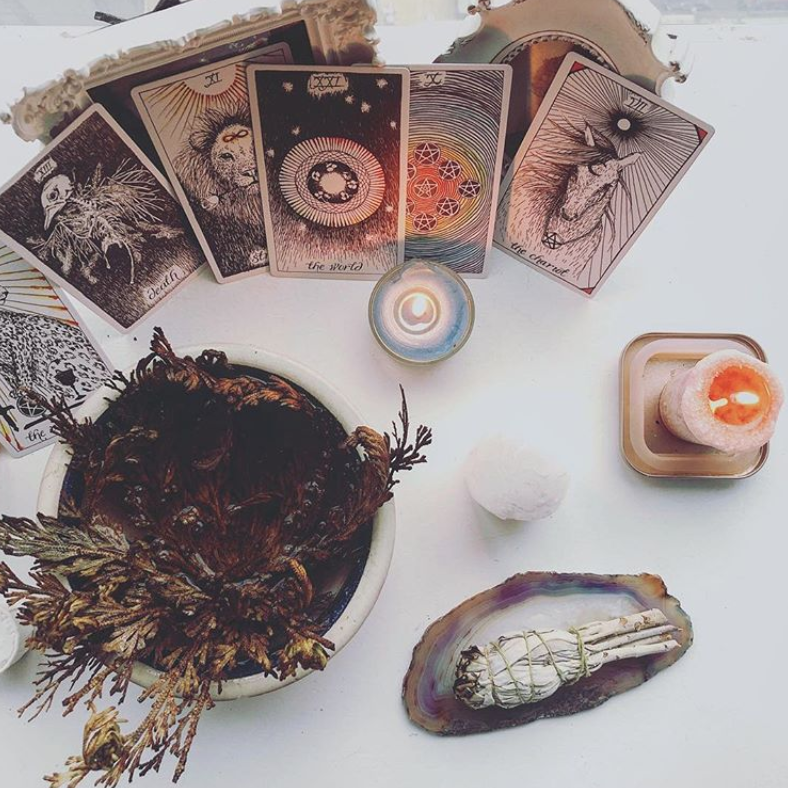
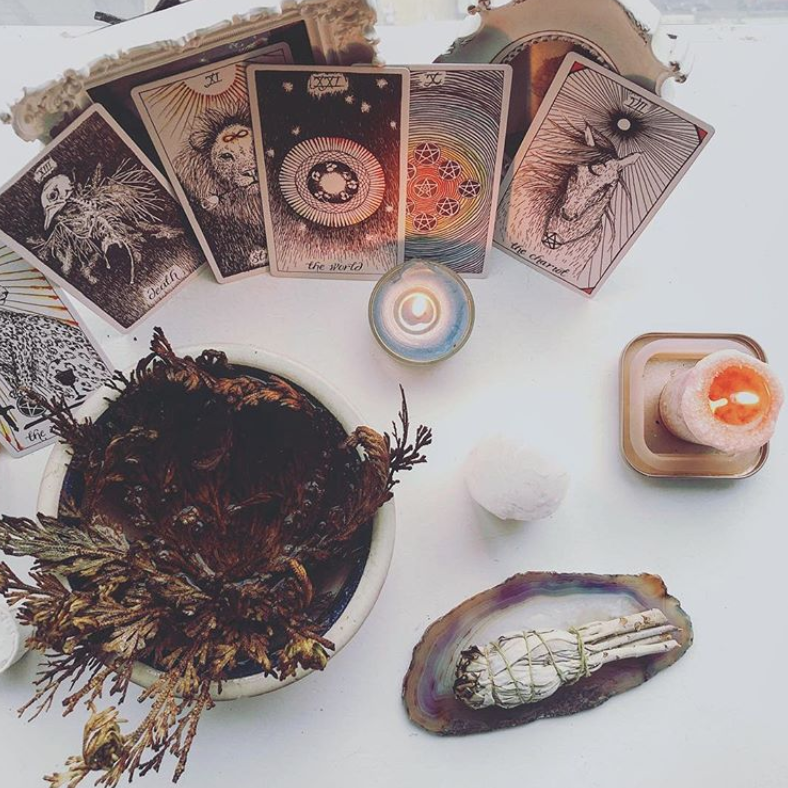
If I'm alone, I'll pull a single tarot card with a specific focus on themes like, say, expansion, transformation, or healing (#Scorpio here). The tarot card meanings that come with each individual deck are certainly something I'll take into account (I personally work with The Wild Unknown, as the animal and natural spirit of the deck speaks to me more than human figures do), too.

I usually pull a card for myself before bed or right when I wake up, depending on my need for clarity. I’ll read the deck’s guidebooks, but I also use my intuition and knowledge of symbols when interpreting the cards. How do the images make me feel? What is the lesson that I find myself falling into after pulling a tarot card or cards? What do the colors say to me? Are there recurring themes?

What is the history of tarot?

People have turned to tarot for hundreds of years, which comforts me; I love that something can remain so sacred throughout time. The cards were said to have originated around the early to mid-1400s in Northern Italy. They have their roots in something called Il Trionfos, or Triumph cards. There is also some research that suggests the playing cards belonged to the Islamic soldiers who made their way into Italy.

But were they always divinatory in nature? I’m not entirely sure, but according to a Mary K Greer, a tarot scholar, “While there are rare indications early on that both playing cards and tarot were used for divination and character delineations (in poems called Tarocchi Appropriati), true “reading” practices were not widely known until the late 18th century.”

Cartomancy, which refers to the use of playing cards in divination, has a pretty fascinating history. It suggests that cards are more than just fun and games. I certainly don’t see it that way.

Tarot cards present ways for us to connect to our deep truths, feelings, fears, and desires.

As Shaheen Miro and Theresa Reed write in Tarot for Troubled Times, "Tarot holds a mirror up to our selves, and when we engage with the insights we find there, we can take a significant step in healing ourselves and healing the world."
lisa marie basile

But more importantly, tarot asks us to trust our gut…and look inward.

And that's integral to proper self-care. As Cassandra Eason writes in the book Little Bit of Tarot, "Tarot reading is a matter of trusting yourself and what you feel as opposed to what you think or try to deduce from the cards."

Even if this self-reflection is uncomfortable, it's necessary. It makes self-care possible. Moreover, the major and minor cards that help with this contain a specific image with symbology. And many of the cards contain archetypes.

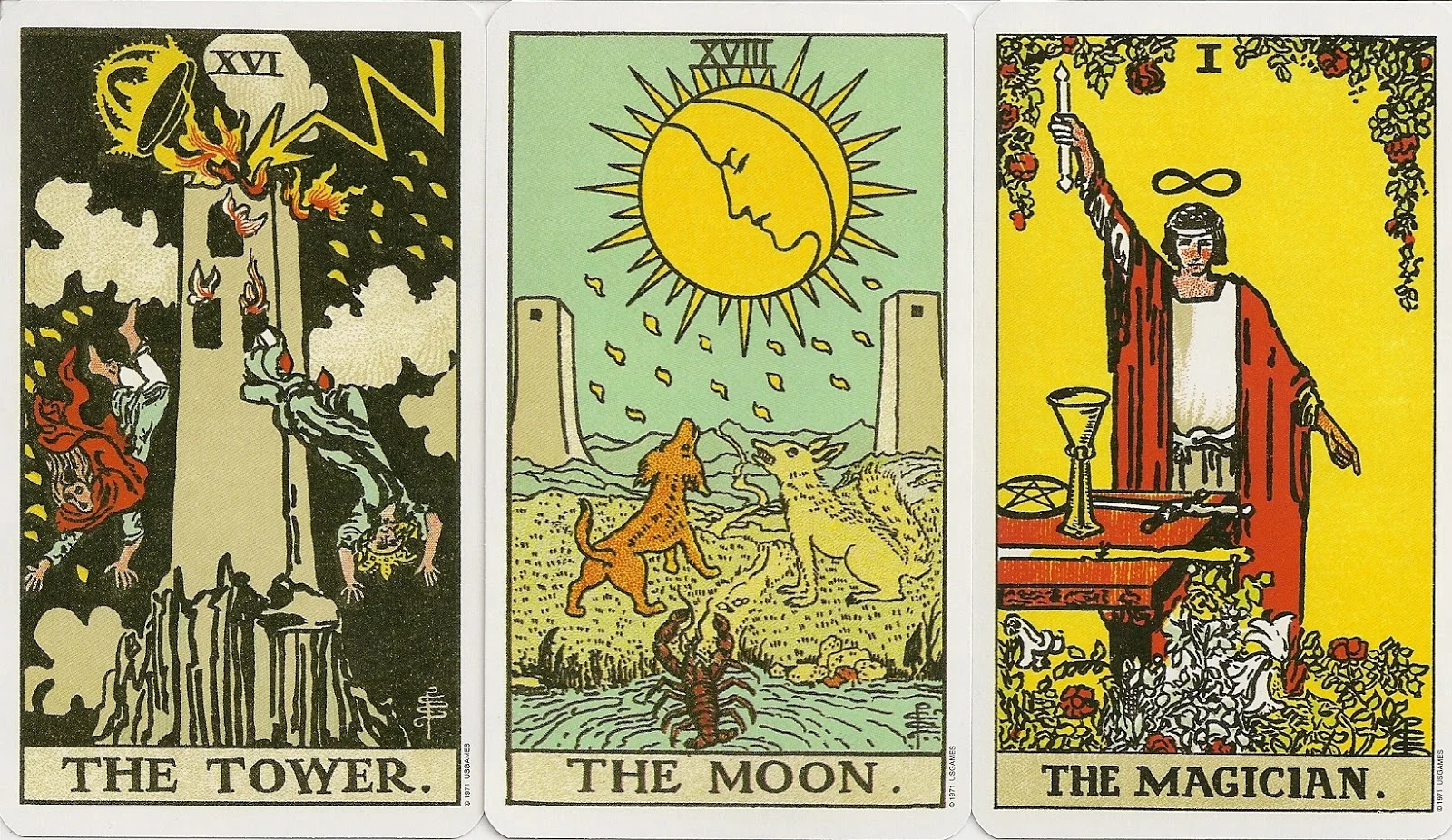
The Lover, the High Priestess, and the Tower are just a few of the archetypes the cards depict, depending on the deck.

Depending on the deck (again, there are hundreds of iterations), each card offers us a glimpse at ourselves. Do you associate with a specific archetype? Or maybe the better question is, How can you find yourself in each and every archetype within the Tarot? When you can look into the mirror through the lens of each card, you meet yourself.

So, how are you supposed to use tarot cards for self-care?

Studying the tarot can help you find what works best. In general, though, there's no right or wrong way to use a deck. So go with your gut! According to Biddy Tarot, "Tarot is simply a tool, and as with all kinds of tools, how you use it is completely up to you."

I personally tend to follow two ‘rules’: When using a tarot deck, remember that your intuition is key. Always be willing to listen to the voice within. If something jumps out to you, pay attention. Oh, and be prepared to get deep. If something in your tarot practice is uncomfortable, ask yourself why. If a card brings up a specific feeling, don't run from it. Jump into the abyss and learn from it.

So, I asked lots of witchy, magical folks about their use of tarot cards for self-care (you can see the whole thread here), so I'll be including their tips (and my own) below. Remember that you can amend or adjust these ideas as necessary!

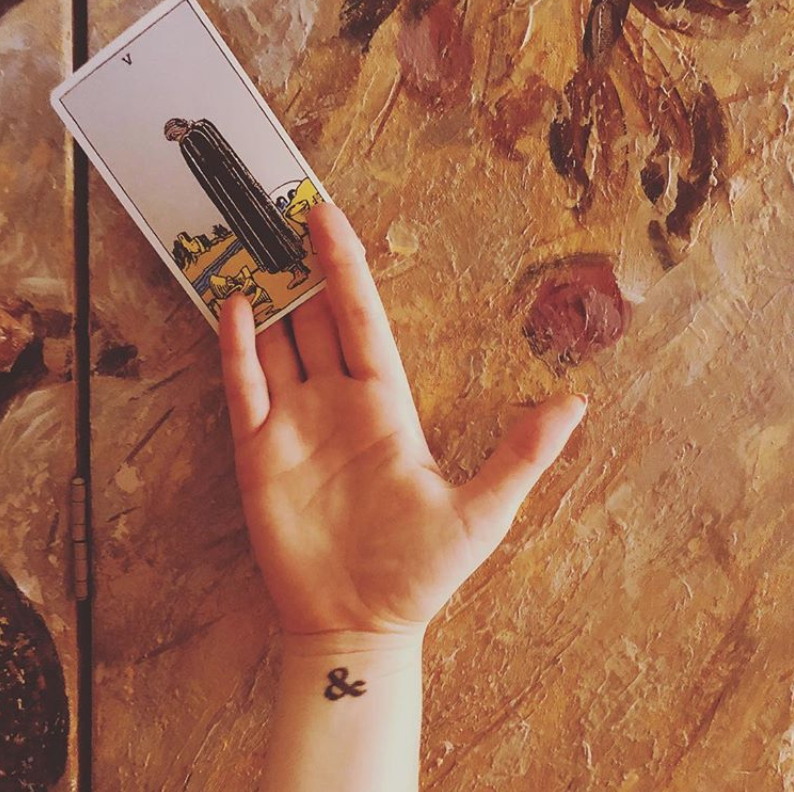
Pull a card each morning. Then reflect on its message throughout the day.

Pull a card and let it sit with you as you drink your coffee and get ready for work. Feel free to check out its meaning in your guidebook and then combine that with your own interpretations. If you pull a card, it's great to keep its lesson in your mind throughout the day. Often, it gets clearer as the day goes on.

Pull a series of cards every morning and reflect on them while journaling.

Gaby Herstik, the author of Inner Witch, pulls four cards every single morning and then journals about their message. A good idea is to get a journal specifically for tarot reflection. Journaling can help us drill down into our true feelings — and give them a name.

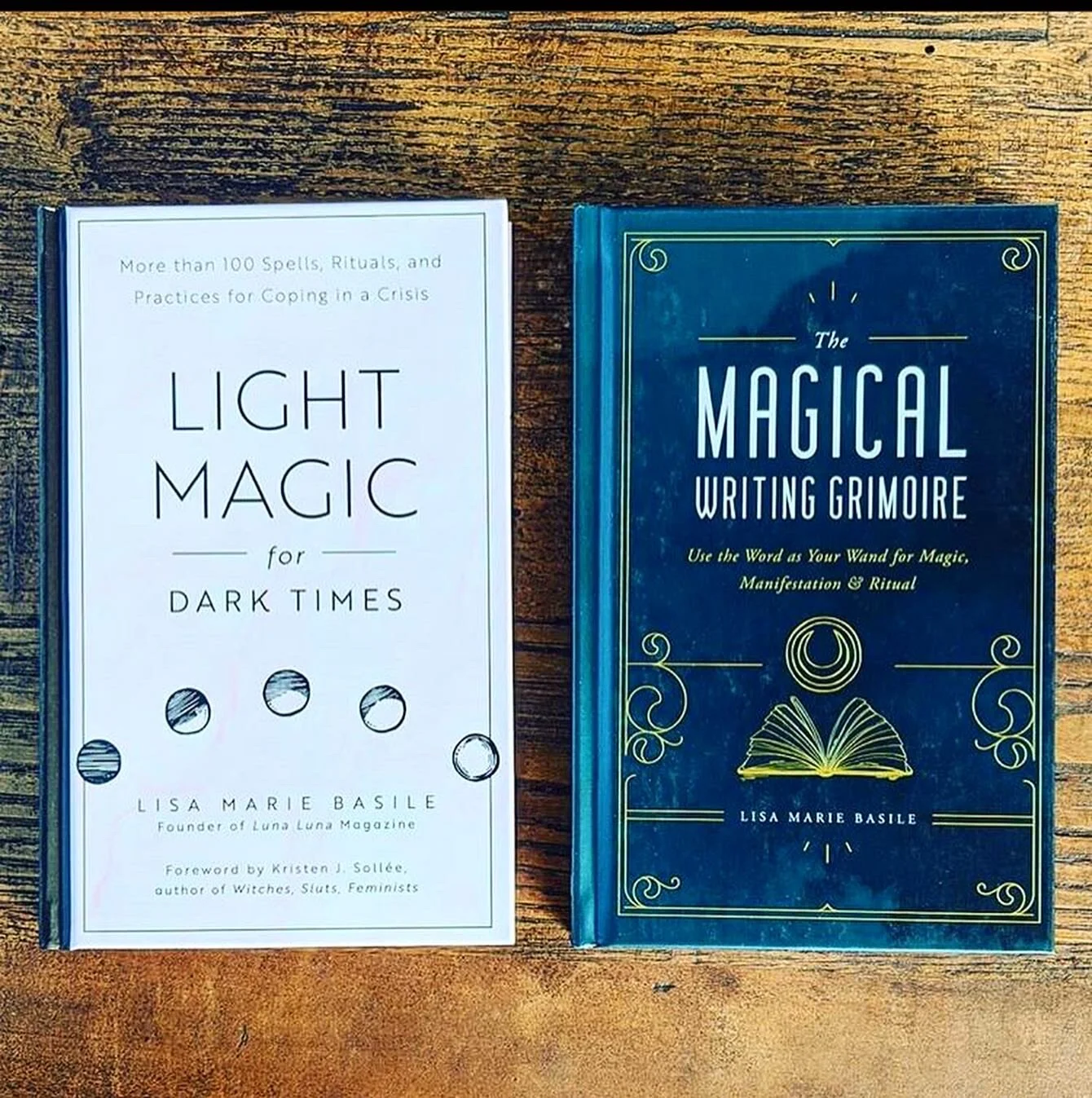
As I discuss in my book, The Magical Writing Grimoire (which you preorder now!), writing can help us find truth and autonomy in our feelings. That's because our words have inherent power and magic.

When we write, we create something out of nothing. The physical act of writing also forces us to be intentional with how we express ourselves (although you're more than welcome to use a computer or voice recorder when journaling, too).
lisa marie basile

Here are some tarot journaling prompts:

What do these cards mean to me?
What do these cards remind me of?
How do these cards inspire me?
Where in my body am I feeling these cards and their message?
What emotions are they bringing up?
What can I learn from these cards?
How I can make a change to my behavior or thought patterns today?
Why am I resistant to the lessons in these cards?
Am I forcing myself to pull new cards because I don't like their message? 

Use the tarot to disrupt your stagnant and negative thoughts.

We all fall into patterns of thinking that may be limiting or self-deprecating. Maybe we think we're not good enough.

We may fill our minds with thoughts that we'll always be too frightened to take the next step. Or maybe we're too negative toward others. The tarot can ask us to disrupt those ways of thinking.

When you pull a card, pay attention to how it challenges you.

How does a card resonate with you? Does it force you to think outside the box? If so, lean into that. Don't worry if it makes you uncomfortable. Just be sure to reward or soothe yourself for the time you took to peer inward. Draw a bath, dance, or listen to something beautiful.

Pull a card and then practice automatic writing.

Automatic writing, simply put, is a method of writing that asks us to enter a different mental state in order to generate words or channel ideas. 

Simply pull a card and write with censorship. Let the messages stream through you. The point here is to meditate yourself into a trance-like space where you feel receptive. Simply begin writing after pulling a card. Whatever words, phrases or ideas pour out is what you should write. Afterward, meditate on the results. How do they make you feel? What can you learn from them?

Use the tarot when you’re experiencing anxiety.

Obviously, tarot is NO replacement for medical care, so just remember that. But one of the replies on my Twitter thread said, “I use it for grounding when I‘m triggered! I carry my deck in my backpack and when I’m having a meltdown/crying in a coffee shop bathroom I can pull a card to find the medicine in that moment."

Simply pull a card when you feel overwhelmed and let it ground you. Pay attention to its feeling in your hand. Its colors. Its message. Its mood and tone. Perhaps you will want to pick a card you associate with positive feelings.

Use the tarot to connect with friends on a deeper level.

Self-care isn't always just about the self. It's about receiving and giving love. It's about creating a life that feels authentic, sustainable, safe, and beautiful. And it's about cultivating inspired and deep friendships. To start, pull a card with a friend and discuss it together with an open mind. How do you both react to the card? What feelings does it bring up? How can you both relate and learn from one another, based on the card?

Create an altar with a tarot card each week.

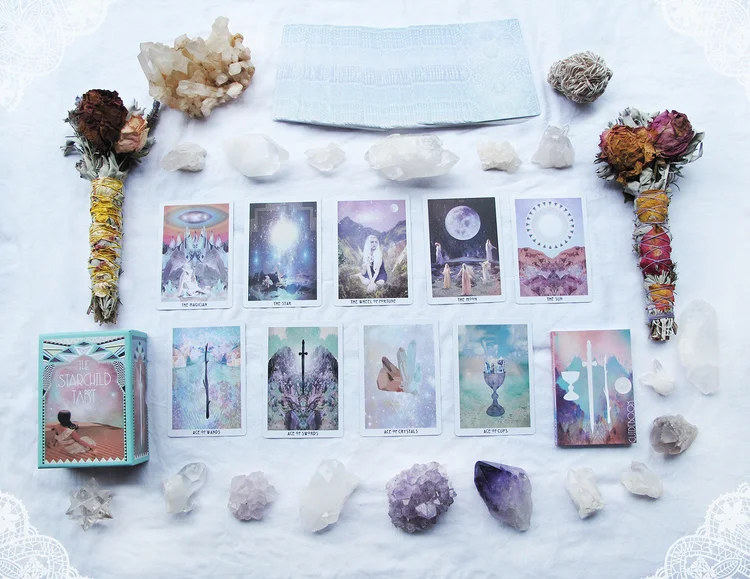
This altar can simply be made up a few flowers or crystals — anything that feels right — along with a tarot card of your choice. It should be a card (or an archetype) that speaks to you.

Prop the tarot card upon your altar. Surround it with things you love, things that bring it power, and pull its magic into your everyday life. Consider it as you pass the altar each day. What is its message? What does it stand for?

Pull a card during the new moon.

The new moon is a time for fresh beginnings, rerouting ideas, starting new ventures, and putting energy to good use. Pull a card on each new moon and let it guide you. Think about this for the next few weeks.

Make this ritual with each new moon. This way, you'll always have something to think about and reflect on. This allows us to check in with nature (always good!) and find healthy ways to reframe our thinking.

View this post on Instagram

Journal prompt & tarot magic: . I’m no tarot expert, but I do find a deeply replenishing and clarifying therapy and magic in tarot. I don’t read tarot for others, but I have slowly been learning it and connecting to it in a deep and personal way. It has become less about the guide book and more about my intuition. The archetypes have become friends who wander in and out of my life asking to be seen. What do they want to tell me?

A post shared by ritual poetica (@ritual_poetica) on Nov 5, 2019 at 9:23am PST

Pull three cards to find clarity under duress.

Sometimes when we're totally overwhelmed, we get lost in obsessive thoughts. Sometimes we just need to slow down and ask ourselves the big questions. It can help us parse through what is real and what isn't. According to Tarot mentor Sarah M. Chappell, she asks three questions, "What do I think is going on? What is actually going on? What, if anything, should I do about it?" Think about it — these are pretty useful.

Tarot readings in ASMR videos are soothing, too.

If you haven't checked out ASMR, you should. ASMR stands for autonomous sensory meridian response. It's a fancy way of saying, "sounds and movements give you a tingly, pleasurable feeling." There are plenty of oracl and tarot reading ASMR videos out there. And in those videos, people tend to do a little whispering. The intention? To get listeners to relax. Not only will the whispering tone lull you into a slumber, but you'll also learn more about the tarot.

Just make sure you find a deck that speaks to you. 

Find a deck that speaks to you and soothes you so that you can turn to it anytime. I love The Wild Unknown and The Amenti Oracle (which isn't exactly a Tarot deck, though) for this purpose.

In the end, tarot is about taking the time to check-in with yourself.

According to Jodie Layne at Bust, "Whether you take the tarot super seriously or just enjoy the time you get to spend with yourself, checking in with the cards is really about checking in with you."

If you check in with yourself, even for a few minutes each day, that's beneficial. When we disconnect from the phone, computer, and constant deluge of information — we give ourselves a chance to be quiet, contemplative, and honest. Tarot provides that respite.


Lisa Marie Basile
is the founding creative director of Luna Luna Magazine--a popular magazine focused on literature, magical living, and identity. She is the author of "Light Magic for Dark Times," a modern collection of inspired rituals and daily practices, as well as "The Magical Writing Grimoire: Use the Word as Your Wand for Magic, Manifestation & Ritual." She can be found writing about trauma recovery, writing as a healing tool, chronic illness, everyday magic, and poetry. She's written for The New York Times, Refinery 29, Self, Chakrubs, Marie Claire, Narratively, Catapult, Sabat Magazine, Healthline, Bust, Hello Giggles, Grimoire Magazine, and more. Lisa Marie has taught writing and ritual workshops at HausWitch in Salem, MA, Manhattanville College, and Pace University. She earned a Masters's degree in Writing from The New School and studied literature and psychology as an undergraduate at Pace University.
Tags tarot, Tarot, Tarot Reading, Tarot Deck, theresa reed, gaby herstik, shaheen miro, tarot for self care, minerva siegel, tarot for troubled times, light magic for dark times, the magical writing grimoire
Comment
Pawel Kwiatkowski

Pawel Kwiatkowski

How to Avoid a Bad Tarot Reading

July 20, 2017

So why do bad readings proliferate? Or, to put it bluntly: why do so many card readers suck at something they love? Well, there are a few reasons.

Read More
In Occult Tags Asa West, Tarot, Tarot Reading, Psychic, Occut
1 Comment
Image from Runic Treasure 

Image from Runic Treasure 

This Vintage Horror Tarot Deck Is Everything

July 5, 2017

The Major Arcana features poster art from the Golden Era of horror films, using mostly the monsters from the Universal horror series, and the Minor Arcana features screen grabs and promotional images taken from the same films. Just a few of the other more obscure films used in the deck are: The Mole People, The Infernal Cauldron, Häxan: Witchcraft Through the Ages, and The Golem: How He Came into the World. 

Read More
In Occult Tags Occult, Tarot
Comment
The Tarot Reader

The Tarot Reader

This Patriarchy-Free Tarot Deck is Finally Available

April 4, 2017

Since the cards’ creation in 1910, mystics and amateurs alike have relied on its simple yet symbolic images. Such images felt like a god[dess]-send for beginner readers like myself. I could easily decipher the general meanings of the cards based on the images, much like a child learning to read for the first time. So, to discover that this deck that so many consider their go-to again and again had a sexist secret was unnerving to say the least.

Read More
In Occult Tags Tarot, Smith-Waite Centennial Tarot Deck, Smith-Waite, Pamela Coleman Smith, HausWitch, Kailey Tedesco
2 Comments

What The Tarot Taught Me In a Month

December 15, 2016

To me, that’s the true purpose of the tarot. A spread is an opportunity to shape our lives into a story. I’d fallen out of habit or reading my tarot cards, of pausing to even considering the questions I wanted answered. I stopped believing I was a player in my own story. I was lost in a period of uncertainty in myself and what I wanted to do.

Read More
In Occult Tags Tarot, Occult, Macey Lavoie
Comment
Photo Credit: Ancient Origins

Photo Credit: Ancient Origins

On Occult, Fantasy & Championing the Body at the Renaissance Festival

November 17, 2016

People want to be on display, they want to show off their attire, the care they took in adorning their bodies with costume, often revealing as much of their bodies as they can. The fair becomes a space in which one can feel safe to share their themselves in ways that may not be appreciated or accepted in the “real world” or it can become a space in which who they are in the “real world” is celebrated without opposition. 

Read More
Tags body image, occult, Magic, Tarot, gender
Comment

Each of the Presidential Nominees as Tarot Cards

September 26, 2016

With the first debate between Clinton and Trump this evening many of us have anxieties about our future given this insane election. Many also turn to Tarot Cards as a way to prepare when they have anxieties about their future. So what do the cards tell us about the frontrunning candidates? Can we predict their motives or outcomes? Probably not, but let’s try! We will examine each of the candidates through Arthur Edward Waite’s tarot deck.

Read More
In Occult Tags Dallas Athent, Debate, Election, Hillary Clinton, Donald Trump, Tarot, Arthur Edward Waite, Arthur Edward Waite's Tarot Deck, Bernie Sanders, John Kasich, Ted Cruz, Politics
Comment

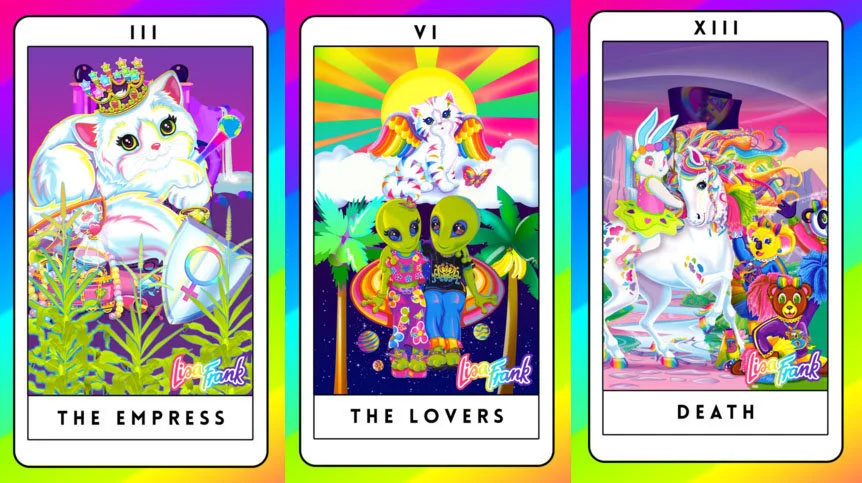
This Unofficial Lisa Frank Tarot Deck Mixes Past & Present

April 6, 2016

There’s nothing like a good tarot deck. The occult and witchcraft were another of my childhood obsessions, so it’s no surprise, then, that a combination of these two things feels like a psychedelic walk through nostalgia lane.

Read More
In Occult Tags Lisa Frank, Tarot, Tarot Deck, Lisa Frank Tarot Deck
1 Comment

Poetry Through The Lens of The Occult: An Interview With Joanna C. Valente & Lisa Marie Basile

March 16, 2016

BY LISA MARIE BASILE

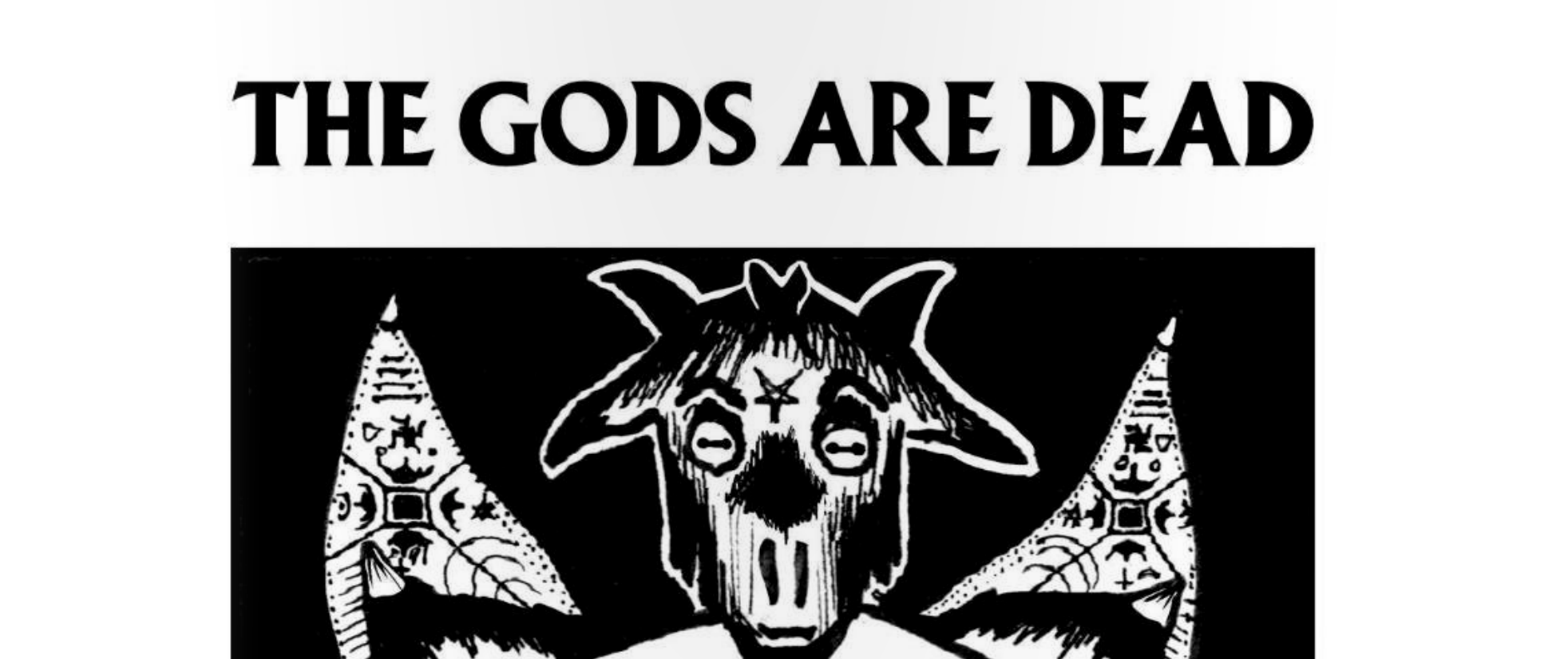
I spoke with Joanna C. Valente, our managing editor, about her book, The Gods Are Dead (Deadly Chaps Press). While we normally don't interview each other here at Luna Luna, we thought our readers would love a conversation around tarot + poetry. 

Having recently read Jessa Crispin's The Creative Tarot, and after having attended a creativity & Tarot workshop with Becca Klaver, a poet, from Brooklyn, I've been thinking a lot about how the Tarot has found its way into our creative subconscious.  

Joanna let the Tarot inspire her, too, and in her book, the text is interspersed with illustrations of each of the major arcana cards in a Tarot deck. You can read some samples here and here. Each poem: an exploration. In my conversation with Joanna, we explore her inspiration as well as the challenges of writing a book based off of the occult, a topic that I’ve always found fascinating in art.

Lisa Marie Basile: For The Gods are Dead, you write a poem associated with each of the Major Arcana cards. What is it about Tarot that you associate with poetry?

Joanna C. Valente: Tarot is all about finding your way to fulfillment—how can you become more whole, more satisfied with your inner and outer lives. Nothing in life is perfect, but the Tarot forces us to evaluate ourselves on every level—emotionally, spiritually, psychologically, materially—so that we can move forward, not backwards. Poetry does the same thing for me—writing is an act of therapy—in general, writing allows you to become more self-aware and observant of the world around you, so I thought, I love both—why not merge them?

In another way, the Tarot also lends itself well to storytelling. Each Major Arcana card is based off of an archetype; The Fool, for instance, represents all of us—The Fool is going on a journey to discover parts of him/herself, while The Empress symbolizes and harnesses stereotypical feminine power and energy. As I learned more and more about the Tarot myself, since I taught myself how to read the cards, I wanted to tell its strange, bizarre, mysterious story.

Typically, my poetry tends to air more on the narrative side—while it isn’t narrative in structure, there’s always a loose thread of a story tying a collection together for me. I enjoy creating these ambiguous, magical worlds that emulate our own. Perhaps it’s a way for me to comment on issues I see in current culture—sex and gender relations, feminism, race—in an alternate universe. It’s fantasy meets poetry.

Lisa Marie Basile: How can poets work with the occult in order to generate creativity and work? What is the benefit?

Joanna C. Valente: Poetry in itself is very ethereal—it lacks a real narrative in that there isn’t always the typical plot chart that we teach to everyone since the dawn of language. Writers and artists make art about what we don’t understand—for me especially, I’m transfixed by the magical, non-tangible world—what is it, is it real, imaginative, or something else? Ever since I can remember, as a child, my life has been touched by supernatural phenomena in subtle ways—nothing crazy or outlandish—but small things like dreaming of dead relatives, being able to anticipate certain events, feeling outside presences. I would hardly consider myself special—I think anyone can access these feelings—it’s just about how open you are to them.

By definition, occult merely means “supernatural, mystical, magical beliefs, practices, and phenomena.” Anything that takes us outside of ourselves, that makes us question our beliefs, is intrinsic to being a writer. It’s beside the point if you believe in ghosts or anything occult-related, it’s more about the thought process that goes into skepticism and spiritualism, about trying to figure out your place in the world.

Lisa Marie Basile: If you could pick one card that represents your poetry, which card would it be and why? I'm sure we've chatted about this over wine before, but in the sober light of day, I'd love to know...

Joanna C. Valente: This is so hard, because we’re always changing, and the cards represent all of stages of our change. If I had to choose, I would probably say The High Priestess. She basically represents duality—of light and dark, mediating reality vs the ether, male and female; she also bears knowledge and intuition—symbolized by the moon under her left foot. Whitman said it best when he wrote “I contain multitudes.”

We all contain dualities within us, and I fully embrace this as much as I can—within myself and my relationships and my poetry. Poetry should be anything but simple—it should be full of complication, ambiguity, and nuance, because life is. A simple conversation about the weather says so much about us alone—whether we like overcast days or bright sunny days.

Also, women are ruled by the moon every month, it’s physically within us. So you know, there’s that.

Lisa Marie Basile: So, what was the challenge in writing this book? Was it that you were held to a concept? Was it that the tarot is so defined?

Joanna C. Valente: It was difficult for two reasons, really. The style is much different than I usually write in—it can be incredibly clinical at times, with sparse emotion and an overload of detail. I felt like I had to write this way, to stay true to the cards, which presents the second challenge. The cards are very specific and detail-oriented—every color, gesture, and symbol means something, so I really had to study each precisely and decide what I was using and where I was veering away, and creating my own meaning within the poems.

It was exceptionally hard deciding when to be true to the Tarot and when to allow myself to have freedom to break away, in order to make social and political statements, as opposed to just personifying the cards. The last thing I wanted to do was write some pretty, outdates story—I always want to push myself into the grotesque, the unsettling, the hard truths.

Lisa Marie Basile: How did Ted Chevalier (the artist) approach all of the art in this book? Did he take cues from other tarot card decks, was it entirely his own storytelling? And, were the images created after the text, or before?

Joanna C. Valente: He approached with an astute eye to detail—he studied the Tarot like it was his only job—which was obviously crazy generous considering there’s no money to be made from poetry. He watched documentaries, read books, bought different decks, and really just made it his own. In particular, he loved a documentary that Alejandro Jodorowsky made, as well as the Rider-Waite (which is what I based the poems off of, since it’s the most common) and the Marseilles deck.

In terms of storytelling, he followed my lead—I wrote the poems first, then he illustrated them based on the work itself. So, like the poems, every deviation from the cards themselves was based off the poems. It was honestly luck that he already had a defined interest in the Tarot, which is why he illustrated the cards, since I had actually already written the collection prior to us ever discussing collaborating. It was a perfect meeting of the minds.

Lisa Marie Basile: You write a lot about the feminine – at least, the female condition and the experience of the body. How did all of this work its way into this?

Joanna C. Valente: As a woman, it’s hard to ignore all the ways in which woman are ignored and silenced, all the ways queer, trans, POC folks are seen as ‘other.’ I have always been fascinated by the idea of ‘otherness,’ because so many of people are seen as other, for different reasons and it’s all fucked up.

Instead of people reading the collection and saying how great and wonderful it is that I’m trying to ‘liberate’ women and women’s sexuality, or that trying to write through a feminist/female lens, I want people to realize this is not other. That being a woman is just as murky and complicated and fucked up as being any human, and that women like sex, want sex, and get abused by sex. There’s a lot of strange sex in the book, and not because I’m trying to make a shocking statement, but because if we don’t understand how women feel about sex, sexual abuse is going to keep happening, and victims are going to stay invisible. I also, of course, want to point out that fetish is different than violence, which always gets confused—and perpetuates a lot of ridiculous ideas that women say no when they mean yes. I hate that, I don’t want that to be true in another fifty years.  


Lisa Marie Basile is a NYC-based poet, editor, and writer. She’s the founding editor-in-chief of Luna Luna Magazine, and her work has appeared in Hello Giggles, The Establishment, The Gloss, Bustle, xoJane, Good Housekeeping, Redbook, and The Huffington Post, among other sites. She is the author of Apocryphal (Noctuary Press, Uni of Buffalo) and a few chapbooks. Her work as a poet and editor have been featured in Amy Poehler’s Smart Girls, The New York Daily News, Best American Poetry, and The Rumpus, among others. She currently works for Hearst Digital Media, where she edits for The Mix, their contributor network.

Joanna C. Valente is a human who lives in Brooklyn, New York. They are the author of Sirs & Madams (Aldrich Press, 2014),The Gods Are Dead (Deadly Chaps Press, 2015), Marys of the Sea (Operating System, 2017), Sexting Ghosts (Unknown Press, 2018), Xenos (Agape Editions, 2016), and the editor of A Shadow Map: Writing by Survivors of Sexual Assault (CCM, 2017). They received their MFA in writing at Sarah Lawrence College. Joanna is the founder of Yes Poetry and the managing editor for Luna Luna Magazine. Some of their writing has appeared in Brooklyn Magazine, Prelude, BUST, Spork Press, and elsewhere. Joanna also leads workshops at Brooklyn Poets. joannavalente.com / Twitter: @joannasaid / IG: joannacvalente


In Occult Tags Tarot, poetry, Art, Writing
Comment

On Sylvia Plath, The Tarot And Bad College Writing

October 31, 2015

BY PATRICIA GRISAFI

The file name is embarrassing enough: “Sylvia Plath and My Fabulous Genius Paper.” The essay itself is excited, earnest, overblown, quick on impressions - in essence, a typical college English paper written by an enthusiastic fan. But I look back at this sloppy, eager mess of words with kindness and generosity, as it’s probably one of the most sincere documents I’ve ever written - and a genuine attempt at self-discovery. 

The actual title of the essay is less mortifying than its file name: “Sylvia in the Lion’s Mouth: Symbolic Transformation and Rebirth in ‘Ariel.’” A long-time Plath reader and budding scholar, I spent hours in the college library making exciting discoveries about her life. One day, I learned that Plath practiced the Tarot. Although I had observed Tarot imagery in poems like “Ariel,” “Daddy,” “The Hanging Man,” and others, I hadn’t known that Plath and husband Ted Hughes used tarot cards, the Ouija board, and divining tools to help foster creativity. So, for my sophomore college poetry class, I decided to write an essay on Plath and the Tarot, specifically lion imagery in “Ariel.”

Perched on my desk chair like I imagine Beethoven at the piano - crazy-eyed, hair flying - I pounded out what I thought was the most incredible essay on Sylvia Plath. Not only would the language impress my professor, who was one of those serious, sweater wearing, name dropping kinds (“We had Robert Pinsky over the other night for tea”), but my argument would be wholly original. Surrounded by seven beta fish all named Rasputin, piles of books, and my Tarot pack, I worked deep into the night. 

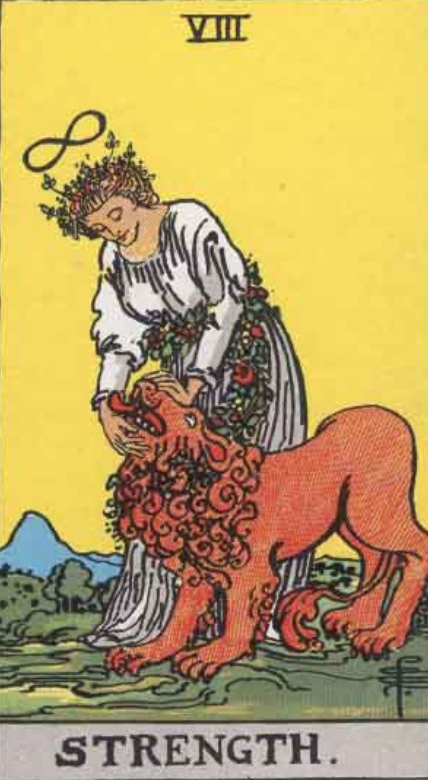
I’m not very spiritual, and I don’t practice the Tarot anymore. But at the time, I was entranced by the cryptic images of the Raider-Waite deck and consulted the cards constantly. The card I was most interested in was Strength.  

Even though I remember my sophomore year of college as a time of discovery, fun, and experimentation, my life leading up to that point had been somewhat troubled. For most of my adolescence, I suffered from unchecked depression and anxiety and often felt powerless, invisible, and misunderstood. I would meditate on the Strength card, transfixed by the calm expression on the woman’s face as she nonchalantly pries open the lion’s jaws (looking at the card now, she seems to be merely petting the lion’s snout as he looks lovingly at her, and I wonder why I saw such violence when currently I see none). I read deeply into the struggle between the woman and the lion. Like most burgeoning academics, I tried to work out my own psychodrama through literary analysis. Here’s an excerpt from my bad college essay:

“God’s lioness” (4) is a loaded image that describes the horse and the poet as they become one during the ride. Merged with the animal, the speaker obtains a sense of power and strength not previously apparent within her. In the Tarot tradition, the “Strength” card depicts a woman wrestling with, prying open, or closing the jaws of a lion is usually depicted. This is an act of brute force; the woman’s intention is to elicit cooperation from the wild beast.

The “Strength” card symbolizes inner spiritual strength and fortitude, overcoming obstacles, and victory against overwhelming odds (Hollander 64-65). More so, the lion is also symbolic of desperate boldness, the fire within, the ‘beast within,’ fear, passion, and loss in surrender. Through rebirth, the speaker wishes to gain all of these qualities. She surrenders, losing the psychological battle but winning the creative one. 

As a college English teacher, I would be quite pleased to receive an essay with a section like this. I might turn to my colleagues with a silly smile and declare that we’ve won ourselves a new Plath devotee, as if we ran a secret club. We might laugh about the essay’s pretensions, the lack of evidence, the sprawl of it all - but I think we’d identify the student as a kindred spirit. 

The date on the paper is October 28th - one day after Plath’s birthday. When I think of Sylvia Plath around her birthday, I think of her devastating poem “A Birthday Present,” especially these lines: 

I do not want much of a present, anyway, this year. 

After all I am only alive by accident. 

I would have killed myself gladly that time any possible way. 

Now there are these veils, shimmering like curtains, 

The diaphanous satins of a January window

White as babies’ bedding and glittering with dead breath. 

I also think of this quote from Al Alvarez, who maintains that Plath’s occultism consumed her towards the end of her life:  

“I hardly recognised Sylvia when she opened the door. The bright young American house wife with her determined smile and crisp clothes had vanished along with the pancake make-up, the school-mistressy bun and fake cheerfulness. Her face was wax-pale and drained: her hair hung loose down to her waist and left a faint, sharp animal scent on the air when she walked ahead of me up the stairs. She looked like a priestess emptied out by the rites of her cult. And perhaps that is what she had become. She had broken through to whatever it was that made her want to write, the poems were coming every day, sometimes as many as three a day, unbidden, unstoppable, and she was off in a closed, private world where no one was going to follow her.”

Plath would have turned eighty-three this year. It’s not difficult for me to imagine her at this age because my friend and I ran into her doppelgänger at the Merchant House Museum the other week. Our docent, an elderly woman with a stylishly retro hairdo and a dirndl skirt, lectured in a thick Boston accent on the social customs of family life in turn of the century Manhattan. When we left, my friend and I turned to each other and grinned: “That was totally Sylvia Plath, right? That’s exactly what she would look like now, isn’t it?” The idea of Sylvia Plath living, being a docent at an infamously haunted museum, and teaching us about Victorian gardens, seems much more beautiful than the terrible reality of her suicide. 

I’m not a particularly sentimental person, and I don’t tend to save things - especially essays written in college. But I keep “Sylvia Plath and My Fabulous Genius Paper” around. I transfer it to each new computer and place it in a file called “College Writing” (which is filled with bad poetry, but that’s another story). Every year around Plath’s birthday, as I’m fluttering about the apartment stuffing foam brains into faux-bloodied mason jars and arranging knobby gourds in a battered basket, I imagine Plath fixated on her Tarot pack or hunched over the Ouija board. I wonder what she was looking for. 

In Occult Tags Sylvia Plath, Poetry, Death, Tarot
1 Comment
Featured
‘in the glitter-open black' — poetry by Fox Henry Frazier
'poet as tarantula,  poem as waste' — poetry by  Ewen Glass
'poet as tarantula, poem as waste' — poetry by Ewen Glass
'Hours rot away in regalia' — poetry by Stephanie Chang
'down down down the hall of mirrors' — poetry by Ronnie K. Stephens
'Grew appendages, clawed towards light' — poetry by Lucie Brooks
'do not be afraid' — poetry by Maia Decker
'The darkened bedroom' — poetry by Jessica Purdy
'I am the body that I am under' — poetry by Jennifer MacBain-Stephens
instagram

COPYRIGHT LUNA LUNA MAGAZINE 2025