• Home
  • indulge
  • new poetry
    • About Luna Luna
    • resources
    • search
  • editor
  • dark hour
  • submit
Menu

luna luna magazine

  • Home
  • indulge
  • new poetry
  • About
    • About Luna Luna
    • resources
    • search
  • editor
  • dark hour
  • submit
shadow
A Writing Spell: Honoring Your Many Selves
Mar 1, 2021
A Writing Spell: Honoring Your Many Selves
Mar 1, 2021
Mar 1, 2021
An 11-Line Poetry Spell For Healing
Mar 1, 2021
An 11-Line Poetry Spell For Healing
Mar 1, 2021
Mar 1, 2021
How To Write Powerful Poetry Spells
Feb 28, 2021
How To Write Powerful Poetry Spells
Feb 28, 2021
Feb 28, 2021
Here Is Your Scorpio Homework This Season
Oct 25, 2020
Here Is Your Scorpio Homework This Season
Oct 25, 2020
Oct 25, 2020
3 Transformative Life Lessons Scorpio Teaches Us
Oct 25, 2020
3 Transformative Life Lessons Scorpio Teaches Us
Oct 25, 2020
Oct 25, 2020
Restorative Grief: Letters To The Dead
Oct 23, 2020
Restorative Grief: Letters To The Dead
Oct 23, 2020
Oct 23, 2020
A Santa Muerte Rebirth Ritual + A Tarot Writing Practice
Oct 6, 2020
A Santa Muerte Rebirth Ritual + A Tarot Writing Practice
Oct 6, 2020
Oct 6, 2020
Witches, Here Are The New Books You Need
Nov 14, 2019
Witches, Here Are The New Books You Need
Nov 14, 2019
Nov 14, 2019
3 Dream Magic Rituals And Practices
Nov 12, 2019
3 Dream Magic Rituals And Practices
Nov 12, 2019
Nov 12, 2019
How To Use Tarot Cards for Self-Care
Nov 11, 2019
How To Use Tarot Cards for Self-Care
Nov 11, 2019
Nov 11, 2019
A Review of Caitlin Doughty's 'Will My Cat Eat My Eyeballs?'
Oct 25, 2019
A Review of Caitlin Doughty's 'Will My Cat Eat My Eyeballs?'
Oct 25, 2019
Oct 25, 2019
Nimue, The Deity, Came To Me In A Dream
Sep 17, 2019
Nimue, The Deity, Came To Me In A Dream
Sep 17, 2019
Sep 17, 2019
Astrological Shadow Work: Healing Writing Prompts
Sep 9, 2019
Astrological Shadow Work: Healing Writing Prompts
Sep 9, 2019
Sep 9, 2019
The Witches of Bushwick:  On Cult Party, Connection, and Magic
Jul 23, 2019
The Witches of Bushwick: On Cult Party, Connection, and Magic
Jul 23, 2019
Jul 23, 2019
7 Magical & Inclusive New Books Witches Must Read
May 15, 2019
7 Magical & Inclusive New Books Witches Must Read
May 15, 2019
May 15, 2019
Working Out As Magic & Ritual: A Witch's Comprehensive Guide
May 14, 2019
Working Out As Magic & Ritual: A Witch's Comprehensive Guide
May 14, 2019
May 14, 2019
Letters to the Dead: Shadow Writing for Grief & Release
Feb 8, 2019
Letters to the Dead: Shadow Writing for Grief & Release
Feb 8, 2019
Feb 8, 2019
How to Add Magic to Your Every Day Wellness Routine
Feb 5, 2019
How to Add Magic to Your Every Day Wellness Routine
Feb 5, 2019
Feb 5, 2019
Ritual: Writing Letters To Your Self — On Anais Nin, Journaling, and Healing
Jan 31, 2019
Ritual: Writing Letters To Your Self — On Anais Nin, Journaling, and Healing
Jan 31, 2019
Jan 31, 2019
How Rituals Can Help You Gain Confidence
Jan 17, 2019
How Rituals Can Help You Gain Confidence
Jan 17, 2019
Jan 17, 2019
Hearthcraft & the Magic of Everyday Objects: Reading Arin Murphy-Hiscock's 'House Witch'
Jan 14, 2019
Hearthcraft & the Magic of Everyday Objects: Reading Arin Murphy-Hiscock's 'House Witch'
Jan 14, 2019
Jan 14, 2019
True to The Earth: Cooper Wilhelm Interviews Kadmus
Nov 26, 2018
True to The Earth: Cooper Wilhelm Interviews Kadmus
Nov 26, 2018
Nov 26, 2018
Between The Veil: Letter from the Editor
Oct 31, 2018
Between The Veil: Letter from the Editor
Oct 31, 2018
Oct 31, 2018
Shadow Work with Light Magic for Dark Times
Oct 31, 2018
Shadow Work with Light Magic for Dark Times
Oct 31, 2018
Oct 31, 2018
2 Poems by Stephanie Valente
Oct 31, 2018
2 Poems by Stephanie Valente
Oct 31, 2018
Oct 31, 2018
A Poem in Photographs by Kailey Tedesco
Oct 31, 2018
A Poem in Photographs by Kailey Tedesco
Oct 31, 2018
Oct 31, 2018
Photography by Alice Teeple
Oct 31, 2018
Photography by Alice Teeple
Oct 31, 2018
Oct 31, 2018
A Simple Spell to Summon and Protect Your Personal Power
Oct 31, 2018
A Simple Spell to Summon and Protect Your Personal Power
Oct 31, 2018
Oct 31, 2018
November and Her Lovelier Sister
Oct 31, 2018
November and Her Lovelier Sister
Oct 31, 2018
Oct 31, 2018
A Spooky Story by Lydia A. Cyrus
Oct 31, 2018
A Spooky Story by Lydia A. Cyrus
Oct 31, 2018
Oct 31, 2018
Screen Shot 2021-02-27 at 11.34.05 PM.png

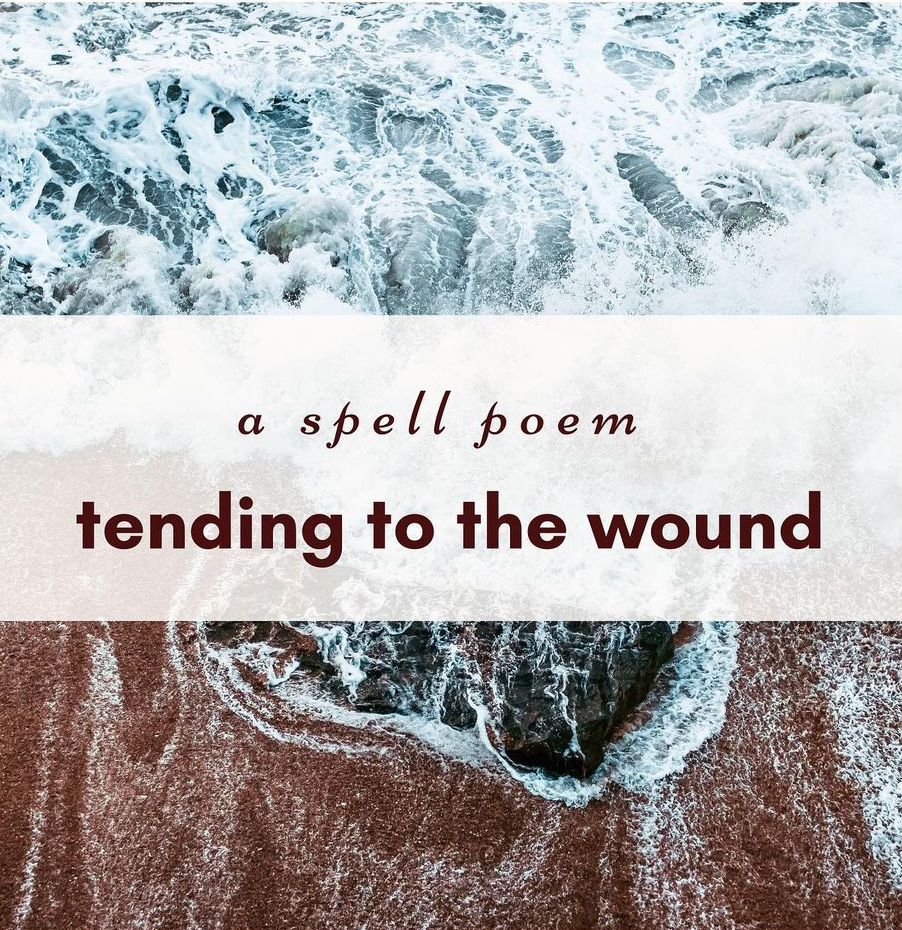
An 11-Line Poetry Spell For Healing

March 1, 2021

BY LISA MARIE BASILE

This is a writing ritual that includes an 11-line spell-poem recipe (which you will write) and a meditation. The goal? Tending to the wound.

In this healing spell poem (which functions as both a method of shadow working and as a spell, as it is your will and emotion which powers it) you will acknowledge the wound — whatever that wound might be; it could be today’s anxiety or yesterday’s lingering fear. It could be physical or immaterial. Self-honesty is key

You will also write the medicine.

I believe we all hold some form of medicine, or the key, within ourselves. Perhaps the medicine is external — systemic change, a new world? It’s okay to write to that, too. It’s okay to want big, beautiful, powerful global change just as much as it’s okay to write toward the practical or the mundane, or the small ways we forge ahead in our own healing.

I invite you to tend to the wound with me. I’ve done this a few times and each time it carries the potential to be transformative. It is simple, but that doesn’t mean it’s always easy.

As with all of my prompts (many of which are over at my Instagram account @Ritual_Poetica), I recommend that you make sure you’re in a safe, supportive environment while working through this. Maybe that means grounding in a space that feels safe and light and having someone to talk to if you need support.

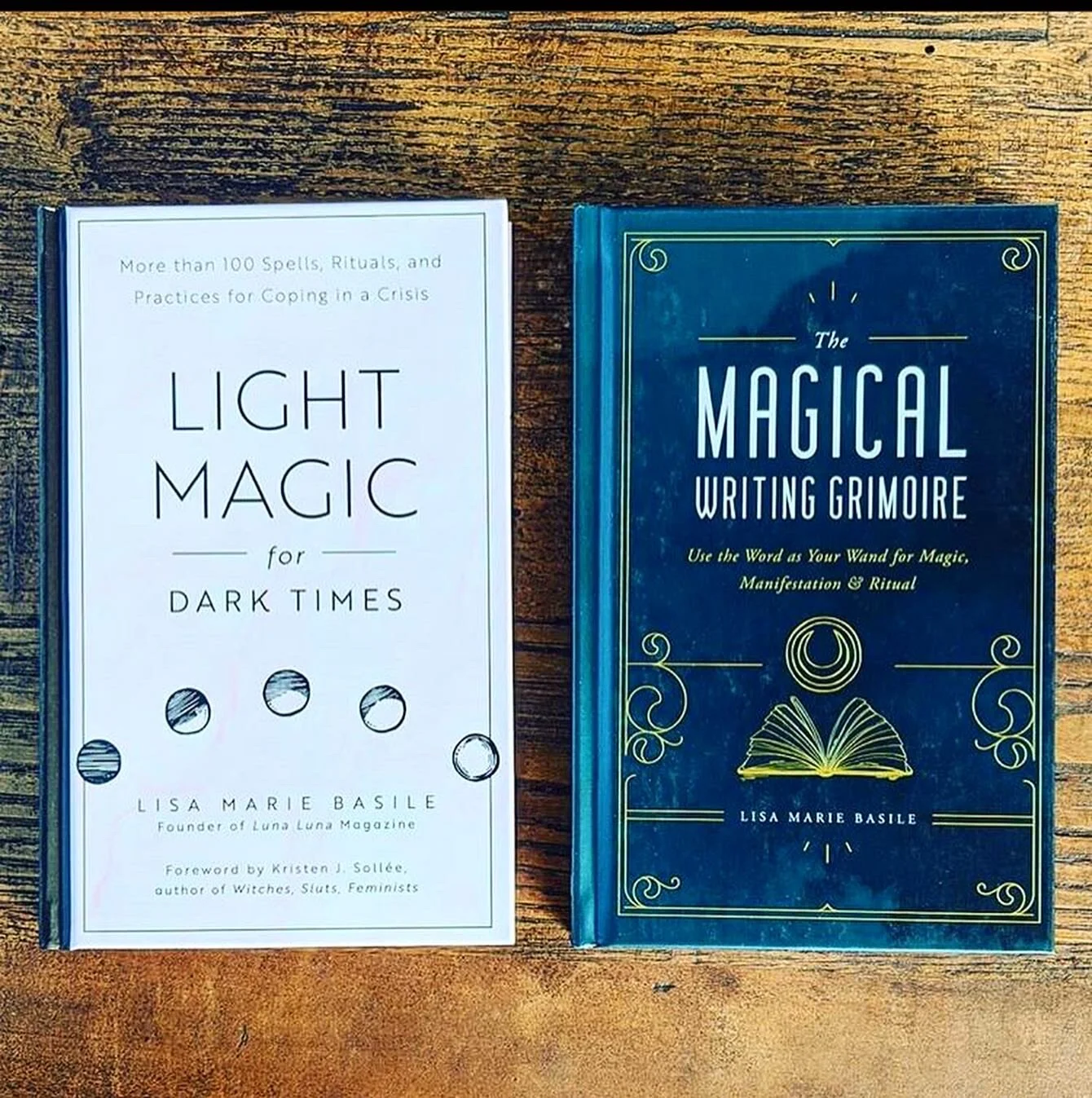
If you’d like more ideas about that, my book, The Magical Writing Grimoire, goes into detail on how to create a sacred and safe writing environment.

The Pre-Writing Meditation

Become soft. Let your heart bloom. Sigh wholly, loose and beautiful. Shut the door to fear, or listen to what the fear has to say. Walk into the room of Self, that great gilded palace. Feel the waters of truth cleanse your feet, your hands, your softness. Stand before the mirror and stare into your wound. Meet it with grace and compassion. The scars soften. The tissue expands to be held and to hold you. This is the kingdom of the heart.

What does it feel like to acknowledge the wound?

This is the time to write.

The writing practice: A healing spell poem for tending to the wound — in 11 lines

  • First, describe the wound in five lines. What are its colors, shapes, moods? Is it blue, & is it frightening? Is it bone-tired? Is it the beast of poverty, of loneliness, of blood?

  • Next, describe the medicine in five lines. Is it sunlight on the lake? Is it a burial? A refusal? An acceptance? A new home? A medication? Your voice? This is up to you. You know intuitively what heals you.

  • Finally, write your last line; this is when you cast your spell. It's what you tell the ocean about your pain. It's your greatest hope. It's your belief in self, in relief, in healing. give this everything you have.

—

Lisa Marie Basile (she/her) is a poet, essayist, editor, and chronic illness awareness advocate living in New York City. She's the founder and creative director of Luna Luna Magazine and its online community, and the creator of Ritual Poetica, a curiosity project dedicated to exploring the intersection of writing, creativity, healing, & sacredness.

She is the author of THE MAGICAL WRITING GRIMOIRE, LIGHT MAGIC FOR DARK TIMES, and a few poetry collections, including the recent NYMPHOLEPSY, which is excerpted in Best American Experimental Writing 2020. Her essays and other work can be found in The New York Times, Narratively, Sabat Magazine, We Are Grimoire, Witch Craft Magazine, Refinery 29, Self, Healthline, Entropy, On Loan From The Cosmos, Chakrubs, Catapult, Bust, Bustle, and more. She is also a chronic illness advocate, keeping columns at several chronic illness patient websites. She earned a Masters's degree in Writing from The New School and studied literature and psychology as an undergraduate at Pace University. You can follow her at lisamariebasile.

In Writing Magic Tags poem-spell, poem spell, spells, poetry magic, Writing, wordcraft, word witchery, healing spells, lisa marie basile
Comment
Photo by Estée Janssens

Ritual: Writing Letters To Your Self — On Anais Nin, Journaling, and Healing

January 31, 2019

BY LISA MARIE BASILE

During my mid-20s, I first delved deeply into the work of the writer Anaïs Nin. Before then, I’d read bits and pieces of her work—always knowing that I would, when ready, return to it. As it is with most of the great works of our lives, she found me when the time was right, when I could incubate her emotion and resuscitate myself through her abundance. I was always too guarded, too busy, too scattered to sit down and let the velvety intensity of her work move through me.

This is because Nin’s work is audaciously honest. It is at once shadowy and nude. Erotic. Wild. Feverishly introspective. Showy. Always vulnerable.

You may have read her diaries or her letters to Henry Miller. Within these works lives a whole entire world of expression and bravery (and ego and mania and trauma and desire and more). In the 1940s, she was writing explicitly about topics such as sexual desire and abortion—words that were kept silent, for they were unthinkable, punishable. She was widely mocked, often deplored by critics for both her personal life (she—gasp!—had two husbands) and her literary works—and yet she has earned her place as the literary patron saint we adore now. (She would be so pleased). Over time (and largely posthumously), as time is wont to do, she has become both a feminist icon and a literary muse. She’s certainly my literary witch archetype.

Anais Nin writes to Henry Miller in A Literate Passion: Letters of Anaïs Nin Henry Miller, 1932-1953,

“It is true that I create over and over again the same difficulties for myself in order to struggle over and over again to master them [but] to continually struggle against the same problem and to continually fail to dominate it brings a feeling of frustration and a kind of paralysis. What is necessary to life, to livingness, is to move on, in other words to move from one kind of problem to another.”


Reading her works, I have always wondered: How did writing her feelings and desires and fears in letter or diary form change her relationship to those feelings? Without writing all of this down, would she have realized her tendencies toward creating difficulties for herself?

View this post on Instagram

🖤 I talked with the wonderful @ragqueenperiodical + @kaileytedesco about how light and darkness is the throughline in all of my work, including my forthcoming book and my poetry and other work: “The grimoire is concerned with the same things as my work as a poet and essayist: death, forgiveness, the self as something to be worshipped, sex, creating beauty and honoring the shadow.” LINK IN BIO.🖤 #LightMagicDarkTimes

A post shared by Lisa Marie Basile (@lisamariebasile) on May 19, 2018 at 10:20am PDT

Is there a certain quality to letter writing or diary keeping that inspires the confessional? I believe so. Our words are our magic. Once the words are thought, intent exists.

Once the words are spoken, they become an incantation. And once the words are written down, the spell is cast.

The truth is staring back at you—asking you to make a change or bury it or let it go. Whatever it is, the garden has begun to grow, and it must be tended to in some way or other.

That’s the silent promise you make to the page and to yourself; when you write, your mind floods and you become a vessel for the truth (or whatever version of the truth needs to exist at that moment).

The mind is the translator, the page is the vehicle, and something more intangible — something divine, the self everlasting, perhaps the soul — is the ultimate recipient. That something changes you and upends your reality.

When we write specifically for the page, or for one reader, we wield a massive responsibility to uphold a deep truth.

We stop writing for success or Instagram likes or money. We start to write for ourselves, or for the intimacy between ourselves and the reader. This is the case even if the letter will never be delivered (that’s not to say Nin wasn’t ecstatic when her personal journals became a best seller de rigeuer).

Only after reading your own words do you discover patterns and themes that perhaps you would have missed in your everyday life. In letter writing, there is a vulnerability that takes place necessarily; why write a letter if you won’t show up for it?

Why express anything at all—in such a delicate, deliberate, and painstaking manner? After all, a letter is not a passing thought or a forgettable text message; it’s a statement, a declaration, a confession. It’s a storm.

Ritualizing your words

For this ritual and writing prompt, you will be examining the inherent power of letter writing—as a tool for reconciliation, healing, closure, acceptance, and honor. But you can also write letters to express rage, jealousy, and fear.

It can feel as though we’ve lived many lifetimes. To prep, think on your childhood, your teen years, and who you are now. What was lost? What remains? Who we are now has changed so much from who we were. At the same time, there are things that having a lasting impact, good and bad. Ghosts linger. Sometimes that ghost is you.

Our traumas, our growth, our pain, our losses, our loves, our whimsies, our accomplishments—these are the things we’ll be writing to in this practice.

I have written letters to the girl I was at 15. She was so lost, so sad. She moved from homeless shelter to shelter, to a foster home and then another — always looking for an anchor. Within her heart lived thousand hopes and goals. She was excited to write, to study, to live—and yet always felt held back by a need to survive her trauma. She couldn’t simply be, as she was struggling. In her, a darkness grew.

That darkness was her fuel, but it also hurt her. She had self-esteem issues, felt alone often, felt unworthy. In my letters to her, I tell her what she’s accomplished—what her steadfast determination did for her. I tell her what her pain gave her—art! Empathy! A softness. An ability to adapt. A leaning-into the malleable, the liminal. Through her pain she found magic and ritual and poetry, and all of this carved a life she’d love today.

Writing these letters to her allowed me to heal her, and as a ripple in space-time, I largely healed myself today. I am not perfect, but I am better.

The Ritual: writing a letter to your younger self

View this post on Instagram

🌻I included a few peeks inside my book Light Magic for Dark Times over at @lunalunamag - lunalunamagazine.com. It’s full of rituals, practices and writing exercises and it’s all about resilience, self-care, trauma recovery, accountability and magic. 🌻

A post shared by Lisa Marie Basile (@lisamariebasile) on Jan 29, 2019 at 1:22pm PST

Light a candle. Look into the flame and take note of what thoughts arise when you think upon your younger self.

As you look at the flame, conjure the person you were. Quietly welcome them into the room; sit with them. What are they wearing? What are they feeling?

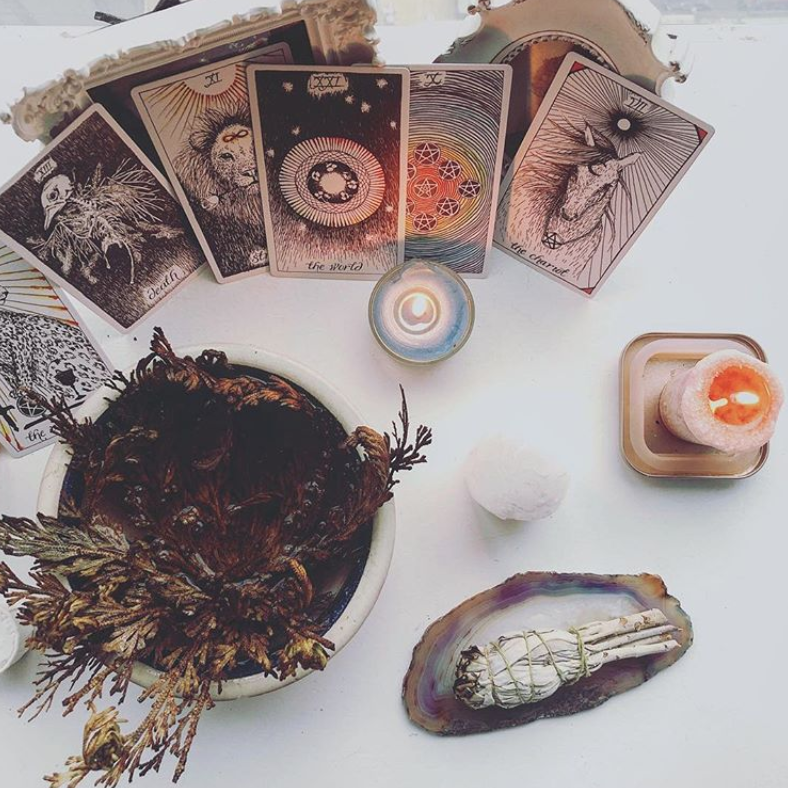
Choose a memory or a era in your life and write a letter to yourself. What’s the goal? Is it to remind your younger self of the love they have but never felt? Is it to congratulate them on their resilience? Is it to say that their weakness and struggles were beautiful? Perhaps you will pull a tarot card to find illumination or specificity in this process. Perhaps you will think on how your birth chart influenced the person you were.

Life goes by so quickly. We are so busy existing in the middle of it that we rarely look back and study what happened:

What went right?

What went wrong?

What just was?

What would you tell your younger self?

What does the room look like?

What were you wearing?

What do you want them to know?

What do you want them to let go of?

Write all of this down.

Honor it.

Keep it in a place where you can let it go, or return to it.

If you want to work more with journaling magic, I include lots of it in my book, Light Magic for Dark Times. & follow me on Instagram for more prompts and literary goodness.


Lisa Marie Basile is the founding creative director of Luna Luna Magazine—a digital diary of literature, magical living and idea. She is the author of "Light Magic for Dark Times," a modern collection of inspired rituals and daily practices. She's also the author of a few poetry collections, including 2018's "Nympholepsy." Her work encounters the intersection of ritual, wellness, chronic illness, overcoming trauma, and creativity, and she has written for The New York Times, Narratively, Sabat Magazine, Healthline, The Establishment, Refinery 29, Bust, Hello Giggles, and more. Her work can be seen in Best Small Fictions, Best American Experimental Writing, and several other anthologies. Lisa Marie earned a Masters degree in Writing from The New School and studied literature and psychology as an undergraduate at Pace University.

In Occult, Books Tags Anais Nin, Journaling, Healing, Writing, Diary, Henry Miller, Ritual
1 Comment

Poetry Through The Lens of The Occult: An Interview With Joanna C. Valente & Lisa Marie Basile

March 16, 2016

BY LISA MARIE BASILE

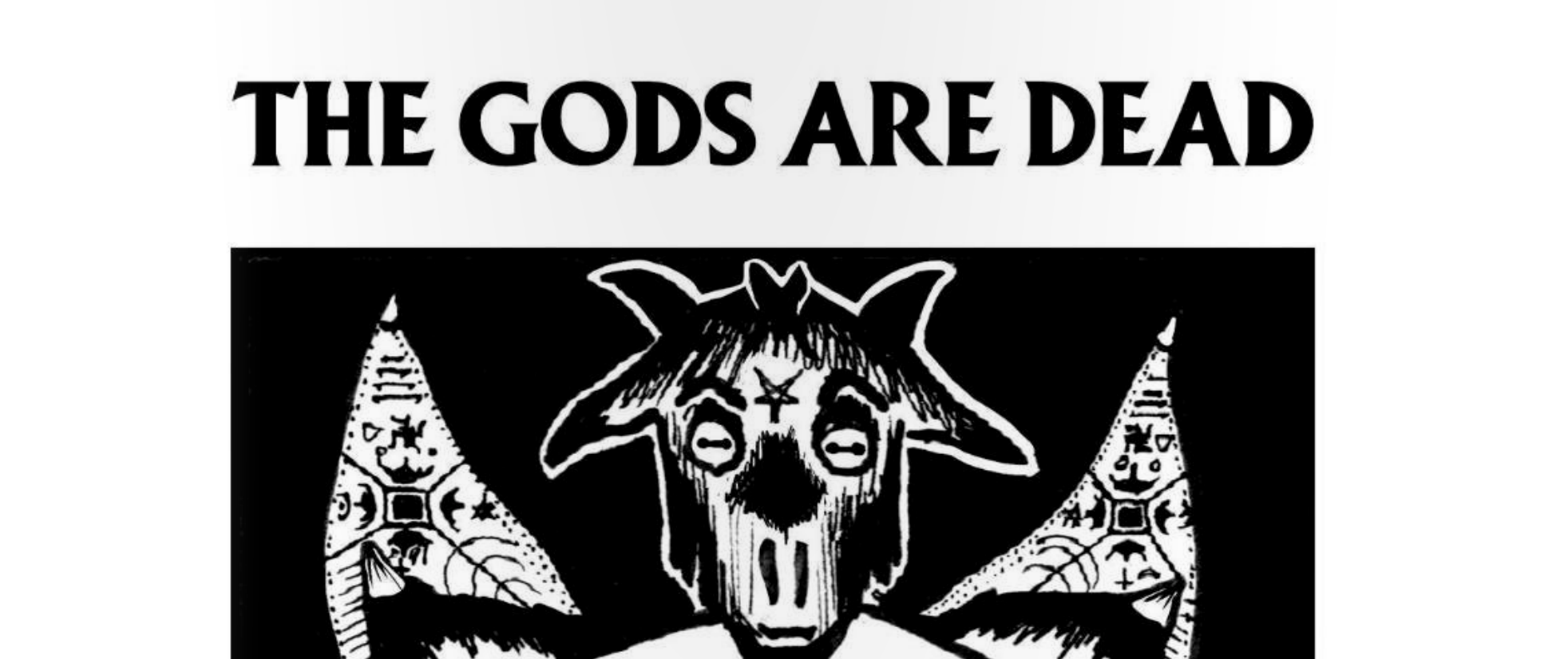
I spoke with Joanna C. Valente, our managing editor, about her book, The Gods Are Dead (Deadly Chaps Press). While we normally don't interview each other here at Luna Luna, we thought our readers would love a conversation around tarot + poetry. 

Having recently read Jessa Crispin's The Creative Tarot, and after having attended a creativity & Tarot workshop with Becca Klaver, a poet, from Brooklyn, I've been thinking a lot about how the Tarot has found its way into our creative subconscious.  

Joanna let the Tarot inspire her, too, and in her book, the text is interspersed with illustrations of each of the major arcana cards in a Tarot deck. You can read some samples here and here. Each poem: an exploration. In my conversation with Joanna, we explore her inspiration as well as the challenges of writing a book based off of the occult, a topic that I’ve always found fascinating in art.

Lisa Marie Basile: For The Gods are Dead, you write a poem associated with each of the Major Arcana cards. What is it about Tarot that you associate with poetry?

Joanna C. Valente: Tarot is all about finding your way to fulfillment—how can you become more whole, more satisfied with your inner and outer lives. Nothing in life is perfect, but the Tarot forces us to evaluate ourselves on every level—emotionally, spiritually, psychologically, materially—so that we can move forward, not backwards. Poetry does the same thing for me—writing is an act of therapy—in general, writing allows you to become more self-aware and observant of the world around you, so I thought, I love both—why not merge them?

In another way, the Tarot also lends itself well to storytelling. Each Major Arcana card is based off of an archetype; The Fool, for instance, represents all of us—The Fool is going on a journey to discover parts of him/herself, while The Empress symbolizes and harnesses stereotypical feminine power and energy. As I learned more and more about the Tarot myself, since I taught myself how to read the cards, I wanted to tell its strange, bizarre, mysterious story.

Typically, my poetry tends to air more on the narrative side—while it isn’t narrative in structure, there’s always a loose thread of a story tying a collection together for me. I enjoy creating these ambiguous, magical worlds that emulate our own. Perhaps it’s a way for me to comment on issues I see in current culture—sex and gender relations, feminism, race—in an alternate universe. It’s fantasy meets poetry.

Lisa Marie Basile: How can poets work with the occult in order to generate creativity and work? What is the benefit?

Joanna C. Valente: Poetry in itself is very ethereal—it lacks a real narrative in that there isn’t always the typical plot chart that we teach to everyone since the dawn of language. Writers and artists make art about what we don’t understand—for me especially, I’m transfixed by the magical, non-tangible world—what is it, is it real, imaginative, or something else? Ever since I can remember, as a child, my life has been touched by supernatural phenomena in subtle ways—nothing crazy or outlandish—but small things like dreaming of dead relatives, being able to anticipate certain events, feeling outside presences. I would hardly consider myself special—I think anyone can access these feelings—it’s just about how open you are to them.

By definition, occult merely means “supernatural, mystical, magical beliefs, practices, and phenomena.” Anything that takes us outside of ourselves, that makes us question our beliefs, is intrinsic to being a writer. It’s beside the point if you believe in ghosts or anything occult-related, it’s more about the thought process that goes into skepticism and spiritualism, about trying to figure out your place in the world.

Lisa Marie Basile: If you could pick one card that represents your poetry, which card would it be and why? I'm sure we've chatted about this over wine before, but in the sober light of day, I'd love to know...

Joanna C. Valente: This is so hard, because we’re always changing, and the cards represent all of stages of our change. If I had to choose, I would probably say The High Priestess. She basically represents duality—of light and dark, mediating reality vs the ether, male and female; she also bears knowledge and intuition—symbolized by the moon under her left foot. Whitman said it best when he wrote “I contain multitudes.”

We all contain dualities within us, and I fully embrace this as much as I can—within myself and my relationships and my poetry. Poetry should be anything but simple—it should be full of complication, ambiguity, and nuance, because life is. A simple conversation about the weather says so much about us alone—whether we like overcast days or bright sunny days.

Also, women are ruled by the moon every month, it’s physically within us. So you know, there’s that.

Lisa Marie Basile: So, what was the challenge in writing this book? Was it that you were held to a concept? Was it that the tarot is so defined?

Joanna C. Valente: It was difficult for two reasons, really. The style is much different than I usually write in—it can be incredibly clinical at times, with sparse emotion and an overload of detail. I felt like I had to write this way, to stay true to the cards, which presents the second challenge. The cards are very specific and detail-oriented—every color, gesture, and symbol means something, so I really had to study each precisely and decide what I was using and where I was veering away, and creating my own meaning within the poems.

It was exceptionally hard deciding when to be true to the Tarot and when to allow myself to have freedom to break away, in order to make social and political statements, as opposed to just personifying the cards. The last thing I wanted to do was write some pretty, outdates story—I always want to push myself into the grotesque, the unsettling, the hard truths.

Lisa Marie Basile: How did Ted Chevalier (the artist) approach all of the art in this book? Did he take cues from other tarot card decks, was it entirely his own storytelling? And, were the images created after the text, or before?

Joanna C. Valente: He approached with an astute eye to detail—he studied the Tarot like it was his only job—which was obviously crazy generous considering there’s no money to be made from poetry. He watched documentaries, read books, bought different decks, and really just made it his own. In particular, he loved a documentary that Alejandro Jodorowsky made, as well as the Rider-Waite (which is what I based the poems off of, since it’s the most common) and the Marseilles deck.

In terms of storytelling, he followed my lead—I wrote the poems first, then he illustrated them based on the work itself. So, like the poems, every deviation from the cards themselves was based off the poems. It was honestly luck that he already had a defined interest in the Tarot, which is why he illustrated the cards, since I had actually already written the collection prior to us ever discussing collaborating. It was a perfect meeting of the minds.

Lisa Marie Basile: You write a lot about the feminine – at least, the female condition and the experience of the body. How did all of this work its way into this?

Joanna C. Valente: As a woman, it’s hard to ignore all the ways in which woman are ignored and silenced, all the ways queer, trans, POC folks are seen as ‘other.’ I have always been fascinated by the idea of ‘otherness,’ because so many of people are seen as other, for different reasons and it’s all fucked up.

Instead of people reading the collection and saying how great and wonderful it is that I’m trying to ‘liberate’ women and women’s sexuality, or that trying to write through a feminist/female lens, I want people to realize this is not other. That being a woman is just as murky and complicated and fucked up as being any human, and that women like sex, want sex, and get abused by sex. There’s a lot of strange sex in the book, and not because I’m trying to make a shocking statement, but because if we don’t understand how women feel about sex, sexual abuse is going to keep happening, and victims are going to stay invisible. I also, of course, want to point out that fetish is different than violence, which always gets confused—and perpetuates a lot of ridiculous ideas that women say no when they mean yes. I hate that, I don’t want that to be true in another fifty years.  

Lisa Marie Basile is a NYC-based poet, editor, and writer. She’s the founding editor-in-chief of Luna Luna Magazine, and her work has appeared in Hello Giggles, The Establishment, The Gloss, Bustle, xoJane, Good Housekeeping, Redbook, and The Huffington Post, among other sites. She is the author of Apocryphal (Noctuary Press, Uni of Buffalo) and a few chapbooks. Her work as a poet and editor have been featured in Amy Poehler’s Smart Girls, The New York Daily News, Best American Poetry, and The Rumpus, among others. She currently works for Hearst Digital Media, where she edits for The Mix, their contributor network.

Joanna C. Valente is a human who lives in Brooklyn, New York. They are the author of Sirs & Madams (Aldrich Press, 2014),The Gods Are Dead (Deadly Chaps Press, 2015), Marys of the Sea (Operating System, 2017), Sexting Ghosts (Unknown Press, 2018), Xenos (Agape Editions, 2016), and the editor of A Shadow Map: Writing by Survivors of Sexual Assault (CCM, 2017). They received their MFA in writing at Sarah Lawrence College. Joanna is the founder of Yes Poetry and the managing editor for Luna Luna Magazine. Some of their writing has appeared in Brooklyn Magazine, Prelude, BUST, Spork Press, and elsewhere. Joanna also leads workshops at Brooklyn Poets. joannavalente.com / Twitter: @joannasaid / IG: joannacvalente


In Occult Tags Tarot, poetry, Art, Writing
Comment
Featured
‘in the glitter-open black' — poetry by Fox Henry Frazier
'poet as tarantula,  poem as waste' — poetry by  Ewen Glass
'poet as tarantula, poem as waste' — poetry by Ewen Glass
'Hours rot away in regalia' — poetry by Stephanie Chang
'down down down the hall of mirrors' — poetry by Ronnie K. Stephens
'Grew appendages, clawed towards light' — poetry by Lucie Brooks
'do not be afraid' — poetry by Maia Decker
'The darkened bedroom' — poetry by Jessica Purdy
'I am the body that I am under' — poetry by Jennifer MacBain-Stephens
instagram

COPYRIGHT LUNA LUNA MAGAZINE 2025