• Home
  • indulge
  • new poetry
    • About Luna Luna
    • resources
    • search
  • submit
  • editor
  • readings
  • dark hour
Menu

luna luna magazine

  • Home
  • indulge
  • new poetry
  • About
    • About Luna Luna
    • resources
    • search
  • submit
  • editor
  • readings
  • dark hour
delicious new poetry
Writing Prompts for the Cult of Dionysus
May 19, 2026
Writing Prompts for the Cult of Dionysus
May 19, 2026
May 19, 2026
'genuflect through showering roses' — poetry by Leila Lois
May 19, 2026
'genuflect through showering roses' — poetry by Leila Lois
May 19, 2026
May 19, 2026
'my hands fuss with the details' — poetry by Jason Davidson
May 19, 2026
'my hands fuss with the details' — poetry by Jason Davidson
May 19, 2026
May 19, 2026
'EVERYDAY I THOUGHT OF THE DEER' — poetry by Anna Drzewiecki
May 19, 2026
'EVERYDAY I THOUGHT OF THE DEER' — poetry by Anna Drzewiecki
May 19, 2026
May 19, 2026
'Tongue fat with want' — poetry by Isabel Galupo
May 19, 2026
'Tongue fat with want' — poetry by Isabel Galupo
May 19, 2026
May 19, 2026
'robe me in brightness' — poetry by Muheez Olawale
May 19, 2026
'robe me in brightness' — poetry by Muheez Olawale
May 19, 2026
May 19, 2026
'understand that you make me pyrophoric' — poetry by Juliet Kahn
May 18, 2026
'understand that you make me pyrophoric' — poetry by Juliet Kahn
May 18, 2026
May 18, 2026
'Let us darken your blood' — poetry by jessamyn duckwall
May 18, 2026
'Let us darken your blood' — poetry by jessamyn duckwall
May 18, 2026
May 18, 2026
'dark in the blonde sea' — poetry by Heather Truett
May 18, 2026
'dark in the blonde sea' — poetry by Heather Truett
May 18, 2026
May 18, 2026
'Unravel the strands of dawn ' — poetry by J. L. Yocum
May 18, 2026
'Unravel the strands of dawn ' — poetry by J. L. Yocum
May 18, 2026
May 18, 2026
'blood ripple shimmer' — poetry by Savannah Manhattan
May 18, 2026
'blood ripple shimmer' — poetry by Savannah Manhattan
May 18, 2026
May 18, 2026
'flesh fever our bed' — poetry by Adrian Ernesto Cepeda 
May 18, 2026
'flesh fever our bed' — poetry by Adrian Ernesto Cepeda 
May 18, 2026
May 18, 2026
'blue hands wrapped with rosary' — poetry by Bernadette McComish
May 18, 2026
'blue hands wrapped with rosary' — poetry by Bernadette McComish
May 18, 2026
May 18, 2026
'dancing in pleather dress' — poetry by Jill Khoury
May 18, 2026
'dancing in pleather dress' — poetry by Jill Khoury
May 18, 2026
May 18, 2026
'I will give you horses' — poetry by Johannes Göransson
March 28, 2026
'I will give you horses' — poetry by Johannes Göransson
March 28, 2026
March 28, 2026
'Darling, clean up your heart' — poetry by Lavinia Liang
March 28, 2026
'Darling, clean up your heart' — poetry by Lavinia Liang
March 28, 2026
March 28, 2026
'am I the lonely wicked one' — poetry by Lindsay Lusby
March 28, 2026
'am I the lonely wicked one' — poetry by Lindsay Lusby
March 28, 2026
March 28, 2026
'flowers of hell, bonded in glitter' — poetry by Katie Doherty
March 28, 2026
'flowers of hell, bonded in glitter' — poetry by Katie Doherty
March 28, 2026
March 28, 2026
'it is the scent of death and it is a wolfish girl' — poetry by Lena Kinder
March 28, 2026
'it is the scent of death and it is a wolfish girl' — poetry by Lena Kinder
March 28, 2026
March 28, 2026
'plotting like a diabolical orchid' — poetry by Laura Cronk
March 28, 2026
'plotting like a diabolical orchid' — poetry by Laura Cronk
March 28, 2026
March 28, 2026
'even in wilds, it sins' — poetry by Ann DeVilbiss
March 28, 2026
'even in wilds, it sins' — poetry by Ann DeVilbiss
March 28, 2026
March 28, 2026
'I birth my own being' — poetry by Nichole Turnbloom
March 28, 2026
'I birth my own being' — poetry by Nichole Turnbloom
March 28, 2026
March 28, 2026
'vespiaries brooding combs of quietness' — poetry by Susan Irvine
March 28, 2026
'vespiaries brooding combs of quietness' — poetry by Susan Irvine
March 28, 2026
March 28, 2026
'What comes after happiness?' — poetry by Robert McDonald
March 27, 2026
'What comes after happiness?' — poetry by Robert McDonald
March 27, 2026
March 27, 2026
‘the pale seam of spillage’ — poetry by Amanda Gaines
March 27, 2026
‘the pale seam of spillage’ — poetry by Amanda Gaines
March 27, 2026
March 27, 2026
'an assailing miasma' — poetry by Sadee Bee
March 27, 2026
'an assailing miasma' — poetry by Sadee Bee
March 27, 2026
March 27, 2026
' ghost of cinnamon, wet dog & bog blood' — poetry by Trista Edwards
March 27, 2026
' ghost of cinnamon, wet dog & bog blood' — poetry by Trista Edwards
March 27, 2026
March 27, 2026
'Make of me a piecemeal mound' — poetry by Matthew Gustafson
March 10, 2026
'Make of me a piecemeal mound' — poetry by Matthew Gustafson
March 10, 2026
March 10, 2026
'the fever always holds' — poetry by Abbie Allison
March 10, 2026
'the fever always holds' — poetry by Abbie Allison
March 10, 2026
March 10, 2026
'those petty midnights' — poetry by Zoë Davis
March 10, 2026
'those petty midnights' — poetry by Zoë Davis
March 10, 2026
March 10, 2026
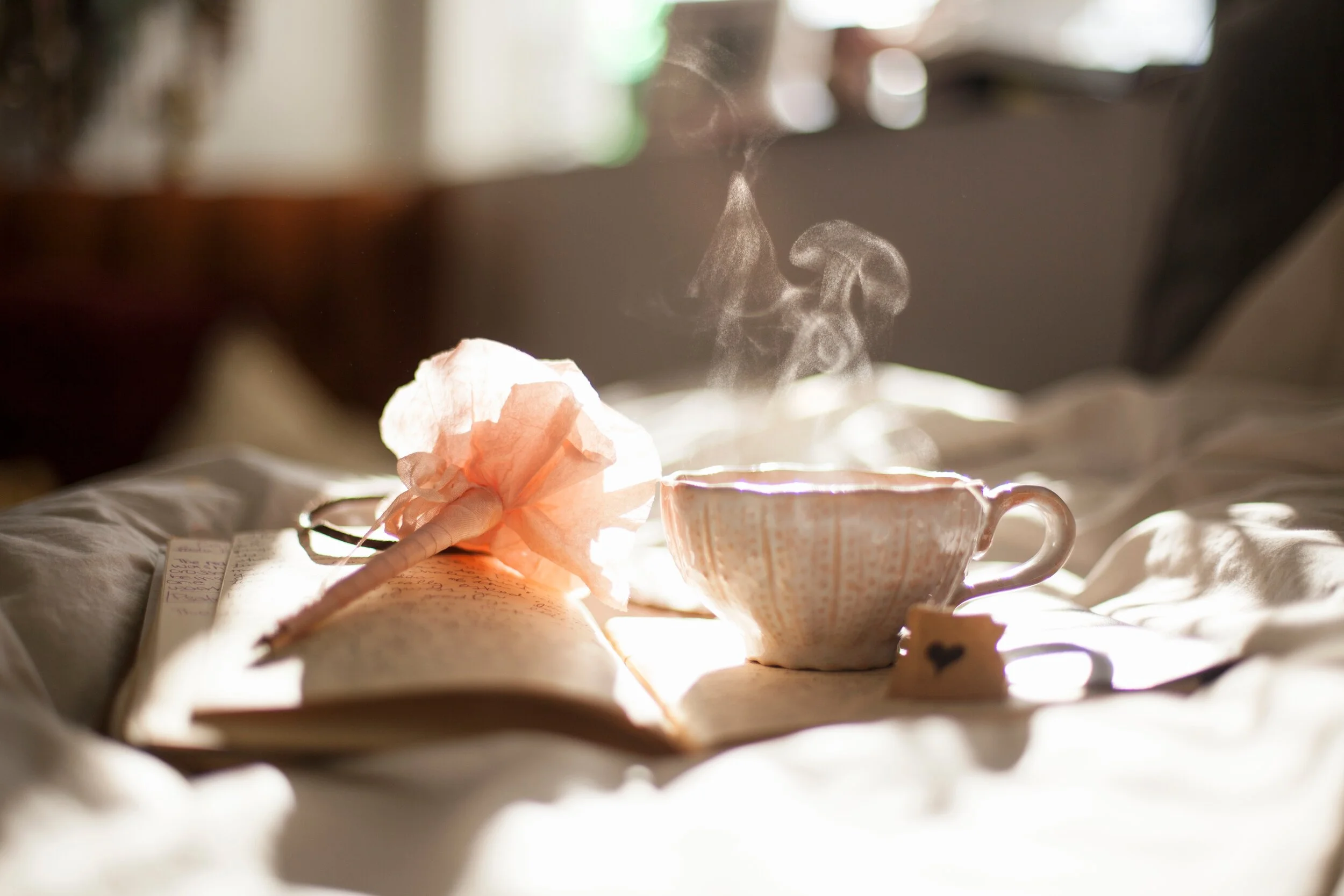
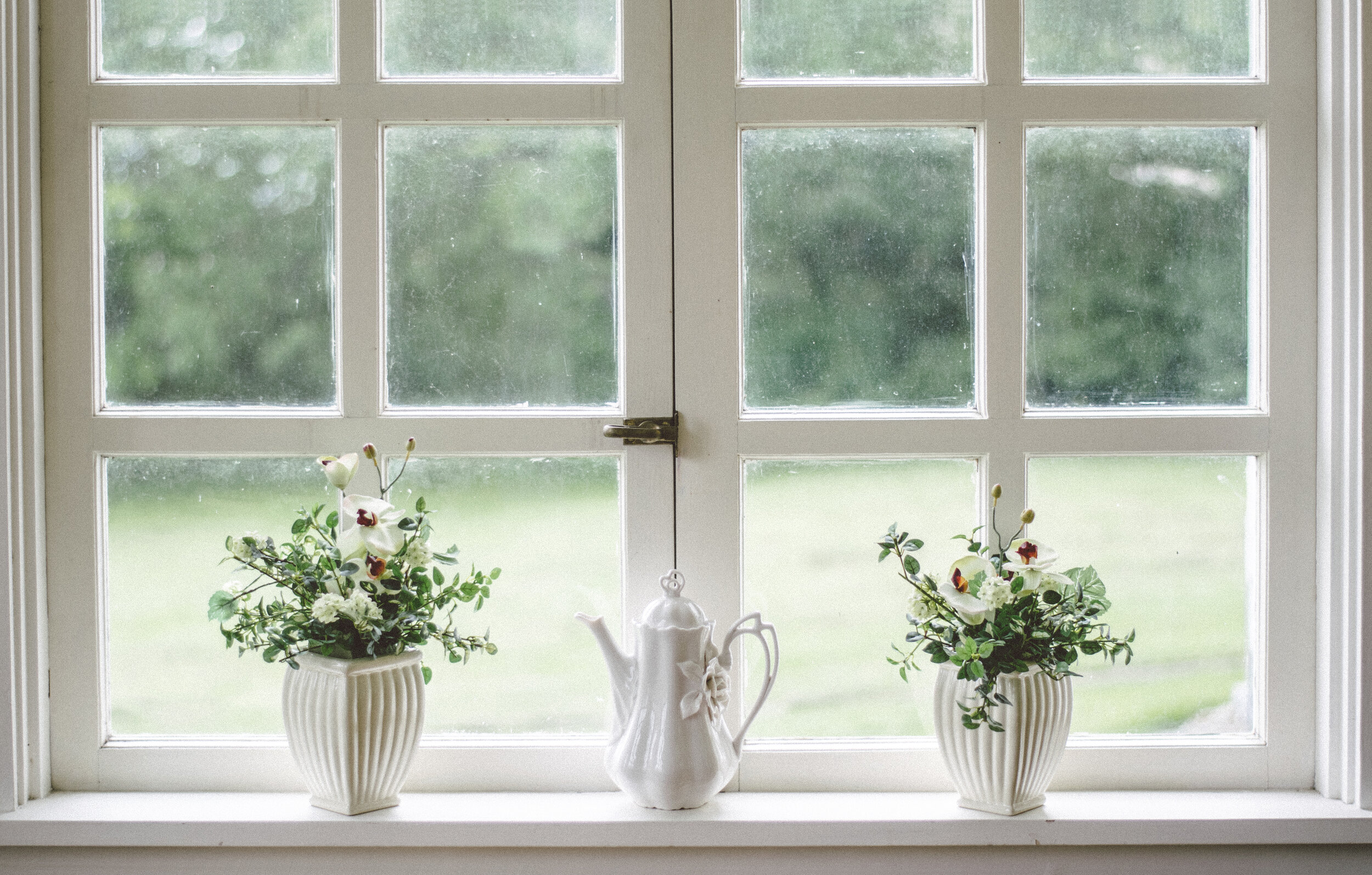
writing-tea-flower-diary-journal-notepad-244-pxhere.com.jpg

Here Are Some Writing Prompts Inspired by Botanical Gardens

April 13, 2020

BY MONIQUE QUINTANA

In any season, the garden as space is a constant source of creative inspiration. Some gardens are rocky and monochromatic, some subdued, and some bright. In each garden is a cyclic narrative, containers of our vast memories and dreamscapes. Here are a few writing prompts inspired by botanical things.

  •  Agave

 Write a revelation that happens in the time it takes the character to sew a tiny garment.

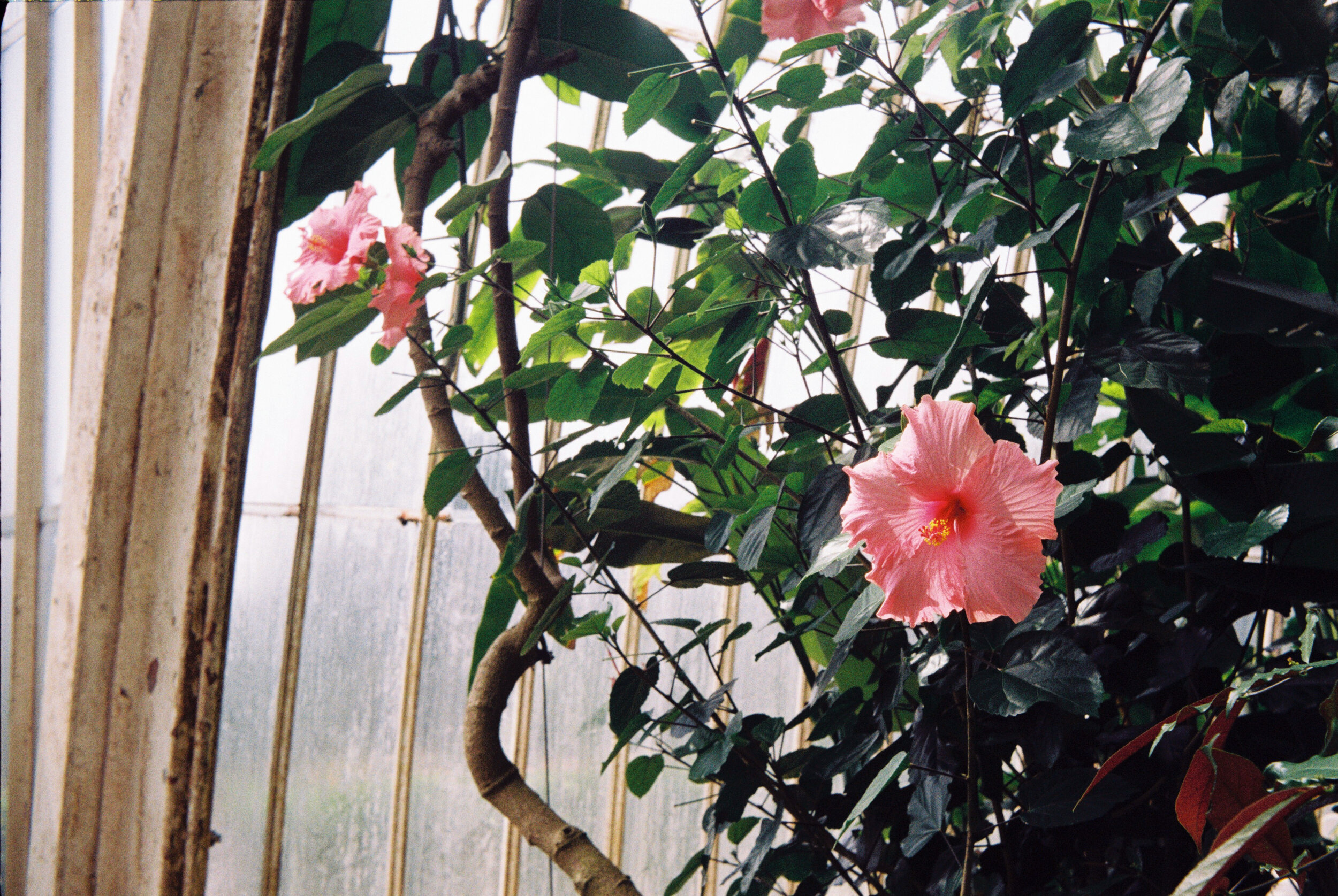
  •  Blue Hibiscus

 Write about a quarreling household that is preparing for an unprecedented season of frost. How do they find a moment of peace and grace?

  •  Manzanita

 Write a character that discovers a strange shape when they cut open a piece of fruit.

  •  Wormwood

 Write a trail of childhood objects on a rocky footpath for a beloved to find.

  •  Mugwort

 Write about a talisman that has protected your character’s family from a particular creature. What happens when the talisman doesn’t work for your character?

  •  Summer Snapdragon

 Write a character that notices a drastic and mysterious change in the landscape outside their window. What do they learn from the mystery?


Monique Quintana is a contributor at Luna Luna Magazine and her novella, Cenote City, was released from Clash Books in 2019. Her short works has been nominated for Best of the Net, Best Microfiction, and the Pushcart Prize. She has been awarded artist residencies to Yaddo, The Mineral School, and Sundress Academy of the Arts. She has also received fellowships to the Squaw Valley Community of Writers, the Open Mouth Poetry Retreat, and she was the inaugural winner of Amplify’s Megaphone Fellowship for a Writer of Color. She blogs about Latinx Literature at her site, Blood Moon and lives in the sleepy little town of Fresno, CA. You can find her at moniquequintana.com

In Art, Lifestyle, Poetry & Prose, Wellness Tags Writing, Botany, Wellness
Comment
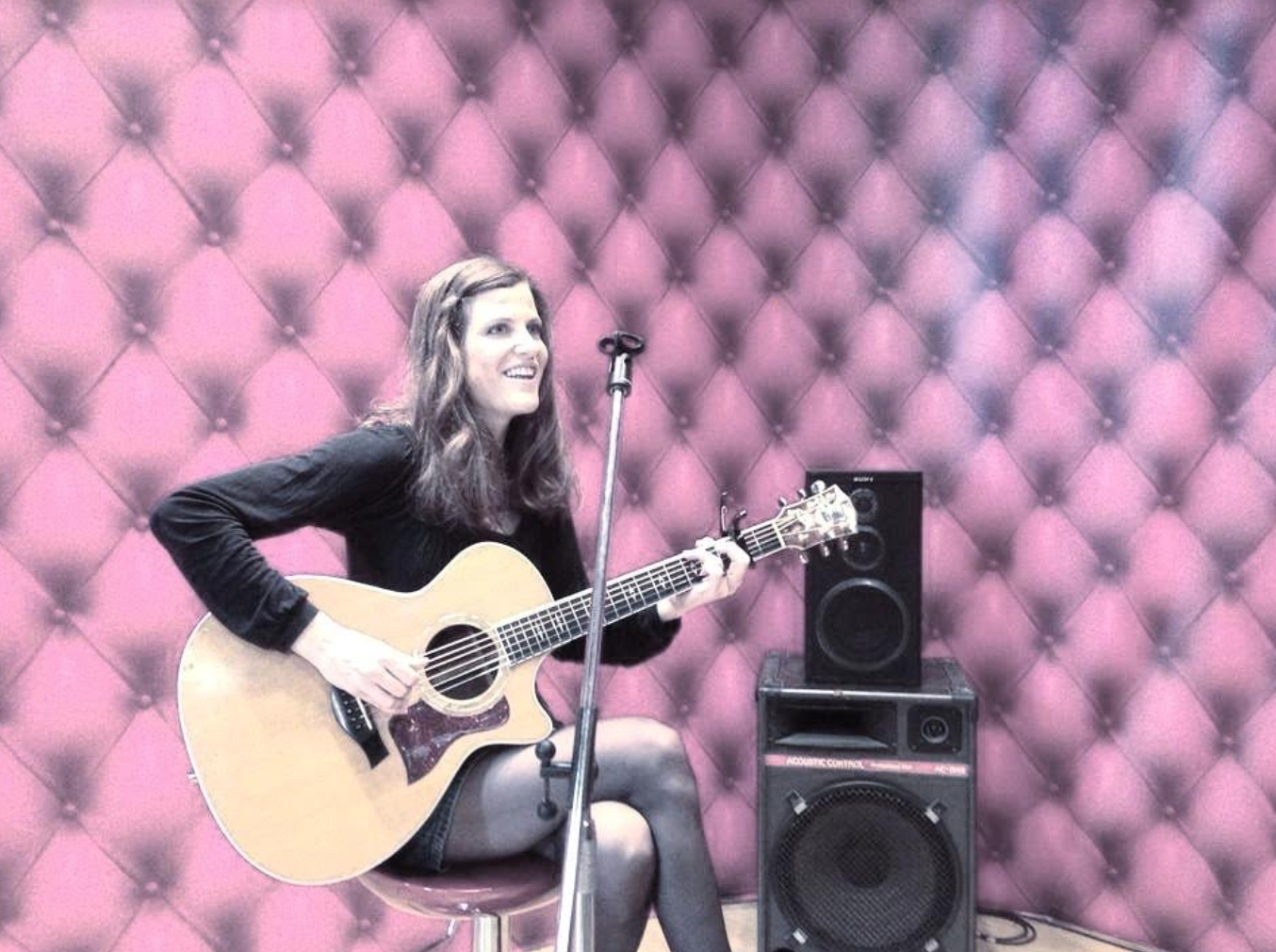
Screen Shot 2020-04-06 at 3.29.59 PM.png

Healing Through Sound: An Interview with Voice Coach Leslie Helpert

April 6, 2020

BY TESS CONGO, IN INTERVIEW WITH LESLIE HELPERT

Under dimmed lights with the glowing full moon lamp in the corner, we settled in restorative and restful poses on yoga mats across the studio floor. For over an hour, Leslie Helpert sang over us, taking turns to visit us individually, customizing her song to tune into exactly what we needed to hear. It was like a magic spell, designed specifically to soothe us into our softer, stronger versions of our souls. Afterwards, I felt like I was beaming white light, delicate and firm in my being. 

I had been attending Leslie’s meditation and sound healing classes for several months at The Well, a wellness center near Union Square in Manhattan where “modern science meets ancient wisdom” when cases of the coronavirus began to rise in the United States. When Leslie emailed me this past week to tell me about an online global classroom she’s facilitating over the next three Wednesdays beginning this Wednesday April 8th, 2020, I wanted to share her work with others who may, like me, be striving to rebuild their foundation in the midst of upheaval due to the coronavirus. The following conversation has been condensed. 

I am stunned by the range of your experiences—from being Bermuda and Denmark’s elected resident musician to coaching TED speakers to writing over 1,000 lyrical songs, novels, volumes of poetry, etc. I’d love to dive into your background to give readers a taste of who you are and where you came from. Can you describe your upbringing and how your relationship to sound manifested?

I was born in Upstate New York, but my family moved a lot. By the time I was nine, I had moved five times to different places in opposite ends of the country. I think the gift I got from moving was finding a way to create a sense of foundation and home from something that wasn’t external. Fortunately, my family was a loving one and artistically supportive.

From a young age, I found my sustenance in a deep, immersive world that was a combination of sound, music, nature, dance, and movement.

Right now, some people are quarantining apart from their families, others are confined to unhealthy home situations, and others have actually left their homes to socially distance themselves in other places. As someone who developed skills to build an internal sense of stability, what advice or wisdom can you offer to people who are finding it challenging to remain emotionally and mentally grounded wherever they are? 

I feel it is crucial to maintain strength, drive, and creativity during this time. It's never too late to find a passionate discipline and practice that yields a sense of being present — or grounded. Self-compassion is a vital practice, staying connected to ourselves and our self-care. This might look like taking baths, keeping our circulation moving and eating well so we are "checked in" more than "checked out.” You might have a writing practice, make a special meditation zone in your home, get a sketchbook, sing from the windows, turn off the cellphone after 9 pm and keep it off ’til morning. We're going through a lot, but we have our core values, our essence, our breath, our heart, and our ability to travel inward— these are our valuable tools.

Can you talk about what it’s like to work in sound healing after so many years of performing in venues as a touring musician?

When I work in what I call a voice lab or what's often called a sound bath, I go directly inside the geometrical design and the space, and work with people there. While I've played in some truly beautiful, artistically-inspiring venues, it feels like a natural evolution to engage with sound now in unamplified space— to play with acoustics, without lighting, in a space where everyone’s practicing self-care. Offering sound in this capacity was just a natural evolution for me, and it's really what I've always gone toward in many ways.

How is sound related to health and wellness?

I think all healthcare would benefit by implementing what I've called creative wellness or creative health. For some years, I've had the joy to work with various companies and HR teams to educate about the importance of creative health, which is a bridge between mental health and physical health. Our creativity is what determines our relationship with our world, and our creative drive is our gusto, which literally comes from the word wind, and is activated and finessed through our voice.

All of us have different relationships with our creative expression but what’s really important is that we know how to respect it. We know how to respect our creativity when it needs to rest, and we know how to respect it when it needs to be taken care of and be heard. We learn how to listen to our creativity as a primary, significant source. Some of us were discouraged in our earliest years from opening our mouths, perhaps hushed or deterred from singing, but our vocal cords are literal mechanical tools to open up the interior and exterior body. By working with sound, I can support homeostasis which is not a stagnant thing, but like music itself, moving all the time.

When you sing over people as with sound healing sessions at The Well, what is it you’re responding to that makes you shift the way you sing over individuals?

The work in sound healing is the effect of my voice methodology, Therapeutic Vocal Performance Technique. At The Well, I’m working with intervals, architecture, the bones, muscle, fascia, circulation, and a more universal simplified scale. I offer a type of song, or motif, that sometimes comes from an individual, or the moment, or the natural cycles of the season.

All of us together are working with “the voice.” It’s sort of like the grand resonant sound of the universe that’s in every cell of our body. My practice is to stay more in my somatic instrument and less in my thinking mind. I love doing this work and I love how, after our sessions, people often have similar or the same kind of visualizations, experiences, or feelings.

While nature offers stress relief, we’re being discouraged from populous places and not all of us have access to unpopulated green spaces. How might people connect with nature from their homes?

If you seek a forest, find a mirror. Put on Ravel’s solo piano work. Sit in a comfortable position, breathe into your own eyes. Say beautiful things to yourself. We have to use our imagination as a perceptive tool in this time. Imagination creates practicality and reason; it gives us the opportunity to imagine the best, to create experiences virtually even.

Speaking of virtual experiences, can you talk a little bit about the Nest: Vocal Immunology—The Global Classroom you’re offering for three Wednesdays starting this week? What inspired you to host these classes and what can participants expect from them?

Online, I had never created a group class, and I decided when [the coronavirus] happened it was an invitation to offer such. Usually, especially based in New York, there’s a certain price point I work with, but I really wanted to make this available for everyone in the world. How can I help people collectively connect and access their voice right now?

Really getting the mindset of wellness and being able to fill our own body with that I really think is as important and essential as washing our hands and taking a lot of vitamin C and staying inside. The voice is a way that we can connect to ourselves, to our integrity, and to connect to the truth of our expression. The classes will support people with breath techniques, movement, and a bit of sound healing and the opportunity to come together with like-minded people. I’m hoping we’ll have people from all around the world join in.

To join Leslie’s NEST: Vocal Immunology—The Global Classroom which starts THIS Wednesday, April 8th visit here, or Venmo $97 to Leslie directly at @HELPERTMUSIC (Leslie Helpert). To reach Leslie directly, email her at lesliehelpert@gmail.com, or visit www.dynamicvoicetraining.com for more information.

Tess Congo's work has appeared or is forthcoming in Publisher's Weekly, PANK Magazine, Curlew Quarterly, Bowery Gothic, Stone Pacific Zine, and the anthology Ripe (Afterword Books). She has studied writing at Harvard University, the University of New Orleans, and the University of New Hampshire, and is currently earning her MFA in poetry at Hunter College.

In Magic, Wellness Tags leslie helpert, tess congo, voice, sound healing, sound bath
Comment
tiko-giorgadze-uc6uKmUnGsg-unsplash.jpg

Questions For Lovers At The End Of The Day

April 6, 2020

BY RAY LEVY-UYEDA

Last summer I flew to Italy to meet up with a woman I had dated briefly, and casually, a year prior. We spent a week there, eating and fucking and doing the things that people to in Europe. When she went home I took a night bus to Paris, and that first day there, I carted my backpack around the city, ending my day, sweaty and hungry, at the Musee d’Orsay. Tracey Emin had produced a show for them, a series of drawings called The Fear of Loving, which I felt appropriate because I had just fallen in love with the woman I had spent a full week with. I also happened to love Tracey Emin, having discovered her work a few years prior at a time when I needed to see demonstrations of messy, heartbreaking, soul-defining love. I got a neon piece of her’s tattooed on my left forearm. I preached Tracey’s goodness to anyone who would listen. She became, in my mind, a kind of hero whose work I would know only through the internet, given that I lived in the United States and her work was mostly shown in England.

I found Tracey’s work that day to be some of the most moving pieces I had ever encountered. Perhaps I was particularly primed to take in drawings about love and lovers, given that I had just recently learned what it meant to love and have a lover. I tried to write about the art many times, but found the words stalling, failing to translate feelings incited by visual art, abstractions of loneliness and sex and longing. Then I found this piece by Leslie Jamison, who, just a few years earlier, had experienced this same dilemma. I found it instructive and thought that I might offer myself the same questions, just to see what would happen. For Jamison, the piece took on the form of the catechism, but for me, a Jew, and a woman who loves women, I felt that this form mirrored a kind of different call and response.

After making love, when you’re laying next to your lover, sometimes, often, questions are asked in a whisper. These questions feel intimate and revealing, as vulnerable as two women partnered in public, and in private. Even in that sense, the public and the private, there is an exchange, a tension, of what can be asked and what can be answered.

what is a circle?

A kind of poetry. The sun. A love note. Elementary aged children learning dimensions for the first time; a circle is not a sphere; something you can touch is different than something you can hold. A paintbrush dunked in blue and passed along the paper. Something that starts over and over and over again, something that is both endings and beginnings.

what else never ends?

The weighing feeling in my body after my lover left me, back in August. That was not so long ago, my body still remembers what it was like to be held. I did not know what I wanted then. Loving is more about desire than want. I want August, but I desire her. Then, every feeling that passed through my body felt like an eternal emotion, wheels of elation followed by deep despair. Turning all around me was the beauty of Milan, and later, Paris. And all I could think about was her. You must know this feeling. Do it now, picture your lover, picture their face, hair blowing in the wind behind them, like a cape. Picture the sun setting, picture the day starting over.

does the body hold time?

Of course it does. People go to sleep, regenerate cells, old ones die and the dead ones leave. Those who have periods know many answers to a matter of “whens.” A lover’s body holds a lover. Together, these bodies hold love, created. Hold’s the time, made. Holds knowing, uncovered. This is what we call making love. Which is to say, the body that loves is a body that tells time. Other parts too: a foot holds the places it has walked. The stomach knows every meal. Extremities remember adrenaline, anxiety. Or, the pause, and sensation of sitting so close to someone you’re able to touch them. What a gift it is to touch them.

how long does it take to get over someone?

As long as it takes, or you never do. One is a line and one is a circle; one is a line with an ending you cannot see and one is a line with an ending that does not exist. Or, by crying VIOLENTLY and PERSISTENTLY, calling out their name while you sleep. Dreaming of their name while you sleep. Drawing their body, jagged marks on thin pieces of paper, a halo atop her head, something glowing, like a light or a promise.

where do tears come from?

The heart. The mind. The head. The stomach. The ocean. The stars. Dust. The Big Bang. Yes, tears come from the Big Bang. Each tear is a star exploding. The act of crying is the art of a galaxy being born. Let it come to life. Build.

That week I cried every day, all in front of her except for one night, when I turned the other way and silently weeped. I hoped that she would hear me. I hoped that she wouldn’t. I wanted to be held without being seen, but a lover is physically incapable of doing that. Touching is a kind of seeing. Watching you lover cry, a kind of hearing. In that way that loving distorts the senses. In that way that loving has nothing to do with senses. It’s all electricity.

an ocean behind our eyes?

Maybe not an ocean, just all of the things we don’t want others to see. I almost drowned in the ocean one time. I was 19, visiting family, and my sister and I went with a girl. She was about 25, which seemed old to me at the time, and all of us young adults hiked the coast, a cliff up against the water’s edge. I told her that I was a strong swimmer. I wasn’t. I’m still not. I jumped in. As I got closer to the beach the waves came in, scooped me up and spun me around. I’m sure it looked violent from the outside, but for the first time everything was still. Nothing but water, no concept of an outer world, no thought, no sight, no breathing. Perfect. Like falling asleep, like sinking back into my own body after a long time away. Like a lover, arriving.

what is holy about aloneness?

Learning yourself. Approaching knowing yourself. The pursuit of inwardness in a world that demands money and extroversion and attraction and performance. But aloneness after a lover leaves is violent, makes you think that you deserve it. Makes room for all of the beasts. Makes space for angry things like self-deception and isolation and depression and depravity.

Good aloneness has nothing to do with how many people are around you. Aloneness is where art is made. Art is always holy, what is more holy than expression, reflection, creative communion.

do you remember who told you what love was?

My ex lover. My first lover. The first woman I went on a date with. I cooked for her and we drank wine. I was 19, she was 32. It felt dangerous, I liked it. There was still so much I didn’t know. Like how to give yourself to someone. How, after you give yourself, you don’t get yourself back. You just remake what you think you lost, or make something new, rediscover who you are.

It didn’t last, of course it didn’t. But she attended to me, offered her life as a kind of map. One day, I could be open and lesbian and have my own home filled with my own art. And one day, I would be happy. One day I would keep red wine on the counter. Have a backyard where I would host pride parties. Have friends who loved me. Have love.

what did they say?

That there is a woman waiting, alone, for someone to come and hold her. Waiting for someone to watch her cry. From afar, tears look like rain. This time, the circle looks like the moon. She is holding her body up. She pushes away from the earth. There is no falling, in love. Love is a binary, it is or it isn’t. A week with my first lover, the first person I could feel my body giving itself to, I waited a week before I told her that I loved her. I cried the whole time. I couldn’t look at her. She held me, told me with her body that I was safe. I tried to listen.

what did they do to you?

She made me safe. She told me with her hands and her torso that she loved me. We contorted our bodies into crouched positions. We prayed to the center of the earth. We made love to each other. We. Made. Love. When I first saw my lover after we separated I could not wait to touch her, to have her touch me, but still, I was nervous. I was worried that she would recoil at the feeling of my palm on her chest. My hand guiding hers. I feared that touching her would cause a chain reaction of natural disasters. Touching her would rise the waters. Touching her would shake the earth. Touching her might remove me from my body.

how did they touch you?

With everything and everywhere.


when did you learn about pleasure?

Then, I thought that standing face to face with her, any kind of her, was safe. Now, the fear is that someone can make me feel good. It’s the absence of a thing that hurts more than anything. I learned about pleasure when I was too young to be afraid of it, though I am still young. I am still learning. Such a particular and peculiar thing for all of us queer kids to grow up. Growing up gay and not realizing I was gay, pleasure was a gnawing feeling, localized adrenaline, a tingly sensation in my right arm. Pleasure was an animal I hid, this animal wanted. How horrifying to me that I could not fulfill these wants. Intuitively, I understood that someone else could want with me. I learned that pleasure was not done to someone, pleasure is created with someone.


and the pain of loving someone up close?

There is no loving another in proximity without pain. All relationship is proximity.


is your lover a mirror?

Not many months into our relationship I said something to my lover, to which she responded, not as a question but as a statement, I wonder how you see me. Which I took as, I wonder if you see me. I’m not sure I did. Loving someone up close reveals all the parts of them that you do not understand, or cannot be understood. Still, I loved her without understanding her. Maybe that is all love: loving without understanding. Just wanting to be with someone. Love is a pull. Love is not a thought.


what do you see?

Blue and black and fading lines. A drawing made by a paint brush, and a brush moved by a woman. I see time and water and light. Ink, made into a story. A story in picture form across a single canvass. I see all of my memories of the past week. She is in all of them, she is all of them.


what is the most intimate thing you can think of?

Her.

do you dream of intimacy?

I dream of being open with her, or someone else. I dream of someone who will want to see me open. I dream of sitting in the sunlight with my lover and we are not speaking. We are outside and it is spring. The air, the flowers, the trees, the sun, are all anew. We are anew. I dream of looking at her and her, me, witnessing each other’s beginnings. The other in circle.

where do your hands go at night?

Under my head, to catch my tears.

how much does the emotion of your water weigh? (how much did you cry?)

Only when it hurts, which is to say, only when I am aware of the hurt, when I let myself feel.

what does G-d have to do with heartbreak?

In my time of heartbreak I turned to G-d.

Ray Levy-Uyeda is a Bay Area-based freelance writer who focuses on gender, politics and activism. You can find her work elsewhere at Teen Vogue, Fortune and Vice. Find her on Twitter @raylevyuyeda.
In Art, Poetry & Prose Tags Creative Non Fiction, RAY LEVY-UYEDA
Comment

Welcome to Life as a Blackwood Sister

April 2, 2020

Kailey Tedesco is the author of These Ghosts of Mine, Siamese (Dancing Girl Press) and the full-length collection, She Used to be on a Milk Carton (April Gloaming Publications). She is the co-founding editor-in-chief of Rag Queen Periodical and a member of the Poetry Brothel. She received her MFA in creative writing from Arcadia University, and she now teaches literature at several local colleges. Her poetry has been nominated for the Pushcart Prize. You can find her work in Prelude, Bellevue Literary Review, Sugar House Review, Poetry Quarterly, Hello Giggles, UltraCulture, and more. For more information, please visit kaileytedesco.com.

Read More
In Poetry & Prose Tags literature, tv, sabrina, shirley jackson
Comment
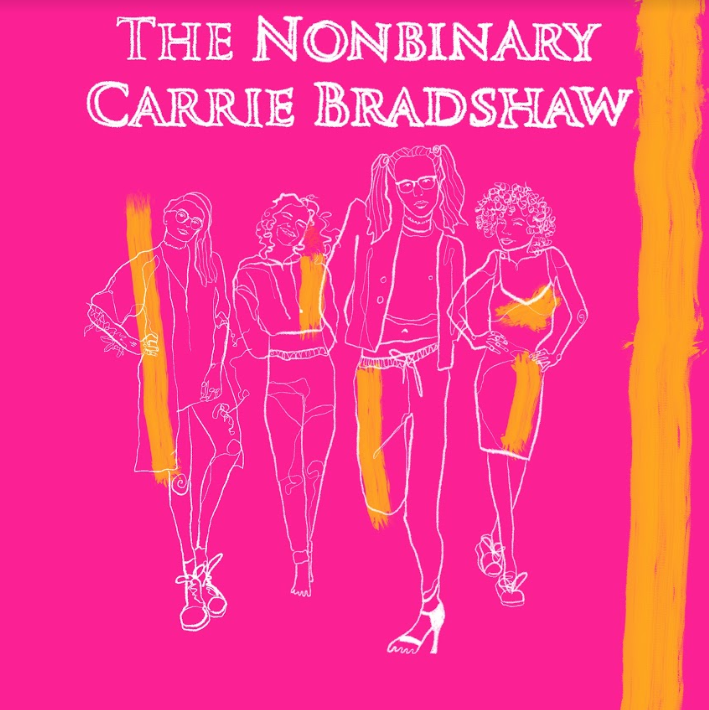
carrie.PNG

Get Ready for the Non-Binary Carrie Bradshaw

March 30, 2020

Joanna C. Valente is a human who lives in Brooklyn, New York. They are the author of several books, including Marys of the Sea, #Survivor (2020, The Operating System), and Killer Bob: A Love Story (2021, Vegetarian Alcoholic Press). They are the editor of A Shadow Map: Writing by Survivors of Sexual Assault and received their MFA in writing at Sarah Lawrence College. Joanna is the founder of Yes Poetry and the senior managing editor for Luna Luna Magazine. Some of their writing has appeared in The Rumpus, Them, Brooklyn Magazine, BUST, and elsewhere. Joanna also leads workshops at Brooklyn Poets. joannavalente.com / Twitter: @joannasaid / IG: joannacvalente / FB: joannacvalente

Read More
In NYC, Politics, Pop Culture, Social Issues, Art Tags joshua byron, non-binary carrie bradshaw, queer, non-binary, podcast, Anna Feldmann, Myrrh Crow, and Alana Ruiz, alana ruiz
Comment

Make Your WFH Status Absolutely Magical

March 25, 2020

Stephanie Valente lives in Brooklyn, NY. She is a Young Adult novelist, short fiction writer, poet, editor, content & social media strategist. In short, she wears many hats. Especially if they have feathers. She is the Assistant Editor at Yes, Poetry and a writer at Luna Luna Magazine. Some of her writing has appeared in Bust Magazine, Electric Cereal, Prick of the Spindle, The 22 Magazine, Danse Macabre, Uphook Press, Literary Orphans, Nano Fiction, and more. She has provided content strategy, copy, blogging, editing, & social media for per’fekt cosmetics, Anna Sui, Agent Provocateur, Patricia Field, Hue, Montagne Jeunesse, Bust Magazine, Kensie, Web100, Oasap, Quiz, Popsugar, among others.

Read More
In Wellness, Lifestyle Tags working from home
Comment

Poetry by Emily Wallis Hughes

March 24, 2020

Emily Wallis Hughes grew up in Agua Caliente, California. Her first book of poems, Sugar Factory, containing a series of paintings by Sarah Riggs in conversation with Emily's poems, was published by Spuyten Duyvil in 2019. Her poems have been published in the Berkeley Poetry Review, Cordella, Elderly, Gigantic Magazine, Painted Bride Quarterly, Prelude, ZAUM, and other magazines.  She edits Elecment at Fence and teaches creative writing as an adjunct at Rutgers-New Brunswick. 
Read More
In Poetry & Prose Tags Emily Wallis Hughes, poetry
Comment

An Interview with Writer Christina Rosso on Her Book 'She Is a Beast'

March 23, 2020

Joanna C. Valente is a human who lives in Brooklyn, New York. They are the author of several books, including Marys of the Sea, #Survivor (2020, The Operating System), and Killer Bob: A Love Story (2021, Vegetarian Alcoholic Press). They are the editor of A Shadow Map: Writing by Survivors of Sexual Assault and received their MFA in writing at Sarah Lawrence College. Joanna is the founder of Yes Poetry and the senior managing editor for Luna Luna Magazine. Some of their writing has appeared in The Rumpus, Them, Brooklyn Magazine, BUST, and elsewhere. Joanna also leads workshops at Brooklyn Poets. joannavalente.com / Twitter: @joannasaid / IG: joannacvalente / FB: joannacvalente

Read More
In Interviews Tags christina rosso, Interview, books, fiction
Comment
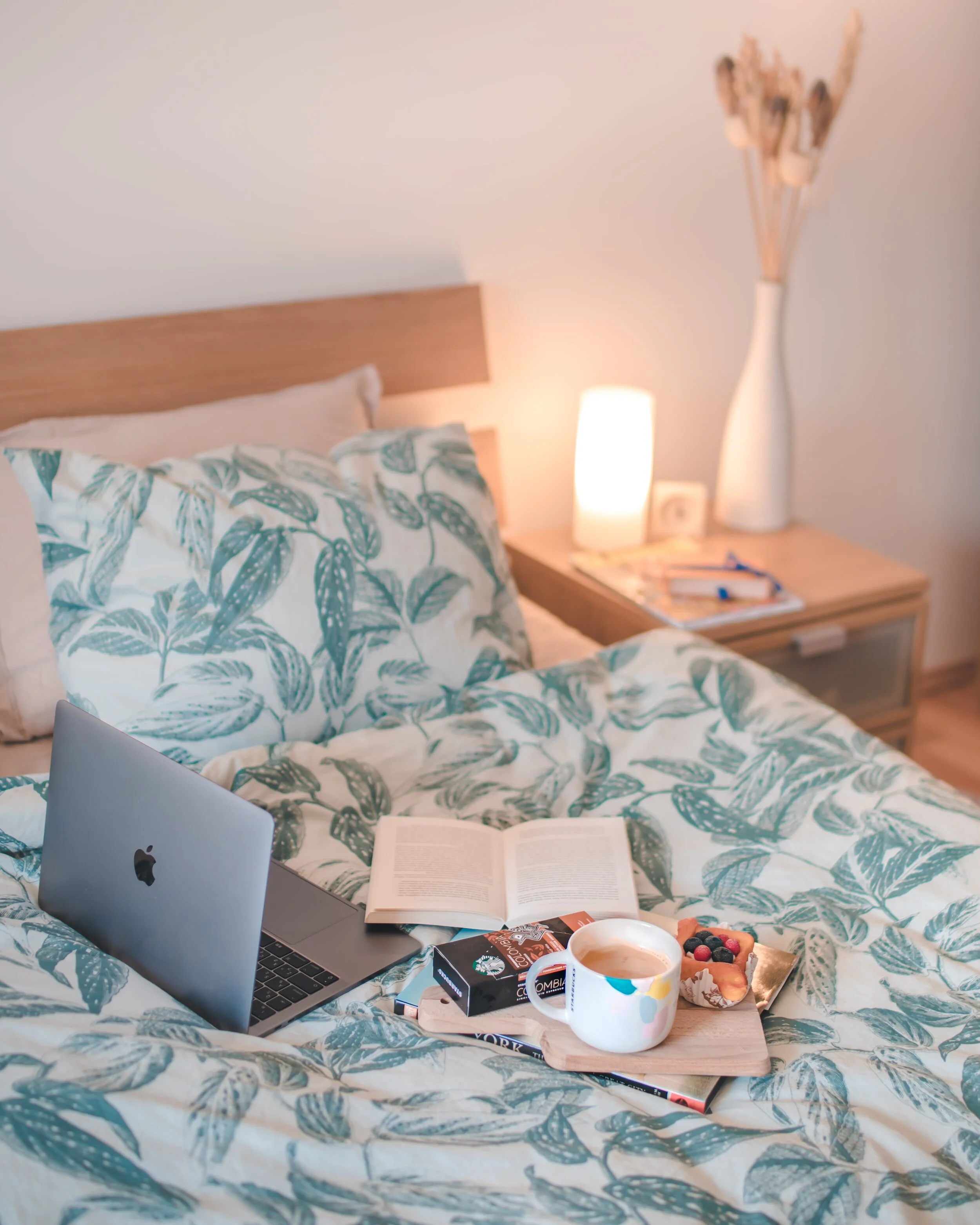
work from home hygge

5 Gentle Work From Home Tips When Times Are Tough

March 18, 2020

BY LISA MARIE BASILE

Working from home, especially due to the Coronavirus quarantine, asks us to come up with gentle work and focus strategies that integrate rest, creativity, socialization, and self-kindness.

I’ve been a full-time, work from home freelancer for the past two years — a reality that has its beautiful ups, lonely downs, immense privileges (freedom, the ability to care for my chronic illness) and intense drawbacks (health insurance issues, pay cycle problems). I have learned what works and what doesn’t, and have felt everything from the sting of isolation to the beauty of taking a yoga-with-my-cat break.

First, let’s address the stigma around working from home. People sometimes think work-from-home employees are lazy, aren’t actually working or can sleep all day and take two-hour lunches. That we aren’t stressed or concerned for money (?!). In short, it’s true that there is great privilege in working from home, but work is work. And the best freelancers know that it’s not a free-for-all nor an opportunity to slack off. It requires delicate balance and recalibration, just as any job does.

Now that so many of us are working from home due to COVID-19, I’m hearing people say that it’s not as easy as it seems — that they feel frustrated, cooped up, adrift, unable to focus, at a loss for routine, undisciplined, lonely, and [insert adjective]. But more than that, everyone is trying to focus as a deluge of frightening news reports roll in.

In response, here are some ways to holistically and gently integrate work, life, and today’s changing reality.

Adapt to change mindfully.

View this post on Instagram

A post shared by lisa marie basile (@lisamariebasile) on Mar 17, 2020 at 9:37am PDT

How do we adjust to all of this rapid change? In one week, we’re dining out and seeing friends. The next, we’re losing our jobs, in our houses all day every day, and stocking up on food. It’s a lot. We have to mindfully navigate these changes. Now’s the time to take stock of what’s important to you day to day (talking to friends? Eating healthfully?). You’ll also want to keep (or adapt) routines that feel healthy and comforting (eating a healthy breakfast? Doing yoga each day for one hour?) and make your house the safe space you need in order to comfort you through anxious, dark, and isolating moments. Keep what feels good to you, and build from there, integrating your workspace tools and job duties into your home-life. Some ideas:

  • Create one specific space where you work. This creates a healthy separation between work and life. Make it as similar as you can to your office space.

  • Prioritize daily tasks. Besides work, what else matters? What do you do ‘normally?’ Try to adapt those same behaviors. For example, I swim once per day, usually in the morning. I can’t in quarantine, so instead, I plan to do a workout at that same hour. For those of you who take a break at the office around 12, try to replicate that at home. Creating mirrored actions helps us make sense of rapid change, and you can always switch them out if you find something else you like to do better!

  • If you feel like you’re missing out on a post-work routine (a local pub, hanging with a friend, walking around the park before heading home), try to create a similar-ish routine you can do when you close the computer — and do close the computer. Working from home is not an invite to work all night, even if it seems tempting.

Building a morning ritual to soothe the nervous system.

Because you don’t have a built-in routine — up at 7, on the train by 8, at the desk by 9, for example — you have to create your own routine. This is where discipline comes in. If you don’t want to work all damn day and night, or you want to leave time for projects and pleasures, you’ll need to work from your set hours. Sure, you might snag an extra 45 minutes of sleep, but being at your computer in the morning (if that’s what’s expected of you or not) can help create a sense of responsibility.

Start your morning with a ritual: stretching, pulling a tarot card, meditating, making a cup of coffee, listening to some music as you shower, standing at the window or porch and absorbing the light, and slowly logging on. Go inward. Wake up your senses. Be deliberate and soothing. It’s especially important now to be a little slower, be a little more intentional. Your parasympathetic nervous system may already be shot, so it’s important to show your body that the morning can be soft and calm. You want to set your day’s tone with self-kindness.

Rest when you need to. Seriously.

One of the benefits of working from home is the ability to simply lay down for 15 — vertically, at a window, wherever. You don’t have to hide-nap in a stall at the office. Even though we have bills to pay (those of us who are privileged to keep our jobs right now, of course), now is the time to balance our ability to do more with resting.

In a sense, the earth is asking us a serious question. The earth is asking us to slow down, to listen, to be more in-tune, to stop pushing so hard — our bodies, the planet, our factories, our workers, our minds. To just be. To just be. Because we are not infallible. We are not eternal. We are natural things that have become selfish enough to think we are omnipotent. We are not. We, like trees, need water and light and time to grow. We bend toward others. We have a language. We bloom. We rot. We are bearing witness, as witness trees do, to the doom that can happen when we don’t listen or care for others.

Working from home, especially during a quarantine time when you’d ordinarily be out or meeting friends or at business meetings, may feel like an invitation to finally do and be everything. To finally learn Spanish. To finally finish that novel. And while these things may comfort you in the dark moments, capitalism’s greedy hands ought not make us feel we’re not being or doing enough.

Do what you can to survive. But rest. Heed the earth and sleep if you need to — especially if you’re sick. Take the time to breathe. To be alive. To watch your animals gaze up at the sunlight through a window.

Build focus by integrating movement, art, and breath into your day.

View this post on Instagram

A post shared by lisa marie basile (@lisamariebasile) on Mar 8, 2020 at 1:37pm PDT

You’re working from home. You’re trying to focus. You’re reading the news, crying, and then trying to Slack your boss in some sort of legible manner. They are probably home trying to be a good boss, trying to stop the kids from crying, trying to do their best, too. The Pomodoro technique is one I’ve been using since forever because it’s doable, forgiving, and realistic. I used to do it in the office, but now I do it even more at home, where distractions are abundant.

The Pomodoro technique allows us 25 minutes of focus, and then a short break. After that, I will do something soothing. I’ll do a few minutes of yoga, watch a few minutes of ASMR, doodle carelessly into a journal, or do a breathing practice (breath in for 4 seconds, hold the breath for 7 seconds, and exhale for 8 seconds). I also created a sacred writing prompt journey (for free!) here, if you prefer to write.

While this may seem pandering or ridiculous (after all, humans need to work!), the reality is this: We won’t do our best if we can’t focus, if we’re chaotically stressed, if we’re giving our all to a job and not taking care of ourselves — especially in a time of crisis.

Create time for socializing.

For people in offices, endless meetings can take a toll. They can usually be summed up in an email, anyway, right? At WeWorks, we duck into telephone booths as if any human interaction will cause us to explode. We’re over-saturated. But in quarantine, we’re suddenly forced to listen to our own footsteps, missing the human interaction of a normal workaday. Even when we’re not working, the missing becomes extra real. We are social creatures. Here’s what you can do:

  • Organize a FaceTime chat with a friend or friends

  • Start a group text with friends to share funny pictures or memes

  • Send videos versus texts with friends. Seeing faces helps our brains feel more connected.

  • Write a long letter or email to a friend

  • Watch YouTube vlogs; even having a voice in the background is helpful psychologically

  • Do a poetry readings or Q&A session on Instagram

  • Schedule a phone call with someone special once or twice a week

  • Start a Facebook group for a specific community

  • Dive into the land of podcasts


Lisa Marie Basile is the founding creative director of Luna Luna Magazine, a popular magazine & digital community focused on literature, magical living, and identity. She is the author of several books of poetry, as well as Light Magic for Dark Times, a modern collection of inspired rituals and daily practices, as well as The Magical Writing Grimoire: Use the Word as Your Wand for Magic, Manifestation & Ritual. Her work focuses heavily on trauma recovery, writing as a healing tool, chronic illness, everyday magic, and poetry. She's written for or been featured in The New York Times, Refinery 29, Self, Chakrubs, Marie Claire, Narratively, Catapult, Sabat Magazine, Bust, HelloGiggles, Best American Experimental Writing, Best American Poetry, Grimoire Magazine, and more. She's an editor at the poetry site Little Infinite as well as the co-host of Astrolushes, a podcast that conversationally explores astrology, ritual, pop culture, and literature. Lisa Marie has taught writing and ritual workshops at HausWitch in Salem, MA, Manhattanville College, and Pace University. She is also a chronic illness advocate, keeping columns at several chronic illness patient websites. She earned a Masters's degree in Writing from The New School and studied literature and psychology as an undergraduate at Pace University. You can follow her at @lisamariebasile and @Ritual_Poetica.


In Wellness, Social Issues Tags working from home, work from home, wfh, coronavirus, covid19
Comment

The Age of Coronavirus—And What This Means for Us

March 18, 2020

Joanna C. Valente is a human who lives in Brooklyn, New York. They are the author of several books, including Marys of the Sea, #Survivor (2020, The Operating System), and Killer Bob: A Love Story (2021, Vegetarian Alcoholic Press). They are the editor of A Shadow Map: Writing by Survivors of Sexual Assault and received their MFA in writing at Sarah Lawrence College. Joanna is the founder of Yes Poetry and the senior managing editor for Luna Luna Magazine. Some of their writing has appeared in The Rumpus, Them, Brooklyn Magazine, BUST, and elsewhere. Joanna also leads workshops at Brooklyn Poets. joannavalente.com / Twitter: @joannasaid / IG: joannacvalente / FB: joannacvalente

Read More
In Personal Essay Tags essay
Comment
hygge stillness

Coronavirus Anxiety and The Practice Of Sitting In Uncertainty

March 17, 2020

BY LISA MARIE BASILE

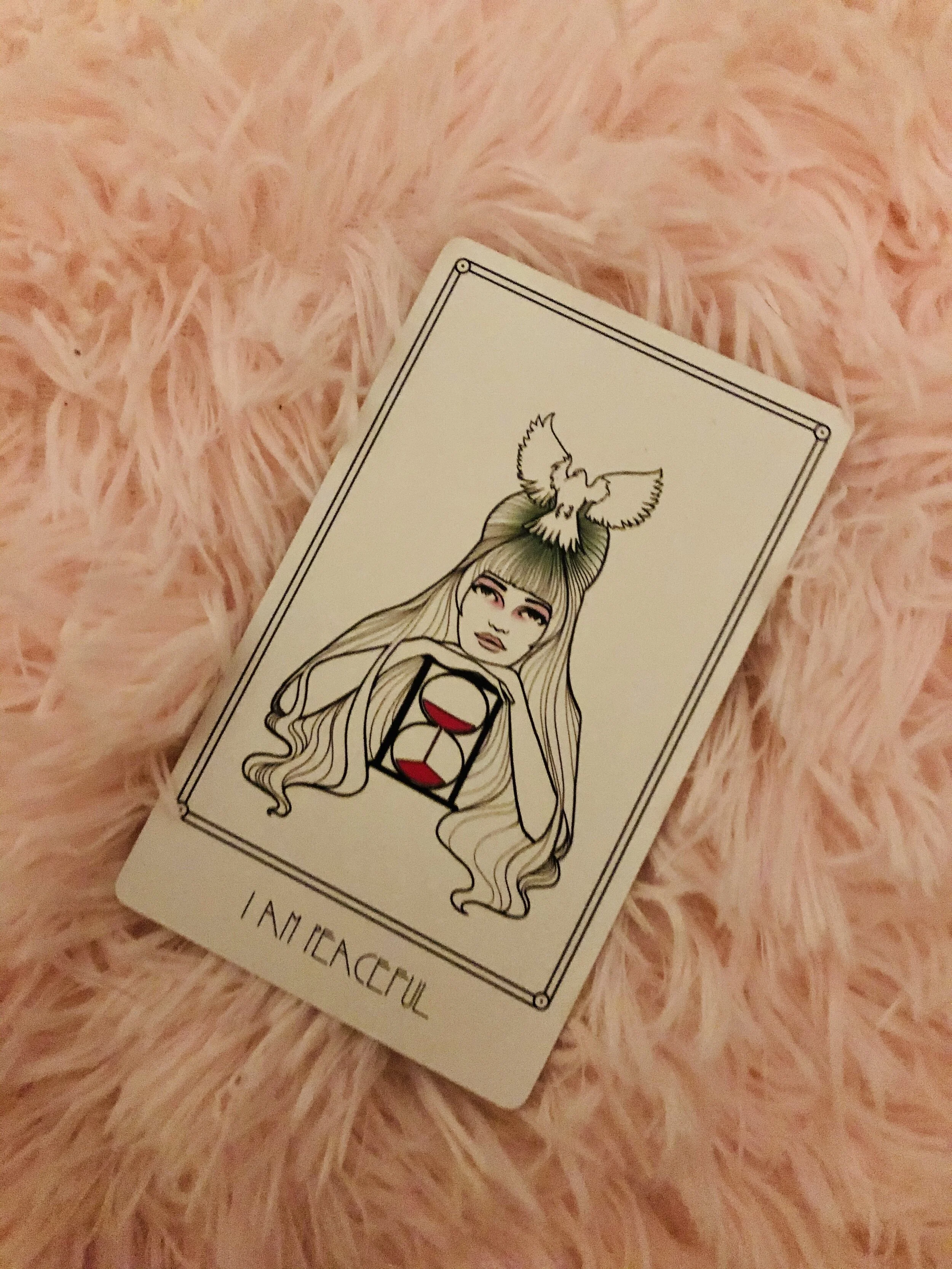
In my Amenti Oracle Deck, I pull the card for I am peaceful. I asked the deck, of course, what I was supposed to take away from this experience in quarantine. I’m just human. I don’t know. I don’t even know if I’m ready to learn a lesson. I do know that, as a writer, I am compelled to write it all down. To take notes through this thing. To keep a diary of what I’ve seen. I have a feeling this will shape us. Maybe I want to be present for it.

IMG_3166.jpeg

I know that for all of us, it’s been hours and hours of dread through insomnia-filled nights perusing the web, guzzling every wave of new information, letting the anxiety take over. I know that in our private Luna Luna community group, there’s a lot of worry. Everyone, the globe over, is panicking, and you can feel it. From space, I wonder if you can feel a buzzing strange energy emanating through our atmosphere. I wonder if you can feel it through all sorts of tragedies.

I am currently experiencing all the symptoms — perhaps it’s the flu or bronchitis. Perhaps worry leads me to be sicker than I should be. I sit in bed or wander my apartment, wondering how best to handle this new normal. Looking outside at New York City, its streets empty and silent (but it’s pubs still full at night, people’s faces inches from one another, before the city finally closed itself down), I wonder what the earth is trying to tell us.

I wonder why we are so resistant and stubborn. I wonder why we think ourselves invincible. Is the fear of death itself so big and so deep that we run toward it?

If you live with an immunocompromised body as I do, at some point you stop clutching illusions of infallibility. You have learned some time ago that your body is an engine running on wayward wheels. You have learned to avoid the subway poles and handshakes. You have learned that each day is a new preciousness. And if you’re anyone else, you probably have a friend or a lover or a parent or grandparent who is at high risk of getting very sick if they do contract a virus, or this virus.

The body is a fragile ephemeral thing, and it must bend toward the pew of nature. And yet, we resist, making it hard to survive.

My point is that we have to lean into this new situation. We have to or else we disappear. We literally have to because there is no other choice. We have to face that this is dark and hard and there will be (and is) global grief at the end of it all.

We’ve seen the memes about our grandparents going to war, which are somehow supposed to shame us into feeling comfortable during quarantine? I think it’s a false correlation. We can honor and respect history and the tragedies that have occurred while being uncomfortable with the things that befall our societies today. It isn’t just about quarantine or being bored inside the house or watching Netflix or reading books. It’s about watching how society reacts to chaos, how politicians act too late or use xenophobic language during an outbreak, about the power of contagion and how ignorance and selfishness lead to community spread. It’s about infrastructure, school children not going to school, poor people not being able to buy food, homeless people having no shelter-in-place, shelves being completely empty, people who have lack of accessibility, elderly people without family. It’s about not being sure. It’s about uncertainty. It’s about death. And it’s about grief, which we haven’t, as a global community, even dealt with yet.

There is so much validity in being fearful and anxious during this time.

If you are out there wondering what will happen, wondering how we got to this point, you’re not alone. If you are watching videos of beautiful Chinese or Italian people singing out of their windows or on their balconies into empty streets, their voices echoing through the night in act of communal conjuring, you are not alone.

What the Amenti Oracle card told me about being peaceful was this:

Finding peace and stillness in the midst of chaos is a challenge, but it’s one that we must meet. We can choose to spend the entire day in worry — and it would not be invalid if we did. Our finances, our health, and our stability are at risk. But we can also choose to take back a few minutes for ourselves, to sit in silence, to just be alive, to just surround ourselves with the things that bring us pleasure and joy.

Mine are books and plants. My cat. Blankets. I like to sit at the window and just look out, even if I just see another building. I like to write little notes. I like to set up an altar. I like to clean my space and give it love. I like to make tea and watch the heat dance above the liquid. I like to listen to the birds in the morning. I like to wonder what they’re thinking about all this free space.

I like to pretend that I am a stone in the sea. I am smooth and I am turned over and over and over again as I am moved by the waves. I have no choice but to be a creature of the sea. And that great dark mother, with all her mystery and all her might, pushes me about. But I am eternal and I am still whole. I can worry about the waves, or I can let them take me. There is value in both. There is value in anxiety — because it helps us grow and it helps us become empathic toward others. And there is value in stillness and acceptance and learning to fill the time alone or isolated, with nothingness. It’s not meant to be comfortable. It’s meant to be what it is, which is a breath, a pause, a being. An opportunity to just be — in between the shadows.

Maybe I don’t need to write it all down or understand it or provide thoughts or hope to others. Maybe I shouldn’t be writing this post. Maybe I just need to be, to lean into the unknowing and the mystery and uncertainty.


Lisa Marie Basile is the founding creative director of Luna Luna Magazine, a popular magazine & digital community focused on literature, magical living, and identity. She is the author of several books of poetry, as well as Light Magic for Dark Times, a modern collection of inspired rituals and daily practices, as well as The Magical Writing Grimoire: Use the Word as Your Wand for Magic, Manifestation & Ritual. Her work focuses heavily on trauma recovery, writing as a healing tool, chronic illness, everyday magic, and poetry. She's written for or been featured in The New York Times, Refinery 29, Self, Chakrubs, Marie Claire, Narratively, Catapult, Sabat Magazine, Bust, HelloGiggles, Best American Experimental Writing, Best American Poetry, Grimoire Magazine, and more. She's an editor at the poetry site Little Infinite as well as the co-host of Astrolushes, a podcast that conversationally explores astrology, ritual, pop culture, and literature. Lisa Marie has taught writing and ritual workshops at HausWitch in Salem, MA, Manhattanville College, and Pace University. She is also a chronic illness advocate, keeping columns at several chronic illness patient websites. She earned a Masters's degree in Writing from The New School and studied literature and psychology as an undergraduate at Pace University. You can follow her at @lisamariebasile and @Ritual_Poetica.

In Social Issues, Wellness, Poetry & Prose Tags coronavirus, covid-19, covid19, virus, pandemic, stillness, meditation
Comment

A Playlist to Keep You Company

March 17, 2020

Joanna C. Valente is a human who lives in Brooklyn, New York. They are the author of several books, including Marys of the Sea, #Survivor (2020, The Operating System), and Killer Bob: A Love Story (2021, Vegetarian Alcoholic Press). They are the editor of A Shadow Map: Writing by Survivors of Sexual Assault and received their MFA in writing at Sarah Lawrence College. Joanna is the founder of Yes Poetry and the senior managing editor for Luna Luna Magazine. Some of their writing has appeared in The Rumpus, Them, Brooklyn Magazine, BUST, and elsewhere. Joanna also leads workshops at Brooklyn Poets.
joannavalente.com / Twitter: @joannasaid / IG: joannacvalente / FB: joannacvalente

Read More
In Music Tags music
Comment
tracy queen

Support Tracy Queen: A Weird, Wild, Sex-Positive Graphic Novel

March 9, 2020

LISA MARIE BASILE IN CONVERSATION WITH LYNSEY GRISWOLD

“Tracy Queen is a lot like those, in that it celebrates the s*x-positive* values and the labor of s*x** workers...Except it's weirder. It’s about a woman who makes adult entertainment for a living, loves her life...and is BFFs with a raccoon! And also creates a race of cyborg-clone warriors to protect her from the forces of mainstream p0rn and her own criminal past…You know. Normal stuff.”

 —LYNSEY G.,VIA KICKSTARTER

Can you tell us a little bit about Tracy and her story? What was Volume 1 about?

Tracy is a love warrior. I'm using a term I first heard from Madison Young—an adult performer, director, and producer who's also an author, performance artist, coach, and overall amazing human being. Madison described herself that way, and requested that the cameo appearance she'll be making in Tracy Queen's later volumes be called that as well. I realized that "love warrior" is exactly the right description for Tracy herself.

Tracy Queen is a character that I originally based on someone I knew in my own life, and who deepened and became bigger and more real as I wrote her story. She starts Volume 1 of her 8-volumes journey having lived her whole life under direction from other people. She's always been told what to do. And, unfortunately, that's brought her a life mired in violence. In Volume 1, she realizes that she no longer wants to hurt people. At the behest of her new best friend—a talking raccoon who's her new roommate—she breaks free of her violent past and sets off to make a future that's more focused on pleasure. She discovers adult webcamming as a means of income, but also as a liberating and empowering experience.

In Volume 2, "Dangerous Experiments," which we're Kickstarting now, she continues down her path toward freedom and sexual enlightenment when she decides to start filming sex scenes with partners. It's her response to having a face-to-face encounter with a very ugly truth that some people think women's bodies and sexuality can be owned by anyone but the women themselves. It's also her way of deepening her commitment to showing the world that empowered women can have sex, enjoy it, and own the footage.

There's a lot more to come, including lots more sexual discovery, higher stakes in the struggle against the forces of darkness, cameos from a bunch of fantastic adult performers, and eventually a climactic battle between Tracy's own cyborg-clone fighting force and an army of porn stars brainwashed against her by an evil porn kingpin... But that all comes later.

Who is your dream reader? Or, who would fall in love with this series?

Folks with a penchant for weird, pulpy, sci-fi could enjoy this series, because there is a lot of bizarre, over-the-top junk science that's a total delight! But Tracy's story goes really deep into the ways in which internalized misogyny can keep women living as lesser-than when they're capable of so much more. And sometimes that "more" is being open about their sexuality, even profiting on it. So I think anyone with an interest in the intersection of feminism and sex work will find a lot to enjoy...as long as they're into some truly weird shit, also.

“Folks with a penchant for weird, pulpy, sci-fi could enjoy this series, because there is a lot of bizarre, over-the-top junk science that's a total delight! But Tracy's story goes really deep into the ways in which internalized misogyny can keep women living as lesser-than when they're capable of so much more. And sometimes that "more" is being open about their sexuality, even profiting on it. “


Where are you coming from, as a creator, with these stories? Can you tell us a little bit about yours and Jayel's background?

I've been writing about the intersection of feminism and sex work, with a focus on pornography, for well over a decade. I started as a reviewer for adult films, then moved into criticism, interviews, journalism, curation, even documentary filmmaking on these topics. I've written an award-winning memoir—Watching Porn—about everything I've from about the adult entertainment industry, and I've stacked up some pretty impressive bylines with mainstream magazines. I even won a Feminist Porn Award for my one of my films! Tracy Queen is really, in many ways, my opus on all I've learned and seen, particularly on the ways that consumers interact with sex work and porn. Although Tracy's journey is deadly serious and deeply nuanced, it's shadowed by unbelievable, gonzo weirdness that feels necessary in order to lure mainstream readers into a deep conversation around sexuality's place in our culture.

My partner in this venture, Jayel Draco, is a lifelong, brilliant visual artist who had primarily worked in visual effects, animation, and fantasy art before we met. When I started telling him about Tracy Queen, however, he knew he needed to be a part of it. It was a stretch for him to approach illustrating a comic that would require him to draw a woman being sexual—repeatedly—without overtly objectifying her. And, I've got to say, I've been stunned at the work he's put out. Tracy is so alive in his illustrations! He started out working with a live model so that he could be sure he was getting the proportions right from the beginning. He didn't want to do what so many comics artists do—accentuate all the "sexy" parts of a woman's body instead of showing what a real person looks like. Once he'd established how Tracy looked from about a zillion different angles and in every position imaginable (sexy ones included), he was able to bring her personality and a feeling of realness to every panel he's created. It's been a huge pleasure to work with him on this!

How can people support your art?

Right now through March 20, we're Kickstarting Tracy Queen, Volume 2: Dangerous Experiments. It's the second of what will eventually be eight volumes in this series. We successfully Kickstarted Volume 1 in late 2018, and we've noticed a big difference in the online climate between then and now: It's a lot harder to get our links to the Kickstarter campaign seen on social media! If anyone here has read about the passage of FOSTA/SESTA at the federal level, they'll know that the past year has seen a chilling effect on discussions about sexuality online, because websites are now being held responsible for their users' content. That means that, if people are talking about sexuality in a way that's illegal (e.g. sex trafficking), the website that hosted their conversation is liable. Which is ridiculous! Talking about sexuality, pleasure positivity, consensual sex work, and so on is not the same as talking about sex trafficking. The differences between these topics are vast, and it's harmful to people on both sides of that divide to treat those conversations the same way.

But I digress. The upshot is that, since our campaign links to and necessarily uses terms like "sex" and "pornography", we are being deep-sixed by social media platforms and search results. We're technically allowed to post the content, but social media platforms and search engines then conveniently "forget" to show the content to anyone. We haven't even been able to pay to have our posts seen my more people! It's massively frustrating.

So, the best way that people can support Tracy Queen right now, aside from backing the Kickstarter (and getting sweet rewards!) is by helping us to get the word out! Every link share, every blog post, every podcast shout-out, every awkward mention at a fancy dinner party...it all helps us get closer to our goal and spreading the idea that sex shouldn't be shameful!

SUPPORT THIS PROJECT HERE.

In Poetry & Prose, Art, Social Issues Tags tracy queen, graphic novel, jayel draco, lynsey griswold, lynsey g, feminism, sexuality
Comment

6 Books to Read This Year

March 9, 2020

Joanna C. Valente is a human who lives in Brooklyn, New York. They are the author of several books, including Marys of the Sea, #Survivor (2020, The Operating System), and Killer Bob: A Love Story (2021, Vegetarian Alcoholic Press). They are the editor of A Shadow Map: Writing by Survivors of Sexual Assault and received their MFA in writing at Sarah Lawrence College. Joanna is the founder of Yes Poetry and the senior managing editor for Luna Luna Magazine. Some of their writing has appeared in The Rumpus, Them, Brooklyn Magazine, BUST, and elsewhere. Joanna also leads workshops at Brooklyn Poets. joannavalente.com / Twitter: @joannasaid / IG: joannacvalente / FB: joannacvalente

Read More
In Poetry & Prose Tags review, books, christina rosso, elae, constantine jones, maurice sachs, richard howard, rachel rabbit white, erin khar
Comment
PINK CLOUDS

For Protection, A Poem by Arielle Hebert

March 2, 2020

BY ARIELLE HEBERT

For Protection

Because you are not what loves you
or what you waste your love on;

protect yourself from the lies you believed,
each time she claimed she was clean.

Go to the ocean, gather a cat’s paw shell, pine
needles, a body thrashing in water. Bottle it up.

Let this brine sit for as long as you can.
Hold your breath. This tonic is not

for forgetting (never forget: the tattoo
you share, an apple, hers mottled,

bruised from tying off). This is a shield
made from the need to move on.

Before you drink, picture her
hands, empty of you.

Arielle Hebert Is a poet based in Durham, NC, with roots in Florida and Louisiana. She holds an M.F.A in poetry from North Carolina State University. Her work has appeared or is forthcoming in Nimrod Journal, Willow Springs, Grist, Crab Orchard Review, and Redivider, among others. She won the 2019 North Carolina State University Poetry Contest selected by judge Ada Limón. She was nominated for Best New Poets Anthology in 2017. She was a finalist for New Letters 2017 Literary Awards and a semi-finalist for the 2016 Pablo Neruda Prize for Poetry hosted by Nimrod Journal. She is the director of operations and helps books come to life at Blair, a nonprofit publisher focused on emerging and underrepresented voices. Arielle believes in ghosts and magic.

In Poetry & Prose, Magic Tags arielle hebert, poetry, protection spell
Comment
← Newer Posts Older Posts →
feed me poetry
Featured
'I will give you horses' — poetry by Johannes Göransson
Poetry 2026, March 2026
March 28, 2026
'I will give you horses' — poetry by Johannes Göransson
Poetry 2026, March 2026
March 28, 2026
Poetry 2026, March 2026
March 28, 2026
'Darling, clean up your heart' — poetry by Lavinia Liang
Poetry 2026, March 2026
March 28, 2026
'Darling, clean up your heart' — poetry by Lavinia Liang
Poetry 2026, March 2026
March 28, 2026
Poetry 2026, March 2026
March 28, 2026
'am I the lonely wicked one' — poetry by Lindsay Lusby
Poetry 2026, March 2026
March 28, 2026
'am I the lonely wicked one' — poetry by Lindsay Lusby
Poetry 2026, March 2026
March 28, 2026
Poetry 2026, March 2026
March 28, 2026
'flowers of hell, bonded in glitter' — poetry by Katie Doherty
Poetry 2026, March 2026
March 28, 2026
'flowers of hell, bonded in glitter' — poetry by Katie Doherty
Poetry 2026, March 2026
March 28, 2026
Poetry 2026, March 2026
March 28, 2026
'plotting like a diabolical orchid' — poetry by Laura Cronk
Poetry 2026, March 2026
March 28, 2026
'plotting like a diabolical orchid' — poetry by Laura Cronk
Poetry 2026, March 2026
March 28, 2026
Poetry 2026, March 2026
March 28, 2026
'even in wilds, it sins' — poetry by Ann DeVilbiss
Poetry 2026, March 2026
March 28, 2026
'even in wilds, it sins' — poetry by Ann DeVilbiss
Poetry 2026, March 2026
March 28, 2026
Poetry 2026, March 2026
March 28, 2026
'I birth my own being' — poetry by Nichole Turnbloom
Poetry 2026, March 2026
March 28, 2026
'I birth my own being' — poetry by Nichole Turnbloom
Poetry 2026, March 2026
March 28, 2026
Poetry 2026, March 2026
March 28, 2026
'vespiaries brooding combs of quietness' — poetry by Susan Irvine
Poetry 2026, March 2026
March 28, 2026
'vespiaries brooding combs of quietness' — poetry by Susan Irvine
Poetry 2026, March 2026
March 28, 2026
Poetry 2026, March 2026
March 28, 2026
'What comes after happiness?' — poetry by Robert McDonald
Poetry 2026, March 2026
March 27, 2026
'What comes after happiness?' — poetry by Robert McDonald
Poetry 2026, March 2026
March 27, 2026
Poetry 2026, March 2026
March 27, 2026
‘the pale seam of spillage’ — poetry by Amanda Gaines
Poetry 2026, March 2026
March 27, 2026
‘the pale seam of spillage’ — poetry by Amanda Gaines
Poetry 2026, March 2026
March 27, 2026
Poetry 2026, March 2026
March 27, 2026
'an assailing miasma' — poetry by Sadee Bee
Poetry 2026, March 2026
March 27, 2026
'an assailing miasma' — poetry by Sadee Bee
Poetry 2026, March 2026
March 27, 2026
Poetry 2026, March 2026
March 27, 2026
' ghost of cinnamon, wet dog & bog blood' — poetry by Trista Edwards
Poetry 2026, March 2026
March 27, 2026
' ghost of cinnamon, wet dog & bog blood' — poetry by Trista Edwards
Poetry 2026, March 2026
March 27, 2026
Poetry 2026, March 2026
March 27, 2026

COPYRIGHT LUNA LUNA MAGAZINE 2025