







You're welcome.
Where Were All The Feminists When Amanda Knox Was On Trial?
BY LISA MARIE BASILE
This was originally published at The Huffington Post.
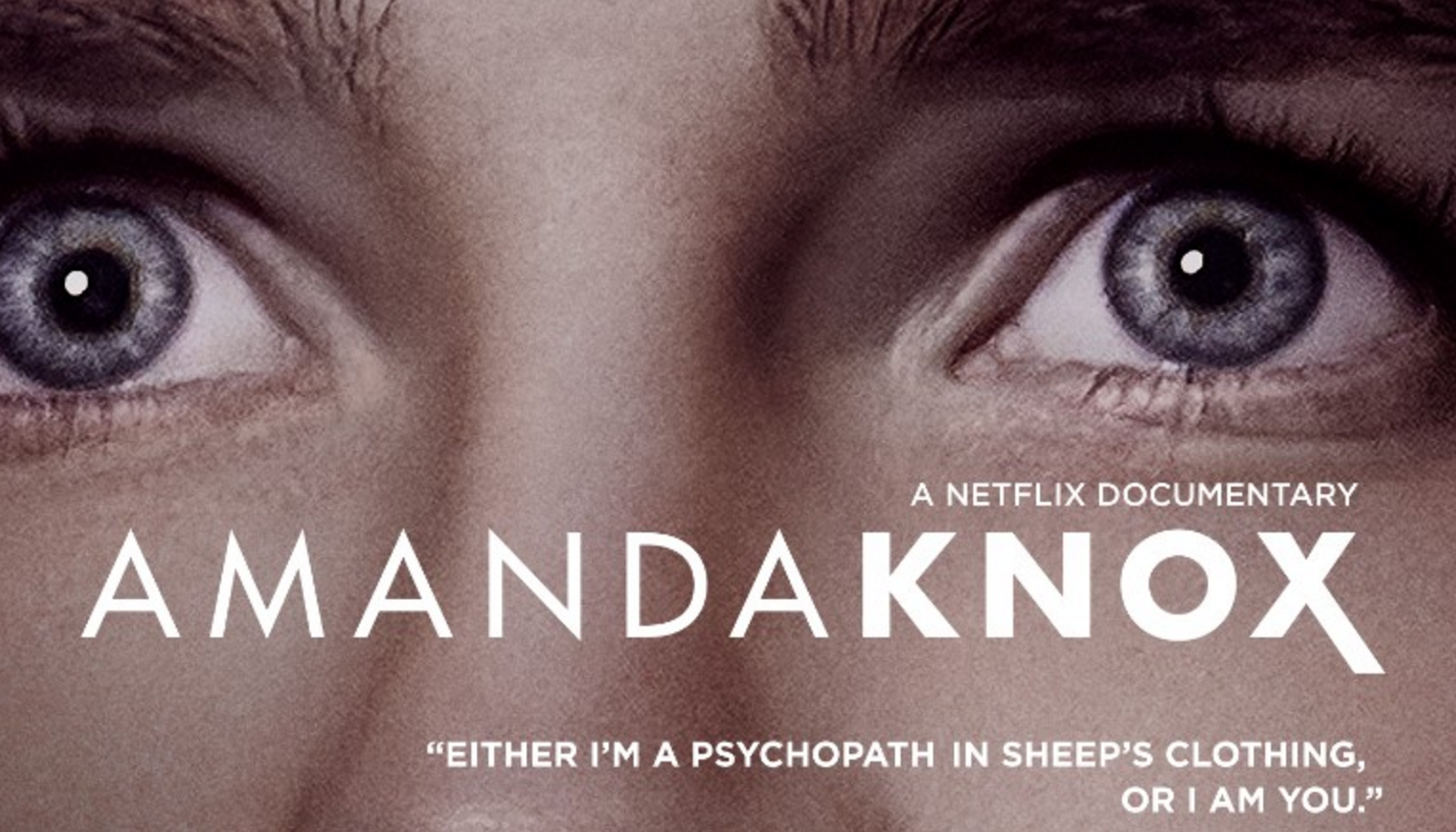
This was republished here as a sort of accompaniment piece for those of you watching Netflix's new documentary, Amanda Knox, which aims to uncover why the public turned a straight-forward case into a pit of sexism and injustice.
Amanda Knox is innocent of murder.
As a reader, you may have already chosen a side, since some have made this a battle of culture and evidentiary ping pong. Either you agree with my assertion of innocence or you don’t, but there’s a bigger social issue at play here: People’s lives are being ruined by sexism and lies.
I am making an appeal to all feminists and people of rational thought: We need to speak out, regardless of our beliefs. Beyond the fact that no credible or realistic evidence places Knox or her then-boyfriend Raffaele Sollecito at the scene of Meredith Kercher’s murder, Knox’s very average sexual behavior and our sexualization of her image should not be spearheading the campaign against her.
When I ask people what they think about the case, most of them say, “It’s obvious to me that she is innocent!” yet rarely do people discuss the treatment of Knox or the impact this case will have on others or society in general. Why is it OK to lie to someone about their having HIV only to attain a list of sexual partners which would then be leaked to the media? This is an example of systematic character defamation — the modern equivalent of throwing an accused witch into the lake to see if she drowns. What sort of pain must we put others through in order to forge our own versions of the truth?
Let’s pretend for a moment that Amanda Knox is guilty. Would her sexual partners or attractiveness matter? No. All that would matter is her culpability; you certainly don’t need to be pretty to commit murder. But the fascination and objectification of Knox’s "bad-girl" persona (when purposefully created and pitted against Kercher’s "good-girl" persona) has constructed a sort of cinematic set of lies. Is Italy afraid that a good-looking American girl actually isn’t a threat to the very fabric of modern society? It seems yes.
Knox and Sollecito’s lives will doubtfully be untainted by this miscarriage of justice, but we still can learn from the case. First, though, we should know how not to talk about it.
Just a few days ago, Jezebel — a blog for women — published a piece, "The 12 Ways We Are Amanda Knox." While the author, Tracie Egan Morrissey, believes Knox is innocent, the article is silly, lazy and downplays the significance of the issue. I have hope that feminist journalists will start taking this case more seriously. I have hope that we will consider the repercussions of sexism when we take to social media to discuss the case. I have hope that we can look past pot and sex.
If that seems judgmental, it’s because we as a society — and perhaps we as feminists — have failed Amanda Knox. People ask me why I care about this case. It is because I am a human and a feminist.
In 2007, Knox was being held in — and consequently convicted to — an Italian prison cell until her 2011 acquittal (she is now convicted again). In 2007, I was in college and I’d seen the headlines — things like Satanic Ritual Gone Wrong and Gory Sex Game Leads to Murder. I remember thinking, this just doesn’t add up. There’s no basis for this assumption! They said she was a liar, which reminded me of a time when I was much younger and dealing with a legal case. While my experience had nothing to do with murder, I was, for all intents and purposes, considered a liar, a young girl with a bad M.O. I was slut-shamed for reporting a child-molester. She has to be lying. She wanted the attention, they said. She made the other girls lie, too.
Why are we, as a society, so quick to sexualize and blame victims on the very basis of gender? Why must we live by some imaginary angel/whore binary?
This case jolts me in other ways as well. As an Italian-American, I am ashamed and saddened that this fiasco has painted, for some, a revolting picture of Italian culture. Italians aren’t barbarians without a sense of logic, but this case isn’t helping the image. The trial of Knox and Sollecito has exacerbated the idea that many Italians are operating a witch-hunt run by stubborn, macho and misogynistic character-assassins. I cannot help but agree.
When Italian authorities celebrated the capture of Kercher’s murderer early on in the trial (due to Knox’s forced false confession, which implicated her employer Patrick Lumumba) the Italian "authorities" were revered as heroes. They had "solved" the case! They had brought justice to poor Kercher, whose bloodied, battered body called for peace. More so, and perhaps more importantly, they had caught the attention of the world, who watched as the small, rustic city of Perugia closed the case on something truly awful.
Couple this false "triumph" (it was not Lumumba after all, but Italy was already boasting) with botched forensic analysis, undeniable Italian nationalism and a bad feeling about a pretty American girl, and you have a media circus.
The prosecution’s theories have changed and morphed over the past seven years; they’ve included sexual and Satanic motives (thanks to Mignini, the God-fearing prosecutor who has been known to use psychics as part of investigations), disputes over housework and personality and a spontaneous desire to kill. Just because the newest claims include a murderous "quarrel" involving stolen money doesn’t mean we should forget the storm of sexism that set the tone for the case.
Just last year CNN journalist Chris Cuomo glibly asked Knox on national television if she is a sexual deviant, and a California porn company offered her $20,000 to star in a sex flick.
"As you may have read, and were most likely well aware of, the general consensus is you are absolutely smoking hot," Michael Kulich, the company’s founder, wrote.
This offer made the news, sure, but the sad matter is that it barely shocked anyone. This is a woman whose life has been turned upside down by a wrongful conviction, and all we can think to do is comment on her looks? If Kulich sat in prison for four years for a crime he didn’t commit, would he think his gesture so clever?
Like all murder cases, the facts should dictate the proceedings. The defendants shouldn’t have to go on trial for their lives, their interests and their sexuality — especially when it doesn’t relate to the crime. But this isn’t a normal murder case. This is an inquisition.
One fact — perhaps the only fact we need to know — is that Rudy Guede murdered Kercher. Another fact is that he partied in Perugia and fled to Germany immediately after the murder. Yet another fact was that his DNA was found on Kercher’s body and in the room, while Knox and Sollecito’s DNA was not. Guede admitted to being at the scene.
The DNA evidence for Guede and lack thereof for Knox and Sollecito isn’t magical or a due to a fantastic bleach-clean-up (you can’t see DNA). These are simply facts that have been ignored, manipulated and lied-about, not only by the court but by lazy reportage.
Asserting that Knox and Sollecito casually, you know, joined a criminal for a night of murder-and oh, yeah, maybe a bloody orgy-defies logic and lacks motive. The “facts” have been manipulated to fit the "theory." In this case, 2+2=5.
Just look at this list of Knox nicknames. How is it that most revolve around her sexuality, when Guede is most certainly the rapist and murderer? Knox has been called everything from "evil temptress" to "Luciferina" to "she-devil with an angel face."
Why have we turned her into a filthy, sex-obsessed slut and why aren’t more journalists, writers, advocates and lawyers speaking up about this? Why should Knox have to explain her sexuality to Diane Sawyer?
This seriously flawed case is teaching us that we can be punished for being sexually active or good looking, and that it’s OK to draw parallels between "sexual deviance" and homicide.
This case hinges on not only ignored and circumstantial evidence but preconceived notions and cultural expectations of "the good girl."
First, there’s the case of Knox’s "offness." Salon.com writer Tom Dibblee wrote,
What’s compelling to me about Amanda Knox is that it was her slight offness that did her in, the everyday offness to be found on every schoolyard and in every workplace. This is the slight sort of offness that rouses muttered suspicion and gossip, the slight sort of offness that courses through our daily lives and governs who we choose to affiliate ourselves with and who we choose to distance ourselves from.
When people talk about Knox’s reaction, they’re placing a gendered expectation on her: Should she have been weeping publicly and often? Should she not have kissed her boyfriend? Would only a horrible she-devil derive pleasure while her roommate is dead in the morgue?
How we experience and move-through trauma is personal. It is not up to anyone to determine how one should behave during difficult times. Knox was 20 years old, an age somewhere between the never-land of youth and the terror of adulthood. Are we, as women, expected to be sensitive, sad and weak? I rarely hear critics discussing Sollecito’s post-murder behavior. So Knox did a split and kissed her boyfriend? I would have done the same.
All other "evidence" is circumstantial or forced.
A grainy CCTV video, "pale eyes," a school-aged nickname and a few sexual partners does not a murderer make. Most women I’ve spoken with have indulged in far more drug use and have had far more sex than Amanda Knox has had, but because this is a modern-day witch-hunt we’re talking about, Knox will continue being one of the most slut-shamed people in major media.
When you search "Amanda Knox" on Twitter, you’ll see just how angry, uninformed and irrational some people are.
And if the public is being fed inaccurate information by the media (because Italy’s judicial system is all about false and circumstantial evidence) they aren’t going to know how to discuss the facts either. Social media has made it easy to report error and exaggerate information, and we should be using it for good. We should be taking a stand against these sexist allegations.
However, sexism isn’t the only problem here. There’s the issue of race — only we’re focusing on the wrong elements.
When people talk about racism and this case, they point to Knox’s naming Patrick Lumumba as murderer. This is understandable without further information. Wrongful convictions based on race are all too common.
We should remember that Knox was interrogated for many hours without food or water. She was slapped and screamed at in Italian — a language she barely understood at the time. When the police found her text message (which said the English equivalent of "goodnight, see you another time") with Lumumba, they psychologically tortured her and coerced her into confessing that he was involved in the murder. If her text message was sent to anyone else of any race, the same would have occurred. She named him because they named him. More so, false confessions aren’t rare. According to the Innocence Project, "In about 25 percent of DNA exoneration cases, innocent defendants made incriminating statements, delivered outright confessions or pled guilty."
The real racial issue is this: Perhaps we wouldn’t even be talking about the Knox case if she wasn’t white and beautiful. This world spins on a white, heteronormative, image-obsessed axis, as does the justice system. In 2011, civil rights attorney Lisa Bloom told Larry King Live that society ought to be outraged by fact that pseudo-confessions and scant evidence would prosecute a young black defendant but slide under the radar of major media. Bloom is right. We need to stop paying media attention to only those cases where white is the central color. We need to be open to our flaws as people and as a system in order to jumpstart any change. We can begin by speaking up.
When we learn how to fairly talk about this trial, we will be able to see clearly — or at least as clearly as possible — through the mire Italy has left in its wake.
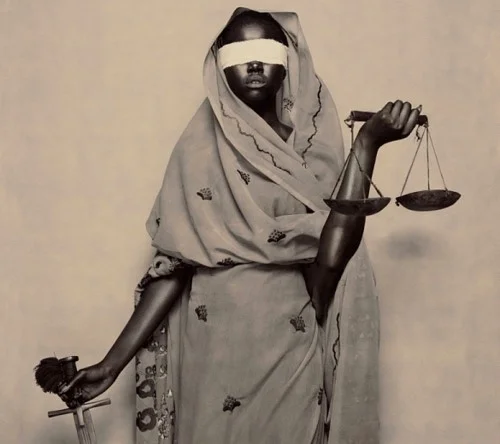
via Pinterest
The Nuance of Guilt When You're Part of a Jury
In this room full of strangers we are dominos: like first pairs with like. The least dissimilar pieces connect over the obvious and arbitrary. If our identities possess any intricate craftwork, it has been blurred and obscured and forgotten. Now we are distracted by the markings on each other’s faces, by the brushstrokes that have painted over all of our messy and complicated humanness.
Read More
Noukka Signe
This Is My Secret That I Live With Every Day
Listening to my social work colleagues talk about clients: "She is nuts," "She is crazy," "Psycho!"
Shhhhh, stay silent. I have a secret.
Read More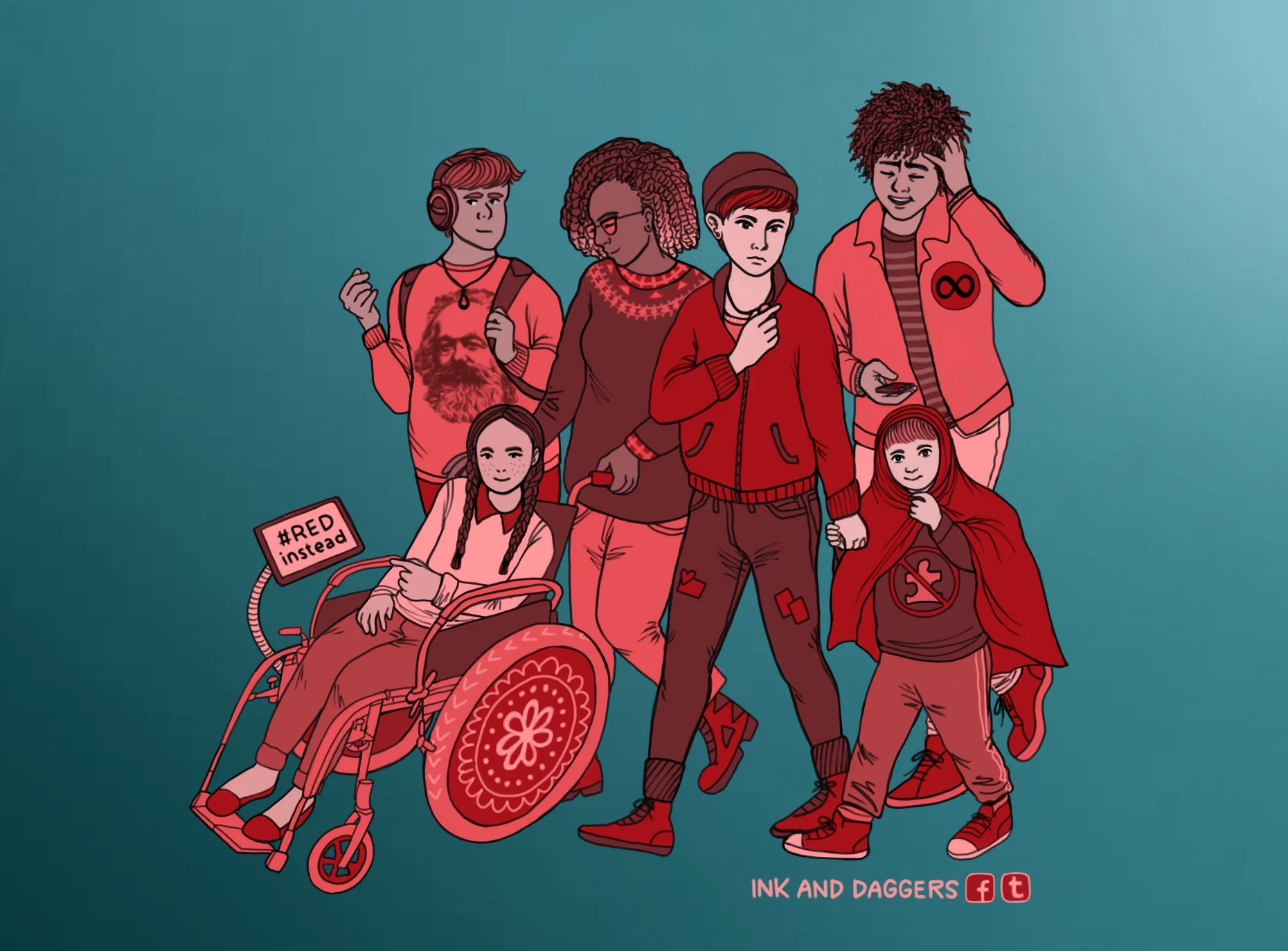
Art by Meredith K Ultra
I go by Meredith K Ultra or Ink and Daggers. That's Ink and Daggers, not Ink and Free Cinnamon Rolls. I think of my art as high tech digital finger painting collage cartoons. My work relies heavily on reference material and are drawn on my iPad (mostly in the Procreate app) with my finger. I stopped using a stylus because my toddler liked to chew on them, and I prefer having to rely on as little equipment as possible to make my art.
Read More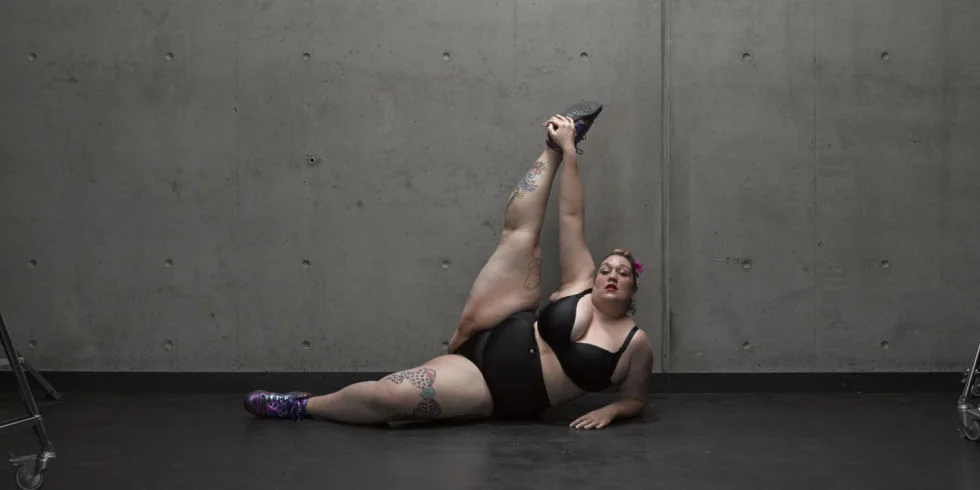
COURTESY OF TOBY BURROWS
Yes, I Am a 'Fat Girl'
Yes, I am a fat girl. Yes, I am a lazy girl. I have heel spurs. May they ache some more. Suffering is the sole root of my consciousness. So, how have I been 100 lbs overweight? 100 lbs that has made my metabolism and hormones permanently out of whack, and gave my face a beard thatI had to shave every day? Oh yes, suffering is the sole root of my consciousness. My consciousness began with a lie, a lie that I should be treated like a human being.
Read More
Lisa Marie Basile / thedarkpart
Pretty Soon I Will Put These Ghosts To Rest
We never went hiking, and the idea of never going hiking together is what broke my heart the most.
Read More
Christiane F. (1981)
The Word 'Slut'
I am 15 years old, and the word "slut" is already part of my everyday life. I remember the first time that objectionable word slipped out of somebody’s mouth, soaring in my direction. Piercing me. I could not feel anything, except for my stomach dropping.
Read More
It Was Romance Releases New Song + Shot By Shot Remake of Fiona Apple's Criminal
BY LISA MARIE BASILE
If you're reading this website, there is an 99.9% chance you were obsessed with Fiona Apple's Tidal. Because you're an angsty dreamer just like me. You probably also think "This world is bullshit." If so, read on!
Lane Moore – writer, comedian, musician and all-around amazing lady – is in a pretty amazing band, It Was Romance (Lane Moore, Alejandro Triana, Angel Lozada and Jeff Connors). They're celebrating Tidal's 20th anniversary – by releasing a shot-for-shot remake of the Criminal video to their own song, Hooking Up With Girls. Yay! Watch it below.
Also, I talked to Lane and she told me all about her music and love for Fiona:
You have so much going on. Tell me a little bit about why you guys started It Was Romance.
I've been singing and writing and recording my own music since I was little. It Was Romance actually started as my solo project where I played all the instruments and sang and layered everything on my computer. It's kind of a name like "Cat Power" is. Everyone told me I should just go play shows by myself and try to do it all, but even if I was writing all these songs and could technically do it by myself, I'd always wanted to find the right musicians to play with. It took me years and years to find the people who play with me now and the second it all fell into place I was like, "YES! Good. Great. OK, let's make this record." I wrote a lot of these songs before I even knew these guys existed in the world, so to finally see everything taking off with the right people is so satisfying.
It's the 20th anniversary (I am so old) of Tidal. It was the second cassette I owned and hearing Never Is A Promise as a wayward little goth made me who I am today. How did this album impact you growing up? What about today? Why is Fiona Apple just so goddamned amazing?
Fiona Apple has always been a huge influence on me, personally and professionally. I just think she's incredible and I relate to her on so many levels. When The Pawn was actually my gateway album and then I went back to Tidal after hearing that. I listened to both nonstop for most of my childhood and teen years and still listen to them all the time. She's just such a powerful singer and songwriter. I once heard one of the Crutchfield sisters (from PS Eliot) say something on Twitter like, "If you don't think Fiona Apple is punk rock, get away from me." It's so accurate. I get very intense on stage when we play live shows and I'm sure seeing her do the same at a young age gave me the freedom to show that intensity in my music and my performances.
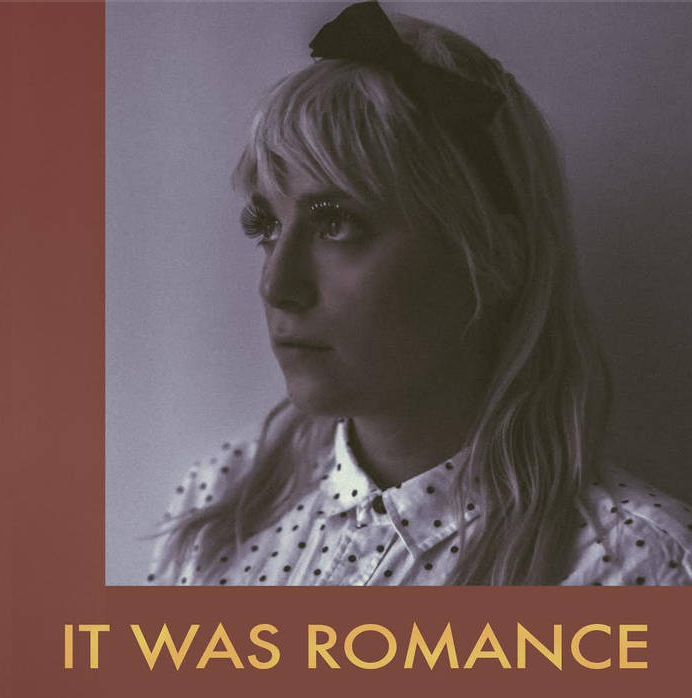
How do you think Criminal video stands up against all the music videos out there today?
It holds up incredibly well. You look at a lot of the way we're advertising things now and so much of it looks like '70s porn.
What are some upcoming projects for your band?
I've been writing about 2-3 songs I was happy with per week since I was a kid, so I've always written them faster than any of my band members, past or present, could learn them. I have easily over 300 right now that I'd happily record in the studio/release tomorrow if I could. I'm really excited to make the second IWR album and keep making videos and touring and opening for bigger bands. All of it. I'm ready. [Follow them on Bandcamp, Facebook & iTunes]
What's coming up for you?
So many things. Maybe sleep eventually, but I doubt it.
PS: It Was Romance is playing Aug 17 @ Cake Shop in NYC and Sept. 30 @ Pianos in NYC.
What Donald Trump Has In Common With Fifth Graders And The Book of Genesis
Linguists have had a field day with Donald Trump. His speeches are geared for a fourth-grade reading level, with very few four-syllable words. He doesn’t use any complex sentence structures. His vocabulary is notoriously poor and centers around a few repetitive words such as "tremendous" and "problem." Most insidious of all, he ends his rambling nonsense with words such as "problem," "liars," and "losers"--which is what most of his viewers eventually take away from his speeches. I never thought I’d see a presidential candidate make Dubya look like an eloquent orator, but here we are.
Read More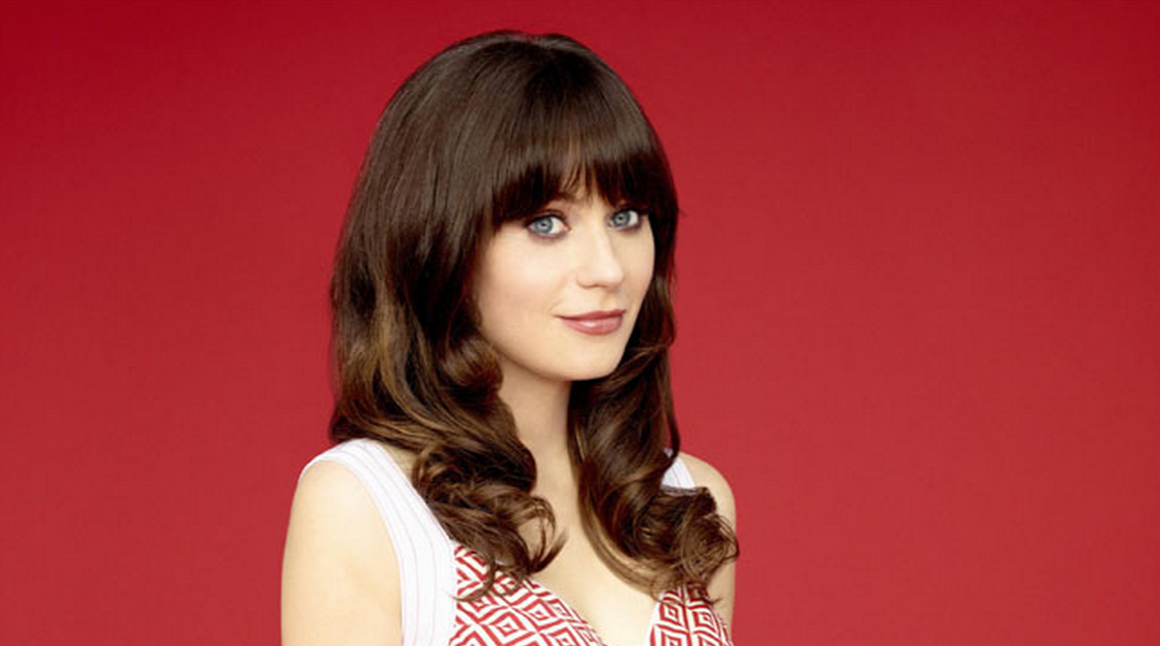
Type 'Quirky' into Google Image search. You'll find a whole bunch of Zooey Deschanel.
What Does It Mean When We Label Women & Artists as 'Quirky'?
What does quirky mean, really? Who gets this label, and why? And what are the real consequences?
Read More
Interview With Meg Ross, Founder Of The Nooky Box
We’re basically saying, as a company, we’re recognizing that everybody’s having sex, it’s always been happening. We think that everyone should continue to do it and talk about it in a really healthy way so that you can enjoy it more, not feel ashamed, not feel embarrassed, and really just enjoy yourself. That’s our philosophy.
Read More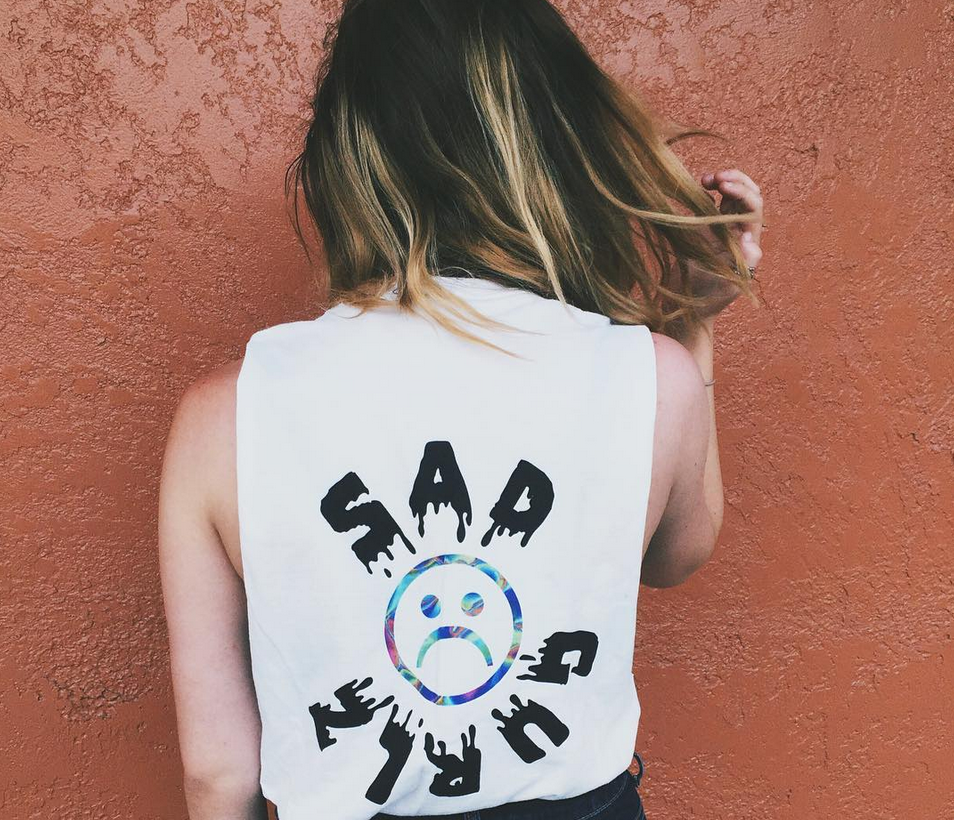
Stop Telling Me To Smile: 2 Rad Parsons Students Photograph Sad Gurlz as A Reponse
BY TABITHA SHIFLETT
If you’re a woman, then you’ve probably experienced the whole You Should Smile More charade. We’ve heard it all before – those gross, sexist comments ranging from, “Life isn’t that bad, honey!” to the plea, “Smile!
Usually, a man, grinning ear-to-ear like a Cheshire cat, is behind this annoying string of cliché phrases just waiting for us to have an epiphany – thanks to his underhanded compliment – and smile like we’re told.
Fed up and completely unamused with what society has dubbed as “resting bitch face,” Parsons photography students Sam Lichtenstein and Jess Williams took matters into their own hands.
The cheeky photo collaboration, “SAD GURLZ,” is a collation of portraits of bold, badass women redefining what it means to have a poker face – or just a face that walks down the street, minding its own business. Radiating rebellion, the images project power and major self-respect.
Both Lichtenstein and Williams spoke with an air of certainty and seriousness.
“We tell our models to look as bored, unamused, and annoyed as possible,” says Lichtenstein. “Which is contrary to how women are normally portrayed in photos....Women are always being told to smile, whether it’s in a photo or when they are just walking down the street, so we want to push that idea aside.”
To become a SG, models must apply via an online form with a theme and color backdrop in mind. Each model is accompanied by a short narrative further explaining the meaning of their photo.
Model Ana, who posed with a handful of Wendy’s French fries, writes "I'm a SAD GURL because eating healthy is the new black. Personally, I'd pick chicken nuggets over an apple any day.”
The photoshoot is a two-step process – once the accepted candidates are photographed against the background of their choice, a compilation of items that correlate with the theme are also shot. The two photos are then displayed side-by-side on the SG website, Instagram account, and Facebook page.
“It’s hard being a woman and even more so for those in the LGBT community,” says Williams. “We want SAD GURLZ to be an outlet for all women to speak out without actually having to say anything.”
The project began in February as an online photo album. But once word got out, the dynamic duo found their inbox overflowing with inquiries. They participated in Parsons' PHOTOFEAST, a bi-annual pin-up exhibit open to New York photography students. That was in April.
“We’re in contact with an all-female gallery in Tempe, Arizona and there’s talk of doing a collaboration and having our very first SG gallery show,” says Williams. “There’s also a magazine based in Spain and Belgium that plans on featuring us and our work.”
And, as if that wasn’t exciting enough, the two say they’re in the process of publishing a 75-page book that features the models they’ve photographed thus far.
“It feels so good to have our work recognized by the people around us,” says Williams. “But, it’s exhilarating to find that our work is being acknowledged by others across the country and the world.”
Fans can currently pre-order the book on the SG website.
Tabitha Shiflett is a graduate of the Dub (The University of North Carolina Wilmington, UNCW). She's written for Her Campus, Seahawk Chic, CBSLocal and Elite Daily. She is currently enrolled in the Creative Publishing and Critical Journalism MA program at The New School in New York City.
How My 85-Year-Old Mom Rebooted Her Modeling Career
BY ANNA MURRAY
“Does your mother have an agent?” the creative director asked.
Eileen Ford died two years ago. “Um. Not at the moment.”
“What about travel to Paris? Is she up for it?”
I was waiting in line for chopped salads. Ninety seconds prior, I saw the overseas number and answered my cell phone. Now I was talking to a woman from my past about pitching my mother and me in a global ad campaign.
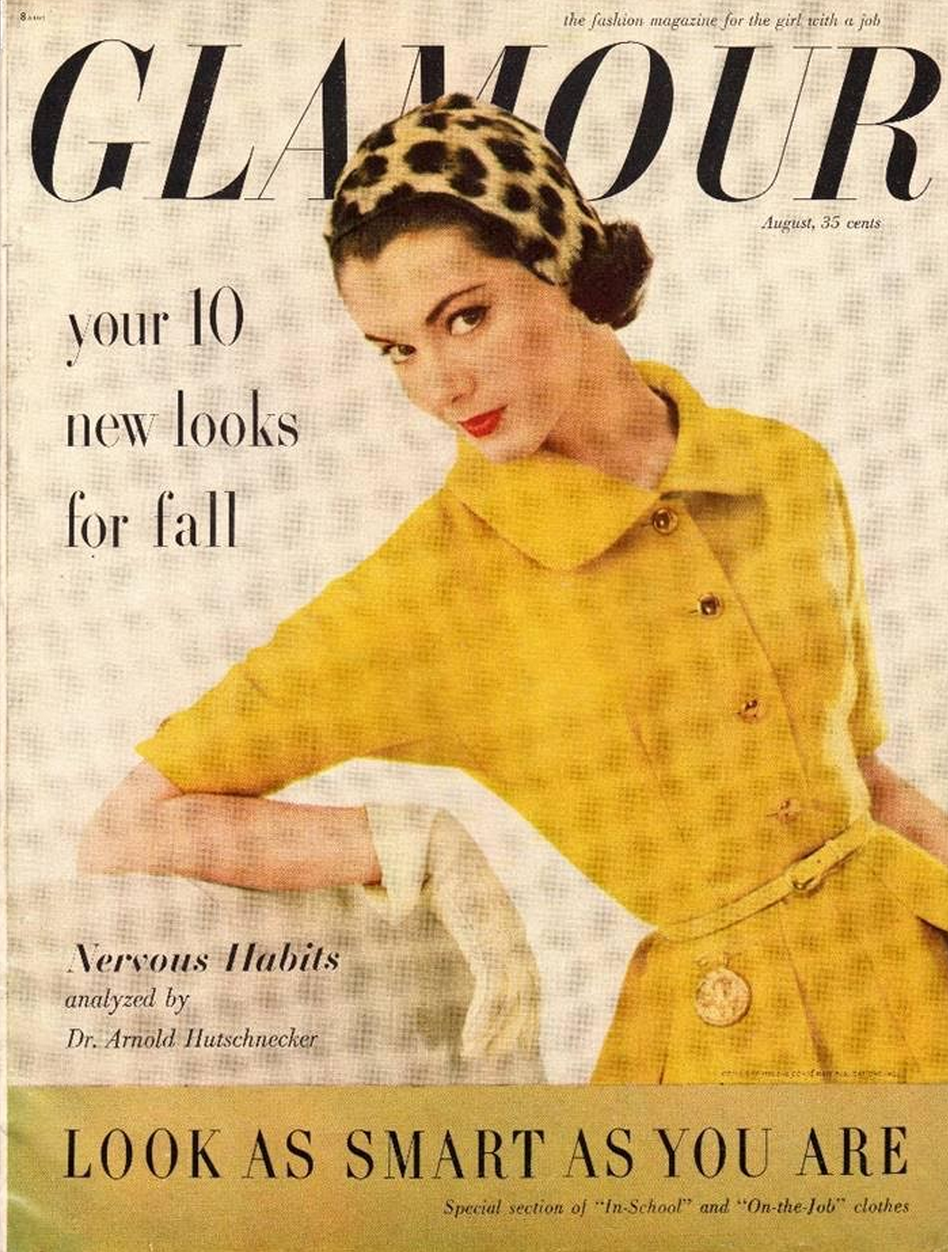
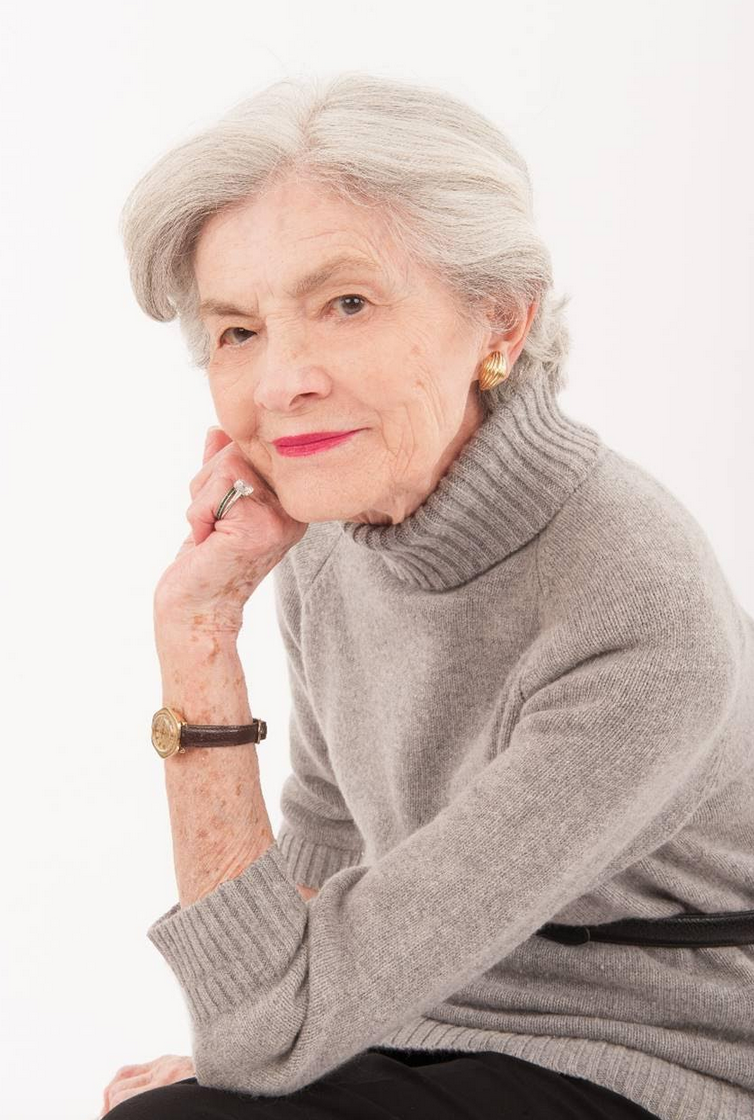
A photo essay I wrote for Vox was going viral. It was about my mom, Patsy Shally, a former world-famous fashion model.
From 1948 through 1960, my mother was the apex of commercial beauty – young, thin and exquisite. Discovered at 13, she was a top model for Eileen Ford, on the cover of practically everything. She went for screen tests with Rock Hudson and one-on-one interviews with legendary Hollywood producer Melvyn Leroy.
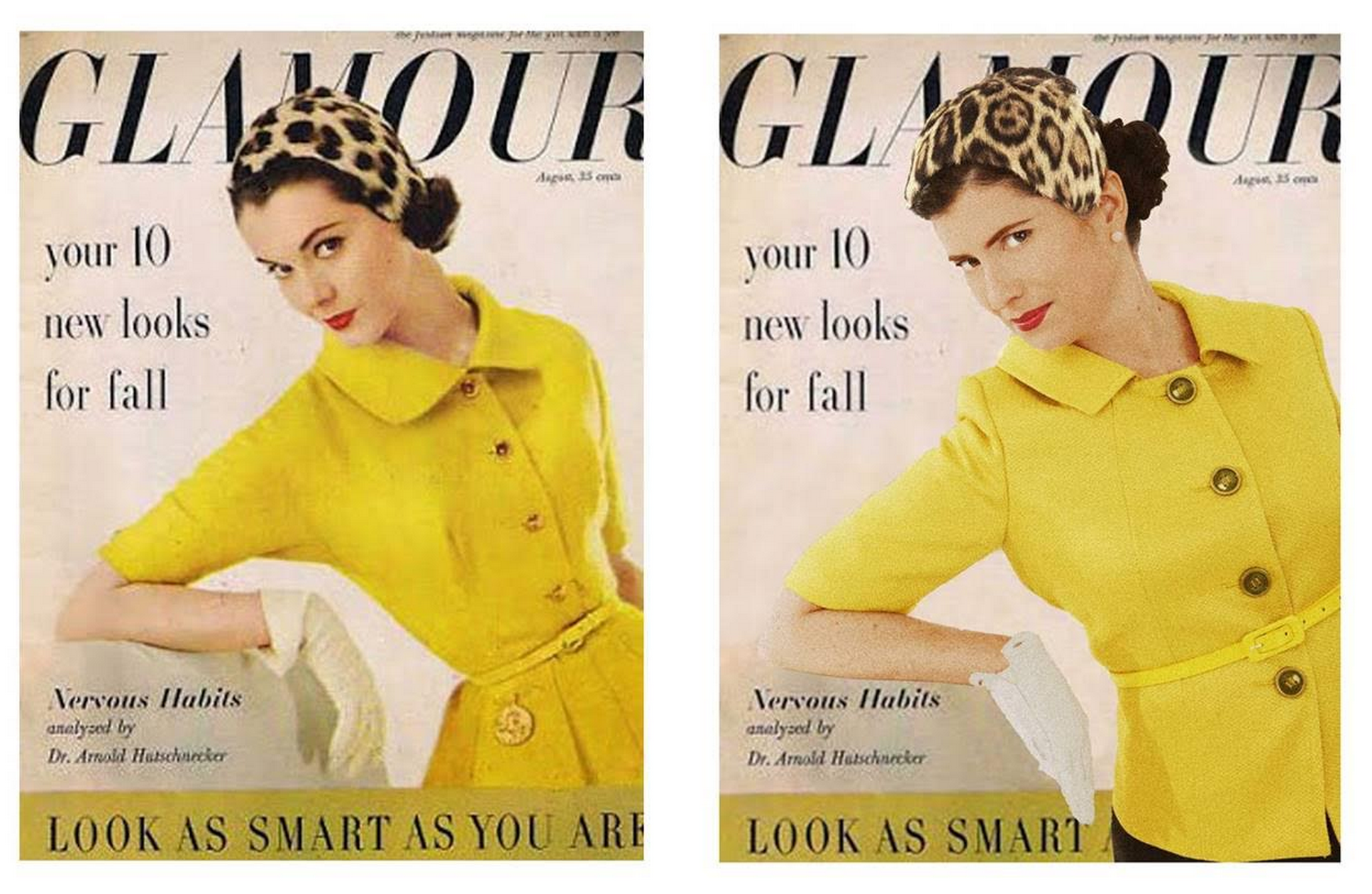
Mom and I recreated her most famous Vogue, Glamour, and McCall’s covers. The piece I wrote was about beauty and aging.
A particular series of photographs was drawing the most attention: our twist on my mother’s 1956 Irving Penn Vogue cover.
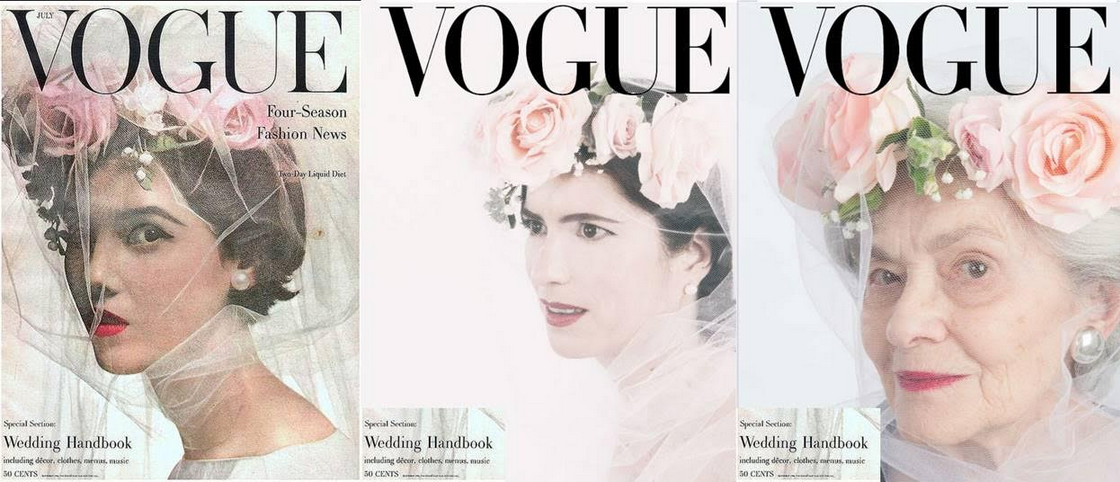
It is July 1956. Mom is the fresh bloom, the ingénue and prize in marriage. Today, on the brink of turning 50, I am the November rose, the last of summer. At 85, Mom is still gorgeous. She is the petals pressed in a diary.
“The elderly shouldn’t be invisible,” Mom said. “We matter.”
It was clear from our photo shoot Mom, at 85, still “had it.”
The project hit home. We were picked up in the Daily Mail and ran in their network worldwide. We were being tweeted by Racked, by Newsweek and by the producer of Rizzoli and Isles.
People were contacting me from all nooks and crannies of my life, including Sam, a long-past acquaintance, and the current creative director for an international ad agency. She said our story resonated. The brand was thrilled. We could be big.
“I think she can probably travel,” I answered. Mom has her frail moments. But we were talking Paris.
“I’ll need whatever additional photos you have. Also traffic and social shares.”
Over the last few weeks, Mom and I had received hundreds of comments from people who said our project touched them.
Here’s what I found most surprising:
· People called us “fearless.”
· People said they cried.
· Men said the essay touched them.
· Someone suggested my mother might be the next Mrs. Donald Trump.
Mom and I had joined a great zeitgeist-y army of age-barrier-busting beauty warriors. There was Elon Musk’s mother, 68, now elbowing out Botox blondes for ad campaigns. And Vogue putting a 100-year-old on its cover for their 100th anniversary.
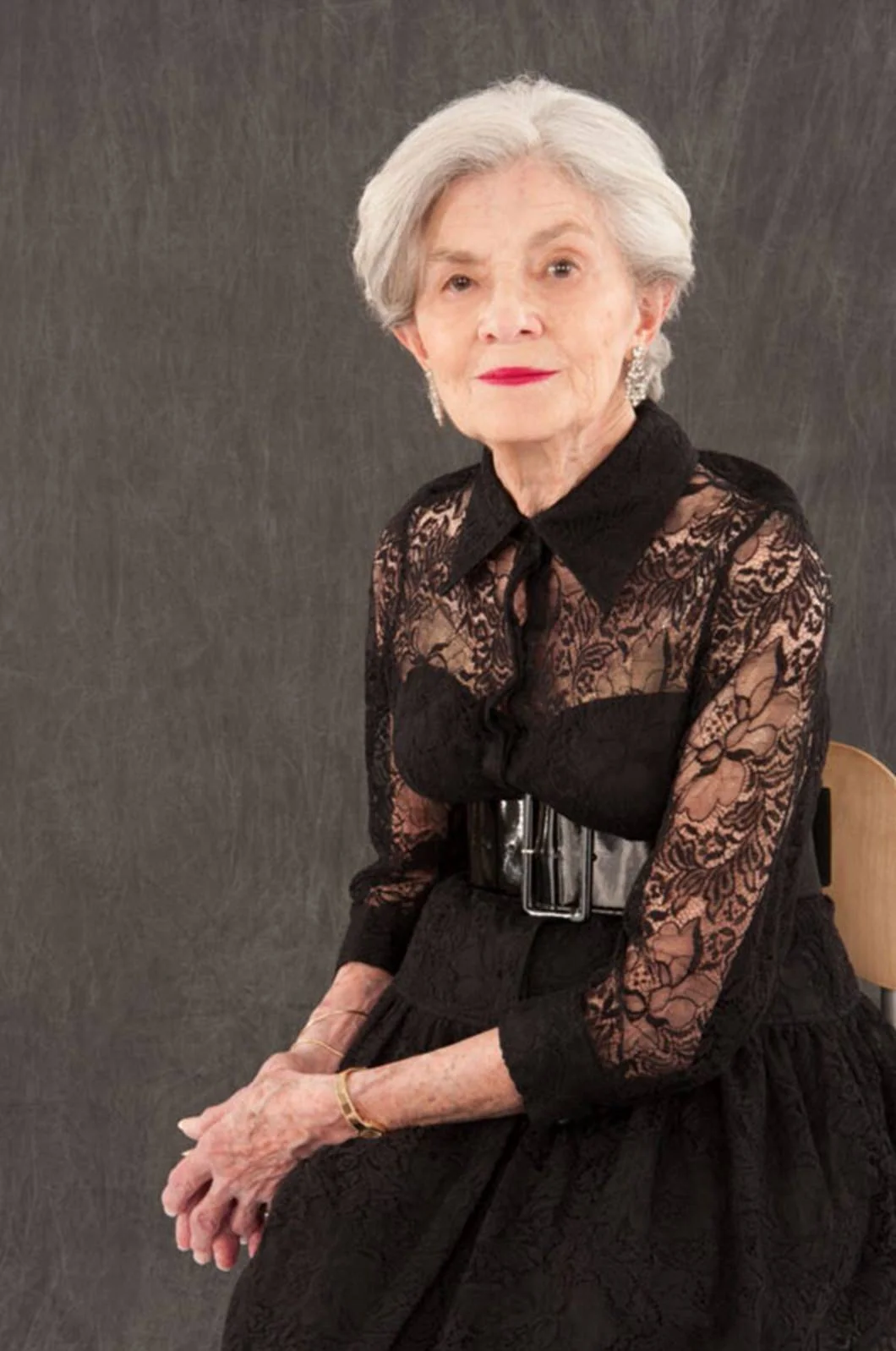
“It's important that all women and consumers are featured on the runway and in advertorials. Women of all ages wear clothes- why should they be left out?” said fashion designer Carrie Hammer, famous for her recent fall 2015 show called, “Role Models Not Runway Models.”
“Your recreations of your mother’s covers are a powerful message of love, courage and understanding,” said Nyna Giles, author of the upcoming book The Bridesmaid’s Daughter.
Giles was one of the most amazing out-of-the-woodwork surfacers. Her mother, Carolyn Scott, modeled with mine. Giles book recounts her mother’s career, including Barbizon roomie Grace Kelly. It will be published by St. Martin’s Press next year.
It’s important, Giles said, even at this late date, to give our mothers their names back. “They were the first super models. Today they would have been household names. But back then, only the photographers were credited.”
A modeling job in 2016 would be quite a capper to Mom’s career. What a terrific irony: My mom, who defined the mainstream ideal of youth and beauty, was challenging that very ideal in her 9th decade.
The next few weeks were ferociously busy. Sam’s team prepared the pitch and she contacted me daily for additional information—copies of comments, web stats, requests for more photographs. Dad, 88, got their passports renewed.
Mom was calm. She knew the gig, literally, despite the 56-year gap between this and her last job. She only asked, “Did they say how many days would we be working?” There would, after all, be shopping to do.
Then, a week ago, Sam said the brand in question was favoring an alternate concept her agency had pitched.
I was disappointed. Mom shrugged: That’s life in super model fast lane. Sam salved the blow by saying I would be shocked and “so proud” once I knew who actually got the job. “You won’t believe who you were up against and almost made it!”
Who could it be? I conducting a quick survey of Mom’s and my new fans—asking them to guess who won out over us.
“Lord, I hope it’s not Kim Kardashian and Caitlyn Jenner!” Howled one. That might rattle even professional Mom’s sang froid.
Here are the guesses. The leading candidates for Mom’s and my nemeses:
· Gwyneth Paltrow & Blythe Danner
· Goldie Hawn and Kate Hudson
· Isabella Rossellini and Elettra Rossellini Wiedemann
· Ellen & Betty DeGeneres
· Madonna & Lourdes Leon
· Jerry Hall & Georgia May Jagger
· Iman & Lexi Bowie
· Jada Pinkett Smith and Willow Smith
· Twiggy and Carly Lawson
· Zoe Kravitz and Lisa Bonet
· Anderson Cooper and Gloria Vanderbilt
I’m keeping watch on Ad Age to see if someone gets it right.
In the meantime, we are receiving other interesting nibbles. And Mom could really use an agent.
Anna Murray is CEO of emedia, llc., a technology consulting company, and a writer. Her essays have appeared in Vox, The Daily Mail, Soundings Review, Piker Press, Adanna, and The Guardian Witness. Her recently completed new novel is represented by David Black Agency. It features a once-famous model and her look-alike daughter. Her non-fiction title, The Complete Software Project Manager, was published in January 2016 by John Wiley & Sons. One reviewer commented, “This is a technical book that reads like a novel.”
Anagnorisis: Rebirth in Recognizing Your Truth
My arms yearned for these strangers, these men and women who walked in the shadows of their minds, feeling alone, feeling as though they did not share a thread with any part of society.
BY S.K. CLARKE
I am a firm believer that humankind requires food, water, shelter, and intimacy. After our stomachs are full and our bodies are kept warm, we desire the ability to be seen by another human being, to be heard and understood.
The pivotal moments in my life have centered on someone acknowledging my self, the oft-guarded soul that is tucked away from casual observers. Often the other’s ability to see me results in an enlightenment; a move from shaded reality to exposed self-truth. It is important to note that this truth is not always beautiful. We may not always be ready to accept the knowledge when it is thrust upon us by the seeing few, but it is honest and bears the weight of import, all the same.
Aristotle called this moment of self-reveal or recognition, anagnorisis. Often in Greek tragedies, the protagonist is in the dark about some aspect of their being. InOedipus Rex, Oedipus was ignorant to his truth: he had killed his biological father, married his biological mother, and gave her children.
In the case of Oedipus, his understanding of self, both what he stood for and who he was in society, came with the reveal of his paternity. But what’s interesting to note, is that the audience was fully aware of who Oedipus was long before the big reveal. The Greek people were a learned audience who had seen these stories play out several times before. The Oedipal legend was old and the men who had gathered to see the play performed would have known the ending before the characters on stage would live it. The reason they went was in order to see which playwright wrote the best version; which Oedipus would spark something new within the audience.
In this I find a unique formof anagnorisis that can only be found in art: a recognition of ourselves within the creative minds of the artist.
This movement of self-knowing from the external to the internal can often be found in the paintings, the music, the poems and stories that traverse time and space to enter our psyche through the crackle of a record player or the luminescence of a Kindle screen. Lyrics and verses and compositions and brushstrokes that navigate time, space, and language to knock at the cement fortresses within our souls and say, “Hey, I know you. You are not alone.”
For me, there has been a therapy in the words of Neil Young, Billy Joel, Damien Rice, and Ray LaMontagne. Their lyrics call to me, assuring me that someone somewhere has been a miner for a heart of gold and they, too, see me in all of my vulnerability, in the darkest places where my self lies hidden from the daily world. Their careful placing of syllables and emotions finally, exuberantly, pitifully give voice to all that I’ve been wanting to say, whether I knew it before or not.
I’ve found it in the carefully constructed words of authors Sherwood Anderson, Edgar Lee Masters, and Colum McCann, the dark despair of poetess Christina Rossetti, the inspirational instruction of Brené Brown. Within the isolated activity of reading, within their solitude of writing, I found a piece of myself. A communication between myself and an unknowable stranger who, reaching across distance, reaching beyond death, declares that they see me as I am and have shared in what I have felt.
As an educator, theatre artist, and writer, I often strive for this feeling of communion with my students, aiming for them to experience the power to be known. I hope that in the pages of dramatic literature, my students and actors can say, “In this, I see me.” I hope that they can find the human in all and through that magic of recognition, they will see themselves in Stella, Ophelia, and Everyman. And, perhaps, that Stella, Ophelia, and Everyman will cause them to see humanity within themselves.
Through this seeing, this knowing, a beauteous progress is made. Stagnation is held at bay and something entirely cosmic enters into our lives, whether we expected it or not.
As an instructor, I often do not anticipate this progress to be made in my own life. I have read Hamlet no less than thirty times. For me, the recognition has already been made and now I get to enjoy those steps in my students.
However, when I began directing a play this past semester, I was shocked to find that art still had more to show me.
The play centered on the cycle of abuse within relationships, both romantic and familial. A young wife is beaten within an inch of her life and through a series of increasingly absurd circumstances, is all but forgotten by the end of the play. Both she and the brain damage she possesses are erased from the family’s consciousness. The end of the play leaves the audience with the impression that the mental and physical abuse done to her is doomed to be repeated because it has never been fully addressed.
The artist in me latched on to the uncomfortability of this, the unfinished, unpolished ending that would remind us all that abuse knows no happy conclusion. I wanted the audience to feel embarrassed and uneasy, hoping that through some self-reflection they would see abusive behaviors in their own lives and after much thought, seek to eradicate them.
The future mother in me, however, felt that I personally needed to create a positive change in the community. I needed those who I worked in and around to know that this did not have to be the answer: that cycles can end and progress can be made to heal, to repair.
Encouraged by projects such as Humans of New York and PostSecret, the drama club and I worked together to place boxes throughout the college campus, asking for students, faculty, and staff to submit their “secrets,” their moments of abuse, harassment, or discrimination in hopes that, through the sharing, they would gain back a voice they did not feel they had.
Over the course of three weeks, we received over 150 responses. A few of the posts were drawings of a penis ranging in anatomical accuracy, but the majority of the submissions were heart-wrenching confessions of disease, abuse, insecurity, and desire.
“I feel like I have no true useful purpose and no true direction,” one submission said.
One confessed: “I forgot my little sister’s birthday.”
“I suffer from claustrophobia because my father used to lay on top of me,” exposed another.
Many revealed a long-harbored affection toward their best friends while others admitted to instances of infidelity. A large majority dealt with mental illness and some confessed the wish to end their own lives. One revealed that they were HIV-positive.
My arms yearned for these strangers, these men and women who walked in the shadows of their minds, feeling alone, feeling as though they did not share a thread with any part of society. Perhaps feeling that no one could empathize. No one could understand.
But I am writing this today to tell you I do understand. I do see you. I get it.
As I paged through secret after secret, I felt an unexpected click of recognition, a cracking of my defenses, a revealing of my truth. Many of the secrets dealt with rape. Many of those same confessions were also partnered with the statement that they had not told anybody, some for many years. Some had not mentioned their abuse until they had put it down on the slip of paper I now held in my hand.
I did not submit a secret to the project, but if I did it would read: I was raped and for three-and-a-half years I believed that it had been my fault.
I was staying at a friend’s family home in Italy. My friends and their family were all tucked away in their beds. I was downstairs being raped.
The guy was placed in my path deliberately. He was supposed to be a good flirt. A morale booster. He was not supposed to sit on my chest and force himself in my mouth. He was supposed to hear me when I said no. He was supposed to stop. He was not supposed to tell me that I deserved it, that I had led him on, that I had to finish what I had started.
I was not supposed to believe him.
But I did.
For years I believed that it had not been rape. It should have been more violent. I should have had scars. If it had been rape, I would have fought harder. The only rape that counted was the violent kind, not the kind that left me asking him quietly to stop, lest I wake anyone.
And so, I remained silent. I did not speak up about what had happened, did not utter the “R” word. I did not tell my friend who had slept upstairs. She had seen me flirt with him earlier in the night and I assumed she would think I was a tease. I didn’t tell my grandmother, though I called her the minute I got back to my apartment. I wanted her to hear my voice. I wanted her to fix what had broken inside of me. She had sounded tired when she had asked me if something was wrong and I chose not to burden her. She was going through chemo after all, and I felt that I was just another whore. I did not tell my mother who holds the key to most of my secrets. I was her good girl, not a sexual being who would be found in those types of situations. In my journals, I remained dumb. In therapy, I skirted the issue.
But as I sat there, holding the secrets of strangers in my hands, I felt the crack of anagnorisis, an understanding of my truth, of what I am and what I stand for.
“I see you,” I said to the anonymous submissions. “And you see me. You never deserved this. You are not wrong. You are not dirty. You are a victim.”
I am not talking about rape culture in America, extremely prevalent though it is. I’m not going to talk about how politics and the media make it difficult for victims to come forward, as was the case in Oklahoma and Brigham Young University. I won’t mention how rape is normalized in television shows such as Game of Thrones or how the porn industry seems to capitalize on male sexual aggression against often unwilling women. Nor will I mention that out of every 100 rapes, only two rapists will go to jail.
This is about finding those men and women who are afraid to view themselves as victims, those who feel alone in their stories of abuse or harassment. You may never hold 150 secrets in your hand, but you now hold mine. What I ask is that you see that unlike the me of three years ago, I now know that I never deserved what was done to me. I also never deserved to hold it within me in silence. I’ve acknowledged that no matter what I was wearing, no matter how I had been conducting myself prior to the incident, I had not given consent. I did not say yes and something that was precious within me was taken and tarnished. I was raped.
You, too, do not need to hold yourself in the shadows.
Whether you suffer from debilitating depression, whether you have experienced rape, sexual harassment, physical or mental abuse, or dependency of any kind, you are not alone. Your secret does not make you any less deserving of love, nor does voicing it admit any weakness. Through using your voice, by putting the words on paper, or sharing your story, you can begin the healing process.
The Aristotlean definition of anagnorisis is often associated with tragedies: King Lear realizes that Cordelia’s love is the truest only after she has died, Nora’s desire for self-knowledge causes her to abandon her husband and children, Bruce Willis discovers he’s dead in The Sixth Sense.
I would like to argue that there can also be a rebirth in the recognition, a happy ending. Only through the dead of winter can we prepare for the blossoming of spring. Only from the gravel can we build a foundation. Only from the ashes can the phoenix be born again. And only through recognizing your truth can we grow, learn, and heal as a whole.
S.K. Clarke is a writer, adjunct professor, and theatre director in Pennsylvania. She has earned her MA in Text and Performance from London’s Royal Academy of Dramatic Arts and her BFA in Acting at Philadelphia’s University of the Arts. Clarke is a writer of poetry, plays, and short stories focusing on the disintegration of small-town America, social and political injustices of minorities, coming-of-age and end-of-life narratives, and stories featuring complicated and strong female characters. She is currently writing her first novel which, she hopes, will touch on all of the aforementioned topics.