


...a feverish quest for youth and beauty.
Read MoreVia On the Fringe Cinema
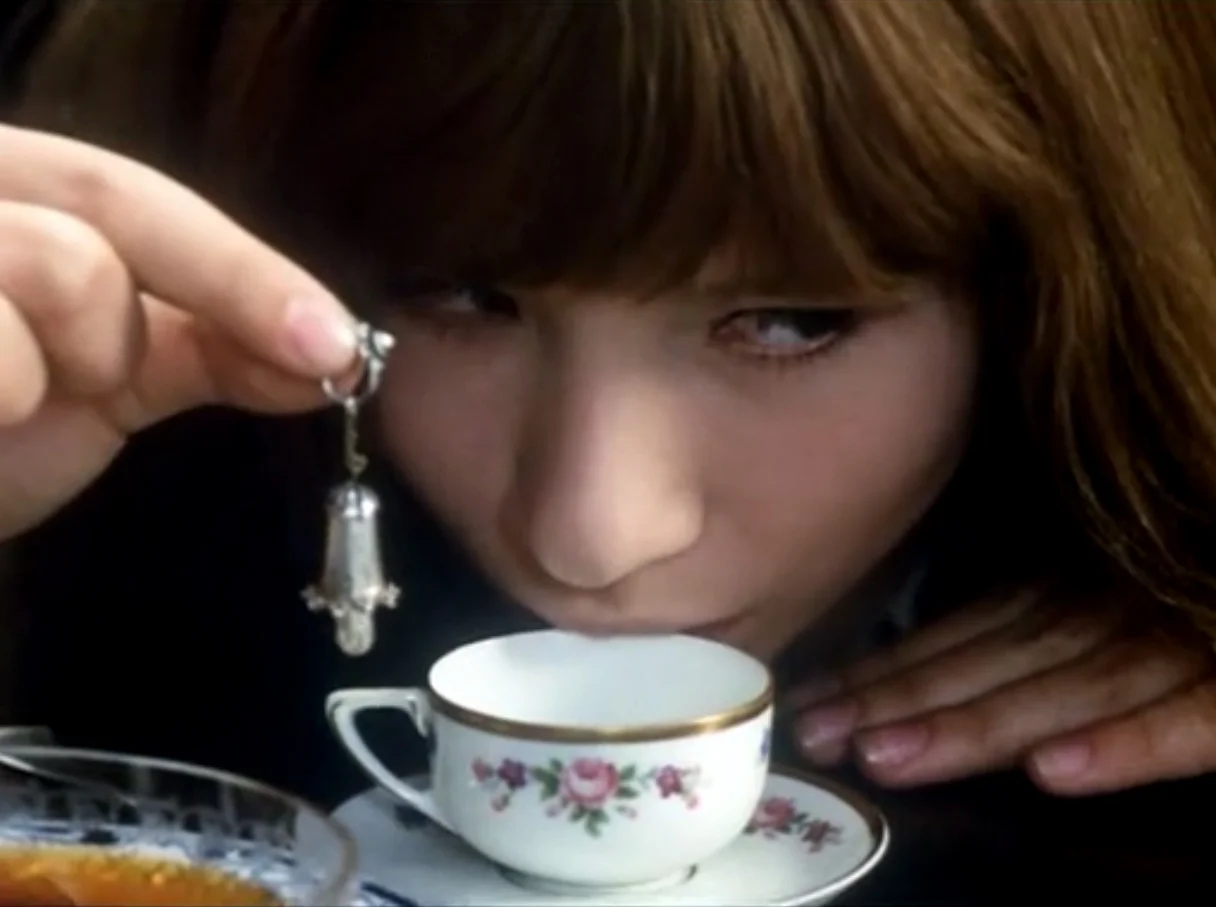
Via On the Fringe Cinema
...a feverish quest for youth and beauty.
Read More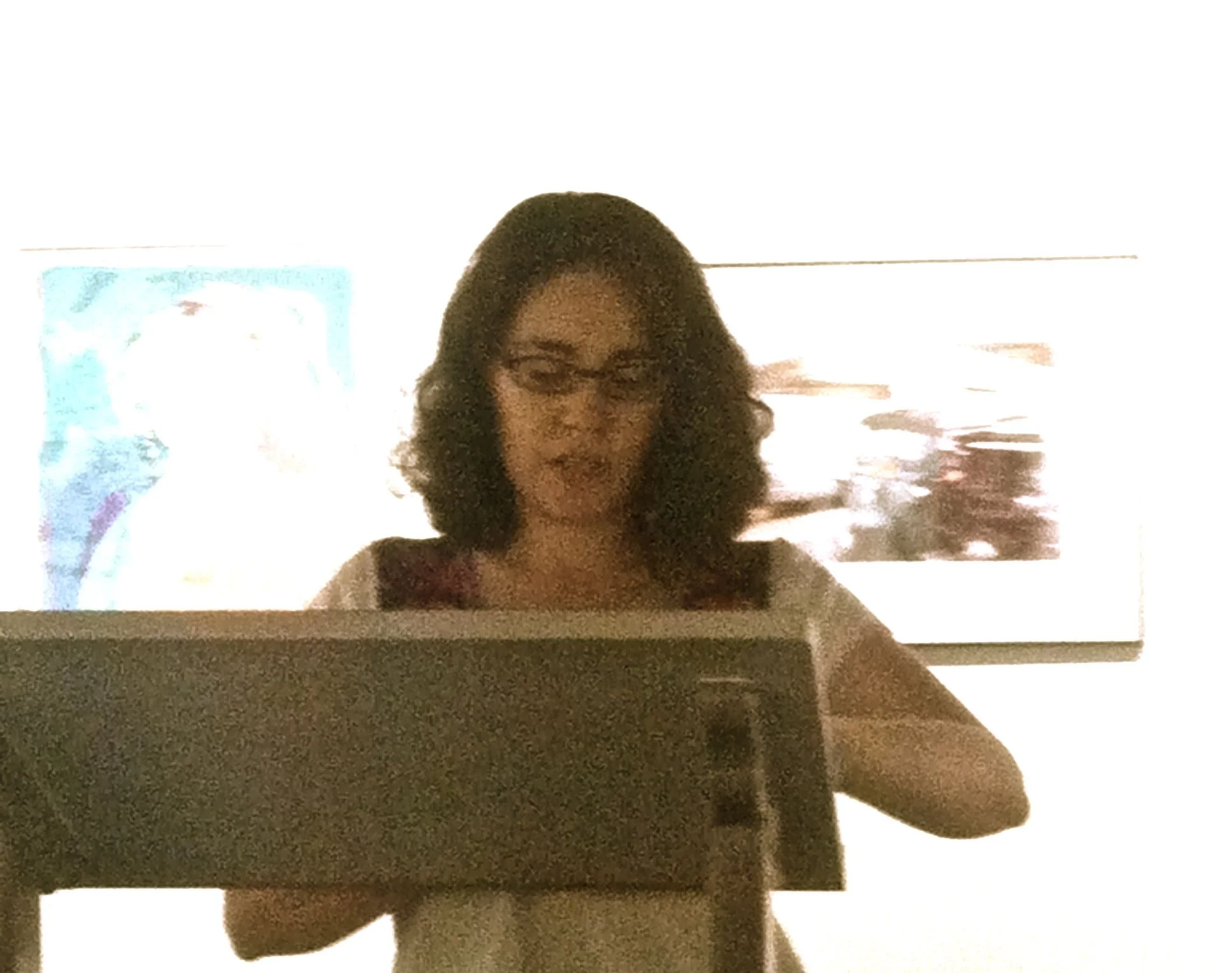
She always looked for beauty. She looked for beauty everywhere.
Read More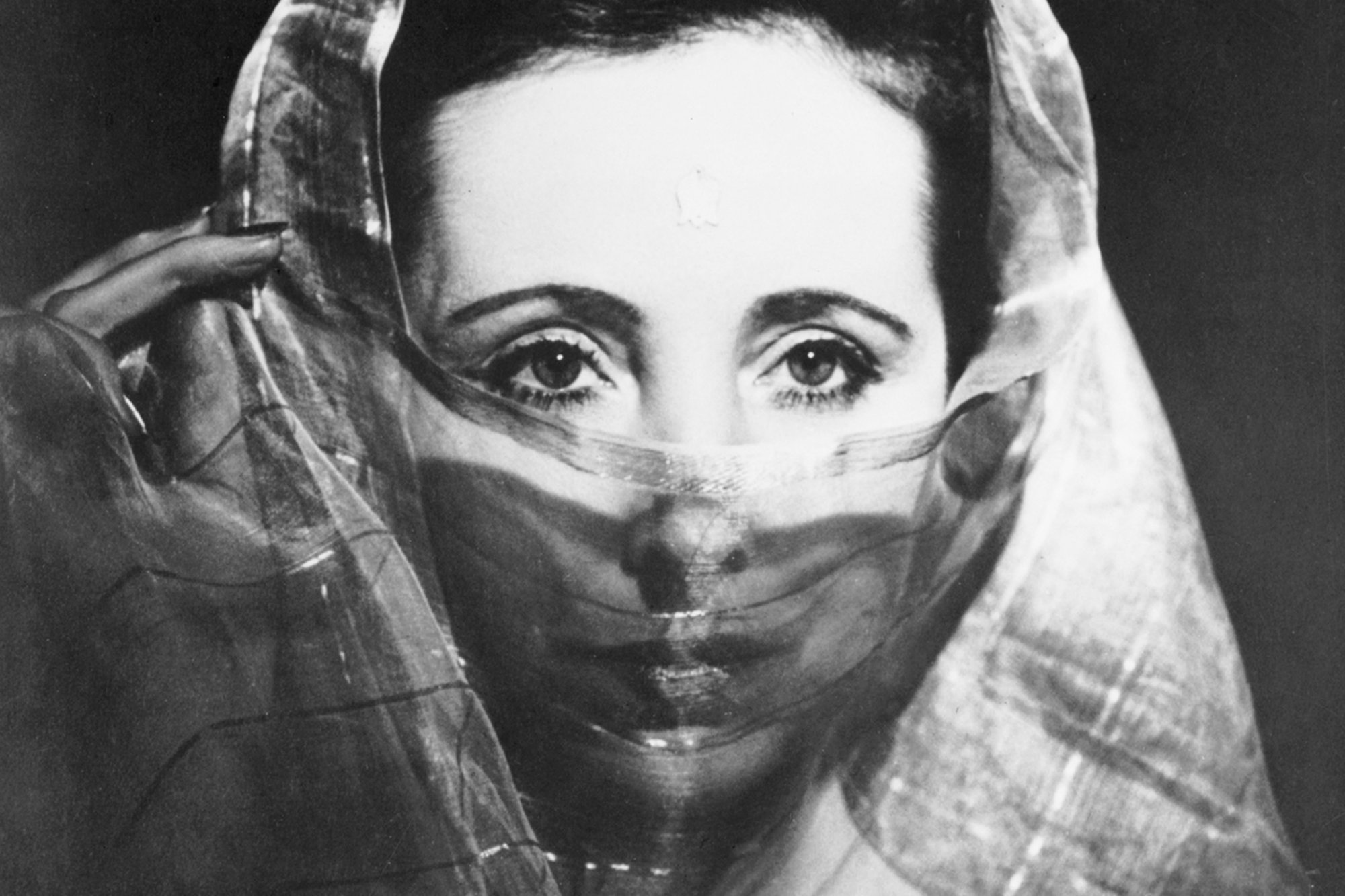
Via The Daily Beast
BY LISA MARIE BASILE
Downtime is a divine thing. Downtime as in the purposeful act of taking time off, or the involuntary act of retreat. But it's often treated as creative stagnation. Dead air. Lack of inspiration. Or the dreaded maxim, "Writer's block."
As a writer, I am always in a state; that is, we all are. I am never outside of a condition — especially the conditions that create writing. You know this feeling. If it's not conception, it's development. If it's not development, it's editing. And so forth. But writing — with all of its heart and death, all of its starts and stops — is the same as day and night — which can’t exist without the other.
Yet, we’ve come to burden ourselves with the idea of necessary production. We feel guilt when we aren’t active. We use the phrase "writer's block" as if the natural state is to be a continuous pouring thing; we throw around "writer's block" as if we encountered something that wasn't meant to be there. A cancer. But writing isn't magically exempt from the laws of gravity — up and down, and so forth.
Our light slowly fades when we pressure ourselves too much. When we can't break the 'block', we start to ask questions: What's wrong? Why can't I just use my stress as a catalyst? Maybe I'm not a writer anymore? I haven't published in a year! And like most fools, we rarely imbue the wisdom to know the difference between simply being burned out and burning ourselves out. We are, after all, alive. There are things of money and family and health that sit by, prodding our creative centers, hexing them, lighting them up — or shutting them down.
So, we flail. So many of us aim to “stay in the game” in ridiculously tiresome ways — when we’re not writing, we’re reading. And when we’re not reading, we’re retweeting the statuses of others who are. And we call these things 'citizenship' — we promote these acts — as truth. But we’re constantly a foot in and a foot out because we fear stepping out too far. Would we simply disappear? If we’re not making some sort of noise, does our voice even matter? Is there even a voice at all?
It is the nature of humanity to want to be productive, to give, to make something of our existence. As creators, the impulse is doubly strong; it’s almost divine, irrational. It's like having two bodies — the one we're in and the one that lives in our heads. Maya Angelou wrote, "There is no greater agony than bearing an untold story inside you.”
Our health — mental and physical — hinges on creating. Our faith, our hope, our livelihoods depend on our creating. We lose a sense of aliveness when we’re not living up to it. Because it is a gift and it must be recognized as such. We’re like sexless animals when we’ve gone without for too long, but even temporary abstinence (both proverbial and literal) has been known to clarify. Sometimes this agony is part of the process.
***
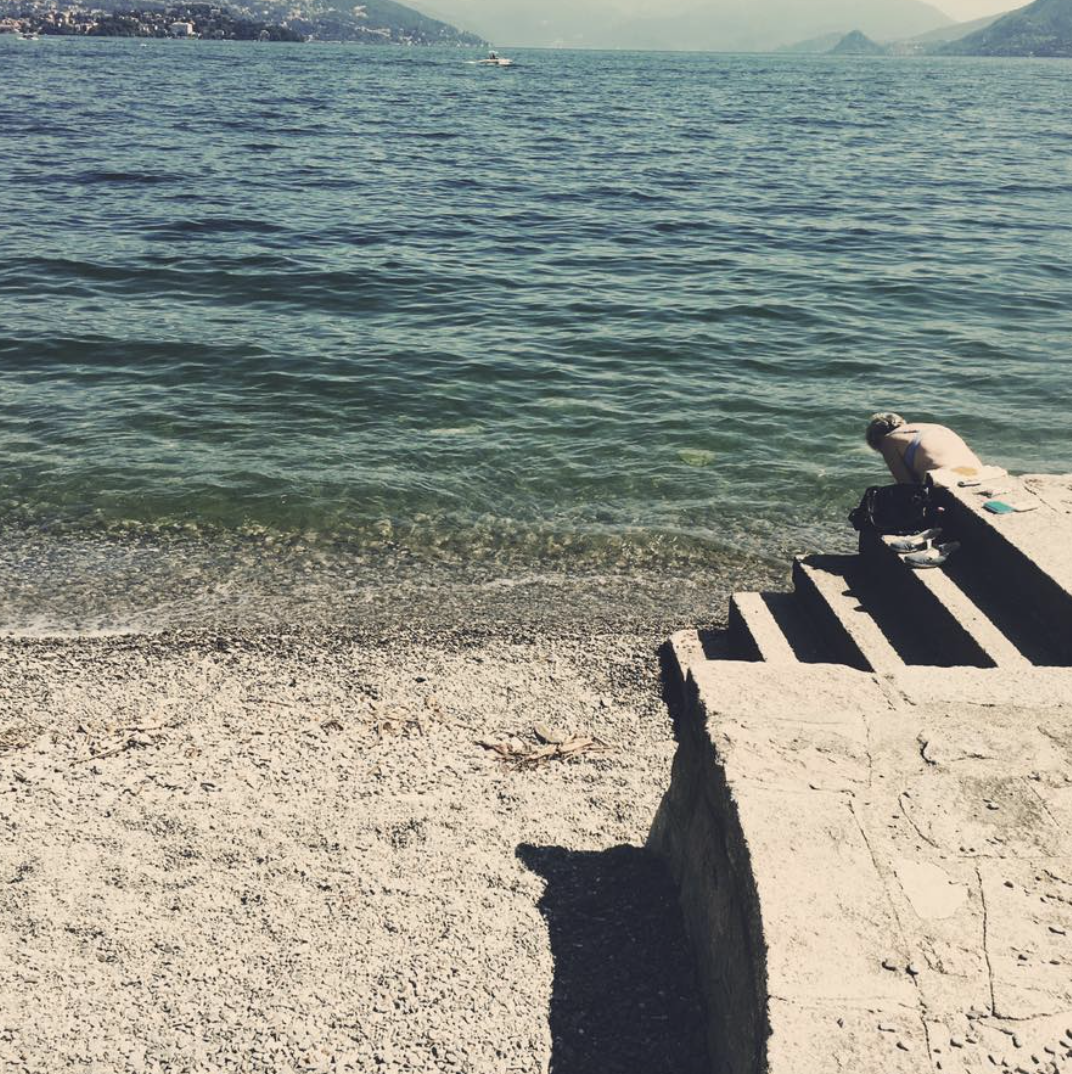
This summer, I was lucky to visit Stresa, Italy, in the Alps. I sat, nightly, at the same bar (in the Grand Hotel des Iles Borromée) Ernest Hemingway sat at in September 1918. He was 19, back from the war, recovering from his wounds. It was in Farewell to Arms that he’d written about the Grand Hotel des Iles Borromées, its enchanting qualities, the same I swooned over. We were both disarmed by the flora of Italy and opulence of this town. But I couldn't figure out what to say. What do you say?
At Hemingway's bar, I took out my notebook; the waitstaff brought me wine and green olives and peanuts, and the pianist played to a room of glass and gold and velvet. I thought, “This is it, this is the time to write!” but nothing came. I forced it, milked it — and it shriveled up: my small, scared, pathetic little voice. Who was I if not inspired by a place so dear to my ancestral self? Why wasn’t I a writer anymore? Where did I go? What the fuck?
Like we say, writing is a gift, but greater gift is to be alive — and perhaps to be in a position that allows us to write and publish freely, to be healthy enough to write, to be privileged enough to buy books, to love ourselves enough to do it.
We are humans before we are writers or artists. And we must feed the humanity in order to do what we do and do it well. So, there are two types of hunger — the kind that feeds you (life) and the kind that inspires you (creativity). They don't exist alone.
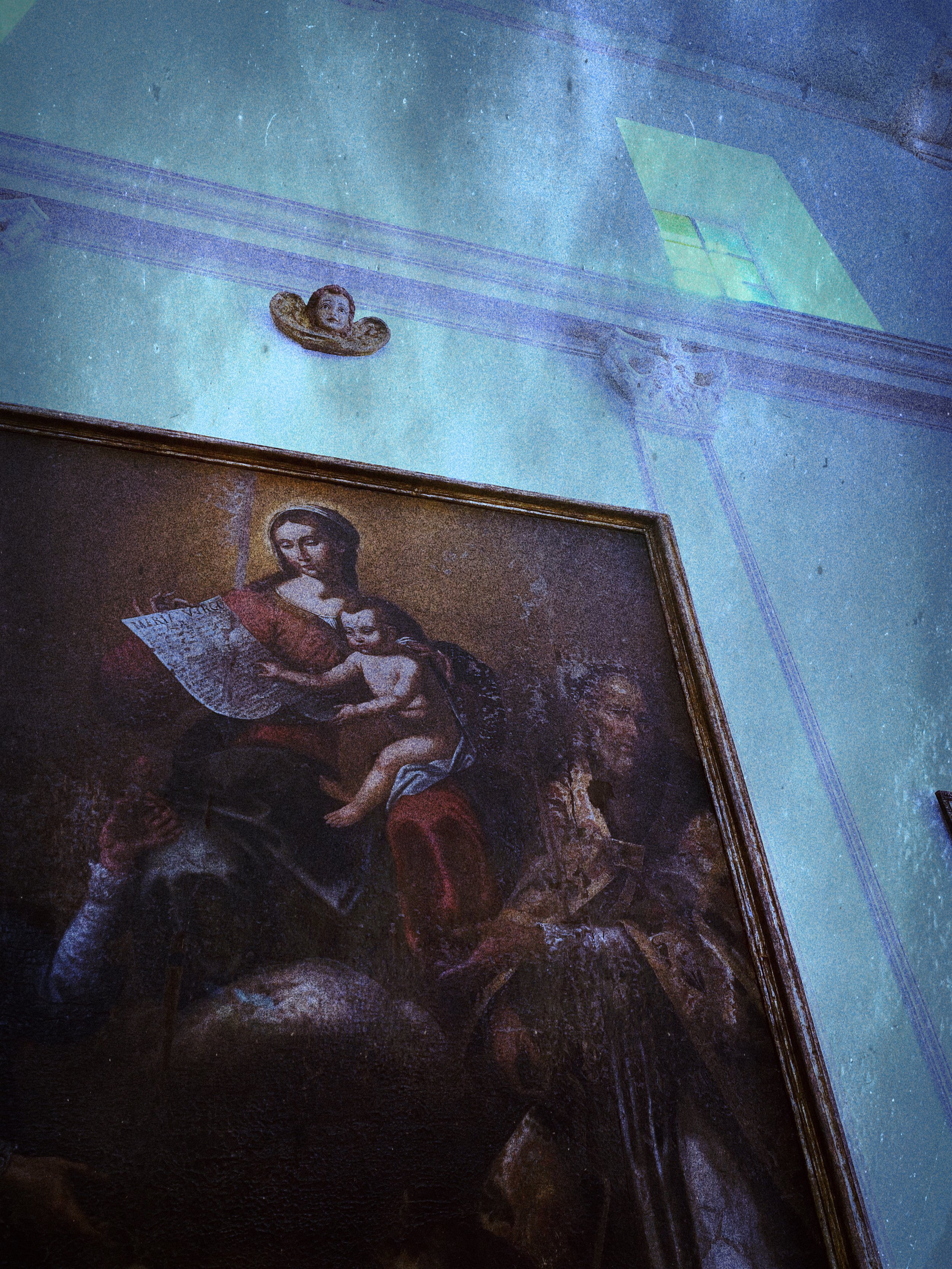
So instead of writing at that little bar there — the broken record that I was — I simply let it be. The room enchanted me. There was the elevator with the cherubs atop the door, as if you could ride up into heaven. And the grand lake outside the window, and all its little islands. The way the waiter looked lonely as he refilled our drinks. That was the writing. It didn’t need an act.
***
In the fall of 2014 — so, two years ago — my first full-length collection made its way into the world. For me, it was momentous. The young girl I was — the one in foster care, the one who saw her parents taken by drugs — she was the one who benefited the most. She had survived and turned all that darkness into something else, something honest and lasting. It was exhilarating and validating — but there was this grim dankness hanging over it all. The very act of publishing somehow turned it into something else — this disease of What shall I follow this up with? How soon do I publish again? set in. Another one of my writer friends summed up her post-partum book experience as, "So this is it, huh?"
Years before then, in graduate school, I’d check my email compulsively: Did I get an acceptance? Did I get rejected? My sense of self-worth was irrevocably attached to this idea of producing art — I mean churning, churning, churning — and having it be accepted by some small part of the masses. It made me real. To not be prolific was an insult to my body, my heart, my ancestry, my whole life.
This need to produce, to do more, to get more, to be bigger — is somewhat illusory, isn't it? Success is relative, and often it's defined by parameters that don't sync with the purpose of art. The writing is the core act; everything else is periphery — or should be. Being so focused on the more, more, more can get in the way of the writing. I eventually, in the past two years, got so fed up with the whole idea of producing work and sending emails and doing promo interviews that I stopped writing poetry, stopped submitting, stopped thinking about the whole thing of it.
I’d transmorphed into commodity — and I put myself there! There was a stink of careerism to it, which would have been wonderful if I had let myself be me — instead of the thing I thought I should be. A machine. Because the business of poetry has always eluded me; I am not a natural networker, I don’t care to promote people who I will benefit from promoting and I’m disinterested in popularity. If you've ever talked to me in person, you likely know this.
Eventually, it was all a cycle. My "muses" had abandoned me. I hadn’t let myself stop. Think nothing. Stop doing. I hadn’t let myself live. When I began saying the break was good, healthy _ something that didn’t even need to be defined — the concept of the misanthropic self faded away and became the self that needed a break. To engage with being alive. Watching the success of others was a pleasure. A year in the literary world meant new journals, new writers, new awards, new reading series, new opportunities — and I let them all just be. I didn’t engage. I was happy to disrupt the literary fear-of-missing-out and exist outside of it. I still am.
This doesn’t work for everyone and it’s not a necessity by any means. Everyone has a different process. But when I hear writers say things like, “I suck — I haven’t submitted work in months” or “I feel like there’s so much amazing work out there and I have nothing to contribute,” the impulse, in me, is to say, “that’s OK.” Maybe you aren’t ready right now. Maybe those poems could do with some time. Maybe you don’t need to be always on. Maybe you can enjoy a day at the park as a human. Maybe you're not actually writing your best work when you're trying to send something to every corner of the Internet?
Because work — real writing work — doesn't mean empty work, or keep-up-with-the-Jonses work or work for work's sake. Sometimes a writer works hardest when they're doing nothing at all.
We need time off — from art, from ourselves, from our own trappings. Morning pages and scheduled writing hours and writing groups and workshops all exist to stimulate the writer, but what if we didn’t subscribe to the notion of a solution? What if it wasn’t even known as hybernation? What if we just normalized the nothingness?
***
This past year, the wave broke and I began writing again. It wasn’t a chore nor was it an absolute pleasure. It wasn’t always fruitful nor was it a failure. It was just a thing. A doing.
Eventually, I began writing more and more, but not as a “writer,” just as myself. The knowledge that the writing was my own was freeing; I wasn’t stocking it away or adding to a manuscript. I was just in the art itself.
And there was a distinction, for me, between writing for joy and writing out of compulsory need — but I found myself somewhere right in the middle. It’s as if a sex drive came back. Naturally. Without guilt. Because I had given my mind and body the space it needed without the nagging little fuck me, write me, fuck me, write me voice haunting over me.
On that remarkable freedom of writing for the self, Anais Nin wrote, in On Writing:
“Of these the most important is naturalness and spontaneity. These elements sprung, I observed, from my freedom of selection: in the Diary I only wrote of what interested me genuinely, what I felt most strongly at the moment, and I found this fervor, this enthusiasm produced a vividness which often withered in the formal work. Improvisation, free association, obedience to mood, impulse, bought forth countless images, portraits, descriptions, impressionistic sketches, symphonic experiments, from which I could dip at any time for material.
The Diary dealing always with the immediate present, the warm, the near, being written at white heat, developed a love of the living moment, of the immediate emotional reaction to experience, which revealed the power of recreation to lie in the sensibilities rather than in memory or critical intellectual perception.”
That love of living in the moment brought me tremendous healing. It validated me more than any set of publication credits could have, as claptrap as it sounds.
What had I learned? Three things — 1) that the process was so much more authentic when I wrote for myself, 2) that the result — my work — was so much more thoughtful than the factory line poems I could have churned out because some journal happened to have an open reading period and 3) that writers must value their non-writing time.
To be satiated with — or to embrace — a state of downtime is, in some sense, an act of revolt. To quiet and listen, or to not listen at all, to refuse to play by the rules, to not be led by praise or artifice— and to instead be motivated by simpler means — is a radical act. It is not easy. It may not even be necessary for everyone. But for those who have trouble disconnecting from the rules, for those who can’t find a lit path back to sincere creative energy — it may be worth it to say, “Fuck it. It’ll happen when it happens.”
Lisa Marie Basile is the founding editor-in-chief of Luna Luna Magazine and moderator of its digital community. Her work has appeared in The Establishment, Bustle, Bust, Hello Giggles, Marie Claire, Good Housekeeping, Cosmopolitan and The Huffington Post, among other sites. She is the author of Apocryphal (Noctuary Press), war/lock (Hyacinth Girl Press), Andalucia (The Poetry Society of New York) and Triste (Dancing Girl Press). Her work can be found in PANK, the Tin House blog, Spork Press, Best American Poetry, PEN American Center, The Atlas Review, and the Ampersand Review, among others. She has taught or spoken at Brooklyn Brainery, Columbia University, New York University and Emerson College. Lisa Marie Basile holds an MFA from The New School. @lisamariebasile
BY KAILEY TEDESCO
*Please note that there are some scene descriptions here, which may constitute a spoiler for some.
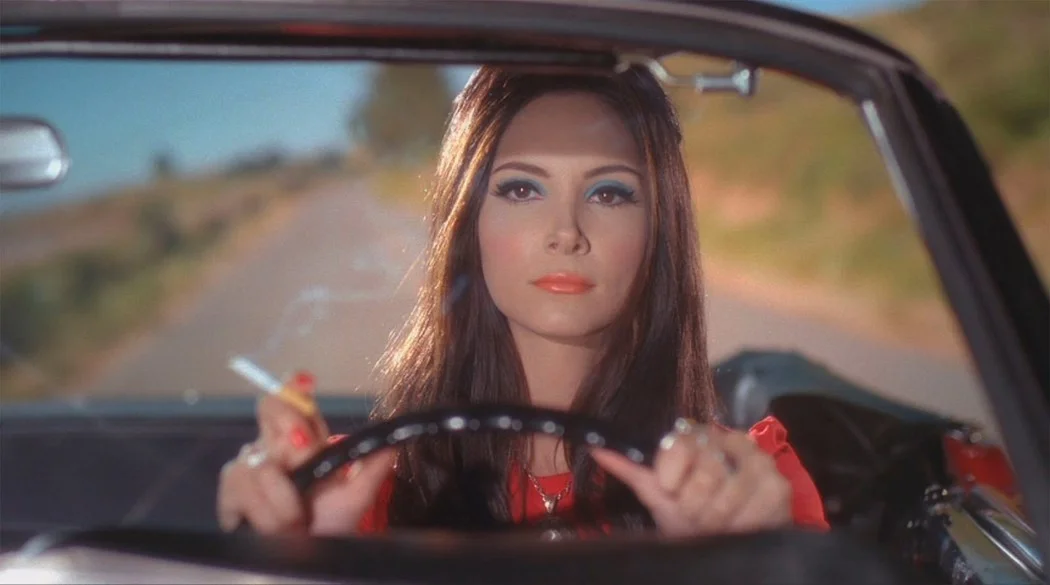
I found out about The Love Witch nearly a year ago. It all started with a still of Elaine Parks’ heavily shadowed eyelids and a tea dress with ruffles too glorious for words. The still became a fascination which led me to interviews with the film’s feminist auteur, Anna Biller, which eventually led me to a trailer, then back to some interviews, and so on for about nine months. It took until just yesterday for the movie to come to one of my city’s indie theaters. Usually, and in my personal experiences, a build-up of anticipation that long often results in disappointment. I remember thinking several times that this 1960’s B-Horror pastiche could not possibly live up to the hype which I, myself, have ascribed to it.
Well, dear readers, let me tell you it was worth every moment of the wait.
The film follows Elaine Parks (Samantha Robinson), a newly inducted yet gifted, member of a Wiccan coven who is quixotically obsessed (or, in her own words, “addicted) to love. After suffering years of gaslighting and emotional abuse in a previous marriage, Elaine is quickly scouted by a coven while dancing in a burlesque nightclub. From there, she quickly learns to transmogrify “sex magic” into “love magic,” but ultimately leaves each of her dalliances for dead.
The Love Witch is an open allegory with a feminist agenda. While the film’s aesthetic and score set the viewer up for the typical supernatural tropes of 1960’s technicolor horror, we are instead greeted with a more realistic sense of witches which somehow opposes and aligns with our own world’s cultural conceptions. This is because the “witch” is ostensibly equated to a sexually liberated woman, and the townspeople treat Elaine and her coven members as such. In a scene where Elaine meets up with her friend and coven member Barbara at a Burlesque show, men can be heard having discussions about how witches used to hide, but now they seem ubiquitous in society. The attitude towards witches and Wicca is mostly one of bigoted tolerance — as though witches have been publicly granted rights that the anti-intellectualist bar-dwellers can’t override, despite their disdain (sounds familiar, right?)
And the allegory grows stronger.
Elaine herself, after losing weight and gaining empowerment after her husband “leaves,” willingly codifies herself according to the male-fantasy. In the beginning of the film, she sits down to tea with Trish, a self-proclaimed feminist who has been married for ten years. After hearing that Trish will often refuse her husband of some of his fantasies, Elaine scolds that women should always give men what they want. And this is exactly what she does… or so it would seem.
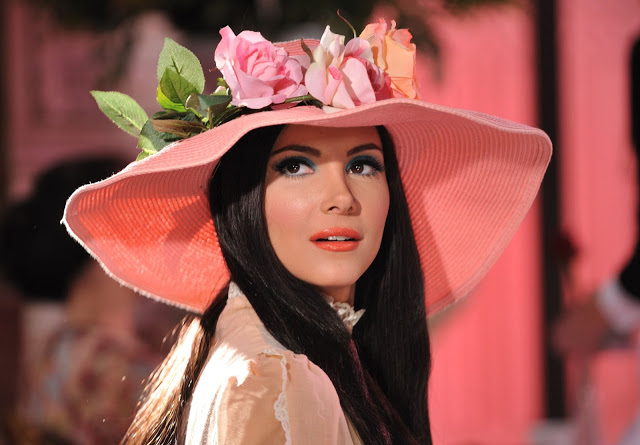
Throughout the film, Elaine creates a world for herself that is heavily influenced by male-perpetuated ideas of femininity, ultimately masking herself in layers of Bardot-esque eyeliner and Audrey Hepburn LBDs. She is often cooking decadent cakes or donning renaissance gowns while riding horseback. She speaks politely and is never seen without make-up. When it comes time for intimacy, she seduces her lovers with elaborate dances in intricate lingerie. She makes herself, essentially, the embodiment of male fantasy. However, she is not quite the Stepford Wife that one might think.
She uses her beauty and sexuality as a bait for men who describe themselves as libertines or unhappily married, aka sexists. From the start of the film, she can be seen batting her eyes in what one initially assumes might be a call-back to the Bewitched nose-wrinkle. Yet, these two are largely dissimilar as Elaine is not using magic at all, simply her own sexual prowess. The men she baits are already ignobly piqued by her as they often catcall and grope. She invites herself into their lives, feeds them a philter, and suddenly they become madly (in every sense of the word) in love. What begins as a dalliance quickly turns into a literal sickness that causes these men to become hysterical with love to the point of death.
The hysterics are played for laughs and ultimately reminiscent of the ways in which women have been misogynistically portrayed in film for the past century. Elaine has none of it, immediately becoming disinterested in her own subjects and proclaiming “what a pussy.” She buries the body of one lover ritualistically, yet ultimately remains un-phased. To top it off, she places a witch bottle containing her own urine and a used tampon over the shallow grave. Her Kardashian dead-pan narration asks viewers to consider that most men have never even seen a used tampon. What she calls an addiction to love is evidently an addiction to power. Elaine exemplifies the culturally normative ideas of masculine aloofness while patronizing her dying lovers in her ruffled mini-dresses.
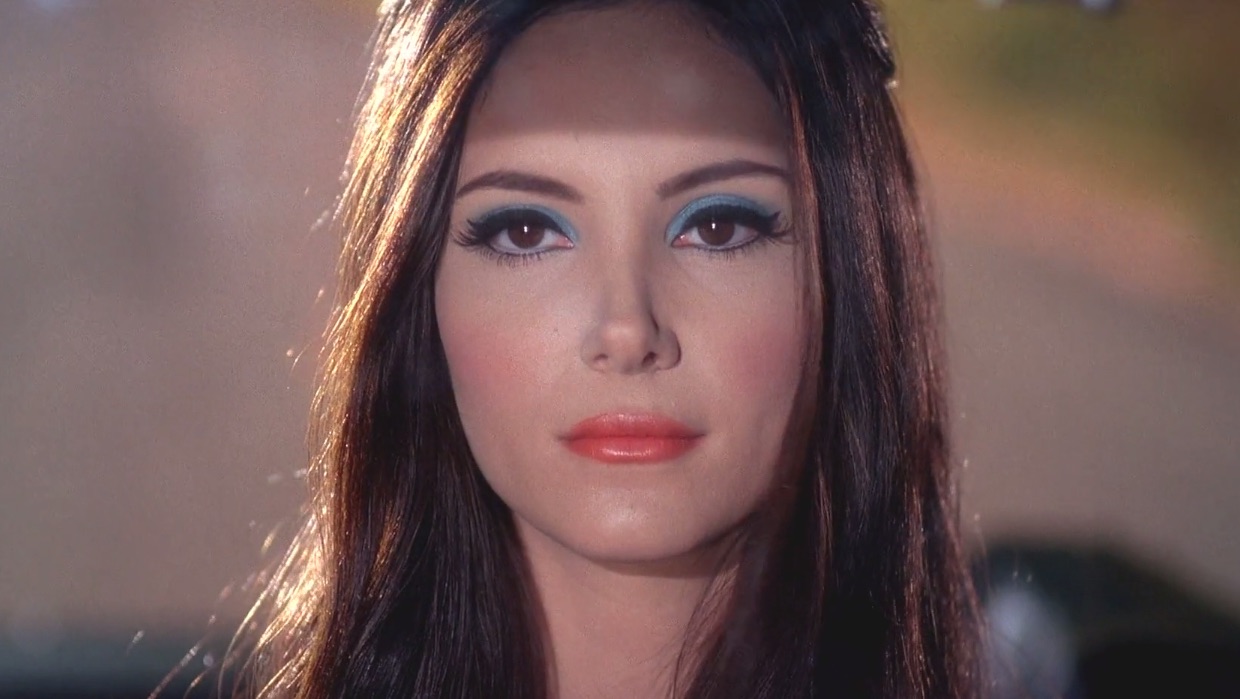
Anna Biller flips the typified romantic narrative while also giving the protagonist her cake and letting her eat it, too (quite literally). Elaine hedonistically enjoys all of the pleasures associated with sexist romanticism without letting the male stick around long enough for her to suffer the consequences. She flits from man to man like this in perfectly polished composure while her own paintings of liberated goddesses cutting the heart out of a man line the walls of her bedroom a la Dorian Gray. She has polarity and unity of her being, and all of her empowerment lies in her willingness to appear submissive.
Biller constructs this narrative through a carefully cultivated 60’s lens that sometimes alludes to even older Hollywood, yet the inclusion of a smart-phone at the end grounds the viewer in a phantasmagorical contemporary. The film is a world that already exists. Kubrick and Ashby and Argento are all carefully woven into it. Yet, it is not their world. Nor is it Tate’s or Hepburn’s. It is all Biller’s – a world which re-writes over a century of misogyny with one unapologetically empowered witch.
And it is fantastic. Please see it for yourself.
Kailey Tedesco is a recent Pushcart Prize nominee and the editor-in-chief of Rag Queen Periodical. She received her MFA in creative writing from Arcadia University. She’s a dreamer who believes in ghosts and mermaids. You can find her work in FLAPPERHOUSE, Menacing Hedge, Crack the Spine, and more. For more information, visit kaileytedesco.com.
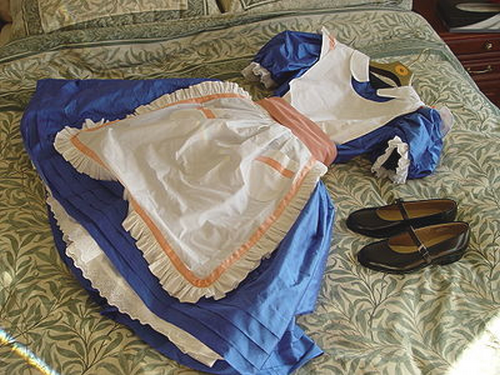
Via Phantomwise
I can recall a kaleidoscope of Alice.
Read More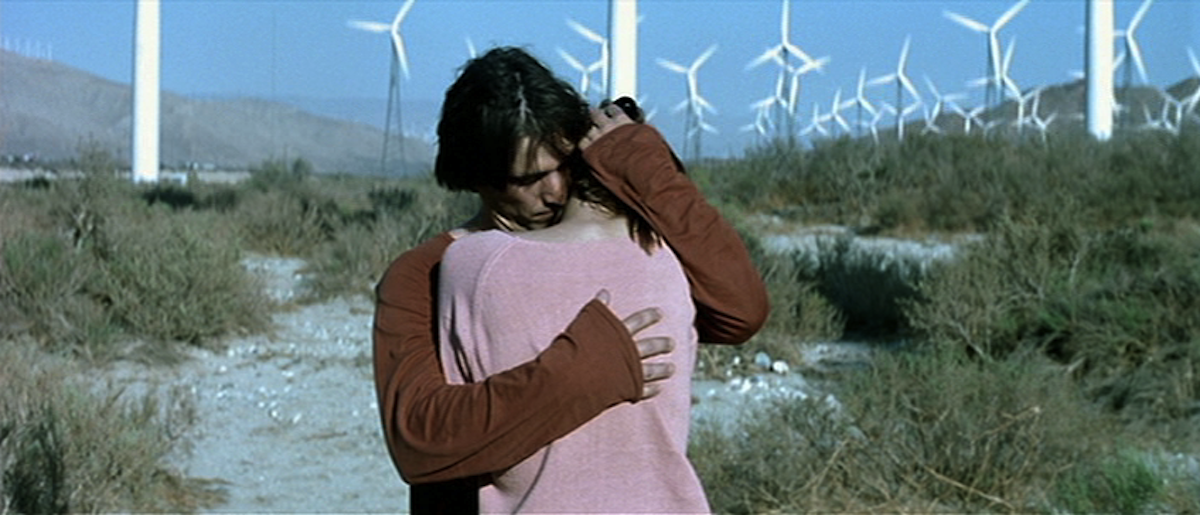
Yekaterina Golubeva and David Wissak in Twentynine Palms (2003)
While working in the desert on one of his films, French auteur Bruno Dumont (much, perhaps, like Liv Ullman in Ingmar Bergman's Persona) “suddenly became afraid, and stayed that way.” According to the director, the sudden manifestation of this existential horror was the impetus for 2003's Twentynine Palms, a riveting, allegorical, terrifyingly unclassifiable foray into the Mojave, and into the sun-drenched, pitch-black center of Yeats’ The Second Coming.
Read More
Via BBC Films
...the gravity of male fashion politics.
Read More
Oliver Morris/Getty Images
Leonard Cohen's "Famous Blue Raincoat" reckons with the reality of what we can give other people.
Read More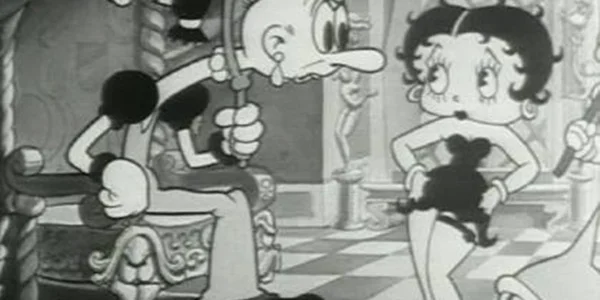
via ToonBarn
Halloween may be over, but who says the eerie, the spooky, and the outright weird must be seasonal? This compilation of vintage cartoons is all of those things and watchable all year round. Cartoons have not always been immediately associated with bright colors and light, child-friendly themes. In the early years of cinema, from the silent era and into the talkies, animated shorts were a constant accompaniment to feature films shown in cinemas. During this time, animated shorts were a vehicle for whimsical musical entertainment, but at the same time, they were not always the twee flights of fancy that became the overwhelming norm when the Hays Code came into strict enforcement. In pre-Code Hollywood, the animated short was an opportunity for artists to let their strangest aesthetic whims come to life. The shorts produced by Max and Dave Fleischer are particularly distinguishable by their surreal aesthetics and distinct German Expressionist influence. The following four cartoons exemplify the Fleischers' signature brand of the bizarre, fitting fare for anyone with a taste for creepy, vintage curiosities.
Read More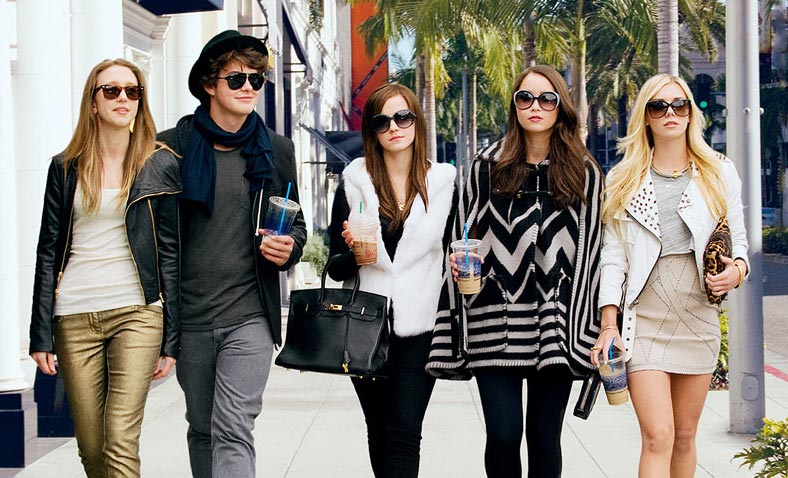
The Bling Ring (2013)
The irreality of their reality is chilling. Illusion upon illusion makes for a dangerous perceptual blur in the minds of teenagers who grow up in a culture that worships fame and fortune above all else. And that is the sadness of all this. When you feel the palpable loneliness of these kid who, despite being well-off and provided for, really don’t feel like they matter.
Read More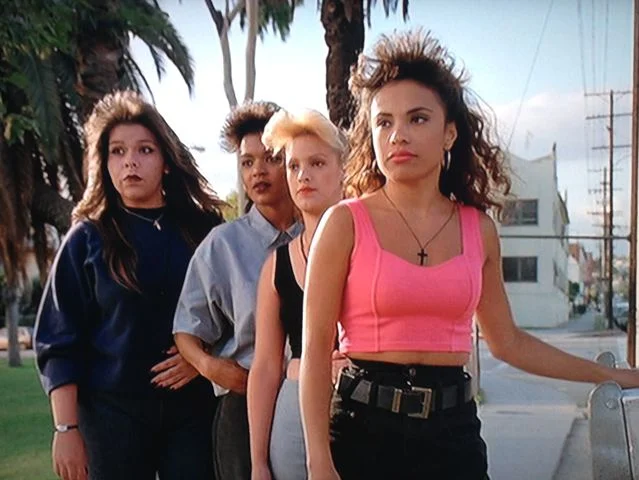
Playbuzz
...The gangster girl at the turn of the century.
Read More
Our monthly round up.
Read More
Stagedoor
Joanna C. Valente is a human who lives in Brooklyn, New York. She is the author of Sirs & Madams (Aldrich Press, 2014), The Gods Are Dead (Deadly Chaps Press, 2015), Marys of the Sea (2016, ELJ Publications) & Xenos (2016, Agape Editions). She received her MFA in writing at Sarah Lawrence College. She is also the founder of Yes, Poetry, as well as the managing editor for Luna Luna Magazine. Some of her writing has appeared in Prelude, The Atlas Review, The Huffington Post, Columbia Journal, and elsewhere. She has lead workshops at Brooklyn Poets. joannavalente.com / Twitter: @joannasaid / IG: joannacvalente
Read More
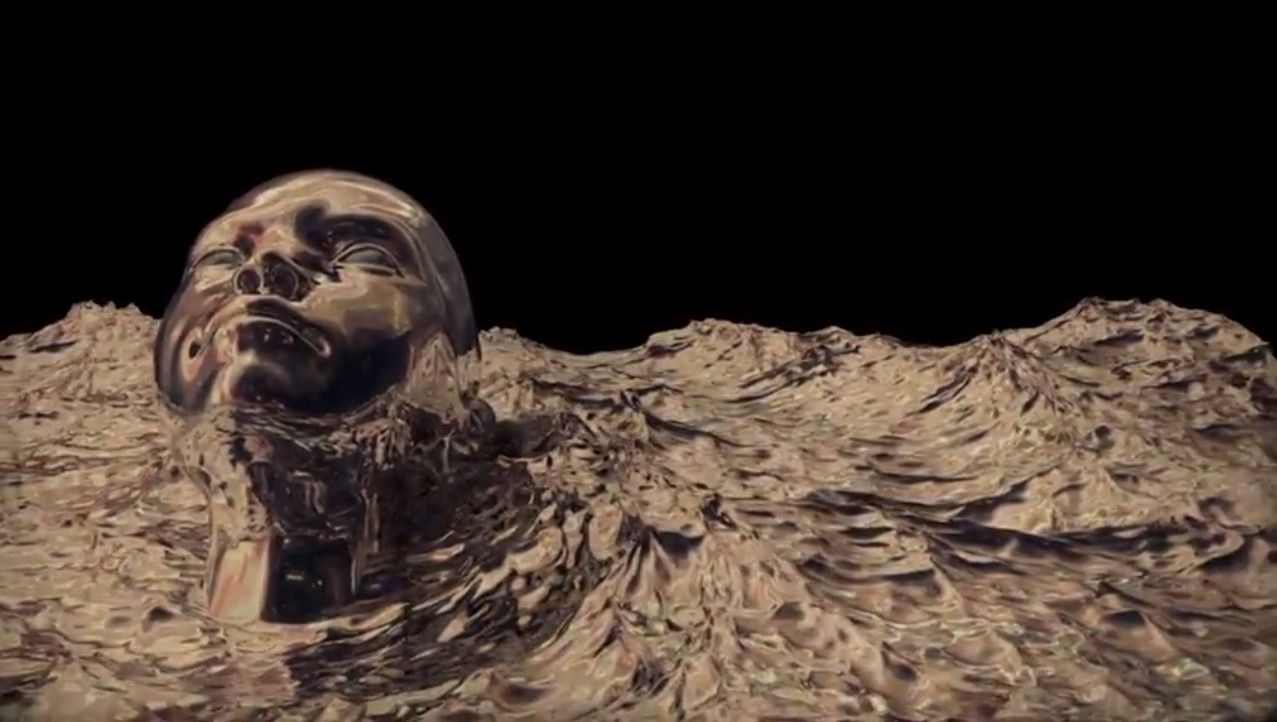
Photo credit: The Reykjavik Grapevine
One Icelandic band, however, has been haunting me for months. I cannot get them out of my head. I listen to them while I write, cook, take a bath, apply lipstick, daydream. I listen to them while I burn candles and lie in bed staring at the ceiling.
They make me feel sexy and sad. Adventurous. Alive with possibilities.
Read More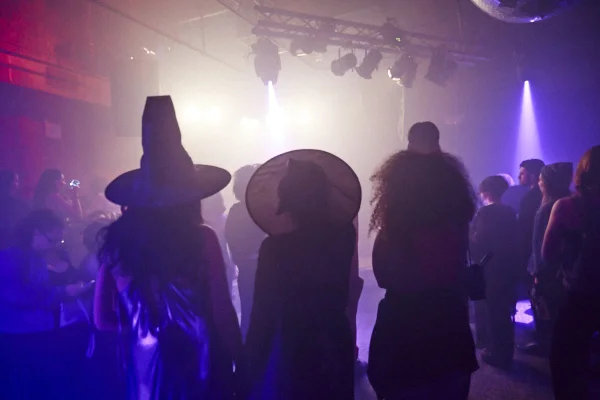
All photos by LEAH BANK
BY LIZ VON KLEMPERER with PHOTOS BY LEAH BANK
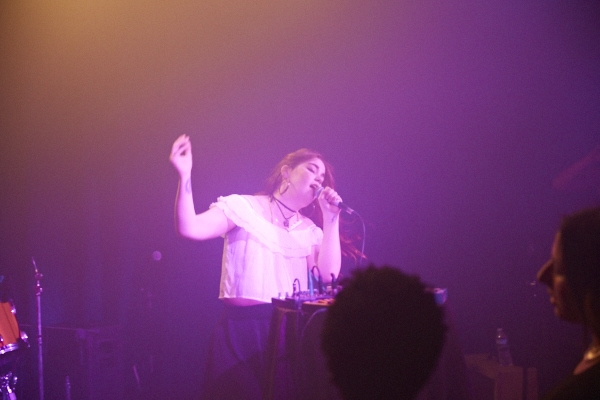
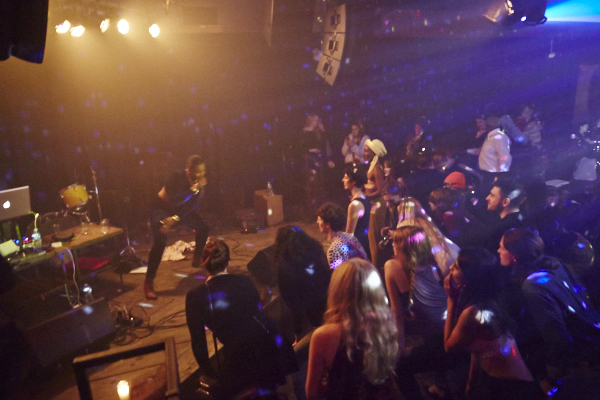
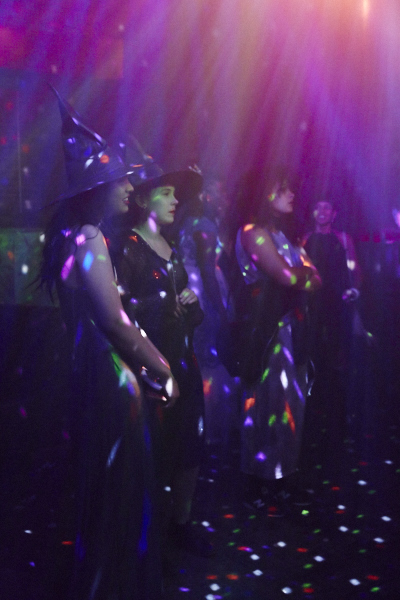
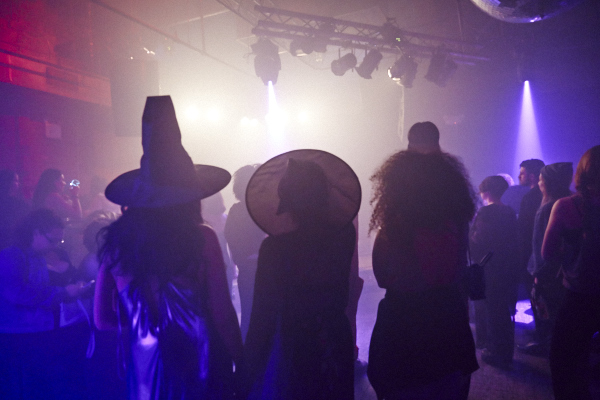
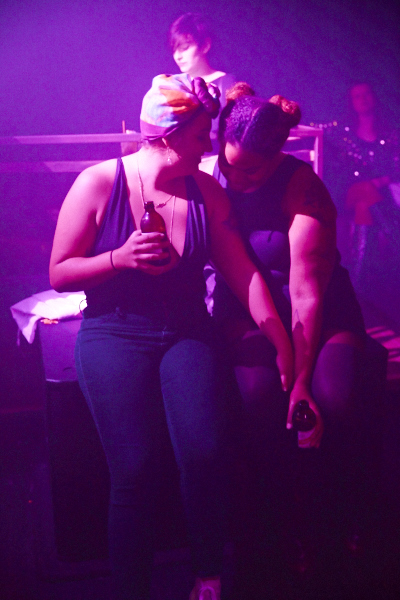
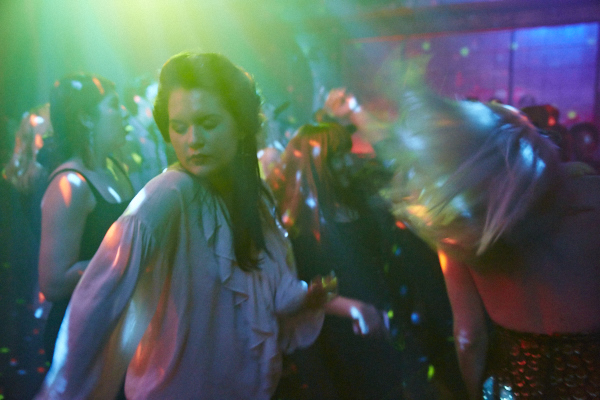
On October 25, Greenpoint’s Good Room was transformed into a femme haven for the second Femmequerade Ball. The mission of the gathering was to both rally against toxic masculinity and honor the divine feminine through music, dance and revelry. In keeping with this philosophy, admission fee was $18 for cis straight white men, and $15 for everyone else.
By 8 p.m. a smog machine puffed ample smoke onto the dance floor, which was illuminated by a glittering disco ball. Pointed witch hats bobbed in the throng as femmes swayed together. Organizers Raechel Rosen and Coral Foxworth flitted around the room, setting the tone by lighting incense and candles.
“Everything came together around the full moon,” Foxworth, also known as FXWRK, says of the planning process. The success of first Femmequerade Ball, which was held on August 18, attracted artists such as Anna Wise, Latasha Alcindor, and more to join forces for the second installment.
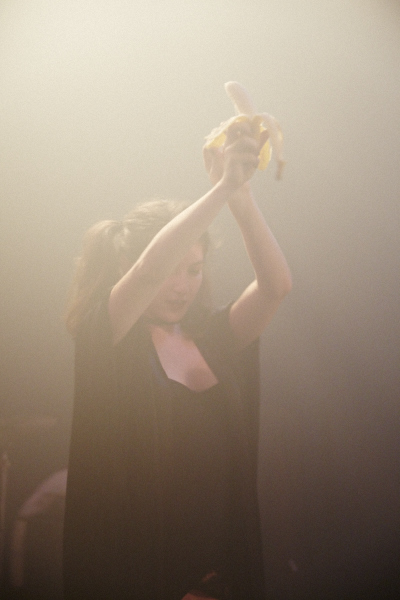
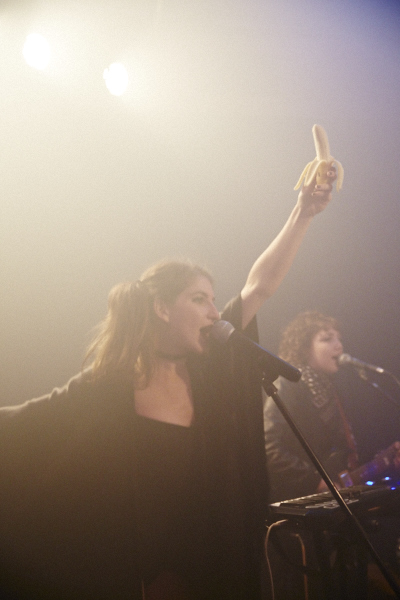
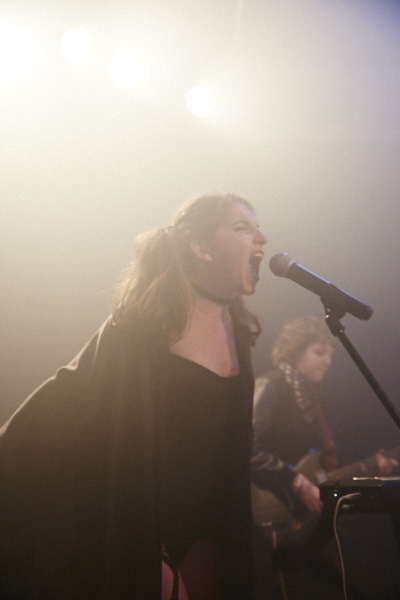
Raechel Rosen, who doubles as the lead singer and keytarist of her band Mima Good, got on stage after Yatta Zoker. Raechel beckoned for the crowd to come closer, and began to sing her witchy brand of rock and roll. Her final song, American Finger Trap, featured her signature onstage move: slowly peeling a banana and circumcising it with a pair of scissors. Much of Rosen’s artistic practice is dedicated to combatting rape culture and empowering survivors by through voicing trauma.
“Politically I think it’s fucked up the way that we’re taught to deal with sexual assault in our culture,” Rosen explains. “The victim has this secret to bear. She has to go be in support groups, get therapy and deal with PTSD. People treat it like you’ve caught this sickness and you can’t say who gave it to you. It’s as though it’s your personal secret, where in reality it’s the secret of the assaulter.”
Attendees seeking a brief respite from the high-energy dance floor could dip into Greenroom’s second smaller room. The space was occupied by Catland, a Brooklyn bookstore which supplies spiritual goods such as candles and crystals. Books about the occult were for sale, along with other memorabilia. Catland practitioners were also available to give tarot readings.
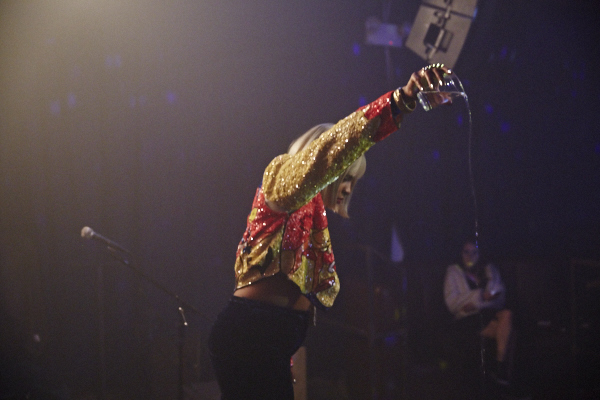
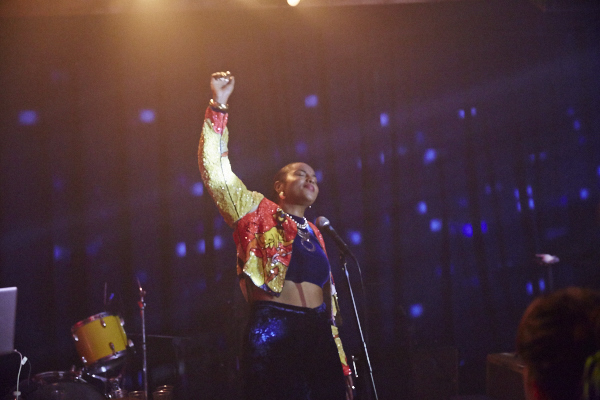
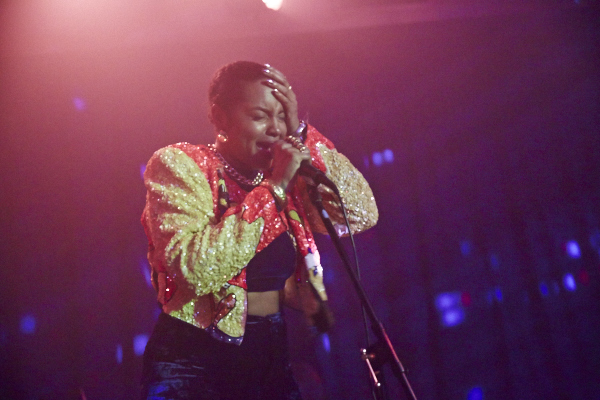
Next Latasha Alcindor, also known as L.A., took the stage. She began with a ritual in which she splashed water around the stage and then launched into a spoken word piece about the power of witchcraft and her Caribbean heritage. L.A.’s last song was about her neighborhood, and the all too prevalent phenomenon of gentrification.
“I’ve never played this in front of anyone before,” she confessed to the audience.
“To be honest, it feels odd to sing this song in front of a group of white people. But it’s important, so I’m going to do it.”
The rap was raw and authentic. L.A.’s face knit with a palpable anguish as she sang about the displacement her hometown has had to face. The crowd erupted in applause.
Headliner Anna Wise prefaced her performance by affirming the intention of the event.
“I’m all about this cause,” she said, addressing the crowd.
“This period of time is marked by the uprising of the oppressed,” she continued. “That includes femmes, and it also includes racial minorities.”
Wise’s awareness is in part influenced by her experience working with Kendrick Lamar on his latest album, To Pimp a Butterfly, which she described as one of the most pro black albums of 2015. Wise then launched into her hit songs BitchSlut and Precious Posession. During her last song she hopped off the stage and danced amongst the crowd.
The DJs that spun after the live music portion of the event included FXWRK, DJ Dylan Sparkle, Abyss X and WWIII.
What can we expect of the next Femmequerade? The goal for the series, Foxworth says, is to, “create a space to imagine interaction outside of previous oppressive contexts. It’s also a place to play, because play is a really important and underutilized aspect of social change and activism. That’s why we dressed up. It’s a ball, it’s a spectacle, it’s tapping into an almost childlike energy in all of us, and I think that’s the kind of energy we need to heal.”
Liz Von Klemperer is the author of the unpublished novel Human Eclipse. Liz is a staff writer for Art Report, and has work featured in Autostraddle, Bust, Electric Literature, Luna Luna Mag, Hooligan Mag, and Breadcrumbs Mag. Visit her at lizvk.com.
Leah Bank is a Brooklyn based photographer, possibly from Mars, who enjoys late night cupcake baking and climbing rocks. She has work featured in BUST Magazine, F-Stop Magazine, and American Photography. Find her at www.leahbank.com.