

Art is so subjective and I really want to provide a platform that offers a diverse look at different mediums and formats of expression, with a focus on traditionally oppressed or under recognized groups.
Read More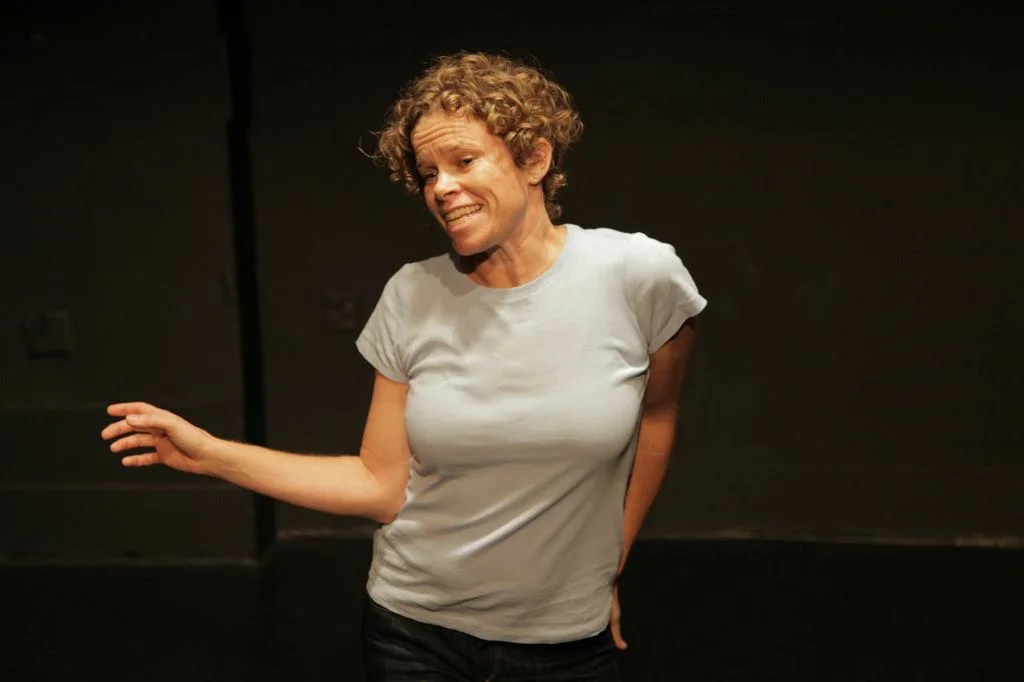
Interview with Performer Eliza Gibson: 'Lesbian Divorce Happens'
Eliza Gibson knows how to write--and perform. She is currently performing in her newest performance piece "And Now, No Flip Flips?!", which draws from her personal life in a poignant and funny way. She uses humor to tell her story--which is one that is both common and hardly written about--divorce. In Gibson's case, she is portraying what divorce looks like for two women, which has been routinely ignored by mainstream media and culture. This is a huge step for the LGBTQIA community, and it's an amazing performance.
Read MoreArt as a Blend of Many Truths: Why We Shouldn't Question Beyoncé's Narrative
To tell a story (even your own), in a way, is to tell someone else’s–if it were only hers, how could we connect? How could we expect her to own every word? Why must it be debunked or defined at all?
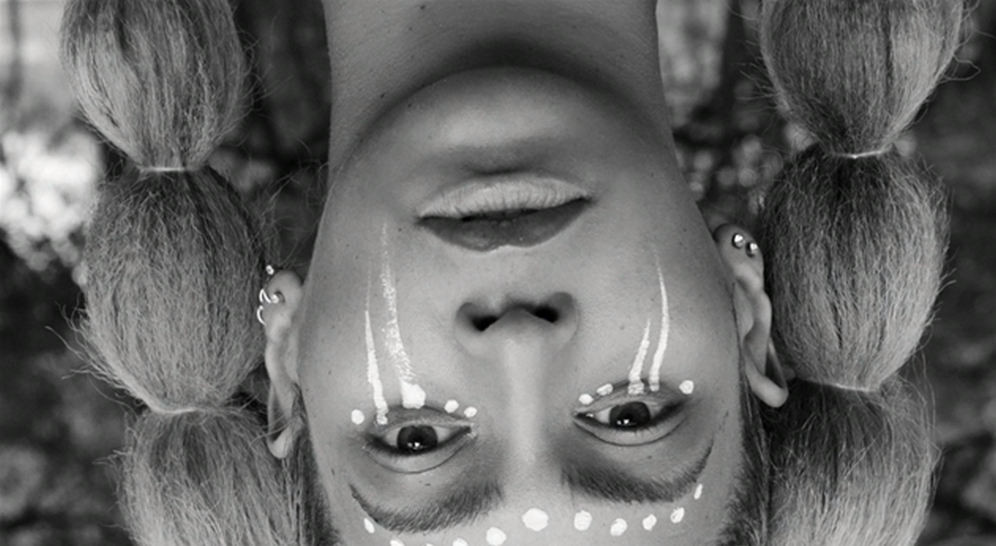
BY LISA MARIE BASILE
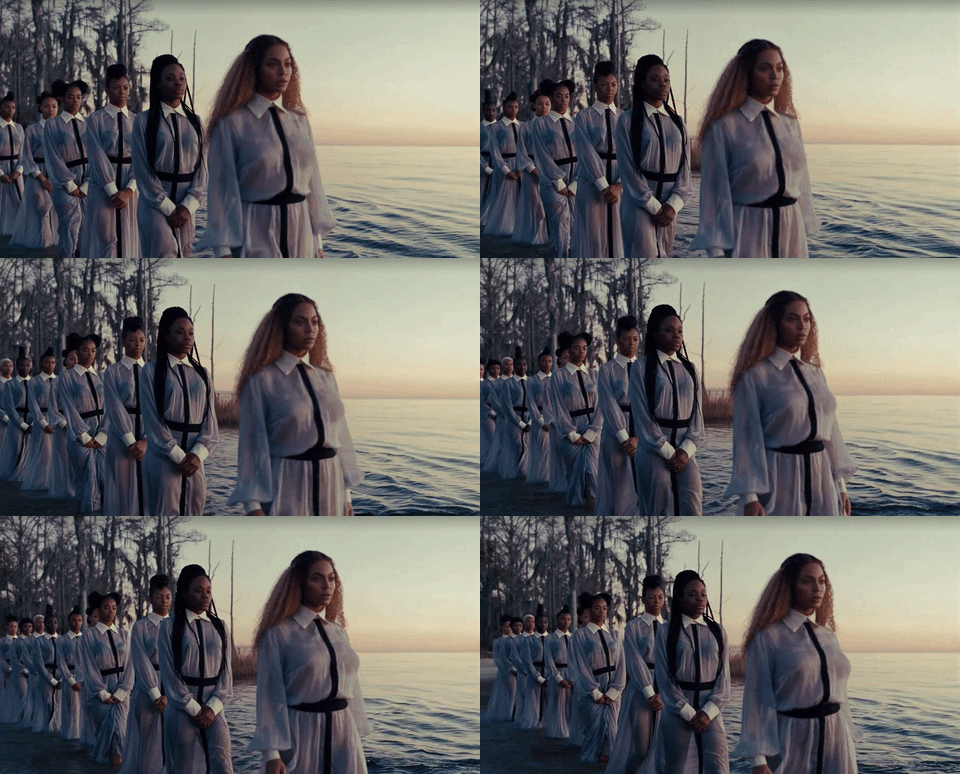
Lemonade emerged from darkness at a time of political unrest and volatile racism. For many, I’m sure, it also comes about as a Spring story of rebirth and the divine self; Lemonade’s grief is collective and personal–the story she weaves is everyone’s story, an eternal hurt, the story of mothers who broke at the hands of men, the story of a girl who was too naive, the story of women who take back their agency.
Everyone keeps worrying about the truth; what’s the truth? Is the artist being cheated on? Did she forgive him? Why is he seen, on camera, stroking her ankles, kissing her face? What if it’s about her own mother? What if this is a machine? What if the artist is exploiting rumors about her marriage–and feeding the beast that way? What if the beast isn’t her own?
The fact is that the artist doesn’t always need to have experienced everything first-hand. Certainly, Beyoncé is building a world, one that is universally understood enough to be appreciated: the grief of lost love, the grief of being lied-to, the relentless anger, the baptismal, personal resurrection, the lover's possible forgiveness, the healing power of culture.
One of the ways she builds this world is by featuring the words of poet Warsan Shire. In a New Yorker piece that pre-dated Lemonade by several months, it is clear that even Shire doesn’t claim her work is entirely autobiographical:
“How much of the book is autobiographical is never really made clear, but beside the point. (Though Shire has said, “I either know, or I am every person I have written about, for or as. But I do imagine them in their most intimate settings.”) It’s East African storytelling and coming-of-age memoir fused into one. It’s a first-generation woman always looking backward and forward at the same time, acknowledging that to move through life without being haunted by the past lives of your forebears is impossible.”
This is how art works. As a poet, I play a character and the character plays me–always vacillating between this point in time and that point in time and heart, time owned by me or time owned by someone else, heart owned by me, and heart owned by other. It’s the million ghosts that tell the story, and they’re needed to give it dimension.
We should give artists–and I’m calling Beyoncé an artist, here, and if you don’t like that, bye–the ability to make their art into something alchemical; a little this, a little that. It’s the potion of the collective unconscious, that which is passed down by ancestors, mixed with our consciousness and our memories, our collective experiences of love and sorrow. To tell a story (even your own), in a way, is to tell someone else’s–and if it were only hers, how could we connect? How could we expect her to own every word? Why must it be debunked or defined at all? Why isn't it ok to tell the story of something bigger?
In Lemonade, Beyoncé handles the past–through her grandmother’s voice, Shire’s voice, the history of race in America, the way love has treated her–the present, and the future: a future of hope, a heaven that is a “love without betrayal,” the dissolution of racism, the reclaiming of feminine power, nature as a symbol of forward momentum.
I think we are begging for these many voices, these many moving parts she has woven; I am happy it was a collaboration. It gives me hope for art.
And don’t drink the Haterade: “It’s her producers, it’s the songwriters, it’s the people she hired.” When people reduce any artist to this, they’re reducing art, which I suspect is antithetical to their whole point. Being an artist takes knowing how to harness the power of many, it takes knowing how to build a vision, and it takes knowing how to embody that world. Nothing can be done alone.
The time you spend questioning her writing credits, her veracity, her money – is time you could be devoting to the very moving art created by Beyoncé and her team – poets and directors and the powerful Black women she features. It says something, and if you give it the space, I’m sure it will talk to you.
Lisa Marie Basile is a NYC-based poet, editor, and writer. She’s the founding editor-in-chief of Luna Luna Magazine, and her work has appeared in The Establishment, Bustle, Hello Giggles, The Gloss, xoJane, Good Housekeeping, Redbook, and The Huffington Post, among other sites. She is the author of Apocryphal (Noctuary Press, Uni of Buffalo) and a few chapbooks. Her work as a poet and editor have been featured in Amy Poehler’s Smart Girls, The New York Daily News, Best American Poetry, and The Rumpus, and PANK, among others. She currently works for Hearst Digital Media, where she edits for The Mix, their contributor network. Follow her on Twitter@lisamariebasile.
Chris Osborne
Moonlighting, a Fiction Piece by Jen McConnell
I want her to be happy. And I know she isn’t happy. Not since the second one. She loves the children–of course she does–but she wants her body back.
Read More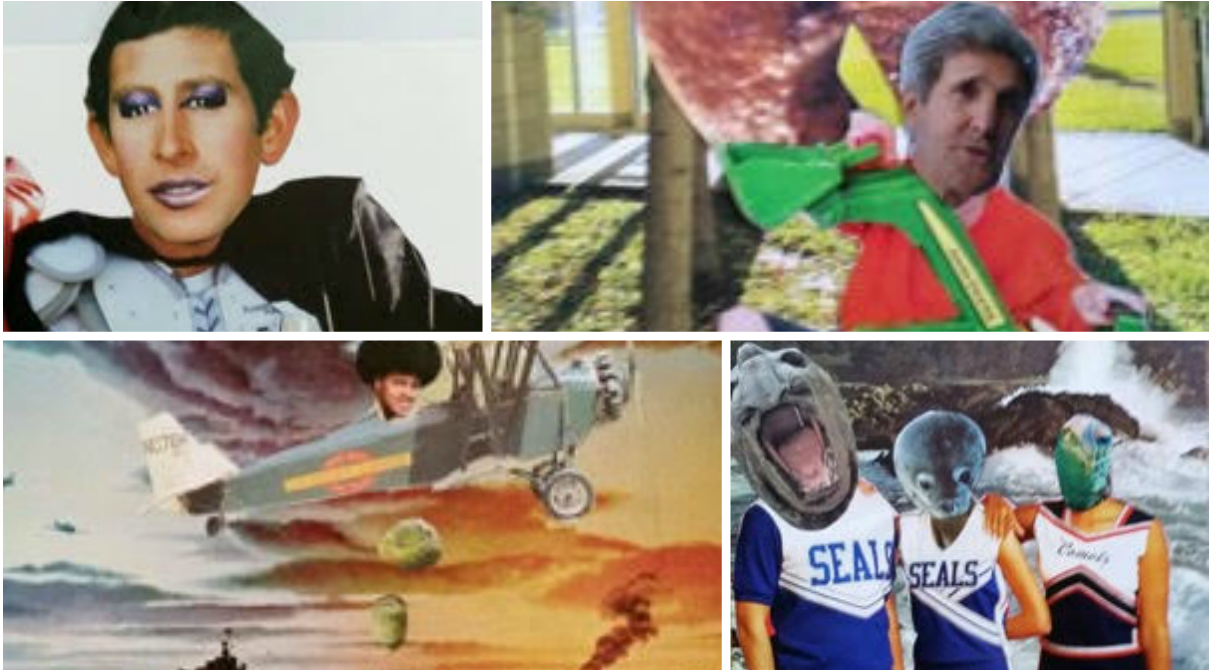
Joe Heaps Nelson's Art Exhibit at Reservoir Art Space Is a NYC Gem
What is humanity? A farm? A Goodyear blimp? The DeBlasio’s? Is it the sky or sea? Is it pop culture? It’s pop culture, isn’t it. Goddammit. Joe Heaps Nelson, a painter whose work has shown at P.S. 1, Scope Art Fair and more makes us wonder with a series of hashed together collages that look both current and retro. They manage to be playful, bright and ignite a sense of nostalgia. Twelve new works of his will be on view for a limited time at Reservoir Art Space in Ridgewood. We highly recommend paying this show a visit!
Read More
Here Are Some Women Directors Whose Beautiful Work Deserves More Love
CURATED BY EMMA EDEN RAMOS
Each Women’s History Month, The Library of Congress, The National Archives and Records Administration, The National Endowment for the Humanities, The National Gallery of Art, The National Park Service, The Smithsonian Institution, and other institutes pay homage to pioneers in The Women’s Movement. As this celebratory month just came to a close, we want to acknowledge a group of female artists who deserve (more) recognition and (more) admiration. So, given that it's Friday today (which means you can Netflix ALL weekend), we are proud to offer you, our lovely readers, a “playlist” of films directed by women. Put these films on your queueor Amazon wish-list. You won’t regret it. Trust us.
Agnès Varda: Cléo from 5 to 7
"I'm too good for men."
Sally Potter: Orlando
Orlando: "If I were a man...I might choose not to risk my life for an uncertain cause. I might think that freedom won by death is not worth having. In fact..."
Agnieszka Holland: Copying Beethoven
"Forgive me. I may be a woman, but I am the best student."
Ava DuVernay: Selma
"Our lives are not fully lived if we're not willing to die for those we love, for what we believe."
Lisa Cholodenko: High Art
"I'm Greta. I live for Lucy... I mean, I live here, with Lucy."
Laurie Collyer: Sherrybaby
"From the ages of 16 to 22, heroin was the love of my life."
Deborah Kampmeier: Hounddog
“If you don’t you keep on singing, keep on feeling the spirit. If your dreams go underground for a while, buried so deep in the earth so they can survive, you just keep feeling the spirit even in the dark.”
Leah Meyerhoff: I Believe in Unicorns
“I have so much to say… but I don’t know where to start. Maybe when I learn how to breath.. I’ll know how to speak."
Emma Eden Ramos is a writer from New York City. Her middle grade novella titled The Realm of the Lost was published in 2012 by MuseItUp Publishing. Her short stories have appeared in Stories for Children Magazine, The Legendary, The Citron Review, BlazeVOX Journal, and other journals. Ramos’ novelette, "Where the Children Play," was included in Resilience: Stories, Poems, Essays, Words for LGBT Teens, edited by Eric Nguyen. Three Women: A Poetic Triptych and Selected Poems (Heavy Hands Ink, 2011), Ramos’ first poetry chapbook, was shortlisted for the 2011 Independent Literary Award in Poetry. Still, At Your Door: A Fictional Memoir (Writers AMuse Me Publishing, 2014) is Ramos' third book.
Photo credit to: Haoyan of America
Interview With Perry Baron Huntoon About Her 'How I Feel Today' Art Project
After that performance, I was exhausted. Having been accustomed to keeping my emotions to a minimum, this act of defiance took a lot of out of me. For the next few years, I kept trying to return to the metaphor of landscape with varying results. I became reluctant to confront the pain that was bubbling beneath the surface. This reluctance showed in my work.
When I moved to New York in 2013, the intensity of the city forced my hand: I had to deal with my immediate anxieties and continue to sort through my trauma and grief. I developed an isolated, meditative practice, in which I laid out huge pieces of canvas on my bedroom floor and marked them to oblivion with charcoal and pastels. The calm that I achieved from such physical, repetitive work was absolutely necessary to my survival in the city.
Read More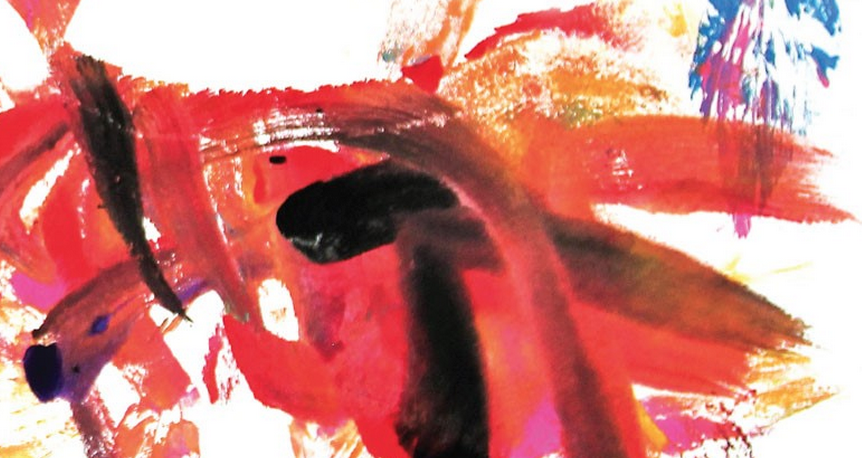
A Review of Poetry Collection "In Leaves of Absence: An Illustrated Guide to Common Garden Affection"
In Leaves of Absence: An Illustrated Guide to Common Garden Affection (Red Dashboard Publishing) with poetry by Laura Madeline Wiseman and art by Sally Deskins, our capacity as women to thrive or wilt, is revealed through daily garden life. In between these detailed poems and exuberant paintings, there are paragraphs of facts and plant history, to teach and temper the budding words. It is a reminder that caring for nature, like caring for a person, is an investment. As Wiseman writes in “The Family of Magnolias,”
“planting the wrong tree or doing it in the wrong way is something better left undone.”
When one plants a tree from seed, it is a lifetime commitment or at least half a lifetime. The gardener is caregiver: watering a seed, protecting a sprig from frost, watching for signs of disease or insect invasion. After many years a tall sturdy tree is a crowning achievement while a failed plant can be heartbreaking. Like life is with relationships. Yet we plant again in the spring, measure out garden plants, look for new loves. To garden is to hope. All living things, however, die, or “leave,” eventually. But isn’t biting an apple or smelling a rose worth it? Wiseman and Deskins explore this journey through these intricate poems and bursting water colors.
One of the first metaphors in the collection is “A Wrong Tree.” The tree is almost described as a stumbling Civil War soldier, suffering without anesthetic:
“Limbs are sawed off as amputated stumps and oozing wounds.
The canopy won’t shade you no matter where you stand.
…Evenings on the lawn chair you slouch with cheap beer.
You gaze at the green lawns around you—
You imagine hopping the fence to a new home…
I could leave…”
We assume the underdog status through “A Wrong Tree,” judging it’s low hanging branches, it’s lack of leaves and structure. The tree is a symbol for living the wrong life: the wrong yard, wrong car, wrong house, wrong neighborhood. We hunger for the other: the perfectly manicured lawn or mini barn shed. Even though disdain is present for this ugly duckling, there is some sympathy. The tree is surviving, it does not appeal to the masses, have “curb appeal.” But it is unique. These hiccups in nature reflect on our own quirks and flaws as humans. We must “go on” too, no matter what.
Deskins splatters her drawing of “A Wrong Tree” with the brightest colors imaginable: greens and blues, pinks, and oranges. Her tree is a helpful reminder that beauty is found in unconventional shapes and places.
Likewise, another painting that shines with self-love is “Take Leave.” (There is lots of “leave” and “leaf” word play throughout the book and one can also not help but think of Whitman’s Leaves of Grass while reading these poems.) In the painting “Take Leave,” a curvy female shape stretches her limbs within a tree trunk. She is proud, blissful to enrapture the tree’s magic, her torso blending into the bark. She is serene and one with the tree. It is powerful.
Today, with all women’s rights and freedoms under attack this image is refreshing. If only all women could arch their elbows to the sky, strong: feel their power. This painting is a wish.
In the following two poems: “Leave off Husbandry,” and “Weeping Hawthorn, A Friend and Neighbor,” tree and woman blend but manifest that all allusions to trees are not beautiful. In “Leave off Husbandry,” Wiseman writes:
“you axed us in my dream. I awoke
to my heart scudding, a thicket of birds.
Your will to destroy left me shaken…
I was putting out roots, leafing at the base.”
Arms are swinging an imaginary ax., cutting off our limbs, our ability to run, our ability to flower. Giving something “the ax” is a synonym for finishing it. Wiseman uses the tree as a symbol in this relationship, the stress dream pulling intimacy’s roots out of the ground. The tree is powerless to the ax, does not see it coming, like anyone blindsided by an emotional trauma. (Again Deskins paints an effective image to be paired with this poem: a flesh colored woman, slumped by a tree, looking over her shoulder at the reader, forlorn.)
In “Weeping Hawthorn…” the natural world is a metaphor for assault. Wiseman writes:
“her limbs bent to his need, a hot, blind
forcing that once opened would scar.
She scratched at him to stop…”
“…Each of us wants
to blossom, grow, ripen, be
plucked—consent—never like that.”
Through representing the women as trees, the reader experiences not only how our environment cannot speak for itself, but also how women are silenced, how casual violence is prevalent. Like a new sapling, a girl, a woman should be cared for, should feel free to shout her voice to the world, not prove how her existence should just be tolerated. At least the trees have the forest.
Whether these poems are witnessing women’s plight, or a childhood memory (Wisemen playfully quotes “let the wild rumpus start,” from Where the Wild Things Are and there are allusions to a swing hanging from an oak tree,) or exploring word play, Deskins accompanies these fevered words with light and spirituality.
In “Common Prayer to Tree Gods and Goddesses,” the outlines of women are in a forest with the orange/reddish colors atop the tree canopy. One does not know if it is dawn or dusk and it doesn’t matter. These tree spirits are timeless.
Our tree lined streets or lone tree in a yard or tree standing tall in a park are us. Wiseman teaches us the mind might forget certain slings and arrows, but “…the body can remember what we carved.”
This collaboration is a tour de force of word and color, a wonderful blending hybrid creation, as can only be found in nature.
Jennifer MacBain-Stephens went to NYU’s Tisch School of the Arts and now lives in the DC area. Her chapbook “Clown Machine” is forthcoming from Grey Book Press this summer. Her first full length collection is forthcoming from Lucky Bastard Press. Recent work can be seen or is forthcoming at Jet Fuel Review, Pith, Freezeray,Entropy, Queen Mob’s Teahouse, Right Hand Pointing, Cider Press Review, Inter/rupture, and decomP. Visit her here.
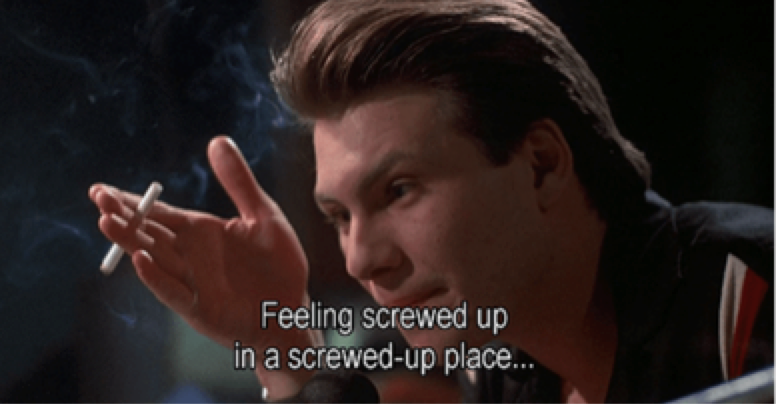
The Film Every Millennial Woman Needs to See
Lately I’ve been thinking about a recent The New York Times article about entertainment for “the Instagram age” and how this relates to Jung’s “collective unconscious” (similar now to a shared Facebook ‘feed?) and Jung’s mythical female archetypes. Somehow this inspired me to re-visit Pump Up the Volume (1990), a film that was made before social media and before Instagram. It was released in 1990, featuring kids just leaving high school and turning 18.
Read More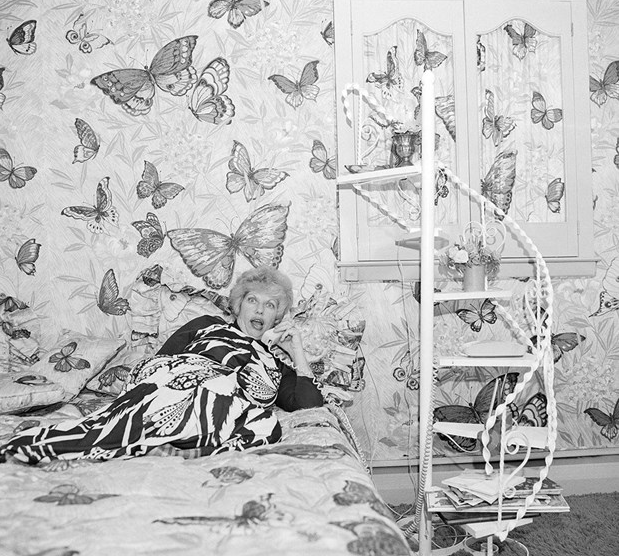
Photographs courtesy of Meryl Meisler and Steven Kasher Gallery
Meryl Meisler Gives Us Iconic 70s Magic At Steven Kasher Gallery
Meisler photographed people because she loved them, and because she loved taking pictures. By sticking to what was close and honest to her, teaching, family and nightlight, she created a well-rounded view of life in the 70’s that has now become iconic. The realness of the work is what helped it prevail.
Read More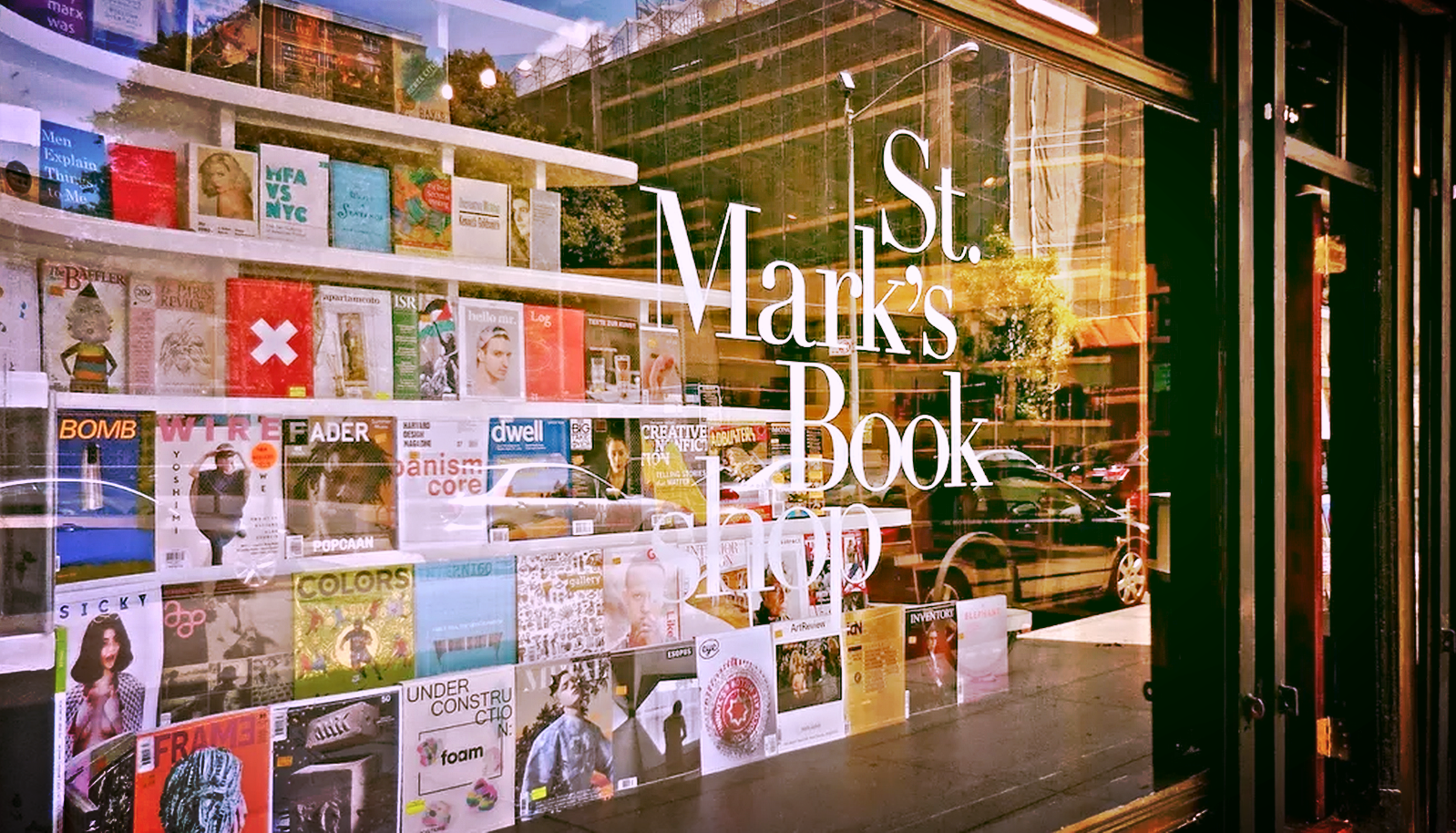
Memories of St. Mark's Bookshop
BY LISA MARIE BASILE
This is part of our brand new NYC vertical.
When I was a teenager, I'd come into the city on weekends to visit my boyfriend, Gabriel. He lived in this cozy, art-filled Upper West Side apartment--right on the Park. We'd always head downtown to the East Village, especially when he played shows at the Continental--before it was a ten-shots-for-10-bucks place, when it was still a cool music venue.
Right next door was the Bookshop, which would always speak to me; if the club owner at Continental (anyone remember the bouncer with the huge hat?) thought I was too young to come in (despite being the girlfriend of the guy in the band), I'd head to the bookshop and get lost.
Back then, the premise of becoming a writer--let alone surrounding myself with the literary, or going to school in NYC for writing--was as ridiculous as becoming a Hollywood actress. I felt I had no plan, no voice, no money, and certainly no ability.
Gabriel and his parents nurtured me, leaving an imprint that I cannot ever deny. If I'm a product of anything, it's my parents, my resilience, and them. Standing outside that bookshop, peering in at this world, was something meaningful. I didn't realize it then, but it changed me.
As the years went on and I found myself in college in 2005, long after the city had changed--along with my perception of it (it stopped being a giant; it started becoming home), I'd find myself at the bookshop. And again, in graduate school. I even madly kissed someone, drunk on mugs of $3 beer at Grassroots Tavern, against a stack of books.
To speak of loss in New York is strange. There is so much here. There is so much to do, and think about, and so many people. There is the time that has passed, the locations that have gentrified, or died, or been stripped of their identities. And the institutions that watched.
To think sentimentally about any one space in a city so big--where we don't have neighborhoods to ourselves anymore, but an entire playground--seems futile. But those places are what center you. You know that among the millions, and under all the buildings, there's an anchor. What made it all OK. What made it real.
Goodbye, St. Mark's Bookshop.
Lisa Marie Basile is a NYC-based poet, editor, and writer. She’s the founding editor-in-chief of Luna Luna Magazine, and her work has appeared in Bustle, The Establishment, Hello Giggles, The Gloss, xoJane, Good Housekeeping, Redbook, and The Huffington Post, among other sites. She is the author of Apocryphal (Noctuary Press, Uni of Buffalo) and a few chapbooks. Her work as a poet and editor have been featured in Amy Poehler’s Smart Girls, The New York Daily News, Best American Poetry, Tin House, Best American Poetry, and The Rumpus, among others. She currently works for Hearst Digital Media, where she edits for The Mix, their contributor network.
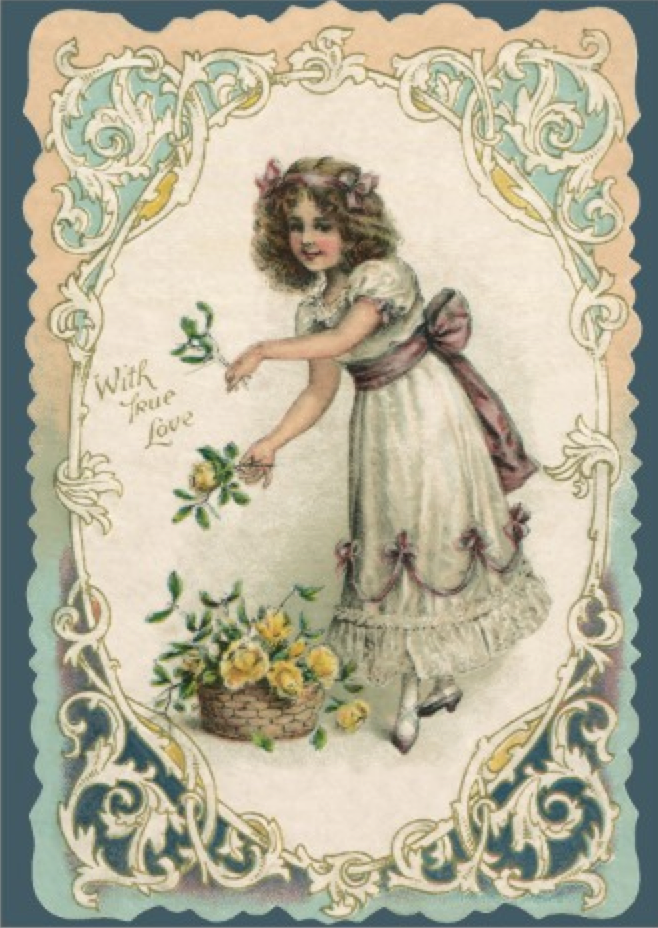
Printable Victorian Valentine's Day Images (& Some Erotic Bits) For Your Lovelies
BY LISA MARIE BASILE
Valentine's Day is thought to stem from Lupercalia, a Pre-Roman Pagan festival celebrated between February 13-15 (can we please get back to three days of V-Day?), and so the gauche, commercial excess was not the point. Lupercalia, to the Pagans, was a time for thwarting evil spirits and cleansing the space of its negativity. On this day, because how darling, it is said that the birds chose their mates.
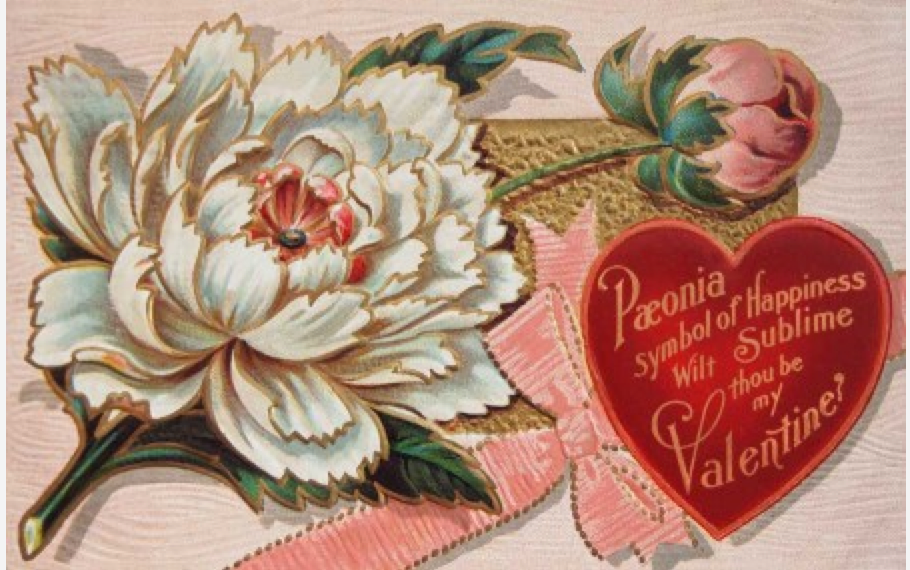
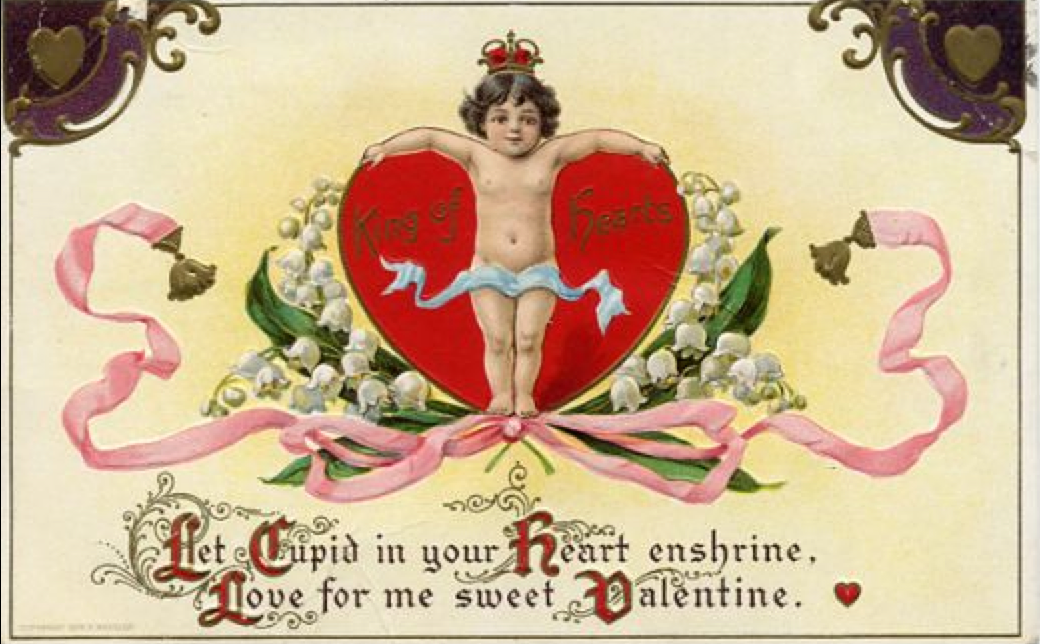
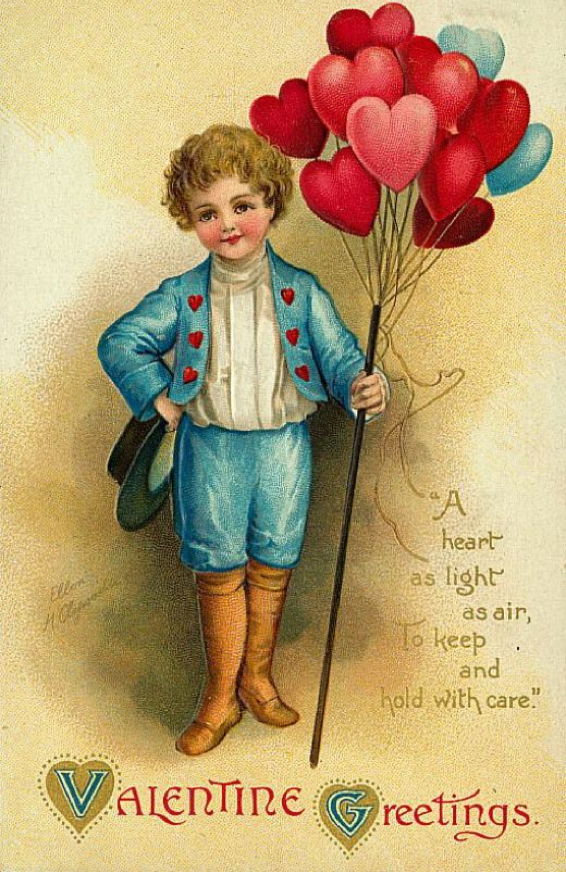
In 14th-century England and France, poems became the primary Valentine's Day (please see Geoffrey Chacer's The Love Unfeigned, a 14th-century poem not specifically written 'for' Valentines, but romantic nonetheless; let us know if you can translate that better than we can). The poem became common again in the 18th century, and especially in the Victorian Era, when sentimentality reached its abslolute peak and V-Day's commercial value heightened. Embossed, lace, ribbons, floral patterns and deliciously ornate designs were the norm. #swoon
And then we got our filthy modern hands on history.
If, like us, you're sick to death of paying $4.95 for a contemporary, soulless, Teddy Bear V-Day card from Duane Reade, we've compiled a few of our favorite printable Victorian Valentine's Day cards. Our recommendation? Print these out, make yourself your own Valentine and create a little Victorian shrine for yourself. Or your lover. Whatever you'd like.
Just click the image to download the print, and if you want more, you can click into each photo and peruse the sites, which will allow you to either download more prints or send a physical Valentine to someone. (We still recommend sending yourself some love in the mail.)
And so, here are a few images (along with a few naughty Victorian bits) for you to swoon over.
xo
Via Vintage Fangirl

Via Vintage Holiday Crafts
Via Vintage Holiday Craft
Via Hubpages
Via Hubpages
Via Victorian Trading Co
Via Victorian Trading Co
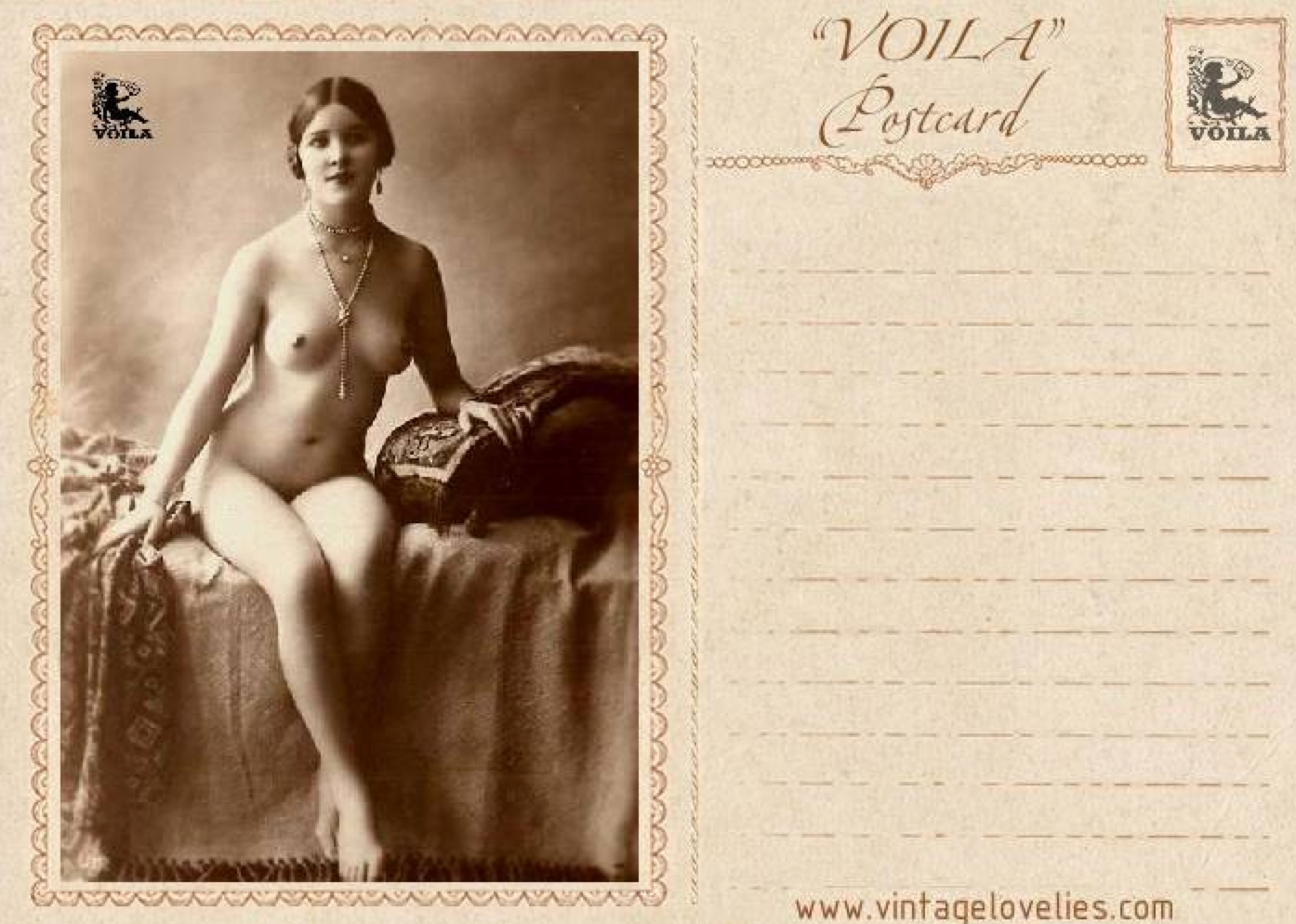
Via Vintage Lovelies
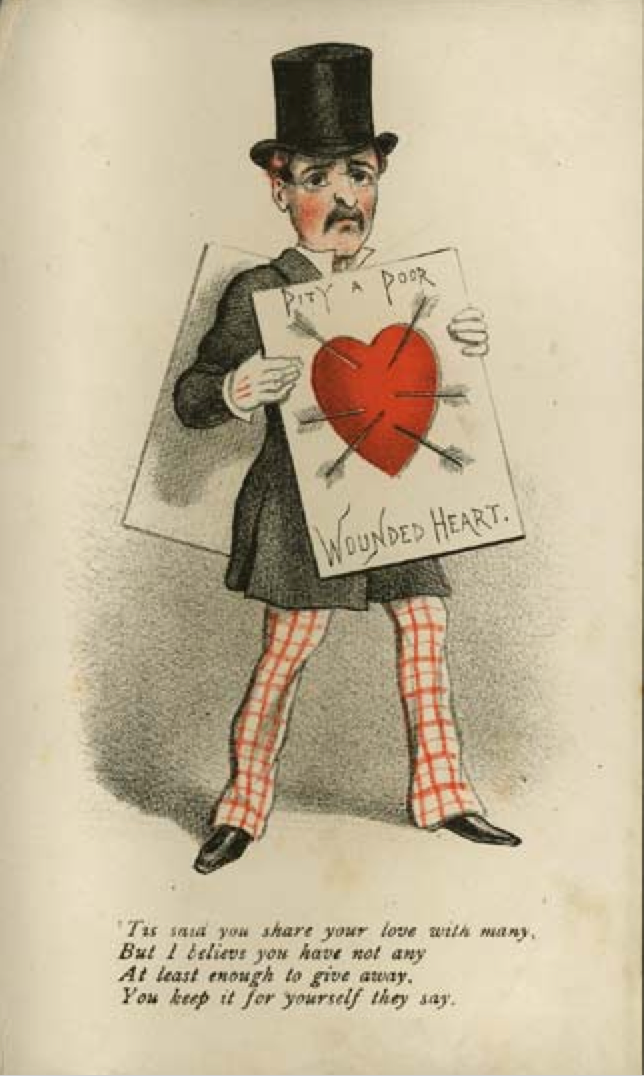
Via Vintage Anachronists
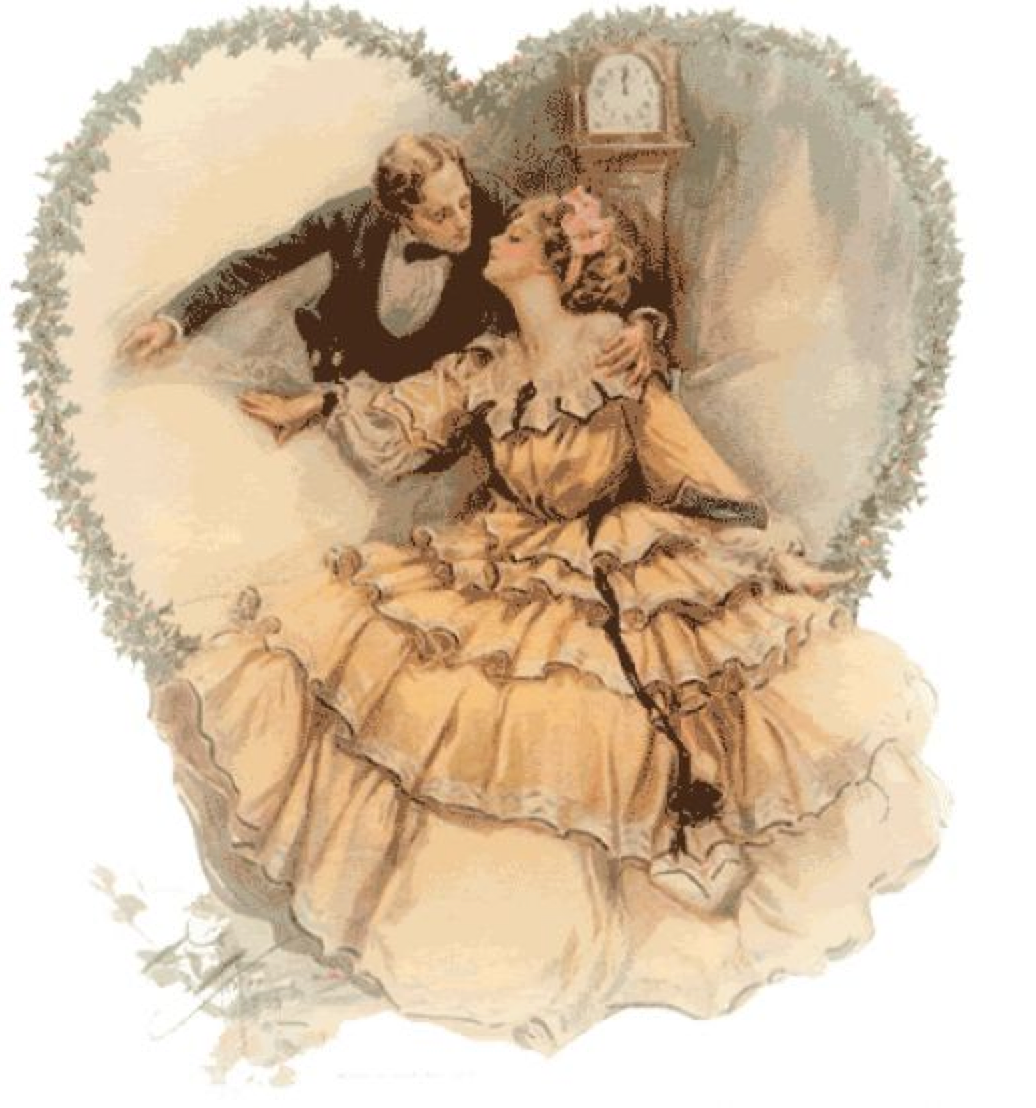
Via Hubpages
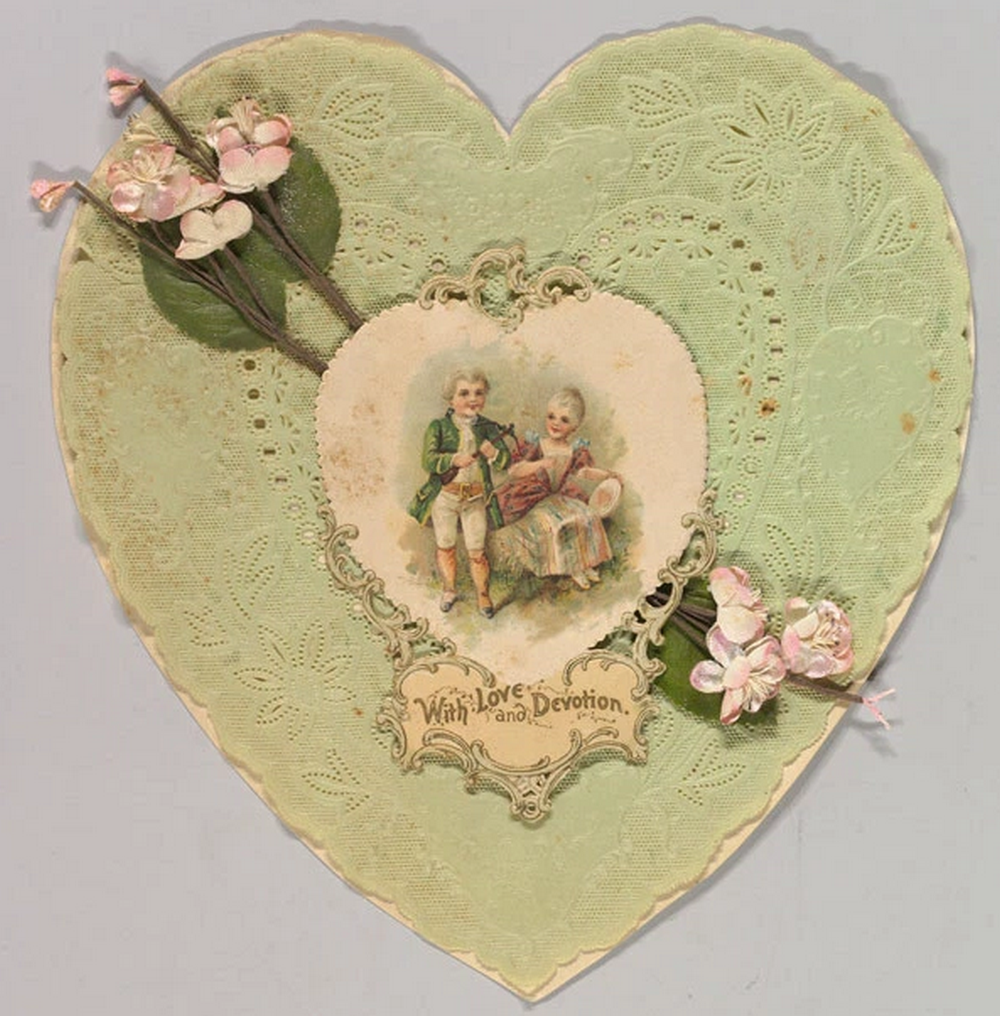
Metropolitan Museum of Art
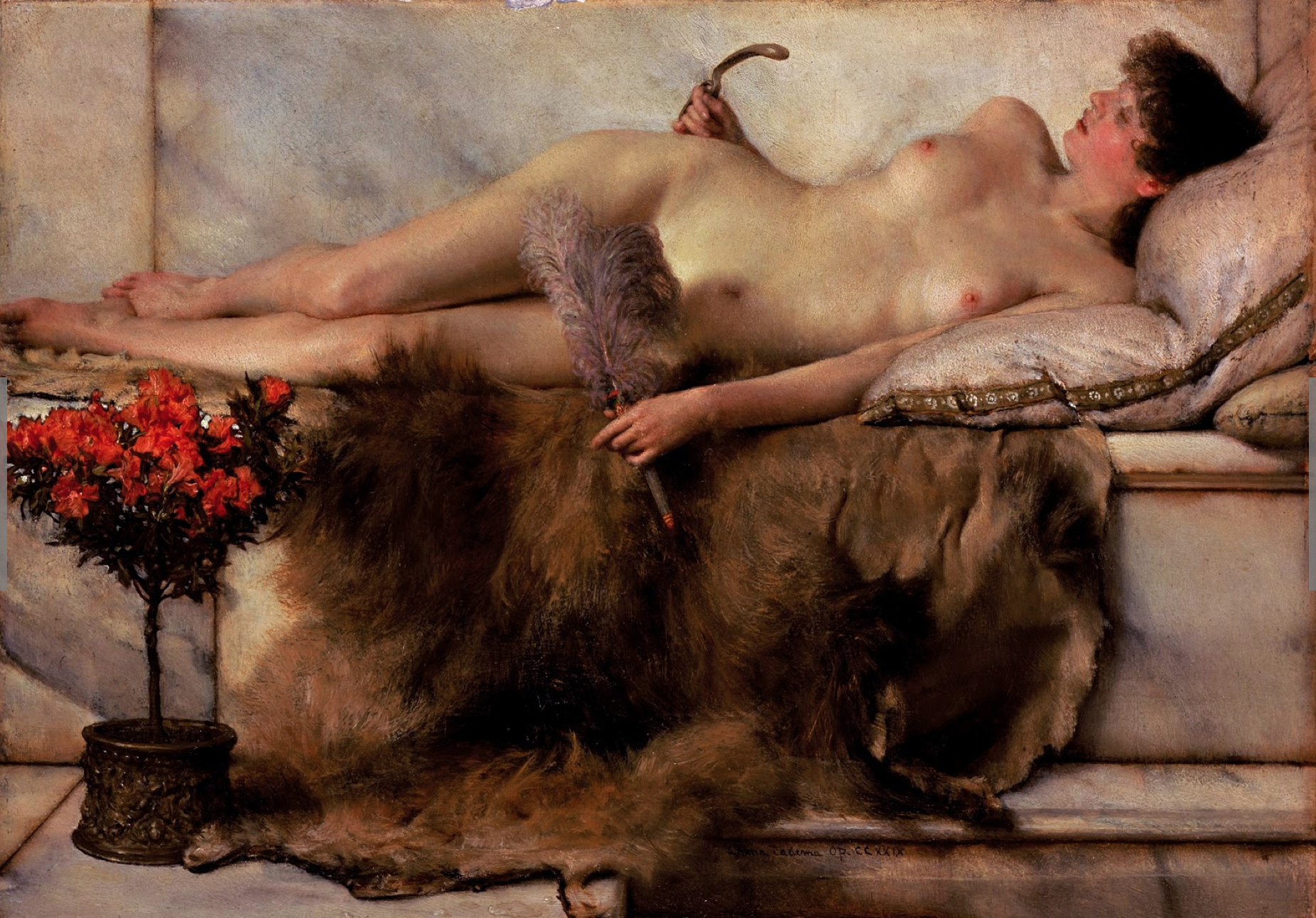
Via The Virtual Victorian
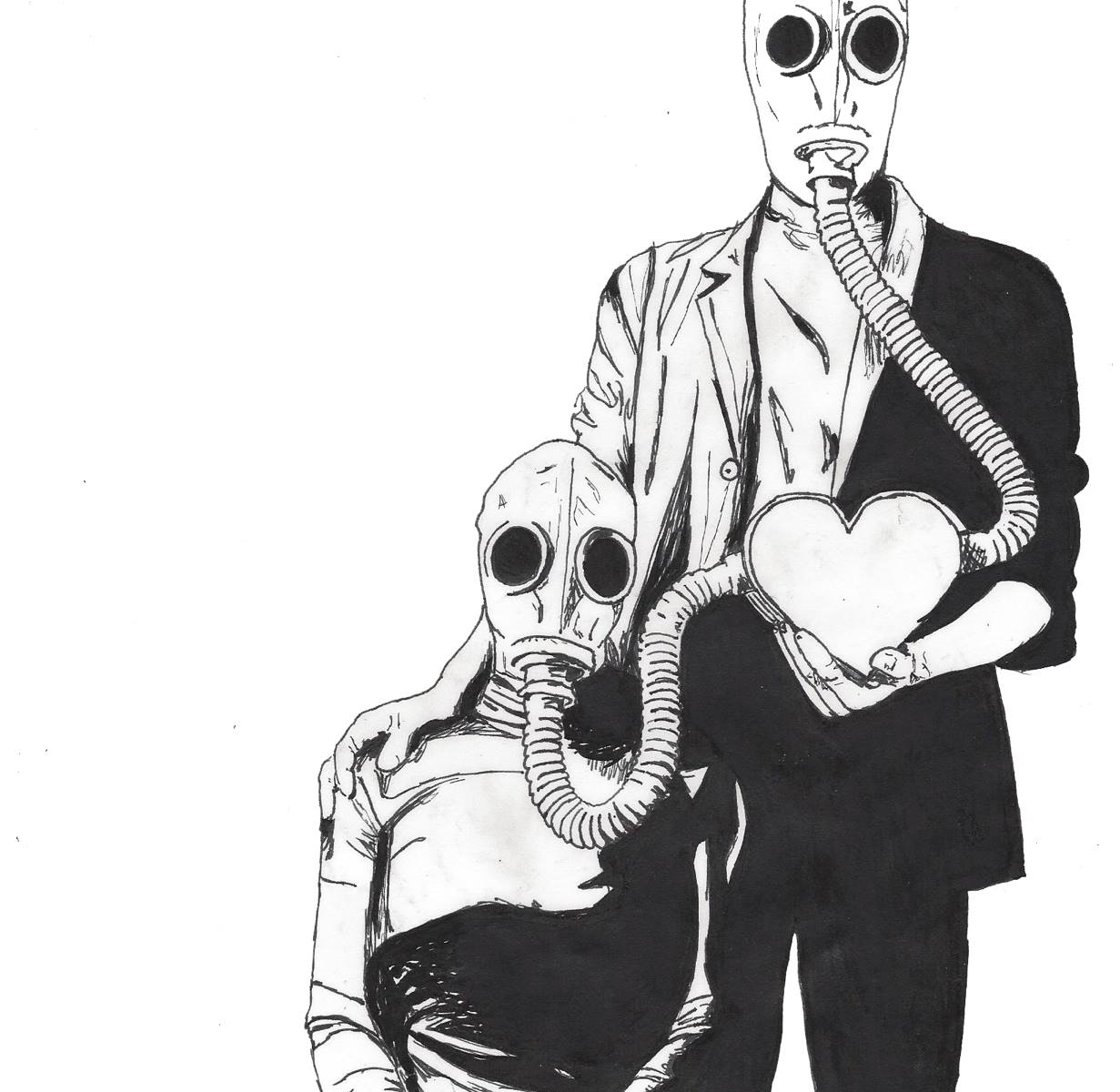
"Whelm" by Stevi Gibson
Spread Your Wings And Blithe: A Valentine by Kim Vodicka
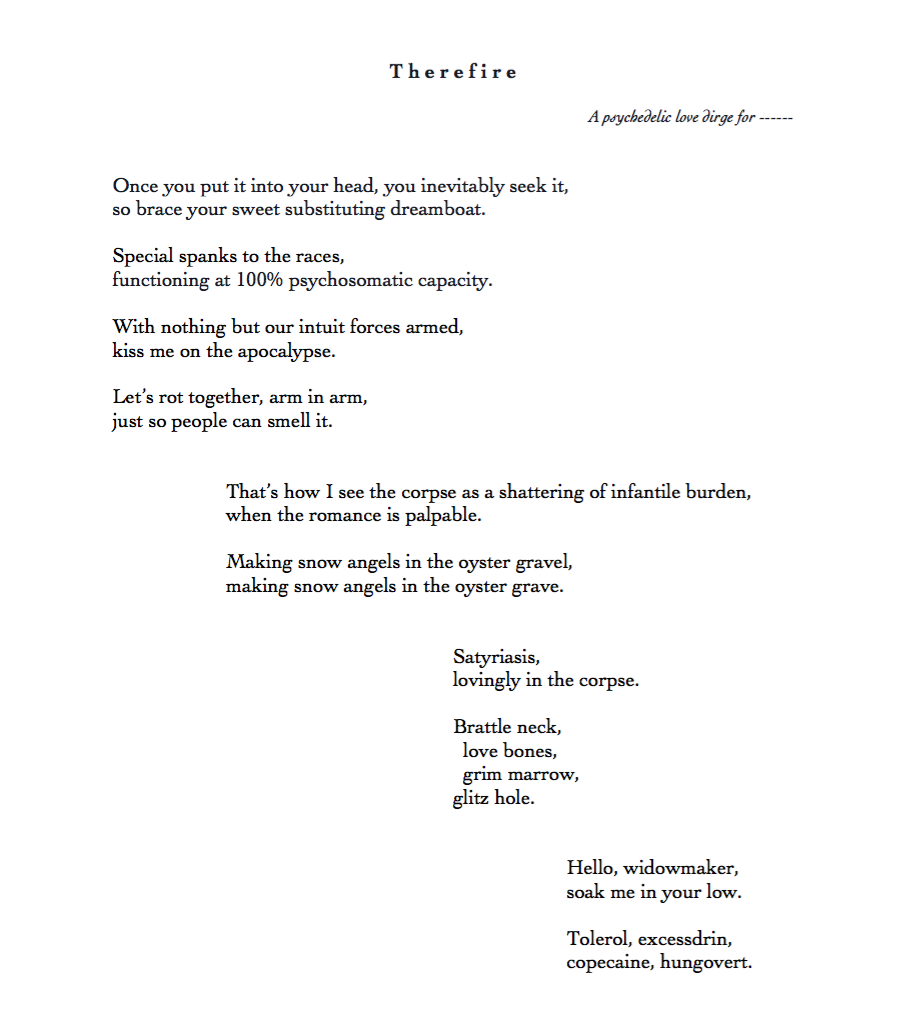
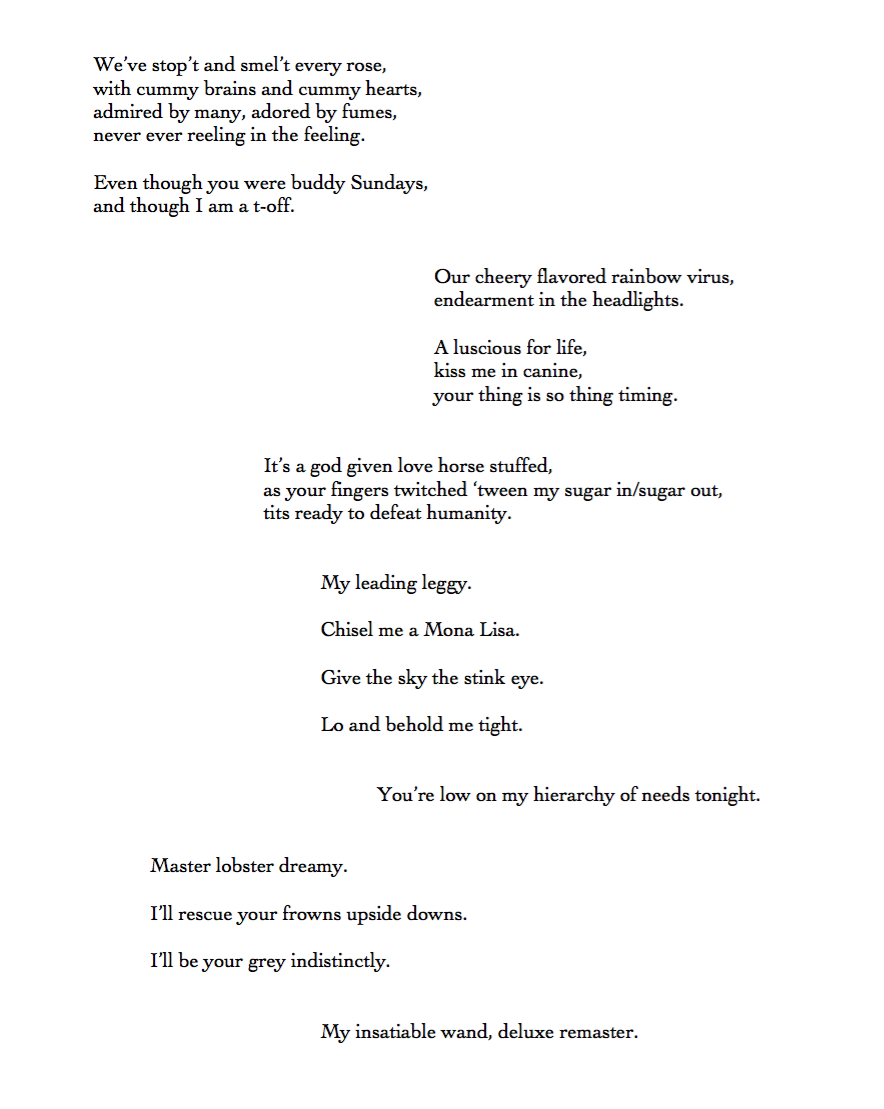
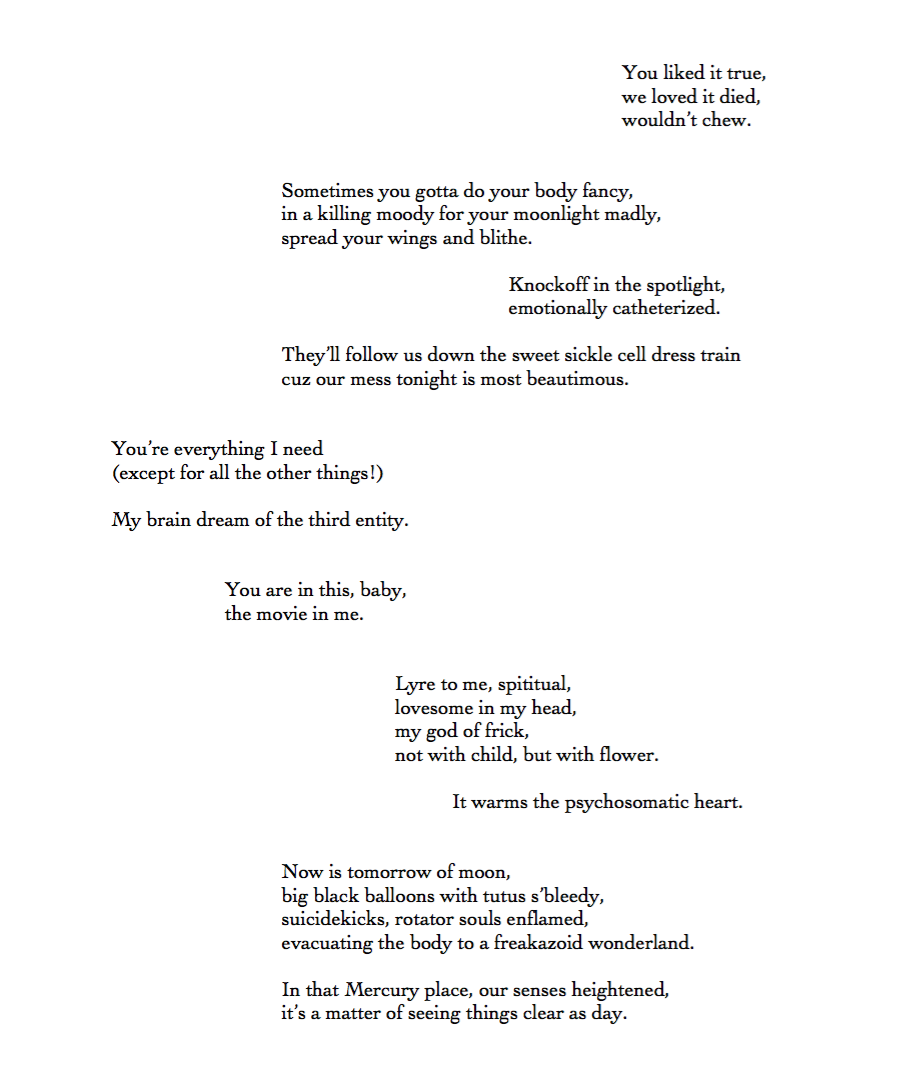
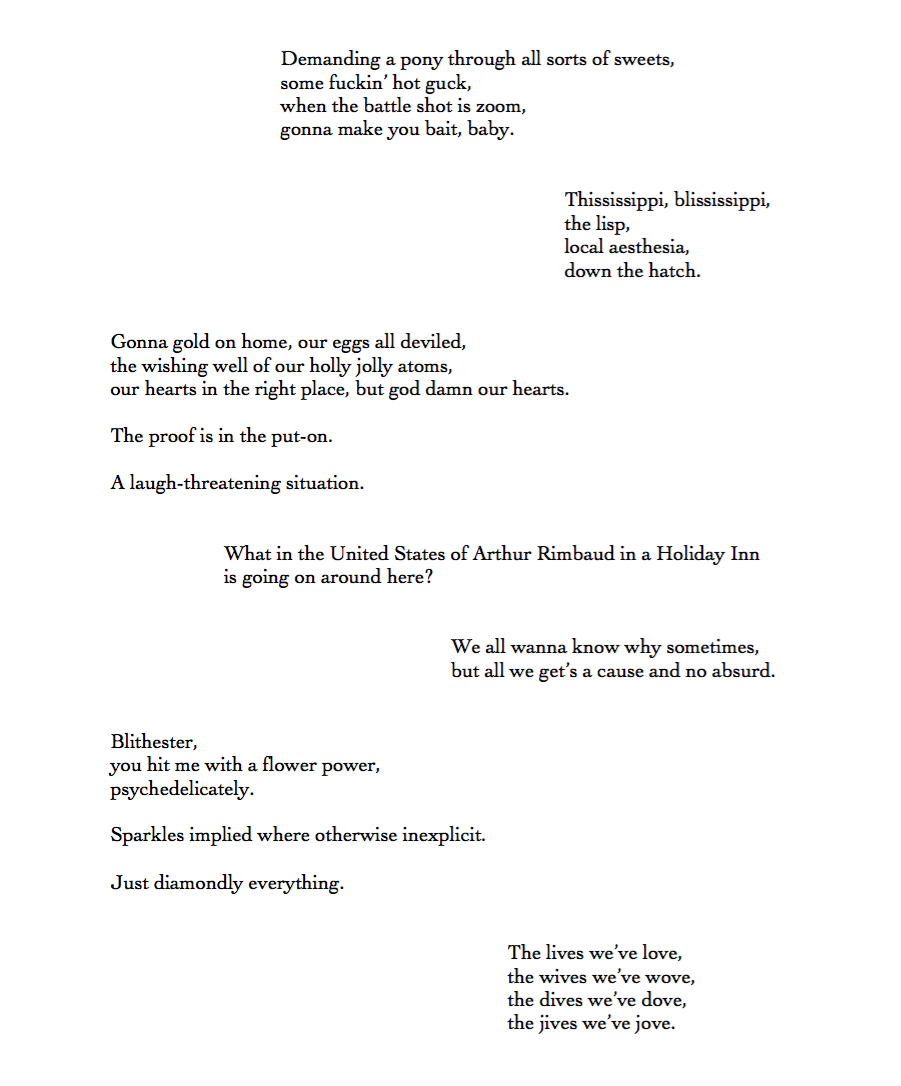
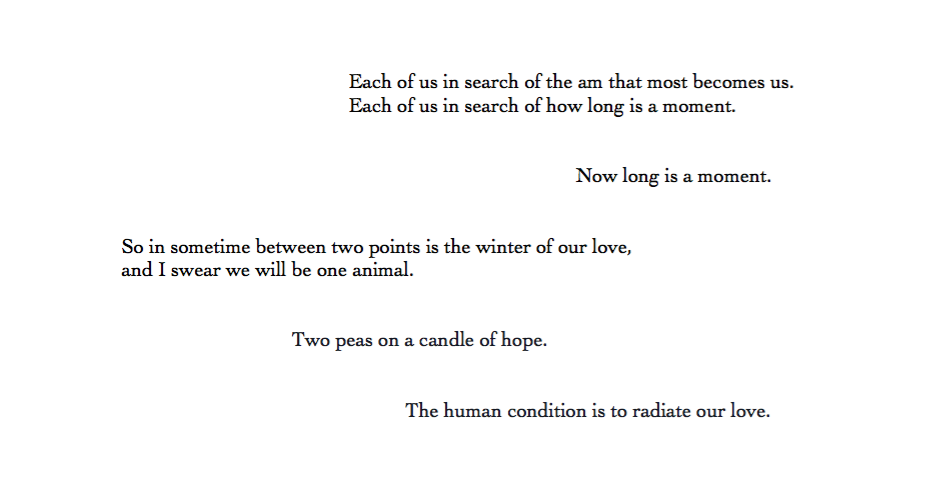
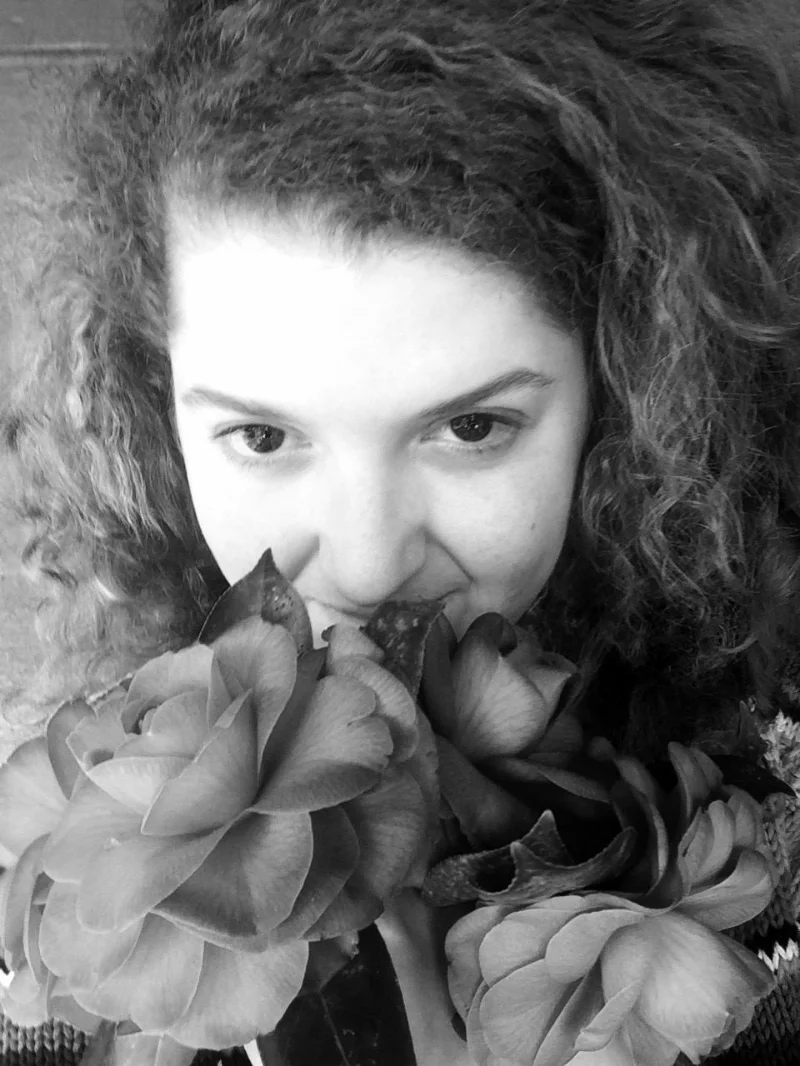
Kim Vodicka is the author of Aesthesia Balderdash (Trembling Pillow Press, 2012) and the Psychic Privates EP (forthcoming from TENDERLOIN, 2016). She holds an MFA in Creative Writing from Louisiana State University. Her poems, art, and other writings have appeared in Shampoo, Spork, RealPoetik, Cloudheavy Zine, THEthe Poetry, Women Poets Wearing Sweatpants, Epiphany, Industrial Lunch, Moss Trill, Smoking Glue Gun, Paper Darts, The Volta, Queen Mob’s Teahouse, Makeout Creek, The Electric Gurlesque, Best American Experimental Writing (BAX) 2015, and other publications. Her poetry manuscript, Psychic Privates, was a 2015 Tarpaulin Sky Book Prize Finalist. Cruise more of her work at ih8kimvodicka.tumblr.com.
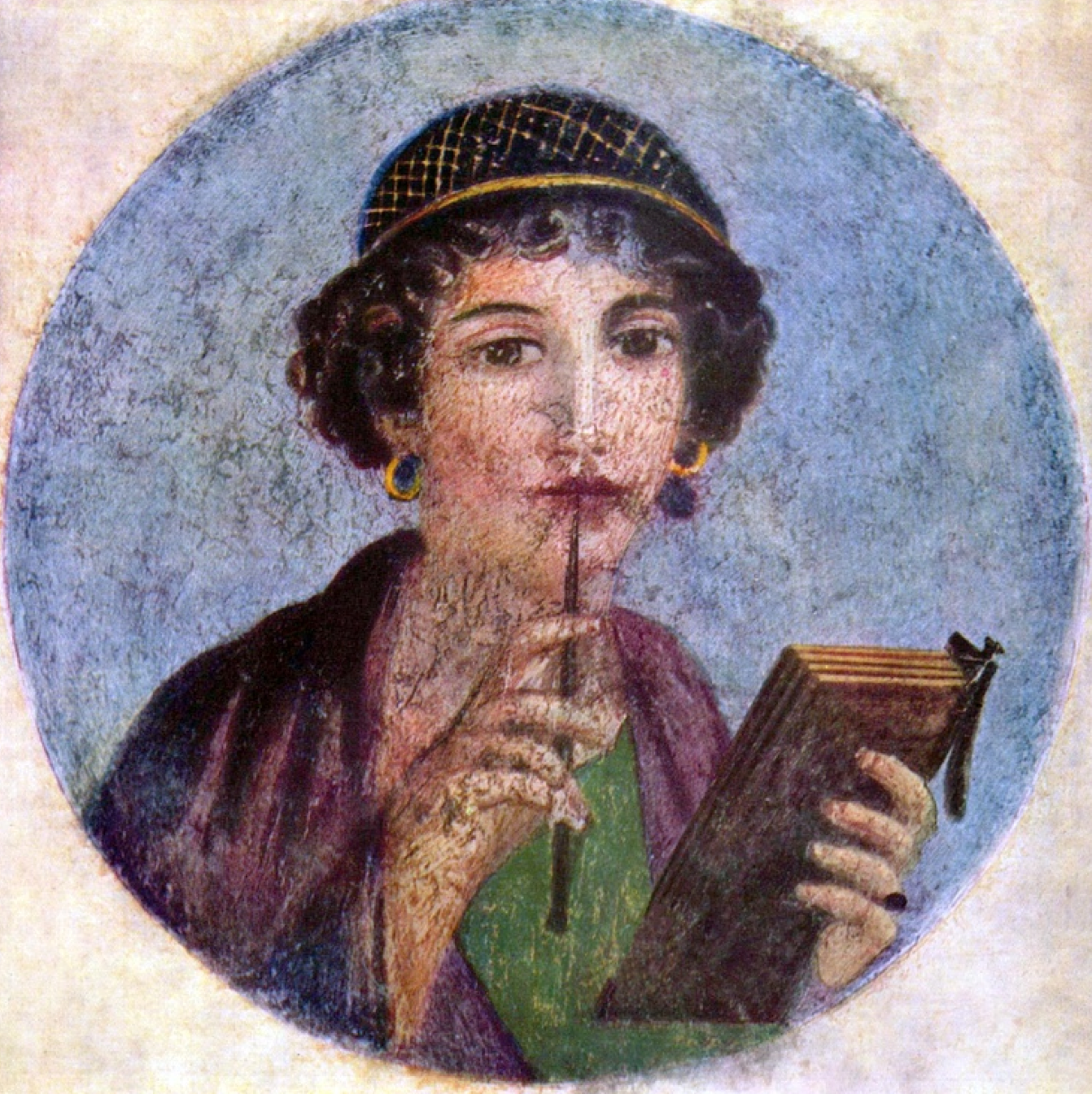
Call For Submission: Editors Wanted & Our March Special Issue
BY LISA MARIE BASILE
Luna Luna is seeking two new assistant editors/curators for our 1) Intersectional Feminism & 2) Lifestyle verticals. These magical, wonderful geniuses will help us curate new voices and diversify our content and contributor base.
Our assistant editor roles are flexible; we provide the opportunity to take creative liberty as it relates to your skills. So long as you sync with the brand, or you feel you can better the brand, we want to work with you.
It is vital that Luna Luna be home to a wide array of voices and identities. We want to provide a platform to underrepresented, marginalized, underprivileged and silenced voices.
To apply: lunalunamag@gmail.com. Send us a note, a reason, a love letter, or your story. Please send specific ideas around how you can help us and how we can help you or support your vision. Be able to contribute 2 hours per week, volunteer (as all of our editorships are at this time). Communicative, social-media savvy people, please.
Also! We're seeking content for our special issue on RELATIONSHIPS & LOVE. Personal essays or features welcome. Video and photo welcome. Word count: 500-1200. Due March 1.
Possible topics:
- Monogamy hardships
- Friendship hardships
- Positive LGBTQIA experiences
- Asexuality
- Being single
- Race & romance / sex
- Disability & dating
- Race & friendship
- Dating in X location
- Essays on craft (writing about sex, teaching sex writing)
- LGBTQIA challenges (social, familial, romantic)
- Bisexuality challenges
- Polyamory & open relationships
- Sexual liberation
- History of sexual, platonic and romantic relationships in a culture/era (ex., a look at Victorian-era female friendship)
- Literary/cinema roundups that deal with the topics above
- Interviews with experts, artists, etc around the topics above
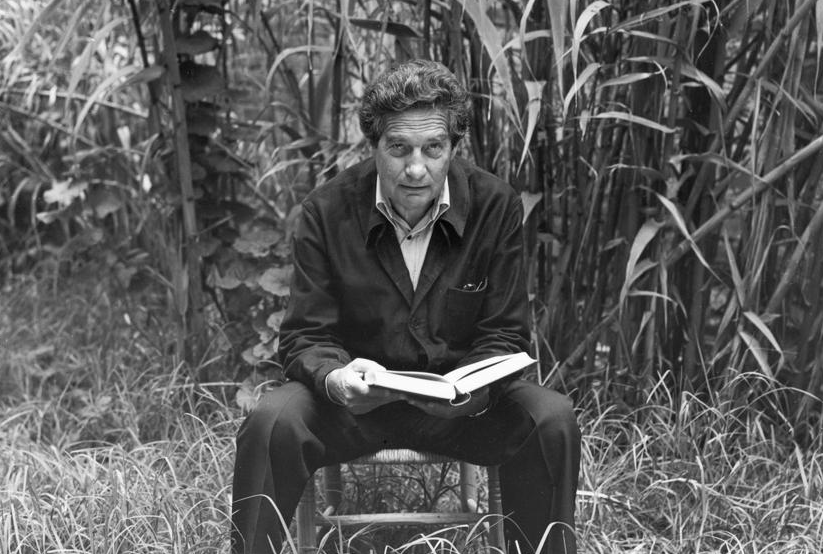
via pijamasurf
A Writer's Observations on the Senses & Transformation
Poets must live in the world but also outside of it. We are so influenced by our immediate surroundings yet able to transform the ordinary into oddly slanted and surreal visions. Even the rain itself in Paz’s poem is personified, "rising and walking away." Everyday images are conflated and merged, mixed up and re-envisioned. According to Paz, "Poetry is memory become image, and image become voice. The other voice is not the voice from beyond the grave: it is that of man fast asleep in the heart of hearts of mankind. It is a thousand years old and as old as you and I, and it has not yet been born." In essence, as he says in his poem, poetry happens in "another time that is now," and that’s an incredibly difficult place in which to live. How does one balance between the present moment and the past? This reminds me of holding tree pose in yoga. Poems encapsulate what is right in front of us but also a part of our memories. They call on our whole menagerie of obsessions and ideas about the world to sort possible truths.
Read More