




• Home
  • indulge
  • new poetry
    • About Luna Luna
    • resources
    • search
  • editor
  • NYC reading
  • dark hour
  • submit
Menu

luna luna magazine

  • Home
  • indulge
  • new poetry
  • About
    • About Luna Luna
    • resources
    • search
  • editor
  • NYC reading
  • dark hour
  • submit
delicious new poetry
'Make of me a piecemeal mound' — poetry by Matthew Gustafson
Mar 10, 2026
'Make of me a piecemeal mound' — poetry by Matthew Gustafson
Mar 10, 2026
Mar 10, 2026
'the fever always holds' — poetry by Abbie Allison
Mar 10, 2026
'the fever always holds' — poetry by Abbie Allison
Mar 10, 2026
Mar 10, 2026
'those petty midnights' — poetry by Zoë Davis
Mar 10, 2026
'those petty midnights' — poetry by Zoë Davis
Mar 10, 2026
Mar 10, 2026
'my dear vesuvius' — poetry by jp thorn
Mar 9, 2026
'my dear vesuvius' — poetry by jp thorn
Mar 9, 2026
Mar 9, 2026
'In the doom tunnel' — poetry by Melissa Eleftherion
Mar 9, 2026
'In the doom tunnel' — poetry by Melissa Eleftherion
Mar 9, 2026
Mar 9, 2026
'Love me as a wilderness' — Ruth Martinez
Mar 9, 2026
'Love me as a wilderness' — Ruth Martinez
Mar 9, 2026
Mar 9, 2026
'lost in the  rapture of man' — poetry by Ian Berger
Mar 9, 2026
'lost in the rapture of man' — poetry by Ian Berger
Mar 9, 2026
Mar 9, 2026
'Stop trying to write something beautiful' — poetry by Diana Whitney
Mar 9, 2026
'Stop trying to write something beautiful' — poetry by Diana Whitney
Mar 9, 2026
Mar 9, 2026
'I am a devotee' — poetry by Patricia Grisafi
Mar 9, 2026
'I am a devotee' — poetry by Patricia Grisafi
Mar 9, 2026
Mar 9, 2026
'come enflesh  our feast' — poetry by Haley Hodges
Mar 9, 2026
'come enflesh our feast' — poetry by Haley Hodges
Mar 9, 2026
Mar 9, 2026
'noonday I dive' — poetry by Karen Earle
Mar 9, 2026
'noonday I dive' — poetry by Karen Earle
Mar 9, 2026
Mar 9, 2026
'To eat dying stars' — poetry by Juliet Cook
Mar 9, 2026
'To eat dying stars' — poetry by Juliet Cook
Mar 9, 2026
Mar 9, 2026
‘same spectral symphony’ — poetry by Julio César Villegas
Jan 1, 2026
‘same spectral symphony’ — poetry by Julio César Villegas
Jan 1, 2026
Jan 1, 2026
'I think I know why I am looking at roses' — poetry by Stephanie Victoire
Jan 1, 2026
'I think I know why I am looking at roses' — poetry by Stephanie Victoire
Jan 1, 2026
Jan 1, 2026
'All the trees are you' — poetry by Barbara Ungar
Jan 1, 2026
'All the trees are you' — poetry by Barbara Ungar
Jan 1, 2026
Jan 1, 2026
'girl straddles the axis  of ancient  and eternal' — poetry by Grace Dignazio
Jan 1, 2026
'girl straddles the axis of ancient and eternal' — poetry by Grace Dignazio
Jan 1, 2026
Jan 1, 2026
'Talk light with me' — poetry by Catherine Graham
Jan 1, 2026
'Talk light with me' — poetry by Catherine Graham
Jan 1, 2026
Jan 1, 2026
'How thy high horse hath fallen' — poetry by Madeline Blair
Jan 1, 2026
'How thy high horse hath fallen' — poetry by Madeline Blair
Jan 1, 2026
Jan 1, 2026
'a paradise called  Loneliness' — poetry by Adam Jon Miller
Jan 1, 2026
'a paradise called  Loneliness' — poetry by Adam Jon Miller
Jan 1, 2026
Jan 1, 2026
'Tell me I taste like hunger' — poetry by Jennifer Molnar
Jan 1, 2026
'Tell me I taste like hunger' — poetry by Jennifer Molnar
Jan 1, 2026
Jan 1, 2026
'I prayed to be released from my longing' — poetry by Michelle Reale
Jan 1, 2026
'I prayed to be released from my longing' — poetry by Michelle Reale
Jan 1, 2026
Jan 1, 2026
'Resurrection dance, a prelude' — poetry by V.C. Myers
Jan 1, 2026
'Resurrection dance, a prelude' — poetry by V.C. Myers
Jan 1, 2026
Jan 1, 2026
'It is noon and the sun is ill' — poetry by Raquel Dionísio Abrantes
Jan 1, 2026
'It is noon and the sun is ill' — poetry by Raquel Dionísio Abrantes
Jan 1, 2026
Jan 1, 2026
'every moon rolling fat through the night' — poetry by Zann Carter
Jan 1, 2026
'every moon rolling fat through the night' — poetry by Zann Carter
Jan 1, 2026
Jan 1, 2026
jan1.jpeg
Jan 1, 2026
'I have been monstrously good' — erasures by Lauren Davis
Jan 1, 2026
Jan 1, 2026
'The light slices the mouth' — poetry by Aakriti Kuntal
Jan 1, 2026
'The light slices the mouth' — poetry by Aakriti Kuntal
Jan 1, 2026
Jan 1, 2026
'quiet grandfathers  in dark tuxedos' — poetry by Scott Ferry
Dec 19, 2025
'quiet grandfathers in dark tuxedos' — poetry by Scott Ferry
Dec 19, 2025
Dec 19, 2025
'made a deal / with Azrael' — poetry by Triniti Wade
Dec 19, 2025
'made a deal / with Azrael' — poetry by Triniti Wade
Dec 19, 2025
Dec 19, 2025
'The birth of a body that never unraveled' — an excerpt by Hillary Leftwich
Dec 19, 2025
'The birth of a body that never unraveled' — an excerpt by Hillary Leftwich
Dec 19, 2025
Dec 19, 2025
'Time's metronome blank' — poetry by Rehan Qayoom
Dec 19, 2025
'Time's metronome blank' — poetry by Rehan Qayoom
Dec 19, 2025
Dec 19, 2025

The Film Every Millennial Woman Needs to See

March 24, 2016

BY STEPHANIE SPIRO

Editor's Note: a version of this appeared on our old site.

Lately I’ve been thinking about a recent The New York Times article about entertainment for “the Instagram age” and how this relates to Jung’s “collective unconscious” (similar now to a shared Facebook 'feed') and Jung’s mythical female archetypes. Somehow this inspired me to re-visit Pump Up the Volume (1990), a film that was made before social media and before Instagram. It was released in 1990, featuring kids just leaving high school and turning 18.

This was a decade before the Millennials reached adulthood and started blogging and becoming activists, but in some key ways it’s the Millennial trigger movie. Seek it out. It’s wise and it’s feminist. It’s dated (no cell phones, social media or blogs) but it’s also way ahead of its time. It deals compassionately with so many teen issues: censorship, teen pregnancy, suicide, bullying, mental illness, etc, and it’s certainly a film for the Instagram age.

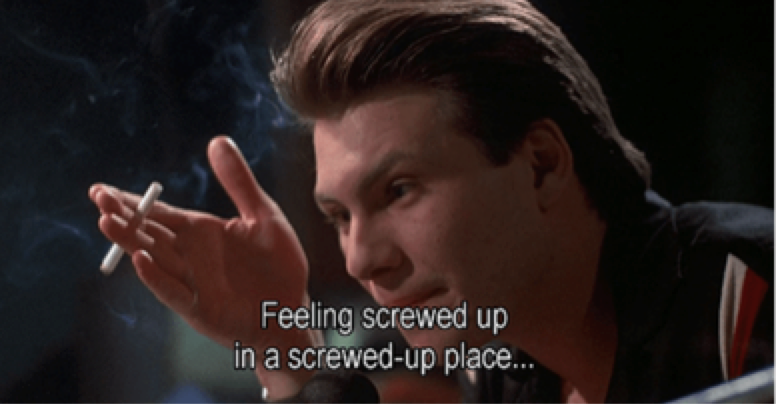
PUtV tells the story of a lonely kid (played by Christian Slater) who starts a pirate radio station to vent about his oppressive high school. The station quickly becomes a cult sensation because clearly these kids need an outlet and a voice. The station feels like a blog or a podcast. The pirate DJ calls himself Happy Harry Hard On. Harry’s high school is called Hubert Humphrey High. High school is its own microcosm, an entire world to a teen. In this case, HHH is the WWW and nothing outside this bubble exists. Until Happy Harry arrives.

Slater is the star of the film, but he mostly just rants amusingly and plays censored music.   
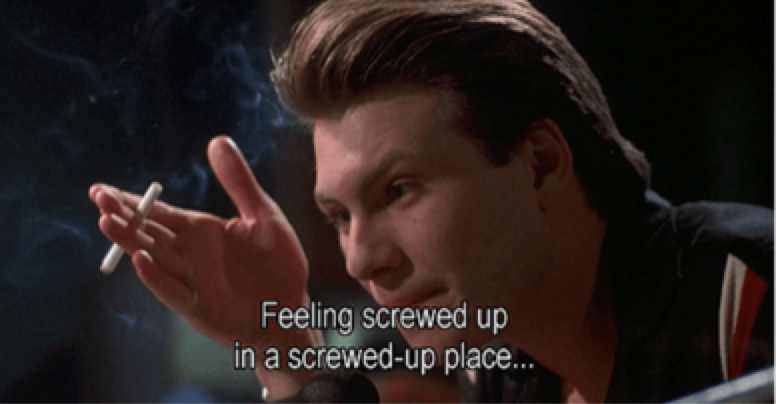
All the major players in the film are women and they represent all the forces of both good and evil in this world of HHH.angst.com. So let’s take a quick glance at what could be archetypal women in Pump Up the Volume:

1. The Mother

There is a teen pregnancy and the pregnant girl is expelled without any explanation. She birth’s the film’s conflict (and the new, passionate generation of young activists called Millennials, populating HHH and reaching adulthood in 2000). She becomes the story’s inciting incident and she hurls Happy Harry into a deeper dialogue with the school. Because of her, Harry becomes involved politically, challenging the school and harassing the guidance counselor. (side note: the counselor calls his after-school program “BIONIC”... ironic).

2. The Maiden

Paige Woodward (Paige, meaning “young helper”) is a classmate of Harry’s. She’s the good girl and an avid fan of the pirate radio station that eventually liberates her. She breaks the mold when she puts her pearls in a microwave and blows up her kitchen. She’s also a catalyst for Harry.

3. The Wise Woman

Harry’s inspirational English teacher encourages him to write with his heart and she is the supportive adult in his life, the woman who welcomes communication. The foil for the wise woman and the other authoritative character in the film is also female. She’s a sadistic school principal who shadows the wise woman and becomes the film’s villain and tyrant.

4. The Lover/Queen/Hetairae (Hetaerae)

Nora (Samantha Mathis) is the love interest for Harry and a huge force of nature. She’s an amalgam of archetypes, all powerful. She’s the driving force of the film and the real deliverer of the film’s message (she literally drives Harry in his jeep so he can broadcast on the run). She’s fearless, a warrior. Wikipedia says that the hetairai were sophisticated companions in Ancient Greece, “independent and sometimes influential women who wore distinctive dresses.” They’re described as courtesans. Nora dresses differently in a vintage-inspired military jacket and brightly striped tights. She challenges our hero, and she even bares her breast (courtesan-style). According to Gaia:

“Similar to mothers, Hetairae find meaning and fulfillment in relationships. However, their alliances prioritize passion and intensity and aren’t necessarily with husbands or children. Hetairae were well educated and skilled in the arts. Throughout history, they have served as mistresses and muses devoted to inspiring their companions. Women who strongly embody this energy often contend with disapproval from the culture because their most valued relationships often defy established norms.”

From the Rilke poem, “Tombs of the Hetaerae:"

“For they were riverbeds once,and over them in brief, impetuous waves(each wanting to prolong itself, forever)the bodies of countless adolescents surged;and in them roared the currents of grown men.And sometimes boys would burst forth from the mountains of childhood, would descend in timid streamsand play with what they found on the river’s bottom,until the steep slope gripped their consciousness.”

Adolescents (HHH students) surged from the hetaerae (Nora) and in them roared the currents of grown men (Happy Harry’s rite of passage). Even the name “Nora” is derived from the word “honor.” She is the honorable general, the river’s current, leading the film’s fight and corralling our hero, giving him the guts to do the right thing (and declaring to him that he makes her “guts go gooey.”) She is not an object of desire; she is a force for change. Harry can’t speak without her.

So what about Harry and Nora? Harry is depressed and shy. He plays the station’s signature song, the beautiful and comically defeatist “Everybody Knows” by Leonard Cohen. Life is hard, but #SoBeIt, he says. He talks about how “there’s nothing to do anymore. All the great themes have been used up and turned into theme parks.” This reminded me of Leonard in the movie Her (2013) talking to his OS system/female driving force when he says: “Sometimes I think I’ve felt everything I’m ever going to feel and from here on out I’m not going to feel anything new.... just lesser versions of things I’ve already felt.”

Enter: manic pixie dream girl to inject joie de vivre as an object of desire for Harry and a filmic happiness surrogate. Alas, Nora is no pixie. She’s sensual and smart, politically-driven and fully fleshed out. She relentlessly pursues Harry because she knows what she wants, but she never loses sight of the big picture (justice for the school, open communication).
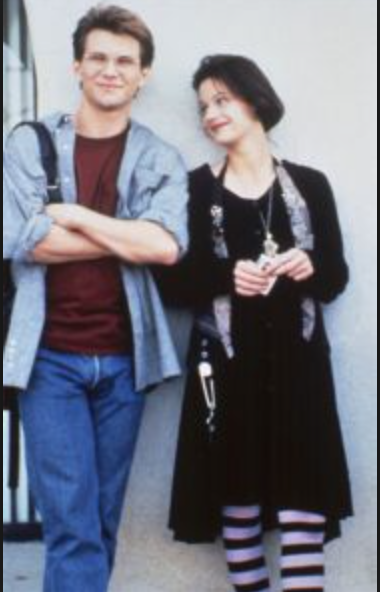
Harry falls for “poetry lady” before he even sees her (again, she is not an object and not even a visual entity at first). Her letters to the radio station are tantalizing to him. They read like so: “Every night you enter me like a criminal... jam me, jack me, pull me, push me. Talk hard.” Harry responds: “I like the idea that a voice can just go somewhere uninvited... maybe a thought is like virus.” So much of this sounds like the language of social media. A thought can go viral.

For proof, just visit the TED site. TED’s revolving set tag lines include: “ideas that spread” and “like a virus, but with inspiration instead of sneezing.” All of these definitions of viral information weren’t as mainstream in 1990 as they are now. The majority of what amateur, anonymous hacktivist HHH transmits can be meme’d and packaged for mass consumption, blogged and re-blogged over Tumblr. He’s a one-man Reddit with a nightly AMA, reminding the kids to eat their cereal with a fork and do their homework in the dark (an ‘elevator pitch’ for teen angst). Every line in the film can be GIF’d, tagged, packaged, pitched, and tweeted in under 140 characters. This is a social media film, socially conscious, kind. It’s also a great feminist film. Every important character is female.

If you have the chance, revisit Pump Up the Volume, available here on DVD (and shamefully not streaming on Netflix or Amazon). As you watch, imagine Nora, the “poetry lady,” fearlessly leading the charge, striped tights like war paint or the striped floors of some medieval place of worship — the Siena Cathedral or a series of underscores in a sacred and yet to be named website URL.
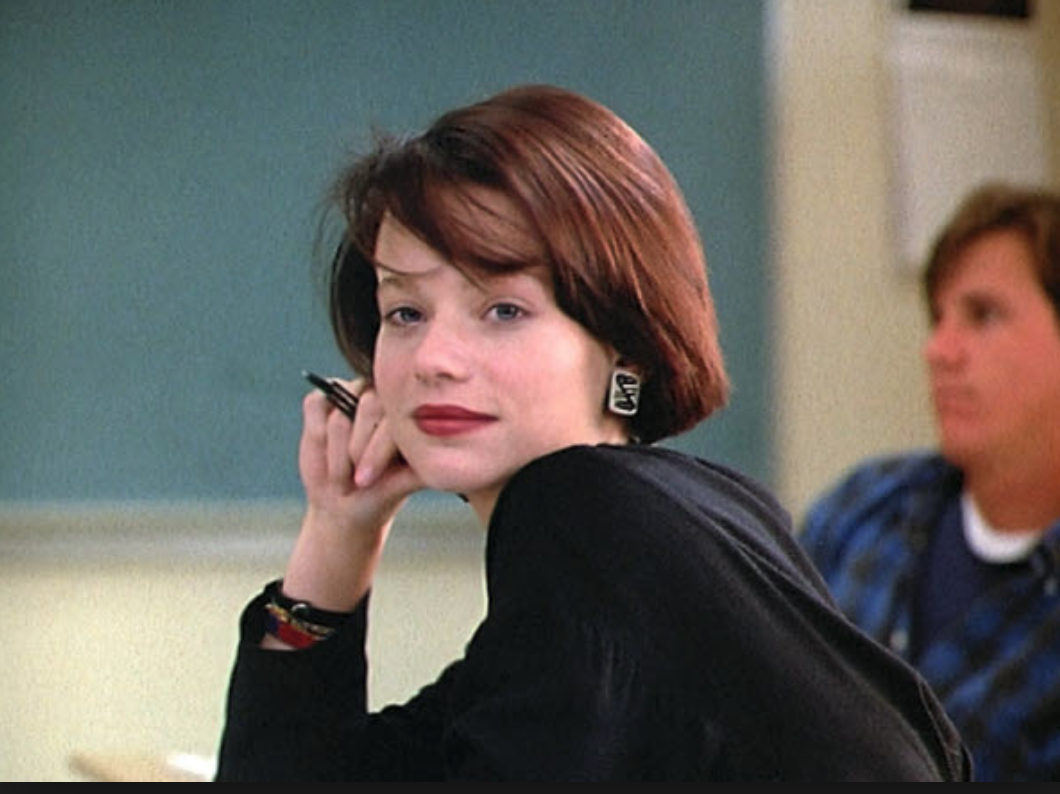
Nora, ‘the woman in tights’ is challenging the world to open up multiple channels for dialogues between all people. Her young followers carry banners with the hashtags #TalkHard and #TruthIsAVirus. The message is a status update going viral years before the term had become a part of the vernacular, before the first hashtag and the first tweet, and long before the first blog was blasted into a vast and connective cybersphere. Together, this army of early pre-millennials march forward and tell the future. They chant to a distant, unformed network. A unified voice of the poetry lady begins to get a foothold in a yet to be written line of code. It speaks to future generations of highly motivated kids: “... my insides spill on your altar and tell the future. My steaming gleaming guts spell out your nature. I know you... not your name, but your game. I know the true you. Come to me, or I’ll come to you.”


Stephanie Spiro recently graduated from The New School for Public Engagement in New York City, with a focus on media and psychology. She’s a Twitter fanatic and contributing writer at Bit Rebels as well as a contributor, editor, and aggregator at The Viral Media lab, a website that explores "the ways viral media generate meaning, transform culture and inspire social change.” She was previously featured in The Huffington Post's #twitterpowerhouse series,"Rise of the Female Geek,” in May 2011. She was born in Illinois, lives in New York City, loves film, and caters to a nameless, diabetic cat.

In Art Tags pump up the volume, film
← An Interview With Icelandic Film Editor Elisabet RonaldsdottirInterview with Poet Leah Umansky About Her New Chapbook 'Straight Away the Emptied World' →
Featured
'I think I know why I am looking at roses' — poetry by Stephanie Victoire
Stephanie Victoire
'I think I know why I am looking at roses' — poetry by Stephanie Victoire
Stephanie Victoire
Stephanie Victoire
'All the trees are you' — poetry by Barbara Ungar
Barbara Ungar
'All the trees are you' — poetry by Barbara Ungar
Barbara Ungar
Barbara Ungar
'girl straddles the axis  of ancient  and eternal' — poetry by Grace Dignazio
Grace Dignazio
'girl straddles the axis of ancient and eternal' — poetry by Grace Dignazio
Grace Dignazio
Grace Dignazio
Featured
'Make of me a piecemeal mound' — poetry by Matthew Gustafson
Matthew Gustafson
Matthew Gustafson
'Make of me a piecemeal mound' — poetry by Matthew Gustafson
Matthew Gustafson
Matthew Gustafson
Matthew Gustafson
Matthew Gustafson
'the fever always holds' — poetry by Abbie Allison
Abbie Allison
Abbie Allison
'the fever always holds' — poetry by Abbie Allison
Abbie Allison
Abbie Allison
Abbie Allison
Abbie Allison
'those petty midnights' — poetry by Zoë Davis
Zoë Davis
Zoë Davis
'those petty midnights' — poetry by Zoë Davis
Zoë Davis
Zoë Davis
Zoë Davis
Zoë Davis
'my dear vesuvius' — poetry by jp thorn
jp thorn
jp thorn
'my dear vesuvius' — poetry by jp thorn
jp thorn
jp thorn
jp thorn
jp thorn
'In the doom tunnel' — poetry by Melissa Eleftherion
Melissa Eleftherion
Melissa Eleftherion
'In the doom tunnel' — poetry by Melissa Eleftherion
Melissa Eleftherion
Melissa Eleftherion
Melissa Eleftherion
Melissa Eleftherion
'Love me as a wilderness' — Ruth Martinez
Ruth Martinez
Ruth Martinez
'Love me as a wilderness' — Ruth Martinez
Ruth Martinez
Ruth Martinez
Ruth Martinez
Ruth Martinez
'lost in the  rapture of man' — poetry by Ian Berger
Ian Berger
Ian Berger
'lost in the rapture of man' — poetry by Ian Berger
Ian Berger
Ian Berger
Ian Berger
Ian Berger
'Stop trying to write something beautiful' — poetry by Diana Whitney
Diana Whitney
Diana Whitney
'Stop trying to write something beautiful' — poetry by Diana Whitney
Diana Whitney
Diana Whitney
Diana Whitney
Diana Whitney
'I am a devotee' — poetry by Patricia Grisafi
trish grisafi
trish grisafi
'I am a devotee' — poetry by Patricia Grisafi
trish grisafi
trish grisafi
trish grisafi
trish grisafi
'come enflesh  our feast' — poetry by Haley Hodges
Haley Hodges
Haley Hodges
'come enflesh our feast' — poetry by Haley Hodges
Haley Hodges
Haley Hodges
Haley Hodges
Haley Hodges
'noonday I dive' — poetry by Karen Earle
Karen Earle
Karen Earle
'noonday I dive' — poetry by Karen Earle
Karen Earle
Karen Earle
Karen Earle
Karen Earle
'To eat dying stars' — poetry by Juliet Cook
Juliet Cook
Juliet Cook
'To eat dying stars' — poetry by Juliet Cook
Juliet Cook
Juliet Cook
Juliet Cook
Juliet Cook
‘same spectral symphony’ — poetry by Julio César Villegas
Julio César Villegas
‘same spectral symphony’ — poetry by Julio César Villegas
Julio César Villegas
'I think I know why I am looking at roses' — poetry by Stephanie Victoire
Stephanie Victoire
Stephanie Victoire
'I think I know why I am looking at roses' — poetry by Stephanie Victoire
Stephanie Victoire
Stephanie Victoire
Stephanie Victoire
Stephanie Victoire
'All the trees are you' — poetry by Barbara Ungar
Barbara Ungar
Barbara Ungar
'All the trees are you' — poetry by Barbara Ungar
Barbara Ungar
Barbara Ungar
Barbara Ungar
Barbara Ungar
'girl straddles the axis  of ancient  and eternal' — poetry by Grace Dignazio
Grace Dignazio
Grace Dignazio
'girl straddles the axis of ancient and eternal' — poetry by Grace Dignazio
Grace Dignazio
Grace Dignazio
Grace Dignazio
Grace Dignazio
'Talk light with me' — poetry by Catherine Graham
Catherine Graham
Catherine Graham
'Talk light with me' — poetry by Catherine Graham
Catherine Graham
Catherine Graham
Catherine Graham
Catherine Graham
'How thy high horse hath fallen' — poetry by Madeline Blair
Madeline Blair
Madeline Blair
'How thy high horse hath fallen' — poetry by Madeline Blair
Madeline Blair
Madeline Blair
Madeline Blair
Madeline Blair
'a paradise called  Loneliness' — poetry by Adam Jon Miller
Adam Jon Miller
Adam Jon Miller
'a paradise called  Loneliness' — poetry by Adam Jon Miller
Adam Jon Miller
Adam Jon Miller
Adam Jon Miller
Adam Jon Miller
'Tell me I taste like hunger' — poetry by Jennifer Molnar
Jennifer Molnar
Jennifer Molnar
'Tell me I taste like hunger' — poetry by Jennifer Molnar
Jennifer Molnar
Jennifer Molnar
Jennifer Molnar
Jennifer Molnar
'I prayed to be released from my longing' — poetry by Michelle Reale
Michelle Reale
Michelle Reale
'I prayed to be released from my longing' — poetry by Michelle Reale
Michelle Reale
Michelle Reale
Michelle Reale
Michelle Reale
'Resurrection dance, a prelude' — poetry by V.C. Myers
V.C. Myers
V.C. Myers
'Resurrection dance, a prelude' — poetry by V.C. Myers
V.C. Myers
V.C. Myers
V.C. Myers
V.C. Myers
instagram

COPYRIGHT LUNA LUNA MAGAZINE 2025