


Joanna C. Valente is a human who lives in Brooklyn, New York. They are the author of Sirs & Madams, The Gods Are Dead, Marys of the Sea, Sexting Ghosts, Xenos, No(body), #Survivor, (forthcoming, The Operating System), and is the editor of A Shadow Map: Writing by Survivors of Sexual Assault. They received their MFA in writing at Sarah Lawrence College. Joanna is the founder of Yes Poetry and the senior managing editor for Luna Luna Magazine. Some of their writing has appeared in The Rumpus, Them, Brooklyn Magazine, BUST, and elsewhere. Joanna also leads workshops at Brooklyn Poets. joannavalente.com / Twitter: @joannasaid / IG: joannacvalente / FB: joannacvalente
Read More
On Hope, Creativity, Spiritual Self-Care & Chronic Illness
BY NICOLETTE CLARA ILES
Throughout my adolescent and adult life, I have not known ‘wellness.’ In fact, mentally and physically I live with what would be described as ‘chronic illness’. Like the woodland hag who only knows the forest or the sea nymph who knows the depths of the sea only too well, I know illness. I also know joy in its fleetingness — the power of singing a favorite song from the top of your lungs — and what I often say has been a great addition to my coping toolbox: Creativity.
Living with various diagnoses, their forms changing and taking on new names with fresh manifestations quite often, the reality of living with them is grasping for hope.
Hope, by definition, could be seen as ‘wanting something else to happen’, but for those of us with chronic illness, we know that ‘something else’ is unlikely within our lifetimes. But there is such a thing as hope. For me, it is in creating.
Utilising my creativity has meant taking this gift, however it’s looked at, and turning it into something manageable. When there is little to ‘manage’ in a daily life of illness, something stirs within all that pain and suffering; call it magic, call it art, call it hope — or whichever name it goes by — but it is potent.
Within that potency, a vision. It can be what you hold onto during a flare up or an episode. Some call this self-care. While I view self-care as something instrumental for ourselves, there is that looming demon of capitalism, the industry of self-care or wellness — which doesn’t always find ways to include those of us whose way of being is not or can’t be, well.
So what can we do, as chronically ill people, to shine our light? It certainly is a hurdle to have your voice heard, when at times it can be near-impossible to speak it. That is why I speak the language of images and storytelling. With creative self-care, one can imagine whole worlds they wish to reside in, even if it’s from bed.
Amongst the various ways to approach creativity as a chronically ill person, I would advise to play around with that which works for you. In order to discover this creativity within, playful exploration is a key.
If you have a day where all you can do is very little, see what that little amount could entail — without pushing yourself beyond your limits. On days like this, I like to write not whole poems, but fragments. See how writing small passages of words looks upon paper, and how it feels to “get out” those words, no matter how short they may be.
It could be painting with the element of water by your bedside, or expressing how you’re feeling with the fire in your belly speaking out, but whatever it is, it is worthwhile.
In the most recent years of my illnesses, I have learnt some self-care strategies that don’t just include objects you need to buy. Sometimes, in the worst pain, we may already have some of the tools we need.
Panic attacks taught me about the power of the breath, and how breathwork has the potential to be a free factor in self-caring for this painful body. The spirituality that arose from curiosity taught me that without factoring in the Mind, Body & Soul, these three main parts of ourselves can become out of balance. Physical pain teaches me not to push the boundaries of this body, and within that, how to be more compassionate.
A helpful breathing technique could be one that you create, or one that exists. I like to focus on the out-breath as it flows out. Time can stretch so much when we have so much of it to our hands, and focusing on the breath that exhales out of us can calm the nerves of the next inhale. Feel free to re-create your own version of this.
Visualisation, a type of magic to me, is also a meditative exercise I find useful. Visualise yourself being surrounded — if you feel called and safe to — by a peaceful light. As this “light” holds you in safety, visualise it calming all the tension of your soul and body. While we may not be able to “rid” ourselves of pain and illness, we can, if only for a moment, imagine these tense feelings washing away in that space.
Self-care, to me, comes from listening — to the body, the mind, and what rumbles within the soul. Ask yourself:
What do I need right now?
What have I needed?
Can I find that from where I am currently?
When you can listen to yourself, or feel listened to, it can be a soulful way of soothing all the ways we haven’t been listened to as people living with chronic illness. We owe it to ourselves to listen to our minds and bodies, in order to care for what we may need them to receive and feel.
Some of us may have less privilege or resources than others may. However, we do have the power of gifting ourselves our deepest desires in that which lifts us up. Find a story that resonates with you, and you are already the hero of that story, because you are fighting each day. You are listening to your own body, even if it’s screaming to be heard more than you’d like. That story holdS the archetype, the joining thread that guides you into caring truly for the self. The gift of being gentle to a chronically ill mind or body is one that will serve as the power we need to go forth in these lives.
Nicolette Clara Iles is a British-Jamaican photographic artist, witch, storyteller and lives with Schizoaffective Bipolar Disorder and Fibromyalgia. You can find their work via nicoletteclara.co.uk or @nicoletteclara on socials.
You can also support them via: Paypal.me/farmwitch
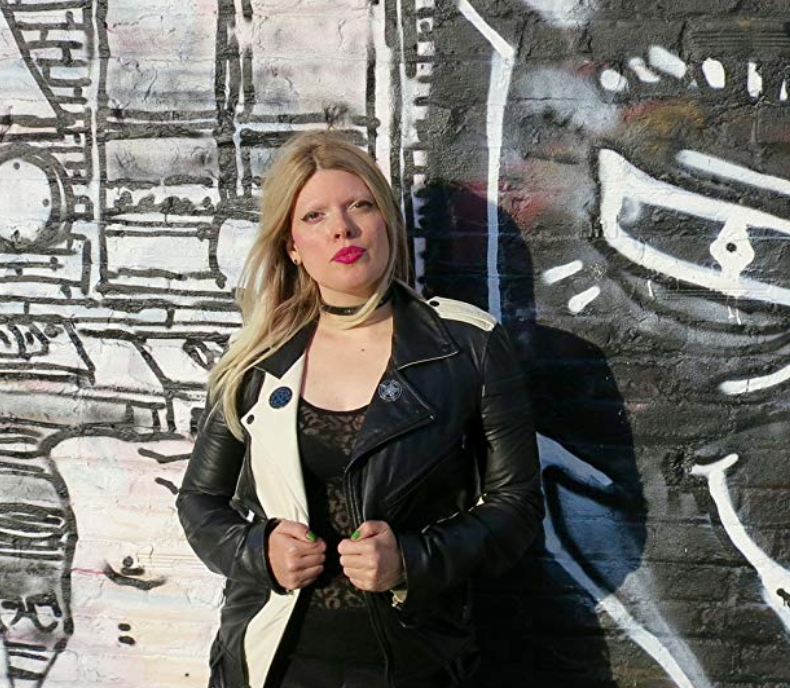
Satanic Seductress: A Conversation with Kristen Sollée
BY MADISON MCKEEVER
I’ve been fangirling over author and overall goddess Kristen Sollée ever since I first read her book, Witches, Sluts, Feminists: Conjuring the Sex Positive. Aptly named after just a few of the contested identities assigned to women who misbehave, Witches, Sluts, Feminists delves into the origins and intricacies of witch feminism and its intersection with reproductive rights, sexual pleasure, queer identity, porn, sex work, and many other topics.
From a historical perspective, witches have often been associated with specific cultural functions, either enchanting as feminist symbols of empowerment, or inspiring terror in a paranoid misogynistic Miller-esque fever dream. In recent years, witchcraft, magic, and other alternative spiritual practices have been the focus of increased attention and subsequent scrutiny, as people experiment and engage with feminism in all of its iterations.
Throughout her work, Kristen has spoken with countless activists, scholars, artists, and practitioners of witchcraft in order to enrich the public’s understanding of witch feminism and illustrate that witches in all forms, from Tituba to Stevie Nicks to Sabrina to The Hoodwitch, are powerful and relevant well beyond the month of October.
In addition to being a champion of female sexuality, Kristen is the founding editrix of the sex positive collective, Slutist (RIP), and is a gender studies lecturer at The New School. Her second book, Cat Call: Reclaiming the Feral Feminine: An Untamed History of the Cat Archetype in Myth and Magic was just released in September. Kristen herself is too fucking cool, whether she’s speaking out against SESTA/ FOSTA or rocking a killer purple lip on Instagram. She’s brilliant and generous enough with her time that earlier this year I had the pleasure of speaking with her about Witches, Sluts, Feminists, capitalism, and fighting for sexual liberation.
MM: How did you first become interested in the topic of witch feminism?
KS: It’s a long, circuitous story filled with both intention and magical intervention, but I’ve been interested in the occult since childhood, was raised by a feminist intuitive, and found my way to this subject first personally, and then professionally.
MM: What was the process of researching and writing this book like?
KS: Not pretty. Writing a book like this required confronting a lot of my own personal demons as I was interviewing dozens of people, scouring libraries and bookstores and websites for source material, and meditating on how I could do justice to a history so rife with pain and persecution that has been obscured and manipulated in numerous ways. It wasn’t something that was always fun or easy, but it was overall a joyful project to get to amplify voices that matter so much to me.
MM: In Witches, Sluts, Feminists, you polled 50 people about the definition of “witch,” and came back with a wide variety of answers. What’s your personal definition?
KS: The witch evades a single definition—that’s the beauty of the concept, really—but I will try! A lightning rod. A change-maker. A caretaker. Priestess of the persecuted. Harridan and hierophant. Rooted in the earthly and the astral. Fact and fiction, feminine and masculine, and so many things. The witch will forever be a shapeshifter.
MM: Do you think there is a generational/ geographical/ socio-economic connection to how the idea of the witch is viewed?
KS: Definitely. There are those who understand the witch to be an archetype of empowerment, those who see her as a Satanic seductress or a relic of religious persecution, and those who think she’s merely a cartoon hag to chuckle at on Halloween. It all depends on your own background and belief system and knowledge of the history.
MM: If you had to pick a witch or goddess that you’re most inspired by, who would it be?
KS: Oh there are so many, but I will pick a fictional one: Elvira. A witch who wields her sexuality in potent and playful ways. So many witches in fiction are so serious, she’s really a breath of fresh air. And a forever style icon as well!
MM: What are your “required reading” books for anyone looking to learn more about witch feminism?
KS: Silvia Federici’s Caliban and the Witch; Starhawk’s The Spiral Dance ; Maryse Conde’s I Tituba: Black Witch of Salem.
MM: Aside from reading, what are some resources for witches-in-training who are looking to educate themselves about practices, lineage, and history?
KS: Your local occult shop, or, if you don’t have one, The Hoodwitch’s online community. There are infinite folks to follow online, too, but some of my faves for inspiration and education in addition to @thehoodwitch are @themexicanwitch; @iamsarahpotter; @jaliessasipress.
MM: Do you see witch feminism as a lifestyle, a religion, or a hobby that can be shelved and called upon at times when it’s needed? I’m thinking primarily of practicing witchcraft in the age of Trump, and how many feminists are calling upon chanting, intention candles, hexes, and crystalogy as self-care rituals to heal from oppressive and toxic masculine government forces. Does witchcraft look different depending on what it’s needed for?
KS: Absolutely. Everyone’s spiritual and political practice looks different. There is no one way to use these powerful tools. Some folks don’t believe in mixing their witchcraft and their politics. Others believe witchcraft is specifically for healing and fighting oppression in the personal and political realms and that you cannot separate the two.
MM: Why do you think witches are so trendy right now? Is it because so many people need an ideology that centers around empowered women? Is it a form of escapism? Or are people just looking for a source of spiritual healing in a world that increasingly feels more and more hopeless?
KS: All of the above.
MM: How do you feel about the intersection in recent years between witchcraft and capitalism? In Witches, Sluts, Feminists you highlight multiple voices in the witch community and the disparate opinions on the topic, but you also point out that, “the witch is ‘the embodiment of a world of female subjects that capitalism had to destroy’ in order for the reigning economic order to triumph” (132). What are the implications of capitalism co-opting witchcraft without educating consumers about the origins of their purchase? (ahem, Sephora)
KS: I am quoting Silvia Federici there, but yes, it is very necessary to address capitalism’s co-optation of witchcraft and the occult, particularly when workers (often women in sweatshops around the world) are actively harmed in the making of “witchy” products and when closed, indigenous practices are being stolen from in the process. That’s not witchcraft, it’s exploitation.
MM: What are your feelings on Trump’s ironic and often repeated use of the term “witch-hunt” in reference to himself and the media? I think the linguistic significance of this is fascinating based on what it entails, historically- speaking.
KS: Like much of what Trump says, it’s a horrendous distortion of historical fact. It also goes to show how much misinformation there is about what “witch hunts” actually were—and are today.
MM: One of the popular phrases that has gotten circulated across social media and throughout women’s marches in the last year reads (in some iteration), “Nasty Women are the granddaughters of the witches you couldn’t burn.” Considering this and the prevalence of witch and goddess energy within the #metoo movement, do you think the spiritual and the political can intersect for the greater good?
KS: Absolutely, as long as the spiritual doesn’t become dogmatic. There still has to be room for spiritual and religious dissent and plurality or we’re no different than the religious right.
MM: I’m fascinated by the sexual connotations of American witch history, how witches were seen as harnessing an impure (ie. un-Christian) sexual appetite, and how the deeply patriarchal nature of early New England allowed this ideology to perpetuate until people were put to death. Can you speak more about how and why you think a deep-seated fear of female sexuality exists?
KS: Patriarchal religion—in America’s case Christianity—is at fault for this one. When you have an origin story that places female desire as the root of pain and suffering (hello, Eve) you’re not off to a very good start, you know?
MM: Why do you think the world seems to be threatened by sexually enlightened womxn, or womxn who unabashedly identify as sluts? Are sluts viewed as a threat to masculinity because subverting the terminology pushes back against the misogyny of our government and world?
KS: Being unapologetic about your sexuality or your body as a woman or a person on the feminine spectrum remains so radical because it counters everything that patriarchal society dictates about the masculine dominating the feminine.
MM: Are “witch,” “slut,” and “feminist” synonymous terms?
KS: No, I don’t think so, although there is great overlap between them depending on culture and context. To me, they are beautifully complex, complimentary terms.
MM: Do you think the meteoric rise of witches will continue indefinitely?
KS: Witches may not be splashed across The New York Times forever, but they certainly aren’t going anywhere anytime soon. And thank goddess for that.
Madison McKeever is a writer based in New York City. She probably wants to ask what your favorite book is. She's passionate about true crime, Timothee Chalamet's sartorial decisions, Instagram cats, and talking about the orgasm gap. Find her @thesleepygirlscout
A Poem By Khalisa Rae
BY KHALISA RAE
Tea Party at the Cemetery
We built a haunting in the silent spaces,
buried a living thing in my childhood baby dolls
and music box ballerinas’ splitting their limbs to stay
in step, Dancing Bear books and ice skates rest
on the shelves now covered in dust just
wanting to rest, but the rot keeps them up.
We buried a breathing thing here—
a coffin for each memory we didn’t dare
dig up. Spirits lurking
around every pageant queen trophy
and all the trinkets we used to convince her she
was a girl, innocent girl. A jewelry box filled
with twenty years of secrets. Things no one
dared to tell.
This door has been locked and shut;
a locket on the dresser to remind us that memories
are best kept away and private.
Photographs of me smiling, but wanting to
shutter and run. No one could tell
I was waiting for the day to escape the porcelain faces,
the Minnie Mouse pink patterned sheets and curtains,
The repetitive tv static and terror that only
resides in my head now.
I remember my 17th birthday,
how I was so ready to run free
from the carousels and tutus,
run away from the thought of home.
I peeked inside my room for the last time
before leaving; I could have sworn I saw
them all dancing, drinking tea
on the graves.
Khalisa Rae is a native of North Carolina and is a graduate of the Queens University MFA program. Her recent work has been seen in Glass Poetry, Brave Voices, Hellebore, Honey & Lime, Tishman Review, the Obsidian, Anchor Magazine, New Shoots Anthology, Red Press, Roses Lit, among others. She was a finalist in the Furious Flower Gwendolyn Brooks Poetry Prize and a winner of the Fem Lit Magazine Contest, White Stag Publishing Contest. She is staff editor for Kissing Dynamite and Carve Magazine. Her forthcoming collection, Ghost in a Black Girls Throat is forthcoming from Red Hen Press in 2021. She is also the newest writer for B*tch Media and Out/Body Magazine.

5 Meaningful Gifts for the Magical Thinkers in your Life
Kailey Tedesco's books These Ghosts of Mine, Siamese (Dancing Girl Press) and She Used to be on a Milk Carton (April Gloaming Publications) are both forthcoming. She is the editor-in-chief of Rag Queen Periodical and a performing member of the Poetry Brothel. Her work has been nominated for the Pushcart. You can find her work in Bellevue Literary Review, Hello Giggles, UltraCulture, Poetry Quarterly, and more. For more, please visit kaileytedesco.com.
Read More
December Mantras for Badass Witches
Stephanie Valente lives in Brooklyn, New York, and works as an editor. One day, she would like to be a silent film star. She is the author of Hotel Ghost (Bottlecap Press, 2015) and Waiting for the End of the World (Bottlecap Press, 2017). Her work has appeared in dotdotdash, Nano Fiction, LIES/ISLE, and Uphook Press. She can be found at her website.
Read More
4 Horror Films to Keep You Up at Night
Kailey Tedesco's books These Ghosts of Mine, Siamese (Dancing Girl Press) and She Used to be on a Milk Carton (April Gloaming Publications) are both forthcoming. She is the editor-in-chief of Rag Queen Periodical and a performing member of the Poetry Brothel. Her work has been nominated for the Pushcart. You can find her work in Bellevue Literary Review, Hello Giggles, UltraCulture, Poetry Quarterly, and more. For more, please visit kaileytedesco.com.
Read More
The Albatross of Success: Performance, Exhaustion and Gratitude
BY LISA MARIE BASILE
I wrote this post because I felt I owed the truth to myself and my community — and maybe some of you will recognize yourself in my experiences.
I also wrote this post because I am grateful for the platforms I have and want to sustainably nourish them rather than quit.
Despite feeling gratitude for the fact that I am able to write, I am suffering burn-out. I am exhausted from being “on.” I struggle with reality versus the Internet. And it all stems from my relationship with success, social media, and the pressure to “keep up.” Some of this is my fault. So I’m here to be accountable, and to question why, when we achieve the things we want to achieve, we feel so…lost.
‘Success’ is supposed to look and feel happy, right?
Over the past year, I’ve acknowledged and written about living a slightly more ‘visible’ life and the pitfalls of success and social media — mostly in captions on Facebook or Instagram. I’ve come to realize, with gem-like clarity, that a) I can no longer go on thinking about it without taking action, b) others are going through this, too and c) it means I have an opportunity to rewrite my life. In short, am a volcano waiting to explode and quit if I don’t get a handle on it.
Maybe you write books or articles or create products or edit a magazine or lead a community. Whatever success you have had (not talking strictly about money or fame), I’m talking to the parts of that success that feel complex and too dirty to say aloud. The parts where you have to show up, all the time, literally and figuratively. Because you asked for it.
This isn’t going to be a poetic, profound, or beautiful piece of writing. It’s just going to be me, Lisa Marie Basile, a poet, and author, and the editor-in-chief of Luna Luna, talking to you.
See what happened there? I have gotten so used to saying that I am a poet, an author, an editor — that sometimes, just sometimes, I forget I’m also Lisa. I’m just a human.
But I’m also a dancer. I’m also a Trekkie. I am also someone who will try (and probably enjoy) literally any other food. I am also someone who works out. I am also someone who loves to study languages. I am also a goofball — a huge goofball. I like to wear PJs most of the time. I don’t always dress glamorously, although Instagram may tell you otherwise. I am in a long-term relationship that is very sweet and good. I struggle with anxiety that gets worse every year. I struggle with imposter syndrome. I live with a degenerative disease called Ankylosing Spondylitis (and much of my true joy comes from being a moderator and advocate for health organizations). I have friends from all walks of life, many who aren’t writers. I like everything magical. I like books, even airport thrillers. I am a former foster youth. I am passionate about people being compassionate and generous toward marginalized communities. I have experienced the effects of poverty, addiction, the criminal justice system, and grief.
How do I encapsulate myself?
How can we each bring our fullness to the stage — when we want to?
We focus so closely on our brand & being “on” that we make ourselves smaller.
To the world, I am not many of the things I describe above. To the world, I’m a full-time writer. I’ve written several books of poetry and have two books of nonfiction, both of which you can buy across the globe. So, I’m also an avatar — a digital representation of me. And that fucks with me. A lot.
Much of my time is spent online (which is great because the Internet allows me to earn money and pay my rent and bills). I run Luna Luna (which I lovingly started in 2013) and promote my books and lead discussions in digital communities. I also spend way too much fucking time curating Instagram accounts and being careful with my branding and strategy. I love being a visible person and a writer, but the constant pressure (some imagined, some very real) to be available, to provide insight, to be moral, or to be wise can be daunting. What is in my books is what I have to offer, but I don’t know everything.
Many of us offer services, ideas, works, and creations, but at what point do you become oversaturated with what you do, versus who you are?
When people write to me about needing emotional help or wanting to publish a book because I’ve inspired them, it deeply touches me and it feels like success. Other writers tell me these are the messages that literally keep them going — and it’s true! The issue is, I can’t help everyone. I don’t have the time or energy. I have had to find ways to respond respectfully (but disengage) because I value this aspect of my life.
So what happens when you cannot physically live up to your own ideas of success?
What happens when you and your avatar fail to present the perfect image?
What happens when you can’t reflect your own curation?
We force ourselves to live as multiple avatars — and that can make us feel disconnected
The thing is, our passion and creative projects often grow bigger than us. Many of us feel immense pressure to build them and scale them quickly or to grow their presence via social media — and at a wild rate. This can be exciting, validating, and fun — but we do have to question why we believe we need to make more, do more, be more, grow more, compete for more. Because we live in a digital age, many of us are parsing ourselves out (like Horcruxes!), cutting slivers off for Twitter and Instagram and Facebook and LinkedIn and email and website management and promotional stuff.
What happens to the real person on the other end of the computer? What happens to us when we are so busy being a different version of ourselves everywhere? Do we lose in-real-life connections or a sense of intimacy? Has it become so second nature that we don’t even think about it?
Well, I do think about it and I think it might be making me feel a little lost.
Were we all supposed to be this many things, to this many people, all the time?
Are we supposed to be on the other end of a phone all day?
What happens when we slow down? Does our brand die? Do we risk our success — and is it worth it In the end?
We feel what we make or do or create cannot be really real without all of the ‘stuff’ that comes with something being a ‘success.’ Like social proof. Or connecting with the right people. Or being engaged X amount of times per day or week.
One popular writer I spoke to the other day said to me, “I have to post the right pictures with the right people, to show my popularity or success. And then everything else just sort of sits on my phone, unseen. I feel like I’m not being real.”
And so we get caught up more in the production than the creation. In the facade. And it happens to so many of us. We forget the little things, the mundane stuff.
When I write a book, the book’s life inevitably changes. Its soul changes. My publishers own a piece of the book, and so the book becomes more about its digital presence and its sales than it does the blood and meat of the text — or at least that what it can feel like. As a writer, you know this going into the contract. But that doesn’t mean you don’t experience the weirdness of your creation becoming a commodity.
Like many writers, influencers, leaders, or creators, I spend so much time promoting, connecting the dots, and doing the admin work that an advance or royalties couldn’t begin to cover (and yes, us writers are undervalued and underpaid — if we are paid at all, which is not the fault of most publishers or magazines, but inherent issues of capitalist society).
I spend so much time being on, being sensitive to people’s needs to the point of self-silencing, or repeating, “sorry it took me a while to respond” that I forget to be off. What it feels like to do nothing. To simply breath. To not have 38 emails that must be answered at all times.
I forgot that I am, on most occasions, not always being paid for the extra work that I do as a “literary citizen” and that I have relationships, debts, and chronic illness to manage. I forget that I am allowed to step away and take a break. I think more of us need to find a way to step away when we need to without the endless grief and shame and guilt that has been pounded into us by capitalism. I know this because I’ve talked to other editors who feel they will let everyone down if they take time to care for themselves. Where are we getting these ideas? What is the root?
It has worn me down. I used to write for Luna Luna all the time, for example. Now, it’s a few times a month. And I have decided to be okay with that.
We have to draw critical boundaries — even with the things we love. The performative self is an uncanny valley.
I am — we all are — valuable simply by being alive. The amount of emails, tweets, and posts you send in one day does not determine your intrinsic value.
I have realized that I am allowed to mourn for a loss of simplicity, even though it means getting to do what I love — write.
I have realized that gratitude can exist alongside tiredness.
I have realized that being in love with the creative process of making a book or running a site or spearheading a public project does NOT negate or erase or preclude or make exempt your exhaustion or loneliness or lostness — both in general and to do with the project.
One example: I have talked to so many others writers who have a book and spend all their time pushing it; they then realize that despite the glory of sharing one’s work, there is a darker side: the performance. Catching a glimpse of yourself in the performative space of branding and sales can make you feel empty, soulless and tired. It is the uncanny valley.
But when we have contracts and promises, we have a duty to share our creations and engage with others, which means we each, as individuals, must gauge where the line of authenticity and gratitude and joy becomes performance and resentment and chore. We have to know when our success is holding us back.
Someone recently said to me, “Success made me timid. Once I realized people liked me and trusted me and expected things from me, I started going inward and getting quieter, choosing my words, cutting out parts of myself that I’d share publicly because I didn’t want to run the risk of people not liking me.”
That made me feel sad. Like, stone-in-the-fucking-chest sad. I felt sad because I recognized myself in it. Being a writer or creator means taking on a certain responsibility — to yourself, your community, your platform. It requires care, nourishment, and respect. That cannot be neglected. But sometimes, when you do have the pressure of engagement, you don’t know what will work for or speak to or help everyone. So you freeze. You question yourself. You wonder why you’re there at all.
We have to reevaluate what’s working and what isn’t about our success, our availability, and our day-to-day lives as creators AND humans.
When we have the chance to share our voices, to speak out, to do something beyond ourselves, to make community spaces, to publish a fucking book that people read — we are doing something magical, magnificent, and life-altering. I should know this. I am the first person in my family to go to college — straight out of foster care. I took out thousands of dollars in loans and got a Master’s degree because I thought it’d give me a leg up (it gave me some big opportunities — along with massive debt). I fought CPTSD and extreme trauma to get where I am, so how dare I question it?
Because we each get to reevaluate what is working and what isn’t. When we don’t assess what makes us feel good and true and right, we can never grow or be okay in our own skin.
I have talked to so, so, so many people whose success became a sort of albatross — precisely because it is not always in alignment with what feels right. You can have and lack something at the same time.
I feel like on my way “up,” I forgot to shed some necessary skin. But then I realized that my sense of success is more internal. It’s more about how I feel about myself than, say, follower count.
In the end, I have decided to make a list of things that I personally can do to alleviate some of those pressures and fears:
Find gratitude and start from there. It is a privilege to be in the position of questioning what success looks like.
Stop letting social media dictate my “brand.” Instead, share more of myself, without fear of it being “off-brand.” If I lose followers, oh well.
Nurture hobbies outside of my career path.
Stop trying to make everyone like you. Stop worrying you’ll offend someone. Just try your best at being kind — and if it doesn’t cut it, fuck it.
Realize that “success” is determined by how you feel about yourself or what you can do for others, not by what you have.
There is such thing as too much of a good thing. Realize that rest, silence, and time away is necessary.
This is my confession. I hope it resonates.
Poetry by Sarah Stockton
BY SARAH STOCKTON
A note from the author: The artist Melissa McCanna made an ekphrastic painting (see below) after the below poem "Salt and Other Spells.” It was exhibited at a gallery in Washington.

Melissa McCanna
Salt and Other Spells
We were water once
cyclical, transforming
salt and sediment into scales
anadromous/
moving from sea into sweet water
catadromous/
fresh to salt
to spawn/ traveling
in deep sea channels
transitioning/
from silvery blue
to darker, going home
as we, floundering at water’s edge
turn in four directions/
three visions/ seven cycles
scrying into water
Spells of Desperation
Ablating
the effluvia clogging my heart, cauterizing
rusty swords blackberry thorns
Ripping
apart whole decades, reams of
photographs prayer books
Shrinking
into a shape un-recognizable
binding cloths barbed wire cloaks
Rolling
jade stones over my face
chemical peels tuning forks
Throwing
myself on the mercy of the court
strip teases plea bargains
Writing
love letters to my maker
confessions devotions
Sarah Stockton, MA. After several years working in urban universities as staff and adjunct, Sarah now lives in the rural Pacific Northwest where she practices the spiritual arts, serves as a freelance writer and editor, and writes poems.
Interview with Katy Lennon: Founder & Editrix of Blood Bath Zine
Kailey Tedesco's books These Ghosts of Mine, Siamese (Dancing Girl Press) and She Used to be on a Milk Carton (April Gloaming Publications) are both forthcoming. She is the editor-in-chief of Rag Queen Periodical and a performing member of the Poetry Brothel. Her work has been nominated for the Pushcart. You can find her work in Bellevue Literary Review, Hello Giggles, UltraCulture, Poetry Quarterly, and more. For more, please visit kaileytedesco.com.
A Playlist for Gratitude & Giving Thanks
BY JOANNA VALENTE
In the spirit of the vast holiday season, I made a playlist centered around giving thanks and focusing on gratitude—which are also things we should always be mindful of all throughout the year. Listen below:
Joanna C. Valente is a human who lives in Brooklyn, New York. They are the author of Sirs & Madams, The Gods Are Dead, Marys of the Sea, Sexting Ghosts, Xenos, No(body), #Survivor, (forthcoming, The Operating System), and is the editor of A Shadow Map: Writing by Survivors of Sexual Assault. They received their MFA in writing at Sarah Lawrence College. Joanna is the founder of Yes Poetry and the senior managing editor for Luna Luna Magazine. Some of their writing has appeared in The Rumpus, Them, Brooklyn Magazine, BUST, and elsewhere. Joanna also leads workshops at Brooklyn Poets. joannavalente.com / Twitter: @joannasaid / IG: joannacvalente / FB: joannacvalente
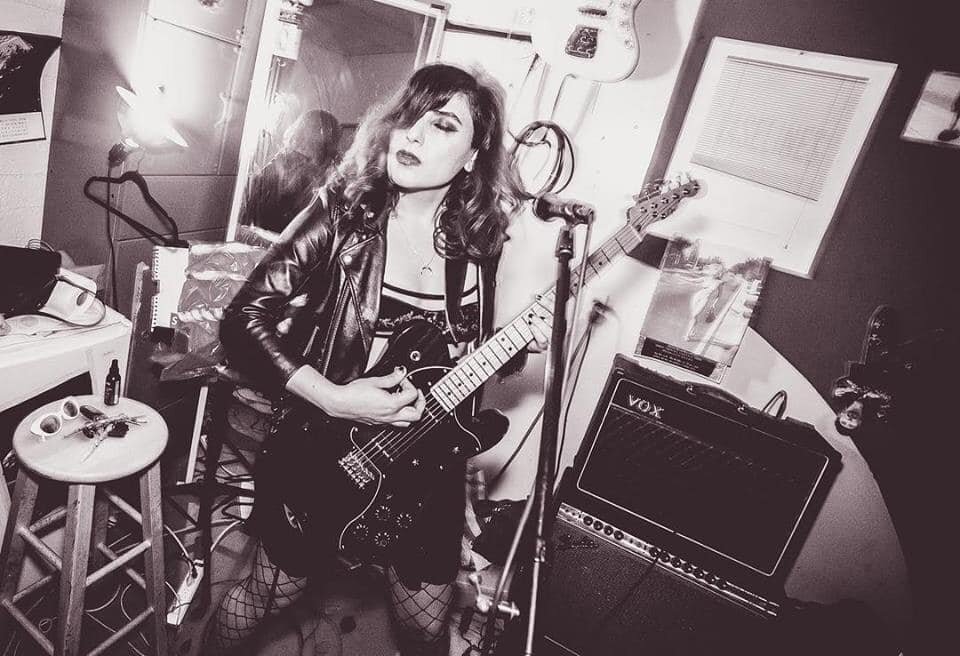
Photo: Taleen Kali
Musician Taleen Kali Releases Cover of Iconic Garbage Song
Joanna C. Valente is a human who lives in Brooklyn, New York. They are the author of Sirs & Madams, The Gods Are Dead, Marys of the Sea, Sexting Ghosts, Xenos, No(body), #Survivor, (forthcoming, The Operating System), and is the editor of A Shadow Map: Writing by Survivors of Sexual Assault. They received their MFA in writing at Sarah Lawrence College. Joanna is the founder of Yes Poetry and the senior managing editor for Luna Luna Magazine. Some of their writing has appeared in The Rumpus, Them, Brooklyn Magazine, BUST, and elsewhere. Joanna also leads workshops at Brooklyn Poets. joannavalente.com / Twitter: @joannasaid / IG: joannacvalente / FB: joannacvalente
Weekly Mantras for Badass Witches
Stephanie Valente lives in Brooklyn, New York, and works as an editor. One day, she would like to be a silent film star. She is the author of Hotel Ghost (Bottlecap Press, 2015) and Waiting for the End of the World (Bottlecap Press, 2017). Her work has appeared in dotdotdash, Nano Fiction, LIES/ISLE, and Uphook Press. She can be found at her website.
Trance Writing & Using the Self as a Guide
Kailey Tedesco's books These Ghosts of Mine, Siamese (Dancing Girl Press) and She Used to be on a Milk Carton (April Gloaming Publications) are both forthcoming. She is the editor-in-chief of Rag Queen Periodical and a performing member of the Poetry Brothel. Her work has been nominated for the Pushcart. You can find her work in Bellevue Literary Review, Hello Giggles, UltraCulture, Poetry Quarterly, and more. For more, please visit kaileytedesco.com.

Weekly Mantras for Badass Witches: Halloween Edition
Stephanie Valente lives in Brooklyn, New York, and works as an editor. One day, she would like to be a silent film star. She is the author of Hotel Ghost (Bottlecap Press, 2015) and Waiting for the End of the World (Bottlecap Press, 2017). Her work has appeared in dotdotdash, Nano Fiction, LIES/ISLE, and Uphook Press. She can be found at her website.
Read More