







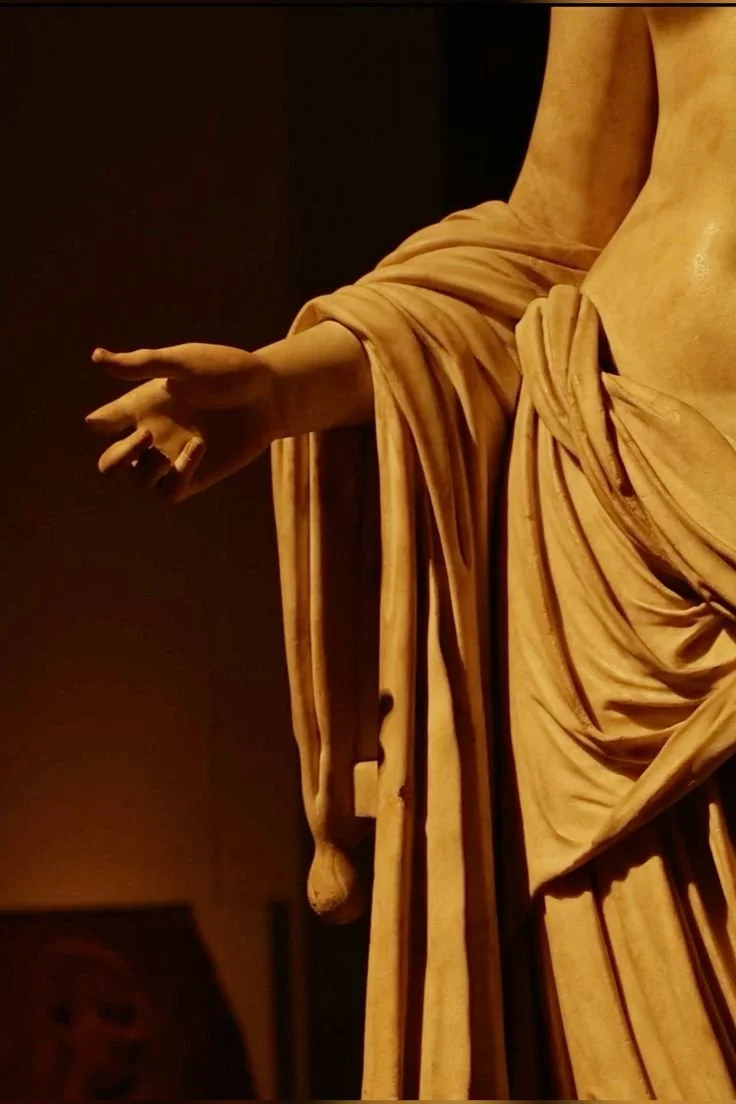
The first Chinese woman in America
lived inside a diorama. A little room
for a little lady, Four Inch Feet
Miss Ching-Chang King.

Luo Yang
The first Chinese woman in America
lived inside a diorama. A little room
for a little lady, Four Inch Feet
Miss Ching-Chang King.
Linguists have had a field day with Donald Trump. His speeches are geared for a fourth-grade reading level, with very few four-syllable words. He doesn’t use any complex sentence structures. His vocabulary is notoriously poor and centers around a few repetitive words such as "tremendous" and "problem." Most insidious of all, he ends his rambling nonsense with words such as "problem," "liars," and "losers"--which is what most of his viewers eventually take away from his speeches. I never thought I’d see a presidential candidate make Dubya look like an eloquent orator, but here we are.
Read More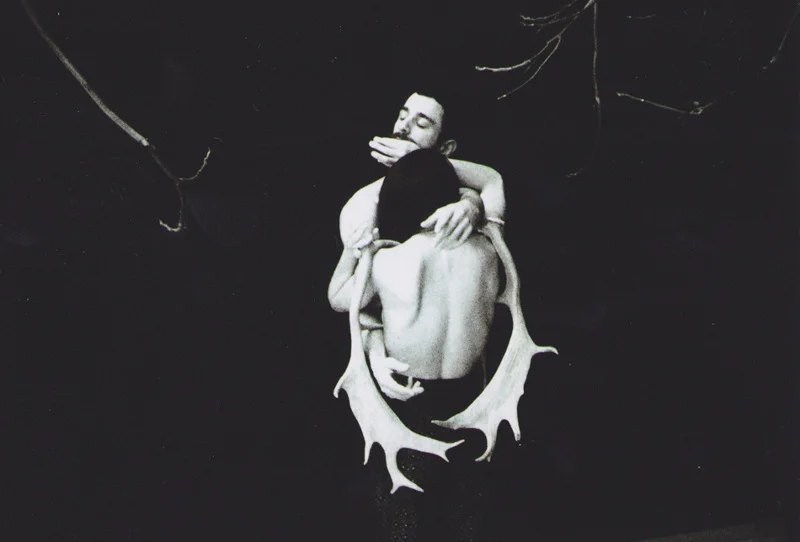
Aëla Labbé
you felt me, you left me—moaning open in a landslide. I harden like grease
and there’s glimmer. the saplings anxious for ripping, cleaved the way you
like it. let’s say: you’re the woodsman and I am a girl, slipping in a magician
box, my bra cups filling out—buttermilk, tiny bow in the middle. you wield
a saw, a tremor—sung like choirs, biting through.
Anders Eriksson
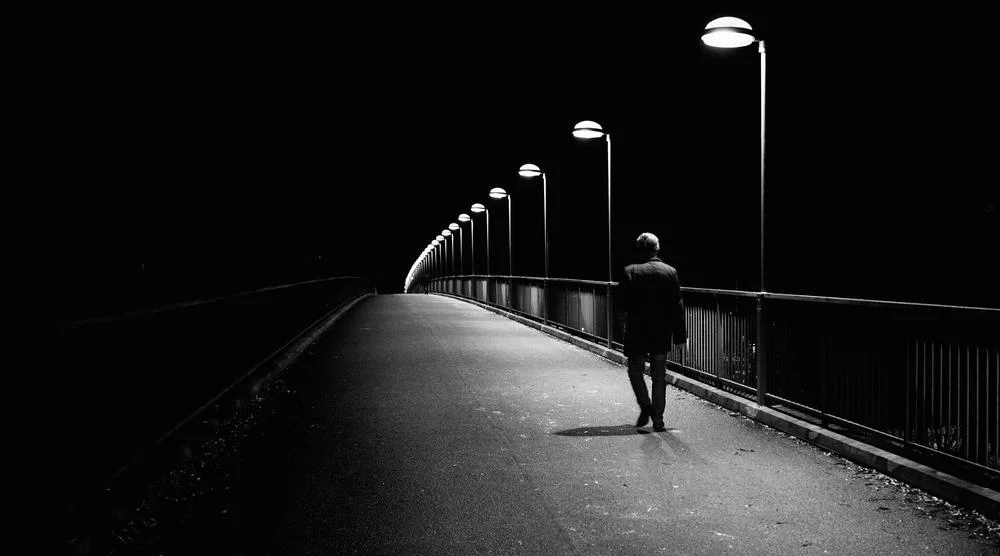
You're the dappled world, brilliant toxin. a choate reprieve. Hair, a triptych of flax and rippled sheaf at break of day. You bear your assiduousness cleanly, your sharpened jaw, your forehead, those enamel cliffs. A ruminant has strewed you thus, over the paper weirs, over the torn lip of the world, its heft of blood. sleet in-the-voice touch. My engrossment, a kitten in snow. beyond ode.
Read MoreAround this time, a friend mentioned that her son, his wife, and two children were considering moving to Brooklyn when they finished their teaching commitments in the Congo. I could see them easily fit into Park Slope or Carroll Gardens with their tow-headed darlings. I smiled and nodded, fighting back a scream of lament. Why was it so easy for some people to have beautiful children and move to a city I’d nearly turned into a distant idol, while both seemed impossible for us?
Read More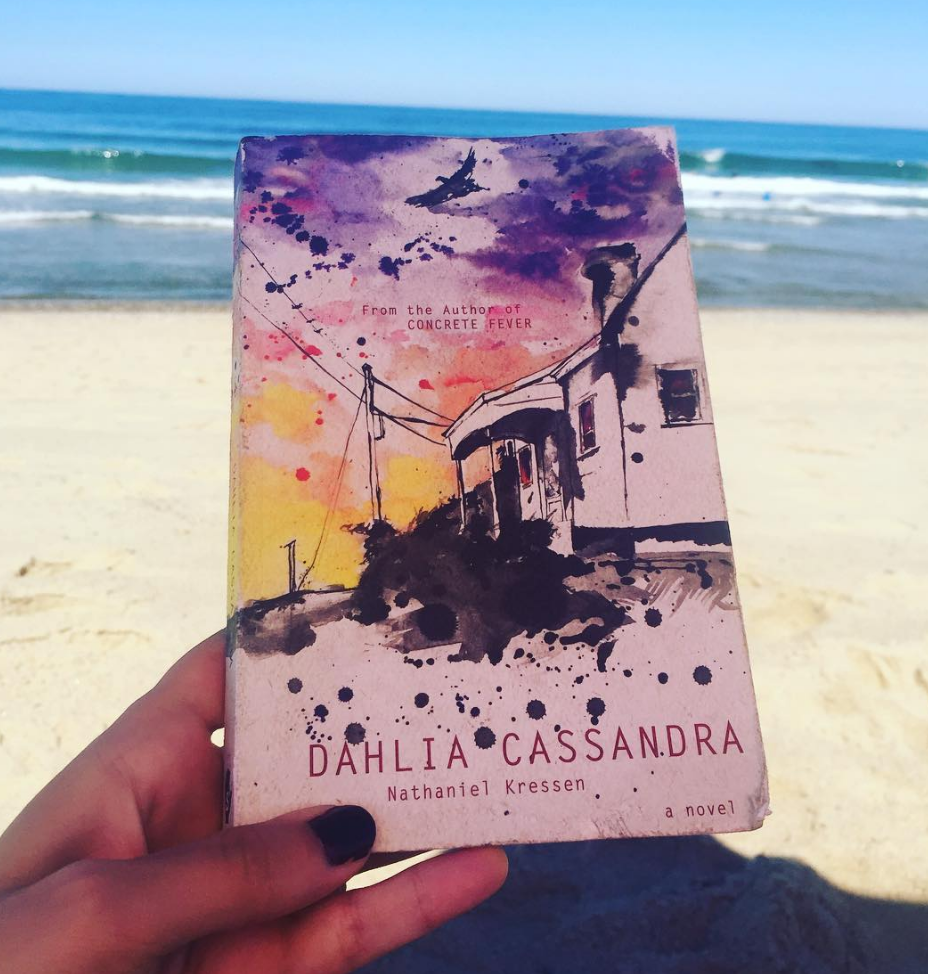
After reading Nathaniel Kressen’s debut novel, "Concrete Fever" (2011, Second Skin Books), I was utterly entranced by his ability to skillfully weave together a compelling story. This is also why I was absolutely thrilled to find out Kressen’s second book “Dahlia Cassandra” was released this past June, also by Second Skin Books.
Read More
On several occasions she described herself as feeling "echo[es] of some sort of memory" each coming from her two late grandfathers. On one occasion, just before hearing the news of her grandfather’s passing, she and her sister were "visited by a cat at a cafe…the cat was extremely comforting." Their grandfather loved cats, so Pleet believes that this was a consoling energy sent to her and her sister directly. She confided that she doesn’t "know why there would be horrible hauntings…I’m happily haunted…more cobwebs, please!" And More cobwebs are, indeed, coming this way, as Pleet hinted that the Fall 2016 collection will be partly inspired by Morticia Addams and her notorious lopped off rose heads. I’ll be casually refreshing the online shop until this collection is released!
Read MoreHe drops by on an irregular nightly schedule. Magnificent body with a huge span of wings. It’s the wings that are a bitch. Not easy fucking a guy with wings. Hands have to be strategic. Forget rolling over, me on top—his wings are way too sensitive. The novelty gone, I think of moths, insects, creepy crawlers—sci-fi nightmares. Near climax, the wings will unfold and flap in orgasmic fury. The air disturbance is unbelievable—like fucking a helicopter. And he’s so airy. More light than substance. I like a body with substance. Some mass inside and around me. Not that he understands. And I’ve tried explaining. Then moving. Several times, around town, to a new town, new country, subterranean. He’s a master stalker, more bird than man, his homing instinct supernatural, natural to me.
Read More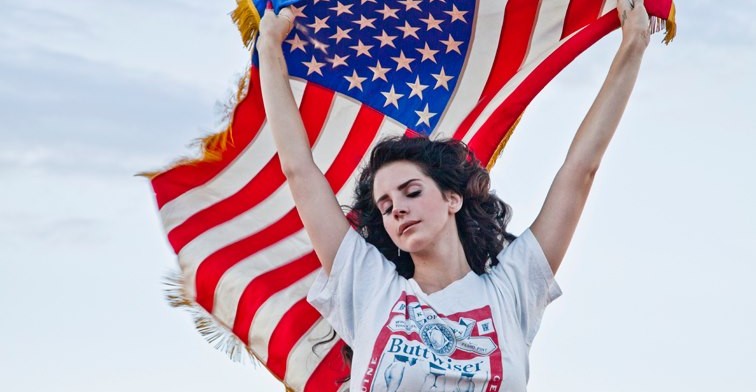
via Lana Del Rey
LANA DEL REY is post-prison, LANA DEL REY is post-death signaling desire should equal euphoria even if created by extreme melancholy and desire should not be impounded by the confines of our world. Desire is an aggressor against age, weight, intact relationships, holding down employment, death, genetic attraction. Desire is a fantasy that is worth replacing life and must be attended to, through creating rituals to verify being within the bubble of desire is in fact living. Attending a Lana Del Rey concert is therefore the perfect pilgrimage for limerants needing outlets for their longing narratives and fans using Lana as a bridge to co-creating their sexual embodiment.
Read More
Joanna C. Valente is a human who lives in Brooklyn, New York. She is the author of Sirs & Madams (Aldrich Press, 2014), The Gods Are Dead (Deadly Chaps Press, 2015), Marys of the Sea (forthcoming 2016, ELJ Publications) & Xenos (forthcoming 2017, Agape Editions). She received her MFA in writing at Sarah Lawrence College. She is also the founder of Yes, Poetry, as well as the managing editor for Luna Luna Magazine. Some of her writing has appeared in Prelude, The Atlas Review, The Huffington Post, Columbia Journal, and elsewhere. She has lead workshops at Brooklyn Poets.
Read More
BY JOANNA C. VALENTE
This is going to be a big year for Devin Kelly, because he has two books coming out in relative proximity. His book "Blood on Blood" is forthcoming from Unknown Press this year, while his other collection, "In This Quiet Church of Night, I Say Amen," is coming out from ELJ Publications in 2017.
"Blood on Blood" is a gorgeous tale of growing up in a house of silence--and how that affects personhood, adulthood, and brotherhood. Having heard Devin read his poems, I can say he has a uniquely perceptive voice.
I was thrilled to be able to speak with Devin about this forthcoming collection below:
JV: This collection is clearly very personal, as it details your relationship with your brother. Was it difficult to write about? Do you write personally in general?
DK: Most everything I write is personal in nature, often deeply. I’m grateful to be able to separate the act of writing work from the risks writing such work entails--you know, like how it will be perceived by loved ones. My brother and I were raised for the latter part of our childhood by just our father, and none of us really talked at all about anything. It didn’t seem out of the ordinary because that’s just the way it was, and I don’t think I realized until later the extent to which our silence could be made into something transcendent through language.
Our life was mundane, but language has the potential to heighten all of that, make the smallest piece-of-shit moments into something sorrowful, joyful, whatever. So no, it wasn’t difficult to access those memories--I think I’ve gone back into them so many times that the past has become a pliant thing, and it’s fun in a way to throw different kinds of light on it and see what happens – what shines in a new way, what dies out, what comes back.
In the end, there’s few things we know for certain. One is that time runs out. The other is that there are people with whom we share blood. No matter how much or little we talk, there’s no one I’ll ever feel closer to than my father and my brother. I can make myself well up when I think of them. I take our collective story very seriously because so much of what runs through me runs through them. I believe very firmly that our story is a debt and a reward we are each accountable for, and my hope is that such a feeling comes through.
How do you know when a poem is done?
Oy, I don’t know. Is it bad if I just say something like when it feels done? It’s hard to say. I very much do get a feeling. A heaviness. A deepening. This is such a subjective and interesting question, because I think we all perceive the act of writing differently. I know we do. For me, writing a poem is an act of accrual. I’m trying to write out a feeling, a story, through lines, and the hope is that it will allow a reader to move through my headspace, reach that same feeling. I think (and this is my personal take) that such a moment happens, like I mentioned, with accrual, a piling-on, however tangential. It’s why I love the word and. This and this and this and this. It’s fun.
Some poets prefer minimalism. Some poets prefer cutting excess. All of these approaches can exist. That’s the beauty of poetry, it’s a super generous art. I don’t like when people approach it with complete certainty, that this must be the way. When I finish a poem and look back at it, I know there’s stuff I could cut, but there’s also the thought that everything seems necessary, and I feel a need to honor that. That the roughage is part of the art. That if a poem is approximating some sort of feeling, then there needs to be a little bit of detritus, the stuff of headspace and doubt.
And I know people who’d disagree with that, and that’s cool. And it doesn’t mean I approach a poem lazily--for every ten lines that made this new book, there’s 10, 20, 30 lines that didn’t--poems I started that I knew weren’t honest, or poems I finished that didn’t work the way I wanted. For me, editing is starting anew with failure in mind.
What I love about poetry is that this process can exist alongside so many others. But in the end, the poem you’re trying to write can only be that--the poem you’re trying to write. It can’t be someone else’s. It has to be yours. But within that is the fodder of so much you’ve read, you’ve loved, you’ve hated.
What were you listening to and reading and watching while writing this?
Well, as far as listening, obviously Bruce Springsteen’s Nebraska. Also Sharon Van Etten, Sufjan Stevens, Tallest Man on Earth, This Will Destroy You, Pinegrove, Modern Baseball, Advance Base. And a lot of the jazz my roommate puts on--Chet Baker and Thelonius Monk and Sonny Rollins especially.
Here are some books I read throughout the process: Maggie Nelson’s The Red Parts, Ocean Vuong’s Night Sky with Exit Wounds, Janice Lee’s The Sky Isn’t Blue, Jamaal May’s The Big Book of Exit Strategies, a bunch of James Wright, a bunch of Larry Levis, a bunch of Yusef Komunyakaa, Jim Harrison’s Just Before Dark, essays by Eula Biss and Lia Purpura.
I don’t know the ways in which all of these books influenced me, but, you know, they did or didn’t but probably did.
Also, Terrence Malick’s Badlands. Great movie. My girlfriend and I watched "Zootopia." I sometimes need to watch "Seinfeld" to help me fall asleep. None of this is really relevant. So, yeah. Go figure.
How do you know when to break a line?
Some combination of intuition, purposeful mistake making, wordplay, more mistakes, and not knowing and never-being-able-to-know what the fuck I’m doing.
What part of you writes your poems? What are your obsessions?
I obsess about so much, really. I'm terribly self conscious, and I'm terrified about the ways in which we each view the world - how much such views differ, and if my worldview has any place here. Not too long ago, I thought I was right about everything, and that gave me permission to feel victimized by the world when things didn't go my way, or when other people didn't, either. But, I mean, most of life is not knowing. We are surrounded far more by what we do not know than what we do, and this is very much what draws me to a poem.
There's so much anxiety involved with being alive, and I believe in poetry as a kind of stilling. It's the only way I can really still myself. A poem is a place where binaries don't need to exist. Right versus wrong, love versus hate. A poem can get at the infinitely small gray space where those kinds of binaries meet. I think that's really cool. And, I mean, poetry or not, in the end my hope is that we all sort of dwell in the gray space, the nuance of things. Just a huddled mass of fear and anxiety and embarrassment trying to figure shit out.
That's what a poem is. It's rough. I've made a lot of mistakes in life. That's what a poem is. Never perfect. You live in it, you suffer for it, you keep trying. And that takes empathy. And empathy understands that you’re never going to be right all the time. And knowing that you’re never going to be right all the time but still wanting to live in this mess means you’re okay with listening. And listening involves sound and breath and stillness and language. And bam, there you go, poetry.
Joanna C. Valente is a human who lives in Brooklyn, New York. She is the author of Sirs & Madams (Aldrich Press, 2014), The Gods Are Dead (Deadly Chaps Press, 2015), Marys of the Sea (forthcoming 2016, ELJ Publications) & Xenos (forthcoming 2017, Agape Editions). She received her MFA in writing at Sarah Lawrence College. She is also the founder of Yes, Poetry, as well as the managing editor for Luna Luna Magazine. Some of her writing has appeared in Prelude, The Atlas Review, The Huffington Post, Columbia Journal, and elsewhere. She has lead workshops at Brooklyn Poets.
Devin Kelly earned his MFA from Sarah Lawrence College and is a co-host of the Dead Rabbits Reading Series in Manhattan. His collaborative chapbook with Melissa Smyth, This Cup of Absence, is forthcoming from Anchor & Plume Press. His work has appeared in Drunken Boat, Gigantic Sequins, Lines & Stars, Post Road, The Millions, and more, and he's been nominated for both the Pushcart and Best of the Net prizes. He works a college advisor for high schoolers in Queens, teaches English at Bronx Community College, and lives in Harlem. You can find him on twitter @themoneyiowe.
BY LISA MARIE BASILE
We have no right words here, but we know we want to help. We're filled with anger, sadness and – instead of what should be shock – exhaustion. We stand as allies.
It's hard to watch our friends hurting, watch people sobbing in videos, watching bodies dying. It's hard to watch people (our families or friends sometimes!) post things like #AllLivesMatter. It's hard to see white people staying quiet.
It doesn't always feel obvious to people to do something. To take action. It can be stunning, frightening and hard to know what to say. That's OK sometimes, but you've seen too much to stay quiet now. Speaking out, watching the videos, engaging in the truth, and educating ourselves on the issue of police brutality is necessary.
As allies, we need to inform others and try to dismantle a system that feeds on ignorance and hatred. There are things we can do. Staying silent is worse than anything and listening to the black community at this time is the most accountable thing we can do. Listen. Listen. And then tell others in your community why #BlackLivesMatter and why they need to listen and speak out too. Tell others about institutionalized racism. Explain. Take a teaching moment and educate another human being.
You can talk to your parents, friends, spouses, neighbors and strangers and tell them police brutality is NOT acceptable. Racism is NOT acceptable. Inform people. Be outraged. Don't accept ignorant comments. Block people who spread hate on your social networks. Share words by people of color.
TAKE ACTION.
You can also Join Campaign Zero, join Ijeoma Oluo's The Accountability Project. Join a #BlackLivesMatter chapter. You can also write to your mayor, call your police station, write to your city council members (here's NY, but you can find anything by searching online "city council + city") and demand police brutality reform. You can ask what they're doing about this. This is something you CAN do.
DONATE.
Go Fund Me: Philando Castile's family
Go Fund Me: Alton Sterling's family
EDUCATE.
There has been a lot of education happening, and we wanted to share with you what we have been reading in the past few days.
I Need Justice, I Need Peace: A QTPOC Roundtable
Alton Sterling and When Black Lives Stop Mattering
5 Facts That Will Absolutely Infuriate You About Police and Racist Violence
This is what white people can do to support #BlackLivesMatter
Advice for White Folks in the Wake of the Police Murder of a Black Person
What You Can Do Right Now About Police Brutality
We Can Help Each Other Cope: One Simple Way to Be With Each Other Through Pain Right Now
Rape, Alton Sterling, And The Complexity Of Justice
POC Solidarity In Love: How To Support Our Black Partners and Friends In These Trying Times

Type 'Quirky' into Google Image search. You'll find a whole bunch of Zooey Deschanel.
What does quirky mean, really? Who gets this label, and why? And what are the real consequences?
Read More
Nancy Carroll Flickr
I met my ex-husband’s grandmother when she was still quite the vital old lady. She drove her own car at eighty, even though she could barely see over the dash. A serious devout Catholic, Grandma Marge had a mind of her own and never a hair out of place. I thought for sure she would hate me and send my Pagan Jewish butt right back to the West Village. After all, I was engaged to her GODSON. His confirmation pictures greeted me as I walked into her foyer, right next to the huge crucifix. Christ looked as petrified and wary as I felt on that first meeting.
Read More
This has been a big month for Julia Gari Weiss, as her first book "Being Human" was just published by Thought Catalog. The book is an expansive, heart wrenching account of the speaker's mother struggling with cancer, what it means to be human, and yet, how humans are often treated inhumanely by each other. I'm proud of Weiss, because her words are honest. Her words are an accomplishment.
I was lucky enough to speak to her about the making of her book:
Read More