BY JOANNA C. VALENTE
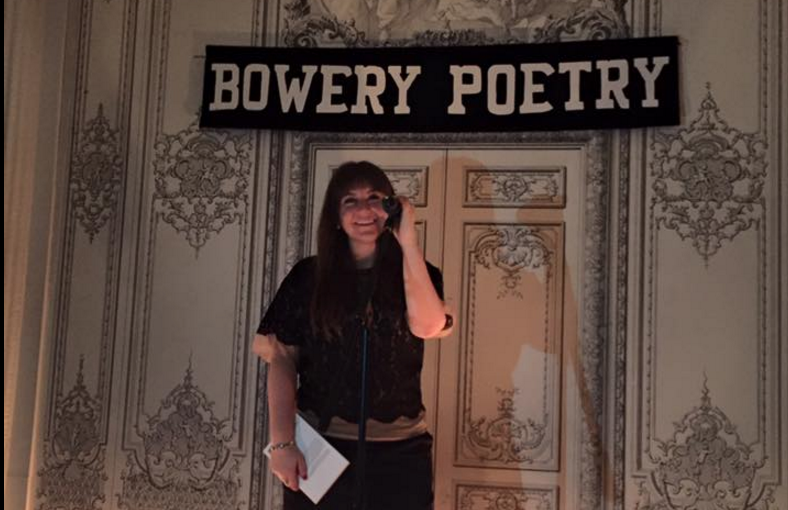
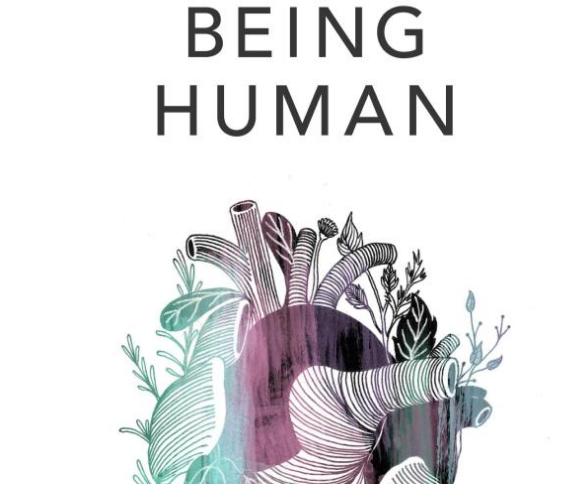
This has been a big month for Julia Gari Weiss, as her first book "Being Human" was just published by Thought Catalog. The book is an expansive, heart wrenching account of the speaker's mother struggling with cancer, what it means to be human, and yet, how humans are often treated inhumanely by each other. I'm proud of Weiss, because her words are honest. Her words are an accomplishment.
I was lucky enough to speak to her about the making of her book:
JV: This collection is clearly very personal, as it details your mother's struggle with cancer. Was it difficult for you to write? Has she read it?
JW: It wasn't easy or difficult to write about her experience and mine throughout that process, rather it served as a therapeutic release. I'd be in the cancer center with her for 4-12 hours a day, 6 or 7 days a week, so it was really the axis our lives were rotating around at that time. My mother would often be asleep because of the carboplatin, so I didn't have a lot of people to talk to besides the nurses, and I often felt that the agonizing intricacy of the day-to-day was too burdensome to convey to my friends and family, so these poems were my outlet.
Watching someone I love sustain chemo was disquieting and inconceivably trying, and writing down what was occurring allowed me to release the emotions that were encasing me. There's so much that goes unsaid about the reality of cancer and undergoing treatment. I wish someone had told us even one fact from Not in the Pamphlets beforehand, though it probably still wouldn't have prepared us.
My mom was in remission for about a year and was recently re-diagnosed with cancer, hence the poem Again. I just went home for her last treatment in this cycle and she read my book before we went into the hospital. The timing felt cyclical--simultaneously sadistic and otherworldly--that she would be revisiting that period of her life in print while having to endure treatment once more.
How do you know when a poem is done?
I think it's easier for me to identify within shorter poems. For example, when I finished "Clumps and Heavy Lifting," I knew there was nothing left to say there. I always revisit and edit my poems, but when I'm doing more cutting than adding, I know it's near completion.
For longer poems, such as "Being Human" and "Malignant Neoplasm," those stories are still evolving in my mind. In a way, I have to pry them from myself. I still revisit those poems in my head sometimes, but I've learned to breathe in and let them go. All that needs to be said is exhaled onto the page.
What were you listening to and reading and watching while writing this?
I actually snuck in some dedications to the people whom I was listening to while writing this book. My mom and I talked and joked around a lot in the waiting room, but once she was hooked up to the IV and fell asleep, I had a lot of alone time, which I don't mind. I was quietly consuming library books and listening to music throughout writing these poems.
I had a routine where I'd listen to The Civil Wars (John Paul White and Joy Williams) in the mornings on a loop. I'm in awe of their lyrics and mesmerizing harmonies. I'd listen to them until the podcast version of The Bobby Bones Show became available around 9 a.m. I listen to the show regularly, but it helped that one of the co-hosts, Amy, candidly shared her mom's account of undergoing chemo at that time.
It was strangely comforting to know that another person, albeit a stranger, was also persevering through this with her mother; although I wish nobody had to endure cancer at all. Their show was also a great window into the outside world. My mom and I were underground in a lower level hospital room for a majority of the time, so it was refreshing to hear their good news segment and candor.
After the show, I'd read a poetry book or two and then write. Sarah Lawrence College kindly allowed me to continue working on my master's degree via independent study, and my mentor, Kevin Pilkington, volunteered to help me complete workshop during that time, so I'd read from his list of authors from Billy Collins to Dean Young to Sharon Olds, and then I'd write for a bit. After reading and writing, I listened to The Roots and Jason Isbell. Isbell's "Elephant" and The Roots' "Dear God 2.0" especially picked me up when I felt alone or lost my sense of gratitude and needed to be reminded of the other positive elements that were going right in our life then.
Oddly, the song "Hotel California" by The Eagles would not fail, always come on the radio to and from the cancer center (a la the poem "Such a Lovely Place") no matter what time we arrived or left. Initially it was fun--my mom and I would sing along and hum.
After the fifth time, we were both like, screw this song. This song is the worst! These lyrics are awful! We are all just prisoners of our own device?! You can check out anytime you like, but you can never leave?! It became too relatable for haunting reasons. To this day, I have to silently leave the room if that song comes on at a restaurant or wherever. I have such a strong emotional reaction to it--it actually makes me feel nauseous.
At home, if my mom was sleeping, I'd watch the Lakers' games. (KOBE!). If she was up, we'd watch "Anderson Cooper 360" or binge-watched "Scandal" together, which we started watching when she began treatment.
My mom also loves "Dateline," so I'd watch that with her every once in a while to keep her company, but that dude's voice creeps me out. One night, when we got crazy, we ventured all the way to the Staples Center to see Taylor Swift. I think that event gave us something to look forward to despite the grimness. Even though my mom was seated, I was scared the entire time that she was going to faint (there was a previous fainting episode that constituted this fear), but she really hung in there. My mom was, and has always been, fiercely resilient.
How do you know when to break a line?
I break a line for three reasons:
1.) I've run out of space!
2.) I want to leave the line ambiguous sans period.
3.) I want to leave the reader in suspense so they'll continue reading.
I aim for more of the second and/or third, but the first is unavoidable sometimes, especially since I mainly write narrative poems.
What part of you writes your poems? What are your obsessions?
The part of me that cannot be silenced. I'll sometimes be at work or having dinner with a friend or at a museum and a line will pop into my head and I'll think, you better write that down; otherwise the line will continue to plague me and repeat itself until I do. Those generally become the seed for the poem to grow, and eventually turn into the trunk or a branch or a leaf in the poem.
For example, Cannibals came to me while I was grocery shopping. I was watching a sullen woman, who looked like she'd lost a battle against life that day, picking out a carton of eggs. I thought, "We are so delicate in our shells/Should all read handle with care." That became the opening line.
I'm obsessed with perfection in my writing, which is bizarre because I'm very type B. Nothing truly bothers me, but I cannot stand seeing a spelling or grammatical error, particularly in my own work. Those mistakes create painful aches within me. They feel careless, and I make enormous considerations when creating these words.
I'm obsessed with the prosody in each poem. I started out in spoken word poetry and I grew up listening to hip-hop, so sometimes I accidentally begin rhyming halfway through a poem and either just let myself completely unravel or I rein myself back in and say STOP RHYMING, HOMIE! It's evident in some poems and hidden better in others. I love when people vaguely notice it and say to me, that poem really slides off of the tongue like butter. It makes me feel like I've slyly gotten away with what I like to call "wordsmith conviction." It's exactly how you've interpreted it, either way.
I'm also obsessed with capturing everyday life and snapshots of the people who subsist within our world. To me, the most important part of being a writer and - wait for it - being human is being aware of my surroundings and the characters who co-exist with us in this space.
I love our relationships to each other--how fragility and ruggedness intertwines neatly within us. I'm enamored by which part of us we choose to reveal in each moment. I'm fascinated that what rips us apart is also what painstakingly holds us together.
Joanna C. Valente is a human who lives in Brooklyn, New York. She is the author of Sirs & Madams (Aldrich Press, 2014), The Gods Are Dead (Deadly Chaps Press, 2015), Marys of the Sea (forthcoming 2016, ELJ Publications) & Xenos (forthcoming 2017, Agape Editions). She received her MFA in writing at Sarah Lawrence College. She is also the founder of Yes, Poetry, as well as the managing editor for Luna Luna Magazine. Some of her writing has appeared in Prelude, The Atlas Review, The Huffington Post, Columbia Journal, and elsewhere. She has lead workshops at Brooklyn Poets.
Julia Gari Weiss is the recipient of the Academy of American Poet’s John B. Santoianni Award for Excellence in Poetry. She received her MFA from Sarah Lawrence College and has been published in3Elements Review, Image Curve, The Australian Women’s Weekly, Old Red Kimono, and The Santa Monica Star. She currently lives in Brooklyn, New York. Feel free to be unique and follow her on Twitter and Instagram @JuliaGari.