
I have always been drawn to older men, father figures. Not romantically, but as surrogate fathers. My 7th grade teacher, my choir teacher, the supervisor at the drug store where I worked during college were all stand-in fathers for me, at least in my mind. I don’t know who my biological father is, so the only father I knew was my stepdad. My stepdad would have looked down on my choice to buy a suit. He would have mocked the shiny training room and the corporate executives in it. He would have told me to stop playing someone else’s game and to be authentic to myself.
Read MoreShades Of Noir: Melancholia
The wedding is the ultimate female fantasy of culmination, of dreams coming true, or true love cemented and bound forever in an elaborate ritual. The wedding, in a romance film would be the final scene. It would be the pinnacle. By beginning with the wedding scene Lars Von Trier makes sure that the film's trajectory goes downwards rather than upwards.
Read More
An Interview with AmpLit Fest's Founder – June 11, Lit on the Hudson
BY LISA MARIE BASILE
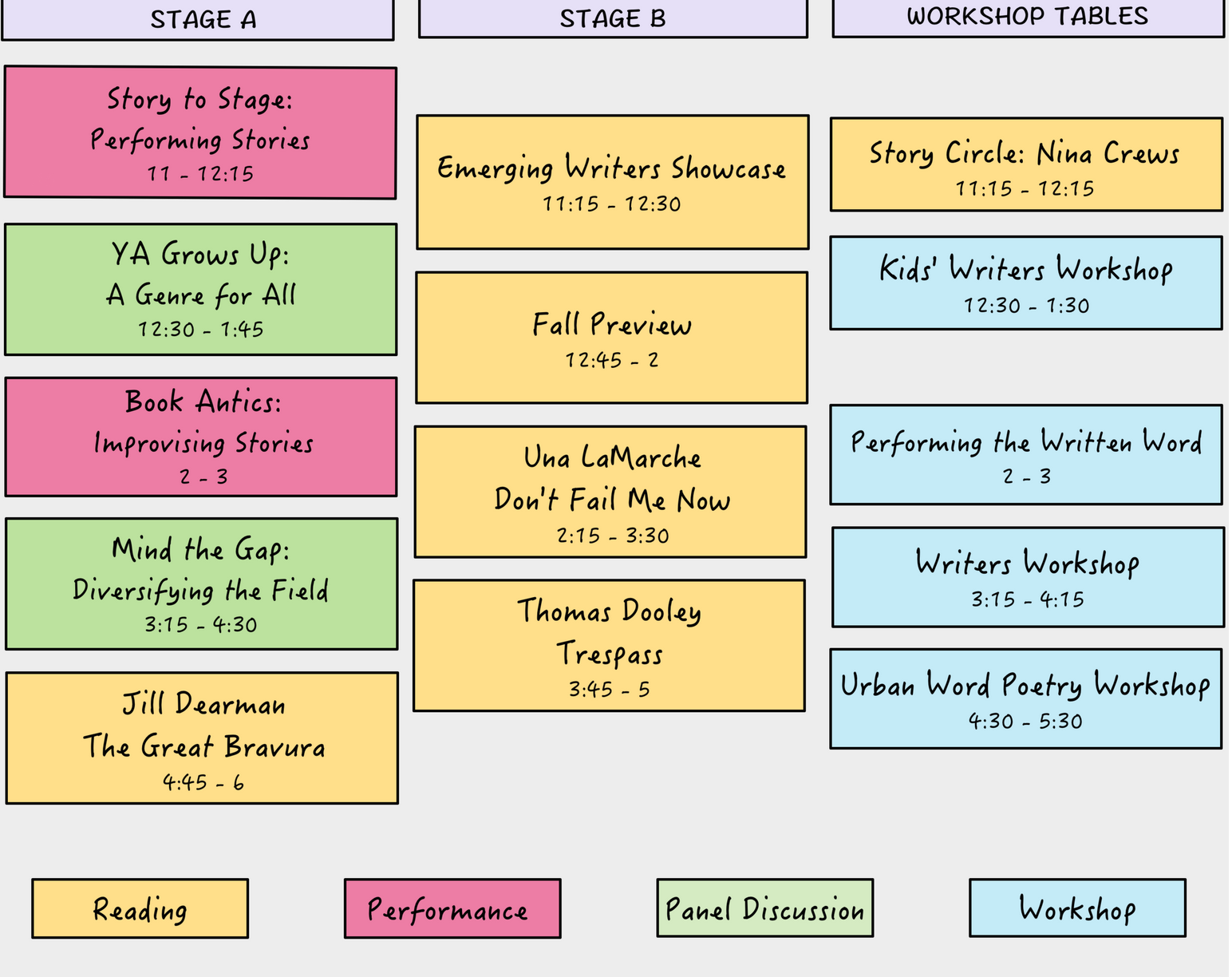
I spoke with Clare Smith Marash, the Founder and Director of Amp Lit Fest, which is co-produced by Lamprophonic and Summer on the Hudson. If you're free June 11, it's worth heading to the festival, which has a really great lineup, with panels. (See bottom of the post for more).
AmpLit Fest is, as their site says, "a free, daylong festival that brings authors of all backgrounds, styles, and levels of recognition to center stage. With readings, workshops, panels, and a community market, AmpLit Fest makes one of life’s most solitary acts — writing — a public celebration."
1. I love the idea of this festival – promoting new, fresh voices and emerging writers. So necessary. Literary scenes can, at times, feel repetitive and cliquey, so was it important to start from a place of celebrating other voices, new voices, diverse voices?
Definitely. The mission of Lamprophonic is to encourage a robust, diverse, and supportive literary community, so those objectives were always in our minds.
2. Is the focus on emerging writers answering to a larger issue in the NYC literary arena?
Lamprophonic’s flagship program is a reading series for emerging writers. I won’t claim it started anywhere too lofty - I was in graduate school when I started the series, getting my MFA while working as a bartender. The bar wanted to drum up business during a slow summer, so I suggested I bring some friends in for a reading, those friends being my classmates, who were emerging writers. Pretty quickly, though, I saw real value in protecting that space. There are many reading series in the city, but most - to my knowledge - have a hierarchical structure.
There’s an established headliner. I thought about how hard it was to get up there and read your work in front of strangers, but also how important it was. I wanted to encourage that impulse to share at every stage of a writer’s career.
By keeping the series wholly emerging writers, we can celebrate the artist-in-process and not make any kind of judgment on what it means to be successful or known, what that line is between emerging and emerged. We can avoid the hierarchy and create a space for newer writers to make connections outside of institutions, which I think also fosters a more inclusive community.
Anyway, that’s a really long way of saying that the emerging writer community is kind of Lamprophonic’s home base and we felt no reason to disregard that in AmpLit, though the festival has afforded us the opportunity to present people who we adore but would not necessarily consider themselves “emerging” and get those two parties side-by-side in a way that feels less tiered, to me, than wide-reaching. We’ll also be holding writing workshops, so we’ll be encouraging soon-to-be emerging writers to join the fun, too!
(See a list of performers here).
3. I love the idea of having a community market. What's that about?
For all we were able to do in this first run of the festival, there was so much more we wanted to do. There are so many literary-driven organizations in New York who do great work and if we had the time and resources, we’d be partnering with all of them. That’s rather unrealistic, though, so the community market was our way of extending our reach, offering a space for these great entities to share their efforts with our audiences, even if we couldn’t present them or formally partner with them at the festival.
4. You are also offering a panel on diversity. This is such a necessary area of focus, and one that has been neglected for some time by many bigger institutions. Can you talk a little more about that – as well as prepping for and choosing what panels you are offering?
Again, if only we could do more! From the start, I felt it was really important to have a discussion about diversity in the literary field — because how could you not? It’s real, serious problem in the industry and, particularly if we were going to set out to amplify new and fresh voices in the field, we must acknowledge how many voices have been systemically muted and the work being done to change that.
As for our other panel, YA Grows Up: A Genre For All, that came out of my desire to reach audiences who maybe don’t consider themselves “literary.” Because what does that mean, really, to be literary? YA seems to be this across-the-divide genre that engages people who don't consider themselves big readers as well as the passionate literati. It’s a fantastically popular genre and has now churned out repeated blockbusters, too. It got me thinking about how categories so often end up having all these additional implicit messages. 'Young Adult’ signals a lot for people, but not necessary does it signal an intended audience. So then I wanted to talk about the categorization’s use and usefulness in the market, and therefore talk about the business of books. Because it is a business, as well as an art.
5. You have so many major literary sponsors! What do you think this says about the state of literary arts in NY?
Enthusiasm! I was totally stoked to put this festival together and yet, for whatever reason, remained completely surprised that other people were just as jazzed. Anyone who supported the festival in anyway - from donating books to being represented by an author or staff member, we asked if they wanted to be acknowledged on the website and almost everyone said yes. Not to promote themselves, but to say this was something they were behind, to say they were happy to be there. Which I think is amazing.
Throughout this whole process, we’ve gotten so few ‘no’s; it’s rather incredible. Or biggest hurdle was competing with wedding season (we had several people who wanted to participate but were out to town for a wedding on the 11th). It just shows you how much this community is built on passion. We all just want to talk about this stuff all the time and are so happy when a forum appears in which to do it!
6. What do you want the community – writers and listeners alike – to take away from the fest?
Many things big and small. I want people to have fun. I want them to learn something. I want them to feel inspired. But if I had to choose one overarching thing, I think I want, at the end of the day, for literature to feeling more inviting to everyone. Everyone has a story to tell, and maybe we’ll get a few more people encouraged to try, or get a few more people to spend a bit more time with a book in their very busy lives, or get people to think about what influences their reading choices and change it up. We’re here to remind everyone just how much a good story can offer us.
Clare Smith Marash is the winner of the Avery Hopwood Award in Short Fiction and numerous fellowships, Clare received her Masters of Fine Arts in Creative Writing at Columbia University. Clare currently freelances as a writer and editor. She has written about topics ranging from particle physics to political music, and has taught at the high school and university level. You can learn more about her writing and work by perusing claresmithmarash.com
Witchy World Roundup: June 2016
BY JOANNA C. VALENTE
From Lindy West to Casey Rocheteau, we've got it all:
'Beyond the “girl power” anthem: Beyoncé, Lana Del Rey and pop’s radical embrace of female vulnerability' by Arielle Bernstein on Salon:
"The most interesting female artists today are pushing away from “girl power” for something more interesting—vulnerability. For the past few years, two of the most interesting and different artists, Beyoncé and Lana Del Rey, have released albums that unabashedly reclaim the love story as a fertile ground for asking existential questions, not just about what it means to be a woman in the world, but also what it means to be a person."
Lindy West on why you should silence your trolls on Buzzfeed:
"Just blocking and ignoring never felt satisfying to me. It just felt so passive and it felt unfair that we were supposed to not talk about this thing that is just pervasive in our professional lives. And the justification was like, if you give them attention then they’ll keep doing it. Well, they’re not stopping anyway! They’re going to hate me no matter what I do. So either I have this sort of unsatisfying, wet-blanket, powerless feeling, or I take control of the conversation. And I’m a professional writer. I’m better at writing than them. It’s really easy to win an argument with an internet troll if you’re good with language and you’re smart.
I started doing it and I don’t know that it made a difference either way, but it was at least privileging my feelings over the troll’s feelings. Why should I not do this because it might make some dude happy? I don’t care if he’s happy or not happy. I care about myself and my mental health. And something always sat wrong with me about hundreds of people screaming at me trying to make me go away, trying to drive me out of my job and silence me. Silence never felt like the right response to that."
Mary Gaitskill was interviewed at Guernica, and she's pretty badass:
"But at a very core level, people still think that a woman who doesn’t have children or doesn’t want children is really lacking in something. I’ve seen this over and over again in my life. I’ve had this thinking used against me repeatedly. I remember I had a therapist once, and I brought this up, and she said, “Well, I think women who don’t have children feel very self-critical. They feel bad, so they think other people are critical in that way.”
Bridget Minamore on ‘Racism and misogyny explains why there are so few black women in politics' on The Pool:
"For the black female politician in the West, racism and sexism (or, as feminist scholar Moya Bailey called it, misogynoir) is a part of life. Like all women, the way we look is often disparaged, but brown skin takes any sexist mocking or criticism and adds a grimy layer of racism to it – like the icing on a particularly shitty cake."
Mallika Rao talks ‘From Nina to Lemonade, Why We’re Still So Bad at Talking About Colorism' on Slate:
"Yet even as terms like yellowface and whitewash sink into our cultural vocabulary, there remains confusion on basic matters of colorism. In a 1983 essay, the writer Alice Walker coined the word to explain “prejudicial or preferential treatment of same-race people based solely on their color.” Simply: Lighter is better. “Light blacks,” as Walker called them, fare better in white society than “black blacks,” and their skin is prized in black communities. Colorism endures because both black and white people perpetuate it."
Ella Wilks-Harper on ‘There’s a Fine Line Between Tokenism and Diversity‘ on Gal-Dem:
"Diversity and tokenism also comes when organisations employ people to enhance diversity, but then assume the skills and competencies of the individual are trapped within their identity. It becomes a problem when their identities are assumed to not be compatible with the mainstream. Within journalism, they are then only asked to write about black issues or Muslim issues, as opposed to being allowed to explore their careers and abilities in any area they feel interested in."
Joanna Sing explores race in ‘What I Have Learnt from Being (Occasionally) White-Passing‘ on Gal-Dem:
"However, this is not to say that being white-passing does not come with its own unique experiences and issues. For instance, you have the privilege of being considered “one of our own” by white people, and are treated as such, but this does also mean white people sometimes feel comfortable enough around you to air their racist beliefs. Sometimes about one of the ethnic groups you associate with; such as that of your mother."
Casey Rocheteau challenged the way the lit community is run in her amazing piece ‘Literary Juneteenth (or Why I Left The Offing)‘ on The Offing:
"In other words, despite her having the best intentions and excellent experience, I nonetheless began to ask ‘how is this magazine truly an agent for change if it seems to exploit the very population it seeks to serve?"
Shades Of Noir: Becoming The Black Swan
This is a film about a journey. The journey from childhood to adulthood. The transformation from art object to art maker. The shift from passive observer to active participant in the script of one’s own life. Nina must decide if she wants her mother to be the author of her life or if she is ready to take responsibility for her own choices and her own pleasure and fulfillment—as a woman, as well as an artist.
Read More
6 Lady Book Vloggers We Love to Watch
BY CHARLOTTE COOK
YouTube has an active community of vloggers, artists and personalities for almost everything or occasion – makeup, music, gaming and even colouring. Of course, it’s only fair that books have their own respective corner in the YouTube world, and these are some of the lovely ladies making some of the best bookish content out there.
Jean Menzies from Bookish Thoughts
PhD Classics student, book reviewer and all-round literary princess. Jean is crazy clever, but down to Earth and reads a huge variety of books from classics to contemporary fiction and graphic novels. If you like “banging your feminist drum”, then you should definitely check out her Feminist Orchestra book club!
Watch her if you’re interested in classical fiction and feminism – or if you just enjoy a delightful Scottish accent.
Jen Campbell
Booktube pretty much begins and ends with Jen Campbell, most likely because she’s so well-read and lovable. Jen is a published author and poet, with great taste in fiction and poetry of all kinds. She has a series of children’s books currently in the making which are no doubt going to be amazing. Plus, her dog, Lola, is so adorable.
Watch her if you’re a fan of magical realism, fairy-tale retellings and a good old cup of tea.
Mercedes Mills from Mercy’s Bookish Musings
Mercy is the certified queen of book hauls. If there were ever such a thing as retail jealousy, Mercy’s channel would embody it. She’s always chirpy and friendly, but her reviews are straight-talking and on point. If I’m ever thinking of which book I should buy next, her channel is my first stop!
Watch her if you want some awesome reviews and mouth-watering hauls.
The popularity of Young Adult fiction has blown up over the past few years, and if you jumped on the YA bandwagon then India’s channel is definitely one for you. She’s super bubbly and keeps her videos short and snappy. If you’re looking for a YA recommendation, then definitely check out her monthly wrap-ups where she chats about the books she read that month. She’s also re-reading the Harry Potter series (for a bonus side order of nostalgia!)
Watch her if you’re a fan of Young Adult fiction and want to relive some Hogwarts memories.
Lauren Whitehead from Reads and Daydreams
Lauren is just a beacon of bookish joy, with a lovely smile and infectious laugh. Of course, no badass lady booktuber is complete without a good dose of literary love and Lauren has plenty of it. Her “Page to Screen” series is also a great way to get a double-whammy book and movie recommendation.
Watch her if you’re a fan of a good classic book analysis with some movie adaptations thrown in – oh, and if you need to smile!
Sophie Carlon
On the other side of the Earth is the lovely Sophie Carlon, an Australian booktuber with a great sense of humour. She makes book hauls, reviews and tags with a smattering of vlogs which are always welcome as she has such a kick-ass personality (and a snake, to boot!). Possibly the most underrated booktuber out there!
Watch her for some seriously funny reviews and an occasional shot of a serpent (her name is Abbey).
Who are your favorites? Leave them in a comment below.
Charlotte Cook is a journalist, poet and strident shark defender. Having just graduated from University with a BA in Philosophy, you will most likely spot her writing about feminism, sex and culture - all whilst accompanied by a cup of tea and a heap of books. You can find her on Twitter @charlotte__cook, or peruse her blog: www.charl-cook.blogspot.co.uk
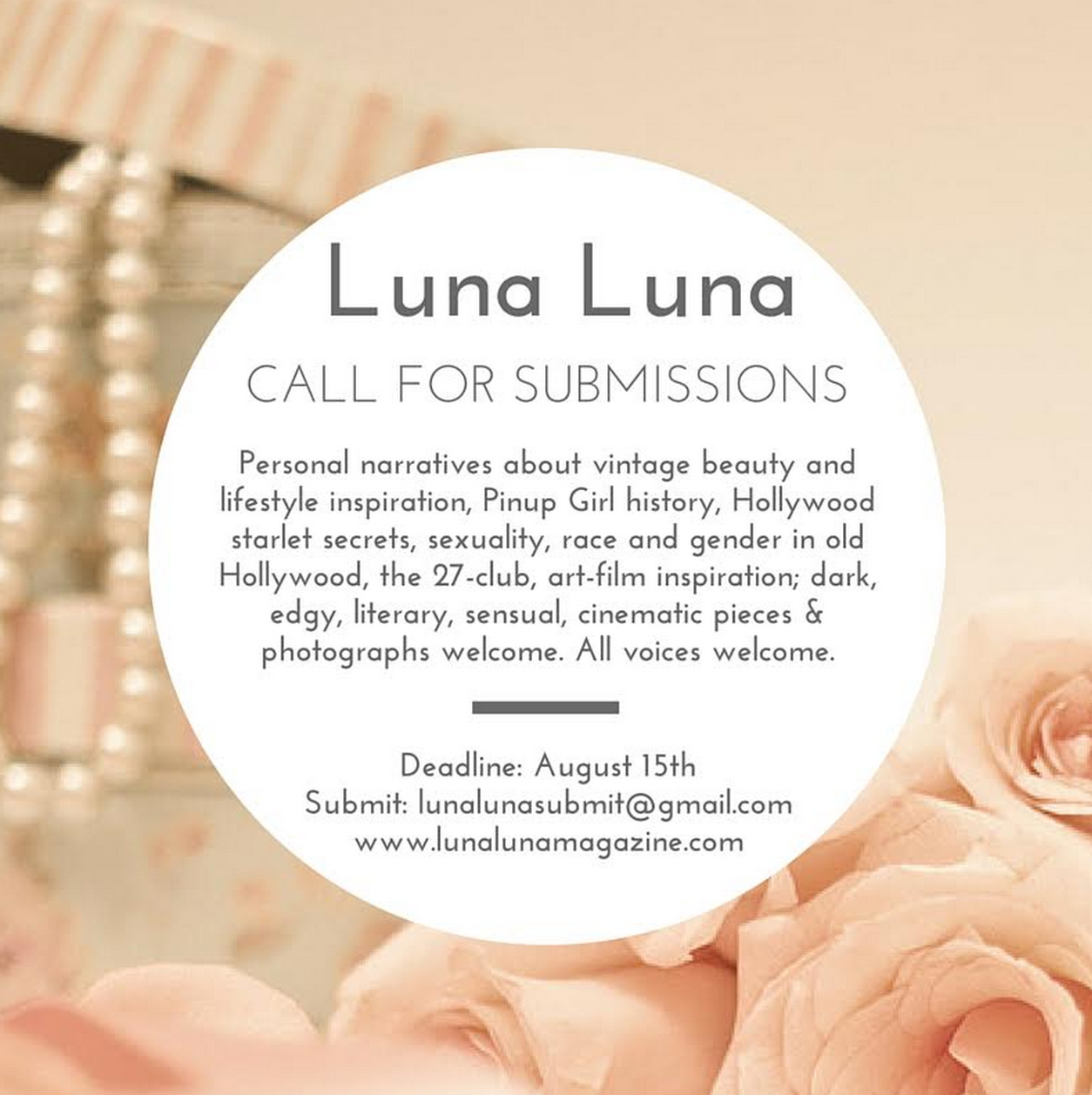
Seeking Submissions: Stories of Hollywood, Death, Fame & Glamour
A note on the submission: Word count: 600-2000. Essays and features preferred. Open to the right poetry. We can't wait to read your work. We're looking for the beautiful and haunted. Essays around the women who inspired you, the deaths that will never make sense, and the poisonous world of glamour and fame. To submit, see here.
Anagnorisis: Rebirth in Recognizing Your Truth
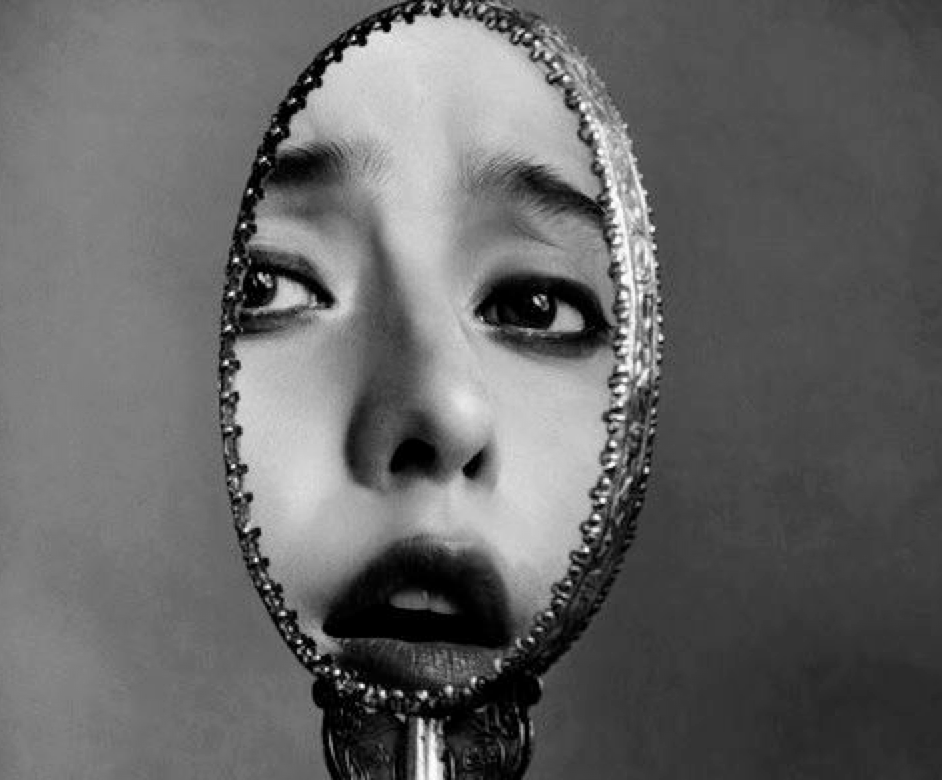
My arms yearned for these strangers, these men and women who walked in the shadows of their minds, feeling alone, feeling as though they did not share a thread with any part of society.
BY S.K. CLARKE
I am a firm believer that humankind requires food, water, shelter, and intimacy. After our stomachs are full and our bodies are kept warm, we desire the ability to be seen by another human being, to be heard and understood.
The pivotal moments in my life have centered on someone acknowledging my self, the oft-guarded soul that is tucked away from casual observers. Often the other’s ability to see me results in an enlightenment; a move from shaded reality to exposed self-truth. It is important to note that this truth is not always beautiful. We may not always be ready to accept the knowledge when it is thrust upon us by the seeing few, but it is honest and bears the weight of import, all the same.
Aristotle called this moment of self-reveal or recognition, anagnorisis. Often in Greek tragedies, the protagonist is in the dark about some aspect of their being. InOedipus Rex, Oedipus was ignorant to his truth: he had killed his biological father, married his biological mother, and gave her children.
In the case of Oedipus, his understanding of self, both what he stood for and who he was in society, came with the reveal of his paternity. But what’s interesting to note, is that the audience was fully aware of who Oedipus was long before the big reveal. The Greek people were a learned audience who had seen these stories play out several times before. The Oedipal legend was old and the men who had gathered to see the play performed would have known the ending before the characters on stage would live it. The reason they went was in order to see which playwright wrote the best version; which Oedipus would spark something new within the audience.
In this I find a unique formof anagnorisis that can only be found in art: a recognition of ourselves within the creative minds of the artist.
This movement of self-knowing from the external to the internal can often be found in the paintings, the music, the poems and stories that traverse time and space to enter our psyche through the crackle of a record player or the luminescence of a Kindle screen. Lyrics and verses and compositions and brushstrokes that navigate time, space, and language to knock at the cement fortresses within our souls and say, “Hey, I know you. You are not alone.”
For me, there has been a therapy in the words of Neil Young, Billy Joel, Damien Rice, and Ray LaMontagne. Their lyrics call to me, assuring me that someone somewhere has been a miner for a heart of gold and they, too, see me in all of my vulnerability, in the darkest places where my self lies hidden from the daily world. Their careful placing of syllables and emotions finally, exuberantly, pitifully give voice to all that I’ve been wanting to say, whether I knew it before or not.
I’ve found it in the carefully constructed words of authors Sherwood Anderson, Edgar Lee Masters, and Colum McCann, the dark despair of poetess Christina Rossetti, the inspirational instruction of Brené Brown. Within the isolated activity of reading, within their solitude of writing, I found a piece of myself. A communication between myself and an unknowable stranger who, reaching across distance, reaching beyond death, declares that they see me as I am and have shared in what I have felt.
As an educator, theatre artist, and writer, I often strive for this feeling of communion with my students, aiming for them to experience the power to be known. I hope that in the pages of dramatic literature, my students and actors can say, “In this, I see me.” I hope that they can find the human in all and through that magic of recognition, they will see themselves in Stella, Ophelia, and Everyman. And, perhaps, that Stella, Ophelia, and Everyman will cause them to see humanity within themselves.
Through this seeing, this knowing, a beauteous progress is made. Stagnation is held at bay and something entirely cosmic enters into our lives, whether we expected it or not.
As an instructor, I often do not anticipate this progress to be made in my own life. I have read Hamlet no less than thirty times. For me, the recognition has already been made and now I get to enjoy those steps in my students.
However, when I began directing a play this past semester, I was shocked to find that art still had more to show me.
The play centered on the cycle of abuse within relationships, both romantic and familial. A young wife is beaten within an inch of her life and through a series of increasingly absurd circumstances, is all but forgotten by the end of the play. Both she and the brain damage she possesses are erased from the family’s consciousness. The end of the play leaves the audience with the impression that the mental and physical abuse done to her is doomed to be repeated because it has never been fully addressed.
The artist in me latched on to the uncomfortability of this, the unfinished, unpolished ending that would remind us all that abuse knows no happy conclusion. I wanted the audience to feel embarrassed and uneasy, hoping that through some self-reflection they would see abusive behaviors in their own lives and after much thought, seek to eradicate them.
The future mother in me, however, felt that I personally needed to create a positive change in the community. I needed those who I worked in and around to know that this did not have to be the answer: that cycles can end and progress can be made to heal, to repair.
Encouraged by projects such as Humans of New York and PostSecret, the drama club and I worked together to place boxes throughout the college campus, asking for students, faculty, and staff to submit their “secrets,” their moments of abuse, harassment, or discrimination in hopes that, through the sharing, they would gain back a voice they did not feel they had.
Over the course of three weeks, we received over 150 responses. A few of the posts were drawings of a penis ranging in anatomical accuracy, but the majority of the submissions were heart-wrenching confessions of disease, abuse, insecurity, and desire.
“I feel like I have no true useful purpose and no true direction,” one submission said.
One confessed: “I forgot my little sister’s birthday.”
“I suffer from claustrophobia because my father used to lay on top of me,” exposed another.
Many revealed a long-harbored affection toward their best friends while others admitted to instances of infidelity. A large majority dealt with mental illness and some confessed the wish to end their own lives. One revealed that they were HIV-positive.
My arms yearned for these strangers, these men and women who walked in the shadows of their minds, feeling alone, feeling as though they did not share a thread with any part of society. Perhaps feeling that no one could empathize. No one could understand.
But I am writing this today to tell you I do understand. I do see you. I get it.
As I paged through secret after secret, I felt an unexpected click of recognition, a cracking of my defenses, a revealing of my truth. Many of the secrets dealt with rape. Many of those same confessions were also partnered with the statement that they had not told anybody, some for many years. Some had not mentioned their abuse until they had put it down on the slip of paper I now held in my hand.
I did not submit a secret to the project, but if I did it would read: I was raped and for three-and-a-half years I believed that it had been my fault.
I was staying at a friend’s family home in Italy. My friends and their family were all tucked away in their beds. I was downstairs being raped.
The guy was placed in my path deliberately. He was supposed to be a good flirt. A morale booster. He was not supposed to sit on my chest and force himself in my mouth. He was supposed to hear me when I said no. He was supposed to stop. He was not supposed to tell me that I deserved it, that I had led him on, that I had to finish what I had started.
I was not supposed to believe him.
But I did.
For years I believed that it had not been rape. It should have been more violent. I should have had scars. If it had been rape, I would have fought harder. The only rape that counted was the violent kind, not the kind that left me asking him quietly to stop, lest I wake anyone.
And so, I remained silent. I did not speak up about what had happened, did not utter the “R” word. I did not tell my friend who had slept upstairs. She had seen me flirt with him earlier in the night and I assumed she would think I was a tease. I didn’t tell my grandmother, though I called her the minute I got back to my apartment. I wanted her to hear my voice. I wanted her to fix what had broken inside of me. She had sounded tired when she had asked me if something was wrong and I chose not to burden her. She was going through chemo after all, and I felt that I was just another whore. I did not tell my mother who holds the key to most of my secrets. I was her good girl, not a sexual being who would be found in those types of situations. In my journals, I remained dumb. In therapy, I skirted the issue.
But as I sat there, holding the secrets of strangers in my hands, I felt the crack of anagnorisis, an understanding of my truth, of what I am and what I stand for.
“I see you,” I said to the anonymous submissions. “And you see me. You never deserved this. You are not wrong. You are not dirty. You are a victim.”
I am not talking about rape culture in America, extremely prevalent though it is. I’m not going to talk about how politics and the media make it difficult for victims to come forward, as was the case in Oklahoma and Brigham Young University. I won’t mention how rape is normalized in television shows such as Game of Thrones or how the porn industry seems to capitalize on male sexual aggression against often unwilling women. Nor will I mention that out of every 100 rapes, only two rapists will go to jail.
This is about finding those men and women who are afraid to view themselves as victims, those who feel alone in their stories of abuse or harassment. You may never hold 150 secrets in your hand, but you now hold mine. What I ask is that you see that unlike the me of three years ago, I now know that I never deserved what was done to me. I also never deserved to hold it within me in silence. I’ve acknowledged that no matter what I was wearing, no matter how I had been conducting myself prior to the incident, I had not given consent. I did not say yes and something that was precious within me was taken and tarnished. I was raped.
You, too, do not need to hold yourself in the shadows.
Whether you suffer from debilitating depression, whether you have experienced rape, sexual harassment, physical or mental abuse, or dependency of any kind, you are not alone. Your secret does not make you any less deserving of love, nor does voicing it admit any weakness. Through using your voice, by putting the words on paper, or sharing your story, you can begin the healing process.
The Aristotlean definition of anagnorisis is often associated with tragedies: King Lear realizes that Cordelia’s love is the truest only after she has died, Nora’s desire for self-knowledge causes her to abandon her husband and children, Bruce Willis discovers he’s dead in The Sixth Sense.
I would like to argue that there can also be a rebirth in the recognition, a happy ending. Only through the dead of winter can we prepare for the blossoming of spring. Only from the gravel can we build a foundation. Only from the ashes can the phoenix be born again. And only through recognizing your truth can we grow, learn, and heal as a whole.
S.K. Clarke is a writer, adjunct professor, and theatre director in Pennsylvania. She has earned her MA in Text and Performance from London’s Royal Academy of Dramatic Arts and her BFA in Acting at Philadelphia’s University of the Arts. Clarke is a writer of poetry, plays, and short stories focusing on the disintegration of small-town America, social and political injustices of minorities, coming-of-age and end-of-life narratives, and stories featuring complicated and strong female characters. She is currently writing her first novel which, she hopes, will touch on all of the aforementioned topics.
The Voices We Don’t Hear in Poetry Are the Ones We Need To
I was introduced to read a week ago at the Bowery Poetry Club…Cafe? Are they just BOWERY POETRY now? The particulars I’m not very familiar with because, surprisingly, it was my first time there, ever, in my 10 years in New York scribbling down the sideline chatter on the subway in the margins of my books, finding an acute little poem that comes from both the conversation and the words the conversation is transcribed next to. My introduction is prefaced withThis won’t make sense to anyone but me and she goes on to introduce me with two lines of poetry to which I respond at the mic, What do you mean? That totally makes sense. It’s always about me.
Read More
Seeking Submissions – Disability, Chronic Illness & Mental Health
BY ALAINA LEARY
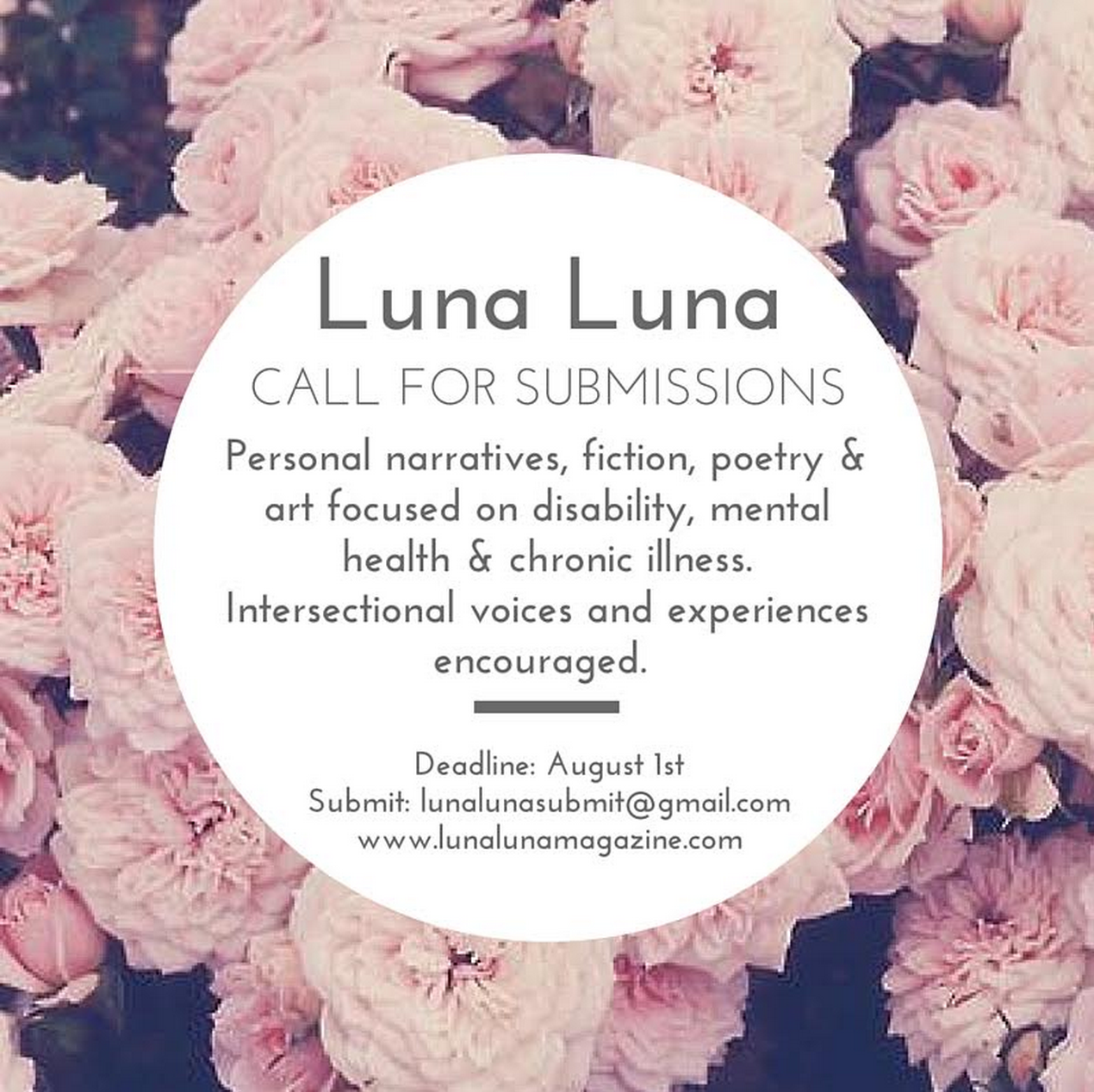
As a disabled woman, these kinds of stories and perspectives are so important to me. I grew up thinking my existence was a burden - literally - and that I'd never be employed, that I had a higher chance of homelessness, that I couldn't make it, especially since I'm not only disabled, but also queer and middle class. I want these stories to be told. My parents were/are both mentally ill and disabled too. My mom couldn't drive, was visually impaired and stopped being able to work around the time I was born. But beyond my own family, I didn't know anyone who was disabled or ill. I didn't know it was a thing you could be and still be okay. That's why representation is so important and why I want to help publish some of those voices.
Editors Joanna C. Valente & Alaina Leary will be editing this special issue, so please submit your stories and artwork to them by August 1.
Poetry By Katie Manning
Back in America,
I read my professor’s poem that was shaped
like a breast on the page. He was edgier
than I thought. To this day, I regret not using
the words that came to me when I needed them.
Instead of Buying Another Cocktail, Shoot VIDA 10 Bucks...TODAY
BY LISA MARIE BASILE
Or just shoot them 10 bucks and get another cocktail.
Luna readers, today is the last day of VIDA's campaign. They're raised $10,000 so far – which will go toward their count, events, fellowships, and publications.
As editor of Luna Luna Magazine, and as a writer / editor for national and indie magazines, I - like many of you - got my start in literary magazines. I won't sugar-coat it: there are a lot of smarmy, egotistical white male dudebros at the top who want to keep brands old and dusty and free from new voices. We need to fight that power. I am glad VIDA was around to pave the way.
In many journals, especially top tier ones, women - women of color, especially - are published at a frighteningly lower rate. I wish I could say "times are changing" with absolute certainty, but we've got a way to go. VIDA is absolutely at the forefront of that by creating a necessary dialogue in order to elevate parity in literary art and create spaces for diverse voice. Obviously this needs to be applauded. And like Luna Luna, they're all volunteer. They're not sitting on mounds of money.
I think back to a time when, in college, a classroom professor suggested that the women in the class were writing in a "typically feminine" sort of way. As if colors and sounds were particularly womanly. Maybe they are? But the inference was that it was too girly, almost silly, like a young girl scribbling into her diary, unlike the apparently (?) more "real" poetry her male counterparts were writing. It wasn't easy to say that his implications were unfair or pandering or reductionist, or – at worst – sexist.
Those amorphous, slightly off-settling situations happen all the time and need to be defended against. The same is true for racial politics. We should be publishing diverse voices, not squandering opportunity or declining rejections or making it so that women and people of color aren't submitting at all. Nope. Support equality.
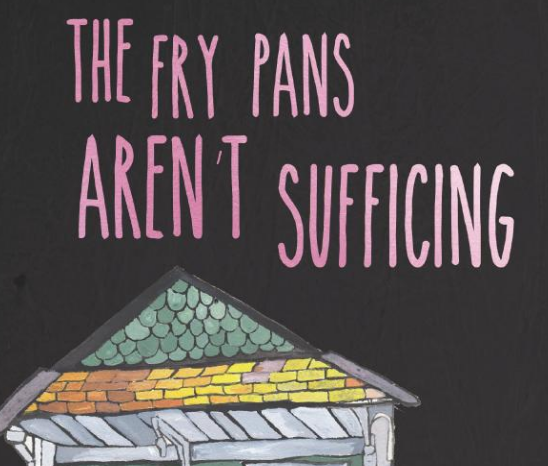
Review of Peyton Burgess' Fiction Collection 'The Fry Pans Aren't Sufficing'
“The Fry Pans Aren’t Sufficing” is a book I couldn’t put down. It’s a collection of short stories published by Lavender Ink Press, and a triumphant debut, by Peyton Burgess. These stories are gorgeously brought to life in three parts that weave together so naturally, I often felt I was reading about myself, or my friends, or some long lost best friend from my dreams. I believe in these stories.
Read More
NY Theatre Guide
Ivo Van Hove’s 'The Crucible' Blew Me Away
This May Day was completely sans May, and instead a drearily beautiful pastiche of early autumn. The rain-splashed winds in conjunction with the rush of traffic in Times Square made my bell-sleeve floral dress sway gently against my thighs, and I clasped my jacket close to me, smiling through the mist. Sometimes life does imitate art, but I had no idea how fully this chilly Sunday would complement Ivo Van Hove’s rendition of Arthur Miller’s "The Crucible," now on Broadway at the Walter Kerr Theatre.
Read More
Image via Flickr
I Read That Essay on xoJane After My Father's Suicide Attempt
It's not a blessing when mentally ill people die.
BY ALAINA LEARY
This is in response to xoJane's piece, "My Former Friend's Death Was A Blessing." You can also read about being a mental health ally and advocate as it relates to this piece here.
Earlier this week, my dad—someone with lifelong mental and physical health issues—tried to die by suicide and ended up in the ICU. He intentionally overdosed on his depression and anxiety medication. This was after several months of expressing suicidal thoughts to me and to therapists, and working with medical professionals in inpatient care.
About a month ago, my dad was refused any more inpatient care even though he insisted that he was still dealing with suicidal thoughts. He also received a denial letter for disability benefits, although he is dealing with early Alzheimer's, has had several surgeries for physical health problems, has been diagnosed with several serious mental illnesses, and has had worsening overall health since a car accident in October 2014.
Since then, he's been severely suicidal. Because he has a lifetime of mental health battles, including bipolar disorder and PTSD, this is not the first time I've worried about him attempting suicide. But it is the most upsetting time and it felt the most real. Over the last ten years or so, my dad has done nothing but try; this is his second serious attempt at getting the help he needs, including disability benefits and mental health care. In the last year or so, he's done nothing but try to fight for the resources he needs to survive, only to be failed time and time again.
Last month, doctors discovered a cyst on his breast while he was in the ER. When he later asked about getting it checked out, they repeated to him: "Are you here for your suicidal thoughts or for the cyst?" They refused to prioritize both; his physical health was put on the back burner because he was honest about wanting to die. Several times when he's been in the hospital, I've spoken with staff about his memory issues and cognitive health—all of which was ignored because they were focused on treating his depression. His symptoms of early Alzheimer's shouldn't be ignored, especially because some of his current medications make him even more drowsy and forgetful than he was before. He often forgets conversations we had just earlier in the week, and has had to be reminded about things we discussed. I've never been so angry with the health care system in my entire life.
This morning, I woke up after falling asleep crying about my dad's recent suicide attempt to find out about the now-removed xoJane essay, "My Former Friend's Death was a Blessing." I've never felt so angry at a writer. Yes, we're all entitled to our opinions, but some of those opinions should not be published, as Lisa Marie Basile details in her own piece about editorial integrity. I can only imagine how my dad, who feels useless and unworthy of life, would feel if he were to read that xoJane essay. It would be like a sign saying, "Because you can't take care of yourself right now, you're a burden to your family and friends, just like this writer says about her former friend. Your death would be a blessing, too."
Yes, we're all entitled to our opinions, but some of those opinions should not be published.
Those are thoughts suicidal people are already feeling. I know because my dad has told me. He loves me more than life itself, but he doesn't feel like he can do anything right. He feels like a burden to me and to others, and doesn't see any reason worth living anymore.
It hurts me so much to see that there are people out there who believe that someone like my dad, who can no longer take care of himself after over twenty years of fighting, are "beyond help" and that death is "inevitable." Just because someone deals with serious mental health issues doesn't mean we should give up hope and give them a reason to give up. It's not a blessing when mentally ill people die.
The individual situations are different, obviously. Leah was a young woman and she spoke of schizoaffective disorder. Unfortunately, we don't really know her. We know only of her what the writer chose to tell us through a voyeuristic, cold, empathy-free lens. My dad is middle-aged, physically disabled, and has a history of unhealthy coping mechanisms, like drinking and being a workaholic. But at their core, they're not so different. Neither could take care of themselves completely on their own, and both needed support. And in Leah's case, she failed to get that support, and even after her death, instead of being mourned, she was turned into a sensationalist headline.
Just because someone deals with serious mental health issues doesn't mean we should give up hope and give them a reason to give up.
My dad is mentally, physically, and cognitively ill right now. He needs help taking care of himself. He doesn't need self-care; he needs community support. It's not always an easy task, and for my own health and well being, I can't be all things to him at all times. But the one thing I can always do is reassure him—and any other mentally ill person reading this—that there is hope, and that they're loved. And they deserve to live, even when it may seem impossible.
Alaina Leary is a native Bostonian studying for her MA in Publishing at Emerson College, and working as a social content curator at Connelly Partners. Her work has been published in Cosmopolitan, Marie Claire, Seventeen, Redbook, BUST, Her Campus, AfterEllen, Ravishly, and more. When she's not busy playing around with words, she spends her time surrounded by her two cats, Blue and Gansey, or at the beach. She can often be found re-reading her favorite books and covering everything in glitter. You can find her on Twitter and Instagram @alainaskeys.