

• Home
  • indulge
  • new poetry
    • About Luna Luna
    • resources
    • search
  • editor
  • dark hour
  • submit
Menu

luna luna magazine

  • Home
  • indulge
  • new poetry
  • About
    • About Luna Luna
    • resources
    • search
  • editor
  • dark hour
  • submit
shadow
A Writing Spell: Honoring Your Many Selves
Mar 1, 2021
A Writing Spell: Honoring Your Many Selves
Mar 1, 2021
Mar 1, 2021
An 11-Line Poetry Spell For Healing
Mar 1, 2021
An 11-Line Poetry Spell For Healing
Mar 1, 2021
Mar 1, 2021
How To Write Powerful Poetry Spells
Feb 28, 2021
How To Write Powerful Poetry Spells
Feb 28, 2021
Feb 28, 2021
Here Is Your Scorpio Homework This Season
Oct 25, 2020
Here Is Your Scorpio Homework This Season
Oct 25, 2020
Oct 25, 2020
3 Transformative Life Lessons Scorpio Teaches Us
Oct 25, 2020
3 Transformative Life Lessons Scorpio Teaches Us
Oct 25, 2020
Oct 25, 2020
Restorative Grief: Letters To The Dead
Oct 23, 2020
Restorative Grief: Letters To The Dead
Oct 23, 2020
Oct 23, 2020
A Santa Muerte Rebirth Ritual + A Tarot Writing Practice
Oct 6, 2020
A Santa Muerte Rebirth Ritual + A Tarot Writing Practice
Oct 6, 2020
Oct 6, 2020
Witches, Here Are The New Books You Need
Nov 14, 2019
Witches, Here Are The New Books You Need
Nov 14, 2019
Nov 14, 2019
3 Dream Magic Rituals And Practices
Nov 12, 2019
3 Dream Magic Rituals And Practices
Nov 12, 2019
Nov 12, 2019
How To Use Tarot Cards for Self-Care
Nov 11, 2019
How To Use Tarot Cards for Self-Care
Nov 11, 2019
Nov 11, 2019
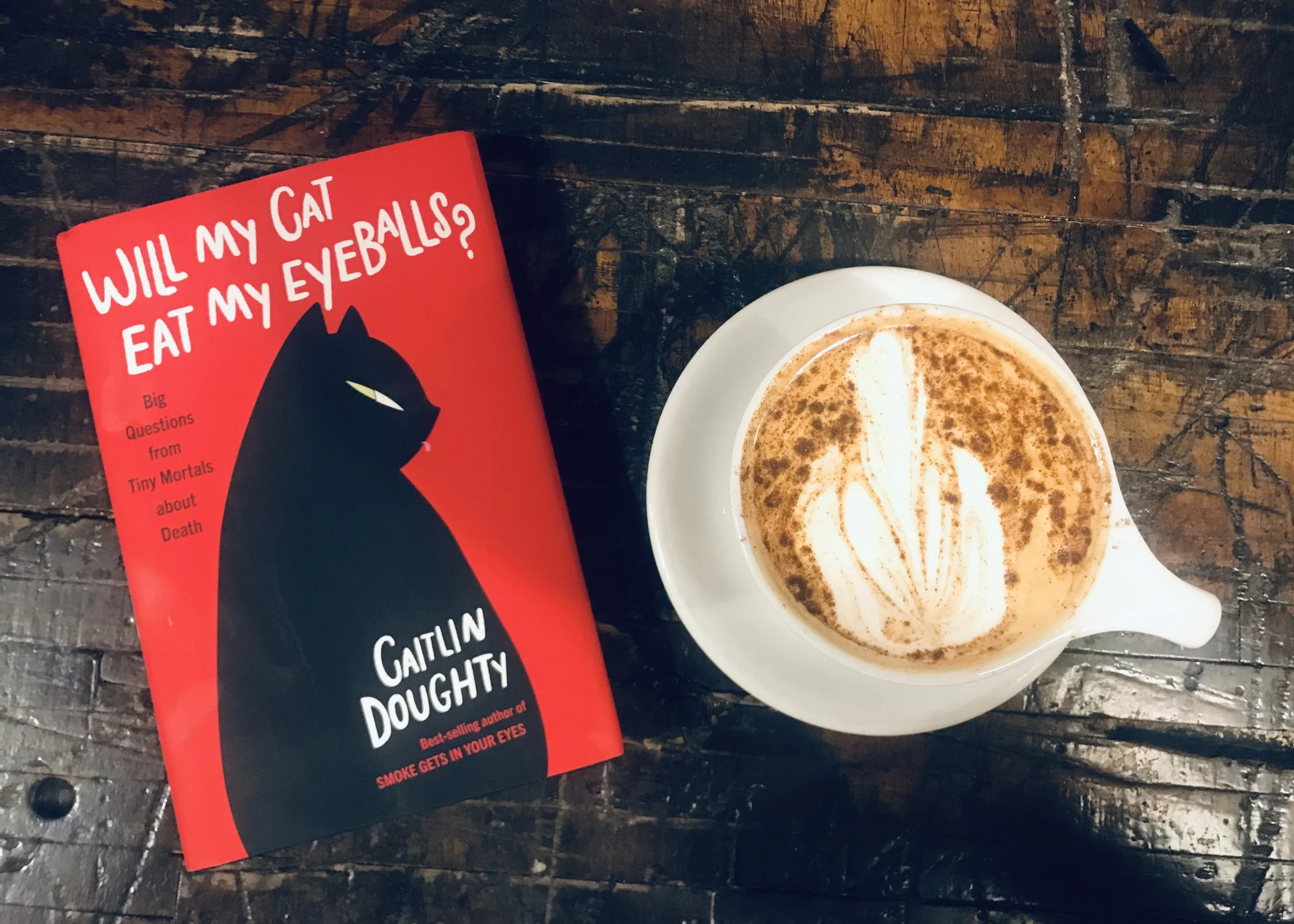
A Review of Caitlin Doughty's 'Will My Cat Eat My Eyeballs?'
Oct 25, 2019
A Review of Caitlin Doughty's 'Will My Cat Eat My Eyeballs?'
Oct 25, 2019
Oct 25, 2019
Nimue, The Deity, Came To Me In A Dream
Sep 17, 2019
Nimue, The Deity, Came To Me In A Dream
Sep 17, 2019
Sep 17, 2019
Astrological Shadow Work: Healing Writing Prompts
Sep 9, 2019
Astrological Shadow Work: Healing Writing Prompts
Sep 9, 2019
Sep 9, 2019
The Witches of Bushwick:  On Cult Party, Connection, and Magic
Jul 23, 2019
The Witches of Bushwick: On Cult Party, Connection, and Magic
Jul 23, 2019
Jul 23, 2019
7 Magical & Inclusive New Books Witches Must Read
May 15, 2019
7 Magical & Inclusive New Books Witches Must Read
May 15, 2019
May 15, 2019
Working Out As Magic & Ritual: A Witch's Comprehensive Guide
May 14, 2019
Working Out As Magic & Ritual: A Witch's Comprehensive Guide
May 14, 2019
May 14, 2019
Letters to the Dead: Shadow Writing for Grief & Release
Feb 8, 2019
Letters to the Dead: Shadow Writing for Grief & Release
Feb 8, 2019
Feb 8, 2019
How to Add Magic to Your Every Day Wellness Routine
Feb 5, 2019
How to Add Magic to Your Every Day Wellness Routine
Feb 5, 2019
Feb 5, 2019
Ritual: Writing Letters To Your Self — On Anais Nin, Journaling, and Healing
Jan 31, 2019
Ritual: Writing Letters To Your Self — On Anais Nin, Journaling, and Healing
Jan 31, 2019
Jan 31, 2019
How Rituals Can Help You Gain Confidence
Jan 17, 2019
How Rituals Can Help You Gain Confidence
Jan 17, 2019
Jan 17, 2019
Hearthcraft & the Magic of Everyday Objects: Reading Arin Murphy-Hiscock's 'House Witch'
Jan 14, 2019
Hearthcraft & the Magic of Everyday Objects: Reading Arin Murphy-Hiscock's 'House Witch'
Jan 14, 2019
Jan 14, 2019
True to The Earth: Cooper Wilhelm Interviews Kadmus
Nov 26, 2018
True to The Earth: Cooper Wilhelm Interviews Kadmus
Nov 26, 2018
Nov 26, 2018
Between The Veil: Letter from the Editor
Oct 31, 2018
Between The Veil: Letter from the Editor
Oct 31, 2018
Oct 31, 2018
Shadow Work with Light Magic for Dark Times
Oct 31, 2018
Shadow Work with Light Magic for Dark Times
Oct 31, 2018
Oct 31, 2018
2 Poems by Stephanie Valente
Oct 31, 2018
2 Poems by Stephanie Valente
Oct 31, 2018
Oct 31, 2018
A Poem in Photographs by Kailey Tedesco
Oct 31, 2018
A Poem in Photographs by Kailey Tedesco
Oct 31, 2018
Oct 31, 2018
Photography by Alice Teeple
Oct 31, 2018
Photography by Alice Teeple
Oct 31, 2018
Oct 31, 2018
A Simple Spell to Summon and Protect Your Personal Power
Oct 31, 2018
A Simple Spell to Summon and Protect Your Personal Power
Oct 31, 2018
Oct 31, 2018
November and Her Lovelier Sister
Oct 31, 2018
November and Her Lovelier Sister
Oct 31, 2018
Oct 31, 2018
A Spooky Story by Lydia A. Cyrus
Oct 31, 2018
A Spooky Story by Lydia A. Cyrus
Oct 31, 2018
Oct 31, 2018
Aela Labbe

Aela Labbe

Everything You Should Know About Contacting The Ancestral Dead

November 20, 2015

BY SOPHIE MOSS

When we lose a loved one, many people believe that they are permanently gone: banished to a plane, heaven, or nothingness from where they can no longer hear us. Some people are fierce non-believers, others choose to believe in a nothingness out of fear, or grief. Since childhood, I have always believed in a gateway: a ‘tween through which the living can make contact and the dead can whisper back.

So, the curious child started to write. I would pen letters, hoping to bridge the gap between worlds. I would write notes to dead people I didn’t know, or supernatural characters from books and television shows. I was enthralled by realms that I couldn’t put my hands on and feel, obsessed with doors that wouldn’t open. With age, I learned to understand my curiosity--my spirituality. The occult--particularly witchcraft -- has played an important role in how I define myself as a human, woman, and writer.

I don’t believe that the people we love ever really leave us--not even in death. When we have a problem, we can ask for assistance. When we’re unsure, we can ask for guidance. Indeed, we can use ritual and spellcasting as a means by which to contact lost loved ones and ask them to work with our own spiritual source to demystify our path, nudge us in a certain direction, or send help. To ask them to whisper back.

I have learned a lot over the years about witchcraft, spirituality, and the afterlife from Silver Ravenwolf’s Solitary Witch, and have taken influence from the volume’s spellwork to create a Luna Luna guide to making contact with the ancestral dead through the art of letter writing.
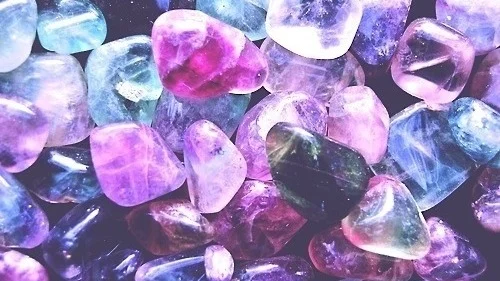

Supplies: a selection of stones (minimum three); a purple candle; paper; pen; envelope; lighter.

1. Choose an outdoor space. I prefer to choose a location that carries a certain resonance, either for myself or the loved one with whom I am seeking to make contact; a place that allows me to feel close, safe, and connected. Ultimately, choose a space that feels as sacred or as neutral as it feels right to you--whether you go to the local park bench on which you and your lost love shared your first kiss, or whether you regard your own back garden as the safest and most comfortable space in which to make contact, the choice is entirely yours. Remember: it is your intent that matters most.

2. Arrange your stones. At this point, it is about doing what feels most comfortable for you--this is not about rigidity. If you prefer to follow the guidelines of Wicca, arrange three stones in the shape of a pyramid (to represent the Witches’ Pyramid), otherwise, collect enough to spell out the initials of the person you will be honouring. Again, this is not about meticulous rule-abiding, but rather honesty and intent. If something doesn’t feel right, play around with it until it does.

3. Light a purple candle. Purple corresponds with expansion of the self: expansion of spiritual power, knowledge, and consciousness. Once lit, ground yourself and focus your energy on the loved one with whom you are seeking contact. Imagine a bright light filling up your body, traveling through cells and organs and out through your fingers into the candle you are holding. At this point, you can intonate prayers for the deceased. I don’t follow a single specific religious path and instead choose to maintain focus and silence, finishing by placing my candle by the stones.

4. Write a letter to one of the people you are honouring, or have honoured in your prayer. It is in the contents of this letter that you will communicate whatever your reason for contacting. Ask for their help. Detail your problem. Thank them for all that they have done. Tell them you miss them. Whatever your reasons, write them all down. Once you have done this, place the letter in the envelope and seal with a final kiss.

5. Burn the letter. Place the envelope on top of the stones, and focus your intent once more. Take the candle and burn the letter, watching the cool ashes escape in the wind as it carries your message to its recipient. Be contented in the knowledge that your questions are being answered. Once finished, leave your stones untouched.

NB: When making the decision to contact the dead, we must take caution. While it can be helpful to ask our deceased for guidance or assistance, it is important that we do not allow them to take the place of our own spiritual source. As with everything in life, it is about maintaining a rightful balance: finding a happy medium between honouring, acknowledging and contacting lost loved ones, and affording the dead a limited place in our lives.


Sophie E. Moss is a dark witch & literary maven. She writes essays for LunaLuna and poetry for all the people she used to be. @Sophiedelays
In Occult Tags Ancestors, Magic, Stones, Crystals
Comment

How I Taught My Daughters About Their Vaginas

November 19, 2015

I fumbled my way through a long saga about ovaries and eggs and periods, with a brief cameo from semen and sperm.  I must have confused some details about fallopian tubes, because Ava left to fetch The Period Book so we could refer to its helpful diagram of female reproductive organs.  This led to Carmen examining the labeled drawing of the vagina and asking me where the pee came out. 

Read More
In Confession Tags kids, feminism, motherhood
2 Comments

Shades of Noir: The Fairy Tale Noir Aesthetics of Lana Del Rey & David Lynch

November 18, 2015

BY LEZA CANTORAL

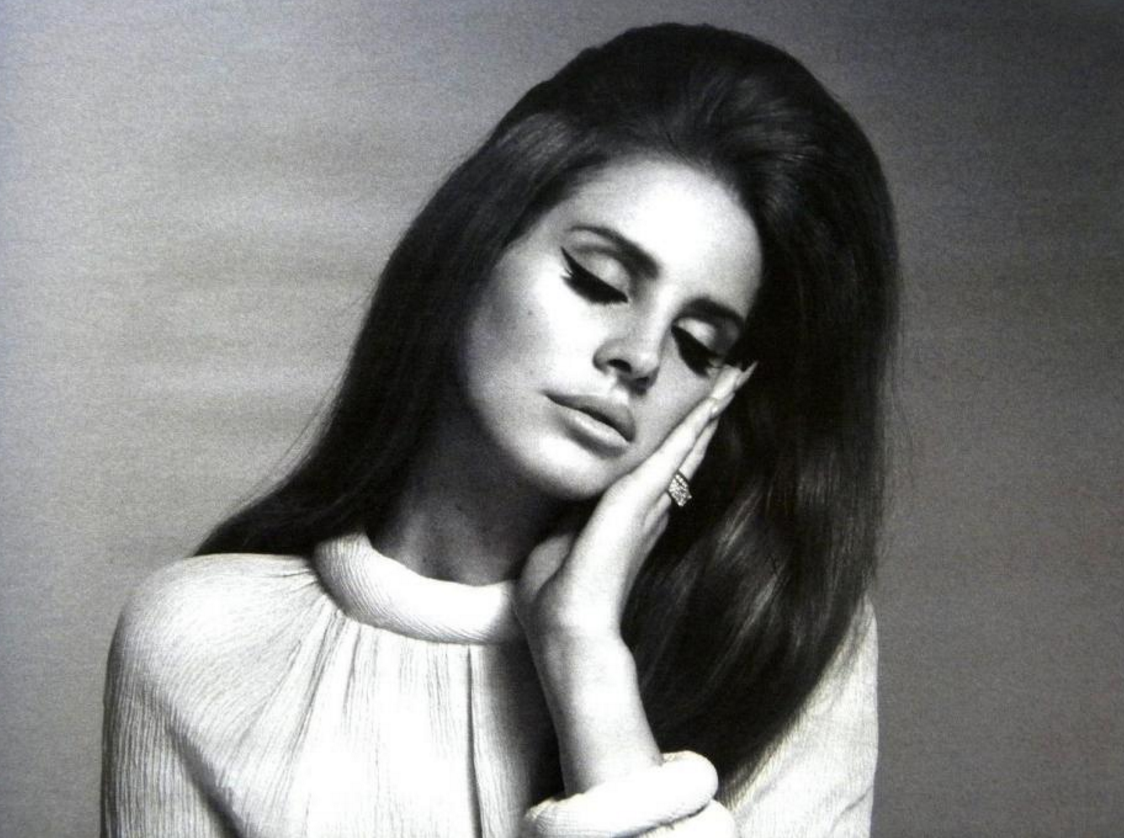
Lana Del Rey is Noir. Her songs are dark and her attitude is Old Hollywood. The themes of glitter and glamor contrasting with harsh realities permeates her work as they do in the films of David Lynch. They are both artists who create very intense, dreamlike atmospheres with their art. Noir themes of heartbreak, betrayal, cruelty and decay course through her songs and his films like subterranean streams beneath the bright technicolor surfaces.

Mullholland Drive - 16 reasons why i love you. The song is Sixteen Reasons by Connie Stevens. MP3 available at amazon.com for .99, under Connie Stevens

David Lynch uses nostalgic and sugary sweet vintage pop music to jar the senses, in contrast to violent or emotionally unsettling scenes. Lana as well, uses her bubbly pop sound as a dramatic contrast to dark emotional content, thus creating the effect of thematic and sonic dissonance. Her driving baselines, such as in ‘Blue Jeans,’ pound steady beneath the surface harmonies. Her voice is soft, high and fluid, in perfect rhythm with the bass chords, creating a hypnotic sing song effect; like a rock n roll nursery rhyme. She mythologizes her lovers, her past, and her fantasies. She is a storyteller songwriter like Bob Dylan or Nick Cave.

“You went out every night/ And baby that’s all right/ I told you that no matter what you did I’d    be by your side/ ‘Cause imma ride or die/ Whether you fail or fly/ Well, shit, at least you tried/            But when you walked out that door/ A piece of me died/ Told you I wanted more, that’s not what       I had in mind/ Just want it like before/ We were dancing’ all night/ Then they took you away,          stole you out of my life/ You just need to remember/ I will love you till the end of time/ I would      wait a million years/ Promise to remember that you’re mine/ Baby can you see through the tears/       Love you more than those bitches before/ Say you’ll remember/ Oh, baby, who/ I will love you          till the end of time.”

New album Honeymoon out September 18th. Pre-order now: iTunes: http://lanadel.re/WrQNwc Amazon: http://lanadel.re/XiYh4J Official Store: http://lanadel.re/XWI6ZD More Lana Del Rey: http://www.lanadelrey.com http://www.facebook.com/lanadelrey http://www.twitter.com/lanadelrey http://lanadelrey.tumblr.com http://www.instagram.com/lanadelrey http://www.google.com/+lanadelrey

Pop music offers promises. It always has. What Lana does differently is that she contrasts her grand emotional gestures with less grand and often snarky, biting jabs, self-deprecation, layers of irony, and piles upon piles of pop culture references ranging from classic literature: Vladimir Nabokov (Lolita), Allen Ginsberg, Walt Whitman, to Iconic American figures that reside within the collective consciousness like Greek Gods: John F. Kennedy, Marilyn Monroe and Elvis Presley. In ‘Body Electric’ she sings:“Elvis is my daddy/ Marilyn’s my mother/ Jesus is my bestest friend./ We don’t need nobody, cause we got each other,/ Or at least I pretend./…. Whitman is my daddy,/ Monaco’s my mother,/ Diamonds are my bestest friends./ Heaven is my baby, suicides her father,/ Opulence is the end.”

Her music is not simply memoir, it is cultural discourse. She is a trope, she is a symbol. Just as Marilyn Manson chose his name to make a statement about American culture and the type of performer/ bogeyman he was intending to channel; she does so too when she references beatnik poetry, rock stars, poets, and tragic Hollywood legends. She is saying she is a composite image.

Lana Del Rey is the product of the post-third wave feminist movement. I became addicted to her sound as well as her entire persona and her thought provoking lyrics precisely because I found her so damn refreshing. I admire her for unabashedly showing all her shades. She is the full spectrum of a real woman’s personality: vulnerable and stoic, playful and morose, sardonic and sweet. She is real and she has range. She does not try to appear perfect and I love her for that.

Something I’ve also always loved about David Lynch is his portrayal of women in his films. The many faces of woman appear throughout. There are scary crones, sexy tormented Femme Fatales and virginal good girls who have yet to be broken by life’s rough ride.

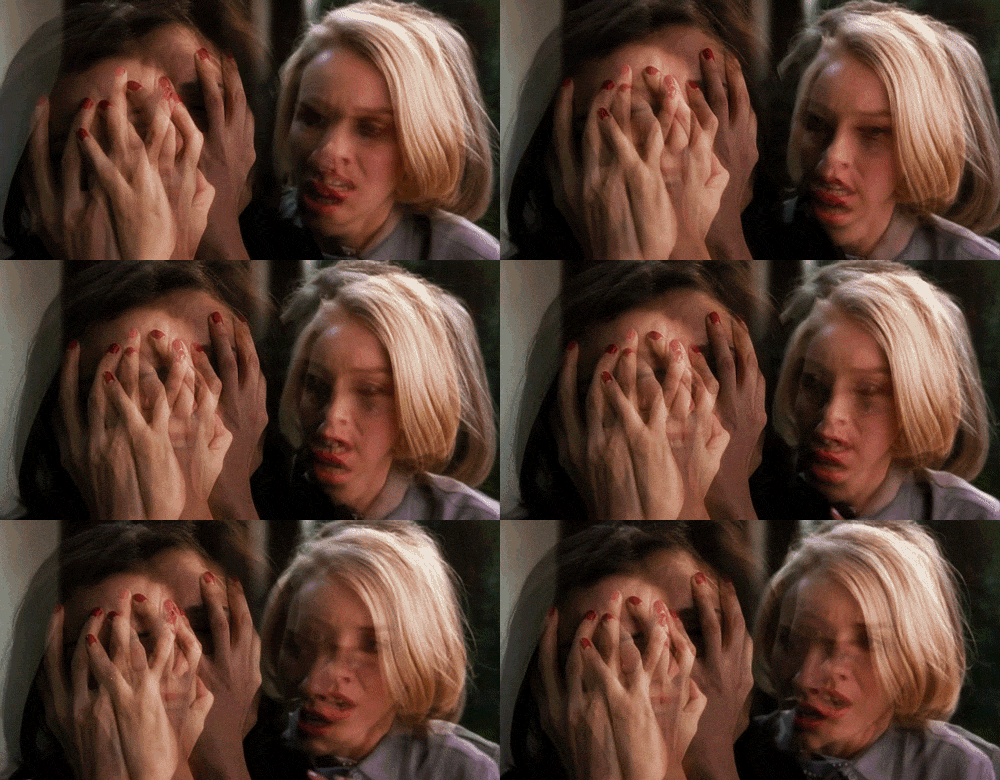
I watched Mulholland Drive after a few years of not having seen it. I was hypnotized all over again like it was yesterday. I see Mulholland Drive as David Lynch’s Alice Through the Looking Glass. Lost Highway was his Alice in Wonderland, in that it was his first foray into the atmosphere of Hollyweirdness, doubles, and dream logic. In Mullholand Drive the transitions are smoother, the language is stronger, the emotional texture is more layered and complex and the atmosphere is more dreamlike.

This is the place David Lynch and Lana Del Rey create their art; the crossroads where Wishful Fantasy meets Gritty Reality.

David Lynch’s films are a hybrid between two opposite genres: French and Spanish Surrealism and American Noir. There is grit and there are dark dealings but there is also a healthy dose of fantasy and dream logic to balance it out. This is the source of his magic. This is how he weaves his cinematic spell. Wild at Heart was Fantasy heavy with its obvious homages to The Wizard of OZ. Blue Velvet was Noir heavy with its many scenes of shadowy men lurking in shadowy alleys, doing shadowy things. Mulholland Drive achieves the perfect and seamless balance between those two styles.

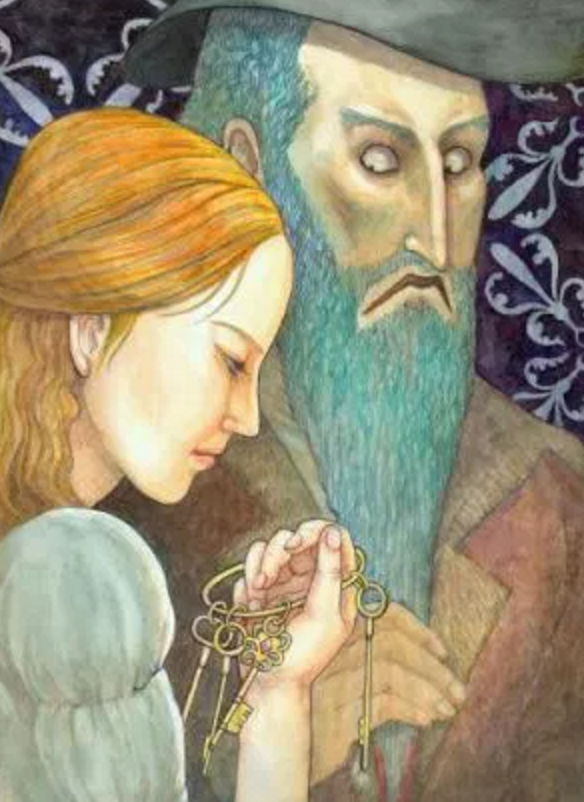
Coincidentally, Mulholland Drive reminds me of the French Fairy tale, Bluebeard, first committed to print by Charles Perrault in 1697.

Bluebeard is the tale of a very rich but mysterious recluse with a big blue beard. He wants a new wife and the women in the village jump at the chance, even though they are spooked by his weird beard. He picks a lucky girl and she has everything she could possibly want. She lives in a massive castle, she has all the clothes and whatnot that she desires and one day he goes off on a business trip. He leaves her the keys to the entire palace and tells her she can roam wherever she likes but that one room only, is totally off limits. He asks her to trust him and not go in that room for her own good.

Of course, soon as he leaves she cannot resist. In the forbidden room she finds a death chamber filled with implements of torture and murder, where the corpses of all his previous wives lie strewn about. This is The Blue Room of Pain and there is nothing sexy about it. She realizes in horror that she has married a monster, but it is too late. When he returns she tries to hide her transgression, but he can tell right away and he kills her for disobeying him.

The blue box in Mullholand Drive represents the same forbidden death chamber, held in the hands of the Crone. Death is the forbidden truth that is hidden. It is also the truth behind the lie that Betty is a nice girl trying to help Rita. Once Rita opens that box the fantasy is over. She has stumbled upon her lover’s torture chamber. The truth is that Diane Selwyn had Camilla Rhodes murdered for breaking her heart.

New album Honeymoon out September 18th. Pre-order now: iTunes: http://lanadel.re/WrQNwc Amazon: http://lanadel.re/XiYh4J Official Store: http://lanadel.re/XWI6ZD More Lana Del Rey: http://www.lanadelrey.com http://www.facebook.com/lanadelrey http://www.twitter.com/lanadelrey http://lanadelrey.tumblr.com http://www.instagram.com/lanadelrey http://www.google.com/+lanadelrey

It is a Noir story after all. Love is dangerous. Love destroys and love kills.

In ‘Ultraviolence’ Lana Del Rey juxtaposes her own poisonous nature with that of her abusive lover. She shows how they are both drawn and repelled by each other, like magnets switching their poles. This love/hate view of love is quintessentially Noir. “He used to call me DN/ That stood for deadly nightshade/ ‘Cause I was filled with poison/ But blessed with beauty and rage/ Jim told me that/ He hit me and it felt like a kiss.”

Lovers are bound by need. They become a closed circuit of emotional energy being exchanged back and forth. It is like a drug. Once it is in your system it is in your blood and the detox is brutal.

When Betty finds the blue box to match the blue key, the dream is over. The secret has been exposed and the dream evaporates as if it was never there.

Diane Selwyn saw herself as full of potential, with Hollywood laying out its red carpet for her, but the truth was that she came and she failed. She failed at love and she failed at Hollywood. She is a tragedy and a criminal. Hollywood has stolen her soul and left her an empty shell of a person.

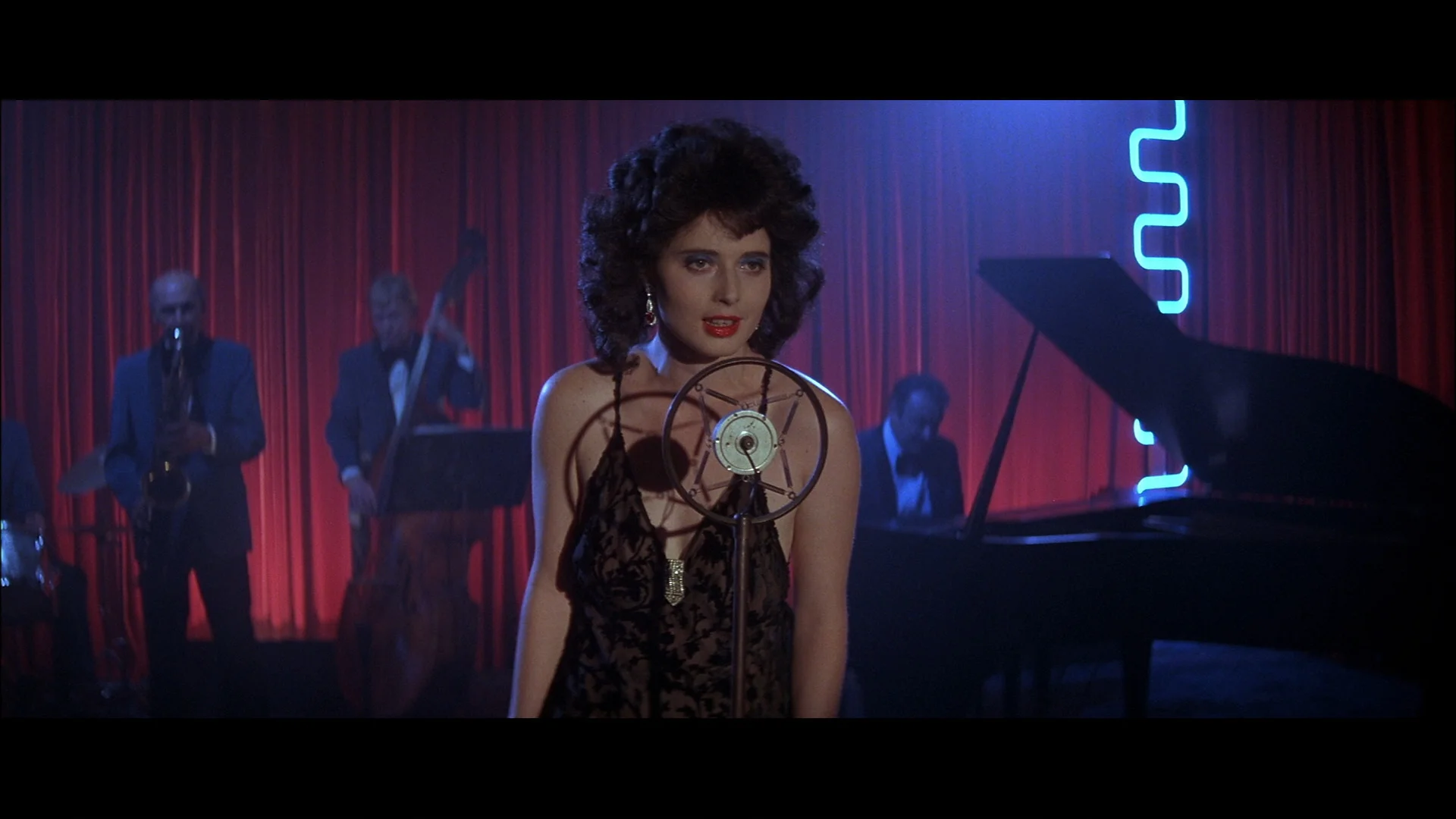
Ребекка Дель Рио исполняет а капелла композицию Llorando (испанская версия песни Crying Роя Орбисона) в театре "Силенсио". Отрывок из кинофильма "Малхолланд Драйв" (2001) Дэвида Линча. В главных ролях: Лора Хэрринг (Рита/Камилла Роудс) и Наоми Уоттс (Бетти Элмс/Дайана Сэлвин). Rebekah Del Rio singing "Llorando" (spanish version of Roy Orbison's "Crying") a cappella in Silencio theatre.

Roy Orbison’s ‘Crying,’ sung in Spanish by the beautiful and haunting Rebekah Del Rio is the dramatic pinnacle of the story. The truth emerges. This is a story about heartbreak and lost love. An already haunting song is made more haunting by being sung in a Latin language that people associate with passion and ardor. Hearing it sung in Spanish adds an aura of mystery that intensifies the eerie atmosphere of the nearly empty theater:

“I was all right for a while, I could smile for a while,/ But I saw you last night, you held my          hand so tight /As you stopped to say “Hello”/ Aw you wished me well/ You couldn’t tell/ That        I’d been crying over you/ Then you said so long/ left me standing there all alone/  Alone and crying, crying, crying/ Its hard to understand/ But the touch of your hand/ Can start me crying/ I    thought that I was over you/ But its true so true/ I love you even more than I did before/ But    darling what can I do/ For you don’t love me and Ill always be/ Crying over you, crying over      you/ Yes now you’re gone and from this moment on/ I’ll be crying, crying, crying, crying/ Yeah             crying, crying over you.”

And, of course, this is not the first time Davis Lynch has used a Roy Orbison song in a movie. He used ‘In Dreams’ to dazzling atmospheric effect in Blue Velvet. His tone suits Lynch’s style. Roy reminds us of a more innocent time in music, when feelings, rhythm and melodies mattered, when having a beautiful voice with insane range counted for something.

Roy Orbison sticks the knife in with that song. Some things you just don’t get over. This song is about irreparable damage and loss. It is about a type of pain there is no cure for. This is the terror of love. It can bring you the most unimaginable joy but it can also be deadly.

In ‘Dark Paradise,’ Lana describes the persistence of memory beyond all reason and sense:

“All my friends tell me I should move on/ I’m lying in the ocean singing your song/ Loving you forever can’t be wrong/ Even though you’re not here, won’t move on/ And there is no remedy for memory your face is/ Like a melody, it won’t leave my head/ Your soul is haunting me and telling me that everything is fine/ But I wish I was dead.”

Without love, life is not worth living. Love is the darkness and love is the light. It is the double edged knife in the water. David Lynch, despite his Noir sensibilities, is also a Romantic. To be a Romantic is to believe in the good as well as the not so good aspects of love. This is the central thematic pull between Lana and Lynch: their focus upon the awesome and terrifying power of love. Love is where fantasy and reality meet. Love is the great mystery. The man behind the curtain that you can never see. Love has no morality, because the heart wants what it wants. Love is pure.

—

Leza Cantoral is the author of Planet Mermaid and editor of Walk Hand in Hand Into Extinction: Stories Inspired by True Detective. She writes a feminist column about noir film for Luna Luna Magazine called Shades of Noir and writes about pop culture for Clash Media. Her upcoming collection of short stories, Cartoons in the Suicide Forest, will be coming out later this year through Bizarro Pulp Press. You can find her short stories at lezacantoralblog.wordpress.com and tweet her at @lezacantoral.

Image of Bluebeard by Sae Jung Choi.

Tags Lana Del Rey, Mullholland Drive, David Lynch
Comment

How to Help a Rape Survivor Cope

November 18, 2015

Wedge your arm into someone's intestines, place a bomb, and watch it explode; that is exactly how any survivor feels. All loss, no matter how trivial, is destructive; as Elizabeth Bishop gracefully yet ironically states in her villanelle One Art: "the art of losing isn’t hard to master." While it may become an art to become accustomed to loss (or rather, the art of desensitization) there is no art in grieving a lost identity, and consequently, having to discover it again. Sometimes, we never do discover it, we merely create a new one.

Read More
In Confession Tags rape, feminism, help, grief
Comment

Ghost(ed)

November 17, 2015

When I was nine, my mother, grandmother, and I moved into an old Victorian house in a neighborhood full of old Victorian houses.

Read More
In Occult Tags Chanel Dubofsky, Ghosts
Comment

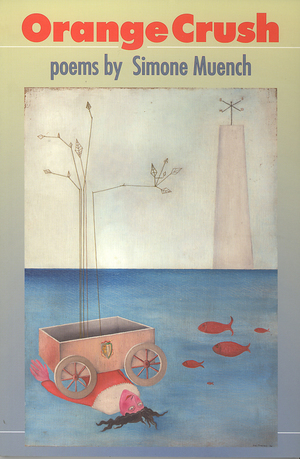
Best Books of the Past 10 Years: Simone Muench's "Orange Crush"

November 12, 2015

ORANGE CRUSH
Simone Muench
ISBN-13: 978-1932511796
Sarabande Books
88 p.
Reviewed by Lisa A. Flowers

Take the landscape evoked in Randy Newman’s In Germany Before the War, the strangling scene in Strangers on a Train, a seaside scattering of rinds and corsages, and corsets and formal wear defaulting to corsets and burial wear and you come close to approaching the general soul of Simone Muench’s Orange Crush, a book where 17th century English prostitutes, murder ballads, and early Springsteenish characters fall into slasher films like cherry blossoms shaken from a vengeful o'erhanging firmament. Open Crush and a browned valentine or a phone number scrawled last week on a bar napkin (both belonging to girls since unnaturally deceased) might fall out. The book debuts in bloated summer, in Wisconsin Death Trip country, where “trouble comes,” bringing

Chalklines in bloody bedrooms
Clouds
Agitating the cows, their thick ruminant bodies
Clogging up the riverbeds ...
Children dying of oddities
The small-town doctor could not name …


You Were Long Days and I Was Tiger Lined seems to present another atrocity, perhaps one related to the evil of slavery, going on in the same town:

Weather me better master
Wind can carry a whip but how
Can a dead girl
Swerve into flight and miss the sky altogether

 In these lines, and throughout the book, is the panic of souls violently killed, beating their huge new wings frantically against panes like trapped insects. And Muench, whose name to the printed eye suggests the sinuous and nightmarish waterfront of that other Munch and his The Scream,  is adept at transitioning between poems with the same kind of wavy disorientation. Quite unexpectedly, we’re in the hospital undergoing cancer treatment with Count Backwards to a Future With You in it and Where Your Body Rests (the latter dedicated to “the woman who said I lacked duende while undergoing chemo and radiation”) where IV’s hematomas bloom in tandem with sexual imagery worthy of Georgia O' Keefe’s flowers:

Nothing separates us
From the sun’s luminous text,
The way words enter skin in fire spirals
Lifting the room into a
red vivarium ...

At other times, some monstrous apparition, “long and shedding its scabbed horizon” will dart suddenly through the text. And Muench can shift into 1930s crime film noir with the abruptness of a gunshot. The first line of the short poem Frame 6

The Colt sang once, parting
Your pitch-dark hair.

is an image that exists in three colors: ebony, seeping crimson, and the glaring white of shattered cranial bones.

All Orange Crush’s tendrils weave from its godhead the Orange Girl Suites, dedicated to Susannah Chase. Muench can show us what it's like to be thrown into the middle of a crime, reeling in a panicked psychobabble of random, garbled last words:

When he killed her he said listen
…He said windowsill
He said stone
While alive she replied
Oilslick, doorjam…

The poems thicken with what they describe, gruel-like:

A man folds a girl up in newspaper, her wet hair a string of taffy....

In one version
She folds up
Like a fan, her songs pleated
Gills panting underwater.
In another, she fashions
The wires of her earrings
Into antennae, transmitting her story across the harbor
Her taffeta dress sliding toward the lighthouse without her...

Skin gathering the Baltic’s debris,
An intersection of earrings and quiet, wrists and rope.


These images are terrible in their calm, austere dignity. Muench has hit upon reality at its most awful and minimally articulated; drawn her body of work up to the dignity of its full height: the height of the unspeakable and its consequences, which are the “disease of a body syntactically disarranged/limbs and hair webbed with algae.”On the other hand, “no one can be reached/in this city of correct syntax/where the water deposits its marginalia” and by using words like zigzagging film editing techniques, Muench can conjecture powerhouse lines out of Japanese arthouse horror, suggesting a hundred mirrored spider eyes by which a girl dismembered in a love hotel might be

Looking out of herself
Through so many stabmarks, eye slits
So many voyeured holes
Camera flash on her mouth
Her belly, a billfold

Zoom


                                      To navel

Vortex of torso

                                   Vertigo


Suite 6 is a stunning poem that distinctly evokes Roethke’s The Song:

A girl is running, is bleeding ...
The railroad a rusted zipper
Fusing Louisiana and Arkansas ...
Moving through the woods
In a thin white suture ...
[running] through rain until she is rain


The “Orange Girl cast” (literally, the cast of the book) are Muench’s own female friends (and other poets) who are thanked/named in the appendix. They are modeled on many archetypes, including those girls “born to unzip men’s breath.” “(“You can’t fold her up inside a cocktail napkin,” Femme Fatale reminds us/chastises us,“she will not rinse.”) Later, the same Cleopatra “imprisons pharaohs in her spine”: a magnificently seductive line that recalls Anne Sexton’s “for I pray that Joy will unbend from her stone back and that the snakes will heat up her vertebrae” from O Ye Tongues. At one poem's end, a protagonist gnaws her prey idly, a lioness, while, "through the slats of her magnolia latticed teeth"… like a distracted child’s toy into the sea… "a dollhead floats free of I do."

In The Apriary, a kind of coming of age poem, two young girls lounge in a sunlit attic, reading Keats, whispering to each other through “the veils of glamorous biblical women, loaded up on blossom.”The Matryoshka is a splintered semblance of Frederic Leighton’s Flaming June in a prose-poem:

Sunlight buzzes your windows as you crack a kaleidoscope in half, searching for a photograph of your mother before disease split her face into reflection and recollection. When you slide to the floor, your dress spreads volcanic, an orange silk corona…

There is sexually-deprecating humor dotted here and there:

Dialing his large white teeth
With her tanager-tongue
She laments

“Where art my thigh..."

And little spook-stories:

Ask the strange man on adrenaline reserves-
Would a maniac roam around a cemetery
Wearing one black glove?


Muench's work winds itself into its own ribbons of brilliant reds and oranges and blues, whilst simultaneously unrolling bandages backwards into the mummy it never wanted the victims it eulogizes and empowers so beautifully to become. “I will chew your light into miniature suns/and when the time comes to bury you, I will say undo. Undone” are the lines that conclude the book. Or, to quote Kathy Acker via one of Orange Crush's epigraphs, “All of us girls have been dead for so long/But we’re not going to be anymore.”

_________________________________________________________________

lisa flowers.jpg

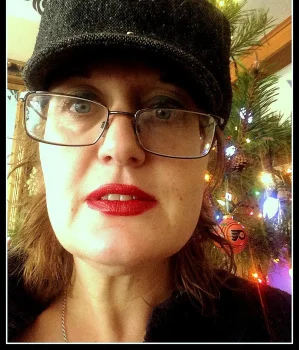
Lisa A. Flowers is a poet, critic, vocalist, the founding editor of Vulgar Marsala Press, the reviews editor for Tarpaulin Sky Press, and the author of diatomhero: religious poems. Her work has appeared in The Collagist, The THEPoetry, Entropy, and other magazines and online journals. Raised in Los Angeles and Portland, OR, she now resides in the rugged terrain above Boulder, Colorado. Visit her here or here.


Comment
Ellen Von Unwerth

Ellen Von Unwerth

That One Time I Signed Up for A Sugar Daddy Website

November 12, 2015

One night in particular, I found myself brazen and curious. Yeah, I could do this. I could be an escort. I would be doing exactly what I do already, which is attending social events and partaking in too much conversation. Except this time, I would replace friends with an unknown older gentleman. It really didn't seem so hard. 

Read More
In Confession Tags sex, Feminism, sugar daddies, Los angeles
Comment
Screen Shot 2015-10-24 at 4.36.18 PM.png

The Best Dark Red Lipsticks For Vamps

November 11, 2015

I love dark red lipstick. Short of wearing long black velvet dresses to creepy Edward Gorey parties, one of my favorite pastimes is trying on all of the dark red lipstick colors in my mirror or at the mall, until my lips are swollen and I looked like I just sucked a red icy or drank someone's blood. 

From the modest to the pricey, here are those luscious, wine-colored colors you dream of:

Wet N’ Wild’s Cherry Bomb ($1.89)
WHY WE LOVE IT: Velvety feel + great as an on-the-go purchase when you forget your lip color at home. 

Nyx Cosmetics’ Licorice ($5.99)
WHY WE LOVE IT: Lightweight coverage, for a layered approach. Not bad for mixing, a light lip stain or a not-so-dramatic effect.

Kiko Milani’s Pure Red (Euro, 6.90)
WHY WE LOVE IT: Luminous, chrome metallic color. Also, why isn't there a Kiko's everywhere? It's the best store, and its items are always affordable, interesting and really well-made.

MAC’s Sin ($16)
WHY WE LOVE IT: Deep blue red, long-lasting. A classic that seems to sit at the bottom of everyone's purse. 

Jefree Star's Unicorn Blood ($18)
WHY WE LOVE IT: Its matte and it looks exactly like blood. One dab will coat your lips, which means the bottle will last a year. Prepare to look gorgeously vampiric. Honestly, this is the best lip color you'll own. 

Bobbi Brown’s Red Carpet ($26)
WHY WE LOVE IT: Long-lasting, with emollients! You can actually feel your lips softening!

Nar’s Scarlet Empress ($27)
WHY WE LOVE IT: Semi-matte, with high pigmentation. This is a holy-fuck-who-just-walked-into-the-room? color.

Marc Jaobs’s Dark Velvet Berry  ($30)
WHY WE LOVE IT: Long-lasting and hydrating, with an interesting color touch. 

Kevyn Aucoin’s Bloodroses ($35)
WHY WE LOVE IT: Long-lasting, with fruit butter and exotic tree extract. This is as good as the Unicorn Blood, but not as matte. 

Tags lipstick, marc Jacob, Kevyn Aucoin, Bobbi Brown, Nars, Jefree Star
Comment

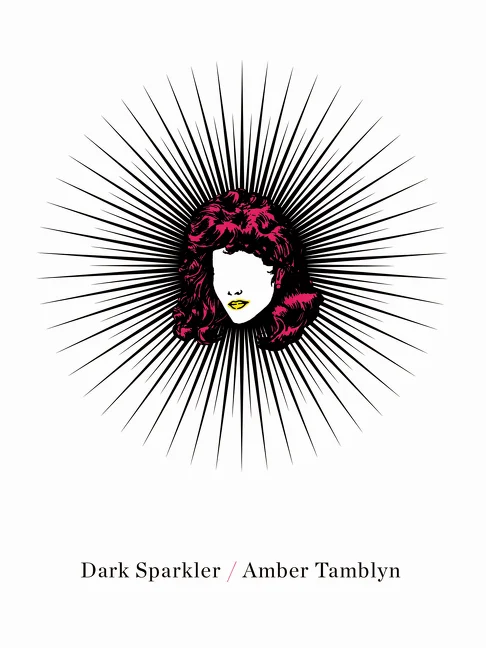
Fame, Child Actresses, & Dying Too Young: An Interview With Amber Tamblyn

November 11, 2015

Many may first recognize Amber Tamblyn as the actress from such horror flicks and thrillers as The Ring or The Grudge films. Perhaps many also remember her as young filmmaker “Tibby Rollins” from The Sisterhood of the Traveling Pants or, more recently, as part of the Inside Amy Schumer cohort of comediennes from numerous sketches such as the riotous “80s Ladies.” What many may not know, however, is Tamblyn is an accomplished poet with two chapbooks, Of the Dawn and Plenty of Ships and three collections of poems including Free Stallion (2005) and Bang Ditto (2009).

Read More
Tags poetry, amber tamblyn, hollywood, dead actresses
Comment
Courtney Brooke, Light Witch

Courtney Brooke, Light Witch

An Interview With Light Witch Courtney Brooke On The Modern Witch, Location As Inspiration & Aesthetic

November 3, 2015

BY LISA MARIE BASILE

Your art is spiritual and feminine, but it can also be really gritty and intense; what story do you want to tell? 

A story that is real, human and natural. As women, we have been told for centuries to be either the fairy tale princess lest we be the old hag, the evil witch.  Within my work I am trying to connect to the endless possibilities, to show that even for a fleeting moment what one can dream, can be real. It’s part of what draws me to photography as a medium. It all has to happen in some form of reality for me to capture it. I want to create a world where we are tuned in with nature, with the cosmos, a world where women can be beautiful, mysterious, wise, and most importantly human first. 

Courtney Brooke, Light Witch

Courtney Brooke, Light Witch

Why do you think the figure of the witch persists (and haunts) in today's culture? 

The witch, for myself and I think for many other women as well, is a symbol of feminine strength and a woman with agency over her herself. She is not afraid to grow old and be wise. It is in her wisdom and agency though that she became something for men to fear. I like to think that she still persists because she is a symbol of what it is to be strong, to be human, to be in touch with one's self, nature and what some might call magic.  Sadly we still need this symbol, women all over the world are still subjected and are deemed less than due to their gender.  We are still fighting so many battles for women’s equality, trans-equality, and battles for the preservation of our natural world and the witch is a great symbol that speaks to those battles. 

You come from New England, a fascinating, natural, sprawling region. How exactly does location work its way into your work. Beyond literally being shot in nature, what does the essence of place to do you? 

Courtney Brooke, Light Witch

Courtney Brooke, Light Witch

A place remembers, a place holds its own history in its earth, in its nature. There is something here in New England that I can’t totally articulate, but it’s dark and ancient. The landscape and nature here refuses to be ignored, but it’s subtle, like a vine tearing down a brick wall or the craggy cliffs cut from slow moving glaciers thousands of years ago. Something here just feels so cloaked in mystery, nothing here feel obvious, and that’s part of what always pulls me back here, there is always something to discover, some crazy beauty, some strange occurrence that I didn’t quite notice the last time. 

How did you discover and explore your aesthetic? When did you understand your drive and, really, how did you learn to execute it so well?

Honestly, I am still discovering and learning. Although I thank you for that compliment. I have ever since I have been a pre-teen been interested in the occult, feminism, nature and folklore. I guess you could say I still am and I am still exploring them. I just have this internal unquenchable urge to create and shoot. It’s like an addiction honestly. It was through that that I think I got better at execution, practice, lots and lots of trying and failing. I once had an art professor tell me that the moment you create a piece of work you are happy with is the day you stop creating. I have learned to never be happy with my work, but to let it pass though me in a sense, to me all my pieces are good enough for now.

Courtney Brooke, Light Witch

Courtney Brooke, Light Witch

Which other artists challenge and inspire you?

I feel pretty blessed to be living in a time that connects so many artists all over the globe and can put just about any art at my fingertips. In truth, I am in constant awe of my contemporaries that, regardless of how hard it is to be an artist and thrive in this economy, persist and create beautiful works of art.  This may not be the challenge you are speaking of but it’s the challenge that I think all of us artists feel, and that’s how to make a living with our work. I am also so humbled to be able to call so many artists my friends and collaborators, such as Gillian Chadwick of Elemental Child, Bill Crisafi, and Jamie Mooers or Burial Ground, Allison Scarpulla, Tea Leigh, Steffanie Strazzere, Emily Theobald and Sam Dere of Paper Bunnies -- to name just a few. 

Courtney Brooke, Light Witch

Courtney Brooke, Light Witch


Read more about Courtney Brooke here.

Source: http://www.lightwitch.com
In Occult Tags Witches, Courtney Brooke, Alison Scarpulla, Gillian Chadwick, Elemental child, Bill Crisafi, Tea Leigh, Stephanie Strazzere, Emily Theobald
1 Comment

Poems by Kristina Marie Darling & John Gallaher

November 2, 2015

WORD CAME TOO LATE TO BE OF ANY HELP BUT THANK YOU ANYWAY

And you have this moment where, instead of an issue being suddenly clarified, you realize it’s beyond you.  This is a problem only if you studied for the test, because studying should lead to something.  Then it’s, “No one is talking about the machinery they’re throwing overboard,” say hundreds of pink flamingoes talking with each other.  There’s a sheen to things.  The image of yourself much older appears, standing at the foot of your bed dressed for a formal event.  “Am I travelling?  Then I travel,” you think.  First, to wash yourself, you take a bath or shower.  Then what?  It’s a secret, isn’t it?  You’re just gone, as far as the rest of us can tell.  The test was you, perhaps.  And here we thought we were keeping score, but really it was some other way, and we’ve begun to worry about the mirrors that suddenly seem to be everywhere. 

CHAPTER ONE

A cracked mirror, and all of the windows gone white with frost.  I didn't want to say it, but I wondered where you were going with that story about our old house and the little ghosts you kept dragging up from the basement.  Still, I stood there and listened, nodded appreciatively as the lights flickered and the cable went out.  When you mentioned the scorecard, though, I knew something had to be done.  You see, everything in this room adheres to principles, and changing the rules midway through the game can be dangerous.  It's like deciding to experiment with particle physics for a day, or digging up all the flowers in a garden just to see what happens.  Before you realize it, the freeway no longer leads to the grocery store.  The mailbox isn't where you remembered it.  And even the dishes you left on the table will be gone. 


kristina-john-1024x470.jpg

John Gallaher & Kristina Marie Darling were born in Portland and Tulsa. Their collaborations appear in OmniVerse, Requited, diode, and elsewhere. They currently live and write in rural Missouri, while also taking frequent trips on the bullet train from Paris to Agen.

Curator: Lisa A. Flowers is a poet, critic, vocalist, the founding editor of Vulgar Marsala Press, and the author of diatomhero: religious poems. Her work has appeared in The Collagist, Entropy, and other magazines and online journals. Raised in Los Angeles and Portland, OR, she now resides in the rugged terrain above Boulder, Colorado. Visit her here or here.

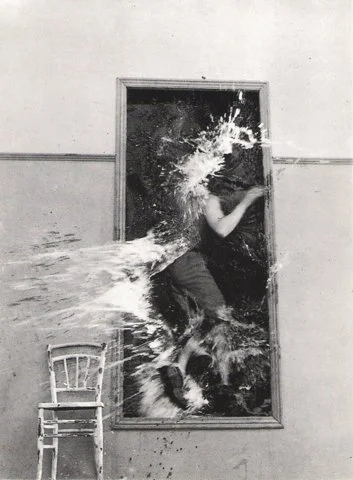
 Photo credit: still from Jean Cocteau's The Blood of a Poet (1930)

Comment

Musician Shayfer James Talks About His 'Filthy Habit'

November 2, 2015

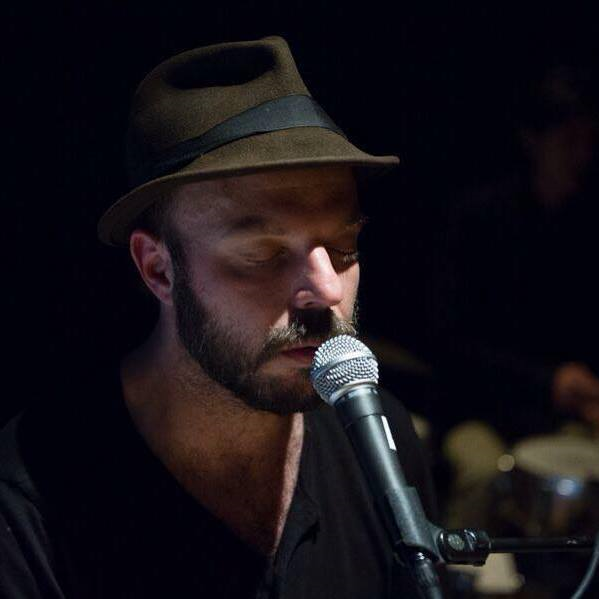
Shayfer James talked to us about his video "Filthy Habits."

Read More
In Sex Tags music, gender roles, Feminism
Comment

Three Entrancing Witches That Influenced My Childhood

November 1, 2015

BY TRISTA EDWARDS

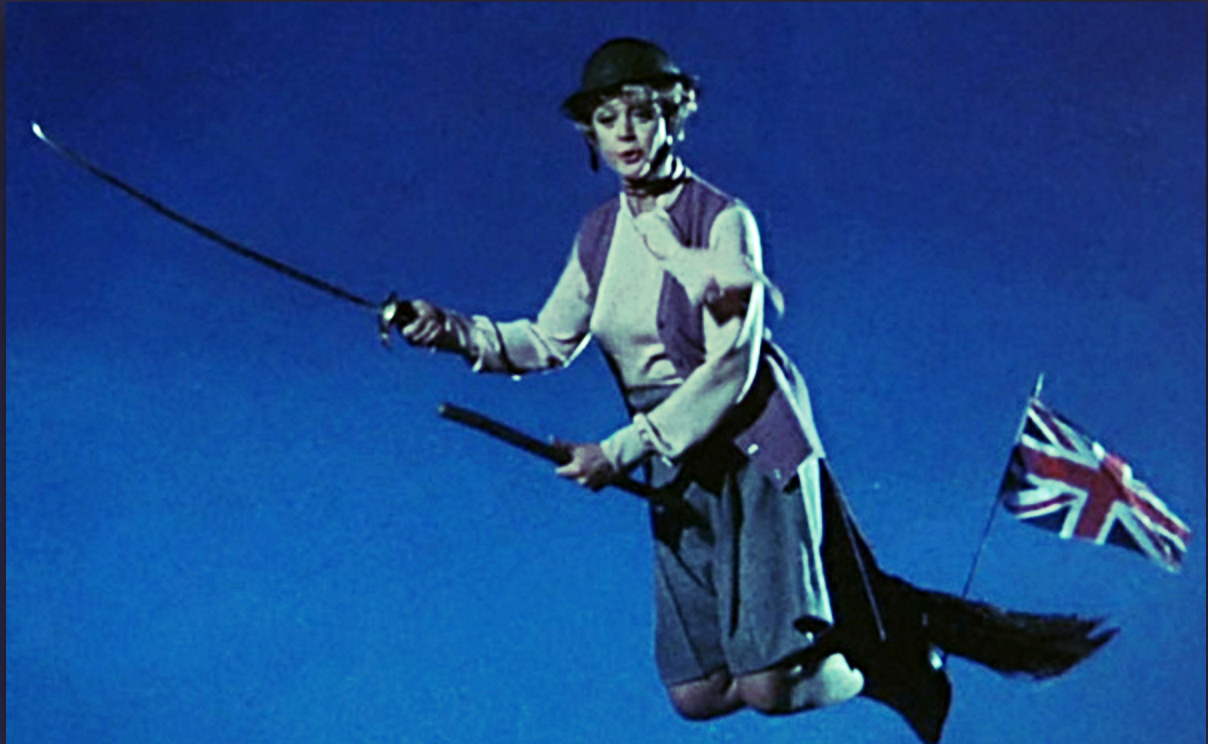
I recently revisited an old childhood favorite, the 1971 film Bedknobs and Broomsticks. I’ve been thinking about how much certain movie witches positivity influenced when I was growing up and this film was the first to instantly pop into my mind. I had not watched the film in over twenty years but what I remembered from being a child was that the film had a very foreboding nature; (although that wasn’t quite the language I had for it then but I felt it) and there were several terrifying yet tantalizing scenes of Nazi attacks and witchcraft. An exceptionally brief synopsis for those who have not experienced the film, (released by Walt Disney Productions and marketed as a musical fantasy)—

Miss Eglantine Price (Angela Lansbury) is an apprentice witch living in the English countryside in 1940. She is learning witchcraft through correspondence school and receives spells, lessons, and potions in the mail from the school’s headmaster, Professor Emelius Browne (David Tomlinson). She is awaiting the arrival of spell for Substituitary Locomotion, a spell that will enable her bring inanimate objects to life. With this spell, Miss Price is conceived she will be to help the British war effort and, ultimately, defeat the Nazis. 

By the end of the film Miss Price chants the incantation, Treguna Mekoides Tracorum Satis Dee, and erects a ghost army of medieval knights to drive the Nazis back to their U-boat. The many scenes of the medieval knights floating body-less, just shells of the past, still gives me the heebeegeebees to this day. When you think about it, this pseudo-occult film is pretty heavy stuff for a Disney musical and I loved it. 

Now, some twenty years later, I realize how much this film, particularly witchcraft, played a role in how I see myself as a woman and as a writer. It was Miss Eglantine Price along with two other cinema witches from my formative years, The Little Mermaid’s Ursula (1989) and The Worst Witch’s Mildred Hubble (1986), that I bonded with and that gave me examples on how to be powerful woman. 

Miss Eglantine Price

Miss Price’s obsessive quest to find the missing pages of The Spells of Astraroth instilled in me the power of words. I remember distinctly as a child fashioning my own spell book out of colored construction paper. I filled it with astrological symbols I saw in the film and gathered from horoscope section of the town newspaper. I made up words and my own spells of absolute gibberish. I indulged in the sheer enjoyment of language and the potential power it had. I would go out to the wooden swing hanging from a willow tree in the far corner of the yard with my spell book and my mom’s kitchen broom, place the broom on the seat of the swing, chant one of my spells, hop on and fly. Spells—language—could allow me to do anything. As a child this all seemed very literal in that I could make anything possible. I could fly. I could change shape. I could talk to animals. I could control the world around me all with an incantation even if it was all in the world of imagination. This carried on into adulthood and my occupation as poet. Language still allows me to do anything. 

Ursula The Sea Witch

What intrigued me most about Ursula was her massive, rolling body. I thought she was beautiful and threatening. I was entranced by how she inhabited the entire space in which she existed. Much like the film’s protagonist, she was half-woman, half-sea creature—one resembling an octopus. Her lurching tentacles made her appear as if she gliding rather than plodding. This is my first recollected lesson that as woman you could have powerful body without it being sexualized. At the time of the film’s release, my chubby child body probably resembled Ursula’s more than the dainty, slim Ariel. I took comfort in this witch, albeit animated, corporeality. Even at a young age, I knew I would never look like Ariel but I could still believe in the authority of my body. Despite the fact that Ursula is the film’s villain and meets her demise in the end, I try to resist the urge to analyze the film as an academic—that Ursula had to die by the hand of Prince Eric as punishment for her body, which enlarged to giant proportions in the final battle. That she transgressed too far in her power and had to be silenced, to take the place of the role of silenced woman when Ariel found was allowed to have her voice back. I fight to resist this because villain or not, this witch gave me my first lesson in body positivity. 

Mildred Hubble

Mildred Hubble (played by Fairuza Balk and proving she has always been the best witch) is a young girl at Miss Cackle’s Academy for Witches. The 1986 film is based on a series of children’s books by the same name. While not a bad witch she is deemed the worst witch at the academy due to many bumbling yet innocent mishaps. She falls victim to the many cruel pranks at the hand of bully and overachiever Ethel Hallow. Yet through the constant mistreatment from Ethel and the glaring lack of approval from her teacher Miss Hardbroom, Mildred still finds joy in being a witch (particularly at a ceremony in which all the little witches are given their first black kitten and Mildred, as the last girl awarded, is left with the only cat left, a white and gray tabby who she has nothing but love for despite the kitten’s otherness). Mildred, like me, was the shy and quiet girl who was always picked last. I felt that Mildred and I shared a level of companionship through my adolescence in that we both never seemed to get anything right for no apparent reason other than we were struggling to grow up and find our place in the world. 

In Occult Tags Witches, Fairuza Balk, Mildred Hubble
Comment

The Power Of The Herbal Household

November 1, 2015

BY SOPHIE MOSS

For most of us, the home is our safe haven. It’s the space in which we sleep, create, cook, nurture relationships, create art, celebrate successes, think our most private thoughts and feel our most deepest feelings, and is a space to be honoured. Just as we respect our homes by dusting away dirt and cleaning up messes, it is also helpful to clean away the energies and vibrations that harbour in our homes over time.

To extend the metaphor, there can be little doubt that an untidy, dirty, cluttered house takes its toll on our happiness and wellbeing, leaving us feeling stagnant, unhappy, and unhealthy. The energies that exist in our home are no different: allowing negative, stagnant energies to manifest in our safe, personal spaces can have a detrimental effect on our professional, personal and creative wellbeing, and it is important that we cleanse these spaces of unwanted energies in order to allow us to fulfill our utmost potential.

There are many ways one can cleanse the home, and these can vary from culture to culture, religion to religion. Using herbs, for instance, has played a major role in magick, religion and divination throughout history, and remains one of the most widely used tools for magick and healing today. In old magickal books, elaborate and strange herbal ingredients were often called upon to create a host of recipes and spells, such as adder’s tongue and the heart of a baboon (which are actually just unusual code names for plantain and oil of lily), and herbs have been historically used for homeopathy, natural medicine, and magickal applications such as health, healing and cleansing.

Below, we have created an easy, cost effective, do-it-yourself guide to using herbal magick to cleanse the home of cosmic nasties and invite health, happiness and prosperity into your household.

The Way of Herbs

There is no easier, cheaper and failsafe method of inviting prosperity into the household (and banishing negativity from it) than to use herbal magick, and I am absolutely fascinated with it. For me, there is something so inexplicably comforting and organic about placing one’s trust in the very Earth itself and, in turn, having this trust rewarded with love and protection.

The great thing about using herbal magick is that a) there are so many ways to use herbs, and b) we can use them for so many different purposes:

  • When it comes to inciting general positive vibrations into the home, a really easy way to do this is to incorporate herbal magick into your household decor. Buying small pouches or sachets from the store and filling them with different herbs, for example, is an easy way to not only spruce up the come with kitsch decor, but also to incite positive vibrations and a host of positive magical properties.

  • Hang a sachet filled with chamomile flowers from the doorknob in your bedroom to calm the nerves and promote natural sleep, or place a chestnut in the corner of your bedside table to bring love and peace into the bedroom. Similarly, you can sprinkle cumin seeds into a pouch and hang it from the doorknob of your kitchen cupboard as a general home blessing.

  • An interesting way to incorporate herbal magick into your household and inspire positive, protective vibrations is via a locket. Sprinkle fennel seeds into a locket and hang from your bedpost, nightstand, or even your jewelry stand to bring protection, purification, healing, passion, courage and strength. Alternatively, wear it around your neck and carry the good energies with you.

  • Sprinkle allspice in all four corners of the home, or burn it as incense. It is thought to attract success in both personal and business life.

  • After going through a difficult break up, moving into a new property, or embarking on a new venture, it is important to rebalance and realign the energies in a household, and an efficient way to do this is by performing a sage cleansing ritual. To perform this, purchase a sage smudge stick (I typically buy mine from natural food or new age stores) and set it over a flame-resistant bowl. With every window and door in the house open, light the stick, blow it out and watch as it begins to smoke. Visualising your intention, wave the stick gently and watch as the smoke glides through the room. As the smoke ghosts towards the far corners of the room… along the ceiling… around the windows… up the fireplace… imagine it absorbing the negativity, toxicity and harmful energies from the space, taking any cosmic nasties with it as it dissipates out the open windows. When you have cleansed each room of the house, extinguish the sage smudge stick and discard.

  • Research the different properties of different herbs, and see which ones are relevant to your needs and requirements, using as necessary. Remember, thorough research is absolutely imperative, as some herbs can be toxic once ignited or ingested.

A Magickal Garden  

Indeed, if you are lucky enough to live in an area that affords you garden space (or, even, a window-box on a balcony area), you might want to take advantage of this blessing and plant a garden, grow some herbs, and harvest some plants. However, before jumping right into creating a magickal garden and earning your green thumb status, it is important to keep in mind the general magickal rules for gardening.

In her widely acclaimed book, Solitary Witch: The Ultimate Book of Shadows for the New Generation, magickal practitioner Silver Ravenwolf details a host of astrological rules and considerations for growing a successful magickal garden:

  • When collecting seeds, for instance, it’s better to do so when the moon is full, or in a fire or air sign — Aries, Sagittarius, Leo, Aquarius, Libra or Gemini.

  • If you are growing plants that will produce crops above ground (perfect for those of us who live in apartment buildings), it is important that they are sown the day after the new moon and up until the first quarter.

  • Growing plants that will produce crops below the ground, however, will require plantation during the day after the full moon.

  • When it comes to harvesting, the smallest harvests and fresh flowers needed for immediate ritual (or recreational! Or culinary!) use should be done in the evening, during which time the plants have maximum food reserves. Herbs and flowers that will be dried and preserved should be cut mid-morning, once the morning dew has cleared. Also, it is better to harvest fruit and vegetables during the waning moon, and when the moon is in the barren (or semi-barren) air or fire signs of Aries, Sagittarius, Leo, Aquarius, Libra or Gemini.

  • When cutting flowers, always try and cut the stem at a slant. This way, the stem can continue to absorb water and nutrients.

  • During the Autumn, when the last of the herbs, fruits, and vegetables have been harvested, the last of the dead leaves and plants should be cleared away. It is when the last of the dead plants have been swept that you can perform an Autumn Blessing. To perform this blessing is simple. Firstly, you stand in your garden and ignite a white candle, taking in your surroundings and giving thanks to the year’s harvest. When you feel ready, or when the candle has extinguished, simply bury it somewhere on your property. (Important: please, please take extra care with this if you have animals or small children and bury the candle in a place where children and animals won’t be able to find it. If this isn’t possible, keep it somewhere safe within the household.)

Solitary Witch also contains an incredibly helpful gardening guide to help you with your astrological timings when growing, planting or harvesting, such as being careful to plant beans in the second quarter when the moon is in Taurus, and planting house plants in the first quarter when the moon is in Libra, Cancer, Scorpio or Pisces. Seriously, that book is 590 pages of pure magickal wisdom.


Sophie E. Moss is a dark witch & literary maven. She writes essays for LunaLuna and poetry for all the people she used to be. @Sophiedelays
In Occult Tags Herbs, Magic, Witchcraft, Ritual, ritual
Comment

The Supernatural Life

November 1, 2015

After all, it’s very easy to dismiss another person’s experiences with the supernatural. I grew up in the northeastern part of the United States, where it’s more common to be closed-lipped about supernatural experiences.

Read More
Comment
← Newer Posts Older Posts →
Featured
‘in the glitter-open black' — poetry by Fox Henry Frazier
'poet as tarantula,  poem as waste' — poetry by  Ewen Glass
'poet as tarantula, poem as waste' — poetry by Ewen Glass
'Hours rot away in regalia' — poetry by Stephanie Chang
'down down down the hall of mirrors' — poetry by Ronnie K. Stephens
'Grew appendages, clawed towards light' — poetry by Lucie Brooks
'do not be afraid' — poetry by Maia Decker
'The darkened bedroom' — poetry by Jessica Purdy
'I am the body that I am under' — poetry by Jennifer MacBain-Stephens
instagram

COPYRIGHT LUNA LUNA MAGAZINE 2025