


















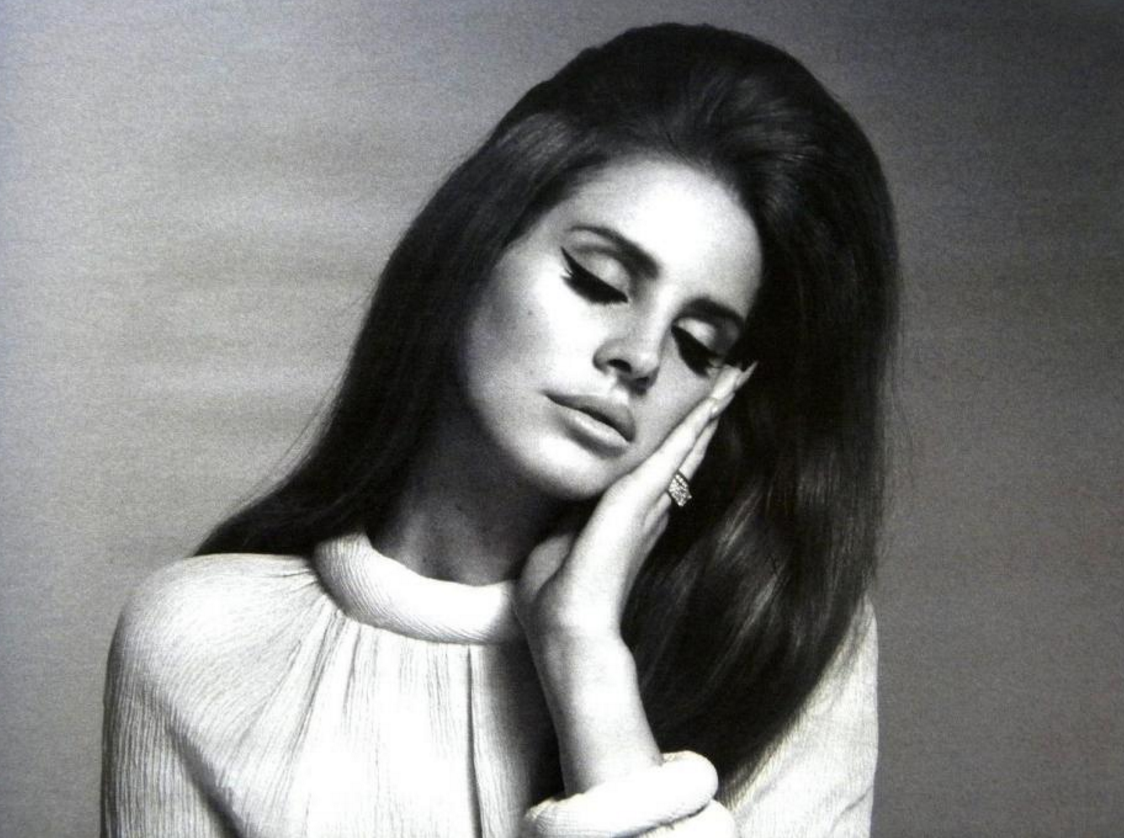
BY LEZA CANTORAL
Lana Del Rey is Noir. Her songs are dark and her attitude is Old Hollywood. The themes of glitter and glamor contrasting with harsh realities permeates her work as they do in the films of David Lynch. They are both artists who create very intense, dreamlike atmospheres with their art. Noir themes of heartbreak, betrayal, cruelty and decay course through her songs and his films like subterranean streams beneath the bright technicolor surfaces.
David Lynch uses nostalgic and sugary sweet vintage pop music to jar the senses, in contrast to violent or emotionally unsettling scenes. Lana as well, uses her bubbly pop sound as a dramatic contrast to dark emotional content, thus creating the effect of thematic and sonic dissonance. Her driving baselines, such as in ‘Blue Jeans,’ pound steady beneath the surface harmonies. Her voice is soft, high and fluid, in perfect rhythm with the bass chords, creating a hypnotic sing song effect; like a rock n roll nursery rhyme. She mythologizes her lovers, her past, and her fantasies. She is a storyteller songwriter like Bob Dylan or Nick Cave.
“You went out every night/ And baby that’s all right/ I told you that no matter what you did I’d be by your side/ ‘Cause imma ride or die/ Whether you fail or fly/ Well, shit, at least you tried/ But when you walked out that door/ A piece of me died/ Told you I wanted more, that’s not what I had in mind/ Just want it like before/ We were dancing’ all night/ Then they took you away, stole you out of my life/ You just need to remember/ I will love you till the end of time/ I would wait a million years/ Promise to remember that you’re mine/ Baby can you see through the tears/ Love you more than those bitches before/ Say you’ll remember/ Oh, baby, who/ I will love you till the end of time.”
Pop music offers promises. It always has. What Lana does differently is that she contrasts her grand emotional gestures with less grand and often snarky, biting jabs, self-deprecation, layers of irony, and piles upon piles of pop culture references ranging from classic literature: Vladimir Nabokov (Lolita), Allen Ginsberg, Walt Whitman, to Iconic American figures that reside within the collective consciousness like Greek Gods: John F. Kennedy, Marilyn Monroe and Elvis Presley. In ‘Body Electric’ she sings:“Elvis is my daddy/ Marilyn’s my mother/ Jesus is my bestest friend./ We
Her music is not
Lana Del Rey is the product of the post-third wave feminist movement. I became addicted to her sound as well as her entire persona and her thought provoking lyrics precisely because I found her so damn refreshing. I admire her for unabashedly showing all her shades. She is the full spectrum of a real woman’s personality: vulnerable and stoic, playful and morose, sardonic and sweet. She is real and she has range. She does not try to appear perfect and I love her for that.

Something I’ve also always loved about David Lynch is his portrayal of women in his films. The many faces of woman appear throughout. There are scary crones, sexy tormented Femme Fatales and virginal good girls who have yet to be broken by life’s rough ride.
I watched Mulholland Drive after a few years of not having seen it. I was hypnotized all over again like it was yesterday. I see Mulholland Drive as David Lynch’s Alice Through the Looking Glass. Lost Highway was his Alice in Wonderland, in that it was his first foray into the atmosphere of Hollyweirdness, doubles, and dream logic. In Mullholand Drive the transitions are smoother, the language is stronger, the emotional texture is more layered and complex and the atmosphere is more dreamlike.
This is the place David Lynch and Lana Del Rey create their art; the crossroads where Wishful Fantasy meets Gritty Reality.
David Lynch’s films are a hybrid between two opposite genres: French and Spanish Surrealism and American Noir. There is grit and there are dark dealings but there is also a healthy dose of fantasy and dream logic to balance it out. This is the source of his magic. This is how he weaves his cinematic spell. Wild at Heart was Fantasy heavy with its obvious homages to The Wizard of OZ. Blue Velvet was Noir heavy with its many scenes of shadowy men lurking in shadowy alleys, doing shadowy things. Mulholland Drive achieves the perfect and seamless balance between those two styles.
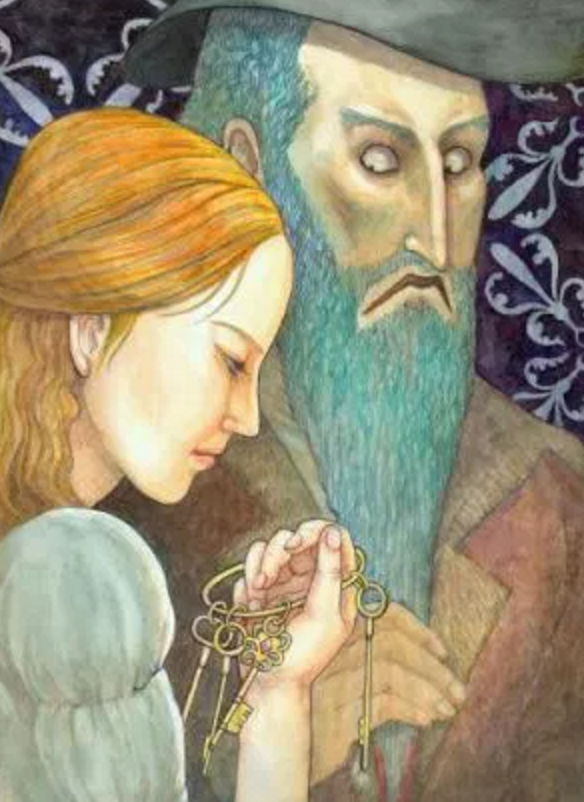
Coincidentally, Mulholland Drive reminds me of the French Fairy tale, Bluebeard, first committed to print by Charles Perrault in 1697.
Bluebeard is the tale of a very rich but mysterious recluse with a big blue beard. He wants a new wife and the women in the village jump at the chance, even though they are spooked by his weird beard. He picks a lucky girl and she has everything she could possibly want. She lives in a massive castle, she has all the clothes and whatnot that she desires and one day he goes off on a business trip. He leaves her the keys to the entire palace and tells her she can roam wherever she likes but that one room only, is totally off limits. He asks her to trust him and not go in that room for her own good.
Of course, soon as he leaves she cannot resist. In the forbidden room she finds a death chamber filled with implements of torture and murder, where the corpses of all his previous wives lie strewn about. This is The Blue Room of Pain and there is nothing sexy about it. She realizes in horror that she has married a monster, but it is too late. When he returns she tries to hide her transgression, but he can tell right away and he kills her for disobeying him.
The blue box in Mullholand Drive represents the same forbidden death chamber, held in the hands of the Crone. Death is the forbidden truth that is hidden. It is also the truth behind the lie that Betty is a nice girl trying to help Rita. Once Rita opens that box the fantasy is over. She has stumbled upon her lover’s torture chamber. The truth is that Diane Selwyn had Camilla Rhodes murdered for breaking her heart.
It is a Noir story after all. Love is dangerous. Love destroys and love kills.
In ‘Ultraviolence’ Lana Del Rey juxtaposes her own poisonous nature with that of her abusive lover. She shows how they are both drawn and repelled by each other, like magnets switching their poles. This love/hate view of love is quintessentially Noir. “He used to call me DN/ That stood for deadly nightshade/ ‘Cause I was filled with poison/ But blessed with beauty and rage/ Jim told me that/ He hit me and it felt like a kiss.”
Lovers are bound by need. They become a closed circuit of emotional energy being exchanged back and forth. It is like a drug. Once it is in your system it is in your blood and the detox is brutal.
When Betty finds the blue box to match the blue key, the dream is over. The secret has been exposed and the dream evaporates as if it was never there.
Diane Selwyn saw herself as full of potential, with Hollywood laying out its red carpet for her, but the truth was that she came and she failed. She failed at love and she failed at Hollywood. She is a tragedy and a criminal. Hollywood has stolen her soul and left her an empty shell of a person.
Roy Orbison’s ‘Crying,’ sung in Spanish by the beautiful and haunting Rebekah Del Rio is the dramatic pinnacle of the story. The truth emerges. This is a story about heartbreak and lost love. An already haunting song is made more haunting by being sung in a Latin language that people associate with passion and ardor. Hearing it sung in Spanish adds an aura of mystery that intensifies the eerie atmosphere of the nearly empty theater:
“I was all right for a while, I could smile for a while,/ But I saw you last night, you held my hand so tight /As you stopped to say “Hello”/ Aw you wished me well/ You couldn’t tell/ That I’d been crying over you/ Then you said so long/ left me standing there all alone/ Alone and crying, crying, crying/ Its hard to understand/ But the touch of your hand/ Can start me crying/ I thought that I was over you/ But its true so true/ I love you even more than I did before/ But darling what can I do/ For you don’t love me and Ill always be/ Crying over you, crying over you/ Yes now you’re gone and from this moment on/ I’ll be crying, crying, crying, crying/ Yeah crying, crying over you.”
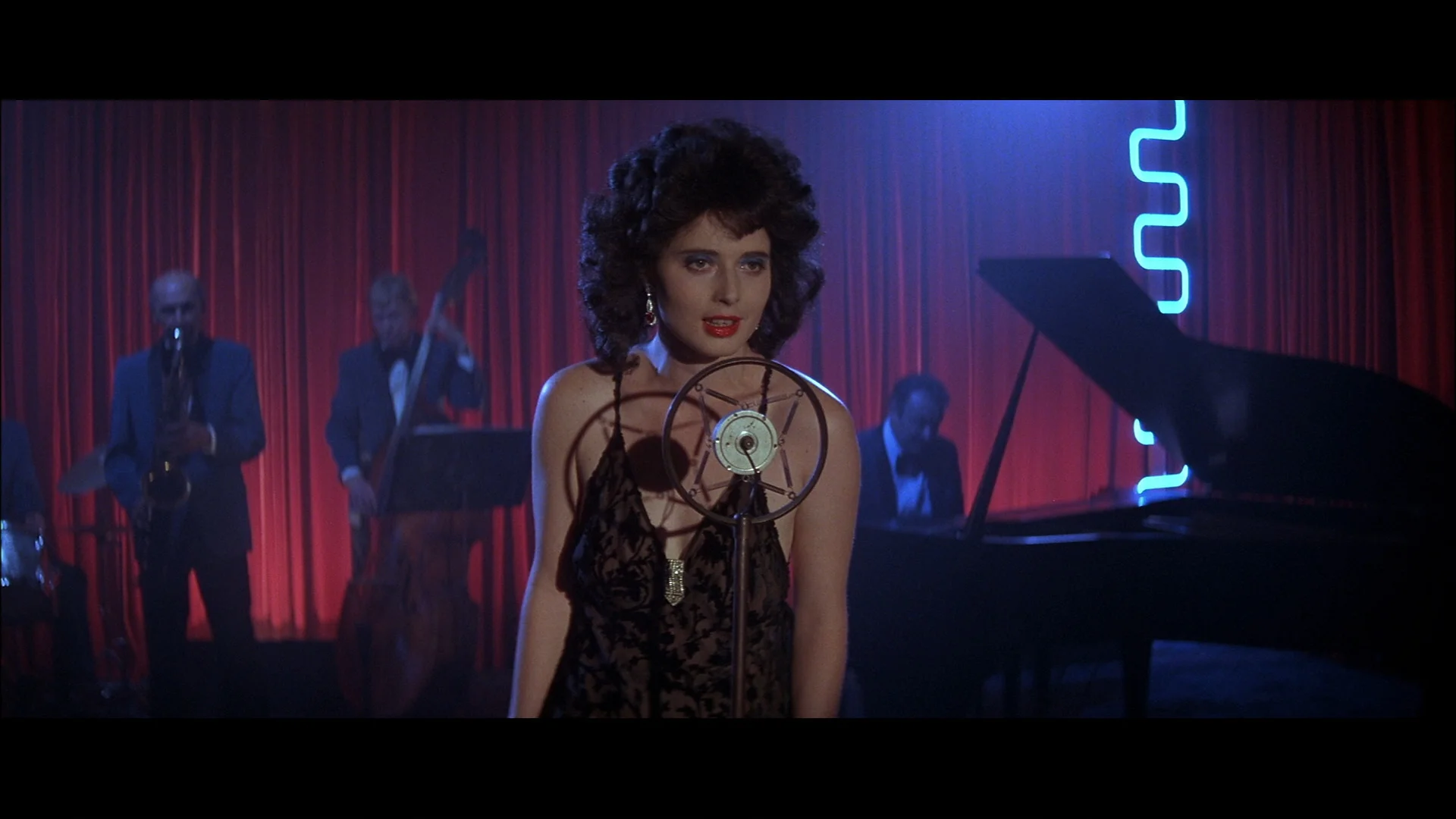
And, of course, this is not the first time Davis Lynch has used a Roy Orbison song in a movie. He used ‘In Dreams’ to dazzling atmospheric effect in Blue Velvet. His tone suits Lynch’s style. Roy reminds us of a more innocent time in music, when feelings, rhythm and melodies mattered, when having a beautiful voice with insane range counted for something.
Roy Orbison sticks the knife in with that song. Some things you just don’t get over. This song is about irreparable damage and loss. It is about a type of pain there is no cure for. This is the terror of love. It can bring you the most unimaginable joy but it can also be deadly.
In ‘Dark Paradise,’ Lana describes the persistence of memory beyond all reason and sense:
“All my friends tell me I should move on/ I’m lying in the ocean singing your song/ Loving you forever can’t be wrong/ Even though you’re not here, won’t move on/ And there is no remedy for memory your face is/ Like a melody, it won’t leave my head/ Your soul is haunting me and telling me that everything is fine/ But I wish I was dead.”
Without love, life is not worth living. Love is the darkness and love is the light. It is the double edged knife in the water. David Lynch, despite his Noir sensibilities, is also a Romantic. To be a Romantic is to believe in the good as well as the not so good aspects of love. This is the central thematic pull between Lana and Lynch: their focus upon the awesome and terrifying power of love. Love is where fantasy and reality meet. Love is the great mystery. The man behind the curtain that you can never see. Love has no morality, because the heart wants what it wants. Love is pure.
—
Leza Cantoral is the author of Planet Mermaid and editor of Walk Hand in Hand Into Extinction: Stories Inspired by True Detective. She writes a feminist column about noir film for Luna Luna Magazine called Shades of Noir and writes about pop culture for Clash Media. Her upcoming collection of short stories, Cartoons in the Suicide Forest, will be coming out later this year through Bizarro Pulp Press. You can find her short stories at lezacantoralblog.wordpress.com and tweet her at @lezacantoral.
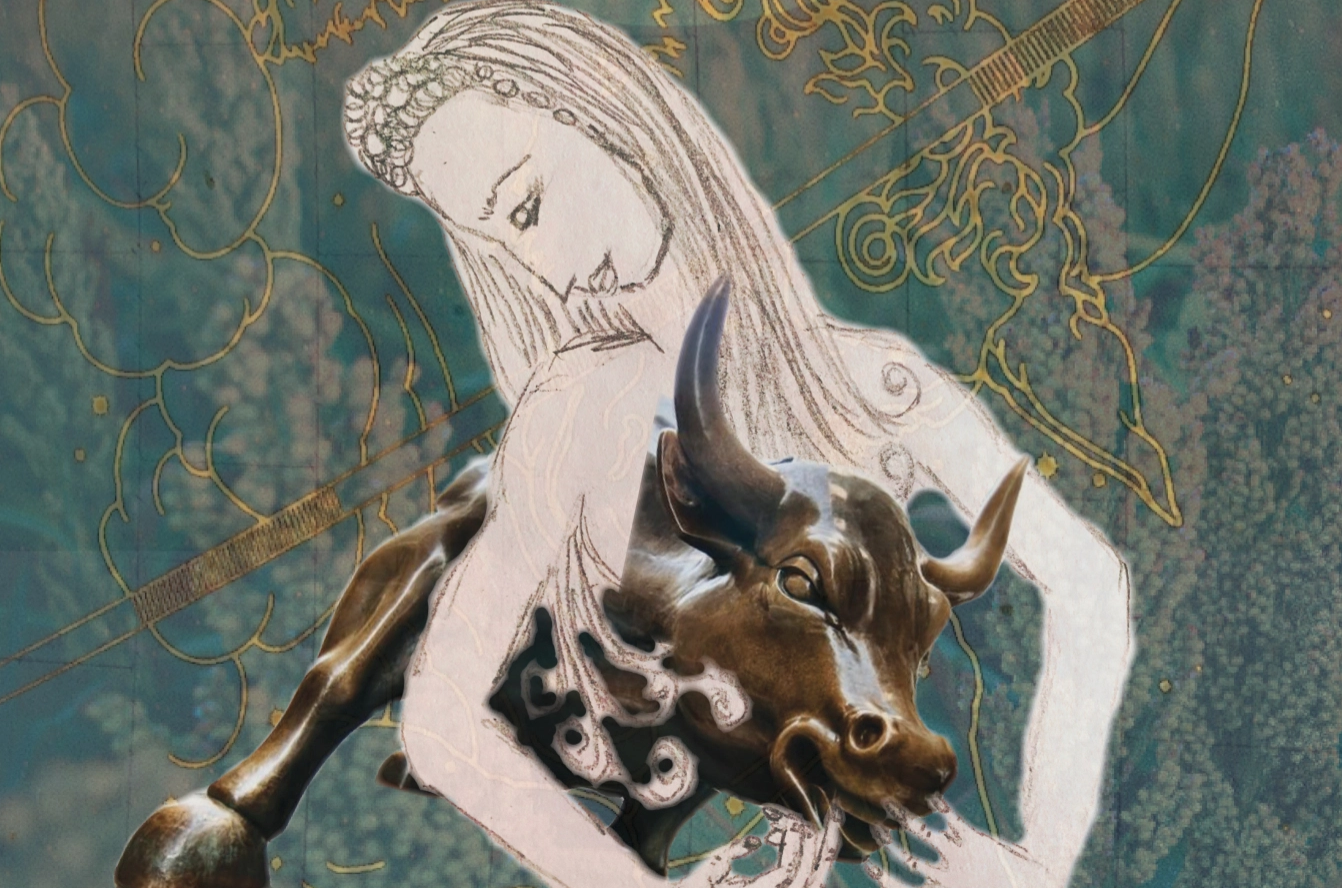
Image of Bluebeard by Sae Jung Choi.