• Home
  • indulge
  • new poetry
    • About Luna Luna
    • resources
    • search
  • editor
  • dark hour
  • submit
Menu

luna luna magazine

  • Home
  • indulge
  • new poetry
  • About
    • About Luna Luna
    • resources
    • search
  • editor
  • dark hour
  • submit
delicious new poetry
'the doors of the night open' — poetry by Juan Armando Rojas (translated by Paula J. Lambert)
Nov 29, 2025
'the doors of the night open' — poetry by Juan Armando Rojas (translated by Paula J. Lambert)
Nov 29, 2025
Nov 29, 2025
'we can be forlorn women' — poetry by Stevie Belchak
Nov 29, 2025
'we can be forlorn women' — poetry by Stevie Belchak
Nov 29, 2025
Nov 29, 2025
'I do whatever the light tells me to' — poetry by Catherine Bai
Nov 29, 2025
'I do whatever the light tells me to' — poetry by Catherine Bai
Nov 29, 2025
Nov 29, 2025
‘to kill bodice and give sacrament’ — poetry By Kale Hensley
Nov 29, 2025
‘to kill bodice and give sacrament’ — poetry By Kale Hensley
Nov 29, 2025
Nov 29, 2025
'Venetian draped in goatskin' — poetry by Natalie Mariko
Nov 29, 2025
'Venetian draped in goatskin' — poetry by Natalie Mariko
Nov 29, 2025
Nov 29, 2025
'the long sorrow of the color red' — centos by Patrice Boyer Claeys
Nov 28, 2025
'the long sorrow of the color red' — centos by Patrice Boyer Claeys
Nov 28, 2025
Nov 28, 2025
'Flowers are the offspring of longing' — poetry by Ellen Kombiyil
Nov 28, 2025
'Flowers are the offspring of longing' — poetry by Ellen Kombiyil
Nov 28, 2025
Nov 28, 2025
'punish or repent' — poetry by Chris McCreary
Nov 28, 2025
'punish or repent' — poetry by Chris McCreary
Nov 28, 2025
Nov 28, 2025
'long, dangerous grasses' — poetry by Jessica Purdy
Nov 28, 2025
'long, dangerous grasses' — poetry by Jessica Purdy
Nov 28, 2025
Nov 28, 2025
'gifting nighttime honey' — poetry by Nathan Hassall
Nov 28, 2025
'gifting nighttime honey' — poetry by Nathan Hassall
Nov 28, 2025
Nov 28, 2025
'A theory of pauses' — poetry by Jeanne Morel and Anthony Warnke
Nov 28, 2025
'A theory of pauses' — poetry by Jeanne Morel and Anthony Warnke
Nov 28, 2025
Nov 28, 2025
'into the voluminous abyss' — poetry by D.J. Huppatz
Nov 28, 2025
'into the voluminous abyss' — poetry by D.J. Huppatz
Nov 28, 2025
Nov 28, 2025
'an animal within an animal' — a poem by Carolee Bennett
Nov 28, 2025
'an animal within an animal' — a poem by Carolee Bennett
Nov 28, 2025
Nov 28, 2025
‘in the glitter-open black' — poetry by Fox Henry Frazier
Oct 31, 2025
‘in the glitter-open black' — poetry by Fox Henry Frazier
Oct 31, 2025
Oct 31, 2025
'poet as tarantula,  poem as waste' — poetry by  Ewen Glass
Oct 31, 2025
'poet as tarantula, poem as waste' — poetry by Ewen Glass
Oct 31, 2025
Oct 31, 2025
'my god wearing a body' — poetry by Tom Nutting
Oct 31, 2025
'my god wearing a body' — poetry by Tom Nutting
Oct 31, 2025
Oct 31, 2025
'Hours rot away in regalia' — poetry by Stephanie Chang
Oct 31, 2025
'Hours rot away in regalia' — poetry by Stephanie Chang
Oct 31, 2025
Oct 31, 2025
'down down down the hall of mirrors' — poetry by Ronnie K. Stephens
Oct 31, 2025
'down down down the hall of mirrors' — poetry by Ronnie K. Stephens
Oct 31, 2025
Oct 31, 2025
'Grew appendages, clawed towards light' — poetry by Lucie Brooks
Oct 31, 2025
'Grew appendages, clawed towards light' — poetry by Lucie Brooks
Oct 31, 2025
Oct 31, 2025
'do not be afraid' — poetry by Maia Decker
Oct 31, 2025
'do not be afraid' — poetry by Maia Decker
Oct 31, 2025
Oct 31, 2025
'The darkened bedroom' — poetry by Jessica Purdy
Oct 31, 2025
'The darkened bedroom' — poetry by Jessica Purdy
Oct 31, 2025
Oct 31, 2025
'I am the body that I am under' — poetry by Jennifer MacBain-Stephens
Oct 31, 2025
'I am the body that I am under' — poetry by Jennifer MacBain-Stephens
Oct 31, 2025
Oct 31, 2025
goddess energy.jpg
Oct 26, 2025
'Hotter than gluttony' — poetry by Anne-Adele Wight
Oct 26, 2025
Oct 26, 2025
'As though from Babel' — poetry by Fox Henry Frazier
Oct 26, 2025
'As though from Babel' — poetry by Fox Henry Frazier
Oct 26, 2025
Oct 26, 2025
'See my wants' — poetry by Aaliyah Anderson
Oct 26, 2025
'See my wants' — poetry by Aaliyah Anderson
Oct 26, 2025
Oct 26, 2025
'black viper dangling a golden fruit' — poetry by Nova Glyn
Oct 26, 2025
'black viper dangling a golden fruit' — poetry by Nova Glyn
Oct 26, 2025
Oct 26, 2025
'It would be unfair to touch you' — poetry by grace (ge) gilbert
Oct 26, 2025
'It would be unfair to touch you' — poetry by grace (ge) gilbert
Oct 26, 2025
Oct 26, 2025
'Praying in retrograde' — poetry by Courtney Leigh
Oct 26, 2025
'Praying in retrograde' — poetry by Courtney Leigh
Oct 26, 2025
Oct 26, 2025
'To not want is death' — poetry by Letitia Trent
Oct 26, 2025
'To not want is death' — poetry by Letitia Trent
Oct 26, 2025
Oct 26, 2025
'Our wildness the eternal now' — poetry by Hannah Levy
Oct 26, 2025
'Our wildness the eternal now' — poetry by Hannah Levy
Oct 26, 2025
Oct 26, 2025
nick-karvounis-X8s2VYAGpKc-unsplash.jpg

Summer Poetry: Jessica Reidy

May 26, 2020

BY JESSICA REIDY

Sub Napoli: ode to the skeleton bride of the catacombs

In the search for orange
blossoms I dug my trowel into raw soil,
stirred, and felt an aching in the fort.
The earth at Napoli is the blood
of Vesuvius; the dust of mummified bodies
rubbed with oil of myrrh, smoked
by incense; and ripe tomatoes.
Worship these skulls, nameless as children,
their faces shed for their remainders. Pray
to anonymous rib cages so they do for you
what you do for them. A film
of cinder dust coats the long-gone tongues.
I am you, they chanted

in piles of volcanic mud, in blazing
catacombs. In the orange light
petals tumble and crown the bride taken
after her conjugal rites, her cheekbones
sharp and white, her sockets stuffed
with gentian from well-wishers, from pilgrims.
Young women asked her for blessings, find me
a husband—bring me the luck you lost. Does death
give you the broken pieces to give away?
I am you, she replies.
Blossoms turn up their stamen faces
all ash and oil down these understreets.

Jessica Reidy is a Brooklyn-based writer and professor. She is the winner of the Penelope Nivens award for Creative nonfiction, and her work has been nominated for the Pushcart Prize and Best of the Net. Her poetry, fiction, and nonfiction have appeared in Narrative Magazine as Short Story of the Week, The Los Angeles Review, Prairie Schooner, and other journals. She’s a Kripalu-certified yoga instructor, offering yoga and creative writing workshops. She also works her Romani (“Gypsy”) family trades, fortune telling, energy healing, and dancing. Additionally, she is an artist and art model working with a number of artists and studios in the city. She is currently writing her first book.

In Poetry & Prose Tags jessica reidy, summer poems
Comment
sharon-mccutcheon-uk-no6Yv91g-unsplash.jpg

Summer Poetry: Emily X.R. Pan

May 22, 2020

BY EMILY X.R. PAN

Missed Dance

I wander over cobblestones

dreaming idly of lips

brought to life in mirrors

Is it a slash of lipstick

or pomegranate seeds

dripping those underworld promises?

Deep inhale night

leads me across a bridge

they say the Seine has a stink

Exhale exhale all

I got was the smell of stars falling

out of love

But rewind

first we met dancing

our eyes made the greeting

I smiled at the long dark hair

the pair of red lips

over his shoulder

He thought my glittering teeth

were for him

they always do

I love this song he said

twirled me like a doll

until I was dizzy and she was gone

In the morning light

my teeth were not the dagger

I kept on me just in case

Under the sun we kicked

our naked feet

across guitar-string grass

He pressed his mouth to my ear

to drink of me

and all I thought of were her silver shoes

Emily X.R. Pan is the New York Times bestselling author of THE ASTONISHING COLOR OF AFTER, which won the APALA Honor Award and the Walter Honor Award, received six starred reviews, was an L.A. Times Book Prize finalist, and was longlisted for the Carnegie Medal, among other accolades. She lives in Brooklyn, New York. Visit Emily online at exrpan.com, and find her on Twitter and Instagram: @exrpan.

.

In Poetry & Prose Tags summer poems
Comment

Summer Poetry: Dallas Athent

May 21, 2020

north carolina

driving thru the balm,

cutting thru the night,

i am a local girl.

i could really live here.

crickets give a familiar sound,

north carolina,

could be anybody’s home, really.

his lap is my house,

when i’m young, i am silk.

he falls in love at 3 o’clock.

and i’m pulling into golden corral,

making memories of a dead dad and buffets.

i could really live here,

could be anybody’s home, really.

montecito hair

is long and ends in a clean line.

it asks for no forgiveness

on the tan girl, tres mince,

who never wants to know u.

:::a palm in the sun:::

florida’s gone

and i’m looking back thru the window.

bye girl. it’s all by your girl.

the things from your childhood:

thick stained rugs,

dewey soda with a straw,

neon fish on a t-shirt,

tapioca pudding,

all of my little ponies,

sink into a tepid sea.

In Poetry & Prose Tags summer poems
Comment
agatha-depine-dJL6L7YFh5c-unsplash.jpg

Summer Poetry: Adrian Ernesto Cepeda

May 21, 2020

BY ADRIAN ERNESTO CEPEDA

Her Pool was Glistening


I missed her whistling, 

seductively spreading 

the soft of splashes 

enticing me to follow her, 

my Rosa, her hips already 

glowing in the water, lips 

savoring to devour each 

and every drop, I could tell 

from those shivering blinks 

her moonlit eyes loved softly 

undressing me, slowly, I glimpsed 

the giggling sips of her white 

wine breath, behind me, slipping

I felt her pool was spinning—

I wasn’t ready but she pushed 

me in towards her deep end, 

Rosa’s tongue caught me elongating 

waves as we shared bubbles 

of chlorine even deeper luna 

kisses radiating from her bikini-less 

skin. I could feel her sea diver 

taste buds reigniting underwater, 

deeply intensifying our midnight

swim, closer I felt more than just 

a mouthful of sips, I saw her face, 

the first-time glimpsing Rosa 

spreading her fountains, gushing, 

ready to splash her softest mystery, 

she was my guide, we moved 

instantly swimming deeper—

finally, I listened to her faucet 

eyes tidal me closer; ready, 

wanting— skinny dripping, 

she softly leaned while nakedly 

instructing, pointing to her

softest garden, curly glistening

summer, I could feel Rosa

shivering a whisper—

“let’s go inside…”

Lovers alone wear sunlight

You kiss the back of my legs 

and I want to cry. In the heat 

of her hands I thought, this is 

the campfire that mocks the sun.

yours is the light by which 

my spirit’s born: yours is 

the darkness, as long as the sun 

exists, your name will exist

like a sun-filled window, 

there are souls that you feel 

to lean forward to, your belly 

the sun seed I planted in 

my chest.“Her Spanish 

sounds like sunlight drying 

a wet shirt. She’s delicadeza

She was a pure spirit, easily 

susceptible to emotion, one 

moment she’d be crying, 

like sunshine after a shower.

Isn’t it enough to be out 

walking together in the sunlight?

through a window, which I 

stand in, warmed, the sun 

comes out of your body like 

a fruit. I had been lost to 

you, sunlight, and flew 

like a moth to you, sunlight, 

Oh, your love is sunlight

[But] Is it love, the way 

you toss your head and 

create the sun? If you 

are the rising sun, I am 

the road of blood. And 

there is, for me, no difference 

between writing a good 

poem and moving into 

sunlight against the body 

of a woman I love. Oh, 

your hair is red-gold, red-

gold, your skin is like

sunlight on snow. He 

smiled, and his face was 

like the sun. The first 

summer was pure happiness.

I was experiencing another 

human being, I was barefoot 

in the sand so fine, it was as 

if it breathed beneath my feet.

It was as if I were living within 

soft walls of sunlight and desire.

references above

1  E.E. Cummings, “unlove’s the heavenless hell and homeless home”
2 Shauna Barbosa, “GPS”
3 Jeanette Winterson, Written on the Body
4 E.E. Cummings, “silently if, out of not knowable”
5 from a wall relief on the West Wall in the Chapel of Rameses I
6 Federico García Lorca, source unknown
7 Octavio Paz, “A Tale of Two Gardens”
8 Eugene Gloria, “The Verb To Lick”
9 Gustave Flaubert, in a letter to Louise Colet
10 Jess Walter, Beautiful Ruins
11 Jessie Burton, The Miniaturist
12 Homero Aridjis, Blue Spaces
13 Hozier, “Sunlight”
14 Stimie
15 Octavio Paz, “Motion”
16 Audre Lorde, “Uses of the Erotic: The Erotic as Power
17 Tennessee Williams, “The Mutilated”
18 Madeline Miller, The Song of Achille
19 Liv Ullman on Ingmar Bergman, Liv & Ingmar

Adrian Ernesto Cepeda is the author of the full-length poetry collection Flashes & Verses… Becoming Attractions from Unsolicited Press, the poetry chapbook So Many Flowers, So Little Time from Red Mare Press. Between the Spine is a collection of erotic love poems published with Picture Show Press and La Belle Ajar, a collection of cento poems inspired by Sylvia Plath's 1963 novel published in 2020 by CLASH Books. Adrian is an LA Poet who has a BA from the University of Texas at San Antonio and he is also a graduate of the MFA program at Antioch University in Los Angeles where he lives with his wife and their cat Woody Gold. You can connect with Adrian on his website: http://www.adrianernestocepeda.com/

In Poetry & Prose Tags summer poems
Comment
tania-miron-nOl7TYYFnkU-unsplash.jpg

Summer Poetry: Emily Uduwana

May 21, 2020

BY EMILY UDUWANA

Last Day of Summer

Magenta took my hand

and she pulled me deeper

into the hedges

that guarded

the white columns

of her parents’ suburban hell

and we laid with our hair

spread in halos

over fresh-cut grass,

and we laid in a meeting

of manicured lions

and leafy green poodles

and those skinny pink flamingos

her mother insisted on keeping

in their cul-de-sac front yard,

the yard where we stayed

to see the sun flee on its way

out of Southern California

and where I ran my fingers

over the soft skin

of her inner arms

and asked how she ended up

with a name like Magenta

and where she waved a hand

at those skinny pink flamingos

and where said,

too many vodka sodas,

and where she said,

maybe what they really wanted

was one more lawn ornament.

Sticky Sweet

Your mother brought fresh lemonade

in sparkling crystal glasses

but you dipped a finger in the pitcher

forgotten on a backyard table

and you dangled your nails

over my waiting face,

let sticky sweet droplets fall

on the bridge of my nose,

and you said, she never adds

enough sugar

and you drank deeply

from my cupid’s bow

and from the edges

of my eager mouth

and you said,

that’s much better.

Emily Uduwana is a poet and short fiction author with recent publications in Miracle Monocle, Eclectica Magazine, and the Owen Wister Review. She is currently based in Southern California, where she is pursuing a Ph.D. in history at the University of California, Riverside. 

In Poetry & Prose Tags emily uduwana, summer poems
Comment
Via Leftwich

Via Leftwich

An Interview with Writer Hillary Leftwich on Her Book 'Ghosts Are Just Strangers Who Know How to Knock '

May 14, 2020

Hillary Leftwich’s multi-genre collection, Ghosts Are Just Strangers Who Know How to Knock (CCM Press/The Accomplices 2019), is frighteningly beautiful and natural in its scope of voices and reverberates long after its first read. Leftwich is an editor, organizer in her literary community, and an advocate for writers existing in liminal spaces. Here she shares about her book and an impulse to create from the beats of memory.

Read More
In Interviews, Poetry & Prose Tags Writers, Prose, Feminsim, literature
Comment

What My Research Project Taught Me About Witches

May 13, 2020

Camaryn Wheeler is an English and French student at Moravian College in Pennsylvania, where she works as a Writing Fellow and Writing Tutor, an editor for the Moravian Manuscript, and the treasurer for Moravian's American Association of University Women, and runs for the Track & Field Team. She writes realistic fiction, poetry, and creative nonfiction, has published a children’s book at 12 years old, and has a published book review in Rag Queen Periodical.

Read More
In Personal Essay Tags Camaryn Wheeler, witchcraft, witches
Comment
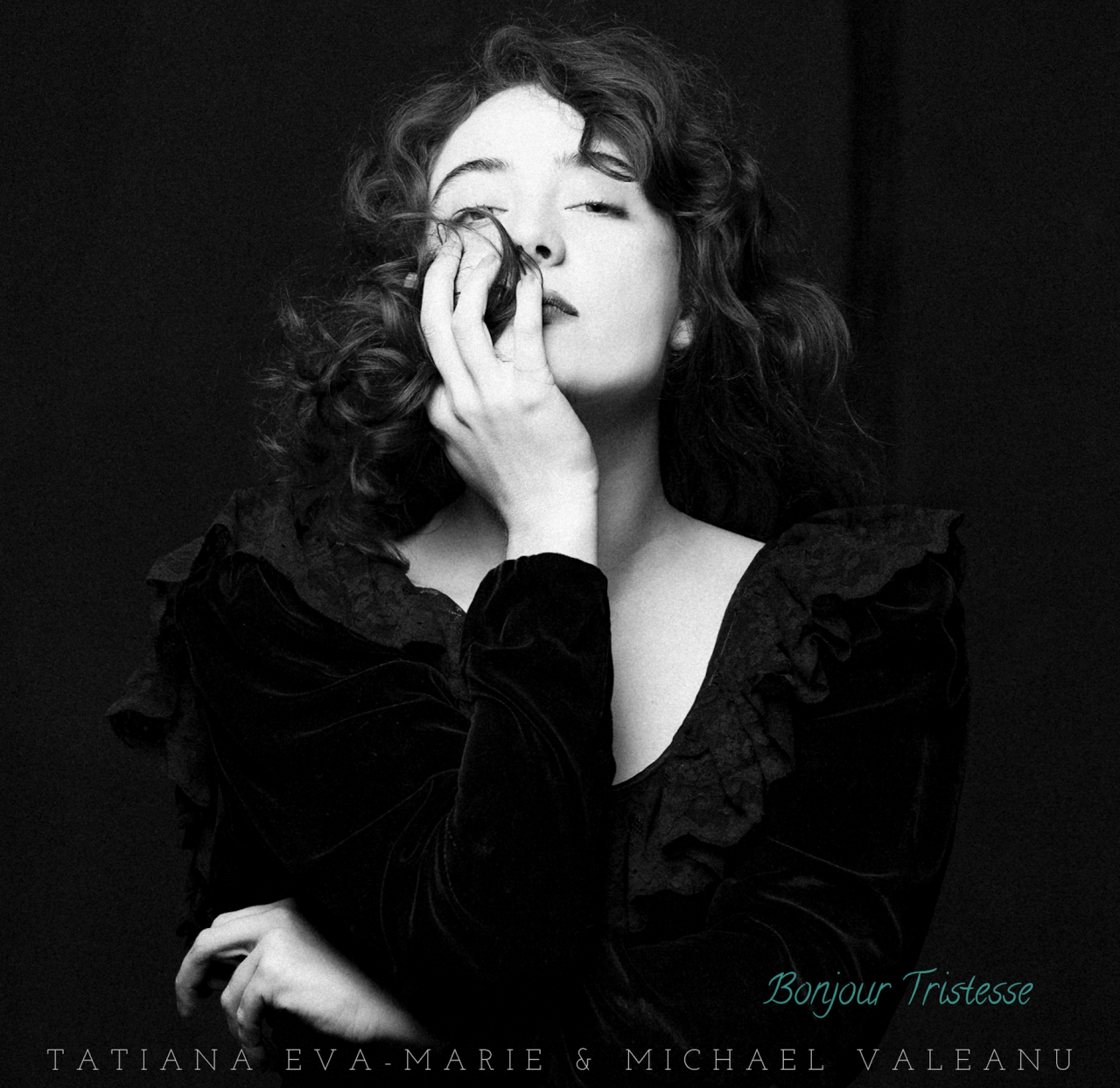
Tatiana-Eva-Marie-bonjour-tristesse-album-cover-1280x1244.png

'Bonjour Tristesse' Is the Album You Need Right Now

May 11, 2020

Joanna C. Valente is a human who lives in Brooklyn, New York. They are the author of several collections, including Marys of the Sea, #Survivor, (forthcoming, The Operating System), Killer Bob: A Love Story (forthcoming, Vegetarian Alcoholic Press), and is the editor of A Shadow Map: Writing by Survivors of Sexual Assault. Joanna is the founder of Yes Poetry and the senior managing editor for Luna Luna Magazine. Some of their work has appeared or is forthcoming in The Rumpus, Them, Brooklyn Magazine, BUST, F(r)iction, Ravishly, and elsewhere. joannavalente.com / Twitter: @joannasaid / IG: joannacvalente / FB: joannacvalente

Read More
In Music Tags music, tatiana eva marie, michael valeanu
Comment
drop-the-label-movement-NiSB9OuTPfA-unsplash.jpg

Quarantine Self Care Ideas From Team Luna Luna

May 7, 2020

BY LUNA LUNA

We’ve taken a pause these past nearly two months. Slowed the publication schedule. Slowed our hearts down. We’ve been nourishing, connecting, and trying our best. Every day is a new struggle. Some of us create. Some of us rest. Some of us work. Some of us eagerly await the day when we can do so again. Some of us feel anxious. Some of us feel numb. There is no one right way to be, feel, think, or manage the difficulty and terror of grief, isolation, and a lack of finances and normalcy.

To add just a bit of luminosity to the world, our team shares a few things we’ve been doing — whether it’s an act or nothing at all — to get through the hard times. Hopefully, they can inspire or reaffirm your own ideas and thoughts.

ihor-malytskyi-qaNwGFPWEUA-unsplash.jpg

KAILEY TEDESCO

Since the quarantine began I feel like I’ve awakened to an entirely different, yet totally consuming, emotion each morning. Some days are so anxious. Some are calm. Some are lethargic. I’ve been trying to do at least one meaningful act of self-care that helps me work through whatever’s going on in my mind. Some days it’s writing poems or baking or taking a long walk in the woods with my dog. Other days, it’s spending two hours in the bathtub with a graphic novel or lying in bed, watching Beetlejuice for the five millionth time. I’m trying to be gentle with myself, but that’s, of course, not as easy as it sounds. I hope that everyone out there is taking care of themselves as best as they can. 

tanya-trukyr-ornZV1YJNNo-unsplash.jpg

MONIQUE QUINTANA

I have been keeping a diary where I write to my ancestors. While I love my family and friends, sometimes it helps to speak to people outside my present time and space. I write to my ancestors because I know that they would always want what is best with me. Making contact with my ancestors helps me with things such as loving and accepting my body when it is ailing or when I am not feeling confident about the way I look.  This also helps me to tap into my ancestral knowledge and power because it keeps me mindful of the tenacity of my people. Their achievements are a source of energy that I can still make good use of. 

maria-oswalt-8KJsv3HiSkE-unsplash.jpg

Lisa Marie Basile

I’ve been feeling the ups and downs very strongly. Grief is the foundational layer. A grief for our world, for my city, for humanity. My anxiety and general feeling of powerlessness is at an all-time high, so I’ve been relying on a few things to help me manage the tidal waves:

  1. ASMR. I really enjoy the soft, quiet, gentle personal attention of ASMR. It’s me and one person and a few soft sounds, and it creates a universe that I just can fall softly into — blurring out the outside world. If you hate ASMR, Calm app’s “Sleep Stories” (their train stories are amazing) are excellent for a gentle bedtime.

  2. CBD oil. I’ve been taking CBD baths to take the extreme edge off both my thinking and my chronic pain (which flares during stress). I recommend Bluebell Botanicals and Baked Beauty Co.

  3. Ritual journaling. I light a few candles, call upon an archetype and write. What would that archetype ask me? What would I say in response? The trick is be radically honest and open.

  4. Dance. I’ve been turning to dance as a method of stress relief for years, but it really helps to build a cacoon of physicality and ecstatic aliveness. Dua Lipa, Banks, and Lizzo are my go-tos.

  5. Glamour. I’ve been dressing up each week as a different archetype. So far I’ve embraced the looks of Cleopatra/Grecian beauty and Baroque/Dolce & Gabanna. It’s a way to be embodied and present — and to have fun.

jen-theodore-JvCptHpXKWk-unsplash.jpg

JOANNA C. VALENTE

For me, the routine is everything. So is setting intentions and trying to be mindful. I make sure to pick out an outfit and get ready everyday because fashion has been a source of joy for me my entire life. Dressing up gets me excited to start the day, and it's also a way I express myself. This makes the day feel more grounded, and less like I'm living in some alternate reality.

The now is now - and it's important for me to prioritize that as a way to be connected to myself and the world. I also tend to draw a tarot card every day for guidance and reflection, to continue my fulfillment journey. Am I on the path I'm supposed to be? Am I being self-aware? Besides that, cooking every meal with my partner, making a point t work on a creative project even just a little every day. These are ways I put myself first in a humanistic way - in a way that focuses on my own truths and meaning. As the editor of Yes Poetry, I've made sure to maintain our daily schedule -and add weekly online courses people can take. The courses have been a fun and thoughtful way to work and interact with others.

Of course, I also try to talk to friends every day in some capacity, which is something I've always done - along with the usual skincare routines. Mostly, I just try to live the way I did before as much as possible and focus on what I can do, rather than what I can't. 

kin-li-dOemyRl6DdA-unsplash.jpg

TRISTA EDWARDS

Quarantine is strange. On a day-to-day basis, my mental state fluctuates with my thoughts and emotions oscillating between that of comfort at being cocooned in my home and feeling the steady throb of dread and fear of uncertainty. On those days, the days when the weight of relentless anxiety overwhelms me to the point of tears, I do what a lot of people seem to be doing right now— 

I get outside in the sun. I walk around my neighborhood with my dogs. I jog to loud, aggressive music. I take my four-month-old baby outside so he can touch trees, grass, dirt, pavement.

I bake. Right before quarantine, I coincidently began a journey into ancestor exploration in the kitchen. I sought out recipes, familial and regional, of my paternal side (Southern Appalachia) and my maternal side (Western Pennsylvania). I forged a connection with my paternal side and have been obsessively cooking different variations of cornbread every week.

I tidy. Nothing may be more soothing to me than tidying. Cleaning, tidying, and arranging objects has always subdued my anxiety in that it gives me some semblance of control.

I practice self-care. I hate running. I’ve tried many, many times over the years to “be a runner” and only made it a day or two before abandoning the endeavor. Now, I’m on week four and oddly, for me, craving my evening jog. I get out of my head. I get in my body. My body craves the movement. My mind craves the alternative focus. And then after my jog, post-shower, I put on my favorite perfume. Who says you can’t put on a sensuous fragrance just for yourself right before bed? Scent instantly calms me and alters my mood. 

annie-spratt-fDghTk7Typw-unsplash.jpg

TIFFANY ALEXANDER

I was definitely one of those who thought the stay at home order might actually be a boon. I would finish a chapbook or two, and maybe even come up with ideas for other chaps. Ha! Well,l I didn’t count on certain factors like having to face the reality of the pandemic every day at work and let’s just say I was BLOCKED. But one thing that helped was my writing prompts. I’ve put together quite a few in hopes of putting together a little book and I’d love to share one with you.

This one came to me after a friend posted one of his photos on Instagram. It is a simple shot of a window screen with a tear in it. You can just see through to the street and to the left and right, is just blurred:

Tear

Prompt: Imagine this window is your window, and the hole, a view to your backyard, or a friend’s backyard. What do you see? You can write down what is in your point of view or create your own landscape. I did a bit of both. I started sharp, than honed in even more, but you could begin with the barely seen and go sharp. Or the barely seen and go more vague?

This is what I came up with:

Mom is in the front yard

on her knees, stacking rocks

in front of the roses—

She saw a cairn on sale

in Marshalls for $6.99 earlier,

threw it to the ground and

walked away smiling.

And now she is in the backyard,

on her second stack, wobbling

on damp knees—and I am fixing

her a cup of tea, the only thing

she wanted from me—


The poem is far from perfect and may never go far as this page, but that is okay.

In Wellness Tags quarantine, coronavirus, self love, Self care
Comment
garden

Dark Paradise

May 6, 2020

BY DENISE JARROTT


I am 18 when I fall hard. 

After only a couple of months on these blue pills—one half robin’s egg, the other half periwinkle—the pills which are supposed to help me forget, I know I have it bad, maybe even worse than before. They are powerless to pry me away from my beloved. I have a couple of boyfriends, one even breaks my heart, but none compare to the all-consuming love I have for sadness.

I pray at the temple of the sadness, lighting candles of self-pity with single minded devotion, just like my religion taught me to do. Catholicism wasn’t made for those with a naturally sunny disposition. I was raised on a steady diet of shame and fatalism. I was raised on bloody, ecstatic saints and white robes and cadences that entered my mind and stayed there. I was raised on fire and spiked wheels. Even now, I think in trinities and I write in litanies. I still think all water, not just that which is blessed, is holy. There are some habits that are impossible to break.

Or, I suppose, you could blame my love affair with sadness to being born under the sign of death and rebirth—my being in love with sadness is only part of the natural, cyclical nature of life itself. It’s the same sign as Sylvia Plath, who for me never really died. At 18, she seemed as real to me as any living person I knew, maybe more, because everything she said felt truer than anything I’d ever heard anyone say out loud. At 18, my swan song was performing “Daddy” to a room full of my peers. It was my vehicle. I let anger and sadness and desire possess me when I read that poem aloud, and it impressed and terrified everyone who saw me read it. I was in a fugue state when I read it, and I let the storm consume me. A week previous, I’d taken a handful of those blue pills in my closet, threw them up with the help of liquid charcoal given to me in a Styrofoam cup, spent two days in the hospital, and somehow kept it a secret from the majority of my classmates. Resurrected from the local behavioral health ward, I put on my black dress and performed that poem at the statewide speech competition. I didn’t have to memorize it, but by then it was part of my blood.

John Keats, another poet born under this sign of life and death, who also died young, wrote “for many a time/I have been half in love with easeful death/Call’d him soft names in many a mused rhyme...” If I treated anyone with tenderness, it was sadness, but I still wonder whether I was sad or just so painfully bored that I wanted to feel something, anything, and if it was sadness then that’s what I’d devote my life to. That’s who I’d choose to love.

To be fair, I think all the girls I knew were, in some way, in love with sadness, or at least the wise ones maintained a flirtation with it. I think all of us stole our father's pocket knives or mother's razors and locked ourselves in the bathroom. Self-destruction is one of the few things that makes itself available to teenage girls. It happened so often that it became ubiquitous. I'm sure there were girls who went on a long run or prayed, but we were not those girls.

Now that we are older, I wonder what it was we were seeking. How did we learn to press the blade horizontally across the wrist, or do it in an area that could easily be covered by clothing or a strategically placed cuff bracelet? We listened to boys with eyeliner scream into microphones, boys who wore our jeans and couldn't grow facial hair. They were so much like girls, so much like us. Conor Oberst girlishly whining his poetry from nearby Omaha could have been Lana Del Rey in boy drag, but she hadn’t arrived yet. This was 2005 in the Midwest, and we all had a crush on sadness. We all had our reasons why. 

*

“Dark Paradise” is a song that is naked in its love for sadness. Gone is the Lolita personality, at least temporarily. This one is the voice of a woman who has long ago lost her innocence, a harbinger to the “deadly nightshade” of Ultraviolence. Lana appears in a cloud of smoke. Lana asks the spiritualist to intercede, to speak to the dead on her behalf. We do not know if the lover in question is far away or dead, but they are obviously gone. There is no pretending to be the lonely starlet waiting to be ravished. No one is coming.

Lana laments before every chorus “But I wish I was dead” It would be easy to write it all off as melodrama, and many have. It’s a common narrative of love lost and the one left behind, unable to move forward, haunted like a sea captain’s wife yearning for her beloved across the world: “All my friends ask me why I stay strong/Tell ‘em when you find true love it lives on...” This lover has a hold on Lana. He is like God, and his absence leaves her utterly bereft.

Maybe her lover is God. “After one has seen God, what is the remedy?” Sylvia Plath asks in “Mystic”—a line that, even if it was not a refrain, would still reverberate for me years after reading it. After one has loved, lost, or simply sat in a high school gymnasium with a stack of books and no concept of a future, what is the remedy? This song could be about a lost love—and even if it is, why can’t it be that?—or is it about touching the bottom of something and wondering if you’ll surface?

“Dark Paradise” doesn’t apologize for its own self-indulgence. It languishes in its grief. It contains all the things I love about Lana Del Rey’s music—theatricality, sweeping strings, deep, dark vocals like a split pomegranate. There’ also something in it that speaks to that 18 year old girl in love with sadness and to woman I am now, who is beginning to lose her infatuation with it in favor of something unknown, something even closer to the truth. But there’s a tenderness within me for the girl I was and the girls I knew. There must be a girl there now, who wants to love and be loved, someone who wants to give her pain and confusion a name in order for it to really exist. If you learn the name for something, you can call it forth. You can banish it, too.


DENISE JARROTT  is the author of NYMPH (Vegetarian Alcoholic Press, 2018). She is also the author of two chapbooks, Nine Elegies (Dancing Girl Press) and Herbarium (Sorority Mansion Press). Her poems and essays have appeared in jubilat, Black Warrior Review, Zone 3, Burnside Review and elsewhere. She grew up in Iowa and currently lives in Brooklyn.

In Art, Poetry & Prose, Personal Essay Tags denise jarrott, Lana Del Rey, lana del rey
Comment

A Spring Playlist for Mindfulness & Meditation

April 23, 2020

BY JOANNA C. VALENTE

Spring doesn’t feel like spring this year. In many ways, it’s hard to be excited about the rebirth of the year, the blossoms, the birds, the warmer air. When I begin to feel discouraged, I try to remember the small and big joys around me - and that I am still in control of my joys - of curating joy and finding it around me, and within me.

Music is one of those things for me. Music gives me joy, especially now that I spend most of my time inside - these songs transport me to different places and times, beings and moods. I hope it does for you too, which is why I’m sharing this playlist with you - a way to make this spring a rebirth for you, whether that means providing a soundtrack to your creative projects, daily meditation, or prompts for you to think within your body.

For me, these songs are forms of meditation. I try to sit with them mindfully, exist in their landscape. This exercise helps with my anxiety (which, like many, has spiked lately). Listen and explore below, from Lucinda Williams to RZA:

In Music Tags music, playlist
1 Comment
plant magic

Houseplant Poetry Rituals For Generating Ideas During Quarantine

April 21, 2020

BY ARIEL KUSBY

You and your houseplants have an intimate relationship. When you care for them, they give you fresh air in return. They’re dependent on you, and this connection creates a deep bond. Because plants are protective, they can be seen as green allies that stand in our windows, guarding against illness and providing us with inspiration. Every plant, even your houseplants, have a personality and secret language that we can learn from if we commit to listening to them.

  1. Free Write: Choose a houseplant to sit with for a while. Gently touch its leaves, trace your fingers through the soil. Take a few deep breaths focus and notice any related thoughts, feelings, or images that arise.
    Focus on a particular leaf or flower that is most beautiful to you. What does this leaf reveal about the plant’s greater personality? How does the leaf taste, feel, and smell? Is it sharp or sweet and how does it relate to the way it looks and to any impressions you may be getting? What are its secrets and what does it wish you will know? Record any fleeting thoughts or images that come into your mind, however unrelated they may seem. 

  2. Life Cycle: Now write about the seed or bulb from which this plant originally came. Start a sentence with “It was,” then another with “It is,” then the next with “It has nothing to do with.” Next, write “It is like ___ when ___.”

  3. Seasons of the Houseplant: Write 4 lines about the plant in each season. Then write 4 lines alternating between two seasons. Then, all four again. To add an extra challenge, try doing so without using any colors.

  4. Secret Life: Write about a secret that this plant may have, from the plant’s perspective. Then, write a few lines about the secret, as told by the plant container’s perspective. 

  5. Plant Body: Pick a new part of the plant, like a stem, flower, or a different leaf. Write as if it has replaced one of your body parts - what would be the physical, emotional, psychological, and/or sexual repercussions of this?

  6. Terrarium Editing: Start a new page. Pick your favorite lines out of everything you’ve written and compile them together here. They may all not seem to immediately fit together, but try rearranging them to see if any lines juxtapose in interesting ways. Like a terrarium is often designed to group plants with different textures side-by-side, see if some of your lines can coexist in the same poem. 

In Magic, Wellness Tags plants, plant magic, plant rituals, quarantine, quarantine rituals, wellness
Comment
writing-tea-flower-diary-journal-notepad-244-pxhere.com.jpg

Here Are Some Writing Prompts Inspired by Botanical Gardens

April 13, 2020

BY MONIQUE QUINTANA

In any season, the garden as space is a constant source of creative inspiration. Some gardens are rocky and monochromatic, some subdued, and some bright. In each garden is a cyclic narrative, containers of our vast memories and dreamscapes. Here are a few writing prompts inspired by botanical things.

  •  Agave

 Write a revelation that happens in the time it takes the character to sew a tiny garment.

  •  Blue Hibiscus

 Write about a quarreling household that is preparing for an unprecedented season of frost. How do they find a moment of peace and grace?

  •  Manzanita

 Write a character that discovers a strange shape when they cut open a piece of fruit.

  •  Wormwood

 Write a trail of childhood objects on a rocky footpath for a beloved to find.

  •  Mugwort

 Write about a talisman that has protected your character’s family from a particular creature. What happens when the talisman doesn’t work for your character?

  •  Summer Snapdragon

 Write a character that notices a drastic and mysterious change in the landscape outside their window. What do they learn from the mystery?


Monique Quintana is a contributor at Luna Luna Magazine and her novella, Cenote City, was released from Clash Books in 2019. Her short works has been nominated for Best of the Net, Best Microfiction, and the Pushcart Prize. She has been awarded artist residencies to Yaddo, The Mineral School, and Sundress Academy of the Arts. She has also received fellowships to the Squaw Valley Community of Writers, the Open Mouth Poetry Retreat, and she was the inaugural winner of Amplify’s Megaphone Fellowship for a Writer of Color. She blogs about Latinx Literature at her site, Blood Moon and lives in the sleepy little town of Fresno, CA. You can find her at moniquequintana.com

In Art, Lifestyle, Poetry & Prose, Wellness Tags Writing, Botany, Wellness
Comment
Screen Shot 2020-04-06 at 3.29.59 PM.png

Healing Through Sound: An Interview with Voice Coach Leslie Helpert

April 6, 2020

BY TESS CONGO, IN INTERVIEW WITH LESLIE HELPERT

Under dimmed lights with the glowing full moon lamp in the corner, we settled in restorative and restful poses on yoga mats across the studio floor. For over an hour, Leslie Helpert sang over us, taking turns to visit us individually, customizing her song to tune into exactly what we needed to hear. It was like a magic spell, designed specifically to soothe us into our softer, stronger versions of our souls. Afterwards, I felt like I was beaming white light, delicate and firm in my being. 

I had been attending Leslie’s meditation and sound healing classes for several months at The Well, a wellness center near Union Square in Manhattan where “modern science meets ancient wisdom” when cases of the coronavirus began to rise in the United States. When Leslie emailed me this past week to tell me about an online global classroom she’s facilitating over the next three Wednesdays beginning this Wednesday April 8th, 2020, I wanted to share her work with others who may, like me, be striving to rebuild their foundation in the midst of upheaval due to the coronavirus. The following conversation has been condensed. 

I am stunned by the range of your experiences—from being Bermuda and Denmark’s elected resident musician to coaching TED speakers to writing over 1,000 lyrical songs, novels, volumes of poetry, etc. I’d love to dive into your background to give readers a taste of who you are and where you came from. Can you describe your upbringing and how your relationship to sound manifested?

I was born in Upstate New York, but my family moved a lot. By the time I was nine, I had moved five times to different places in opposite ends of the country. I think the gift I got from moving was finding a way to create a sense of foundation and home from something that wasn’t external. Fortunately, my family was a loving one and artistically supportive.

From a young age, I found my sustenance in a deep, immersive world that was a combination of sound, music, nature, dance, and movement.

Right now, some people are quarantining apart from their families, others are confined to unhealthy home situations, and others have actually left their homes to socially distance themselves in other places. As someone who developed skills to build an internal sense of stability, what advice or wisdom can you offer to people who are finding it challenging to remain emotionally and mentally grounded wherever they are? 

I feel it is crucial to maintain strength, drive, and creativity during this time. It's never too late to find a passionate discipline and practice that yields a sense of being present — or grounded. Self-compassion is a vital practice, staying connected to ourselves and our self-care. This might look like taking baths, keeping our circulation moving and eating well so we are "checked in" more than "checked out.” You might have a writing practice, make a special meditation zone in your home, get a sketchbook, sing from the windows, turn off the cellphone after 9 pm and keep it off ’til morning. We're going through a lot, but we have our core values, our essence, our breath, our heart, and our ability to travel inward— these are our valuable tools.

Can you talk about what it’s like to work in sound healing after so many years of performing in venues as a touring musician?

When I work in what I call a voice lab or what's often called a sound bath, I go directly inside the geometrical design and the space, and work with people there. While I've played in some truly beautiful, artistically-inspiring venues, it feels like a natural evolution to engage with sound now in unamplified space— to play with acoustics, without lighting, in a space where everyone’s practicing self-care. Offering sound in this capacity was just a natural evolution for me, and it's really what I've always gone toward in many ways.

How is sound related to health and wellness?

I think all healthcare would benefit by implementing what I've called creative wellness or creative health. For some years, I've had the joy to work with various companies and HR teams to educate about the importance of creative health, which is a bridge between mental health and physical health. Our creativity is what determines our relationship with our world, and our creative drive is our gusto, which literally comes from the word wind, and is activated and finessed through our voice.

All of us have different relationships with our creative expression but what’s really important is that we know how to respect it. We know how to respect our creativity when it needs to rest, and we know how to respect it when it needs to be taken care of and be heard. We learn how to listen to our creativity as a primary, significant source. Some of us were discouraged in our earliest years from opening our mouths, perhaps hushed or deterred from singing, but our vocal cords are literal mechanical tools to open up the interior and exterior body. By working with sound, I can support homeostasis which is not a stagnant thing, but like music itself, moving all the time.

When you sing over people as with sound healing sessions at The Well, what is it you’re responding to that makes you shift the way you sing over individuals?

The work in sound healing is the effect of my voice methodology, Therapeutic Vocal Performance Technique. At The Well, I’m working with intervals, architecture, the bones, muscle, fascia, circulation, and a more universal simplified scale. I offer a type of song, or motif, that sometimes comes from an individual, or the moment, or the natural cycles of the season.

All of us together are working with “the voice.” It’s sort of like the grand resonant sound of the universe that’s in every cell of our body. My practice is to stay more in my somatic instrument and less in my thinking mind. I love doing this work and I love how, after our sessions, people often have similar or the same kind of visualizations, experiences, or feelings.

While nature offers stress relief, we’re being discouraged from populous places and not all of us have access to unpopulated green spaces. How might people connect with nature from their homes?

If you seek a forest, find a mirror. Put on Ravel’s solo piano work. Sit in a comfortable position, breathe into your own eyes. Say beautiful things to yourself. We have to use our imagination as a perceptive tool in this time. Imagination creates practicality and reason; it gives us the opportunity to imagine the best, to create experiences virtually even.

Speaking of virtual experiences, can you talk a little bit about the Nest: Vocal Immunology—The Global Classroom you’re offering for three Wednesdays starting this week? What inspired you to host these classes and what can participants expect from them?

Online, I had never created a group class, and I decided when [the coronavirus] happened it was an invitation to offer such. Usually, especially based in New York, there’s a certain price point I work with, but I really wanted to make this available for everyone in the world. How can I help people collectively connect and access their voice right now?

Really getting the mindset of wellness and being able to fill our own body with that I really think is as important and essential as washing our hands and taking a lot of vitamin C and staying inside. The voice is a way that we can connect to ourselves, to our integrity, and to connect to the truth of our expression. The classes will support people with breath techniques, movement, and a bit of sound healing and the opportunity to come together with like-minded people. I’m hoping we’ll have people from all around the world join in.

To join Leslie’s NEST: Vocal Immunology—The Global Classroom which starts THIS Wednesday, April 8th visit here, or Venmo $97 to Leslie directly at @HELPERTMUSIC (Leslie Helpert). To reach Leslie directly, email her at lesliehelpert@gmail.com, or visit www.dynamicvoicetraining.com for more information.

Tess Congo's work has appeared or is forthcoming in Publisher's Weekly, PANK Magazine, Curlew Quarterly, Bowery Gothic, Stone Pacific Zine, and the anthology Ripe (Afterword Books). She has studied writing at Harvard University, the University of New Orleans, and the University of New Hampshire, and is currently earning her MFA in poetry at Hunter College.

In Magic, Wellness Tags leslie helpert, tess congo, voice, sound healing, sound bath
Comment
tiko-giorgadze-uc6uKmUnGsg-unsplash.jpg

Questions For Lovers At The End Of The Day

April 6, 2020

BY RAY LEVY-UYEDA

Last summer I flew to Italy to meet up with a woman I had dated briefly, and casually, a year prior. We spent a week there, eating and fucking and doing the things that people to in Europe. When she went home I took a night bus to Paris, and that first day there, I carted my backpack around the city, ending my day, sweaty and hungry, at the Musee d’Orsay. Tracey Emin had produced a show for them, a series of drawings called The Fear of Loving, which I felt appropriate because I had just fallen in love with the woman I had spent a full week with. I also happened to love Tracey Emin, having discovered her work a few years prior at a time when I needed to see demonstrations of messy, heartbreaking, soul-defining love. I got a neon piece of her’s tattooed on my left forearm. I preached Tracey’s goodness to anyone who would listen. She became, in my mind, a kind of hero whose work I would know only through the internet, given that I lived in the United States and her work was mostly shown in England.

I found Tracey’s work that day to be some of the most moving pieces I had ever encountered. Perhaps I was particularly primed to take in drawings about love and lovers, given that I had just recently learned what it meant to love and have a lover. I tried to write about the art many times, but found the words stalling, failing to translate feelings incited by visual art, abstractions of loneliness and sex and longing. Then I found this piece by Leslie Jamison, who, just a few years earlier, had experienced this same dilemma. I found it instructive and thought that I might offer myself the same questions, just to see what would happen. For Jamison, the piece took on the form of the catechism, but for me, a Jew, and a woman who loves women, I felt that this form mirrored a kind of different call and response.

After making love, when you’re laying next to your lover, sometimes, often, questions are asked in a whisper. These questions feel intimate and revealing, as vulnerable as two women partnered in public, and in private. Even in that sense, the public and the private, there is an exchange, a tension, of what can be asked and what can be answered.

what is a circle?

A kind of poetry. The sun. A love note. Elementary aged children learning dimensions for the first time; a circle is not a sphere; something you can touch is different than something you can hold. A paintbrush dunked in blue and passed along the paper. Something that starts over and over and over again, something that is both endings and beginnings.

what else never ends?

The weighing feeling in my body after my lover left me, back in August. That was not so long ago, my body still remembers what it was like to be held. I did not know what I wanted then. Loving is more about desire than want. I want August, but I desire her. Then, every feeling that passed through my body felt like an eternal emotion, wheels of elation followed by deep despair. Turning all around me was the beauty of Milan, and later, Paris. And all I could think about was her. You must know this feeling. Do it now, picture your lover, picture their face, hair blowing in the wind behind them, like a cape. Picture the sun setting, picture the day starting over.

does the body hold time?

Of course it does. People go to sleep, regenerate cells, old ones die and the dead ones leave. Those who have periods know many answers to a matter of “whens.” A lover’s body holds a lover. Together, these bodies hold love, created. Hold’s the time, made. Holds knowing, uncovered. This is what we call making love. Which is to say, the body that loves is a body that tells time. Other parts too: a foot holds the places it has walked. The stomach knows every meal. Extremities remember adrenaline, anxiety. Or, the pause, and sensation of sitting so close to someone you’re able to touch them. What a gift it is to touch them.

how long does it take to get over someone?

As long as it takes, or you never do. One is a line and one is a circle; one is a line with an ending you cannot see and one is a line with an ending that does not exist. Or, by crying VIOLENTLY and PERSISTENTLY, calling out their name while you sleep. Dreaming of their name while you sleep. Drawing their body, jagged marks on thin pieces of paper, a halo atop her head, something glowing, like a light or a promise.

where do tears come from?

The heart. The mind. The head. The stomach. The ocean. The stars. Dust. The Big Bang. Yes, tears come from the Big Bang. Each tear is a star exploding. The act of crying is the art of a galaxy being born. Let it come to life. Build.

That week I cried every day, all in front of her except for one night, when I turned the other way and silently weeped. I hoped that she would hear me. I hoped that she wouldn’t. I wanted to be held without being seen, but a lover is physically incapable of doing that. Touching is a kind of seeing. Watching you lover cry, a kind of hearing. In that way that loving distorts the senses. In that way that loving has nothing to do with senses. It’s all electricity.

an ocean behind our eyes?

Maybe not an ocean, just all of the things we don’t want others to see. I almost drowned in the ocean one time. I was 19, visiting family, and my sister and I went with a girl. She was about 25, which seemed old to me at the time, and all of us young adults hiked the coast, a cliff up against the water’s edge. I told her that I was a strong swimmer. I wasn’t. I’m still not. I jumped in. As I got closer to the beach the waves came in, scooped me up and spun me around. I’m sure it looked violent from the outside, but for the first time everything was still. Nothing but water, no concept of an outer world, no thought, no sight, no breathing. Perfect. Like falling asleep, like sinking back into my own body after a long time away. Like a lover, arriving.

what is holy about aloneness?

Learning yourself. Approaching knowing yourself. The pursuit of inwardness in a world that demands money and extroversion and attraction and performance. But aloneness after a lover leaves is violent, makes you think that you deserve it. Makes room for all of the beasts. Makes space for angry things like self-deception and isolation and depression and depravity.

Good aloneness has nothing to do with how many people are around you. Aloneness is where art is made. Art is always holy, what is more holy than expression, reflection, creative communion.

do you remember who told you what love was?

My ex lover. My first lover. The first woman I went on a date with. I cooked for her and we drank wine. I was 19, she was 32. It felt dangerous, I liked it. There was still so much I didn’t know. Like how to give yourself to someone. How, after you give yourself, you don’t get yourself back. You just remake what you think you lost, or make something new, rediscover who you are.

It didn’t last, of course it didn’t. But she attended to me, offered her life as a kind of map. One day, I could be open and lesbian and have my own home filled with my own art. And one day, I would be happy. One day I would keep red wine on the counter. Have a backyard where I would host pride parties. Have friends who loved me. Have love.

what did they say?

That there is a woman waiting, alone, for someone to come and hold her. Waiting for someone to watch her cry. From afar, tears look like rain. This time, the circle looks like the moon. She is holding her body up. She pushes away from the earth. There is no falling, in love. Love is a binary, it is or it isn’t. A week with my first lover, the first person I could feel my body giving itself to, I waited a week before I told her that I loved her. I cried the whole time. I couldn’t look at her. She held me, told me with her body that I was safe. I tried to listen.

what did they do to you?

She made me safe. She told me with her hands and her torso that she loved me. We contorted our bodies into crouched positions. We prayed to the center of the earth. We made love to each other. We. Made. Love. When I first saw my lover after we separated I could not wait to touch her, to have her touch me, but still, I was nervous. I was worried that she would recoil at the feeling of my palm on her chest. My hand guiding hers. I feared that touching her would cause a chain reaction of natural disasters. Touching her would rise the waters. Touching her would shake the earth. Touching her might remove me from my body.

how did they touch you?

With everything and everywhere.


when did you learn about pleasure?

Then, I thought that standing face to face with her, any kind of her, was safe. Now, the fear is that someone can make me feel good. It’s the absence of a thing that hurts more than anything. I learned about pleasure when I was too young to be afraid of it, though I am still young. I am still learning. Such a particular and peculiar thing for all of us queer kids to grow up. Growing up gay and not realizing I was gay, pleasure was a gnawing feeling, localized adrenaline, a tingly sensation in my right arm. Pleasure was an animal I hid, this animal wanted. How horrifying to me that I could not fulfill these wants. Intuitively, I understood that someone else could want with me. I learned that pleasure was not done to someone, pleasure is created with someone.


and the pain of loving someone up close?

There is no loving another in proximity without pain. All relationship is proximity.


is your lover a mirror?

Not many months into our relationship I said something to my lover, to which she responded, not as a question but as a statement, I wonder how you see me. Which I took as, I wonder if you see me. I’m not sure I did. Loving someone up close reveals all the parts of them that you do not understand, or cannot be understood. Still, I loved her without understanding her. Maybe that is all love: loving without understanding. Just wanting to be with someone. Love is a pull. Love is not a thought.


what do you see?

Blue and black and fading lines. A drawing made by a paint brush, and a brush moved by a woman. I see time and water and light. Ink, made into a story. A story in picture form across a single canvass. I see all of my memories of the past week. She is in all of them, she is all of them.


what is the most intimate thing you can think of?

Her.

do you dream of intimacy?

I dream of being open with her, or someone else. I dream of someone who will want to see me open. I dream of sitting in the sunlight with my lover and we are not speaking. We are outside and it is spring. The air, the flowers, the trees, the sun, are all anew. We are anew. I dream of looking at her and her, me, witnessing each other’s beginnings. The other in circle.

where do your hands go at night?

Under my head, to catch my tears.

how much does the emotion of your water weigh? (how much did you cry?)

Only when it hurts, which is to say, only when I am aware of the hurt, when I let myself feel.

what does G-d have to do with heartbreak?

In my time of heartbreak I turned to G-d.

Ray Levy-Uyeda is a Bay Area-based freelance writer who focuses on gender, politics and activism. You can find her work elsewhere at Teen Vogue, Fortune and Vice. Find her on Twitter @raylevyuyeda.
In Art, Poetry & Prose Tags Creative Non Fiction, RAY LEVY-UYEDA
Comment
← Newer Posts Older Posts →
Featured
‘in the glitter-open black' — poetry by Fox Henry Frazier
'poet as tarantula,  poem as waste' — poetry by  Ewen Glass
'poet as tarantula, poem as waste' — poetry by Ewen Glass
'Hours rot away in regalia' — poetry by Stephanie Chang
'down down down the hall of mirrors' — poetry by Ronnie K. Stephens
'Grew appendages, clawed towards light' — poetry by Lucie Brooks
'do not be afraid' — poetry by Maia Decker
'The darkened bedroom' — poetry by Jessica Purdy
'I am the body that I am under' — poetry by Jennifer MacBain-Stephens
instagram

COPYRIGHT LUNA LUNA MAGAZINE 2025