• Home
  • indulge
  • new poetry
    • About Luna Luna
    • resources
    • search
  • editor
  • dark hour
  • submit
Menu

luna luna magazine

  • Home
  • indulge
  • new poetry
  • About
    • About Luna Luna
    • resources
    • search
  • editor
  • dark hour
  • submit
delicious new poetry
'the doors of the night open' — poetry by Juan Armando Rojas (translated by Paula J. Lambert)
Nov 29, 2025
'the doors of the night open' — poetry by Juan Armando Rojas (translated by Paula J. Lambert)
Nov 29, 2025
Nov 29, 2025
'we can be forlorn women' — poetry by Stevie Belchak
Nov 29, 2025
'we can be forlorn women' — poetry by Stevie Belchak
Nov 29, 2025
Nov 29, 2025
'I do whatever the light tells me to' — poetry by Catherine Bai
Nov 29, 2025
'I do whatever the light tells me to' — poetry by Catherine Bai
Nov 29, 2025
Nov 29, 2025
‘to kill bodice and give sacrament’ — poetry By Kale Hensley
Nov 29, 2025
‘to kill bodice and give sacrament’ — poetry By Kale Hensley
Nov 29, 2025
Nov 29, 2025
'Venetian draped in goatskin' — poetry by Natalie Mariko
Nov 29, 2025
'Venetian draped in goatskin' — poetry by Natalie Mariko
Nov 29, 2025
Nov 29, 2025
'the long sorrow of the color red' — centos by Patrice Boyer Claeys
Nov 28, 2025
'the long sorrow of the color red' — centos by Patrice Boyer Claeys
Nov 28, 2025
Nov 28, 2025
'Flowers are the offspring of longing' — poetry by Ellen Kombiyil
Nov 28, 2025
'Flowers are the offspring of longing' — poetry by Ellen Kombiyil
Nov 28, 2025
Nov 28, 2025
'punish or repent' — poetry by Chris McCreary
Nov 28, 2025
'punish or repent' — poetry by Chris McCreary
Nov 28, 2025
Nov 28, 2025
'long, dangerous grasses' — poetry by Jessica Purdy
Nov 28, 2025
'long, dangerous grasses' — poetry by Jessica Purdy
Nov 28, 2025
Nov 28, 2025
'gifting nighttime honey' — poetry by Nathan Hassall
Nov 28, 2025
'gifting nighttime honey' — poetry by Nathan Hassall
Nov 28, 2025
Nov 28, 2025
'A theory of pauses' — poetry by Jeanne Morel and Anthony Warnke
Nov 28, 2025
'A theory of pauses' — poetry by Jeanne Morel and Anthony Warnke
Nov 28, 2025
Nov 28, 2025
'into the voluminous abyss' — poetry by D.J. Huppatz
Nov 28, 2025
'into the voluminous abyss' — poetry by D.J. Huppatz
Nov 28, 2025
Nov 28, 2025
'an animal within an animal' — a poem by Carolee Bennett
Nov 28, 2025
'an animal within an animal' — a poem by Carolee Bennett
Nov 28, 2025
Nov 28, 2025
‘in the glitter-open black' — poetry by Fox Henry Frazier
Oct 31, 2025
‘in the glitter-open black' — poetry by Fox Henry Frazier
Oct 31, 2025
Oct 31, 2025
'poet as tarantula,  poem as waste' — poetry by  Ewen Glass
Oct 31, 2025
'poet as tarantula, poem as waste' — poetry by Ewen Glass
Oct 31, 2025
Oct 31, 2025
'my god wearing a body' — poetry by Tom Nutting
Oct 31, 2025
'my god wearing a body' — poetry by Tom Nutting
Oct 31, 2025
Oct 31, 2025
'Hours rot away in regalia' — poetry by Stephanie Chang
Oct 31, 2025
'Hours rot away in regalia' — poetry by Stephanie Chang
Oct 31, 2025
Oct 31, 2025
'down down down the hall of mirrors' — poetry by Ronnie K. Stephens
Oct 31, 2025
'down down down the hall of mirrors' — poetry by Ronnie K. Stephens
Oct 31, 2025
Oct 31, 2025
'Grew appendages, clawed towards light' — poetry by Lucie Brooks
Oct 31, 2025
'Grew appendages, clawed towards light' — poetry by Lucie Brooks
Oct 31, 2025
Oct 31, 2025
'do not be afraid' — poetry by Maia Decker
Oct 31, 2025
'do not be afraid' — poetry by Maia Decker
Oct 31, 2025
Oct 31, 2025
'The darkened bedroom' — poetry by Jessica Purdy
Oct 31, 2025
'The darkened bedroom' — poetry by Jessica Purdy
Oct 31, 2025
Oct 31, 2025
'I am the body that I am under' — poetry by Jennifer MacBain-Stephens
Oct 31, 2025
'I am the body that I am under' — poetry by Jennifer MacBain-Stephens
Oct 31, 2025
Oct 31, 2025
goddess energy.jpg
Oct 26, 2025
'Hotter than gluttony' — poetry by Anne-Adele Wight
Oct 26, 2025
Oct 26, 2025
'As though from Babel' — poetry by Fox Henry Frazier
Oct 26, 2025
'As though from Babel' — poetry by Fox Henry Frazier
Oct 26, 2025
Oct 26, 2025
'See my wants' — poetry by Aaliyah Anderson
Oct 26, 2025
'See my wants' — poetry by Aaliyah Anderson
Oct 26, 2025
Oct 26, 2025
'black viper dangling a golden fruit' — poetry by Nova Glyn
Oct 26, 2025
'black viper dangling a golden fruit' — poetry by Nova Glyn
Oct 26, 2025
Oct 26, 2025
'It would be unfair to touch you' — poetry by grace (ge) gilbert
Oct 26, 2025
'It would be unfair to touch you' — poetry by grace (ge) gilbert
Oct 26, 2025
Oct 26, 2025
'Praying in retrograde' — poetry by Courtney Leigh
Oct 26, 2025
'Praying in retrograde' — poetry by Courtney Leigh
Oct 26, 2025
Oct 26, 2025
'To not want is death' — poetry by Letitia Trent
Oct 26, 2025
'To not want is death' — poetry by Letitia Trent
Oct 26, 2025
Oct 26, 2025
'Our wildness the eternal now' — poetry by Hannah Levy
Oct 26, 2025
'Our wildness the eternal now' — poetry by Hannah Levy
Oct 26, 2025
Oct 26, 2025

Summer Poetry: Dallas Athent

May 21, 2020

north carolina

driving thru the balm,

cutting thru the night,

i am a local girl.

i could really live here.

crickets give a familiar sound,

north carolina,

could be anybody’s home, really.

his lap is my house,

when i’m young, i am silk.

he falls in love at 3 o’clock.

and i’m pulling into golden corral,

making memories of a dead dad and buffets.

i could really live here,

could be anybody’s home, really.

montecito hair

is long and ends in a clean line.

it asks for no forgiveness

on the tan girl, tres mince,

who never wants to know u.

:::a palm in the sun:::

florida’s gone

and i’m looking back thru the window.

bye girl. it’s all by your girl.

the things from your childhood:

thick stained rugs,

dewey soda with a straw,

neon fish on a t-shirt,

tapioca pudding,

all of my little ponies,

sink into a tepid sea.

In Poetry & Prose Tags summer poems
Comment
agatha-depine-dJL6L7YFh5c-unsplash.jpg

Summer Poetry: Adrian Ernesto Cepeda

May 21, 2020

BY ADRIAN ERNESTO CEPEDA

Her Pool was Glistening


I missed her whistling, 

seductively spreading 

the soft of splashes 

enticing me to follow her, 

my Rosa, her hips already 

glowing in the water, lips 

savoring to devour each 

and every drop, I could tell 

from those shivering blinks 

her moonlit eyes loved softly 

undressing me, slowly, I glimpsed 

the giggling sips of her white 

wine breath, behind me, slipping

I felt her pool was spinning—

I wasn’t ready but she pushed 

me in towards her deep end, 

Rosa’s tongue caught me elongating 

waves as we shared bubbles 

of chlorine even deeper luna 

kisses radiating from her bikini-less 

skin. I could feel her sea diver 

taste buds reigniting underwater, 

deeply intensifying our midnight

swim, closer I felt more than just 

a mouthful of sips, I saw her face, 

the first-time glimpsing Rosa 

spreading her fountains, gushing, 

ready to splash her softest mystery, 

she was my guide, we moved 

instantly swimming deeper—

finally, I listened to her faucet 

eyes tidal me closer; ready, 

wanting— skinny dripping, 

she softly leaned while nakedly 

instructing, pointing to her

softest garden, curly glistening

summer, I could feel Rosa

shivering a whisper—

“let’s go inside…”

Lovers alone wear sunlight

You kiss the back of my legs 

and I want to cry. In the heat 

of her hands I thought, this is 

the campfire that mocks the sun.

yours is the light by which 

my spirit’s born: yours is 

the darkness, as long as the sun 

exists, your name will exist

like a sun-filled window, 

there are souls that you feel 

to lean forward to, your belly 

the sun seed I planted in 

my chest.“Her Spanish 

sounds like sunlight drying 

a wet shirt. She’s delicadeza

She was a pure spirit, easily 

susceptible to emotion, one 

moment she’d be crying, 

like sunshine after a shower.

Isn’t it enough to be out 

walking together in the sunlight?

through a window, which I 

stand in, warmed, the sun 

comes out of your body like 

a fruit. I had been lost to 

you, sunlight, and flew 

like a moth to you, sunlight, 

Oh, your love is sunlight

[But] Is it love, the way 

you toss your head and 

create the sun? If you 

are the rising sun, I am 

the road of blood. And 

there is, for me, no difference 

between writing a good 

poem and moving into 

sunlight against the body 

of a woman I love. Oh, 

your hair is red-gold, red-

gold, your skin is like

sunlight on snow. He 

smiled, and his face was 

like the sun. The first 

summer was pure happiness.

I was experiencing another 

human being, I was barefoot 

in the sand so fine, it was as 

if it breathed beneath my feet.

It was as if I were living within 

soft walls of sunlight and desire.

references above

1  E.E. Cummings, “unlove’s the heavenless hell and homeless home”
2 Shauna Barbosa, “GPS”
3 Jeanette Winterson, Written on the Body
4 E.E. Cummings, “silently if, out of not knowable”
5 from a wall relief on the West Wall in the Chapel of Rameses I
6 Federico García Lorca, source unknown
7 Octavio Paz, “A Tale of Two Gardens”
8 Eugene Gloria, “The Verb To Lick”
9 Gustave Flaubert, in a letter to Louise Colet
10 Jess Walter, Beautiful Ruins
11 Jessie Burton, The Miniaturist
12 Homero Aridjis, Blue Spaces
13 Hozier, “Sunlight”
14 Stimie
15 Octavio Paz, “Motion”
16 Audre Lorde, “Uses of the Erotic: The Erotic as Power
17 Tennessee Williams, “The Mutilated”
18 Madeline Miller, The Song of Achille
19 Liv Ullman on Ingmar Bergman, Liv & Ingmar

Adrian Ernesto Cepeda is the author of the full-length poetry collection Flashes & Verses… Becoming Attractions from Unsolicited Press, the poetry chapbook So Many Flowers, So Little Time from Red Mare Press. Between the Spine is a collection of erotic love poems published with Picture Show Press and La Belle Ajar, a collection of cento poems inspired by Sylvia Plath's 1963 novel published in 2020 by CLASH Books. Adrian is an LA Poet who has a BA from the University of Texas at San Antonio and he is also a graduate of the MFA program at Antioch University in Los Angeles where he lives with his wife and their cat Woody Gold. You can connect with Adrian on his website: http://www.adrianernestocepeda.com/

In Poetry & Prose Tags summer poems
Comment
tania-miron-nOl7TYYFnkU-unsplash.jpg

Summer Poetry: Emily Uduwana

May 21, 2020

BY EMILY UDUWANA

Last Day of Summer

Magenta took my hand

and she pulled me deeper

into the hedges

that guarded

the white columns

of her parents’ suburban hell

and we laid with our hair

spread in halos

over fresh-cut grass,

and we laid in a meeting

of manicured lions

and leafy green poodles

and those skinny pink flamingos

her mother insisted on keeping

in their cul-de-sac front yard,

the yard where we stayed

to see the sun flee on its way

out of Southern California

and where I ran my fingers

over the soft skin

of her inner arms

and asked how she ended up

with a name like Magenta

and where she waved a hand

at those skinny pink flamingos

and where said,

too many vodka sodas,

and where she said,

maybe what they really wanted

was one more lawn ornament.

Sticky Sweet

Your mother brought fresh lemonade

in sparkling crystal glasses

but you dipped a finger in the pitcher

forgotten on a backyard table

and you dangled your nails

over my waiting face,

let sticky sweet droplets fall

on the bridge of my nose,

and you said, she never adds

enough sugar

and you drank deeply

from my cupid’s bow

and from the edges

of my eager mouth

and you said,

that’s much better.

Emily Uduwana is a poet and short fiction author with recent publications in Miracle Monocle, Eclectica Magazine, and the Owen Wister Review. She is currently based in Southern California, where she is pursuing a Ph.D. in history at the University of California, Riverside. 

In Poetry & Prose Tags emily uduwana, summer poems
Comment
Via Leftwich

Via Leftwich

An Interview with Writer Hillary Leftwich on Her Book 'Ghosts Are Just Strangers Who Know How to Knock '

May 14, 2020

Hillary Leftwich’s multi-genre collection, Ghosts Are Just Strangers Who Know How to Knock (CCM Press/The Accomplices 2019), is frighteningly beautiful and natural in its scope of voices and reverberates long after its first read. Leftwich is an editor, organizer in her literary community, and an advocate for writers existing in liminal spaces. Here she shares about her book and an impulse to create from the beats of memory.

Read More
In Interviews, Poetry & Prose Tags Writers, Prose, Feminsim, literature
Comment
garden

Dark Paradise

May 6, 2020

BY DENISE JARROTT


I am 18 when I fall hard. 

After only a couple of months on these blue pills—one half robin’s egg, the other half periwinkle—the pills which are supposed to help me forget, I know I have it bad, maybe even worse than before. They are powerless to pry me away from my beloved. I have a couple of boyfriends, one even breaks my heart, but none compare to the all-consuming love I have for sadness.

I pray at the temple of the sadness, lighting candles of self-pity with single minded devotion, just like my religion taught me to do. Catholicism wasn’t made for those with a naturally sunny disposition. I was raised on a steady diet of shame and fatalism. I was raised on bloody, ecstatic saints and white robes and cadences that entered my mind and stayed there. I was raised on fire and spiked wheels. Even now, I think in trinities and I write in litanies. I still think all water, not just that which is blessed, is holy. There are some habits that are impossible to break.

Or, I suppose, you could blame my love affair with sadness to being born under the sign of death and rebirth—my being in love with sadness is only part of the natural, cyclical nature of life itself. It’s the same sign as Sylvia Plath, who for me never really died. At 18, she seemed as real to me as any living person I knew, maybe more, because everything she said felt truer than anything I’d ever heard anyone say out loud. At 18, my swan song was performing “Daddy” to a room full of my peers. It was my vehicle. I let anger and sadness and desire possess me when I read that poem aloud, and it impressed and terrified everyone who saw me read it. I was in a fugue state when I read it, and I let the storm consume me. A week previous, I’d taken a handful of those blue pills in my closet, threw them up with the help of liquid charcoal given to me in a Styrofoam cup, spent two days in the hospital, and somehow kept it a secret from the majority of my classmates. Resurrected from the local behavioral health ward, I put on my black dress and performed that poem at the statewide speech competition. I didn’t have to memorize it, but by then it was part of my blood.

John Keats, another poet born under this sign of life and death, who also died young, wrote “for many a time/I have been half in love with easeful death/Call’d him soft names in many a mused rhyme...” If I treated anyone with tenderness, it was sadness, but I still wonder whether I was sad or just so painfully bored that I wanted to feel something, anything, and if it was sadness then that’s what I’d devote my life to. That’s who I’d choose to love.

To be fair, I think all the girls I knew were, in some way, in love with sadness, or at least the wise ones maintained a flirtation with it. I think all of us stole our father's pocket knives or mother's razors and locked ourselves in the bathroom. Self-destruction is one of the few things that makes itself available to teenage girls. It happened so often that it became ubiquitous. I'm sure there were girls who went on a long run or prayed, but we were not those girls.

Now that we are older, I wonder what it was we were seeking. How did we learn to press the blade horizontally across the wrist, or do it in an area that could easily be covered by clothing or a strategically placed cuff bracelet? We listened to boys with eyeliner scream into microphones, boys who wore our jeans and couldn't grow facial hair. They were so much like girls, so much like us. Conor Oberst girlishly whining his poetry from nearby Omaha could have been Lana Del Rey in boy drag, but she hadn’t arrived yet. This was 2005 in the Midwest, and we all had a crush on sadness. We all had our reasons why. 

*

“Dark Paradise” is a song that is naked in its love for sadness. Gone is the Lolita personality, at least temporarily. This one is the voice of a woman who has long ago lost her innocence, a harbinger to the “deadly nightshade” of Ultraviolence. Lana appears in a cloud of smoke. Lana asks the spiritualist to intercede, to speak to the dead on her behalf. We do not know if the lover in question is far away or dead, but they are obviously gone. There is no pretending to be the lonely starlet waiting to be ravished. No one is coming.

Lana laments before every chorus “But I wish I was dead” It would be easy to write it all off as melodrama, and many have. It’s a common narrative of love lost and the one left behind, unable to move forward, haunted like a sea captain’s wife yearning for her beloved across the world: “All my friends ask me why I stay strong/Tell ‘em when you find true love it lives on...” This lover has a hold on Lana. He is like God, and his absence leaves her utterly bereft.

Maybe her lover is God. “After one has seen God, what is the remedy?” Sylvia Plath asks in “Mystic”—a line that, even if it was not a refrain, would still reverberate for me years after reading it. After one has loved, lost, or simply sat in a high school gymnasium with a stack of books and no concept of a future, what is the remedy? This song could be about a lost love—and even if it is, why can’t it be that?—or is it about touching the bottom of something and wondering if you’ll surface?

“Dark Paradise” doesn’t apologize for its own self-indulgence. It languishes in its grief. It contains all the things I love about Lana Del Rey’s music—theatricality, sweeping strings, deep, dark vocals like a split pomegranate. There’ also something in it that speaks to that 18 year old girl in love with sadness and to woman I am now, who is beginning to lose her infatuation with it in favor of something unknown, something even closer to the truth. But there’s a tenderness within me for the girl I was and the girls I knew. There must be a girl there now, who wants to love and be loved, someone who wants to give her pain and confusion a name in order for it to really exist. If you learn the name for something, you can call it forth. You can banish it, too.


DENISE JARROTT  is the author of NYMPH (Vegetarian Alcoholic Press, 2018). She is also the author of two chapbooks, Nine Elegies (Dancing Girl Press) and Herbarium (Sorority Mansion Press). Her poems and essays have appeared in jubilat, Black Warrior Review, Zone 3, Burnside Review and elsewhere. She grew up in Iowa and currently lives in Brooklyn.

In Art, Poetry & Prose, Personal Essay Tags denise jarrott, Lana Del Rey, lana del rey
Comment
writing-tea-flower-diary-journal-notepad-244-pxhere.com.jpg

Here Are Some Writing Prompts Inspired by Botanical Gardens

April 13, 2020

BY MONIQUE QUINTANA

In any season, the garden as space is a constant source of creative inspiration. Some gardens are rocky and monochromatic, some subdued, and some bright. In each garden is a cyclic narrative, containers of our vast memories and dreamscapes. Here are a few writing prompts inspired by botanical things.

  •  Agave

 Write a revelation that happens in the time it takes the character to sew a tiny garment.

  •  Blue Hibiscus

 Write about a quarreling household that is preparing for an unprecedented season of frost. How do they find a moment of peace and grace?

  •  Manzanita

 Write a character that discovers a strange shape when they cut open a piece of fruit.

  •  Wormwood

 Write a trail of childhood objects on a rocky footpath for a beloved to find.

  •  Mugwort

 Write about a talisman that has protected your character’s family from a particular creature. What happens when the talisman doesn’t work for your character?

  •  Summer Snapdragon

 Write a character that notices a drastic and mysterious change in the landscape outside their window. What do they learn from the mystery?


Monique Quintana is a contributor at Luna Luna Magazine and her novella, Cenote City, was released from Clash Books in 2019. Her short works has been nominated for Best of the Net, Best Microfiction, and the Pushcart Prize. She has been awarded artist residencies to Yaddo, The Mineral School, and Sundress Academy of the Arts. She has also received fellowships to the Squaw Valley Community of Writers, the Open Mouth Poetry Retreat, and she was the inaugural winner of Amplify’s Megaphone Fellowship for a Writer of Color. She blogs about Latinx Literature at her site, Blood Moon and lives in the sleepy little town of Fresno, CA. You can find her at moniquequintana.com

In Art, Lifestyle, Poetry & Prose, Wellness Tags Writing, Botany, Wellness
Comment
tiko-giorgadze-uc6uKmUnGsg-unsplash.jpg

Questions For Lovers At The End Of The Day

April 6, 2020

BY RAY LEVY-UYEDA

Last summer I flew to Italy to meet up with a woman I had dated briefly, and casually, a year prior. We spent a week there, eating and fucking and doing the things that people to in Europe. When she went home I took a night bus to Paris, and that first day there, I carted my backpack around the city, ending my day, sweaty and hungry, at the Musee d’Orsay. Tracey Emin had produced a show for them, a series of drawings called The Fear of Loving, which I felt appropriate because I had just fallen in love with the woman I had spent a full week with. I also happened to love Tracey Emin, having discovered her work a few years prior at a time when I needed to see demonstrations of messy, heartbreaking, soul-defining love. I got a neon piece of her’s tattooed on my left forearm. I preached Tracey’s goodness to anyone who would listen. She became, in my mind, a kind of hero whose work I would know only through the internet, given that I lived in the United States and her work was mostly shown in England.

I found Tracey’s work that day to be some of the most moving pieces I had ever encountered. Perhaps I was particularly primed to take in drawings about love and lovers, given that I had just recently learned what it meant to love and have a lover. I tried to write about the art many times, but found the words stalling, failing to translate feelings incited by visual art, abstractions of loneliness and sex and longing. Then I found this piece by Leslie Jamison, who, just a few years earlier, had experienced this same dilemma. I found it instructive and thought that I might offer myself the same questions, just to see what would happen. For Jamison, the piece took on the form of the catechism, but for me, a Jew, and a woman who loves women, I felt that this form mirrored a kind of different call and response.

After making love, when you’re laying next to your lover, sometimes, often, questions are asked in a whisper. These questions feel intimate and revealing, as vulnerable as two women partnered in public, and in private. Even in that sense, the public and the private, there is an exchange, a tension, of what can be asked and what can be answered.

what is a circle?

A kind of poetry. The sun. A love note. Elementary aged children learning dimensions for the first time; a circle is not a sphere; something you can touch is different than something you can hold. A paintbrush dunked in blue and passed along the paper. Something that starts over and over and over again, something that is both endings and beginnings.

what else never ends?

The weighing feeling in my body after my lover left me, back in August. That was not so long ago, my body still remembers what it was like to be held. I did not know what I wanted then. Loving is more about desire than want. I want August, but I desire her. Then, every feeling that passed through my body felt like an eternal emotion, wheels of elation followed by deep despair. Turning all around me was the beauty of Milan, and later, Paris. And all I could think about was her. You must know this feeling. Do it now, picture your lover, picture their face, hair blowing in the wind behind them, like a cape. Picture the sun setting, picture the day starting over.

does the body hold time?

Of course it does. People go to sleep, regenerate cells, old ones die and the dead ones leave. Those who have periods know many answers to a matter of “whens.” A lover’s body holds a lover. Together, these bodies hold love, created. Hold’s the time, made. Holds knowing, uncovered. This is what we call making love. Which is to say, the body that loves is a body that tells time. Other parts too: a foot holds the places it has walked. The stomach knows every meal. Extremities remember adrenaline, anxiety. Or, the pause, and sensation of sitting so close to someone you’re able to touch them. What a gift it is to touch them.

how long does it take to get over someone?

As long as it takes, or you never do. One is a line and one is a circle; one is a line with an ending you cannot see and one is a line with an ending that does not exist. Or, by crying VIOLENTLY and PERSISTENTLY, calling out their name while you sleep. Dreaming of their name while you sleep. Drawing their body, jagged marks on thin pieces of paper, a halo atop her head, something glowing, like a light or a promise.

where do tears come from?

The heart. The mind. The head. The stomach. The ocean. The stars. Dust. The Big Bang. Yes, tears come from the Big Bang. Each tear is a star exploding. The act of crying is the art of a galaxy being born. Let it come to life. Build.

That week I cried every day, all in front of her except for one night, when I turned the other way and silently weeped. I hoped that she would hear me. I hoped that she wouldn’t. I wanted to be held without being seen, but a lover is physically incapable of doing that. Touching is a kind of seeing. Watching you lover cry, a kind of hearing. In that way that loving distorts the senses. In that way that loving has nothing to do with senses. It’s all electricity.

an ocean behind our eyes?

Maybe not an ocean, just all of the things we don’t want others to see. I almost drowned in the ocean one time. I was 19, visiting family, and my sister and I went with a girl. She was about 25, which seemed old to me at the time, and all of us young adults hiked the coast, a cliff up against the water’s edge. I told her that I was a strong swimmer. I wasn’t. I’m still not. I jumped in. As I got closer to the beach the waves came in, scooped me up and spun me around. I’m sure it looked violent from the outside, but for the first time everything was still. Nothing but water, no concept of an outer world, no thought, no sight, no breathing. Perfect. Like falling asleep, like sinking back into my own body after a long time away. Like a lover, arriving.

what is holy about aloneness?

Learning yourself. Approaching knowing yourself. The pursuit of inwardness in a world that demands money and extroversion and attraction and performance. But aloneness after a lover leaves is violent, makes you think that you deserve it. Makes room for all of the beasts. Makes space for angry things like self-deception and isolation and depression and depravity.

Good aloneness has nothing to do with how many people are around you. Aloneness is where art is made. Art is always holy, what is more holy than expression, reflection, creative communion.

do you remember who told you what love was?

My ex lover. My first lover. The first woman I went on a date with. I cooked for her and we drank wine. I was 19, she was 32. It felt dangerous, I liked it. There was still so much I didn’t know. Like how to give yourself to someone. How, after you give yourself, you don’t get yourself back. You just remake what you think you lost, or make something new, rediscover who you are.

It didn’t last, of course it didn’t. But she attended to me, offered her life as a kind of map. One day, I could be open and lesbian and have my own home filled with my own art. And one day, I would be happy. One day I would keep red wine on the counter. Have a backyard where I would host pride parties. Have friends who loved me. Have love.

what did they say?

That there is a woman waiting, alone, for someone to come and hold her. Waiting for someone to watch her cry. From afar, tears look like rain. This time, the circle looks like the moon. She is holding her body up. She pushes away from the earth. There is no falling, in love. Love is a binary, it is or it isn’t. A week with my first lover, the first person I could feel my body giving itself to, I waited a week before I told her that I loved her. I cried the whole time. I couldn’t look at her. She held me, told me with her body that I was safe. I tried to listen.

what did they do to you?

She made me safe. She told me with her hands and her torso that she loved me. We contorted our bodies into crouched positions. We prayed to the center of the earth. We made love to each other. We. Made. Love. When I first saw my lover after we separated I could not wait to touch her, to have her touch me, but still, I was nervous. I was worried that she would recoil at the feeling of my palm on her chest. My hand guiding hers. I feared that touching her would cause a chain reaction of natural disasters. Touching her would rise the waters. Touching her would shake the earth. Touching her might remove me from my body.

how did they touch you?

With everything and everywhere.


when did you learn about pleasure?

Then, I thought that standing face to face with her, any kind of her, was safe. Now, the fear is that someone can make me feel good. It’s the absence of a thing that hurts more than anything. I learned about pleasure when I was too young to be afraid of it, though I am still young. I am still learning. Such a particular and peculiar thing for all of us queer kids to grow up. Growing up gay and not realizing I was gay, pleasure was a gnawing feeling, localized adrenaline, a tingly sensation in my right arm. Pleasure was an animal I hid, this animal wanted. How horrifying to me that I could not fulfill these wants. Intuitively, I understood that someone else could want with me. I learned that pleasure was not done to someone, pleasure is created with someone.


and the pain of loving someone up close?

There is no loving another in proximity without pain. All relationship is proximity.


is your lover a mirror?

Not many months into our relationship I said something to my lover, to which she responded, not as a question but as a statement, I wonder how you see me. Which I took as, I wonder if you see me. I’m not sure I did. Loving someone up close reveals all the parts of them that you do not understand, or cannot be understood. Still, I loved her without understanding her. Maybe that is all love: loving without understanding. Just wanting to be with someone. Love is a pull. Love is not a thought.


what do you see?

Blue and black and fading lines. A drawing made by a paint brush, and a brush moved by a woman. I see time and water and light. Ink, made into a story. A story in picture form across a single canvass. I see all of my memories of the past week. She is in all of them, she is all of them.


what is the most intimate thing you can think of?

Her.

do you dream of intimacy?

I dream of being open with her, or someone else. I dream of someone who will want to see me open. I dream of sitting in the sunlight with my lover and we are not speaking. We are outside and it is spring. The air, the flowers, the trees, the sun, are all anew. We are anew. I dream of looking at her and her, me, witnessing each other’s beginnings. The other in circle.

where do your hands go at night?

Under my head, to catch my tears.

how much does the emotion of your water weigh? (how much did you cry?)

Only when it hurts, which is to say, only when I am aware of the hurt, when I let myself feel.

what does G-d have to do with heartbreak?

In my time of heartbreak I turned to G-d.

Ray Levy-Uyeda is a Bay Area-based freelance writer who focuses on gender, politics and activism. You can find her work elsewhere at Teen Vogue, Fortune and Vice. Find her on Twitter @raylevyuyeda.
In Art, Poetry & Prose Tags Creative Non Fiction, RAY LEVY-UYEDA
Comment

Welcome to Life as a Blackwood Sister

April 2, 2020

Kailey Tedesco is the author of These Ghosts of Mine, Siamese (Dancing Girl Press) and the full-length collection, She Used to be on a Milk Carton (April Gloaming Publications). She is the co-founding editor-in-chief of Rag Queen Periodical and a member of the Poetry Brothel. She received her MFA in creative writing from Arcadia University, and she now teaches literature at several local colleges. Her poetry has been nominated for the Pushcart Prize. You can find her work in Prelude, Bellevue Literary Review, Sugar House Review, Poetry Quarterly, Hello Giggles, UltraCulture, and more. For more information, please visit kaileytedesco.com.

Read More
In Poetry & Prose Tags literature, tv, sabrina, shirley jackson
Comment

Poetry by Emily Wallis Hughes

March 24, 2020

Emily Wallis Hughes grew up in Agua Caliente, California. Her first book of poems, Sugar Factory, containing a series of paintings by Sarah Riggs in conversation with Emily's poems, was published by Spuyten Duyvil in 2019. Her poems have been published in the Berkeley Poetry Review, Cordella, Elderly, Gigantic Magazine, Painted Bride Quarterly, Prelude, ZAUM, and other magazines.  She edits Elecment at Fence and teaches creative writing as an adjunct at Rutgers-New Brunswick. 
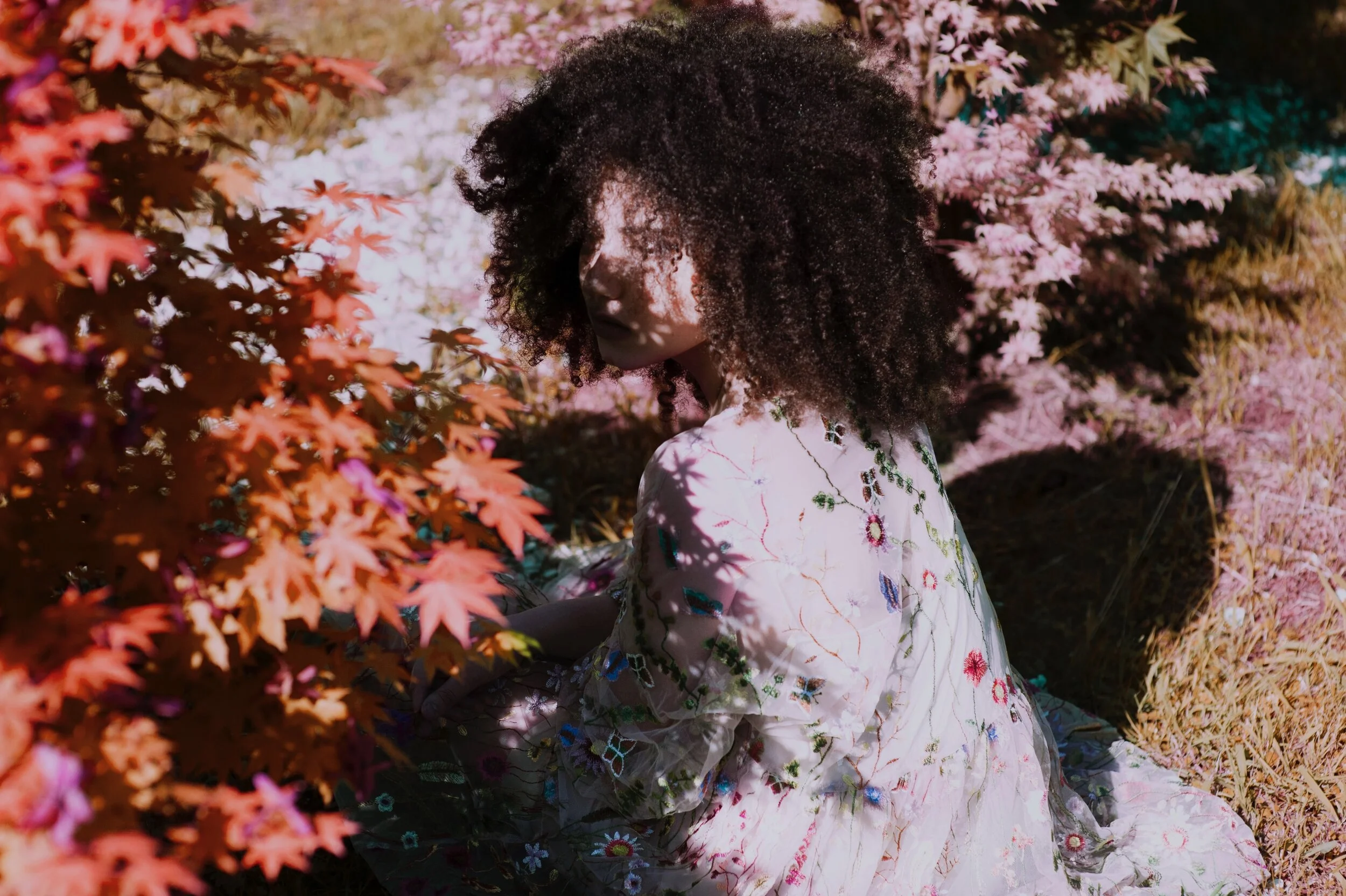
Read More
In Poetry & Prose Tags Emily Wallis Hughes, poetry
Comment
hygge stillness

Coronavirus Anxiety and The Practice Of Sitting In Uncertainty

March 17, 2020

BY LISA MARIE BASILE

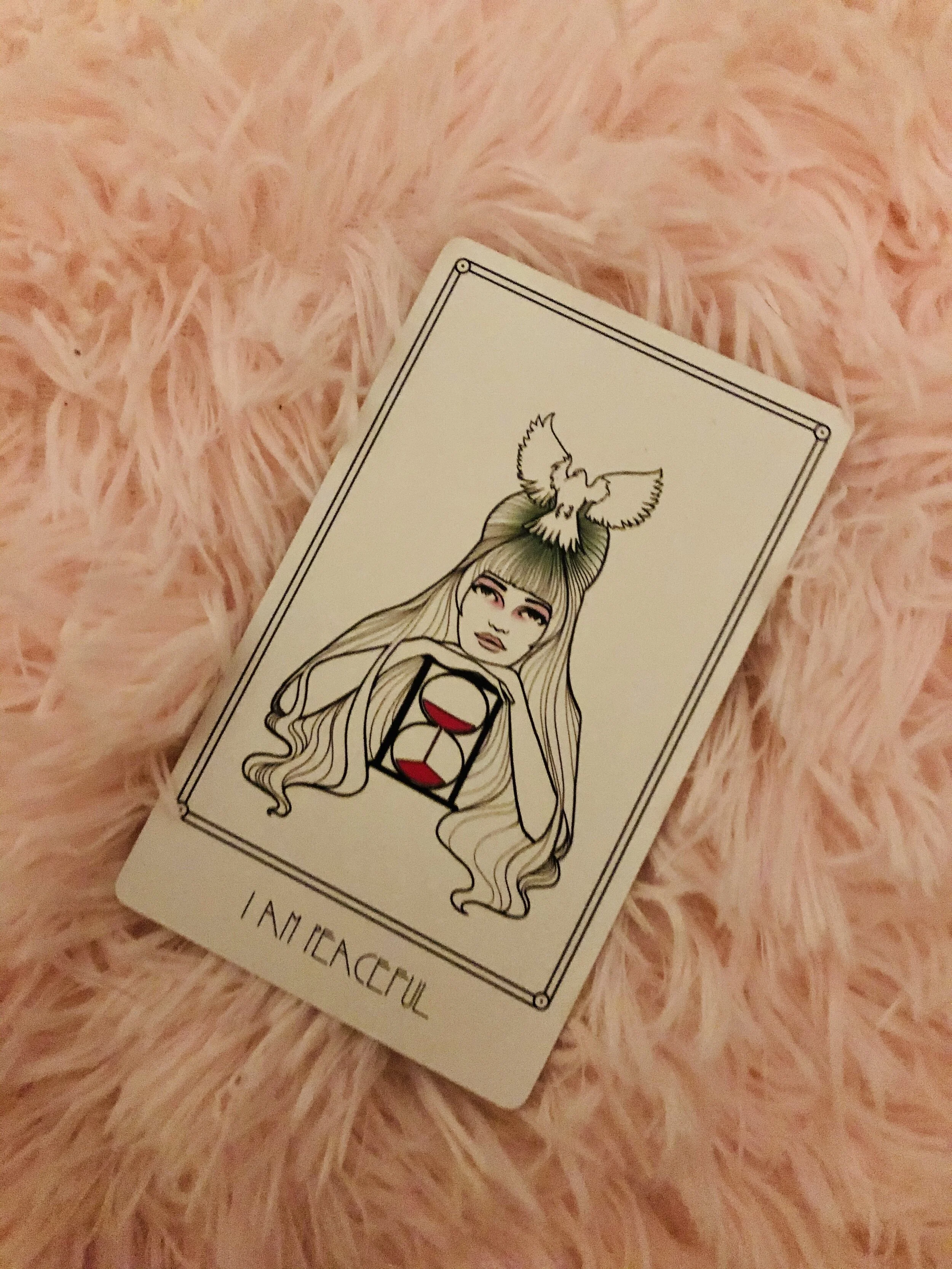
In my Amenti Oracle Deck, I pull the card for I am peaceful. I asked the deck, of course, what I was supposed to take away from this experience in quarantine. I’m just human. I don’t know. I don’t even know if I’m ready to learn a lesson. I do know that, as a writer, I am compelled to write it all down. To take notes through this thing. To keep a diary of what I’ve seen. I have a feeling this will shape us. Maybe I want to be present for it.

IMG_3166.jpeg

I know that for all of us, it’s been hours and hours of dread through insomnia-filled nights perusing the web, guzzling every wave of new information, letting the anxiety take over. I know that in our private Luna Luna community group, there’s a lot of worry. Everyone, the globe over, is panicking, and you can feel it. From space, I wonder if you can feel a buzzing strange energy emanating through our atmosphere. I wonder if you can feel it through all sorts of tragedies.

I am currently experiencing all the symptoms — perhaps it’s the flu or bronchitis. Perhaps worry leads me to be sicker than I should be. I sit in bed or wander my apartment, wondering how best to handle this new normal. Looking outside at New York City, its streets empty and silent (but it’s pubs still full at night, people’s faces inches from one another, before the city finally closed itself down), I wonder what the earth is trying to tell us.

I wonder why we are so resistant and stubborn. I wonder why we think ourselves invincible. Is the fear of death itself so big and so deep that we run toward it?

If you live with an immunocompromised body as I do, at some point you stop clutching illusions of infallibility. You have learned some time ago that your body is an engine running on wayward wheels. You have learned to avoid the subway poles and handshakes. You have learned that each day is a new preciousness. And if you’re anyone else, you probably have a friend or a lover or a parent or grandparent who is at high risk of getting very sick if they do contract a virus, or this virus.

The body is a fragile ephemeral thing, and it must bend toward the pew of nature. And yet, we resist, making it hard to survive.

My point is that we have to lean into this new situation. We have to or else we disappear. We literally have to because there is no other choice. We have to face that this is dark and hard and there will be (and is) global grief at the end of it all.

We’ve seen the memes about our grandparents going to war, which are somehow supposed to shame us into feeling comfortable during quarantine? I think it’s a false correlation. We can honor and respect history and the tragedies that have occurred while being uncomfortable with the things that befall our societies today. It isn’t just about quarantine or being bored inside the house or watching Netflix or reading books. It’s about watching how society reacts to chaos, how politicians act too late or use xenophobic language during an outbreak, about the power of contagion and how ignorance and selfishness lead to community spread. It’s about infrastructure, school children not going to school, poor people not being able to buy food, homeless people having no shelter-in-place, shelves being completely empty, people who have lack of accessibility, elderly people without family. It’s about not being sure. It’s about uncertainty. It’s about death. And it’s about grief, which we haven’t, as a global community, even dealt with yet.

There is so much validity in being fearful and anxious during this time.

If you are out there wondering what will happen, wondering how we got to this point, you’re not alone. If you are watching videos of beautiful Chinese or Italian people singing out of their windows or on their balconies into empty streets, their voices echoing through the night in act of communal conjuring, you are not alone.

What the Amenti Oracle card told me about being peaceful was this:

Finding peace and stillness in the midst of chaos is a challenge, but it’s one that we must meet. We can choose to spend the entire day in worry — and it would not be invalid if we did. Our finances, our health, and our stability are at risk. But we can also choose to take back a few minutes for ourselves, to sit in silence, to just be alive, to just surround ourselves with the things that bring us pleasure and joy.

Mine are books and plants. My cat. Blankets. I like to sit at the window and just look out, even if I just see another building. I like to write little notes. I like to set up an altar. I like to clean my space and give it love. I like to make tea and watch the heat dance above the liquid. I like to listen to the birds in the morning. I like to wonder what they’re thinking about all this free space.

I like to pretend that I am a stone in the sea. I am smooth and I am turned over and over and over again as I am moved by the waves. I have no choice but to be a creature of the sea. And that great dark mother, with all her mystery and all her might, pushes me about. But I am eternal and I am still whole. I can worry about the waves, or I can let them take me. There is value in both. There is value in anxiety — because it helps us grow and it helps us become empathic toward others. And there is value in stillness and acceptance and learning to fill the time alone or isolated, with nothingness. It’s not meant to be comfortable. It’s meant to be what it is, which is a breath, a pause, a being. An opportunity to just be — in between the shadows.

Maybe I don’t need to write it all down or understand it or provide thoughts or hope to others. Maybe I shouldn’t be writing this post. Maybe I just need to be, to lean into the unknowing and the mystery and uncertainty.


Lisa Marie Basile is the founding creative director of Luna Luna Magazine, a popular magazine & digital community focused on literature, magical living, and identity. She is the author of several books of poetry, as well as Light Magic for Dark Times, a modern collection of inspired rituals and daily practices, as well as The Magical Writing Grimoire: Use the Word as Your Wand for Magic, Manifestation & Ritual. Her work focuses heavily on trauma recovery, writing as a healing tool, chronic illness, everyday magic, and poetry. She's written for or been featured in The New York Times, Refinery 29, Self, Chakrubs, Marie Claire, Narratively, Catapult, Sabat Magazine, Bust, HelloGiggles, Best American Experimental Writing, Best American Poetry, Grimoire Magazine, and more. She's an editor at the poetry site Little Infinite as well as the co-host of Astrolushes, a podcast that conversationally explores astrology, ritual, pop culture, and literature. Lisa Marie has taught writing and ritual workshops at HausWitch in Salem, MA, Manhattanville College, and Pace University. She is also a chronic illness advocate, keeping columns at several chronic illness patient websites. She earned a Masters's degree in Writing from The New School and studied literature and psychology as an undergraduate at Pace University. You can follow her at @lisamariebasile and @Ritual_Poetica.

In Social Issues, Wellness, Poetry & Prose Tags coronavirus, covid-19, covid19, virus, pandemic, stillness, meditation
Comment
tracy queen

Support Tracy Queen: A Weird, Wild, Sex-Positive Graphic Novel

March 9, 2020

LISA MARIE BASILE IN CONVERSATION WITH LYNSEY GRISWOLD

“Tracy Queen is a lot like those, in that it celebrates the s*x-positive* values and the labor of s*x** workers...Except it's weirder. It’s about a woman who makes adult entertainment for a living, loves her life...and is BFFs with a raccoon! And also creates a race of cyborg-clone warriors to protect her from the forces of mainstream p0rn and her own criminal past…You know. Normal stuff.”

 —LYNSEY G.,VIA KICKSTARTER

Can you tell us a little bit about Tracy and her story? What was Volume 1 about?

Tracy is a love warrior. I'm using a term I first heard from Madison Young—an adult performer, director, and producer who's also an author, performance artist, coach, and overall amazing human being. Madison described herself that way, and requested that the cameo appearance she'll be making in Tracy Queen's later volumes be called that as well. I realized that "love warrior" is exactly the right description for Tracy herself.

Tracy Queen is a character that I originally based on someone I knew in my own life, and who deepened and became bigger and more real as I wrote her story. She starts Volume 1 of her 8-volumes journey having lived her whole life under direction from other people. She's always been told what to do. And, unfortunately, that's brought her a life mired in violence. In Volume 1, she realizes that she no longer wants to hurt people. At the behest of her new best friend—a talking raccoon who's her new roommate—she breaks free of her violent past and sets off to make a future that's more focused on pleasure. She discovers adult webcamming as a means of income, but also as a liberating and empowering experience.

In Volume 2, "Dangerous Experiments," which we're Kickstarting now, she continues down her path toward freedom and sexual enlightenment when she decides to start filming sex scenes with partners. It's her response to having a face-to-face encounter with a very ugly truth that some people think women's bodies and sexuality can be owned by anyone but the women themselves. It's also her way of deepening her commitment to showing the world that empowered women can have sex, enjoy it, and own the footage.

There's a lot more to come, including lots more sexual discovery, higher stakes in the struggle against the forces of darkness, cameos from a bunch of fantastic adult performers, and eventually a climactic battle between Tracy's own cyborg-clone fighting force and an army of porn stars brainwashed against her by an evil porn kingpin... But that all comes later.

Who is your dream reader? Or, who would fall in love with this series?

Folks with a penchant for weird, pulpy, sci-fi could enjoy this series, because there is a lot of bizarre, over-the-top junk science that's a total delight! But Tracy's story goes really deep into the ways in which internalized misogyny can keep women living as lesser-than when they're capable of so much more. And sometimes that "more" is being open about their sexuality, even profiting on it. So I think anyone with an interest in the intersection of feminism and sex work will find a lot to enjoy...as long as they're into some truly weird shit, also.

“Folks with a penchant for weird, pulpy, sci-fi could enjoy this series, because there is a lot of bizarre, over-the-top junk science that's a total delight! But Tracy's story goes really deep into the ways in which internalized misogyny can keep women living as lesser-than when they're capable of so much more. And sometimes that "more" is being open about their sexuality, even profiting on it. “


Where are you coming from, as a creator, with these stories? Can you tell us a little bit about yours and Jayel's background?

I've been writing about the intersection of feminism and sex work, with a focus on pornography, for well over a decade. I started as a reviewer for adult films, then moved into criticism, interviews, journalism, curation, even documentary filmmaking on these topics. I've written an award-winning memoir—Watching Porn—about everything I've from about the adult entertainment industry, and I've stacked up some pretty impressive bylines with mainstream magazines. I even won a Feminist Porn Award for my one of my films! Tracy Queen is really, in many ways, my opus on all I've learned and seen, particularly on the ways that consumers interact with sex work and porn. Although Tracy's journey is deadly serious and deeply nuanced, it's shadowed by unbelievable, gonzo weirdness that feels necessary in order to lure mainstream readers into a deep conversation around sexuality's place in our culture.

My partner in this venture, Jayel Draco, is a lifelong, brilliant visual artist who had primarily worked in visual effects, animation, and fantasy art before we met. When I started telling him about Tracy Queen, however, he knew he needed to be a part of it. It was a stretch for him to approach illustrating a comic that would require him to draw a woman being sexual—repeatedly—without overtly objectifying her. And, I've got to say, I've been stunned at the work he's put out. Tracy is so alive in his illustrations! He started out working with a live model so that he could be sure he was getting the proportions right from the beginning. He didn't want to do what so many comics artists do—accentuate all the "sexy" parts of a woman's body instead of showing what a real person looks like. Once he'd established how Tracy looked from about a zillion different angles and in every position imaginable (sexy ones included), he was able to bring her personality and a feeling of realness to every panel he's created. It's been a huge pleasure to work with him on this!

How can people support your art?

Right now through March 20, we're Kickstarting Tracy Queen, Volume 2: Dangerous Experiments. It's the second of what will eventually be eight volumes in this series. We successfully Kickstarted Volume 1 in late 2018, and we've noticed a big difference in the online climate between then and now: It's a lot harder to get our links to the Kickstarter campaign seen on social media! If anyone here has read about the passage of FOSTA/SESTA at the federal level, they'll know that the past year has seen a chilling effect on discussions about sexuality online, because websites are now being held responsible for their users' content. That means that, if people are talking about sexuality in a way that's illegal (e.g. sex trafficking), the website that hosted their conversation is liable. Which is ridiculous! Talking about sexuality, pleasure positivity, consensual sex work, and so on is not the same as talking about sex trafficking. The differences between these topics are vast, and it's harmful to people on both sides of that divide to treat those conversations the same way.

But I digress. The upshot is that, since our campaign links to and necessarily uses terms like "sex" and "pornography", we are being deep-sixed by social media platforms and search results. We're technically allowed to post the content, but social media platforms and search engines then conveniently "forget" to show the content to anyone. We haven't even been able to pay to have our posts seen my more people! It's massively frustrating.

So, the best way that people can support Tracy Queen right now, aside from backing the Kickstarter (and getting sweet rewards!) is by helping us to get the word out! Every link share, every blog post, every podcast shout-out, every awkward mention at a fancy dinner party...it all helps us get closer to our goal and spreading the idea that sex shouldn't be shameful!

SUPPORT THIS PROJECT HERE.

In Poetry & Prose, Art, Social Issues Tags tracy queen, graphic novel, jayel draco, lynsey griswold, lynsey g, feminism, sexuality
Comment

6 Books to Read This Year

March 9, 2020

Joanna C. Valente is a human who lives in Brooklyn, New York. They are the author of several books, including Marys of the Sea, #Survivor (2020, The Operating System), and Killer Bob: A Love Story (2021, Vegetarian Alcoholic Press). They are the editor of A Shadow Map: Writing by Survivors of Sexual Assault and received their MFA in writing at Sarah Lawrence College. Joanna is the founder of Yes Poetry and the senior managing editor for Luna Luna Magazine. Some of their writing has appeared in The Rumpus, Them, Brooklyn Magazine, BUST, and elsewhere. Joanna also leads workshops at Brooklyn Poets. joannavalente.com / Twitter: @joannasaid / IG: joannacvalente / FB: joannacvalente

Read More
In Poetry & Prose Tags review, books, christina rosso, elae, constantine jones, maurice sachs, richard howard, rachel rabbit white, erin khar
Comment
PINK CLOUDS

For Protection, A Poem by Arielle Hebert

March 2, 2020

BY ARIELLE HEBERT

For Protection

Because you are not what loves you
or what you waste your love on;

protect yourself from the lies you believed,
each time she claimed she was clean.

Go to the ocean, gather a cat’s paw shell, pine
needles, a body thrashing in water. Bottle it up.

Let this brine sit for as long as you can.
Hold your breath. This tonic is not

for forgetting (never forget: the tattoo
you share, an apple, hers mottled,

bruised from tying off). This is a shield
made from the need to move on.

Before you drink, picture her
hands, empty of you.

Arielle Hebert Is a poet based in Durham, NC, with roots in Florida and Louisiana. She holds an M.F.A in poetry from North Carolina State University. Her work has appeared or is forthcoming in Nimrod Journal, Willow Springs, Grist, Crab Orchard Review, and Redivider, among others. She won the 2019 North Carolina State University Poetry Contest selected by judge Ada Limón. She was nominated for Best New Poets Anthology in 2017. She was a finalist for New Letters 2017 Literary Awards and a semi-finalist for the 2016 Pablo Neruda Prize for Poetry hosted by Nimrod Journal. She is the director of operations and helps books come to life at Blair, a nonprofit publisher focused on emerging and underrepresented voices. Arielle believes in ghosts and magic.

In Poetry & Prose, Magic Tags arielle hebert, poetry, protection spell
Comment

Fiction by Claire L. Smith

February 25, 2020

Claire L. Smith is an Australian author, poet and filmmaker. Centered in genres such as gothic horror and dark fantasy, her work has been featured in Moonchild Magazine, Dark Marrow, Peculiars Magazine, The Horror Tree and more. Her debut novella entitled 'Helena' will be released via Clash Books in October 2020.

Read More
In Poetry & Prose Tags Claire L. Smith, fiction
Comment
chris--zgCuQYRCsZQ-unsplash.jpg

Poetry by Olivia Cronk

February 22, 2020

BY OLIVIA CRONK

To mouth such sickness such intense discomfort (but mere discomfort, not something grander), just very pervasive consuming intrusive, the stomach bad of thinking of

having sprayed perfume in the vicinity of a glass of water


the water on a lower surface
a lower cylinder of flat silk on which things could get caught
not “things,” rather: droplets of the perfume: chemical, bodily


worrying over had the water’s silk lip caught the spray, could the water no longer be drunk.


Then the sickness of knowing it’d be
simply poured out,
both possible directions of water-movement
absolutely upsetting


nauseating in fact

~

Even in knowing in the dream that all books already contain the world miniature,
I was more convinced by more thrilled by impressed with

the machine:


it was an xray machine that mapped the skeleton in some way comparable to how the
chalk line snaps down when one is employing a chalk reel in an as yet uncomposed space

a kind of flash-puff of definition

and somehow I thought this to replace books and other gossip

but language that is used to gawk must be made sculptural

and an erased distance instantly produces a kind of archive:


my ma and I sitting at a bank desk, having not slept, my father dead for a mere twenty hours, we told the eyeball-ish lady sitting across from us that we just needed to change the paperwork

in an awful but intoxicating tunnel of shimmer-noise, I can somehow see, in the far away, a kind of microscope/telescope image:

slow old scarlet lips
right next to, as if looking at,
a 1950s christmas elf doll on a brass shelf
in a nest of tinsel
lips looking at it

Olivia Cronk is the author of Womonster (Tarpaulin Sky, June 2020), Louise and Louise and Louise (The Lettered Streets Press, 2016), and Skin Horse (Action Books, 2012). With Philip Sorenson, she co-edits The Journal Petra. 

In Poetry & Prose Tags poetry, olivia cronk, the journal petra
Comment
← Newer Posts Older Posts →
Featured
‘in the glitter-open black' — poetry by Fox Henry Frazier
'poet as tarantula,  poem as waste' — poetry by  Ewen Glass
'poet as tarantula, poem as waste' — poetry by Ewen Glass
'Hours rot away in regalia' — poetry by Stephanie Chang
'down down down the hall of mirrors' — poetry by Ronnie K. Stephens
'Grew appendages, clawed towards light' — poetry by Lucie Brooks
'do not be afraid' — poetry by Maia Decker
'The darkened bedroom' — poetry by Jessica Purdy
'I am the body that I am under' — poetry by Jennifer MacBain-Stephens
instagram

COPYRIGHT LUNA LUNA MAGAZINE 2025