Kailey Tedesco is the author of These Ghosts of Mine, Siamese (Dancing Girl Press) and the forthcoming full-length collection, She Used to be on a Milk Carton (April Gloaming Publications). She is the co-founding editor-in-chief of Rag Queen Periodical and a member of the Poetry Brothel. She received her MFA in creative writing from Arcadia University, and she now teaches literature at several local colleges. Her poetry has been nominated for the Pushcart Prize. You can find her work in Prelude, Bellevue Literary Review, Sugar House Review, Poetry Quarterly, Hello Giggles, UltraCulture, and more. For more information, please visit kaileytedesco.com.
Read More
Photo: Joanna C. Valente
When It Feels Like Everyone Is Gone & You Are Alone—But You Aren't
Joanna C. Valente is a human who lives in Brooklyn, New York. They are the author of Sirs & Madams, The Gods Are Dead, Marys of the Sea, Sexting Ghosts, Xenos, No(body) (forthcoming, Madhouse Press, 2019), and is the editor of A Shadow Map: Writing by Survivors of Sexual Assault. They received their MFA in writing at Sarah Lawrence College. Joanna is the founder of Yes Poetry and the senior managing editor for Luna Luna Magazine. Some of their writing has appeared in The Rumpus, Them, Brooklyn Magazine, BUST, and elsewhere. Joanna also leads workshops at Brooklyn Poets. joannavalente.com / Twitter: @joannasaid / IG: joannacvalente / FB: joannacvalente
Falling in Love with Penn Hills
Kailey Tedesco lives in the Lehigh Valley with her husband and many pets. She is the author of She Used to be on a Milk Carton (April Gloaming Publishing), Lizzie, Speak (White Stag Publishing), and These Ghosts of Mine, Siamese (Dancing Girl Press). She is a senior editor for Luna Luna Magazine and a co-curator for Philly's A Witch's Craft reading series. Currently, she teaches courses on literature and writing at Moravian College and Northampton Community College. For further information, please follow @kaileytedesco.
Read More
On Every Bed You’ve Ever Rested: Notes On Cancer Season
Emmalea Russo’s books are G (Futurepoem) and Wave Archive (Book*hug). She has been an artist in residence at the Lower Manhattan Cultural Council and the 18th Street Arts Center, and a visiting artist at The Art Academy of Cincinnati and Parsons School of Design. She has shown or presented her work at The Queens Museum, BUSHEL, Poets House, Flying Object, and The Boiler. She is a practicing astrologer and sees clients, writes, and podcasts on astrology and art at The Avant-Galaxy.
Read More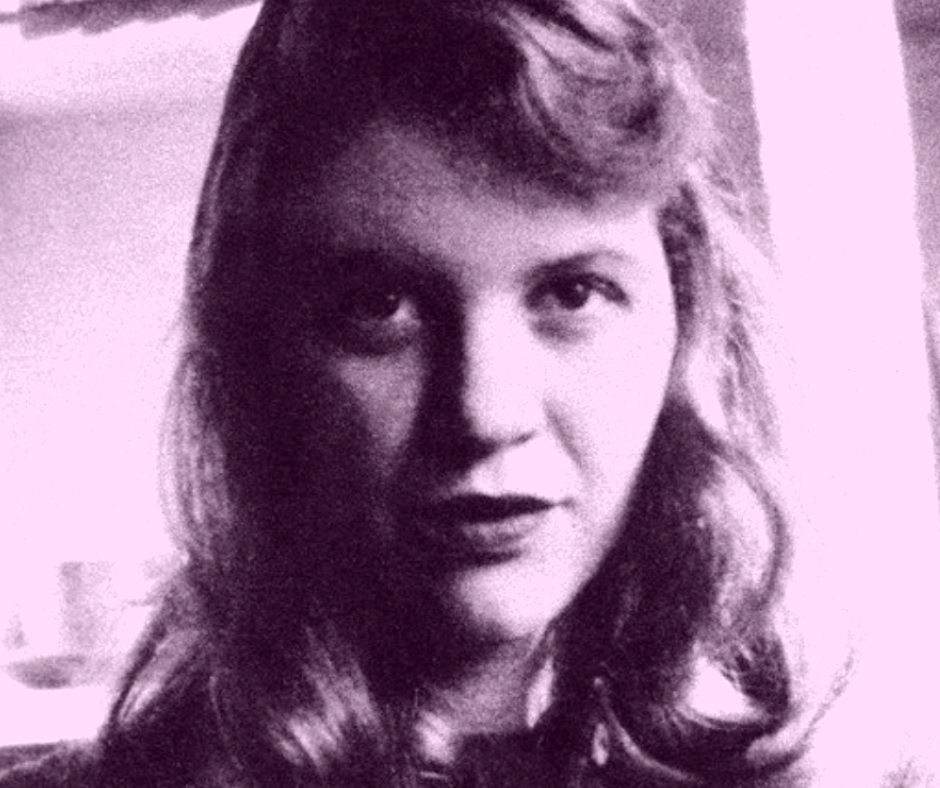
Wearing Sylvia Plath’s Lipstick
BY PATRICIA GRISAFI
The dutifully hip girl behind the register at the Chelsea Urban Outfitters was sporting a ravishing shade of reddish, hot pinkish lipstick.
“That’s a great color,” I said. “Who makes it?”
“It’s by Revlon. The color is called Cherries in the Snow. You really can’t forget that name, can you?”
I stopped by Duane Reade on the way home and picked up a tube, knowing full well that the lipstick would end up in the heart-shaped box in the closet where all my other lipsticks went to die.
You know how some women wear lipstick every day as a matter of routine? They can apply a perfect lip while riding a bike, walking a tightrope, or herding ten unruly toddlers. I’m not talking about beige-y pinks or fleshy nudes, but serious, bright, punch-you-in-the-face colors.
I’m not one of those women.
Time and time again I’ve proven incompetent at the simple task of applying a lipstick that isn’t the color of my lip; usually, I look like someone’s grandmother in Fort Lauderdale on her fifth Valium and third Mai Tai. Still, every few months, I’ll give a new color a whirl only to frown in the mirror and return to my trusty mess-proof staple since the 90s: Clinique Black Honey.
Would Cherries in the Snow convert me?
I stood in front of the bathroom mirror and carefully drew on a bright, pinkish-red grin. Then I fussed a bit, cleaning up the lines with a Q-tip and some concealer. I cocked my head to the side, bared my teeth like a hyena. I imagined myself tooling around the East Village in white Birkenstocks and large black sunglasses, with a bouquet of bodega peonies in one hand and a coffee in the other. I’d give a breezy, hot pink smile and everyone would think I was quirky and chic.
By the end of the week, Cherries in the Snow was in the heart-shaped graveyard of lipsticks past.
The next time I heard of Cherries in the Snow was in a book. Pain, Parties, and Work by Elizabeth Winder details poet Sylvia Plath’s harrowing experience as a guest editor for Mademoiselle in the summer of 1953. Readers will recognize many of the events Plath writes about in The Bell Jar as based on the details of that summer: getting food poisoning, figuring out fashion, suffering from depression.
There’s one mundane detail that Plath doesn’t include in The Bell Jar: her preferred lipstick: “She wore Revlon’s Cherries in the Snow lipstick on her very full lips,” Winder writers.
I thought I knew an absurd amount about Sylvia Plath. As one of my earliest and long-standing loves, I’ve read and re-read her poems and fiction, written about her work in my Doctoral thesis, visited her homes in both Massachusetts and London, even touched her hair under the careful eyes of the curators at the Lilly Library, Bloomington. But I had missed this small, seemingly insignificant detail.
Revlon has manufactured Cherries in the Snow for the past sixty two years; it’s known as one of their “classic” shades, along with another popular color, Fire and Ice. It’s a cult item, a relic from another era when most women wore lipstick faithfully (a fun but gross tidbit from Winder’s book: one 1950s survey revealed that 98 percent of women wore lipstick; 96 percent of women brushed their teeth). The color isn’t exactly the same as it was when Plath wore it because of changes in industry practice, but it’s pretty damn close.
I scrambled for the heart-shaped lipstick box and sat cross-legged in front of it, fishing around for Cherries in the Snow. I held the shiny black tube in my hand like Indiana Jones held the idol in the beginning scenes of Raiders of the Lost Ark. The lipstick seemed different, changed. Imbued with special meaning. I swiped on a coat, this time imagining how Plath might have applied her makeup, what she might have thought as she looked back in the mirror. Did it change her mood, feel comforting, bestow power?
People are interested in discovering the mundane habits of their favorite singers, actors, writers, and artists. They might even purchase a product based solely on a celebrity endorsement. I’ve always been interested in finding out what products my favorite dead icons used, as if I can access a part of their lost inner lives by slathering on Erno Laszlo’s Phormula 3-9 (one of Marilyn Monroe’s favorite creams) or spritzing myself with Fracas (Edie Sedgwick’s signature scent). Wearing Cherries in the Snow allowed me to experience a strange intimacy with a writer I admired, even more so than reading the very personal things Plath wrote about — including how satisfying scooping a pesky glob of snot from her nose feels.
Ultimately, Cherries in the Snow did not become my lipstick, but I gained an appreciation for the shared ritual with and strange connection to Plath that it allowed me to experience. So many of the artists who have influenced our lives are gone; it feels comforting to find a bit of their essence in something as tangible as makeup.
Patricia Grisafi is a New York City-based freelance writer, editor, and former college professor. She received her PhD in English Literature in 2016. She is currently an Associate Editor at Ravishly. Her work has appeared in Salon, Vice, Bitch, The Rumpus, Bustle, The Establishment, and elsewhere. Her short fiction is published in Tragedy Queens (Clash Books). She is passionate about pit bull rescue, cursed objects, and horror movies.
My Mother, My Origin, Mrs. Leeds & the Jersey Devil
Kailey Tedesco is the author of These Ghosts of Mine, Siamese (Dancing Girl Press) and the forthcoming full-length collection, She Used to be on a Milk Carton (April Gloaming Publications). She is the co-founding editor-in-chief of Rag Queen Periodical and a member of the Poetry Brothel. She received her MFA in creative writing from Arcadia University, and she now teaches literature at several local colleges. Her poetry has been nominated for the Pushcart Prize. You can find her work in Prelude, Bellevue Literary Review, Sugar House Review, Poetry Quarterly, Hello Giggles, UltraCulture, and more. For more information, please visit kaileytedesco.com.
15 Books By Women We're Loving Right Now
BY LYDIA A. CYRUS
Here is a list of books written by brilliant women in non-fiction, poetry, and fiction — inspired by this past Women’s History Month.
User Not Found by Felicity Fenton
This book is actually a tiny essay. Think: A powerful essay about the intricacies of social media and womanhood that fits in your pocket! Fenton writes about her life in social media (and out). If you’ve ever wondered about the color of apps, been sent a dick pic, or just wondered about the profundity of existing digitally in present day, this essay is for you. Fenton wonders at one point if anyone is thinking about her. This thought leads her to the realization that she is, “just a human mammal amongst billions of other human mammals. I’m dander in the corner, the buzz in the background.” Fenton’s lyrical work is biting and honest and I’ve been keeping her little book on my nightstand for those nights when I’m up too late, window shopping on Etsy and checking Twitter every five minutes.
Goodbye, Sweet Girl by Kelly Sundberg
Sundberg’s memoir centers around the physically and mentally abusive relationship with her husband. She chronicles the life of a woman from a working-class background who aims to not only exit an abusive marriage but to also gain an education and return to herself. The memoir is a fast read, lyrical and endearing. Sundberg writes the truths that are hardest to say and quite frankly doesn’t give a damn if the truth reveals the brutality that others have hidden. She reminds the reader all along the wild, highly intelligent woman she was before the abuse never left the room and will always triumph in the end.
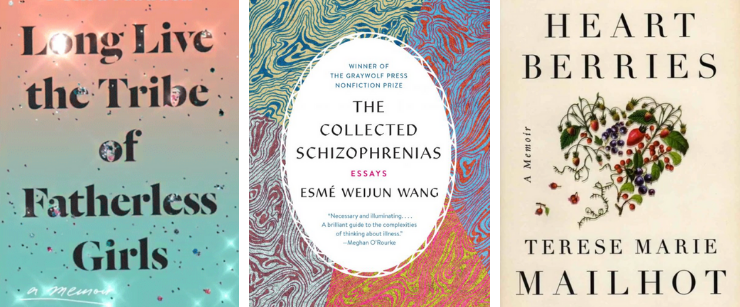
Heartberries by Terese Mailhot
Mailhot, a First Nation Canadian writer, weaves together the story of her life revealing the trauma and silence that clouded her. Her memoir welcomes the reader into the scenes of her early life with her mother and leads the reader to the revelation that perforates her story. The truth, she writes, is essential and the most powerful thing to unleash. She writes about her diagnosis of PTSD and bipolar II, the bitterness of loss in relationships, and provides insight into what the pathway to after looks like.
Excavation by Wendy C. Ortiz
When I saw the cover of this memoir, a stunning photo of a young Ortiz at the beach, I felt compelled to look further. Excavation explores the relationship between a young Ortiz and her teacher, a man fifteen years older than her. He fuels her passion for writing and helps her to access a powerful sense of self as a teenager living with her alcoholic parents. Ortiz does the daring task of unraveling preconceived notion of what a predatory relationship is and what a victim looks like. She proves that the world and the relationships we create within it is made up of uncertainty and nothing is what it seems to be.
Boyfriends by Tara Atkinson
Atkinson writes about a young woman whose journey from first boyfriend, to college, to second boyfriend, and beyond. She reminds readers about what it feels like to have your first kiss, first real crush, first everything. And how, as you get older, not only do you change but your desires and wants change too. She explores what it means to be a single woman in 2019, searching in person and online for connection. It’s sweet and nostalgic in the best ways, and will make you think about what it means to be in a relationship not only with others, but with yourself too.
Long Live the Tribe of Fatherless Girls by T Kira Madden
I have patiently awaited the arrival of this book for months. Admiring Madden through my phone screen and awestruck by the glitter on the cover of the book (it’s seriously a beautiful cover). Madden’s memoir takes you to Boca Raton, Florida where, growing up as a queer, biracial teen, her concepts of right and wrong, beauty and ruin live together. Her parents are battling their own addictions and realizations as she tries to navigate the spaces around her. Madden, an acclaimed essayist, wields her language fiercely and writes fluidly, stitching together the warm, sometimes heartbreaking, answer to the question, “what do you want to know?”
Starvation Mode by Elissa Washuta
I picked Washuta’s book My Body is a Book of Rules last summer and loved it so much that I read most of it in the bathtub. Washuta’s prose is so illuminating and honest that it feels like conversation between the reader and a close, trustworthy friend. In Starvation Mode, she writes about her complicated relationship with food. When nothing is in your control, how do you cope? Washuta struggles to create her body in the image of her longing while also experimenting with the genre of creative non-fiction. Both of which creates a work that stands elegantly and surely as an essential read for women who have complicated relationships with their body, their sustenance, and shattering the traditions of appearance.
The Underneath by Melanie Finn
Follow the trail of unsettling memories and the uncanny, as Kay, the protagonist, as she slowly unravels. While trying to reconcile a tumultuous marriage, the heaviness of motherhood, and a traumatic past event, she begins to wonder what really happened to the family that lived in her house before her. Finn’s novel is a true modern day haunting that deals not with ghosts but with the possession of the demands of being a woman. The novel investigates the things that plague Kay as she tries to solve the puzzles of her life.
The Word for Woman is Wilderness by Abi Andrews
If you’ve ever read or watched the countless narratives about men traveling to Alaska to blow up their lives, you’ve probably wondered why it is there are so few narratives of women doing the same. Women seeking out the natural world as a means of personal growth. Andrews does just that in The Word. The protagonist is nineteen year old Erin who leaves the safety of home behind in order to discover. She questions the history of everything from nuclear warfare to birth control. Andrews tackles the old archetype of the adventure always belonging to a man.
Brute by Emily Skaja
The highly anticipated first collection from poet Emily Skaja deals with remains of an ended relationship. Skaja carves survival and redemption into the landscape of what a women grieving looks like. She writes of pain that begins as internal and seeps into a physicality that beckons her to scale and defeat it. The universal truth of what it feels like to be abused and to move on leaks throughout the poems and enchants the reader. Skaja’s book begins with the same Anne Carson epigraph as T Kira Madden’s and positions the reader to prepare themselves for the journey. Skaja twists the plight of hurt into a weapon that strikes out as beauty and has the potential leave readers in both tears and smiles.
The Empathy Exams by Leslie Jamison
This collection of essays considers the possibilities of what it means to care. Is it ever really possible to feel the pain of others? Over the course of several essay, Jamison depicts curious events such as the story of an actor who presents to medical students as someone with symptoms that the students must identify in order to learn. She also writes about the sense of voyeurism the plagues the pain of women in literature. This collection is an essential piece of reading for those still learning how to balance self-love and love for others too. It doesn’t ask, can you pour from empty cup? but instead defines what that cup looks like and what rests within it and why.
Abandon Me by Melissa Febos
Febos’ first memoir Whipsmart detailed her life as a graduate student working as a dominatrix. In Abandon Me she writes about the difficult reality of longing for connection with others. What happens when you drown yourself in another? She visits relationships both romantic and not and the ways in which abandonment can strike and wound at any time, with anyone. As with Whipsmart, Febos isn’t afraid to have conversations about the elements of her life that both built and seemingly destroyed her. She writes about the longing of belonging. Seemingly asking, what does inclusion look like and how do we achieve it?
The Collected Schizophrenias by Esmé Weijun Wang
One of the most talked about books of 2019, Collected, is a collection of essays telling about the life of a woman who suffers from mental illness and a chronic illness. Wang slices open the examination of what her diagnosis of schizoaffective disorder and examines the chaos of coping. She attests to the incredible resiliency that endures recovery and shapes the future of the diagnosed through her own experiences. When it comes to balancing a debilitating reality with the hopes of a promising future, Wang constructs an important conversation not only about mental health but also about the possibilities of life for women whose lives do not fit into one box or even two.
Animals Strike Curious Poses by Elena Passarello
In this collection of essays, Passarello meditates on the fascinating nature of animals and performance. She discussed what it means to be an immortal animal, placed into history by humans and how their fame came to be. Humanity commodifies the bodies animals both living and not and Passarello presents this with careful prose. She is aware of the ways in which humanity must always somehow have the position of authority over others and spares the reader nothing. She goes so far as to highlight the aftermath of the death of Cecil the Lion in 2015 by repeating the notion that the doctor who killed Cecil did not know he had a name at all. This repetition begs the question: Do we have to name an animal, give it celebrity status, and attempt to mythologize in order to respect it?
Girls Are Coming Out of the Woods by Tishani Doshi
In her third collection of poetry, Doshi aims to rebuke the history of silence surrounding women who have survived. She pulls apart identity and trauma in order to create a space in time where silence is no longer synonymous with womanhood. The poems are constructed with careful detail and attention to movement and sound. As the title suggests, women are no longer hidden but are now returning to their lives with power and the capability of anything.
Lydia A. Cyrus is a creative nonfiction writer and poet from Huntington, West Virginia. Her work as been featured in Thoreau's Rooster, Adelaide Literary Magazine, The Albion Review, and Luna Luna. Her essay "We Love You Anyway," was featured in the 2017 anthology Family Don't End with Blood which chronicles the lives of fans and actors from the television show Supernatural.
She lives and works in Huntington where she spends her time being politically active and volunteering. She is a proud Mountain Woman who strives to make positive change in Southern Appalachia. She enjoys the color red and all things Wonder Woman related! You can usually find her walking around the woods and surrounding areas as she strives to find solitude in the natural world. Twitter: @lydiaacyrus
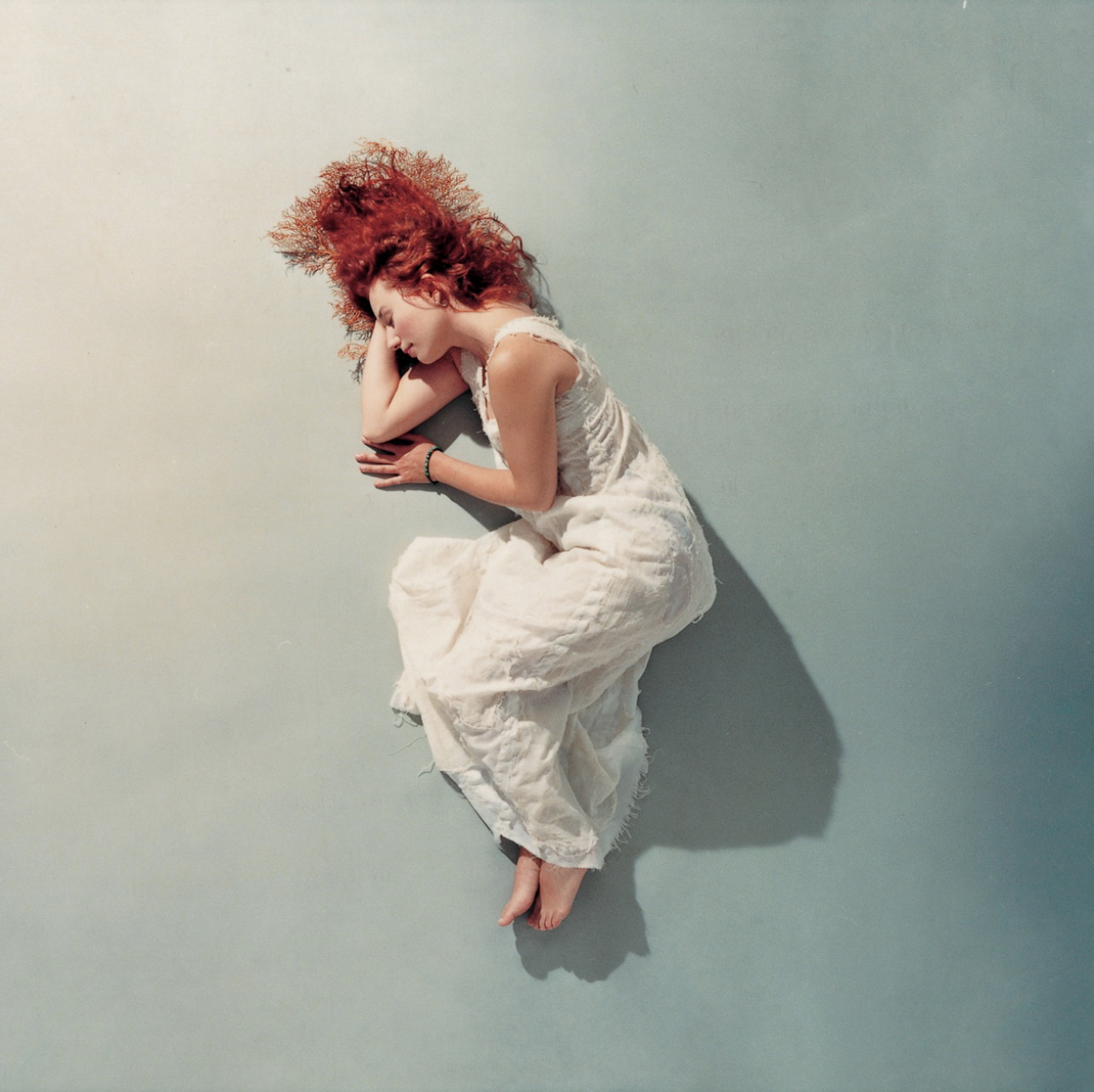
Image via Tori Amos
Survival and Truth: How Tori Amos' Under The Pink Changed My Life
BY LISA MARIE BASILE
You don’t need my voice girl, you have your own
We were living in a poor neighborhood on the border of Elizabeth and Newark in New Jersey. I took packed “dollar cabs” to school when it was too cold to walk. We used food stamps at the little mercado downstairs, so I only went when my friends went home and I wouldn’t get caught.
On the third floor, our little apartment had two small bedrooms. Mom slept in the living room, on the couch. My mom was always either at the mall working, or out. She was working hard to overcome an addiction, and no matter how big and beautiful her heart was — the monster was winning. When she was out, I would, like a cat, keep an eye or ear open. Hearing the door knob late at night meant I could finally rest. She was home, and my body could wilt. I could sleep.
My brother and I slept on mattresses on the floor; his room got even less light than my did, so he would sit on the floor playing video games for hours in the dark. I could feel the house’s sadness all the way from my bedroom, but I didn’t have the language to manage it. The translation was lost in the heavy air, so I’d shut my bedroom door and ignore him, seven years younger than me. I’d blast my music and pretend to be somewhere else — in the woods, at the sea, wherever I could be free.
My room was my heaven. There was one long window, and that window looked out at a yard where I could watch a neighbor’s dog lounging or chasing butterflies in the summer. In the smallest of ways, everything felt fine. I could siphon that normalcy and try to press it into my chest like a lantern. I’d light it up when I couldn’t sleep.
A room is a sanctuary, an ecosystem, a confessional.For me, it was a place where I transformed from wound into girl.
Tori Amos happened to me during the summer of 1999. I’m not sure how it happened or who recommended her to me, but when I slipped the little Under the Pink disc into the CD player and sat on my bed, I grew a new organ. I was capable of metabolizing the trauma.
When my mother was out, out, out — wherever she was — or when she was in a screaming match with her violent boyfriend in the next room — I was etching Tori’s lyrics, sometimes over and over, into a little notebook.
I couldn’t possibly have understood all of it, as most of the language was either too adult or too cryptic or simply too Tori, but it spoke directly to the wound in a way that needed no translation or filter.
It was the line, You don’t need my voice girl you have your own, that I distinctly connected with. I wasn’t aware of what feminism really meant, not at all at that age or in that era, but I could feel the surge of electricity that came with being validated by a woman. I was suddenly her little cousin, and Tori was my cool older relative — all jeans and red hair exuding some strange, beautiful warmth. Or maybe she was my stand-in mother. My goddess. It was one of my first glimpses of what it could mean to look up to a woman who was full of space and light and hurt, like me, and who, through some digital osmosis could also heal and love me. Who tapped into the small dark pain and cradled it.
My mother was sick. My grandmother was dying. I had no one else I could turn to, but Tori found me in my bedroom and inhabited the space as nightlight, as cool sheets, as framed photographs of possibility.
Is she still pissing in the river, now?
Another element that struck me: the odd narratives. At this point, I was existing in the height of teen melodrama. A word could mean a million things. A lyric could mean anything I needed it to be. And an album could be the digital imprint of my entire life. I didn’t try to dissect the words, as an adult would. Instead, I fell, backwards into her words; it didn’t matter if I didn’t ‘get it’ or if I had no idea who the fuck the grand Duchess Anastasia Nikolaevna of Russia was. I hung onto every word because my life was small and broken and dirty, and Tori gave me everything and more. Continents and ghosts and heartache I wouldn’t experience until I was older.
So, of course I’d borrow a computer at school to Ask Jeeves the Duchess, and I’d print out about 28 pages describing the whole history of her life and death. With my newfound Tori knowledge, I’d walk around the halls at school clutching her lyrics and all the weird shit the Internet said about her work as if they were holy texts. I had the secret. I had a bigness in my pocket. I had possibility and potential and the mouth of the piano whispering into my ears.
Really, as long as I had double-A batteries for my disc-man I could move through my day cushioned.
It was around this time I started writing poetry. I often borrowed themes and topics from Tori’s music, becoming obsessed by her stories of sneaking sexual acts and rebelling against religious morals — getting off, getting off, while they’re all downstairs — or her not-so-cryptic words about God — God sometimes you just don't come through/Do you need a woman to look after you? My poems might have been bad, but they turned my sad, small little bedroom into a palace of courage.
Her bravado and bravery asked me to confront things I’d been afraid to think of. For one — god. Raised in a Catholic family of Sicilian descent, the idea of God and morality and shame was stamped into me since childhood. Even if I wasn’t at church every Sunday, I’d never really heard anyone so thoughtfully critique god. (Pretty soon I’d stumble on Tool’s Aenima, but Tori got to me first).
Also round this time I was making out with bad boys who smelled like cigarettes and pulled fire alarms. I was skipping class to hang out with girls I crushed on. I was *69ing calls in the hopes it was a boy. But talking about sex with any seriousness was not the norm. Tori talked about it from the woman’s perspective, and not just in relation to getting fucked by a guy. Her frankness, especially around masturbation, positioned sensuality as something that wasn’t dirty or bad, but sacred and empowered. Reclaiming, exploratory, rebellious. Hers.
Because I started with Under the Pink, I quickly moved on to Little Earthquakes and found out quickly that she had some powerful words around sexual assault. Yet again I was able to confront the massive, festering wound that I’d been carrying around since pre-adolescence, when I was assaulted (repeatedly) by a man in his 40s.
For me, Tori Amos allowed me to inhabit myself. And myself was a place which was always kept burdened by realities far too heavy for what a teenage girl should have to carry.
Tori, for me, was like an early archetype of Hecate, my goddess of night, of ghosts, bringing me into realms where I could confront the dark. She lit the way through my journey.
The strangeness and complexity of her music, the choir girl influence, the jarring juxtapositions, her softness of anger and brightness of disappointment — it was a new language. Between those first and last tracks, an angel’s wings unfurled, alighting a bleak space.
She taught me that words — stories, poems, or lyrics — could be nuanced and odd and nonlinear, rooted in magic and not saturated in a sugary shell for easy consumption.
But most of all Under the Pink taught me that in self-truth, no matter how messy or imperfect or grandiose or weird, a whole spectrum of color could unfold. There I was in yellow, in blue, in lilac. I experienced a shadow life in color. There I was stepping out of my own dark, even for a few moments.
You don’t need my voice girl, you have your own, she said. And I believed it.
Lisa Marie Basile is the founding creative director of Luna Luna Magazine—a digital diary of literature, magical living and idea. She is the author of "Light Magic for Dark Times," a modern collection of inspired rituals and daily practices. She's also the author of a few poetry collections, including 2018's "Nympholepsy."
Her work encounters the intersection of ritual, wellness, chronic illness, overcoming trauma, and creativity, and she has written for The New York Times, Narratively, Sabat Magazine, Healthline, The Establishment, Refinery 29, Bust, Hello Giggles, and more. Her work can be seen in Best Small Fictions, Best American Experimental Writing, and several other anthologies. Lisa Marie earned a Masters degree in Writing from The New School and studied literature and psychology as an undergraduate at Pace University.
Photo: Joanna C. Valente
The Complexities on Performance and Passing
Joanna C. Valente is a human who lives in Brooklyn, New York. They are the author of Sirs & Madams, The Gods Are Dead, Marys of the Sea, & Xenos, No(body) (forthcoming, Madhouse Press, 2019) and is the editor of A Shadow Map: Writing by Survivors of Sexual Assault. They received their MFA in writing at Sarah Lawrence College. Joanna is the founder of Yes, Poetry and the senior managing editor for Luna Luna Magazine. Some of their writing has appeared in The Rumpus, Brooklyn Magazine, BUST, and elsewhere. Joanna also leads workshops at Brooklyn Poets. joannavalente.com / Twitter: @joannasaid / IG: joannacvalente
Non Fiction by Christopher Iacono
"Energia," the fourth song from Battiato’s 1972 debut album Fetus begins not with music but with Italian children either learning to speak or speaking.
Read More
A Sequence of Dreams
I graduated from college one month ago. Still, I am having the dreams. The ones where everything that has not settled or come to pass arises again and comes to gather before my closed eyes.
Read More
Matters of the Heart
The heart has four chambers; everyone seems to be aware of that.
Read More
How Spirituality Brought My Mother and I Closer
Mothers cannot teach you everything. For some things, she can simply open the door and pray that you take the initiative to walk through. For my mother and me, spirituality is the doorway through which I have just poked my foot.
Read More
A Playlist for People Who Are Told They Internalize Too Much
...maybe this playlist is a small gift I can give that helps, that heals.
Read More
The Tattoo That Began as a Declaration of Love Is Now a Memorial
Lauren Spinabelli is a writer from Pittsburgh, currently living in Brooklyn, New York. My work has been published in Elite Daily, Luna Luna, Strangelet Journal, and Bop Dead City.
Read More