


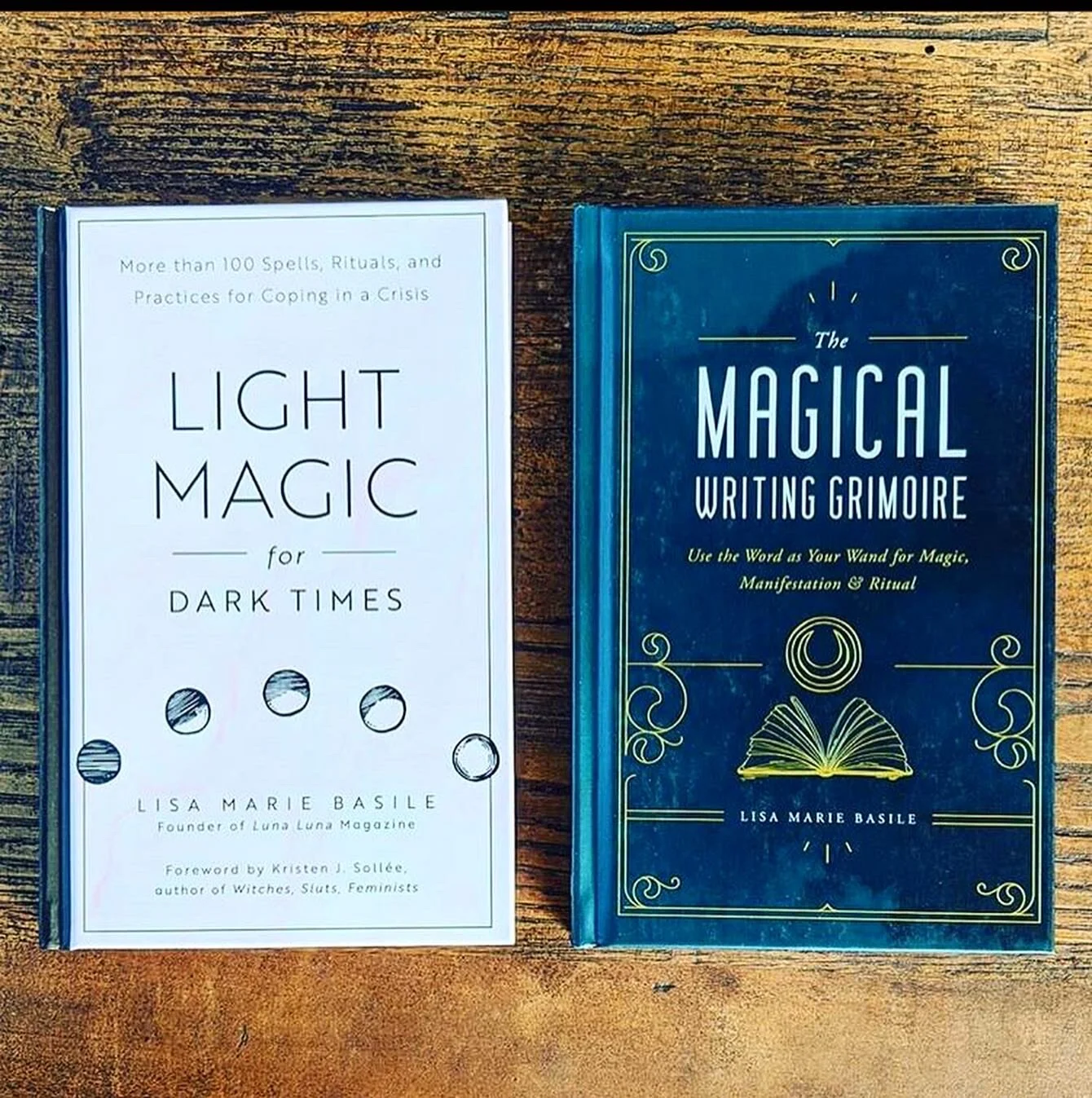

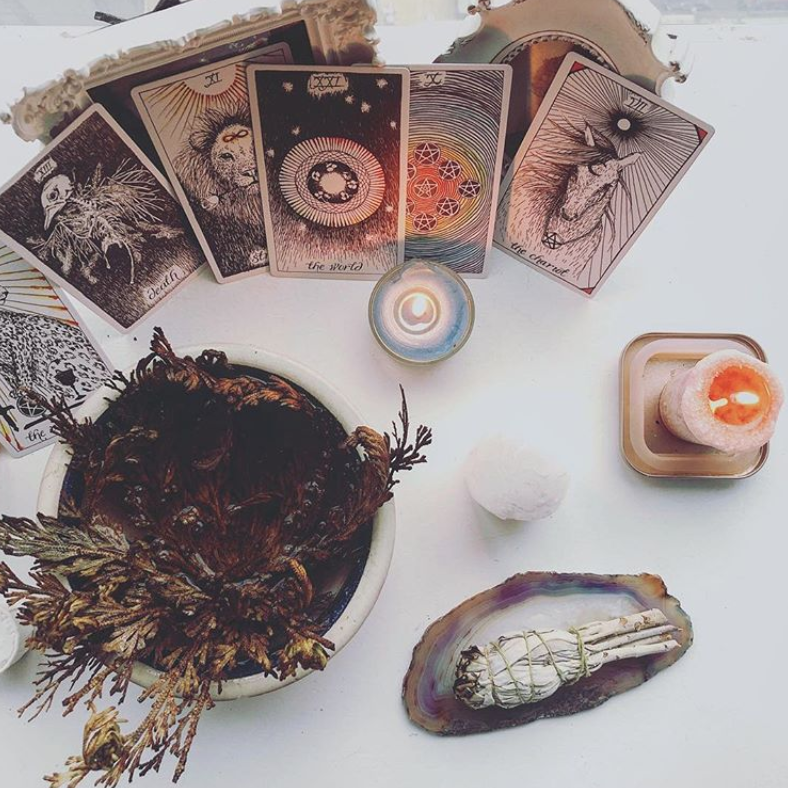



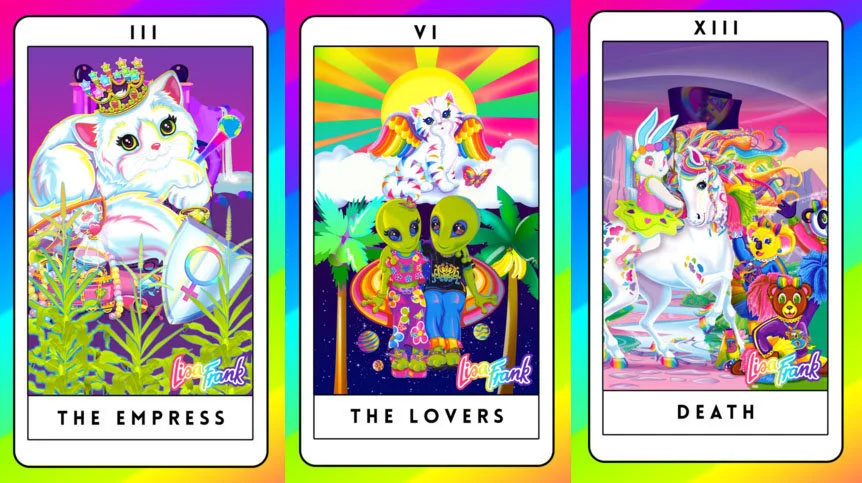
There’s nothing like a good tarot deck. The occult and witchcraft were another of my childhood obsessions, so it’s no surprise, then, that a combination of these two things feels like a psychedelic walk through nostalgia lane.
Read More
Dearly Departed: Our Writer's Diary of a Hollywood Death Tour
I felt conflicted. Conflicted by my exhilaration for the impending tour and the museum’s haunting artifacts and, yet, simultaneously distressed by the fetishization (both my own and owner’s) of relics of tragedy.
Read More
via Favim.com
7 Wonderfully Witchy Hashtags You Need to Know
I’m the first to admit it: I’m addicted to Instagram. From double-tap worthy beautiful images, to finding stunning makeup artists, poets, and breathtaking travel snaps, I’ve got my hand on the like button.
Poetry Through The Lens of The Occult: An Interview With Joanna C. Valente & Lisa Marie Basile
BY LISA MARIE BASILE
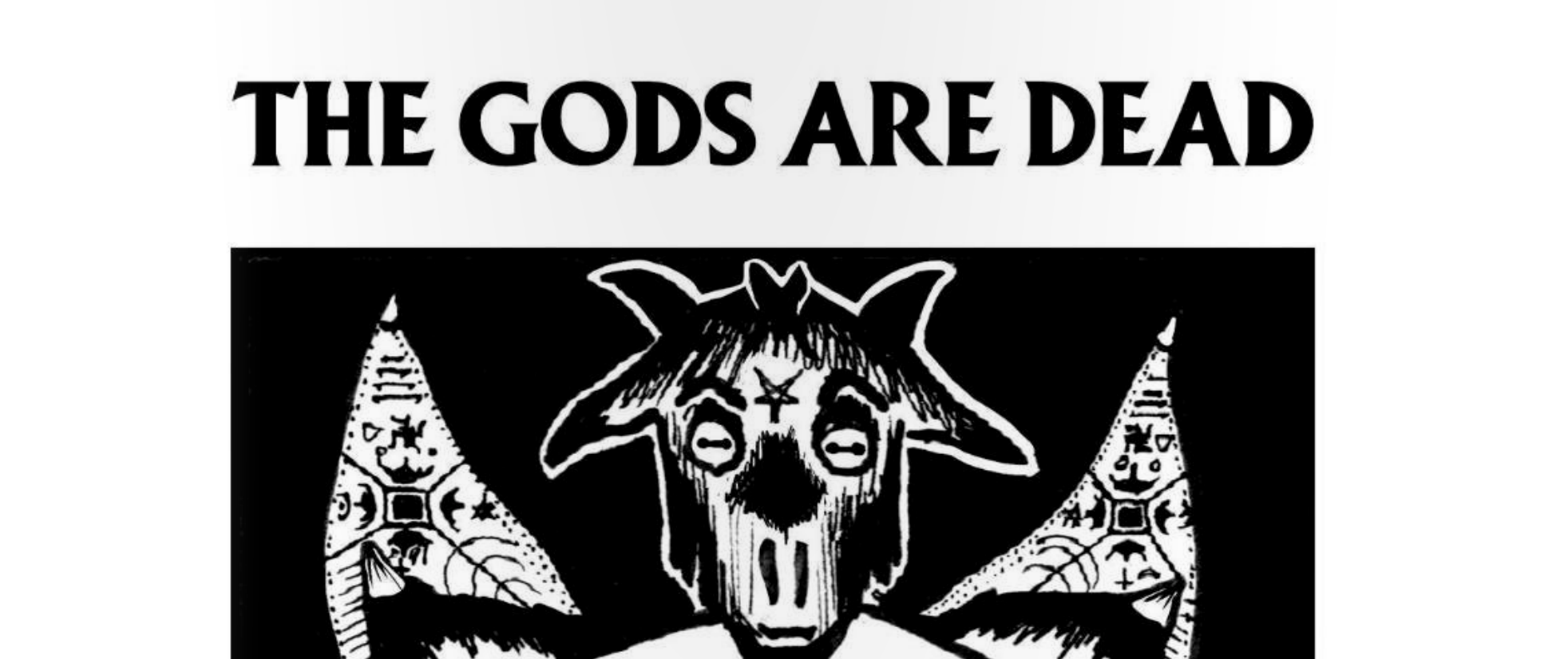
I spoke with Joanna C. Valente, our managing editor, about her book, The Gods Are Dead (Deadly Chaps Press). While we normally don't interview each other here at Luna Luna, we thought our readers would love a conversation around tarot + poetry.
Having recently read Jessa Crispin's The Creative Tarot, and after having attended a creativity & Tarot workshop with Becca Klaver, a poet, from Brooklyn, I've been thinking a lot about how the Tarot has found its way into our creative subconscious.
Joanna let the Tarot inspire her, too, and in her book, the text is interspersed with illustrations of each of the major arcana cards in a Tarot deck. You can read some samples here and here. Each poem: an exploration. In my conversation with Joanna, we explore her inspiration as well as the challenges of writing a book based off of the occult, a topic that I’ve always found fascinating in art.
Lisa Marie Basile: For The Gods are Dead, you write a poem associated with each of the Major Arcana cards. What is it about Tarot that you associate with poetry?
Joanna C. Valente: Tarot is all about finding your way to fulfillment—how can you become more whole, more satisfied with your inner and outer lives. Nothing in life is perfect, but the Tarot forces us to evaluate ourselves on every level—emotionally, spiritually, psychologically, materially—so that we can move forward, not backwards. Poetry does the same thing for me—writing is an act of therapy—in general, writing allows you to become more self-aware and observant of the world around you, so I thought, I love both—why not merge them?
In another way, the Tarot also lends itself well to storytelling. Each Major Arcana card is based off of an archetype; The Fool, for instance, represents all of us—The Fool is going on a journey to discover parts of him/herself, while The Empress symbolizes and harnesses stereotypical feminine power and energy. As I learned more and more about the Tarot myself, since I taught myself how to read the cards, I wanted to tell its strange, bizarre, mysterious story.
Typically, my poetry tends to air more on the narrative side—while it isn’t narrative in structure, there’s always a loose thread of a story tying a collection together for me. I enjoy creating these ambiguous, magical worlds that emulate our own. Perhaps it’s a way for me to comment on issues I see in current culture—sex and gender relations, feminism, race—in an alternate universe. It’s fantasy meets poetry.
Lisa Marie Basile: How can poets work with the occult in order to generate creativity and work? What is the benefit?
Joanna C. Valente: Poetry in itself is very ethereal—it lacks a real narrative in that there isn’t always the typical plot chart that we teach to everyone since the dawn of language. Writers and artists make art about what we don’t understand—for me especially, I’m transfixed by the magical, non-tangible world—what is it, is it real, imaginative, or something else? Ever since I can remember, as a child, my life has been touched by supernatural phenomena in subtle ways—nothing crazy or outlandish—but small things like dreaming of dead relatives, being able to anticipate certain events, feeling outside presences. I would hardly consider myself special—I think anyone can access these feelings—it’s just about how open you are to them.
By definition, occult merely means “supernatural, mystical, magical beliefs, practices, and phenomena.” Anything that takes us outside of ourselves, that makes us question our beliefs, is intrinsic to being a writer. It’s beside the point if you believe in ghosts or anything occult-related, it’s more about the thought process that goes into skepticism and spiritualism, about trying to figure out your place in the world.
Lisa Marie Basile: If you could pick one card that represents your poetry, which card would it be and why? I'm sure we've chatted about this over wine before, but in the sober light of day, I'd love to know...
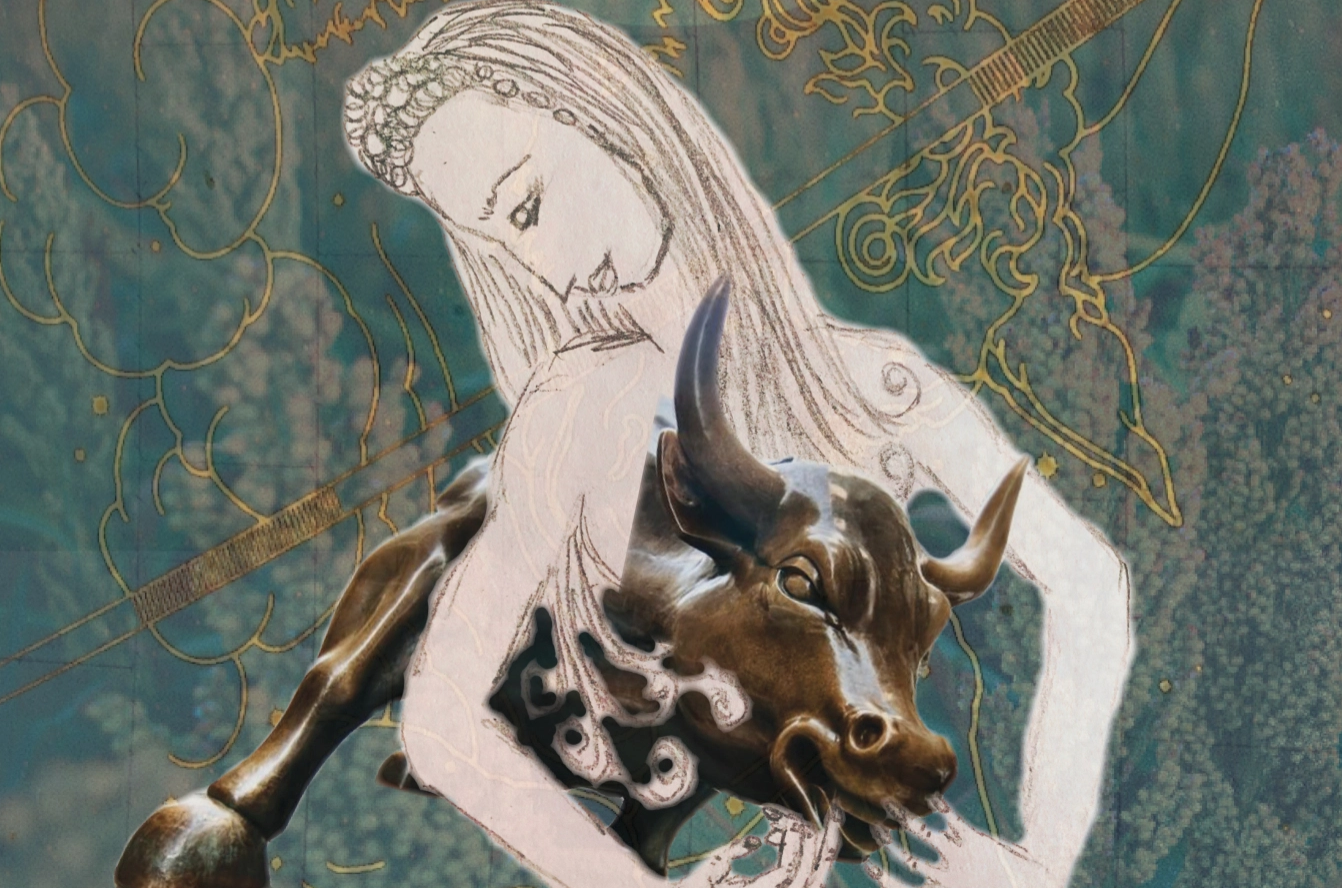
Joanna C. Valente: This is so hard, because we’re always changing, and the cards represent all of stages of our change. If I had to choose, I would probably say The High Priestess. She basically represents duality—of light and dark, mediating reality vs the ether, male and female; she also bears knowledge and intuition—symbolized by the moon under her left foot. Whitman said it best when he wrote “I contain multitudes.”
We all contain dualities within us, and I fully embrace this as much as I can—within myself and my relationships and my poetry. Poetry should be anything but simple—it should be full of complication, ambiguity, and nuance, because life is. A simple conversation about the weather says so much about us alone—whether we like overcast days or bright sunny days.
Also, women are ruled by the moon every month, it’s physically within us. So you know, there’s that.
Lisa Marie Basile: So, what was the challenge in writing this book? Was it that you were held to a concept? Was it that the tarot is so defined?
Joanna C. Valente: It was difficult for two reasons, really. The style is much different than I usually write in—it can be incredibly clinical at times, with sparse emotion and an overload of detail. I felt like I had to write this way, to stay true to the cards, which presents the second challenge. The cards are very specific and detail-oriented—every color, gesture, and symbol means something, so I really had to study each precisely and decide what I was using and where I was veering away, and creating my own meaning within the poems.
It was exceptionally hard deciding when to be true to the Tarot and when to allow myself to have freedom to break away, in order to make social and political statements, as opposed to just personifying the cards. The last thing I wanted to do was write some pretty, outdates story—I always want to push myself into the grotesque, the unsettling, the hard truths.
Lisa Marie Basile: How did Ted Chevalier (the artist) approach all of the art in this book? Did he take cues from other tarot card decks, was it entirely his own storytelling? And, were the images created after the text, or before?
Joanna C. Valente: He approached with an astute eye to detail—he studied the Tarot like it was his only job—which was obviously crazy generous considering there’s no money to be made from poetry. He watched documentaries, read books, bought different decks, and really just made it his own. In particular, he loved a documentary that Alejandro Jodorowsky made, as well as the Rider-Waite (which is what I based the poems off of, since it’s the most common) and the Marseilles deck.
In terms of storytelling, he followed my lead—I wrote the poems first, then he illustrated them based on the work itself. So, like the poems, every deviation from the cards themselves was based off the poems. It was honestly luck that he already had a defined interest in the Tarot, which is why he illustrated the cards, since I had actually already written the collection prior to us ever discussing collaborating. It was a perfect meeting of the minds.
Lisa Marie Basile: You write a lot about the feminine – at least, the female condition and the experience of the body. How did all of this work its way into this?
Joanna C. Valente: As a woman, it’s hard to ignore all the ways in which woman are ignored and silenced, all the ways queer, trans, POC folks are seen as ‘other.’ I have always been fascinated by the idea of ‘otherness,’ because so many of people are seen as other, for different reasons and it’s all fucked up.
Instead of people reading the collection and saying how great and wonderful it is that I’m trying to ‘liberate’ women and women’s sexuality, or that trying to write through a feminist/female lens, I want people to realize this is not other. That being a woman is just as murky and complicated and fucked up as being any human, and that women like sex, want sex, and get abused by sex. There’s a lot of strange sex in the book, and not because I’m trying to make a shocking statement, but because if we don’t understand how women feel about sex, sexual abuse is going to keep happening, and victims are going to stay invisible. I also, of course, want to point out that fetish is different than violence, which always gets confused—and perpetuates a lot of ridiculous ideas that women say no when they mean yes. I hate that, I don’t want that to be true in another fifty years.
Lisa Marie Basile is a NYC-based poet, editor, and writer. She’s the founding editor-in-chief of Luna Luna Magazine, and her work has appeared in Hello Giggles, The Establishment, The Gloss, Bustle, xoJane, Good Housekeeping, Redbook, and The Huffington Post, among other sites. She is the author of Apocryphal (Noctuary Press, Uni of Buffalo) and a few chapbooks. Her work as a poet and editor have been featured in Amy Poehler’s Smart Girls, The New York Daily News, Best American Poetry, and The Rumpus, among others. She currently works for Hearst Digital Media, where she edits for The Mix, their contributor network.
Joanna C. Valente is a human who lives in Brooklyn, New York. They are the author of Sirs & Madams (Aldrich Press, 2014),The Gods Are Dead (Deadly Chaps Press, 2015), Marys of the Sea (Operating System, 2017), Sexting Ghosts (Unknown Press, 2018), Xenos (Agape Editions, 2016), and the editor of A Shadow Map: Writing by Survivors of Sexual Assault (CCM, 2017). They received their MFA in writing at Sarah Lawrence College. Joanna is the founder of Yes Poetry and the managing editor for Luna Luna Magazine. Some of their writing has appeared in Brooklyn Magazine, Prelude, BUST, Spork Press, and elsewhere. Joanna also leads workshops at Brooklyn Poets. joannavalente.com / Twitter: @joannasaid / IG: joannacvalente
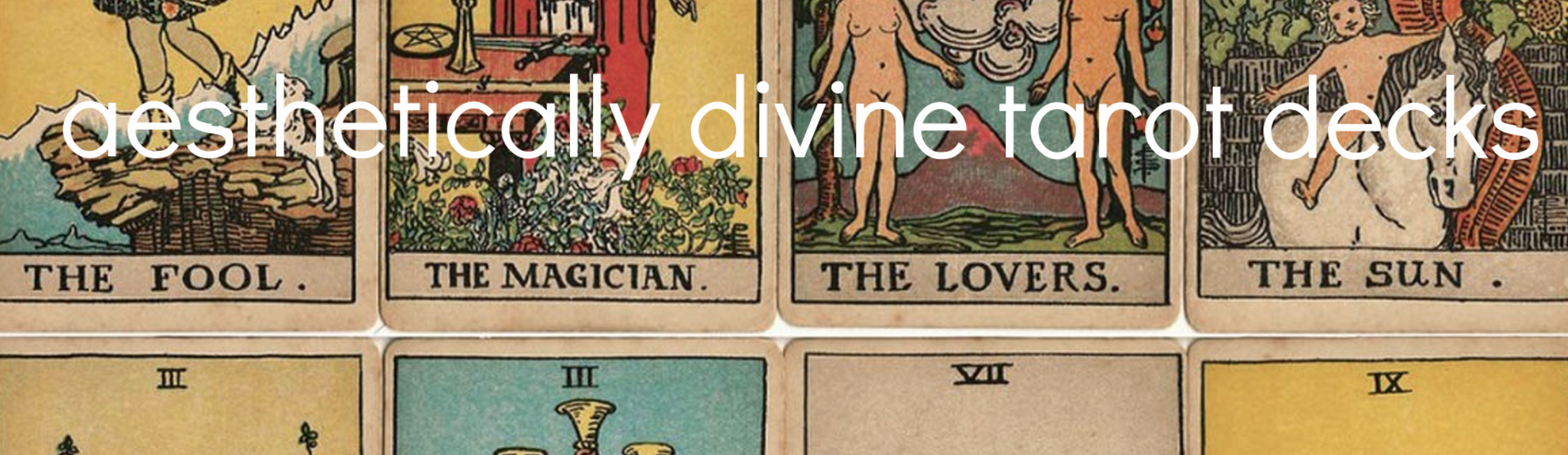
Aesthetically Divine Tarot Decks You Need In Your Life: The Tyldwick Tarot
Ask any Tarot reader, whether seasoned or neophyte, and they will tell you that the world of tarot is vast, subversive, and built upon a largely limitless terrain. The tarot deck itself is a finely crafted tool, with seventy-eight individual cards designed to signify the entire spectrum of human experience, from the beginning of our journey on this earth to the end.
Read More
American Horror Story: Asylum
Understanding Our Relationship With Haunted Spaces, Abandoned Asylums & Ugly History
It’s an ugly truth, but we enjoy visiting places where people have suffered or where horrible things have happened. There is something about a place with a bad reputation that sucks us in, crowds our imaginations, and almost energizes us. For me, Letchworth was that place.
Read More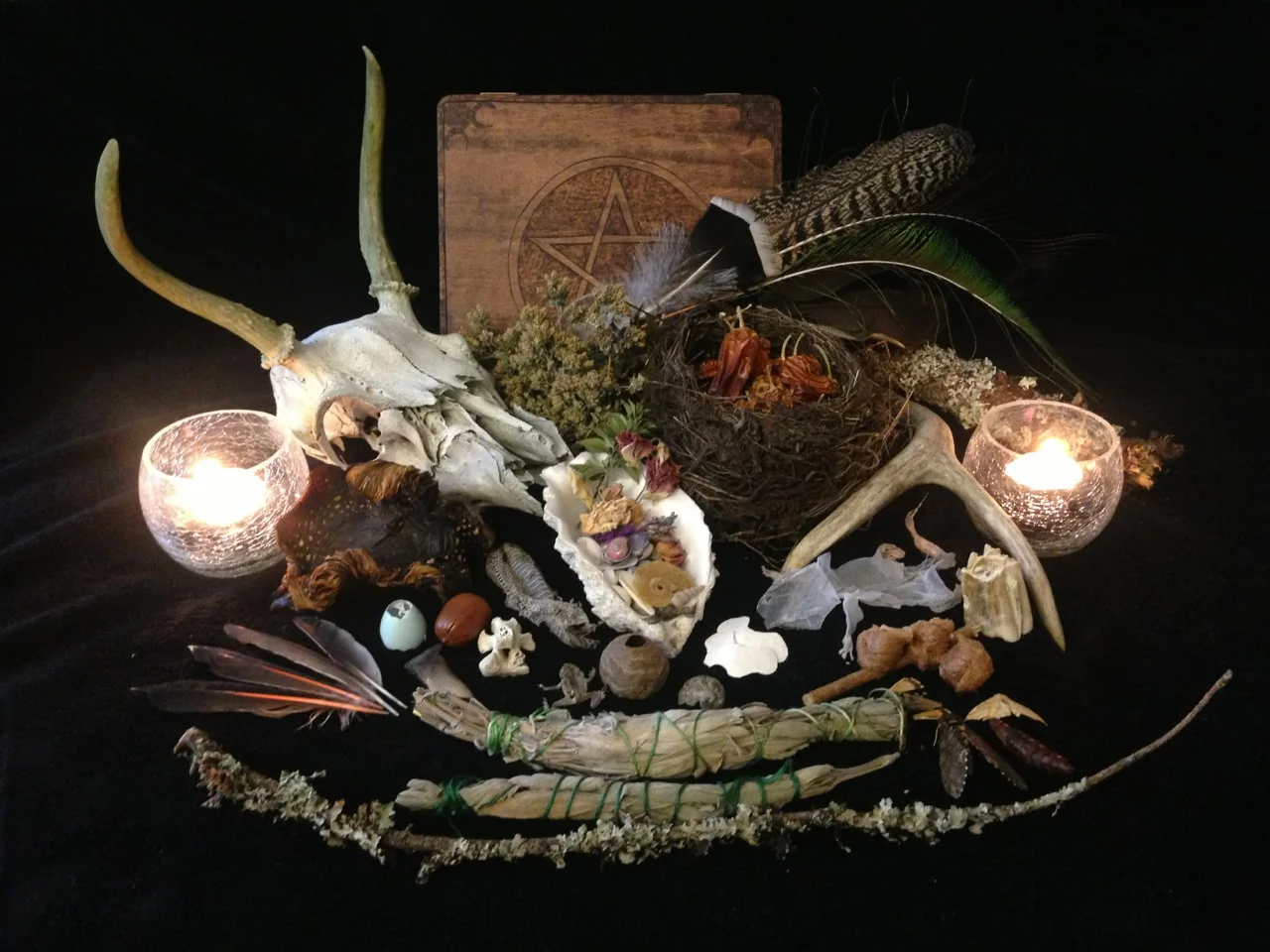
via Potter Dursley Tumblr
How to Authentically & Honestly Create a Personal Altar
In a moment of love, I braided my hair and asked my friend to cut straight across the top of it, wrapping the top and bottom with elastics to secure the hairs. When I gave it to my boyfriend at the time, he showed me a space in his closet where he had a platform with a variety of memorabilia on it: in the center he had a headless Aztec warrior statuette, which was framed with a photo of Barry Bonds, an engraved family ring, snake skin, a god’s eye, and a letter from his mom, among other rocks and crystals. On top of the hands that the statuette had raised, he placed the lock of my hair. “It’s for luck,” he said.
Read More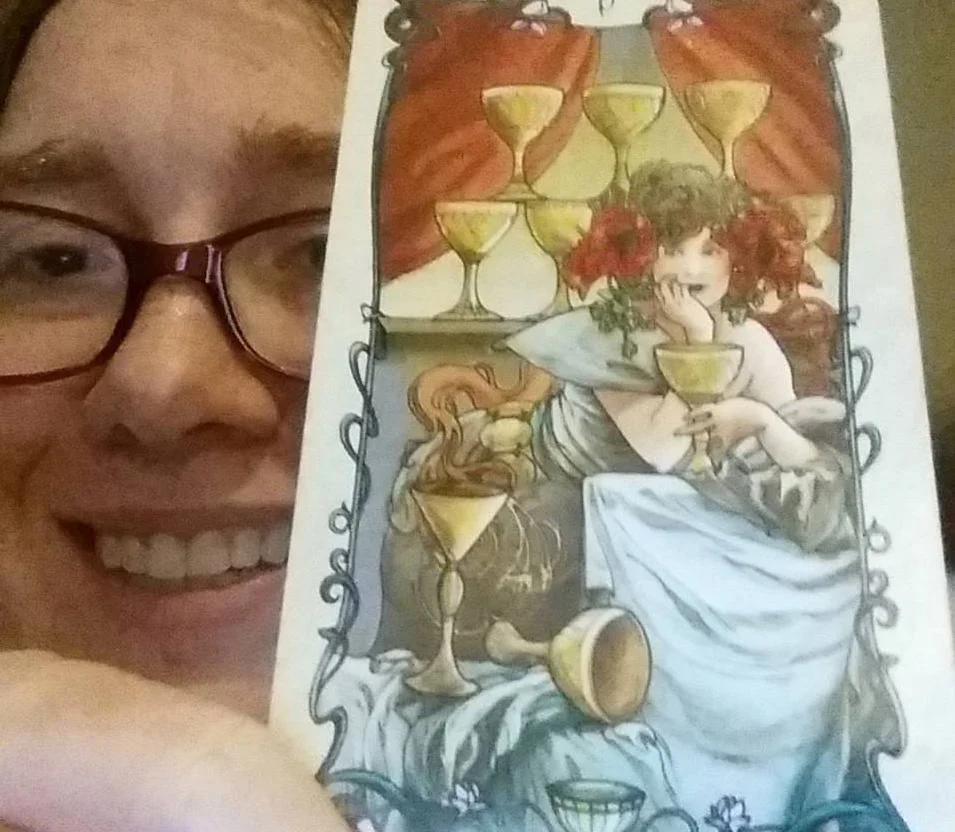
Interview with Tarot Reader & Poet Tabitha Dial
JV: How did you become interested in the Tarot? When did you start learning?
TD: I saw my first tarot deck in a catalog mailed to my house. The art was very interesting, as was the concept of predicting the future. I bought my first deck at the local metaphysical store when I was 17. It was a trial learning to read them with the "Little White Book" that came with it.

Christina Zen
A Glimpse Into Handfasting, A Non-Traditional Marriage Rite
Handfasting is considered a formal contract by ancient practice but the visual aspect of the ritual can be very performative. The physical act involves the binding of the beloveds’ hands (actually wrists) with ribbon, rope, or cord that "fasten" the couple in marriage. Beyond the very simple visual act, handfasting can be extremely spiritual.
Read More
Photo courtesy of Alaina Leary
A Quick Spell For The Lucky Witch
A four-leaf clover, a special coin, a horseshoe, and other naturally lucky charms or talismans can often be hard to come by. However, we all need a little touch of luck and splash of magic in our lives from time to time—whether it’s pining for that dream job you just applied for, or crossing your fingers that luck befalls friends or family. With a few simple tolls and a lot of good intent, you can nudge luck in the right direction.
Read More
Hole - Doll Parts
That Time I Met a Demonic Doll
Stepping into the room, I saw the terrifying doll dressed in his jaunty sailor suit, nonchalantly sitting in a box and holding his stuffed dog. I also saw hundreds of letters taped to the surrounding walls: notes from children scrawled in crayon, neatly typed letters from adults--even a letter from President George W. Bush wishing Robert a Happy 101st Birthday. In these letters, apologetic pranksters pleading Robert for forgiveness. One child even begged Robert not to hunt him down, saying that he would come back and give Robert a placating treat or a gift.
Read More
Alison Scarpulla
A Short Guide To Defensive & Protective Magic
You may have found yourself with a difficult a boss who you feel is trying to force you out. There could be an outside force trying to threaten the strength of a relationship. You may be on the receiving end of some pretty dumb high school hearsay. Verbal attacks. Physical attacks. Character attacks. Creative attacks. Relationship attacks. Whatever your predicament may be, I have configured a list of defensive and protective magic that you can perform at will to aid mental healing.
Read More
Aela Labbe
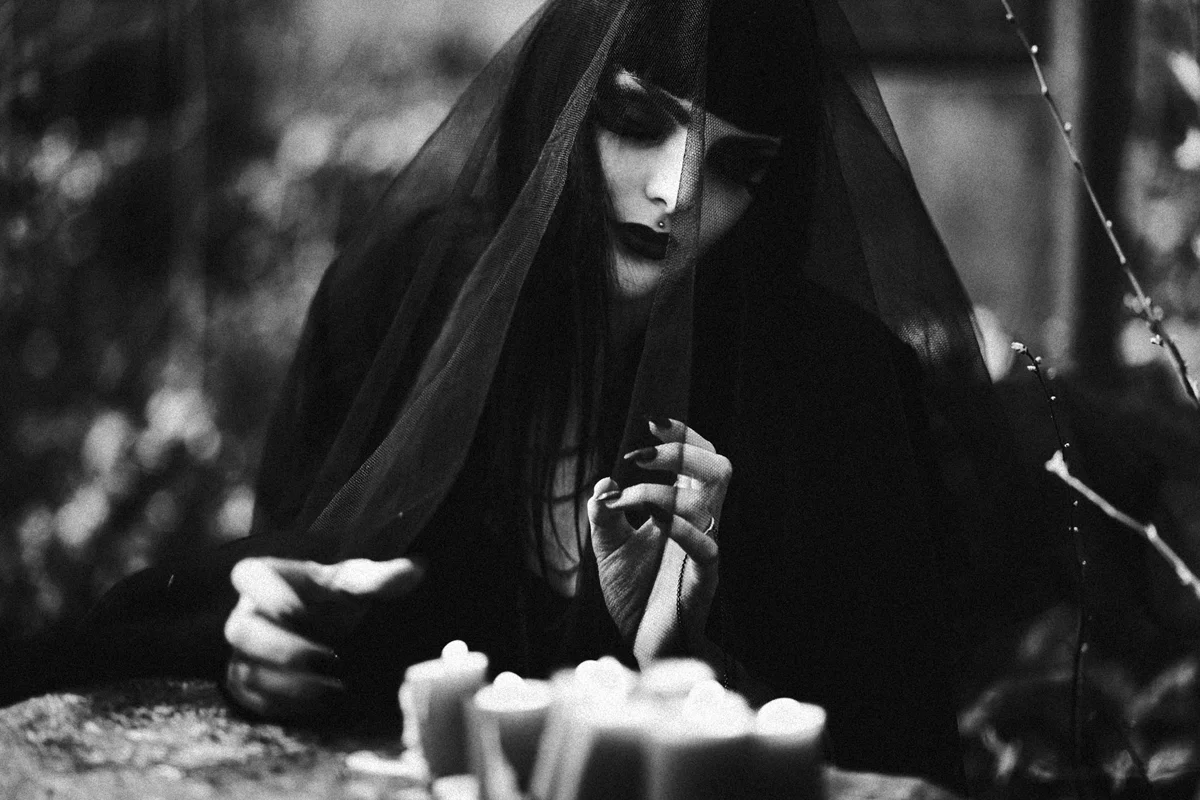
Why (And When) I Burn Cedar
Let’s talk about sage. Whether you’re just beginning a dreamy, magical journey or you’re a seasoned mystic, sage is an essential tool that you should put into your spiritual treasure box.
Sebastian Hilgetag
A Witch's Guide To Thrift Shopping
Every witch needs magical supplies and a fitting wardrobe, but what if you can’t find what you’re looking for at the mall or even at a pagan shop? If you do, what if it’s too expensive? If you require supplies for spell casting or for your magical altar, there is another option. It’s fun to take a thrifty approach to finding magical supplies, because they didn’t just come from a factory; each item journeyed to find you. By collecting items in this way, you become the curator of your own practice.
Read More
Cleansing Your Home For The New Year
You can bind the herbs as a stick, light the end and then promptly put it out so the end is smoking. The process is called smudging and you direct the stick in all corners of the house. Imagine the negative energy is being blown out of the house. If it’s not to cold throw open the windows and watch the smoke drift out the window. Say some positive words as you do this, either out loud or in your head.
Read More