• Home
  • indulge
  • new poetry
    • About Luna Luna
    • resources
    • search
  • editor
  • dark hour
  • submit
Menu

luna luna magazine

  • Home
  • indulge
  • new poetry
  • About
    • About Luna Luna
    • resources
    • search
  • editor
  • dark hour
  • submit
delicious new poetry
'the doors of the night open' — poetry by Juan Armando Rojas (translated by Paula J. Lambert)
Nov 29, 2025
'the doors of the night open' — poetry by Juan Armando Rojas (translated by Paula J. Lambert)
Nov 29, 2025
Nov 29, 2025
'we can be forlorn women' — poetry by Stevie Belchak
Nov 29, 2025
'we can be forlorn women' — poetry by Stevie Belchak
Nov 29, 2025
Nov 29, 2025
'I do whatever the light tells me to' — poetry by Catherine Bai
Nov 29, 2025
'I do whatever the light tells me to' — poetry by Catherine Bai
Nov 29, 2025
Nov 29, 2025
‘to kill bodice and give sacrament’ — poetry By Kale Hensley
Nov 29, 2025
‘to kill bodice and give sacrament’ — poetry By Kale Hensley
Nov 29, 2025
Nov 29, 2025
'Venetian draped in goatskin' — poetry by Natalie Mariko
Nov 29, 2025
'Venetian draped in goatskin' — poetry by Natalie Mariko
Nov 29, 2025
Nov 29, 2025
'the long sorrow of the color red' — centos by Patrice Boyer Claeys
Nov 28, 2025
'the long sorrow of the color red' — centos by Patrice Boyer Claeys
Nov 28, 2025
Nov 28, 2025
'Flowers are the offspring of longing' — poetry by Ellen Kombiyil
Nov 28, 2025
'Flowers are the offspring of longing' — poetry by Ellen Kombiyil
Nov 28, 2025
Nov 28, 2025
'punish or repent' — poetry by Chris McCreary
Nov 28, 2025
'punish or repent' — poetry by Chris McCreary
Nov 28, 2025
Nov 28, 2025
'long, dangerous grasses' — poetry by Jessica Purdy
Nov 28, 2025
'long, dangerous grasses' — poetry by Jessica Purdy
Nov 28, 2025
Nov 28, 2025
'gifting nighttime honey' — poetry by Nathan Hassall
Nov 28, 2025
'gifting nighttime honey' — poetry by Nathan Hassall
Nov 28, 2025
Nov 28, 2025
'A theory of pauses' — poetry by Jeanne Morel and Anthony Warnke
Nov 28, 2025
'A theory of pauses' — poetry by Jeanne Morel and Anthony Warnke
Nov 28, 2025
Nov 28, 2025
'into the voluminous abyss' — poetry by D.J. Huppatz
Nov 28, 2025
'into the voluminous abyss' — poetry by D.J. Huppatz
Nov 28, 2025
Nov 28, 2025
'an animal within an animal' — a poem by Carolee Bennett
Nov 28, 2025
'an animal within an animal' — a poem by Carolee Bennett
Nov 28, 2025
Nov 28, 2025
‘in the glitter-open black' — poetry by Fox Henry Frazier
Oct 31, 2025
‘in the glitter-open black' — poetry by Fox Henry Frazier
Oct 31, 2025
Oct 31, 2025
'poet as tarantula,  poem as waste' — poetry by  Ewen Glass
Oct 31, 2025
'poet as tarantula, poem as waste' — poetry by Ewen Glass
Oct 31, 2025
Oct 31, 2025
'my god wearing a body' — poetry by Tom Nutting
Oct 31, 2025
'my god wearing a body' — poetry by Tom Nutting
Oct 31, 2025
Oct 31, 2025
'Hours rot away in regalia' — poetry by Stephanie Chang
Oct 31, 2025
'Hours rot away in regalia' — poetry by Stephanie Chang
Oct 31, 2025
Oct 31, 2025
'down down down the hall of mirrors' — poetry by Ronnie K. Stephens
Oct 31, 2025
'down down down the hall of mirrors' — poetry by Ronnie K. Stephens
Oct 31, 2025
Oct 31, 2025
'Grew appendages, clawed towards light' — poetry by Lucie Brooks
Oct 31, 2025
'Grew appendages, clawed towards light' — poetry by Lucie Brooks
Oct 31, 2025
Oct 31, 2025
'do not be afraid' — poetry by Maia Decker
Oct 31, 2025
'do not be afraid' — poetry by Maia Decker
Oct 31, 2025
Oct 31, 2025
'The darkened bedroom' — poetry by Jessica Purdy
Oct 31, 2025
'The darkened bedroom' — poetry by Jessica Purdy
Oct 31, 2025
Oct 31, 2025
'I am the body that I am under' — poetry by Jennifer MacBain-Stephens
Oct 31, 2025
'I am the body that I am under' — poetry by Jennifer MacBain-Stephens
Oct 31, 2025
Oct 31, 2025
goddess energy.jpg
Oct 26, 2025
'Hotter than gluttony' — poetry by Anne-Adele Wight
Oct 26, 2025
Oct 26, 2025
'As though from Babel' — poetry by Fox Henry Frazier
Oct 26, 2025
'As though from Babel' — poetry by Fox Henry Frazier
Oct 26, 2025
Oct 26, 2025
'See my wants' — poetry by Aaliyah Anderson
Oct 26, 2025
'See my wants' — poetry by Aaliyah Anderson
Oct 26, 2025
Oct 26, 2025
'black viper dangling a golden fruit' — poetry by Nova Glyn
Oct 26, 2025
'black viper dangling a golden fruit' — poetry by Nova Glyn
Oct 26, 2025
Oct 26, 2025
'It would be unfair to touch you' — poetry by grace (ge) gilbert
Oct 26, 2025
'It would be unfair to touch you' — poetry by grace (ge) gilbert
Oct 26, 2025
Oct 26, 2025
'Praying in retrograde' — poetry by Courtney Leigh
Oct 26, 2025
'Praying in retrograde' — poetry by Courtney Leigh
Oct 26, 2025
Oct 26, 2025
'To not want is death' — poetry by Letitia Trent
Oct 26, 2025
'To not want is death' — poetry by Letitia Trent
Oct 26, 2025
Oct 26, 2025
'Our wildness the eternal now' — poetry by Hannah Levy
Oct 26, 2025
'Our wildness the eternal now' — poetry by Hannah Levy
Oct 26, 2025
Oct 26, 2025

Poetry by Kathy Paul

November 15, 2022

By Kathy Paul

Kathryn Paul is a survivor of many things, including cancer and downsizing. Her poems have appeared in The Examined Life; Last Leaves; Abandoned Mine; Rogue Agent; Intima Journal of Narrative Medicine; Hospital Drive; The Ekphrastic Review; Lunch Ticket; Stirring; and Pictures of Poets. Kathy lives in Albuquerque, NM

In Poetry & Prose Tags Kathy Paul
Comment

Peak Hurricane Season by Laura Andrea

November 15, 2022

By Laura Andrea

Peak Hurricane Season

Fall eeks into the tropics during sunset. Six in the afternoon beats its way inside through the blades of the box fan on my bedroom window. It’s still too hot to rip apart childhood novels and high school textbooks in a newfound passion for collage. It will be until at least late November. The poetry will have to find itself, black out itself. 

I don’t remember locking the bedroom door. A habit stuck in a cycle of breaking and reforming, a specter onto itself. It’s the only way to assure the stillness promised by autumn. Hurricane season is entering its peak and the greens are greener. From the right angle—surrendered on the ground—they can cover up most of the sky. The blue is the giveaway but only if you’ve bragged to an expired lover about it. 

Reaccustoming myself to perpetuity is taking some getting used to. If the seasons don’t change the people less so. The door is always swung a smidge, not that we need more than a crack or keyhole to breach back into something better left. Death here isn’t cyclical, seasonal, or expected—but violent. Purposeful. No skeletal trees and marigold yellow leaves to remind us rebirth is normal. Rebirths are suspect. 

We can play at it though. Midday sun yells at me for traversing the busy street. It’s not my fault the sidewalks are parallels, never to cross paths. Refuge takes the form of a good ol’ American store seasonally defined even at this perfect latitude. I hold a baby’s long-sleeved flannel, soft and flat and perfectly orange. The store is empty save from employees stocking the clothes that won’t sell in this heat. The shirt is cheap because it’s small. Would make a worthwhile shoplifting story. It’ll never get lost in my hands, so I hang it back on the rack. They have clean bathrooms; the crying should happen there. 

If only the beer would stay chilled in my hand, nightfall could trick me. Like a fake engagement ring worn only to bed. It fits better on my thumb anyway (freakish knuckles). The humidity induced sweat activate the ink. The green ring stain around the wrong finger is embarrassingly permanent. More green. More goddamn green. 

Relentless. A metaphor too confused to seduce anyone. Greed, innocence, nature, jealousy. 

It’s all gotta go. 

The pile is intrusive. Moved from desk chair to bed to nightstand back to desk chair, like stubborn laundry. A dry erase marker, a trio of little alien men, an alcohol wipes package, two shirts, a hat, a palm tree tapestry. On occasion the pile will decorate the floor, but it imitates a hill too well. Putting everything back makes me scream so I tape them to the empty teal wall. It’s green enough to be punished too. 

The wall faces two windows. After long enough it might yellow the assortment of plastic. 

Midnight welcomes light storming. It’s finally dark enough drown the green even though I still feel it there. The window doesn’t even feel cold under my hands pressing against it. I must look like an apparition, the blackout curtains draping my back. Every flash of lightning forces me to blink. To hide the phantoms roaming the green. 

It’s been a year or maybe a day. Time keeps folding in on itself and looping around. Bedroom furniture shifts around again but there’s nowhere else to put these old books except under the bed. Not enough pictures of 17-year-old me were taken so she rips herself from those pages and stands at the foot of the bed. She’d roam, but there’s little space for foot traffic and doesn’t want to get yelled at. 

If I win tonight, she’ll join the green, below. If I don’t, we’ll stare at each other through the mirror usually covered with the tapestry. If she’s especially willful, she’ll wear me and visit the house. It’s slightly off and exactly the same as she left it. 

Lately it only rains at night. It’s almost cold. Almost fooling. It’s hard too. Reminder of what is to come, the danger zone we’re about to enter and how the past months’ heat was a warning. Summer is a ghost haunting the Caribbean. Autumn is its white bedsheet. 

Laura Andrea is a writer and educator from Carolina, Puerto Rico. They hold an MFA in Creative Writing from the University of Texas at El Paso. Her work can be found in Contrapuntos, Acentos Review, and Boundless Anthology, among others. They’re the author of ‘genderbi’ (Ghost City Press, 2022) a poetry microchap, and writes the column 'Monsterfucker' for Final Girl Bulletin Board. You can follow their day-to-day on Instagram & Twitter @lauranlora

In Poetry & Prose Tags Laura Andrea
Comment

A Child of Air by Ruth Nakamura

November 15, 2022

By Ruth Nakamura

A Child of Air

A large part of me connects to earth. I am solid ground, cannot swim well, though I enjoy being in gentle shallow water. I am rounder, heavier, curvier. Give me bread, wheat-stalks of the earth, ground and transformed, fluffy, give me a few slices of buttered bread, French bread from the market, oven bread from the Pueblos, let me use it to mop up red chile ladled atop over-easy eggs as a meal, mini harvest, and I am happy. 

But I am also a child of air. Give me the moon in a jar, an imaginative work of art or story, let me wallow, introverted, in creative writing, journaling, dream records. As the season changes, I look to the sky. Easily, I float there, follow the migratory birds. I can picture their journey, the temperature of the wind over each feather. The subtle colors they bend into the cooling evenings, ghosts of lavender, soft rills of pink. 

The long lines of Canadian geese traveling south along the Rio Grande river bring autumn in their wings, in their songs, a trill I grew up hearing, down in in our river valley home. A thread of sound to weave that feeling of changing light, a rounder, softer, dimmer gold, into my bones, a siren call to lift stifling heat, carry it away on monsoon clouds.

What is it about the season that makes creativity so prolific for me? Many of my poems unfold in the rite of autumn, her ritual of leaf flame. The entire world I inhabit steps into a kind of nostalgia, settling deeper into itself as I sink my feet into muddied banks of Guadelupe River, stand on the sluggish brown bank, become still as a snowy egret hunting the moon, her feathers speared with light of cottonwood gold. I wear the mask of Dia de Los Muertos. Think of marigolds and monarchs while there is still gilt to be seen, I too am filtered through the lens of dying leaves. 

It must be that I am witness to death. All around, insects are on their last flight, they glitter more than ever, the blaze of cicadas, the leap of grasshoppers, the gathering songs of butterflies, frantic, edged, then slowed and dulled, the last of the leaf chomp on my giant sunflowers, a feast for birds. 

It must be that I am witness to leaving. I take down the hummingbird feeders, they need to travel south with their colors and their songs, while wrapping myself in sweaters against desert chill, or tapestried jackets, don long sleeve ware to knit the warmth they must travel to find. The bluebirds. Gone. The geese, heralds, take weeks and are far more visible, bodies and bodies, a mass exodus. 

It must be that I am witness to gathering. The preparation of winter birds, they fatten themselves at the birdfeeders, gorge upon my giant sunflowers, grown from twenty-year-old seeds my dad gave me. Squirrels in the mountains run up ponderosa trunks with fattened cheeks. Mammalian fur thickens. The chile is roasted in front of grocery stores or we buy it in bulking sacks, pounds of it, peel, roast, repeat. Its splinters of smoky sharp smell breathe fall into the air. It is our leaving-summer-song. 

I stand here fully welcoming the season. Preparing for the stew with buttered bread, the early dark, the stacks of wood, the morning frost, smell of cedar woodsmoke sharp and clean as a blessing beneath starlight. A break from wildfires. Sometimes from the wind. Sheltered in the valley of mountains. A longer sleep. An assessment of memory and dream brought on by the call of the great horned owl at 2 a.m. 

It must be that all these things, they are old hand mirrors we hold up to peer within, finding ourselves inside, on the fringes. If we allow true sight, we find the connection to the world we walk. We are not separate from Her natural rhythm. 

Things go to ground, to inner sanctum. And so do we.  

In Poetry & Prose Tags Ruth Nakamura
Comment

The Dark Lull by Melissa Pleckham

November 13, 2022

By Melissa Pleckham

The Dark Lull


Nothing’s ever completely dead.

In the 1971 film Let’s Scare Jessica to Death — a film so slow, so subtle that one hesitates to call it a horror film, let alone a vampire film, although that’s exactly what it is — this line is uttered by the pale, red-haired woman whom the titular Jessica is surprised to find squatting in the farmhouse she’s recently acquired with her husband and friend. The trio have just crossed the fog-veiled Connecticut countryside in a black hearse with the word “LOVE” scrawled in crimson on its door; Jessica, fragile as fine china after a mental health episode only vaguely alluded to, demands the hearse stop at a weed-choked cemetery for grave rubbings. She hangs the headstone-sized tissue paper trophies around her bed, runs her fingers across them delicately. This, we are shown, is a woman for whom death is a part of life in a very tangible way.

So when the red-haired woman suggests a seance one night after dinner, and responds to Jessica’s friend’s skepticism with this line that calls into question the very existence of death itself, or at least death as any sort of permanent or all-encompassing state, Jessica seems to smile in agreement, readily playing the part of medium when beseeched. There are no Victorian parlor theatrics in this film, but the scene — and the line — have stayed with me just the same. It’s a film that I like to revisit as the heat and chaos of late summer begin to melt imperceptibly into the dark lull of autumn. But this year, the line resonated with me more than ever. I kept it in my mind, I ran my fingers over it like Jessica with her grave rubbings.

Is it true that death is a myth? A fairy tale? Does anything, anyone, ever die completely?

The last October before the world stopped, I spent Halloween in the labyrinth of bones beneath the city of Paris. It was my first visit to the city, and my first Halloween spent out of the country. My husband and I wanted to do something special, unforgettable.

We walked to the catacombs from our hotel in the 6th arrondissement. It had been raining but that morning was cool and cloudy, the air sweet and sharp. The day before we’d visited Père Lachaise, the trees lining the stone paths of the cemetery crowned with gold and orange. Jim Morrison’s grave was surrounded by a fence, the ground nearby strewn with gifts, offerings. On the way out we passed a mausoleum with its door partially ajar; in the dark, we could see cigarette butts, an empty liquor bottle, and, stretched stark white against the stark white marble, a large bone that looked like a femur. Shocked, we looked away. “Someone’s been partying here,” I said. “Some French kids.” 

But who can say who threw that party? Who can say who was invited, who attended? Nothing’s ever completely dead.

At the catacombs that Halloween morning, we could be certain more bones awaited us in that dank darkness beneath the city of light, down that endlessly spiraling staircase, through that electric torch-lit tunnel, on the other side of the archway that demarcates the start of that self-proclaimed Empire of Death. The catacombs sprawl like veins beneath the skin of the city, a second Paris that is far less lively but no less full of lives, or at least the earthly remains of those who once lived them.

I had never been in an ossuary before, and once I adjusted to the darkness, to the feeling of being so far underground, what struck me most was how peaceful it was. How quiet. How the skulls stacked almost to the ceiling felt both very relatable, very human — alas, poor Yorick! — but also so far removed from the one on my own shoulders, atop my own spine, that held the organ that made all of my hopes and dreams and loves and fears and observances and sensory perceptions possible. Every skull in those catacombs had once held a brain like a precious jewel, every bone signified a human soul that had walked the streets above us, the streets where we were so charmed and beguiled by the romance and mystery of Paris.

Are the catacombs scary? Of course not, although I wouldn’t want to be trapped down there alone. So I suppose I might concede that the tunnels, the darkness, have the capacity to frighten. But the bones? Those are beautiful.

Are the catacombs scary? Of course not. Nothing’s ever completely dead.

Autumn’s lull would take on a different meaning for me the following year, and the one after that: The pandemic forced a different kind of pause, a different kind of reflection, a different kind of encounter with death than I’d ever experienced before. I remembered our Halloween in the catacombs often that October, sometimes with sadness as I wondered if I would ever have the opportunity to travel internationally again, but always with gratitude for the experience we’d shared.

This year, at the tail end of a summer that so far refuses to end, refuses to concede its loss to the looming autumn, my heart again wanders back to those cool dark halls coiled beneath Paris. I walk there in my mind like a meditation, relishing the mystery, wondering at my own mortality. No matter how strong we may feel, fall is a time of year where the crunch of a leaf, the singe of burning pumpkin, the thrill or sadness of a sunset that comes sooner than we were expecting, reminds us that to live is to know that our hearts are limned with lines like a cracked teacup, that the veil between worlds is tissue-thin, spread soft against stone, could tear at any time.

And it reminds us: Do not fear. 

Do not fear. Nothing is ever completely dead.


Melissa Pleckham
is a Los Angeles-based writer, actor, and musician. Her work has been featured in numerous publications, including Flame Tree Fiction, Luna Luna, Hello Horror, Under the Bed Magazine, and FunDead Publications’ Entombed in Verse poetry collection. She is a member of the Horror Writers Association. Her short screenplay "Moon-Sick" was awarded Best Werewolf Short Script at the 2020 Hollywood Horrorfest and was a Finalist at the 2021 Shriekfest Horror Film Festival. She also plays bass and sings for the garage-goth duo Black Lullabies. You can find her online at melissapleckham.com and on social media at @mpleckham.

In Personal Essay, Place, Poetry & Prose, Magic Tags Melissa Pleckham
Comment

I Have The Cat (A Ghost Story) by Nikki Reimer

November 3, 2022

By Nikki Reimer


I Have The Cat

Moving day brought an explosion of ladybugs. They were all over our belongings stacked on the front lawn, crawling on the desk, four and six and eight on each box. For any other insect I’d have called it an infestation, but the word didn’t match this saccharine state of things. Bright red spotted walking gumdrops blanketing the objects in the yard. Like in one of my childhood colouring books or the opening scene to a Disney film; an infestation of twee. 

 It’s a bright early October day. The air is crisp. The light slants through the air like through glass and I’m trying to feel my body in the world but reality warps and bends away from my touch. My brother has been dead one year, seven months and 14 days. My husband and I are moving house for the third time since the day Chris didn’t wake up. My arrhythmia acts up from the stress. Heartbeat fluttering up into my chest. Mothwings.

 The first move was in June 2012, four months after he died. My husband packed up our apartment into a U-Haul. Two cats in two carriers went next. Little ginger tabby Amy buckled into the back seat, her big sister Bella on my lap. For thirteen months we lived in my parents’ basement. Four traumatized adults and three cats trying to negotiate a grief both shared and alone. My brother’s grey Adidas runners neatly stowed behind the door where he left them the night he died. 

 I had thought we might find a way to process together, but my parents drank in front of the tv every night, and no one wanted to talk. Eventually I gave up and joined their boozy stupor. 

The second move was in July 2013. I had found us a house, a post WWII saltbox with a rent so low it should have given me pause. The shingles were in rough shape, and there was an electric wall heating unit instead of a furnace. This is what’s known as ‘foreshadowing’.

 After my brother, my cat Bella was my best friend. I adopted her soon after I moved out of my parents’ house, and we grew up together. She was a beautiful medium-haired tortoiseshell with green eyes and a throaty voice. We bonded like only two misfits who grow up together can. At night I held her tight to my body like a teddy bear. She was 16 and she’d survived the move from the coast, and the year with my parents, but a month after we moved into the saltbox she got sick and we had to let her go. Summer turned to fall and the saltbox turned out to be improperly heated. We broke the lease and found another rental. Moved for the third time in October.  

***

Boxes line the long hallway, shadowed and eerie. There’s no ceiling light in the oversized living room and we don’t seem to have enough lamps, so half the house is shrouded in darkness. 

 I’m navigating the maze poorly. Hit my shin, say fuck. I don’t know where anything is, and the long painting boxes are giving me ominous vibes. I’ve never been a fan of horror movies but I know the tropes, and it occurs to me why so many horror movies open with the move to a new house. It’s the embodiment of liminal space. Airless and destabilized. A deconstructed house lets the ghosts roam freely.

 Amy’s a sweet baby girl but it’s too quiet without Bella. I've moved away again from the spaces that held my dead and it’s breaking something inside me that can’t be put back together. One night I fall apart completely, wail and scream on the couch, demand my poor husband tell me where Bella has gone. 

“Where do cats go? Where did she go?”

“I don’t know, baby,” he says softly.  

I can’t be consoled. I won’t be consoled. I want to be dead myself. 

*** 

The Facebook message from my friend Matt the following week was surprising. We were super tight in junior high and high school. I used to call him my big brother. But he’d moved out east and we’d lost contact. It happens.

I need to talk to you. Can we talk on the phone?

He's only recently learned about Chris, and he’s so sorry. Sorry that my baby brother is dead, and sorry that we’ve fallen so far out of touch that it took him so long to hear about it. 

I don’t mind. I understand. It’s comforting to hear from him. I only feel close to ok when I’m with people who knew Chris too.

Matt explains that his wife is into what my psychic friend Jen would lovingly call 'woo.' For their anniversary they’d gone to a medium together. 

They were trying to make contact with Matt’s wife’s dead grandmother, when someone pushed her aside. The medium described the interloper’s appearance. It’s my brother.

He said, I bet you’re surprised to see me.

The medium tells them that Chris is there because he’s worried about his sister and her mental health.

Through the medium he says, Don’t worry about me, I’m ok.

 It seems both implausible, and entirely plausible. My brother was sweet and cynical, sarcastic and joyful and loving. His empathy was boundless. If you were hurting he’d do anything he could to let you know you were loved. Pushing an old lady out of the way to make sure I knew he was alright was in character for him, though he'd be apologizing profusely to her afterwards. I want to believe this visitation could be real.

Then, said Chris, through the medium, through Matt, I have the cat.

 And Matt said, “Does that mean anything to you?”

Nikki Reimer (she/they) is a multimedia artist and writer, and chronically ill neurodivergent prairie settler currently living in Calgary / Mohkinstsis. She has been involved with art and writing communities, primarily in Calgary and Vancouver, for over 20 years. They are the author of three books of poetry and multiple essays on grief. GRIEFWAVE, a multimedia, web-based, extended elegy, was published in February 2022. Visit reimerwrites.com.

In Personal Essay, Magic Tags Nikki Reimer, ghost stories
Comment

Poetry by Valentina España Orta

October 28, 2022

BY VALENTINA ESPAÑA ORTA

Es cara bajo


My body is a hematoma.
I want to kick up sand with my legs 
like an escarabajo, 
dig into the cool earth 
and rest still

underground

get spent in the digging,
stop to feel 
the blanket over the bruise,
tickle me silent.

My sister has been eating frutas maceradas 
left in a jar inside your fridge.
Me voy a comer a mi mamá!
she said on the phone when I asked how she was doing.
You'd always bake that special fruit cake 
for her to eat the whole thing in a day.

But we'd lived too many years in different countries 
and your voice was the only thing I'd eat
so let me drop inside the earth,
drown out all that's become noise 
and hear my body disintegrate
as I find your ash in every river 
— drink all of that water.

In Poetry & Prose Tags Valentina España Orta
Comment

Dream Me by Daphne Maysonet

October 28, 2022

BY DAPHNE MAYSONET

Dream Me

In my dreams, when an emotion jabs low, my nerves ripple from that single bruise of joy or fear. The intensity—how the story feels—triggers my mind, punching a hole through the fiction. This is how Dream Me is born into consciousness. She is moonstruck and comes alive, like a werewolf under cryptic orders. But instead of losing her humanity, she gains it. Dream Me is not lupine, but lucid, interrogating the dream’s logic with an agency that somehow fought sleep’s little death to arrive. 


* * *

I think it happens because I’m too neurotic to give my mind away to synapse-firing fantasy. It’s partly why I don’t do drugs. My imagination is unpredictably hostile. It’s not one through which to take a playful stroll with reckless abandon. Being in my brain necessitates the armor of the faculties to swat dark recollections and wrenching feelings. Having survived a trying childhood, it’s not lost on me that this mind patrol caretaker may be working around the clock to keep me from true life stories for my own good. 

I once went to a trauma counselor who described how his patients acted out their memories with each other in elaborate psychodramas to uncover erased details. I pictured sitting around with other troubled adults in feathered wigs and fake Dominican accents, helping me recast dysfunction and fuzzy abuse in new technicolor horror. I can never imagine knowing more about the casual violence in my family history than I do until the next time my mother or sisters drop another tragic story on me in broad daylight. As far back as I can recall, I’ve wanted to know less. People have asked if I think I’ve suppressed memories. If so, I’m grateful to the superego wolfmadré who’s protected me all these years. Someone should. Might as well be me.

* * *

When I am asleep and Dream Me is summoned, one of two things happen:

1. If the dream is good, I leverage my newfound autonomy to do what I want. And with this wondrous freedom—to fly, to travel to the world’s ends, to swim without breathing—all I ever want is love. Plain, everyday love. There is no greater supernatural force, no more mysterious treasure. The bounty of a dream kiss is always the most I can achieve. Dream Me could write my next billion hours of sleep with romantic endings, and it would never fill the bottomless hole from which all fire to do anything at all burns Dream Me with greed. 

But the second option is when Dream Me really shines. 

2. It goes like this: I’m the bad guy. I have committed some heinous crime—sometimes murder, preposterously bloody ones—and I’m caught. The monster of my own nightmare. Sometimes it happens while I’m already on trial, and other times the transgression has only just begun. It doesn’t matter. My overwhelming fear of what I’ve done is too much. Dream Me awakens in her way, bringing the relief that reality so rarely provides: absolution. The revelation is powerful enough to bring me to full consciousness, and I wake, sweaty in a cradle of bedsheets, birthed into the dumb gratitude of someone experiencing a miracle. A guilty woman walking free.


* * *

Dream Me rejects the church of sleep and has my baby photo on her altar surrounded by white rose petals. Dream Me prays for me to me. Dream Me stretches an impossibly large wing over my entire body so that night cannot see me, and I cannot see myself.

Daphne Maysonet is a Caribbean-American writer whose poetry has appeared in Southern Indiana Review, Chautauqua and The Acentos Review, and whose prose has appeared in alternative newsweekly The Memphis Flyer. She received her MFA from the University of Memphis, where she served as lead poetry editor for The Pinch. She is currently working on a collection of poetry, leading community workshop Memphis Writers and teaching college.

In Poetry & Prose Tags Daphne Maysonet
Comment

Poetry by Ana María Caballero

October 28, 2022

BY ANA MARÍA CABALLERO


Birthright

I sat with every good witch in Bogotá  
just to dispel your rage—

Elsa, Elizabeth, Nelly, Camila, 
Lucy, Ernesto, Sergio, and Blasta. 
Upon each cot, upon each couch,
concurring truths voiced 
by deliberate mouths.

For a year, I performed the prescribed tasks:
scrub the joints with rosewater seeped 
in sea salt during tea tree, eucalyptus, 
sandalwood baths.

At home, spray each door with licorice 
mist. At work, sulfate, alcohol, sage 
ablaze on a pan. 

My homework last month to recite 
on the road, the Ho’oponopono 
Hawaiian forgiveness song:
No, you are not pain:
you are my brother, 
my beloved Master of 
Grace.

The future, present, past cast 
by Blasta’s stars. She points to Saturn, to Mars 
in hard aspect in my chart’s family house. 
My sign is Cancer. I am 
gentle, gentle as crab.

Yet, Blasta confirms your cut is not my claw:
just you and I born under every guise—
Husband & Wife, Father & 
Daughter, Mother & Son.
Brother & Sister, our latest run, 
our latest crack, 
at one more slight life 
toward wise.

I sat with every good witch in Bogotá  
just to dispel your rage—

Elsa’s filters, Lucy’s needles, Nelly’s Reiki 
massage. Feldspar, pyrite, your printed name 
blurred by water beneath 
clean glass.  

I brew parsley, beetroot, cardamom, wheatgrass,
and browsed online 
for clay emanations 
of Hindu gods. 

One by one, I trace Elizabeth’s steps: 
on yellow cardboard sketch a musical 
clef, then set seven candles each in purple, 
white, green onto the symbol’s circular cores.
White for light, green for mind to materialize, 
and purple to burn 
emotional sores.

God box, angel cards, universal tarot:
Hierophant beside the Hanged Man both laid 
in reverse.

A tepid yes, then, an absolute no
below 
Camila’s jasper 
pendulum swirl.

Upon the first sign of new sun, 
I murmur the Gayatri mantra’s numinous chant
(Om bhur buvah swaha…)
while at the first sign of new moon,
a hired hand performs a lemon peel stab.

I sat with every good witch in Bogotá  
just to dispel your rage—

Sergio draws my gemological map.
Each gem a pattern, a specific instruction 
dialed by the earth for me to 
extract. 

I call after the second and third amethysts crack—
Dig a hole, he says. Their job is done.
Bury the crystals, return them to land. 

Water slaps by Ernesto’s clan of urban gnomes,
before sitting down to his tobacco ring of smoke, 
water dripping from my head while I read King David’s psalms
until, in the chimney room, 
the black cigar jar finally snaps.

But, when your sickness came, I seek surgical 
help via Lezahlee, the head witch of Carmel—
I swear, I say, I already forgave. 
Besides, my craft is not there, 
yet.

She burps, as she does when she knows:
The tumor is old. This lesson is his, 
not yours. 

True, your tumor is message,
indictment of flesh
from its source. 
But it’s as much mine as it is yours, 

for you are the story
I am born to rewrite. 

Mother likes to tell how, at three, 
I selected your name.  

Forever my birthright—I am bound 
to you 
by spell.

Ana María Caballero is a first-generation Colombian-American poet and artist. Her first book of poetry, Entre domingo y domingo, won Colombia’s José Manuel Arango National Poetry Prize and was second place in the nationwide Ediciones Embajales Prize. She graduated with a magna cum laude degree from Harvard University and has been a runner-up for the Academy of Amercian Poets Prize. A Petit Mal was awarded the International Beverly Prize and was also a finalist for the Kurt Brown Prize, the Tarpaulin Sky Press Book Awards, the Essay Press Prize, the Split/Lip Press reading cycle and longlisted for the 2022 Memoir Prize.

In Poetry & Prose Tags Ana Maria Caballero is a first-generation Colombian-American poet and artist. Her first book of poetry, Entre domingo y domingo, won Colombia’s José Manuel Arango National Poetry Prize and was second place in the nationwide Ediciones Embajales Prize. She graduated with a magna cum laude degree from Harvard University and has been a runner-up for the Academy of Amercian Poets Prize. A Petit Mal was awarded the International Beverly Prize and was also a finalist for the Kurt Brown Prize, the Tarpaulin Sky Press Book Awards, the Essay Press Prize, the Split/Lip Press reading cycle and longlisted for the 2022 Memoir Prize., Ana Maria Caballero
Comment

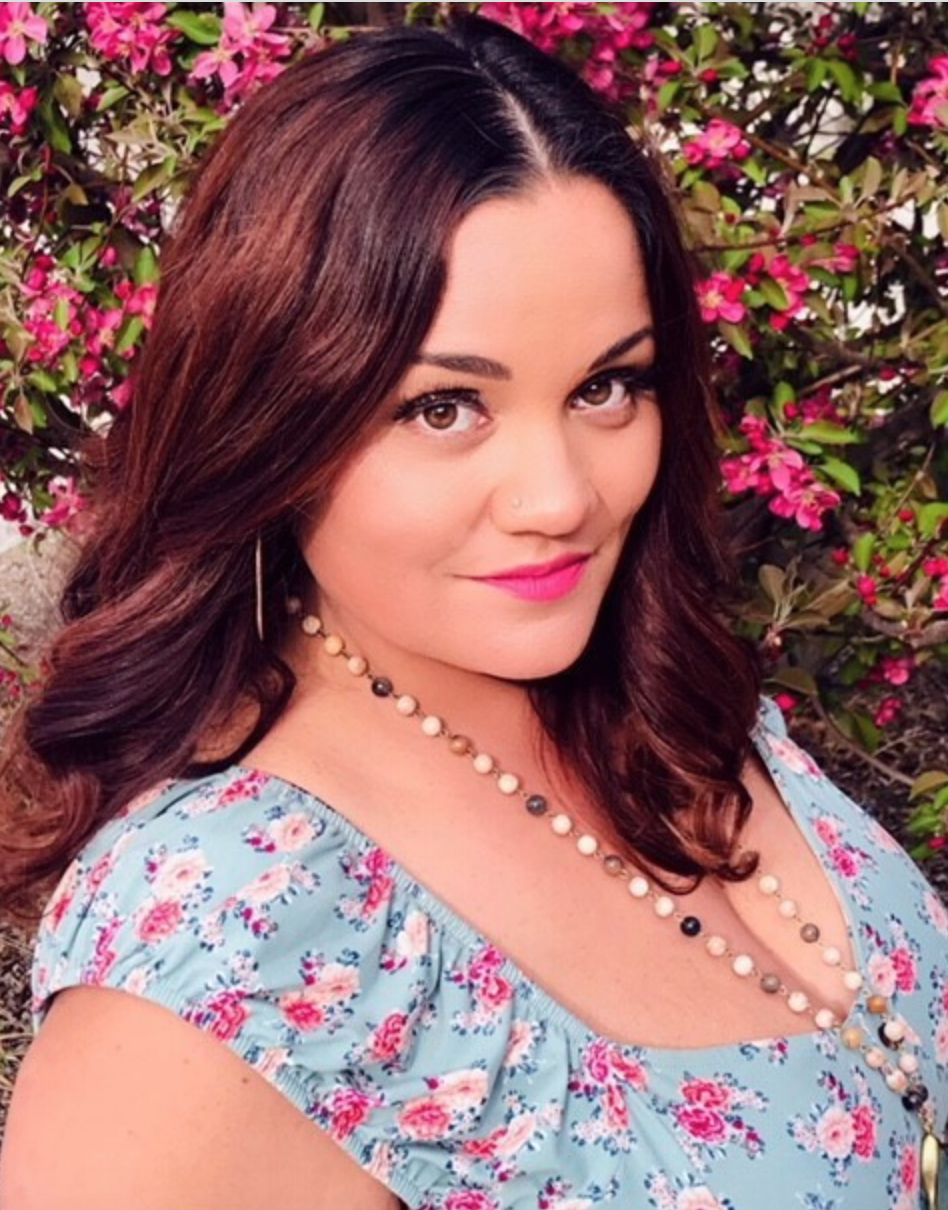
Jenn Givhan on Representation, Creativity, and The Sacred

October 27, 2022

An interview with Jenn Givhan
by Lisa Marie Basile

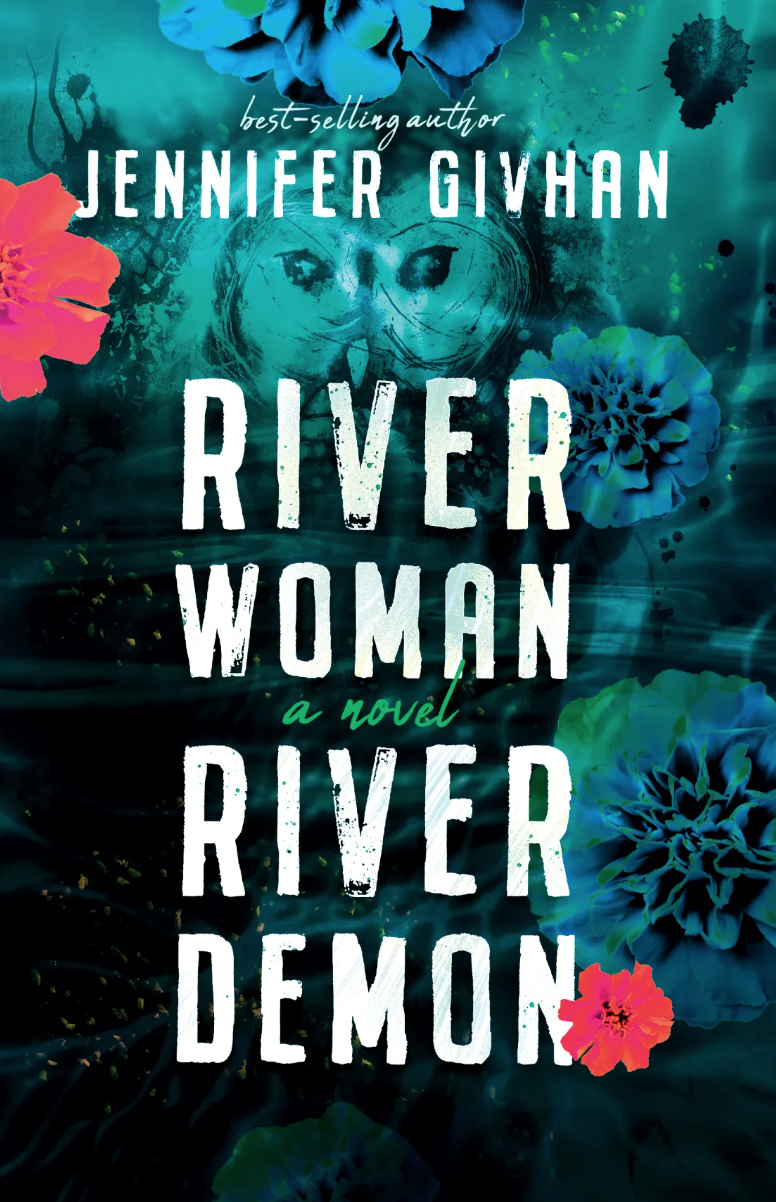
Jenn, welcome to Luna Luna! I am such a huge fan of your work — and am consistently inspired by your spirit, your ideas, and your literary and personal offerings of magic. Can you tell us all about your newest—incredibly beautiful and important—work, RIVER WOMAN, RIVER DEMON?

“Like the call to write, the call to love is ever about the marginal spaces that separate and bind us—the inky place that asks us to continue revising and reimagining, tying ourselves to this life, to each other, despite or perhaps because of the pain. ”
— Jenn Givhan

Eva Santiago Moon is a budding Chicana bruja—whose bruja mother died in childbirth, so Eva was raised by her conservative and well-meaning sister Alba, who isn't interested in their cultural roots of witchcraft but instead nurtures her family in the kitchen with traditional comida. Eva deeply wants a coven and mother/sister figures who likewise practice the ancient spiritual ways of brujería and curanderisma. When we meet Eva, she is the intensely depressed mother of two magickal, biracial children, a glassworking artist who hasn’t created lately, and the wife of a rootworking, hoodoo-practicing university professor, Dr. Jericho Moon, who owns a magickal shop that Eva affectionately calls "the circus" because she met him at one of his magickal showcases under billowing circus tents.

Eva is a strong, independent Latina mother deeply invested in her cultural roots but has lost her way. While many psychological thrillers focus on rich, white women, Eva is Chicana, lives in the Southwest, and is the mother of biracial children. This story focuses on the holistic spiritual and magickal practices of BIPOC people embodied through Eva and her husband, Jericho. When we meet her, she is at one of her lowest points, suffering from PTSD, depression, and a feeling of disconnect from her roots. 

I’ve found that folks of color, particularly Latinx and indigenous communities, are often marginalized and overlooked in the media and literature (although I’m excited to see much more representation in the witching communities with the rise of brujería in the mainstream). We want to see ourselves represented across the genres and not just in stereotypical roles.

Eva is a fully fleshed-out protagonist, not trying to be a perfect wife or mother, with flaws and troubles that are not necessarily connected to her ethnicity and some that are—just as real Latinx folks in this country. She drinks and says what is on her mind but profoundly loves her family. She is a woman who has lost her way and will find it, a mother struggling to care for her family while maintaining her self-worth during a terrifying murder investigation.

We’ve been told to believe that darkness within ourselves, any manifestation of shadow, is our enemy, but Eva’s dark path as a bruja is the dark night of the soul (la noche oscura del alma) that leads her to deep truths and understanding that will embolden and strengthen her if she can trust herself. We need to listen to our inner voice and our ancestors’ wisdom and not let ourselves be gaslit or steered off course by society or those with skewed or selfish agendas. This story is about believing in oneself and trusting the support system one has created. As Eva comes to understand—she is the spell. Her magick is not external but internal—she's had it all along.

“We’ve been told to believe that darkness within ourselves, any manifestation of shadow, is our enemy, but Eva’s dark path as a bruja is the dark night of the soul (la noche oscura del alma) that leads her to deep truths and understanding that will embolden and strengthen her if she can trust herself. ”
— Jenn Givhan

The inspiration for this story came from my childhood memories and PTSD, as well as a harrowing experience with a narcissistic abuser who had me all twisted up, and I wanted to show how even smart, talented, powerful, empowered women can be susceptible to these gaslighting serial abusers. As a practicing bruja who has healed both personal and ancestral trauma in myself and my family through brujería, I wanted to share the tools and practices that have strengthened and buoyed me in an accessible way. There are many wonderful nonfiction books on magical practices and witchcraft, but I’ve found that my magic is within my imagination, so I wrote a novel. 

The protective magick of this thriller is based on the actual practices of people of color, including my familial practices. It resists stereotypes even as it embraces many classic elements of psychological thrillers and magical realism — such as a character with a murky, traumatic past that blurs or muddles her grip on the present situation, a haunted character who misunderstands what the ghosts are trying to communicate, a strong woman who is being gaslit by at least one man in her life, and a woman who needs to embrace her power. When she does, she kicks some serious ass and rights major wrongs. There's also a focus on sisterhood and counting on other women rather than being jealous or turning to men for help, which all of the above stories and shows portray as well, though not necessarily together.

Even the Charmed reboot, which has so many amazing elements, tends to focus on mainstream Wicca as the central magick, even though the protagonists are strong BIPOC/Latinas. My story looks toward the magick of people of color—brujería,  curanderismo, hoodoo—even as it shares many commonalities with Wicca and other Western pagan practices and beliefs.

The use of folk magick of people of color in RIVER WOMAN, RIVER DEMON is portrayed as realistic throughout, with some magical realism elements common in Latinx literature and culture to offer a grounded and realistic presentation of folk magick while still allowing for the deeper resonances of metaphor that horror and supernatural thriller audiences have already come to expect by nature of the genre, such as giving into the subconscious where belief resides.

In other words, an audience who is already primed to believe that the dead can be conjured to help solve a murder mystery is also ready to suspend disbelief about other elements of folk magick – thus, I make a case for the metaphorical aspects of folk magick and how it helps protect people of color and isn’t just superstition. In this way, I’ve alchemically fused my thematic message within the structure of the work itself—creating, I hope, a place where belief feels organic and relevant. 

Can you describe your literary influences and inspirations? What is the through-line or framework through what and how you write?

My work tends toward magical realism and dark psychological motherhood that reflects on an often darker sociopolitical landscape, but the shadow work exists to reveal the light, and that’s always my goal–to shine that hopeful light amidst the darkness.  

Among my influences are Toni Morison and Ana Castillo, and some of my recent faves are Jesmyn Ward’s Sing, Unburied, Sing, and Victor LaValle’s The Changeling.  

In my witchy reading, I’ve enjoyed Stephanie Rose Bird’s books on hoodoo (perhaps especially Sticks, Stones, Roots, and Bones) and Juliet Diaz’s Witchery, which have helped me infuse and create my grimoire early on in my path. 

I've also been reading and watching ALL the psychological thrillers I can get my hands on since I was a teenager, and lately, especially books/stories like GONE GIRL and GIRL ON THE TRAIN, all the many countless iterations. But I repeatedly noticed how often the protagonists are white women who live in metropolitan areas, often wealthy or from wealthier backgrounds.

There are very few characters of color and even fewer with major roles. As a Latina/indigenous woman raising a multiracial family, I have often felt excluded from these psychological thrillers on a social/structural level, although I am deeply interested and invested in examining women's mental health and psychological issues, including how we’re perceived, treated, and stigmatized culturally. 

My goal for my writing is always to cast women of color in leading roles, active and empowered, fully constructed with flaws and issues outside stereotypes, which means that I am also interested in examining mental health issues in women of color. RIVER WOMAN, RIVER DEMON (like my second novel, JUBILEE) examines a Latina protagonist's PTSD, memory distortion, and anxiety—and contextualizes it in a larger patriarchal, abusive landscape. In many ways, I set out to write a Chicana Girl on the Train.  

“My goal for my writing is always to cast women of color in leading roles, active and empowered, fully constructed with flaws and issues outside stereotypes, which means that I am also interested in examining mental health issues in women of color.”
— Jenn Givhan

I’m always interested in showcasing how writers approach writing — including the hard stuff, the stuck stuff, the mundane struggles, the deep emotional Work that is often neglected in conversations around the craft. Can we peak behind the proverbial curtain of your general creative process? Do you adopt any rituals while or pre-writing?

As I connected with my indigenous and Mexican Ancestors and became more invested in brujería and curanderisma, I began cultivating spaces of honoring the sacred and divine within my home and creating portable altars that I could move throughout the house in a process organic to my creative rhythms and needs as a mamawriter, meaning, my mind/heart/flow has to be fluid and in-flux to allow for the rhythms of my day as they unfold (sometimes homeschooling the kids, tending sick kids, summer days, days my kids need or crave more attention from me, as well as days I’m more chronically ill and navigating self-care needs).

So, for instance, I might set up an altar on the side of the bath where I’m taking a hot Epsom salt soak to help alleviate some chronic pain or unwind after a tough day, mentally, physically, and spiritually. Honoring the sacred with a portable altar and altars throughout my home (my work/writing/teaching space) became a reminder that we carry the sacred within us, and it’s accessible to us anytime, anywhere.  

“Rest is creative. Rest is essential. Rest is sacred. ”
— Jenn Givhan

This also helped me forgive myself and eventually learn not to judge myself, so no forgiveness was needed because no wrong was committed when I could not write or perform a ritual or practice “self-care” in any other capacity than rest. Rest is creative. Rest is essential. Rest is sacred. 

Just as the altar’s sacred space reminds me of the goddess/Spirit/Ancestors within and around me, the altars remind me of the Muse available and accessible anytime, anywhere. The altar is an invitation to openness and receptivity. If we build it, the Spirits will come. But really, the Spirits are already all around us, ready and waiting for us to quiet ourselves enough to listen. So perhaps it’s more, if we build it, we will come to what the Spirits have already fashioned for us out of stars and earth and Universe and light and truth. 

In my writing, this willingness to listen to Spirit and not beat myself up that the material/concrete matter of the pub biz (publishing business) may not understand, accept, or want or applaud what I’m doing and what the Spirit/Ancestors bring me.

Because I deal with trauma-induced responses and depression and anxiety, I need a tangible reminder (lighting candles, holding crystals, and pictures of my Ancestors and Goddesses who sustain me, including Mother Mary and Frida and My Bisabuela and Coatlicue) so that I don’t feel so trampled upon that I stay down in the mud. If I’m down in the mud, Spirit is showing me the stardust to scoop up and bring back with me to the page.

The sacred that we honor (Goddess/Ancestors/Creator/Spirit) also exists within us. We honor ourselves when we honor the sacred. When we honor the sacred, we claim our value and worth as inherent and undiminishable. We are the fire we light, the crystal we hold, the prayer we utter. We are our Muse. 

In this interview series, I’ve been asking writers to share how their heritage, culture, or belief system shapes their work. How do you approach writing or creativity through these lenses?

As a Mexican-American/Chicana and indigenous writer from the Southwestern border, my work explores how we can create safe spaces through the traumas of mental illness, racism, violence, and abuse against women. I strive to speak the multivalent voices of women I grew up with: the mothers, daughters, childless women, aunties, and nanas who have become my voice.

My work concerns many Latina women's complex relationships with family—it is both a liberating and subjugating force, buttressing and repressive, mythical and real. I explore the guilt, sadness, and freedom of mother/child relationships: the sticky love that keeps us hanging on when we’ve no other reason but love. I read Beloved as a young teenager, and every day before and every day since has been marked by the idea that you are your own best thing.

Like the call to write, the call to love is ever about the marginal spaces that separate and bind us—the inky place that asks us to continue revising and reimagining, tying ourselves to this life, to each other, despite or perhaps because of the pain.

All my creative work tends to mother because it comes from a place of reclaiming and healing. My work recites my mother’s chant she sang to me and now I sing to my children when they’re hurt: sana sana colita de rana, si no sanas hoy, sanas mañana. Translated literally, it asks a frog’s tail to heal. Of course, a frog’s tail, if cut off, grows anew. My work asks for impossible healing. And then makes it possible.

Who are some writers or organizations that you’d love to shout out?

Authors Publish

Irena Praitis

Rigoberto González

The NEA

The PEN/Rosenthal Emerging Voices Fellowship

Van Jordan

Lynn Hightower

Leslie Contreras Schwartz

I could go on and on – I ADORE the writing community and am immensely grateful daily.

Was there an a-ha moment that led you to write or create? Was there an experience that reaffirmed what you do and why?

I was in the book section of Target perusing thrillers with my family and discussing cover art for my novel RIVER WOMAN, RIVER DEMON when a tween girl turned the corner and shyly asked, "Excuse me, but I overheard, are you a writer?" 

Me: "I am!”

Her: “Oh my gosh, that’s so COOL!”

So then, I asked her: "Are YOU a writer?"

She shrugged and said: "Well, I mean, kind of."

I looked at her with what I hoped was all the confidence I've pulled to myself since I was a young girl & said: "You ARE. I know you are."

Her: "You're right, I am."

This isn’t the moment I began writing, of course. This was just a few months ago. But our pasts, presents, and futures are connected, so imagine this is also me saying this to myself as a young, traumatized bruja, a young girl with no one to teach her or guide her in her Ancestral magic, but with a mama who loves her fiercely. Imagine this is Spirit holding this conversation in the seed of myself, waiting for the right season to bloom. Imagine that future bloom carrying me through the darkness.

My tween daughter Lina and I write middle-grade fiction together; we’re now finishing a novel to send to our agent, Rebecca Friedman. My daughter is the other future iteration of my creation that reminds me who I am—the Goddess with me always, within me, always, as a seed, an egg, waiting. Wise. Witchy. Wonderful.

What's your biggest piece of advice to someone who might be embarking on a creative journey like yours?

Mija, your journey is your own, and let no one veer you from the brightest light shining within yourself, guiding your way. You don't need anyone else's rules or guidelines, or input. Yes, we need companions and helpers and sisters and friends. Wise guides sometimes. Our Ancestors. The Spirits. 

But we are also our wise teachers. Versions of ourselves are yet to bloom. 

For too long, I've worried about what others think, and in the publishing biz, it's too easy to get steered off track and onto others' paths. In Capitalism, we're taught to pin our worth to earnings, product, output, and money. 

Even in the creative world, the contest and competitive and prestige models can make us forget what's truly important – always, always, the creating itself. 

As Eva says in RIVER WOMAN, RIVER DEMON:

"Many people think there is a clear-cut between lightwork and dark, the way so many misunderstand curanderas and brujas, thinking of healers versus Witches, as though healers are a positive force and Witches a negative. On the one hand are medicine folk, who pray to god and Mother Mary and the Saints and intercede to remove the malcontent of those who would use their power for darkness; on the other hand, are brujas who deal in curses and hexes and death.

The lines are not so drawn. Light and shadow are not binaries nor poles but are sourced from the same spring of energy.

When we stand beneath the cover of forest canopy away from the sun’s heat, the shadow that keeps us cool is not an entity created by itself, nor has the light ceased to shine.

Shadow can protect us. Darkness, too, has its blessings.

Brujas know this. Mama knew this."

What seems like a shadow path is sometimes necessary and invaluable. Trust yourself. Trust your light and shadow. Creation happens during both phases. Mija never stops creating. You are all of creation, waiting. Let go of fear. Let go of shame. Let go of anyone else’s opinions or advice. Let go of this advice. And create. 
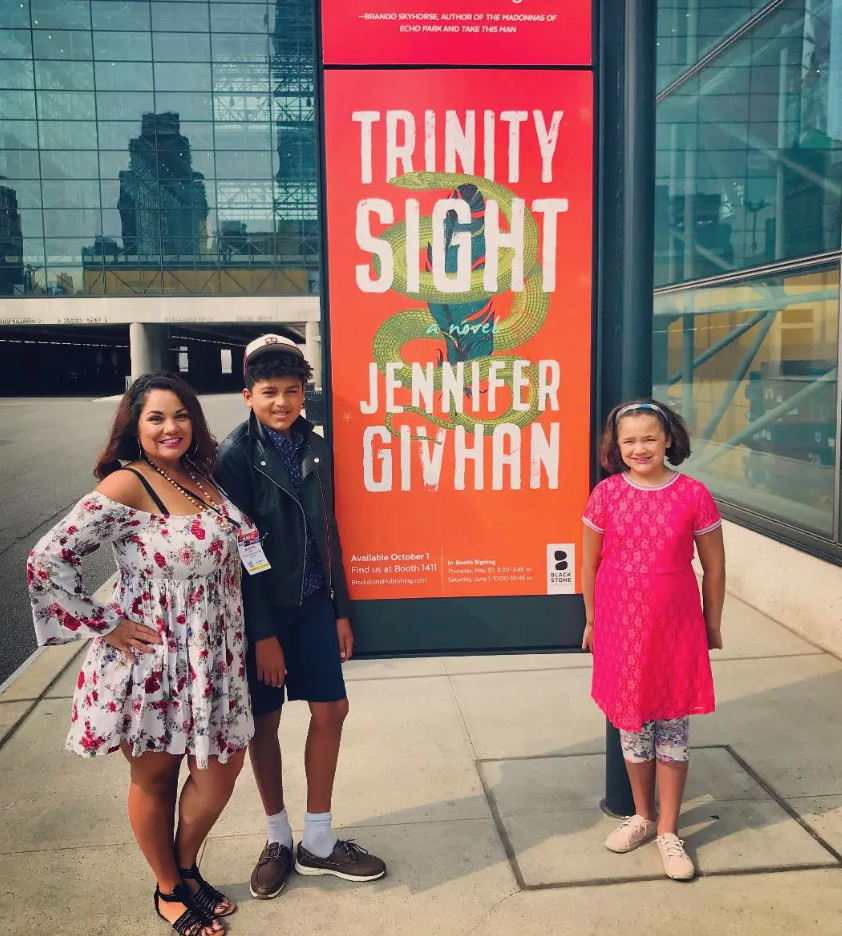
Jennifer Givhan is a Mexican-American and indigenous poet, novelist, and transformational coach from the Southwestern desert and the recipient of poetry fellowships from the National Endowment for the Arts and PEN/Rosenthal Emerging Voices. She holds a Master’s degree from California State University Fullerton and a Master’s in Fine Arts from Warren Wilson College. She is the author of five full-length poetry collections, including Rosa’s Einstein (University of Arizona Press) and the novels Trinity Sight and Jubilee (Blackstone Publishing), finalists for the Arizona-New Mexico Book Awards. Her newest poetry collection, Belly to the Brutal (Wesleyan University Press), and novel River Woman, River Demon (Blackstone Publishing), drop this fall 2022. Both new books draw from Givhan’s practice of brujería. Her poetry, fiction, and creative nonfiction have appeared in The New Republic, The Nation, POETRY, The American Poetry Review, TriQuarterly, The Boston Review, The Rumpus, Salon, and many others. She’s received the Southwest Book Award, New Ohio Review’s Poetry Prize, Phoebe Journal’s Greg Grummer Poetry Prize, the Pinch Journal Poetry Prize, and Cutthroat’s Joy Harjo Poetry Prize. Givhan has taught at the University of Washington Bothell’s MFA program and Western New Mexico University and has guest lectured at universities across the country.

Jenn would love to hear from you at jennifergivhan.com, and you can follow her on Instagram, Facebook, and Twitter for inspiration, writing prompts, and transformational advice.

In Interviews Tags Jenn Givhan, River Woman, River Demon, river woman river demon
Comment

3 Poems by Sharon Mesmer

October 27, 2022

BY SHARON MESMER

Sharon Mesmer's most recent poetry collection is Greetings From My Girlie Leisure Place (Bloof Books). She's also the author of several fiction collections, most recently, Ma vie à Yonago, in French translation from Hachette. Her essays have appeared in the New York Times, New York Magazine/The Cut, the Paris Review, American Poetry Review and Commonweal. She teaches creative writing at NYU and the New School.
In Poetry & Prose Tags Sharon Mesmer
Comment

Mary-Alice Daniel: "I Think of Poetry as Remaking An Original Cosmology"

October 21, 2022

An interview with Mary-Alice Daniel
by Lisa Marie Basile


I would love to hear all about your recent creative journey and pursuits and, of course, your coming books, A Coastline Is an Immeasurable Thing and Yale Younger Poets Prize winner Mass for Shut-ins. I love talking to writers who work across genres, especially. So let’s dive in. What’s happening creatively right now?

I considered myself primarily a poet till 3 years ago when I started my first book of prose, a nonfiction work that accidentally morphed into a memoir. It began as an inquiry into the hidden Black history behind the state of California, which was named after a Black warrior queen from 16th-century Spanish mythology. The book came to include the origin stories of my West African ancestors—then sprawled to encompass my immediate family’s migrations across 3 continents. A Coastline Is an Immeasurable Thing will be published by HarperCollins/Ecco Press on November 29th. It’s now available for preorder at major and independent bookstores.

While I was in the intensive editing endgame of my memoir, Rae Armantrout sent an email that changed my life. Mass for Shut-Ins, my first book of poems, and a project spanning a decade, won the Yale Younger Poets Prize. It’s coming out in March 2023, and I’m now in the frantic final stage of its own editorial process. Three warning signs illustrated within the manuscript headlined the press release announcing my win. Perhaps concerningly, that number has doubled to 6. I offer something obsessive, ominous. My favorite observation about the volume is: “What drew me to your book—the darkness made it stand out. True darkness.”
Mary-Alice Daniel via Instagram

Wow, what a response: “What drew me to your book—the darkness made it stand out. True darkness.”

As both a reader and writer, I have always been drawn to darkness myself, to the layers beneath what we reveal, to the uncomfortable, to the almost ineffable language of sorrow. How do you manage the dark when writing? Do you ground yourself, do you dive head-first into it, or does it alchemize into something else when you write about it?

For some reason, when I read this question, I was immediately reminded of a cheesy Bane quote in the last movie of the Dark Knight trilogy. Tom Hardy says, "You think darkness is your ally. But you merely adopted the dark. I was born in it, molded by it."

Probably because of the fundamentalist tenor of my religious upbringing, it's the nature of my brain to perceive everything as a preamble to the prospect (promise?) of Hell. I keep my fingers crossed that I'm wrong about that eventuality, but... it's a concern. Writing is one way I sift through the ideas of damnation and doomsday that I've internalized.

Can you tell us a bit about your general creative process? I’m interested in the quirks and rituals and obsessions writers have. Or, you know, maybe it’s mundane. Basically, how does the Muse exist within you?

I start worrying about some little idea that perplexes me. An absurd aspect of human nature; the oddity that is the English language (my second); the internal logic of a conspiracy theory or cult practice. I then spend literal years unpuzzling it, piece by piece. I’ll spend one whole day fussing over the punctuation of a single line; I’ll waste the entirety of the next day changing everything right back. There’s a natural byproduct of this waste, though; I learn things.

And what about your inspirations? Who are they, and how do they influence your work as a writer or creative? How might they have influenced your recent work?

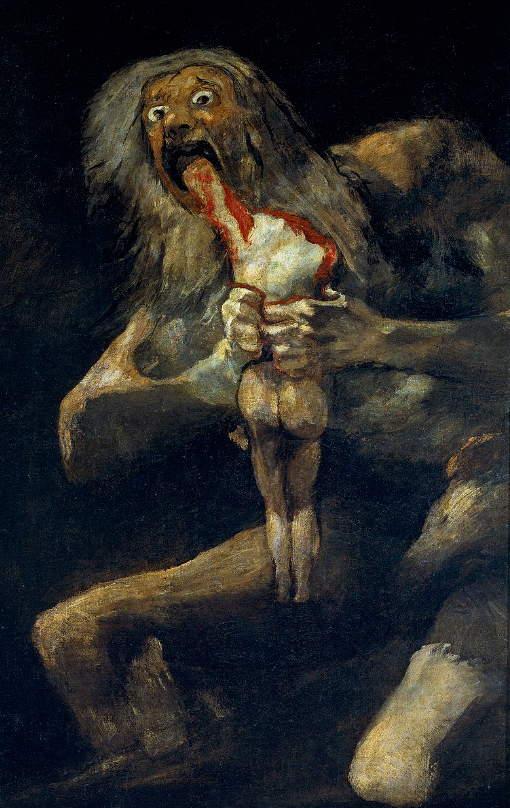
Francisco Goya’s Saturn Devouring His Son.

My favorite musician now is Sufjan Stevens. When I listen to him, I feel that connection between those who inherited an imposed faith, a fraught relationship with the spirits. It’s been with us both since birth, seen in our relatively unusual names. He was the Midwestern kid with a Muslim name; I have a Christian one despite my overwhelmingly Islamic ethnic group, the Fulani of Niger/Nigeria.

The most magnificent work of art I’ve ever seen is Goya’s Saturn Devouring His Son. A+ nightmare fuel.

The one book I recommend to people (I generally don’t) is Sum by David Eagleman. It presents 40 possible versions of an afterlife, written from the perspective of a neuroscientist with a sublime imagination, a whimsical style. When I’m up all night, harassed by the dread of death—I really, truly, honestly have to die one day?—every once in a while, I get almost excited for some great ride ahead.

Deadpan stand-up comedy is the soundtrack to all my writing sessions.

“I’ll spend one whole day fussing over the punctuation of a single line; I’ll waste the entirety of the next day changing everything right back. There’s a natural byproduct of this waste, though; I learn things. ”
— Mary-Alice Daniel

Throughout this interview series, I’ve been asking writers to share a bit about how their religion, culture, or heritage shows up in their work. What about for you?

If I do a reverse engineering of my work, I see that one of its most significant elements is syncretism, which I define as “the phenomenon of disparate religious traditions colliding.” My native tribe is nearly synonymous with Islam, but I was raised by Evangelical parents in what they made a field of “spiritual warfare.”

Around the ill-defined edges of this apocalyptic battlefield, the indigenous religions of Nigeria survive—within my family, mostly in the form of superstition and credence in curses. I think of poetry as remaking an original cosmology from these contrastive influences.

This is so powerful: "Around the ill-defined edges of this apocalyptic battlefield, the indigenous religions of Nigeria survive—within my family, mostly in the form of superstition and credence in curses. I think of poetry as remaking an original cosmology from these contrastive influences.”

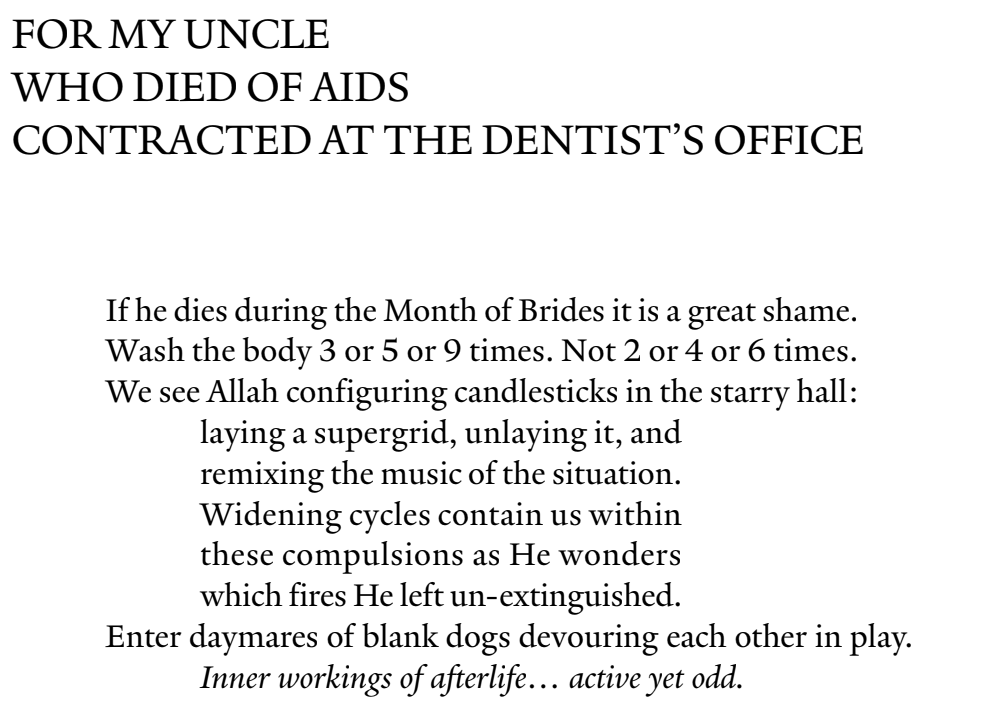
Can you share one or two lines, or even a poem, that inhabits/gives life to this merging of influences?

Mary-Alice Daniel: Here is an excerpt from "For My Uncle Who Died of AIDS Contracted at the Dentist's Office.”

Was there an a-ha moment that led you to write or create? Was there an experience that reaffirmed what you do and why?

“Around the ill-defined edges of this apocalyptic battlefield, the indigenous religions of Nigeria survive—within my family, mostly in the form of superstition and credence in curses. I think of poetry as remaking an original cosmology from these contrastive influences. ”
— Mary-Alice Daniel

When I lived in Connecticut for 3 of my tween years, I walked home in half-light. After school, 4 p.m., it was already getting dark. My portable CD player got me through those depressing walks: inside it spun the songs of Joni Mitchell, Paul Simon, and Fela Kuti. I wanted to sing lines like theirs. I can’t sing, so I write.

Who are a few contemporaries/mentors/writers who have made an impact on you?

Only 3? This is a really hard question. Of dozens, the first who come to mind are: poet Safiya Sinclair, who is my role model even though we’re the same age; Kwame Dawes at Prairie Schooner, who champions my work; Elizabeth Scanlon at American Poetry Review, who likes my weirdest stuff.

And finally, what might be your biggest piece of advice to a writer?

Find critics of your work who practice radical honesty. We all have blind spots; they are dangerous.


Mary-Alice Daniel was born in northern Nigeria and raised in England and Tennessee. After attending Yale University, she received an MFA from the University of Michigan and a PhD in English Literature and Creative Writing from the University of Southern California. Mass for Shut-Ins, her debut poetry collection, won the 2022 Yale Series of Younger Poets Prize. Her first book of prose, A Coastline Is an Immeasurable Thing: A Memoir (HarperCollins/Ecco Press) will be released on November 29, 2022.

In Interviews, Poetry & Prose Tags Mary-Alice Daniel, Yale Younger Poets Series, A Coastline Is an Immeasurable Thing: A Memoir
Comment

Candy Corn Saturdays by Mariana Louis

October 20, 2022

BY MARIANA LOUIS


Candy Corn Saturdays


My mother had a name for those rare autumn days. The days when you’d shuffle into the car in the gray of morning, shivering in your fall jacket as the trees flickered by, getting progressively golder, browner, redder, as you flew down the Grand Central Parkway toward the eastern coast. The days when the sun slowly pushed through the celestial gauze and opened up in easy yellow ripples of early afternoon that made you tear off your jacket and cast it away onto the car floor. The days when your braid would come undone strand by strand as you cranked down the window to gulp the warming sea-salted air and stare up at the hawks looping in lemniscates overhead.

The days when the best thing to eat was pancakes and strawberry syrup, your smiley face of eggs and sausage peeking over at you with their weepy, yolky eyes as you dropped at least $3 in quarters to the claw machine for a peach-colored stuffed puppy with blank, black beaded eyes. The days when you’d serpentine through those old Suffolk County roads, stopping off to place a stone on Jo-Jo’s grave before beginning the search for apples or pumpkins or gourds, always on the hunt for the reddest, the roundest, the weirdest one.

The days when you drove right into the roaring gaze of the setting sun, silently gnawing piece after piece of candy corn, as if afraid it would all disappear with the coming dark. The days when you forgot the dark, when you forgot the shadows that followed you along the edges, when you forgot the cold fear that had swallowed up your mother’s heart and the cold of winter that was closer than you could tell. The days when your own heart felt free to love, to be loved, as if love was the easiest thing that ever was, the safest thing, as if all of it was for you, because of you.

The days when you believed that you were special, but also simple, when you felt the preciousness of living, when you knew that there was no other meaning in your little life but to be alive inside of it, to meet the sun and sea and earth, to enjoy sweetness when you had it. The days when infinity was a long car ride under the naked sun in the chill of late autumn, and to be exactly as you were was all there was.

I should have always known my mother would die on a day like this. A day in late October when the crimson leaves of our old maple tree still held onto the branch, and when the sparrows that

lived in her hydrangeas chirped like it was summer though the purple flowers were long gone. A day when the wind was quiet, the sun shimmering and cool, the sky that perfect painted blue, and just a dollop or two of dense clouds passing overhead. A day when the light filtered in through the stained-glass stickers my mother had placed over every arched window, and the sweet century-old musk lifted up from the wooden floors. A day when all the years seemed to gather behind you and the world was all horizon ahead. A day when there was nothing left to do but witness. A day to watch as the rage slipped away, the guilt slipped away, when forgiveness was unspoken and easy. A day to at last break the cold barrier of touch, and take her hand as her yellow-ringed eyes opened and sank away. A day to whisper of love where love was thought to be lost.

My mother named those rare autumn days because such things must be named. The days when we are sparkling and alive, and then days we hold vigil in the shining hours of death. The days when we can look at what was through what is now and remember all of it with grace. The days when the angels that haunted us return to our side and fold their wings around the holy moment that is the most fragile and terrible and cherished thing we have known. The days when we know we are as special as we were once promised to be, and also becoming always more human. The days when we hold life as it is, warm and easy and true, and do not ask it to change, but know in a day, an hour, a minute, everything will.

Mariana Louis is a professional tarotist and spiritual educator, and a mystic of the human heart. After discovering the work of Carl Jung and exploring the psychology of soul, Mariana left her career as a musical theatre performer and returned to academia earn her master's degree in Western Intellectual Traditions, where she focused on archetypal transformations of the Divine Feminine and occult philosophies. She then began Persephone's Sister, a platform for psycho-spiritual wisdom, primarily through the lens of depth psychology and tarot. Mariana is also a part-time poet, lyricist, and aspiring novelist, delighting in the works of Rainer Maria Rilke, Hildegard von Bingen, and Paul Simon. She lives contentedly with her Taurus husband and two feline familiars in Astoria, Queens.

In Personal Essay Tags autumn, mariana lewis
Comment

Poetry by Ellen Huang

October 20, 2022

BY ELLEN HUANG

Lying Upon My Wings


They take a while to attach. I unfold

the wings out of the packaged chrysalis &

I tie the black string about my neck.

It covers me, in lightness and blue,

the weightless swish of new wings.

In this hollow, I dress for myself;

I let in the sun for the precious gift of time,

dance in the underground at midnight,

write cross-legged in the candlelit corner,

nest myself in the hunger for stories.

flickering ~ fleeting ~ necessary.

Bless this space on rainy days

when grey and softened edges are beautiful,

when the mist of not-knowing is soothing.

cloaked in a piece of the sky, I am enough.

I lie upon my wings and breathe story,

held together by lamp-lighting pursuits, by

the simple imagination of flight.

Ellen Huang (she/her) is an aroace lover of fantasy and writer of fairy tales. She reads for Whale Road Review and is published/forthcoming in The Madrigal, Moss Puppy Magazine, Gingerbread House, Honey Literary, celestite poetry, Love Letters to Poe, Lanke Review, K’in, Serendipity Lit, Enchanted Conversation, and more. She is currently working on a chapbook of fairy tales, a collection of diverse fantasy, and an anthology of asexual horror/supernatural stories. Follow @nocturnalxlight on Twitter or worrydollsandfloatinglights.wordpress.com.

Tags Ellen Huang
Comment

Poetry by Justin Groppuso-Cook

October 20, 2022

BY JUSTIN GROPPUSO-COOK

I Cried Enough


To fill a small plate, eyeshadow running over the lip. I cried
from the absence of an overdose, abuse. Consumed
with a tongue bittersweet, I cried longing: Let me
marinate in the sacred & the sin. Cook me on a open flame
of mistakes. I cried in cups of varying shapes to see
if the water would taste the same, the curvature of
my knees refracted. Submerged in a depression
of pooling ink, I bled through the page.
Cried a river to cross it to you, my butterfly: Lift me
to the surface, drift with me to shore. You see,
things grown cold take time to thaw; I’ve watched an icicle
tearing up. Weathered through with a breath of light—
the frost of my muscle tissue melting with memories
of evergreen, these spaces lost within restored.
I cried possession into my palms, pruned. My handprints
like a fossil. What is this waking? Cried mirth. I cried at birth.
Cried for my father who couldn’t for himself. Cried out for a name—
the darkness. Cried for consciousness. Cried Anubis. Cried
Lucifer, Medusa. Cried as I squeezed pomegranate beads
& rubbed them onto my face. I cried a whole spring for the tulips
& lotus to hold their own. The fire wept as well—you know,
a well I filled with disillusion, threw in my loose change.
I cried for too much love. For all of the above.
For what I have done with this body: split
my radius & cried for the chitin of one wing.
Cried a perpetual state of morning. For the sorrow
swollen like cumulonimbus. Thunder. Cried for what I thought
was a casket. Turns out: a chrysalis. Called that chrysalis
my eyelids—my pupil, a pupa breaking. What is?
This waking. Flooding with light my vision: photosynthesis.

Justin Groppuso-Cook is a Writer-in-Residence for InsideOut Literary Arts Project and Poetry Reader at West Trade Review. His poems have appeared or are forthcoming in Best New Poets 2022, Crab Creek Review, EcoTheo Review, Prometheus Dreaming, and Rogue Agent among others. He received the 2021 Haunted Waters Press Award for Poetry and has been twice nominated for the Pushcart Prize. His chapbook, "Our Illuminated Pupils", was a semi-finalist for the Tomaž Šalamun Prize (Factory Hollow Press). In 2022, he was a resident at Writing Workshops Paris. More information can be found on his website, www.sunnimani.com.

Comment

Poetry by Audrey Gidman

October 20, 2022

BY AUDREY GIDMAN

pillow talk


a crest of areola just above a hemline. plum cotton. window cracked open. lace curtains. my lover painting on the floor. paper cranes. silk thread. gold chain on her ankle. a bowl of dried roses. collarbones.

whiskey. a storm. a storm & a boat. when they leave. when they come back. striated granite. a ribcage.

gravestones. wrists. sparrows on a telephone wire. 4 o’clock in the morning. snow.

blood. chrysanthemums. heartbeats. snow.

birch trees. bare feet. their eyelashes. home. their eyelashes. home. a river.

stubbed toes. dry mouth. childhood.

a bowl of water on the ground. a bowl of water catching grief. a bowl catching grief like rainwater. bowl of water catching. catching water. catching grief. catching grief in a bowl. catching grief in a bowl like rainwater water. catching grief. hands full of water. catching it and then letting go.

bluebirds. a bluebird in a maple. a cardinal. birthing. then letting go.

loons on a lake at sunrise. accordions cutting loose over water. cutting loose through mountains. banjos plucking by a campfire. a long hug after such a long time. then letting go.

I turned myself into myself & was

—a lighthouse

—a locket

—a sinking ship

—water

—crows drifting by on their backs

—starting fires in the dark

—braiding dandelions into chains & unbraiding them

—a corridor

—a condor

—a window

—a field

—something else


note: title borrowed from a line in Nikki Giovanni’s “Ego Tripping (there may be a reason).”

Audrey Gidman is a queer poet living in Maine. She serves as chapbooks editor for Newfound and assistant poetry editor for Gigantic Sequins. Her chapbook, body psalms, winner of the Elyse Wolf Prize, is forthcoming from Slate Roof Press.

In Poetry & Prose Tags audrey gidman, nikki giovanni
Comment
← Newer Posts Older Posts →
Featured
‘in the glitter-open black' — poetry by Fox Henry Frazier
'poet as tarantula,  poem as waste' — poetry by  Ewen Glass
'poet as tarantula, poem as waste' — poetry by Ewen Glass
'Hours rot away in regalia' — poetry by Stephanie Chang
'down down down the hall of mirrors' — poetry by Ronnie K. Stephens
'Grew appendages, clawed towards light' — poetry by Lucie Brooks
'do not be afraid' — poetry by Maia Decker
'The darkened bedroom' — poetry by Jessica Purdy
'I am the body that I am under' — poetry by Jennifer MacBain-Stephens
instagram

COPYRIGHT LUNA LUNA MAGAZINE 2025