• Home
  • indulge
  • new poetry
    • About Luna Luna
    • resources
    • search
  • editor
  • dark hour
  • submit
Menu

luna luna magazine

  • Home
  • indulge
  • new poetry
  • About
    • About Luna Luna
    • resources
    • search
  • editor
  • dark hour
  • submit
delicious new poetry
'the doors of the night open' — poetry by Juan Armando Rojas (translated by Paula J. Lambert)
Nov 29, 2025
'the doors of the night open' — poetry by Juan Armando Rojas (translated by Paula J. Lambert)
Nov 29, 2025
Nov 29, 2025
'we can be forlorn women' — poetry by Stevie Belchak
Nov 29, 2025
'we can be forlorn women' — poetry by Stevie Belchak
Nov 29, 2025
Nov 29, 2025
'I do whatever the light tells me to' — poetry by Catherine Bai
Nov 29, 2025
'I do whatever the light tells me to' — poetry by Catherine Bai
Nov 29, 2025
Nov 29, 2025
‘to kill bodice and give sacrament’ — poetry By Kale Hensley
Nov 29, 2025
‘to kill bodice and give sacrament’ — poetry By Kale Hensley
Nov 29, 2025
Nov 29, 2025
'Venetian draped in goatskin' — poetry by Natalie Mariko
Nov 29, 2025
'Venetian draped in goatskin' — poetry by Natalie Mariko
Nov 29, 2025
Nov 29, 2025
'the long sorrow of the color red' — centos by Patrice Boyer Claeys
Nov 28, 2025
'the long sorrow of the color red' — centos by Patrice Boyer Claeys
Nov 28, 2025
Nov 28, 2025
'Flowers are the offspring of longing' — poetry by Ellen Kombiyil
Nov 28, 2025
'Flowers are the offspring of longing' — poetry by Ellen Kombiyil
Nov 28, 2025
Nov 28, 2025
'punish or repent' — poetry by Chris McCreary
Nov 28, 2025
'punish or repent' — poetry by Chris McCreary
Nov 28, 2025
Nov 28, 2025
'long, dangerous grasses' — poetry by Jessica Purdy
Nov 28, 2025
'long, dangerous grasses' — poetry by Jessica Purdy
Nov 28, 2025
Nov 28, 2025
'gifting nighttime honey' — poetry by Nathan Hassall
Nov 28, 2025
'gifting nighttime honey' — poetry by Nathan Hassall
Nov 28, 2025
Nov 28, 2025
'A theory of pauses' — poetry by Jeanne Morel and Anthony Warnke
Nov 28, 2025
'A theory of pauses' — poetry by Jeanne Morel and Anthony Warnke
Nov 28, 2025
Nov 28, 2025
'into the voluminous abyss' — poetry by D.J. Huppatz
Nov 28, 2025
'into the voluminous abyss' — poetry by D.J. Huppatz
Nov 28, 2025
Nov 28, 2025
'an animal within an animal' — a poem by Carolee Bennett
Nov 28, 2025
'an animal within an animal' — a poem by Carolee Bennett
Nov 28, 2025
Nov 28, 2025
‘in the glitter-open black' — poetry by Fox Henry Frazier
Oct 31, 2025
‘in the glitter-open black' — poetry by Fox Henry Frazier
Oct 31, 2025
Oct 31, 2025
'poet as tarantula,  poem as waste' — poetry by  Ewen Glass
Oct 31, 2025
'poet as tarantula, poem as waste' — poetry by Ewen Glass
Oct 31, 2025
Oct 31, 2025
'my god wearing a body' — poetry by Tom Nutting
Oct 31, 2025
'my god wearing a body' — poetry by Tom Nutting
Oct 31, 2025
Oct 31, 2025
'Hours rot away in regalia' — poetry by Stephanie Chang
Oct 31, 2025
'Hours rot away in regalia' — poetry by Stephanie Chang
Oct 31, 2025
Oct 31, 2025
'down down down the hall of mirrors' — poetry by Ronnie K. Stephens
Oct 31, 2025
'down down down the hall of mirrors' — poetry by Ronnie K. Stephens
Oct 31, 2025
Oct 31, 2025
'Grew appendages, clawed towards light' — poetry by Lucie Brooks
Oct 31, 2025
'Grew appendages, clawed towards light' — poetry by Lucie Brooks
Oct 31, 2025
Oct 31, 2025
'do not be afraid' — poetry by Maia Decker
Oct 31, 2025
'do not be afraid' — poetry by Maia Decker
Oct 31, 2025
Oct 31, 2025
'The darkened bedroom' — poetry by Jessica Purdy
Oct 31, 2025
'The darkened bedroom' — poetry by Jessica Purdy
Oct 31, 2025
Oct 31, 2025
'I am the body that I am under' — poetry by Jennifer MacBain-Stephens
Oct 31, 2025
'I am the body that I am under' — poetry by Jennifer MacBain-Stephens
Oct 31, 2025
Oct 31, 2025
goddess energy.jpg
Oct 26, 2025
'Hotter than gluttony' — poetry by Anne-Adele Wight
Oct 26, 2025
Oct 26, 2025
'As though from Babel' — poetry by Fox Henry Frazier
Oct 26, 2025
'As though from Babel' — poetry by Fox Henry Frazier
Oct 26, 2025
Oct 26, 2025
'See my wants' — poetry by Aaliyah Anderson
Oct 26, 2025
'See my wants' — poetry by Aaliyah Anderson
Oct 26, 2025
Oct 26, 2025
'black viper dangling a golden fruit' — poetry by Nova Glyn
Oct 26, 2025
'black viper dangling a golden fruit' — poetry by Nova Glyn
Oct 26, 2025
Oct 26, 2025
'It would be unfair to touch you' — poetry by grace (ge) gilbert
Oct 26, 2025
'It would be unfair to touch you' — poetry by grace (ge) gilbert
Oct 26, 2025
Oct 26, 2025
'Praying in retrograde' — poetry by Courtney Leigh
Oct 26, 2025
'Praying in retrograde' — poetry by Courtney Leigh
Oct 26, 2025
Oct 26, 2025
'To not want is death' — poetry by Letitia Trent
Oct 26, 2025
'To not want is death' — poetry by Letitia Trent
Oct 26, 2025
Oct 26, 2025
'Our wildness the eternal now' — poetry by Hannah Levy
Oct 26, 2025
'Our wildness the eternal now' — poetry by Hannah Levy
Oct 26, 2025
Oct 26, 2025
Unsplash/Canva

Unsplash/Canva

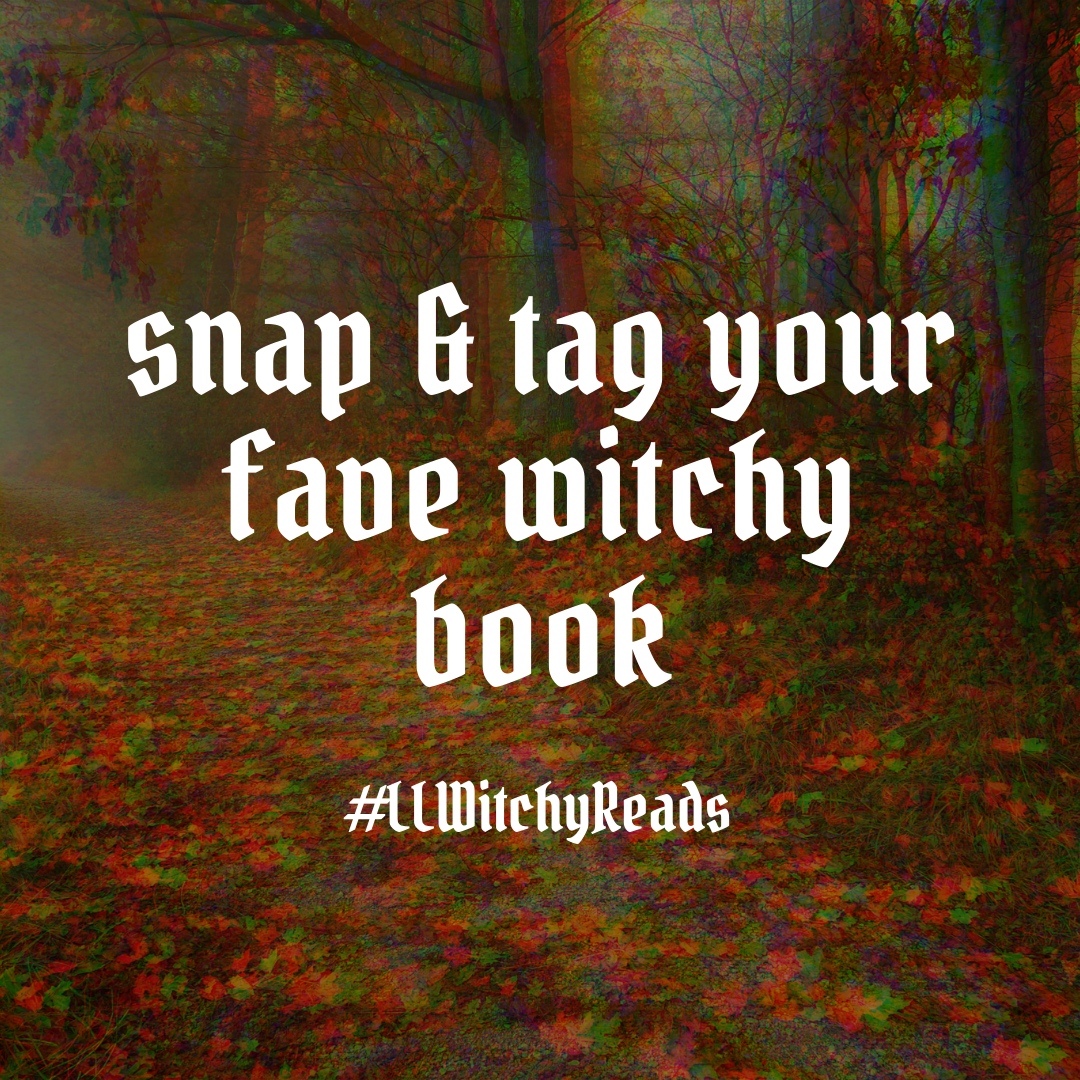
Join Our Witchy Book Challenge!

September 3, 2021

This autumn, join our witchy Instagram & Twitter book challenge!


WHAT TO DO:

To celebrate autumn, we’re asking you to take a picture of your fave witchy read (any book you love, or that you’ve written) and tag #LLWitchyReads on Instagram and/or Twitter so we can find and see it. Bonus if you share a bit about why you love it and tag the author if possible. Authors love the love.


TAG:

Tag as many pics with #LLWitchyReads as you’d like. Just be sure you drop the hashtag in the caption, not the comment. You can also tag @lunalunamag.


WHAT COUNTS:

Nonfiction, grimoires, magazines, academic works, fiction, poetry - it’s all welcome! And hell, even though we’re focusing on reads, you can tag podcasts too! We’ll share them as well.

You can share books you love, books you’ve written yourself (please do!), and books that are brand new or canonical or basically unknown. Folk magic, trad witchcraft, poems inspired by the archetype of the witch — it all works; this is pretty open!

WHAT IS THIS FOR?

Book love, basically. Community. Crowdsourcing recommendations. We’ll be sharing & reposting these pics of books simply to send them love — *and* we’ll be compiling some of them in an article published in October, which aims to share our community’s fave witchy reads. We’ll be linking to those books on @bookshop_org so you can pick ‘em up.

NOTE: For some reason, tagging hashtags in Instagram comments is not letting us see them, so you’ve got to take a pic and use the hashtag on IG in the caption. You can post to Twitter too!

We’re hoping to see new books, your fave classics, & works by BIPOC & LGBTQIA+ authors, who are underrepresented in the witchy world of books.

Let’s spread some magic. 🤎🍂🙏🏽

In Poetry & Prose, Magic Tags Witchy Books, #LLWitchyReads
Comment
By Camille Brodard, via Unsplash

By Camille Brodard, via Unsplash

Poetry by Kiki Dombrowski

September 3, 2021

BY KIKI DOMBROWSKI

An Autumn Ceremony

Split yourself right down the middle:
celebrate academic and spiritual 
collision on a Saturday afternoon.
Leave the ritual early 
to make it to critique, arrive late.
Distract the class: release unbound
papers into the air, corners ripped 
out for gum and phone numbers. 
Have dirt on your hands from moving 
stones, smell like a bonfire, 
do not remove the moss and mulch
caught in the fibers of your sweater.

Let your hair be damp and wild,
weather is unpredictable and so are you.
When they ask where you’ve been
answer “An autumn ceremony. 
Persephone gave me inspiration.”
Write a note about the hawk 
that flew overhead with a snake 
dangling in its talons. Render 
metaphors about the snake
as an uncoiled noose rope. Keep chanting 
in your mind: you are a circle, 
within a circle. Shake a rattle.

Allow mugwort and tobacco to crumble
in the bottom of your book bag,
let it live in the creases of your notebook 
which is full of assigned poetry prompts, 
Mary Oliver quotes, circled stanzas 
and underlined verbs. Keep your mind in ritual: 
imagine the professor a magician, evoking
the spirits of stag, salmon, crow, and wolf.
Let the students close the ceremony
with a clap in each direction:
rituals and words are temporary 
and so are you. 

In Poetry & Prose Tags Kiki Dombrowski, autumn, autumnal, dark academia
Comment
Vlad Bagacian, via Unsplash

Vlad Bagacian, via Unsplash

Poetry by Dylan Krieger

September 2, 2021

BY DYLAN KRIEGER

the median

we couldn’t hold our breaths
the entire tunnel
so you told me your wish:
to be a different person
someone satiable
who knows how best to
scratch the itch of consciousness
well, little wide-eyed perfect puppy
i don’t know either
but i will dig my fingers
with utmost loving attention
into the skin behind your ears
for a million years
feed you bloodthirsty berries
from the lip of my paltry fountain
whatever doesn’t deserve you
i know full well, but i’ve worked hard
flown all over a dying empire
to tell you, to show you
the tragedy isn’t lost on me
i’m enlisting your balled spit
your half-lifted eyelid in orgasm
to write an alternate ending
pass a frantic notebook
back and forth laughing about
the private capacity for violence
in our passing glances over the median
eternally uncrossed between us
steering wheel shaking in both fists
like any moment we might
work up the worst courage
shatter the straight line
and kiss a cursed gear shift
into oncoming headlights

stay shelved

so many comrades in recovery, and here i am still mainlining dreams

as if across a crowded room, an angel might articulate my thought stream worm for worm

face-off too lush to get lost in the figures: ventriloquized incest, tin mood turned to snowmelt

when i hear you use apophatic correctly in a sentence, who you are is hard to miss

at the moment of corruption, the dial tone in your esophagus lasts forever

and all the germ-addled wounds are holy--that’s what the howling never tells you

explicitly, but it’s apparent whole forestfuls of woodpeckers get it, and we’re no different

thank the chaos for deciding to warm itself on our little spinning bonfire of lead

thank the hospital parking lot for reminding us childhood was canceled

from the start and yet it still feels fresh, mazel tov to our mutual collapse

i’ve been cosmically betrothed to one unmooring or another for so long wishing it were yours

i’ve been nine kinds of anemone, the plastic sixer rings skinning their predators

i’ve been the cliffs where anyone ignoring the weather’s warnings disappeared into the drift

but none of that would impress you, the usual terrors stay shelved

pages fingered to the point of crumble, and go ahead--i am helpless

to whatever feathers you next decide to pluck and spread

Dylan Krieger is writing the apocalypse in real time in south Louisiana. She earned her BA in English and philosophy from the University of Notre Dame and her MFA in creative writing from Louisiana State University, where she won the Robert Penn Warren Award in 2015. Her debut poetry collection, Giving Godhead (Delete Press, 2017), was dubbed "the best collection of poetry to appear in English in 2017" by the New York Times Book Review. She is also the author of Dreamland Trash (Saint Julian, 2018), No Ledge Left to Love (Ping-Pong, 2018), The Mother Wart (Vegetarian Alcoholic, 2019), Metamortuary (Nine Mile, 2020), and Soft-Focus Slaughterhouse (11:11, 2020). Find her at www.dylankrieger.com.

In Poetry & Prose Tags dylan krieger
Comment
unsplash-image-XOPjB-ojFgY.jpg

A Playlist for Fall

September 2, 2021

BY JOANNA C. VALENTE

As we fade into autumn within the next few weeks, I thought I’d round up what I’ve been listening to, with songs that celebrate and reflect on change.

In Music Tags music
Comment
Unsplash

Unsplash

Personal Essay As Bloodsport

August 25, 2021

BY LISA MARIE BASILE

Last night I happened on writer Deanna Schwartz’s Twitter conversation about selling trauma for a byline. Maybe you’ve seen it by now — it’s elicited all sorts of responses, which means it struck a vein. And it bled.

At first, I found myself feeling — what was it, exactly? — defensive. It’s my choice to sell my trauma if I want to! I don’t need a 21-year-old’s regret to muddy my experience. But I didn’t say that. I retweeted someone else’s eloquent response about the power of writing and then I logged off.

Of course, I kept thinking about it, in the dark, in bed. All those words, all that honesty, all that hunger to be a writer.

I remember those early writer days, swirling in some haze of poverty, confusion, and eagerness. Before MFA, writing was my heart language, and poetry was my truest identity. It alchemized the Me who’d been born of pain into some new Me, a transcendent thing. My work housed all of my secrets: the foster kid secret, the homeless shelter secret, the family addiction secret. It was my underworld, alit by passion. Poetry gave my suffering meaning, even if no one read it — and for a long time, I was alright with that.

Things changed when I was fresh out of MFA. I felt the pull to prove myself as a writer — to show that the $50,000 loan I’d taken out for graduate school was not all for naught. I was writing batches of freelance ehow.com articles for $3 or $5, and I was penning celebrity gossip blog posts about people I’d never heard of, for which I was underpaid. I never asked for more. Then I started this website. Writing became less of a thing that I was compelled by spirit to do and more of a thing I had to do. Or so I thought.

That beautiful byline? It was an illusory well in the desert. It was something other, better writers got to have.

Enter xoJane. Fuuuuuck. It was about 2013 or 2014, and I wanted that publication dopamine. I wanted to say, “I published this” and go about my day knowing the Internet housed a small piece of my soul and that everyone could walk past and glare at it, its maggots festering in publication glory.

I sold my traumas and ideas for, what, $50 a pop? I wrote honestly about not using birth control and got reamed out by family members who were “concerned for my wellbeing.” And then there were the “you’re a slut” emails (which, to be honest, trickle in every so often for no reason at all).

I talked about not having health insurance and being treated poorly at a hospital when I had a ruptured ovarian cyst. Although xoJane’s readership was mainly women, they were not interested in allyship. They had fangs and they were out for blood. Rather than compassion, most commenters fixated on the fact that I’d taken a hospital selfie. You’re not really sick. You’re lying. If you’re that sick, you don’t take a selfie. (I wonder what they’d think of the many chronic illness Instagram accounts today, which specifically document the experience of being ill).

This didn’t deflate me, though. This egged me the hell on. I wanted to drench these bloodsuckers in my pain, feed them the stinking abyss of my most personal wounds. Of course, this was a coping strategy, a way of justifying the fact that I’d put all of myself on the Internet to pay a sixth of my rent. I lived in a shitty apartment, mattress on the floor, three roommates — and every $50 was a $50 that could honestly change my life that month.

Eventually, I got a job at Hearst editing personal essays for The Fix, which solicited and pumped out personal essays to the various Hearst publications — mostly Cosmopolitan, Marie Claire, Good Housekeeping, and Redbook. This was probably the most stable and interesting job I’d had at that point, and I took it very seriously. In a sense, we were part of the personal essay pipeline, and I’d track views and clicks, curious to see what “performed” and what didn’t. We were sorely underpaying these writers to bare their souls — and if I could have paid them more, I would have.

In my heart, I believed that lending my editing skills to this platform was, in a way, helping these writers to bloom and grow through storytelling. I loved our writers. I gave my heart to their stories. I became their friends. But I’d be lying if I didn’t say that The Fix was part of the problem. It normalized bearing your grit and glory for very little pay — which often preys on the most vulnerable among us.

Publishing personal essays should not be a cavalier process; and these stories, in all their painful detail, should not be viewed as low-hanging fruit for clicks. Humans are at the other end of these stories, and we need to treat the process with humanity.

It’s not that I think Schwartz is entirely right, though, when she says, “Don’t sell your trauma and personal experiences at all! I sold mine for $300 and regret it. It's not worth the money and byline to feel like one essay is going to follow you around forever.”

I don’t think I’d say the same, even with my background editing personal essays and being burned at the stake online.

It’s that I hope more publications don’t exploit writers.

I think it’s a good idea to tell stories, to share your pain, and to normalize, through storytelling, the issues that society turns away from. Speaking aloud erases stigma and shame. It brings us together and creates a space of tolerance and support.

Personal essays are a sort of shadow work for the collective; they ask us to look within ourselves and cast the mirror out at society. It may be bloody, but ultimately, we all learn from it.

When I finally wrote my first personal essay about my foster care experience — for The Huffington Post — it was as though my albatross had finally moved on, taking a new form as something beautiful; my wound became my guiding light.

I was proud of this story. It led to a life of foster care advocacy, and even helped secured more bylines in The New York Times and Narratively. I believe that these stories helped me get book deals and create community. It gave me the writing life I always dreamed of (and, it turns out, was always working toward).

The difference between this piece and my work for xoJane was clear to me: I had taken the time to think about if and why I really wanted to publish this particular work. I had done it not under financial pressure. I was more mentally prepared for any backlash.

I can’t say I would have known how, when, or why to write my piece if I didn’t write all that garbage back then. I can’t say I would have become who I am without that.

Regret is a strong word. It’s a word that erases the climb, the journey, the necessity of discomfort.

I don’t regret any of it.

I think each writer gets to decide what feels right for them, and I don’t blame or shame any writer who feels the pull to publish. I know the power of money when you need it badly. And I know the hunger that comes with imposter syndrome and perceived competition and even self-competition. I also don’t think it’s fair to discount someone’s trauma if they had a bad experiencing publishing a personal essay. It’s personal.

The writing life is paved with strangeness, and curiosity and hunger often lead us down roads we might not have taken otherwise. Knowing how to bloodlet and for whom can help. But sometimes, you don’t know if it was worth it until you’re bleeding. And that’s okay.
In Wild Words Tags personal essay, xojane, regret, Writing, Writer Support
Comment
unsplash-image-MsOYT7teRdI.jpg

A Playlist for Spring & Summer

June 9, 2021

BY JOANNA C. VALENTE

Since it’s starting to get warmer here in New York, I decided to make a chill and calm playlist for the late spring and summer months. From Poly Styrene to Hania Rani, there’s something for everyone.

In Music Tags music
Comment
Screen Shot 2021-06-02 at 2.42.24 PM.png

The EVERMORE song according to your zodiac sign

June 2, 2021

When evermore came out, it built on a shared language that folklore offered us in a time when we deeply needed permission to grieve, to go inward, to bond over the blanket of soft sorrow that covered us all in 2020. Evermore remains a favorite to me — not only because of what it meant culturally but because I’ve spent so much time building worlds within it. One of those worlds is the cosmic.

Read More
In Music Tags taylor swift, evermore, evermore album, willow, folklore, folklore album
Comment
ankhesenamun-PDtJt8Cp-4Q-unsplash.jpeg

We Love Witch Craft Magazine's Seventh Issue

June 2, 2021

BY MONIQUE QUINTANA

Founded in 2015 by Catch Business and Elle Nash, the seventh issue of Witch Craft Magazine is filled with nerve-wracking fun and the lush grotesque, all while reflecting on the social complexities of the current pandemic. Colleen Barnett's wrap-around cover art is a cool-toned photograph of gnashing teeth gushing with blood. With the interior book design by Joel Amat Güell, the pocket-sized volume is full of poetry, fiction, nonfiction, and interviews, many of the pieces blurring the lines of form and genres.

The written work was accompanied by a fine curation of black and white images by many artists such as Ro, Ikosidio, Dian Liang, Claire Ma, and Alejandra López Camarillo. This was my first time reading the magazine. The brevity of the pieces and the formatting helped me read at a feverish pace in a single sitting.

I look forward to reading future installments of this radical, sexy, and dangerous publication.

Standouts from this issue include:

  • Nikolai Garcia's " Noche Buena ": " Her smile is a wink, and I let my sad guard down. I tell myself I don't have much, but I have her attention. I lie and say I like the vegan tamales. "

  • Felicia Rosemary Urso's " Compulsion ": " Spring did come, and I tried to pull our taffy body into two. A tug of war between my self-will and my gut, my actions refused to line with my desire. I was a gecko and you were my tail. You'd fall off, just to grow back. "

  • David Joez Villaverde, " As Below, So Above ": " Being here on the physical plane means we exercise corporeal power and the response to the ailments of this world is not to pour energy and will out into the ether but to wield our focus and control to change the things around us, to carry our intention in our words and deeds that we might transform the fabric of this corruption into harmony. "

  • Tex Gresham in " Interview with V. Ruiz": " Ancestors who have been quiet are waking up in new ways and guiding their lineage to make drastic shifts. "


Monique Quintana is from Fresno, CA, and the author of Cenote City (Clash Books, 2019). She has been awarded fellowships to Yaddo, The Mineral School, the Sundress Academy of the Arts, the Community of Writers, and the Open Mouth Poetry Retreat. You can find her @quintanagothic and moniquequintana.com.

In Poetry & Prose, Art Tags magazine, Poetry, art, prose, witchcraft
Comment
roman-kraft-208004-unsplash.jpg

3 Poems to Read This Spring

May 31, 2021

BY JOANNA C. VALENTE

As we’re in the middle of spring, with all the flowers in bloom in New York City, I often wake to the sounds of birds and find myself generally in awe at what the world is capable of. Spring here is an experience I grow fonder of as I get older (I’m still a summer child ); I used to feel anxious for it to be over so I could just get to summer and enjoy the beach.

Now as I’m pushing myself to enjoy and learn more about this season, I thought to round up three poems whose images and overall aesthetic remind me of the season.

Peach Delphine - “Cohabitation, Moss”

“Sifting wave, the body without restraint, breathing shade, catbird flipping leaves, the form of tradition is not what made, the making cannot be claimed, of self, erosion by water and wind, polishing the shell, bone haunted, word contains the breath, windbound, unable to flee”

Lee Potts - “‘It may not have been the rain at all.’”

“Rain interrogates the shape of everything it falls on and finds the sword hidden in every monument’s history. But once it ends there’s always a catastrophic forgetting.”

Jack B. Bedell - “Communal”

“        Swarms of bees bring the goods from one plant
to the next, and the lot grow healthy and prosper.

Two plants, a small garden, and enough bees
              to outlast our dog's urge to snap them
out of the air as they fly from bloom to bloom.”

In Poetry & Prose Tags poetry, jack b. bedell, lee potts, peach delphine
Comment
sam-moqadam-mXvhcXSE5go-unsplash.jpeg

Poetry by Enikő Vághy

May 28, 2021

By Enikő Vághy

Helping My Lover Prune Thyme

He says it is necessary, and soon I am
on my knees beside him. Outside, only the trees

stand against the sky. Flocks of crows head
for their branches. I watch those hunched bodies

settle. They swathe, almost robe. Each bird I take
as another worry. What have I cut myself back from

by loving you? Every morning I wake deeper.
I wake preparing for new and different growth.

I am ready. It is a promise my fingers make, hooked
over the lip of the pot that holds this young bush, pushing

into the dirt as if into a body that needs to rise from its rest.
The dirt is wet, it is cold like my palms become when my lover

says I don’t want children and I laugh. Never, he tells me
cut too low, takes the tip of a thyme sprig, clips it clear

at the wrist. The eager green falls, my bravery. Words
I have gathered to my lips, knowing I have found

what will finally make me full. I have exhaled even
the dearest fights into nothing. My lover raises my hand

for a kiss, assures me there is a reason for this rotary
of wound and flourish. He prunes the thyme to give it form.

But whatever is broken back will grow once more. Stronger
and more insistent, like a question asked over and over

not because it expects a different answer, but because it wants
to see if it still desires.

Body Farm

—inspired by the photo series of the same title by Sally Mann

The bodies lie unbuttoned, like coats
left on the backs of chairs, in the booths

of restaurants. The corpse is a reaction
to a word spoken outside the frame.

The future is still happening, it just isn’t
being noticed. Death without a pair of eyes

to look at us. The subjects parted
like teeth. Blood dried on the last root

and tether. Who remains lisping
through the spaces?

First Memory: of Small

My hands spread in empty pantomime,
mother keeps me staring and lowers
her finger, begins tracing the gift. Carefully,
as if perfecting the first letter of a word.
I watch it circle in my palms, reach the size
of a river stone. Then the body spoken: a child,
this small.
And it is like she has given me
the whole birth. My palms sag, I flinch. The fear,
tight and spinning as the day I picked up a bee
I thought was dead. It awoke in my warmth,
thrilled my skin with its dry buzz. There are words
that cause your hands to quiver. Say small
and watch mine bend into cupping.

Enikő Vághy is a poet whose work has been recognized by the Academy of American Poets College Prize in the graduate division. She is a PhD student in the Program for Writers at the University of Illinois at Chicago. You can find her on Instagram @persepheni88.

Tags Enikő Vághy, poetry
Comment

Poetry by Massoud Hayoun

May 28, 2021

BY MASSOUD HAYOUN

On Caring

The truth is I

could give a flying fuck

about the pharaohs

unholy likenesses

senseless violence,

gratuitous sexuality,

contorted

faces bent in one direction

shoulders and pelvises smashed into another,

beautiful, little graven human forms

Look away!

you forbade us to have in our home

images of idols,

so I never bought the painted papyrus people sell

when they recall us to the world

at esoteric shops in Los Angeles

next to the Magic

8 Balls and Ouija Boards

also against our faith.

The farther I travel that road,

the further

I am from you,

I’m told.

By the time I saw the pyramids,

arrived at bombed-out little beaux-arts facades

that comprise our dear center of the universe!

and saw there

Monuments to Melancholy we had made,

our contribution to the world’s wonders

a necropolis

towering to the sky

like Babel,

the sun had been eclipsed

by a divine rejection

from a land before time

no longer mine,

and I wandered the complex

spirited about by locusts

arms outstretched

calling out,

and I forgot your name

and why I had gone,

and I prayed

prostrated,

head turnt, shoulders broken, pelvis shattered,

for the next step in the journey

through your Book of the Dead,

singing

at the volume of a Red Army Choir

Level me Up or

Beam me down

or just straight up Knock. me. Out.

And the first born was slaughtered like

a little paschal lamb and

the sea parted

and I fell from grace

without so much as a word

from you.

In each generation we see ourselves as going out of Egypt

And unto it I return,

for so it is written,

so it is done.


Broken Bangle Boy from Beyond

The Broken Bangle Boy from Beyond

went

to Bay Ridge,

Brooklyn, baby

in search of bamia and bassboussa

and stopped at a shop

full of gold snakes with ruby eyes

and Nefertiti necklaces

for we are constitutionally sarcastic

even in our trinkets from the time before land

and the women there

cloaked in black

beheld the boy’s bangle

without touching it

a respectful distance

under a loop

and knew immediately

who and what

he had been

and knew

the inscription in hieroglyphics

that to his untrained eyes

were

some reeds

a pelican

an ankh,

maybe

The Book describes

not just obstacles

but combinations of words

to clear hurdles

in the stairway to the series finale

remember?

each step leads homeward

0 displacement

each wish resigned

If a combination of symbols yielded a spell

on the stairway to heaven

might it be

Let us away into the night

and need not away

not this year or the next

and with those words, the sun would explode like a red lightbulb

in the sky

and we would tremble for the false idols

we’ve made

and regret that

I’ve taken a wrong turn,

so sorry

The bangle was all they could take

when they left

and it became burdened by many

backstories

for when it became an ill-gotten gift

to Sultana from Samra

it was a sweet sign of acceptance

it had belonged to their mother Rozeza

who had lived shortly

one of a host of pandemics

that made her mad in the summertime heat

and madness for them

was yelling at her husband

But as Wassim told it

it was purchased on departure

for in Haste we left Egypt

a sign of survival

for they would take our lifesavings but not

touch our women

unseemly

and because the boy was be-bangled

the cloaked daughters of Magda Magnouna

Banaat of Bay Ridge Brooklyn

by way of boat and

Basyoun or Borg el Arab

knew exactly what of their brothers this was

and what he wanted

without him saying

but the reeds and the Nile pelican

were not a sign from his ancestors

but a signifier of the purity of the piece

24-karats for our boy from our beyond

and they wept for his waste of wondering

if the hieroglyphs

pointed the way back

because they all watched the same

Egyptian stories

translated Turkish telenovelas

beyond borders

and were all broken by something in the beyond

beyond repair.

In Poetry & Prose Tags Massoud Hayoun, poetry
Comment

Poetry by Adrian Ernesto Cepeda

May 20, 2021

now

that you’ve dissolved into

the most holy and beautiful

of spirits, where can

my anxiety go?

Read More
In Poetry & Prose Tags poetry, Adrian Ernesto Cepeda, grief
Comment
Whatever it is, the way you tell your story online can make all the difference.

Whatever it is, the way you tell your story online can make all the difference.

Poetry by Jennifer Martelli

May 11, 2021

Jennifer Martelli is the author of My Tarantella (Bordighera Press), awarded an Honorable Mention from the Italian-American Studies Association, selected as a 2019 “Must Read” by the Massachusetts Center for the Book, and named as a finalist for the Housatonic Book Award. Her chapbook, After Bird, was the winner of the Grey Book Press open reading, 2016. Her work has appeared in Poetry, West Trestle Review, Verse Daily, Iron Horse Review (winner, Photo Finish contest), The Sycamore Review, and Cream City Review. Jennifer Martelli has twice received grants from the Massachusetts Cultural Council for her poetry. She is co-poetry editor for Mom Egg Review and co-curates the Italian-American Writers Series. www.jennmartelli.com

Read More
In Poetry & Prose Tags Jennifer Martelli, poetry
Comment

Slow Alchemy: 6 Ways To Live Magically

May 10, 2021

BY LISA MARIE BASILE

Welcome to SLOW ALCHEMY — a column for creatives, magic-makers, and dreamers. A space dedicated entirely to the pleasurable, soft, & intentional things we savor. For in-between moments and small breaks.

This is a space of joy. A space of pause. This is a space for process over urgency. For music and bread and memory. This is a space where creativity is divine and chiseled with care. A space where we watch the particles floating in the afternoon light — together. Take your time.

Magic is in and of everything; it’s the buttery afternoon light, the way the trees sway in a rainstorm, Saint-Saens playing from one room in your home, a shell sitting atop your mantle.

If spells are crafted with intention and action, how can we make our lives a living spell?

We live our lives swimming in movement: Long hours, families, ill bodies, work, chores, supporting community, creativity (if we’re lucky). We are expected to live both our physical lives and as avatars — calling toward the masses, trying to make meaning, trying to connect. On one hand, the magic is in the connection; on the other, the magic can be drained quieted, and harder to access through all the noise.

I’ve found — through immense trial and error — that magic is already in, of, and around us; sometimes it’s a matter of clearing away the proverbial, or energetic, dust to see it. Of course, life demands a lot of us. I realized, over the past year in lockdown, that my body was in Go-Mode at all times. I was always exhausted, guilty for being exhausted, and deprioritizing my magic and wellbeing in ways I hadn’t noticed until I made some time to return to them.

The reality is, we can’t live intentionally and magically every day, all day — but we can try to infuse our days with slow alchemy in small, sustainable ways.

It’s all bout going slower, going deeper, and tuning in.

Watch the moon move through the zodiac and write a poem about it.

The Moon is the palace of feelings and memories and emotions. It’s the dark mansion whose doors are often kept shut, but whose rooms hold a place of truth and power. Tuning into where the moon is at — the moon changes zodiac signs every 2-3 days — gives us a chance to feel certain feelings and tune into our emotional world through the lens of each sign. What does the Moon in the sign of Cancer make you feel? What about Taurus?

Writing a poem specifically channeled by meditating on the moon sign helps us establish routine and emotional connectivity — and it deepens our relationship to the celestial. No need to publish or perfect these poems; they are for you. They are your heart language.

Create a sacred space for creativity

Screen Shot 2021-05-09 at 7.50.33 PM.png

Although I’ve been writing professionally for more than a decade, I’ve not had a real writing desk. This may seem bizarre, but living in NYC means small or shared spaces — and desks just weren’t a priority for many years. Now that I have a bit more space in my new home, I’ve set up a desk for myself. It is for writing. It is adorned with candles and crystals and jewelry and neroli perfume and plantlife and mirrors and photographs and books of poetry. It is the space where I channel, translate, dream, feel, and heal.

I recommend creating a space for yourself that feels beautiful, that isn’t cramped, and that lets you breathe. Simply be in the space. Teach yourself — and the space — that you are a collaborative force, and that one of the Great Works you can do together is…to do nothing. Sit there. Love your belongings: dust them off, tend to them, arrange them often. Notice the energy and tend to it. This is a workspace, but it also a joy space. The spell is cast when you let yourself turn a space of generativity and work into a space of safety and softness, long quiet moments, and slow magic.

Cultivate one new creative hobby without the intent to perfect or sell it.

Screen Shot 2021-05-09 at 7.50.18 PM.png

As writers or artists, our passions become our work. We sell our offerings. We blur the line between creativity for healing and creativity for consumption — and that’s complicated, but for many of us, it’s also ok! In fact, it may even be your dream. But having a creative hobby that isn’t about being perfect or famous or making money calls back to childhood pleasures, when we just wanted and did and felt and made without purpose. We simply did it because we wanted to. A private, personal hobby is a way to unapologetically explore, play, and mess up — and to call on the energy of art and invention.

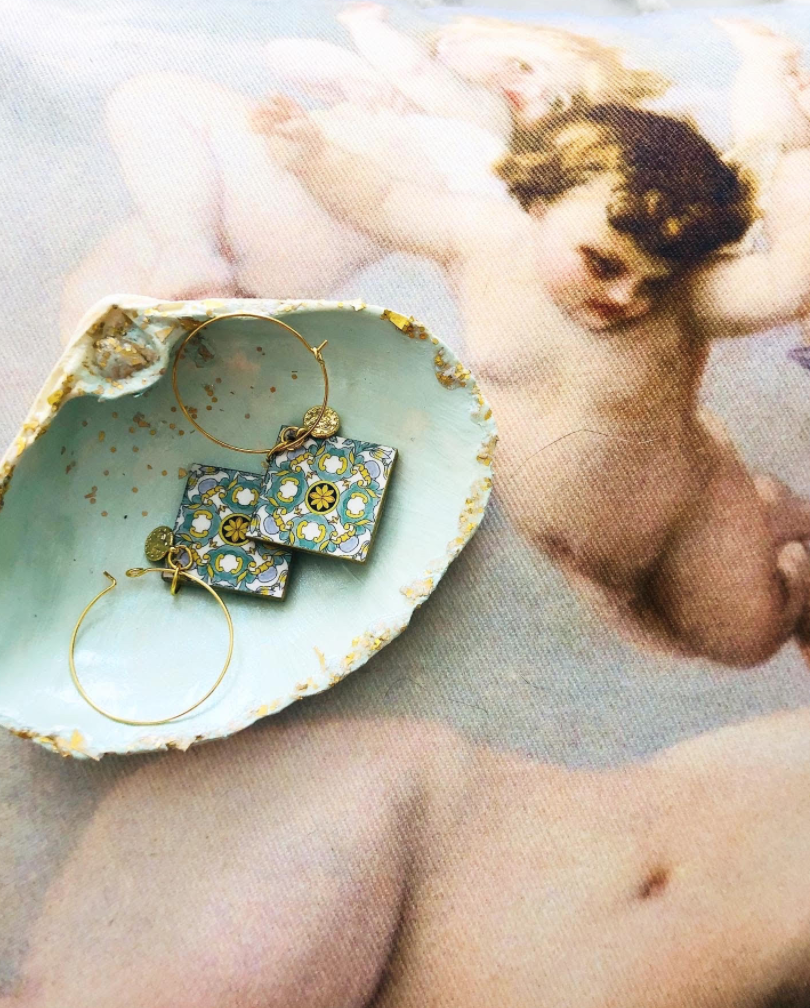
I’ve been making candles and decoupaging shells to make into jewelry dishes. They’re probably a bit horrible looking but they're mine — and they’re keeping an imaginative, curious part of my mind alive. By learning, envisioning, intending, and doing, I am casting a spell. I am present and I am full of the moment. I am embodied by my own creativity, and honoring it because pleasure is magic. It takes time to learn a new skill, so go slow. Mess up. Watch videos. Read books about it. And make the journey about nothing more than The Doing. You have nothing to prove.

Speak the language of flowers.

Screen Shot 2021-05-09 at 7.50.24 PM.png

In The Language of Flowers, Vanessa Diffenbaugh writes, “Anyone can grow into something beautiful.” I think flowers can teach us that. They tell us that from seedlings, we each have an opportunity to bloom. Perhaps you are yellow. Maybe I am blue. And that is perfect.

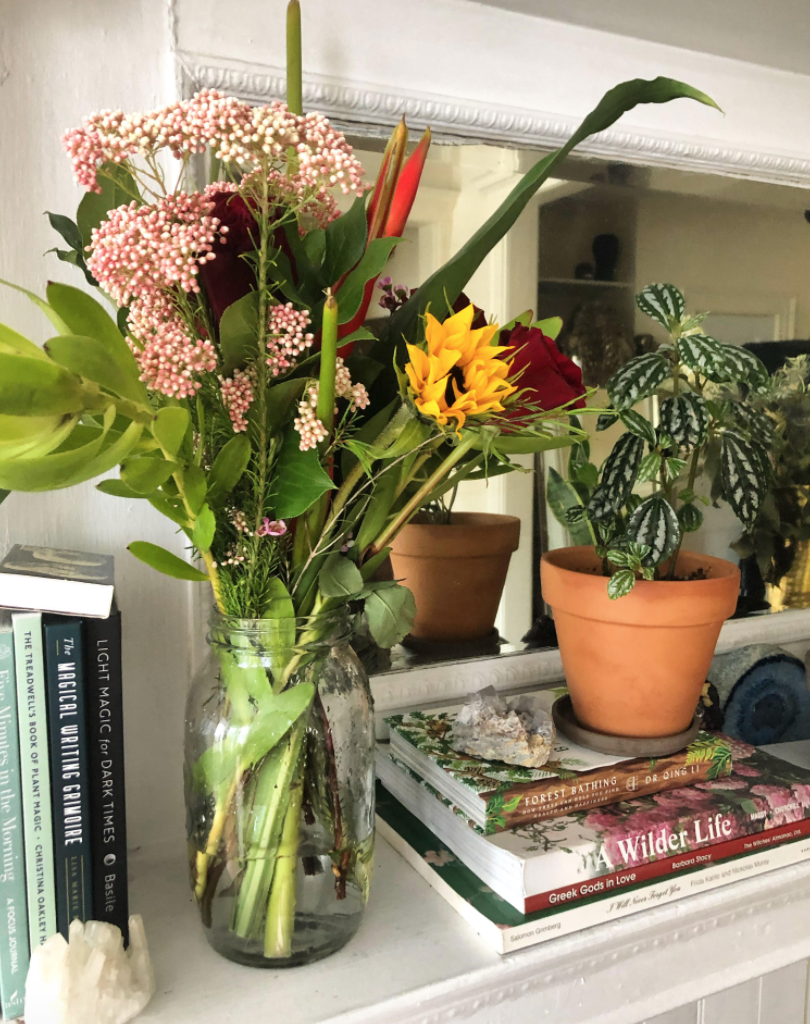
Flowers teach us about color magic. They teach us about local botany. They teach us about making a house into a home. They teach us about death, decay, and preservation. They teach us about living things. They teach us to fill a space with intention.

If you have access to flowers — even a single flower — rotate them in and out of your space. Take note of which colors inspire you, how they make you feel, and what the flowers are whispering to you from across the room.

Embrace a monthlong lunar practice for self-understanding

lmdt-lmb-grimoire.jpg

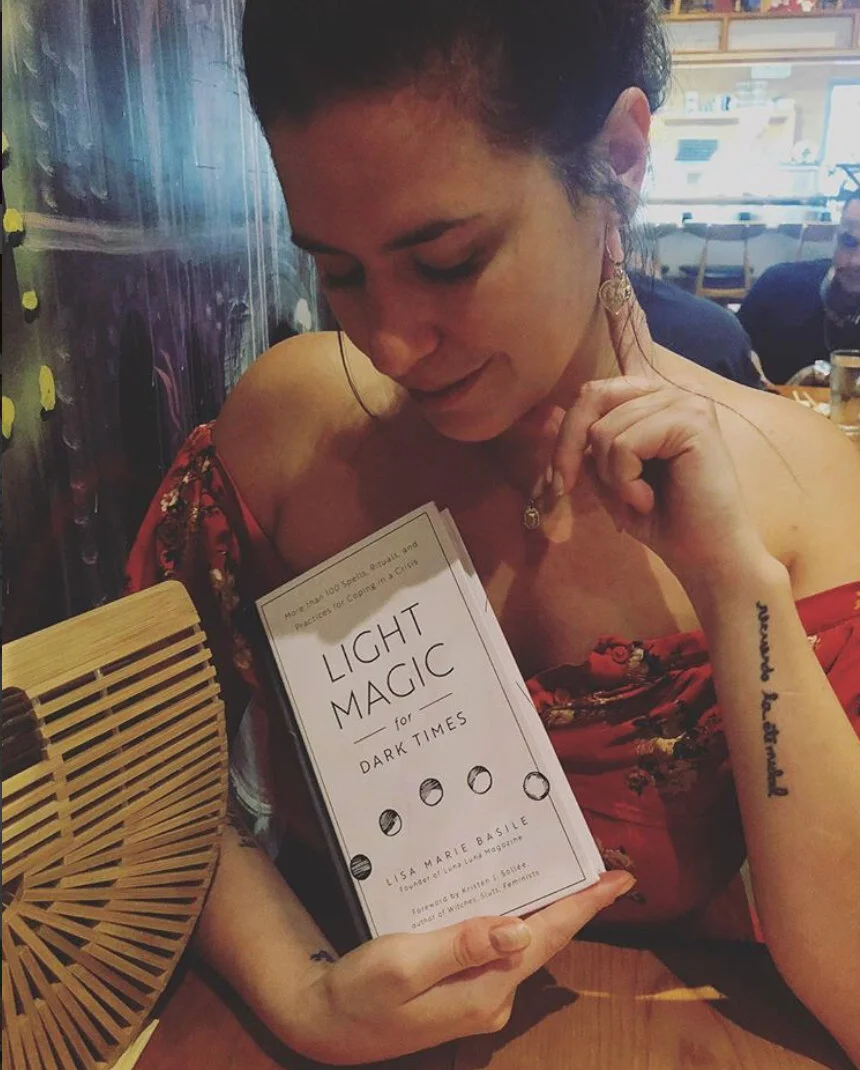
For those of you who love to work with the moon, this practice is the ultimate slow magic practice. It will help you track your mood, better understand yourself, determine which areas of your life need extra love or support, and find ways to increase joy. The point is to not go for instant gratification but to develop a practice that you turn to again and again for a few moments each day. The magic is in the process, the unfolding, and in the returning-to. This is from my book, Light Magic for Dark Times.
Materials

  • Paper

  • Something to write with

  • A mason jar

  • Optional: Decorations (e.g., crystals, flowers, shells, or other small decorative items)

Start this practice at the new moon. At the end of each day, write on a single piece of paper your daily mood and the day’s lesson: What did you learn? What did you realize? What do you need to focus on? You may also track specific things (e.g., creativity, self-esteem, health, energy levels). On the back of the paper write down the moon phase.

Place this in a mason jar (which you can beautify by filling it with crystals or flowers or shells) and keep this at the window under the moonlight—your goal here is to really connect with Luna. 

At the end of the entire moon cycle (by the time the moon reaches its new phase again, moving from waxing to full to waning to new), you’ll have tracked an entire cycle’s worth of self. 

Empty your mason jar. Lay out each piece of paper and write, in your grimoire, what you learned. You may see patterns emerge, so start connecting the dots with how your feel and the phases of the moon. Are you more imaginative during the full moon? Integrating the moon’s cycles into your life may help you get in tune with yourself and nature. 

—

Follow me on INSTAGRAM and TWITTER.

LISA MARIE BASILE (she/her) is a poet, essayist, editor, and chronic illness awareness advocate living in New York City. She's the founder and creative director of Luna Luna Magazine.
She is the author of THE MAGICAL WRITING GRIMOIRE, LIGHT MAGIC FOR DARK TIMES, and a few poetry collections, including the recent NYMPHOLEPSY, which is excerpted in Best American Experimental Writing 2020. Her essays and other work can be found in The New York Times, Narratively, Sabat Magazine, We Are Grimoire, Witch Craft Magazine, Refinery 29, Self, Healthline, Entropy, On Loan From The Cosmos, Chakrubs, Catapult, Bust, Bustle, and more. She is also a chronic illness advocate, keeping columns at several chronic illness patient websites. She earned a Masters's degree in Writing from The New School and studied literature and psychology as an undergraduate at Pace University.

In Slow Alchemy Tags magic, spellwork, slow magic
Comment
unsplash-image-720f6XT65tg.jpg

A Playlist for Cups

April 22, 2021

Joanna C. Valente is a human who lives in Brooklyn, New York. They are the author of Sirs & Madams, The Gods Are Dead, Marys of the Sea, Sexting Ghosts, Xenos, No(body), #Survivor: A Photo Series (forthcoming), and A Love Story (Vegetarian Alcoholic Press, 2021). They are the editor of A Shadow Map: Writing by Survivors of Sexual Assault and the illustrator of Dead Tongue (Yes Poetry, 2020). They received their MFA in writing at Sarah Lawrence College, and Joanna is the founder of Yes Poetry and the senior managing editor for Luna Luna Magazine.

Read More
In Wellness Tags tarot playlist, tarot, music
Comment
← Newer Posts Older Posts →
Featured
‘in the glitter-open black' — poetry by Fox Henry Frazier
'poet as tarantula,  poem as waste' — poetry by  Ewen Glass
'poet as tarantula, poem as waste' — poetry by Ewen Glass
'Hours rot away in regalia' — poetry by Stephanie Chang
'down down down the hall of mirrors' — poetry by Ronnie K. Stephens
'Grew appendages, clawed towards light' — poetry by Lucie Brooks
'do not be afraid' — poetry by Maia Decker
'The darkened bedroom' — poetry by Jessica Purdy
'I am the body that I am under' — poetry by Jennifer MacBain-Stephens
instagram

COPYRIGHT LUNA LUNA MAGAZINE 2025