



• Home
  • indulge
  • new poetry
    • About Luna Luna
    • resources
    • search
  • editor
  • dark hour
  • submit
Menu

luna luna magazine

  • Home
  • indulge
  • new poetry
  • About
    • About Luna Luna
    • resources
    • search
  • editor
  • dark hour
  • submit
shadow
A Writing Spell: Honoring Your Many Selves
Mar 1, 2021
A Writing Spell: Honoring Your Many Selves
Mar 1, 2021
Mar 1, 2021
An 11-Line Poetry Spell For Healing
Mar 1, 2021
An 11-Line Poetry Spell For Healing
Mar 1, 2021
Mar 1, 2021
How To Write Powerful Poetry Spells
Feb 28, 2021
How To Write Powerful Poetry Spells
Feb 28, 2021
Feb 28, 2021
Here Is Your Scorpio Homework This Season
Oct 25, 2020
Here Is Your Scorpio Homework This Season
Oct 25, 2020
Oct 25, 2020
3 Transformative Life Lessons Scorpio Teaches Us
Oct 25, 2020
3 Transformative Life Lessons Scorpio Teaches Us
Oct 25, 2020
Oct 25, 2020
Restorative Grief: Letters To The Dead
Oct 23, 2020
Restorative Grief: Letters To The Dead
Oct 23, 2020
Oct 23, 2020
A Santa Muerte Rebirth Ritual + A Tarot Writing Practice
Oct 6, 2020
A Santa Muerte Rebirth Ritual + A Tarot Writing Practice
Oct 6, 2020
Oct 6, 2020
Witches, Here Are The New Books You Need
Nov 14, 2019
Witches, Here Are The New Books You Need
Nov 14, 2019
Nov 14, 2019
3 Dream Magic Rituals And Practices
Nov 12, 2019
3 Dream Magic Rituals And Practices
Nov 12, 2019
Nov 12, 2019
How To Use Tarot Cards for Self-Care
Nov 11, 2019
How To Use Tarot Cards for Self-Care
Nov 11, 2019
Nov 11, 2019
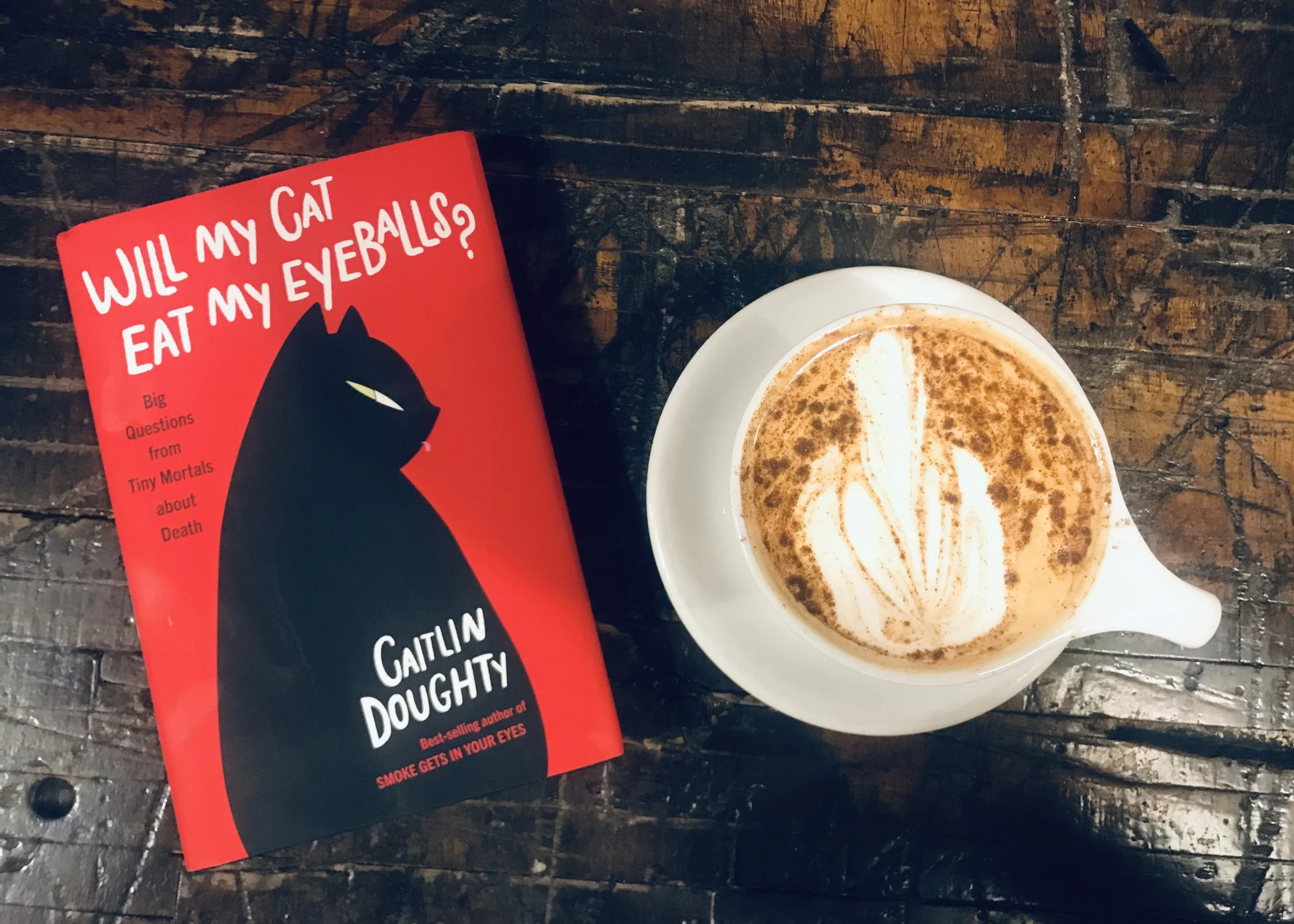
A Review of Caitlin Doughty's 'Will My Cat Eat My Eyeballs?'
Oct 25, 2019
A Review of Caitlin Doughty's 'Will My Cat Eat My Eyeballs?'
Oct 25, 2019
Oct 25, 2019
Nimue, The Deity, Came To Me In A Dream
Sep 17, 2019
Nimue, The Deity, Came To Me In A Dream
Sep 17, 2019
Sep 17, 2019
Astrological Shadow Work: Healing Writing Prompts
Sep 9, 2019
Astrological Shadow Work: Healing Writing Prompts
Sep 9, 2019
Sep 9, 2019
The Witches of Bushwick:  On Cult Party, Connection, and Magic
Jul 23, 2019
The Witches of Bushwick: On Cult Party, Connection, and Magic
Jul 23, 2019
Jul 23, 2019
7 Magical & Inclusive New Books Witches Must Read
May 15, 2019
7 Magical & Inclusive New Books Witches Must Read
May 15, 2019
May 15, 2019
Working Out As Magic & Ritual: A Witch's Comprehensive Guide
May 14, 2019
Working Out As Magic & Ritual: A Witch's Comprehensive Guide
May 14, 2019
May 14, 2019
Letters to the Dead: Shadow Writing for Grief & Release
Feb 8, 2019
Letters to the Dead: Shadow Writing for Grief & Release
Feb 8, 2019
Feb 8, 2019
How to Add Magic to Your Every Day Wellness Routine
Feb 5, 2019
How to Add Magic to Your Every Day Wellness Routine
Feb 5, 2019
Feb 5, 2019
Ritual: Writing Letters To Your Self — On Anais Nin, Journaling, and Healing
Jan 31, 2019
Ritual: Writing Letters To Your Self — On Anais Nin, Journaling, and Healing
Jan 31, 2019
Jan 31, 2019
How Rituals Can Help You Gain Confidence
Jan 17, 2019
How Rituals Can Help You Gain Confidence
Jan 17, 2019
Jan 17, 2019
Hearthcraft & the Magic of Everyday Objects: Reading Arin Murphy-Hiscock's 'House Witch'
Jan 14, 2019
Hearthcraft & the Magic of Everyday Objects: Reading Arin Murphy-Hiscock's 'House Witch'
Jan 14, 2019
Jan 14, 2019
True to The Earth: Cooper Wilhelm Interviews Kadmus
Nov 26, 2018
True to The Earth: Cooper Wilhelm Interviews Kadmus
Nov 26, 2018
Nov 26, 2018
Between The Veil: Letter from the Editor
Oct 31, 2018
Between The Veil: Letter from the Editor
Oct 31, 2018
Oct 31, 2018
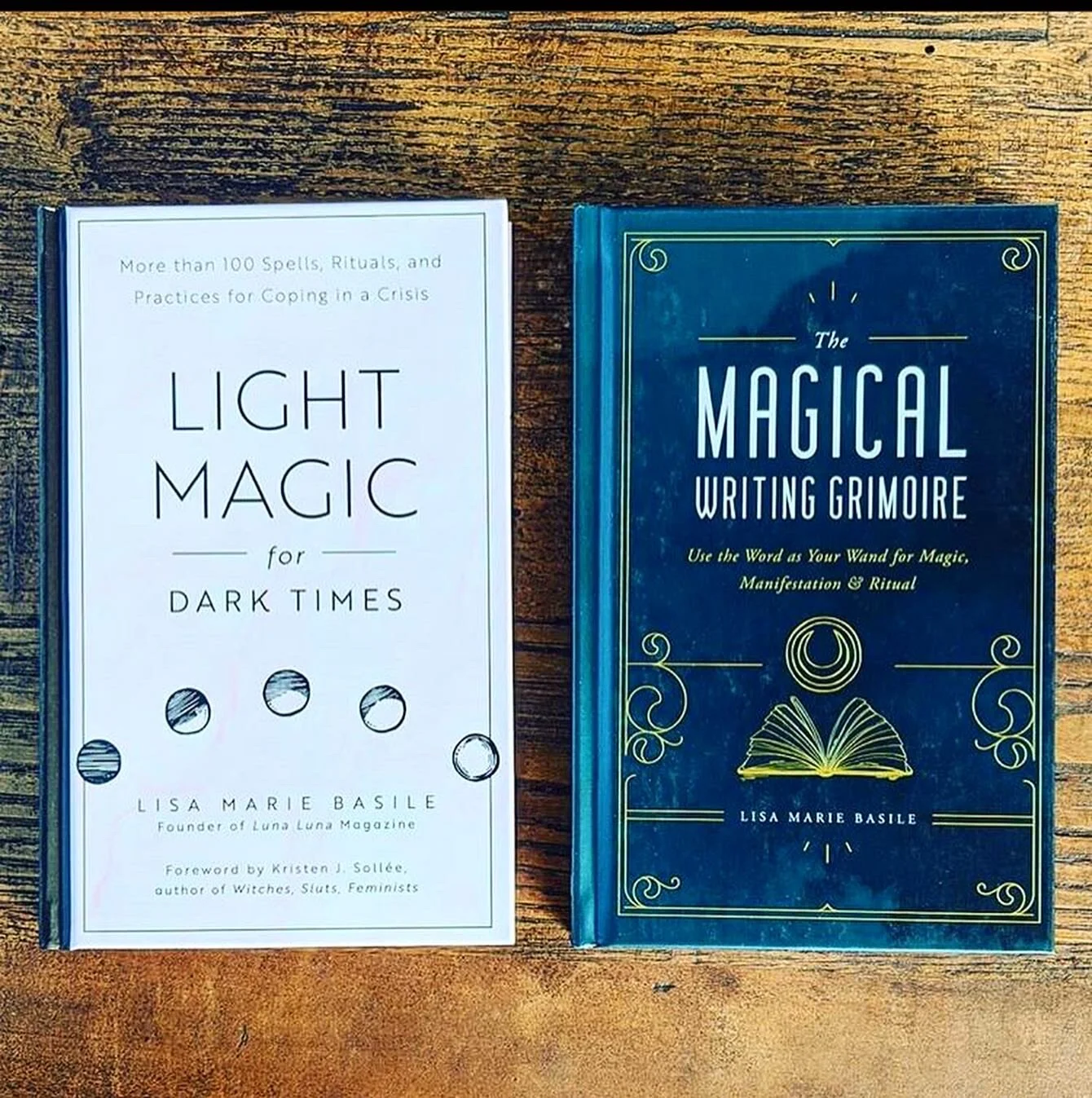
Shadow Work with Light Magic for Dark Times
Oct 31, 2018
Shadow Work with Light Magic for Dark Times
Oct 31, 2018
Oct 31, 2018
2 Poems by Stephanie Valente
Oct 31, 2018
2 Poems by Stephanie Valente
Oct 31, 2018
Oct 31, 2018
A Poem in Photographs by Kailey Tedesco
Oct 31, 2018
A Poem in Photographs by Kailey Tedesco
Oct 31, 2018
Oct 31, 2018
Photography by Alice Teeple
Oct 31, 2018
Photography by Alice Teeple
Oct 31, 2018
Oct 31, 2018
A Simple Spell to Summon and Protect Your Personal Power
Oct 31, 2018
A Simple Spell to Summon and Protect Your Personal Power
Oct 31, 2018
Oct 31, 2018
November and Her Lovelier Sister
Oct 31, 2018
November and Her Lovelier Sister
Oct 31, 2018
Oct 31, 2018
A Spooky Story by Lydia A. Cyrus
Oct 31, 2018
A Spooky Story by Lydia A. Cyrus
Oct 31, 2018
Oct 31, 2018
Screen Shot 2018-10-30 at 9.52.06 PM.png

An Interview With John Pivovarnick

October 31, 2018

BY ANDI TALARICO

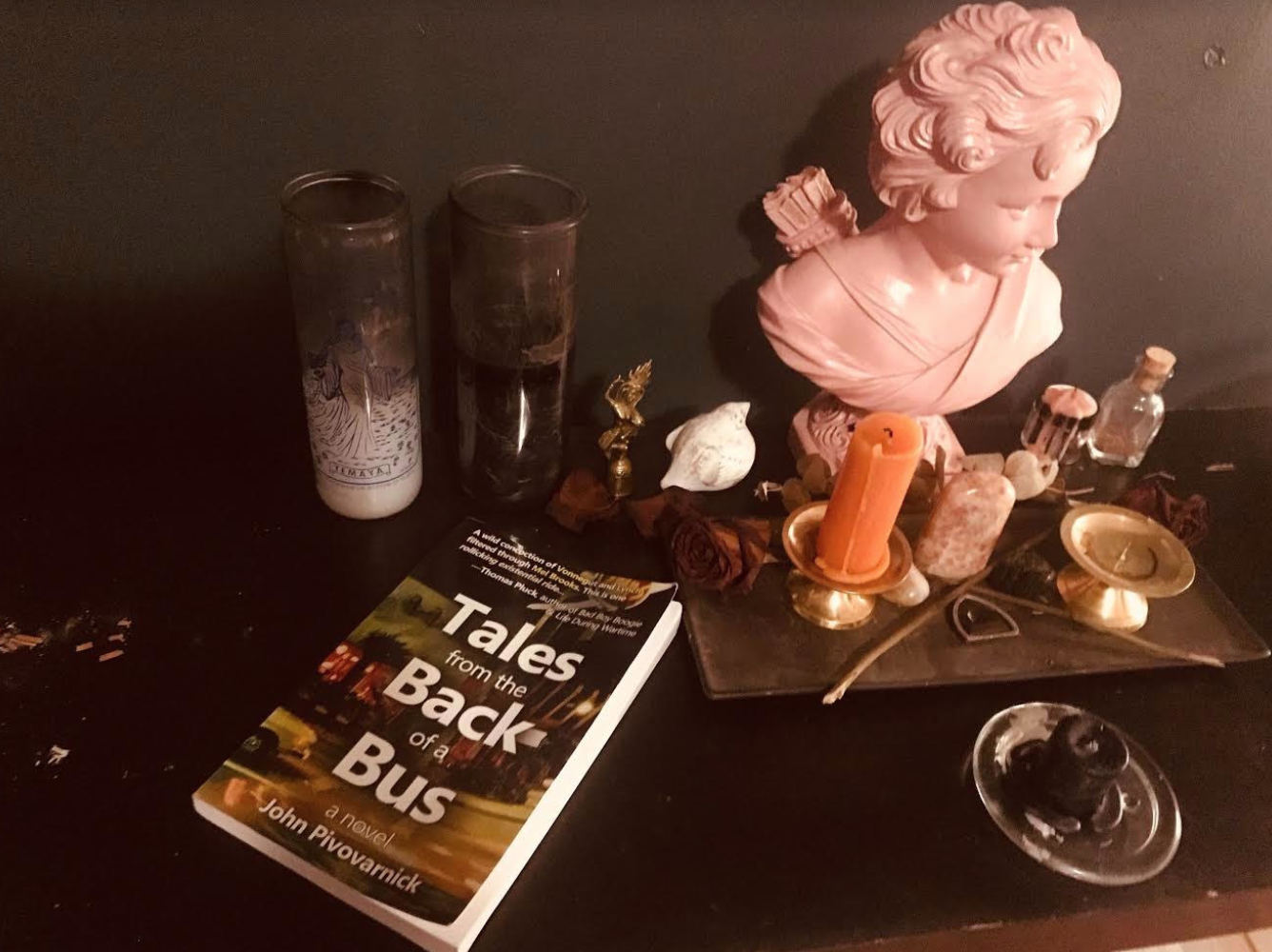
John Pivovarnick’s novel-within-a-novel Tales from the Back of a Bus tells the story of a young author handling the aftermath of his book’s publication. Jake Maldemer, a young writer in 1980s Los Angeles, writes a series of tales featuring a protagonist named Jack Moses as well as an ethereal, spooky man named Kobold. But when Jake hits the road to promote his book, a man claiming to be Kobold finds him, and things only get weirder from there. It becomes almost impossible to separate fact from fiction as we’re guided through a Dantean LA landscape and later in the piece, New York. The work speaks to the confusion of identity, cognitive dissonance, shame-based fear, and PTSD. Fans of Vonnegut’s Slaughterhouse Five or the film Jacob’s Ladder will feel right at home in these pages. I spoke with author Pivovarnick about the work.

I understand that you wrote much of this book some time ago, in the early 80s. What brought you back to it? What was the editing process like as you finalized this edition for print?

The story is pretty much as described in the afterword, moving that big honking filing cabinet and wondering "WTF is in here?" then spelunking in the monstrous thing.

The clincher, as it were, was finding those rejection letters talked about, too. The "its sooo good, no one will publish it" comments. "Too challenging." Too whatever.

The hardest part of editing was keeping it accurate to the timeframe. I hired an editor and he was like, "Did Jiffy Mailers exist in 1979?" and my answer was always, "They must have, because that's when that part was written."

There were also some characters I had a hard time not editing to fit today's standards. I had to let them stand [while cringing] because they were accurate and honest for the time.

What made you decide to finally move forward with the book's publication? Was there a moment?

The moment was getting similar rejection letters for Beneath a Glass Triskellion which Dave and I are still hammering away at. The thought being, let's learn this process so we're ready to go with these books when we're ready. There's quite a learning curve, as you can imagine. Luckily, I have a unique set of skills...

The story takes place in a city that both is and is not Los Angeles, in that it takes place in the physical and spiritual planes. What about Los Angeles made it available to you as a magical or ethereal realm?

I ran away to Los Angeles when I was 19, and it was both a magical/ethereal realm, and the drudgery of two jobs to make rent and no time to write. I took that bus ride to get that job. I ate at Ships a lot. Just the difference between growing up in Scranton, PA and finding myself in Los Angeles at 19 was quite the journey of discovery.

The act of writing is magical in the same sense the cards are magical or ritual is magical.

Your story is a frame narrative, a classic story-within-a-story, but because you also discuss this work being autobiographical, it's a actually a meta story-within-a-story-within-a-story...within a story? Jack is Jake is YOU, John. How did you handle the psychological gymnastics required to get within two characters that are both based upon your experiences?

Who said I handled them? I have a radio interview coming up next month, and my mind is blown about that.

Also, as a queer kid in denial, your life is all about getting in the heads of two characters that are both based on your experience. That's the closet in a nutshell.

One of the most potent aspects of the work is the main character's struggle over defining and understanding his sexual identification. What was it like, looking back upon those ideas in 2018 from a time when that was still a struggle for you? Do you identity as an LGBTQ author?

I'm an author who is gay, and my life informs what I write, regardless of characters, genre, or whatever. I always strive for representation in what I write, all the way around. I administer the Bechdel test to myself.
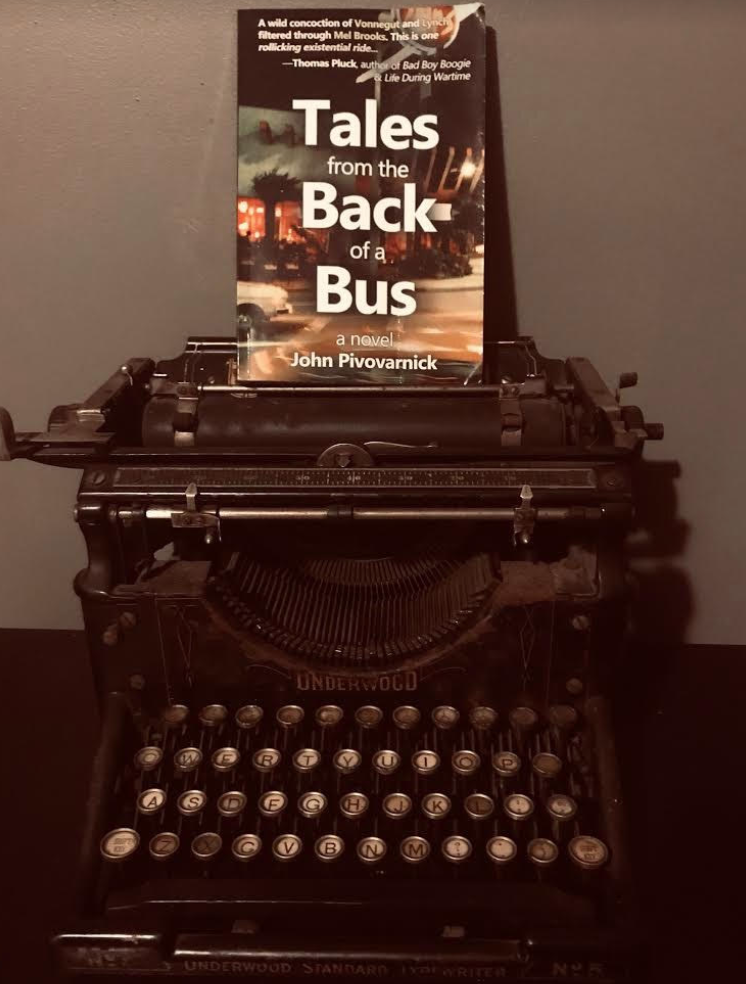
Screen Shot 2018-10-30 at 9.51.53 PM.png

At Luna Luna, we're always interested in the cultural signifiers of witches and witchcraft. While Tales from the Back of a Bus doesn't deal directly with witchcraft, you've long been a tarot reader and witchy individual. Do you see a corollary between witchcraft and authorship in general? How does your craft or spiritual practice inform your work.

The act of writing is magical in the same sense the cards are magical or ritual is magical. They all bring about a state of mind that makes you open and receptive, to see. Ritual informs your being. The cards inform another person. Writing informs the readers. It's all the same process of seeing, understanding, and communicating. To me at least. My best writing happens when the characters take control and I'm reduced to just transcribing what they tell me--that's whether they're people, creatures, space aliens, or what not. That "divine madness" Plato was so hot about.

Anything else you’d like to let us know?

This is a weird, weird book. Even I'm astonished at how strange it is. But it's a pretty accurate representation of me and my mind and life process at the time, through a lot of transformative stuff--personal stuff, the Reagan era which was also the start of the AIDS crisis, coming out, shaking off my catholic school upbringing to embrace a wider mystical world. Mind blowing stuff that I was lucky to survive intact. Ish. Intactish.

More than any other element in it, I think it maps my transition from the childhood view that the world is safe and sensible to the more truthful world "red in tooth and claw" ready to chew up the unwary/unaware and spit them out. A simmering summary of this story, maybe, in which I come out transformed on the other side. My life is way stranger than the novelization of it.


Andi Talarico is Luna Luna’s book reviews editor, and a Brooklyn-based writer and reader. In 2003, Paperkite Press published her chapbook, Spinning with the Tornado, and Swandive Publishing included her in the 2014 anthology, Everyday Escape Poems.

She’s taught poetry in classrooms as a rostered artist and acted as both coach and judge for Poetry Out Loud. She also penned a literary arts column for Electric City magazine, and currently curates the NYC-branch of the international reading series, At the Inkwell. When she’s not working with stationery company Baron Fig, she can be found reading tarot cards, supporting independent bookstores, and searching for the best oyster Happy Hour in NYC.
In Books Tags books
Comment
93F5F5E5-9784-49BA-9551-7DB0BA1D099D.JPEG

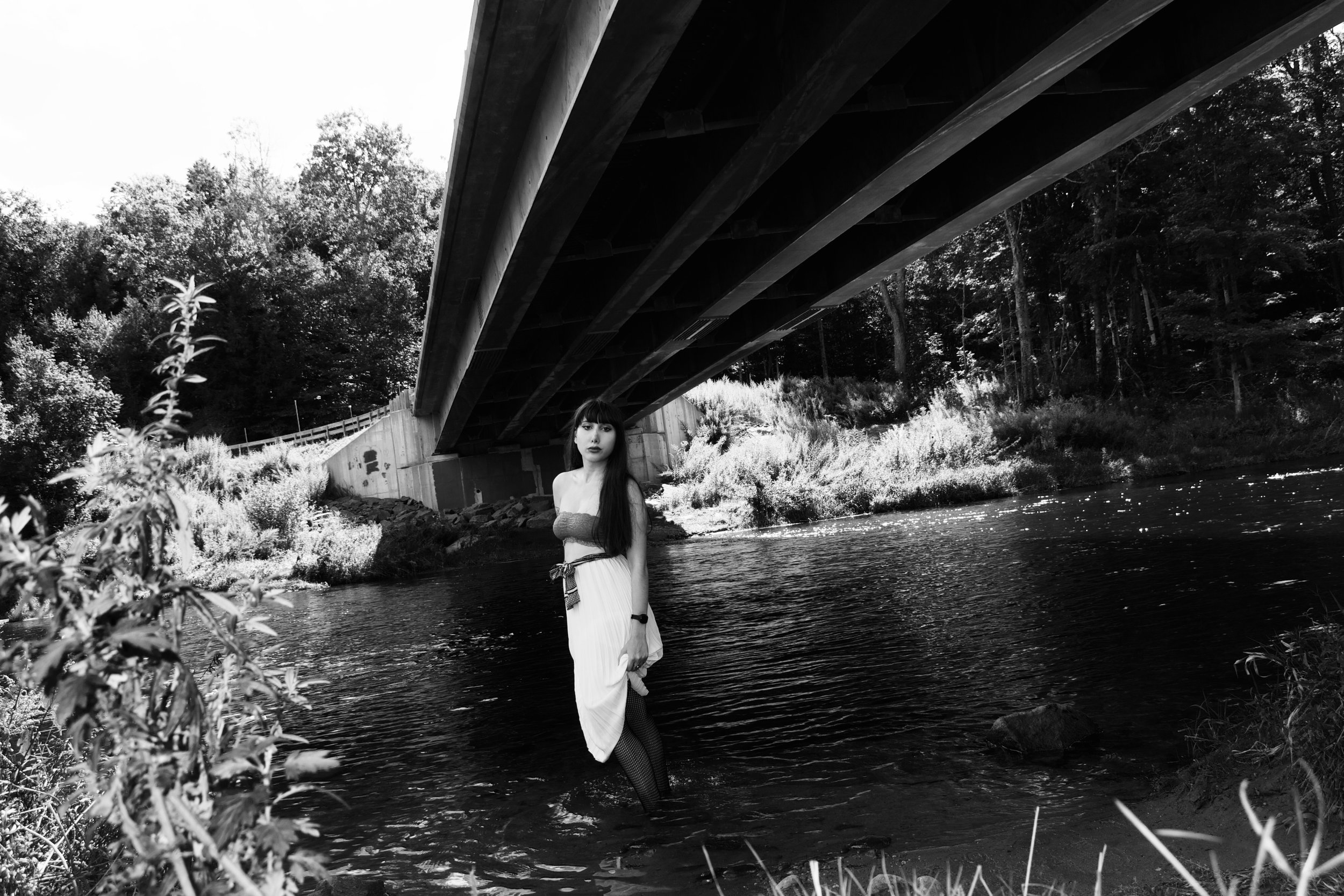
Survivor: A Witchy Photo Series by Joanna C. Valente

October 31, 2018

Joanna C. Valente is a human who lives in Brooklyn, New York. They are the author of Sirs & Madams, The Gods Are Dead, Marys of the Sea, Sexting Ghosts, Xenos, No(body) (forthcoming, Madhouse Press, 2019), and is the editor of A Shadow Map: Writing by Survivors of Sexual Assault. They received their MFA in writing at Sarah Lawrence College. Joanna is the founder of Yes Poetry and the senior managing editor for Luna Luna Magazine. Some of their writing has appeared in The Rumpus, Them, Brooklyn Magazine, BUST, and elsewhere. Joanna also leads workshops at Brooklyn Poets. joannavalente.com / Twitter: @joannasaid / IG: joannacvalente / FB: joannacvalente


Read More
In Halloween, Occult Tags Halloween 2018, halloween
Comment

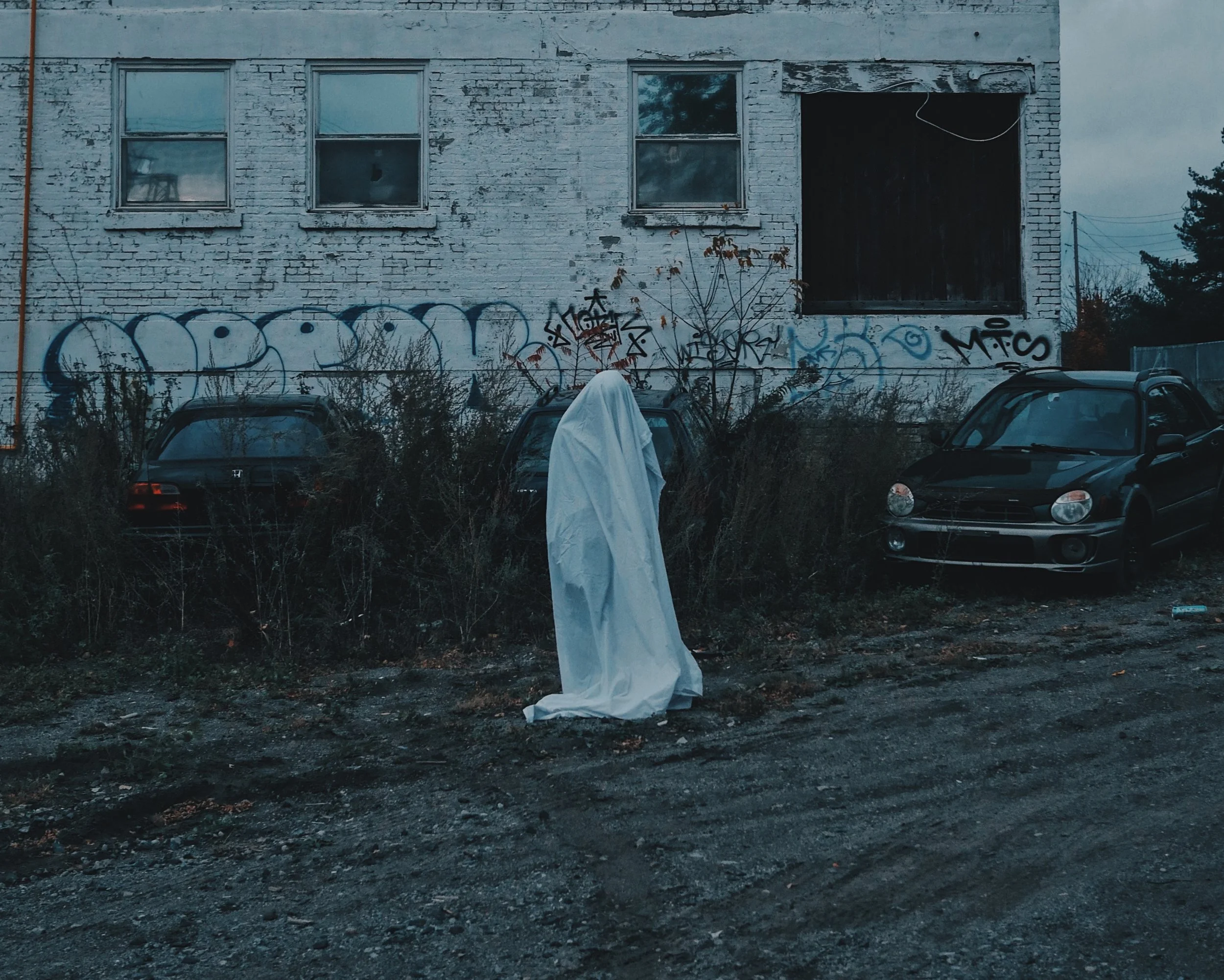
What It Means to be Dead: A Ghost Story

October 31, 2018

BY BOB RAYMONDA

Tucked away along the sprawling boardwalk of the Jersey Shore, there’s an unremarkable stand filled to the brim with balloons of all shapes and colors. Jules, an immovable man with a respectable paunch, presided over this place. He was bespectacled and bearded in such a way that made him look like a low-rent George RR Martin and brandished the author’s same tired fisherman’s cap. He never said a word as the sun-pocked children passed by, handing him fives and tens and twenties from their ice-cream stained fingers, begging for a chance to destroy the colorful spheres behind him.

What the children didn’t see, as they flung their dilapidated darts at the wall, was that the man possessed no legs to speak of. Trailing out from underneath his taut black t-shirt was a tuft of smoke, approaching the facsimile of a tail. The smoke’s size and shape ebbed and flowed with the management of his stall. Almost bursting while he waited for the grubs to make their mark, and deflating again as he used his pent-up-pressure to replenish the cheap waxy balloons behind him.

At his side most days sat an ornery fading beach rat named Luellen, clutching a wireless microphone, and cooing at the sweaty vacationers in their stringy bathing suits and inquiring after their fattened wallets. She chain-smoked Parliaments and blew second-hand smoke into the face of her customers, her legs propped up on the stall in front of her. What she lacked in grace, she made up for in what Jules’ mother would have called gumption. The few times she was asked to modify her behavior, be it by their boss or one of her asthmatic tween marks, Luellen had lit up a new smoke, let out a raucous fart, and cackled in their faces.

Jules appreciated her give-no-shits attitude, but couldn’t let her know it. She assumed he was one of those old, queer types who spent all their time in their own head and couldn’t give a second of their day to anybody else. Jules didn’t have a tongue. It got ripped right out his head when he died and never came back when he became re-corporealized. He was tenuously tethered to the land of the living, as it were. 

Where others in his predicament would take full advantage of the freedom in his newfound form, Jules has chosen to remain mostly stationary. There would be no haunting the halls of an old manse or zipping along the depths of the ocean floor in his future. There would only be the alternating seasons of the same rickety beach where he spent his own summers growing up. But he didn’t mind, Luellen was good company and he’d always loved the way the smell of deep fried oysters mixed perfectly with the dull glow of the neon lights that surrounded him.

The biggest trouble with Jules’ immortal decision was when the end of the season rolled around, year in and year out, like clockwork. After the last of the balloons had been popped and the summer people had filled their cars back up with their sand-covered beach gear, he stayed put. After Luellen had retreated to her winter job behind the counter of a deli, serving up bland bacon egg and cheeses, Jules floated back and forth in his stall ad infinitum. 

During those days, Jules would wait for the sun to come up and finally take a moment to float away. He watched the waves swell in and out as the snow came and went. And he waited, for the next crop of kids to show up and require something of him. It was a lonely thing. He’d drift along the edge of the shore and wonder what it’d be like if he could still wiggle his toes into the harsh frozen sand underneath them. What it would be like to feel anything, at all, anymore. 

It wasn’t that he couldn’t touch anything, on the contrary, he could pick things up well enough, but he couldn’t savor anything, not really. He couldn’t eat a Nathan’s hot dog or drink a cold Bud Light without it falling onto the ground behind him in a pool of grey unsubstantiated mush. He couldn’t kiss his husband’s collarbone or feel the brief moment of joy as their hairy knuckles brushed into one another. It all felt so hopeless. 

At least, until Phil showed up.

It was like any other January morning: Jules moping about, restocking the balloons despite the cold when he heard a knock at the counter behind him. He spun around and saw someone wearing a long trench coat and a pair of aviator sunglasses. They were chomping on a cigar and chewing a piece of gum at the same time, and spoke with their teeth gritted, “Hey Skin, how much for a chance?”

Jules pointed to the sign behind him, $3 for 2 tries, $5 for 3. 

The stranger chortled, “What’s a matter, cat got your tongue?”

Jules, feeling sassy, opened his mouth and pointed to the bloody stump where his tongue used to be. Phil recoiled, but then stuck their head in even closer to Jules’ face.

“Holy Mary, mother of Joseph, what the fuck happened to you?”

Jules shrugged.

“You ever think of carrying around a little pen and paper so you can actually talk to people?”

Jules rolled his eyes, but reached into his pocket and pulled out a faded moleskin with a canary on the cover and a stubby brown crayon: Of course.

“That’s more like it. Name’s Phil,” they said, sticking their hand out, “How about you?”

Jules, he wrote before taking Phil’s hand in for a shake. It was cold. Cold like Jules’ hands were. Dead hands. Jules cocked his head like his pit bull, Tubsy, always would.

Phil let out a knowing smile. “Fifty or sixty years now, I think. I lose track. What about you?”

Jules held up all ten of his fingers.

“A baby then. Sorry I called you Skin, haven’t run into any others in a while.”

Jules shrugged again.

Phil reached into their breast pocket and pulled out a crisp twenty dollar bill. They slapped it on the table and hungrily took the fistful of darts Jules handed them. They didn’t make a single shot but didn’t seem to mind. Casually pinning the wall while taking puffs from their cigar.

Jules picked up his crayon again, wrote: You don’t like sitting still much, do you?

Phil laughed, “Never been too good at that.”
I can tell.

“Can I ask you another question, Jules, was it?”

Do I have a choice?

“Course you do, but I’m still gonna ask: why here?”

For the first time in what felt like ages, Jules’ wrist began to cramp up. He wasn’t used to writing this much, but asked: Where else would I go?

“Anywhere!” Phil exclaimed, giving up on their darts and sitting on the booth, patting the table next to them, “I know this lounge singer, Debby, who goes around at night singing in the empty ballrooms of every venue she never got to topline before she croaked.”

Jules hesitantly climbed up and plopped himself down. His tail wagged with excitement, and as soon as Phil saw it, they unbuttoned the bottom of their jacket and showed off a hazy tail of their own.

“And there’s this other friend of mine, a tax agent from Tallulah who summers in the lingerie section of a Wal*Mart outside Tacoma, for the fun of it.”

Jules scratched away: Sounds like you’ve got a lot of friends.

“I do! And that’s just in the States. There’s this old clown who runs a crust punk DIY venue in Berlin. And…”

That’s very good for them. It sounds like they’ve all had very fulfilling deaths.

Phil let out a big sigh, “You’re not getting my point.”

Jules cocked his head like Tubsy again.

“Forgive me if I’m overstepping here, but if I can hazard a guess, you lived here before you died.”

Jules nodded. So what?

“So, haven’t you wanted to get out and see any of the world?”

Jules shook his head, without conviction.

Phil stubbed out their cigar and spit their gum out in a high arc across the boardwalk. “You’re telling me, in the ten years since you’ve been a skin, you’ve sat here doing the same shit you did when you were one, and you’re still happy as a clam?”

Jules nodded, more and more unsure of himself.

“I call bull shit.”

Where would I even bother going? None of it’ll be any different than here. None of it will get me my husband back.

They sighed and put a hand on Jules’ back. Even dead, lifeless, and cold, it still sent a shiver down his spine. “Anywhere, Jules. You could go anywhere. And you can’t dwell on the skins, it’s bad for your complexion. And this body of yours? If you’d bother getting out once in a while, you’d realize it could be anything you wanted.”

My body is just fine thanks.

“Of course it is! But it could be something else too. Something more”

Jules gave Phil the Tubsy look again.

Phil put their hands on Jules’ face. Their pupils were giant and their eyes were green in a way you could get lost in. They looked at him, earnestly, said, “If you’ll take my hand, I can show you.”

Jules hesitated. Who was this ghost, anyway? And why should he trust them? He broke eye contact and fiddled with one of the darts that Phil never threw. He turned and sent it flying, himself, straight into one of the biggest balloons he’d blown up. A small wisp of mist leaked out as a little part of him escaped back into the world.

It was Phil’s turn to shrug and shrug they did. They rubbed their hands together and pulled their trench coat back in tight to their chest, blowing air on their fingers. “Suit yourself,” they said, as they stood up to leave.

As Phil drifted away, Jules thought about what they said. What was the point of staying here, at least during the offseason? He could always come back when there was work to do again if he wanted. He wrote a quick note and rapped his knuckles on the counter three times. At first, Phil didn’t hear him, and so he did it again. The whole stall shook, and it sounded like a thunderclap against the boardwalk beneath him. Phil turned back now, and Jules held up his sign: Wait.

Jules took one last look at the stall where he’d spent so much of his life and death. He’d miss it, but Phil was right. It was time for him to experience a little bit more of what there was out there. He had his whole death ahead of him and he was starting to look forward to it, despite himself.

Phil had a huge smile on their face as Jules appeared next to them. “You sure about this, friendo?”

Jules sighed, and scratched a final note: You’re really gonna try and get me to turn back, now?

Phil shook their head. Took Jules’ hand, warming him all the way up, and lead him finally away from the shore.


Bob Raymonda is a writer based out of New Rochelle, NY. His work has found its way onto Quail Bell Magazine, Peach Magazine, Syndicated, Potluck Magazine, & Yes, Poetry. In early 2015 he founded Breadcrumbs Magazine, an online literary and arts journal that fosters creativity and collaboration through shared inspiration. The project has grown into a community of over 200 contributors across the world in a wide variety of mediums, with more submitting all of the time.


In Halloween Tags Halloween 2018, Halloween
Comment
pau-casals-588027-unsplash.jpg

A Guide to Interpreting a Magic Eight Ball

October 30, 2018

Singer Morra is a Queens NYC-based queer composer, playwright, and magick maker who works as a voice teacher and musician for theatre.

Read More
In Occult Tags magic, magic eight ball
Comment
Image via GOOP.

Image via GOOP.

Interview with Arin Murphy-Hiscock, Author of 'Protection Spells'

September 19, 2018

I recently had the chance to ask Arin a few questions about her most recent book, Protection Spells: Clear Negative Engery, Banish Unhealthy Influences, and Embrace Your Power, the necessary and active role in taking charge of your own magic, and some common misconceptions about spell-casting.

Read More
In Books Tags Spell, spellwork, Witchcraft, Trista Edwards
Comment
cemetery

Sarah Chavez on Death Positivity, Grief, & Intersectional Feminism

September 18, 2018

INTERVIEW WITH SARAH CHAVEZ BY LISA MARIE BASILE

Last year, I found myself in the midst of intense grief; I’d lost three people in a row —a friend, my mother’s partner, and my beloved aunt. Between the three losses, I had experienced the kinds of grief that come with both anticipation and violent surprise.

The grief was tidal, complicated, numbing, horrific, and, as it seemed then, endless. I couldn’t find my way out, and for some time, I questioned everything about life itself. Why do we die? Is there importance to it? How do we make it sacred? How can we talk about it publicly? How do we better care for the dying and for those in grief? How do make space for the discussion of it? How, as a nation, do we handle death—and how do our limitations and rituals intersect with race, gender, and class? I realized, too, that grief hadn’t ended there. I would experience it again, and again, and again. I couldn’t (and sometimes don’t) reconcile this, but I knew I couldn’t continue living in a hazy veil of denial and stigma and quietness.

A few things provided comfort to me. I began ritualizing my grief (I’d visit cemeteries, allow myself to experience the feelings rather than running from them, which I write about in my book, Light Magic for Dark Times). I also started diving into the death positive movement to not only honor death’s naturalness and inevitability, but speak to others who live and work in that liminal space—that space where death isn’t an uncomfortable topic to be tucked away but an important subject worthy of our time and openness.

View this post on Instagram

WE’RE DOING A PODCAST! @DeathAfternoon will be hosted by @TheGoodDeath, Louise Hung and ME! . . We are so excited about launching in October but, we need some help to make it happen! Check out our campaign and what we’ve got planned on @iFundWomen (link in the bio) . . We’ve been working for months on this and CANNOT WAIT to share it with you. . . PS - Taking a moment here to declare my eternal adoration of @lurchyeatings who created our logo 💜⚰️

A post shared by Sarah Chavez (@sarah_calavera) on Aug 24, 2018 at 11:38am PDT

Enter Sarah Chavez. I’ve admired her work for a very long time, even before it aligned with my personal views and realizations. Sarah is the executive director of the “Order of the Good Death” and she’s the co-founder of the feminist site “Death & the Maiden” (which I urge everyone to check out). She’s also the host of a brand new podcast, Death in the Afternoon, which you can support here.

Her voice is an important one—it’s feminist, inclusive, and compassionate, and she uses her voice to “to examine the relationship between ritual, decolonization and death itself.” You can read all about her incredibly important work here (and, if you’ve read Caitlin Doughty’s From Here to Eternity, you’ll find Sarah as a subject in that work).

Below, I chatted with Sarah, who kindly and generously offered some ideas around grief and death positivity. I recommend this read for anyone ready to encounter that intersection, in addition to its alignment with feminism, gender, race, class, and ritual.

I hope that in your journey toward exploring death and grief you find some light and peace.

LISA MARIE BASILE (LMB): How does grief intersect with the death positive movement? How can the tenants of death positivity help us move through that pain?

SC: Megan Devine, a clinical mental health therapist and author, recently said that she thinks we are more afraid of grief than we are of death and I think there’s a lot of truth to that. To stand by and bear witness to incredible pain that we cannot fix, makes most of us unbearably uncomfortable. Particularly if that grief stems from an untimely or violent death, because then we cannot escape the harsh reality that yes, anyone at any age - your child, your best friend, your partner - could die at any time. 

By having some level of comfort with discussing death and by learning how we can best support others in mourning, is a big part of being death positive.

What often happens is the people we depend on to be present to help us and support us through a death, (including medical professionals), are so uncomfortable themselves, or don’t know what to do or say, so they end up ghosting instead. This often makes the grieving process even more difficult, and can result in the grieving person feeling even more isolated or even suicidal. Death and grief is a painful but normal part of life; by recognizing that and treating it this way, it can go a long way toward helping our loved ones and ourselves navigate through all the pain.

What would our society look like if, instead of turning away, we could accompany and lovingly support one another through the experience of loss? 

LMB: Women are such a key component of the death positive movement. It's amazing, because women give life and they also help move people through death. For instance, my mother worked in hospice for a long time—and she was always asked for by the dying to come sit with them as they passed. Why do you think it is important for women, specifically, to take part in the death positive movement? How can women specifically benefit? I know this is very open-ended, but I'd love to include your thoughts directly in addition to linking to the many wonderful articles that tackle it.

SC: Not long ago dying, corpse care, and mourning was largely considered feminine work, that took place within the home. However, when death and dying became profitable industries, (the medical and funeral industries), and deemed something only privileged, educated men could do, it marginalized women, severing them from roles they had previously played for centuries, and pushed them into the role of consumer.

In result, our interactions with, and relationship to our dead, became mediated and staged via a system that was contrived by men, and which still largely financially and socially supports men. 

One has to ask, who is our current system serving? Surely not the people who are having to pay thousands of dollars for procedures and practices that distance us from one another, are often completely unnecessary and cause harm to the environment. Our deaths and the rituals surrounding death should be things that hold meaning and importance for us, things that support us, and we need to have the courage to ask ourselves and our loved ones, what those things are and why?

It is important to recognize that gender – as well as race, disability, sexuality and privilege – play a large role in determining our relationship to and experience of death and dying. For centuries our access to opportunities and spaces that have a direct impact on the quality of our lives and in turn, our relationship to and experience of death have been restricted. I believe we have the power to create healthy, meaningful, human-centered practices, not profit centered ones. I encourage others to reclaim these spaces and roles from the patriarchy, from centuries of colonization, and from capitalism. 

I view my work as a death positive activist as a feminist act – I’m advocating for others to reclaim these spaces and roles from the patriarchy, from centuries of colonization, and from capitalism, so that they can have agency over their lives, their deaths, and the death care of their loved ones.

Also, I think it is feminist AF to take control over what happens to your body when you die. We’ve had our bodies subject to standards, rules, and laws created by men our entire lives and we often modify our bodies to appeal to the male gaze so we can be “valued” in the patriarchal society we exist in. Be body positive AND corpse positive! Learn about all the options for body disposition. Ensure that your death reflects the things that are important to you in life – you can be of service to others by donating your body to science. If climate change and environmental issues are important to you, then look into green or conservation burial and forgo harmful procedures like embalming. Have your ashes turned into a firework, a diamond or pressed into vinyl. Do whatever you want, but let that final act be one you decide – don’t give that control away.  We should be empowered to make decisions regarding our bodies in life, and those rights should also extend to the body in death.

I find it interesting that many of the women entering the funeral business or leading the grassroots movement of death doulas or death midwives are women in their 50s and 60s. 

We live in a society that bases a woman’s value on a youthful, “beautiful” body, as well as in the child bearing (and child raising) body, but devalue or have limited places in our culture for older women. I think many of these women are striving to reclaim and imbue both of these important spaces (aging and death) with the meaning and value they deserve. 

There are many issues that are a big concern to me that demonstrate how feminism and the Death Positive intersect:

  • Gender-based violence is escalating and our trans sisters of and women of color are especially at risk. Last year the Center for Disease Control released it’s findings that domestic violence is a major cause of death for women. Calling it, “a serious, preventable, public-health problem that affects millions of Americans.” Women are out here being murdered simply for trying to exist and have agency over their own lives. 

Who is Killing American Women? Their Husbands and Boyfriends 

The Link Between Domestic Violence and Mass Shootings 

  • The U.S. has the highest maternal mortality rate in the developed world. 

We need better medical and mental health care and support for people experiencing miscarriage, abortion and infant/child loss. Most women grieve in silence because society often blames or shames women for these types of losses.

In the U.S. Black women are dying in childbirth at nearly four times the rate of white women. As for Black infants? They’re dying at about twice the rate of white infants. Racism is fueling these deaths. Not to mention the immense stresses on women raising Black and brown children. Knowing there’s a real chance that when your child leaves the house to go do something as ordinary as play the park they may never come home alive?  

  • According to reproductive justice advocate Caroline Reilly, the greatest weapon in the anti-choice movement arsenal is our fear of death. By comparing abortion to murder and framing themselves as “pro-life,” they depict women as evil, immoral individuals rendering them incapable of making “good” choices.

In the days following Trump and Pence’s election, women have had to contend with continuous threats of having their access to reproductive health care stripped, being forced to have funerals for miscarried fetuses, or having a president who stated there should be some form of “punishment” for women who have abortions. This issue has become even more urgent with the possible Supreme Court confirmation of Brett Kavanaugh, who could jeopardize our reproductive rights.  

LMB: For people who are new to the death positive movement or haven't heard of it, but are deeply struggling with grief, fear of death and obsessive thoughts of the necro, what would you say?  

SC: Your relationship with death and your own mortality is like any other relationship – it needs work, reflection, and self-evaluation. Death is so hard, and for as much potential for meaning and beauty as there is to be found in aspects of it, there are equally horrible things to grapple with as well.

My colleague, Caitlin Doughty, host of Ask A Mortician, suggests something that I found to be the most simple and helpful; in lieu of getting overwhelmed by the idea of death, examine what your specific fears are and work towards minimizing that fear through actions.

For example, maybe you’re afraid of pain or you are worried that your wishes, or identity won’t be honored. In this case, you can create something called an Advance Directive, outlining your end of life wishes for things like pain management, quality of life care and legally designating someone you trust to carry out your wishes.

Or, one that’s pretty common is not being able to complete your projects or ambitions. While you’re still working toward your goals, make a plan and get organized. Find people in your life who can help carry out your goals or continue your work if aren’t able to.

For myself, and a lot of other folks in socially marginalized communities it is often dying a bad death – death by violence, or not being able to afford or access care for a treatable or manageable health condition are a couple of examples. This one is particularly hard because bad deaths are often the direct result of things we can’t control. It can help to take action and get involved in movements and initiatives that are working toward changing the underlying reasons that bad deaths occur – volunteer at domestic violence shelters or at hospices for the homeless, financially and physically support organizations like Black Lives Matter, the National Center for Transgender Equality or the Black Mamas Matter Alliance.

For me, the most important reason to face our fears surrounding death is that it influences our behavior and beliefs in ways we are not often aware of. The roots of inequality, racism, and social marginalization are grounded in this fear.

In the early 1970s anthropologist Ernest Becker’s Pulitzer Prize winning book, The Denial of Death came out. It details the theory that all of our actions are motivated by an awareness of our inevitable deaths and out of this work came Terror Management Theory. Very briefly, the theory is that the anxiety surrounding the fact that we will cease to exist is what pushes us to create - we want to live on, or transcend mortality through our work and achievements, or by creating children all things that we believe will carry on our legacy. 

In the past year TMT (Terror Management Theory) has been cited as the reason behind things like the Brexit decision, Trump being elected, and Nazi’s openly rallying in cities across the U.S. The reasoning behind this is that we tend to embrace collective legacies inherent in our culture, or feelings of nationalism because these provide us with a sense of belonging, identity and meaning in our lives. Being a part of something that we feel is important or “bigger than ourselves” makes us feel good and is another way of contributing to our perceived legacy. Recent studies have shown that our fear of death prompts us to double down on those fears and beliefs, and the result is hating or fearing those who are not like us – who don’t look like us or share our same beliefs

LMB: What are some simple steps one can take to become more death positive in their everyday life?

SC: Begin by working on creating rituals for yourself. Each month designate a day to honor your ancestors, collective deaths within your community, or the death of someone close to you. It is important to make space to honor your own grief, as well. This can be any type of loss – relationships to people or places, periods of your life, whatever you need to mourn. 

During this time you could cook a meal to share with the dead, create an altar, play music, read a poem, light a candle, write a letter, draw something, meditate, whatever serves you. What is important is that you create your own rituals and imbue them with things that are meaningful to you. Detach from the idea that you have to acknowledge the dead, or your grief in a certain way, or in a designated location, or on an assigned day of the year. Give yourself permission to reimagine things that will nourish you as an individual, and your community.

There can be comfort for some in collective acts of mourning and healing. Think about creating that space for your family, friends or community. It can be as simple as a potluck dinner with chosen family, to a more defined set of activities within a group - a guided meditation on mortality, followed by writing a letter to someone you’ve lost, and close with a reading and a vigil for folks in your community who died as a result of racism, sexism, capitalism, etc. Finally, carry those threads throughout the rest of the year by recognizing and actively working to dismantle the underlying systems that cause and contribute to these unnecessary deaths. 


sarah chavez

Sarah Chavez is changing the way we think about death. As the executive director of the “Order of the Good Death” and co-founder of feminist site “Death & the Maiden,” Sarah is a leader in the Death Positive movement, using her voice to examine the relationship between ritual, decolonization and death itself. Her multifaceted approach to observing and honoring this process is unparalleled; her work weaves together the relationship between death and food, rituals, culture, and society, which she also shares on her blog “Nourishing Death.” And with her work as a museum curator, Sarah has the uncanny ability to intertwine the ethereal and abstract process of dying into a relatable and tangible experience that can be understood and interacted with. Her latest project, the podcast “Death in the Afternoon” with co-hosts Caitlin Doughty, and Louise Hung, holds this same energy. Sarah will continue sharing her unique, fantastical life with listeners, while of course sharing plenty of anecdotes about death as well.

Sarah grew up around death. As the child of parents in the entertainment industry, she was raised witnessing choreographed Hollywood deaths on soundstages. Sarah’s work has been influenced by this unique upbringing, and she has dedicated her adult life to examining death and dying through an intersectional-feminist and inclusive lens.

As a leader of the Death Positive movement, she uses her work as an activist to advocate for others to reclaim experiences around dying. She does this by sharing history, and her own rituals and ideas for decolonizing death. The goal of this all is to help inspire others to create a healthier relationship with death and mourning, to better serve their own needs as well as those of the community at large. Sarah’s work centers women, both as death professionals and as a part of the Death Positive movement. She uses her platform to help examine the historical and cultural reasons women are at the forefront of death activism, and then she places the narrative back in the hands of the women who are actively doing this work and shifting the future of death.

Sarah’s empowering message weaves into this life, and not just that which lies beyond. She became a historian to preserve the culture and history of the Latinx neighborhood she was raised in, and she became a museum curator for a similar reason; to help share the story of women’s history, as well as other silenced peoples, like the stories of those with Japanese ancestry who were imprisoned in internment camps. Sarah uses her own story to help others see the light as well. She was the subject of a chapter in Caitlin Doughty’s NYT bestselling book, From Here to Eternity, and she has done research and writing and is the editor for The Order, and has worked on popular YouTube series, Ask a Mortician. Sarah continues using her voice to stand up and advocate for those who don’t have the privilege; in this life and beyond.

Tags death positive, death positivity, caitlin doughty, from here to eternity, sarah chavez, death and the maiden, death in the afternoon
Comment
Sixteen92

Sixteen92

Interview with Claire Baxter, Founder & Perfumer of Sixteen92

August 30, 2018

And crafting scent, as perfumer Claire Baxter proclaims on her website, is an aromatic art. Claire is the founder behind the Texas-based fragrance shop, Sixteen92. Taking its name from the year of Salem Witch Trials, Sixteen92 crafts small batch fine fragrances inspired by literature, lore, and history. 

Read More
In Occult Tags Perfume, beauty, witch, witchcraft, Trista Edwards, the salem witch trials, Salem, Halloween
Comment
IMG_5777.JPG

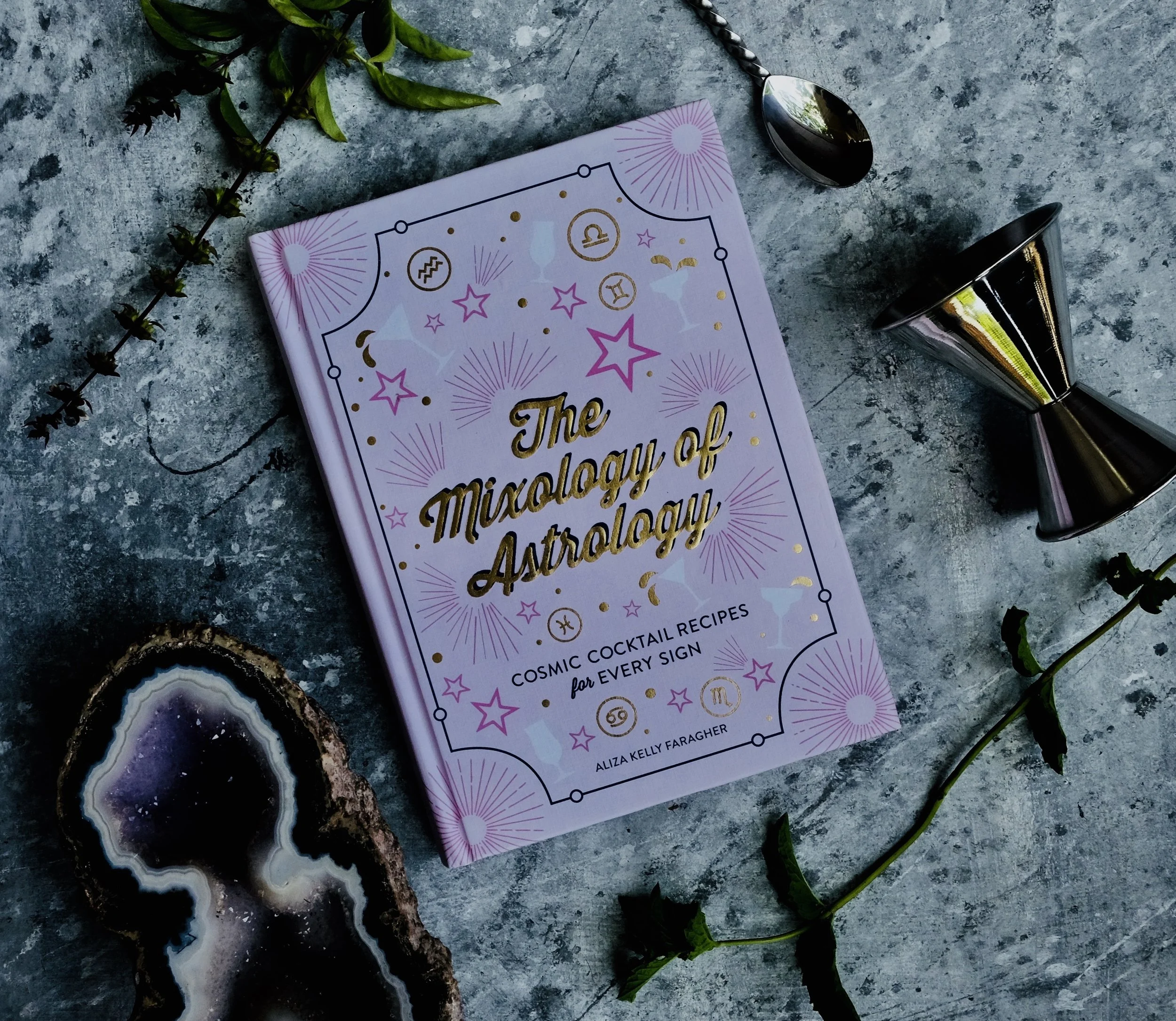
Review of 'The Mixology of Astrology': Cosmic Cocktail Recipes for Every Sign

August 15, 2018

So, whether you are just looking to explore astrology more, new to mixology, or a veteran star-gazer who knows your way around a shaker and has muddler or two among your spirited potions, this hardback book is a beautiful (the cover art is STUNNING!) addition to your library or would make a marvelous gift for a cosmically-inclined friend. 

Read More
In Occult Tags Astrology, Mixology, witch, Trista Edwards, Zodiac Signs
Comment
GM.JPG

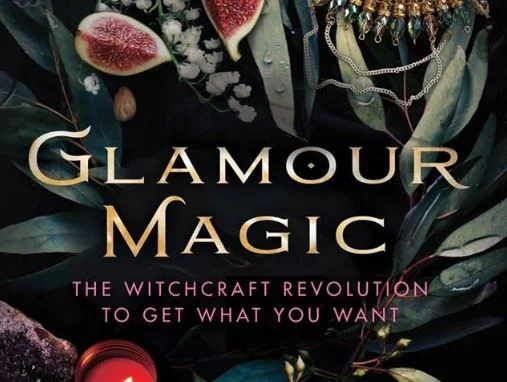
Glamour Magic, Identity, & Self Love with Author Deborah Castellano

August 9, 2018

“I think that the most feminist thing you can do in life is to not let other people (unsolicited) tell you how to present yourself to the world. “

Read More
In Occult Tags GLAMOUR MAGIC, witchcraft, ritual, spellwork
Comment
moon sky

4 Witchy Podcasts You Need In Your Life

July 11, 2018

BY LISA MARIE BASILE

The podcast is a strange animal. Music is usually the go-to while traveling or doing work, while books pass the time and fill our lives with beauty. But where do podcasts fit in? Do they require less or more work? Maybe both? They're educational, entertaining, and reminiscent of a time when broadcast radio floated like music throughout the home. You can simply play one and let all fall away.

Luckily, podcasts exist for every single nook and cranny of the Internet and all the different weirdos surfing it. For us witches, we've got a bevy of wonderful options. Not only do these podcasts serve as a reminder that we're not alone, they truly teach us. They bring us together. They enlighten us on practices, beliefs, and cultures. They create a little bright world where we can grow as practitioners and people. And they're fun. 

Here are my favorites:

The Fat Feminist Witch is one of my favorite podcasts, maybe ever. I adore Paige, the host, who is not only well-versed in witchcraft and magical practices, but regularly approaches issues relating to mental health, the body, race and culture, and wellness. Her personal touch is moving and complimentary, and contextualizes the podcast's focus on modern witchcraft. This is what a real witch thinks about and feels and considers, one might think while listening. On top of that, her guests are interesting, her book reviews are stellar, and her off-the-cuff conversations are enlightening, intersectional, and emotionally open. And funny!

A recent favorite episode: Glamour Magick with Deborah Castellano

The Witch Wave is an excellent podcast for those witches and learners who want a deep dive. Pam Grossman, its host, carefully curates her podcast--ensuring diversity both in its guests and its topics. While she always makes an effort to clarify ideas, beliefs, or words, the questions asked aren't all easy or foundational. She digs deep with her guests and gets to the roots and nuances of the conversation, exhuming ideas that may not be widely spoken about and pressing for more. What you come away with is a comprehensive look at a given topic and a sense of true humanity and context. Pam Grossman is thoughtful, generous, and open-minded in a magical way, and her guests are always the same. 

A recent favorite episode: Jessyka Winston of Haus of Hoodoo

The Serpent Cast is an explosion of awesome in every.single.episode. This podcast blends sex-positive talk and the spiritual (which is a perfect and necessary combo). Hosted by Annabel Gat and Sophie Saint Thomas, they'll cover everything from witchcraft and herbs to gender and sex toys. It's funny, fun, smart, enlightening and sexy. Oh, and I once won a sex toy from them via an Instagram contest. They made my damn day.

A recent favorite episode: Sonia Ortiz, Medium, Tarot Reader, and Artist

Hippie Witch: Magick for a New Age with Joanna DeVoe is one of my favorite podcasts--not only because it's ripe with excellent information on every aspect of the occult, but because its host (Joanna) is kind, thoughtful, balanced, honest, and truly interested in giving space and voice to all sorts of ideas and beliefs. She's funny (like, very), quirky (expect a live and let live style to this podcast), highly intuitive, and deeply empathic. You'll learn about everything from faeries to moon magic to creativity to spirit guides. She interviews dozens of folks, including authors and witches, and she's even interviewed me about my forthcoming book, Light Magic for Dark Times.

A recent favorite episode: Cultural & Personal Shadows Revealed Online


Lisa Marie Basile is the founding creative director of Luna Luna Magazine—a digital diary of literature, magical living and idea. She is the author of "Light Magic for Dark Times," a modern grimoire of inspired rituals and daily practices. She's also the author of a few poetry collections, including the forthcoming "Nympholepsy." She has written for The New York Times, Narratively, Grimoire Magazine, Sabat Magazine, The Establishment, Refinery 29, Bust, Hello Giggles, and more. Lisa Marie earned a Masters degree in Writing from The New School and studied literature and psychology as an undergraduate at Pace University.

In Occult, Sex Tags fat feminist witch, serpent cast, the witch wave, pam grossman, sophie saint thomas, hippie witch, joanna DeVoe
Comment
andi talarico

In Conversation with Writer & Witch Andi Talarico: Stregheria, Tarot & Astrology

July 5, 2018

INTERVIEW BY LISA MARIE BASILE

LMB: You’re a poet, a writer, a witch, a reading series host, and (as of this summer!) a magical workshop instructor! Can you tell me a little bit about your background in both writing and magic, and how they intersect for you?

AT: I think I've sort of always been both a witch and a writer, since before I understood the terms and knew how to put the work and effort into each practice. I've been storytelling since early childhood and writing/performing poetry since age 10. As for witchcraft, I'd felt alignment with the identity for as long as I can remember. The first Halloween costume I chose for myself was the Wicked Witch of the West. I thought she was remarkably powerful and I wanted to feel that, to mimic and evoke it.

As I got older, the practice of writing down ideas for spells, tarot spreads, important moments, dreams, etc - that ends up becoming one's Book of Shadows, but I don't separate mine from my everyday notebook. To me, the practice of writing down the beginning of a poem, and in the next moment, writing my errands for the day, and in the next moment, recording my ideas for a new moon ritual - it's all from the same place. It all comes back to memory, practice, and ritual.

You’re identify with the Strega. Can you tell me a little bit about how Italian folk magic and your Mediterranean/Italian heritage finds its way into your practice?

When I first started "studying" witchcraft, ie, trying out first spells and rituals that were found in actual sources other than my imagination, I studied Wicca because that was the information available to me at that time. It didn't all resonate with me, to be honest. When I started talking to the women in my family about Stregheria, and started hunting down the scarce resources about Italian folk magic, it all made sense to me, how you can incorporate spellwork into everyday kitchen work, or how you can read your dreams for meaning, or how you don't have to set up a sacred, untouchable alter to work your magic. 

My great-grandmother was a Sicilian Strega whose "specialty" (many of the local Streghe had their "thing" that they did best, as it's been explained to me) was taking the malocchio, or the Evil Eye, off of people with a folk magic ritual. When I started studying that, and really digging deeper into these practices, it started to make more sense to me than the Wicca I had explored previously. 

I identify with Strega magic because there's a lot of room for everyday intuition, and that works for me. It's about much more than just my Italian-American upbringing, though, because I'm a total mix. My mother's family is mostly English, so some of the Wiccan beliefs really align with that part of my heritage.

On my father's side, we're Italian and Lebanese and there were students of Alchemy in the Lebanese side so in a way, I feel born into many magical traditions. But I chose the one that spoke to me the clearest and the loudest, which is what I think every curious person should do. 

Also: did you read and fucking LOVE Strega Nona as a child? I know I read that book a hundred times and it’s basically why I am who I am these days. 

You know, I didn't read that book until I was an adult! I feel like I really missed out, haha.

word bookstores, witchcraft

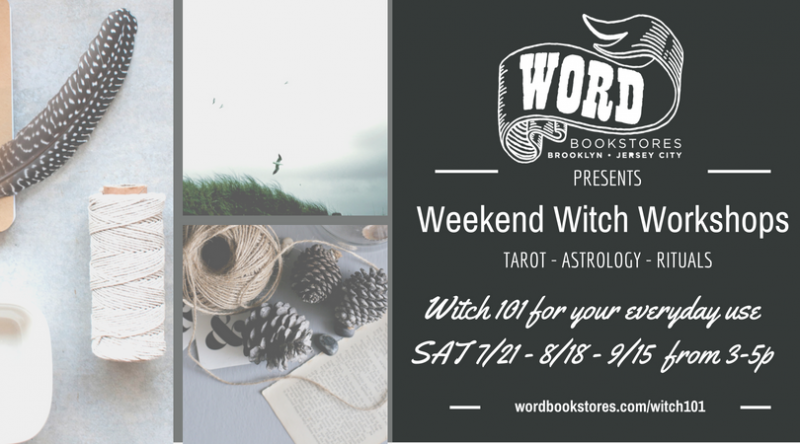
You’re teaching a series of classes in nyc at Word Bookstore in Brooklyn this summer on tarot, astrology, and ritual! I’m so excited! Can you tell me more about the classes & about the way YOU approach magic? 

Thank you! When I was approached by WORD, they asked me to teach some Witchy 101 classes which really made me examine my practice and my belief system, for sure. I had to break down the elements of what goes into my magic life and think about the connections and stories and education behind them. My studied understanding of the esoteric realm started in seventh grade, when I stole a gigantic book, Zolar's Astrology, and gobbled down like 1,000 pages of info and started telling everyone about themselves astrologically. At the time, it was a way for me to understand and categorize the world a little easier. It was insight into the human condition, which is the focus of much of my work - helping others through astrology, tarot, ritual, and self-care. 

The astrology workshop will show people how to make and interpret the basics of their natal charts, since our zodiac signs are so much more than just our sun signs. Toward the end of the class, I'll discuss astrology across the magic spectrum, like for instance how it can change the way you read tarot cards. That will lead us into the second workshop of Tarot, where I'll discuss ideas for making the cards work for the individual reader. While there are some hard and fast rules in Tarot, I think there's a lot more room for intuition and the art of natural storytelling than some may think. I've always approached my readings as a writer and an author, like here are these ancient plot points being laid out for you - what's the story, what's the lesson, what's the theme, what's the message?

At the end of this workshop, we'll discuss other ways to use Tarot, like for instance in ritual, which leads us to the final workshop. In the Ritual discussion, I really want to give people permission to practice in a way that works for them, and not worry about setting up some expensive altar based on something they read in a book.

There are SO many fun, creative ways to create your space and figure out what works for you, and I love talking to people about their ideas here. For example, growing up, I assumed that to really perform a moon ritual, you had to be outdoors with your coven, skyclad (witchspeak for "naked") and dancing around a fire, and that simply doesn't work for most modern witches, especially us city-folk witches. So I'm looking so forward to bringing in elements of my altar and sharing them, and having a real conversation about practice, ritual, and sacred spaces that can create for ourselves.

What are your thoughts on the burgeoning popularity of witchcraft? I think we both agree more magic and positivity and autonomy is a GOOD thing—so I’m interested in your perspective as a long time practitioner. 

You know, I think I aligned with witches at a young age, because their other-ness and power both spoke to me. I was always a bit of a weirdo and an outcast, so witchcraft made sense to me. Seeing the popular kids take it over and makee it cool and mainstream was a little off-putting at first, I'll be honest, but that was just a knee-jerk ego-speak reaction on my part.

The fact that more people are aligning themselves with witchcraft and ritual and interdependence and intersectionality - we need more of that in the world. So I don't care if you just bought your first Rose Quartz because it made a pretty Instagram post - go get it, friend. Make it meaningful if you want to and if you can, and if not, that doesn't take away from my practice one bit. Witches who want to quiz you on how serious you are, what coven you belong to, who initiated you, what order you belong to: that reeks of hierarchal bullshit and elitism to me. Even being a natural Slytherin, I just can't hang with that attitude, haha.

I couldn't agree more. We shouldn't judge, gate-keep, or assume everyone is going to approach magic in the same way!

So, what books are you reading right now?

I read a lot for place and mood and I'm a total Summer Baby so I've been on a roll with reading books about the ocean. I just finished Ocean Sea, a gorgeous magical realist tale, by the Italian author Alessandro Barrico. I'm currently finishing up the abso-bloody-lutely brilliant novel The Pisces by Melissa Broder (which is so deliciously dirty - it's been fun to spy people reading it on the Subway because I'm like oooooh, what part are you reading right now?)

Lastly, I'm digging deep into Practical Magic: A Beginner's Guide to Crystals, Horoscopes, Psychics, and Spells by Nikki Van De Car because we'll be discussing that in the WORD Workshops. It was so hard to choose JUST ONE book, but I think this guide is a beautifully un-intimidating place to start.

So, what is your birth chart like? How do you think the zodiac actually has a hand in our lives?

Whew boy, this is a big question and a big answer. I feel like there are sort of two types of people here, the ones who say, "Astrology could never be real," and the other camp who are like, "You're SUCH a Sag rising," haha. The thing is, Astrology is really hard to defend, right? How could the alignment of the stars affect our personalities and paths in life? The tough answer is that I'm not totally sure, to be honest, but I also don't need a scientific basis for every single aspect of my life.

What I know is that after years of exploring astrology charts with people, I've seen way way way too much interesting coincidence and important metaphor and meaningful symbolism to every be able to completely deny it. I think Astrology is a fascinating way to gain insight into who we all are and what we're all working with. It helps us understand our strengths and weaknesses, our attractions, our patterns of behavior, our shadow selves.

For me, I'm a Cancer/Leo cusp, and that water/fire split goes down most of my chart and really makes sense to me. I'm a Rising Sagittarius (fire) and Pisces Moon (water.) It basically makes me a textbook ambivert. I have no stage fright but don't do well at a get-together with a few people if I'm not close with all of them, haha. My water side makes me deeply empathetic, intuitive, and moody af. The fire side keeps me performing, laughing, taking risks and chances, and kicks me in the ass when I get too far in my own head.

What a GREAT combo you've got going on there (says the skulking, moody Scorpio with a Cancer moon). I love that you've got that water/fire duality!

So, you’re a tarot reader (and a wonderful one!). How do you approach tarot? How do you think creatives can use the tarot?

Thank you, Lisa, you're too kind. Tarot for me is a way in which we deal with universal messages. The cards themselves speak to many ideas of universality, from Jungian Collective Unconscious to the beats in a novel's plot, from common dream symbols to astrological alignment.

When I read for people, I tend to focus less on the fortune-telling aspect of it and more on the actions that have brought the querent to this moment in time. What patterns are at work, what forces are blocking us, how can we best approach this issue or problem with the tools we have in front of us? With that mindset, you can use the tarot to help you write your way out of a block, or perhaps understand what your dreams have been trying to communicate to you, or of course why perhaps you're crushing on someone who isn't reciprocating. When you loosen up the strict Tarot rules, you find uses in them for everything from spellwork to finding your next poem.

How does magic intersect with our social and political climate right now? I’m interested in your ideas on hexing Trump and self care rituals?

Being a witch has always aligned deeply, for me, with feminism, intersectionality, and putting power in the hands of the marginalized. Witches, historically, were often women healers that provided care outside of institutional patriarchy and that history resonates with me in a hugely meaningful way. The people historically accused of witchcraft were mostly women of questionable status: the unmarried, the lower-income, the other-ed in terms of color, gender, sexuality, etc. I think in particular, that young folks who are today's marginalized people - LGBTQ, POC, women - end up being attracted to witchcraft as a way of harnessing a power that's been denied to us.

That being said, do I want to hex Trump? Uh, of course I do. But I wouldn't and I won't. Hexing feels extraordinarily dangerous and irresponsible to me. I use my magic to help others and myself. I don't call myself a "white witch" because I definitely embrace the darkness within and believe in expression of that darkness, but hexing is something more than that, and it's not a place  I choose to go. I don't know that it's possible to poison someone spiritually without taking it some of it yourself, too. That's the only way I know how to explain that, which may not make much sense, I'm sorry.

As for self-care rituals, I wish that every person out there could find what restores them physically, emotionally, and spiritually and put it into practice.

Time for the hard-hitting question: Which Hogwarts house are you, most importantly?

I'm such a goddamn Slytherin. It took me a while to be comfortable with that but now I'm proud. I definitely don't have the elitist attitude shared by many Slytherin, but that dark energy has my name written all over it, haha. 

SLYTHERIN 4 LIFE.

How can people sign up for your courses this summer? 

Folks can sign up through WORD's site right here.

Tags andi talarico, magic, witchcraft, stregheria, tarot, astrology, Slytherin, nyc, witches in nyc, brooklyn, word bookstore
Comment
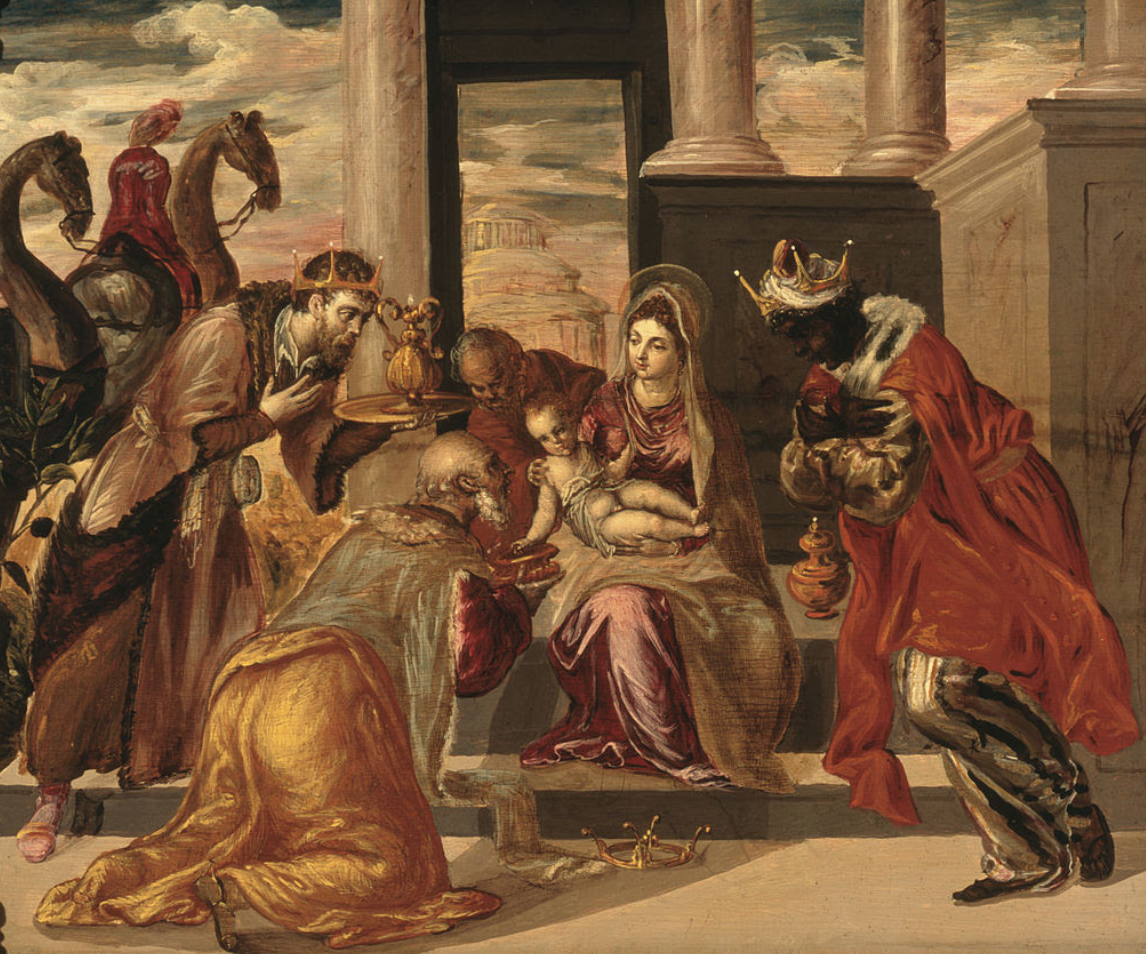
El Greco’s Adoración de los Reyes Magos (1568)

El Greco’s Adoración de los Reyes Magos (1568)

Reviving the Magical Life and Times of the Three Kings

May 23, 2018

BY COOPER WILHELM

A little before my time, the story goes, the church at the end of the street commissioned a local artist to paint the stations of the cross, and when he did he surprised everyone by including the church elders in the paintings as apostles, townspeople, Roman soldiers, and the like. The story also goes that, although they still kept the paintings, being included in them made the church elders upset. Back when I still went to church, the culture of the church at the end of the street maintained a separation between church stories and church gossip. The Bible was long ago, your life was your life, and it would be frankly rude and a little creepy to discuss any relationship between the two in any detail. 

So, when the pastor allegedly rode off on his motorcycle with the choir master’s daughter, leaving behind questions about a significant amount of money missing from the church coffers (so the scuttlebutt goes, I can’t confirm any of it), it is likely no one drew comparisons between that and, say, the Exodus or something in Revelations. And it similarly stands to reason that when a congregation of Georgian immigrants joined the church, and three of them subsequently performed as The Three Kings during the yearly nativity play, many didn’t think much of the significance of this beyond the fact that “We Three Kings” sounds significantly better in Russian.

But the significance of these Kings, and significance of coming to embody them or any other figure in this direct way is clearer now after having read an excellent new book by Alexander Cummins: A Book of the Magi: Lore, Prayers, & Spellcraft of the Three Holy Kings, volume 3 in Revelore Press’s Folk Necromancy in Transmission series. A broadly researched and well-crafted exploration, Cummins’s book demonstrates the ongoing relevance of the Three Kings over the last millennium and a half, and offers a surprisingly practical guide for including them in your own spellcraft.

Cummins begins with a racing review of 1500 years of Three Kings lore, showing how as the first to bow before Christ and thus the first to demonstrate proper Christian devotion, their position in Christian discourse was frequently ancestral. Although they were not saints per se, and not really Christian either, the Kings still became venerated as holy models for Christian piety, and became the subjects of shrines and pilgrimages.

In time, the Kings came to exist in a space that might blur the present-day lines between worship and witchcraft. Early Christian pilgrims would make or use eulogiae of the Kings, which came in different forms including essentially talismanic clay amulets featuring images of the kings and made from the soil of sites holy to them. Often these clay tablets would be crushed and swallowed in the hopes of benefiting from their miraculous properties. Cummins also lays out how the Kings’ following a star was used during the Renaissance as a model of a kind of Christian astrology to validate astrology as an acceptable and holy art.

This ancestral role the Kings played also went beyond the spiritual and into the political. Spanish colonists in the New World made use of the idea that the Kings, having come from the four corners of the earth to adore the Christ child, could be viewed as universal ancestral figures representing all peoples of the world to claim that colonized peoples had ancient connections to Christianity that they had merely forgotten. In so doing, Cummins argues, missionaries gave themselves the horrifying added rhetorical power of retroactively colonizing the dead in addition to colonizing the living.

But, Cummins argues, these “efforts to convert native populaces gave [colonized peoples] mythic structures that could be adopted to challenge that very colonising authority.” The colonized, in being told that The Kings had been pilgrims from their own lands, were then able to use The Kings to claim their right to be kings themselves. During yearly Epiphany celebrations honoring The Kings, colonized peoples took up the European practice of dressing as the Kings and demanding tribute, to the anxiety of colonial authorities. In 1609, rumors began to circulate through Mexico City that black residents had chosen the night of the Epiphany to elect their own kings in a symbolic challenge to colonial authority. These symbolic acts of reclaiming power became, in Cummins’s telling, a source of fear in the hearts of local colonial rulers: “The shackles placed by colonial masters upon the ancestors of their servants and slaves had been thrust into the fire of their nightmares and had been forged back into crowns.”

The treatment of this particular aspect of the history of The Kings can feel a bit quick, and might well leave the reader asking for more detail, especially into how the politics of the use of The Kings in anticolonial activity evolved. But the primary focus of A Book of the Magi is how, as ancestral magicians, the Kings came play a role in traditions of magic and sorcery, and for this Cummins collects and lingers over a number of great finds and experiments.

Jumping hither and yon in what could serve as a kind of Medieval Grimoires 101, Cummins skips through a number of different spellbooks to present examples of The Kings being invoked work wonders. Included are magical operations to, say, use The Kings and iron nails to ward off epilepsy as described in The Black Dragon, or to call upon The Kings and use “[p]ills made of the skull of one that is hanged” to cure rabies from Jean Bodin’s Of the Demon-mania of the Sorcerers and Reginald Scot’s The Discoverie of Witchcraft.

Cummins presents these in detail, and some are quite elaborate, especially the rites using The Three Kings to command spirits to bring the practitioner treasure or to transport the practitioner great distances. But the real marvel of this book comes when Cummins moves from reporting the contents of centuries-old texts and begins to describe operations that incorporate his personal research and experimentation. For Cummins is not simply a historian, but also a practicing sorcerer and diviner, offering spells “built upon [his] study of traditional Hoodoo and related folk magical methodologies, chiefly of course African-American Conjure and Latin American folk magic” and based on “discussion with professional rootworkers and Hoodooists.” And it is in this final section of the book that the idea of working with the Kings becomes much more personal and that A Book of the Magi really shines.

A magical experiment involving The Kings from Reginald Scot’s The Discoverie of Witchcraft

Here the spells take on a very practical tone, using materials one can assemble on a budget to develop tools for magical workings. Cummins offers methods for making oil for safety while traveling, incorporating the Three Kings into your altar, and invoking their help with a kind of crown: “Wear the crown when you are studying magic or searching for something. I have found this Crown assists in divination (a form of searching after all), as well as performing these sorts of magian operations.” There’s even a cake recipe.  

In so doing, Cummins reveals the relative slimness of this volume for what it is: an invitation for you to pick up this journey and begin your own explorations. Whether it be the history of Three Kings lore, where any of the episodes Cummins covers in page-long summaries might warrant or already have the dedication of a full book, and any of the spells might offer a framework for you to adapt to your own needs and knowledge.

The Kings become more than something to simply be learned about or engaged with, but something to be harnessed and embodied. Much like the church elders painted into the stations of the cross of the three men singing “We Three Kings” in Russian, we might let our faces become the faces of The Kings, our voices become their voices, our tongue become their tongues, and—more vitally—we might make their power our power.   

 —

 Cooper Wilhelm is an occultist, researcher, and poet in NYC. He is the author of three books of poetry, including DUMBHEART/STUPIDFACE (Siren Songs/2017). More at CooperWilhelm.com and on twitter @CooperWilhelm

In Occult Tags cooper wilhelm, three kings
Comment
"Keys of Solomon"

"Keys of Solomon"

Acting as Sigils: Magick Collage Erasures by David Joez Villaverde

May 10, 2018

Most art is magick. It is the same combination of intention, discipline, will, and praxis designed to open up a conscious space in the present.

Read More
Tags Art, David Joez Villaverde, Occult, erasure
Comment
Screen Shot 2018-04-13 at 11.30.35 AM.png

Which Classic Winona Ryder Film Are You, Based On Your Zodiac?

April 17, 2018

Joanna C. Valente is a ghost who lives in Brooklyn, New York, and is the author of Sirs & Madams (Aldrich Press, 2014), The Gods Are Dead (Deadly Chaps Press, 2015), Marys of the Sea (The Operating System, 2017), Xenos (Agape Editions, 2016), and Sexting Ghosts (Unknown Press, 2018). They are the editor of A Shadow Map: An Anthology by Survivors of Sexual Assault (CCM, 2017), and received a MFA in writing at Sarah Lawrence College. Joanna is also the founder of Yes, Poetry, a managing editor for Luna Luna Magazine and CCM, as well as an instructor at Brooklyn Poets. Some of their writing has appeared in Brooklyn Magazine, BUST, Them, Prelude, Apogee, Spork, The Feminist Wire, and elsewhere. 

Read More
In Occult Tags astrology, Zodiac, winona ryder
Comment
Via Lisa Marie Basile

Via Lisa Marie Basile

6 Ways To Use A Tarot Deck To Get What You Want

April 11, 2018

Joanna C. Valente is a ghost who lives in Brooklyn, New York, and is the author of Sirs & Madams (Aldrich Press, 2014), The Gods Are Dead (Deadly Chaps Press, 2015), Marys of the Sea (The Operating System, 2017), Xenos (Agape Editions, 2016), and Sexting Ghosts (Unknown Press, 2018). They are the editor of A Shadow Map: An Anthology by Survivors of Sexual Assault (CCM, 2017), and received a MFA in writing at Sarah Lawrence College. Joanna is also the founder of Yes, Poetry, a managing editor for Luna Luna Magazine and CCM, as well as an instructor at Brooklyn Poets. Some of their writing has appeared in Brooklyn Magazine, BUST, Them, Prelude, Apogee, Spork, The Feminist Wire, and elsewhere. 

Read More
In Occult Tags tarot
Comment
← Newer Posts Older Posts →
Featured
‘in the glitter-open black' — poetry by Fox Henry Frazier
'poet as tarantula,  poem as waste' — poetry by  Ewen Glass
'poet as tarantula, poem as waste' — poetry by Ewen Glass
'Hours rot away in regalia' — poetry by Stephanie Chang
'down down down the hall of mirrors' — poetry by Ronnie K. Stephens
'Grew appendages, clawed towards light' — poetry by Lucie Brooks
'do not be afraid' — poetry by Maia Decker
'The darkened bedroom' — poetry by Jessica Purdy
'I am the body that I am under' — poetry by Jennifer MacBain-Stephens
instagram

COPYRIGHT LUNA LUNA MAGAZINE 2025