









• About Luna Luna
    • readings
    • dark hour
    • resources
    • search
  • read
  • peruse
  • submit
  • editor
  • workshops
Menu

luna luna magazine

  • About
    • About Luna Luna
    • readings
    • dark hour
    • resources
    • search
  • read
  • peruse
  • submit
  • editor
  • workshops
shadow
A Writing Spell: Honoring Your Many Selves
March 1, 2021
A Writing Spell: Honoring Your Many Selves
March 1, 2021
Read more →
March 1, 2021
An 11-Line Poetry Spell For Healing
March 1, 2021
An 11-Line Poetry Spell For Healing
March 1, 2021
Read more →
March 1, 2021
How To Write Powerful Poetry Spells
February 28, 2021
How To Write Powerful Poetry Spells
February 28, 2021
Read more →
February 28, 2021
Here Is Your Scorpio Homework This Season
October 25, 2020
Here Is Your Scorpio Homework This Season
October 25, 2020
Read more →
October 25, 2020
3 Transformative Life Lessons Scorpio Teaches Us
October 25, 2020
3 Transformative Life Lessons Scorpio Teaches Us
October 25, 2020
Read more →
October 25, 2020
Restorative Grief: Letters To The Dead
October 23, 2020
Restorative Grief: Letters To The Dead
October 23, 2020
Read more →
October 23, 2020
A Santa Muerte Rebirth Ritual + A Tarot Writing Practice
October 6, 2020
A Santa Muerte Rebirth Ritual + A Tarot Writing Practice
October 6, 2020

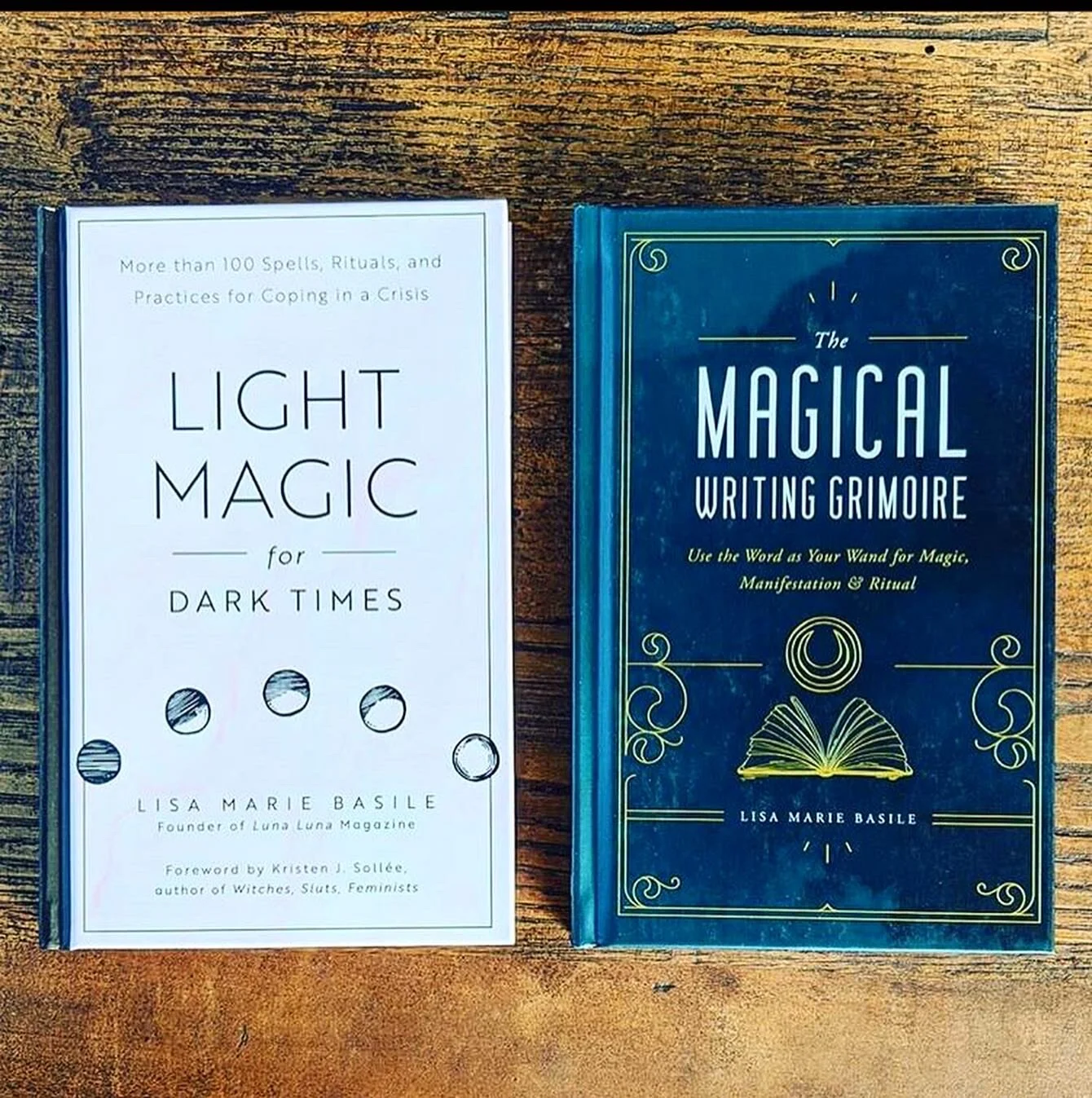
Looking for some October magic? Below I’ve included two rituals — one a Santa Muerte rebirth ritual dreamed up by Leza Cantoral (witch, author, and editor of Clash Books) and published in Light Magic for Dark Times and one a tarot writing practice from The Magical Writing Grimoire.

Read more →
October 6, 2020
Witches, Here Are The New Books You Need
November 14, 2019
Witches, Here Are The New Books You Need
November 14, 2019
Read more →
November 14, 2019
3 Dream Magic Rituals And Practices
November 12, 2019
3 Dream Magic Rituals And Practices
November 12, 2019
Read more →
November 12, 2019
How To Use Tarot Cards for Self-Care
November 11, 2019
How To Use Tarot Cards for Self-Care
November 11, 2019
Read more →
November 11, 2019
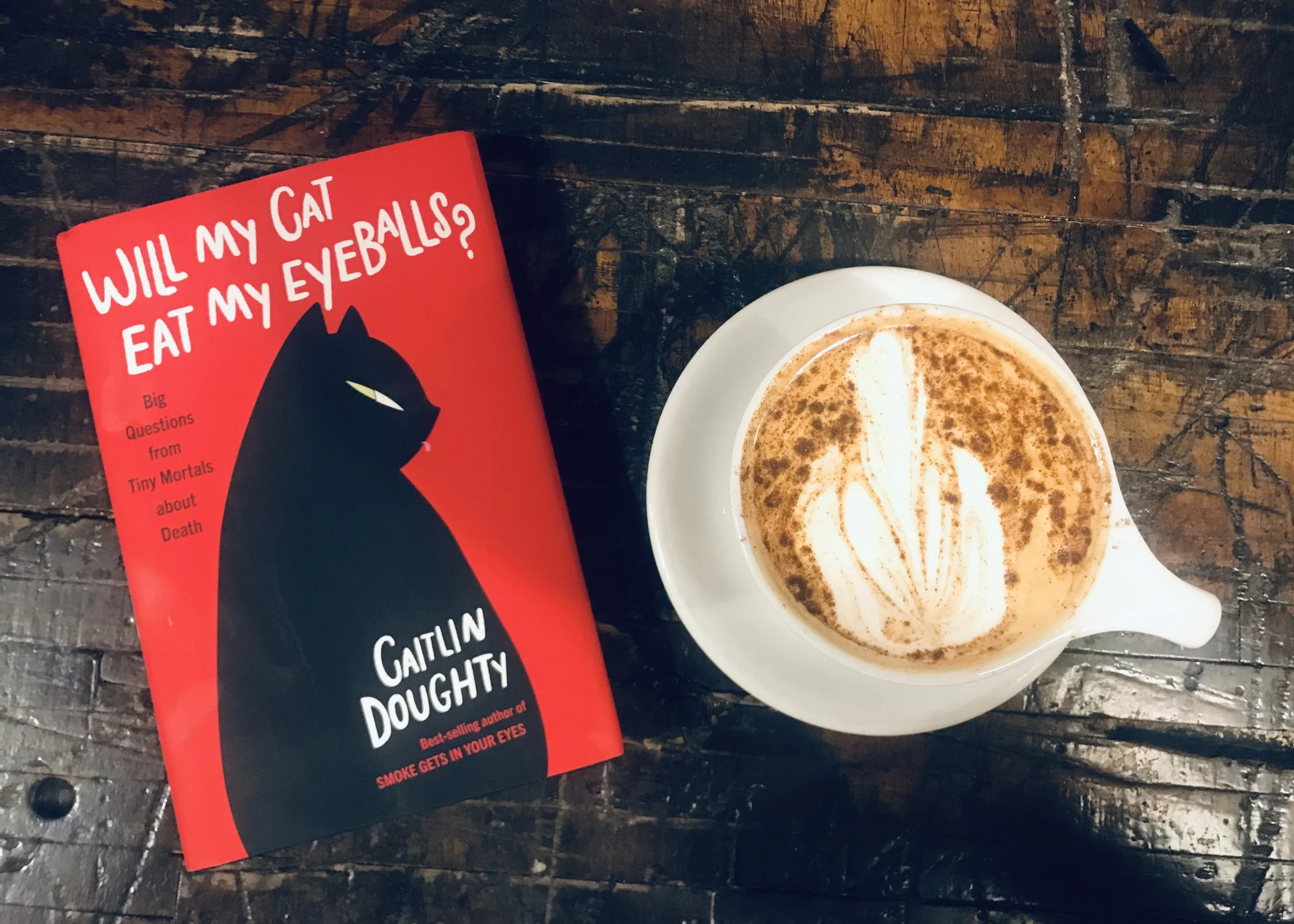
A Review of Caitlin Doughty's 'Will My Cat Eat My Eyeballs?'
October 25, 2019
A Review of Caitlin Doughty's 'Will My Cat Eat My Eyeballs?'
October 25, 2019

Over the past several years as Doughty, has continued to travel the world to give talks and educate folks on the wonders of death, she found that her favorite part of these talks came in the Q&A portion. It was not just the opportunity to get to hear what she calls “people’s deep fascination with decaying bodies, head wounds, bones, embalming, funeral pyres—the works”—that the most direct and provocative questions about death came from young children. 

Read more →
October 25, 2019
Nimue, The Deity, Came To Me In A Dream
September 17, 2019
Nimue, The Deity, Came To Me In A Dream
September 17, 2019
Read more →
September 17, 2019
Astrological Shadow Work: Healing Writing Prompts
September 9, 2019
Astrological Shadow Work: Healing Writing Prompts
September 9, 2019
Read more →
September 9, 2019
The Witches of Bushwick:  On Cult Party, Connection, and Magic
July 23, 2019
The Witches of Bushwick: On Cult Party, Connection, and Magic
July 23, 2019
Read more →
July 23, 2019
7 Magical & Inclusive New Books Witches Must Read
May 15, 2019
7 Magical & Inclusive New Books Witches Must Read
May 15, 2019
Read more →
May 15, 2019
Working Out As Magic & Ritual: A Witch's Comprehensive Guide
May 14, 2019
Working Out As Magic & Ritual: A Witch's Comprehensive Guide
May 14, 2019
Read more →
May 14, 2019
Letters to the Dead: Shadow Writing for Grief & Release
February 8, 2019
Letters to the Dead: Shadow Writing for Grief & Release
February 8, 2019
Read more →
February 8, 2019
How to Add Magic to Your Every Day Wellness Routine
February 5, 2019
How to Add Magic to Your Every Day Wellness Routine
February 5, 2019

Stephanie Valente lives in Brooklyn, NY. She has published Hotel Ghost (Bottlecap Press, 2015) and waiting for the end of the world (Bottlecap Press, 2017) and has work included in Susan, TL;DR, and Cosmonauts Avenue. Sometimes, she feels human. http://stephanievalente.com

Read more →
February 5, 2019
Ritual: Writing Letters To Your Self — On Anais Nin, Journaling, and Healing
January 31, 2019
Ritual: Writing Letters To Your Self — On Anais Nin, Journaling, and Healing
January 31, 2019
Read more →
January 31, 2019
How Rituals Can Help You Gain Confidence
January 17, 2019
How Rituals Can Help You Gain Confidence
January 17, 2019
Read more →
January 17, 2019
Hearthcraft & the Magic of Everyday Objects: Reading Arin Murphy-Hiscock's 'House Witch'
January 14, 2019
Hearthcraft & the Magic of Everyday Objects: Reading Arin Murphy-Hiscock's 'House Witch'
January 14, 2019
Read more →
January 14, 2019
True to The Earth: Cooper Wilhelm Interviews Kadmus
November 26, 2018
True to The Earth: Cooper Wilhelm Interviews Kadmus
November 26, 2018
Read more →
November 26, 2018
Between The Veil: Letter from the Editor
October 31, 2018
Between The Veil: Letter from the Editor
October 31, 2018
Read more →
October 31, 2018
Shadow Work with Light Magic for Dark Times
October 31, 2018
Shadow Work with Light Magic for Dark Times
October 31, 2018
Read more →
October 31, 2018
2 Poems by Stephanie Valente
October 31, 2018
2 Poems by Stephanie Valente
October 31, 2018
Read more →
October 31, 2018
A Poem in Photographs by Kailey Tedesco
October 31, 2018
A Poem in Photographs by Kailey Tedesco
October 31, 2018
Read more →
October 31, 2018
Photography by Alice Teeple
October 31, 2018
Photography by Alice Teeple
October 31, 2018
Read more →
October 31, 2018
A Simple Spell to Summon and Protect Your Personal Power
October 31, 2018
A Simple Spell to Summon and Protect Your Personal Power
October 31, 2018
Read more →
October 31, 2018
November and Her Lovelier Sister
October 31, 2018
November and Her Lovelier Sister
October 31, 2018
Read more →
October 31, 2018
A Spooky Story by Lydia A. Cyrus
October 31, 2018
A Spooky Story by Lydia A. Cyrus
October 31, 2018
Read more →
October 31, 2018
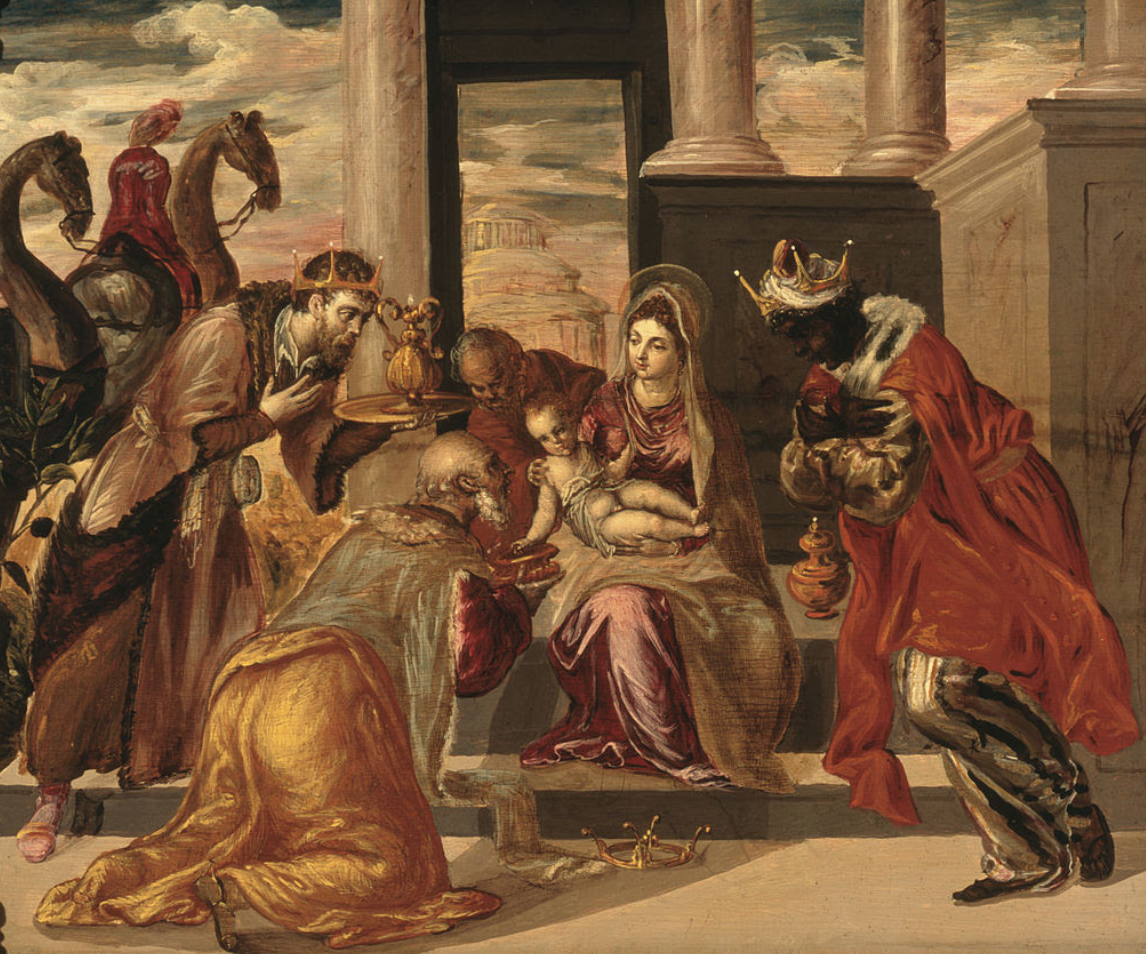
El Greco’s Adoración de los Reyes Magos (1568)

El Greco’s Adoración de los Reyes Magos (1568)

Reviving the Magical Life and Times of the Three Kings

May 23, 2018

BY COOPER WILHELM

A little before my time, the story goes, the church at the end of the street commissioned a local artist to paint the stations of the cross, and when he did he surprised everyone by including the church elders in the paintings as apostles, townspeople, Roman soldiers, and the like. The story also goes that, although they still kept the paintings, being included in them made the church elders upset. Back when I still went to church, the culture of the church at the end of the street maintained a separation between church stories and church gossip. The Bible was long ago, your life was your life, and it would be frankly rude and a little creepy to discuss any relationship between the two in any detail. 

So, when the pastor allegedly rode off on his motorcycle with the choir master’s daughter, leaving behind questions about a significant amount of money missing from the church coffers (so the scuttlebutt goes, I can’t confirm any of it), it is likely no one drew comparisons between that and, say, the Exodus or something in Revelations. And it similarly stands to reason that when a congregation of Georgian immigrants joined the church, and three of them subsequently performed as The Three Kings during the yearly nativity play, many didn’t think much of the significance of this beyond the fact that “We Three Kings” sounds significantly better in Russian.

But the significance of these Kings, and significance of coming to embody them or any other figure in this direct way is clearer now after having read an excellent new book by Alexander Cummins: A Book of the Magi: Lore, Prayers, & Spellcraft of the Three Holy Kings, volume 3 in Revelore Press’s Folk Necromancy in Transmission series. A broadly researched and well-crafted exploration, Cummins’s book demonstrates the ongoing relevance of the Three Kings over the last millennium and a half, and offers a surprisingly practical guide for including them in your own spellcraft.

Cummins begins with a racing review of 1500 years of Three Kings lore, showing how as the first to bow before Christ and thus the first to demonstrate proper Christian devotion, their position in Christian discourse was frequently ancestral. Although they were not saints per se, and not really Christian either, the Kings still became venerated as holy models for Christian piety, and became the subjects of shrines and pilgrimages.

In time, the Kings came to exist in a space that might blur the present-day lines between worship and witchcraft. Early Christian pilgrims would make or use eulogiae of the Kings, which came in different forms including essentially talismanic clay amulets featuring images of the kings and made from the soil of sites holy to them. Often these clay tablets would be crushed and swallowed in the hopes of benefiting from their miraculous properties. Cummins also lays out how the Kings’ following a star was used during the Renaissance as a model of a kind of Christian astrology to validate astrology as an acceptable and holy art.

This ancestral role the Kings played also went beyond the spiritual and into the political. Spanish colonists in the New World made use of the idea that the Kings, having come from the four corners of the earth to adore the Christ child, could be viewed as universal ancestral figures representing all peoples of the world to claim that colonized peoples had ancient connections to Christianity that they had merely forgotten. In so doing, Cummins argues, missionaries gave themselves the horrifying added rhetorical power of retroactively colonizing the dead in addition to colonizing the living.

But, Cummins argues, these “efforts to convert native populaces gave [colonized peoples] mythic structures that could be adopted to challenge that very colonising authority.” The colonized, in being told that The Kings had been pilgrims from their own lands, were then able to use The Kings to claim their right to be kings themselves. During yearly Epiphany celebrations honoring The Kings, colonized peoples took up the European practice of dressing as the Kings and demanding tribute, to the anxiety of colonial authorities. In 1609, rumors began to circulate through Mexico City that black residents had chosen the night of the Epiphany to elect their own kings in a symbolic challenge to colonial authority. These symbolic acts of reclaiming power became, in Cummins’s telling, a source of fear in the hearts of local colonial rulers: “The shackles placed by colonial masters upon the ancestors of their servants and slaves had been thrust into the fire of their nightmares and had been forged back into crowns.”

The treatment of this particular aspect of the history of The Kings can feel a bit quick, and might well leave the reader asking for more detail, especially into how the politics of the use of The Kings in anticolonial activity evolved. But the primary focus of A Book of the Magi is how, as ancestral magicians, the Kings came play a role in traditions of magic and sorcery, and for this Cummins collects and lingers over a number of great finds and experiments.

Jumping hither and yon in what could serve as a kind of Medieval Grimoires 101, Cummins skips through a number of different spellbooks to present examples of The Kings being invoked work wonders. Included are magical operations to, say, use The Kings and iron nails to ward off epilepsy as described in The Black Dragon, or to call upon The Kings and use “[p]ills made of the skull of one that is hanged” to cure rabies from Jean Bodin’s Of the Demon-mania of the Sorcerers and Reginald Scot’s The Discoverie of Witchcraft.

Cummins presents these in detail, and some are quite elaborate, especially the rites using The Three Kings to command spirits to bring the practitioner treasure or to transport the practitioner great distances. But the real marvel of this book comes when Cummins moves from reporting the contents of centuries-old texts and begins to describe operations that incorporate his personal research and experimentation. For Cummins is not simply a historian, but also a practicing sorcerer and diviner, offering spells “built upon [his] study of traditional Hoodoo and related folk magical methodologies, chiefly of course African-American Conjure and Latin American folk magic” and based on “discussion with professional rootworkers and Hoodooists.” And it is in this final section of the book that the idea of working with the Kings becomes much more personal and that A Book of the Magi really shines.

A magical experiment involving The Kings from Reginald Scot’s The Discoverie of Witchcraft

Here the spells take on a very practical tone, using materials one can assemble on a budget to develop tools for magical workings. Cummins offers methods for making oil for safety while traveling, incorporating the Three Kings into your altar, and invoking their help with a kind of crown: “Wear the crown when you are studying magic or searching for something. I have found this Crown assists in divination (a form of searching after all), as well as performing these sorts of magian operations.” There’s even a cake recipe.  

In so doing, Cummins reveals the relative slimness of this volume for what it is: an invitation for you to pick up this journey and begin your own explorations. Whether it be the history of Three Kings lore, where any of the episodes Cummins covers in page-long summaries might warrant or already have the dedication of a full book, and any of the spells might offer a framework for you to adapt to your own needs and knowledge.

The Kings become more than something to simply be learned about or engaged with, but something to be harnessed and embodied. Much like the church elders painted into the stations of the cross of the three men singing “We Three Kings” in Russian, we might let our faces become the faces of The Kings, our voices become their voices, our tongue become their tongues, and—more vitally—we might make their power our power.   

 —

 Cooper Wilhelm is an occultist, researcher, and poet in NYC. He is the author of three books of poetry, including DUMBHEART/STUPIDFACE (Siren Songs/2017). More at CooperWilhelm.com and on twitter @CooperWilhelm

In Occult Tags cooper wilhelm, three kings
← In Conversation with Writer & Witch Andi Talarico: Stregheria, Tarot & Astrology Acting as Sigils: Magick Collage Erasures by David Joez Villaverde →
feed me poetry
Featured
'dream in locusts' — poetry by Vi Ly
Vi Ly
Vi Ly
'dream in locusts' — poetry by Vi Ly
Vi Ly
Vi Ly
Read more →
Vi Ly
Vi Ly
'plastic chair, watermelon, generator exhaust, benzene' — poetry by Hana Saad
Hana Saad
Hana Saad
'plastic chair, watermelon, generator exhaust, benzene' — poetry by Hana Saad
Hana Saad
Hana Saad
Read more →
Hana Saad
Hana Saad
' I am brutally killed by daffodils' — poetry by Emily Tong
Emily Tong
Emily Tong
' I am brutally killed by daffodils' — poetry by Emily Tong
Emily Tong
Emily Tong
Read more →
Emily Tong
Emily Tong
'violet scabbing on ankle backs' — poetry by Lexi Rosen
Lexi Rosen
Lexi Rosen
'violet scabbing on ankle backs' — poetry by Lexi Rosen
Lexi Rosen
Lexi Rosen
Read more →
Lexi Rosen
Lexi Rosen
'it was something more gory' — poetry by Caroline O'Connor Thomas
Caroline O'Connor Thomas
'it was something more gory' — poetry by Caroline O'Connor Thomas
Caroline O'Connor Thomas
Read more →
Caroline O'Connor Thomas
'I’ll accept delight’s gloom' — poetry by Hazelyn Aroian
Hazelyn Aroian
Hazelyn Aroian
'I’ll accept delight’s gloom' — poetry by Hazelyn Aroian
Hazelyn Aroian
Hazelyn Aroian
Read more →
Hazelyn Aroian
Hazelyn Aroian
'every hour is one long suffering' — poetry by Anne Halsey
Anne Halsey
Anne Halsey
'every hour is one long suffering' — poetry by Anne Halsey
Anne Halsey
Anne Halsey
Read more →
Anne Halsey
Anne Halsey
'a terrible countenance for what nourishes' — poetry by I Echo
I Echo
I Echo
'a terrible countenance for what nourishes' — poetry by I Echo
I Echo
I Echo
Read more →
I Echo
I Echo
'I am the aftermath' — poetry by Taylor Hamann Los
Taylor Hamann Los
Taylor Hamann Los
'I am the aftermath' — poetry by Taylor Hamann Los
Taylor Hamann Los
Taylor Hamann Los
Read more →
Taylor Hamann Los
Taylor Hamann Los
'as if landscapes verdant' — poetry by Kacey Martin
Kacey Martin
Kacey Martin
'as if landscapes verdant' — poetry by Kacey Martin
Kacey Martin
Kacey Martin
Read more →
Kacey Martin
Kacey Martin
'a wasp  giving itself to the fig' — poetry by Elaina Edwards
Elaina Edwards
Elaina Edwards
'a wasp giving itself to the fig' — poetry by Elaina Edwards
Elaina Edwards
Elaina Edwards
Read more →
Elaina Edwards
Elaina Edwards
'ghosts in hair follicles' — poetry by Trish hopkinson
Trish Hopkinson
Trish Hopkinson
'ghosts in hair follicles' — poetry by Trish hopkinson
Trish Hopkinson
Trish Hopkinson
Read more →
Trish Hopkinson
Trish Hopkinson
'roses among men' — poetry by Amy Thatcher
Amy Thatcher
Amy Thatcher
'roses among men' — poetry by Amy Thatcher
Amy Thatcher
Amy Thatcher
Read more →
Amy Thatcher
Amy Thatcher

COPYRIGHT LUNA LUNA MAGAZINE 2026