

• Home
  • indulge
  • new poetry
    • About Luna Luna
    • resources
    • search
  • editor
  • dark hour
  • submit
Menu

luna luna magazine

  • Home
  • indulge
  • new poetry
  • About
    • About Luna Luna
    • resources
    • search
  • editor
  • dark hour
  • submit
shadow
A Writing Spell: Honoring Your Many Selves
Mar 1, 2021
A Writing Spell: Honoring Your Many Selves
Mar 1, 2021
Mar 1, 2021
An 11-Line Poetry Spell For Healing
Mar 1, 2021
An 11-Line Poetry Spell For Healing
Mar 1, 2021
Mar 1, 2021
How To Write Powerful Poetry Spells
Feb 28, 2021
How To Write Powerful Poetry Spells
Feb 28, 2021
Feb 28, 2021
Here Is Your Scorpio Homework This Season
Oct 25, 2020
Here Is Your Scorpio Homework This Season
Oct 25, 2020
Oct 25, 2020
3 Transformative Life Lessons Scorpio Teaches Us
Oct 25, 2020
3 Transformative Life Lessons Scorpio Teaches Us
Oct 25, 2020
Oct 25, 2020
Restorative Grief: Letters To The Dead
Oct 23, 2020
Restorative Grief: Letters To The Dead
Oct 23, 2020
Oct 23, 2020
A Santa Muerte Rebirth Ritual + A Tarot Writing Practice
Oct 6, 2020
A Santa Muerte Rebirth Ritual + A Tarot Writing Practice
Oct 6, 2020
Oct 6, 2020
Witches, Here Are The New Books You Need
Nov 14, 2019
Witches, Here Are The New Books You Need
Nov 14, 2019
Nov 14, 2019
3 Dream Magic Rituals And Practices
Nov 12, 2019
3 Dream Magic Rituals And Practices
Nov 12, 2019
Nov 12, 2019
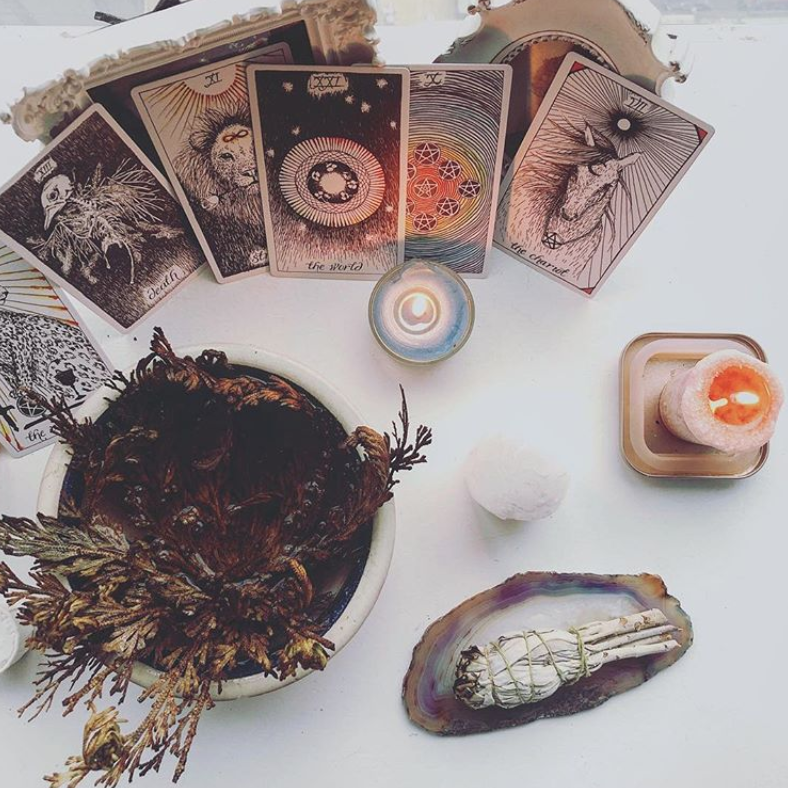
How To Use Tarot Cards for Self-Care
Nov 11, 2019
How To Use Tarot Cards for Self-Care
Nov 11, 2019
Nov 11, 2019
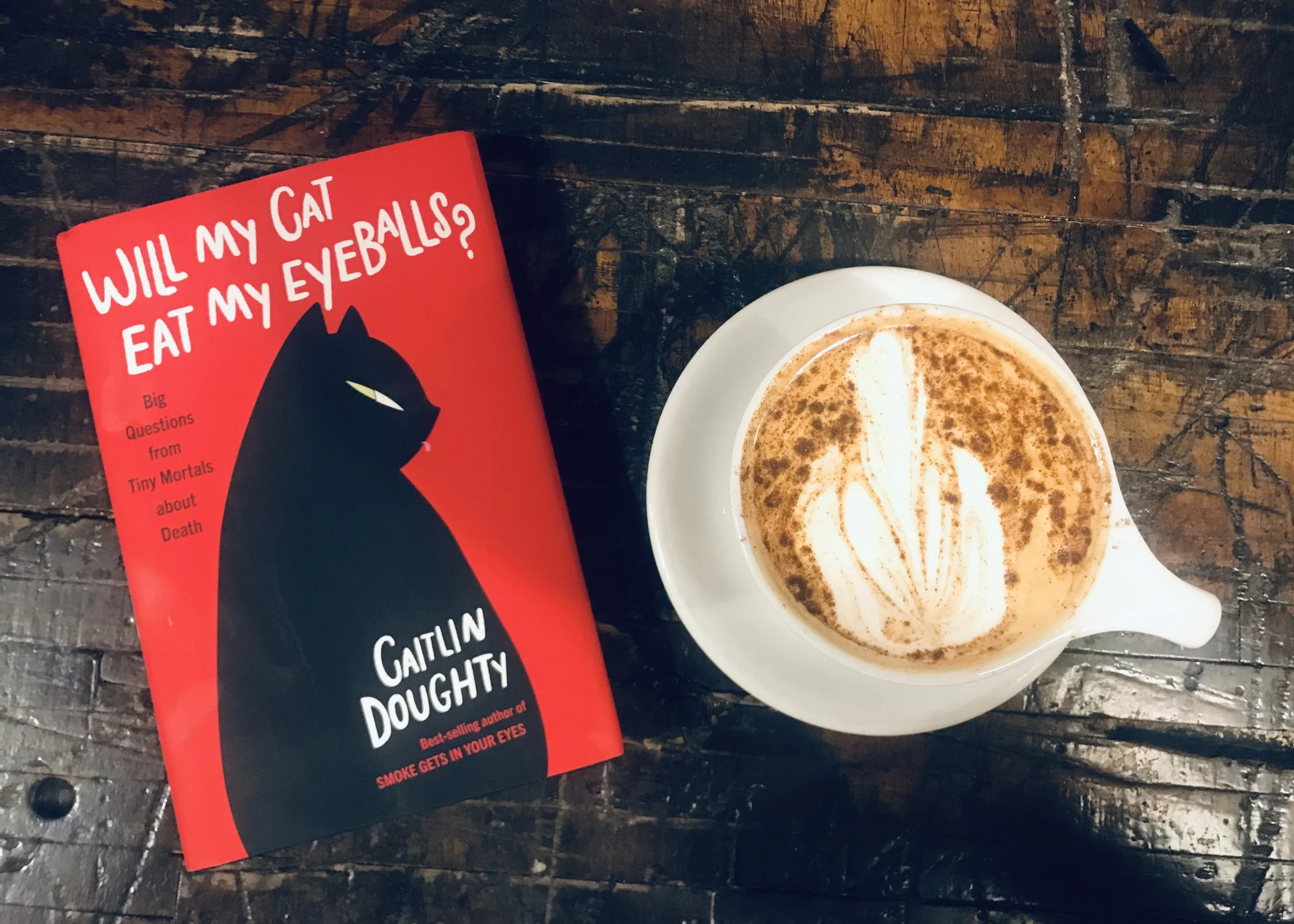
A Review of Caitlin Doughty's 'Will My Cat Eat My Eyeballs?'
Oct 25, 2019
A Review of Caitlin Doughty's 'Will My Cat Eat My Eyeballs?'
Oct 25, 2019
Oct 25, 2019
Nimue, The Deity, Came To Me In A Dream
Sep 17, 2019
Nimue, The Deity, Came To Me In A Dream
Sep 17, 2019
Sep 17, 2019
Astrological Shadow Work: Healing Writing Prompts
Sep 9, 2019
Astrological Shadow Work: Healing Writing Prompts
Sep 9, 2019
Sep 9, 2019
The Witches of Bushwick:  On Cult Party, Connection, and Magic
Jul 23, 2019
The Witches of Bushwick: On Cult Party, Connection, and Magic
Jul 23, 2019
Jul 23, 2019
7 Magical & Inclusive New Books Witches Must Read
May 15, 2019
7 Magical & Inclusive New Books Witches Must Read
May 15, 2019
May 15, 2019
Working Out As Magic & Ritual: A Witch's Comprehensive Guide
May 14, 2019
Working Out As Magic & Ritual: A Witch's Comprehensive Guide
May 14, 2019
May 14, 2019
Letters to the Dead: Shadow Writing for Grief & Release
Feb 8, 2019
Letters to the Dead: Shadow Writing for Grief & Release
Feb 8, 2019
Feb 8, 2019
How to Add Magic to Your Every Day Wellness Routine
Feb 5, 2019
How to Add Magic to Your Every Day Wellness Routine
Feb 5, 2019
Feb 5, 2019
Ritual: Writing Letters To Your Self — On Anais Nin, Journaling, and Healing
Jan 31, 2019
Ritual: Writing Letters To Your Self — On Anais Nin, Journaling, and Healing
Jan 31, 2019
Jan 31, 2019
How Rituals Can Help You Gain Confidence
Jan 17, 2019
How Rituals Can Help You Gain Confidence
Jan 17, 2019
Jan 17, 2019
Hearthcraft & the Magic of Everyday Objects: Reading Arin Murphy-Hiscock's 'House Witch'
Jan 14, 2019
Hearthcraft & the Magic of Everyday Objects: Reading Arin Murphy-Hiscock's 'House Witch'
Jan 14, 2019
Jan 14, 2019
True to The Earth: Cooper Wilhelm Interviews Kadmus
Nov 26, 2018
True to The Earth: Cooper Wilhelm Interviews Kadmus
Nov 26, 2018
Nov 26, 2018
Between The Veil: Letter from the Editor
Oct 31, 2018
Between The Veil: Letter from the Editor
Oct 31, 2018
Oct 31, 2018
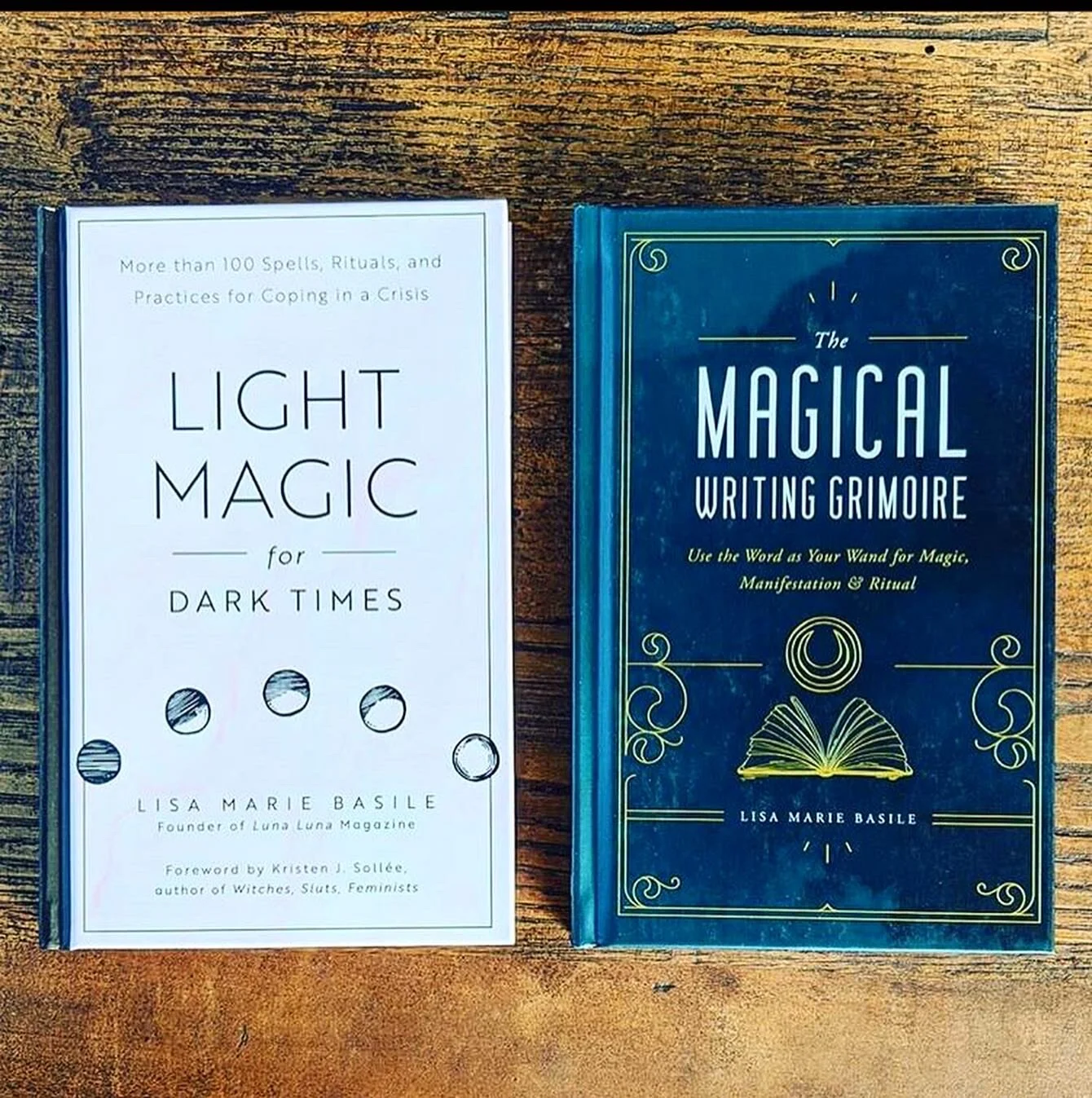
Shadow Work with Light Magic for Dark Times
Oct 31, 2018
Shadow Work with Light Magic for Dark Times
Oct 31, 2018
Oct 31, 2018
2 Poems by Stephanie Valente
Oct 31, 2018
2 Poems by Stephanie Valente
Oct 31, 2018
Oct 31, 2018
A Poem in Photographs by Kailey Tedesco
Oct 31, 2018
A Poem in Photographs by Kailey Tedesco
Oct 31, 2018
Oct 31, 2018
Photography by Alice Teeple
Oct 31, 2018
Photography by Alice Teeple
Oct 31, 2018
Oct 31, 2018
A Simple Spell to Summon and Protect Your Personal Power
Oct 31, 2018
A Simple Spell to Summon and Protect Your Personal Power
Oct 31, 2018
Oct 31, 2018
November and Her Lovelier Sister
Oct 31, 2018
November and Her Lovelier Sister
Oct 31, 2018
Oct 31, 2018
A Spooky Story by Lydia A. Cyrus
Oct 31, 2018
A Spooky Story by Lydia A. Cyrus
Oct 31, 2018
Oct 31, 2018

Interview With Leza Cantoral About Her Novelette Planet Mermaid

October 31, 2015

BY NADIA GERASSIMENKO

Leza Cantoral is the author of Planet Mermaid and editor of Walk Hand in Hand Into Extinction: Stories Inspired by True Detective. She writes a feminist column about noir film for Luna Luna Magazine called Shades of Noir and writes about pop culture for Clash Media. Her upcoming collection of short stories, Cartoons in the Suicide Forest, will be coming out later this year through Bizarro Pulp Press. You can find her short stories at lezacantoralblog.wordpress.com and tweet her at @lezacantoral.


Leza, tell us a bit about yourself as a person and a writer.

I was born in Mexico and my family moved to the US when I was 12. I spent high school in the suburbs of Chicago and then I went to college in Vermont. Now I live with my boyfriend and his two cats in the mountains of New Hampshire. It is a pretty idyllic existence for a writer. He is a writer too, so we are always able to give each other feedback and we are each-others editors. He was my rock during this process. I hit a lot of walls with my story and he was there for me. He did not let me quit.

My favorite singer is Lana Del Rey. My favorite poet is Sylvia Plath. My favorite book is Alice in Wonderland.

I began writing poetry when I was about 13 to deal with depression and then I wrote poetry in high school to deal with being in love. It was not till college that I began to seriously consider writing stories. I often write about women who are being violated and exploited. I show what they are feeling and thinking and how they cope and deal with it. I believe that language is oral. Stories are meant to be read aloud. I try to make my stories sensory experiences, like music videos.

We know you write horror fiction. What’s horrific to you? What kind of horror do you want to embed in the mind of your readers? 

What scares me is losing control and being broken down and degraded. I have written a lot about women being raped and exploited. I try to convey what it feels like to be raped and abused, to be treated like a sex object, to lose your humanity. Those are the things that really scare me. I want people to know what that feels like to be stripped of your selfhood.

You also write Bizarro fiction. What makes Bizarro literature Bizarro as opposed to just being weird? What criteria must the author meet in order to birth a legitimate Bizarro baby?

The key to Bizarro fiction is high concept. You take an idea that seems completely out there and unbelievable and then you have to make it work. Bizarro is a mudpie genre. It borrows liberally from Surrealism, Dada, Metafiction, Horror, Satire, Expressionism, Cartoons, Videogames, Cult cinema, you name it. When you write a Bizarro book you are basically designing your own religion. Your world follows its own rules of causality but it still follows the rules of character development and plot arcs.

Planet Mermaid is a spinoff on The Little Mermaid with an even more horrific albeit plausible storyline and a futuristic twist. What made you decide to write about this one particular fairy tale over another?
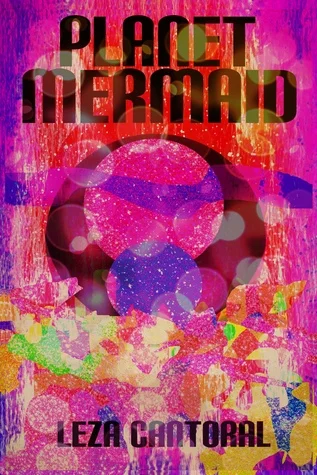
I am very inspired by fairy tales. I will continue to draw from them as well as fantasy, horror, and science fiction. I love fairy tales because they are simple and true. Many fairy tales are about rites of passage from girlhood to womanhood. I picked The Little Mermaid because I found the image of a mermaid with a human to be very compelling. I wondered if they would fall in love and what sex would be like between them. I am fascinated by the ocean. It is a strange world that seems as alien to me as outer space. I love the Hans Christian Andersen story. It is very lyrical and haunting. Also, I was disturbed by the misogynistic vibe of the Disney version. I wanted to address some of those things in my own way. I work with materials that both fascinate and repulse me. I mix something pretty with something ugly and my brain tries to make sense of it.

A good writer is able to create believable characters and bring liveliness in them. In Planet Mermaid, not only is the main protagonist Lilia alive and compelling, but it feels like you were able to breathe her in and truly become her. Was it difficult to do so?  

She is me but she is not. She is her own person but I drew from my own feelings and experiences. Honestly, I think the story is actually a metaphor about what it was like for me to move from Mexico to the Midwest when I was 12 years old. It was a desolate landscape, just like the surface of Planet Mermaid. There were pros and cons. I lost my friends but I gained new opportunities. I always felt like an alien. My first story in high school was about an alien who falls to earth and gets exploited by Hollywood. Basically if Marilyn Monroe was actually an alien. These themes of alienation and exploitation run through all my work. The hardest part to write was the rape scene. I was stuck for weeks on it. I just could not write it. It was too traumatic for me.

Planet Mermaid reads like prose, but it has more of a poetic feel to it—very lyrical and melodic. It’s also very visually-striking—stark at times, vibrant in other instances. Did any artists in particular influence the way it was written?      

I admire the style and language of writers like Vladimir Nabokov, Oscar Wilde, and Marcel Proust. I also love the visceral intensity of horror authors like Poppy Z. Brite and Clive Barker. Tanith Lee and Angela Carter were my main muses, as far as how to do a modernized fairy tale. Anne Sexton and Sylvia Plath are my main poetic muses. I love their powerful imagery and how their poetry is beautiful but also raw and emotionally supercharged. Sylvia Plath is my main literary influence. When I read Ariel I wanted to write stories the way she writes poetry. I wanted to recreate that surrealistic horror in prose.

We at Luna Luna also love Lana Del Rey—she’s our goddess and our muse. How did you discover her? Was it love at first ‘hearing’?

My boyfriend, Christoph Paul, is who turned me on to her. A year and a half ago I moved to New York City to follow my heart and be with him. That summer all I listened to was Lana Del Rey. I think he is finally sick of her now because she is all I play. I adore her. I was hooked instantly. She inspires my writing, my fashion, probably even my behavior. When I get into something I go full Method with it. When I was younger Madonna was my muse. I taught myself to sew so I could make costumes and dress up like her. I really thought I was her. In high school Courtney Love was my fashion and literary muse. ‘Live through This’ had a massive influence on my poetry. It has been a while since a muse swept me up like this. Lana has the stuff. She is true raw talent and that is why she is so special. Smoke and mirrors can only get you so far.

What motto do you live by?

Be yourself, believe in yourself, and be true to yourself.

Any advice to aspiring authors out there?

Write every single day even if you do not feel inspired. Be humble and work hard. Read a lot and read a lot of different kinds of things. Reach outside of your comfort zone. Make yourself visible on more than one social media platform. Facebook is ok but Twitter has a much wider reach. These days, writing is not just locking yourself up in a garret and sending your ink and tear stained manuscript to one loyal patron. This is a multimedia age. You are in control of your own image, so craft it. Interact with your readers. Humility, hard work, and focus will get you a long way. Talent is useless without focus and dedication.


Nadia Gerassimenko is a Media Relations Manager for Yeti Culture, Freelancer in editorial services, and Assistant Editor at Luna Luna Magazine by day, a moonchild and poet by night. Nadia self-published her first poetry collection Moonchild Dreams (2015) and hopes to republish it traditionally. She's currently working on her second chapbook a chair, a monologue. Visit her at tepidautumn.net or tweet her at @tepidautumn.

Tags Leza Cantoral, Planet Mermaid, Lana Del Rey, Sylvia Plath, Bizarro, The Little Mermaid, Fairytales
6 Comments

On Sylvia Plath, The Tarot And Bad College Writing

October 31, 2015

BY PATRICIA GRISAFI

The file name is embarrassing enough: “Sylvia Plath and My Fabulous Genius Paper.” The essay itself is excited, earnest, overblown, quick on impressions - in essence, a typical college English paper written by an enthusiastic fan. But I look back at this sloppy, eager mess of words with kindness and generosity, as it’s probably one of the most sincere documents I’ve ever written - and a genuine attempt at self-discovery. 

The actual title of the essay is less mortifying than its file name: “Sylvia in the Lion’s Mouth: Symbolic Transformation and Rebirth in ‘Ariel.’” A long-time Plath reader and budding scholar, I spent hours in the college library making exciting discoveries about her life. One day, I learned that Plath practiced the Tarot. Although I had observed Tarot imagery in poems like “Ariel,” “Daddy,” “The Hanging Man,” and others, I hadn’t known that Plath and husband Ted Hughes used tarot cards, the Ouija board, and divining tools to help foster creativity. So, for my sophomore college poetry class, I decided to write an essay on Plath and the Tarot, specifically lion imagery in “Ariel.”

Perched on my desk chair like I imagine Beethoven at the piano - crazy-eyed, hair flying - I pounded out what I thought was the most incredible essay on Sylvia Plath. Not only would the language impress my professor, who was one of those serious, sweater wearing, name dropping kinds (“We had Robert Pinsky over the other night for tea”), but my argument would be wholly original. Surrounded by seven beta fish all named Rasputin, piles of books, and my Tarot pack, I worked deep into the night. 

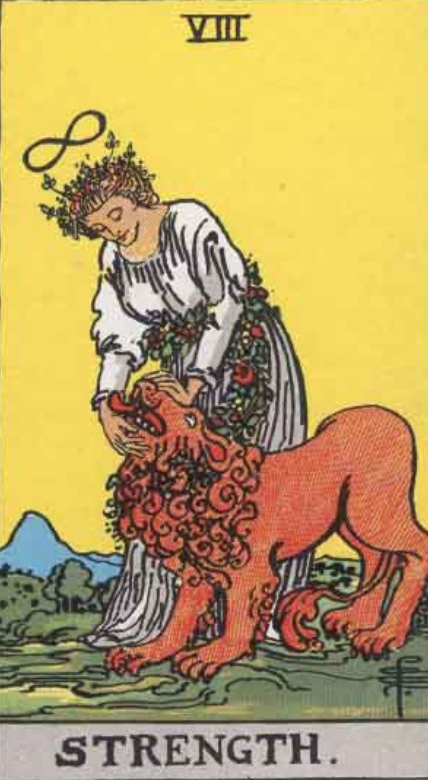
I’m not very spiritual, and I don’t practice the Tarot anymore. But at the time, I was entranced by the cryptic images of the Raider-Waite deck and consulted the cards constantly. The card I was most interested in was Strength.  

Even though I remember my sophomore year of college as a time of discovery, fun, and experimentation, my life leading up to that point had been somewhat troubled. For most of my adolescence, I suffered from unchecked depression and anxiety and often felt powerless, invisible, and misunderstood. I would meditate on the Strength card, transfixed by the calm expression on the woman’s face as she nonchalantly pries open the lion’s jaws (looking at the card now, she seems to be merely petting the lion’s snout as he looks lovingly at her, and I wonder why I saw such violence when currently I see none). I read deeply into the struggle between the woman and the lion. Like most burgeoning academics, I tried to work out my own psychodrama through literary analysis. Here’s an excerpt from my bad college essay:

“God’s lioness” (4) is a loaded image that describes the horse and the poet as they become one during the ride. Merged with the animal, the speaker obtains a sense of power and strength not previously apparent within her. In the Tarot tradition, the “Strength” card depicts a woman wrestling with, prying open, or closing the jaws of a lion is usually depicted. This is an act of brute force; the woman’s intention is to elicit cooperation from the wild beast.

The “Strength” card symbolizes inner spiritual strength and fortitude, overcoming obstacles, and victory against overwhelming odds (Hollander 64-65). More so, the lion is also symbolic of desperate boldness, the fire within, the ‘beast within,’ fear, passion, and loss in surrender. Through rebirth, the speaker wishes to gain all of these qualities. She surrenders, losing the psychological battle but winning the creative one. 

As a college English teacher, I would be quite pleased to receive an essay with a section like this. I might turn to my colleagues with a silly smile and declare that we’ve won ourselves a new Plath devotee, as if we ran a secret club. We might laugh about the essay’s pretensions, the lack of evidence, the sprawl of it all - but I think we’d identify the student as a kindred spirit. 

The date on the paper is October 28th - one day after Plath’s birthday. When I think of Sylvia Plath around her birthday, I think of her devastating poem “A Birthday Present,” especially these lines: 

I do not want much of a present, anyway, this year. 

After all I am only alive by accident. 

I would have killed myself gladly that time any possible way. 

Now there are these veils, shimmering like curtains, 

The diaphanous satins of a January window

White as babies’ bedding and glittering with dead breath. 

I also think of this quote from Al Alvarez, who maintains that Plath’s occultism consumed her towards the end of her life:  

“I hardly recognised Sylvia when she opened the door. The bright young American house wife with her determined smile and crisp clothes had vanished along with the pancake make-up, the school-mistressy bun and fake cheerfulness. Her face was wax-pale and drained: her hair hung loose down to her waist and left a faint, sharp animal scent on the air when she walked ahead of me up the stairs. She looked like a priestess emptied out by the rites of her cult. And perhaps that is what she had become. She had broken through to whatever it was that made her want to write, the poems were coming every day, sometimes as many as three a day, unbidden, unstoppable, and she was off in a closed, private world where no one was going to follow her.”

Plath would have turned eighty-three this year. It’s not difficult for me to imagine her at this age because my friend and I ran into her doppelgänger at the Merchant House Museum the other week. Our docent, an elderly woman with a stylishly retro hairdo and a dirndl skirt, lectured in a thick Boston accent on the social customs of family life in turn of the century Manhattan. When we left, my friend and I turned to each other and grinned: “That was totally Sylvia Plath, right? That’s exactly what she would look like now, isn’t it?” The idea of Sylvia Plath living, being a docent at an infamously haunted museum, and teaching us about Victorian gardens, seems much more beautiful than the terrible reality of her suicide. 

I’m not a particularly sentimental person, and I don’t tend to save things - especially essays written in college. But I keep “Sylvia Plath and My Fabulous Genius Paper” around. I transfer it to each new computer and place it in a file called “College Writing” (which is filled with bad poetry, but that’s another story). Every year around Plath’s birthday, as I’m fluttering about the apartment stuffing foam brains into faux-bloodied mason jars and arranging knobby gourds in a battered basket, I imagine Plath fixated on her Tarot pack or hunched over the Ouija board. I wonder what she was looking for. 

In Occult Tags Sylvia Plath, Poetry, Death, Tarot
1 Comment
Featured
‘in the glitter-open black' — poetry by Fox Henry Frazier
'poet as tarantula,  poem as waste' — poetry by  Ewen Glass
'poet as tarantula, poem as waste' — poetry by Ewen Glass
'Hours rot away in regalia' — poetry by Stephanie Chang
'down down down the hall of mirrors' — poetry by Ronnie K. Stephens
'Grew appendages, clawed towards light' — poetry by Lucie Brooks
'do not be afraid' — poetry by Maia Decker
'The darkened bedroom' — poetry by Jessica Purdy
'I am the body that I am under' — poetry by Jennifer MacBain-Stephens
instagram

COPYRIGHT LUNA LUNA MAGAZINE 2025