

Joanna C. Valente is a human who lives in Brooklyn, New York. They are the author of Sirs & Madams, The Gods Are Dead, Marys of the Sea, Sexting Ghosts, Xenos, No(body) (forthcoming, Madhouse Press, 2019), and is the editor of A Shadow Map: Writing by Survivors of Sexual Assault. They received their MFA in writing at Sarah Lawrence College. Joanna is the founder of Yes Poetry and the senior managing editor for Luna Luna Magazine. Some of their writing has appeared in The Rumpus, Them, Brooklyn Magazine, BUST, and elsewhere. Joanna also leads workshops at Brooklyn Poets. joannavalente.com / Twitter: @joannasaid / IG: joannacvalente / FB: joannacvalente
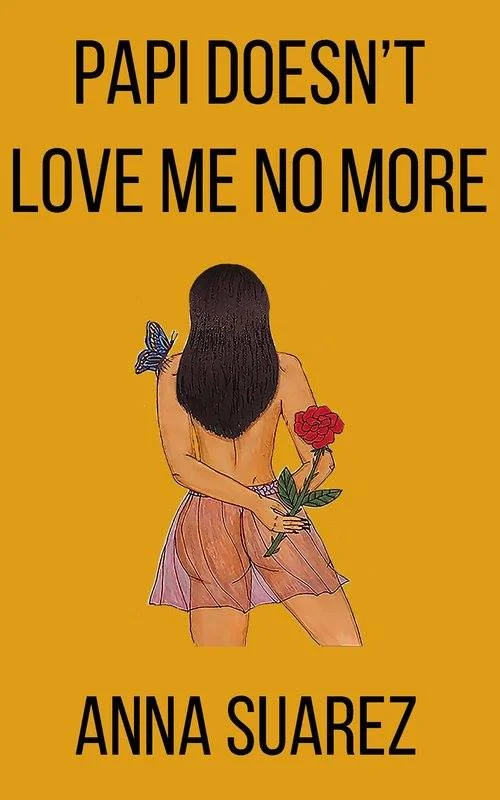
Review of Anna Suarez's 'Papi Doesn't Love Me No More'
While the bruise of men is present in these poems, there are great alliances with women, “Sister says I touch/ and I destroy. ” The aspect of doubling is in this poetry, but women aren’t harmed by their doubles, rather, they feed of each other’s prowess. The twinning of the speaker’s self adds to the labyrinthine structure of the book, so though you encounter a new scene is each hole and crevice, there is still that familiar ache of letting go and the hope of regeneration.
Read More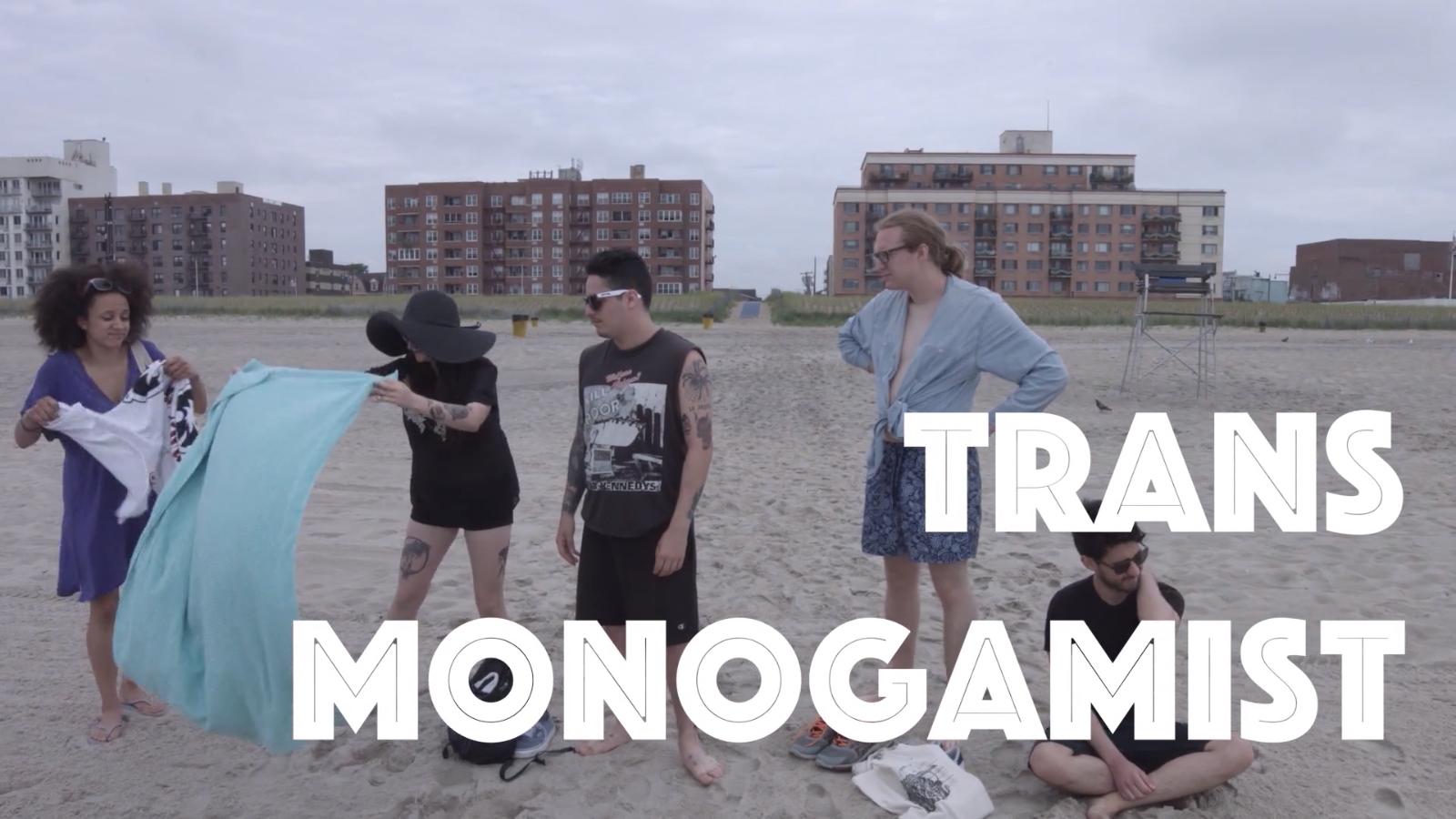
'Trans Monogamist' Is the New Web Series You Need to Watch
Joanna C. Valente is a human who lives in Brooklyn, New York. They are the author of Sirs & Madams, The Gods Are Dead, Marys of the Sea, Sexting Ghosts, Xenos, No(body) (forthcoming, Madhouse Press, 2019), and is the editor of A Shadow Map: Writing by Survivors of Sexual Assault. They received their MFA in writing at Sarah Lawrence College. Joanna is the founder of Yes Poetry and the senior managing editor for Luna Luna Magazine. Some of their writing has appeared in The Rumpus, Them, Brooklyn Magazine, BUST, and elsewhere. Joanna also leads workshops at Brooklyn Poets. joannavalente.com / Twitter: @joannasaid / IG: joannacvalente / FB: joannacvalente
3 Poems You Need to Read This Month
Joanna C. Valente is a human who lives in Brooklyn, New York. They are the author of Sirs & Madams, The Gods Are Dead, Marys of the Sea, Sexting Ghosts, Xenos, No(body) (forthcoming, Madhouse Press, 2019), and is the editor of A Shadow Map: Writing by Survivors of Sexual Assault. They received their MFA in writing at Sarah Lawrence College. Joanna is the founder of Yes Poetry and the senior managing editor for Luna Luna Magazine. Some of their writing has appeared in The Rumpus, Them, Brooklyn Magazine, BUST, and elsewhere. Joanna also leads workshops at Brooklyn Poets. joannavalente.com / Twitter: @joannasaid / IG: joannacvalente / FB: joannacvalente
The Playlist Perfect for Libras
Joanna C. Valente is a human who lives in Brooklyn, New York. They are the author of Sirs & Madams, The Gods Are Dead, Marys of the Sea, Sexting Ghosts, Xenos, No(body) (forthcoming, Madhouse Press, 2019), and is the editor of A Shadow Map: Writing by Survivors of Sexual Assault. They received their MFA in writing at Sarah Lawrence College. Joanna is the founder of Yes Poetry and the senior managing editor for Luna Luna Magazine. Some of their writing has appeared in The Rumpus, Them, Brooklyn Magazine, BUST, and elsewhere. Joanna also leads workshops at Brooklyn Poets. joannavalente.com / Twitter: @joannasaid / IG: joannacvalente / FB: joannacvalente
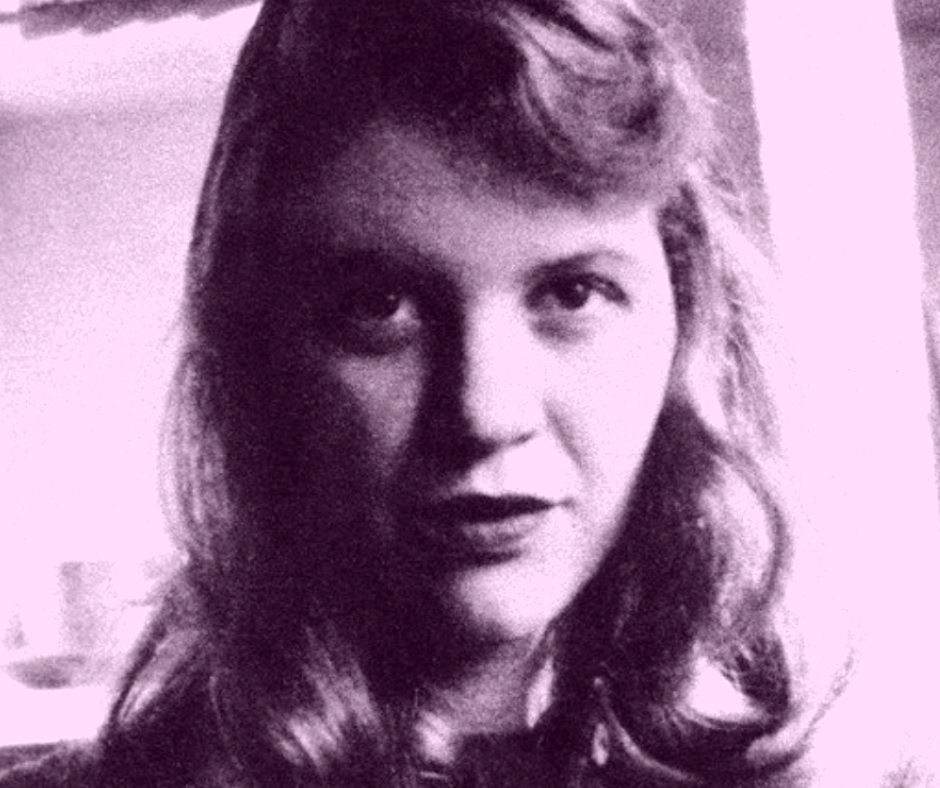
Wearing Sylvia Plath’s Lipstick
BY PATRICIA GRISAFI
The dutifully hip girl behind the register at the Chelsea Urban Outfitters was sporting a ravishing shade of reddish, hot pinkish lipstick.
“That’s a great color,” I said. “Who makes it?”
“It’s by Revlon. The color is called Cherries in the Snow. You really can’t forget that name, can you?”
I stopped by Duane Reade on the way home and picked up a tube, knowing full well that the lipstick would end up in the heart-shaped box in the closet where all my other lipsticks went to die.
You know how some women wear lipstick every day as a matter of routine? They can apply a perfect lip while riding a bike, walking a tightrope, or herding ten unruly toddlers. I’m not talking about beige-y pinks or fleshy nudes, but serious, bright, punch-you-in-the-face colors.
I’m not one of those women.
Time and time again I’ve proven incompetent at the simple task of applying a lipstick that isn’t the color of my lip; usually, I look like someone’s grandmother in Fort Lauderdale on her fifth Valium and third Mai Tai. Still, every few months, I’ll give a new color a whirl only to frown in the mirror and return to my trusty mess-proof staple since the 90s: Clinique Black Honey.
Would Cherries in the Snow convert me?
I stood in front of the bathroom mirror and carefully drew on a bright, pinkish-red grin. Then I fussed a bit, cleaning up the lines with a Q-tip and some concealer. I cocked my head to the side, bared my teeth like a hyena. I imagined myself tooling around the East Village in white Birkenstocks and large black sunglasses, with a bouquet of bodega peonies in one hand and a coffee in the other. I’d give a breezy, hot pink smile and everyone would think I was quirky and chic.
By the end of the week, Cherries in the Snow was in the heart-shaped graveyard of lipsticks past.
The next time I heard of Cherries in the Snow was in a book. Pain, Parties, and Work by Elizabeth Winder details poet Sylvia Plath’s harrowing experience as a guest editor for Mademoiselle in the summer of 1953. Readers will recognize many of the events Plath writes about in The Bell Jar as based on the details of that summer: getting food poisoning, figuring out fashion, suffering from depression.
There’s one mundane detail that Plath doesn’t include in The Bell Jar: her preferred lipstick: “She wore Revlon’s Cherries in the Snow lipstick on her very full lips,” Winder writers.
I thought I knew an absurd amount about Sylvia Plath. As one of my earliest and long-standing loves, I’ve read and re-read her poems and fiction, written about her work in my Doctoral thesis, visited her homes in both Massachusetts and London, even touched her hair under the careful eyes of the curators at the Lilly Library, Bloomington. But I had missed this small, seemingly insignificant detail.
Revlon has manufactured Cherries in the Snow for the past sixty two years; it’s known as one of their “classic” shades, along with another popular color, Fire and Ice. It’s a cult item, a relic from another era when most women wore lipstick faithfully (a fun but gross tidbit from Winder’s book: one 1950s survey revealed that 98 percent of women wore lipstick; 96 percent of women brushed their teeth). The color isn’t exactly the same as it was when Plath wore it because of changes in industry practice, but it’s pretty damn close.
I scrambled for the heart-shaped lipstick box and sat cross-legged in front of it, fishing around for Cherries in the Snow. I held the shiny black tube in my hand like Indiana Jones held the idol in the beginning scenes of Raiders of the Lost Ark. The lipstick seemed different, changed. Imbued with special meaning. I swiped on a coat, this time imagining how Plath might have applied her makeup, what she might have thought as she looked back in the mirror. Did it change her mood, feel comforting, bestow power?
People are interested in discovering the mundane habits of their favorite singers, actors, writers, and artists. They might even purchase a product based solely on a celebrity endorsement. I’ve always been interested in finding out what products my favorite dead icons used, as if I can access a part of their lost inner lives by slathering on Erno Laszlo’s Phormula 3-9 (one of Marilyn Monroe’s favorite creams) or spritzing myself with Fracas (Edie Sedgwick’s signature scent). Wearing Cherries in the Snow allowed me to experience a strange intimacy with a writer I admired, even more so than reading the very personal things Plath wrote about — including how satisfying scooping a pesky glob of snot from her nose feels.
Ultimately, Cherries in the Snow did not become my lipstick, but I gained an appreciation for the shared ritual with and strange connection to Plath that it allowed me to experience. So many of the artists who have influenced our lives are gone; it feels comforting to find a bit of their essence in something as tangible as makeup.
Patricia Grisafi is a New York City-based freelance writer, editor, and former college professor. She received her PhD in English Literature in 2016. She is currently an Associate Editor at Ravishly. Her work has appeared in Salon, Vice, Bitch, The Rumpus, Bustle, The Establishment, and elsewhere. Her short fiction is published in Tragedy Queens (Clash Books). She is passionate about pit bull rescue, cursed objects, and horror movies.
Poetry by Denise Jarrott
BY DENISE JARROTT
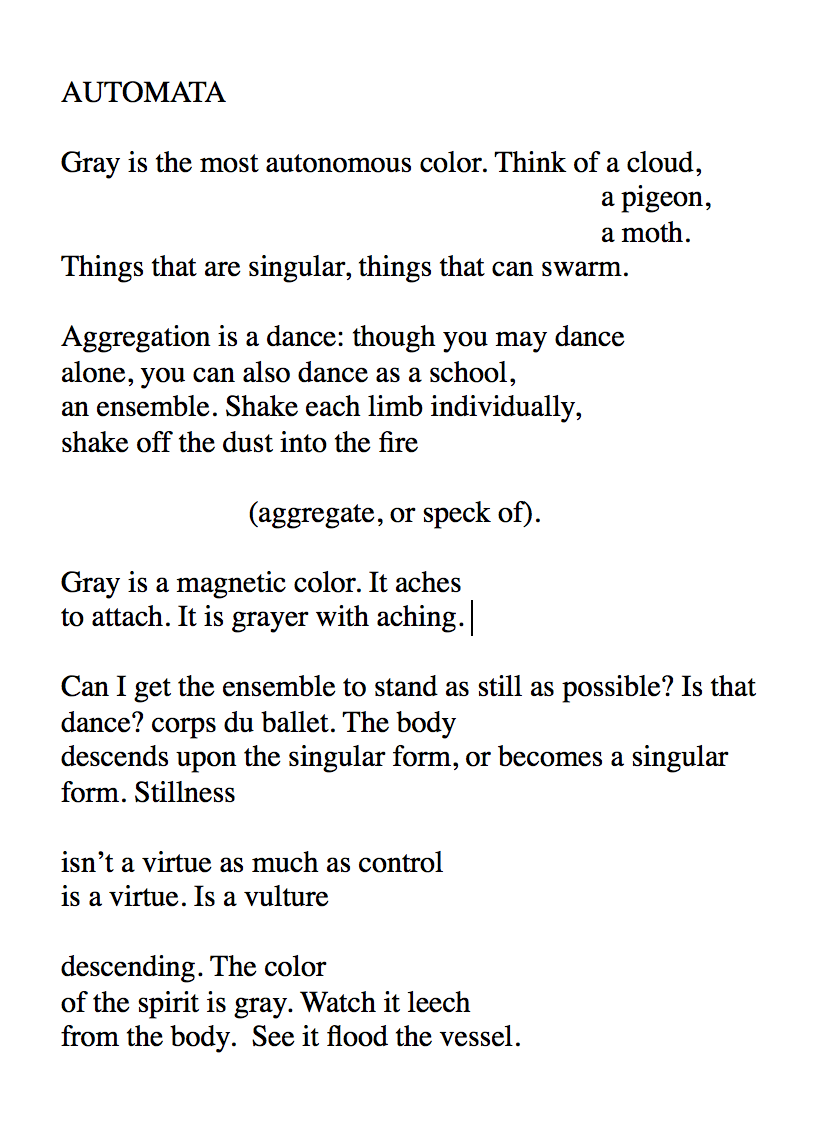
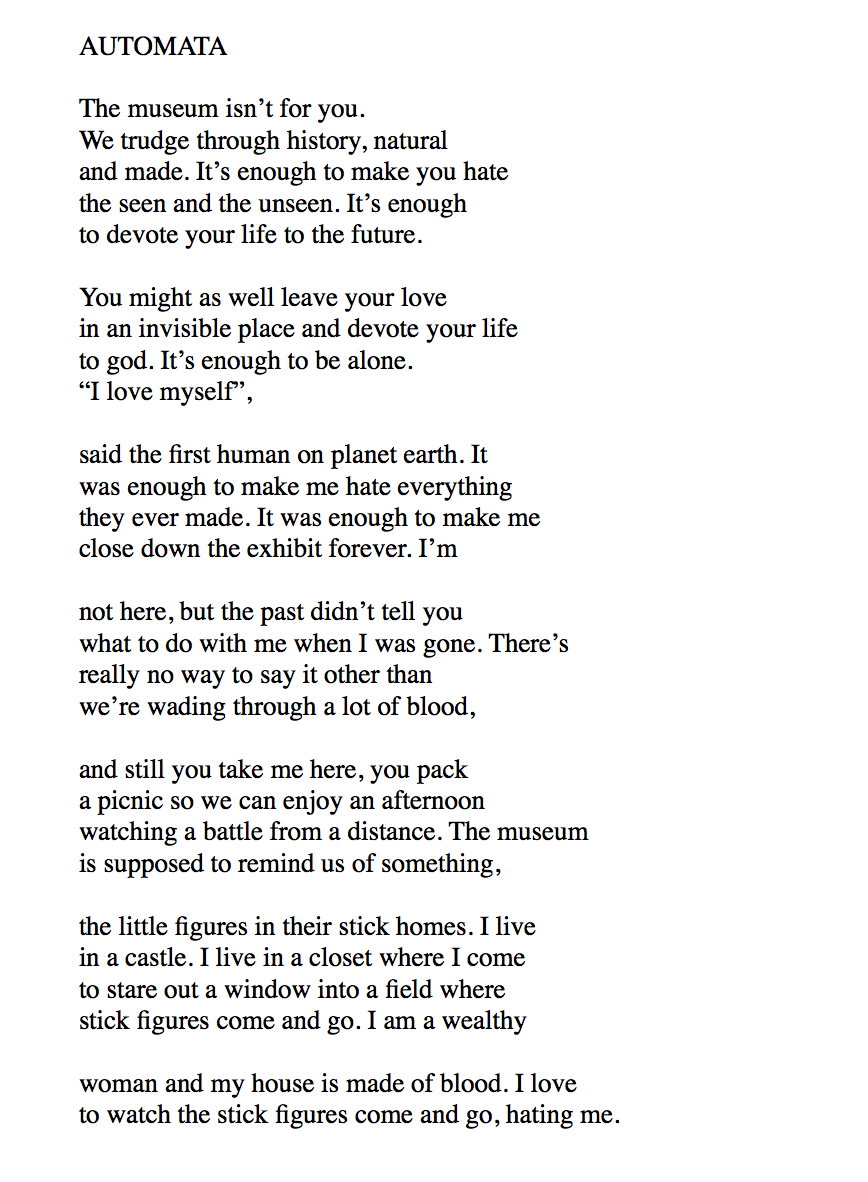
Denise Jarrott is the author of a collection of poems called NYMPH (vegetarian alcoholic press) and a chapbook, Nine Elegies (dancing girl press). Her work has appeared in Black Warrior Review, Bombay Gin, The Volta, Poor Claudia, and elsewhere. She was nominated for a 2018 Pushcart Prize and is currently at work on a series of essays in conversation with Roland Barthes' A Lover's Discourse. She lives in Brooklyn.

The Ultimate Aquarius Playlist
Joanna C. Valente is a human who lives in Brooklyn, New York. They are the author of Sirs & Madams, The Gods Are Dead, Marys of the Sea, Sexting Ghosts, Xenos, No(body) (forthcoming, Madhouse Press, 2019), and is the editor of A Shadow Map: Writing by Survivors of Sexual Assault. They received their MFA in writing at Sarah Lawrence College. Joanna is the founder of Yes Poetry and the senior managing editor for Luna Luna Magazine. Some of their writing has appeared in The Rumpus, Them, Brooklyn Magazine, BUST, and elsewhere. Joanna also leads workshops at Brooklyn Poets. joannavalente.com / Twitter: @joannasaid / IG: joannacvalente / FB: joannacvalente
The Astrolushes Podcast: Skeptics, Cosmic Lessons, & Authenticity
Astrolushes is a podcast at the intersection of astrology and literature, ritual, wellness, pop culture, creativity — and, of course, wine. Expect guests, giveaways, & games — and get ready to go deep with us.
The water-sign hosts are Andi Talarico, poet, book reviewer and Strega (@anditalarico) & Lisa Marie Basile, poet, author of Light Magic for Dark Times, & editor of Luna Luna Magazine (@lisamariebasile + @lunalunamag). You can the astrolushes on Twitter, too, here.
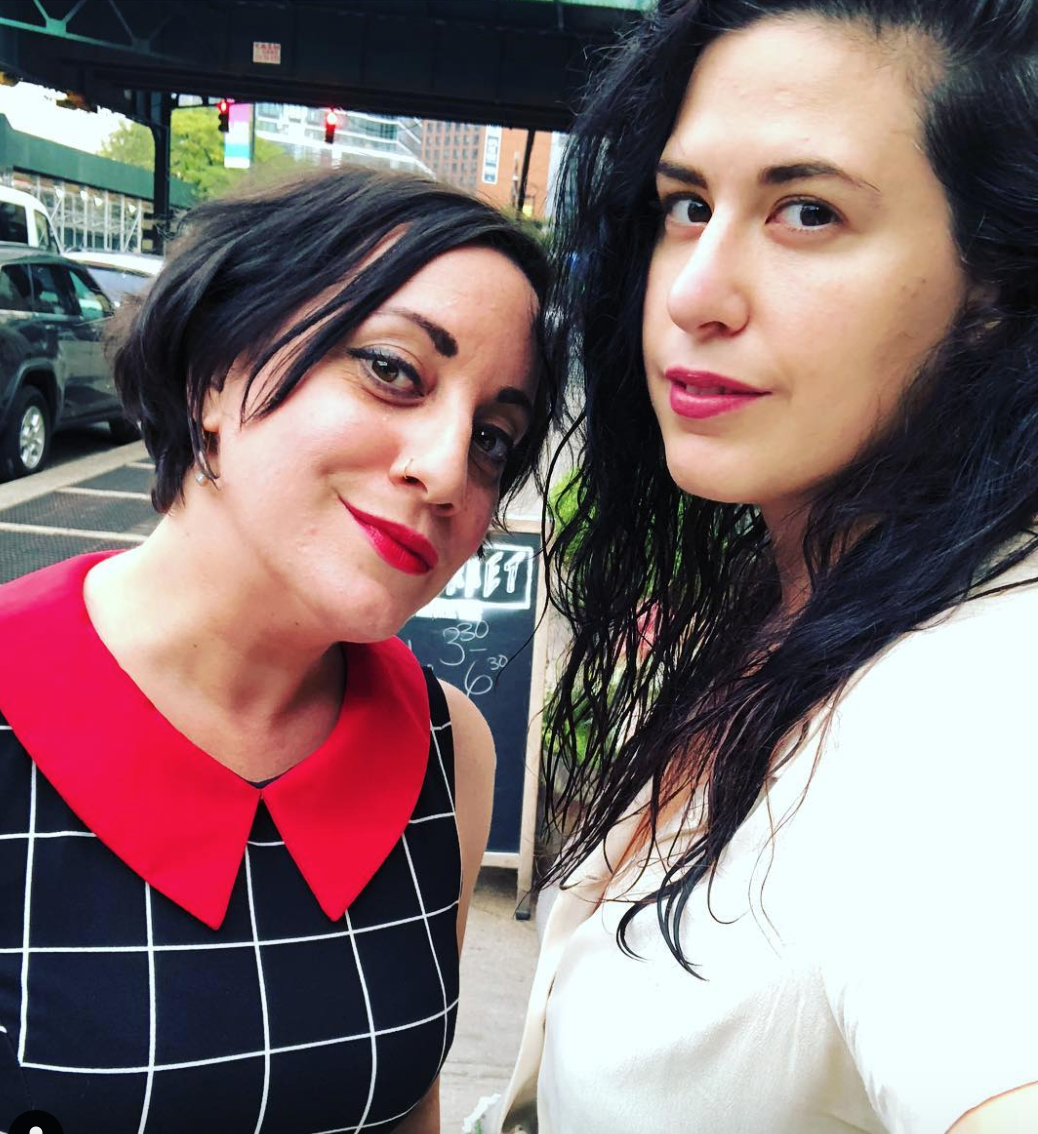
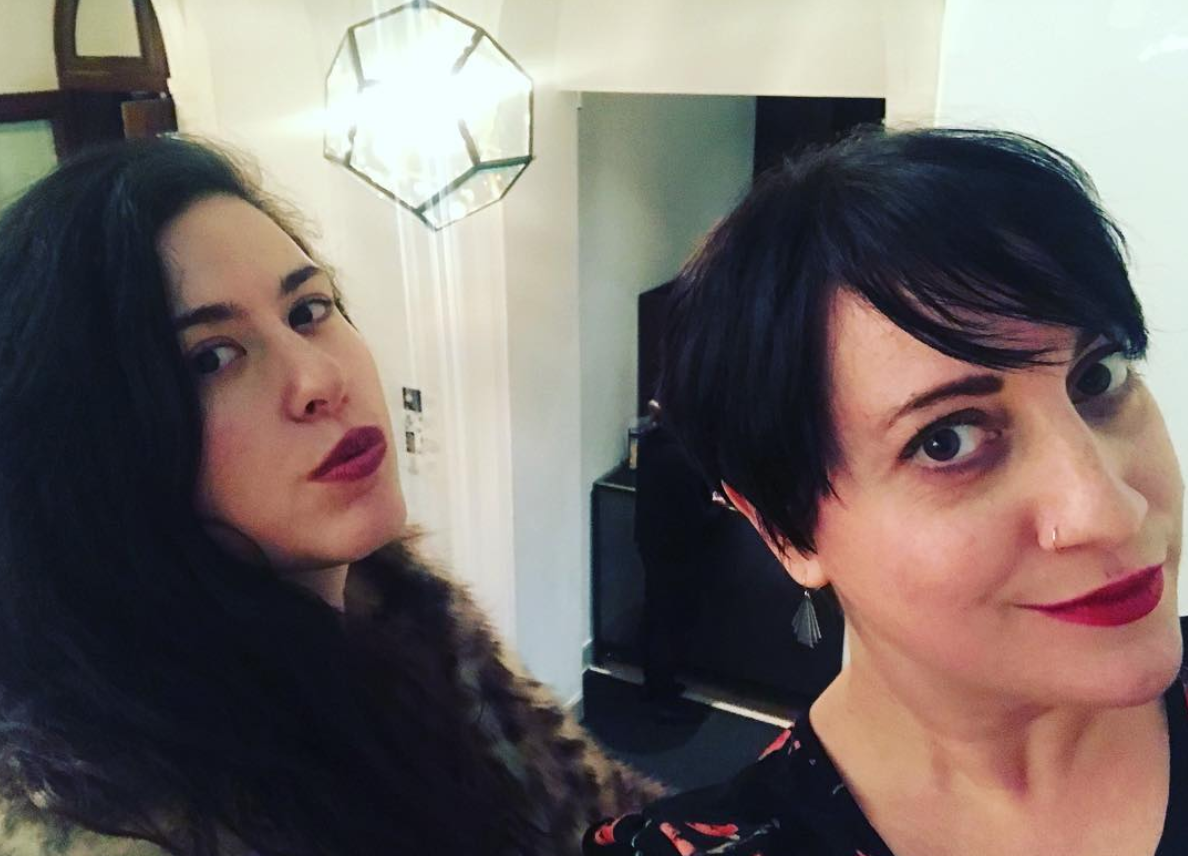
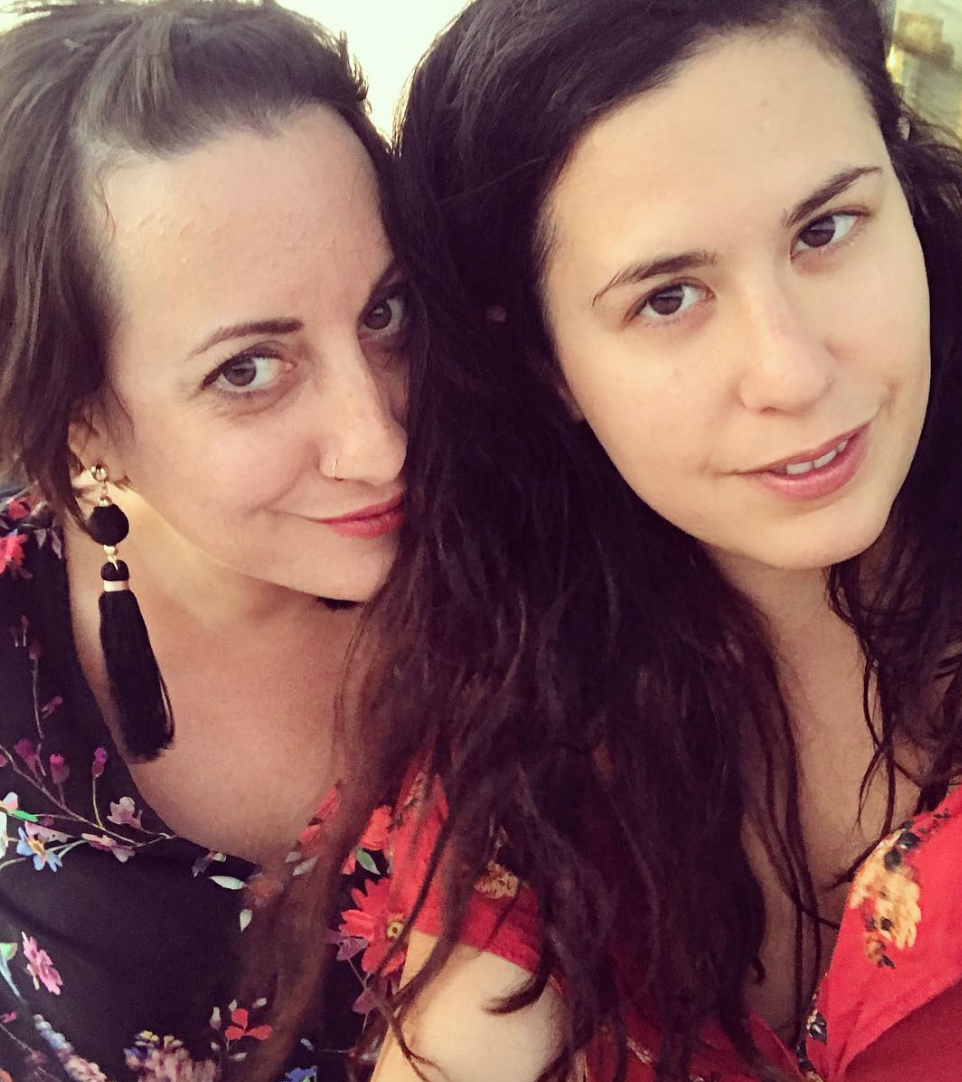
LISA MARIE BASILE: Let’s chat about the birth of AstroLushes! I think it sort of started on a drive we took to Salem, MA, where we witched out for a weekend and visited HausWitch for my Light Magic for Dark Times writing workshop. In the car, I threw celebrity and literary names at you and had you guess their big 3 signs. You were amazingly on point! I'm wondering, besides having fun with it, what do you personally think the 'use' or 'reason' for this astro-knowledge is? I think people are generally fascinated, but we both know there's more to it.
ANDI TALARICO: That road trip and our time in Salem definitely feels like the genesis of this show! It started with us guessing celebrity's charts and now it's just a part of all of our conversations. I feel like now we're constantly wondering about writers and actors and philosophers through the lens of their astrological placements. It's a fun game but I think it also allows for a possibly deeper understanding of the art and culture that we engage with.
And engagement was how I came to astrology. My mother always read our horoscopes from the paper when I was growing up; she's a mystical Pisces who has visited psychics, believes in prophetic dreams, and finds herself fascinated by the moon. I inherited a lot of my curiosity from her. But by age 12 our household had changed considerably and it became a harder place to exist and grow in. So it's no surprise to me, looking back, why that was the time I started studying astrology.
It was a way of making sense of the world. It also gave me an opportunity to talk to people about themselves (and to keep the focus off of myself.) It made me feel like I had some sort of agency, a voice, a new authority. Now, the language of astrology, to me, is less about telling people about themselves and actually, much like my tarot practice, using the themes and ideas as lessons that we can use to fully become our best, most authentic selves. That's where it crosses over into self-care as well.
How do you feel about people who think astrology is bogus, Lisa?
Astrology…much like tarot practice, uses the themes and ideas as lessons that we can use to fully become our best, most authentic selves. That's where it crosses over into self-care as well. — Andi Talarico
LISA MARIE BASILE: I love that you say it's an engagement with everything around us. And that, as a child, it helped you navigate a very difficult world. It truly is a language we learn and then we speak, and that can bring people together in an instant. And it can help us focus on the many characteristics of ourselves. In my life, processing the trauma I've experienced through the filter of the Scorpio has been amazingly beneficial; I now look on it all as transformative, rather than destructive.
It's also really interesting to give a name to the various inclinations and motivations for people's art or behaviors. Especially when you look at creative people, or really evil people, and you start seeing how many of them fit into a certain astrological sign, or element. It may not be scientifically proven, but that’s the sort of mystery and liminality that we derive meaning from.
I am a scientific person. I believe that reason, empirical evidence, and research is important. I live with a chronic illness, and I'm a health writer as a day job. It's important to me that information is disseminated accurately, or, say, that the injections I take have been proven both effective and safe, and that sometimes, you need medication over meditation, in order to heal.
At the same time — people need to know there’s more to health and wellness than big pharma. And there’s more to this world than what we can see. I think the zodiac allows us to approach the liminal, the intuitive, the subterranean. It does exist outside of 'objective science' and that's okay. It allows us to dive headfirst into the shadows of this world and our lives, and I think that's the key to the feeling whole — straddling both sides. Science has a place, but so does the esoteric. You can't prove love, but we all feel it. So, it's the same thing. Some things we just explore knowing that it may be obscure. I am grateful to be able to take part in the world from both stances.
What do you think about how people can use the zodiac as a healing tool, or in daily ritual?
There more to this world than what we can see. I think the zodiac allows us to approach the liminal, the intuitive, the subterranean. It exists outside of 'objective science' and that's okay. It allows us to dive headfirst into the shadows of this world and our lives, and I think that's the key to the feeling whole — straddling both sides. Science has a place, but so does the esoteric. You can't prove love, but we all feel it. — LISA MARIE BASILE
ANDI TALARICO: I definitely look through several horoscopes during the morning to see what my day/week might bring me. I mean, the basis of horoscopes are transits, what the movement of the current celestial journey means in my zodiac placements, and I love that about horoscopes — how it's a constant reminder that everything changes, nothing stays still, and how cyclical life can be, for good or bad.
I like to look to the planets/celestial bodies and their assigned western astrological associations for greater personal meeting. Like, what does it mean to be represented, as I am, by the Moon? The Moon shines because it reflects the light that is given to it. I feel the same way, again, for good and bad. I also shine brightest when I'm basking in the the light of stimulating conversation and affection. I turn inward and dark when I'm not given light to work with.
Also, since the Moon transits more often than other bodies, since it's constantly waxing or waning, it serves as a beautiful remind to keep pushing forward, that this moment isn't forever, to enjoy the view and perspective before it changes yet again. It's why I have a little crescent moon tattooed on my finger — my constant reminder that the only constant is change.
How do you feel connected or represented by Pluto, Lisa? Pluto is such a symbolically important planet of creative destruction, I'd love to hear your thoughts on that!
What does it mean to be represented, as I am, by the Moon? The Moon shines because it reflects the light that is given to it. I feel the same way, again, for good and bad. I also shine brightest when I'm basking in the the light of stimulating conversation and affection. I turn inward and dark when I'm not given light to work with. — ANDI TALARICO
LISA MARIE BASILE: Oh, that’s so beautiful! When you say, “I turn inward and dark when I'm not given light to work with,” I feel that in my core! I love the idea of this cosmic duality, how it represents the shadowy quietude and the display of light. It reminds me that we are all just star stuff. It’s why I started Luna Luna!
It’s funny you mention the tattoo, because I have one that also reminds me that things change; it’s an ampersand. Maybe that’s why you and I are so drawn astrology? That it provides a foundation we can find stability in but the fluidity we need to always be growing.
I think the fact that Pluto has been considered a planet, a not-planet, an exoplanet and whatever else, is very beautiful—a perfect and living representation of Pluto as a symbol: it dies and is reborn, and yet it remains this beautiful archetype of transformation, weathering the storms of idea and rule and order. Could literally anything be more perfect?
Pluto is my beautiful ruler, and I am indebted to its reminders. I have always been able to die and rise. I lean into the dark and then I die. I go into dark periods of change and emerge. I almost need it more than the light. But I suppose, that is my language. The darkness becomes a kind of light that makes sense.
I think that’s the beauty of this cosmic story. No matter what you believe or feel skeptical about, astrology’s narrative, symbolism and reminder to explore the grandness of human emotion and circumstance is all splayed out up there. We just need to look up.
What do you think about people who say they they believe in astrology and make Huge Life Decisions around it? Do you think it’s important to figure astrology into your day to day? Jobs? Dates? Etc? Or do you think it serves its best purpose as a tool for introspection, rather than a rulebook?
No matter what you believe or feel skeptical about, astrology’s narrative, symbolism and reminder to explore the grandness of human emotion and circumstance is all splayed out up there. We just need to look up. — LISA MARIE BASILE
ANDI TALARICO: LOVE this: "...Pluto as a symbol: it dies and is reborn, and yet it remains this beautiful archetype of transformation, weathering the storms of idea and rule and order. "
As for me, I don't make huge life decisions based on astrology in the sense, that, say, I won't work with people of certain signs or judge them based on their natal chart. The idea of not dating this sign or that sign is a prejudice to me, and unfair. Even knowing someone's chart information is an act of intimacy — that's private knowledge — and to use it against someone or to think you know everything about a person based on it...hell no. Absolutely not.
Can it help you locate potential challenges? Yes, I believe that. Is is exciting when your synastry is in alignment and looks positive? Of course. But we're all much more than our natal charts. We're our upbringing, we're our ancestors, we're survivors, we're our good days and bad days, we're what we've been allowed to be and what we've rebelled against. Our zodiac signs matter but they don't make or break us.
I WILL make decisions based on transits and the moon's phases, though. Like, new beginnings during the new moon — that just makes sense to my entire being, both my physical and spiritual self. I definitely believe in harnessing the new energy at the start of a new zodiac phase — focus on good communication at the start of Gemini season! Make those spreadsheets in honor of Virgos everywhere! Get real sexy at Scorpio time!
But, would I, say, not send an important email when Mercury's in Retrograde? No, I try not to rely THAT heavily on astrology. I try to use it more as a guide and tool for learning than a strict rulebook. But...I also hate rules and authority in general. I naturally bristle against those who think they have the exact answers, at least in areas that don't involve exactitude and true yes or no areas. I'm a skeptical human, in many ways.
Is is exciting when your synastry is in alignment and looks positive? Of course. But we're all much more than our natal charts. We're our upbringing, we're our ancestors, we're survivors, we're our good days and bad days, we're what we've been allowed to be and what we've rebelled against. Our zodiac signs matter but they don't make or break us. — ANDI TALARICO
FANCY THE COSMOS, WINE, AND A COZY CONVERSATION BETWEEN FRIENDS? LISTEN TO THE ASTROLUSHES PODCAST HERE

The Playlist Perfect for Capricorns
Joanna C. Valente is a human who lives in Brooklyn, New York. They are the author of Sirs & Madams, The Gods Are Dead, Marys of the Sea, Sexting Ghosts, Xenos, No(body) (forthcoming, Madhouse Press, 2019), and is the editor of A Shadow Map: Writing by Survivors of Sexual Assault. They received their MFA in writing at Sarah Lawrence College. Joanna is the founder of Yes Poetry and the senior managing editor for Luna Luna Magazine. Some of their writing has appeared in The Rumpus, Them, Brooklyn Magazine, BUST, and elsewhere. Joanna also leads workshops at Brooklyn Poets. joannavalente.com / Twitter: @joannasaid / IG: joannacvalente / FB: joannacvalente
The Witch Is a Symbol of Justice
Genevieve Pfeiffer is Assistant Director at Anomaly where she is curating a folio on reproductive justice and its intersections (she urges you to submit). She is a writer and poet, and facilitates workshops with survivors of sexual assault and harassment. Her work is forthcoming or has been published in Erase the Patriarchy, Juked, So to Speak, Stone Canoe, and more. She blogs about outdoor wanderings and herbal birth control’s intersections with witches, colonization, and personal and bioregional health at: https://medium.com/@GenevieveJeanne
Read More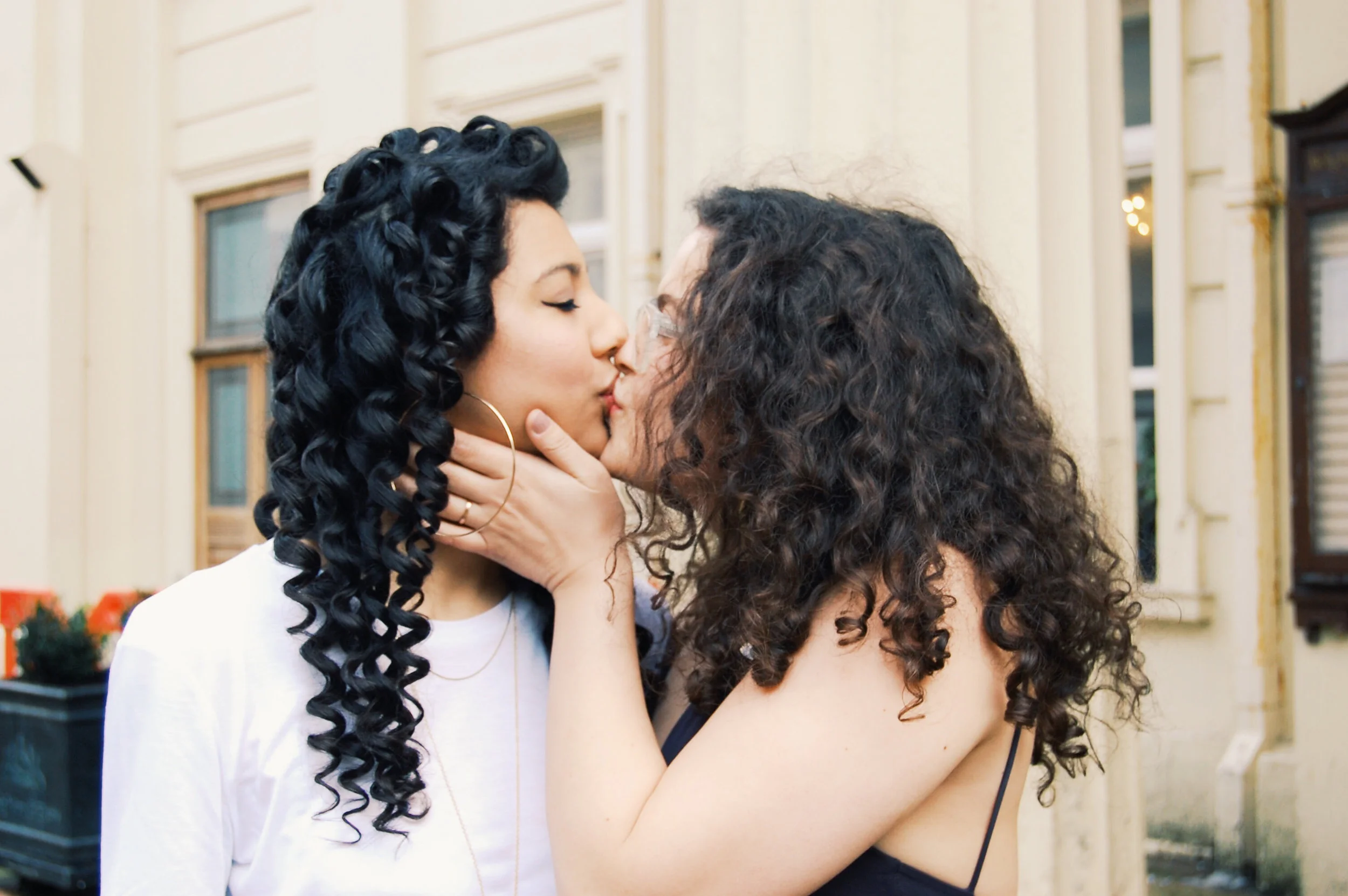
The Playlist You Should Listen to If You're a Leo
Joanna C. Valente is a human who lives in Brooklyn, New York. They are the author of Sirs & Madams, The Gods Are Dead, Marys of the Sea, Sexting Ghosts, Xenos, No(body) (forthcoming, Madhouse Press, 2019), and is the editor of A Shadow Map: Writing by Survivors of Sexual Assault. They received their MFA in writing at Sarah Lawrence College. Joanna is the founder of Yes Poetry and the senior managing editor for Luna Luna Magazine. Some of their writing has appeared in The Rumpus, Them, Brooklyn Magazine, BUST, and elsewhere. Joanna also leads workshops at Brooklyn Poets. joannavalente.com / Twitter: @joannasaid / IG: joannacvalente / FB: joannacvalente
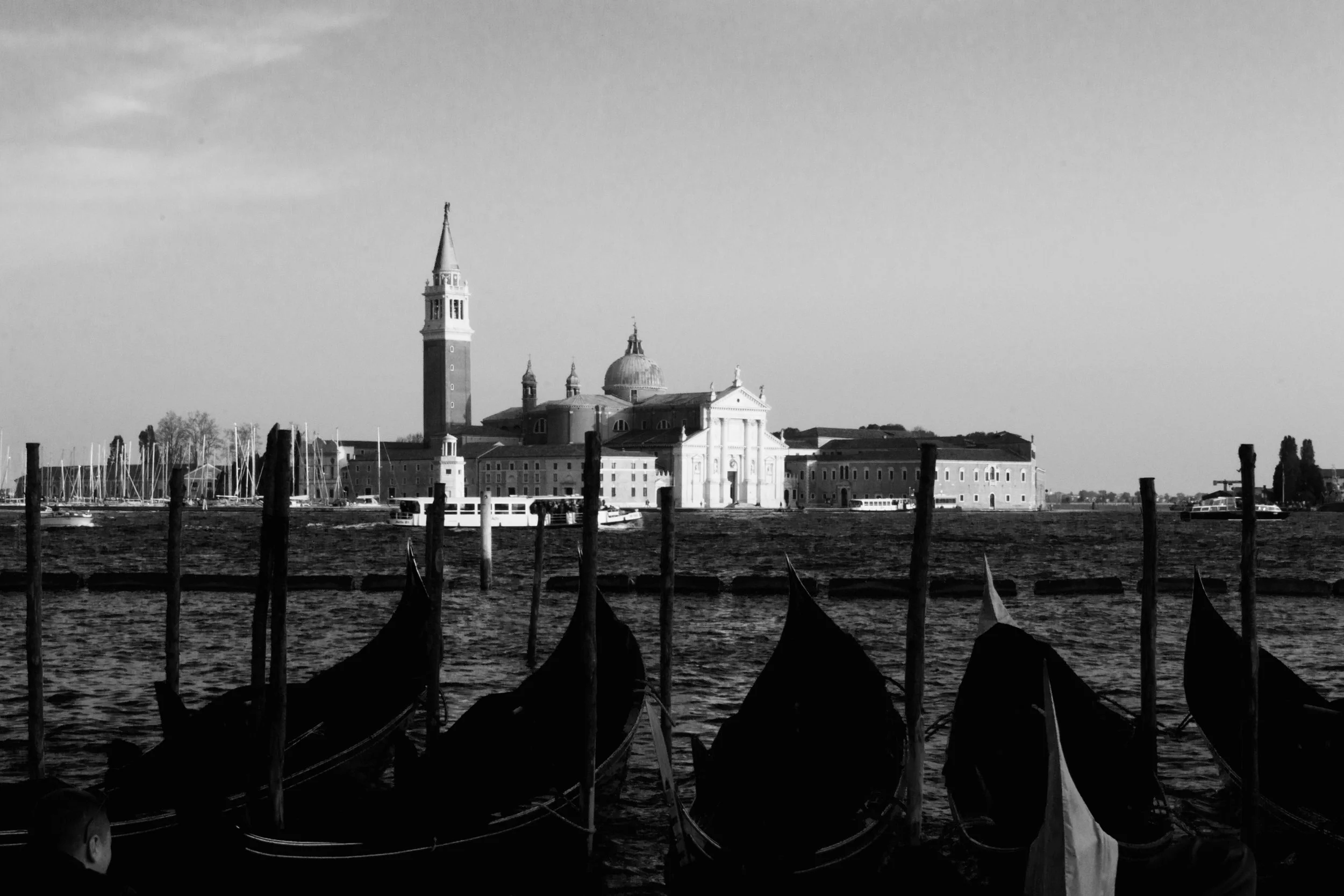
Photo: Joanna C. Valente
Poetry by Joanna C. Valente
Joanna C. Valente is a human who lives in Brooklyn, New York. They are the author of Sirs & Madams, The Gods Are Dead, Marys of the Sea, Sexting Ghosts, Xenos, No(body) (forthcoming, Madhouse Press, 2019), and is the editor of A Shadow Map: Writing by Survivors of Sexual Assault. They received their MFA in writing at Sarah Lawrence College. Joanna is the founder of Yes Poetry and the senior managing editor for Luna Luna Magazine. Some of their writing has appeared in The Rumpus, Them, Brooklyn Magazine, BUST, and elsewhere. Joanna also leads workshops at Brooklyn Poets. joannavalente.com / Twitter: @joannasaid / IG: joannacvalente / FB: joannacvalente
The Pisces Playlist You've Always Been Waiting For
Joanna C. Valente is a human who lives in Brooklyn, New York. They are the author of Sirs & Madams, The Gods Are Dead, Marys of the Sea, Sexting Ghosts, Xenos, No(body) (forthcoming, Madhouse Press, 2019), and is the editor of A Shadow Map: Writing by Survivors of Sexual Assault. They received their MFA in writing at Sarah Lawrence College. Joanna is the founder of Yes Poetry and the senior managing editor for Luna Luna Magazine. Some of their writing has appeared in The Rumpus, Them, Brooklyn Magazine, BUST, and elsewhere. Joanna also leads workshops at Brooklyn Poets. joannavalente.com / Twitter: @joannasaid / IG: joannacvalente / FB: joannacvalente
An Aries Playlist You Need to Listen To
Terence Degnan is the author of Still Something Rattles (Sock Monkey Press, 2016) and The Small Plot Beside the Ventriloquist’s Grave (Sock Monkey Press, 2012). He's the Founder & Producer of "How to Build a Fire", a monthly storytelling series now in its 5th year, at Open Source Gallery. In addition, Terence also co-hosts and co-curates "Poets Settlement", a monthly reading series now in its 4th season. His poems have appeared in numerous journals and anthologies. His two spoken word albums, "BC" & "Calling Shotgun" can be found on iTunes and Spotify.
Read More