







Chloë Moloney is a student and writer from Surrey, United Kingdom. She is a staff writer and curator at Luna Luna Magazine, and a reviewer for MookyChick. Chloë has had short stories published with Moonchild Magazine, Occulum, Sick Lit Magazine and more. She is also a culture writer and biographer at the award-winning news platform Shout Out UK, and has also written for Epigram, B24/7 and the London Horror Society. She also acted as a reviewer for the Edinburgh Fringe Festival, in 2017. You can find Chloë at @ChloeMoloney98.
I’m Getting Married & I Can’t Stop Thinking About Death
Kailey Tedesco's books She Used to be on a Milk Carton (April Gloaming Publications) and These Ghosts of Mine, Siamese (Dancing Girl Press) are both forthcoming. She is the editor-in-chief of a Rag Queen Periodical and a performing member of the NYC Poetry Brothel. Her work has been nominated for the Pushcart Prize. You can find her poetry featured or forthcoming in Prelude, Prick of the Spindle, Bellevue Literary Review, Vanilla Sex Magazine, and more. For more information, please visit kaileytedesco.com.

Poetry by Bunkong Tuon
Bunkong Tuon is the author of Gruel (2015) and And So I Was Blessed (2017), both poetry collections published by NYQ Books, and a regular contributor to Cultural Weekly He is also an associate professor of English and Asian Studies at Union College, in Schenectady, NY.

5 Songs Eerily Revamped Using the Theremin
Joanna C. Valente is a human who lives in Brooklyn, New York. They are the author of Sirs & Madams (Aldrich Press, 2014), The Gods Are Dead (Deadly Chaps Press, 2015), Marys of the Sea (Operating System, 2017), Sexting Ghosts (Unknown Press, 2018), Xenos (Agape Editions, 2016), and is the editor of A Shadow Map: Writing by Survivors of Sexual Assault (CCM, 2017). They received their MFA in writing at Sarah Lawrence College. Joanna is the founder of Yes, Poetry and the managing editor for Civil Coping Mechanisms and Luna Luna Magazine. Some of their writing has appeared, or is forthcoming, in Brooklyn Magazine, Prelude, BUST, Spork Press, and elsewhere. Joanna also leads workshops at Brooklyn Poets. joannavalente.com / Twitter: @joannasaid / IG: joannacvalente
How This Depeche Mode Song Empowered Me as a Woman
Kristin Garth is a poet from Pensacola, a knee sock enthusiast and a sonnet stalker. In addition to Luna Luna, her sonnets have stalked the pages of Occulum, Anti-Heroin Chic, Faded Out, Hedgehog Poetry, Drunk Monkeys, Ghost City Review and many other publications. Her chapbook Pink Plastic House is available through maverickduckpress.com. Follow her sonnets, socks and secrets on Twitter: @lolaandjolie and her website: kristingarth.wordpress.com
Read More
Matters of the Heart
The heart has four chambers; everyone seems to be aware of that.
Read More
Love Songs to Make Your Heart Sing & Cry
Joanna C. Valente is a human who lives in Brooklyn, New York. They are the author of Sirs & Madams (Aldrich Press, 2014), The Gods Are Dead (Deadly Chaps Press, 2015), Marys of the Sea (Operating System, 2017), Sexting Ghosts (Unknown Press, 2018), Xenos (Agape Editions, 2016), and is the editor of A Shadow Map: Writing by Survivors of Sexual Assault (CCM, 2017). They received their MFA in writing at Sarah Lawrence College. Joanna is the founder of Yes, Poetry and the managing editor for Civil Coping Mechanisms and Luna Luna Magazine. Some of their writing has appeared, or is forthcoming, in Brooklyn Magazine, Prelude, BUST, Spork Press, and elsewhere. Joanna also leads workshops at Brooklyn Poets. joannavalente.com / Twitter: @joannasaid / IG: joannacvalente
Read More
Crest Theater. Photo by Quintana
My Interview With The Vampire: A Xicana Reflects on Claudia Fashion
…She begged her mother to let her get the Vamp shade…
Read More
How Spirituality Brought My Mother and I Closer
Mothers cannot teach you everything. For some things, she can simply open the door and pray that you take the initiative to walk through. For my mother and me, spirituality is the doorway through which I have just poked my foot.
Read More![[Photo Credit: Paperback Paris]](https://images.squarespace-cdn.com/content/v1/5622fb11e4b0bca6fa5c1525/1525194117040-CG4V75LE47DXQ5EL7IPF/melissa-broder-shares-the-pisces-cover-art.png)
[Photo Credit: Paperback Paris]
A Review of Melissa Broder's The Pisces
The Pieces is part fantasy, part erotica, (Step aside, Anaïs Nin. Seriously, I had to stop and fan myself with this book more than a few times while reading.) but mostly a stunning retelling of the timeless story of what happens when we succumb to the complex twins of love and lust—how it can hurt us and the scars it can leave.
Read More
How I Uknowingly Asked a Man out During Jury Duty
One of the things I looked most forward to after being sworn in as an American citizen: to serve on a jury. Partially inspired by the show Law & Order SVU; and, partially by the philosophy: Innocent until proven guilty.
Read More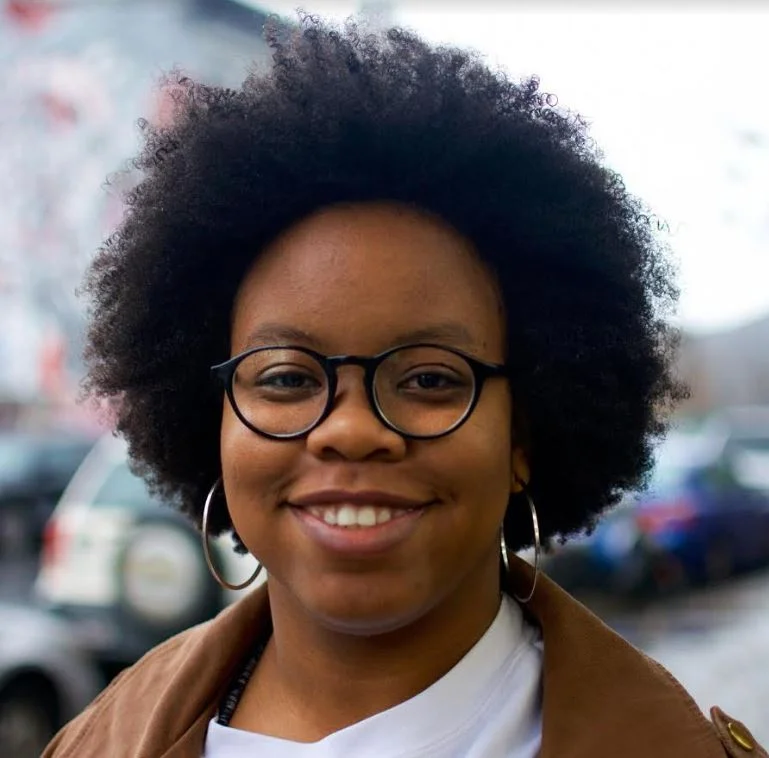
Via Karisma Price
Selections from Omotara James: 2 Poems By Karisma Price
BY KARISMA PRICE
SELECTIONS BY OMOTARA JAMES
Even if you’ve never endured the burn of a chemical relaxer, even if you’ve never sat still beneath the crackle of a sizzling hot comb, who among us hasn’t processed the body through a problematic paradigm? Hasn’t prayed for at least one part of the whole to be perfect? An inquisitive voice emanates from Price’s poems with all the authority granted by compassion. How the he tenderness of the phrase “to hold the seeds of you in my fingers” cohabitates within the same poem that mouths “the feathered kiss of suffering,” demonstrates Price’s lyric grace and propensity to translate every divine inch of the mortal coil.
God of burning scalp,
prevent the dollop of chemical from destroying my cousin’s hairline. She sits contently in the kitchen chair, unaware of the approaching fire. I watch how the loose strand swings, lands on her acne cheek and wonder how long it took her to master stillness. How many times did my aunt have to promise her an incentive for straight hair and itchy scabs? I frown when the smell of sulfur floods the room. When the hot comb couldn’t tame the wild, my aunt suggested a more permanent solution. This is a rite of passage. Maybe now it won’t look so nappy. When the thick, white cream loiters for too long on my cousin’s scalp, she bolts from the chair and plunges head first into the kitchen sink. This must be what a proper baptism looks like.
Demeter, Reimagined as a Black Woman, Speaks to Persephone
Please do not come back to me
suspended in the sky’s quiet
diorama, or in umber pieces
that require me to hold the seeds
of you in my fingers
like an examiner holds
a tooth to an x-ray. Baby, I have broken
the trees for you. I will curse every
person that yells, “A man was lynched
here yesterday,” but refuses to acknowledge
his wife. Did they ever cut her down or
does she still swing above us like a broken
promise? What of the mothers afraid of being
mothers of daughters and fear the feathered
kiss of suffering? I asked God
for mercy. There was no answer.
I’ve decided you don’t have to answer
me either. Because I love you, surrender
to the only darkness heavier than sleep.
Do not come back from it.
Omotara James is a poet and essayist. Her poetry chapbook, Daughter Tongue, was selected by African Poetry Book Fund, in collaboration with Akashic Books, for the 2018 New Generation African Poets Box Set. Her debut full length collection, Mama Wata, is forthcoming in the Fall of 2018 from Siren Songs, of CCM press. She has been award fellowships from Cave Canem and Lambda Literary. Currently, she is an MFA candidate in poetry at NYU. For further information, please visit her website: www.omotarajames.com
Karisma Price was born and raised in New Orleans, LA and holds a BA in creative writing from Columbia University. She is an MFA candidate in poetry at New York University. Her work has appeared or is forthcoming in Four Way Review, Glass: A Journal of Poetry, Vinyl, and Leveler. Karisma lives in New York City, and along with Kwame Opoku-Duku III, she is a founding member of the Unbnd Collective. Find her on twitter at @itsKayPrice and here.
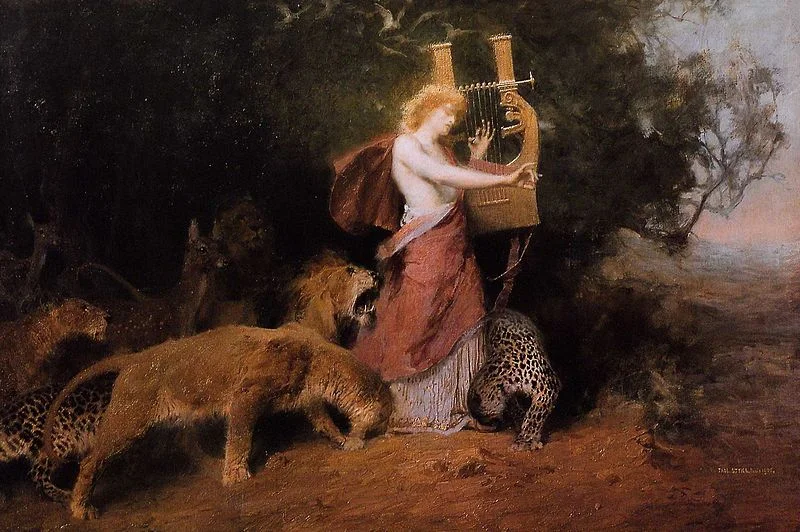
Tadeusz Styka
Flash Fiction by Romey Petite
According to the ancient myth, the pale phantom king of the underworld had a frozen heart—unmoved even by Orpheus’ twinkling music. The poet would have to rely on charming the king's wife, kindly Persephone in her flower crown, instead. With lyre and honey-colored falsetto, he applied himself to his art.
Charm her, the poet did.
Read More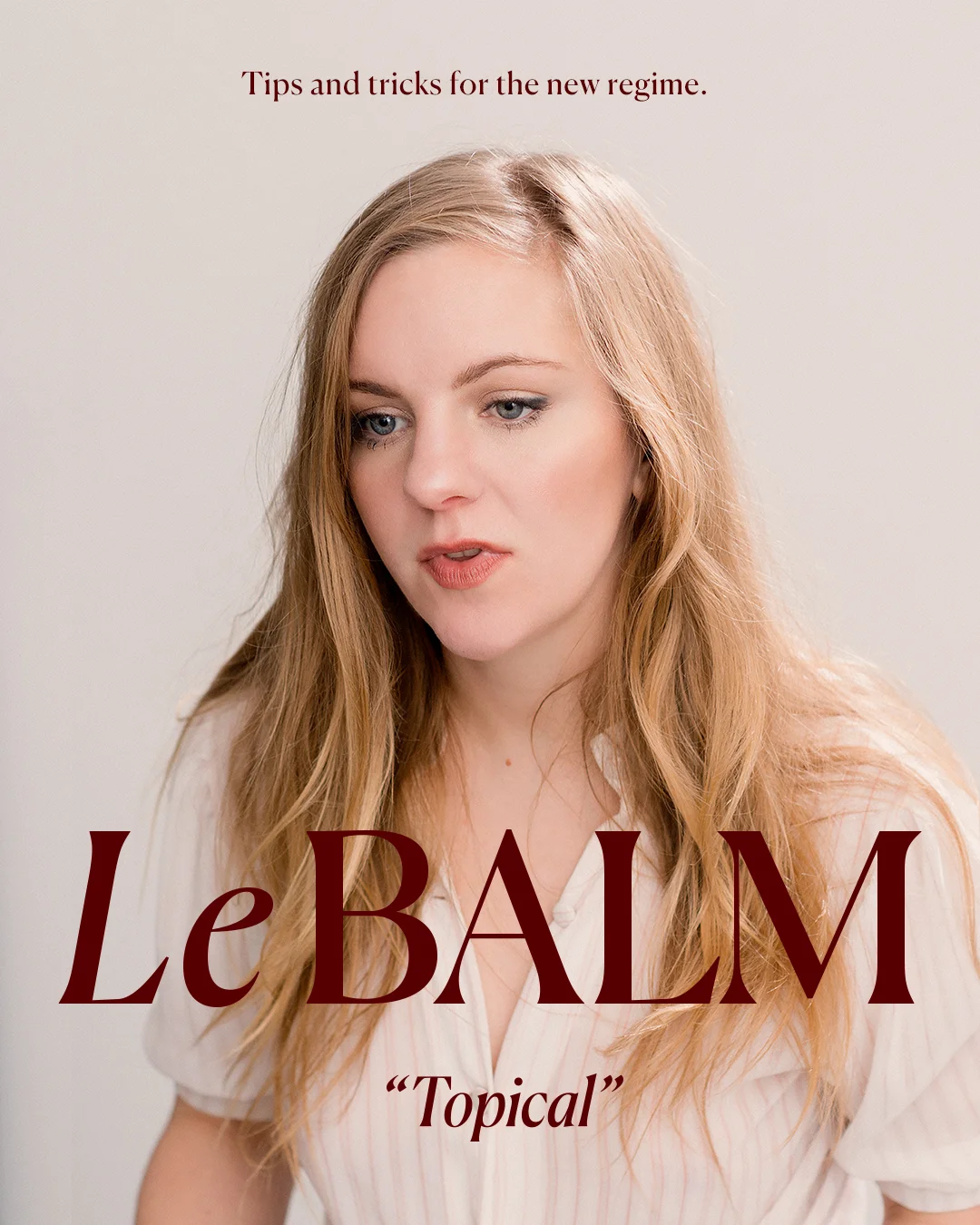
An Interview with Le Balm’s Cecilia Corrigan & Monica Nelson
BY DEIRDRE COYLE
When I watched the first episode of Le Balm—the new web series by Cecilia Corrigan and Monica Nelson—I cackled, then anxiously touched my face to check the quality of my skin, then cackled some more. Le Balm follows a makeup vlogger named Madeleine who decides, after the 2016 presidential election, to convert her many followers into radical activists by smuggling coded messages about overthrowing the regime into her beauty product reviews and tutorials.
In the past year, women's media has been full of articles on self-care as both coping mechanism and radical act. Le Balm questions the validity of this rhetoric with dark humor and compassion. As Corrigan wrote to me in an email, "Dealing with questions about complicity, beauty standards, and the privilege of self-care in a time of political disruption, the series brings together the worlds of our current political climate of anxiety and the messages of women's beauty culture."
Despite a shaky connection between New York and Los Angeles, I video chatted with Cecilia and Monica in the hours before their West Coast launch party.
So I first wanted to ask how you came together to work on this project, and where you’re both coming from?
Cecilia: I met Monica when we were both working on another short film, Crush, which was another piece that played with dark comedy to critique a certain sector of culture—in that case, the art world. We have pretty different backgrounds—my background is academic, and I started out in poetry, now I write and perform weird comedy, and Monica has been working in branding and advertising for years.
Monica: Different backgrounds, for sure. But we share an interest in using narrative and humor to make a cultural critique, that’s sort of the space where every idea we tossed around landed. Cecilia is amazing at creating these intuitive comedic characters that mirror back a very honest reality.
Cecilia: One of the things I like about this character is that she’s almost uncomfortably familiar, like she’s just taking the idea that self-care can be a radical political act to its natural conclusion. So even though it’s parody, it also feels uncanny. I think we were interested in that discomfort.
Monica: Yeah, and there is truth to it as well. The idea for Le Balm started at a women’s group that was organized the week after the election. Everyone was trying to figure out how to respond. Then Cecilia was kind of joking about doing a beauty guru character who’s having a political awakening after the election, and I was like "we should actually do that." That’s how Le Balm got started.
Cecilia: Yeah, that group was cool; I know a few similar groups cropped up that winter. This one was called Feminists Against Fascism—it was all women, a lot of them worked in media, many of them were activists. I found myself thinking about the beauty industry and "women’s media" a lot at that time, and about the idea of a coastal elite. The election brought so much misogyny to the surface, but also revealed so many of the limitations of a feminist politics that isn’t intersectional.
In a way, is this character in Le Balm also grappling with these questions?
Monica: Yeah, in her own way. She’s just taking it very, very literally.
Cecilia: It definitely comes from a relatable place. I first got the idea in a moment of recognizing my own ridiculousness, when I caught myself deeply stressing out about whether I should switch my moisturizer with the changing climate, and simultaneously freaking out about the terrifying political changes that seemed to be already affecting vulnerable people in a really immediate way. I was like, "wow I’m the worst." And you know, I think one of the things that saves me from going crazy is laughing at myself.
Monica: The idea of using what we know, and our own personal experiences seemed really important. I was shaken by the way that women were receiving information, and how it was being framed. All of a sudden all women’s media outlets turned to women’s causes, and you would literally read an article about a social justice cause and a moisturizer in the same typeface and tone. I still have screenshots from that time period that we would send back and forth. Literally posting these headlines that were like, "Are you bleary eyed because of the news? Here are some eye brightener tips."
RELATED: Interview with Sarah Forbes, the Curator of Sex
I did want to ask about the character. We don’t actually learn much about her background in the show, her story before she deleted all of her social media and then restarted it. But clearly she’s a privileged character: a young, attractive white woman able to make her living vlogging (she talks about her sponsorships in the first episode). Could you talk a little about how this character’s conception of "radical activism" is informed by these advantages?
Monica: This girl is earnest. That’s something that’s really important to us. This character did kind of exist in this bubble before the election. She was very sheltered and was able to create this whole ecosystem that was just hers. Her aesthetic was probably a little more decadent, or kitsch. But then her world was sort of blown. When we were briefing the team for the shoot, I would say "Imagine a girl that discovered politics and Garance Doré in the same day."
Cecilia: Yeah. She was definitely in a bubble before. I think a lot of people with a certain kind of privileged complacency felt like they had to become political, become "woke," right after the election. I imagined that whatever was going on with her in the lead-up to this moment, like whatever happened between the election and her new videos, was probably pretty messy. I think this is more than just a re-brand for her: I think she imagines that she’s going to be a real activist now. And in these videos we’re just watching her struggle to make makeup tutorials into political statements, about causes she just found out about and barely understands.
But I also find that struggle endearing: she’s striving to be better, she’s trying to use her influence for good, with, I think it’s called "cringe-worthy results?" She’s been in the business of selling self-improvement for a while, but now she wants to do a make-over on her soul, like Cher in Clueless (who, incidentally, is also a privileged white woman). It’s easy to make fun of people like her, but we decided not to make it a total mockery. It’s a complex situation, right? She’s trying to get involved, but she doesn’t know what she’s doing. And in the last episode I think we see her realizing that she might not actually be offering any useful advice, or helping anyone, by telling them that if they have self-confidence and look good it’s going to protect them from real political and legislative threats to their safety.
Monica: She’s just like, "the show must go on!" And, just like everyone, she’s trying to find new meaning and purpose in what she’s doing. She’s thinking, "I have this audience I could educate about these things."
Cecilia: Monica’s direction really helped bring that out, for me, when I was trying to find the character in the performance. At first I was doing her in a really over-the-top, you know, like, "Hiiii Guys!", like, vocal fry, totally kind of bug-eyed and scary, which is actually—you do see a lot of that. But Monica was like, "This person should be someone that you like. You have sympathy for her, she’s really different, and she has all these different interests, but she’s basically someone that you might know, or meet at a party, that you have empathy for." I do feel empathy for her.
Monica: I thought it was really important that she have depth, and that those things came through. That it felt like she was an actual woman struggling with these things.
Cecilia: Basically what I’m saying is that Monica was like, "Try doing good acting. Like that, except with acting."
Are you worried about the NSA watching the series?
Cecilia: Um. No.
Monica: It’s more like what if the beauty industry NSA sees it. But, actually it’s been funny having interviews with beauty brands. I show them a few episodes and they are laughing and fully understanding what we are doing, but then they say, "This is so funny, it’s amazing, we could never do anything like this."
Cecilia: And we knew that. The reason that we didn’t really pursue doing this like for a brand or even a magazine per se, is because we wanted it to exist on its own in a modular way, which adds an uncanny tone. It looks and feels like a beauty vlog. But at the same time it’s dark, character-based comedy. And the intersection of those things is unusual: it’s just its own thing. Hopefully in an enticing way.
Did you want people to initially view it as a real beauty vlog?
Cecilia: I think that the primary way to read it is as comedy, at least that's our intention. But it's presented in a coy way. But if people read it as a beauty vlog, that’s awesome.
In an email, you’d mentioned wanting to work in a "venn diagram of beauty journalism, political commentary, and unhinged comedy." Could you talk more about how those ideas overlap in Le Balm?
Monica: We had so many conversations about how we wanted to put it out. And at the end of the day, we just said, "This is original content." It’s scripted, but it’s playing with meta-reality. There are heightened moments, but it could be real, on some level. Nothing we’re talking about is fantasy. And I think that realism is something both of us are interested in exploring, that essayistic quality. We’re both interested in creative work as a critical practice. But then again, this piece goes back to some of the things we know best. Performance for Cecilia, and for me, creating "content." Le Balm uses those two things to write an essay about this very specific sector of our culture.
Cecilia: Absolutely: the performance of branded content creation. Le Balm is an imitation of vlogger culture, and a tribute to it. It’s comedy about beauty content and it also is actual beauty content, in a way. It’s an expression of this weird moment we’re living through, rendered through this really simple and clear concept. It feels very conceptual to me in that way.
Monica: I think it asks its viewer to imply the depth, and to read into it. I think that’s the type of content that I’m most excited about.
Cecilia: Yeah. I’ve always really loved stuff that lives in a certain frame but does something different inside of that frame. The work that excites me the most lives in a certain context but plays with people’s expectations. A lot of the ideas in Le Balm are everywhere right now, and there’s been some amazing journalism recently about the strange relationship between contemporary politics and beauty culture. Of course, Le Balm isn’t journalism, even if it is kind of essayistic.
Monica: I think it is rooted in documenting a real phenomenon. Now, beauty is a really powerful category, much more powerful than fashion, because of its ability to create such personal change. Historically, beauty industries have always boomed during political turmoil because beauty is something you can control. Like Elizabeth Arden and all these brands being like, "Red lipstick is empowering!" We have an episode about that. Maybe there is an innate truth to it, because you feel better. It’s a real feeling.
Cecilia: It does seem like there’s so much emotion attached to that space now, so much public feeling around beauty, skincare, makeup. It’s like the final market where people believe buying the right products could actually make them better people. So the character represents something I think is a huge part of life in America and the developed world right now. The new form of aspirational luxury is self-improvement: you want your skin to look better, you want to spiritually be better, politically be better. I think this character wants to believe what we all want to believe, to some extent, that we can have control over our lives and that we can prevent chaos from enfolding us by focusing on self-improvement.
Monica: Beauty is definitely an exercise in control.
Will there be more Le Balm, either in this form or another, in the future?
Cecilia: I’m working on a pilot that’s an expansion of this world.
Monica: I think we also like the idea of using it as a discussion piece. That’s the thing I’m the most excited about, is seeing what people get out of it. It’s been really fun to hear the reactions of people from different backgrounds. There are these funny signifiers that trigger things for people.
Cecilia: Yeah, one of the things I’ve noticed in comedy is that people, when things hit too close to home, tend to be kind of repulsed, they’re like, "Ugh, I hate that character," if they identify too much. Whereas if you’re more distant from the character, you just laugh.
Deirdre Coyle is a writer and goth living in Brooklyn. Her work has appeared in Electric Literature, Lit Hub, The New Republic, Hobart, Joyland, and elsewhere. Find her on Twitter at @DeirdreKoala.
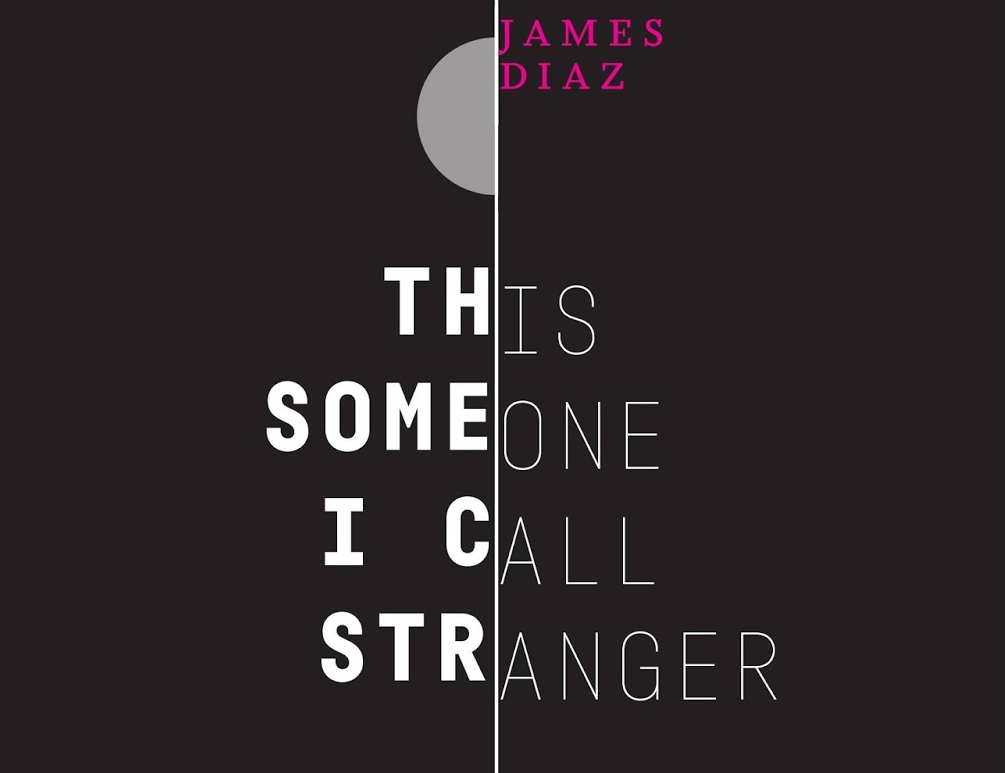
Review of James Diaz's "This Someone I Call Stranger" by Devon Balwit
While voicing anguish, Diaz’ narrators are never pitiable, nor does he allow the suffering self to wallow.
Read More