
Claire Åkebrand is a Poetry MFA student at the University of Utah. Her poems have appeared in The Beloit Poetry Journal, Eunoia Review, Fire in the Pasture: Twenty-First Century Mormon Poets, and Splash of Red.
Read More
Alessandro Viaro
Claire Åkebrand is a Poetry MFA student at the University of Utah. Her poems have appeared in The Beloit Poetry Journal, Eunoia Review, Fire in the Pasture: Twenty-First Century Mormon Poets, and Splash of Red.
Read More
Xander Ashwell
Andrea Beltran is a poet and graduate student from El Paso, Texas. She’s also the Project Director for ForWord, a BorderSenses community project for teens that strives to connect, inspire, and evolve ideas about writing. Her poems have recently appeared in Word Riot, Mom Egg Review, Superstition Review, and Acentos Review.
Read More
Photography by the incredible Ana Luísa Pinto
BY LISA MARIE BASILE
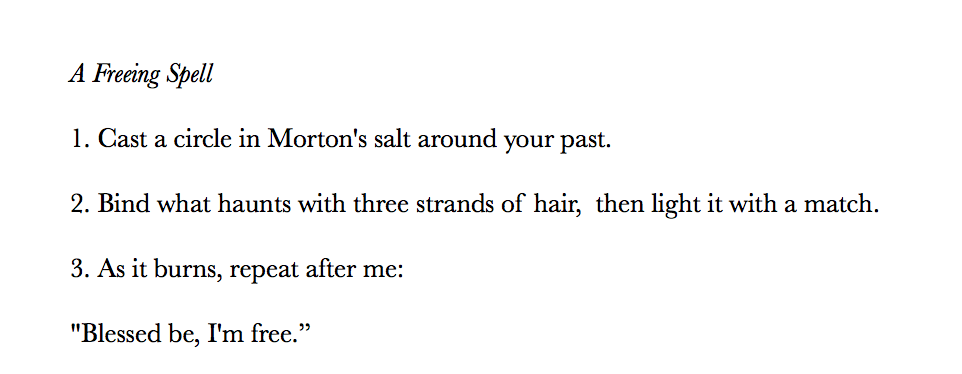
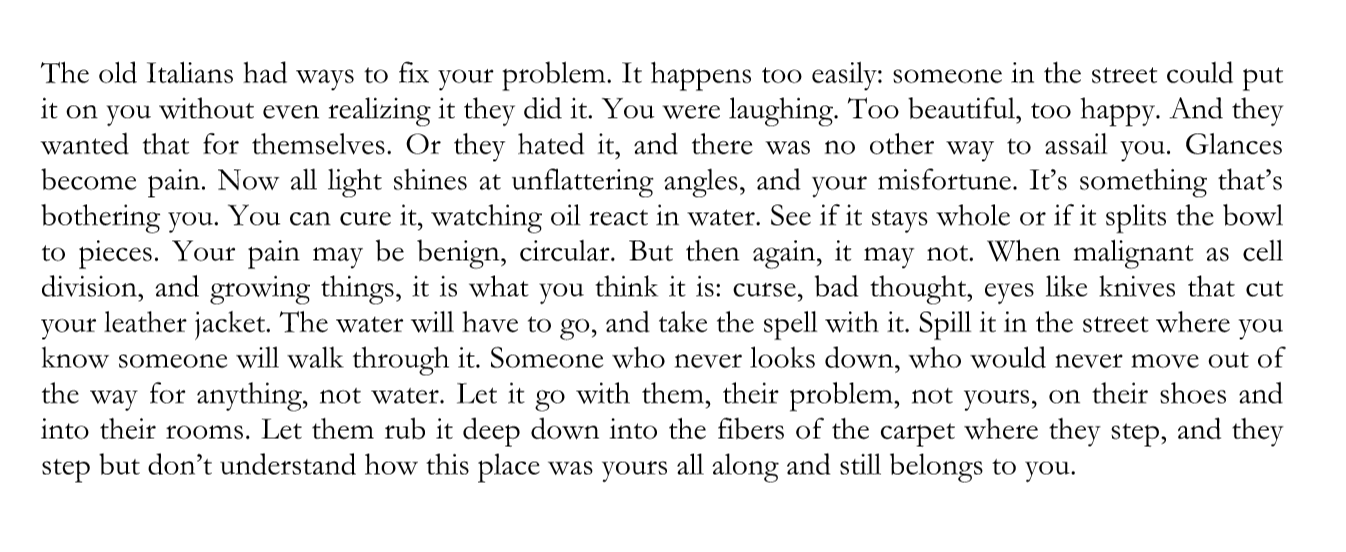
The below poems are samples of what's to come from our Luminous e-book, which will be available in the coming days. It will available for a $1 and 100% the proceeds will go toward Planned Parenthood. When donations are made, receipts will be available publicly on this website.
I solicited for The Luminous project this past fall as a way to combat darkness. It, in all honesty, felt like the right thing to do — to give voice, to make a space for beauty. But I will be honest: part of it felt futile. I was in such pain (as we all were) and everything felt pointless, misdirected, weak. How could poetry enact change or fight against immorality? How could we find magic? I struggled with the idea that, in the face of such absolute disarray, the arts even had a place. But this is the United States and art, poetry, song has always had a renaissance in times of fear and oppression and hatred. It always will, and in many ways, that is what's remembered long after the battles and the wars and the infighting and the opposing sides.
Things have always been painful. But there is so much at stake, for so many people here and around the world. Which is why power is in the small things — saying hello to a stranger, listening up when we need to, sharing a poem, doing a kindness. And in the more specific: marching, protesting, organizing, signing up to learn more about conflict resolution. Nothing is too big or too small, I realized, especially when reading these poems. That we were flooded with statements — spell-poems — that called to inner power and resolution (although all different in nature) said something to me. It said that we unite when we need to. And just knowing that makes a vast difference. You're not alone. We're not alone.

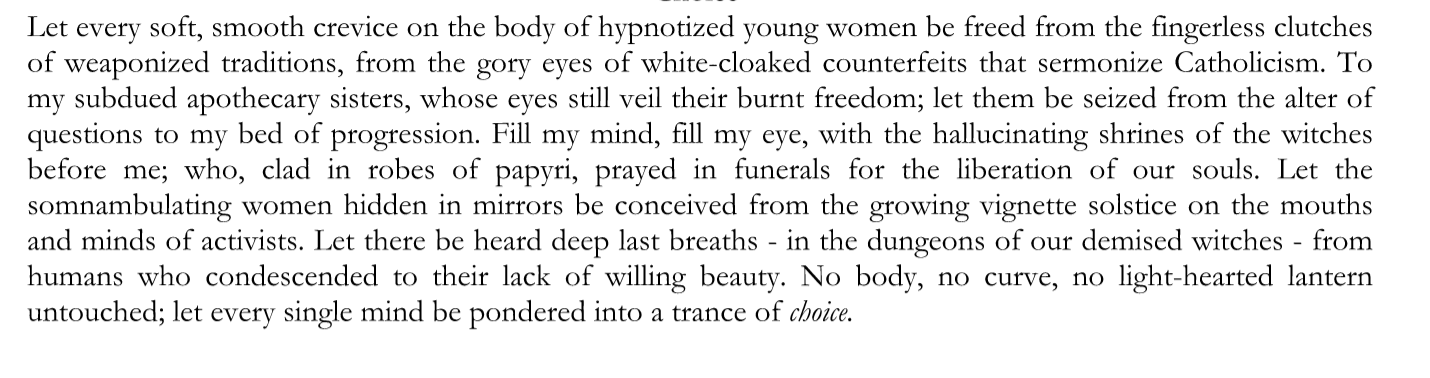

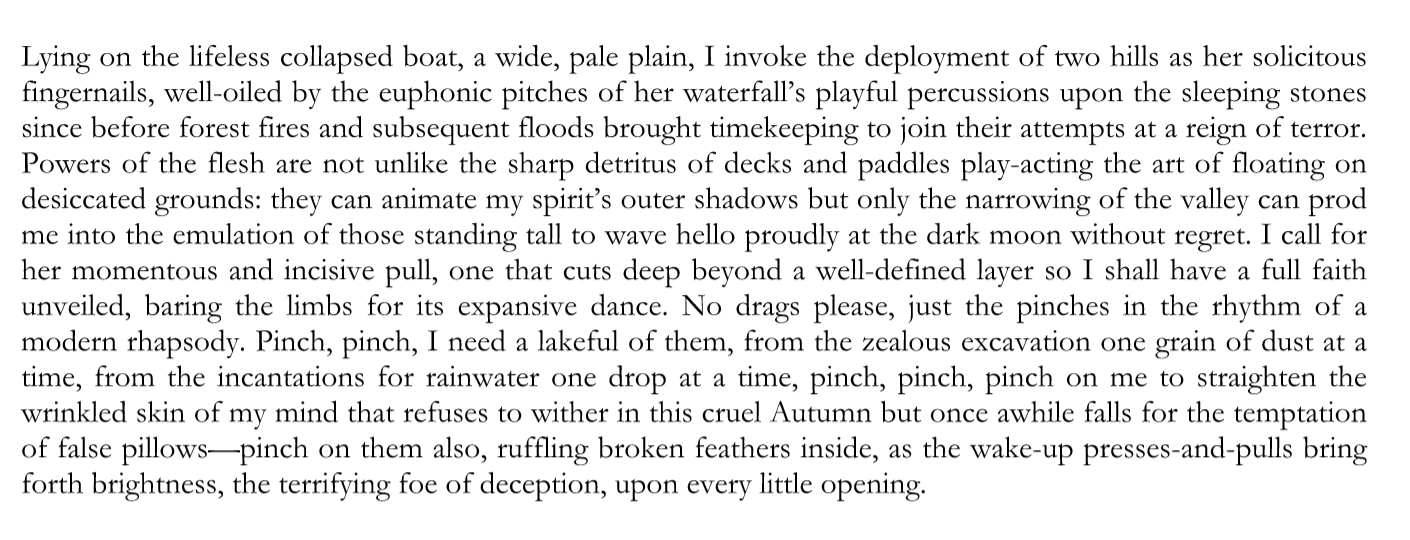
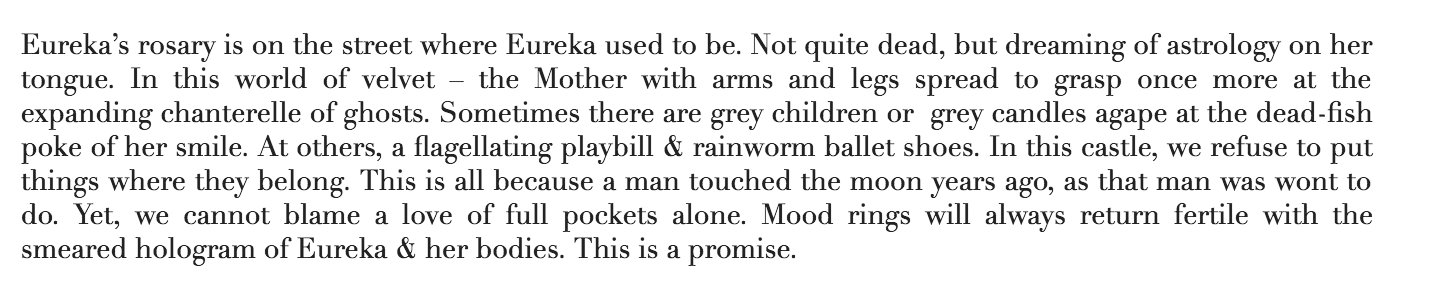
Lisa Marie Basile is the author of APOCRYPHAL and the chapbooks Andalucia and war/lock. She is the editor-in-chief of Luna Luna Magazine, and her work has appeared in PANK, The Atlas Review, Tin House, Coldfront, The Rumpus Best American Poetry, PEN American Center, Dusie, The Ampersand Review, and many other publications. She’s an essayist and journalist as well. She holds an MFA from The New School.
Emma Hall
Rosalie Morales Kearns (@ShadeMountainPr), a writer of Puerto Rican and Pennsylvania Dutch descent, is the founder of Shade Mountain Press, author of the magic-realist story collection Virgins & Tricksters, and editor of the short story anthology The Female Complaint: Tales of Unruly Women. She has an MFA from the University of Illinois and has stories, poems, essays, and book reviews published in Witness, Drunken Boat, Fiction Writers Review, the Nervous Breakdown, and other journals.
Read More
Marcelles Murdock
When my father took the bet and became a fulltime artist, my brother and I were teenagers. From the window of our comfortable luxury car he pointed towards a broken down truck; I remember him saying, "Well kids, if I do this, that’s the car we’ll be driving." Rather naïvely my brother and I chanted, "We don’t care dad—follow your dreams," and other mindless prat one says when they don’t know any better. The truth is, this world devours dreamers and breakdowns don’t end with our cars—uncertainty bleeds into every aspect of life. The road of an artist is wild and rough; even worse, when that road begins to narrow and show signs of an ending, that initial excitement of the unknown turns to fear. My father faces a future without the comforts of stability; he doesn’t always bare this burden well. It doesn’t help that there is a roar of voices ready "to tell him so" and accuse him of choosing his troubles—but my dad didn’t choose poverty, not really. He acknowledged the possibility of being broke, but he thought he could out craft disaster—he embraced the uncertainty of the road before him with every intention of making his way as an artist. It isn’t his fault that while the world appreciates art, it rarely values it.
Read More
Nathan Anderson
Sergio A. Ortiz is a gay Puerto Rican poet and the founding editor of Undertow Tanka Review. He is a two time Pushcart nominee, a four time Best of the Web nominee, and a 2016 Best of the Net nominee. His poems have been published in hundreds Journals and Anthologies. He is currently working on his first full length collection of poems, Elephant Graveyard.
Read More
Noah Silliman
Jaisha Jansena is a writer and performance artist from Cincinnati, Ohio. She was born on the winter solstice, orphaned at birth, and adopted when she was 11 days old. She is an Academy of American Poets College Prizewinner. Find her work at jaishajansena.com
Read More
Marc Wieland
Stephanie Valente lives in Brooklyn, NY. She has published Hotel Ghost (Bottlecap Press, 2015) and has work included in or forthcoming from Danse Macabre, Nano Fiction, and Black Heart. Sometimes, she feels human. http://stephanievalente.com
Read More
David Popa
I distinctly saw one candle burning in a vacuum of blank, claustrophobic matte blackness. I watched it flicker in some unseen wind. I felt tears, real, definite and unasked for, well up in my eyes knowing it could go out at any time, that existence was not something promised, not something to be taken lightly, passed over and wasted. That it was something importune but given nonetheless. I watched the flame dance the fire’s sad, triumphant waltz, alone but shining, a slow-dance in motion only and couldn’t breathe.
Read More
Laura Jane
Carrie Vasios Mullins is contributor and senior reader at Electric Lit. In addition to working for Electric Lit, she's a writer whose work has appeared in publications such as Tin House, Broad!, Moonsick Magazine, and Two Serious Ladies. She holds an M.F.A. from Columbia University.
Read More
Via here.
BY LISA MARIE BASILE
There is no real way to round up all the amazing work that has been birthed in 2016. There is too much good, too much power, too much beauty. Instead, here are the books and publications I have come back to time and again this year.
Night — Etel Adnan
Chelate — Jay Besemer
The Performance of Becoming Human — Daniel Borzutzky
Flowers Among the Carrion — James Pate
My country, tonight — Josué Guébo
Take This Stallion by Anaïs Duplan
When the Ghosts Come Ashore — Jacqui Germain
Andes — by Tomaž Šalamun, trans. Jeffrey Young & Katarina Vladimirov Young
Six — Julie Marie Wade
Night Sky With Exit Wounds by Ocean Vuong
The Hermit — Lucy Ives
Sad Girl Poems — Christopher Soto
The Atlas Review
Tarpaulin Sky
Sibling Rivalry
Timeless, Infinite Light
Black Ocean
Lit Hub
Volume 1 Brooklyn
Witch Craft Magazine
Electric Lit
Switchback Books
The Establishment
Slutist
Ultra Culture
Broadly
Autostraddle
A Woman’s Thing
WEIRD SISTER
The Offing
Witch Craft Magazine
Queen Mob’s Teahouse
Quail Bell Magazine
Sabat Magazine
Bloodmilk Jewelry
Feminine Inquiry
For Harriet
St. Sucia
The Numinous
Dirge Magazine
Lumen Magazine
Blavity
Berfrois
@AstroPoets
@guerrillafem
@cultofweird
@DeathSalon
@deadmaidens
@mask_mag
@TheSilentMother
Lisa Marie Basile is the founding editor-in-chief of Luna Luna Magazine and moderator of its digital community. Her work has appeared in The Establishment, Bustle, Bust, Hello Giggles, Marie Claire, Good Housekeeping, and The Huffington Post, among other sites. She is also the author of three poetry collections, including Apocryphal from Noctuary Press. She holds an MFA from The New School. @lisamariebasile
Via The Daily Beast
BY LISA MARIE BASILE
Downtime is a divine thing. Downtime as in the purposeful act of taking time off, or the involuntary act of retreat. But it's often treated as creative stagnation. Dead air. Lack of inspiration. Or the dreaded maxim, "Writer's block."
As a writer, I am always in a state; that is, we all are. I am never outside of a condition — especially the conditions that create writing. You know this feeling. If it's not conception, it's development. If it's not development, it's editing. And so forth. But writing — with all of its heart and death, all of its starts and stops — is the same as day and night — which can’t exist without the other.
Yet, we’ve come to burden ourselves with the idea of necessary production. We feel guilt when we aren’t active. We use the phrase "writer's block" as if the natural state is to be a continuous pouring thing; we throw around "writer's block" as if we encountered something that wasn't meant to be there. A cancer. But writing isn't magically exempt from the laws of gravity — up and down, and so forth.
Our light slowly fades when we pressure ourselves too much. When we can't break the 'block', we start to ask questions: What's wrong? Why can't I just use my stress as a catalyst? Maybe I'm not a writer anymore? I haven't published in a year! And like most fools, we rarely imbue the wisdom to know the difference between simply being burned out and burning ourselves out. We are, after all, alive. There are things of money and family and health that sit by, prodding our creative centers, hexing them, lighting them up — or shutting them down.
So, we flail. So many of us aim to “stay in the game” in ridiculously tiresome ways — when we’re not writing, we’re reading. And when we’re not reading, we’re retweeting the statuses of others who are. And we call these things 'citizenship' — we promote these acts — as truth. But we’re constantly a foot in and a foot out because we fear stepping out too far. Would we simply disappear? If we’re not making some sort of noise, does our voice even matter? Is there even a voice at all?
It is the nature of humanity to want to be productive, to give, to make something of our existence. As creators, the impulse is doubly strong; it’s almost divine, irrational. It's like having two bodies — the one we're in and the one that lives in our heads. Maya Angelou wrote, "There is no greater agony than bearing an untold story inside you.”
Our health — mental and physical — hinges on creating. Our faith, our hope, our livelihoods depend on our creating. We lose a sense of aliveness when we’re not living up to it. Because it is a gift and it must be recognized as such. We’re like sexless animals when we’ve gone without for too long, but even temporary abstinence (both proverbial and literal) has been known to clarify. Sometimes this agony is part of the process.
***
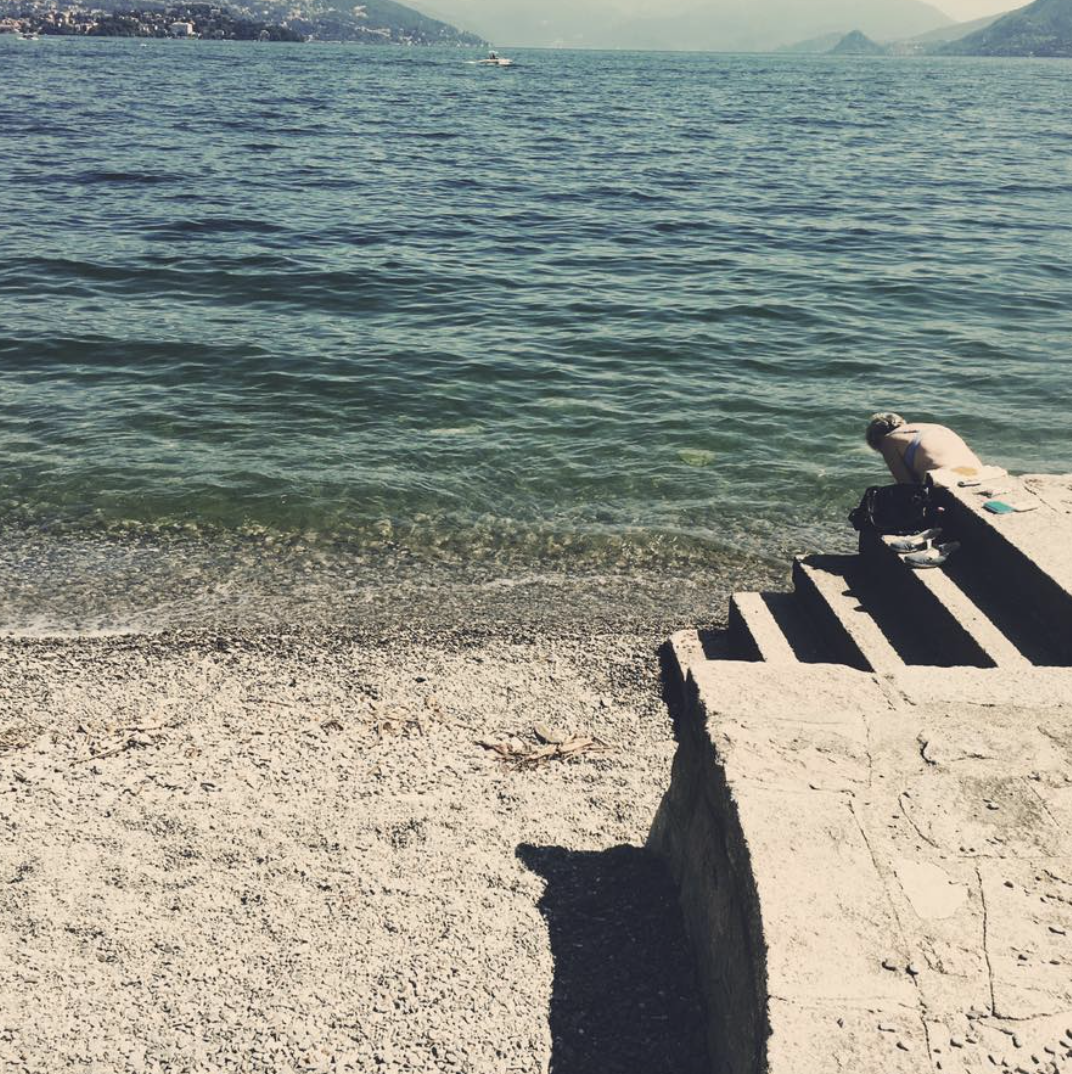
This summer, I was lucky to visit Stresa, Italy, in the Alps. I sat, nightly, at the same bar (in the Grand Hotel des Iles Borromée) Ernest Hemingway sat at in September 1918. He was 19, back from the war, recovering from his wounds. It was in Farewell to Arms that he’d written about the Grand Hotel des Iles Borromées, its enchanting qualities, the same I swooned over. We were both disarmed by the flora of Italy and opulence of this town. But I couldn't figure out what to say. What do you say?
At Hemingway's bar, I took out my notebook; the waitstaff brought me wine and green olives and peanuts, and the pianist played to a room of glass and gold and velvet. I thought, “This is it, this is the time to write!” but nothing came. I forced it, milked it — and it shriveled up: my small, scared, pathetic little voice. Who was I if not inspired by a place so dear to my ancestral self? Why wasn’t I a writer anymore? Where did I go? What the fuck?
Like we say, writing is a gift, but greater gift is to be alive — and perhaps to be in a position that allows us to write and publish freely, to be healthy enough to write, to be privileged enough to buy books, to love ourselves enough to do it.
We are humans before we are writers or artists. And we must feed the humanity in order to do what we do and do it well. So, there are two types of hunger — the kind that feeds you (life) and the kind that inspires you (creativity). They don't exist alone.
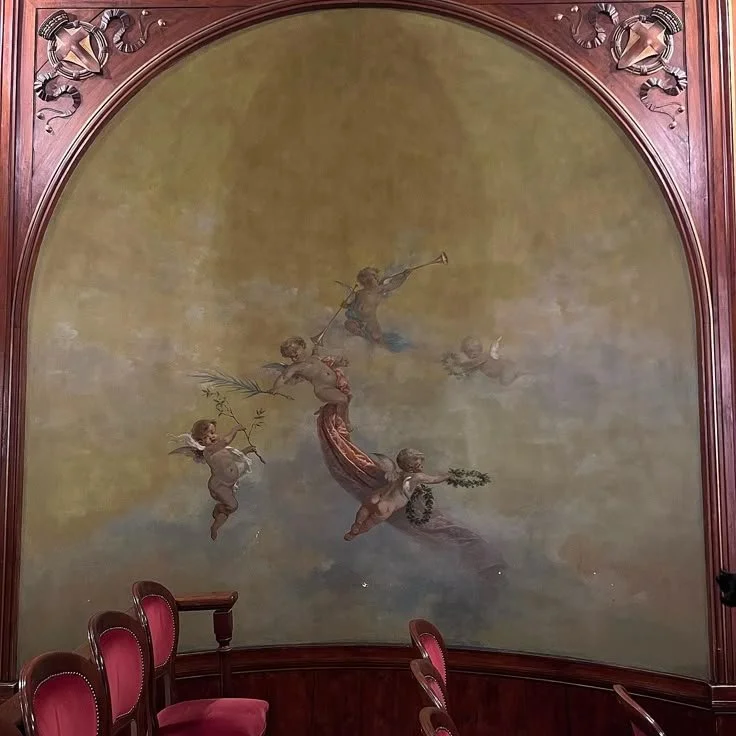
So instead of writing at that little bar there — the broken record that I was — I simply let it be. The room enchanted me. There was the elevator with the cherubs atop the door, as if you could ride up into heaven. And the grand lake outside the window, and all its little islands. The way the waiter looked lonely as he refilled our drinks. That was the writing. It didn’t need an act.
***
In the fall of 2014 — so, two years ago — my first full-length collection made its way into the world. For me, it was momentous. The young girl I was — the one in foster care, the one who saw her parents taken by drugs — she was the one who benefited the most. She had survived and turned all that darkness into something else, something honest and lasting. It was exhilarating and validating — but there was this grim dankness hanging over it all. The very act of publishing somehow turned it into something else — this disease of What shall I follow this up with? How soon do I publish again? set in. Another one of my writer friends summed up her post-partum book experience as, "So this is it, huh?"
Years before then, in graduate school, I’d check my email compulsively: Did I get an acceptance? Did I get rejected? My sense of self-worth was irrevocably attached to this idea of producing art — I mean churning, churning, churning — and having it be accepted by some small part of the masses. It made me real. To not be prolific was an insult to my body, my heart, my ancestry, my whole life.
This need to produce, to do more, to get more, to be bigger — is somewhat illusory, isn't it? Success is relative, and often it's defined by parameters that don't sync with the purpose of art. The writing is the core act; everything else is periphery — or should be. Being so focused on the more, more, more can get in the way of the writing. I eventually, in the past two years, got so fed up with the whole idea of producing work and sending emails and doing promo interviews that I stopped writing poetry, stopped submitting, stopped thinking about the whole thing of it.
I’d transmorphed into commodity — and I put myself there! There was a stink of careerism to it, which would have been wonderful if I had let myself be me — instead of the thing I thought I should be. A machine. Because the business of poetry has always eluded me; I am not a natural networker, I don’t care to promote people who I will benefit from promoting and I’m disinterested in popularity. If you've ever talked to me in person, you likely know this.
Eventually, it was all a cycle. My "muses" had abandoned me. I hadn’t let myself stop. Think nothing. Stop doing. I hadn’t let myself live. When I began saying the break was good, healthy _ something that didn’t even need to be defined — the concept of the misanthropic self faded away and became the self that needed a break. To engage with being alive. Watching the success of others was a pleasure. A year in the literary world meant new journals, new writers, new awards, new reading series, new opportunities — and I let them all just be. I didn’t engage. I was happy to disrupt the literary fear-of-missing-out and exist outside of it. I still am.
This doesn’t work for everyone and it’s not a necessity by any means. Everyone has a different process. But when I hear writers say things like, “I suck — I haven’t submitted work in months” or “I feel like there’s so much amazing work out there and I have nothing to contribute,” the impulse, in me, is to say, “that’s OK.” Maybe you aren’t ready right now. Maybe those poems could do with some time. Maybe you don’t need to be always on. Maybe you can enjoy a day at the park as a human. Maybe you're not actually writing your best work when you're trying to send something to every corner of the Internet?
Because work — real writing work — doesn't mean empty work, or keep-up-with-the-Jonses work or work for work's sake. Sometimes a writer works hardest when they're doing nothing at all.
We need time off — from art, from ourselves, from our own trappings. Morning pages and scheduled writing hours and writing groups and workshops all exist to stimulate the writer, but what if we didn’t subscribe to the notion of a solution? What if it wasn’t even known as hybernation? What if we just normalized the nothingness?
***
This past year, the wave broke and I began writing again. It wasn’t a chore nor was it an absolute pleasure. It wasn’t always fruitful nor was it a failure. It was just a thing. A doing.
Eventually, I began writing more and more, but not as a “writer,” just as myself. The knowledge that the writing was my own was freeing; I wasn’t stocking it away or adding to a manuscript. I was just in the art itself.
And there was a distinction, for me, between writing for joy and writing out of compulsory need — but I found myself somewhere right in the middle. It’s as if a sex drive came back. Naturally. Without guilt. Because I had given my mind and body the space it needed without the nagging little fuck me, write me, fuck me, write me voice haunting over me.
On that remarkable freedom of writing for the self, Anais Nin wrote, in On Writing:
“Of these the most important is naturalness and spontaneity. These elements sprung, I observed, from my freedom of selection: in the Diary I only wrote of what interested me genuinely, what I felt most strongly at the moment, and I found this fervor, this enthusiasm produced a vividness which often withered in the formal work. Improvisation, free association, obedience to mood, impulse, bought forth countless images, portraits, descriptions, impressionistic sketches, symphonic experiments, from which I could dip at any time for material.
The Diary dealing always with the immediate present, the warm, the near, being written at white heat, developed a love of the living moment, of the immediate emotional reaction to experience, which revealed the power of recreation to lie in the sensibilities rather than in memory or critical intellectual perception.”
That love of living in the moment brought me tremendous healing. It validated me more than any set of publication credits could have, as claptrap as it sounds.
What had I learned? Three things — 1) that the process was so much more authentic when I wrote for myself, 2) that the result — my work — was so much more thoughtful than the factory line poems I could have churned out because some journal happened to have an open reading period and 3) that writers must value their non-writing time.
To be satiated with — or to embrace — a state of downtime is, in some sense, an act of revolt. To quiet and listen, or to not listen at all, to refuse to play by the rules, to not be led by praise or artifice— and to instead be motivated by simpler means — is a radical act. It is not easy. It may not even be necessary for everyone. But for those who have trouble disconnecting from the rules, for those who can’t find a lit path back to sincere creative energy — it may be worth it to say, “Fuck it. It’ll happen when it happens.”
Lisa Marie Basile is the founding editor-in-chief of Luna Luna Magazine and moderator of its digital community. Her work has appeared in The Establishment, Bustle, Bust, Hello Giggles, Marie Claire, Good Housekeeping, Cosmopolitan and The Huffington Post, among other sites. She is the author of Apocryphal (Noctuary Press), war/lock (Hyacinth Girl Press), Andalucia (The Poetry Society of New York) and Triste (Dancing Girl Press). Her work can be found in PANK, the Tin House blog, Spork Press, Best American Poetry, PEN American Center, The Atlas Review, and the Ampersand Review, among others. She has taught or spoken at Brooklyn Brainery, Columbia University, New York University and Emerson College. Lisa Marie Basile holds an MFA from The New School. @lisamariebasile
Wikipedia
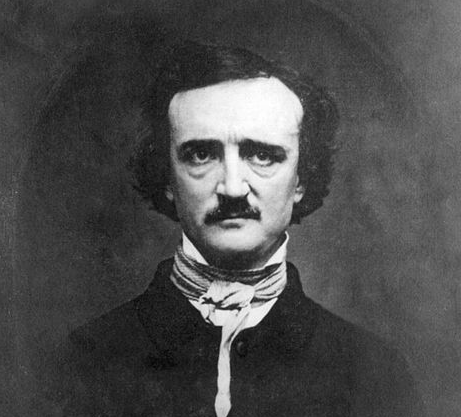
The Romantic period in American literature is influenced by cultural and historical issues, among others by Occult movements like Spiritualism and Mesmerism. Mesmerism, or sometimes referred to as animal magnetism (animal meaning as breath or a life force; nowadays the phrase has a meaning of sex appeal), was a healing method claimed by Dr. Franz Anton Mesmer. Mesmer believed that magnetic fluid consistent in every human being, is influenced by the moving of the moon, the sun and the stars and it can be used in healing. His claims and results of experiments where however never scientifically proved to be trustworthy and he himself transformed the hypnosis session into a spectacle-like experience, jumping around in his robe and performing the magic of magnetism on fairs, like frauds often did.
Read More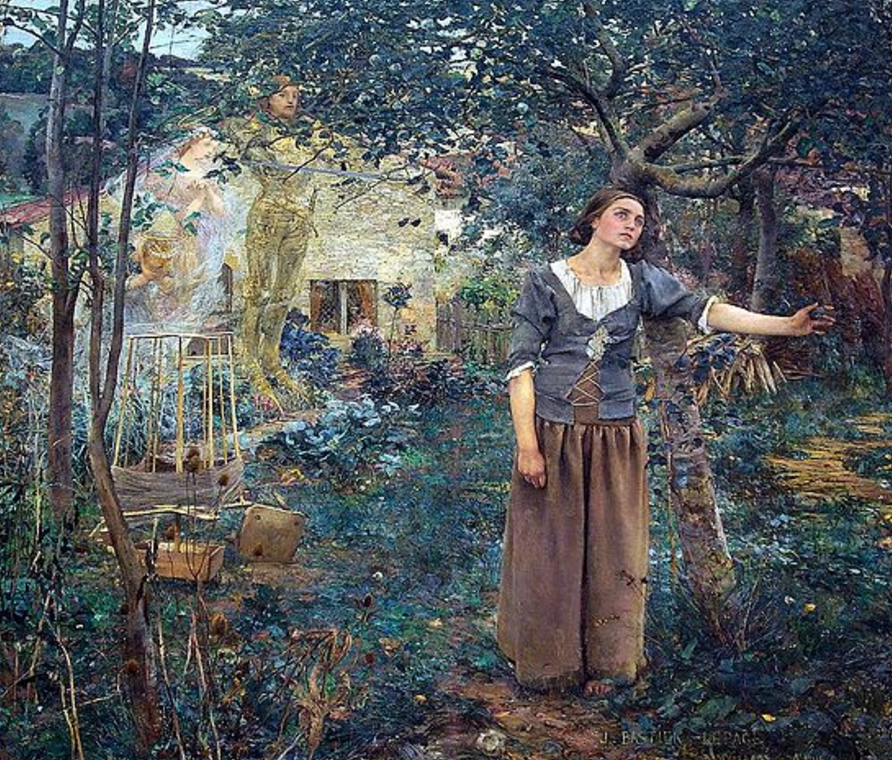
Jules Bastien-Lepage, Wikimedia Commons
Fox Frazier-Foley is author of two prize-winning books of poetry, Exodus in X Minor (Sundress Publications, 2014) and The Hydromantic Histories (Bright Hill Press, 2015). Her newest collection, Like Ash in the Air After Something Has Burned, is forthcoming from Hyacinth Girl Press in early 2017. Fox has edited two anthologies, Political Punch: Contemporary Poems on the Politics of Identity (Sundress Publications, 2016), and Among Margins: Critical and Lyrical Writing on Aesthetics (Ricochet Editions, 2016). She created and manages the micro-press Agape Editions, which is dedicated to publishing literary works that engage with concepts of the mystical, ecstatic, interfaith/intercultural, and the Numinous. Fox was graduated Phi Beta Kappa from Binghamton University, was honored with merit-based fellowships at Columbia University, where she earned an MFA, and was a Provost's Fellow at the University of Southern California, where she earned a PhD in Literature & Creative Writing.
Read MoreBY JOANNA C. VALENTE
This is a short list of books that have been published in 2016, by both large and indie presses. There are so many more amazing books out there that I either have yet to read, am still reading, or haven't had the pleasure of discovering.
I hope you let these draw you into their world. Maybe you'll even give them as gifts to others, and make their worlds bigger too:
1. “Blood Song” by Michael Schmeltzer (Two Sylvias Press)
2. “Theater of Parts” by M. Mack (Sundress Publications)
3. "The Voyager Record” by Anthony Michael Morena (Rose Metal Press)
4. "So Sad Today" by Melissa Broder (Grand Central Publishing)
5. "The Performance of Becoming Human" by Daniel Borzutzky (Brooklyn Arts Press)
6. "Dahlia Cassandra" by Nathanial Kressen (Second Skin Books)
7. "Blood on Blood" by Devin Kelly (Unknown Press)
8. "Falter Kingdom" by Michael J. Seidlinger (Unnamed Books)
9. “Fish in Exile” by Vi Khi Nao (Coffee House Press)
10. “Reel” by Tobias Carroll (Rare Bird Books)
11. “Patricide” by D. Foy (Stalking Horse Press)
12. Sad Girl Poems - Christopher Soto (Sibling Rivalry Press)
13. "Chelate" by Jay Besemer (Brooklyn Arts Press)
14. "Fire in the Sky" by E. Kristin Anderson (Grey Book Press)
15. "Take This Stallion" by Anaïs Duplan (Brooklyn Arts Press)
16. "Annihilation Songs" by Jason De Boer (Stalking Horse Press)
17. "Leaving Lucy Pear" by Anna Solomon (Viking)
18. "Dear Everyone" by Matt Shears (Brooklyn Arts Press)
19. "Lunch Portraits" by Debora Kuan (Brooklyn Arts Press)
20. "Night" by Etel Adnan (Nightboat Books)
21. "Being Human" by Julia Gari Weiss (Thought Catalog)
22. "Straight Away the Emptied World" by Leah Umansky (Kattywompus Press)
23. "Sing the Song" by Meredith Alling (Future Tense Books)
24. "Go Ask Alice" by Liz Axelrod (Finishing Line Press)
25. "The Birth Creatures" by Samantha Duncan (Agape Editions)
25. "Too Many Humans of New York" by Abigail Welhouse (Bottlecap Press)
26. "Angeltits" by Katie Longofono (Sundress Publications)
27. “The Fry Pans Aren’t Sufficing” by Peyton Burgess (Lavendar Ink Press)
28. "OOOO" by Erin Taylor (Bottlecap Press)
29. "Trébuchet" by Danniel Schoonebeek (University of Georgia Press)
30. "i can remember the meaning of every tarot card but i can’t remember what i texted you last night" by Elle Nash (Nostrovia Press)
RELATED: 40 BOOKS PUBLISHED IN 2015 THAT SHOULD BE ON YOUR SHELF
Joanna C. Valente is a human who lives in Brooklyn, New York. She is the author of Sirs & Madams (Aldrich Press, 2014), The Gods Are Dead (Deadly Chaps Press, 2015), Marys of the Sea (2016, ELJ Publications), & Xenos (2016, Agape Editions). She received her MFA in writing at Sarah Lawrence College. She is also the founder of Yes, Poetry, as well as the managing editor for Luna Luna Magazine and CCM. Some of her writing has appeared in Prelude, The Atlas Review, The Feminist Wire, BUST, Pouch, and elsewhere. She also teaches workshops at Brooklyn Poets.