




























BY SCOTT WILLIAMS
The Romantic period in American literature is influenced by cultural and historical issues, among others by Occult movements like Spiritualism and Mesmerism. Mesmerism, or sometimes referred to as animal magnetism (animal meaning as breath or a life force; nowadays the phrase has a meaning of sex appeal), was a healing method claimed by Dr. Franz Anton Mesmer. Mesmer believed that magnetic fluid consistent in every human being, is influenced by the moving of the moon, the sun and the stars and it can be used in healing. His claims and results of experiments where however never scientifically proved to be trustworthy and he himself transformed the hypnosis session into a spectacle-like experience, jumping around in his robe and performing the magic of magnetism on fairs, like frauds often did.
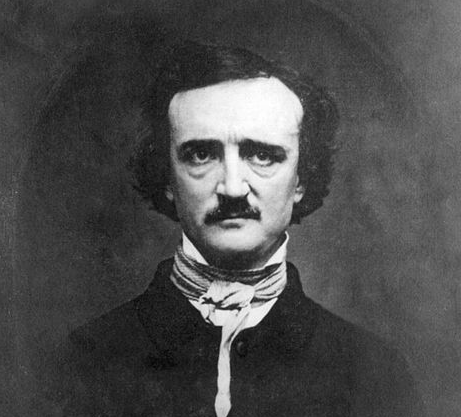
In Poe´s time mystical ideas were very popular and articles about Mesmerism could be found in newspapers. Poe saw Mesmerism as an "illuminating force" that is capable of binding the mind and body. He has discussed the topic in: “Mesmeric Revelation,” “A Tale of the Ragged Mountains” and “The Facts in the Case of M. Valdemar.”
“The Facts in the Case of M. Valdemar” is a fiction novel, where the narrator is going to hypnotise his dying friend M. Valdemar, who will stay in mesmeric trance also post mortem. Experiment of such kind had never been conducted before, so the results were completely unexpected to every participant. Mesmerism was meant to relieve symptoms of illnesses and heal the patient. As M. Valdemar however was in the state of dying, mesmerised 24 hours before his expected death, the hypothesis of the experiment was to separate the mind from the body and the aim to see how long and to what extent death could be postponed.
Dr. Franz A. Mesmer claimed that “animated bodies are not all equally susceptible; in a few instances they have such an opposite property that their presence is enough to destroy all the effects of magnetism upon other bodies.” M. Valdemar is said to have been of nervous temperament, which rendered him a good subject for such an experiment. Therefore it is unknown, whether analogous experiment with a different, more dull natured subject would have had similar results. The experiment itself and the reactions of the subject in trance are described in the following paragraphs.
Related: On Sylvia Plath, The Tarot And Bad College Writing
Before being hypnotised M. Valdemar´s face wore signs of an extreme emaciation, skin was described to have been broken through by the cheek bones. With such remarks, Poe adds some tastes of pure horror to a story seemingly utterly scientific. M. Valdemar´s pulse was barely perceptible but he was speaking clearly and performed some simple tasks unaided. His insides were already in the state of decaying.
After having been mesmerised, the subject turned ice-cold, his limbs rigid. By the look of an eye he seemed to be sleep-waking, gentle but hardly unnoticeable breathing was ascertained. Arm could be moved by waving at it and the limb followed every direction, proving that the subject was in hypnosis and could be controlled. After a few attempts of questioning the subject speaks and answers questions, is aware of his condition. Complains of no pain and states that he is dying and asleep. This means that the man in trance is alive and the believed healing magnetic fluid had indeed caused an effect of relieving symptoms of illness.
However physicians thought death would soon arrive during minutes after M. Valdemar had spoken. His skin turned white like paper, spots on cheeks momentarily disappeared, the jaw fell open and exposed a swollen tongue. The subject of the experiment seemed by all conditions dead. Nevertheless the mentioned tongue vibrated and formed words, confirming that he was now dead indeed. The ghastly voice let out while trying to speak was indescribably horrid. The body was not respiring anymore and attempts to draw blood from the arms failed. In this condition, dead but still mesmerised, M. Valdemar was left for seven months.
After the before mentioned time had passed, the subject was decided to awaken. The body had acquired a repulsive odour and seemed not to respond, all but a tongue that began moving violently after M. Valdemar had been proposed a question about his feelings. The tongue formed words, however the jaws remained rigid. This occurrence of a mind in presence, trying to control a dead body, is in no doubts above interesting.
Mesmerism among other functions like healing and revealing suffer, is trying to prove that the mind and the body can be separated and are capable of existing without each other. Mind separated from the body is unaware of the body´s pain, while in trance. Such a state of peace can be however only temporal, because as the experiment proves, the mind becomes restless, having found the body dead. M. Valdemar is still in agony, and has perhaps been so during all these seven months, because he begs for him to be awakened and confirms with signs of utter terror, that he is dead. The mind is according to this confession, perfectly aware now of the condition of the body. Whether the mind feels pain or discomfort being inside the dead body or is it terrified not having a body to return to, remains unknown.
Related: That Time I Was Plagued By Sleep Paralysis & Ghosts
It is clear however, that the mind is not capable of feeling pain without a body, a body is the cause of pain and does not feel pain itself. Perhaps such a discourse can suggest that the person however, is synonymous with the mind, but without the body, mind is incapable of existing. After being awaken, the body of M. Valdemar starts decaying with incredible speed and rots away before the eyes of the narrator and other participants.
Poe gives no distinct analysis of the case. He merely describes what is happening. However, the description is enough to reveal the author´s opinions. Poe makes it clear, that death is in all cases inevitable, it cannot be postponed forever and perhaps never should be. The death that M. Valdemar experiences is by far more ghastly and painful than it would have been under natural causes. This experiment proves that human interruption is not always of use, when the incurable has arrived. Neither did Mesmerism alleviate the pain of a dead person, it was useful when dying. The experiment was however of no vain purpose, it proved that the mind was indeed approachable, while the body had been died a long time ago.
The narrator does not wish to publish these remarkable results however, and it is perfectly understandable, because it is not clear, whether such an experiment, with or without the subject´s assent is ethical at all. When Poe published the story in a magazine, he gave it no author´s name and many people believed the story to be an actual report of an actual experiment. So truthfully told was the fiction novel.
Edgar Allan Poe was thoroughly interested in life sciences and it shows in “The Facts in the Case of M. Valdemar,” that he also had some knowledge about Mesmerism and of how the hypnosis works.
Poe proves in his story, that the mind and the body cannot be separated completely. Thus we can assume that the mind can survive death but it cannot exist without the aid of the body and having been forced to exist in a dead body is the most indescribable torture to the mind, which in state of trance still somehow finds the use in this decayed body. Under natural causes however, the mind would have died together with the body and it would have caused no agony. When body is gone, so is the mind. The father of horror fiction has proved there are no ghosts.
Scott Williams is an English teacher, residing in Estonia. He has published sci-fi and flash fiction previously on Reaktor and Degenerate Literature e-zines. He loves to read and drink tea more than anything else.