BY AMANDA FEINMAN
I spend a lot of time distancing myself from my body. I do not like to be present here, in these bumps and curves, these long bones. I like to be elsewhere--in a book, a dim coffee shop, the arms of a friend. Wherever it’s warm, distracting, and easy.
I haven't loved my body in a long time. I haven't loved my body in almost as long as I can remember.
I am a good feminist. In my big brain, my quick tongue, and my early-onset frown lines, I am. I am the Articulate Explainer and the Worried Analyzer. I shout at the movies when women are silent (or fetishized, tortured, or altogether absent). I rage about choice, and the products meant to fix our tired faces. I say I love you to the beautiful women around me, for their creativity, their bravery, their loss.
My mother, who gave us the moon and the stars and a couple of space rocks, too, for good measure. My sister, bounding--strides bold and wide--after what she wants. My roommate, dancing across our tiny apartment, flexible limbs as strong as her will. The women writers and speakers and thinkers who, through their passion and articulation, have shaped me.
Because of these women, and for their sake, I am a good feminist.
But in my limbs, in my belly, I don't always know that I am. I wonder if I can use that sacred label--"feminist:" its soft, welcoming vowels and staccato, muscular consonants, all working to shoulder the burden of a century. When I'm inside myself and want to leave, can I use it?
When it's well after midnight, I close my eyes against the loneliest sounds New York has to offer, and wish to have another body. I wish to trade mine; to transfigure mine; to sharpen mine; to fold mine into shapes it isn't. Or to not have a body at all--to realize, by some miracle, that I have developed the ability to separate my soul from my biology, and to float above myself, fleshless and free. When I sit at my desk and the rim of my jeans digs into my stomach, I dream of this. When I feel the languor of an oversized meal pressing in on me, I ache to float away. To graze the ceiling, look down at my own sleeping form, and breathe easy with weightlessness.
Can I claim "feminist," in all its absolute heft, when I fall into this pattern, again and again? When I look down at the soft creature of myself and whisper, "I do not want you, I never wanted you, I do not love you?" When I do not wish to embody myself?
The Beginning
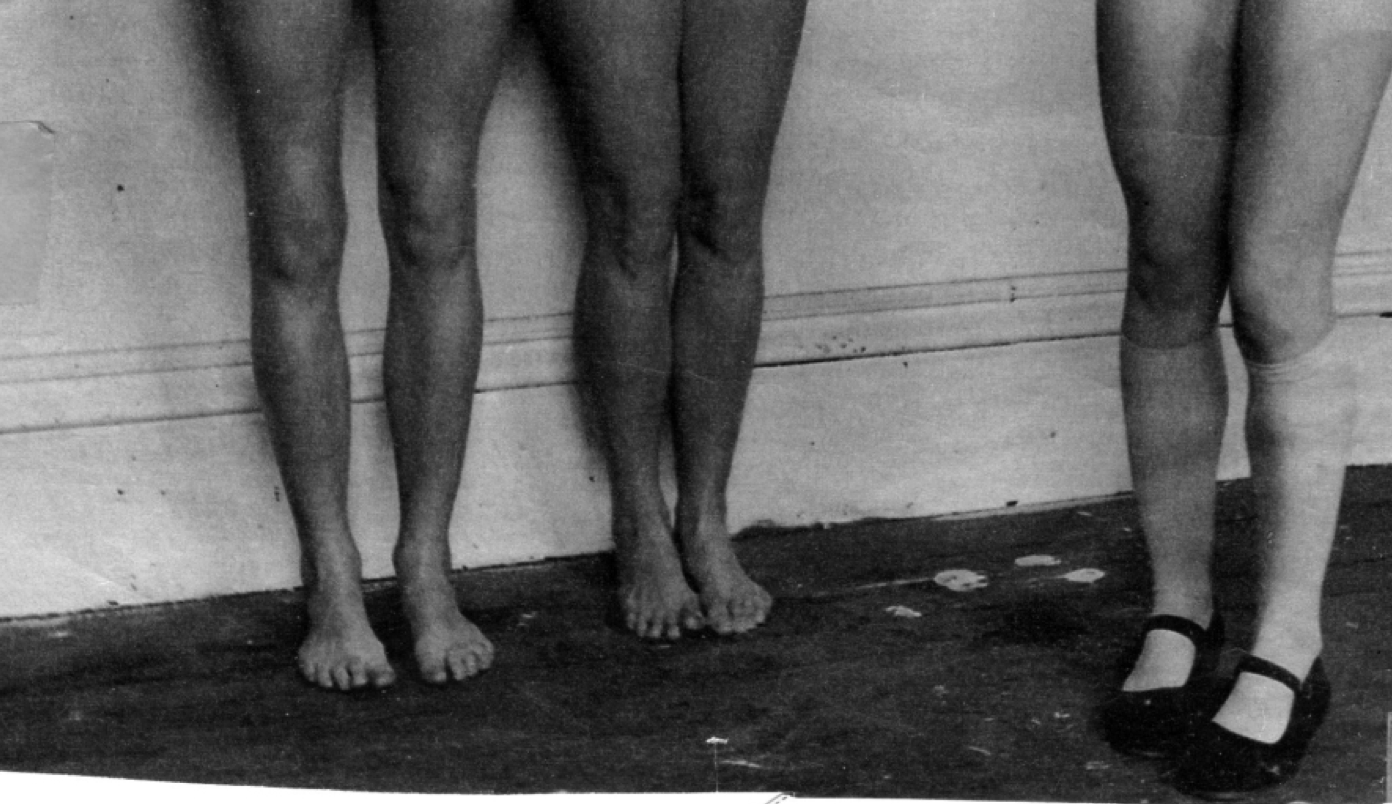
I was a little girl like every little girl--mouth of crooked teeth, small head whirring. I was coarse and blunt as the trees and the sidewalk. I lived for cheese and bread and chocolate, all the things that still make me weak in the knees. I was so loud. I said "I want" and "I don’t want," meaning what I said. I stood naked in the changing room at camp, swapping stories with the other naked girls. We had to be reminded to get dressed, or we’d be late to our next activities. I was that absent-minded, un-preoccupied, kind of electric.
I changed. I grew tall--taller than all of the girls and most of the boys. I grew breasts that I was ashamed of, that I wished would shrivel back into my spine like raisins from grapes. The jagged boyish edges of my waist, stomach, and hips were gone, in a mess of softness that I loathed.
Things changed.
There was Alexa, in the gym locker room, who looked down at the small roll of flab on my belly and quietly commented. Gone, apparently, were the girlhood days of changing together, dutifully forgetting our nakedness. I can still conjure that moment--high-pitched chatter, sticky lip gloss around her sneer--in all of its gruesome clarity.
There were boys on the bus with opinions about my chest: full, abhorrent, and wasteful, totally inaccessible to them behind my insistent chastity. Wrong was I to be cursed with D cups; wrong was I not to share them.
There was television, there were ads, and the process of learning how to hate ourselves. There were men on the street with opinions to share. There was my mother's own quiet dieting, self-sidelining at family dinners. There was the sudden pressure to engage in self-negation: "I wish I had," and "I can’t have." Forlorn phrases, reverberating against our lockers.
This story is familiar to many women. This is the predestined paradigm shift. Somewhere between the homeroom bell and the eighth grade prom, you realize your hips are wide, or your ass is flat, or your legs are bony. You get called a name. You understand--wholly, devastatingly--that you are wrong in a significant way. You simply never noticed before.
It happens quite quickly that the whole world, once glossy with promise, grows oil-soaked.
When I (eventually, finally) lost my virginity, I was a tenant in a body that had misplaced its electricity. Mine was a deeply uncomfortable body, coursing with fearful self-doubt. It happened on a cold bathroom floor on a night when I should have been studying, with a boy who held and handled my body with fumbling eagerness, the kind that doesn’t ask questions. In the end, he didn't care enough about it.
How, in light of everything, could I?
The Hiatus
I drifted up the spine of the Hudson River, and found myself at a small college. I studied literature, I made theatre, I changed my wardrobe. I stumbled upon some new understanding.
That tiny haven of all things liberal and artsy and bookish was intoxicating. I fell in love with my classmates’ hip clothes and distant accents. I fell in love with a few of them for real. I idolized professors with booming voices, who thundered about racial identity and the construction of nationhood to hushed and rallied crowds. I adored the sleepy ones, too, who confused cultural references and could never get the projector to work, but whose sturdy murmured wisdom about Ophelia set me alight.
I became a feminist there--something that had always existed, prenatal, inside me, but which was finally given the tools to be. I read de Beauvoir and Alice Walker on Sunday afternoons, looking out across campus through stained-glass library windows. I went to protests and lectures, drank in performance art pieces. I fit comfortably into my shiny new consciousness, and my new oversized sweaters. They never put me in the college brochure, but they damn well should have.
Out of me, yolk broken open, flowed all I could do: I could write! I could speak! I could lead a team of people with power tools! I explored, I volunteered, I made art. I connected with people who inspired me, and who wanted to hear what I had to say. People who read bell hooks and made soundscapes (who knew what a soundscape was in the first place!). These people, spread on the lawn in their multicolor, talking about taking up space. Demanding it. It was cool to be Big there; to be Present. The notion rocked me.
This, of course, is an overly idyllic picture of an earthly place. That campus was, in reality, full of imperfections and complications. My body shame quieted there--went on hiatus--but did not disappear. There were jealous glances at other girls’ waists, tiny in their light-wash jeans. There was shameful competition over boys--a crushingly un-feminist late night numbers game (shouldn't we have known better? Feminism, I have learned, doesn't always work like that.) There were evenings spent alone in fear--fear that this body wasn’t worthy of value, or remotely desirable.
And there were the boys who did spend the evening, but who occupied this body disrespectfully. There was allowing them to do so repeatedly, when my embodied feeling was one of self-disgust. There was the hulking drunk stranger who--on someone’s stained couch, in a roomful of people--grabbed me, hard, between the legs. There was saying nothing; getting up quietly, like I needed something from the kitchen. My body, shrinking further into itself.
But I was lucky. When I left college, I was sad to my very core. Without the nurturing squeeze of those collegiate spaces--in which I experienced the first true, enthusiastic affirmation of my own existence--I didn’t know what I wanted, what to be, or how.
When that campus was gone, my familiar monster slid easily, so easily, back into place. It had never been banished at all--it had merely been ushered into unwilling hibernation. It was postponed, but not quelled, in its hold over me. It waited patiently for the return of weakness, anticipating the moment when my confidence would lower and my self-worth would become just depleted, just translucent, enough.
The Hunger Year
Graduation and my drop in weight came one upon the other so seamlessly, at first I barely noticed. I lost the campus I loved--worn brick paths, titanic trees, musty books, and my own sense of my feet on the ground. I lost the sense of purposeful waking, the conversation, the rallying cry to take up space. And I lost pounds.
My body shame--black virus of the mind, familiar monstrosity, discolorer of everything--awoke on a searing summer day. I had been staring into the face of The Real World and saw, to my horror, my own body shame staring back. It was gleeful, smirking with the knowledge that it was, once again, at the helm. The ubiquitous "who am I?" that comes with caps and gowns translated so easily into "I am purposeless, I am unworthy"--and then, into "I want a different body. I want no body at all."
The monster made a home for itself behind my eyes, stronger than ever before, and I stopped feeding my body for the better part of a year.
I started running, too. I ran in the mornings, right when I woke up--a shock to my muscles, like dousing my body in flame just as it roused. So awful and so great, to run until I was on fire. I ran until I broke a bone in my right foot.
I stopped drinking. No more happy hours with smiling college friends, half-off margaritas be damned.
I thought often, dimly, that I should know better. I was no longer the girl on the bus, or on the bathroom floor. I was equipped with feminist consciousness, and I understood firsthand the strength that it can offer. I should know better. I should not be succumbing to disordered thoughts about food. I should not be partaking in such unhealthy practices. I should be able to control this.
I couldn't, of course, and the thought only distressed me further.
I lost count of the compliments. One of the most frightening things about that year, in hindsight, is how many young women expressed awe and envy at the changes my body underwent. I couldn’t truly hear them--they faded, one after the other, into meaningless haze. It wasn't about compliments. It was an instinctual reaction, deeply entwined with my sense of post-grad confusion and despair, and yet somehow predating it, too. Somehow, dating all the way back to Alexa, and the bus, and the television ads. Not eating enough--an irrational, alien thing for a human animal to consider--made so much sense to me, I didn’t think much about it at all.
And Now
I have emerged on the other side of that awful stretch of self-denial, and I know a few more things than I did before.
I know that disallowing my body was another way to distance myself from it. To make it smaller, less meaningful. To avoid inhabiting it.
I sought a way to make my anxieties about adulthood, my self-doubt, my renewed feelings of purposelessness, less manifest. Because of something deep in my marrow, something unconscious and sinister, I believed that reducing a physical reality--my breathing, flesh-and-bone self--could chip away at a colossal, metaphysical ache.
From the time we are girls, we are taught that to have less body is to have less trauma. To take up less space is to be a worthier female creature. That unhappiness can be cured by careful restraint, calculated self-whittling. For many women, an attempt to reduce pain and anxiety of any origin inspires a reduction of ourselves, quite literally. It didn't matter what I had learned in college, or how many thoughtful women had told me to demand to be Big; I believed this message on a much deeper, more instinctual level. These are the messages internalized and calcified young. For what other reason would a person choose to go to bed hungry?
It is not novel to comment that poor body image in Western women is a cultural phenomenon (men have their fair share of problems, too, which I would never deny. I can, however, only speak from what I have lived.) In my (cisgendered, white, heterosexual) female experience of the world, my female body has been the site of evaluation, appraisal, criticism, objectification, rejection, and many types of trauma--even spiritual trauma of the body, and even self-inflicted trauma of the body. Indeed, it was me who neglected to nourish it; it was me who allowed people to touch it without respect. It is me who often recoils from the warm, breathing truth of it, and me who disavows its significance.
I am also a feminist. To reconcile these two truths has taken careful effort. To answer the painful question, on those midnights alone with myself: am I allowed to claim the term, when I cannot display the body positivity I have seen, and read about, and envied? When I cannot fly the banner of self-love? I wonder, even as I crawl achingly toward a soft kind of acceptance, if there is a feminist way to struggle with body shame.
I have worked to find one. "Knowing better" alone does not always change reality. Reading Susan Bordo by late lamplight can give us clarity, but not necessarily cure. We grew up with our monsters, they are parts of us--perhaps dormant, hopefully withered, but present.
First, we must accept that feminists can, and do, internalize dangerous cultural ideas about bodies. Feminists are not immune, because none of us is immune. Feminists can, and do, embody these ideas, and live them. We cannot beat ourselves up for falling victim to a pervasive cultural disease. It does not have to undermine our feminism.
Accepting that I am the product of years of deeply ingrained ideology--years of ads, years of whispers--makes it easier to begin the process of unlearning. This is a daily practice that requires constantly checking, fighting against, and attempting to better, my interaction with the world in relation to my body. It takes the form of so many little things--you can see it, if you know what it looks like.
It looks like correcting a wince under harsh dressing room light. It looks like having seconds sometimes. Or reveling in the beauty of a sweet potato, a slice of brie, a chocolate covered peanut. It looks like stopping a judgmental thought about another woman’s body in its tracks. It looks like theme parties with weird hats, and late nights, and too much Merlot. It looks like sneaking snacks into the movies in a huge purse. It looks like snoozing sometimes when the gym alarm goes off. It looks like kitchen-sweet smells, and the caring touch of others. It looks like self-forgiveness.
My body shame is not an unfeminist thing that I carry, but something that forces me to unlearn, every day. It forces me to wrestle, push back, think again. This is an integral part of my feminism. Having had body shame for years informs, and shapes, and deepens my feminism.
Unlearning what we were once taught about the female body can allow us to reclaim the narrative of body shame. This does not have to be a story of helplessness; it can be reframed as one of thoughtful struggle, of daily, deliberate transformation.
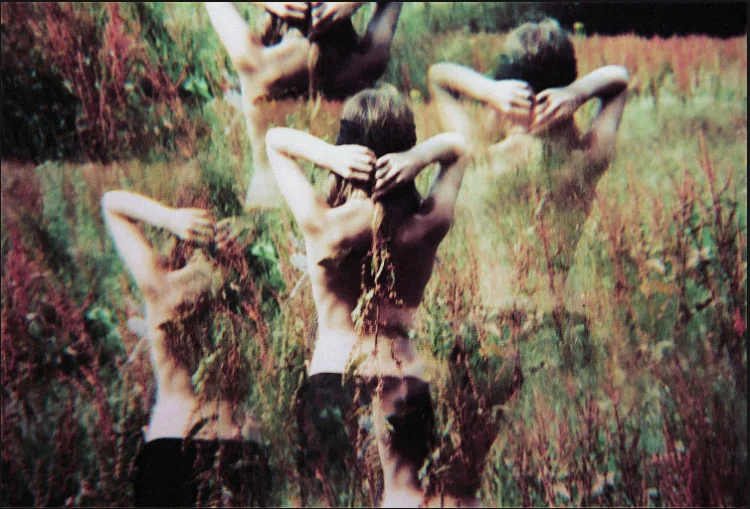
I must try to be present in this body, because it is my body. I must try not to detach from it, but instead to reestablish what it feels like to be inside it. My home, not my prison. Every time I want to float above my body, to be separate from my body, to have a different body, to not have a body at all, I must struggle--to sit in my limbs, and acknowledge them. To be present here. These are mine, this is mine. This is where I live.
I do not want to do this work, much of the time. But I must try, all of the time.
Women who struggle with body shame can encourage each other to unlearn and to change. We can be each other’s first advocates. I think of them--a nation of women, haunted by a thing, living with it--whenever I stand in the open fridge door, eternally choosing wisely.
If we try to demand of the universe with our anatomies what we demand with our mouths and our brains, that is an act of feminism. So is embodying our bodies. So is daring to take up space.
I feel a duty to myself, to the women who have raised me, to the feminist champions I admire, to do this. I must try to look down at myself and say--if not "I love you" just yet--at least, "hello."