


In August, she feeds summer figs to spring rabbits. From a sweating lawn-chair, she watches the waxing moon in the mouth of midnight reflect in the curve of her kitchen knife, shining bold and out of place. She drops the sticky bruised pieces to the rabbits, their shapes sinking into uncut grass as they feed. She watches their bodies turn slow and thick, their stomachs coated violet with shreds of sweet fig. In September, six fledglings fall from her front lawn dogwood. She takes their small bodies into her hands, brushing away the fallen nest while admiring the pieces of cigarette and onion bag weaved between pine needles. In her backyard, she digs six pits in the soil of her herb plot. In the evening, she sits on her porch smoking cigarettes while she waits for the mother's return. The mother never comes. Unable to fall asleep, she walks to the shattered nest and places six cashed cigarette filters at the base of the tree; an offer of trade she hopes the mother will accept. In October, she pours a boy a bourbon soda, stirs the spirit with a spent sage stem. In the oven, a rabbit roasts–its skin soaked in herbed butter and crisping by the second. She watches the boy's hands choke his glass like a neck. She imagines these hands around the suspension threads of her throat– the buds of her eyes blooming wide beneath an understood brutality. Her becoming destroyed for some eager mouth. For now, she waits in the heat of her kitchen. A maven of opportunity constructing unseeable scaffolding, its beams spiraling upward through the roof, rupturing the night and barreling out into lord knows what.
Read More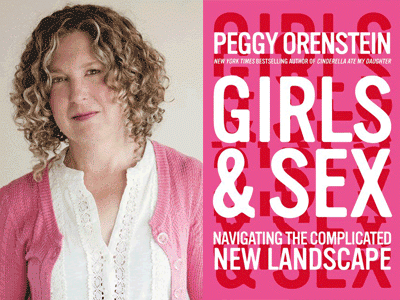
Interview with Peggy Orenstein on 'Girls & Sex'
Much has changed between my generation and the time period my mothers generation terms of technology, politics, gender norms, but most notably with dating. In her new book, Girls & Sex, journalist and mother Peggy Orenstein interviews over 70 women and discusses sexuality with experts to reveal some shocking (and often overlooked) truths about the reality of girls and sex.
Read MoreFiction: Small Town Girls by Lacey Jane Henson
She leaned forward a little and it wasn’t until then that I really got scared, imagining her in this new room in my new house, those teeth tearing my guts. I opened my mouth to scream for my mom and dad but right before I could, she vanished, just as if she’d never been there at all. I made a small sound, like the one you make at the doctor’s, when they put the tongue depressor in your mouth. I blinked: nothing. She was still gone. I bit my tongue until I tasted blood—proof I was still awake. I expected something more to happen, and stayed awake a long time, waiting. The girl stayed gone.
Read More
9 Amazing Books That Will Make You Believe in Books Again
If you hadn't guessed by now, you probably guessed I like to read a lot. Since I take the subway wherever I go, it actually frees up a lot of time for me to read, which I'm grateful for. Over the past few months, I've gone to a lot of readings--including AWP--where I was able to get a lot of new books.
Read More
Writers Real-Talk About Getting an MFA: Diversity, Debt & Community Support
BY LISA MARIE BASILE
The MFA debate can get pretty silly, no? Is it pointless? Is it overpriced? Does it regurgitate the dreaded borg-hearted MFA voice? Maybe, maybe, and maybe. There are just too many variables to consider.
I used to daydream about perfectly articulating my disdain for the MFA. It’s been four years since graduating, and the reason I disliked my program has become clearer and clearer to me. It took me four years of separation to see it, and I'm glad I didn't commit opinion to paper before now. Where I used to solely blame the program I can see my own flaws. I wasn’t ready. I didn’t take enough time to learn about myself before MFA. I was in a relationship that affected my concentration. But it was also not what I expected, save for a class or two. I didn't feel challenged, and I felt like the stronger writers suffered at the hands of people who weren't sure what they were doing there (paying money to kill time, essentially). I’m also in debt – tons of debt, debt that no one talked to me about, and debt I imagined I would magically – or easily – pay off.)
Getting an MFA is a personal decision, one that is dependent on internal goals. Some people want community, while others want to be able to teach. Some people want to put off working. Some people work 9-5 through their MFA. Some people breath writing. Some people think of poetry as a hobby. There are so many things pre-MFA candidates should think closely about – how the program will serve them, how the program may harm them, and how others in the program play a part in the whole.
I asked a group of 39 people on Facebook what they wished someone would have told them before they went into MFA, and it started the conversation you see here.
Is it worth it?
“Stay true to yourself, be prepared to have your heart ripped out, and find people whom you can emulate and who will encourage you. Take what you want and leave the rest.”
“Follow your guts. In my case, my MFA was one of the best, most genuine things I've ever done for myself, and it's worth all the crazy debt.”
“Don't expect to be taught how to write. That's not how it works.”
““It doesn't usually lead to a job, a book deal, teaching or anything realistic.”
“Don’t do it.”
“With the MFA, you get what YOU put into it. The degree itself doesn't mean very much, but if you take your work seriously, write like a madwoman, give it your all, it DOES pay off. You have to give yourself permission to do this and to do it with your gut, heart, and head. You'll work long hours, yes, spend them writing and reading and networking and falling in love with the craft and the process. I started my MFA in 2007 and graduated 2011. I needed time to "steep" and mature, so don't beat yourself up if you need more time, too. I grew immensely as a writer in those years, but it wasn't just because I had inspirational mentors or fantastic feedback or a wonderful environment or even time and space (I worked full time throughout to avoid debt). I grew as a writer because I put in the long hours and hard work. It takes gumption and this crazy idea of believing in yourself.”
“Other people don't always take it seriously, and sometimes that can feel discouraging. I think for myself, I had to realize that this was my work and my experience, and it took me time to come to that conclusion as a writer. Sometimes, other students wouldn't give decent feedback. And honestly, sometimes I was guilty of that too. Ultimately, it's about making the best of your environment you're in, and figuring out how to thrive and get the most out of it as possible. It's a personal thing. And once I figured that out, I was much better off.”
Should I focus on publishing during my MFA?
“I think my MFA mostly paid off in me learning how to write, how to take myself and my craft seriously. You can certainly publish without an MFA, but I was in an environment that encouraged and celebrating submitting and publishing. So there was that motivation. It felt awesome to tell my advisor each time a piece got picked up! My mentors would often suggest places to send my work, too, so that helped. But it really wasn't about publishing. It was about being a part of a writing community that was supportive (for the most part), encouraging (for the most part), and to have a group of readers to challenge me and my work to develop and get better.”
"I won't lie. It fucking bugged me that very few people in my class knew how to submit to literary journals. By the time you get to Masters level you should have a clue, I think. You're coming in to hone your work, not learn to read a submissions page."
“People get obsessed with ‘having a book.’ Publish when it’s right. Not because you’re in or post-MFA.”
“As far as getting published/sending work out, that was not something that was stressed or even talked about much in my program.”
How important are having mentors and support?
“You aren't necessarily going to meet your mentor because many of the professors are juggling multiple classes/jobs/writing. Which isn't personal, of course, but because many universities and colleges don't hire these professors/writers full time, everyone's priorities and energies are stretched too thin. And that was highly disappointing for me because that's primarily why I went.”
"As I was finishing the program, sometimes I felt like another mentor in the classroom, which helped me develop my own teaching abilities. I think this helped me become a more understanding teacher, too. I also learned a lot from my peers who were more advanced than me. I was able to see the difference between my peers who were thriving and those who were floundering. I wanted to thrive, so I did what they did and made friendships with them.
“[The mentorship element] is especially an issue nowadays, with many writers teaching in multiple programs. And with it being a 2-3 year thing, even one sabbatical can mean not connecting.”
“That it's okay to disagree with (and ignore) a mentor's critique/edits if they don't know what's best for your work. To know that sometimes your mentor DOESN'T know what's best for your work, and to trust your instincts (and peer review ) in those cases. Especially peer review...at the end of the program, you're all going to be MFAs, which is often the same degree held by....yep, your mentor.”
“My conversations about my poems during the semester were all one-on-one with my mentor. So much better than the round table discussions during undergrad. We had workshops for a few poems during residency, but the bulk of my poems were discussed only with my mentor.”
“If you get paired with a mentor with whom you don't work well, the semester might end up being a bust. I saw that happen to a couple of folks. I was fortunate that it didn't happen to me, though some of my semesters were more productive than others.”
“I had lazy professors sometimes. I remember one poem I wrote and submitted for a class that I never got any feedback on and numerous that got tons of feedback. It sucked sometimes. Other times, I'd get feedback that was clearly the professor wanting my work to be something else than I intended. You have to deal with a lot of imperfections because no program is going to be perfect. You have to seek out good feedback from writers you trust. Again, that's sometimes going to fall on your shoulders. It took me 5 years to realize that. It ultimately comes down to being responsible for your own learning and growth. There are no mentors who are going to come in and do the hard work for you, no program or environment that's going to magically make it all come together. To be a writer, that's in your lap and your lap alone. On that note, we all need different things to thrive, so it's a matter of knowing yourself and knowing your own personal needs as a writer and human being.”
“Other writers can be mean and aren't often supportive. You have to find your own support and remember that in the end you are competing, so some people are just going to be mean. Don't take it personally. Literary bullying exists but can be shut down.”
“We also had a very new professor who tested her class out on us and we were all unhappy to have wasted a semester on that – though the learning was strong – the class itself was all disjointed. The class after us got the benefit of our comments and ideas - we never got anything (even thanks)."
What's the talent pool like?
“MFA programs admit students based on potential, not based on current level of talent. I had this expectation that I would see strong writing and receive excellent feedback from my peers and it was initially frustrating for me. I had to learn on focusing on the quality of my own work rather than worrying about the quality of others.”
"A lot of copycats."
"In an MFA program, you might not be with a group of writers at the same "level" as yourself, but I think there's something to learn from that experience as well. "
“I think a lot of people end up doing the MFA right out of undergrad, or almost right out of undergrad. For a lot of them, it ends up being a really expensive way of "finding yourself."
“In my experience, in terms of the larger gestalt of the whole thing, it created a sort of giddy, youthful culture of self-exploration. That ended up being both really positive, and sometimes really negative. But in terms of the workshop culture, I often felt as if our discussions were just total anarchist free-for-all. Like anyone could say, "I feel like…" or "This doesn't work for me," and not actually offer a craft-based explanation. I'd often walk away from workshop discussions more confused than I went in. On the other hand, in retrospect, that made me a stronger writer, because I had to learn to really trust my gut.”
“Impostor syndrome is normal. Learn from the writers you're jealous of, borrow their techniques and see if they work for you or not, don't waste time being jealous of them."
[Editors note: Experiment with voice. DO NOT PUBLISH WORK THAT MIMICS PEOPLE'S WORK.]
“I was 20 when I started my MFA. I was too young. My work was undisciplined and really unfocused. I didn't understand what it meant to be a writer. I actually started the program in hopes of earning a masters degree so I could teach the "good" high school English classes, but my goals changed and matured as I worked my way through the program. I began to see writing as a part of my identity rather than a means to an end. Again, I grew immensely, and I think it was mostly personal.”
How important is the critique element?
“I have an MFA from Hollins University. It's very difficult to find people who know how to critique. A good critique requires the reader to understand what the author is trying to accomplish and then offer suggestions to help, placing it within the larger framework of similar pieces. Many workshop readers focus on what they want the piece to be, rather than what the author is trying to accomplish.”
“Many others admitted may have never been in a workshop before. There is a lot of variety in level in terms of writing and critique ability. Form your own writing circle and get out in the community with non-academic writers to keep yourself humble!”
“I think a good MFA program will help hone those skills – how to critique and how to be a better reader. Writing reviews, I learned, was one really fantastic way to go about doing that.”
“Don’t freak out if someone in your class always gets fantastic feedback while the rest of you are confronting your demons. That has a lot to do with the aspirations of everyone else being pinned on one style, and obviously, the harsh critique is better for you, like kale or broccoli. Doesn't mean you enjoy it.”
“Pick your friends and thesis group carefully and as early as possible. Keep the critiques as honest as possible and try not to fall for the star writer and fawn with the rest of the class and professors. That helps no one.”
Did diversity and class issues affect you?
“I often felt alienated coming from a poorer background, and class issues definitely played a role in the program.”
“There were very few non-white students during my three years, but we were pretty evenly split between men and women (the poetry students were mostly women). The majority were way under 50. At 29, I wasn't considered one of the "kids."
“The majority of students were under 25 and it was a big dating game in the first year.”
“I only had white men as poet mentors (profs and visiting writers). I got to work with a woman with nonfiction briefly. In workshop, it was overwhelmingly white. The few POC students expressed feelings of isolation – and often, these students had horrible experiences in workshop with people not understanding the work or what the author was attempting.”
"I felt like I was alone. The majority of people were rich white kids."
What about low-residency programs and finding time to write?
“Do plenty of research about full vs. low-residency programs. When I was applying (around 2010) there seemed to be a stigma attached to low-residency in that you could never get the same attention and access to faculty help that you could from full residency. Looking back, I don't think that's true–you're going to be doing 99% of your writing and revising on your own in any case.”
“It used to feel like a low-residency program added an asterisk to your degree. But now, low-residencies can be an excellent option, in some cases offering access to faculty that might otherwise be out of reach. The residencies that anchor each term, at least in our program, are an outstanding resource.”
““I'm not sure what the answer is in work vs. writing, because it's really STILL something I'm trying to figure out. I wrote during my lunch hour, after coming home at the end of the day, during the weekends, etc. Almost every ounce of m spare time was spent reading, writing, researching and submitting. I was kind of obsessed.”
“Be careful of "free ride" rhetoric if it really means underpaid teaching job that prevents time for outside employment. I worked full time through my MFA at a nonprofit, but that ended up being a better professional set-up than if I'd gone with a program that offered full funding in return for teaching undergrads”
“Kids, job, husband – full time wasn't an option for me. Though if I'd known about fully funded programs (never heard of grad school without debt, until after my MFA), I might have found a way to make it work”
How awful is the debt?
“Unless you have parents paying, you are fucked. People don't tell you that. And then you wonder why some MFA kids breeze through while those of us work jobs and pay debt and have little time to write."
"You will be in debt for decades afterward. That's a high price to pay for what essentially comes down to confidence, perspective, craft, and community. In retrospect, for me, it was worth it. I would not have been able to build those things on my own. But I don't think it is worth it for everyone.”
“Don't pay for it. Get a free ride, or as close as you can. Do your research! I had an almost-free ride—but I still didn't have nearly enough to live on. It was the loans I took out for living expenses that ended up fucking me over.”
“I thought taking out the max amount of government student loans to live off of was probably a bad idea…but it turns out it was a completely idiotic idea.”
“Yeah I was told that adjunct live was rough but I had no idea that it is completely unsustainable.”
“Find out if they offer teaching grants or editing grants, also? Some might offer a handful, but those might be really hard to snag.”
“I'm faculty at a BFA program and give a talk on this each Fall. My first bit advice is not to do an MFA because you want a teaching job. I speak frankly about the job market and over-saturation. For those still interested, I urge them to look for well-funded programs and consider both the size of the program, TA/RA opportunities, and how the faculty/coursework line up with their writing goals. Ultimately, I tell them applying is a part-time job, and it's worth it to really do the research. I also suggest they consider geography in terms of cost of living. I do my best to help them navigate the field and suggest some programs that people I know have had terrifically nurturing experiences with.”
“You will be in debt until you are old and grey and may not even get any teaching experience - make sure you ask about that (if you want to teach) and always look for a program that offers a full or partial ride with teaching opportunities.”
How do you stay true to your voice?
“The MFA Voice is a myth; it’s not all-permeating, but there are trends, and they are obvious.”
“My worst and best experience happened in a workshop -- I am a feminist poet, and my early work interrogated sexuality as a means to talk about gender inequality and sexism. Well, one day, I read my poem aloud in workshop as we oft do, and a male student blurted -- "Katie, why do you only write about sex? I mean, there are other things to write about, or is that all you think about?" And everyone laughed, including the professor, who agreed with him. I felt so embarrassed -- they were missing the entire "point" of my writing about sexuality. We were then in the same class studying a poem that had sexual themes, the same student blurted out -- "I bet Katie wrote this poem." So embarrassing. I could have stopped writing sexy poems. I wanted to. I wanted to curl up under my desk and hide, but in the end, I learned from that shitty experience to toughen up. I learned that people aren't always going to "get" your work. I learned that it's ok to have obsessions and to write about them obsessively. I kept writing about sex! That day in class I learned so ridiculously much about the way the world works -- about shame and about gender roles and about being strong regardless of it all.”
Do you get burned out?
"You may get burned out and not write a line for two years afterwards, and if you do, it doesn't mean you'll stop writing. Seriously I wish someone had told me this. I felt like a complete and utter failure when I just did not want to write - actively had an aversion to it. I'm back in the saddle, and all the happier for it, but knowing that was a possibility would've made a huge difference!
“I was totally burned out for a couple of years, and really resentful about the whole experience. I did not realize how much I had learned in my MFA, or how rich and nuanced my education had actually been, or how ultimately positive it ended up being for my career, until like three years later.”
“I worked the entire time during MFA (9-5) and it felt like I was just exhausted afterward. Ironically, having space gave me my voice back and revived my love of writing. The MFA took something from me, something that prevented me from really writing well. It was the focus on popularity and fitting in that prevented me from blossoming. This is an issue. But after getting away from all those too-cool-for-school kids I really found my way as a writer. But I did learn how to talk about poetry.”
Lisa Marie Basile is a NYC-based poet, editor, and writer. She’s the founding editor-in-chief of Luna Luna Magazine, and her work has or will appear in PANK, Thrush, Ampersand Review, The Atlas Review and others. She's also written for Hello Giggles, Bustle, Bust, The Establishment, The Gloss, xoJane, Good Housekeeping, Redbook, and The Huffington Post, and other sites. She is the author of Apocryphal (Noctuary Press, Uni of Buffalo) and a few chapbooks. Her work as a poet and editor have been featured in Amy Poehler’s Smart Girls, The New York Daily News, Best American Poetry, and The Rumpus, among others. She currently works for Hearst Digital Media, where she edits for The Mix, their contributor network.
7 Books You'll Actually Enjoy Reading
These are books I've read in the last few months. I loved them, so I want you to love them too.
Read MoreArt as a Blend of Many Truths: Why We Shouldn't Question Beyoncé's Narrative
To tell a story (even your own), in a way, is to tell someone else’s–if it were only hers, how could we connect? How could we expect her to own every word? Why must it be debunked or defined at all?
BY LISA MARIE BASILE
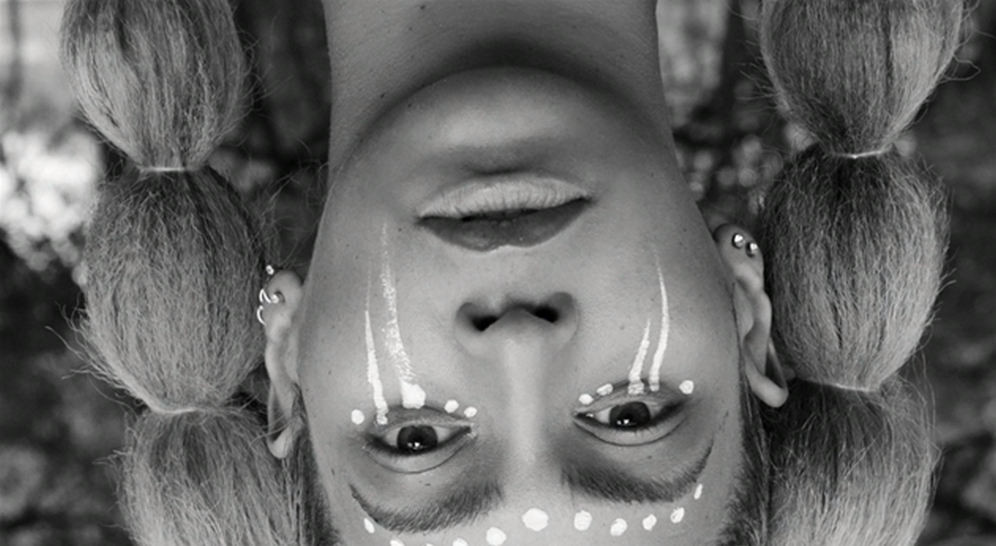
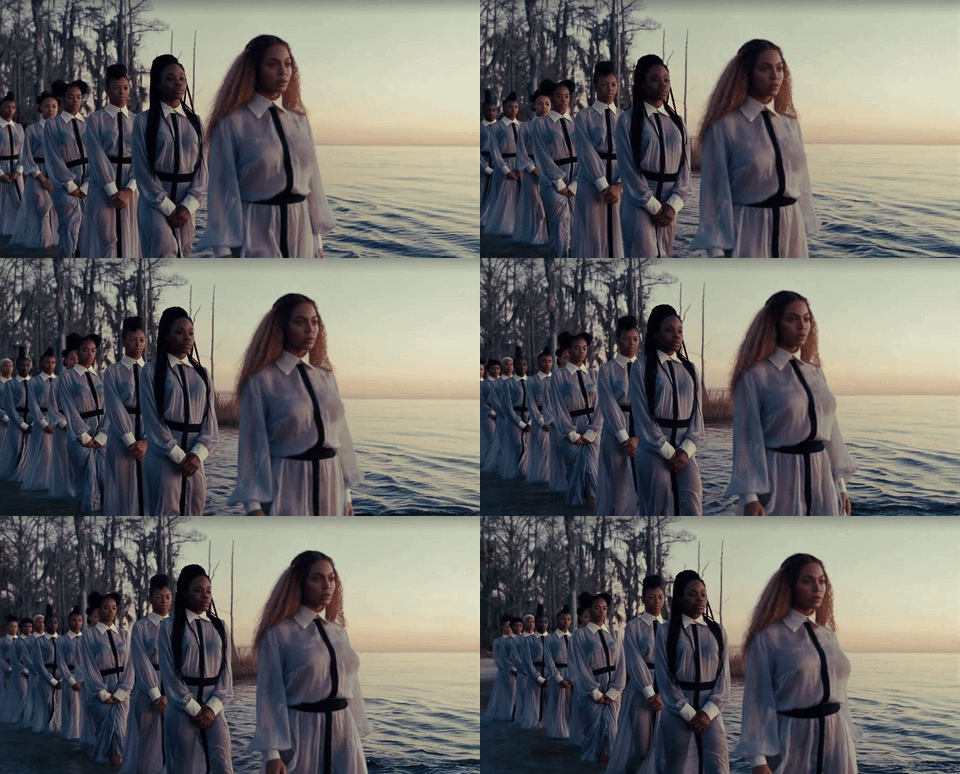
Lemonade emerged from darkness at a time of political unrest and volatile racism. For many, I’m sure, it also comes about as a Spring story of rebirth and the divine self; Lemonade’s grief is collective and personal–the story she weaves is everyone’s story, an eternal hurt, the story of mothers who broke at the hands of men, the story of a girl who was too naive, the story of women who take back their agency.
Everyone keeps worrying about the truth; what’s the truth? Is the artist being cheated on? Did she forgive him? Why is he seen, on camera, stroking her ankles, kissing her face? What if it’s about her own mother? What if this is a machine? What if the artist is exploiting rumors about her marriage–and feeding the beast that way? What if the beast isn’t her own?
The fact is that the artist doesn’t always need to have experienced everything first-hand. Certainly, Beyoncé is building a world, one that is universally understood enough to be appreciated: the grief of lost love, the grief of being lied-to, the relentless anger, the baptismal, personal resurrection, the lover's possible forgiveness, the healing power of culture.
One of the ways she builds this world is by featuring the words of poet Warsan Shire. In a New Yorker piece that pre-dated Lemonade by several months, it is clear that even Shire doesn’t claim her work is entirely autobiographical:
“How much of the book is autobiographical is never really made clear, but beside the point. (Though Shire has said, “I either know, or I am every person I have written about, for or as. But I do imagine them in their most intimate settings.”) It’s East African storytelling and coming-of-age memoir fused into one. It’s a first-generation woman always looking backward and forward at the same time, acknowledging that to move through life without being haunted by the past lives of your forebears is impossible.”
This is how art works. As a poet, I play a character and the character plays me–always vacillating between this point in time and that point in time and heart, time owned by me or time owned by someone else, heart owned by me, and heart owned by other. It’s the million ghosts that tell the story, and they’re needed to give it dimension.
We should give artists–and I’m calling Beyoncé an artist, here, and if you don’t like that, bye–the ability to make their art into something alchemical; a little this, a little that. It’s the potion of the collective unconscious, that which is passed down by ancestors, mixed with our consciousness and our memories, our collective experiences of love and sorrow. To tell a story (even your own), in a way, is to tell someone else’s–and if it were only hers, how could we connect? How could we expect her to own every word? Why must it be debunked or defined at all? Why isn't it ok to tell the story of something bigger?
In Lemonade, Beyoncé handles the past–through her grandmother’s voice, Shire’s voice, the history of race in America, the way love has treated her–the present, and the future: a future of hope, a heaven that is a “love without betrayal,” the dissolution of racism, the reclaiming of feminine power, nature as a symbol of forward momentum.
I think we are begging for these many voices, these many moving parts she has woven; I am happy it was a collaboration. It gives me hope for art.
And don’t drink the Haterade: “It’s her producers, it’s the songwriters, it’s the people she hired.” When people reduce any artist to this, they’re reducing art, which I suspect is antithetical to their whole point. Being an artist takes knowing how to harness the power of many, it takes knowing how to build a vision, and it takes knowing how to embody that world. Nothing can be done alone.
The time you spend questioning her writing credits, her veracity, her money – is time you could be devoting to the very moving art created by Beyoncé and her team – poets and directors and the powerful Black women she features. It says something, and if you give it the space, I’m sure it will talk to you.
Lisa Marie Basile is a NYC-based poet, editor, and writer. She’s the founding editor-in-chief of Luna Luna Magazine, and her work has appeared in The Establishment, Bustle, Hello Giggles, The Gloss, xoJane, Good Housekeeping, Redbook, and The Huffington Post, among other sites. She is the author of Apocryphal (Noctuary Press, Uni of Buffalo) and a few chapbooks. Her work as a poet and editor have been featured in Amy Poehler’s Smart Girls, The New York Daily News, Best American Poetry, and The Rumpus, and PANK, among others. She currently works for Hearst Digital Media, where she edits for The Mix, their contributor network. Follow her on Twitter@lisamariebasile.
Review of Atoosa Grey's 'Black Hollyhock'
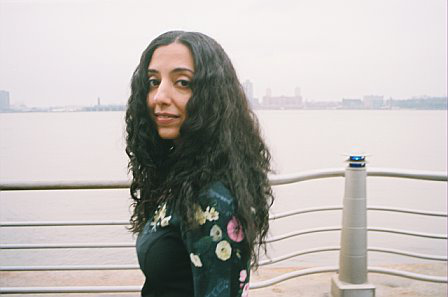
Black Hollyhock, Atoosa Grey’s first poetry collection, faithfully adheres to its title. While voluptuously organic, it also contains a dolorous underside. Grey’s image-driven poems, imbued with symbolism, navigate territories within territories -- those of language, identity, motherhood and the body. She deftly renders a world nuanced with languid musicality and replete with questions. She asks us to consider the currency of words, to find the sublime in the mundane, and to recognize the inevitability of rebirth and resurrection throughout our lives: “The body has its own way of dying / again / and again.”
Read More
The Trials of Writing Haibun About the Salem Witch Trials
Hands down, the best decision of my life was joining a low-residency MFA in Creative Writing program. When I think about my experience, I imagine Mike Teavee from Willy Wonka and the Chocolate Factory. My poems, like Mike, started out normal sized and a bit naive. Then they shrunk. This tiny poem phase didn’t so much reflect the length of the verse, but instead the humbling of my ego. Everywhere I went, I met beautiful poets and read amazing collections. I currently take in every bit I can of anything that might even closely resemble a poem so that my tiny, metaphysical mind-poem can grow. And that’s just what it’s doing.
Read More
Dara Scully
Nightingale And Swallow Part II, Fiction By Taylor Sykes
When he’s back in the store and I’m alone again, I let myself lean into the worn leather steering wheel, clinging to it like a body. I can’t keep myself from crying when I think about that boy and what Caroline did to him. So I cry until it rains and then until it rains harder, until the sound of wind and water striking the truck is louder than I could ever be.
Read More
Dara Scully
Nightingale And Swallow, Part I, a Fiction Piece by Taylor Sykes
His lips look purpled already, but it must be the moon’s coloring coming in from the window. I push a puff of smoke into his spit-soaked face. It hits like a burst of water. Then comes the heft in my chest, a weight the size and shape of a fist. Before I can think too much about it, I push him on his side, face down.
Read More
via Ghost Diaries
Poetry By Kevin O'Connor
so that the petals bleed in darkness
where a child overturned a bag
via Goodreads
What My Compulsion to Write Actually Means
I’ve thought a lot lately about writing as an inherently inward and narcissistic act--my thoughts, my interestingness, my hidden depths. Joan wrote that we spend our lives being told we are less interesting than everyone around us so I write: It is nighttime, and I am in Rome, pretending everyone around is far less interesting than me.
Read More
A Review of Poetry Collection "In Leaves of Absence: An Illustrated Guide to Common Garden Affection"
In Leaves of Absence: An Illustrated Guide to Common Garden Affection (Red Dashboard Publishing) with poetry by Laura Madeline Wiseman and art by Sally Deskins, our capacity as women to thrive or wilt, is revealed through daily garden life. In between these detailed poems and exuberant paintings, there are paragraphs of facts and plant history, to teach and temper the budding words. It is a reminder that caring for nature, like caring for a person, is an investment. As Wiseman writes in “The Family of Magnolias,”
“planting the wrong tree or doing it in the wrong way is something better left undone.”
When one plants a tree from seed, it is a lifetime commitment or at least half a lifetime. The gardener is caregiver: watering a seed, protecting a sprig from frost, watching for signs of disease or insect invasion. After many years a tall sturdy tree is a crowning achievement while a failed plant can be heartbreaking. Like life is with relationships. Yet we plant again in the spring, measure out garden plants, look for new loves. To garden is to hope. All living things, however, die, or “leave,” eventually. But isn’t biting an apple or smelling a rose worth it? Wiseman and Deskins explore this journey through these intricate poems and bursting water colors.
One of the first metaphors in the collection is “A Wrong Tree.” The tree is almost described as a stumbling Civil War soldier, suffering without anesthetic:
“Limbs are sawed off as amputated stumps and oozing wounds.
The canopy won’t shade you no matter where you stand.
…Evenings on the lawn chair you slouch with cheap beer.
You gaze at the green lawns around you—
You imagine hopping the fence to a new home…
I could leave…”
We assume the underdog status through “A Wrong Tree,” judging it’s low hanging branches, it’s lack of leaves and structure. The tree is a symbol for living the wrong life: the wrong yard, wrong car, wrong house, wrong neighborhood. We hunger for the other: the perfectly manicured lawn or mini barn shed. Even though disdain is present for this ugly duckling, there is some sympathy. The tree is surviving, it does not appeal to the masses, have “curb appeal.” But it is unique. These hiccups in nature reflect on our own quirks and flaws as humans. We must “go on” too, no matter what.
Deskins splatters her drawing of “A Wrong Tree” with the brightest colors imaginable: greens and blues, pinks, and oranges. Her tree is a helpful reminder that beauty is found in unconventional shapes and places.
Likewise, another painting that shines with self-love is “Take Leave.” (There is lots of “leave” and “leaf” word play throughout the book and one can also not help but think of Whitman’s Leaves of Grass while reading these poems.) In the painting “Take Leave,” a curvy female shape stretches her limbs within a tree trunk. She is proud, blissful to enrapture the tree’s magic, her torso blending into the bark. She is serene and one with the tree. It is powerful.
Today, with all women’s rights and freedoms under attack this image is refreshing. If only all women could arch their elbows to the sky, strong: feel their power. This painting is a wish.
In the following two poems: “Leave off Husbandry,” and “Weeping Hawthorn, A Friend and Neighbor,” tree and woman blend but manifest that all allusions to trees are not beautiful. In “Leave off Husbandry,” Wiseman writes:
“you axed us in my dream. I awoke
to my heart scudding, a thicket of birds.
Your will to destroy left me shaken…
I was putting out roots, leafing at the base.”
Arms are swinging an imaginary ax., cutting off our limbs, our ability to run, our ability to flower. Giving something “the ax” is a synonym for finishing it. Wiseman uses the tree as a symbol in this relationship, the stress dream pulling intimacy’s roots out of the ground. The tree is powerless to the ax, does not see it coming, like anyone blindsided by an emotional trauma. (Again Deskins paints an effective image to be paired with this poem: a flesh colored woman, slumped by a tree, looking over her shoulder at the reader, forlorn.)
In “Weeping Hawthorn…” the natural world is a metaphor for assault. Wiseman writes:
“her limbs bent to his need, a hot, blind
forcing that once opened would scar.
She scratched at him to stop…”
“…Each of us wants
to blossom, grow, ripen, be
plucked—consent—never like that.”
Through representing the women as trees, the reader experiences not only how our environment cannot speak for itself, but also how women are silenced, how casual violence is prevalent. Like a new sapling, a girl, a woman should be cared for, should feel free to shout her voice to the world, not prove how her existence should just be tolerated. At least the trees have the forest.
Whether these poems are witnessing women’s plight, or a childhood memory (Wisemen playfully quotes “let the wild rumpus start,” from Where the Wild Things Are and there are allusions to a swing hanging from an oak tree,) or exploring word play, Deskins accompanies these fevered words with light and spirituality.
In “Common Prayer to Tree Gods and Goddesses,” the outlines of women are in a forest with the orange/reddish colors atop the tree canopy. One does not know if it is dawn or dusk and it doesn’t matter. These tree spirits are timeless.
Our tree lined streets or lone tree in a yard or tree standing tall in a park are us. Wiseman teaches us the mind might forget certain slings and arrows, but “…the body can remember what we carved.”
This collaboration is a tour de force of word and color, a wonderful blending hybrid creation, as can only be found in nature.
Jennifer MacBain-Stephens went to NYU’s Tisch School of the Arts and now lives in the DC area. Her chapbook “Clown Machine” is forthcoming from Grey Book Press this summer. Her first full length collection is forthcoming from Lucky Bastard Press. Recent work can be seen or is forthcoming at Jet Fuel Review, Pith, Freezeray,Entropy, Queen Mob’s Teahouse, Right Hand Pointing, Cider Press Review, Inter/rupture, and decomP. Visit her here.
Rebecca Melnyk
Interview with Poet Leah Umansky About Her New Chapbook 'Straight Away the Emptied World'
Leah Umansky is a force of nature--and she's not about to be stopped either. She's the author of three collections: her full length book "Domestic Uncertainties," (Blazevox, 2013), a Mad Men inspired chapbook "Don Dreams and I Dream," (Kattywompus Press, 2015) and now her dystopian-themed chapbook "Straight Away the Emptied World," out by Kattywompus Press this month.
Read More