


An Interview with Candice Wuehle
by Lisa Marie Basile
Lisa Marie Basile: Tell us all about your new work. I am a huge fan of your gorgeous poetry and prose, from your genre-shifting/blending to your exploration of the glittery and the gritty. Can you tell us about your newest work, Monarch?
Candice Wuehle: My most recent novel, MONARCH came out in March. The idea for it came from an actual conspiracy theory that claims MKUltra has a secret division called Project MONARCH that recruits children and teens from beauty pageants to become sleeper agents.
They specifically recruit beauty pageant contestants because of their natural (or studied!) charm, conventional attractiveness, physical aptitude and stamina, and their strong propensity for obedience. This theory asserts that MONARCH agents are programmed using trauma-based mind control techniques. I was just finishing up my dissertation on memory and trauma studies for my PhD and the MONARCH theory became a perfect metaphor for a lot of what I’d been thinking about regarding how much of consumer culture (especially culture aimed at women and body image in the ‘90s) is a kind of trauma-based social programming.
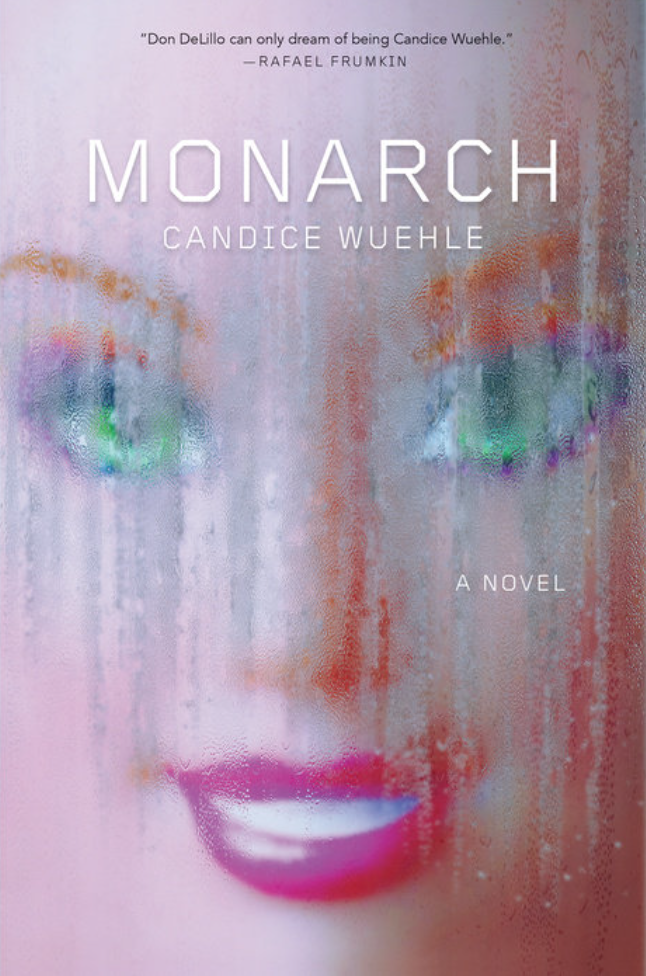
The first beauty pageant contestant I always think of—the one imprinted on my own psyche—is JonBenét Ramsey. A plot about a teen queen reminiscent of Ramsey, but who has lived, grown up, and is now seeking revenge captured my imagination.
The real quest of MONARCH, though, is the main character’s journey to figure out who she is—what part of her is really “her” when it seems so much of her personality has been programmed.
For me, the technology that delivers that answer comes through divinatory practices, so there are scenes of tarot and especially séance in MONARCH that are intended to get at the occulted side of the self. Not occulted as in spooky, but occulted as in: hidden even from yourself.
Currently, I’m working on a collection of short stories that’s a sort of Internet gothic—haunted apps, poltergeist algorithms, a GPS that leads to another dimension.
Lisa Marie Basile: What are some creations that light you up? How do they influence your work as a writer or creative?
Candice Wuehle: For the last few years, I’ve been really inspired by contemporary fiction (mostly written by women). For me, there was a bit of a shift in the literary landscape after Eileen by Ottessa Moshfegh was published that made room for the kind of books I’ve really wanted to read all my life.
Many of my favorite books of all time have come out in the last ten years—books that are often marked as “unhinged” but that are irreverent, angry, hilarious, politically and culturally subversive, and deeply intelligent. I’m so inspired by creators who can dialogue with the current moment, or, more likely, who are willing to say something so out of the moment—out of any moment—that when it arrives it feels utterly new.
To name just a few, I love A Touch of Jen by Beth Morgan, New Animal by Ella Baxter, Luster by Raven Leilani, Nightbitch by Rachel Yoder, Self Care by Leigh Stein, the novels of Lucy Ives and Melissa Broder and Mona Awad.
Reading very recent work that has an intentional disregard for certain craft conventions, that refuses to be totally “done” or to “make sense” gives me a sense of community and makes me feel more tethered in time than I normally am.
Poets write collections that include aporia, void, and contradiction and that’s understood, but it’s rarer to see that kind of insistence on the truth of personal expression—of a writer’s inherently complex and often incompatible belief systems—represented in the novel form.
“Poets write collections that include aporia, void, and contradiction and that’s understood, but it’s rarer to see that kind of insistence on the truth of personal expression—of a writer’s inherently complex and often incompatible belief systems—represented in the novel form. ”
Lisa Marie Basile: You shift between genres and seem to do it very naturally. I think a lot of writers feel they must select a lane and stick to it.
And, as you said, "Poets write collections that include aporia, void, and contradiction and that’s understood, but it’s rarer to see that kind of insistence on the truth of personal expression—of a writer’s inherently complex and often incompatible belief systems—represented in the novel form."
Perhaps there are a few questions here, but how do you approach the concept of genre, and how do you approach giving the same permissions to the novel as poets might inherently have? (I say that as someone who has complex thoughts on what 'genre' means).
Candice Wuehle: Thank you for this question. So, the truth is I write what I write, and then I see what genre it seems to look like after. The other truth (and I’m going to contradict myself immediately, but that’s part of my point) is I don’t write poetry and prose at the same time.
I haven’t written any lineated poetry since 2019. It doesn’t worry me. I never thought I’d write prose, then I tried to write a poem that showed up as a novel. I’m sure I’ll sit down one day with an expectation to write in one genre and end up doing something else. It seems like most people write to express themselves or to understand themselves. I understand that and I love that and I find kinship and solace and truth in writers who write from that place. But I write to surprise myself.
Since this is Luna Luna, I know readers will understand it when I say I write to see my shadow. That’s meaningful to me because I know others see my shadow and recognize it in themselves; that my work is shadow work for me and for others. What does that have to do with genre? I guess just that if you go into shadow work expecting to see shapes you already know, you aren’t prepared.
So I let the narrative shape arrive the way it presents itself and then I make choices on the second draft that might lend the shape to something more recognizable to a reader, but only if I think that serves the highest goal of the project.
“I write to see my shadow. That’s meaningful to me because I know others see my shadow and recognize it in themselves; that my work is shadow work for me and for others.”
Lisa Marie Basile: Can you tell us a bit about your general creative process? What sort of rituals or practices do you adopt? Or, you know, have you struggled with creativity at all as of late?
Candice Wuehle: The pandemic has been devastating for my ritual practice, to be honest. During my most creative periods, my ritual was a walk to the university library where I would sit with a cold brew in a jelly jar while listening to colored noise and write (or not write). Equally important to the ritual was the walk back home. I didn’t know that at the time—that the walk back home after writing was the same as Shavasana for me.
A period where what I had worked on integrated into me and began to braid into the next time I wrote. Now, my walk is simply to my home office, a space I love but that I haven’t fully imbued with the elements I think of as important to a sacred space.
I think it has a lot to do with buffering between acts of creation, which is hard to do when there are no imposed restrictions on how long I can write or when.
To put this in kind of crass sports terminology—I’m trying to figure out “how to get in the zone” but it’s tough because the zone is everywhere. Both my psychic and spiritual hygiene have been taxed by the upheaval of the world over the last few years, I suppose.
Lisa Marie Basile: It is clear that you're very interested in the liminal, the magical, the numinous — do you ever approach writing through a divinatory or occult lens/means?
Candice Wuehle: Yes, always, but my practice is very simple. I believe in the vibrations of a space, so light, sound, and the flow of air is important to me. Candles and incense create a sort of spiritual hygiene, while sounds help me to keep my mind flowing at an even pace. I usually listen to pink or white noise to try to stay engaged in flow state. The most significant aspect of my divinatory practice, however, is something I learned from the woman who taught my yoga teacher training, which is whenever you can’t figure something out just sit until it comes to you.
Once I started doing this, I noticed how important gazing is to me. I keep an obsidian egg and a quartz globe on my desk to look at. In other words, most of the time I spend writing looks like doing nothing. Which is, I guess, a sort of trance state.
Lisa Marie Basile: And how does how culture/identity/place/belief bleed into what you write?
Candice Wuehle: For the last few years, ideas of culture, identity, and belief have really consumed my work in the sense that I’ve been fixated on how we come to accept cultural beliefs as integral to our identities, especially in a late Capitalist culture that largely only presents beliefs intended to get us to buy stuff and conform to a dominant narrative that benefits…those already dominant. A lot of my sense of self and spirituality is born of trying to DIY ways to avoid these pervasive belief systems.
So, for example, I heard an interview with former The X-Files’ researcher and current paranormal investigator, John E.L. Tenney, where he said that beings or events we term supernatural (ghosts, UFOs, witchcraft) are actually ultra-natural in the sense that they’re more real than what we perceive to be real. He says, for this reason, they’re desperate to be seen and remembered; to inscribe themselves in space or narrative.
I think the threads of my work — and especially of MONARCH — pull together out of a desire to reflect a more ultra-natural world. A lot of MONARCH is about how our bodies remember what we don’t and how “the body keeps the score” as the trauma researcher Bessel van der Kolk would say.
In this sense, messages from the body that come out as anxiety or physical ailments might feel like they come from nowhere when in fact, they’re realer than what we’ve told ourselves is real in the sense that these messages are coming from an experience we haven’t yet processed.
I think a lot of cultural messaging also works in this way—folklore and fairy tales as examples of commonly held, deeply integrated beliefs about familial and romantic relationships that have a blatant falseness to them: Eternal sleep, love at first sight, talking animals. We accept those elements as fantastic, but weirdly not the messaging behind them.
So, this is a little bit of a backward answer to your question in the sense that I’m saying belief systems and culture influence my work in a sort of inverse way; that I’m really more invested in unraveling and questioning than I am in determining any kind of personal or cultural or spiritual Truth.
Who are the writers making an impact on you right now?
Candice Wuehle: Currently, I’m really inspired by Jessica DeFino, a beauty culture critic and author of the newsletter “The Unpublishable.” Her ability to deconstruct the beauty and wellness industry in order to point to its colonialist, patriarchal, and capitalist roots/motivations is just so precise and breathtaking.
Much of what she argues about how denatured our ideas of beauty are—how, for example, makeup is often an erasure similar to the death drive—resonates so deeply with what I was thinking through in MONARCH.
Another Jessica—tarot reader/social worker Jessica Dore. Her wonderful book Tarot for Change and her Instagram account are such a gift. She integrates philosophy, clinical psychology, and myth in order to interpret Pamela Coleman Smith’s deck with such fresh, mind-bendingly deep interpretations.
A friend gave me one of her classes for my birthday last year. In the class, she said something about the intersection of social work and tarot reading that I’ve applied to my own life in a radical way: “you should never be working harder than the client.” Which I took as a mantra while I was teaching creative writing—as in, you can’t do someone else’s creative or emotional work. You can only listen and try your best to hear what they’re trying to express.
Finally, I want to mention Beth Morgan and her novel A Touch of Jen again! There’s a list of things I think about all the time, but I don’t know why (a Buzzfeed “Who Said It” quiz that listed quotes from Don Draper and Sylvia Plath that I failed; Britney Spear’s thousand sit-ups a day; the time my high school English teacher wore a veil to teach Hawthorne).
Anyway, A Touch of Jen is on the list of things that I think of every day. This book is so compelling, so funny and smart, yet it refuses to adhere to a single genre convention while obviously being aware of every genre convention. It’s a book that makes perfect effectual sense, and very little logical sense. Like life!
“When I finally stopped trying to write what I thought a poem or a novel was supposed to look like and wrote what I’d really want to read—which for me meant beauty culture, witchcraft, rage, trash, unlikable emotions, and philosophy presented in a way that some people find pretentious—I felt like I had touched the source.”
Lisa Marie Basile: Finally, what is one piece of writing advice you live by and would give others?
Candice Wuehle: This is so simple that it doesn’t feel like advice to me, but I notice students and lots of other writers don’t seem to follow this philosophy, so here it is: only write what you really want to read. I come from the most traditional possible writing environment and I became a writer with the idea that only the “major themes” are worthy of “serious literature.”
When I finally stopped trying to write what I thought a poem or a novel was supposed to look like and wrote what I’d really want to read—which for me meant beauty culture, witchcraft, rage, trash, unlikable emotions, and philosophy presented in a way that some people find pretentious—I felt like I had touched the source. I become obsessed with returning to my creative work and it took on a devotional quality.
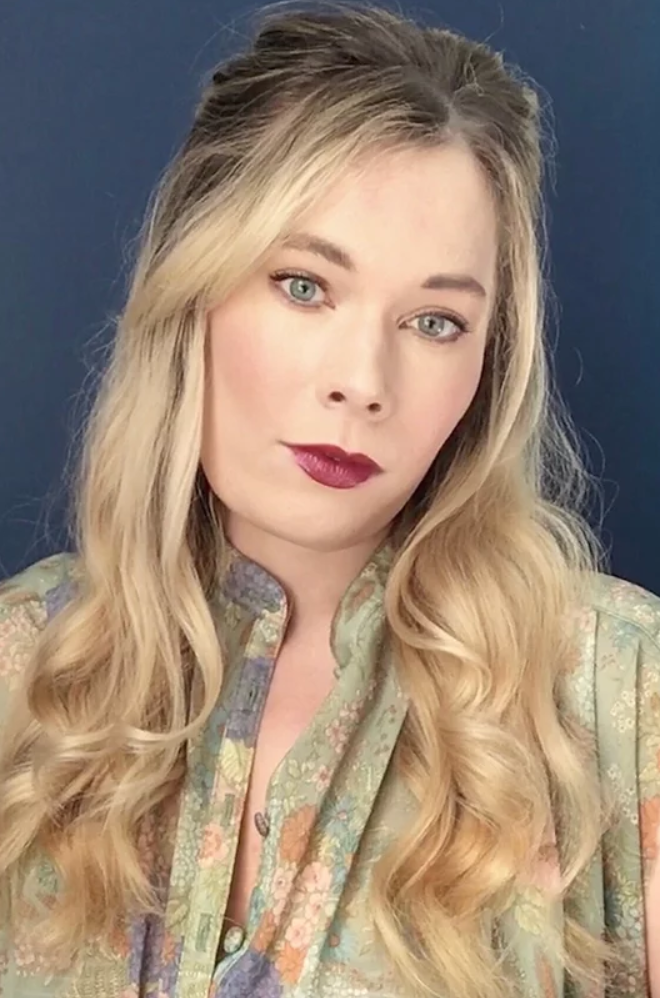
Candice Wuehle is the author of the novel MONARCH (Soft Skull, 2022) as well as the poetry collections Fidelitoria: Fixed or Fluxed (11:11, 2021); 2020 Believer Magazine Book Award finalist, Death Industrial Complex (Action Books, 2020); and BOUND (Inside the Castle Press, 2018). Her writing has appeared in Best American Experimental Writing 2020, The Iowa Review, Joyland, Black Warrior Review, Tarpaulin Sky, The Volta, The Bennington Review, and The New Delta Review. She holds an MFA in poetry from the Iowa Writers’ Workshop and PhD in Creative Writing from the University of Kansas.
Lisa Marie Basile is the founding editor of Luna Luna Magazine. She’s also the author of a few books of poetry and nonfiction, including Light Magic for Dark Times, The Magical Writing Grimoire, Nympholepsy, Andalucía, and more. She’s a health journalist and chronic illness advocate by day. By night, she’s working on an auto-fictional novella for Clash Books.
Her work has been nominated for several Pushcart Prizes and has appeared in Best Small Fictions, Best American Poetry, and Best American Experimental Writing. Her work can be found in The New York Times, Atlas Review, Spork, Entropy, Narratively, and more. She has an MFA from The New School.