

• Home
  • indulge
  • new poetry
    • About Luna Luna
    • resources
    • search
  • editor
  • dark hour
  • submit
Menu

luna luna magazine

  • Home
  • indulge
  • new poetry
  • About
    • About Luna Luna
    • resources
    • search
  • editor
  • dark hour
  • submit
shadow
A Writing Spell: Honoring Your Many Selves
Mar 1, 2021
A Writing Spell: Honoring Your Many Selves
Mar 1, 2021
Mar 1, 2021
An 11-Line Poetry Spell For Healing
Mar 1, 2021
An 11-Line Poetry Spell For Healing
Mar 1, 2021
Mar 1, 2021
How To Write Powerful Poetry Spells
Feb 28, 2021
How To Write Powerful Poetry Spells
Feb 28, 2021
Feb 28, 2021
Here Is Your Scorpio Homework This Season
Oct 25, 2020
Here Is Your Scorpio Homework This Season
Oct 25, 2020
Oct 25, 2020
3 Transformative Life Lessons Scorpio Teaches Us
Oct 25, 2020
3 Transformative Life Lessons Scorpio Teaches Us
Oct 25, 2020
Oct 25, 2020
Restorative Grief: Letters To The Dead
Oct 23, 2020
Restorative Grief: Letters To The Dead
Oct 23, 2020
Oct 23, 2020
A Santa Muerte Rebirth Ritual + A Tarot Writing Practice
Oct 6, 2020
A Santa Muerte Rebirth Ritual + A Tarot Writing Practice
Oct 6, 2020
Oct 6, 2020
Witches, Here Are The New Books You Need
Nov 14, 2019
Witches, Here Are The New Books You Need
Nov 14, 2019
Nov 14, 2019
3 Dream Magic Rituals And Practices
Nov 12, 2019
3 Dream Magic Rituals And Practices
Nov 12, 2019
Nov 12, 2019
How To Use Tarot Cards for Self-Care
Nov 11, 2019
How To Use Tarot Cards for Self-Care
Nov 11, 2019
Nov 11, 2019
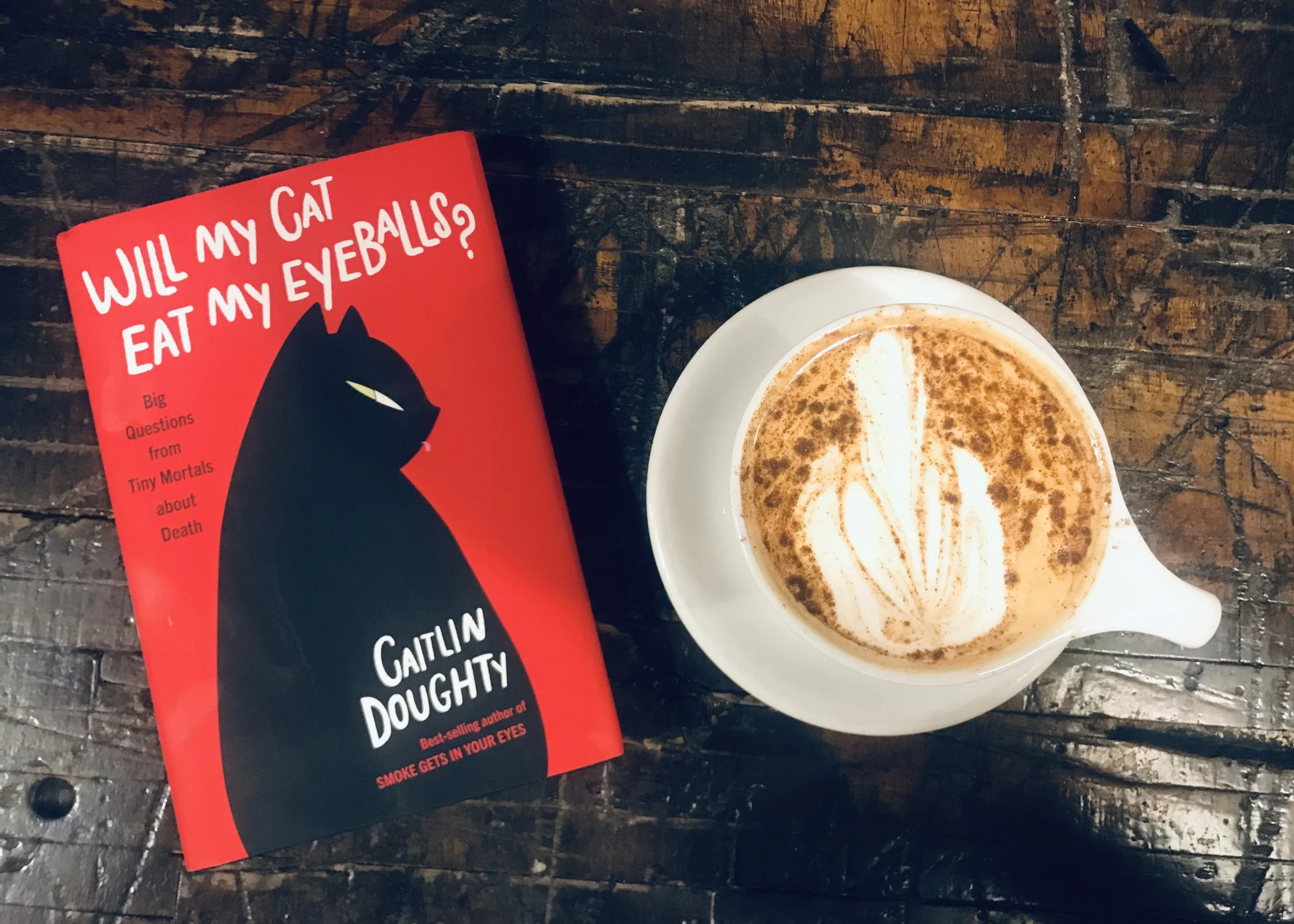
A Review of Caitlin Doughty's 'Will My Cat Eat My Eyeballs?'
Oct 25, 2019
A Review of Caitlin Doughty's 'Will My Cat Eat My Eyeballs?'
Oct 25, 2019
Oct 25, 2019
Nimue, The Deity, Came To Me In A Dream
Sep 17, 2019
Nimue, The Deity, Came To Me In A Dream
Sep 17, 2019
Sep 17, 2019
Astrological Shadow Work: Healing Writing Prompts
Sep 9, 2019
Astrological Shadow Work: Healing Writing Prompts
Sep 9, 2019
Sep 9, 2019
The Witches of Bushwick:  On Cult Party, Connection, and Magic
Jul 23, 2019
The Witches of Bushwick: On Cult Party, Connection, and Magic
Jul 23, 2019
Jul 23, 2019
7 Magical & Inclusive New Books Witches Must Read
May 15, 2019
7 Magical & Inclusive New Books Witches Must Read
May 15, 2019
May 15, 2019
Working Out As Magic & Ritual: A Witch's Comprehensive Guide
May 14, 2019
Working Out As Magic & Ritual: A Witch's Comprehensive Guide
May 14, 2019
May 14, 2019
Letters to the Dead: Shadow Writing for Grief & Release
Feb 8, 2019
Letters to the Dead: Shadow Writing for Grief & Release
Feb 8, 2019
Feb 8, 2019
How to Add Magic to Your Every Day Wellness Routine
Feb 5, 2019
How to Add Magic to Your Every Day Wellness Routine
Feb 5, 2019
Feb 5, 2019
Ritual: Writing Letters To Your Self — On Anais Nin, Journaling, and Healing
Jan 31, 2019
Ritual: Writing Letters To Your Self — On Anais Nin, Journaling, and Healing
Jan 31, 2019
Jan 31, 2019
How Rituals Can Help You Gain Confidence
Jan 17, 2019
How Rituals Can Help You Gain Confidence
Jan 17, 2019
Jan 17, 2019
Hearthcraft & the Magic of Everyday Objects: Reading Arin Murphy-Hiscock's 'House Witch'
Jan 14, 2019
Hearthcraft & the Magic of Everyday Objects: Reading Arin Murphy-Hiscock's 'House Witch'
Jan 14, 2019
Jan 14, 2019
True to The Earth: Cooper Wilhelm Interviews Kadmus
Nov 26, 2018
True to The Earth: Cooper Wilhelm Interviews Kadmus
Nov 26, 2018
Nov 26, 2018
Between The Veil: Letter from the Editor
Oct 31, 2018
Between The Veil: Letter from the Editor
Oct 31, 2018
Oct 31, 2018
Shadow Work with Light Magic for Dark Times
Oct 31, 2018
Shadow Work with Light Magic for Dark Times
Oct 31, 2018
Oct 31, 2018
2 Poems by Stephanie Valente
Oct 31, 2018
2 Poems by Stephanie Valente
Oct 31, 2018
Oct 31, 2018
A Poem in Photographs by Kailey Tedesco
Oct 31, 2018
A Poem in Photographs by Kailey Tedesco
Oct 31, 2018
Oct 31, 2018
Photography by Alice Teeple
Oct 31, 2018
Photography by Alice Teeple
Oct 31, 2018
Oct 31, 2018
A Simple Spell to Summon and Protect Your Personal Power
Oct 31, 2018
A Simple Spell to Summon and Protect Your Personal Power
Oct 31, 2018
Oct 31, 2018
November and Her Lovelier Sister
Oct 31, 2018
November and Her Lovelier Sister
Oct 31, 2018
Oct 31, 2018
A Spooky Story by Lydia A. Cyrus
Oct 31, 2018
A Spooky Story by Lydia A. Cyrus
Oct 31, 2018
Oct 31, 2018
nathan-wright-993104-unsplash.jpg

Stop Screaming: A Short Story

October 31, 2018

BY CARLEA HOLL-JENSEN

The sky is black milk and the clouds are ash. Along one side of the road, the trees are indistinguishable from the stone hills rising behind them. On the other side, the dark mirror of the sea. It’s been miles since I saw any light but my own headlights, even longer since I’ve seen another car.

When the tire goes, I careen onto the shoulder and shudder to a stop. No problem, I tell myself, remain calm. I strike the flares, lay them out in a semi-circle around the car—purely ritual at this lonely hour of the night, but I’m comforted by their sizzling glow.

The jack suspends the car and I work the lugs off the tire. The spare goes on easily and I’m tightening it up when the drone of an engine separates itself from the drone of the sea. As the headlights crest the hill, I have to shield my eyes.

The car slows. It pulls up behind me, also on the shoulder, and the shape of a man emerges from the passenger side. “Need a hand, Miss?”

In the dark, he is indistinguishable from the rest of the night.

“That’s all right, thanks.” My voice boils out of me, too loud. “I’m almost finished here.”

Isolated as we are, he seems too close. He takes a step towards me. “Really,” he says, “it’s no trouble.”

I will the flares to make a barrier between us. “Really, I’m fine.”

“I don’t think you are,” he says.

That’s when I notice the driver’s side door of his car is standing open. That’s when the second man comes up behind me and strikes me down.

I come to tied to a bed beside a dead woman. Her throat is a red aperture, but her eyes are open and staring at me. Our wrists are lashed to the headboard, our ankles to the foot of the bed. Her blood swamps the mattress, still warm.

My body convulses upward, arching away from the wet bedclothes. A scream gutters in my throat, but I won’t let it out. No problem, I tell myself, remain calm. 

I force myself to look around the room, breathing deep and slow even though I can taste the drowning copper of her blood. There is a lamp on a nightstand beside the bed, chintz wallpaper, a mirror on the opposite wall that reflects our image back to us. My companion is not looking in the mirror, her eyes still fixed on me. To my left, a door; to my right, a window.

If I hold my breath, I can hear the sea. Downstairs, a radio plays sentimental songs. I can hear someone moving around, voices fluctuating softly.

“You don’t have long,” the corpse tells me. Her lips don’t move, because she’s dead.

“How do you figure?”

“I can see through the floorboards,” she says. “Also, I’m floating above you. I don’t know if you noticed.”

I hadn’t. There she is, scudding along the ceiling like a lost cloud. I wonder what it’s like to look down and see your body below you. I might soon get to find out. 

“You’d better hurry,” she says.

While I struggle to free my hands, my companion reports what’s happening downstairs.

Through the floorboards, she observes our assailants dancing a waltz. They seem very much in love, she says. Sometimes even killers need a little human touch. They’re probably very sympathetic, for murderers. One of them, the one who spoke to me, the one who is not a man but a dark shape, is drinking slugs of isopropyl alcohol. It won’t kill him, because he’s impervious to harm. If anything, it makes his stomach flutter, like nervous excitement—butterflies.

As she’s telling me all this, I slip free of the ropes. Not because I get the knots loose or anything. What happens is my hands change size. Then I can sit up and undo the ropes around my ankles. “This doesn’t normally happen,” I tell the corpse.

“You look familiar,” she says. “Do you play checkers?”

I try the window, but the frame is nailed shut. 

“No? What about chess?”

Even if I broke the glass, which would certainly attract attention, we’re two stories up and the ground below is bare rock. Beyond the stony hill is a soft dark beach and, beyond that, the sea.

“I thought maybe I knew you from one of my clubs.”

“I don’t suppose there’s a back stairway,” I ask the corpse.

“Just the one,” she says. 

It was worth a try. No problem, remain calm.

I tread carefully across the bare floor. The door is not locked, but it comes away from the frame with a groan. I hold my breath.

Downstairs, they’re still dancing. Their heads lean close. The dark one’s hand dips lower along his companion’s back.

Just a little more and I can slip out, my blood-wet dress catching on the tongue of the lock. Edging down the hall, I approach the stairs. In my stocking feet, I am quiet, but I crouch down to make myself quieter and smaller still. If I could, I would shrink down entirely, the way my hands changed size, but that portion of the evening seems to be at an end.

On the balls of my feet, my fingertips brushing the floor like an ape’s, I creep around to the top of the steps and look down—straight into the living room, where the killers are swaying in one another’s arms to a standard of days gone by. The music is louder here, and more sentimental, too. One of the men, the one who knocked me down, appears quite moved. Big, fat tears seep out of his closed eyes.

There’s no chance I can get past them. The stairs let out onto the front corridor, in plain view of the living room. The only reason I haven’t been discovered is that the killer facing in my direction has his eyes closed.

Scuttling back against the wall, out of sight from the first floor, I close my eyes and breathe carefully in and out. No problem, remain calm. 

There must be another way out. That ghost means well, but just because she can see through walls doesn’t mean she knows everything. 

As I crawl along the floorboards, splinters wedge themselves into my knees. I’m leaving a trail of borrowed blood behind me.

Back in my room, I stand up. There must be something in here that could help me escape. The corpse watches me search the room with reproachful eyes, while her spirit follows me around, bumping against the ceiling like a balloon. 

“I know I’ve seen you before,” she says. “Was it on the number nine bus?”

The bureau drawers are empty, except for a case of tarnished war medals. Maybe the killers were brothers in arms. Or maybe the medals belonged to someone they killed. Maybe they came with the house. 

“Or, no, wait,” the ghost says. “I know how I know you! We went to elementary school together, remember? We played hide and seek in your attic and you kissed me through a length of gauze?”

I could fashion the sheets into a rope, but I’d have to get them out from under the corpse, and the killers would probably spot me out the ground floor window. And I’d still have to break the window to get out.

“Or was it—You were the woman I saw on the street corner, looking up at a flock of birds in flight. Yes, that must be it. I remember the shape of your jaw.”

Then again, maybe breaking the window wouldn’t be such a bad idea. With what? Not the war medals, surely—but the lamp has promise.

“You don’t really think that’s going to work, do you?” the ghost asks.

I ignore her. I’m only going to listen to constructive criticism from now on.

The lamp lets me unplug it from the wall, and I carry it over to the window. I cradle it. “OK,” I whisper, my lips brushing its glass base, “we’ve got one shot at this. Don’t let me down.” Remain calm, remain calm.

The lamp smashes through the window with wonderful force, arcing through the night to shatter on the rocks below. I am so proud of it, but only for a moment, because then I am listening to shouts of alarm from downstairs.

I hear the killers run outside to see what the commotion is. I can hear them blundering around in the dark, yelling at one another. Down the stairs I go, my stocking feet slipping, skidding in the hall, and then I am spilling out the front door, down the walkway, running, running into the night. The dark is absolute, and somewhere behind me I can hear the killers shouting, pursuing me, but I will run. I will keep running.

Soon it will be light.

“Wait,” the ghost calls out, hovering in the doorway. “Where are you going? We were getting to be such good friends!”


Carlea Holl-Jensen’s fiction has appeared or is forthcoming in, among others, Grimoire, Psychopomp, and Fairy Tale Review, where I was recently runner-up in their 2018 Prose Award, judged by Kathryn Davis. I'm the co-editor of The Golden Key, an online journal of speculative writing, and co-host of the podcast Feminist Folklore.
In Halloween Tags Halloween 2018, halloween
Comment
Screen Shot 2018-10-30 at 11.37.03 PM.png

Blood Moon Limpia by Monique Quintana

October 31, 2018

BY MONIQUE QUINTANA

When I was a girl, I watched my boy cousins conjure spirits in our family house. Our great grandmother, Marcrina had to do a limpia to clean it out. I wonder if those spirits birthed other spirits that have existed in the many rooms that my body and my family have encountered.

Our landlady had received the Delno house as an inheritance from her dead brother. The house was trimmed with orange paint and the front yard was covered in flaxen colored weeds that itched my ankles when I walked across the lawn. They made me question why we had moved in there. It made me think, should sisters reject gifts from their dead brothers? When we lived in that house, it was the first time I had my own little fruit tree. I thought that only good would come from that tree, the way that the dark lord’s daughter, Xquic became pregnant when a tree spat on her in the old creation of her magic twins, Hunahpu and Xbalanque.

The first night in the house, I walked into the bedroom doorway and my arm began to bleed. There was a tiny hook sticking out like a half moon. It must have held a bolt and lock in its past life. The sting of the pain felt different than an injection needle, and I shivered because I imagined my arms filling with rust and small bits of paint.

 On the second day, I saw that the blue on the restroom walls was painted haphazardly. I did like the color of it because it remained me of the ocean, and I very rarely get to see the ocean. I hung a mirror in the corner and it looked like an egg floating over my head. 

 On the third day of living in the Delno House, I saw her in the old storage shed shaped like a triangle. A black widow spider, its stomach the size of a marble. A red blushed stomach. All her legs quick and nervous like my fingers. I left all of my summer dresses to hang over cardboard boxes, flapping in the cold wind that swept through the broken window.  Left lipstick and thread in jars and muffin tins. Electrical cords ran under the basin, dripping with water and rust.   

My son and I burned sage under the light of the moon and my son started crying. We began to argue mightily whether the sage was bringing bad energy instead of clearing it away. If the copal we burned in the morning time was making us hate each other. In that cold wind, we made our ancestors into demons and we shivered in shame.

I invited my friends over for new moon tea and we write our intentions on small scraps of paper. The candle lights melt the bits of crystalized sugar off the pan dulce in blues and yellows and milky whites like smiles. We three took a picture in front of a large growth, combustion of purple flowers. We were happy to be consumed by the flowers.

I took baths two times a day, leaving the window open to listen to the birds. The window over the tub like a mouth. I would stand up in the tub and watch the shade grow under the giant tree. I thought of myself sleeping deep under the dirt and tree roots, my limbs tangled and peaceful. I go under water and come up again. The mirror floating about my head like an egg. My blue hair under me like kelp and like smoke.


Monique Quintana was born and raised in the Central Valley, “the other California” and holds an MFA in Creative Writing from CSU Fresno. She is a Senior Associate Editor at Luna Luna Magazine, Fiction Editor at Five-2-One Magazine, and a contributor at CLASH Media. She blogs about Latinx Literature at her site, bloodmoonblog.com, and her work has appeared in Winter Tangerine, Queen Mob’s Tea House, Grimoire, Huizache: The Magazine for Latino Literature, and The Acentos Review, among other publications. She is an alumna of the Sundress Academy for the Arts and has been nominated for Best of the Net.Her novella, Cenote City is forthcoming from Clash Books in March, 2019. You can find her at moniquequintana.com

In Halloween Tags Halloween 2018, Halloween
Comment

A Spell for the Final Girl

October 31, 2018

BY MELISSA PLECKHAM

I have been thinking a lot about the final girl this year. It began over the summer, when I finally sat down to read Carol Clover’s Men, Women and Chain Saws, a text that I found to be, frankly, a bit of a slog - and also at times too confined, too reductive when it comes to the appeal of the horror genre. As a lifelong horror fan, I bristle at this idea that horror is primarily the domain of adolescent boys, subscribing instead to something akin to Bela Lugosi’s famous quote: “It is women who love horror. Gloat over it. Feed on it. Are nourished by it. Shudder and cling and cry out - and come back for more.” After all, as Alice Cooper (and, later, Tori Amos) so aptly proclaimed, only women bleed, right?

Then I discovered I Am Not Your Final Girl, a collection of poems by Claire C. Holland inspired by the “last women standing” in horror movies. I love these poems so much; they’re beautiful, poignant, eerie, dangerous, visceral, and transcendent, just like the characters they give voice to. In her Introduction, Holland lays out the reasons why she wrote this particular collection at this particular time, and unsurprisingly, it has a lot to do with our current political climate.

Since 2016, we have all become final girls, on a national - on a global - scale. What a time to be alive: We are so connected, so informed, so savvy. Every bit of human intelligence, all our art, all communication: At our fingertips, constantly. My privilege allowed me to naively believe that we were beyond all this hatred, all this ignorance. That perhaps we were simply too smart for all this. That we were too wise, in short, to be oppressed.

I have learned that no one is too wise. That oppression and violence, like the boogeyman, will come for us again and again, no matter how many times we think we’ve killed it. Shoot it, stab it, send it out a second-story window.

“You can’t kill the boogeyman.”

John Carpenter’s original 1978 Halloween is my favorite film of all time, and after so many lackluster sequels I was deeply skeptical of this new incarnation, directed by David Gordon Green and recently released. What could it possibly have to offer, I wondered, after we’ve seen Jamie Lee Curtis’ Laurie Strode as everything from a near-catatonic hobbling through a hospital to a wine-swilling survivor trying to medicate her PTSD? She’s been on the business end of a blade more times than I care to count, and although she always fights back, it never sticks. It always ends in terror.

But then I finally saw 2018’s Halloween. This wasn’t a Laurie who was scared for her life, on the run, hiding out. This was a Laurie who was ready to do battle. End this monster. Take the power for herself.

So to honor Laurie Strode —to honor all final girls— here is a spell for this Halloween season.

A Spell for the Final Girl: Releasing Trauma and Reclaiming Power

You’ll need:

  • An image of your favorite Final Girl, or any woman who inspires you with her bravery and survival

  • A white jar candle

  • ModPodge or other strong glue

  • Piece of paper & pen

  • Dish with water

  • Incense - I like sandalwood, but it should be a scent that is meaningful and beautiful to you

Before you begin the spell, affix your Final Girl to the glass of your jar candle using the glue. Add decorations if you wish - you can put as much or as little effort into this as you’d like. This will be functioning as your meditation candle.

When the candle is ready, light the wick and meditate on the Final Girl you’ve chosen. What qualities does she possess that helped her to survive? Do you see those qualities in yourself? Allow your mind to clear and wait for the answers to find you.

Next, ask yourself what you would like to overcome. Nothing is too small or too great, from a recent breakup to a professional rejection to deep-rooted childhood traumas to the patriarchy itself. When you have it in mind, write it down on the piece of paper. Again, you can write as much or as little as you’d like. It could be one word or an entire essay. Just express what you need to express.

Then, fold your piece of paper into quarters (you don’t want the piece to be too large, since you’re going to light it) and say the following words:

I call upon the final girls
I call upon the flames
To give me strength and take from me This pain which I have named.

Light a corner of the paper on fire and allow it to smolder before extinguishing it in the dish of water. Then, light the incense and envision the smoke removing any remaining negativity while you repeat:

Sisters, we are strong.
We will survive.
We are the last ones standing.

Allow the incense to burn until it goes out on its own. Dispose of the remnants of the paper in whatever way feels most empowering to you: Bury it in the soil, tear it up, throw it out. It is not yours. It never was. You are more than that. Bigger. You have survived the blade and come out stronger and wiser on the other side.

For this Halloween and beyond, my dearest hope is this: Every woman a witch. Every girl a final girl. Until, finally, we no longer have to outrun, outwit, outlast, outmaneuver.

Until we are free.


Melissa Pleckham is a writer and performer living in Los Angeles with her husband and their tuxedo cat. Her short films and screenplays have been selected for festivals including Salem Horror Fest, Screamfest, and Midsummer Scream, while her writing has been featured on Death & the Maiden and HelloHorror, as well as in the collection Entombed in Verse from FunDead Publications. Her thoughts on Halloween and horror films can be found on her blog, Spooky Little Girl, and she is on Instagram and Twitter @mpleckham.


In Occult, Halloween Tags halloween, Halloween 2018
Comment
Image by Alexandra Herstik

Image by Alexandra Herstik

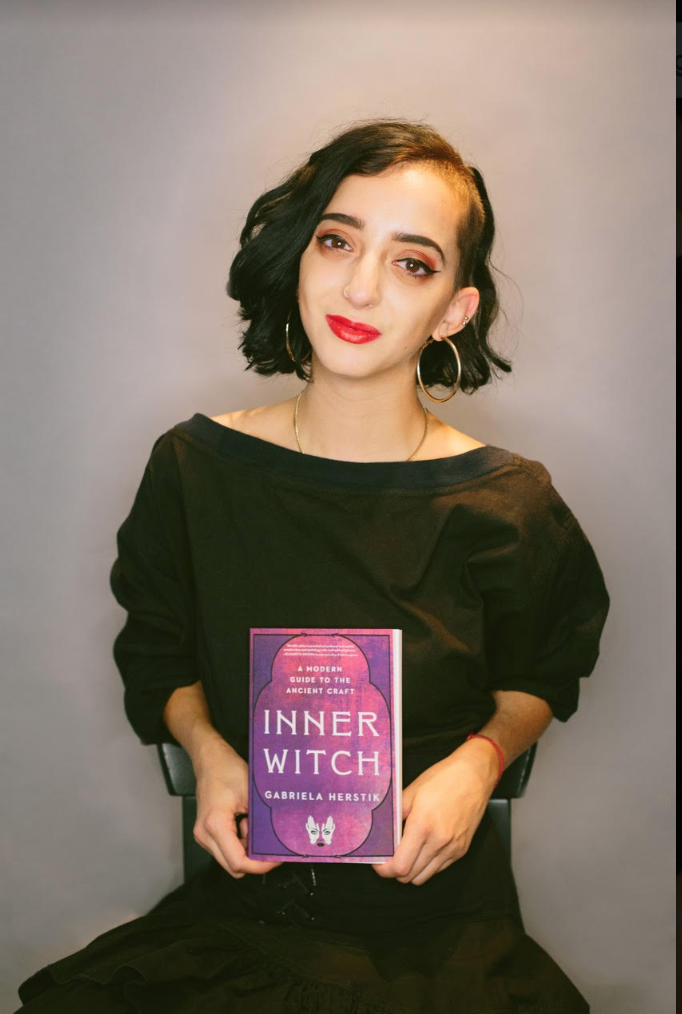
Inner Witch: An Interview With Gabriela Herstik

October 31, 2018

INTERVIEW BY LISA MARIE BASILE

I simply cannot fucking say enough good things about Gabriela Herstik. She’s kind, compassionate, supportive AF, magical, knowledgeable and inclusive. I first “met” her on Instagram, and could sense her wild magical passion through the ether. I now consider her a friend. Her book, CRAFT (the UK version) and INNER WITCH (the US edition) is gorgeous—and it’s even translated into Spanish and on sale in Spain.

She does such a service to the witches among us, and sets such a great example of someone approaching witchcraft ethically and creatively. I’m honored to have sat down and chatted with her here:

LMB: First up: can you tell us a little more about how you discovered your inner magic? What did that process look like—especially because I know you come from a traditionally religious family, and when did you decide you were a witch?

Inner Witch: A Modern Guide to the Ancient Craft
By Gabriela Herstik
Buy on Amazon

Gabriela Herstik: I’ve always been deeply spiritual. I grew up with a Mom who has been into different esoteric practices ( crystals, meditation, yoga, energy) since the 80s. Both my parents are Jewish, and my dad’s a reform rabbi, so I grew up in the framework of that faith. I should also mention I grew up in Johns Creek Georgia- aka the Bible Belt. I discovered witchcraft after getting a deck of oracle cards when I was 11. This led me to another book about witchcraft and suddenly I remembered going to Salem, MA on Halloween three years prior and learning about witchcraft at the museum, seeing a ritual..etc. I knew that I was a witch but still had to go through my bat mitzvah even though I knew I was pagan.

I was so young so my practice has evolved a lot. It got more serious when I left for college and started combining my love of fashion and tarot into a series of blog posts for my then - fashion blog that were looks based off the wild unknown tarot cards. Around this time, I started studying yoga more seriously and taking my practice more seriously. Now I celebrate pretty much every full and new moon, and holiday.

LMB: You write a lot about witchcraft—were you always a writer, or did you become one to express your love of witchcraft? Did they sort of bloom hand in hand?

Gabriela Herstik: I have been writing much longer than I’ve been a witch. I wanted to be a writer in second grade, and I remember loving my schools essay contests. I’m super air sign and always have a million things going on in my head, so writing has always been a form of escapism to me. It helps me get things out and transmute all the junk in my head to something else. My grandma was a writer too, she wrote poetry and a memoir- I didn’t find that out until after she passed away when I was 18.

LMB: When you got the book deal for CRAFT, how did you want to approach the book? Was it important for you to differentiate it in some ways from other books? For one, it’s got a personal streak, and it’s inclusive, and it’s got a focus on fashion, too, which is fresh and exciting.

Gabriela Herstik: Thank you so much! From my own experience as a witch who grew up in the Deep South without much of a community, who really learned from Books, I knew the things that I wanted to include; things I wish I knew! Also, thanks to my column for Nylon, I have a steady stream of people asking me questions about the craft. I knew I wanted to talk about fashion magick (and share my story with it) both because it’s so important in my own practice and because it’s something I don’t see others addressing in the same way. I knew that my publisher and I agreed that I should include tarot, astrology and crystals. Everything else kind of stemmed from my own practice and what I felt was a well rounded approach to what this practice can look like.

LMB: When people think of the Witch, what are they getting wrong today? And what are they getting right?

Gabriela Herstik: I think that people think of witchcraft as a monolith, that it’s all skinny white women waving around sage wands. Witchcraft is rooted in folk magick, found across the world in so many different ways. It’s rooted in indigenous practices, it’s led by POC and other marginalized folks. We’re not all satanic (which has its own misconceptions) and we don’t all subscribe to the notion of being a “white witch” or “black witch”.

I think we’re starting to see a shift in the idea of the witch as someone who is unapologetic in their power, as someone who utilizes magick, as an empowered wo/men who lives consciously and in their fullest incarnation

LMB: I think we both get asked a lot about the intersection of social media and magical living or witchcraft. There’s talk of empty Instagram posts that are “purely” or “only” aesthetic, or revealing sacred altars (which remove the “power). Stuff like that. What do you think about that sort of talk?

Image by Alexandra Herstik

Image by Alexandra Herstik

Gabriela Herstik: I think that to dismiss social media as frivolous or as all bad is really hurtful! Obviously I think, like for anything, boundaries are important. Obviously putting your worth in social media is harmful. But I think that used consciously and with intention, social media can be a way to connect, to learn, to find community. Years ago, I would post photos of my altar and talk about the spells and rituals I was performing. Now I don’t do that. I don’t share photos of my personal working altars, and I don’t share what specific things I’m doing or post photos of that work. I think the things I’m working on and seeds I’m watering are too sacred to share. This is an evolution though, and I think that it’s important for each witch to ask why she’s sharing what she is. Sometimes I post photos of spells as part of the magick- having likes and other peoples interactions infusing energy into the spell. But even then, I won’t share abojt what I’m doing or why. Like anything- this has to be a relationship you cultivate for yourself!

LMB: Let’s talk Dark Venus. That’s your alter ego of sorts—which has her own Instagram account. What prompted you to create that space? What sort of things draws you to the dark? Here at Luna Luna, and in all of my own work, the darkness is a friend, an ally, an inspiration—and I’m driven to it because I don’t believe it’s a synonym for “bad.” How do you approach it? Why Venus?

Gabriela Herstik: So I’d been working with Venus for about a year and some change when this archetype of Dark Venus came to me. I had just begun my exploration with kink and she was like this shining light to me- like if Venus was a dom, If pleasure for her was trasnsmuted through pain. Venus is my matron, so I started working with this archetype by incorporating bdsm into my rituals and I created a shrine for her as well. @Dark___Venus is my “thot account” where I can explore my shadows outside of the public eye. I post about cannabis, sexuality, and just use it as a personal expiration of darkness and self. I am a very positive person but I have hella Scorpio placement (including my moon and north node) so exploding my shadows has always been important to me. My first muse was the death card. So Dark Venus isn’t only a deity I work with, but another aspect of my Self that I get to explore through sexuality and kink and art and instagram! I’m an exhibitionist and think of social media as its own kind of performance art. It’s been really fun and I’ve loved connecting to venus in this way.

LMB: Also, you run FASHION IS DYING, which I adore. Can you talk about your interest and roots in fashion and it’s intersection with magic for you?
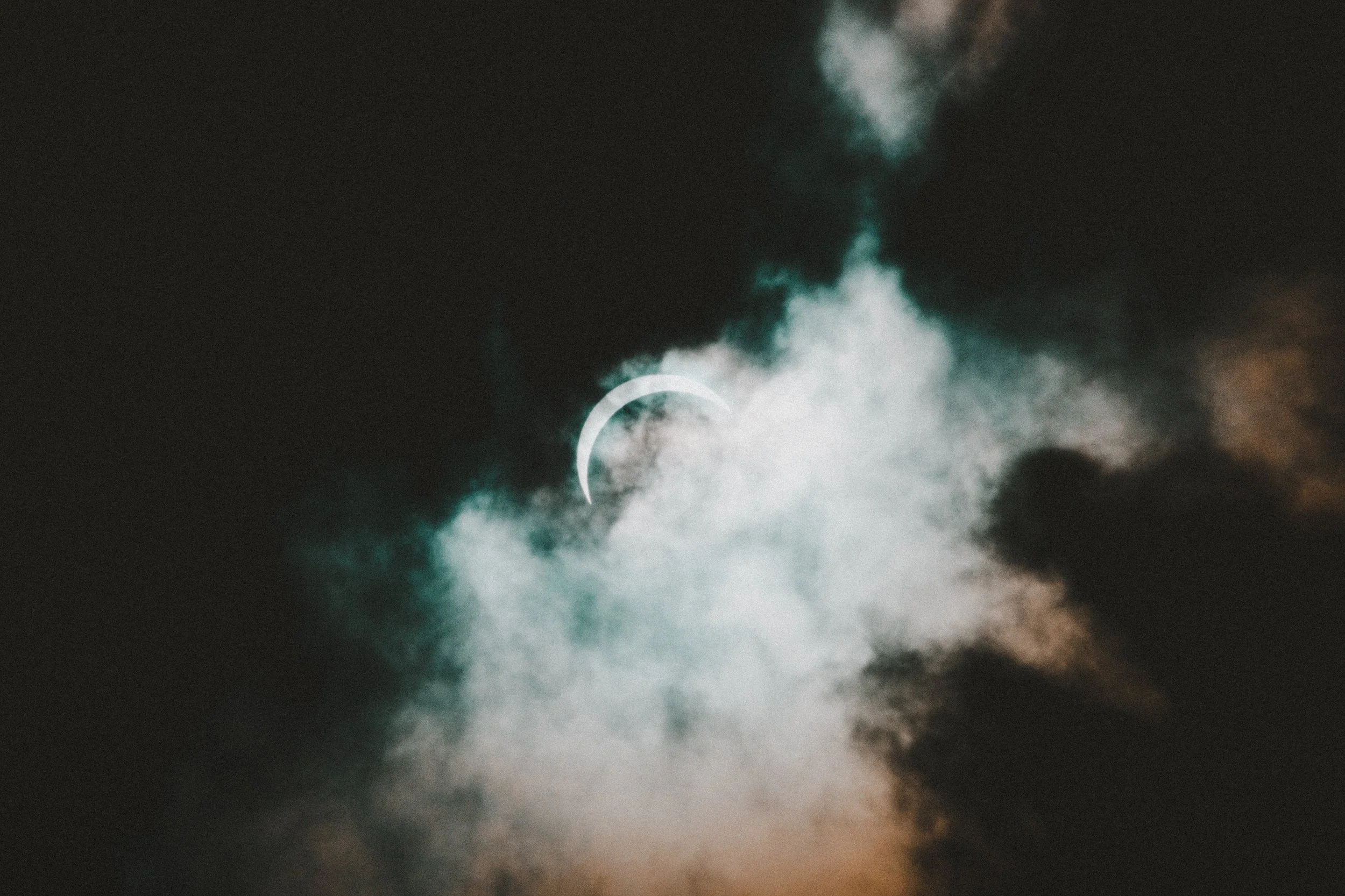
Image by Alexandra Herstik

Image by Alexandra Herstik

Gabriela Herstik: So my background is in fashion writing, which I studied in college. I started a fashion blog ( Breathing Fashion) at 14, and was convinced I would be a fashion editor up until I wrote Craft/ Inner Witch. Five years ago I started a series of outfits based on tarot cards for my blog, and wrote about that. That was when I first started exploring the intersection of spirituality and style. My first pitch and freelance piece was for The Numinous on how the death card inspired my style. Then I started writing for nylon, my first piece for them was how to make your wardrobe actually witchier. Both sides of my family were in the garment industry so it feels really special to connect my spiritual and physical identity in this way. Fashion is Dying is my latest incarnation of this. I do zodiac season style guides and interview really cool voices in the industry and do full and new moon reports and it’s just been really fun. I love the intersection of glamour and identity.

LMB: You live in LA but you have visited NYC recently. Is there a different sort of magic in these cities? A different kind of witch?

Gabriela Herstik: Yes absolutely!! I think NYC is way more witchy and magical in the sense that there’s a huge community and pull on that there. In LA it’s more self-care / wellness, and less magick/ witchcraft. So I think LA is more of like… a wild witch who does shrooms on the beach and has crazy rituals in Malibu and NYC is more of an organized coven or solitary practitioner more rooted in the occult.
LMB: What do you think is the most radical and important thing a person can do to honor and care for themselves today?

Gabriela Herstik: I think it’s to be self-compassionate and to allow themselves to be wherever they’re meant to be. And to choose love. To love deeply and wholly and fully. To make the effort and set the intention to know themselves and honor themselves. To be okay with not being okay and to ask for help when they need it.
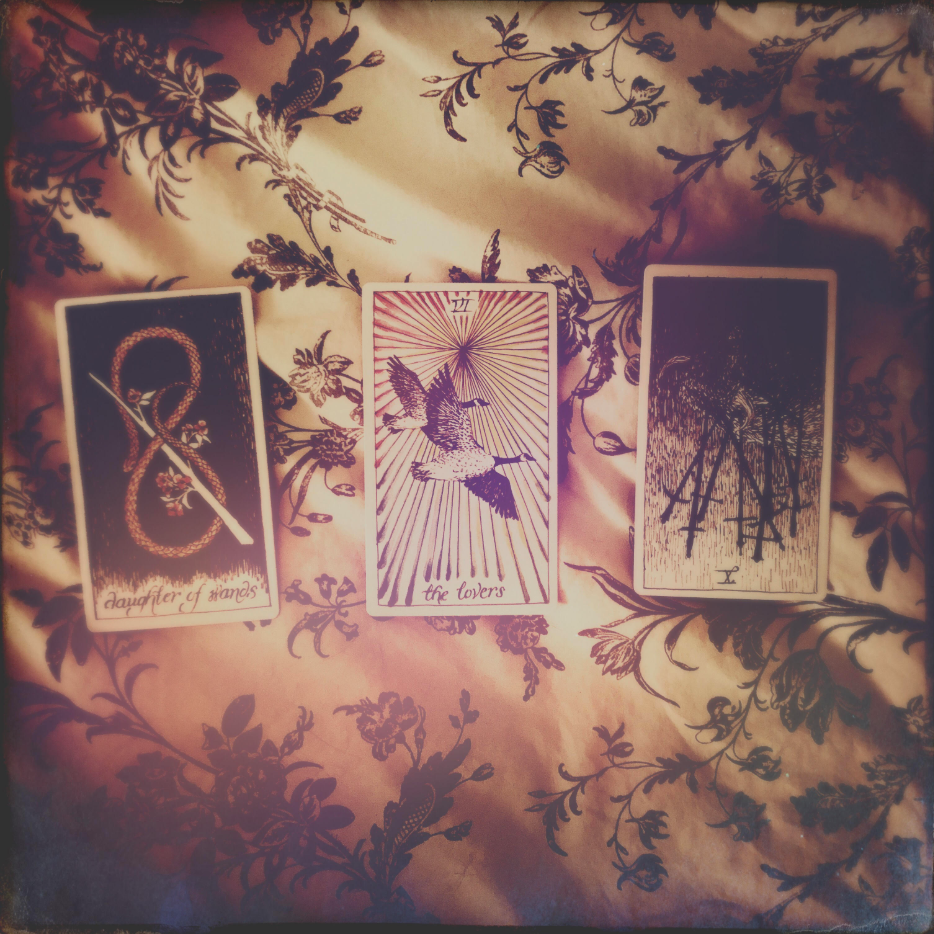
Image by Alexandra Herstik

Image by Alexandra Herstik

LMB: What are some of your favorite books and resources for beginners and seasoned practitioners?

Gabriela Herstik: “Light Magic for Dark Times”, “Witches, Sluts, Feminists,” The Witch Wave Podcast, The Hoodwitch, “Crystal Healing and Sacred Pleasure” my book “Inner Witch,” the local occult section of the library or bookstore, the internet, The School of Witchery online, HOI TV (house of intuitions platform) !!

LMB: Aw, thank you! Can you tell us one secret about the writing process for your book? (I love, as a writer, knowing these little tidbits).

Gabriela Herstik: EXCELL SPREADSHEETS! Figuring out how many chapters I needed to write a month, breaking that down to what each chapter needed to include, and then literally having a spreadsheet of what I needed to write each day to meet my goal. It sounds like a lot but it’s what helped me schedule and have a social life! Like I could go to brunch but knew I had to write the rest of the day and knew what I needed to get done.

LMB: Where is your book available, and what are your figure plans? Do you have any events coming up?

Gabriela Herstik: It’s available everywhere in the US, UK and Spain! I’m doing an event with Laser Kitten on Halloween, and have an event on November 17th in honor of the dark goddess, which I’ll be releasing details for soon. I just had a bunch of events in NYC so I have to plan more for this upcoming season!

In Halloween, Sex Tags Halloween 2018, halloween
Comment
610719053087f45ee5ec27603fee1810.jpg

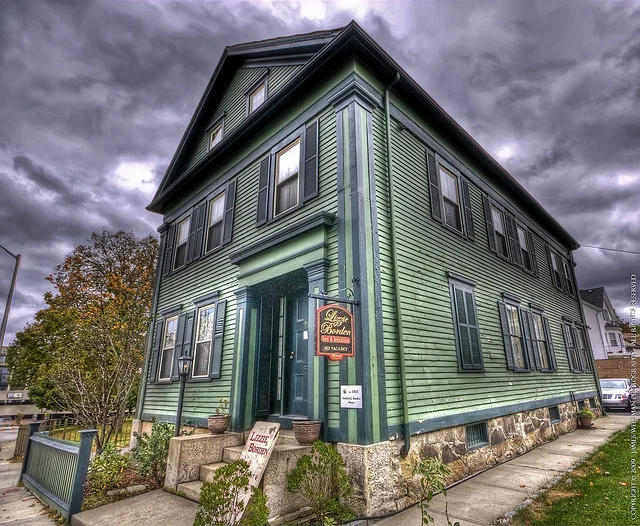
Communing with Ghosts: Staying Overnight in the Lizzie Borden House

October 31, 2018

In the dark, Ben asked us to go around the room and introduce ourselves to assure the children we were there to play with them and meant no harm. Ben told them we brought them two new toys for them to play with in addition to all the other toys in the chest in the corner room. Ben had been stockpiling the chest for a couple years so that the children would have something to play with at night. Guests who have stayed in this room in the past have reported the toys moving or rocking, children’s laughter and footsteps, and playful tugs to the corners of the sheets as they sleep.

Read More
In Halloween, Occult Tags Halloween 2018, Halloween
Comment
amy-shamblen-1087889-unsplash.jpg

A Hex, and Other Poems by Sophie Allen

October 31, 2018

BY SOPHIE ALLEN

a hex

the spell, to be read 

under a waxing crescent moon:

burn, burn— 

& it starts with a cauldron— no, fuck 

a cauldron— you’ll want a pint of ben & jerry’s

(i like phish food)

& to light a candle: look for one left over

from xmas, probably called something cute

like sparkling cinnamon snow

or seasonal depressive disorder

or spiced white cocoa

remember specifically to use 

a scented one so the burnt-plastic

smell of your melting polaroids

(from the yellow camera he bought you)

is masked by a pleasant winter wick.


it has stormed

—after the witches

for hours, and i am reminded of shakespeare,

of witches’ brews, of something wicked 

this way comes. closer than before, 

onyxing over blue the air smells of rain. 

gull-pocked clouds swirl over my head,

ozoned and heavy.  i shiver. 

soaked to the bone, i sting my soles on puddles

and pavement. thunder cracks and the sky streaks

white. it opens up again, fresh raindrops 

come like shadow, so depart, dissolving into heat

and salt air. they burn my lip, split between teeth,

trickle bloody business down my chin. 

i am going to be fine. 


mad honey

the mothman visited me

& we talked beside the rhododendrons, or 


more specifically, we discussed 

the way the moonlight fluttered

through his paper wings & i saw

the veins, a flowchart, the way 

rhododendrons can be hybridized—

caroline, a pink flower named for a daughter. 


Sophie Allen is a student at the University of Massachusetts Amherst. She once worked in a haunted convenience store. Find her on Twitter: @sallentxt.

Please note that the italics in "it has stormed" are from Macbeth. 

In Occult, Halloween Tags Halloween 2018, halloween
Comment
jacalyn-beales-589600-unsplash.jpg

How to Cast a Spell & Other Poems by Sabrina Rose Nelson

October 31, 2018

BY SABRINA ROSE NELSON

How to Cast a Spell

Winter midnight, trickle of

muted moonlight, more like

shadow, still in skinned-knee reverence,

here is how you cast a spell:


Cauldron open face up on the desk

flecked with musk and mugwort.

Stir in sea water, honeycomb,

gold striated stones. Invoke:


Air to drink into parched lungs,

Earth to root wet soil deep,

Fire to burn noise, wreckage, and

Water to guide soft slippery excavation.


Take three deep breaths:

Consecrate this page to heal and to shed,

may the spell I now weave

honor all that has been bled


By water and salt rock, by smoke and scent,

by heart and outpour, conjure up

ocean wild, wind blown, eyes wide

unafraid mystery, born deep in the belly


of an active volcano:

It lives.

It breathes.


For as it will,

so mote it be.

Grandmother

Muck root woman.

Garden woman.

Vivid green, pulsating life woman.

Always feed the ducks kind of woman.

Waxing moon woman. 

Vanilla and moss scented woman.

Sweet earthy scent that brings me home woman.

Feet on the grass woman.

Kitchen witch woman.

Late summer night woman.

Sunflower woman.

Blackbird woman.

Ocean wild, eyes wide, wind blown woman.

Chin first, matted fir, tree sap woman. 

Fire belly woman.

Appetite woman.

Heart shake woman.

Earthquake woman.

Know it in your bones woman.

Raw skin woman.

Moon heavy woman.

Too soft, woman.

Too much, woman.

Buried grief woman. 

Blood worn woman.

Marrow sucked woman.

Goodbye woman.

My woman.

Healing

Inanna, Isis, Lilith, source,

root planted earth deep,

I offer up Magdalene red,

deep ruby oozing down

to the once razed earth below me.

She swells-

moonlit lush singing sweet rebirth,

full and unashamed in her potency.


In her winter: violent desecration,

soil burns devastation.

Violet blossoms sacked,

garnets turned to blades.

The antidote: bleed medicine to core,

lung deep, seep down and root.


Enveloped in the sweet, musky

earth cauldron, I see:

eyes a flooding river,

root to earth,

heart laid bare in her warm night.


Sabrina Rose Nelson is a poet, kitchen witch, and recent sociology graduate whose work now revolves around writing and holistic wellness. Her work has appeared in Bitch Magazine and the anthology I AM STRENGTH, among other places. Her writing is deeply influenced by the women in her family. To her, writing is a way to alchemize grief and shame into beauty, connection, and healing. Originally from the rainy and magical Pacific Northwest, she now lives in cozy New England with her partner. Find her on Instagram at @xosabrinarose.

In Halloween Tags Halloween 2018, Halloween
Comment
nathan-wright-669708-unsplash.jpg

Old Grandma: A Ghost Story

October 31, 2018

BY SARAH FADER

When my son, Ari, was three years old, he started seeing things. Now, they weren’t hallucinations, but he is a spiritual child and is highly intuitive. One day, in our brownstone in Brooklyn, Ari was trying to sleep. He had trouble getting himself to bed and seemed preoccupied. He was looking in front of himself as if there was someone or something standing there. I asked what he was looking at and he said “old grandma is here!” I said “do you mean grandma?” and he replied “no, old grandma! She’s wearing black and white and she visits me sometimes.” I immediately knew that he was looking at a ghost. I wasn’t creeped out, because I believe in spirits and I believe in ghosts. I’ve never seen anything myself, but I know that my child is very connected.

I’m an intuitive individual. I do read tarot and believe in things that are “new age-y,” so I wasn’t surprised that my child inherited that quality. In addition to Ari seeing this “old grandma” person, I noticed some strange things about my house. One of the things that happened during that time period is that when our house became messy, objects would fall on the ground randomly, and would often shatter on the floor. For example, there was one instance where there was a pile of papers on the table in the kitchen and a mug was on top of them. The mug wasn’t in a precarious position, but I saw it fall on the floor and break. I knew that this was the result of a spirit, and I connected it to the woman that Ari was seeing. I had my friends mother come over and see if she detected any ghosts because she is Brazilian and comes from a background that prompted her to believe in ghosts as well. I find that cultures outside of the United States are more open to these things.

I decided to ask her if she’d check it out. There were two doors that lead to my office. During the evening, the doors would abruptly slam shut. Sometimes, they’d do this during the day, but it was mostly at night. I asked my friend's mom if she’d take a look in the office. As soon as she approached the office, the doors slammed in her face and almost hit her nose, I knew that something was up. The doors weren’t closing because there was wind blowing or anything like that. They were randomly shutting and I was extremely confused. My friend's mom said that this “old grandma” person was a Victorian lady, she suspected. Rather, I told her that I thought it was a Victorian woman because that’s what I picked up on using my own intuition. Plus, I knew that the brownstone was old. My friend's mom talked to this “old grandma” person and found that she was there because she wanted to protect my kids.

Upon discovering this piece of information, I was not afraid of her. I still found it annoying that she’d knock things over and break them. Another thing is that she didn’t want to leave our house. Old grandma was upset when the house was messy and would break things frequently to express this to us. I asked my friend's mom what to do to fix this situation, and she said that the old woman was stubborn. “Old grandma” wouldn’t leave.. She wanted to look after the kids, and for me to keep the house clean. I’m disorganized and messy; I have ADHD, so this is understandable. My ex-husband was the cleaner of the relationship, so he took care of that more often than I did.

Old grandma visited Ari for years. I used to ask him about old grandma periodically because I wanted him to remember her. Now, he’s ten years old. I asked him about her the other day to see if he recalled anything. He doesn’t remember the story at all, which is interesting. We’ve since left Brooklyn, but I believe that “old grandma” is still there, hanging out on the third floor of my old home on Bergen street. If you’re reading this, old grandma, hello! Thank you for influencing us to keep our house tidy. The lesson that I want readers to take away from this is that if you’re living with a ghost, you don’t need to be afraid. They may not be harmful. They might actually be there to help you (or, in my case, remind you to clean.)


Sarah Fader is the CEO and Founder of Eliezer Tristan Publishing Company, where she is dedicated to sharing the words of authors who endure and survive trauma and mental illness. She is also the CEO and Founder of Stigma Fighters, a non-profit organization that encourages individuals with mental illness to share their personal stories. She has been featured in The New York Times, The Washington Post, The Atlantic, Quartz, Psychology Today, The HuffingtonPost, HuffPost Live, and Good Day New York. Sarah is a native New Yorker who enjoys naps, talking to strangers, and caring for her two small humans and two average-sized cats. Like six million other Americans, Sarah lives with Bipolar type II, OCD ADHD, and PTSD. Through Stigma Fighters, Sarah hopes to change the world, one mental health stigma at a time.

In Halloween, Confession Tags Halloween 2018, halloween
Comment
Screen Shot 2018-10-30 at 11.05.57 PM.png

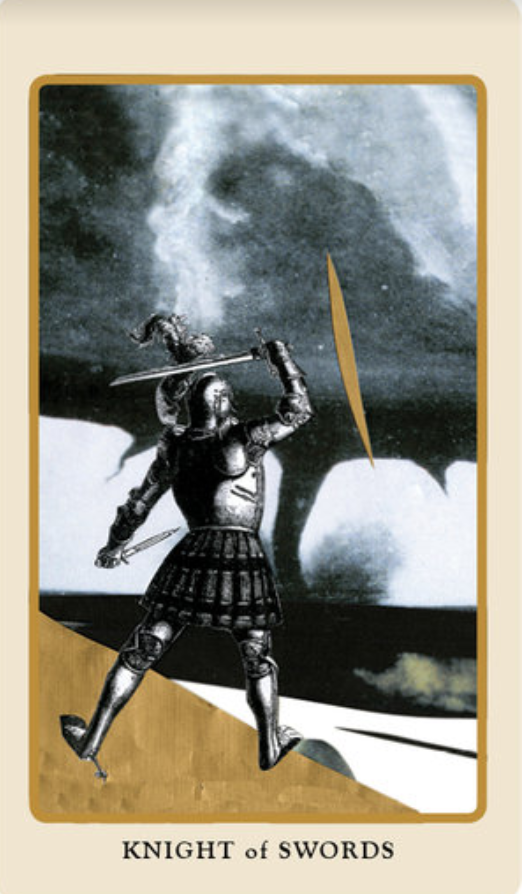
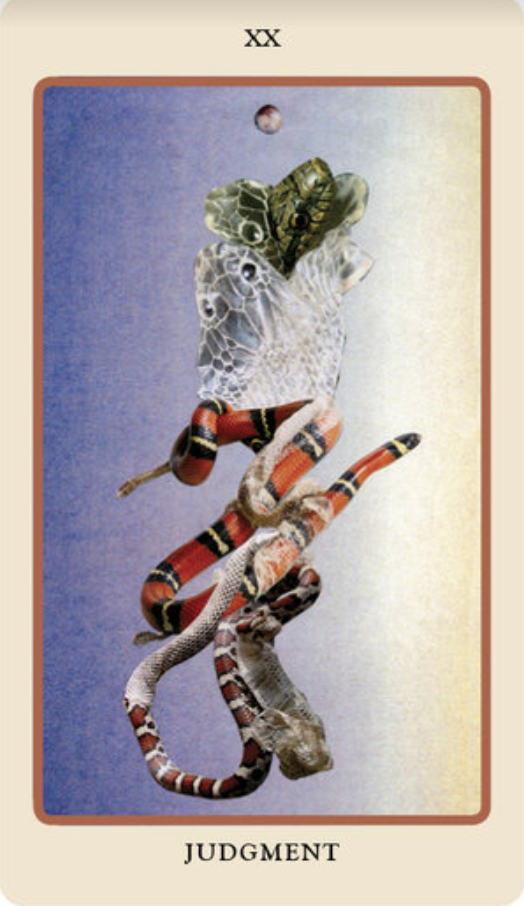
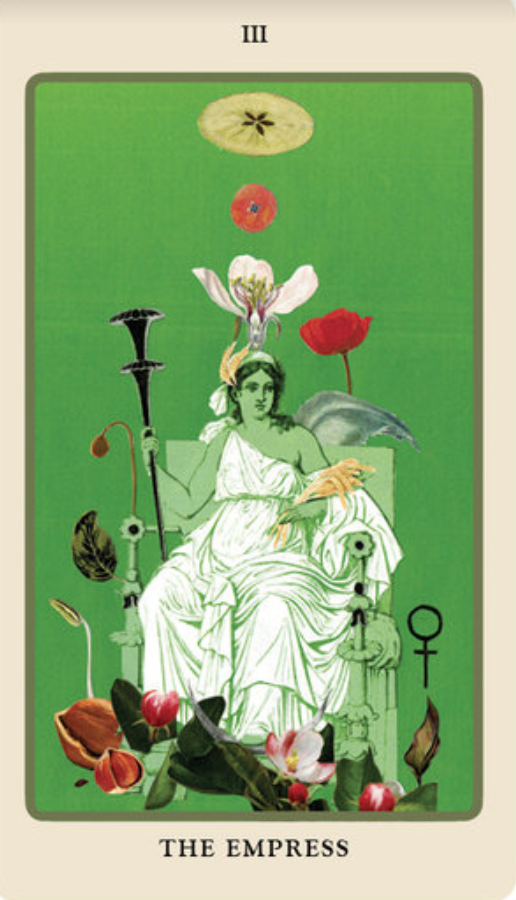
The Spolia Tarot Deck: A Review

October 31, 2018

BY SELENA CHAMBERS

[
To get a little more behind the scenes of Spolia, stay tuned to my interview with creators Jessa Crispin and Jen May here.]

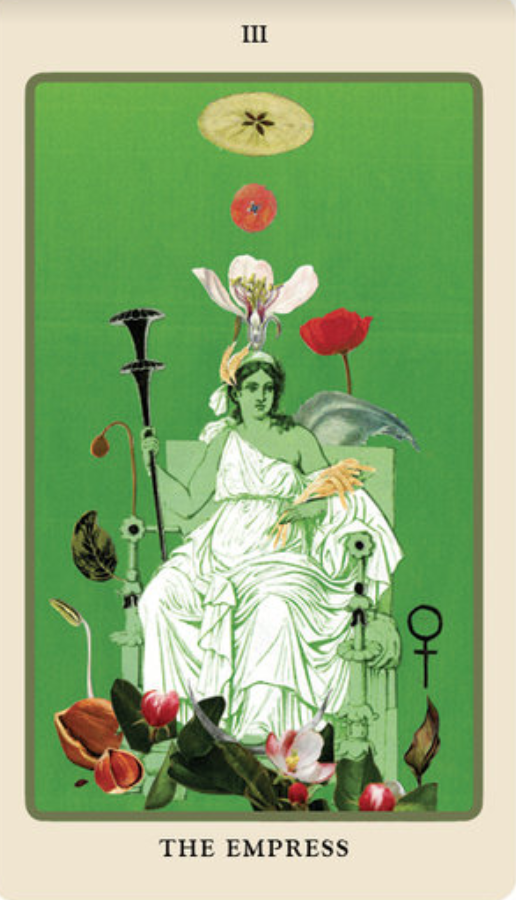
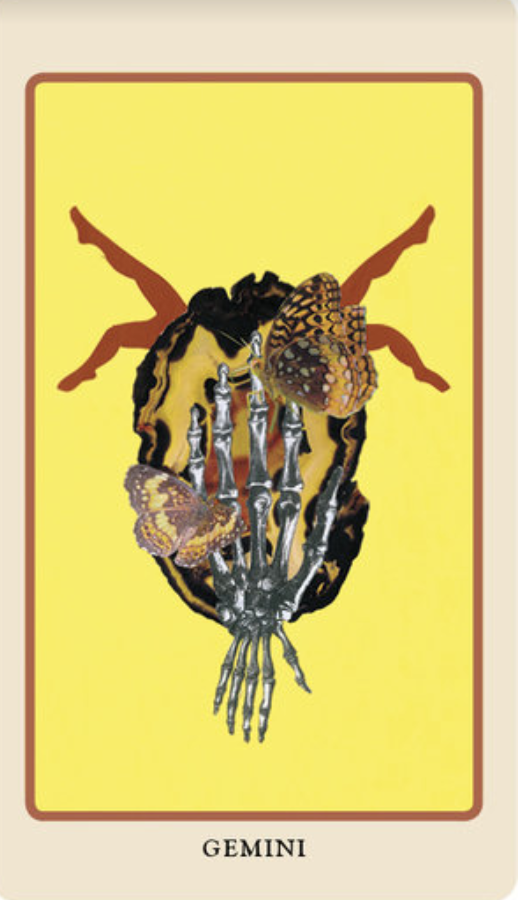
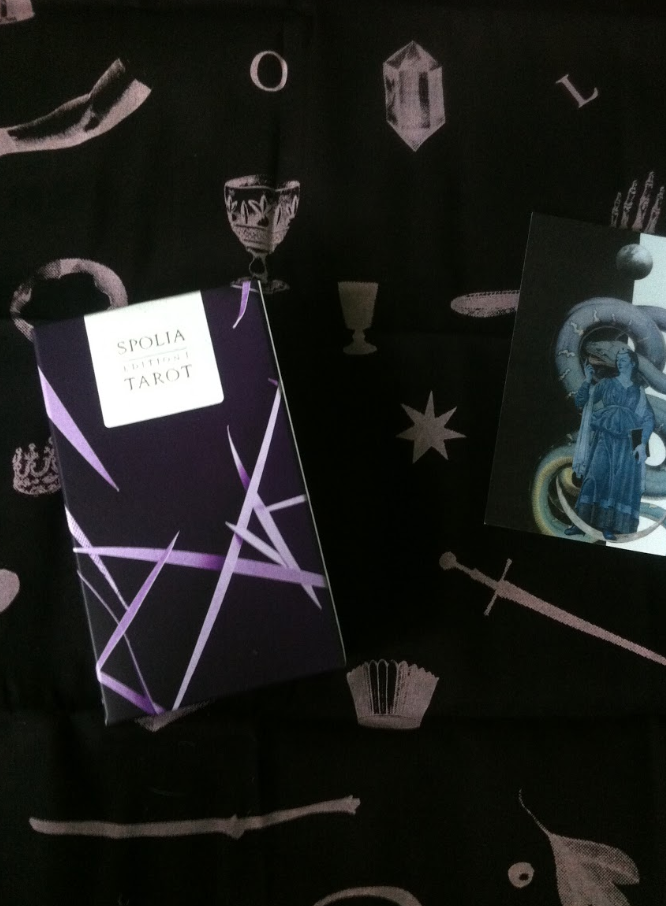
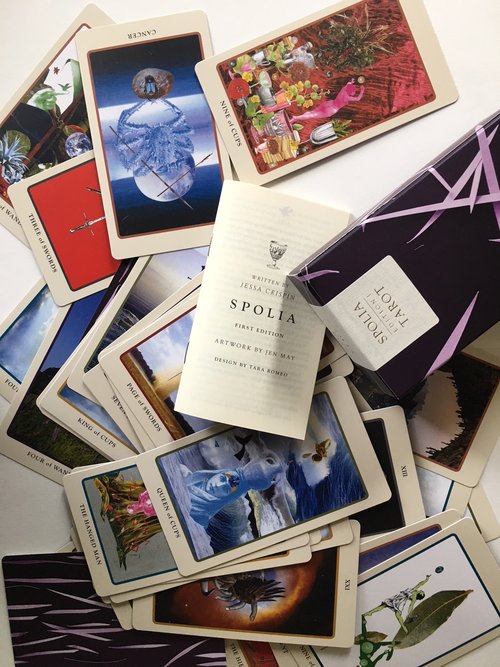
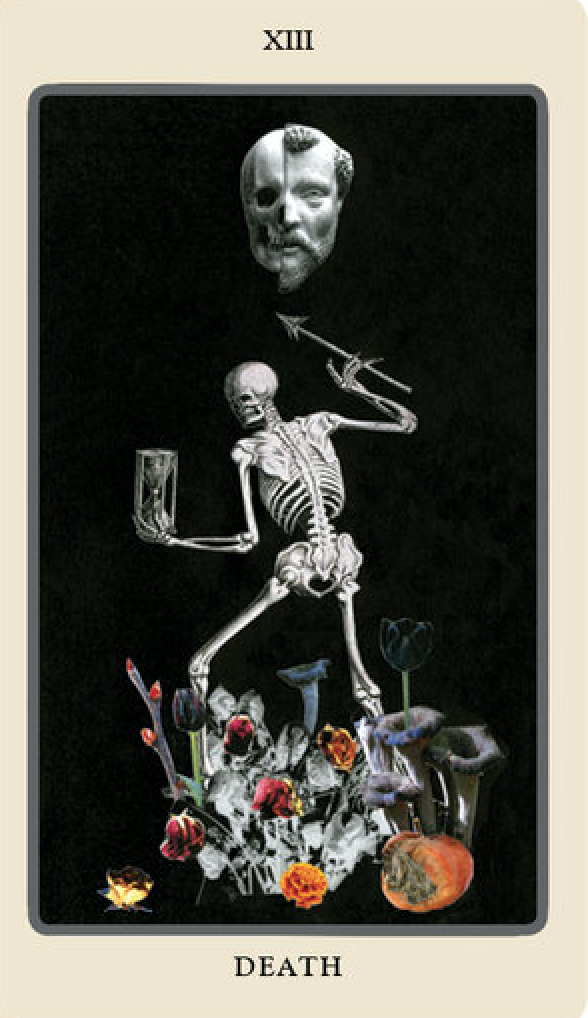
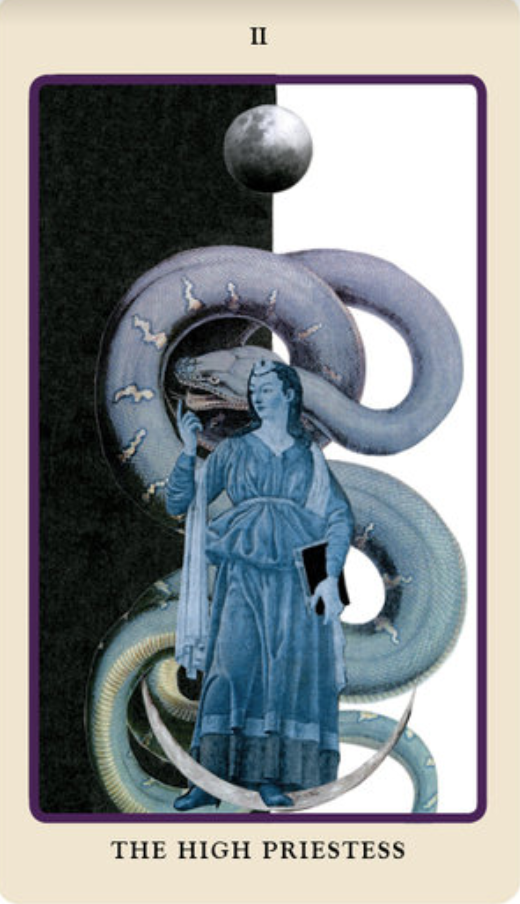
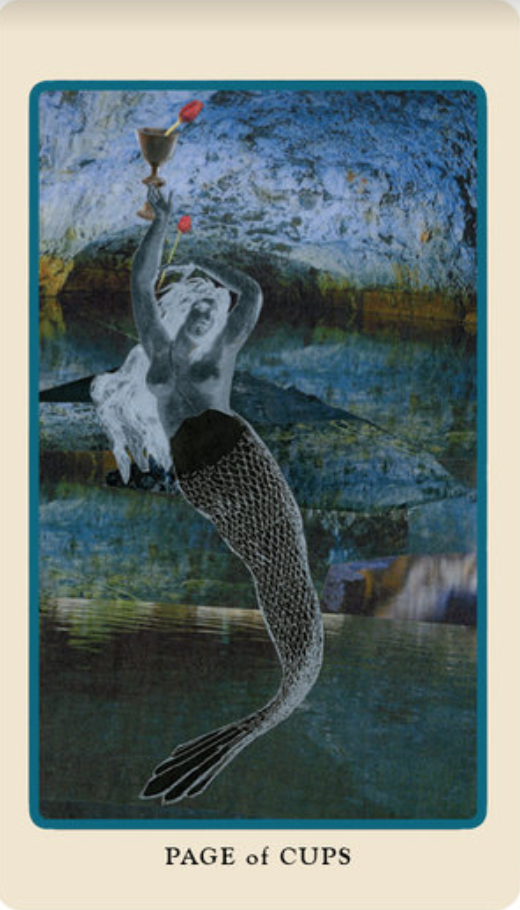
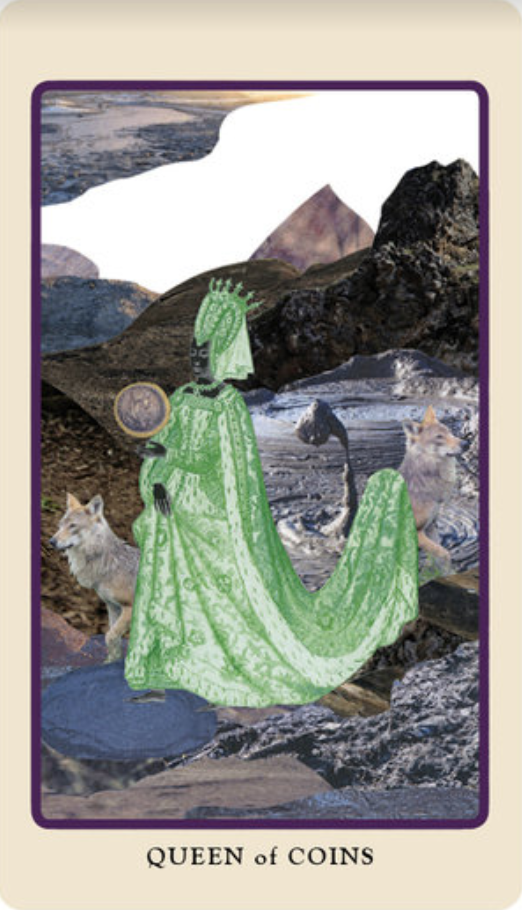
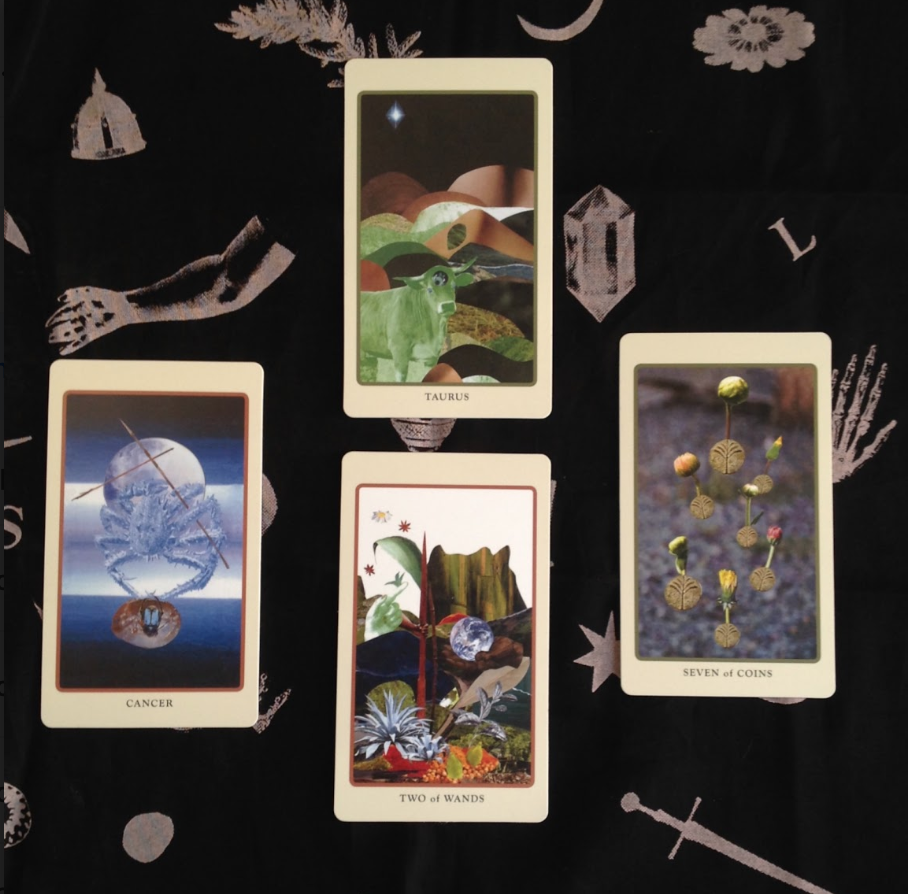
Jessa Crispin and Jen May’s Spolia Tarot Deck is a collaboration that, after three years in the making, was Kickstarted and quickly funded last December. A modern riff on Tarot’s history, it remixes the Raider-Waite-Smith system with that of the Italian Minchiate and Sola Busca decks, allowing readers to explore 94 fully illustrated (including elemental and zodiac) cards. “Spolia” means building with rubble, a concept that resonants throughout the deck. It also encapsulates perfectly what has become Tarot’s sole purpose:  it’s not cartomancy, it’s therapy. Tarot gives you the tools to distract a busy, downward spiraling mind with narrative (and because it’s all about you, your ego shuts up for once to tune in) and guide it through the psychic wreckage towards clean-up and reconstruction. An uneasy task right now with the constant demands to never have dead air on our social media, further compounded by the constant dumpster fire headlines and the IV stream of fear and anxiety they feed. 

Screen Shot 2018-10-30 at 11.05.57 PM.png
Screen Shot 2018-10-30 at 11.06.03 PM.png
Screen Shot 2018-10-30 at 11.06.08 PM.png
Screen Shot 2018-10-30 at 11.06.18 PM.png
Screen Shot 2018-10-30 at 11.06.24 PM.png
Screen Shot 2018-10-30 at 11.06.30 PM.png
Spolia deck_Credit SpoliaTarot.com Jessa Crispin and Jen May.jpg
Screen Shot 2018-10-30 at 11.02.07 PM.png
Screen Shot 2018-10-30 at 11.02.25 PM.png
Screen Shot 2018-10-30 at 11.02.32 PM.png
Screen Shot 2018-10-30 at 11.02.40 PM.png
Screen Shot 2018-10-30 at 11.02.54 PM.png
Screen Shot 2018-10-30 at 11.03.05 PM.png
Screen Shot 2018-10-30 at 11.06.03 PM.png
Screen Shot 2018-10-30 at 11.06.18 PM.png
Screen Shot 2018-10-30 at 11.05.57 PM.png Screen Shot 2018-10-30 at 11.06.03 PM.png Screen Shot 2018-10-30 at 11.06.08 PM.png Screen Shot 2018-10-30 at 11.06.18 PM.png Screen Shot 2018-10-30 at 11.06.24 PM.png Screen Shot 2018-10-30 at 11.06.30 PM.png Spolia deck_Credit SpoliaTarot.com Jessa Crispin and Jen May.jpg Screen Shot 2018-10-30 at 11.02.07 PM.png Screen Shot 2018-10-30 at 11.02.25 PM.png Screen Shot 2018-10-30 at 11.02.32 PM.png Screen Shot 2018-10-30 at 11.02.40 PM.png Screen Shot 2018-10-30 at 11.02.54 PM.png Screen Shot 2018-10-30 at 11.03.05 PM.png Screen Shot 2018-10-30 at 11.06.03 PM.png Screen Shot 2018-10-30 at 11.06.18 PM.png

This is something Jessa Crispin certainly understands, who in addition to Creative Tarot, is the author of such cultural criticism as The Dead Ladies Project and Why I Am Not a Feminist: A Feminist Manifesto. I’ve been a huge fan of her work for many reasons, but perhaps most significant here is its interest in asking more questions than providing answers about difficult issues, because in many cases answers aren’t as absolute as we’d like them to be. Her work urges readers to come to their own conclusions rather than just lap up whatever ad hoc interpretation the expert of the day wants to serve you. Which is perhaps why her Creative Tarot became my gateway to considering card reading as a serious pursuit. Not only did it present me with a system divorced from what had been to me a superstitious context, but it honed in—like much of her writing does—on the only religion for which I have ever felt true devotion—Art.

Creative Tarot is a celebration and demythologization of the creative life, and the Spolia deck is a broader, integrated extension of that.While Spolia isn’t new-agey, witchy, or remotely woo-woo, it is Hermetic. Based on six years of research, the deck encompasses numerology, astrology, alchemy, world mythology, art and literary history, as well as the symbolic language of flora, fauna, and minerals. It is very much about reclaiming intellectual spiritualism, when art and science worked together to find the seat of the soul. By using esoteric systems like alchemy—whose seeming sorcery stemmed from the integrating creative explorations with those of the natural world— Spolia provides a creative pathway that doesn’t just lead to art making, but to the reinvention of our more authentic selves.

All of the above could be a lot to package within one image, but the negative space of Jen May’s sparse and vibrant compositions do as much heavy lifting as the figures acting out their meaning. A lot of this has to do with color— Emerald Green as Earth, Royal Blue as Water, Black as Air, and Cardinal Red as Fire—which allows for more cross-referencing among the trumps and pips beyond the usual numerology and elemental associations. Of course, color theory and tarot have always been something of an alchemical marriage, but the way it is integrated here in Spolia reminds me more of the bold, experimental studies of Ithell Colquhoun’s Taro as Color than of Patrica Colman Smith’s pastel colorblocks.

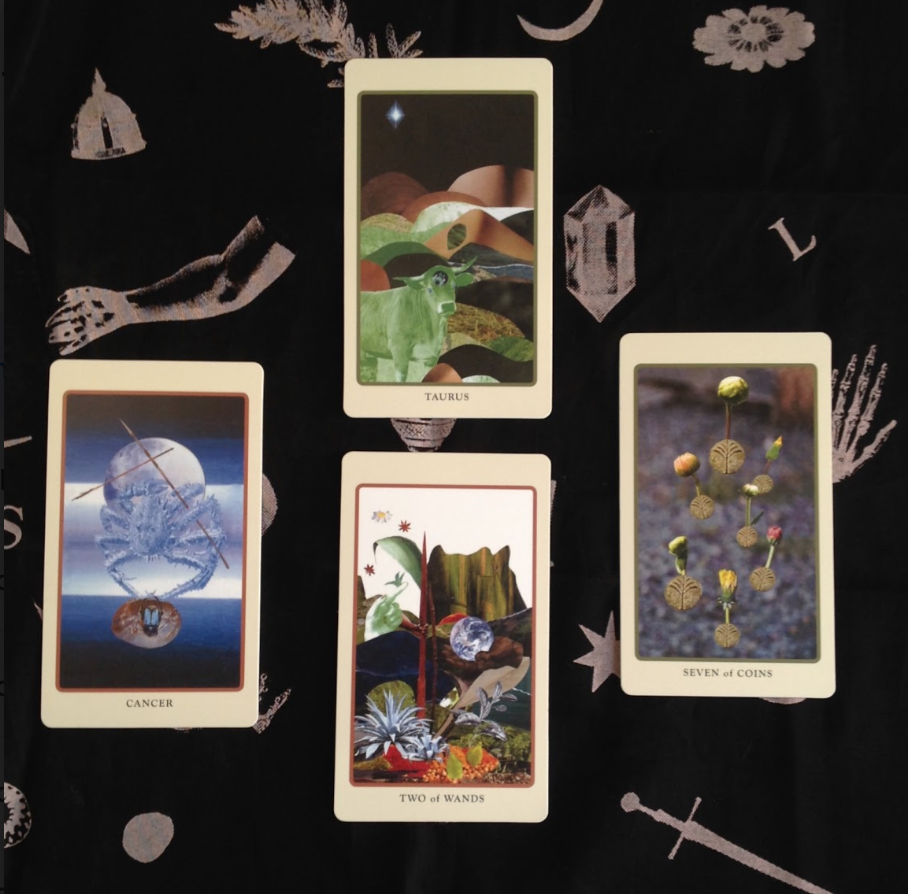
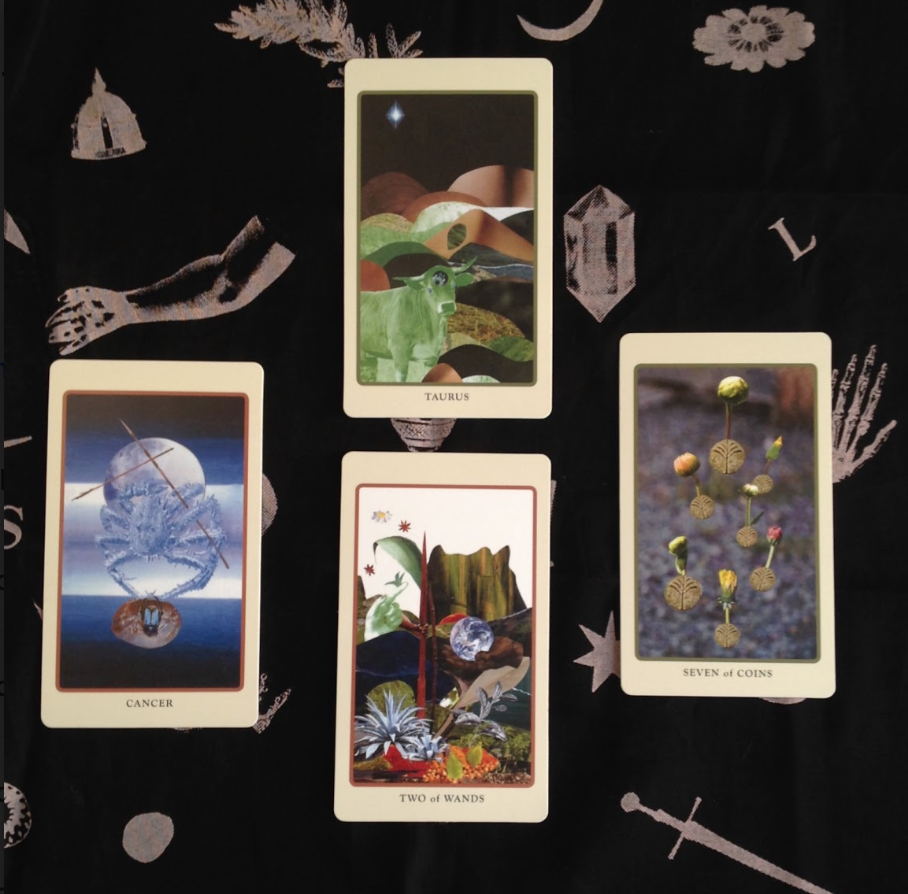
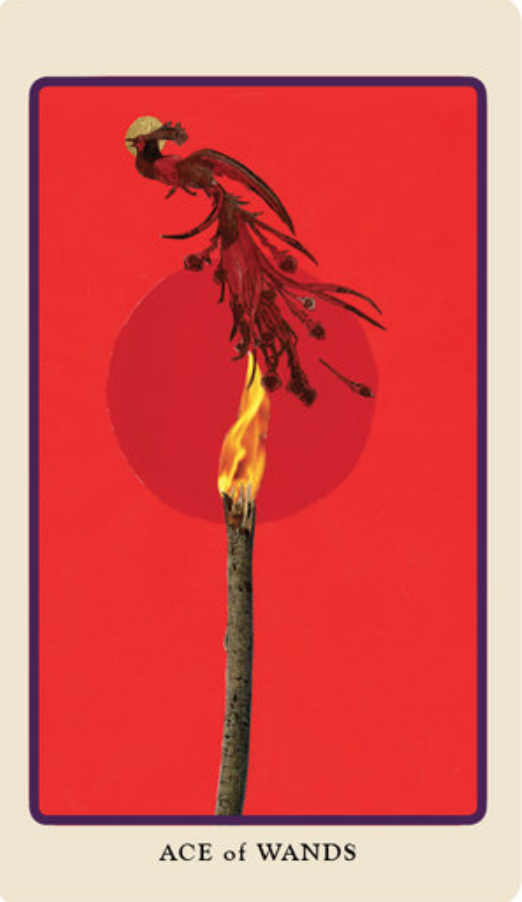
The Aces establish these Fauvist codes, and the spectrum immediately unfolds throughout each suit starting with the 2s. In 2 of Coins, the green is concentrated on the neverending goal of juggling Saturn and Jupiter, while the expanding blue ocean in the background indicates a need to control emotions. Pink is used in the 2 of Cups to mix the fire of passion and decadence into a emotional relationship, bringing abundance and balance. 2 of Swords uses a bit of blue to indicate the presence of intuition in an otherwise bleak space of logic and reason in which decisions need to be made.

Readers familiar with RWS will not have trouble grounding themselves within Spolia; however, there are some significant diversions that might actually give you a better understanding of the Major Arcana’s universalities. For example, in the RWS deck, there are a few cards that are visually connected—The Lovers and The Devil; The Wheel of Fortune and The World—that are severed in the Spolia deck. I found this especially significant as these connections never really jived with me, especially with the emphasis on Primordial Sin in the Lovers and the Devil. In Spolia, the Lovers card celebrates absolute pleasure while the Devil focuses on compulsive consumption. With the Lovers divorced from Primordial knowledge, and as such divorced from the Devil, I was able to understand these cards more. The Devil especially drove home a whole new meaning for me with its allusions to Saturn Devouring His Son that came to involve mentor or familial relationships in a much more nuanced way than the bondage metaphor found in RWS.

And while I feel these cards break with the Primordial Sin parallels, they still are tied with a sensorial symmetry through overwhelming feelings. In The Lovers, it is a positive overwhelming sense of infatuation and pleasure which can be as much within the mind as within the heart. But if you loose your grounding, that same emotion, if not channeled right, could become a whirlwind of anxiety and misery.

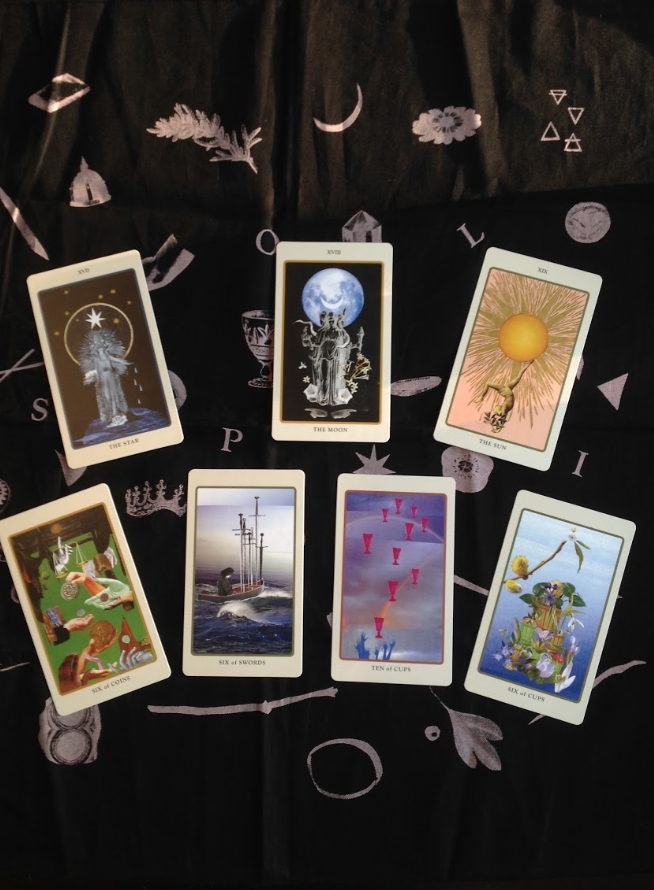
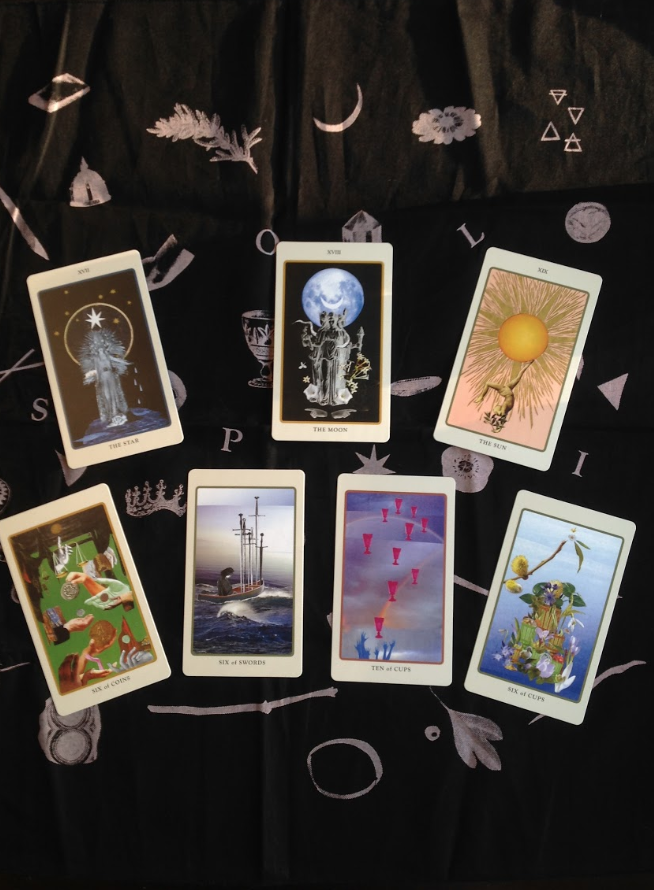
Some other great tweaks: The Hierophant combines the Babylonian pageantry to what has been a solely Catholic representation of spiritual ambition. In mixing ancient and active religion with elemental harmony, it shows how difficult, worthy, and ephemeral the goal of spiritual perfection is. The Temperance card has reinstated the Hermaphrodite into their rightful reign within that card to illustrate the integration of opposites to make something new. The Star has added poignancy through the casting of Marchesa Luisa Casati, which transforms the introspective/coming home interpretation into standing in the world as exactly who you are. My favorite change has to be with The Moon, where the barking dogs and crawling crustaceans are shoved aside for the triple-faced goddess Hekate to rule the pathways, emphasizing the key’s importance of needed shadow work for fulfillment, integration, and transformation.

The pips may be too numerous to go into in great depth, but I especially appreciate the natural symbiosis of creation with the other necessities and phases of life, and the brutal honesty these cards alongside Jessa’s personal white book interpretations present. I have often found within Tarot too much polite advice, and sometimes I need cards to look like how the situation really should feel. Like when I feel a phase of my life has sucked me dry and I want to run away, I don’t want to be comforted by a nice family all packed up to go on a neat trip in the Six of Swords. I need to be confronted with a melancholy woman out to sea, alone with only her choices. I need to be able to identify with the iconography as much as possible, and just as the absence of a man steering a ship for a mother and her child has done wonders for how I read the Six of Swords, so does the absence of any children or visual implications of a nuclear family (10 of Cups) make it easier for me to relate as it is closer to my own interrelationship dynamics. In fact, many of the cards opt for more abstraction than figurative representation, and it really does drive home the deeper contexts faster. In the Six of Coins, the beggar cards and their patron are replaced by a network of hands that blur the line between giving and taking, raising the question about economic and emotional exchange.

And while all of this is very serious, the deck doesn’t get lost in its dogma thanks to the presences of pop-cultural figures alongside the historical. John Wick is connected to the Knight of Coins; Mary Todd Lincoln takes on our anxiety in the Four of Coins; and Lili’uokalani teaches us about the veracity of love as the Queen of Cups.

The extra cards were a little harder for me to get behind at first as, despite having several decks, none are Minchiate. Personally, astrology isn’t my strong suit. The Little White Book offers wonderful meanings for the cards, but no instructions on how they were envisioned to be used. I played around with integrating them into my normal spreads until I finally read about zodiac correspondences with the trumps and began treating them like court card supplements to the Major Arcana. Sometimes, but not always, then when a zodiac card would appear in a spread, it would often be next to its corresponding key. I would take that as pointing to the personality or mindset I needed to channel the card. For example, I needed to adapt a tempered Libra state of mind to get closer to Justice’s purpose. But sometimes that could get muddy, as in one spread, the extroversion of Leo seemed antithetical to the patience needed for Strength. 

The other route I began to explore with the astrological cards was using them to indicate time, with each card standing in as signifier for the month, or even for new moons and full moon readings. If you are someone much better versed in the nuances of astrology, I am sure you could have a field day with various constellation and horoscope spreads. But for now, this is how I’ve come to contend with it.

The elements have been a bit easier for me. When they come up in readings, I feel like they are pointing to what is lacking or in abundance despite the pattern of suits in the spread. I also enjoy using them as signifiers for Mind, Body, Head, and Spirit spreads.

I’ve been getting to know the Spolia Tarot Deck for around seven months now, and it has never failed to shoot straight, to take me down personal plot twists and turns, and ultimately help me navigate what is a pretty anxiety-driven psyche. I learn new things from the cards’ symbolism every spread, which encourages me to go even further into my own study For the most part, it is my go-to deck, and I am sure it will become so for everyone who invites it into their practice.

To purchase the deck with manual, check out their website HERE.


Selena Chambers writes fiction and non-fiction from the swampy depths of North Florida. Her work has appeared in such publications as Literary Hub, Luna Luna, and Beautiful Bizarre, all with an emphasis on women creatives. She’s been nominated for several awards including a Hugo and two World Fantasy awards. Her most recent books include the weird historical fiction collection, Calls for Submission (Pelekinesis), and the anthology Mechanical Animals (Hex Publishing) co-edited with Jason Heller. Learn more at www.selenachambers.com or Twitter: @BasBleuZombie.

In Halloween, Occult Tags Halloween 2018, Halloween
Comment
Screen Shot 2018-10-30 at 11.02.07 PM.png

An Interview with Spolia Tarot Creators Jessa Crispin & Jen May

October 31, 2018

BY SELENA CHAMBERS

Jessa Crispin and Jen May’s Spolia Tarot Deck is a collaboration that, after three years in the making, was Kickstarted and quickly funded last December. A modern riff on Tarot’s history, it remixes the Raider-Waite-Smith system with that of the Italian Minchiate and Sola Busca decks, allowing readers to explore 94 fully illustrated (including elemental and zodiac) cards. Based on six years of research, the deck encompasses numerology, astrology, alchemy, world mythology, art and literary history, as well as the symbolic language of flora, fauna, and minerals. 

It is very much about reclaiming intellectual spiritualism, when art and science worked together to find the seat of the soul. By using esoteric systems like alchemy—whose seeming sorcery stemmed from the integrating creative explorations with those of the natural world—Spolia provides a creative pathway that doesn’t just lead to art making, but to the reinvention of more authentic selves. It has quickly become my go to deck, for reasons I write about here, in my review.

View fullsize Screen Shot 2018-10-30 at 11.02.07 PM.png
View fullsize Screen Shot 2018-10-30 at 11.02.25 PM.png
View fullsize Screen Shot 2018-10-30 at 11.02.32 PM.png
View fullsize Screen Shot 2018-10-30 at 11.02.40 PM.png
View fullsize Screen Shot 2018-10-30 at 11.02.54 PM.png
View fullsize Screen Shot 2018-10-30 at 11.03.05 PM.png

Rich and complex, I wanted to know more about the behind-the-scenes making of the deck, and had the opportunity to interview Jessa and Jen via email. It was an insightful discussion on not just tarot, but on greater trends within it and without. The Spolia Tarot Deck can be purchased via their store.

Selena Chambers: What do you both feel modern Tarot is missing or getting wrong in 21st century revisioning? What’s it getting right?

Jessa Crispin: To me there is less playfulness. Also, not to be an asshole, but with a lot of decks there's this feeling of some artist or illustrator taking on the task because they thought it would be fun or interesting, not because they actually know anything about the history of the deck or its deeper meanings. So you end up with a lot of very pretty but ultimately meaningless decks. 

Jen May: There are so many tarot decks being produced right now - it’s totally overwhelming. Of course, we are now adding to the pile. We would joke while very slowly making the deck that by the time we were finished this current popularity of tarot would be over. There is probably some oversaturation. Some cashing in on the current Tarot/witch moment that is maybe not so great. At the same time, I think there is now a lot more variations in who or what is represented in the cards and who is creating the text, allowing “modern” tarot to be more queer, less binaried and less white than what is seen in some of the more "classic" decks or texts. That is a good thing, obviously.

SC:  From researching historical tarot, what visual/symbolic rubble does the deck recover and reclaim that 20th century revisionists tried to throw away?

 JC: Jen and I sent a lot of pictures back and forth, lots of paintings and symbols, lots of photos from trips to art museums, lots of Keanu gifs, trying to find visual representations that would be appropriate for the deck. So we're pulling from a thousand years of imagery, and not just from Western Europe, but Central Europe, Central Asia, the Middle East, and so on. 

I remember being in Florence and losing my mind over some Botticelli (because Botticelli is a fucking witch) and emailing Jen all these photos. Every line, every dab of paint has meaning to Botticelli, he was intentionally creating white magic with his art, using his painting as a literal ritual. And I was trying to imbue our project with the same intention. 

Because magic to me is not, oh, I'm going to burn some candles and then the gods will send me a lover of these exact specifications. It's where you put your attention, that creates your world. Not in a The Secret way, in a Simone Weil way. Tarot is just a way of guiding and bringing meaning to your attention.

SC: Collage is no stranger to contemporary decks, were there any concerns on how to keep the images fresh within this medium while staying true to the individual style and honoring that of Colman Smith’s?

JM: The process for each card started with Jessa’s emails. Usually after reading her thoughts on the card and taking some time to stare at multiple versions of the card I’d have some initial ideas - colors, pose for a figure, associations - flowers or setting. I’d start researching and gathering imagery and go from there. Every card is made from cut paper and physical materials. I guess it is important to mention that as some of them could be read as being done in Photoshop. The fact that it is created by hand with scraps and meticulously selected, cut and glued pieces of paper is important to me, and I think the meaning of the deck. I have archives of scraps of paper and images I’ve saved that I would use for some of the imagery, though often I’d need to seek out specific images for a card and would sometimes create the pose or figure I needed by doing a kind of Frankenstein operation and piecing together multiple figures.

I created some of the very bright, bold colors by altering images on photocopy machines. I spent a deranged amount of time at Kinkos in addition to the time at my desk cutting paper. I didn’t have a specific size or format I’d use so some of the images are tiny and some are 20” in height. I’d send Jessa photos as I worked on it and wouldn’t glue anything down until we both agreed the card was done. After all of the artwork was finished, I worked with my friend Tara Romeo who is a phenomenal creative director and designer and very patient person to take all of these non-uniform images and turn them into an actual, functional object. Without Tara the deck would still be a crazy pile of paper on my desk. 

I wasn’t very concerned on keeping images fresh or staying true to Pamela Coleman Smith’s incredible and iconic imagery. I was really just trying to convey what we saw the meaning of the card to be, which sometimes references Coleman Smith’s cards explicitly and sometimes does not at all. The process was both very practical, in trying to be clear with our interpretation while also remaining pretty intuitive.

SC:  What were the hardest cards for you to interpret and design?

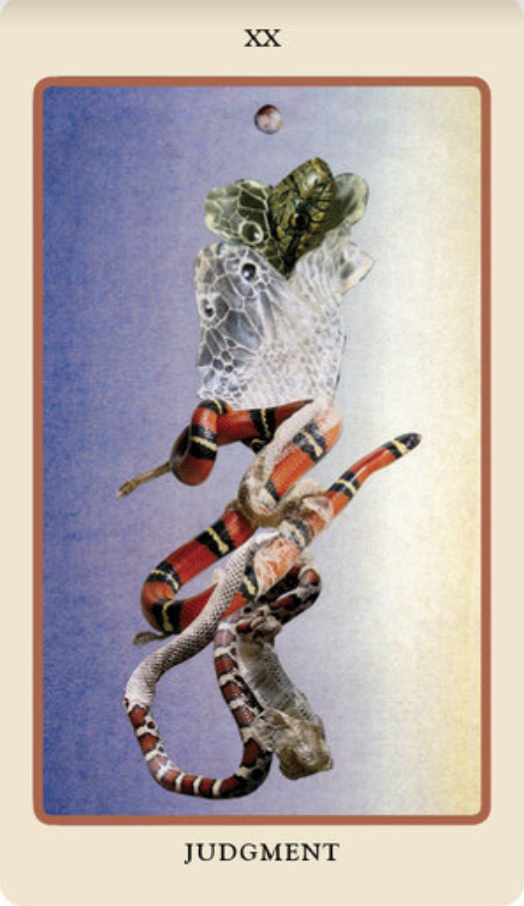
JC: There were some cards that just felt like they took forever to truly come together. And we were daunted by the High Priestess, but really, she was I think easy once we started the actual work. I think Justice was hard, Scorpio took forever until it felt right. Justice was difficult only because it's not a card I care about. I understand its importance and I get its meaning, but when I pull it for myself, I roll my eyes. Like, yeah, great, this boring shit again. 

JM: The Scorpio card was a nightmare for me. I didn’t actually finish it and glue everything down until every other card was scanned and I absolutely had to. It always felt off or wrong. Being a Scorpio this felt like some kind of sad metaphor... The Devil wasn’t necessarily difficult to understand but it took me a while to find the right imagery. I originally tried  to make our Devil the most terrifying of all time with over the top spooky imagery. It wasn’t right. The more minimal image we ended up with is more effective.

SC:  How has the process of making your own deck changed, challenged, and/or reinforced the purpose of Tarot for you?

JC: I think it reinforced the idea for me that this is a serious pursuit. The whole Instagram witchcraft shit bothers the hell out of me. I hate a dilettante. Every color, every gesture, every flower means something and changes the experience. Things matter, words matter. It's okay to take things deeply seriously. But people treat tarot, astrology, and witchcraft like it's okay to just dabble in it, and that bothers me.

JM: Making a deck is a very specific way to interact with the tarot. It’s weird, I now feel too close and removed from it. I would agree with Jessa that it reinforces the weight of it, as does seeing it out in the world being used by other people.

SC: You have stated in both Creative Tarot and in interviews that you don't have a high tolerance for “magical woo-woo,” but Tarot’s association and tradition of divination for both occult and new-age purposes drops you in the Self-Care/ Witchcraft cottage industry Venn diagram. What are your thoughts on the rise of this witchy mainstream, or its revamped emphasis as self-care? 

JC: I should say I don't have time for magical woo-woo, but I do have time for the rigorous pursuit of magic and art. So I have very little to say to crystal mongers, but I do have things to say to people who have treated magic and mysticism as a serious intellectual and spiritual pursuit, like Ioan Culianu, Mircea Eliade, Frances Yates, Ficino, Botticelli, Servetus, St Teresa of Avila, St Hildegard of Bingen, Ernesto de Martino, and so on. And of course Maud Gonne. 

I don't think what we have is a true witchcraft revival. I think what we have is a fad. I do meet serious practitioners, but they are drowned the fuck out by dabblers. Tourists. In the way that everyone is a feminist while doing absolutely nothing to pursue or understand that ideology, everyone is a witch while doing nothing to pursue or understand that religion. 

spolia tarot

SC: Jen, I know you said Tarot was new to you when you began illustrating for “Reading the Tarot,” so what has surprised you the most learning about this system? Has this project changed how you approach your art, now?

JM: I was a beginner but not a total novice. I knew enough about Tarot that there weren’t too many surprises. Learning the associations for each card - astrological, botanical, herbal, color, location (like, for example, Scorpio rule  "places where reptiles gather, deserted places, prisons and places of grief and mourning." Also "ruinous houses near water.") was really interesting and a part of the tarot I was not very familiar with. Jessa’s knowledge and research on these connections informed the deck in a very major way. 

I don’t think the project has changed the way I approach my personal artwork very much. This project was very much about learning to think about the meanings of the cards or certain concepts in a new very specific visual language. My own artwork tends to be minimal, delicate, and abstract with imagery drawn from the  natural world and cryptic references to popular culture. For the deck I had to make imagery that could be useful to people - bold, figurative, narrative work with a clear meaning. I very much consider the artwork a collaboration with Jessa, as I would have never made anything that looks like this deck if I did it alone.

SC:  It seems like one perk to making your own deck would be righting the wrongs. I especially appreciate the rescuing of Hekate from the Queen of Wands to give her full tribute as the Moon. What, if any, is the personal significance with this deity that lead to this upgrade?

 JC: I don't think either of us looked at this project as “righting wrongs,” just adding some variety. I think one thing that bothered both of us is how standard tarot decks have become. If you look at pre-RWS decks, there is so much variety. Both in what cards are included in each deck and in the imagery and associations. I've always been more attracted to the older decks than the modern, and I wanted to pull some of that variety back in.

As far as Hekate goes, all I can say is I was in Romania when I sent the email to Jen asking her if she wanted to do the deck. And when I was in Sibiu, which is this creepy and beautiful little town in Transylvania, there was this Hekate statue in the center of town. And I kept accidentally running into it. I would go what I thought was north, or I would take a different route, or I would go looking for something else, and then I would run smack back into this triple faced goddess statue. 

JM: While we were working on this card I became sort of obsessed by a section of the Hekate wikipedia page titled “The Nature of Her Cult” that read: “Regarding the nature of her cult, it has been remarked, ‘she is more at home on the fringes than in the center of Greek polytheism. Intrinsically ambivalent and polymorphous, she straddles conventional boundaries and eludes definition.’” 

I realize referencing a wikipedia page here may seem silly or dumb, but I was truly moved by it. I’m glad I saved the text as it’s no longer there.

SC: Another change I appreciated:  In the RWS deck, there are a few cards that are blatantly visually connected—The Lovers and The Devil; The Wheel of Fortune and The World—that seemed severed in the Spolia deck. Was this visual severing conscious? Was there a desire to give more independence to each phase of the Major Arcana?

JC: I am more interested in the number connections of the deck than these other connections, so, the Hierophant's ties to the Devil, the High Priestess's tie to the Hanged Man, and so on. To me, it was more about reforming those connections than thinking about it in the sense of removing these others.

But again, some ideas about certain tarot cards became standard and unwavering after RWS, and the modern understanding of the Lovers card, for example, never really rang true to me. I don't think the Lovers is about romantic love, I think it's Eros, which is different. And so to me, I needed claustrophobia, I needed airlessness, a total remove from the outside world, now your world is just this. Which I think Jen did a great job on.

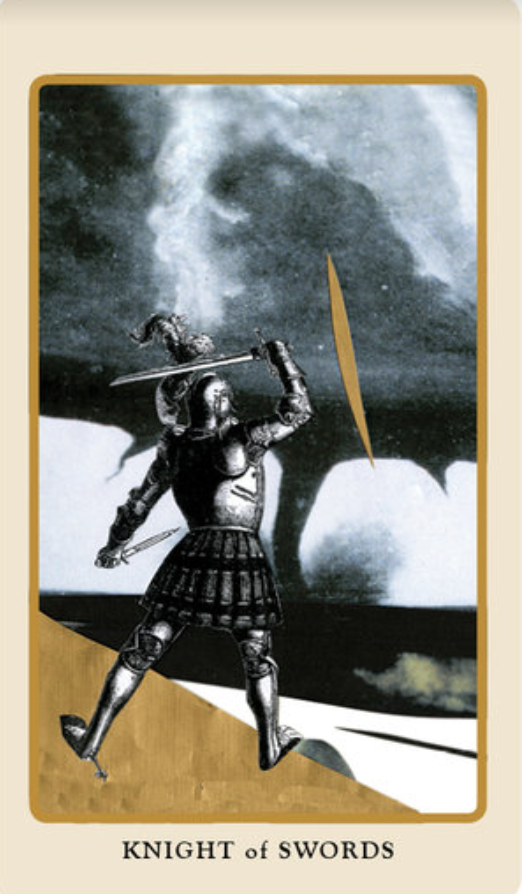
SC: Alongside deities and historical figures are wonderful pop cultural attributions such as John Wick as the Knight of Coins. I’m curious if there are other contemporary references you two see embodying other cards that have maybe made either that work or that card make more sense? Maybe this is too easy, but it is fun to look at The Hierophant card and the nuance of leadership and tradition through the lens of The Young Pope.

JC: Yes, I definitely see the Young Pope as the fallen Hierophant. But our actual reference for that card was Hedwig and the Angry Inch. Jen and I went to go see that on Broadway together a couple times, and every time I would pull the Hierophant that day, which I found interesting. But there's something about that show that elevates, that show is a good spiritual teacher. And the sensuality of it and the pure feeling of it. Art can be a temple. It rarely actually is, but some are capable of it.

JM: We worked on The Star right after David Bowie’s death and he was an inspiration for the card. We associated Aquarius with the Kraftwerk album Computer Love. The Four of Coins is Mary Todd Lincoln. Six of Wands was the Kanye card. We talked about Cher constantly - I think Cher inhabits every card.

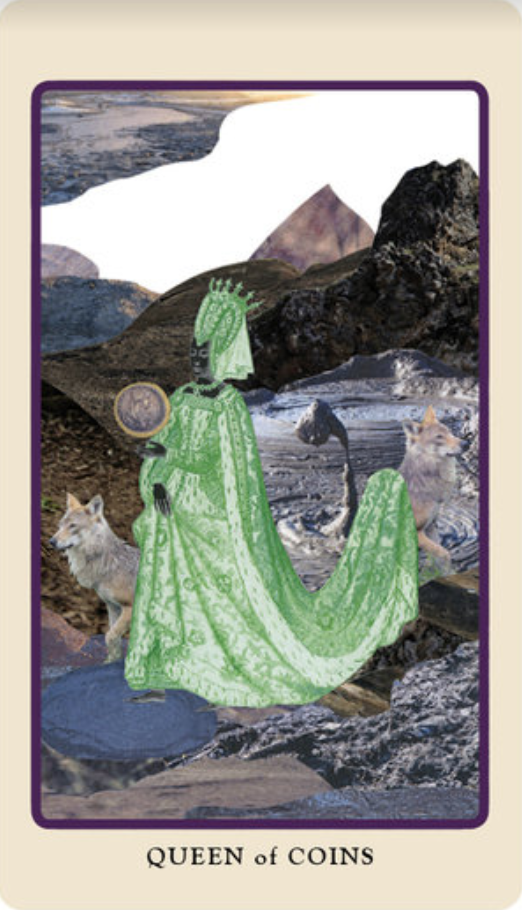
SC: Speaking of attribution: Jessa wrote a Tinyletter in 2017 casting Anthony Bourdain as the Queen of Coins. Since his death, it has been making very poignant rounds on Twitter as a prescient eulogy. From a synchronistic perspective, this strikes me as a wonderful example of where—without necessarily trying to use it as divination—Tarot’s interpretations and meditations end up ringing truer over the passing of time. How do you feel about that piece resurfacing in this context?

JC: I had already left twitter by the time of Bourdain's death, so I had no idea this was the case until you just told me. 

Really, I was just trying to write about what I thought was a fundamental misunderstanding about what Bourdain was doing, and the idea of Queenliness was the most useful way to do that. There are other ways to express that, through androgyny or empathy or whatever. 

What I am interested in is this investment in misunderstanding the person you admire so as not to have to embody their complications. As in, if you understand Bourdain to be all about the leather jacket and the foul mouth, that is much easier to copy and embody yourself than what goes into the actual quality of his work. That's something I see in our culture increasingly, this removal of context and complexity. We all want to be surface only. We want to be a brand. But there's stuff under the surface that we can't wash away. We can deal with it, by dealing directly with the unconscious, but we can't just change our outfit and become another person, and I do think that is a strong impulse in our culture.

You know, one of the reasons I left social media was because of this. I have seen talented writers wreck themselves on the rocky shore of Branding. And they volunteer for that. And why not – complexity does not give you an audience. It gives you soul, but actually it often gets in the way of money, power, influence. But it's an act of violence against your very self, and I'll never understand why so many people sign up for that.

SC: This is something I haven’t seen you speak about in regards to Tarot, but what makes Creative Tarot and the Spolia deck so magical to me is its pragmatism. I know you really admire William James, so I’m just curious what his influence on how you came to view Tarot and integrate it into your life as a keen psychological and creative tool might have been?

  JC: I don't know that I thought much about James as I was creating the deck, although he was someone who was very interested in life after death and magic and psychical research and so on. 

 But the thing I do take from his work in my everyday experience is: What good is this doing? It's nice to have a good idea or thought or fantasy, but what good does it do to the world? I think about him chastising St Catherine of Siena all of the time, his thing about how she cleaned the wounds of lepers with her tongue. His response was, okay, that's nice and all, but what does that do. How does that help. 

The longer I live, the less I think intelligence is important in a person and the more I think kindness is important. It's nice that you're smart and you have all the right thoughts and credentials, but what good are you doing in the world. I think about that all of the time.


Selena Chambers writes fiction and non-fiction from the swampy depths of North Florida. Her work has appeared in such publications as Literary Hub, Luna Luna, and Beautiful Bizarre, all with an emphasis on women creatives. She’s been nominated for several awards including a Hugo and two World Fantasy awards. Her most recent books include the weird historical fiction collection, Calls for Submission (Pelekinesis), and the anthology Mechanical Animals (Hex Publishing) co-edited with Jason Heller. Learn more at www.selenachambers.com or Twitter: @BasBleuZombie.


In Halloween, Occult Tags Halloween 2018, halloween
Comment
jeremy-yap-348115-unsplash.jpg

To Sow: A Short Story by Victoria Mier

October 31, 2018

VICTORIA MIER

One season, a long time ago, the rain never came. The crops grew stunted and crooked, like broken teeth. The townspeople fretted about the fields, about their empty bellies, about the bad omens. They tried to fix it. But despite the prayer vigils in the tiny stone church, despite the quiet sacrifices made under the hush of dusk to the gods they knew before, the harvest never came. Something else did instead.

Peggy Byrne was there. She saw the drought unfold, dry as bone and long as the list of Byrnes who had worked the land before her. When it was all over, the townspeople blamed her. They insisted she found it. She didn’t. Not really. Not in the way things normally get found, which requires looking. 

Peggy had been reaching into the chicken coop when it happened. She didn’t expect an egg to greet her hand, but she was praying it might. When her hand met dry straw and nothing else, just like every other morning, she stood, closing her eyes for a moment. The sound of the forest rose up around her, cicadas and wren in harmony.

Then a sharp crack. And another. Peggy opened her eyes in surprise, searching for the source of the noise, and there it was: pebbles being thrown against her fence, lobbed from the Kelly’s corn fields. Peggy stood up straight, shielding her eyes from the sun with one hand. 

“Bridgid? Katherine?” she called. The Kelly girls were always up to something. Only two summers younger than Peggy, yes, but it felt more like a millennia sometimes. 

No answer. Another pebble. Peggy stomped over to the fence. “You two better stop your messing!” she shouted. The drought had put everyone on edge. 

Another pebble, larger than the others, lobbed right at her shoulder. “Girls!” Peggy shouted, reaching down to pick up the stones. The last one had a perfect hole borne in the center. Peggy shoved them in her pocket, stepped through the fence in a fury of skirts and boots, and stormed into the Kelly’s fields. She heard giggles, which turned her cheeks redder.

Peggy jogged down the path through the stalks, charred brown with drought stress. They reminded her of a husk doll she had found in the bog one autumn—all shrunken and brown, like an apple left to rot in the sun. 

She stopped for a moment, realizing how far her anger had carried her into her neighbor’s fields. The giggling started up again, and suddenly, the stalks to her left shook like someone was walking through. She crossed her arms and faced where she was sure the Kelly girls would appear any moment. She waited, tapping one foot. 

And then, a shift: the air felt colder, heavier, she realized, and smelt of bonfires.The movement in the fields became more fierce, like men and their hounds were pushing their way through the stalks. “Bridgid? Katherine?” Peggy said, this time in a whisper, her arms coming uncrossed. The rustling intensified, just a few feet from Peggy. Fires and animal musk and the smell of a deep, dark and endless night under a full moon filled her nostrils. It was an ancient scent, from long ago.

She had to run. She did not know this herself, not really—it was someone else who lived inside her, another voice from deep in her bones, her great grandmother’s or maybe her great-great grandmother’s, screaming in her head about other botched harvests, about the times before Christ came to Ireland, the years they did not have enough corn to make the offering.

As Peggy turn to flee, whatever was coming broke out of the stalks in a roaring wind. It was a gale, like she had felt by the winter sea as a child, and she screamed and stumbled, falling back through rows of corn. 

For a few moments, she couldn’t move, her heart daring to crack her rib cage. The normal breeze had returned; she heard no sounds in the stalks around her. Her breathing slowed.

When Peggy finally got to her feet, she realized she could not see which way went back to the center path. She turned, just once—you see, that’s all it takes—and there it was.

A half-circle stretched before her, yawning like an open mouth. It curved away from Peggy, its path marked by rotten stalks of corn in a perfect spiral. In the center, a gaping slash loomed open in the earth, dark and moist as spring soil. 

A henge, she realized. The smell from earlier came back, with undercurrents of damp soil and rotting corn. Peggy screamed again, and this time, someone finally heard her— the Kelly patriarch, Cormac.

The townspeople discovered later he had been just a few rows over in the corn, inspecting the stalks for insect damage when he heard Peggy’s shout and rushed to her as fast as his aging legs would carry him. It was curious, they said, that he only heard the final scream. 

“Are you hurt?” Peggy heard over the stalks. “Where are you?” 

“I’m here! It’s Peggy, I’m over here!” she shouted back. Cormac crashed through a few more stalks, leaning heavily on his oak staff. Finally, he appeared near Peggy, breathing hard.

“Are you alright?” he asked, reaching down to help her up.

“I’m .. I …,” Peggy said, lost for words other than to jerk her chin in the direction of the hedge. Cormac turned, slow as sin, to his left and took in what the corn had been hiding.

“It’s back,” Cormac said, so quiet and hoarse Peggy almost didn’t hear him. 

“It was here before?” Peggy stuttered.

“Yes,” Cormac said, drawing himself up and looking 10 years younger for it. “A long time ago, Peggy. Before your parents, rest their souls, were even born.”

“What is it?” The henge’s mouth yawned wide ahead.

“I wish I knew,” Cormac replied. 

“What do we do?” Peggy asked in a hushed voice. Cormac stiffened at her inquiry, like he had been struck. The henge knew what it wanted. The henge had always been clear with its demands.

“I’m sorry, Peggy, I really am,” Cormac said in a whisper, reaching toward her with his gnarled fingers. She drew back. She understood now.

She grabbed the old man’s staff away from his hands. He gaped at her, mouth wide like a fish, before she slammed the staff into his knees. She didn’t flinch when he fell to the ground, or when she hit him once—just once; he had to be alive—in the head with the blunt end. She felt weightless, perhaps like she was underwater, as she dragged his unconscious body to the mouth of the henge. He slipped inside with a quiet whisper of fabric against soil. 

Peggy dusted her hands off on her skirt. She tied her hair back up. She remembered what her grandmother had told her about becoming a woman in the old days. Then she walked down the path through the stalks to her chicken coops. She reached into the coop, searching, until she pulled out an egg, at long last. It was smooth and brown and free of imperfections. Peggy cupped it in her dirt-stained fingers, holding it against her cheek. Then she slid the egg gently into her pocket and walked back the way she came. 


In Halloween Tags Halloween 2018, halloween
Comment
Via Lisa Marie Basile

Via Lisa Marie Basile

On Leaning Into The Mystery of Tarot

October 31, 2018

BY MICHAEL STERLING

As a tarot reader, I get questions about the accuracy and authenticity behind my readings. Which is understandable, I suppose; people don't want to pay for something they're unsure of being benefited by. I explain to potential clients that accuracy isn't the point, but many persist in wanting to know if tarot can give them definitive answers.

The short answer to this question is: no. Tarot will not hand you "yes" or "no" on a silver platter. No oracle or source of divine inspiration will give you answers so concrete.

Would you really want that anyway?

Tarot pulls from the deepest stretches of our subconscious to pluck on the strings of what witches and occultists variously label intuition, "the Knowing", Spirit, etc. A reading isn't predicting our future, tarot helps us remember what we already know. Each card provides a portal to a set of memories and feelings that exist in both our conscious and unconscious minds. Laying the cards out is a tangible way for us to organize, manage, and explore ourselves. One could argue that tarot isn't all that "magical" after all (though tarot is absolutely magical, and I'll get to that later).

The average person probably doesn't research tarot enough to know that, though, which is understandable. The art of reading cards has been a part of occult practices since at least the 18th century, though many occult leaders and writers argue that cartomancy (the art of divination through cards) dates as far back as the ancient Fertile Crescent. In all of that time, tarot has remained in the cultures of the most marginalized and oppressed, as much of witchcraft and occult practice has.

People tend to be scared or believe that the cards are "bullshit", as a stranger attempted to explain to me; the dominant group has been the latter in more recent history. To the majority of society, tarot is a game of smoke and mirrors, and those who put stock in it are thought to be delusional. This delusion is a form of what the American Psychological Association refers to as "magical thinking."

According to psychologists, magical thinking is a form of non-scientific belief that attempts an explanation of the world around us. Superstition, ritual, and spellcrafting are just a few examples of belief practices that are labeled as delusional. This is seen as something that occurs normally in young children, however, due to their lack of logical development. But when present in the minds of human beings older than the age of 7, magical thinking is viewed as a form of mental deficit or illness meant to be corrected.

Some critics of this therapeutic standpoint argue that children had it right from the beginning. According to Alison Gopnik, writer of an essay for Slate titled "The Real Reason Children Love Fantasy", this method of viewing the world isn't a delusion of early childhood, it's evidence of the development of a scientific mind. Gopnik argues that children are "intuitive scientists" who freely theorize and explore their universe in a way that brings them joy and motivation. The theories are the most crucial part. She writes, "A theory not only explains the world we see, it lets us imagine other worlds, and, even more significantly, lets us act to create those worlds." Children aren't escaping or denying reality; they imagine, and so create, a better world.

Now imagine what we would be like if we encouraged this way of thinking as a form of healthy development. What if we collectively saw the lens of magical thinking as an evolutionary trait that has been present in us since birth, and have simply dismissed as society said it was "time to grow up?" This ability to shape our reality based on our intentions shouldn't be a stretch; when we focus on something and dedicate ourselves to the pursuit of it, we make it happen. Magical thinking isn't delusion; it is tangible hope for a brighter future.

That's what tarot and magic are: tangible ways for us to grasp onto hope. Hettie Judah writes about how witchcraft & the occult has, and continues to shape creative culture in her article for Frieze titled "How Witchcraft Continues to Cast Its Spell on Artists' Magical Thinking." She argues that magical thinking is not something specific to a point in human history, but is something that evolves as society grows and changes.

We create new rituals and collective spaces to bring our hope to be manifested; experiences such as placing padlocks for lovers on bridges, and the old rhyme that goes, "Something old / something new /something borrowed / something blue..." are a few that come to mind. Ritual and superstition exist in our lives, regardless of our subscription to witchcraft & the occult. We search for ways to understand our relationship to the Earth and the surrounding universe; that underlying truth has never changed.

Regardless of how "true" our magical thinking is, the more we search for a better world, the closer we are to finding it. Pulling tarot cards, praying, and performing ritual are ways in which we grasp at the world we want to live in. So next time, instead of asking a witch or a tarot reader if their work is accurate, lean into the mystery that led you to question the cards in the first place.

In Halloween, Occult Tags Halloween 2018, Halloween
Comment

An Indie Rock Playlist for Halloween Chills and Thrills

October 31, 2018

BY ELIZABETH HART BERGSTROM

There's plenty of classic music to listen to at Halloween, whether you want to dance to "Thriller" or get nostalgically spooky with "The Monster Mash." For a different take, I put together a playlist of songs from some of my favorite indie rock bands about ghosts, vampires, and other Halloween frights. Hopefully this will please all your guests, including the most discerning hipster witches and La Croix-drinking ghouls.

A playlist featuring Tokyo Police Club, The Walkmen, Veronica Falls, and others

If you wanted to watch a few of the videos, here are the more interesting ones…

Music video by Yeah Yeah Yeahs performing Heads Will Roll. (C) 2009 Polydor Ltd.

Sleigh Bells offer a dark and dizzy live performance clip to accompany their Reign of Terror cut "Demons". The band's Derek Miller co-directs, with Gregory Kohn.

Official music video for "Afraid of The Dark" by The Frights. Richard Dotson: Producer, Director, and Editor. Peter Novoa: Assistant Director/Director of Photography Aaron Espinoza: Production Coordinator http://thefrights.com http://dangerbirdrecords.com

In Halloween Tags Halloween, Halloween 2018
Comment

Red: A Modern Re-imagining of Little Red Riding Hood

October 31, 2018

BY SARAH PRISCUS

Red offers him the oatmeal cookies that she baked for her grandmother. He takes one, then lobs her entire body into his open mouth.

His canine fangs graze her skin and her blood drips onto his tongue as sweetly as summer Moscato.

Once she settles into the wolf’s stomach, she unlaces her scarlet Skechers sneakers and tosses them aside. For days, she just sits barefoot and cross-legged on the wolf’s gooey stomach lining.

She hums to herself. It’s bat-cave quiet. She opens her backpack and eats an oatmeal cookie, absently marvelling at how easily it crumbles under her baby teeth.

Loneliness sets in so she sets out in search of her already-swallowed grandmother. She wanders through the abdominal labyrinth until she finds Grandmother lying semi-dissolved in a low, growing pool of stomach acid. Grandmother greets her with a honeyed, dimming “hello.”

Red stares at how Grandmother’s legs look piranha-eaten, all bone and mushy cartilage. Half-skeleton and still sweet-faced.

She places an oatmeal cookie on Grandmother’s cadaverous lap. She doesn’t eat it. If she did, it would tumble right back out again.

Red leaves her.

She passes the time by pressing her ear to the slimy side of the wolf’s stomach, listening for sparrow calls and the rushing of water. A field of sheep. A siren.

Priscus 1

Her bite wounds scab over. Her eyes adjust to the dark.

Red realizes that she’s begun to breathe with the same rhythm as the wolf. Their arms stretch and scratch at the same time. Red cannot decide who is copying who. She prowls the fleshy floor in search of sunflower seeds or scraps of raw meat. Sometimes she slushes through a puddle of stomach acid and doesn’t really mind that it stings her skin.

Just as her acid bath is beginning to rise and burn, some well-intentioned man with an axe and ambition slits her swallower open. Red is yanked from her sticky home, and blinks mole-blind and paling in the sunlight.

The wolf’s carcass lies flat and broken on the dry earth. She and him have never looked more alike than in this moment, both bloody and matted with autumn sweat and gunk.

The man with the axe dries her sprouting body with a tea-towel. She gazes back to the wide wound slashed into the wolf’s body. Oh, she thinks, how dark it was in there - how deliciously, decidedly dark and damp. In that darkness - in that beast’s belly - there was power.

The forest is dark too, and the mist settles as a slick slime on her skin, so she wanders it, lightblind and soaking, until someone pulls her into the sun again.


Sarah Priscus lives in Ottawa, Ontario, Canada, and currently study English and Theatre at the University of Ottawa. I have previously had work published in Rookie Mag, Atlas and Alice, and Every Day Fiction. 

In Halloween Tags Halloween 2018, Halloween
Comment
allie-dearie-20196-unsplash.jpg

When The Veil Thins: A Call to Heal

October 31, 2018

BY NICOLE HAYWARD-BISHOP

October 31st marks the celebration of Samhain—the day when the veil between the world of the living and the world of the dead is at its thinnest. It’s a night that is great for ancestral magick, banishing unwanted spirits, and connecting with loved ones who have passed on. 

It’s a night that offers an opportunity to do some soul searching and to ask our ancestors for guidance to help us heal and grow. 

Our family histories are like previous chapters in our own stories and opening the lines of communication seeking answers can gift us with the insight into ourselves and how to navigate our futures. Change and rebirth can be scary, and the idea of digging up the past and opening old wounds can be painful. However, if old wounds were truly healed you wouldn’t be able to open them. In order to truly heal we need to revisit the histories that we left behind in order to make peace and truly find that closure.

Take it upon yourself to recognize the areas in your development that you’ve been ignoring. Cut open those stitches that act as shields allowing wounds to fester and make peace. It’s much easier to walk away from things when shit gets tough. It’s much easier to close ourselves off from people or the parts of ourselves that scare us. Our darkness shouldn’t be seen as something evil and angry, but just areas that have yet to be discovered or understood like an attic full of unmarked boxes.

Samhain is a holiday that I like to think of as one big flashlight ready to cast light upon our dark. It’s up to us whether we want to pick it up, turn it on, and do some serious soul searching. Ask for guidance from your ancestors, search for answers in your family history and dig deep into the parts of you that should be celebrated and the parts of you that you have yet to discover. The most exciting and worthwhile adventure we can take in life is the journey of self discovery. Change happens whether we want it to or not, and the only thing that we have control over is if we grow as a product of that or if we dig our heels in the sand and refuse to budge.

Living in Canada, I take inspiration from the visual changes this time of year brings like the trees shedding their leaves in order to make way for buds of spring. Nature is always a great source of inspiration when it comes to the ebbs and flows of life. The same goes for animals like the sacred serpent who sheds its skin once it no longer serves, leaving it behind without a sense of remorse but an understanding that it has to go through change in order to move forward. Consider adding visual representations of the serpent to your altar as a way to heighten magicks dealing with this theme.

If you don’t know what kind of rituals to perform on Samhain there are lots of great resources online but really it’s about connecting to your intuition and letting that guide you.

Banishing spells are great to get rid of evil spirits or energies that are weighing you down. It’s easier to send things from the spirit realm back there when the veil is thinner, just keep in mind it’s easier to attract them too if you are breeding a positive environment for negative energies to dwell in so bring awareness to that. I definitely use this time of year to perform a few banishing rituals but I also like to practice deep meditation that’s positive, creative and visual.

I like to sit on the floor with a candle lit in front of me, dimming the lights in my apartment so I have just enough to see the pages of my journal.

I place items that feel inspiring next to the candle like crystals, flowers, and I pull an oracle or tarot card or two asking for clarity.

Sometimes I play music, but oftentimes I prefer it to be quiet and then I just visualize and think about the parts of myself I need to focus on and heal and the parts of myself I might not be totally honest about or sure of. From there I meditate and write as I go, sometimes pulling more cards for guidance. 

Once I’m done and ready to close my circle for the night, I run a bath with oatmeal, honey, and some essential oil infused salts and just relax, nourishing my soul and body, thanking them for the work they’ve done and putting them to peace for the night. With all of the emotional hardships ancestral work and healing can bring, it’s good to take them time to nourish ourselves and practice activities that feel calm and cozy. Sit and read a book, watch a movie, cook; whatever it is that helps you rejuvenate and heal.

That dreamy future that you wish for is attainable, it’s just about embracing your truth, learning from your past, and lighting the torch of knowledge our ancestors have gifted to us.

Blessed be.

In Occult Tags Halloween 2018, Halloween
Comment
← Newer Posts Older Posts →
Featured
‘in the glitter-open black' — poetry by Fox Henry Frazier
'poet as tarantula,  poem as waste' — poetry by  Ewen Glass
'poet as tarantula, poem as waste' — poetry by Ewen Glass
'Hours rot away in regalia' — poetry by Stephanie Chang
'down down down the hall of mirrors' — poetry by Ronnie K. Stephens
'Grew appendages, clawed towards light' — poetry by Lucie Brooks
'do not be afraid' — poetry by Maia Decker
'The darkened bedroom' — poetry by Jessica Purdy
'I am the body that I am under' — poetry by Jennifer MacBain-Stephens
instagram

COPYRIGHT LUNA LUNA MAGAZINE 2025